

The DOI matches its Crossref record; 43 of the 44 references it cites were found in a registry or an index.
The Resting Human Brain and Motor Learning
Open accessAbstract
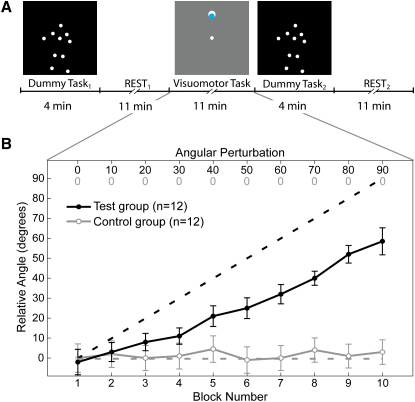
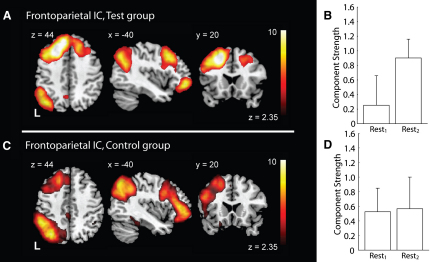
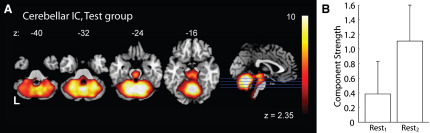
Functionally related brain networks are engaged even in the absence of an overt behavior. The role of this resting state activity, evident as low-frequency fluctuations of BOLD (see [1] for review, [2-4]) or electrical [5, 6] signals, is unclear. Two major proposals are that resting state activity supports introspective thought or supports responses to future events [7]. An alternative perspective is that the resting brain actively and selectively processes previous experiences [8]. Here we show that motor learning can modulate subsequent activity within resting networks. BOLD signal was recorded during rest periods before and after an 11 min visuomotor training session. Motor learning but not motor performance modulated a fronto-parietal resting state network (RSN). Along with the fronto-parietal network, a cerebellar network not previously reported as an RSN was also specifically altered by learning. Both of these networks are engaged during learning of similar visuomotor tasks [9-22]. Thus, we provide the first description of the modulation of specific RSNs by prior learning--but not by prior performance--revealing a novel connection between the neuroplastic mechanisms of learning and resting state activity. Our approach may provide a powerful tool for exploration of the systems involved in memory consolidation.
Overview
The claims and statistics of this paper haven’t been checked yet.
Run the check — free, no account needed. It reads the open-access text and checks the sources it cites.
Integrity signals
Registry
Cites
Statistics
Figures
Verification
Claims the paper makes
The claims and statistics of this paper haven’t been checked yet.
Run the check — free, no account needed. It reads the open-access text and checks the sources it cites.
Claims other papers make about this one
Each is checked against this paper’s own text: does it say what the citing paper says it does?
In the citing paper
“Clusters of brain regions involved in motor learning can be recognized, both at rest (Albert, Robertson, & Miall, 2009;Biswal, Yetkin, Haughton, & Hyde, 1995;Wu, Srinivasan, Kaur, & Cramer, 2014) and in-task (Hasan et al., 2013).”
From Optimizing performance through intrinsic motivation and attention for learning: The OPTIMAL theory of motor learning (2016) · cites this paper as Albert, Robertson, & Miall, 2009
In the citing paper
“Importantly, functional connectivity is related to motor skill learning (Albert et al., 2009;Song, Gotts, Dayan, & Cohen, 2015) and to higher levels of motor skill (Di, Zhu, Jin, Wang, Ye, Zhou et al., 2012;Ito, Matsuda, & Shimojo, 2015;Kim, Han, Kim, & Han, 2015;Milton, Solodkin, Hluštík, & Small, 2007;Li, He, Huang, Zhang, Lu, Lai et al., 2015).”
From Optimizing performance through intrinsic motivation and attention for learning: The OPTIMAL theory of motor learning (2016) · cites this paper as Albert et al., 2009
Self-check
Percentages, sums and reported differences re-computed from the paper’s own numbers.
The self-check needs the paper’s full text.
Citations
Cites
Tzourio-Mazoyer, N., Landeau, B., Papathanassiou, D., Crivello, F., Etard, O., Delcroix, N., Mazoyer, B., & Joliot, M. (2002) · NeuroImage · doi:10.1006/nimg.2001.0978 · Cited by 16,319
A default mode of brain function
Raichle, M. E., MacLeod, A. M., Snyder, A. Z., Powers, W. J., Gusnard, D. A., & Shulman, G. L. (2001) · Proceedings of the National Academy of Sciences · doi:10.1073/pnas.98.2.676 · Cited by 12,190
Jenkinson, M., Bannister, P., Brady, M., & Smith, S. (2002) · NeuroImage · doi:10.1006/nimg.2002.1132 · Cited by 11,888 · cited 2×
“Each EPI volume was motion-corrected using MCFLIRT [3], high-pass filtered (0.01HZ cutoff), masked to eliminate non-brain voxels, spatially-smoothed using a 5mm FWHM filter, demeaned on a voxel-by-voxel basis, whitened, and projected into a 48-dimensional subspace using PICA.”
Fast robust automated brain extraction
Smith, S. M. (2002) · Human Brain Mapping · doi:10.1002/hbm.10062 · Cited by 10,496 · cited 2×
“The role of this resting state activity, evident as low-frequency fluctuations of BOLD (see[1]forreview,[2‐4])orelectrical[ 5 ,6]signals,isunclear.”
The human brain is intrinsically organized into dynamic, anticorrelated functional networks
Fox, M. D., Snyder, A. Z., Vincent, J. L., Corbetta, M., Van Essen, D. C., & Raichle, M. E. (2005) · Proceedings of the National Academy of Sciences · doi:10.1073/pnas.0504136102 · Cited by 8,553
Fast and robust fixed-point algorithms for independent component analysis
Hyvärinen, A. (1999) · IEEE Transactions on Neural Networks · doi:10.1109/72.761722 · Cited by 6,304 · cited 2×
“The role of this resting state activity, evident as low-frequency fluctuations of BOLD (see[1]forreview,[2‐4])orelectrical[5, 6 ]signals,isunclear.”
Consistent resting-state networks across healthy subjects
Damoiseaux, J. S., Rombouts, S. A. R. B., Barkhof, F., Scheltens, P., Stam, C. J., Smith, S. M., & Beckmann, C. F. (2006) · Proceedings of the National Academy of Sciences · doi:10.1073/pnas.0601417103 · Cited by 4,326 · cited 1×
“We identified six previously reported RSNs (see Figures 2A–2E and 2H of [4]).”
BackgroundProbabilistic Independent Component Analysis for Functional Magnetic Resonance Imaging
Beckmann, C. F., & Smith, S. M. (2004) · IEEE Transactions on Medical Imaging · doi:10.1109/tmi.2003.822821 · Cited by 2,707 · cited 7×
“The change in strength of the two RSN components identified by PICA across participants within the test group (Figure 2, main paper) was not linearly correlated with behavioral measures of learning, but this does not imply there is no relationship.”
InfluentialMazziotta, J. C., Toga, A. W., Evans, A. C., Fox, P. T., Lancaster, J. L., Zilles, K., Woods, R. P., Paus, T., Simpson, G. V., Pike, G. B., et al. (2001) · Philosophical Transactions of the Royal Society B Biological Sciences · doi:10.1098/rstb.2001.0915 · Cited by 2,417 · cited 3×
“Non-brain structures were removed from the high-resolution structural image using BET [5] and the transformation matrix used for the affine registration of this image to the ICBM152 brain [2] was applied to the PICA output from each session.”
A default mode of brain function: a brief history of an evolving idea
Raichle, M. E., & Snyder, A. Z. (2007) · NeuroImage · doi:10.1016/j.neuroimage.2007.02.041 · Cited by 2,173
Cited by
Sorted by citations
Items 301–400 of 509
Data-driven tensor independent component analysis for model-based connectivity neurofeedback
Koush, Y., Masala, N., Scharnowski, F., & Ville, D. V. D. (2018) · NeuroImage · doi:10.1016/j.neuroimage.2018.08.067 · Cited by 14
“, 2011), motor (Albert et al., 2009), visual learning (Lewis et al.”
Distinct connectivity profiles predict different in-time processes of motor skill learning
Baldassarre, A., Filardi, M. S., Spadone, S., Penna, S. D., & Committeri, G. (2021) · NeuroImage · doi:10.1016/j.neuroimage.2021.118239 · Cited by 14
Yu, M., Song, Y., & Jia Liu, B. (2022) · Brain and Language · doi:10.1016/j.bandl.2022.105162 · Cited by 14
Alvand, A., Kuruvilla-Mathew, A., Kirk, I. J., Roberts, R. P., Pedersen, M., & Purdy, S. C. (2022) · NeuroImage Clinical · doi:10.1016/j.nicl.2022.103139 · Cited by 14
“DMN is primarily localized in the medial prefrontal cortex, posterior cingulate cortex, and lateral parietal cortex of the brain (Albert et al., 2009; Rosazza & Minati 2011) with co-activation in the ventral and dorsal medial prefrontal cortices, posterior cingulate/retrosplenial cortex, inferior parietal lobule, late…”
BackgroundA longitudinal study of the effect of visuomotor learning on functional brain connectivity
Wang, K., Yu, C., Shen, C., Schack, T., & Hung, T. (2023) · Psychophysiology · doi:10.1111/psyp.14510 · Cited by 15
Tompary, A., & Davachi, L. (2024) · eLife · doi:10.7554/elife.84359 · Cited by 17
“The rest scans were used to quantify low-frequency correlations between pairs of ROIs ( Albert et al., 2009 ; Tambini et al., 2010 ; Tompary et al., 2015 ), a measure of functional connectivity between regions.”
Perceptual plasticity is mediated by connectivity changes of the medial thalamic nucleus
Klingner, C. M., Hasler, C., Brodoehl, S., Axer, H., & Witte, O. W. (2012) · Human Brain Mapping · doi:10.1002/hbm.22074 · Cited by 14
“, 2007] and also in the resting-state [Albert et al., 2009; Barnes et al., 2009].”
BackgroundAge differences in the default network at rest and the relation to self-referential processing
Saverino, C., Grigg, O., Churchill, N. W., & Grady, C. L. (2014) · Social Cognitive and Affective Neuroscience · doi:10.1093/scan/nsu046 · Cited by 14
“Previous research has found that young adults modulate restingstate activity following various cognitive tasks (Waites et al., 2005; Albert et al., 2009; Hasson et al., 2009; Lewis et al., 2009; Grigg and Grady, 2010b; Stevens et al., 2010; Tambini et al., 2010).”
BackgroundZang, Z., Geiger, L. S., Braun, U., Cao, H., Zangl, M., Schäfer, A., Moessnang, C., Ruf, M., Reis, J., Schweiger, J. I., et al. (2018) · Network Neuroscience · doi:10.1162/netn_a_00045 · Cited by 15
“Although the observed association between connectivity of the cerebellum-centered subnetwork and motor learning ability could be interpreted as a stronger intrinsic capability of the network architecture in superior learners, it could also be argued that the association is a consequence of learning-induced motor memor…”
Resting-State Activity in High-Order Visual Areas as a Window into Natural Human Brain Activations
Strappini, F., Wilf, M., Karp, O., Goldberg, H., Harel, M., Furman‐Haran, E., Golan, T., & Malach, R. (2018) · Cerebral Cortex · doi:10.1093/cercor/bhy242 · Cited by 14
“In fact, several studies have shown task-induced changes in resting-state functional connectivity lasting for hours or even days after the activation (Albert et al., 2009; Lewis et al., 2009; Stevens et al., 2009; Tambini et al., 2010; Tailby et al., 2015).”
BackgroundNettekoven, C., Mitchell, L., Clarke, W. T., Emir, U. E., Campbell, J., Johansen‐Berg, H., Jenkinson, N., & Stagg, C. J. (2022) · Journal of Neuroscience · doi:10.1523/jneurosci.0096-22.2022 · Cited by 14
“Finally, as previous studies have shown an increase in intrinsic functional connectivity in the cerebellum after adaptation (Albert et al., 2009; Nettekoven et al., 2020), and functional connectivity has been shown to correlate with GABA in a major network node (Stagg, 2014; Bachtiar et al., 2015),…”
InfluentialFunctional Connectivity Modulation by Acupuncture in Patients with Bell’s Palsy
Bian, Y., He, X., Hu, S., Li, C., Xu, C., Kan, H., Xue, Q., Yang, J., & Qiu, B. (2016) · Evidence-based Complementary and Alternative Medicine · doi:10.1155/2016/5928758 · Cited by 14
“The strength of FC reflected the degree of neuronal activity synchronization [25, 26] and also the strength of information transfer and collaboration between brain areas [23].”
Regionally Specific Regulation of Sensorimotor Network Connectivity Following Tactile Improvement
Heba, S., Lenz, M., Kalisch, T., Höffken, O., Schweizer, L. M., Glaubitz, B., Puts, N. A. J., Tegenthoff, M., Dinse, H. R., & Schmidt‐Wilcke, T. (2017) · Neural Plasticity · doi:10.1155/2017/5270532 · Cited by 14
“This method has been successfully employed for both healthy controls [11, 17, 18] and patients with stroke or carpal tunnel syndrome [19, 20].”
Kim, S., Eom, H., Jung, Y. H., Kim, M.-K., Kim, E. J., & Kim, J. (2022) · Neuroscience Letters · doi:10.1016/j.neulet.2022.136451 · Cited by 13
Locating causal hubs of memory consolidation in spontaneous brain network in male mice
Li, Z., Athwal, D., Lee, H., Sah, P., Opazo, P., & Chuang, K. (2023) · Nature Communications · doi:10.1038/s41467-023-41024-z · Cited by 13
“Importantly, learning can induce ongoing remodeling of the RSNs over time in humans 21,22 and rodents 23,24 .”
Shamay‐Tsoory, S., Marton-Alper, I. Z., & Markus, A. (2024) · iScience · doi:10.1016/j.isci.2024.108796 · Cited by 14
“22,23 Zhang ll OPEN ACCESS et al. 24 argued that post-task activations represent covert attempts to rehearse a recently completed task, a process which is hypothesized to reengage the recent task-dependent brain connectivity.”
BackgroundNeural Correlates of Motor Skill Acquisition and Consolidation
Doyon, J., Albouy, G., Vahdat, S., & King, B. R. (2015) · Elsevier eBooks · doi:10.1016/b978-0-12-397025-1.00275-x · Cited by 13
Paldino, M. J., Chu, Z. D., Chapieski, M. L., Golriz, F., & Zhang, W. (2017) · British Journal of Radiology · doi:10.1259/bjr.20160656 · Cited by 13
Díez‐Cirarda, M., Gabilondo, I., Ibarretxe‐Bilbao, N., Gómez‐Esteban, J. C., Kim, J., Lucas‐Jiménez, O., Pino, R. D., Peña, J., Ojeda, N., Mihaescu, A. S., et al. (2021) · npj Parkinson s Disease · doi:10.1038/s41531-021-00257-9 · Cited by 11
Intrinsic Brain Activity and Resting State Networks
Snyder, A. Z. (2016) · Springer eBooks · doi:10.1007/978-1-4939-3474-4_133 · Cited by 13
Kraft, A. W., Mitra, A., Bauer, A. Q., Snyder, A. Z., Raichle, M. E., Culver, J. P., & Lee, J. (2017) · Proceedings of the National Academy of Sciences · doi:10.1073/pnas.1711789114 · Cited by 13
“Several examples of this phenomenon have been described in humans: the correlation and propagation structures of the BOLD signal are known to be altered after motor learning (21, 70).”
BackgroundThe posterior parietal cortex mediates early offline-rather than online-motor sequence learning
Pollok, B., Keitel, A., Foerster, M., Moshiri, G., Otto, K., & Krause, V. (2020) · Neuropsychologia · doi:10.1016/j.neuropsychologia.2020.107555 · Cited by 14
The secret life of predictive brains: what's spontaneous activity for?Preprint
Pezzulo, G., Zorzi, M., & Corbetta, M. (2020) · PsyArXiv (OSF Preprints) · doi:10.31234/osf.io/qus3h · Cited by 19
Spontaneous Activity Patterns in Human Attention Networks Code for Hand Movements
Zhang, L., Pini, L., Kim, D., Shulman, G. L., & Corbetta, M. (2023) · Journal of Neuroscience · doi:10.1523/jneurosci.1601-22.2023 · Cited by 13
Resting‐state fMRI detects the effects of learning in short term: A visual search training study
Bueichekú, E., Miró‐Padilla, A., & Ávila, C. (2019) · Human Brain Mapping · doi:10.1002/hbm.24560 · Cited by 12
“One example is found in Albert et al. (2009), which showed an enhanced pattern of connectivity in the left frontoparietal network after 11 min of training to acquire a novel motor skill.”
BackgroundInfluentialTrait-based food-cravings are encoded by regional homogeneity in the parahippocampal gyrus
Chen, S., Dong, D., Jackson, T., Zhuang, Q., & Chen, H. (2017) · Appetite · doi:10.1016/j.appet.2017.03.033 · Cited by 12
Error-related Persistence of Motor Activity in Resting-state Networks
Bernardi, N. F., van Vugt, F. T., Valle-Mena, R. R., Vahdat, S., & Ostry, D. J. (2018) · Journal of Cognitive Neuroscience · doi:10.1162/jocn_a_01323 · Cited by 12
The Motor Engram of Functional Connectivity Generated by Acute Whole-Body Dynamic Balance Training
Ueta, K., Mizuguchi, N., Sugiyama, T., Isaka, T., & Otomo, S. (2021) · Medicine & Science in Sports & Exercise · doi:10.1249/mss.0000000000002829 · Cited by 11
“As previous studies have evaluated changes in rs-FC within intrinsic networks identified by model-free independent component analysis (27,42), the seed-based analysis conducted in the present study provides evidence of changes in rs-FC”
BackgroundMethodInfluentialIrmen, F., Karabanov, A. N., Bögemann, S. A., Andersen, K. W., Madsen, K. H., Bisgaard, T., Dyrby, T. B., & Siebner, H. R. (2020) · Frontiers in Human Neuroscience · doi:10.3389/fnhum.2020.00310 · Cited by 12
“Skill acquisition also changes resting-state connectivity (rs-connectivity; Albert et al., 2009; Vahdat et al., 2011; Tung et al., 2013; Gregory et al., 2014) and training periods as short as 20 min are enough to modulate functional frontoparietal connectivity beyond the training period (Karabanov et al.”
BackgroundMotor sequences; separating the sequence from the motor. A longitudinal rsfMRI study
Jäger, A., Huntenburg, J. M., Tremblay, S. A., Schneider, U., Grahl, S., Huck, J., Tardif, C. L., Villringer, A., Gauthier, C. J., Bazin, P., et al. (2021) · Brain Structure and Function · doi:10.1007/s00429-021-02412-7 · Cited by 13
Lustig, C., & Lin, Z. (2015) · Elsevier eBooks · doi:10.1016/b978-0-12-411469-2.00008-x · Cited by 11
Developmental implications of children’s brain networks and learning
Chan, J. S. Y., Wang, Y., Yan, J. H., & Chen, H. (2016) · Reviews in the Neurosciences · doi:10.1515/revneuro-2016-0007 · Cited by 12
“In adults, even a short session (11 min) of visuomotor practice can modulate the connectivity of the frontoparietal and the cerebellar networks (Albert et al., 2009).”
BackgroundGao, M., Zhang, D., Wang, Z., Liang, B., Cai, Y., Gao, Z., Li, J., Chang, S., Jiao, B., Huang, R., et al. (2016) · Behavioural Brain Research · doi:10.1016/j.bbr.2016.12.017 · Cited by 11
Visual search task immediate training effects on task-related functional connectivity
Bueichekú, E., Ávila, C., Miró‐Padilla, A., & Sepulcre, J. (2018) · Brain Imaging and Behavior · doi:10.1007/s11682-018-9993-y · Cited by 12
Gabitov, E., Lungu, O., Albouy, G., & Doyon, J. (2019) · Frontiers in Neurology · doi:10.3389/fneur.2019.01242 · Cited by 11
“” In that way, intrinsic activity during the resting state was not affected by the experience with the motor sequence task per se (73, 74).”
BackgroundInterbrain neural correlates of self and other integration in joint statistical learning
Zheng, Z., & Wang, J. (2024) · npj Science of Learning · doi:10.1038/s41539-024-00280-4 · Cited by 10
Zhang, W., Andrews‐Hanna, J. R., Mair, R. W., Goh, J. O. S., & Gutchess, A. H. (2022) · Cognitive Affective & Behavioral Neuroscience · doi:10.3758/s13415-022-01027-7 · Cited by 11
Wilf, M., Dupuis, C., Nardo, D., Huber, D., Sander, S., Al-Kaar, J., Haroud, M., Perrin, H., Fornari, E., Crottaz‐Herbette, S., et al. (2022) · Cerebral Cortex · doi:10.1093/cercor/bhac407 · Cited by 10
“Frontoparietal and cerebellar networks functional connectivity strengthened after exposure to a visuomotor adaptation (Albert et al. 2009).”
Bracco, M., Mutanen, T. P., Veniero, D., Thut, G., & Robertson, E. M. (2023) · Current Biology · doi:10.1016/j.cub.2023.05.027 · Cited by 10
“7– 13 Such networks We found that the DLPFC circuit became resistant to perturbation due to an interaction between different types of memory.”
Self-citationImaging early consolidation of perceptual learning with face stimuli during rest
Vilsten, J. S., & Mundy, M. E. (2014) · Brain and Cognition · doi:10.1016/j.bandc.2013.12.005 · Cited by 10
Manuel, A. L., Nicastro, N., Schnider, A., & Guggisberg, A. G. (2018) · Cortex · doi:10.1016/j.cortex.2018.06.005 · Cited by 9
Maneshi, M., Vahdat, S., Gotman, J., & Grova, C. (2016) · Frontiers in Neuroscience · doi:10.3389/fnins.2016.00417 · Cited by 10
“Another gICA approach consists of concatenating individuals from each group separately and then applying ICA on the concatenated matrices of each group (Calhoun et al., 2001; Albert et al., 2009).”
InfluentialMa, H., Zhou, Y.-L., Wang, W., Chen, G., Li, Q., Lu, Y.-C., & Wang, W. (2022) · Frontiers in Neuroscience · doi:10.3389/fnins.2022.943919 · Cited by 9
Takeda, S., & Miyamoto, R. (2023) · Behavioural Brain Research · doi:10.1016/j.bbr.2023.114599 · Cited by 9
“RSFC changes due to motor learning reflect the offline reinforcement of motor memory acquired through practice [4,6].”
Gregory, M. D., Robertson, E. M., Manoach, D. S., & Stickgold, R. (2015) · Brain Connectivity · doi:10.1089/brain.2015.0386 · Cited by 9
“It has also been shown that the resting brain connectivity of task-specific networks is both modulated by learning (Albert et al., 2009; Stevens et al., 2010; Tambini et al., 2010) and associated with memory consolidation (Deuker et al., 2013) of the respective task.”
Self-citationrTMS combined with motor training changed the inter-hemispheric lateralization
Jin, J., Wang, X., Li, Y., Wang, H., Liu, Z.-P., & Yin, T. (2019) · Experimental Brain Research · doi:10.1007/s00221-019-05621-z · Cited by 9
A case for the role of memory consolidation in speech-motor learning
van Zelst, A. L., & Earle, F. S. (2020) · Psychonomic Bulletin & Review · doi:10.3758/s13423-020-01793-w · Cited by 10
Serrano, J. I., Muñoz‐García, D., Peña, R. F., d’Eudeville, V., Brero, M., Boisson, M., & del Castillo, M. D. (2020) · Cognitive Neurodynamics · doi:10.1007/s11571-020-09633-2 · Cited by 10
Neural correlates of motor learning: Network communication versus local oscillations
Mottaz, A., Savic, B., Allaman, L., & Guggisberg, A. G. (2024) · Network Neuroscience · doi:10.1162/netn_a_00374 · Cited by 9
“Resting-state FC seems to be not only associated with better current task performance, but also with better learning (Albert et al., 2009; Bonzano et al., 2015; Gregory et al., 2014).”
BackgroundModality of practice modulates resting state connectivity during motor learning
Kraeutner, S. N., Cui, A., Boyd, L. A., & Boe, S. G. (2022) · Neuroscience Letters · doi:10.1016/j.neulet.2022.136659 · Cited by 8
Time-of-day influences resting-state functional cortical connectivity
Iester, C., Biggio, M., Cutini, S., Brigadoi, S., Papaxanthis, C., Brichetto, G., Bove, M., & Bonzano, L. (2023) · Frontiers in Neuroscience · doi:10.3389/fnins.2023.1192674 · Cited by 8
Seitzman, B. A., Reynoso, F. J., Mitchell, T. J., Bice, A. R., Jarang, A., Wang, X., Mpoy, C., Strong, L., Rogers, B. E., Yuede, C. M., et al. (2023) · GeroScience · doi:10.1007/s11357-023-00944-w · Cited by 9
“For example, RSFC strength can be modified by learning [83–85], is predictive of future performance on behavioral tasks [86–88], and is an important biomarker of functional and behavioral recovery after injury [24–27 , 89– 93].”
BackgroundBaldassarre, A., & Corbetta, M. (2015) · Hearing Balance and Communication · doi:10.3109/21695717.2015.1022986 · Cited by 8
Arm crossing updates brain functional connectivity of the left posterior parietal cortex
Ora, H., Wada, M., Salat, D. H., & Kansaku, K. (2016) · Scientific Reports · doi:10.1038/srep28105 · Cited by 8
Learning‐driven cerebellar intrinsic functional connectivity changes in men
Edde, M., Scala, G. D., Dupuy, M., Dilharreguy, B., Catheline, G., & Chanraud, S. (2019) · Journal of Neuroscience Research · doi:10.1002/jnr.24555 · Cited by 9
“…related to the visuomotor task, or to memory consolidation of associated pairs (Bassett et al., 2011; Lewis et al., 2009). rsFC changes may depend on patterns of activation during the task (Albert et al., 2009), as described in motor learning (Bernardi, Vugt, Valle-Mena, Vahdat, & Ostry, 2018).”
BackgroundKim, S. (2020) · Scientific Reports · doi:10.1038/s41598-020-64039-8 · Cited by 8
Intrinsic Brain Activity and Resting State Networks
Snyder, A. Z. (2022) · Springer eBooks · doi:10.1007/978-3-030-88832-9_133 · Cited by 8
Kraeutner, S. N., Rubino, C., Ferris, J. K., Rinat, S., Penko, L., Chiu, L. K., Greeley, B., Jones, C. B., Larssen, B. C., & Boyd, L. A. (2023) · Neurobiology of Aging · doi:10.1016/j.neurobiolaging.2023.10.007 · Cited by 8
Petsas, N., Tomassini, V., Filippini, N., Sbardella, E., Tona, F., Piattella, M. C., Pozzilli, C., Wise, R. G., & Pantano, P. (2014) · Neurorehabilitation and neural repair · doi:10.1177/1545968314558600 · Cited by 8
Shared and Specific Independent Components Analysis for Between-Group Comparison
Vahdat, S., Maneshi, M., Grova, C., Gotman, J., & Milner, T. E. (2012) · Neural Computation · doi:10.1162/neco_a_00355 · Cited by 8
“We compare the results of the proposed algorithm with two approaches that are used in between-group ICA (Albert et al., 2009; Assaf et al., 2010; Calhoun et al., 2009).”
MethodResultOptimization of Pencak Silat Athletes Coordination Through Brain Jogging
Saputra, M. Y., Mulyana, M., Komarudin, K., & Sartono, H. (2017) · IOP Conference Series Materials Science and Engineering · doi:10.1088/1757-899x/180/1/012216 · Cited by 8
Brain Topological Reorganization Associated with Visual Neglect After Stroke
de Pasquale, F., Chiacchiaretta, P., Pavone, L., Sparano, A., Capotosto, P., Grillea, G., Committeri, G., & Baldassarre, A. (2021) · Brain Connectivity · doi:10.1089/brain.2020.0969 · Cited by 8
“…(Corebtta and Deco, 2012) in which prior experience, for example, learning, and associated brain coacti-vations shape the intrinsic activity (Albert et al., 2009; Lewis et al., 2009), which, in turn, would bias behavior and cognition (Harmelech and Malach, 2013) as well as task-evoked…”
BackgroundZhang, T., Dong, M., Wang, H., Jia, R., Li, F., Ni, X., & Jin, C. (2022) · BMC Neuroscience · doi:10.1186/s12868-022-00707-x · Cited by 8
“Given that resting-state brain activity is the sum of previous experience [27], we proposed that these alterations may represent the visual experience in radiological interpretation and participate in skill maintenance.”
Cognitive Ecology: Environmental Dependence of the Fitness Costs of Learning
Raıne, N. E. (2009) · Current Biology · doi:10.1016/j.cub.2009.04.047 · Cited by 8
Expertise, brain plasticity, and resting state
Wu, J., Wang, J., Georgiadis, J. R., Cera, N., Liang, J., Shi, G., Chen, C., & Dong, M. (2024) · Psychoradiology · doi:10.1093/psyrad/kkae020 · Cited by 7
“In particular, resting-state brain activity, is thought to be crucial for sustaining internal r epr esenta-tions (Dong et al. , 2014 ; Albert et al. , 2009 ) related to encoding anticipated sensory inputs, planning future motor actions, and re-calling past experiences (Dong et al. , 2022 ).”
BackgroundCasanova, R., Hayasaka, S., Saldana, S. J., Bryan, R. N., Demos, K. E., Desiderio, L. M., Erickson, K. I., Espeland, M. A., Nasrallah, I. M., Wadden, T. A., et al. (2016) · Psychoneuroendocrinology · doi:10.1016/j.psyneuen.2016.09.016 · Cited by 7
Effective connectivity underlying neural and behavioral components of prism adaptation
Schintu, S., Gotts, S. J., Freedberg, M., Shomstein, S., & Wassermann, E. M. (2022) · Frontiers in Psychology · doi:10.3389/fpsyg.2022.915260 · Cited by 7
“Power calculations for the necessary sample size were derived from a previously published study (Albert et al., 2009) of changes in resting state functional connectivity (pre-to post-training) in a fronto-parietal network with motor learning.”
Brain plasticity underlying sleep-dependent motor consolidation after motor imagery
Rienzo, F. D., Debarnot, U., Daligault, S., Delpuech, C., Doyon, J., & Guillot, A. (2023) · Cerebral Cortex · doi:10.1093/cercor/bhad379 · Cited by 8
Functional connectivity at rest captures individual differences in visual search
Bueichekú, E., Miró‐Padilla, A., & Ávila, C. (2020) · Brain Structure and Function · doi:10.1007/s00429-019-02008-2 · Cited by 7
Miall, R. C. (2013) · Nature Neuroscience · doi:10.1038/nn.3501 · Cited by 8
Self-citationTrained to silence: Progressive signal inhibition during short visuo-motor training
Meshulam, M., & Malach, R. (2016) · NeuroImage · doi:10.1016/j.neuroimage.2016.08.059 · Cited by 7
“are measured when participants are at rest (Albert et al., 2009; Harmelech et al., 2013; Lewis et al., 2009; Stevens et al., 2010; Urner et al., 2013).”
BackgroundThe impact of high grade glial neoplasms on human cortical electrophysiology
Bandt, S. K., Roland, J. L., Pahwa, M., Hacker, C. D., Bundy, D. T., Breshears, J. D., Sharma, M., Shimony, J. S., & Leuthardt, E. C. (2017) · PLoS ONE · doi:10.1371/journal.pone.0173448 · Cited by 7
“Previous reports indicate that a degree of plasticity exists within SCP network connectivity [14, 39].”
BackgroundLong-range axon branching: contributions to brain network plasticity and repair
Richards, L. J., Huang, C., Bauer, A. Q., & Lee, J. (2026) · Nature reviews. Neuroscience · doi:10.1038/s41583-025-01008-y · Cited by 9
Kurashige, H., Yamashita, Y., Hanakawa, T., & Honda, M. (2018) · Frontiers in Human Neuroscience · doi:10.3389/fnhum.2018.00111 · Cited by 6
“Previous studies showed that an experience could induce changes in rsfMRI pattern, which is found not only in areal level but also in voxel level (Albert et al., 2009; Lewis et al., 2009; Taubert et al., 2011; Guidotti et al., 2015).”
BackgroundKoo, P. C., Böttger, V., & Marshall, L. (2019) · Brain Sciences · doi:10.3390/brainsci9110324 · Cited by 6
“The stimulation may have interfered with the ongoing frontoparietal network; a network found to be increased after motor learning [62].”
BackgroundPaolini, M., Keeser, D., Rauchmann, B., Gschwendtner, S., Jeanty, H., Reckenfelderbäumer, A., Yaseen, O., Reidler, P., Rabenstein, A., Engelbregt, H., et al. (2021) · Clinical EEG and Neuroscience · doi:10.1177/15500594211062703 · Cited by 6
Social navigation modulates the anterior and posterior hippocampal circuits in the resting brain
Wu, X., Zhang, L., Liu, B., Liao, J., Qiu, Y., & Huang, R. (2023) · Brain Structure and Function · doi:10.1007/s00429-023-02622-1 · Cited by 7
Hernandez, H., Araya, D., Rodríguez, L. L. G., Román, C., Trujillo‐Barreto, N. J., Guevara, P., & El‐Deredy, W. (2023) · IEEE Access · doi:10.1109/access.2023.3277731 · Cited by 8
“…[61], Sensori-motor Network (SMN) [13], [62], [63], Executive Control Network (ECN) [15], Visual Network (VN) [13], [16], [64], [65], [66], Fronto-Parietal Network (FPN) [13], [60], [67], [68], [69], [70], Auditive Network (AN) [17], [71], [72] and Temporo-Parietal Network (TPN) [17], [72], [73].”
Encoding Manual Dexterity through Modulation of Intrinsic α Band Connectivity
Maddaluno, O., Penna, S. D., Pizzuti, A., Spezialetti, M., Corbetta, M., de Pasquale, F., & Betti, V. (2024) · Journal of Neuroscience · doi:10.1523/jneurosci.1766-23.2024 · Cited by 6
“Accordingly, motor (Albert et al., 2009; Tambini et al., 2010; Ma et al., 2011; Taubert et al., 2011; Gabitov et al., 2019) and perceptual learning (Lewis et al., 2009) shapes intrinsic connectivity in a behaviorally relevant manner.”
BackgroundEffects of Apolipoprotein E Genotype on the Off-Line Memory Consolidation
Wang, D.-Y., Han, X., Li, S., Liu, D., Yan, C., Zuo, X., Zhu, C.-Z., Yong He, A., Kiviniemi, V. J., & Zang, Y. (2012) · PLoS ONE · doi:10.1371/journal.pone.0051617 · Cited by 6
“[5] showed that a resting state fronto-parietal network that is believed to be involved in visuomotor processing was modulated by motor learning, but not motor performance.”
BackgroundNozawa, T., Sugiura, M., Yokoyama, R., Ihara, M., Kotozaki, Y., Miyauchi, C. M., Kanno, A., & Kawashima, R. (2014) · PLoS ONE · doi:10.1371/journal.pone.0099166 · Cited by 8
General Management of Cerebellar Disorders: An Overview
Ilg, W., & Timmann, D. (2012) · Springer eBooks · doi:10.1007/978-94-007-1333-8_105 · Cited by 6
Biophysical Modulations of Functional Connectivity
Peltier, S., & Shah, Y. (2011) · Brain Connectivity · doi:10.1089/brain.2011.0039 · Cited by 6
“Albert et al. (2009) acquired resting-state scans before and after an 11 min motor session.”
Sharda, M., Tuerk, C., Chowdhury, R., Jamey, K., Foster, N. E. V., Custo-Blanch, M., Tan, M., Nadig, A., & Hyde, K. L. (2018) · PsyArXiv (OSF Preprints) · doi:10.31234/osf.io/2xnmv · Cited by 7
In-Scanner Thoughts shape Resting-state Functional Connectivity: how participants “rest” mattersPreprint
González-Castillo, J., Spurney, M., Lam, K., Gephart, I., Pereira, F., Handwerker, D. A., Kam, J. W. Y., & Bandettini, P. A. (2024) · bioRxiv (Cold Spring Harbor Laboratory) · doi:10.1101/2024.06.05.596482 · Cited by 6
“…previously suggested as explanatory phenomena for resting-state functional connectivity patterns (rsFC) include memory consolidation 3 , learning 4,5 , fluctuations in wakefulness 6,7 , homeostatic processes needed to maintain the brain’s functional integrity 3 , the replay and update of…”
BackgroundNettekoven, C., Draganova, R., Steiner, K. M., Goericke, S. L., Deistung, A., Konczak, J., & Timmann, D. (2025) · Journal of Neuroscience · doi:10.1523/jneurosci.1823-24.2025 · Cited by 5
Lin, Y.-C., Lien, Y. R., Lin, S.-H. N., Kung, Y., Huang, C., Lin, C., & Chang, L.-H. (2022) · Frontiers in Neuroscience · doi:10.3389/fnins.2022.904564 · Cited by 5
Orienting role of the putative human posterior infero-temporal area in visual attention
Meng, Z., Huang, Y., Wang, W., Zhou, L., & Zhou, K. (2024) · Cortex · doi:10.1016/j.cortex.2024.04.006 · Cited by 7
Wang, J., Tambini, A., Pritschet, L., Taylor, C. M., Jacobs, E. G., & Lapate, R. C. (2025) · Nature Communications · doi:10.1038/s41467-025-63633-6 · Cited by 10
“Indeed, post-task resting state functionalconnectivity has been shown to strengthen in EC and HPC with memory consolidation 120 – 122 as well as in M1 after motor learning 123,124 , suggesting that experience-dependent consolidation may drive system recon fi guration at rest.”
Sbaihat, H., Rajkumar, R., Ramkiran, S., Assi, A. A., Shah, N. J., Veselinović, T., & Neuner, I. (2021) · PLoS ONE · doi:10.1371/journal.pone.0246709 · Cited by 6
The Motor Engram of Functional Connectivity Generated by Acute Whole-Body Dynamic Balance Training
Ueta, K., Mizuguchi, N., Sugiyama, T., Isaka, T., & Otomo, S. (2022) · Institutional Repositories DataBase (IRDB) · Cited by 5
Kanda, K., Tei, S., Takahashi, H., & Fujino, J. (2023) · PLoS ONE · doi:10.1371/journal.pone.0288042 · Cited by 5
Visual stimulation by extensive visual media consumption can be beneficial for motor learning
Nuernberger, M., Finke, K., Nuernberger, L., Ruiz‐Rizzo, A. L., Christian Gaser, B., Klingner, C. M., Witte, O. W., & Brodoehl, S. (2023) · Scientific Reports · doi:10.1038/s41598-023-49415-4 · Cited by 5
“Learning a new motor skill can change functional brain network connectivity as well, while the extent varies 31,32 .”
BackgroundOculomotor functional connectivity associated with motor sequence learning
Rubino, C., Andrushko, J. W., Rinat, S., Harrison, A. T., & Boyd, L. A. (2024) · Cerebral Cortex · doi:10.1093/cercor/bhae434 · Cited by 5
Human Sensorimotor Cortex Reactivates Recent Visuomotor Experience during Awake Rest
Ogawa, K., Yang, Y., Yang, H., Imai, F., & Imamizu, H. (2025) · eNeuro · doi:10.1523/eneuro.0134-25.2025 · Cited by 5
“Additionally, noninvasive human studies using fMRI have reported widespread enhanced activation of sensorimotor networks during awake rest following training (Albert et al., 2009; Vahdat et al., 2011; Sami et al., 2014; Lin et al., 2018).”
InfluentialLi, H., Lin, Y., Ji, C., Wang, X., Wu, Q., Li, Q., & Chen, Z. (2017) · Japanese Journal of Radiology · doi:10.1007/s11604-017-0614-2 · Cited by 5
“Finally, six head motion parameters, white matter and CSF signals were regressed out before ReHo computation based on protocols of previous studies [17, 18], then the Resting-State fMRI Data Analysis Toolkit (REST; http://resting-fmri.”
MethodMirror and (absence of) counter-mirror responses to action sounds measured with TMS
Ticini, L. F., Schütz‐Bosbach, S., & Waszak, F. (2017) · Social Cognitive and Affective Neuroscience · doi:10.1093/scan/nsx106 · Cited by 6
“…sleep (e.g. Walker et al. , 2002; but see also Brawn et al. , 2010), and that the stabilisation of motor memories engages separate brain areas (Albert et al. , 2009): in particular, cognitively challenging practice would involve the dorsolateral pre-frontal cortex whilst less demanding tasks…”
BackgroundDong, M., Zhang, P., Chai, W., Zhang, X., Chen, B. T., Wang, H., Wu, J., Chen, C., Niu, Y., Liang, J., et al. (2022) · Psychoradiology · doi:10.1093/psyrad/kkac024 · Cited by 5
“Moreover, experience-dependent neuro-plastic changes shape the pattern of spontaneous activity within the resting brain (Albert et al. , 2009; Thomas and Baker, 2012) and such alterations bear behavior significance (Barkhof et al. , 2014; Dong et al. ,2014; Kelly and Castellanos,2014).”
BackgroundModulation of Functional Connectivity with Transcranial Direct Current Stimulation
Polanía, R. H., Nitsche, M. A., & Paulus, W. (2012) · Springer eBooks · doi:10.1007/978-3-642-32767-4_7 · Cited by 5
GABA relates to functional connectivity changes and retention in visuomotor adaptationPreprint
Nettekoven, C., Brady, S., Clarke, W. T., Emir, U. E., Levenstein, J. M., Petitet, P., Panouillères, M., Bachtiar, V., O’Shea, J., Johansen‐Berg, H., et al. (2020) · bioRxiv (Cold Spring Harbor Laboratory) · doi:10.1101/2020.12.22.423981 · Cited by 5
“Network analysis To replicate the previously reported effect of adaptation increasing cerebellar network-level connectivity (Albert et al, 2009), we ran a group-level ICA with 25 components, as implemented in MELODIC {Beckmann2004}.”
Method
Metadata
- Authors
- Albert, N. B., Robertson, E. M., & Miall, R. C.
- Affiliations
- University of Chicago (US)
- Beth Israel Deaconess Medical Center (US)
- University of Birmingham (GB)
- Corresponding author
- Miall, R. Chris
- Venue
- Current Biology
- Publisher
- Elsevier BV
- Published
- 2009-06
- Volume
- 19
- Issue
- 12
- Pages
- 1023-1027
- ISSN
- 0960-9822 (ISSN-L)
- PMC
- PMC2701987
- OpenAlex
- W2117914711
- Cited by
- 510
- References
- 44
- Citations by year
- 2026: 8 · 2025: 13 · 2024: 23 · 2023: 23 · 2022: 29 · 2021: 26 · 2020: 24 · 2019: 17 · 2018: 30 · 2017: 38 · 2016: 39 · 2015: 47 · 2014: 54 · 2013: 35 · 2012: 31
- FWCI
- 16.78
- Type
- journal article
- Language
- en
- Open access
- hybrid
- doi.org
- Licence
- Locations
- Current Biology (publishedVersion, cc-by)
- PubMed Central (publishedVersion, cc-by)
- PubMed (publishedVersion)
- University of Birmingham Institutional Research Archive (University of Birmingham) (acceptedVersion)
- ENLIGHTEN (Jurnal Bimbingan dan Konseling Islam) (acceptedVersion)
- Digital Access to Scholarship at Harvard (DASH) (Harvard University) (submittedVersion, cc-by)
- University of Birmingham Research Portal (University of Birmingham) (submittedVersion, cc-by)
- Funders
- Wellcome Trust (069439)
- National Institutes of Health (R01 NS051446)
- Topics
- Life Sciences › Neuroscience › Cognitive Neuroscience › Functional Brain Connectivity Studies
- Life Sciences › Neuroscience › Cognitive Neuroscience › Neural dynamics and brain function
- Life Sciences › Neuroscience › Cognitive Neuroscience › Motor Control and Adaptation
- Keywords
- resting-state networks, motor learning, visuomotor training, frontoparietal network, cerebellar network, BOLD signal, neuroplasticity, memory consolidation
- MeSH terms
- Adult, Brain, Brain Mapping, Female, Humans, Magnetic Resonance Imaging, Male, Motor Skills, Psychomotor Performance, Random Allocation, Rest, Young Adult
About these checks
Registry, retraction, Cites and statistics results are computed, not judged, with one exception: a printed reference that no index lists is read once by a model before it counts as a citation error. Claims are extracted by a model and kept only when their quote appears verbatim in the text; each cited source is then checked, with a model’s help, for whether it says what the claim relies on. Those verdicts can be wrong — read the claim’s quote and the cited source before relying on one.
Statistics and arithmetic are recomputed, not judged.
Confidence bands are shown only for fields calibrated on our annotated test set. None is calibrated yet, so no band is shown.
What counts as a claim ›How we measure confidence ›How we check this ›
Are you an author, or do you see a problem with this page? Request a review
