

The DOI matches its Crossref record; 41 of the 41 references it cites were found in a registry or an index.
Anxiety and depression in adult cancer patients: ESMO Clinical Practice Guideline
Open accessAbstract
•Anxiety and depressive disorders are common in patients with cancer.•A higher prevalence seen in patients with cancer than the general population is often underrecognised.•Psychotherapy, cognitive behavioural therapy and mindfulness-based therapies are effective treatments.•Psychopharmacological treatments have been shown to be effective treatments of anxiety and depressive disorders.
Overview
The claims and statistics of this paper haven’t been checked yet.
Run the check — free, no account needed. It reads the open-access text and checks the sources it cites.
Integrity signals
Registry
Cites
Statistics
Figures
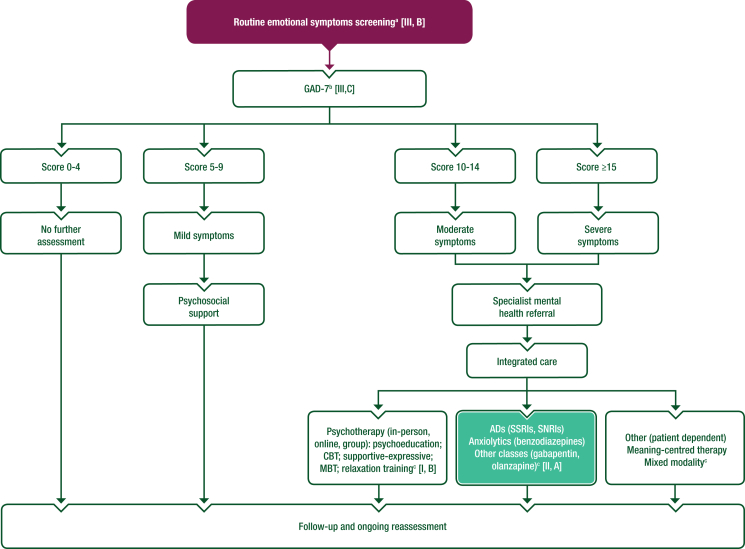
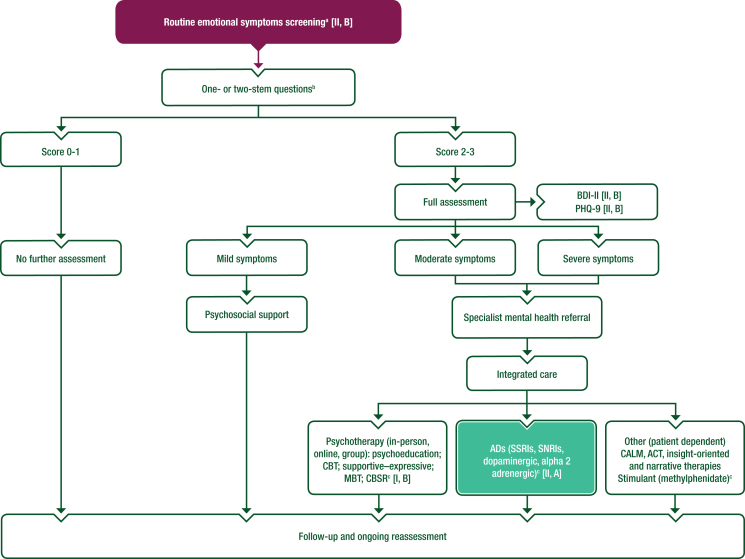
Verification
Claims the paper makes
The claims and statistics of this paper haven’t been checked yet.
Run the check — free, no account needed. It reads the open-access text and checks the sources it cites.
Claims other papers make about this one
Each is checked against this paper’s own text: does it say what the citing paper says it does?
The source backs part of the claim, not all of it — or backs it for a different population, condition or comparison.
In the citing paper
“Uncertainty, fear of recurrence or progression, symptoms, functional disruption, and financial strain can contribute to distress, anxiety, depression, sleep disturbance, and unmet psychosocial needs”
From Mapping Technologies, Support Functions, Evaluation Outcomes, and Safety Governance Related to Conversational AI Agents for Psychological Support of Patients With Cancer: Scoping Review (2026) · cites this paper as [2]
Experimental — accuracy not yet measuredThe source backs part of the claim, not all of it — or backs it for a different population, condition or comparison.
In the citing paper
“Psychological distress and unmet psychosocial needs are common across the cancer continuum.”
From Mapping Technologies, Support Functions, Evaluation Outcomes, and Safety Governance Related to Conversational AI Agents for Psychological Support of Patients With Cancer: Scoping Review (2026) · cites this paper as [2]
Experimental — accuracy not yet measured
Self-check
Percentages, sums and reported differences re-computed from the paper’s own numbers.
The self-check needs the paper’s full text.
Citations
Cites
The Hospital Anxiety and Depression Scale
Zigmond, A. S., & Snaith, R. P. (1983) · Acta Psychiatrica Scandinavica · doi:10.1111/j.1600-0447.1983.tb09716.x · Cited by 47,139
The PHQ-9: Validity of a brief depression severity measure
Kroenke, K., Spitzer, R. L., & Williams, J. B. W. (2001) · Journal of General Internal Medicine · doi:10.1046/j.1525-1497.2001.016009606.x · Cited by 44,910
A Brief Measure for Assessing Generalized Anxiety Disorder: The GAD-7
Spitzer, R. L., Kroenke, K., Williams, J. B. W., & Löwe, B. (2006) · Archives of Internal Medicine · doi:10.1001/archinte.166.10.1092 · Cited by 31,765
Depression and quality of life in older persons: A review
Sivertsen, H., Bjørkløf, G. H., Engedal, K., Selbæk, G., & Helvik, A.-S. (2015) · Dementia and Geriatric Cognitive Disorders · doi:10.1159/000437299 · Cited by 14,152
Santomauro, D. F., Mantilla Herrera, A. M., Shadid, J., Zheng, P., Ashbaugh, C., Pigott, D. M., Abbafati, C., Adolph, C., Amlag, J. O., Aravkin, A. Y., et al. (2021) · The Lancet · doi:10.1016/s0140-6736(21)02143-7 · Cited by 5,444
Mitchell, A. J., Chan, M., Bhatti, H., Halton, M., Grassi, L., Johansen, C., & Meader, N. (2011) · The Lancet Oncology · doi:10.1016/s1470-2045(11)70002-x · Cited by 2,449
Self-citationAntidepressant Drug Effects and Depression Severity: A Patient-Level Meta-analysis
Fournier, J. C., DeRubeis, R. J., Hollon, S. D., Dimidjian, S., Amsterdam, J. D., Shelton, R. C., & Fawcett, J. (2010) · JAMA · doi:10.1001/jama.2009.1943 · Cited by 2,009
Case-finding instruments for depression: Two questions are as good as many
Whooley, M. A., Avins, A. L., Miranda, J., & Browner, W. S. (1997) · Journal of General Internal Medicine · doi:10.1046/j.1525-1497.1997.00076.x · Cited by 1,826
Fear of cancer recurrence in adult cancer survivors: a systematic review of quantitative studies
Simard, S., Thewes, B., Humphris, G., Dixon, M., Hayden, C., Mireskandari, S., & Ozakinci, G. (2013) · Journal of Cancer Survivorship · doi:10.1007/s11764-013-0272-z · Cited by 1,217
Faller, H., Schuler, M., Richard, M., Heckl, U., Weis, J., & Küffner, R. (2013) · Journal of Clinical Oncology · doi:10.1200/jco.2011.40.8922 · Cited by 912
Distress Management, Version 3.2019, NCCN Clinical Practice Guidelines in Oncology
Riba, M. B., Donovan, K. A., Andersen, B., Braun, I., Breitbart, W. S., Brewer, B. W., Buchmann, L. O., Clark, M. M., Collins, M., Corbett, C., et al. (2019) · Journal of the National Comprehensive Cancer Network · doi:10.6004/jnccn.2019.0048 · Cited by 871
Self-citationNiedzwiedz, C. L., Knifton, L., Robb, K. A., Katikireddi, S. V., & Smith, D. J. (2019) · BMC Cancer · doi:10.1186/s12885-019-6181-4 · Cited by 756
Mitchell, A. J., Ferguson, D. W., Gill, J., Paul, J., & Symonds, P. (2013) · The Lancet Oncology · doi:10.1016/s1470-2045(13)70244-4 · Cited by 749
Four-Week Prevalence of Mental Disorders in Patients With Cancer Across Major Tumor Entities
Mehnert, A., Brähler, E., Faller, H., Härter, M., Keller, M., Schulz, H., Wegscheider, K., Weis, J., Boehncke, A., Hund, B., et al. (2014) · Journal of Clinical Oncology · doi:10.1200/jco.2014.56.0086 · Cited by 649
Simard, S., & Savard, J. (2009) · Supportive Care in Cancer · doi:10.1007/s00520-008-0444-y · Cited by 608
Wang, X., Wang, N., Zhong, L., Wang, S., Zheng, Y., Yang, B., Zhang, J., Lin, Y., & Wang, Z. (2020) · Molecular Psychiatry · doi:10.1038/s41380-020-00865-6 · Cited by 512 · cited 2×
“Volume 8 - Issue 2 - 2023 treatment, more advanced disease and ChT have all been shown to be significant risk factors for depression.(1,2) Furthermore, there is increasing evidence that higher tumour cell burden and treatment-related tissue destruction are associated with increased release of proinflammatory cytokines…”
BackgroundMitchell, A. J. (2007) · Journal of Clinical Oncology · doi:10.1200/jco.2006.10.0438 · Cited by 468
Robinson, S., Kissane, D. W., Brooker, J., & Burney, S. (2015) · Journal of Pain and Symptom Management · doi:10.1016/j.jpainsymman.2014.07.008 · Cited by 401
Self-citationJacobsen, P. B., & Jim, H. S. (2008) · CA: A Cancer Journal for Clinicians · doi:10.3322/ca.2008.0003 · Cited by 382
Mixed anxiety/depression symptoms in a large cancer cohort: prevalence by cancer type
Brintzenhofe-Szoc, K. M., Levin, T. T., Li, Y., Kissane, D. W., & Zabora, J. R. (2009) · Psychosomatics · doi:10.1176/appi.psy.50.4.383 · Cited by 364
Self-citationRodin, G., Lo, C., Rydall, A., Shnall, J., Malfitano, C., Chiu, A., Panday, T., Watt, S., An, E., Nissim, R., et al. (2018) · Journal of Clinical Oncology · doi:10.1200/jco.2017.77.1097 · Cited by 338
Self-citationCillessen, L., Johannsen, M., Speckens, A. E. M., & Zachariae, R. (2019) · Psycho-Oncology · doi:10.1002/pon.5214 · Cited by 326
Self-citationRodin, G., Lo, C., Mikulincer, M., Donner, A., Gagliese, L., & Zimmermann, C. (2009) · Social Science & Medicine · doi:10.1016/j.socscimed.2008.10.037 · Cited by 323
Self-citationEmotional Distress: The Sixth Vital Sign in Cancer Care
Bultz, B. D., & Carlson, L. E. (2005) · Journal of Clinical Oncology · doi:10.1200/jco.2005.02.3259 · Cited by 287
The burden of psychosocial morbidity related to cancer: patient and family issues
Caruso, R., Nanni, M. G., Riba, M. B., Sabato, S., & Grassi, L. (2017) · International Review of Psychiatry · doi:10.1080/09540261.2017.1288090 · Cited by 244
Self-citationFirst, M. B., Gaebel, W., Maj, M., Stein, D. J., Kogan, C. S., Saunders, J. B., Poznyak, V. B., Gureje, O., Lewis‐Fernández, R., Maercker, A., et al. (2021) · World Psychiatry · doi:10.1002/wps.20825 · Cited by 236 · cited 1×
“The ICD-11 and DSM-5-TR share diagnostic criteria but differ in duration requirement and manifestations of anxiety; the ICD-11 also includes sympathetic autonomic overactivity among its criteria.(47) Field studies with ICD-11 support its clinical utility for GAD and panic disorder.”
BackgroundDriessen, E., Cuijpers, P., Hollon, S. D., & Dekker, J. J. M. (2010) · Journal of Consulting and Clinical Psychology · doi:10.1037/a0020570 · Cited by 208
Psychosocial interventions for advanced cancer patients: a systematic review
Teo, I., Krishnan, A., & Lee, G. L. (2019) · Psycho-Oncology · doi:10.1002/pon.5103 · Cited by 205 · cited 1×
“The primary psychotherapeutic modalities include psychoeducation, supportive therapy or counselling, relaxation training or mindfulness-based therapy (MBT)(96) [including mindfulness-based stress reduction (MBSR) and mindfulness-based cognitive therapy (MBCT)], cognitive behavioural therapy (CBT), problem-solving ther…”
BackgroundEsser, P., Hartung, T. J., Friedrich, M., Johansen, C., Wittchen, H., Faller, H., Koch, U., Härter, M., Keller, M., Schulz, H., et al. (2018) · Psycho-Oncology · doi:10.1002/pon.4681 · Cited by 185
Schimmers, N., Breeksema, J. J., Smith-Apeldoorn, S. Y., Veraart, J., van den Brink, W., & Schoevers, R. A. (2022) · Psychopharmacology · doi:10.1007/s00213-021-06027-y · Cited by 162
Antidepressants for the treatment of depression in people with cancer
Ostuzzi, G., Matcham, F., Dauchy, S., Barbui, C., & Hotopf, M. (2018) · Cochrane Database of Systematic Reviews · doi:10.1002/14651858.cd011006.pub3 · Cited by 158
Twelve-Month and Lifetime Prevalence of Mental Disorders in Cancer Patients
Kuhnt, S., Brähler, E., Faller, H., Härter, M., Keller, M., Schulz, H., Wegscheider, K., Weis, J., Boehncke, A., Hund, B., et al. (2016) · Psychotherapy and Psychosomatics · doi:10.1159/000446991 · Cited by 157
Fear of cancer recurrence and death anxiety
Sharpe, L., Curran, L., Butow, P., & Thewes, B. (2018) · Psycho-Oncology · doi:10.1002/pon.4783 · Cited by 149
Major Depression and Survival in People With Cancer
Walker, J., Mulick, A., Magill, N., Symeonides, S., Gourley, C., Burke, K., Belot, A., Quartagno, M., van Niekerk, M., Toynbee, M., et al. (2021) · Psychosomatic Medicine · doi:10.1097/psy.0000000000000942 · Cited by 124
Trajectories of grief: Comparing symptoms from the DSM‐5 and ICD‐11 diagnoses
Bonanno, G. A., & Malgaroli, M. (2020) · Depression and Anxiety · doi:10.1002/da.22902 · Cited by 112
Walker, Z. J., Xue, S., Jones, M. P., & Ravindran, A. V. (2021) · JCO Global Oncology · doi:10.1200/go.21.00056 · Cited by 103
Spotlight on the Fear of Cancer Recurrence Inventory (FCRI)
Smith, A. B., Costa, D., Galica, J., Lebel, S., Tauber, N., van Helmondt, S. J., & Zachariae, R. (2020) · Psychology Research and Behavior Management · doi:10.2147/prbm.s231577 · Cited by 98 · cited 4×
“Data show that 40%-50% of cancer survivors report moderate to severe levels of FCR.24 While a certain level of worry may be adaptive, more intense episodes of FCR can compromise psychological functioning and QoL, exacerbate anxiety, cause sleep disturbances and favour the onset of depression.25 Death anxiety,26 which…”
MethodInfluentialSelf-citationStatus of psychological trials in breast cancer patients: a report of three meta-analyses
Naaman, S. C., Radwan, K., Fergusson, D., & Johnson, S. (2009) · Psychiatry: Interpersonal and Biological Processes · doi:10.1521/psyc.2009.72.1.50 · Cited by 87
Wu, Y., Levis, B., Sun, Y., Krishnan, A., He, C., Riehm, K. E., Rice, D. B., Azar, M., Yan, X. W., Neupane, D., et al. (2020) · Journal of Psychosomatic Research · doi:10.1016/j.jpsychores.2019.109892 · Cited by 48
Self-citationWillems, R. A., Bolman, C. A. W., Lechner, L., Mesters, I., Gunn, K. M., Skrabal Ross, X., & Olver, I. (2020) · Current Opinion in Supportive & Palliative Care · doi:10.1097/spc.0000000000000483 · Cited by 41
Arch, J. J., Genung, S. R., Ferris, M. C., Kirk, A., Slivjak, E. T., Fishbein, J. N., Schneider, R. L., & Stanton, A. L. (2020) · Supportive Care in Cancer · doi:10.1007/s00520-020-05297-0 · Cited by 22 · cited 1×
“Although a precancer history of anxiety may be a risk factor for cancer-related anxiety, it should be noted that two-thirds of patients with cancer who report symptoms of anxiety have no history of precancer anxiety.(38) FCR is more common in patients who are female, younger, and in those who have received ChT or radi…”
Background
Research works printed but not linked: 79
- Wang, 2020, Depression and anxiety in relation to cancer incidence and mortality: a systematic review and meta-analysis of cohort studies, Mol Psychiatry, 25, 1487, 10.1038/s41380-019-0595-x · DOI · Paper page
- Caruso, 2017, Depressive spectrum disorders in cancer: prevalence, risk factors and screening for depression: a critical review, Acta Oncol, 56, 146, 10.1080/0284186X.2016.1266090 · DOI · Paper page
- Herrman, 2019, Reducing the global burden of depression: a Lancet-World Psychiatric Association Commission, Lancet, 393, e42, 10.1016/S0140-6736(18)32408-5 · DOI
- Friedrich, 2017, Depression is the leading cause of disability around the world, JAMA, 317, 1517
- Grassi, 2018, Screening for emotional disorders in patients with cancer using the Brief Symptom Inventory (BSI) and the BSI-18 versus a standardized psychiatric interview (the World Health Organization Composite International Diagnostic Interview), Cancer, 124, 2415, 10.1002/cncr.31340 · DOI
- Passik, 1998, Oncologists’ recognition of depression in their patients with cancer, J Clin Oncol, 16, 1594, 10.1200/JCO.1998.16.4.1594 · DOI
- Keller, 2004, Recognition of distress and psychiatric morbidity in cancer patients: a multi-method approach, Ann Oncol, 15, 1243, 10.1093/annonc/mdh318 · DOI
- Kissane, 2014, Unrecognised and untreated depression in cancer care, Lancet Psychiatry, 1, 320, 10.1016/S2215-0366(14)70345-1 · DOI
- Grassi, 2020, Cancer and severe mental illness: bi-directional problems and potential solutions, Psychooncology, 29, 1445, 10.1002/pon.5534 · DOI
- Walker, 2014, Prevalence, associations, and adequacy of treatment of major depression in patients with cancer: a cross-sectional analysis of routinely collected clinical data, Lancet Psychiatry, 1, 343, 10.1016/S2215-0366(14)70313-X · DOI · Paper page
- Zabora, 2001, The prevalence of psychological distress by cancer site, Psychooncology, 10, 19, 10.1002/1099-1611(200101/02)10:1<19::AID-PON501>3.0.CO;2-6 · DOI · Paper page
- Linden, 2012, Anxiety and depression after cancer diagnosis: prevalence rates by cancer type, gender, and age, J Affect Disord, 141, 343, 10.1016/j.jad.2012.03.025 · DOI · Paper page
- Lebel, 2016, From normal response to clinical problem: definition and clinical features of fear of cancer recurrence, Support Care Cancer, 24, 3265
- Soleimani, 2020, Death anxiety in patients with cancer: a systematic review and meta-analysis, Eur J Oncol Nurs, 48, 10.1016/j.ejon.2020.101803 · DOI
- Grossman, 2018, Death anxiety interventions in patients with advanced cancer: a systematic review, Palliat Med, 32, 172, 10.1177/0269216317722123 · DOI · Paper page
- Hartung, 2017, The risk of being depressed is significantly higher in cancer patients than in the general population: prevalence and severity of depressive symptoms across major cancer types, Eur J Cancer, 72, 46, 10.1016/j.ejca.2016.11.017 · DOI · Paper page
- Grassi, 2016, Demoralization syndrome: new insights in psychosocial cancer care, Cancer, 122, 2130, 10.1002/cncr.30022 · DOI
- Tecuta, 2015, Demoralization: a systematic review on its clinical characterization, Psychol Med, 45, 673, 10.1017/S0033291714001597 · DOI
- Tang, 2015, A systematic review and meta-analysis of demoralization and depression in patients with cancer, Psychosomatics, 56, 634, 10.1016/j.psym.2015.06.005 · DOI
- Arrieta, 2013, Association of depression and anxiety on quality of life, treatment adherence, and prognosis in patients with advanced non-small cell lung cancer, Ann Surg Oncol, 20, 1941, 10.1245/s10434-012-2793-5 · DOI
- Lebel, 2017, Current state and future prospects of research on fear of cancer recurrence, Psychooncology, 26, 424, 10.1002/pon.4103 · DOI
- Yang, 2017, The relationship between cancer patient’s fear of recurrence and chemotherapy: a systematic review and meta-analysis, J Psychosom Res, 98, 55, 10.1016/j.jpsychores.2017.05.002 · DOI
- Yang, 2017, The relationship between cancer patient’s fear of recurrence and radiotherapy: a systematic review and meta-analysis, Psychooncology, 26, 738, 10.1002/pon.4224 · DOI
- Walker, 2013, Prevalence of depression in adults with cancer: a systematic review, Ann Oncol, 24, 895, 10.1093/annonc/mds575 · DOI
- Ahmad, 2021, Pathophysiological implications of neuroinflammation mediated HPA axis dysregulation in the prognosis of cancer and depression, Mol Cell Endocrinol, 520, 10.1016/j.mce.2020.111093 · DOI
- McFarland, 2021, Clinical implications of cancer related inflammation and depression: a critical review, Clin Pract Epidemiol Ment Health, 17, 287, 10.2174/1745017902117010287 · DOI
- Rebello, 2019, Anxiety and fear-related disorders in the ICD-11: results from a global case-controlled field study, Arch Med Res, 50, 490, 10.1016/j.arcmed.2019.12.012 · DOI
- Belvederi Murri, 2020, The relationship between demoralization and depressive symptoms among patients from the general hospital: network and exploratory graph analysis, J Affect Disord, 276, 137, 10.1016/j.jad.2020.06.074 · DOI
- Bruera, 1991, The Edmonton Symptom Assessment System (ESAS): a simple method for the assessment of palliative care patients, J Palliat Care, 7, 6, 10.1177/082585979100700202 · DOI
- Mitchell, 2010, Short screening tools for cancer-related distress: a review and diagnostic validity meta-analysis, J Natl Compr Canc Netw, 8, 487, 10.6004/jnccn.2010.0035 · DOI
- Mattsson, 2019, Identification of anxiety and depression symptoms in patients with cancer: comparison between short and long web-based questionnaires, J Med Internet Res, 21, 10.2196/11387 · DOI
- Andersen, 2014, Screening, assessment, and care of anxiety and depressive symptoms in adults with cancer: an American Society of Clinical Oncology guideline adaptation, J Clin Oncol, 32, 1605, 10.1200/JCO.2013.52.4611 · DOI · Paper page
- Butow, 2015, Clinical pathway for the screening, assessment and management of anxiety and depression in adult cancer patients: Australian guidelines, Psychooncology, 24, 987, 10.1002/pon.3920 · DOI
- Vodermaier, 2011, Accuracy of the Hospital Anxiety and Depression Scale as a screening tool in cancer patients: a systematic review and meta-analysis, Support Care Cancer, 19, 1899
- Ripamonti, 2014, The Edmonton Symptom Assessment System (ESAS) as a screening tool for depression and anxiety in non-advanced patients with solid or haematological malignancies on cure or follow-up, Support Care Cancer, 22, 783
- Thewes, 2015, The Concerns About Recurrence Questionnaire: validation of a brief measure of fear of cancer recurrence amongst Danish and Australian breast cancer survivors, J Cancer Surviv, 9, 68, 10.1007/s11764-014-0383-1 · DOI
- Hinz, 2015, Fear of progression in patients 6 months after cancer rehabilitation-a- validation study of the fear of progression questionnaire FoP-Q-12, Support Care Cancer, 23, 1579
- Lloyd-Williams, 2021, Socio-economic deprivation and symptom burden in UK hospice patients with advanced cancer-findings from a longitudinal study, Cancers (Basel), 13, 2537, 10.3390/cancers13112537 · DOI
- Ripamonti, 2020, The validation of the Italian version of the COmprehensive Score for financial Toxicity (COST), Support Care Cancer, 28, 4477
- Ryan, 2012, Sensitivity and specificity of the Distress Thermometer and a two-item depression screen (Patient Health Questionnaire-2) with a ‘help’ question for psychological distress and psychiatric morbidity in patients with advanced cancer, Psychooncology, 21, 1275, 10.1002/pon.2042 · DOI · Paper page
- Warmenhoven, 2012, The Beck Depression Inventory (BDI-II) and a single screening question as screening tools for depressive disorder in Dutch advanced cancer patients, Support Care Cancer, 20, 319
- Christensen, 2009, Prevalence and risk of depressive symptoms 3-4 months post-surgery in a nationwide cohort study of Danish women treated for early stage breast-cancer, Breast Cancer Res Treat, 113, 339, 10.1007/s10549-008-9920-9 · DOI
- Mitchell, 2012, Meta-analysis of screening and case finding tools for depression in cancer: evidence based recommendations for clinical practice on behalf of the Depression in Cancer Care consensus group, J Affect Disord, 140, 149, 10.1016/j.jad.2011.12.043 · DOI · Paper page
- Rayner, 2009, The detection of depression in palliative care, Curr Opin Support Palliat Care, 3, 55, 10.1097/SPC.0b013e328326b59b · DOI
- Thekkumpurath, 2011, Screening for major depression in cancer outpatients: the diagnostic accuracy of the 9-item patient health questionnaire, Cancer, 117, 218, 10.1002/cncr.25514 · DOI
- Lloyd-Williams, 2007, The development of the Brief Edinburgh Depression Scale (BEDS) to screen for depression in patients with advanced cancer, J Affect Disord, 99, 259, 10.1016/j.jad.2006.09.015 · DOI
- Rodriguez-Mayoral, 2021, Comparing the hospital anxiety and depression scale to the Brief Edinburgh Depression Scale for identifying cases of major depressive disorder in advanced cancer palliative patients, Palliat Support Care, 19, 170, 10.1017/S1478951520000760 · DOI
- Hartung, 2017, The Hospital Anxiety and Depression Scale (HADS) and the 9-item Patient Health Questionnaire (PHQ-9) as screening instruments for depression in patients with cancer, Cancer, 123, 4236, 10.1002/cncr.30846 · DOI
- Rankin, 2015, Everybody wants it done but nobody wants to do it: an exploration of the barrier and enablers of critical components towards creating a clinical pathway for anxiety and depression in cancer, BMC Health Serv Res, 15, 28, 10.1186/s12913-015-0691-9 · DOI
- Caruso, 2017, Depressive spectrum disorders in cancer: diagnostic issues and intervention. A critical review, Curr Psychiatry Rep, 19, 33, 10.1007/s11920-017-0785-7 · DOI
- Trevino, 2014, Patient-oncologist alliance as protection against suicidal ideation in young adults with advanced cancer, Cancer, 120, 2272, 10.1002/cncr.28740 · DOI
- Trevino, 2013, Patient-oncologist alliance, psychosocial well-being, and treatment adherence among young adults with advanced cancer, J Clin Oncol, 31, 1683, 10.1200/JCO.2012.46.7993 · DOI
- Caruso, 2013, Psychopharmacology in psycho-oncology, Curr Psychiatry Rep, 15, 393, 10.1007/s11920-013-0393-0 · DOI
- Fitzgerald, 2015, The relationship between depression and physical symptom burden in advanced cancer, BMJ Support Palliat Care, 5, 381, 10.1136/bmjspcare-2012-000380 · DOI · Paper page
- 2017, Psychotherapy for major depressive disorder and generalized anxiety disorder: a health technology assessment, Ont Health Technol Assess Ser, 17, 1
- Martinez, 2017, ‘Dignity therapy’, a promising intervention in palliative care: a comprehensive systematic literature review, Palliat Med, 31, 492, 10.1177/0269216316665562 · DOI · Paper page
- Breitbart, 2018, Individual meaning-centered psychotherapy for the treatment of psychological and existential distress: a randomized controlled trial in patients with advanced cancer, Cancer, 124, 3231, 10.1002/cncr.31539 · DOI · Paper page
- Grassi, 2014, Efficacy and safety of pharmacotherapy in cancer-related psychiatric disorders across the trajectory of cancer care: a review, Int Rev Psychiatry, 26, 44, 10.3109/09540261.2013.842542 · DOI
- Heron-Speirs, 2013, Moderators of psycho-oncology therapy effectiveness: meta-analysis of therapy characteristics, J Psychosoc Oncol, 31, 617, 10.1080/07347332.2013.835022 · DOI
- Tauber, 2019, Effect of psychological intervention on fear of cancer recurrence: a systematic review and meta-analysis, J Clin Oncol, 37, 2899, 10.1200/JCO.19.00572 · DOI · Paper page
- Salt, 2017, Drug therapy for symptoms associated with anxiety in adult palliative care patients, Cochrane Database Syst Rev, 5, CD004596
- Panjwani, 2021, Recent trends in the management of depression in persons with cancer, Curr Opin Psychiatry, 34, 448, 10.1097/YCO.0000000000000727 · DOI
- Thom, 2019, Major depressive disorder in medical illness: a review of assessment, prevalence, and treatment options, Psychosom Med, 81, 246, 10.1097/PSY.0000000000000678 · DOI
- Ng, 2014, Rapid response to methylphenidate as an add-on therapy to mirtazapine in the treatment of major depressive disorder in terminally ill cancer patients: a four-week, randomized, double-blinded, placebo-controlled study, Eur Neuropsychopharmacol, 24, 491, 10.1016/j.euroneuro.2014.01.016 · DOI · Paper page
- Grassi, 2018, The use of antidepressants in oncology: a review and practical tips for oncologists, Ann Oncol, 29, 101, 10.1093/annonc/mdx526 · DOI
- Bradbury, 2022, Time to update evidence-based guideline recommendations about concurrent tamoxifen and antidepressant use? A systematic review, Clin Breast Cancer, 22, e362, 10.1016/j.clbc.2021.10.003 · DOI
- Johnson, 2018, A research study review of effectiveness of treatments for psychiatric conditions common to end-stage cancer patients: needs assessment for future research and an impassioned plea, BMC Psychiatry, 18, 85, 10.1186/s12888-018-1651-9 · DOI
- Ostuzzi, 2015, Efficacy and acceptability of antidepressants on the continuum of depressive experiences in patients with cancer: systematic review and meta-analysis, Cancer Treat Rev, 41, 714, 10.1016/j.ctrv.2015.06.003 · DOI
- Ziegler, 2011, Identifying psychological distress at key stages of the cancer illness trajectory: a systematic review of validated self-report measures, J Pain Symptom Manage, 41, 619, 10.1016/j.jpainsymman.2010.06.024 · DOI
- Bravery, 2020, Depression treatment research in people with cancer does not reflect cancer prevalence: findings from a systematic review, Evid Based Ment Health, 23, 155, 10.1136/ebmental-2020-300145 · DOI
- Donovan, 2020, Advancing the science of distress screening and management in cancer care, Epidemiol Psychiatr Sci, 29, e85, 10.1017/S2045796019000799 · DOI · Paper page
- Clover, 2015, Why do oncology outpatients who report emotional distress decline help?, Psychooncology, 24, 812, 10.1002/pon.3729 · DOI · Paper page
- Tondorf, 2018, Focusing on cancer patients’ intentions to use psychooncological support: a longitudinal, mixed-methods study, Psychooncology, 27, 1656, 10.1002/pon.4735 · DOI
- Meggiolaro, 2021, From distress screening to uptake: an Italian multicenter study of cancer patients, Cancers (Basel), 13, 3761, 10.3390/cancers13153761 · DOI
- Partridge, 2015, Challenges to standardizing the care for adult cancer survivors: highlighting ASCO’s fatigue and anxiety and depression guidelines, Am Soc Clin Oncol Educ Book, 35, 188, 10.14694/EdBook_AM.2015.35.188 · DOI
- Frey Nascimento, 2019, Oncologist recommendation matters!-Predictors of psycho-oncological service uptake in oncology outpatients, Psychooncology, 28, 351, 10.1002/pon.4948 · DOI
- McCarter, 2018, Interventions to improve screening and appropriate referral of patients with cancer for psychosocial distress: systematic review, BMJ Open, 8, 10.1136/bmjopen-2017-017959 · DOI
- Zebrack, 2015, Psychosocial distress screening implementation in cancer care: an analysis of adherence, responsiveness, and acceptability, J Clin Oncol, 33, 1165, 10.1200/JCO.2014.57.4020 · DOI
- Dykewicz, 2001, Summary of the guidelines for preventing opportunistic infections among hematopoietic stem cell transplant recipients, Clin Infect Dis, 33, 139, 10.1086/321805 · DOI
Cited by
Sorted by citations
Peterson, D. E., Koyfman, S. A., Yarom, N., Lynggaard, C. D., Ismaila, N., Forner, L. E., Fuller, C. D., Mowery, Y. M., Murphy, B. A., Watson, E. E., et al. (2024) · Journal of Clinical Oncology · doi:10.1200/jco.23.02750 · Cited by 147
Stiefel, F., Bourquin, C., Salmon, P., Jeanneret, L. A., Dauchy, S., Ernstmann, N., Grassi, L. G., Libert, Y., Vitinius, F., Santini, D., et al. (2024) · ESMO Open · doi:10.1016/j.esmoop.2024.103496 · Cited by 70
“29 The psychology of the clinician Psychological challenges for oncology clinicians arising from their practice can interfere with communication.”
Self-citationSchipper, S., Nigam, K. B., Schmid, Y., Piechotta, V., Ljuslin, M., Beaussant, Y., Schwarzer, G., & Boehlke, C. S. (2024) · Cochrane Database of Systematic Reviews · doi:10.1002/14651858.cd015383.pub2 · Cited by 44
Zhang, T., Ren, Z., Wakefield, C. E., Hui, B. P. H., Akechi, T., Shi, C., Du, X., Chen, W., Lai, L., Zhao, C., et al. (2024) · Clinical Psychology Review · doi:10.1016/j.cpr.2024.102520 · Cited by 44
Exploring the stigma experienced by people affected by Parkinson’s disease: a systematic review
Crooks, S., Mitchell, G., Wynne, L., & Carter, G. (2025) · BMC Public Health · doi:10.1186/s12889-024-21236-8 · Cited by 32
Metadata
- Authors
- Grassi, L., Caruso, R., Riba, M. B., Lloyd-Williams, M., Kissane, D., Rodin, G., McFarland, D., Campos-Ródenas, R., Zachariae, R., Santini, D., & Ripamonti, C. I.
- Affiliations
- University of Ferrara (IT)
- University of Michigan (US)
- Monash Medical Centre (AU)
- Princess Margaret Cancer Centre (CA)
- University of Rochester Medicine (US)
- Aarhus University (DK)
- Sapienza University of Rome (IT)
- Fondazione IRCCS Istituto Nazionale dei Tumori (IT)
- Venue
- ESMO Open
- Publisher
- Elsevier BV
- Published
- 2023-04
- Volume
- 8
- Issue
- 2
- Pages
- 101155
- ISSN
- 2059-7029 (ISSN-L)
- PMC
- PMC10163167
- OpenAlex
- W4324143593
- Cited by
- 316
- References
- 125
- Citations by year
- 2026: 128 · 2025: 106 · 2024: 76 · 2023: 6
- FWCI
- 38.54
- Type
- journal article
- Language
- en
- Open access
- gold
- doi.org
- Licence
- Locations
- ESMO Open (publishedVersion, cc-by-nc-nd)
- PubMed Central (publishedVersion, cc-by-nc-nd)
- PubMed (publishedVersion)
- Institutional Research Information System (Università degli Studi di Brescia) (submittedVersion, other-oa)
- Institutional Research Information System University of Ferrara (University of Ferrara) (submittedVersion, cc-by-nc-nd)
- IRIS Research product catalog (Sapienza University of Rome) (submittedVersion, cc-by-nc-nd)
- Liverpool John Moores University (submittedVersion)
- Zaguan (Universidad de Zaragoza) (submittedVersion, cc-by-nc-nd)
- Institutional Research Information System University of Ferrara (University of Ferrara) (submittedVersion, other-oa)
- Funders
- European Society for Medical Oncology
- Topics
- Health Sciences › Medicine › Oncology › Cancer survivorship and care
- Health Sciences › Medicine › Psychiatry and Mental health › Mental Health Treatment and Access
- Social Sciences › Psychology › Experimental and Cognitive Psychology › Anxiety, Depression, Psychometrics, Treatment, Cognitive Processes
- Keywords
- anxiety, depression, cancer patients, psycho-oncology, cognitive behavioral therapy, mindfulness-based interventions, psychopharmacological treatment, prevalence of mental disorders
- MeSH terms
- Adult, Anxiety, Depression, Humans, Neoplasms
About these checks
Registry, retraction, Cites and statistics results are computed, not judged, with one exception: a printed reference that no index lists is read once by a model before it counts as a citation error. Claims are extracted by a model and kept only when their quote appears verbatim in the text; each cited source is then checked, with a model’s help, for whether it says what the claim relies on. Those verdicts can be wrong — read the claim’s quote and the cited source before relying on one.
Statistics and arithmetic are recomputed, not judged.
Confidence bands are shown only for fields calibrated on our annotated test set. None is calibrated yet, so no band is shown.
What counts as a claim ›How we measure confidence ›How we check this ›
Are you an author, or do you see a problem with this page? Request a review
