

Regulation of RNA splicing in endometrial tissue and its association with endometriosis
Open accessThe DOI matches its Crossref record; 87 of the 87 references it cites were found in a registry or an index; 2 of the 75 sources its claims cite were checked for support.
Abstract
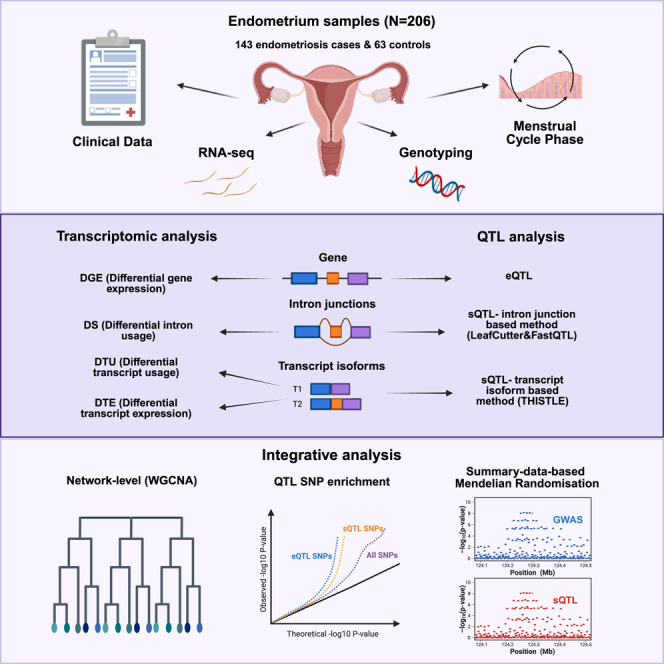
The endometrium, essential for reproduction, undergoes cyclical shedding, remodeling, and regeneration. Using a large endometrial transcriptomic dataset ( n = 206), we identified RNA splicing and transcript isoform-level changes across the menstrual cycle and in endometriosis, findings not seen in gene-level analyses. Transcriptomic differences were most pronounced in the mid-secretory (receptive) phase in endometriosis samples. By integrating genotype data, we found evidence of cis -genetic effects on splicing in endometrium, identifying 3,296 splicing quantitative trait loci (sQTLs) with the majority of genes with sQTLs (67.5%) not discovered in the gene level eQTLs analysis, indicating the splicing-specific effects. Integrating the sQTLs with the endometriosis genome-wide association study (GWAS) data, we identified two genes ( GREB1 and WASHC3 ) that were significantly associated with endometriosis risk through genetically regulated splicing events. Overall, this study detected transcript isoform-level and RNA splicing level specific changes, providing insights into the dynamic changes in transcriptomic regulation in endometrium and its association with endometriosis.
Overview
CoChat Summary
TL;DR
Using endometrial RNA-seq and genotype data from 206 women, this study found transcript isoform-level and RNA splicing changes across the menstrual cycle and in endometriosis that were missed by gene-level expression analyses. It also mapped endometrial splicing QTLs and prioritized GREB1 and WASHC3 as endometriosis risk genes linked to genetically regulated splicing.
Key findings
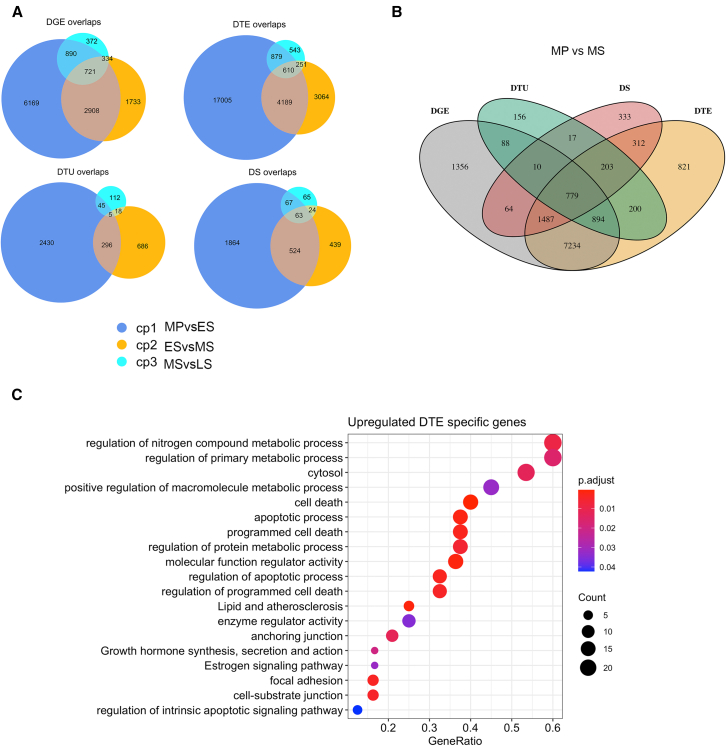
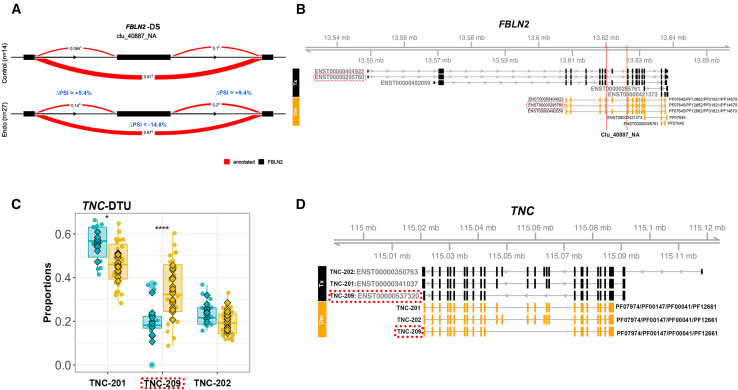
- In mid-proliferative vs. mid-secretory comparisons, the study identified 11,912 DGE genes, 11,930 DTE genes, 2,347 DTU genes, and 3,205 DS genes (FDR < 0.05); 576 (24.5%) DTU genes, 865 (27.0%) DS genes, and 1,536 (12.9%) DTE genes were not detected by DGE analysis.
- Endometriosis was associated with transcript isoform-level and splicing-specific dysregulation in 18 genes at Bonferroni p < 0.05, including decreased exon 4 skipping in ZNF217 (ΔPSI = −6.4%). The mid-secretory phase showed the most changes: 261 DTE transcripts in 250 genes, 165 DTU transcripts in 115 genes, and 62 alternatively spliced genes at FDR < 0.05, with 11 DTE, 39 DTU, and 11 DS events passing Bonferroni correction.
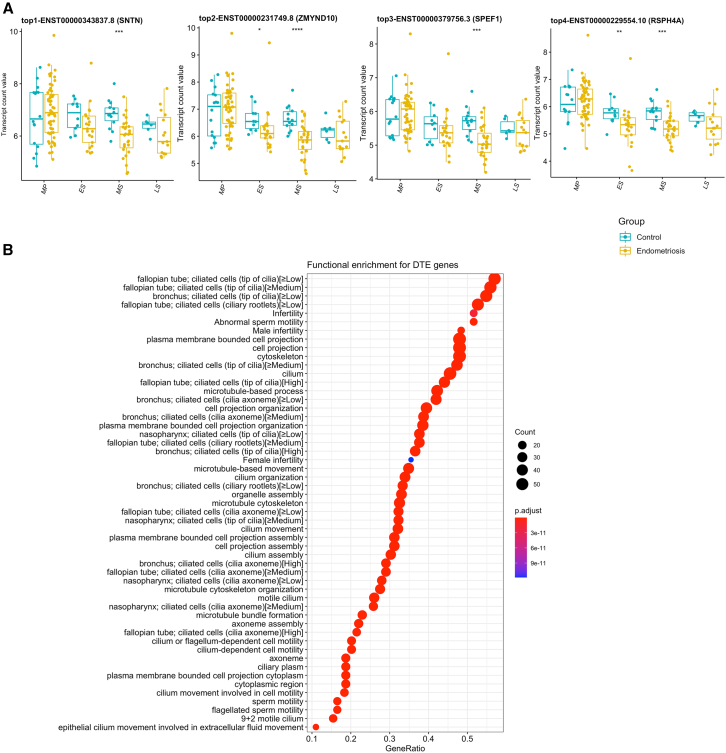
- A transcript co-expression module (MEdarkolivegreen) was associated with endometriosis at the mid-secretory phase (Beta = −0.55, Bonferroni p < 0.05) and was enriched for fallopian tube/ciliated cell and infertility-related pathways.
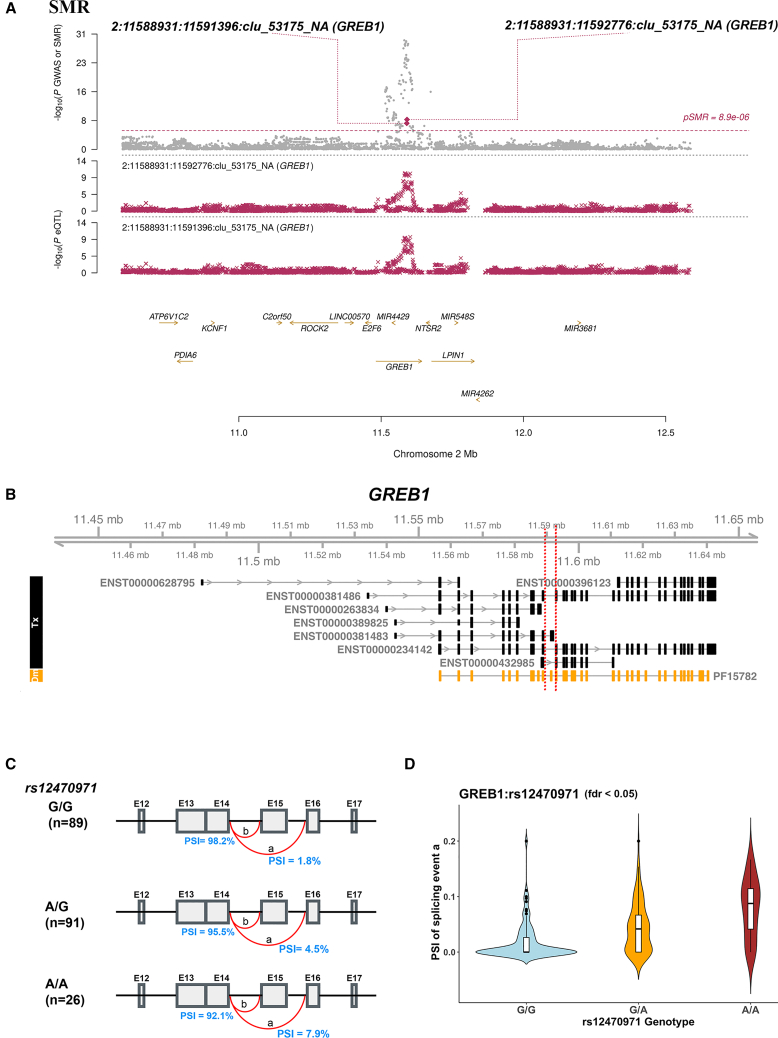
- sQTL mapping identified 3,296 cis-sQTL SNPs associated with 2,427 genes; 67.5% of sGenes were not found in gene-level eQTL analysis. Integrating sQTLs with endometriosis GWAS identified six genetically regulated splicing events in four genes (ARL14EP, GREB1, WASHC3, RP11-624M8.1) at FDR < 0.05, with GREB1 and WASHC3 passing the HEIDI test.
Methods
- Endometrial tissue and blood were collected from 206 women of European ancestry (143 endometriosis cases, 63 controls; aged 18–49), recruited at the Royal Women’s Hospital and Melbourne IVF Clinic; RNA-seq was performed on endometrial biopsies, and genotyping used HumanCoreExome or Infinium PsychArray chips, yielding 6,230,993 SNPs after QC and imputation.
- Differential analyses included DGE/DTE using DESeq2 and edgeR/tximport, DTU using DRIMSeq/stageR, DS using LeafCutter, WGCNA for transcript co-expression networks, and gprofiler2 for pathway enrichment.
- sQTL mapping used two complementary strategies: THISTLE for transcript-level phenotypes and LeafCutter with QTLtools for intron-excision phenotypes; findings were integrated with endometriosis GWAS using SMR and HEIDI, with SpliceAI annotation and GTEx tissue comparisons.
Limitations
- The paper states that short-read RNA-seq cannot precisely characterize full-length transcript isoforms, and long-read sequencing would improve this; sQTL and transcriptome-wide association power depend on sample size, requiring larger datasets to capture smaller-effect QTLs.
- The paper states that endometriosis is heterogeneous with likely sub-phenotypes, so larger samples with detailed sub-phenotype and fertility information are needed; functional validation of candidate transcript/splicing effects is also required.
- Evident from the text: analyses use bulk endometrial tissue, and the paper notes that cell-type composition changes across the menstrual cycle may modulate phase-specific splicing effects; additionally, endometriosis status for IVF participants (n = 22) was self-reported.
Model-written summary. Check it against the paper before relying on it.
Integrity signals
Registry
Cites
Statistics
Figures
Verification
Claims the paper makes
1 Valid · 0 Not valid · 54 Not checked · 148 Own results and interpretations
Every source the paper cites for this claim was checked and supports it.
In the paper
“Similar to other complex disorders, the majority of disease associated genetic variants fall within noncoding regions of the genome and causal variants may regulate gene expression and RNA splicing of corresponding coding gene targets.18,19”
§ Regulation of RNA splicing in endometrial tissue and its association with endometriosis > Introduction
What the sources say
- Supportedcites [18] Wang D. Liu S. Warrell J. Won H. Shi X. Navarro F.C.P. Clarke D. Gu M. Emani P. Yang Y.T. Comprehensive functional genomic resource and integrative model for the human brain Science 362 2018 eaat8464 PMC6413328 30545857 source
The Abstract (p.1) states that GWAS variants for brain disorders largely 'lie in noncoding regions' and that noncoding variants are associated with expression quantitative-trait loci, which is the background the citing sentence draws on. The QTL analysis section reports calculating 'expression, splicing-isoform, chromatin, and cell fraction QTLs (eQTLs, isoQTLs...)', i.e. genetic variants regulating both expression and splicing/isoform usage, including of coding genes (~16,000 coding eGenes). The 'Linking GWAS variants to genes' section then applies exactly this to disease variants — using the regulatory network built on Hi-C and QTLs 'to connect non-coding GWAS loci to potential disease genes' — so the hedged attribution ('may regulate gene expression and RNA splicing') matches the source's own level of confidence. The source frames this for neuropsychiatric (mainly SCZ) loci rather than giving a numeric proportion for all complex disorders, but the paraphrase does not exceed what it claims. (LLM, conf=0.82)
- Supportedcites [19] Gandal M.J. Zhang P. Hadjimichael E. Walker R.L. Chen C. Liu S. Won H. van Bakel H. Varghese M. Wang Y. Transcriptome-wide isoform-level dysregulation in ASD, schizophrenia, and bipolar disorder Science 362 2018 eaat8127 PMC6443102 30545856 source
The Introduction of our copy states directly that 'the majority of disease-associated genetic variation lies in non-coding regions enriched for non-coding RNAs and cis regulatory elements that regulate gene expression and splicing of their cognate coding gene targets' (Introduction, para. 2), which is exactly the two-part content the citing sentence attributes (non-coding localization of variants plus regulation of expression and splicing of corresponding coding targets). The Abstract reinforces this ('Most genetic risk for psychiatric disease lies in regulatory regions, implicating pathogenic dysregulation of gene expression and splicing'). The claim's hedge 'may regulate' is weaker than the source's assertion, so it is not an overstatement; the source frames this for psychiatric disorders but states the non-coding/regulatory point as a general feature of disease-associated variation. (LLM, conf=0.90)
hedgedstates a possible cause- Asserted: passes — The authors put it forward as true.
- Checkable: passes — It can be checked against evidence.
- Load-bearing: passes — The paper’s conclusions depend on it.
- Based: passes — The paper gives a reason why it holds.
- Supported
A result the paper reports from its own data — it cites no other source for it, so there is none to check. The quote shows it is in the paper.
In the paper
“Pathway analysis of the 181 transcripts (161 genes) in this module revealed that genes were highly enriched for pathways related to fallopian tube and other ciliated cell types and infertility related pathways (Figure 3B).”
§ Regulation of RNA splicing in endometrial tissue and its association with endometriosis > Results > Co-expression networks captured changes for endometriosis at the MS phase
plainstates an association- Asserted: passes — The authors put it forward as true.
- Checkable: passes — It can be checked against evidence.
- Load-bearing: passes — The paper’s conclusions depend on it.
- Based: passes — The paper gives a reason why it holds.
A result the paper reports from its own data — it cites no other source for it, so there is none to check. The quote shows it is in the paper.
In the paper
“We further found that genetic regulated exon 6 skipping in WASHC3 might affect the production of a specific transcript isoform (ENST00000538761) subject to NMD.”
§ Regulation of RNA splicing in endometrial tissue and its association with endometriosis > Results > Endometriosis risk genes with genetically driven effects on splicing in endometrium
hedgedstates a possible cause- Asserted: passes — The authors put it forward as true.
- Checkable: passes — It can be checked against evidence.
- Load-bearing: passes — The paper’s conclusions depend on it.
- Based: passes — The paper gives a reason why it holds.
- Rests on an assumption not shown here.
A result the paper reports from its own data — it cites no other source for it, so there is none to check. The quote shows it is in the paper.
In the paper
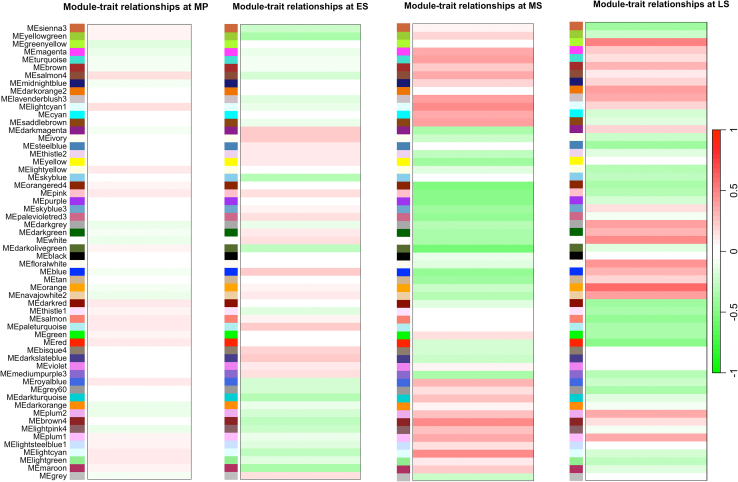
“Surprisingly, using the consensus WGCNA in which the same modules were identified in each menstrual cycle phase, we identified that most of those modules showed a different association pattern with endometriosis at each of the four phases (Figure 2).”
§ Regulation of RNA splicing in endometrial tissue and its association with endometriosis > Results > Co-expression networks captured changes for endometriosis at the MS phase
plainstates an association- Asserted: passes — The authors put it forward as true.
- Checkable: passes — It can be checked against evidence.
- Load-bearing: passes — The paper’s conclusions depend on it.
- Based: passes — The paper gives a reason why it holds.
A result the paper reports from its own data — it cites no other source for it, so there is none to check. The quote shows it is in the paper.
In the paper
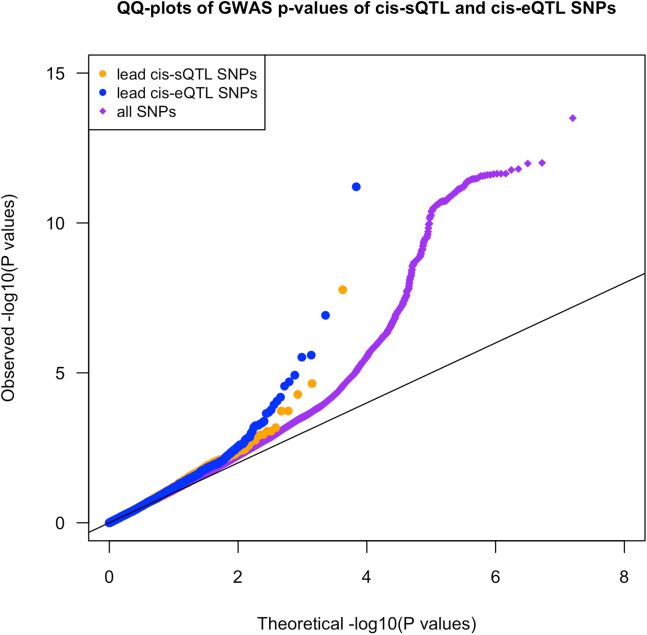
“Both lead cis-sQTL and eQTL SNPs were enriched for much stronger associations with endometriosis when compared with genome-wide genetic variants (Figure 5).”
§ Regulation of RNA splicing in endometrial tissue and its association with endometriosis > Results > Genetic regulation of RNA splicing in endometrium
plainstates an association- Asserted: passes — The authors put it forward as true.
- Checkable: passes — It can be checked against evidence.
- Load-bearing: passes — The paper’s conclusions depend on it.
- Based: passes — The paper gives a reason why it holds.
- Rests on an assumption not shown here.
120 more claims
Create a free account to see all 203 claims and to verify the 71 references still open.
- It may state two separate claims as one. 43
- Probably not a substantial claim. 49
Self-check
Percentages, sums and reported differences re-computed from the paper’s own numbers.
Each contradiction between two passages listed here was confirmed by an independent check.
Rated minor: it would not touch a result — a value no result rests on, a p-value that stays on the same side of the significance level, or a conflict that is clerical, resolved elsewhere in the paper, or outside its own findings.
In the paper
“We found that of those 2,472 sGenes, 789 (32.5%) genes were also detected in the eQTL analysis”
§ Regulation of RNA splicing in endometrial tissue and its association with endometriosis > Results > Genetic regulation of RNA splicing in endometrium
Reported 32.5 · recomputed 31.917476
Rated minor: it would not touch a result — a value no result rests on, a p-value that stays on the same side of the significance level, or a conflict that is clerical, resolved elsewhere in the paper, or outside its own findings.
In the paper
§ Regulation of RNA splicing in endometrial tissue and its association with endometriosis > Results > Genetic regulation of RNA splicing in endometrium
“In total, we identified 3,296 cis-sQTL SNPs associated with 2,427 genes.”
§ Regulation of RNA splicing in endometrial tissue and its association with endometriosis > Results > Genetic regulation of RNA splicing in endometrium
“For this comparison, we considered 2,472 sGenes (FDR <0.05) identified through both sQTL mapping strategies aforementioned (Tables S9 and S10)”
Rated minor: it would not touch a result — a value no result rests on, a p-value that stays on the same side of the significance level, or a conflict that is clerical, resolved elsewhere in the paper, or outside its own findings.
In the paper
§ Regulation of RNA splicing in endometrial tissue and its association with endometriosis > Results > Endometriosis risk genes with genetically driven effects on splicing in endometrium
“WASHC3 was associated with endometriosis through the genetic regulation of exon 6 skipping in WASHC3 (Figure S11).”
§ Regulation of RNA splicing in endometrial tissue and its association with endometriosis > Results > Endometriosis risk genes with genetically driven effects on splicing in endometrium
“rs143511013 is over 16 kb from the exon 7 skipping event in WASHC3.”
Rated minor: it would not touch a result — a value no result rests on, a p-value that stays on the same side of the significance level, or a conflict that is clerical, resolved elsewhere in the paper, or outside its own findings.
In the paper
§ Regulation of RNA splicing in endometrial tissue and its association with endometriosis > STAR★Methods > Experimental model and study participant details
“recruited at the Royal Women’s Hospital (RWH) (n=184) and Melbourne IVF Clinic (IVF) (n=22).3”
§ Regulation of RNA splicing in endometrial tissue and its association with endometriosis > STAR★Methods > Method details
“on the Illumina HiSeq4000 platform for 178 RWH samples, and 120 bp pair-ended reads to a mean depth of 30,818,062 reads on the Illumina HiSeq2000 platform for 28 IVF samples.3”
Citations
Cites
Moderated estimation of fold change and dispersion for RNA-seq data with DESeq2
Love, M. I., Huber, W., & Anders, S. (2014) · Genome Biology · doi:10.1186/s13059-014-0550-8 · Cited by 95,106
Robinson, M. D., McCarthy, D. J., & Smyth, G. K. (2010) · Bioinformatics · doi:10.1093/bioinformatics/btp616 · Cited by 41,364
WGCNA: an R package for weighted correlation network analysis
Langfelder, P., & Horvath, S. (2008) · BMC Bioinformatics · doi:10.1186/1471-2105-9-559 · Cited by 27,252
Salmon provides fast and bias-aware quantification of transcript expression
Patro, R., Duggal, G., Love, M. I., Irizarry, R. A., & Kingsford, C. (2017) · Nature Methods · doi:10.1038/nmeth.4197 · Cited by 12,700
Pfam: The protein families database in 2021
Mistry, J., Chuguransky, S., Williams, L., Qureshi, M., Salazar, G. A., Sonnhammer, E. L. L., Tosatto, S. C. E., Paladin, L., Raj, S., Richardson, L. J., et al. (2021) · Nucleic Acids Research · doi:10.1093/nar/gkaa913 · Cited by 7,452
A General Framework for Weighted Gene Co-Expression Network Analysis
Zhang, B., & Horvath, S. (2005) · Statistical Applications in Genetics and Molecular Biology · doi:10.2202/1544-6115.1128 · Cited by 5,684
The GTEx Consortium atlas of genetic regulatory effects across human tissues
The GTEx Consortium, Aguet, F., Anand, S., Ardlie, K. G., Gabriel, S., Getz, G. A., Graubert, A., Hadley, K., Handsaker, R. E., Huang, K. H., et al. (2020) · Science · doi:10.1126/science.aaz1776 · Cited by 5,547 · cited 2×
“43 Similar to the correlation estimated between cis -eQTLs, 3 reproductive and digestive tissues shared the highest correlation of genetic effects on splicing with endometrium.”
Differential analyses for RNA-seq: transcript-level estimates improve gene-level inferences
Soneson, C., Love, M. I., & Robinson, M. D. (2015) · F1000Research · doi:10.12688/f1000research.7563.1 · Cited by 3,929
Integration of summary data from GWAS and eQTL studies predicts complex trait gene targets
Zhu, Z., Zhang, F., Hu, H., Bakshi, A., Robinson, M. R., Powell, J. E., Montgomery, G. W., Goddard, M. E., Wray, N. R., Visscher, P. M., et al. (2016) · Nature Genetics · doi:10.1038/ng.3538 · Cited by 3,352
Self-citationPredicting splicing from primary sequence with deep learning
Jaganathan, K., Kyriazopoulou Panagiotopoulou, S., McRae, J. F., Darbandi, S. F., Knowles, D., Li, Y. I., Kosmicki, J. A., Arbelaez, J., Cui, W., Schwartz, G. B., et al. (2019) · Cell · doi:10.1016/j.cell.2018.12.015 · Cited by 2,853
Zondervan, K. T., Becker, C. M., & Missmer, S. A. (2020) · New England Journal of Medicine · doi:10.1056/nejmra1810764 · Cited by 2,249
SMART: recent updates, new developments and status in 2020
Letunic, I., Khedkar, S., & Bork, P. (2021) · Nucleic Acids Research · doi:10.1093/nar/gkaa937 · Cited by 2,151
Alternative splicing as a regulator of development and tissue identity
Baralle, F. E., & Giudice, J. (2017) · Nature Reviews Molecular Cell Biology · doi:10.1038/nrm.2017.27 · Cited by 1,333
Understanding alternative splicing: towards a cellular code
Matlin, A. J., Clark, F., & Smith, C. W. J. (2005) · Nature Reviews Molecular Cell Biology · doi:10.1038/nrm1645 · Cited by 1,305
Transcriptome-wide isoform-level dysregulation in ASD, schizophrenia, and bipolar disorder
Gandal, M. J., Zhang, P., Hadjimichael, E., Walker, R. L., Chen, C., Liu, S., Won, H., van Bakel, H., Varghese, M., Wang, Y., et al. (2018) · Science · doi:10.1126/science.aat8127 · Cited by 1,247
Scotti, M. M., & Swanson, M. S. (2016) · Nature Reviews Genetics · doi:10.1038/nrg.2015.3 · Cited by 1,163
Kolberg, L., Raudvere, U., Kuzmin, I., Vilo, J., & Peterson, H. (2020) · F1000Research · doi:10.12688/f1000research.24956.2 · Cited by 1,098
Rethinking mechanisms, diagnosis and management of endometriosis
Chapron, C., Marcellin, L., Borghese, B., & Santulli, P. (2019) · Nature Reviews Endocrinology · doi:10.1038/s41574-019-0245-z · Cited by 1,084 · cited 1×
“2,4,5 Transcriptomic regulation in endometrium and its association with endometriosis are not fully understood, with previous endometrial studies focusing on gene-level expression analysis in both bulk and single-cell resolution RNA sequencing (RNA-seq) methods.”
Comprehensive functional genomic resource and integrative model for the human brain
Wang, D., Liu, S., Warrell, J., Won, H., Shi, X., Navarro, F. C. P., Clarke, D., Gu, M., Emani, P., Yang, Y. T., et al. (2018) · Science · doi:10.1126/science.aat8464 · Cited by 965 · cited 1×
“18,19 Despite discovery of a large number of expression quantitative trait loci (eQTLs) where genetic variation affects gene-level expression, few target genes has been linked to genetic variants identified using GWAS, 20 suggesting a role for other fundamental mechanisms where genetic variants…”
Visualizing Genomic Data Using Gviz and Bioconductor
Hahne, F., & Ivanek, R. (2016) · Methods in Molecular Biology · doi:10.1007/978-1-4939-3578-9_16 · Cited by 885
Annotation-free quantification of RNA splicing using LeafCutter
Li, Y. I., Knowles, D. A., Humphrey, J., Barbeira, A. N., Dickinson, S. P., Im, H. K., & Pritchard, J. K. (2018) · Nature Genetics · doi:10.1038/s41588-017-0004-9 · Cited by 765
Integrative analysis of omics summary data reveals putative mechanisms underlying complex traits
Wu, Y., Zeng, J., Zhang, F., Zhu, Z., Qi, T., Zheng, Z., Lloyd-Jones, L. R., Marioni, R. E., Martin, N. G., Montgomery, G. W., et al. (2018) · Nature Communications · doi:10.1038/s41467-018-03371-0 · Cited by 685
Self-citationMacer, M. L., & Taylor, H. S. (2012) · Obstetrics and Gynecology Clinics of North America · doi:10.1016/j.ogc.2012.10.002 · Cited by 681 · cited 1×
“45 It has been suggested that the association between endometriosis and infertility is due to decreased endometrial receptivity and defective implantation at the MS phase, but the causal effects remain unclear.”
Mapping the temporal and spatial dynamics of the human endometrium in vivo and in vitro
Garcia-Alonso, L., Handfield, L.-F., Roberts, K., Nikolakopoulou, K., Fernando, R. C., Gardner, L., Woodhams, B., Arutyunyan, A., Polanski, K., Hoo, R., et al. (2021) · Nature Genetics · doi:10.1038/s41588-021-00972-2 · Cited by 662
RNA splicing is a primary link between genetic variation and disease
Li, Y. I., van de Geijn, B., Raj, A., Knowles, D. A., Petti, A. A., Golan, D., Gilad, Y., & Pritchard, J. K. (2016) · Science · doi:10.1126/science.aad9417 · Cited by 660 · cited 1×
“83 Therefore, to verify whether endometrium sQTLs can help explain the molecular mechanisms of endometriosis-related variants, we investigated the enrichment of association p-values among the top endometrium sQTLs (FDR 0.05) identified in this study.”
InfluentialSingle-cell transcriptomic atlas of the human endometrium during the menstrual cycle
Wang, W., Vilella, F., Alama, P., Moreno, I., Mignardi, M., Isakova, A., Pan, W., Simon, C., & Quake, S. R. (2020) · Nature Medicine · doi:10.1038/s41591-020-1040-z · Cited by 614
WASP: allele-specific software for robust molecular quantitative trait locus discovery
van de Geijn, B., McVicker, G., Gilad, Y., & Pritchard, J. K. (2015) · Nature Methods · doi:10.1038/nmeth.3582 · Cited by 575
Physiology of the Endometrium and Regulation of Menstruation
Critchley, H. O. D., Maybin, J. A., Armstrong, G. M., & Williams, A. R. W. (2020) · Physiological Reviews · doi:10.1152/physrev.00031.2019 · Cited by 536
Qi, T., Wu, Y., Zeng, J., Zhang, F., Xue, A., Jiang, L., Zhu, Z., Kemper, K., Yengo, L., Zheng, Z., et al. (2018) · Nature Communications · doi:10.1038/s41467-018-04558-1 · Cited by 427
Self-citationHorton, J., Sterrenburg, M., Lane, S., Maheshwari, A., Li, T. C., & Cheong, Y. (2019) · Human Reproduction Update · doi:10.1093/humupd/dmz012 · Cited by 376
A complete tool set for molecular QTL discovery and analysis
Delaneau, O., Ongen, H., Brown, A. A., Fort, A., Panousis, N. I., & Dermitzakis, E. T. (2017) · Nature Communications · doi:10.1038/ncomms15452 · Cited by 360
Sapkota, Y., Steinthorsdottir, V., Morris, A. P., Fassbender, A., Rahmioglu, N., De Vivo, I., Buring, J. E., Zhang, F., Edwards, T. L., Jones, S., et al. (2017) · Nature Communications · doi:10.1038/ncomms15539 · Cited by 344 · cited 4×
“41 However, the sGenes and sQTLs that do not overlap demonstrated the benefit of using a combination of the two sQTL mapping strategies to capture evidence of RNA splicing.”
InfluentialSelf-citationThe genetic basis of endometriosis and comorbidity with other pain and inflammatory conditions
Rahmioglu, N., Mortlock, S., Ghiasi, M., Møller, P. L., Stefansdottir, L., Galarneau, G., Turman, C., Danning, R., Law, M. H., Sapkota, Y., et al. (2023) · Nature Genetics · doi:10.1038/s41588-023-01323-z · Cited by 305
Self-citationGenetic control of RNA splicing and its distinct role in complex trait variation
Qi, T., Wu, Y., Fang, H., Zhang, F., Liu, S., Zeng, J., & Yang, J. (2022) · Nature Genetics · doi:10.1038/s41588-022-01154-4 · Cited by 247
Self-citationPrevalence and incidence of endometriosis in Australian women: a data linkage cohort study
Rowlands, I., Abbott, J., Montgomery, G., Hockey, R., Rogers, P., & Mishra, G. (2021) · BJOG: An International Journal of Obstetrics & Gynaecology · doi:10.1111/1471-0528.16447 · Cited by 230
Self-citationThe SUPERFAMILY 2.0 database: a significant proteome update and a new webserver
Pandurangan, A. P., Stahlhacke, J., Oates, M. E., Smithers, B., & Gough, J. (2019) · Nucleic Acids Research · doi:10.1093/nar/gky1130 · Cited by 223
Defective control of pre–messenger RNA splicing in human disease
Chabot, B., & Shkreta, L. (2016) · Journal of Cell Biology · doi:10.1083/jcb.201510032 · Cited by 213
DRIMSeq: a Dirichlet-multinomial framework for multivariate count outcomes in genomics
Nowicka, M., & Robinson, M. D. (2016) · F1000Research · doi:10.12688/f1000research.8900.2 · Cited by 203
Aberrant sperm DNA methylation predicts male fertility status and embryo quality
Aston, K. I., Uren, P. J., Jenkins, T. G., Horsager, A., Cairns, B. R., Smith, A. D., & Carrell, D. T. (2015) · Fertility and Sterility · doi:10.1016/j.fertnstert.2015.08.019 · Cited by 190
ensembldb: an R package to create and use Ensembl-based annotation resources
Rainer, J., Gatto, L., & Weichenberger, C. X. (2019) · Bioinformatics · doi:10.1093/bioinformatics/btz031 · Cited by 171
Giudice, J., Xia, Z., Wang, E. T., Scavuzzo, M. A., Ward, A. J., Kalsotra, A., Wang, W., Wehrens, X. H. T., Burge, C. B., Li, W., et al. (2014) · Nature Communications · doi:10.1038/ncomms4603 · Cited by 162
Love, M. I., Soneson, C., & Patro, R. (2018) · F1000Research · doi:10.12688/f1000research.15398.3 · Cited by 161
Disrupted gene pattern in patients with repeated in vitro fertilization (IVF) failure
Koler, M., Achache, H., Tsafrir, A., Smith, Y., Revel, A., & Reich, R. (2009) · Human Reproduction · doi:10.1093/humrep/dep193 · Cited by 152
Panousis, N. I., Bertsias, G. K., Ongen, H., Gergianaki, I., Tektonidou, M. G., Trachana, M., Romano, L., Bielser, D., Howald, C., Pamfil, C. A. M., et al. (2019) · Annals of the Rheumatic Diseases · doi:10.1136/annrheumdis-2018-214379 · Cited by 152
mRNA expression, splicing and editing in the embryonic and adult mouse cerebral cortex
Dillman, A. A., Hauser, D. N., Gibbs, J. R., Nalls, M. A., McCoy, M. K., Rudenko, I. N., Galter, D., & Cookson, M. R. (2013) · Nature Neuroscience · doi:10.1038/nn.3332 · Cited by 148
Prioritizing Parkinson’s disease genes using population-scale transcriptomic data
Li, Y. I., Wong, G., Humphrey, J., & Raj, T. (2019) · Nature Communications · doi:10.1038/s41467-019-08912-9 · Cited by 143
Hancox, R. A., Allen, M. D., Holliday, D. L., Edwards, D. R., Pennington, C. J., Guttery, D. S., Shaw, J. A., Walker, R. A., Pringle, J. H., & Jones, J. L. (2009) · Breast Cancer Research · doi:10.1186/bcr2251 · Cited by 127
Love, M. I., Soneson, C., & Patro, R. (2018) · F1000Research · doi:10.12688/f1000research.15398.1 · Cited by 123
Statistical Genomics. Methods and Protocols.
Math, E., & Davis, S. R. (2016) · PubMed · Cited by 121
Flores, I., Rivera, E., Ruiz, L. A., Santiago, O. I., Vernon, M. W., & Appleyard, C. B. (2007) · Fertility and Sterility · doi:10.1016/j.fertnstert.2006.07.1550 · Cited by 119
ESRP2 controls an adult splicing programme in hepatocytes to support postnatal liver maturation
Bhate, A., Parker, D. J., Bebee, T. W., Ahn, J., Arif, W., Rashan, E. H., Chorghade, S., Chau, A., Lee, J.-H., Anakk, S., et al. (2015) · Nature Communications · doi:10.1038/ncomms9768 · Cited by 103 · cited 1×
“…analysis, we identified that rs143511013 was associated with exon 6 skipping in WASHC3 , and this SNP is in high LD with the index SNP (rs10860864, r 2 = 0.95) located in the IGF1 locus downstream of WASHC3 on chromosome 12 and associated with endometriosis risk from the latest endometriosis GWAS.”
InfluentialAdewuyi, E. O., Mehta, D., Sapkota, Y., International Endogene Consortium, Sapkota, Y., Yoshihara, K., Nyegaard, M., Steinthorsdottir, V., Morris, A. P., Fassbender, A., et al. (2021) · Human Genetics · doi:10.1007/s00439-020-02223-6 · Cited by 80
Self-citationThe role of epigenetic mechanisms in the regulation of gene expression in the cyclical endometrium
Retis-Resendiz, A. M., González-García, I. N., León-Juárez, M., Camacho-Arroyo, I., Cerbón, M., & Vázquez-Martínez, E. R. (2021) · Clinical Epigenetics · doi:10.1186/s13148-021-01103-8 · Cited by 80
Law, E. W. L., Cheung, A. K. L., Kashuba, V. I., Pavlova, T. V., Zabarovsky, E. R., Lung, H. L., Cheng, Y., Chua, D., Lai-wan Kwong, D., Tsao, S. W., et al. (2012) · Oncogene · doi:10.1038/onc.2011.272 · Cited by 79
Function, clinical application, and strategies of Pre-mRNA splicing in cancer
Di, C., Syafrizayanti, Zhang, Q., Chen, Y., Wang, Y., Zhang, X., Liu, Y., Sun, C., Zhang, H., & Hoheisel, J. D. (2019) · Cell Death & Differentiation · doi:10.1038/s41418-018-0231-3 · Cited by 78
Afshar, Y., Miele, L., & Fazleabas, A. T. (2012) · Endocrinology · doi:10.1210/en.2011-2122 · Cited by 76
Liang, Z., Wu, Q., Wang, H., Tan, J., Wang, H., Gou, Y., Cao, Y., Li, Z., & Zhang, Z. (2022) · Cell Death Discovery · doi:10.1038/s41420-022-00975-w · Cited by 75
Therapeutic Modulation of RNA Splicing in Malignant and Non-Malignant Disease
El Marabti, E., & Abdel-Wahab, O. (2021) · Trends in Molecular Medicine · doi:10.1016/j.molmed.2021.04.005 · Cited by 71
Tissue specific regulation of transcription in endometrium and association with disease
Mortlock, S., Kendarsari, R. I., Fung, J. N., Gibson, G., Yang, F., Restuadi, R., Girling, J. E., Holdsworth-Carson, S. J., Teh, W. T., Lukowski, S. W., et al. (2020) · Human Reproduction · doi:10.1093/humrep/dez279 · Cited by 62
Self-citationYang, F. Y., Wu, Y., Hockey, R., Doust, J. A., Mishra, G. D., Montgomery, G. W., & Mortlock, S. (2023) · Cell Reports Medicine · doi:10.1016/j.xcrm.2023.101250 · Cited by 59
Self-citationFung, J. N., Mortlock, S., Girling, J. E., Holdsworth-Carson, S. J., Teh, W. T., Zhu, Z., Lukowski, S. W., McKinnon, B. D., McRae, A., Yang, J., et al. (2018) · Scientific Reports · doi:10.1038/s41598-018-29462-y · Cited by 58
Self-citationMortlock, S., Corona, R. I., Kho, P. F., Pharoah, P., Seo, J.-H., Freedman, M. L., Gayther, S. A., Siedhoff, M. T., Rogers, P. A. W., Leuchter, R., et al. (2022) · Cell Reports Medicine · doi:10.1016/j.xcrm.2022.100542 · Cited by 54
Self-citationThe ferroimmunomodulatory role of ectopic endometriotic stromal cells in ovarian endometriosis
Kobayashi, H., Yamashita, Y., Iwase, A., Yoshikawa, Y., Yasui, H., Kawai, Y., Uchida, K., Uno, N., Akatsuka, S., Takahashi, T., et al. (2012) · Fertility and Sterility · doi:10.1016/j.fertnstert.2012.04.047 · Cited by 50
Endometriosis and irritable bowel syndrome: A systematic review and meta-analyses
Nabi, M. Y., Nauhria, S., Reel, M., Londono, S., Vasireddi, A., Elmiry, M., & Ramdass, P. V. A. K. (2022) · Frontiers in Medicine · doi:10.3389/fmed.2022.914356 · Cited by 48
Discovery of non-invasive biomarkers for the diagnosis of endometriosis
Irungu, S., Mavrelos, D., Worthington, J., Blyuss, O., Saridogan, E., & Timms, J. F. (2019) · Clinical Proteomics · doi:10.1186/s12014-019-9235-3 · Cited by 48
Mortlock, S., Houshdaran, S., Kosti, I., Rahmioglu, N., Nezhat, C., Vitonis, A. F., Andrews, S. V., Grosjean, P., Paranjpe, M., Horne, A. W., et al. (2023) · Communications Biology · doi:10.1038/s42003-023-05070-z · Cited by 44
Self-citationThe mid-secretory endometrial transcriptomic landscape in endometriosis: a meta-analysis
Vargas, E., García-Moreno, E., Aghajanova, L., Salumets, A., Horcajadas, J. A., Esteban, F. J., & Altmäe, S. (2022) · Human Reproduction Open · doi:10.1093/hropen/hoac016 · Cited by 41
Castaldi, P. J., Abood, A., Farber, C. R., & Sheynkman, G. (2022) · Human Molecular Genetics · doi:10.1093/hmg/ddac196 · Cited by 41
Systematic review of genome-wide association studies on susceptibility to endometriosis
Cardoso, J. V., Perini, J. A., Machado, D. E., Pinto, R., & Medeiros, R. (2020) · European Journal of Obstetrics & Gynecology and Reproductive Biology · doi:10.1016/j.ejogrb.2020.10.017 · Cited by 36
Association of invasion-promoting tenascin-C additional domains with breast cancers in young women
Guttery, D. S., Hancox, R. A., Mulligan, K. T., Hughes, S., Lambe, S. M., Pringle, J. H., Walker, R. A., Jones, J. L., & Shaw, J. A. (2010) · Breast Cancer Research · doi:10.1186/bcr2618 · Cited by 35
Lai, Z.-Z., Yang, H.-L., Shi, J.-W., Shen, H.-H., Wang, Y., Chang, K.-K., Zhang, T., Ye, J.-F., Sun, J.-S., Qiu, X.-M., et al. (2021) · International Journal of Biological Sciences · doi:10.7150/ijbs.58657 · Cited by 35
A functional interplay between ZNF217 and Estrogen Receptor alpha exists in luminal breast cancers
Nguyen, N. T., Vendrell, J. A., Poulard, C., Győrffy, B., Goddard-Léon, S., Bièche, I., Corbo, L., Le Romancer, M., Bachelot, T., Treilleux, I., et al. (2014) · Molecular Oncology · doi:10.1016/j.molonc.2014.05.013 · Cited by 35
Ma, Y., Nenkov, M., Schröder, D. C., Abubrig, M., Gassler, N., & Chen, Y. (2021) · International Journal of Molecular Sciences · doi:10.3390/ijms222111834 · Cited by 34
Tamm, K., Rõõm, M., Salumets, A., & METSIS, M. L. (2009) · Reproductive Biology and Endocrinology · doi:10.1186/1477-7827-7-150 · Cited by 31
Uterine TPPP3 plays important role in embryo implantation via modulation of β-catenin†
Shukla, V., Popli, P., Kaushal, J., Gupta, K., & Dwivedi, A. (2018) · Biology of Reproduction · doi:10.1093/biolre/ioy136 · Cited by 24
A molecular staging model for accurately dating the endometrial biopsy
Teh, W. T., Chung, J., Holdsworth‐Carson, S. J., Donoghue, J. F., Healey, M., Rees, H. C., Bittinger, S. E., Obers, V., Sloggett, C., Kendarsari, R. I., et al. (2023) · Nature Communications · doi:10.1038/s41467-023-41979-z · Cited by 23
Self-citationGREB1 isoforms regulate proliferation independent of ERα co-regulator activities in breast cancer
Haines, C. N., Braunreiter, K. M., Mo, X. M., & Burd, C. J. (2018) · Endocrine-Related Cancer · doi:10.1530/erc-17-0496 · Cited by 17
Endometrial gene expression profiling of recurrent implantation failure after in vitro fertilization
Albayrak, İ. G., Azhari, F., Çolak, E. N., Balcı, B. K., Ülgen, E., Sezerman, U., Baştu, E., & Günel, T. (2021) · Molecular Biology Reports · doi:10.1007/s11033-021-06502-x · Cited by 15
Identifying novel potential drug targets for endometriosis via plasma proteome screening
Tao, T., Mo, X., & Zhao, L. (2024) · Frontiers in Endocrinology · doi:10.3389/fendo.2024.1416978 · Cited by 10
Sheu, J. J.-C., Lin, W.-Y., Liu, T.-Y., Chang, C. Y.-Y., Cheng, J., Li, Y.-H., Chen, C.-M., Tseng, C.-C., Ding, W. Y., Chung, C., et al. (2024) · Journal of Human Genetics · doi:10.1038/s10038-024-01270-5 · Cited by 9
Regulation of Alternative Splicing by Steroid Hormones
Le Billan, F., Umogbai, G., & Cummins, C. L. (2023) · Endocrinology · doi:10.1210/endocr/bqad081 · Cited by 8
Role of FN1 and GREB1 gene polymorphisms in endometriosis
Matalliotaki, C., Matalliotakis, M., Rahmioglu, N., Mavromatidis, G., Matalliotakis, I., Koumantakis, G., Zondervan, K., Spandidos, D., Goulielmos, G., & Zervou, M. (2019) · Molecular Medicine Reports · doi:10.3892/mmr.2019.10247 · Cited by 8
Exploring the Significance of the Exon 4-Skipping Isoform of the ZNF217 Oncogene in Breast Cancer
Bellanger, A., Le, D. T., Vendrell, J., Wierinckx, A., Pongor, L. S., Solassol, J., Lachuer, J., Clezardin, P., Győrffy, B., & Cohen, P. A. (2021) · Frontiers in Oncology · doi:10.3389/fonc.2021.647269 · Cited by 7
Roles of Fibulin-2 in Carcinogenesis
Zhang, H., Hui, D., & Fu, X. (2020) · Medical Science Monitor · doi:10.12659/msm.918099 · Cited by 6
Yang, F. Y., Wu, Y., Hockey, R., Doust, J. A., Mishra, G. D., Montgomery, G. W., & Mortlock, S. (2022) · medRxiv · doi:10.1101/2022.10.20.22281201 · Cited by 2
Self-citationLEF1 Overexpression Is Associated with Preneoplastic and Neoplastic Glands of the Endometrium
Hiskey, M., Chinn, Z., Cohen, C., & Hanley, K. Z. (2016) · American Journal of Clinical Pathology · doi:10.1093/ajcp/aqw161.031 · Cited by 1
(2019) · doi:10.26355/eurrev_201905_17908
Cited by
Contestabile, M., Marzi, I., Mangione, C., Franzoni, F., Artini, P. G., & Daniele, S. (2026) · Cells · doi:10.3390/cells15030296 · Cited by 15
Genetic architecture of endometriosis: risk factors, comorbidities and clinical implications
Montgomery, G. W., McGrath, I. M., Overgaard, M. T., Nyegaard, M., & Mortlock, S. (2026) · Human Reproduction Update · doi:10.1093/humupd/dmag023 · Cited by 2
Self-citationWang, Z., Yan, H., Zhu, L., Ni, S., Qian, L., Yu, M., & Yu, J. (2026) · Reproductive Sciences · doi:10.1007/s43032-026-02064-0
Wang, X., Ma, Q., & Jing, Y. (2026) · European journal of medical research · doi:10.1186/s40001-026-04150-0
Metadata
- Authors
- Yang, F., Qi, T., McRae, A. F., Rogers, P. A. W., Montgomery, G. W., & Mortlock, S.
- Affiliations
- The University of Queensland (AU)
- Royal Women's Hospital (AU)
- Corresponding author
- Mortlock, Sally
- Venue
- iScience
- Publisher
- Elsevier BV
- Published
- 2025-09
- Volume
- 28
- Issue
- 9
- Pages
- 113207
- ISSN
- 2589-0042 (ISSN-L)
- PMC
- PMC12359188
- OpenAlex
- W4412864879
- Semantic Scholar
- de37945a135dec2042ba6a06077957de9092e69a
- Cited by
- 4
- References
- 85
- Citations by year
- 2026: 4
- FWCI
- 0.79
- Type
- journal article
- Language
- en
- Open access
- gold
- doi.org
- Licence
- cc-by-nc-nd
- www.elsevier.com/tdm/userlicense/1.0/ (tdm)
- www.elsevier.com/legal/tdmrep-license (tdm)
- creativecommons.org/licenses/by-nc-nd/4.0/ (vor)
- Locations
- iScience (publishedVersion, cc-by-nc-nd)
- PubMed Central (publishedVersion, cc-by-nc-nd)
- PubMed (publishedVersion)
- DOAJ (DOAJ: Directory of Open Access Journals) (submittedVersion, cc-by-sa)
- Minerva Access (University of Melbourne) (submittedVersion, cc-by-nc-nd)
- Funders
- University of Queensland (GNT1105321, GNT1046880, GNT1026033, GNT1050208, GNT1147846, GNT1177194, GNT1078399, GNT1049472)
- National Health and Medical Research Council
- Topics
- Life Sciences › Biochemistry, Genetics and Molecular Biology › Molecular Biology › RNA Research and Splicing
- Health Sciences › Medicine › Reproductive Medicine › Endometriosis Research and Treatment
- Life Sciences › Biochemistry, Genetics and Molecular Biology › Molecular Biology › Single-cell and spatial transcriptomics
- Keywords
- RNA splicing, endometriosis, endometrium, mRNA isoforms, splicing quantitative trait loci, menstrual cycle, GREB1, transcriptome regulation
About these checks
Registry, retraction, Cites and statistics results are computed, not judged, with one exception: a printed reference that no index lists is read once by a model before it counts as a citation error. Claims are extracted by a model and kept only when their quote appears verbatim in the text; each cited source is then checked, with a model’s help, for whether it says what the claim relies on. Those verdicts can be wrong — read the claim’s quote and the cited source before relying on one.
A language model drew the claims from the paper on 2026-11-22, under version 3 of the claim definition (model deepseek-v4.1-flash, prompt extract-v3).
A second model labelled each claim on 2026-11-22 (model jev-1.13-20260917, definition revision gold-guideline-v0.2).
Cited sources are checked with a language model’s help (qwen3.8-omni-flash).
Statistics and arithmetic are recomputed, not judged.
Confidence bands are shown only for fields calibrated on our annotated test set. None is calibrated yet, so no band is shown.
What counts as a claim ›How we measure confidence ›How we check this ›
Are you an author, or do you see a problem with this page? Request a review
Data sources
Bibliographic data: Semantic Scholar, OpenAlex, Crossref.
Contains information from the Semantic Scholar Academic Graph Datasets, made available under the ODC Attribution License (ODC-BY 1.0).
Semantic Scholar’s data is described in: Kinney, R., et al. (2023). The Semantic Scholar Open Data Platform. arXiv:2301.10140.
