

The DOI matches its Crossref record; 8 of the 8 references it cites were found in a registry or an index.
Knowing me, knowing us: Personal and collective self-awareness enhances authentic leadership and leader endorsement
Overview
The claims and statistics of this paper haven’t been checked yet.
Run the check — free, no account needed. It reads the open-access text and checks the sources it cites.
Integrity signals
Registry
Cites
Statistics
Figures





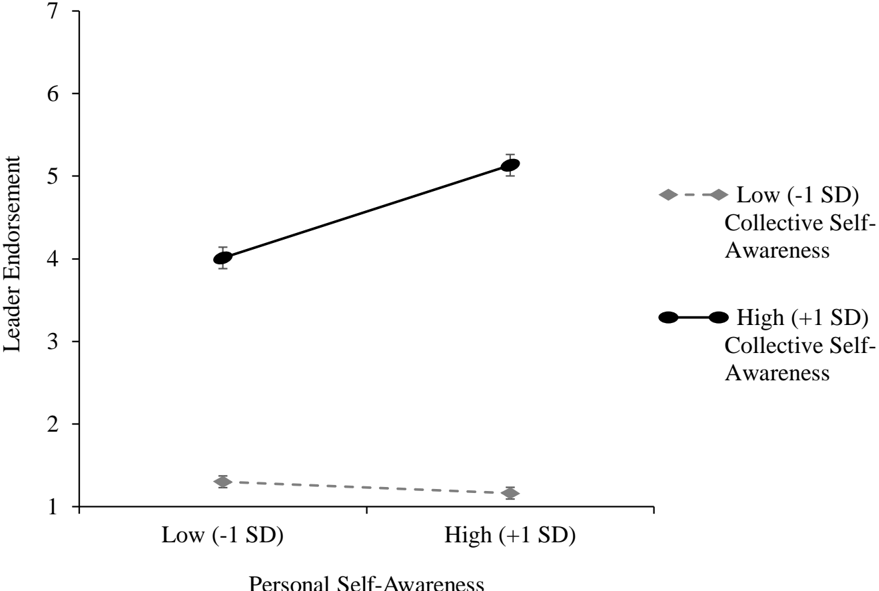
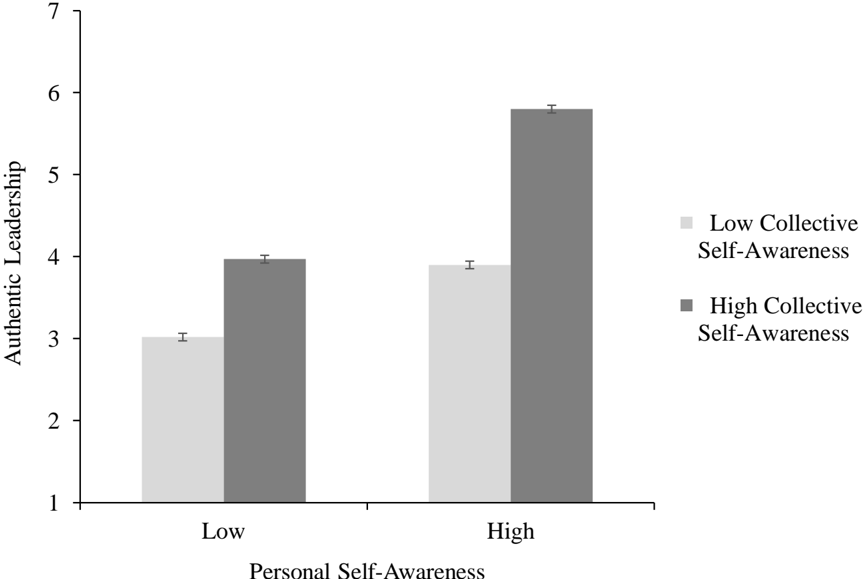
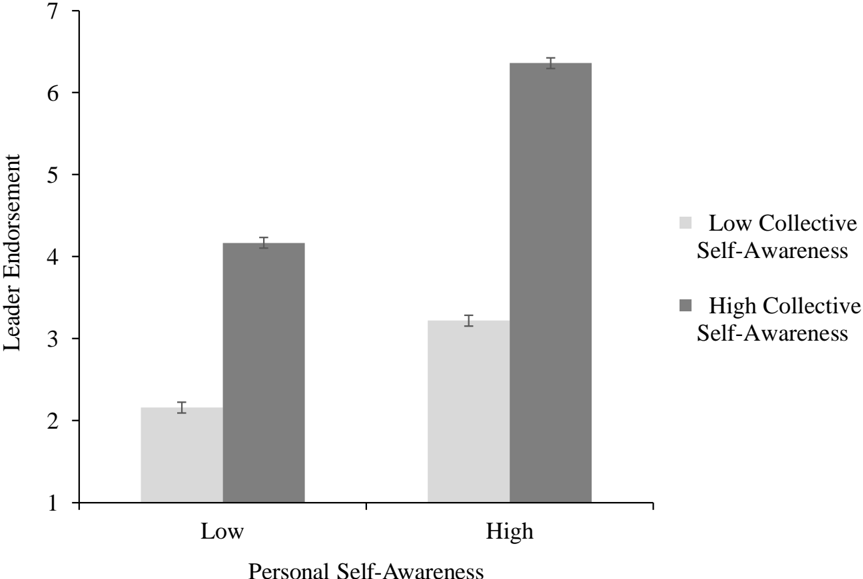
Verification
Claims the paper makes
The claims and statistics of this paper haven’t been checked yet.
Run the check — free, no account needed. It reads the open-access text and checks the sources it cites.
Claims other papers make about this one
Each is checked against this paper’s own text: does it say what the citing paper says it does?
In the citing paper
“Transcomplejidad educativa Integra los planos individual, organizativo y societal en una visión de aprendizaje continuo.”
From Del liderazgo a la organización que aprende: una revisión sistemática desde la transcomplejidad en educación superior (2026) · cites this paper as Steffens et al. (2021)
In the citing paper
“Liderazgo distribuido Fomenta cohesión y adaptabilidad institucional mediante la corresponsabilidad y el aprendizaje en red.”
From Del liderazgo a la organización que aprende: una revisión sistemática desde la transcomplejidad en educación superior (2026) · cites this paper as Steffens et al. (2021)
Self-check
Percentages, sums and reported differences re-computed from the paper’s own numbers.
The self-check needs the paper’s full text.
Citations
Cites
Authentic leadership and eudaemonic well-being: Understanding leader–follower outcomes
Ilies, R., Morgeson, F. P., & Nahrgang, J. D. (2005) · The Leadership Quarterly · doi:10.1016/j.leaqua.2005.03.002 · Cited by 1,268
Reicher, S., Haslam, S. A., & Hopkins, N. (2005) · The Leadership Quarterly · doi:10.1016/j.leaqua.2005.06.007 · Cited by 640
Self-citationLeroy, H., Anseel, F., Gardner, W. L., & Sels, L. (2015) · Journal of Management · doi:10.1177/0149206312457822 · Cited by 447
Warning for excessive positivity: Authentic leadership and other traps in leadership studies
Alvesson, M., & Einola, K. (2019) · The Leadership Quarterly · doi:10.1016/j.leaqua.2019.04.001 · Cited by 412
Authentic Leadership: An Empirical Test of Its Antecedents, Consequences, and Mediating Mechanisms
Peus, C., Wesche, J. S., Streicher, B., Braun, S., & Frey, D. (2012) · Journal of Business Ethics · doi:10.1007/s10551-011-1042-3 · Cited by 368
Haslam, S. A., & Platow, M. J. (2001) · Personality and Social Psychology Bulletin · doi:10.1177/01461672012711008 · Cited by 328
Self-citationThe New Psychology of Leadership
Haslam, S. A., Reicher, S. D., & Platow, M. J. (2010) · doi:10.4324/9780203833896 · Cited by 272
Self-citationWeischer, A. E., Weibler, J., & Petersen, M. (2013) · The Leadership Quarterly · doi:10.1016/j.leaqua.2013.03.003 · Cited by 73
Research works printed but not linked: 50
- Ashforth, 2008, Identification in organizations: An examination of four fundamental questions, Journal of Management, 34, 325, 10.1177/0149206308316059 · DOI
- Ashforth, 1989, Social identity theory and the organization, Academy of Management Review, 14, 20, 10.2307/258189 · DOI
- Banks, 2016, A meta-analytic review of authentic and transformational leadership: A test for redundancy, The Leadership Quarterly, 27, 634, 10.1016/j.leaqua.2016.02.006 · DOI · Paper page
- Baray, 2009, When I equals we: Exploring the relation between social and personal identity of extreme right-wing political party members, British Journal of Social Psychology, 48, 625, 10.1348/014466608X389582 · DOI
- Bless, 2016, A closer look at social psychologists’ silver bullet: Inevitable and evitable side effects of the experimental approach, Perspectives on Psychological Science, 11, 296, 10.1177/1745691615621278 · DOI
- Branson, 2007, Effects of structured self-reflection on the development of authentic leadership practices among Queensland primary school principals, Educational Management Administration & Leadership, 35, 225, 10.1177/1741143207075390 · DOI
- Brown, 2015, Identities and identity work in organizations, International Journal of Management Reviews, 17, 20, 10.1111/ijmr.12035 · DOI
- Butler, 2014, The effects of self-awareness on perceptions of leadership effectiveness in the hospitality industry: A cross cultural investigation, International Journal of Intercultural Relations, 40, 87, 10.1016/j.ijintrel.2013.12.007 · DOI
- Černe, 2014, Congruence of leader self-perceptions and follower perceptions of authentic leadership: Understanding what authentic leadership is and how it enhances employees’ job satisfaction, Australian Journal of Management, 39, 453, 10.1177/0312896213503665 · DOI
- Cialdini, 1990, A focus theory of normative conduct: Recycling the concept of norms to reduce littering in public places, Journal of Personality and Social Psychology, 58, 1015, 10.1037/0022-3514.58.6.1015 · DOI · Paper page
- Clapp-Smith, 2009, Authentic leadership and positive psychological capital the mediating role of trust at the group level of analysis, Journal of Leadership and Organizational Studies, 15, 227, 10.1177/1548051808326596 · DOI
- Cooper, 2005, Looking forward but learning from our past: Potential challenges to developing authentic leadership theory and authentic leaders, The Leadership Quarterly, 16, 475, 10.1016/j.leaqua.2005.03.008 · DOI · Paper page
- Culpepper, 2012, Evaluating EIV, OLS, and SEM estimators of group slope differences in the presence of measurement error: The single-indicator case, Applied Psychological Measurement, 36, 349, 10.1177/0146621612446806 · DOI
- van Dick, 2001, Identification in organizational contexts: Linking theory and research from social and organizational psychology, International Journal of Management Reviews, 3, 265, 10.1111/1468-2370.00068 · DOI
- van Dick, 2018, Identity leadership going global: Validation of the Identity Leadership Inventory across 20 countries, Journal of Occupational and Organizational Psychology, 91, 697, 10.1111/joop.12223 · DOI
- Ellemers, 2012, The group self, Science, 336, 848, 10.1126/science.1220987 · DOI
- Ellemers, 2004, Motivating individuals and groups at work: A social identity perspective on leadership and group performance, Academy of Management Review, 29, 459, 10.2307/20159054 · DOI
- Epitropaki, 2017, Leadership and followership identity processes: A multilevel review, The Leadership Quarterly, 28, 104, 10.1016/j.leaqua.2016.10.003 · DOI
- Eurich, 2018, What self-awareness really is (and how to cultivate it), Harvard Business Review
- Fields, 2007, Determinants of follower perceptions of a leader’s authenticity and integrity, European Management Journal, 25, 195, 10.1016/j.emj.2007.04.005 · DOI
- Gardner, 2011, Authentic leadership: A review of the literature and research agenda, The Leadership Quarterly, 22, 1120, 10.1016/j.leaqua.2011.09.007 · DOI · Paper page
- Giallonardo, 2010, Authentic leadership of preceptors: Predictor of new graduate nurses’ work engagement and job satisfaction, Journal of Nursing Management, 18, 993, 10.1111/j.1365-2834.2010.01126.x · DOI
- Gill, 2018, An investigation of authentic leadership’s individual and group influences on follower responses, Journal of Management, 44, 530, 10.1177/0149206314566461 · DOI
- Haslam, 2001, Social identity and the romance of leadership: The importance of being seen to be “doing it for us”, Group Processes & Intergroup Relations, 4, 191, 10.1177/1368430201004003002 · DOI
- Haslam, 2017, A social identity approach to leadership development: The 5R program, Journal of Personnel Psychology, 16, 113, 10.1027/1866-5888/a000176 · DOI
- Herbst, 2011, Leadership effectiveness in higher education: Managerial self-perceptions versus perceptions of others, SA Journal of Industrial Psychology, 37, 1, 10.4102/sajip.v37i1.867 · DOI
- Hmieleski, 2012, Shared authentic leadership and new venture performance, Journal of Management, 38, 1476, 10.1177/0149206311415419 · DOI
- Hogg, 2001, A social identity theory of leadership, Personality and Social Psychology Review, 5, 184, 10.1207/S15327957PSPR0503_1 · DOI · Paper page
- Hogg, 2012, Intergroup leadership in organizations: Leading across group and organizational boundaries, Academy of Management Review, 37, 232, 10.5465/amr.2010.0221 · DOI
- van Knippenberg, 2005, Leader self-sacrifice and leadership effectiveness: The moderating role of leader prototypicality, Journal of Applied Psychology, 90, 25, 10.1037/0021-9010.90.1.25 · DOI
- van Knippenberg, 2011, Embodying who we are: Leader group prototypicality and leadership effectiveness, The Leadership Quarterly, 22, 1078, 10.1016/j.leaqua.2011.09.004 · DOI
- Landers, 2015, An inconvenient truth: Arbitrary distinctions between organizational, Mechanical Turk, and other convenience samples, Industrial and Organizational Psychology, 8, 142, 10.1017/iop.2015.13 · DOI · Paper page
- Laschinger, 2014, New nurses burnout and workplace wellbeing: The influence of authentic leadership and psychological capital, Burnout Research, 1, 19, 10.1016/j.burn.2014.03.002 · DOI
- Lonati, 2018, On doing relevant and rigorous experiments: Review and recommendations, Journal of Operations Management, 64, 19, 10.1016/j.jom.2018.10.003 · DOI
- Neider, 2011, The Authentic Leadership Inventory (ALI): Development and empirical tests, The Leadership Quarterly, 22, 1146, 10.1016/j.leaqua.2011.09.008 · DOI · Paper page
- Platow, 2015, There is no leadership if no-one follows: Why leadership is necessarily a group process, International Coaching Psychology Review, 10, 20, 10.53841/bpsicpr.2015.10.1.20 · DOI
- Rego, 2012, Authentic leadership promoting employees’ psychological capital and creativity, Journal of Business Research, 65, 429, 10.1016/j.jbusres.2011.10.003 · DOI
- Shamir, 2005, “What's your story?” A life-stories approach to authentic leadership development, The Leadership Quarterly, 16, 395, 10.1016/j.leaqua.2005.03.005 · DOI · Paper page
- Sidani, 2018, A reconceptualization of authentic leadership: Leader legitimation via follower-centered assessment of the moral dimension, The Leadership Quarterly, 29, 623, 10.1016/j.leaqua.2018.04.005 · DOI
- Steffens, 2014, Leadership as social identity management: Introducing the Identity Leadership Inventory (ILI) to assess and validate a four-dimensional model, The Leadership Quarterly, 25, 1001, 10.1016/j.leaqua.2014.05.002 · DOI
- Steffens, 2016, True to what We stand for: Championing collective interests as a path to authentic leadership, The Leadership Quarterly, 27, 726, 10.1016/j.leaqua.2016.04.004 · DOI
- Steffens, 2019, One of us … and us… and us: Evidence that leaders’ multiple identity prototypicality (LMIP) is related to their perceived effectiveness, Comprehensive Results in Social Psychology, 3, 175, 10.1080/23743603.2019.1624156 · DOI
- Sur, 2011, Relationship between self-awareness and transformational leadership: A study in IT industry, IUP Journal of Organizational Behavior, 10, 7
- Swann, 2012, When group membership gets personal: A theory of identity fusion, Psychological Review, 119, 441, 10.1037/a0028589 · DOI · Paper page
- Tekleab, 2008, Are we on the same page? Effects of self-awareness of empowering and transformational leadership, Journal of Leadership and Organizational Studies, 14, 185, 10.1177/1071791907311069 · DOI
- Ullrich, 2009, Substitutes for procedural fairness: Prototypical leaders are endorsed whether they are fair or not, Journal of Applied Psychology, 94, 235, 10.1037/a0012936 · DOI
- Wang, 2014, Impact of authentic leadership on performance: Role of followers' positive psychological capital and relational processes, Journal of Organizational Behavior, 35, 5, 10.1002/job.1850 · DOI
- Williams, 2012, The effects of crisis, cynicism about change, and value congruence on perceptions of authentic leadership and attributed charisma in the 2008 presidential election, The Leadership Quarterly, 23, 324, 10.1016/j.leaqua.2011.07.003 · DOI
- Wong, 2009, The influence of authentic leadership behaviors on trust and work outcomes of health care staff, Journal of Leadership Studies, 3, 6, 10.1002/jls.20104 · DOI
- Zheng, 2020, The interactive effect of a leader’s sense of uniqueness and sense of belongingness on followers’ perceptions of leader authenticity, Journal of Business Ethics, 164, 515, 10.1007/s10551-018-4070-4 · DOI
Cited by
Sorted by citations
GARCIA, M. A. (2026) · Espacios · doi:10.48082/espacios-a26v47n01r04 · Cited by 2
Metadata
- Authors
- Steffens, N. K., Wolyniec, N., Okimoto, T. G., Mols, F., Haslam, S. A., & Kay, A. A.
- Venue
- The Leadership Quarterly
- Publisher
- Elsevier BV
- Published
- 2021-12
- Volume
- 32
- Issue
- 6
- Pages
- 101498
- ISSN
- 1048-9843
- Cited by
- 61
- References
- 8
- Language
- en
- Licence
- Funders
- Centre of Excellence for Electromaterials Science, Australian Research Council (DE180100676)
- Australian Research Council
About these checks
Registry, retraction, Cites and statistics results are computed, not judged, with one exception: a printed reference that no index lists is read once by a model before it counts as a citation error. Claims are extracted by a model and kept only when their quote appears verbatim in the text; each cited source is then checked, with a model’s help, for whether it says what the claim relies on. Those verdicts can be wrong — read the claim’s quote and the cited source before relying on one.
Statistics and arithmetic are recomputed, not judged.
Confidence bands are shown only for fields calibrated on our annotated test set. None is calibrated yet, so no band is shown.
What counts as a claim ›How we measure confidence ›How we check this ›
Are you an author, or do you see a problem with this page? Request a review
How to cite
Cite CoChat for the checks on this page, and the paper for its own findings.
- This page
- CoChat. (2026). Citation check: Knowing me, knowing us: Personal and collective self-awareness enhances authentic leadership and leader endorsement. https://app.cochat.ai/papers/10.1016/j.leaqua.2021.101498
- The paper
- Steffens, N. K., Wolyniec, N., Okimoto, T. G., Mols, F., Haslam, S. A., & Kay, A. A. (2021). Knowing me, knowing us: Personal and collective self-awareness enhances authentic leadership and leader endorsement. The Leadership Quarterly. https://doi.org/10.1016/j.leaqua.2021.101498
