

The DOI matches its Crossref record; 79 of the 79 references it cites were found in a registry or an index.
A supramodal role of the basal ganglia in memory and motor inhibition: Meta-analytic evidence
Open accessAbstract
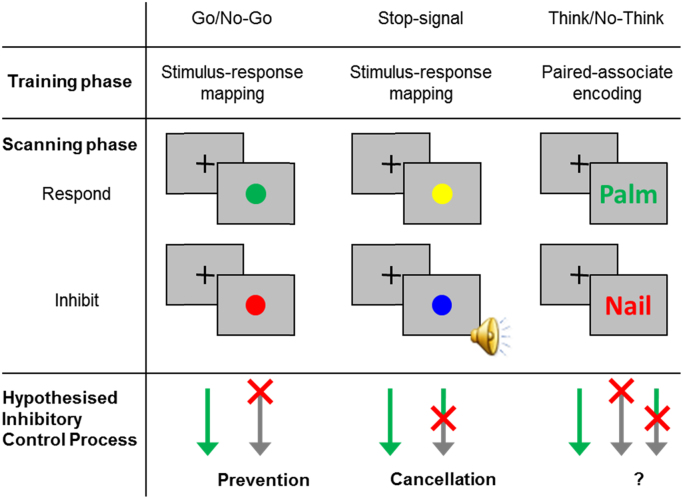
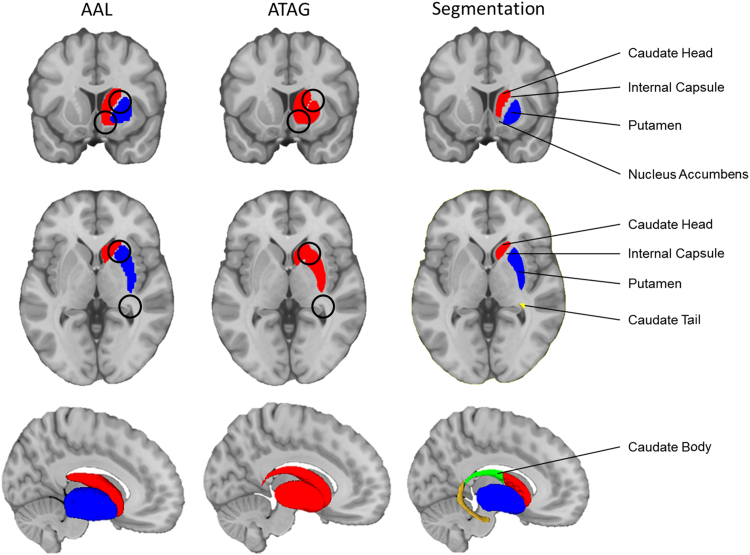
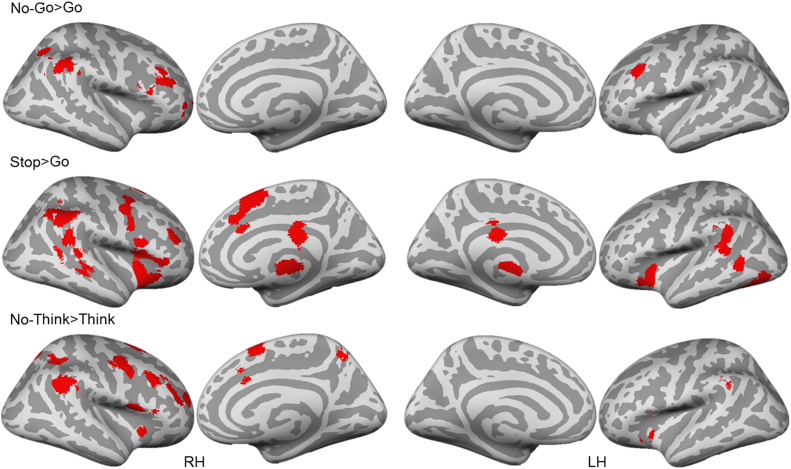
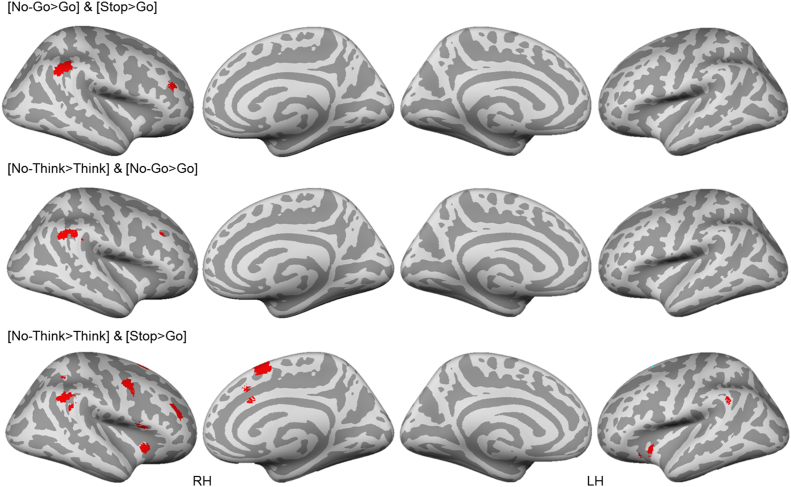
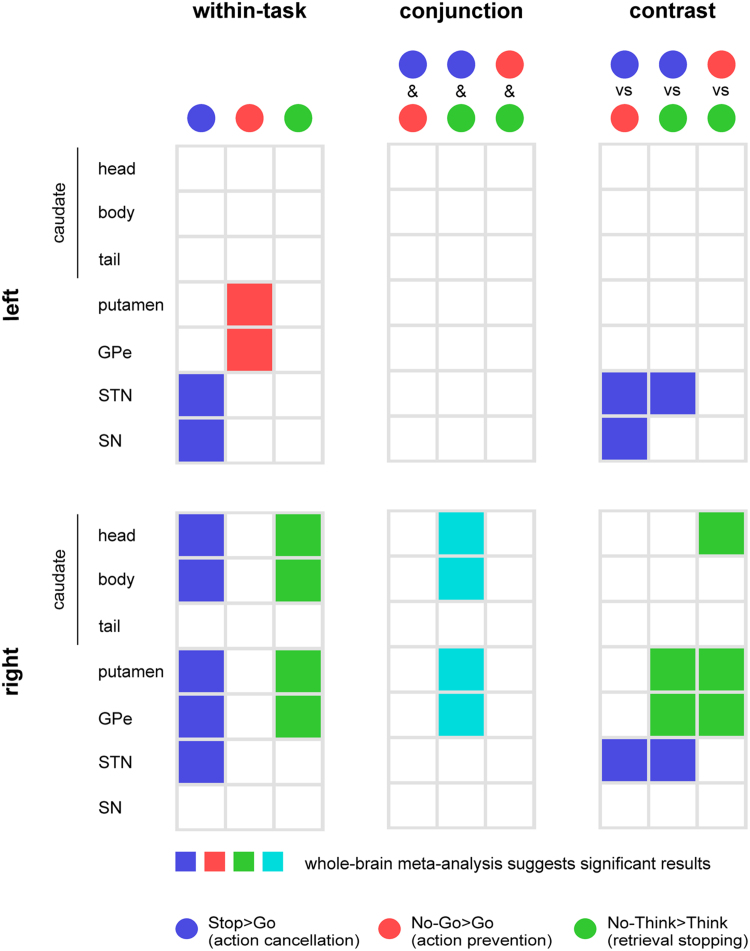
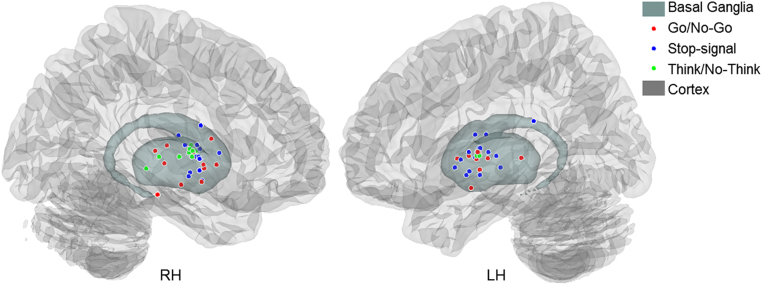
The ability to stop actions and thoughts is essential for goal-directed behaviour. Neuroimaging research has revealed that stopping actions and thoughts engage similar cortical mechanisms, including the ventro- and dorso-lateral prefrontal cortex. However, whether and how these abilities require similar subcortical mechanisms remains unexplored. Specifically of interest are the basal ganglia, subcortical structures long-known for their motor functions, but less so for their role in cognition. To investigate the potential common mechanisms in the basal ganglia underlying action and thought stopping, we conducted meta-analyses using fMRI data from the Go/No-Go, Stop-signal, and Think/No-Think tasks. All three tasks require active stopping of prepotent actions or thoughts. To localise basal ganglia activations, we performed high-resolution manual segmentations of striatal subregions. We found that all three tasks recovered clusters in the basal ganglia, although the specific localisation of these clusters differed. Although the Go/No-Go and Stop-signal tasks are often interchangeably used for measuring action stopping, their cluster locations in the basal ganglia did not significantly overlap. These different localised clusters suggest that the Go/No-Go and Stop-signal tasks may recruit distinct basal ganglia stopping processes, and therefore should not be treated equivalently. More importantly, the basal ganglia cluster recovered from the Think/No-Think task largely co-localised with that from the Stop-signal task, but not the Go/No-Go task, possibly indicating that the Think/No-Think and Stop-signal tasks share a common striatal circuitry involved in the cancellation of unwanted thoughts and actions. The greater similarity of the Think/No-Think task to the Stop-Signal rather than Go/No-Go task also was echoed at the cortical level, which revealed highly overlapping and largely right lateralized set of regions including the anterior DLPFC, VLPFC, Pre-SMA and ACC. Overall, we provide novel evidence suggesting not only that the basal ganglia are critical for thought stopping, but also that they are involved in specific stopping subprocesses that can be engaged by tasks in different domains. These findings raise the possibility that the basal ganglia may be part of a supramodal network responsible for stopping unwanted processes more broadly.
Overview
The claims and statistics of this paper haven’t been checked yet.
Run the check — free, no account needed. It reads the open-access text and checks the sources it cites.
Integrity signals
Registry
Cites
Statistics
Figures
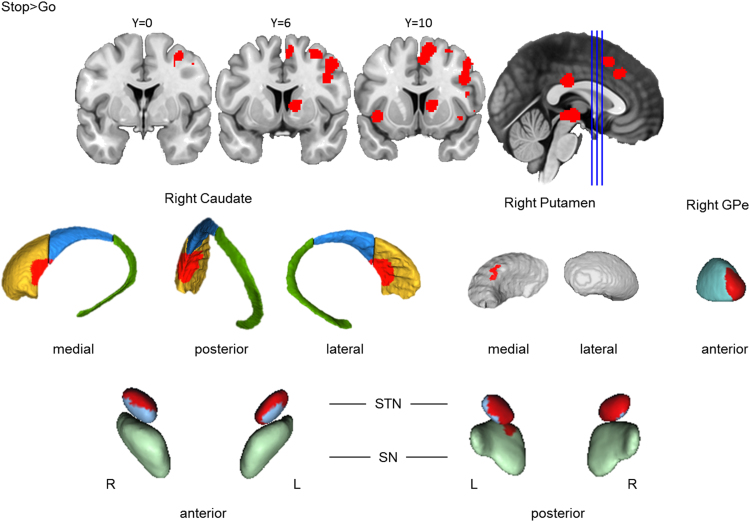
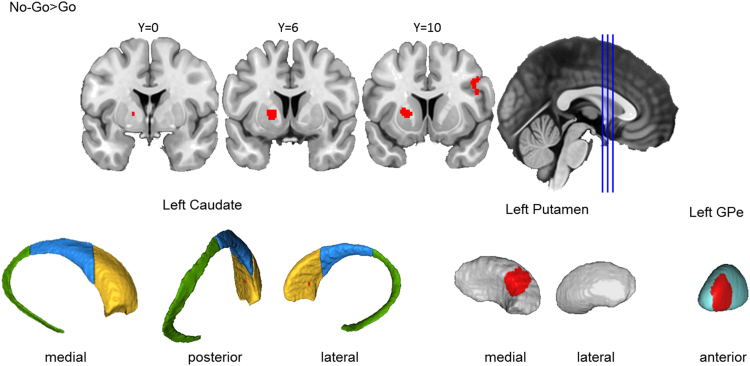
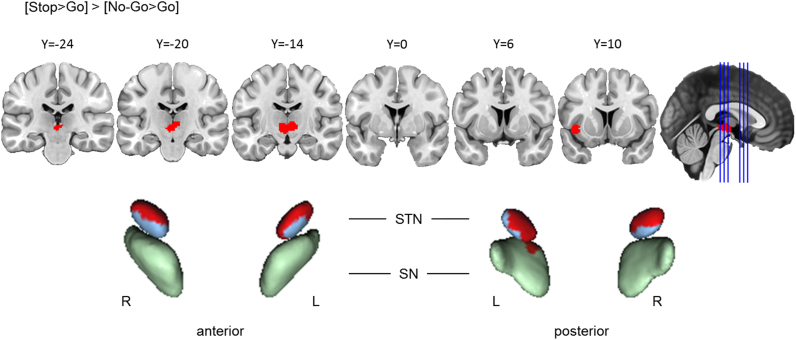
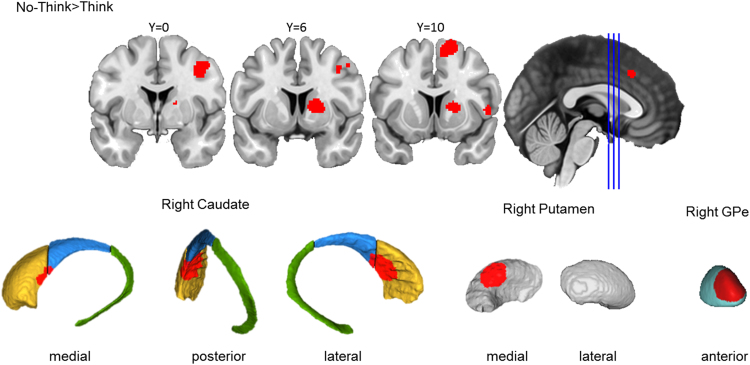
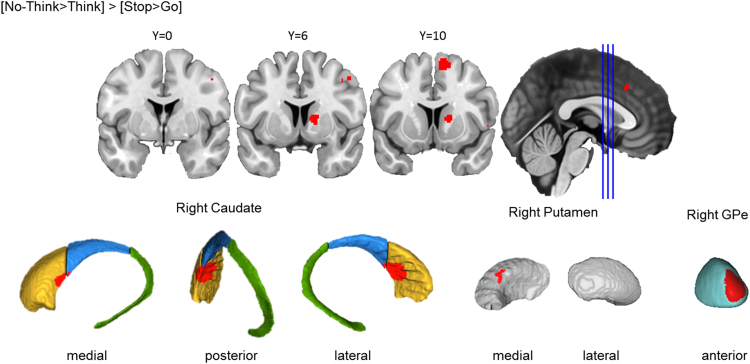
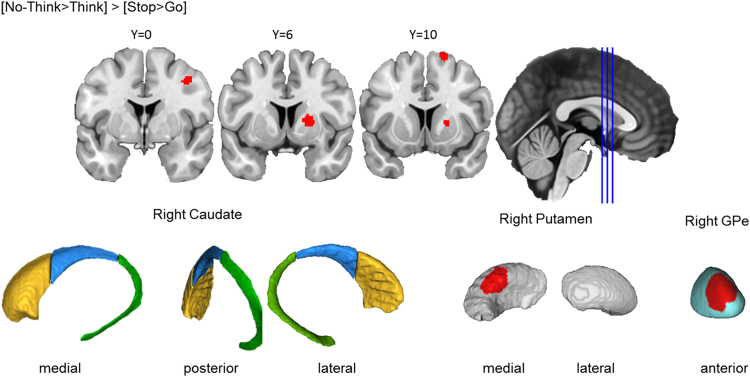
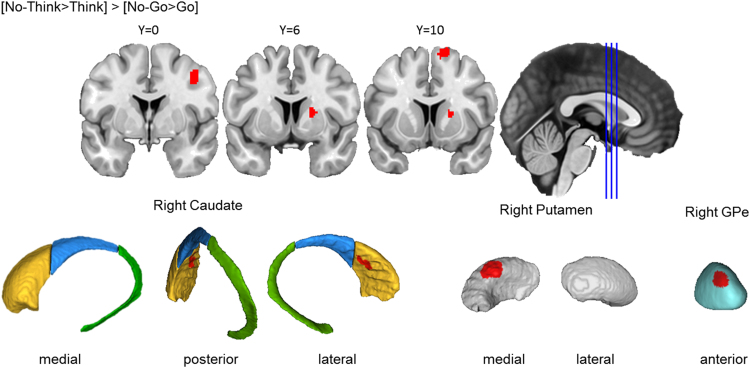
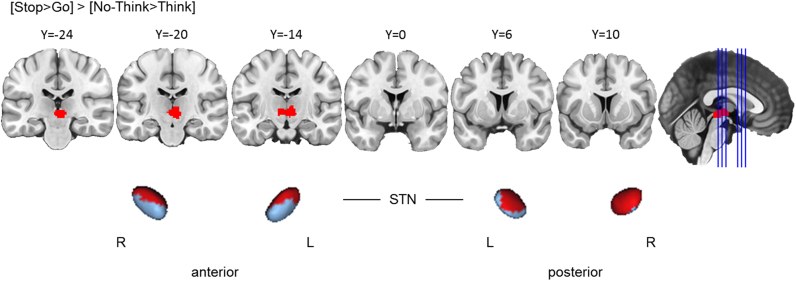
Verification
Claims the paper makes
The claims and statistics of this paper haven’t been checked yet.
Run the check — free, no account needed. It reads the open-access text and checks the sources it cites.
Claims other papers make about this one
Each is checked against this paper’s own text: does it say what the citing paper says it does?
The check wasn’t confident either way, so it gives no verdict — never disputed.
In the citing paper
“while reduced activity in the anterior cingulate cortex, hippocampus, and amygdala support their role in generating predictive errors (Guo et al., 2018; Heckers, 2001; Laurens et al., 2003).”
From Predictive coding in neuropsychiatric disorders: a systematic transdiagnostic review. (2025) · cites this paper as Guo et al., 2018
Experimental — accuracy not yet measured
Self-check
Percentages, sums and reported differences re-computed from the paper’s own numbers.
The self-check needs the paper’s full text.
Citations
Cites
Tzourio-Mazoyer, N., Landeau, B., Papathanassiou, D., Crivello, F., Etard, O., Delcroix, N., Mazoyer, B., & Joliot, M. (2002) · NeuroImage · doi:10.1006/nimg.2001.0978 · Cited by 16,319
Yushkevich, P. A., Piven, J., Hazlett, H. C., Smith, R. G., Ho, S., Gee, J. C., & Gerig, G. (2006) · NeuroImage · doi:10.1016/j.neuroimage.2006.01.015 · Cited by 8,868
Parallel organization of functionally segregated circuits linking basal ganglia and cortex
Alexander, G. E., DeLong, M. R., & Strick, P. L. (1986) · Annual Review of Neuroscience · doi:10.1146/annurev.ne.09.030186.002041 · Cited by 8,527
Functional architecture of basal ganglia circuits: neural substrates of parallel processing
Alexander, G. E., & Crutcher, M. D. (1990) · Trends in Neurosciences · doi:10.1016/0166-2236(90)90107-l · Cited by 4,131
The reward circuit: linking primate anatomy and human imaging
Haber, S. N., & Knutson, B. (2010) · Neuropsychopharmacology · doi:10.1038/npp.2009.129 · Cited by 3,718
Henry, M. A. (1995) · The Journal of the American Dental Association · doi:10.14219/jada.archive.1995.0108 · Cited by 3,454
Unbiased average age-appropriate atlases for pediatric studies
Fonov, V., Evans, A. C., Botteron, K., Almli, C. R., McKinstry, R. C., & Collins, D. L. (2011) · NeuroImage · doi:10.1016/j.neuroimage.2010.07.033 · Cited by 2,290
Unbiased nonlinear average age-appropriate brain templates from birth to adulthood
Fonov, V., Evans, A., McKinstry, R. C., Almli, C. R., & Collins, D. L. (2009) · NeuroImage · doi:10.1016/s1053-8119(09)70884-5 · Cited by 2,257
Inhibition and the right inferior frontal cortex: one decade on
Aron, A. R., Robbins, T. W., & Poldrack, R. A. (2014) · Trends in Cognitive Sciences · doi:10.1016/j.tics.2013.12.003 · Cited by 2,166
Nigg, J. T. (2000) · Psychological Bulletin · doi:10.1037/0033-2909.126.2.220 · Cited by 1,941 · cited 1×
“The Go/No-Go and Stop-signal tasks are often treated equivalently in the literature (Nigg, 2000; Zheng et al., 2008), although this might not be the case for reasons we will discuss shortly.”
Eickhoff, S. B., Laird, A. R., Grefkes, C., Wang, L. E., Zilles, K., & Fox, P. T. (2009) · Human Brain Mapping · doi:10.1002/hbm.20718 · Cited by 1,924
Aron, A. R., & Poldrack, R. A. (2006) · The Journal of Neuroscience · doi:10.1523/jneurosci.4682-05.2006 · Cited by 1,630
Impulsivity, compulsivity, and top-down cognitive control
Dalley, J. W., Everitt, B. J., & Robbins, T. W. (2011) · Neuron · doi:10.1016/j.neuron.2011.01.020 · Cited by 1,589
The primate basal ganglia: Parallel and integrative networks
Haber, S. N. (2003) · Journal of Chemical Neuroanatomy · doi:10.1016/j.jchemneu.2003.10.003 · Cited by 1,479
Left ventrolateral prefrontal cortex and the cognitive control of memory
Badre, D., & Wagner, A. D. (2007) · Neuropsychologia · doi:10.1016/j.neuropsychologia.2007.06.015 · Cited by 1,471
Bias between MNI and Talairach coordinates analyzed using the ICBM‐152 brain template
Lancaster, J. L., Tordesillas‐Gutiérrez, D., Martinez, M., Salinas, F., Evans, A., Zilles, K., Mazziotta, J. C., & Fox, P. T. (2007) · Human Brain Mapping · doi:10.1002/hbm.20345 · Cited by 1,464
Activation Likelihood Estimation meta-analysis revisited
Eickhoff, S., Bzdok, D., Laird, A., Kurth, F., & Fox, P. (2011) · NeuroImage · doi:10.1016/j.neuroimage.2011.09.017 · Cited by 1,448
Suppressing unwanted memories by executive control
Anderson, M. C., & Green, C. (2001) · Nature · doi:10.1038/35066572 · Cited by 1,129
Self-citationO’Reilly, R. C., & Frank, M. J. (2005) · Neural Computation · doi:10.1162/089976606775093909 · Cited by 1,124
Neural Systems Underlying the Suppression of Unwanted Memories
Anderson, M. C., Ochsner, K. N., Kuhl, B. A., Cooper, J. C., Robertson, E. R., Whitfield‐Gabrieli, S., Glover, G. H., & Gabrieli, J. D. E. (2004) · Science · doi:10.1126/science.1089504 · Cited by 1,121
Self-citationTurkeltaub, P., Eickhoff, S., Laird, A. R., Fox, M., Wiener, M., & Fox, P. (2011) · Human Brain Mapping · doi:10.1002/hbm.21186 · Cited by 1,114
The Neural Basis of Inhibition in Cognitive Control
Aron, A. R. (2007) · The Neuroscientist · doi:10.1177/1073858407299288 · Cited by 1,098
Functional Neuroanatomy of the Basal GangliaPreprint
Lanciego, J. L., Luquin, N., & Obeso, J. A. (2012) · Cold Spring Harbor Perspectives in Medicine · doi:10.1101/cshperspect.a009621 · Cited by 981
Modelling neural correlates of working memory: A coordinate-based meta-analysis
Rottschy, C., Langner, R., Dogan, I., Reetz, K., Laird, A. R., Schulz, J. B., Fox, P. T., & Eickhoff, S. B. (2012) · NeuroImage · doi:10.1016/j.neuroimage.2011.11.050 · Cited by 951
Competition among multiple memory systems: converging evidence from animal and human brain studies
Poldrack, R. A., & Packard, M. G. (2003) · Neuropsychologia · doi:10.1016/s0028-3932(02)00157-4 · Cited by 880
Haber, S. N., Kim, K.-S., Mailly, P., & Calzavara, R. (2006) · The Journal of Neuroscience · doi:10.1523/jneurosci.0271-06.2006 · Cited by 686
Verbruggen, F., & Logan, G. D. (2008) · Journal of Experimental Psychology General · doi:10.1037/a0013170 · Cited by 685
The basal ganglia: learning new tricks and loving it
Graybiel, A. M. (2005) · Current Opinion in Neurobiology · doi:10.1016/j.conb.2005.10.006 · Cited by 678
Swick, D., Ashley, V., & Turken, U. (2011) · NeuroImage · doi:10.1016/j.neuroimage.2011.02.070 · Cited by 638
Levy, B. J., & Wagner, A. D. (2011) · Annals of the New York Academy of Sciences · doi:10.1111/j.1749-6632.2011.05958.x · Cited by 625
Differential patterns of striatal activation in young children with and without ADHD
Durston, S., Tottenham, N. T., Thomas, K. M., Davidson, M. C., Eigsti, I.-M., Yang, Y., Ulug, A. M., & Casey, B. J. (2003) · Biological Psychiatry · doi:10.1016/s0006-3223(02)01904-2 · Cited by 619
Parallel striatal and hippocampal systems for landmarks and boundaries in spatial memory
Doeller, C. F., King, J. A., & Burgess, N. (2008) · Proceedings of the National Academy of Sciences · doi:10.1073/pnas.0801489105 · Cited by 549
Eagle, D. M., Bari, A., & Robbins, T. W. (2008) · Psychopharmacology · doi:10.1007/s00213-008-1127-6 · Cited by 548
Aron, A. R., Durston, S., Eagle, D. M., Logan, G. D., Stinear, C. M., & Stuphorn, V. (2007) · The Journal of Neuroscience · doi:10.1523/jneurosci.3644-07.2007 · Cited by 539
Limited conscious monitoring of motor performance in normal subjects
Fourneret, P., & Jeannerod, M. (1998) · Neuropsychologia · doi:10.1016/s0028-3932(98)00006-2 · Cited by 534
Oscillatory Entrainment of Striatal Neurons in Freely Moving Rats
Berke, J. D., Okatan, M., Skurski, J., & Eichenbaum, H. (2004) · Neuron · doi:10.1016/j.neuron.2004.08.035 · Cited by 507
Eickhoff, S. B., Bzdok, D., Laird, A. R., Roski, C., Caspers, S., Zilles, K., & Fox, P. T. (2011) · NeuroImage · doi:10.1016/j.neuroimage.2011.05.021 · Cited by 484 · cited 3×
“The limited number of studies should not exert a strong influence on the results (Eickhoff et al., 2009, 2011).”
BackgroundMethodMeta-analysis of functional neuroimaging data: current and future directions
Wager, T. D., Lindquist, M., & Kaplan, L. (2007) · Social Cognitive and Affective Neuroscience · doi:10.1093/scan/nsm015 · Cited by 434
Control of Basal Ganglia Output by Direct and Indirect Pathway Projection Neurons
Freeze, B. S., Kravitz, A. V., Hammack, N., Berke, J. D., & Kreitzer, A. C. (2013) · Journal of Neuroscience · doi:10.1523/jneurosci.1278-13.2013 · Cited by 422
Salimi-Khorshidi, G., Smith, S. M., Keltner, J. R., Wager, T. D., & Nichols, T. E. (2009) · NeuroImage · doi:10.1016/j.neuroimage.2008.12.039 · Cited by 388
Cai, W., Ryali, S., Chen, T., Li, C.-S. R., & Menon, V. (2014) · The Journal of Neuroscience · doi:10.1523/jneurosci.3048-14.2014 · Cited by 362
Laird, A. R., Robinson, J. L., McMillan, K. M., Tordesillas‐Gutiérrez, D., Moran, S. T., Gonzales, S. M., Ray, K. L., Franklin, C. G., Glahn, D. C., Fox, P. T., et al. (2010) · NeuroImage · doi:10.1016/j.neuroimage.2010.02.048 · Cited by 344
Booth, J. R., Burman, D. D., Meyer, J. R., Lei, Z., Trommer, B. L., Davenport, N. D., Li, W., Parrish, T. B., Gitelman, D. R., & Marsel Mesulam, M. (2005) · Journal of Child Psychology and Psychiatry · doi:10.1111/j.1469-7610.2004.00337.x · Cited by 333
Cross-frequency interaction of the eye-movement related LFP signals in V1 of freely viewing monkeys
Ito, J., Maldonado, P., & Grün, S. (2013) · Frontiers in Systems Neuroscience · doi:10.3389/fnsys.2013.00001 · Cited by 309
Restraint and cancellation: multiple inhibition deficits in attention deficit hyperactivity disorder
Schachar, R., Logan, G. D., Robaey, P., Chen, S., Ickowicz, A., & Barr, C. (2007) · Journal of Abnormal Child Psychology · doi:10.1007/s10802-006-9075-2 · Cited by 293
Implementation errors in the GingerALE Software: Description and recommendations
Eickhoff, S. B., Laird, A. R., Fox, P. M., Lancaster, J. L., & Fox, P. T. (2016) · Human Brain Mapping · doi:10.1002/hbm.23342 · Cited by 270
The role of the striatum and hippocampus in planning: A PET activation study in Parkinson's disease
Dagher, A. (2001) · Brain · doi:10.1093/brain/124.5.1020 · Cited by 260
Cognitive functions and corticostriatal circuits: insights from Huntington's disease
Lawrence, A. D., Sahakian, B. J., & Robbins, T. W. (1998) · Trends in Cognitive Sciences · doi:10.1016/s1364-6613(98)01231-5 · Cited by 252
Cognitive deficits in Parkinson's disease: A cognitive neuroscience perspective
Robbins, T. W., & Cools, R. (2014) · Movement Disorders · doi:10.1002/mds.25853 · Cited by 235
Quantifying inter-individual anatomical variability in the subcortex using 7 T structural MRI
Keuken, M. C., Bazin, P., Crown, L., Hootsmans, J., Laufer, A., Müller-Axt, C., Sier, R., van der Putten, E. J., Schäfer, A., Turner, R., et al. (2014) · NeuroImage · doi:10.1016/j.neuroimage.2014.03.032 · Cited by 223
Johnstone, S. J., Dimoska, A., Smith, J. L., Barry, R. J., Pleffer, C. B., Chiswick, D., & Clarke, A. R. (2006) · International Journal of Psychophysiology · doi:10.1016/j.ijpsycho.2006.07.001 · Cited by 220
Striatal Contributions to Declarative Memory Retrieval
Scimeca, J. M., & Badre, D. (2012) · Neuron · doi:10.1016/j.neuron.2012.07.014 · Cited by 205
Regional specialization within the human striatum for diverse psychological functions
Pauli, W. M., O’Reilly, R. C., Yarkoni, T., & Wager, T. D. (2016) · Proceedings of the National Academy of Sciences · doi:10.1073/pnas.1507610113 · Cited by 204
Catarino, A., Küpper, C. S., Werner‐Seidler, A., Dalgleish, T., & Anderson, M. C. (2015) · Psychological Science · doi:10.1177/0956797615569889 · Cited by 201
Self-citationDopamine modulation in the basal ganglia locks the gate to working memory
Gruber, A. J., Dayan, P., Gutkin, B. S., & Solla, S. A. (2006) · Journal of Computational Neuroscience · doi:10.1007/s10827-005-5705-x · Cited by 189
Prefrontal cortex and basal ganglia contributions to visual working memory
Voytek, B., & Knight, R. T. (2010) · Proceedings of the National Academy of Sciences · doi:10.1073/pnas.1007277107 · Cited by 180
Purging of Memories from Conscious Awareness Tracked in the Human Brain
Levy, B. J., & Anderson, M. C. (2012) · Journal of Neuroscience · doi:10.1523/jneurosci.2640-12.2012 · Cited by 175
Self-citationBenoit, R. G., Hulbert, J. C., Huddleston, E., & Anderson, M. C. (2014) · Journal of Cognitive Neuroscience · doi:10.1162/jocn_a_00696 · Cited by 174
Self-citationSuppressing unwanted memories reduces their unconscious influence via targeted cortical inhibition
Gagnepain, P., Henson, R. N., & Anderson, M. C. (2014) · Proceedings of the National Academy of Sciences · doi:10.1073/pnas.1311468111 · Cited by 171
Self-citationDepue, B. E., Orr, J. M., Smolker, H. R., Naaz, F., & Banich, M. T. (2016) · Cerebral Cortex · doi:10.1093/cercor/bhu324 · Cited by 160
The Key Locus of Common Response Inhibition Network for No-go and Stop Signals
Zheng, D., Oka, T., Bokura, H., & Yamaguchi, S. (2008) · Journal of Cognitive Neuroscience · doi:10.1162/jocn.2008.20100 · Cited by 156
Computational models of basal-ganglia pathway functions: focus on functional neuroanatomy
Schroll, H., & Hamker, F. H. (2013) · Frontiers in Systems Neuroscience · doi:10.3389/fnsys.2013.00122 · Cited by 151
How do memory systems interact? Evidence from human classification learning
Poldrack, R. A., & Rodriguez, P. F. (2004) · Neurobiology of Learning and Memory · doi:10.1016/j.nlm.2004.05.003 · Cited by 145
Depue, B. E., Burgess, G. C., Willcutt, E. G., Ruzic, L., & Banich, M. T. (2010) · Neuropsychologia · doi:10.1016/j.neuropsychologia.2010.09.013 · Cited by 143
Selection and stopping in voluntary action: A meta-analysis and combined fMRI study
Rae, C. L., Hughes, L. E., Weaver, C., Anderson, M. C., & Rowe, J. B. (2014) · NeuroImage · doi:10.1016/j.neuroimage.2013.10.012 · Cited by 140
Self-citationCooperation between the hippocampus and the striatum during episodic encoding
Sadeh, T., Shohamy, D., Levy, D. R., Reggev, N., & Maril, A. (2011) · Journal of Cognitive Neuroscience · doi:10.1162/jocn.2010.21549 · Cited by 104
The visual corticostriatal loop through the tail of the caudate: circuitry and function
Seger, C. A. (2013) · Frontiers in Systems Neuroscience · doi:10.3389/fnsys.2013.00104 · Cited by 100
Handbook of Basal Ganglia Structure and Function
(2010) · Handbook of behavioral neuroscience · doi:10.1016/c2009-0-01841-8 · Cited by 98
Increased basal ganglia volumes in velo-cardio-facial syndrome (deletion 22q11.2)
Eliez, S., Barnea‐Goraly, N., Schmitt, J. E., Liu, S. Y., & Reiss, A. L. (2002) · Biological Psychiatry · doi:10.1016/s0006-3223(02)01361-6 · Cited by 69
The human brain : in photographs and diagrams
Nolte, J., & Angevine, J. B. (2013) · Cited by 62
Seger, C. A., Dennison, C. S., Lopez‐Paniagua, D., Peterson, E. J., & Roark, A. A. (2011) · NeuroImage · doi:10.1016/j.neuroimage.2011.01.026 · Cited by 45
Subcortical Connections of the Basal Ganglia
Winn, P., Wilson, D. I. G., & Redgrave, P. (2010) · Handbook of behavioral neuroscience · doi:10.1016/b978-0-12-374767-9.00023-8 · Cited by 34
Effects of caudate nucleus on paroxysmal activity in hippocampus of cat
Grutta, V. L., Sabatino, M., Gravante, G. G., & Grutta, G. L. (1985) · Electroencephalography and Clinical Neurophysiology · doi:10.1016/0013-4694(85)91033-8 · Cited by 30
Neggers, S. F. W., Zandbelt, B. B., Schall, M., & Schall, J. D. (2015) · Journal of Neurophysiology · doi:10.1152/jn.00569.2014 · Cited by 28
Perceptual surprise aides inhibitory motor control.
Wessel, J. R. (2017) · Journal of Experimental Psychology Human Perception & Performance · doi:10.1037/xhp0000452 · Cited by 28
Striatal and septal influence on hippocampal theta and spikes in the cat
Sabatino, M., Ferraro, G., Liberti, G., Vella, N., & Grutta, V. L. (1985) · Neuroscience Letters · doi:10.1016/0304-3940(85)90400-8 · Cited by 27
Basal Ganglia Activity Mirrors a Benefit of Action and Reward on Long-Lasting Event Memory
Koster, R., Guitart‐Masip, M., Dolan, R. J., & Düzel, E. (2015) · Cerebral Cortex · doi:10.1093/cercor/bhv216 · Cited by 26
Effects of substantia nigra and pallidum stimulation on hippocampal interictal activity in the cat
Sabatino, M., Savatteri, V., Liberti, G., Vella, N., & Grutta, V. L. (1986) · Neuroscience Letters · doi:10.1016/0304-3940(86)90344-7 · Cited by 19
Takada, M., Inoue, K., Koketsu, D., Kato, S., Kobayashi, K., & Nambu, A. (2013) · Frontiers in Neural Circuits · doi:10.3389/fncir.2013.00140 · Cited by 16
Research works printed but not linked: 2
- Levitt, 2002, An MRI study of caudate nucleus and lateral ventricle volume in first episode schizophrenia and affective psychosis, Biol. Psychiatry, 51, 59S
- Rodriguez, 2003, Path analysis of cortical-subcortical interactions in category learning with fMRI, Soc. Neurosci. Abstr., 400, 28
Cited by
Sorted by citations
Active Forgetting: Adaptation of Memory by Prefrontal Control
Anderson, M. C., & Hulbert, J. C. (2021) · Annual Review of Psychology · doi:10.1146/annurev-psych-072720-094140 · Cited by 279
Self-citationMemory Control: A Fundamental Mechanism of Emotion Regulation
Engen, H. G., & Anderson, M. C. (2018) · Trends in Cognitive Sciences · doi:10.1016/j.tics.2018.07.015 · Cited by 216
Self-citationDifferences in unity: The go/no-go and stop signal tasks rely on different mechanisms
Raud, L., Westerhausen, R., Dooley, N., & Huster, R. J. (2020) · NeuroImage · doi:10.1016/j.neuroimage.2020.116582 · Cited by 199
Janiri, D., Moser, D. A., Doucet, G. E., Luber, M. J., Rasgon, A., Lee, W. H., Murrough, J. W., Sani, G., Eickhoff, S. B., & Frangou, S. (2020) · JAMA Psychiatry · doi:10.1001/jamapsychiatry.2019.3351 · Cited by 173
Towards real-world generalizability of a circuit for action-stopping
Hannah, R., & Aron, A. R. (2021) · Nature reviews. Neuroscience · doi:10.1038/s41583-021-00485-1 · Cited by 139
Metadata
- Authors
- Guo, Y., Schmitz, T. W., Mur, M., Ferreira, C. S., & Anderson, M. C.
- Affiliations
- MRC Cognition and Brain Sciences Unit (GB)
- University of Birmingham (GB)
- Corresponding author
- Guo, Yuhua
- Venue
- Neuropsychologia
- Publisher
- Elsevier BV
- Published
- 2018-01
- Volume
- 108
- Pages
- 117-134
- ISSN
- 0028-3932 (ISSN-L)
- PMC
- PMC5759998
- OpenAlex
- W2774718880
- Cited by
- 133
- References
- 79
- Citations by year
- 2026: 9 · 2025: 24 · 2024: 17 · 2023: 12 · 2022: 15 · 2021: 16 · 2020: 24 · 2019: 8 · 2018: 7
- FWCI
- 1.19
- Type
- journal article
- Language
- en
- Open access
- hybrid
- doi.org
- Locations
- Neuropsychologia (publishedVersion, cc-by)
- Europe PMC (PubMed Central) (publishedVersion, cc-by)
- PubMed Central (publishedVersion, cc-by)
- PubMed (publishedVersion)
- Scholarship@Western (Western University) (publishedVersion, cc-by)
- Scholarship@Western (Western University) (submittedVersion, cc-by)
- University of Birmingham Research Portal (University of Birmingham) (submittedVersion, cc-by)
- Funders
- UK Medical Research Council (MC-A060-5PR00)
- Topics
- Life Sciences › Neuroscience › Cognitive Neuroscience › Neural and Behavioral Psychology Studies
- Life Sciences › Neuroscience › Cellular and Molecular Neuroscience › Neurotransmitter Receptor Influence on Behavior
- Health Sciences › Medicine › Clinical Neurology › Deep Brain Stimulation and Movement Disorders
- Keywords
- basal ganglia, action stopping, thought stopping, motor inhibition, go/no-go task, stop-signal task, Think/No-Think task, striatal subregions, prefrontal cortex, ventrolateral prefrontal cortex, anterior cingulate cortex, supplementary motor area, intrusive thoughts
- MeSH terms
- Basal Ganglia, Humans, Inhibition, Psychological, Magnetic Resonance Imaging, Memory, Motor Activity, Psychomotor Performance, Executive Function
About these checks
Registry, retraction, Cites and statistics results are computed, not judged, with one exception: a printed reference that no index lists is read once by a model before it counts as a citation error. Claims are extracted by a model and kept only when their quote appears verbatim in the text; each cited source is then checked, with a model’s help, for whether it says what the claim relies on. Those verdicts can be wrong — read the claim’s quote and the cited source before relying on one.
Statistics and arithmetic are recomputed, not judged.
Confidence bands are shown only for fields calibrated on our annotated test set. None is calibrated yet, so no band is shown.
What counts as a claim ›How we measure confidence ›How we check this ›
Are you an author, or do you see a problem with this page? Request a review
