

The DOI matches its Crossref record; 64 of the 64 references it cites were found in a registry or an index.
Effects of craving behavioral intervention on neural substrates of cue-induced craving in Internet gaming disorder
Open accessAbstract
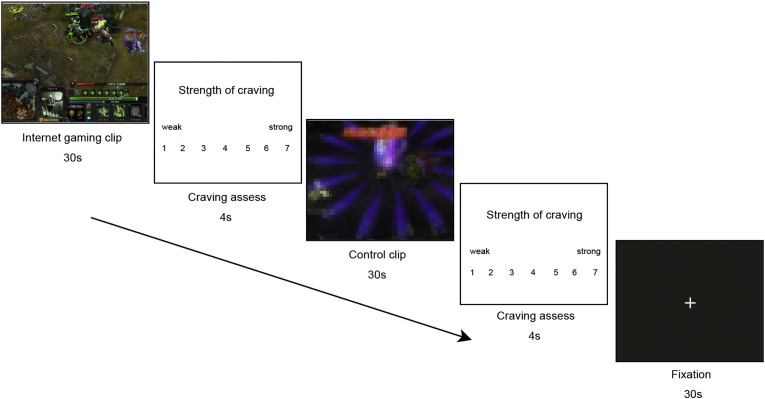
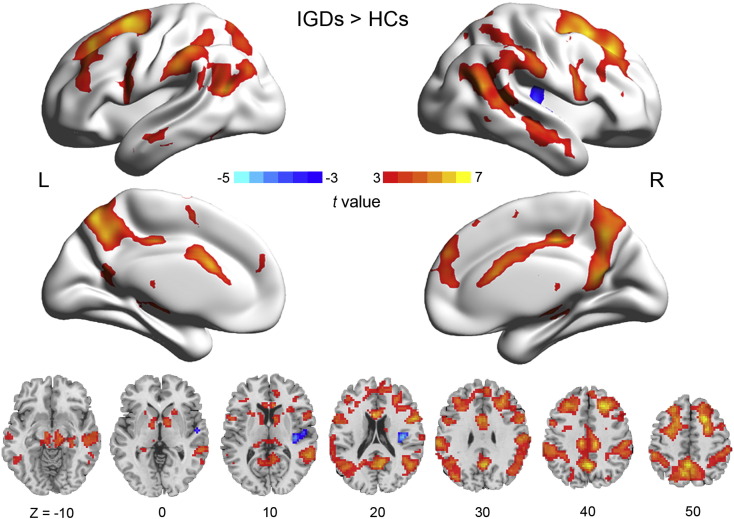
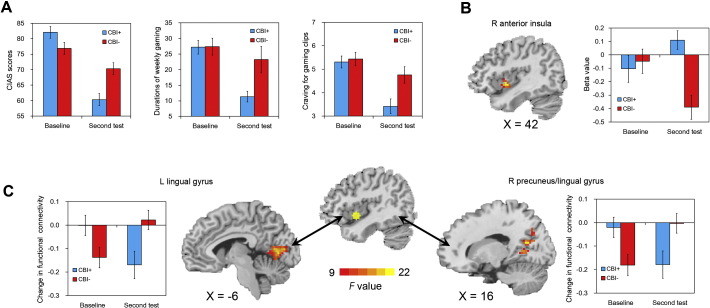
Internet gaming disorder (IGD) is characterized by high levels of craving for online gaming and related cues. Since addiction-related cues can evoke increased activation in brain areas involved in motivational and reward processing and may engender gaming behaviors or trigger relapse, ameliorating cue-induced craving may be a promising target for interventions for IGD. This study compared neural activation between 40 IGD and 19 healthy control (HC) subjects during an Internet-gaming cue-reactivity task and found that IGD subjects showed stronger activation in multiple brain areas, including the dorsal striatum, brainstem, substantia nigra, and anterior cingulate cortex, but lower activation in the posterior insula. Furthermore, twenty-three IGD subjects (CBI + group) participated in a craving behavioral intervention (CBI) group therapy, whereas the remaining 17 IGD subjects (CBI - group) did not receive any intervention, and all IGD subjects were scanned during similar time intervals. The CBI + group showed decreased IGD severity and cue-induced craving, enhanced activation in the anterior insula and decreased insular connectivity with the lingual gyrus and precuneus after receiving CBI. These findings suggest that CBI is effective in reducing craving and severity in IGD, and it may exert its effects by altering insula activation and its connectivity with regions involved in visual processing and attention bias.
Overview
The claims and statistics of this paper haven’t been checked yet.
Run the check — free, no account needed. It reads the open-access text and checks the sources it cites.
Integrity signals
Registry
Cites
Statistics
Figures
Verification
Claims the paper makes
The claims and statistics of this paper haven’t been checked yet.
Run the check — free, no account needed. It reads the open-access text and checks the sources it cites.
Claims other papers make about this one
Each is checked against this paper’s own text: does it say what the citing paper says it does?
In the citing paper
“The targeted-effect size was chosen based on findings from studies employing CIC paradigms for drug craving52, food cravings25,37,53,54 and internet gaming craving27, which report medium-to-large effect sizes in cue reactivity52.”
From Acute social isolation evokes midbrain craving responses similar to hunger (2020) · cites this paper as [27]
Self-check
Percentages, sums and reported differences re-computed from the paper’s own numbers.
The self-check needs the paper’s full text.
Citations
Cites
Diagnostic and Statistical Manual of Mental Disorders
American Psychiatric Association (2013) · doi:10.1176/appi.books.9780890425596 · Cited by 116,369
Diagnostic and Statistical Manual of Mental Disorders
Williams, J. B. W., & First, M. B. (2013) · Oxford University Press eBooks · doi:10.1093/acrefore/9780199975839.013.104 · Cited by 109,845
An inventory for measuring depression
BECK, A. T. (1961) · Archives of General Psychiatry · doi:10.1001/archpsyc.1961.01710120031004 · Cited by 38,032
An inventory for measuring clinical anxiety: Psychometric properties.
Beck, A. T., Epstein, N., Brown, G., & Steer, R. A. (1988) · Journal of Consulting and Clinical Psychology · doi:10.1037/0022-006x.56.6.893 · Cited by 14,407
Selective Cortical Undercutting As a Means of Modifying and Studying Frontal Lobe Function in Man
Scoville, W. B. (1949) · Journal of neurosurgery · doi:10.3171/jns.1949.6.1.0065 · Cited by 7,374
The neural basis of drug craving: An incentive-sensitization theory of addiction
Robinson, T. (1993) · Brain Research Reviews · doi:10.1016/0165-0173(93)90013-p · Cited by 7,346
Bush, K. (1998) · Archives of Internal Medicine · doi:10.1001/archinte.158.16.1789 · Cited by 6,196
Koob, G. F., & Volkow, N. D. (2010) · Neuropsychopharmacology · doi:10.1038/npp.2009.110 · Cited by 5,340
The precuneus: a review of its functional anatomy and behavioural correlates
Cavanna, A. E., & Trimble, M. R. (2006) · Brain · doi:10.1093/brain/awl004 · Cited by 5,128
BrainNet Viewer: A Network Visualization Tool for Human Brain Connectomics
Xia, M., Wang, J., & He, Y. (2013) · PLoS ONE · doi:10.1371/journal.pone.0068910 · Cited by 4,106
Fagerström, K.-O. (1978) · Addictive Behaviors · doi:10.1016/0306-4603(78)90024-2 · Cited by 2,221
The neural mechanisms of top-down attentional control
Hopfinger, J. B., Buonocore, M. H., & Mangun, G. R. (2000) · Nature Neuroscience · doi:10.1038/72999 · Cited by 1,876
Evidence for striatal dopamine release during a video game
Koepp, M. J., Gunn, R. N., Lawrence, A. D., Cunningham, V. J., Dagher, A., Jones, T., Brooks, D. J., Bench, C. J., & Grasby, P. M. (1998) · Nature · doi:10.1038/30498 · Cited by 1,279
Internet Gaming Addiction: A Systematic Review of Empirical Research
Kuss, D. J., & Griffiths, M. D. (2012) · International Journal of Mental Health and Addiction · doi:10.1007/s11469-011-9318-5 · Cited by 1,113 · cited 2×
“These findings are largely consistent with observations in substance dependence and pathological gambling (Engelmann et al., 2012; Goudriaan et al., 2013) and suggest there may be shared neural substrates between IGD and other addictions (Kuss and Griffiths, 2012).”
BackgroundResultFunctional connectivity of the insula in the resting brain
Cauda, F., D'Agata, F., Sacco, K., Duca, S., Geminiani, G., & Vercelli, A. (2011) · NeuroImage · doi:10.1016/j.neuroimage.2010.11.049 · Cited by 793
Brain activities associated with gaming urge of online gaming addiction
Ko, C.-H., Liu, G.-C., Hsiao, S., Yen, J.-Y., Yang, M.-J., Lin, W.-C., Yen, C.-F., & Chen, C.-S. (2009) · Journal of Psychiatric Research · doi:10.1016/j.jpsychires.2008.09.012 · Cited by 666 · cited 8×
“Exposure to gaming-related cues may increase the salience of gaming-related cues and promote craving,which in turnmay promote thedevelopment of IGD and exacerbate its symptoms (Ko et al., 2009a, 2013a).”
BackgroundMethodResultInfluentialBrand, M., Young, K. S., & Laier, C. (2014) · Frontiers in Human Neuroscience · doi:10.3389/fnhum.2014.00375 · Cited by 565 · cited 5×
“, insula, ACC) interacting with each other as well as the sensory cortex contributing to craving for gaming in IGD (Brand et al., 2014; Dong and Potenza, 2014; Meng et al., 2014), parallelingwith findings in other types of addiction or hypothetically related conditions (e.”
BackgroundInfluentialDong, G., & Potenza, M. N. (2014) · Journal of Psychiatric Research · doi:10.1016/j.jpsychires.2014.07.005 · Cited by 559
Self-citationInvestigation of mindfulness meditation practitioners with voxel-based morphometry
Hölzel, B. K., Ott, U., Gard, T., Hempel, H., Weygandt, M., Morgen, K., & Vaitl, D. (2008) · Social Cognitive and Affective Neuroscience · doi:10.1093/scan/nsm038 · Cited by 542
Jasinska, A. J., Stein, E. A., Kaiser, J., Naumer, M. J., & Yalachkov, Y. (2014) · Neuroscience & Biobehavioral Reviews · doi:10.1016/j.neubiorev.2013.10.013 · Cited by 513
Development of a Chinese Internet addiction scale and its psychometric study
Chen, Z.-S., Weng, L., Su, Y., Wu, H., Yang, P., Chen, W., Hm, W., Yang, P., & Chen, T.-K. (2003) · Cited by 485
Prefrontal responses to drug cues: a neurocognitive analysis
Wilson, S. J., Sayette, M. A., & Fiez, J. A. (2004) · Nature Neuroscience · doi:10.1038/nn1200 · Cited by 408
Treatment of internet addiction: a meta-analysis
Winkler, A., Dörsing, B., Rief, W., Shen, Y., & Glombiewski, J. A. (2013) · Clinical Psychology Review · doi:10.1016/j.cpr.2012.12.005 · Cited by 404
Neural substrates of smoking cue reactivity: A meta-analysis of fMRI studies
Engelmann, J. M., Versace, F., Robinson, J. D., Minnix, J. A., Lam, C. Y., Cui, Y., Brown, V. L., & Cinciripini, P. M. (2012) · NeuroImage · doi:10.1016/j.neuroimage.2011.12.024 · Cited by 394
The insula: a critical neural substrate for craving and drug seeking under conflict and risk
Naqvi, N. H., Gaznick, N., Tranel, D., & Bechara, A. (2014) · Annals of the New York Academy of Sciences · doi:10.1111/nyas.12415 · Cited by 336
Ko, C.-H., Yen, J.-Y., Chen, S.-H., Wang, P.-W., Chen, C.-S., & Yen, C.-F. (2014) · Journal of Psychiatric Research · doi:10.1016/j.jpsychires.2014.02.008 · Cited by 326
Han, D. H., Hwang, J. W., & Renshaw, P. F. (2010) · Experimental and Clinical Psychopharmacology · doi:10.1037/a0020023 · Cited by 324
Reduced striatal dopamine D2 receptors in people with Internet addiction
Kim, S. H., Baik, S.-H., Park, C. S., Kim, S. J., Choi, S. W., & Kim, S. E. (2011) · NeuroReport · doi:10.1097/wnr.0b013e328346e16e · Cited by 295 · cited 2×
“, stimulants), gamingmay induce dopamine release, particularly in mesocorticolimbic pathways (Han et al., 2007; Kim et al., 2011; Koepp et al., 1998; Tian et al., 2014).”
BackgroundInteroception and drug addiction
Paulus, M. P., & Stewart, J. L. (2014) · Neuropharmacology · doi:10.1016/j.neuropharm.2013.07.002 · Cited by 281
Ko, C., Liu, G., Yen, J., Chen, C., Yen, C., & Chen, C. (2011) · Addiction Biology · doi:10.1111/j.1369-1600.2011.00405.x · Cited by 271
Brooks, S. J., Cedernaes, J., & Schiöth, H. B. (2013) · PLoS ONE · doi:10.1371/journal.pone.0060393 · Cited by 269
Hayashi, T., Ko, J. H., Strafella, A. P., & Dagher, A. (2013) · Proceedings of the National Academy of Sciences · doi:10.1073/pnas.1212185110 · Cited by 264
Neural substrates of cue reactivity: association with treatment outcomes and relapse
Courtney, K. E., Schacht, J. P., Hutchison, K. E., Roche, D. J. O., & Ray, L. A. (2015) · Addiction Biology · doi:10.1111/adb.12314 · Cited by 256
Ko, C., Yen, J., Chen, S., Yang, M., Lin, H., & Yen, C. (2009) · Comprehensive Psychiatry · doi:10.1016/j.comppsych.2007.05.019 · Cited by 254
Dopamine genes and reward dependence in adolescents with excessive Internet video game play
Han, D. H., Lee, Y. S., Yang, K. C., Kim, E. Y., Lyoo, I. K., & Renshaw, P. F. (2007) · Journal of Addiction Medicine · doi:10.1097/adm.0b013e31811f465f · Cited by 240 · cited 2×
“, stimulants), gamingmay induce dopamine release, particularly in mesocorticolimbic pathways (Han et al., 2007; Kim et al., 2011; Koepp et al., 1998; Tian et al., 2014).”
BackgroundCircuitry of self-control and its role in reducing addiction
Tang, Y.-Y., Posner, M. I., Rothbart, M. K., & Volkow, N. D. (2015) · Trends in Cognitive Sciences · doi:10.1016/j.tics.2015.06.007 · Cited by 236
Deep brain stimulation in addiction: a review of potential brain targets
Luigjes, J., van den Brink, W., Feenstra, M. G. P., van den Munckhof, P., Schuurman, P. R., Schippers, R., Mazaheri, A., Vries, T. J. D., & Denys, D. A. J. P. (2011) · Molecular Psychiatry · doi:10.1038/mp.2011.114 · Cited by 222
Neuroscience of Behavioral and Pharmacological Treatments for Addictions
Potenza, M. N., Sofuoglu, M., Carroll, K. M., & Rounsaville, B. J. (2011) · Neuron · doi:10.1016/j.neuron.2011.02.009 · Cited by 220
Self-citationTreatment outcomes using CBT-IA with Internet-addicted patients
Young, K. S. (2013) · Journal of Behavioral Addictions · doi:10.1556/jba.2.2013.4.3 · Cited by 199
Brand, M., Snagowski, J., Laier, C., & Maderwald, S. (2016) · NeuroImage · doi:10.1016/j.neuroimage.2016.01.033 · Cited by 198
Meng, Y., Deng, W., Wang, H., Guo, W., & Li, T. (2015) · Addiction Biology · doi:10.1111/adb.12154 · Cited by 197 · cited 1×
“The CBI+ group showed decreased IGD severity and cue-induced craving, enhanced activation in the anterior insula and decreased insular connectivitywith the lingual gyrus and precuneus after receiving CBI.”
BackgroundKo, C., Liu, G., Yen, J., Yen, C., Chen, C., & Lin, W. (2012) · Journal of Psychiatric Research · doi:10.1016/j.jpsychires.2012.11.008 · Cited by 195
Internet Gaming Disorder Treatment: A Review of Definitions of Diagnosis and Treatment Outcome
King, D. L., & Delfabbro, P. (2014) · Journal of Clinical Psychology · doi:10.1002/jclp.22097 · Cited by 187
Brain fMRI study of crave induced by cue pictures in online game addicts (male adolescents)
Sun, Y., Huang, Y., Seetohul, R. M., Xuemei, W., Ya, Z., Qian, L., Guo-qing, X., & Ye, S. (2012) · Behavioural Brain Research · doi:10.1016/j.bbr.2012.05.005 · Cited by 186
CBT-IA: The First Treatment Model for Internet Addiction
Young, K. S. (2011) · Journal of Cognitive Psychotherapy · doi:10.1891/0889-8391.25.4.304 · Cited by 186
Activation of the ventral and dorsal striatum during cue reactivity in Internet gaming disorder
Liu, L., Yip, S. W., Zhang, J., Wang, L., Shen, Z., Liu, B., Ma, S., Yao, Y., & Fang, X. (2016) · Addiction Biology · doi:10.1111/adb.12338 · Cited by 186
Self-citationChanges in Cue-Induced, Prefrontal Cortex Activity with Video-Game Play
Han, D. H., Kim, Y., Lee, Y. S., Min, K. J., & Renshaw, P. F. (2010) · Cyberpsychology Behavior and Social Networking · doi:10.1089/cyber.2009.0327 · Cited by 174
To Get What You Need: Healthy and Pathological Internet Use
Suler, J. R. (1999) · CyberPsychology & Behavior · doi:10.1089/cpb.1999.2.385 · Cited by 165
Han, D. H., Kim, S. M., Lee, Y. S., & Renshaw, P. F. (2012) · Psychiatry Research Neuroimaging · doi:10.1016/j.pscychresns.2012.02.011 · Cited by 163
Hanlon, C. A., Dowdle, L. T., Naselaris, T., Canterberry, M., & Cortese, B. M. (2014) · Drug and Alcohol Dependence · doi:10.1016/j.drugalcdep.2014.07.028 · Cited by 137
Who will relapse? Symptoms of nicotine dependence predict long-term relapse after smoking cessation.
Killen, J. D., Fortmann, S. P., KRAEMER, H. C., Varady, A. N., & al, E. (1992) · Journal of Consulting and Clinical Psychology · doi:10.1037//0022-006x.60.5.797 · Cited by 123
Sensory and motor aspects of addiction
Yalachkov, Y., Kaiser, J., & Naumer, M. J. (2009) · Behavioural Brain Research · doi:10.1016/j.bbr.2009.09.015 · Cited by 117
Neurobiological substrate of smoking-related attentional bias
Luijten, M., Veltman, D. J., van den Brink, W., Hester, R., Field, M., Smits, M., & Franken, I. H. A. (2010) · NeuroImage · doi:10.1016/j.neuroimage.2010.09.064 · Cited by 117
(2010) · Choice Reviews Online · doi:10.5860/choice.47-3489 · Cited by 113
Yao, Y.-W., Wang, L.-J., Yip, S. W., Chen, P.-R., Li, S., Xu, J., Zhang, J.-T., Deng, L.-Y., Liu, Q.-X., & Fang, X.-Y. (2015) · Psychiatry Research · doi:10.1016/j.psychres.2015.07.004 · Cited by 108
Self-citationPET imaging reveals brain functional changes in internet gaming disorder
Tian, M., Chen, Q., Zhang, Y., Du, F., Hou, H., Chao, F., & Zhang, H. (2014) · European Journal of Nuclear Medicine and Molecular Imaging · doi:10.1007/s00259-014-2708-8 · Cited by 108
Zhang, J., Yao, Y., Li, C.-S. R., Zang, Y., Shen, Z., Liu, L., Wang, L.-J., Liu, B., & Fang, X. (2015) · Addiction Biology · doi:10.1111/adb.12247 · Cited by 104
Self-citationNegative reinforcement: Possible clinical implications of an integrative model.
McCarthy, D. E., Curtin, J. J., Piper, M. E., & Baker, T. B. (2010) · American Psychological Association eBooks · doi:10.1037/12067-001 · Cited by 94
Who will relapse? Symptoms of nicotine dependence predict long-term relapse after smoking cessation.
Killen, J. D., Fortmann, S. P., Kraemer, H. C., et al. (1992) · Journal of Consulting and Clinical Psychology · doi:10.1037/0022-006x.60.5.797 · Cited by 88
Cigarette Exposure, Dependence, and Craving Are Related to Insula Thickness in Young Adult Smokers
Morales, A. M., Ghahremani, D. G., Kohno, M., Hellemann, G., & London, E. D. (2014) · Neuropsychopharmacology · doi:10.1038/npp.2014.48 · Cited by 81
Common and distinct neural targets of treatment: Changing brain function in substance addiction
Konova, A. B., Moeller, S. J., & Goldstein, R. Z. (2013) · Neuroscience & Biobehavioral Reviews · doi:10.1016/j.neubiorev.2013.10.002 · Cited by 78
Zhang, J., Yao, Y., Potenza, M. N., Xia, C., Lan, J., Liu, L., Wang, L.-J., Liu, B., Ma, S., & Fang, X. (2016) · Scientific Reports · doi:10.1038/srep28109 · Cited by 66
Self-citationGoudriaan, A. E., Veltman, D. J., van den Brink, W., Dom, G., & Schmaal, L. (2012) · Addictive Behaviors · doi:10.1016/j.addbeh.2012.04.006 · Cited by 60
Perspective: Behavioural addictions matter
Potenza, M. N. (2015) · Nature · doi:10.1038/522s62a · Cited by 39
Self-citation
Cited by
Sorted by citations
Gaming disorder: Its delineation as an important condition for diagnosis, management, and prevention
Saunders, J. B., Hao, W., Long, J., King, D. L., Mann, K., Fauth-Bühler, M., Rumpf, H.-J., Bowden-Jones, H., Rahimi-Movaghar, A., Chung, T., et al. (2017) · Journal of Behavioral Addictions · doi:10.1556/2006.6.2017.039 · Cited by 489
Self-citationAcute social isolation evokes midbrain craving responses similar to hunger
Tomova, L., Wang, K. L., Thompson, T., Matthews, G. A., Takahashi, A., Tye, K. M., & Saxe, R. (2020) · Nature Neuroscience · doi:10.1038/s41593-020-00742-z · Cited by 283
Treatments for Internet gaming disorder and Internet addiction: A systematic review.
Zajac, K., Ginley, M. K., Chang, R., & Petry, N. M. (2017) · Psychology of Addictive Behaviors · doi:10.1037/adb0000315 · Cited by 274
Yao, Y.-W., Liu, L., Ma, S.-S., Shi, X.-H., Zhou, N., Zhang, J.-T., & Potenza, M. N. (2017) · Neuroscience & Biobehavioral Reviews · doi:10.1016/j.neubiorev.2017.10.029 · Cited by 242
Self-citationTreatments of internet gaming disorder: a systematic review of the evidence
Zajac, K., Ginley, M. K., & Chang, R. (2020) · Expert Review of Neurotherapeutics · doi:10.1080/14737175.2020.1671824 · Cited by 227
Metadata
- Authors
- Zhang, J.-T., Yao, Y.-W., Potenza, M. N., Xia, C.-C., Lan, J., Liu, L., Wang, L.-J., Liu, B., Ma, S.-S., & Fang, X.-Y.
- Affiliations
- Beijing Normal University (CN)
- Yale University (US)
- Venue
- NeuroImage: Clinical
- Publisher
- Elsevier BV
- Published
- 2016-02
- Volume
- 12
- Pages
- 591-599
- ISSN
- 2213-1582 (ISSN-L)
- PMC
- PMC5035334
- OpenAlex
- W2520888266
- Cited by
- 177
- References
- 63
- Citations by year
- 2026: 16 · 2025: 13 · 2024: 9 · 2023: 23 · 2022: 12 · 2021: 13 · 2020: 63 · 2019: 12 · 2018: 7 · 2017: 8 · 2016: 1
- FWCI
- 26.69
- Type
- journal article
- Language
- en
- Open access
- gold
- doi.org
- Licence
- Locations
- NeuroImage Clinical (publishedVersion, cc-by-nc-nd)
- Europe PMC (PubMed Central) (publishedVersion, cc-by-nc-nd)
- PubMed Central (publishedVersion, cc-by-nc-nd)
- PubMed (publishedVersion)
- DOAJ (DOAJ: Directory of Open Access Journals) (submittedVersion, cc-by-sa)
- Funders
- National Institutes of Health (R01 DA035058, P50 DA09241)
- Mohegan Sun Casino
- National Center for Responsible Gaming
- Pfizer
- National Natural Science Foundation of China (31170990, 81100992)
- MOE (15YJA190010)
- Fundamental Research Funds for the Central Universities of China (2015KJJCA13)
- National Center on Addictions and Substance Abuse
- Topics
- Social Sciences › Sociology and Political Science › Impact of Technology on Adolescents
- Social Sciences › Psychology › Clinical Psychology › Gambling Behavior and Treatments
- Social Sciences › Psychology › Clinical Psychology › Sexuality, Behavior, and Technology
- Keywords
- internet gaming disorder, cue-induced craving, cue reactivity, dorsal striatum, substantia nigra, anterior cingulate cortex, posterior insula, anterior insula, precuneus, lingual gyrus, group therapy, addiction, relapse
- MeSH terms
- Adult, Brain Stem, Cerebral Cortex, Cues, Female, Gyrus Cinguli, Humans, Magnetic Resonance Imaging, Male, Substantia Nigra, Behavior, Addictive, Neostriatum, Video Games, Internet, Young Adult, Craving
About these checks
Registry, retraction, Cites and statistics results are computed, not judged, with one exception: a printed reference that no index lists is read once by a model before it counts as a citation error. Claims are extracted by a model and kept only when their quote appears verbatim in the text; each cited source is then checked, with a model’s help, for whether it says what the claim relies on. Those verdicts can be wrong — read the claim’s quote and the cited source before relying on one.
Statistics and arithmetic are recomputed, not judged.
Confidence bands are shown only for fields calibrated on our annotated test set. None is calibrated yet, so no band is shown.
What counts as a claim ›How we measure confidence ›How we check this ›
Are you an author, or do you see a problem with this page? Request a review
