

The DOI matches its Crossref record; 1 of the 1 references it cites were found in a registry or an index.
Archaeological reconnaissance at Lake E5 in the Brooks Range, Alaska and implications for the early human biomarker record of Beringia
Overview
The claims and statistics of this paper haven’t been checked yet.
Run the check — free, no account needed. It reads the open-access text and checks the sources it cites.
Integrity signals
Registry
Cites
Statistics
Figures
Verification
Claims the paper makes
The claims and statistics of this paper haven’t been checked yet.
Run the check — free, no account needed. It reads the open-access text and checks the sources it cites.
Claims other papers make about this one
Each is checked against this paper’s own text: does it say what the citing paper says it does?
In the citing paper
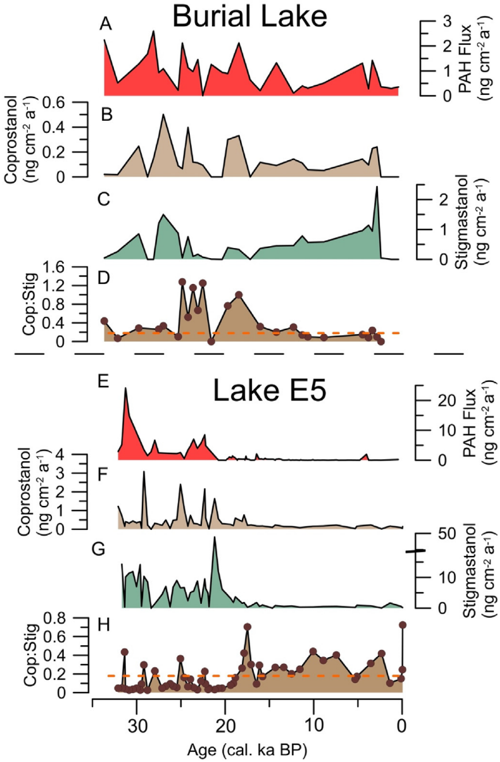
“Another focus of research in eastern Beringia is the small number of lakes (e.g. Burial Lake) that did not evaporate during the LGM, several of which have yielded biomarker evidence for people before and during the LGM [80,81].”
From Beringia and the peopling of the Western Hemisphere (2023) · cites this paper as [81]
In the citing paper
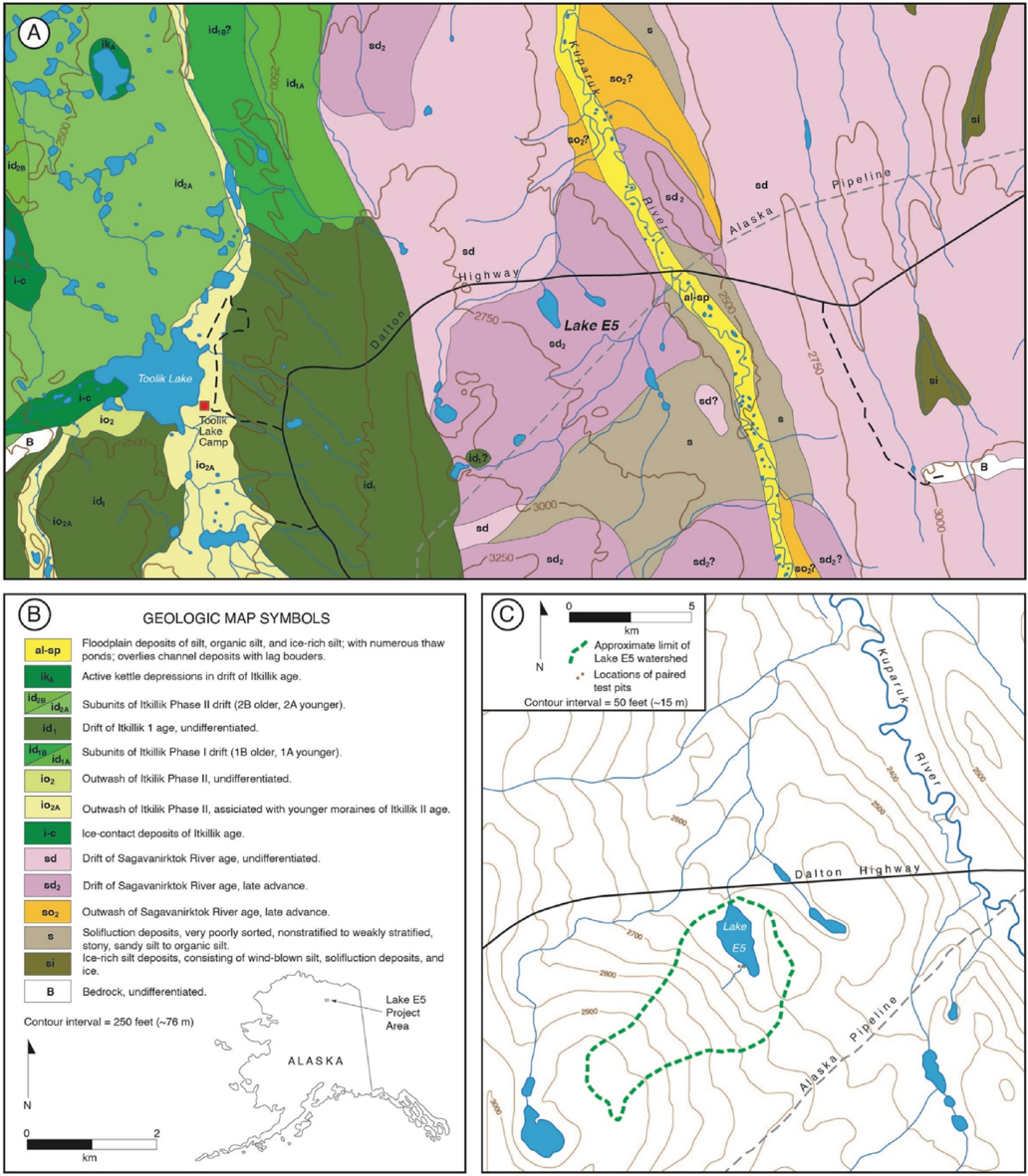
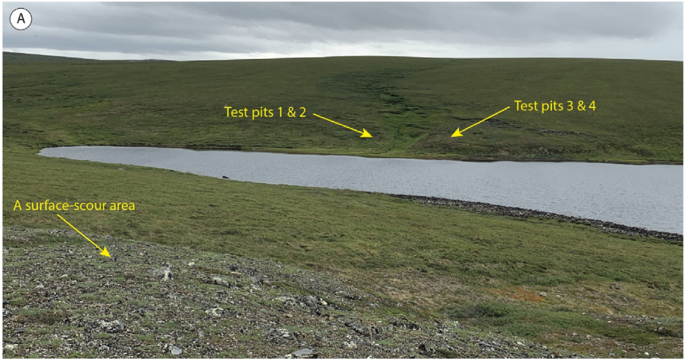
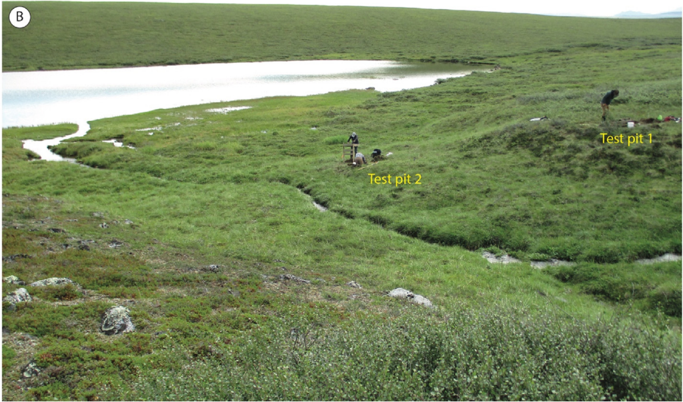
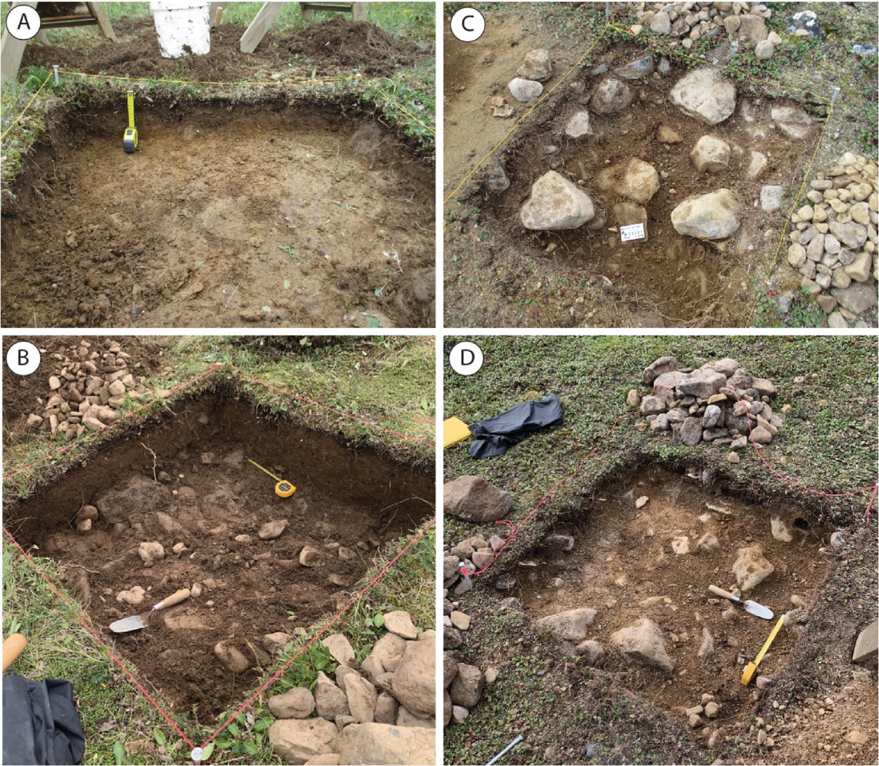
“However, a 2021 field reconnaissance of Lake E-5 failed to turn up any archaeological remains (including evidence of Holocene occupation) [81].”
From Beringia and the peopling of the Western Hemisphere (2023) · cites this paper as [81]
Self-check
Percentages, sums and reported differences re-computed from the paper’s own numbers.
The self-check needs the paper’s full text.
Citations
Cites
Bourgeon, L., Burke, A., & Higham, T. (2017) · PLOS ONE · doi:10.1371/journal.pone.0169486 · Cited by 184
Research works printed but not linked: 38
- Amorim, 2017, Genetic signature of natural selection in first Americans, Proceedings of the National Academy of Sciences, 114, 2195, 10.1073/pnas.1620541114 · DOI
- Argiriadis, 2018, Lake sediment fecal and biomass burning biomarkers provide direct evidence for prehistoric human-lit fires in New Zealand, Sci. Rep., 8, 1, 10.1038/s41598-018-30606-3 · DOI
- Batchelor, 2019, The configuration of Northern Hemisphere ice sheets through the Quaternary, Nat. Commun., 10, 3713, 10.1038/s41467-019-11601-2 · DOI · Paper page
- Bourgeon, 2015, Bluefish Cave II (Yukon Territory, Canada): taphonomic study of a bone assemblage, PaleoAmerica, 1, 105, 10.1179/2055556314Z.0000000001 · DOI · Paper page
- Bourgeon, 2021, Revisiting the mammoth bone modifications from Bluefish Caves (YT, Canada), J. Archaeol. Sci.: Rep., 37, 102969
- Bull, 2002, The origin of faeces by means of biomarker detection, Environ. Int., 27, 647, 10.1016/S0160-4120(01)00124-6 · DOI · Paper page
- Daniels, 2021, Lacustrine leaf wax hydrogen isotopes indicate strong regional climate feedbacks in Beringia since the last ice age, Quat. Sci. Rev., 269, 107130, 10.1016/j.quascirev.2021.107130 · DOI
- D'Anjou, 2012, Climate impacts on human settlement and agricultural activities in northern Norway revealed through sediment biogeochemistry, Proc. Natl. Acad. Sci. Unit. States Am., 109, 20332, 10.1073/pnas.1212730109 · DOI
- Dorfman, 2015, A 37,000-year environmental magnetic record of aeolian dust deposition from Burial Lake, arctic Alaska, Quat. Sci. Rev., 128, 81, 10.1016/j.quascirev.2015.08.018 · DOI
- Erlandson, 1991, Two early sites of eastern Beringia: context and chronology in Alaskan Interior archaeology, Radiocarbon, 33, 35, 10.1017/S0033822200013199 · DOI
- Fumagalli, 2015, Greenlandic Inuit show genetic signatures of diet and climate adaptation, Science, 349, 1343, 10.1126/science.aab2319 · DOI
- Goebel, 2003, The archaeology of Ushki Lake, Kamchatka, and the Pleistocene peopling of the Americas, Science, 301, 501, 10.1126/science.1086555 · DOI
- Graf, 2017, Human dispersal from Siberia to Beringia: assessing a Beringian standstill in light of the archaeological evidence, Curr. Anthropol., 58, S583, 10.1086/693388 · DOI
- Harrault, 2019, Faecal biomarkers can distinguish specific mammalian species in modern and past environments, PLoS One, 14, 10.1371/journal.pone.0211119 · DOI
- Hlusko, 2018, Environmental selection during the last ice age on the mother-to-infant transmission of vitamin D and fatty acids through breast milk, Proceedings of the National Academy of Sciences, 115, E4426, 10.1073/pnas.1711788115 · DOI · Paper page
- Keenan, 2022, Understanding controls on stanols in lake sediments as proxies for palaeopopulations in Mesoamerica, J. Paleolimnol., 67, 375, 10.1007/s10933-022-00238-9 · DOI
- Larson, 2022, Sterols and Sterol Ratios to Trace Fecal Contamination: Pitfalls and Potential Solutions, Environmental Science and Pollution Research, 10.1007/s11356-022-19611-2 · DOI
- Longo, 2020, Insolation and greenhouse gases drove Holocene winter and spring warming in arctic Alaska, Quat. Sci. Rev., 242, 106438, 10.1016/j.quascirev.2020.106438 · DOI
- Mann, 2015, Life and extinction of megafauna in the ice-age Arctic, Proc. Natl. Acad. Sci. Unit. States Am., 112, 14301, 10.1073/pnas.1516573112 · DOI · Paper page
- Marlon, 2020, What the past can say about the present and future of fire, Quat. Res., 96, 66, 10.1017/qua.2020.48 · DOI
- Moreno-Mayar, 2018, Terminal Pleistocene Alaskan genome reveals first founding population of Native Americans, Nature, 553, 203, 10.1038/nature25173 · DOI · Paper page
- Niedbalski, 2022, Novel alleles gained during the Beringian isolation, Sci. Rep., 12, 4289, 10.1038/s41598-022-08212-1 · DOI · Paper page
- Oswald, 2005, Effects of sample mass and macrofossil type on radiocarbon dating of arctic and boreal lake sediments, Holocene, 15, 758, 10.1191/0959683605hl849rr · DOI
- Pavlova, 2020, Late Pleistocene and Early Holocene climate changes and human habitation in the arctic western Beringia based on revision of palaeobotanical data, Quaternary International, 549, 5, 10.1016/j.quaint.2020.04.015 · DOI · Paper page
- Pitulko, 2017, Revising the archaeological record of the Upper Pleistocene arctic Siberia: human dispersal and adaptations in MIS 3 and 2, Quat. Sci. Rev., 165, 127, 10.1016/j.quascirev.2017.04.004 · DOI · Paper page
- Raposeiro, 2021, Climate change facilitated the early colonization of the Azores Archipelago during medieval times, Proc. Natl. Acad. Sci. Unit. States Am., 118, 10.1073/pnas.2108236118 · DOI
- Sattler, 2011, Linda's Point: results from a new terminal-Pleistocene human occupation at Healy Lake, Alaska, Curr. Res. Pleistocene, 28, 75
- Sher, 2005, New insights into Weichselian environment and climate of the East Siberian Arctic, derived from fossil insects, plants, and mammals, Quaternary Science Reviews, 24, 533, 10.1016/j.quascirev.2004.09.007 · DOI · Paper page
- Sikora, 2019, The population history of northeastern Siberia since the Pleistocene, Nature, 570, 182, 10.1038/s41586-019-1279-z · DOI · Paper page
- Sistiaga, 2014, The Neanderthal meal: a new perspective using faecal biomarkers, PLoS One, 9, e101045, 10.1371/journal.pone.0101045 · DOI
- Vachula, 2020, Alaskan lake sediment records and their implications for the Beringian standstill hypothesis, PaleoAmerica, 6, 303, 10.1080/20555563.2020.1818171 · DOI
- Vachula, 2019, Evidence of Ice Age humans in eastern Beringia suggests early migration to North America, Quat. Sci. Rev., 205, 35, 10.1016/j.quascirev.2018.12.003 · DOI
- Vachula, 2020, Sedimentary biomarkers reaffirm human impacts on northern Beringian ecosystems during the last glacial period, Boreas, 49, 514, 10.1111/bor.12449 · DOI · Paper page
- White, 2019, Fecal stanols show simultaneous flooding and seasonal precipitation change correlate with Cahokia’s population decline, Proceedings of the National Academy of Sciences, 116, 5461, 10.1073/pnas.1809400116 · DOI
- Wilson, 2008, Northern Archaic settlement and subsistence patterns at Agiak Lake, Brooks Range, Alaska, Arctic Anthropol., 45, 128, 10.1353/arc.0.0007 · DOI
- Wood, 1978, A survey of disturbance processes in archaeological site formation, vol. 1, 315
- Wygal, 2022, Archaeological Recovery of Late Pleistocene Hair and Environmental DNA from Interior Alaska, Environmental Archaeology
- Younie, 2016, Lithic technology at Linda’s Point, Healy Lake, Alaska, Arctic, 69, 79, 10.14430/arctic4550 · DOI
Cited by
Sorted by citations
Beringia and the peopling of the Western Hemisphere
Hoffecker, J. F., Elias, S. A., Scott, G. R., O'Rourke, D. H., Hlusko, L. J., Potapova, O., Pitulko, V., Pavlova, E., Bourgeon, L., & Vachula, R. S. (2023) · Proceedings of the Royal Society B: Biological Sciences · doi:10.1098/rspb.2022.2246 · Cited by 17
Self-citation
Metadata
- Authors
- Goebel, T., Hoffecker, J. F., Graf, K. E., & Vachula, R. S.
- Venue
- Quaternary Science Reviews
- Publisher
- Elsevier BV
- Published
- 2022-06
- Volume
- 286
- Pages
- 107553
- ISSN
- 0277-3791
- Cited by
- 6
- References
- 1
- Language
- en
About these checks
Registry, retraction, Cites and statistics results are computed, not judged, with one exception: a printed reference that no index lists is read once by a model before it counts as a citation error. Claims are extracted by a model and kept only when their quote appears verbatim in the text; each cited source is then checked, with a model’s help, for whether it says what the claim relies on. Those verdicts can be wrong — read the claim’s quote and the cited source before relying on one.
Statistics and arithmetic are recomputed, not judged.
Confidence bands are shown only for fields calibrated on our annotated test set. None is calibrated yet, so no band is shown.
What counts as a claim ›How we measure confidence ›How we check this ›
Are you an author, or do you see a problem with this page? Request a review
