

The DOI matches its Crossref record; 47 of the 48 references it cites were found in a registry or an index.
Small-Molecule-Driven Hepatocyte Differentiation of Human Pluripotent Stem Cells
Open accessAbstract
The differentiation of pluripotent stem cells to hepatocytes is well established, yet current methods suffer from several drawbacks. These include a lack of definition and reproducibility, which in part stems from continued reliance on recombinant growth factors. This has remained a stumbling block for the translation of the technology into industry and the clinic for reasons associated with cost and quality. We have devised a growth-factor-free protocol that relies on small molecules to differentiate human pluripotent stem cells toward a hepatic phenotype. The procedure can efficiently direct both human embryonic stem cells and induced pluripotent stem cells to hepatocyte-like cells. The final population of cells demonstrates marker expression at the transcriptional and protein levels, as well as key hepatic functions such as serum protein production, glycogen storage, and cytochrome P450 activity.
Overview
The claims and statistics of this paper haven’t been checked yet.
Run the check — free, no account needed. It reads the open-access text and checks the sources it cites.
Integrity signals
Registry
Cites
Statistics
Figures
Verification
Claims the paper makes
The claims and statistics of this paper haven’t been checked yet.
Run the check — free, no account needed. It reads the open-access text and checks the sources it cites.
Claims other papers make about this one
Each is checked against this paper’s own text: does it say what the citing paper says it does?
The source backs part of the claim, not all of it — or backs it for a different population, condition or comparison.
In the citing paper
“While growth factors could be costly and unstable, and many small-molecule drugs can affect multiple pathways resulting in poor reproducibility78”
From Organoids (2022) · cites this paper as [78]
Experimental — accuracy not yet measuredThe source backs part of the claim, not all of it — or backs it for a different population, condition or comparison.
In the citing paper
“The differentiation protocol utilized was developed and optimized from the published literatures18–21, specifically chosen for its capacity to generate iHLOs with high CYP enzyme activity, particularly CYP3A4, which is crucial for drug metabolism and toxicology evaluations.”
From Temporal proteomic profiling of iPSC-derived human liver organoids reveals optimal maturation for drug metabolism and toxicology (2026) · cites this paper as [18]
Experimental — accuracy not yet measuredThe source backs part of the claim, not all of it — or backs it for a different population, condition or comparison.
In the citing paper
“This protocol was chosen due to its demonstrated capacity to generate iHLOs with high CYP enzyme activity, particularly CYP3A4, which is crucial for our subsequent compound or drug metabolism and toxicology evaluations.”
From Temporal proteomic profiling of iPSC-derived human liver organoids reveals optimal maturation for drug metabolism and toxicology (2026) · cites this paper as [18]
Experimental — accuracy not yet measured
Self-check
Percentages, sums and reported differences re-computed from the paper’s own numbers.
The self-check needs the paper’s full text.
Citations
Cites
Sato, N., Meijer, L., Skaltsounis, A., Greengard, P., & Brivanlou, A. H. (2003) · Nature Medicine · doi:10.1038/nm979 · Cited by 2,142 · cited 2×
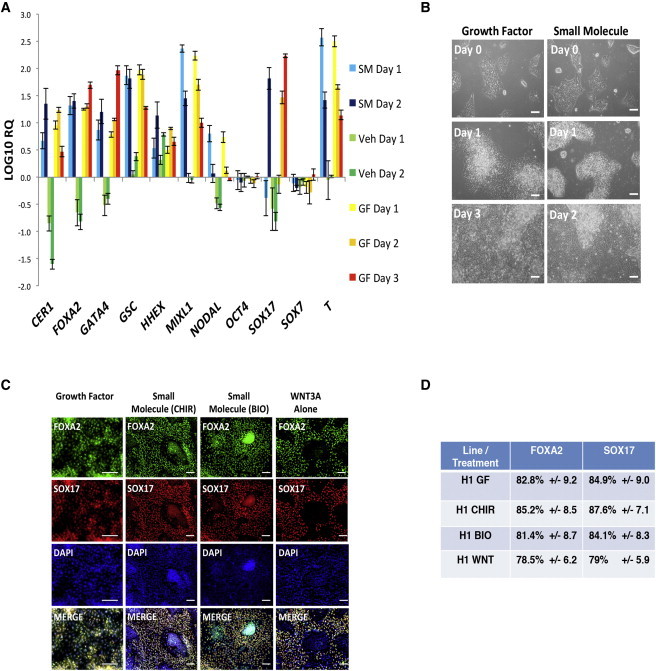
“…well documented that BIO and CHIR99021 are potent pharmacological GSK3-specific inhibitors that result in activation of the Wnt signaling pathway (Sato et al., 2004; Sineva and Pospelov, 2010), so we next assessed the ability of the protein Wnt3a alone to drive differentiation toward DE. Figure…”
BackgroundEfficient differentiation of human embryonic stem cells to definitive endoderm
D'Amour, K. A., Agulnick, A. D., Eliazer, S., Kelly, O. G., Kroon, E., & Baetge, E. E. (2005) · Nature Biotechnology · doi:10.1038/nbt1163 · Cited by 1,730
Lian, X., Hsiao, C., Wilson, G., Zhu, K., Hazeltine, L. B., Azarin, S. M., Raval, K. K., Zhang, J., Kamp, T. J., & Palecek, S. P. (2012) · Proceedings of the National Academy of Sciences · doi:10.1073/pnas.1200250109 · Cited by 1,717
Itskovitz‐Eldor, J., Schuldiner, M., Kenyagin‐Karsenti, D., Eden, A., Yanuka, O., Amit, M., Soreq, H., & Benvenisty, N. (2000) · Molecular Medicine · doi:10.1007/bf03401776 · Cited by 1,502
Embryonic stem cell trials for macular degeneration: a preliminary report
Schwartz, S. D., Hubschman, J.-P., Heilwell, G., Franco-Cardenas, V., Pan, C. K., Ostrick, R. M., Mickunas, E., Gay, R., Klimanskaya, I., & Lanza, R. (2012) · The Lancet · doi:10.1016/s0140-6736(12)60028-2 · Cited by 1,409 · cited 1×
“Meanwhile, cell culture and production technologies are rapidly improving, and the first instances of pluripotent-cellderived therapies have entered clinical trials (Schwartz et al., 2012).”
BackgroundHighly efficient generation of human hepatocyte-like cells from induced pluripotent stem cells
Si-Tayeb, K., Noto, F. K., Nagaoka, M., Li, J., Battle, M. A., Duris, C., North, P. E., Dalton, S., & Duncan, S. A. (2010) · Hepatology · doi:10.1002/hep.23354 · Cited by 1,282 · cited 2×
“…growth factor (VEGF), epidermal growth factor (EGF), and bone morphogenetic protein 4 (BMP4) (Agarwal et al., 2008; Brolén et al., 2010; Cai et al., 2007; Chen et al., 2012; Hay et al., 2008; Liu et al., 2010; Si-Tayeb et al., 2010b; Song et al., 2009; Sullivan et al., 2010; Touboul et al., 2010).”
BackgroundMethodOrganogenesis and development of the liver
Si-Tayeb, K., Lemaigre, F. P., & Duncan, S. A. (2010) · Developmental Cell · doi:10.1016/j.devcel.2010.01.011 · Cited by 800 · cited 2×
“…growth factor (VEGF), epidermal growth factor (EGF), and bone morphogenetic protein 4 (BMP4) (Agarwal et al., 2008; Brolén et al., 2010; Cai et al., 2007; Chen et al., 2012; Hay et al., 2008; Liu et al., 2010; Si-Tayeb et al., 2010b; Song et al., 2009; Sullivan et al., 2010; Touboul et al., 2010).”
BackgroundMethodDepletion of definitive gut endoderm in Sox17 -null mutant mice
Kanai-Azuma, M., Kanai, Y., Gad, J. M., Tajima, Y., Taya, C., Kurohmaru, M., Sanai, Y., Yonekawa, H., Yazaki, K., Tam, P. P. L., et al. (2002) · Development · doi:10.1242/dev.129.10.2367 · Cited by 704
Sasaki, H., & Hogan, B. L. M. (1993) · Development · doi:10.1242/dev.118.1.47 · Cited by 665
Directed differentiation of human embryonic stem cells into functional hepatic cells†
Cai, J., Zhao, Y., Liu, Y., Ye, F., Song, Z., Qin, H., Meng, S., Chen, Y., Zhou, R., Song, X., et al. (2007) · Hepatology · doi:10.1002/hep.21582 · Cited by 628 · cited 3×
“…endothelial growth factor (VEGF), epidermal growth factor (EGF), and bone morphogenetic protein 4 (BMP4) (Agarwal et al., 2008; Brolén et al., 2010; Cai et al., 2007; Chen et al., 2012; Hay et al., 2008; Liu et al., 2010; Si-Tayeb et al., 2010b; Song et al., 2009; Sullivan et al., 2010; Touboul…”
BackgroundAng, S.-L., Wierda, A., Wong, D., Stevens, K. A., Cascio, S., Rossant, J., & Zaret, K. S. (1993) · Development · doi:10.1242/dev.119.4.1301 · Cited by 618 · cited 3×
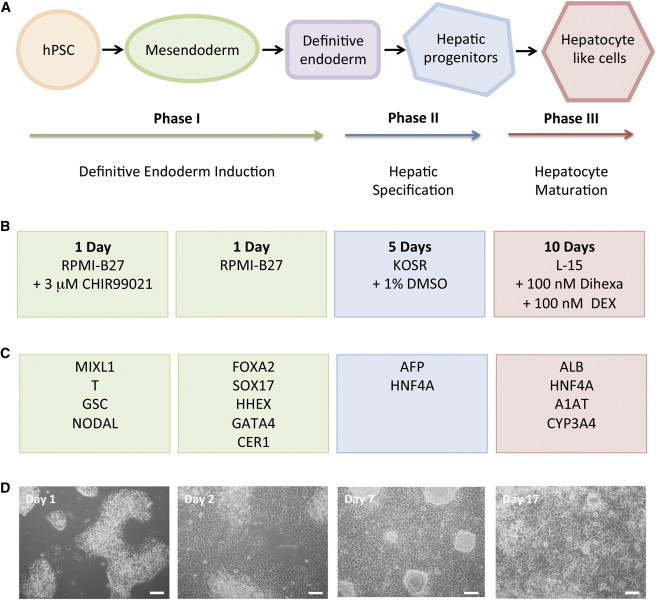
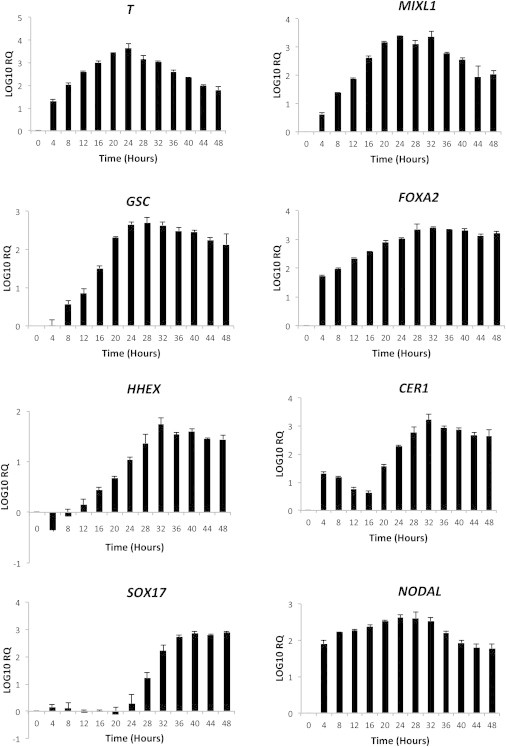
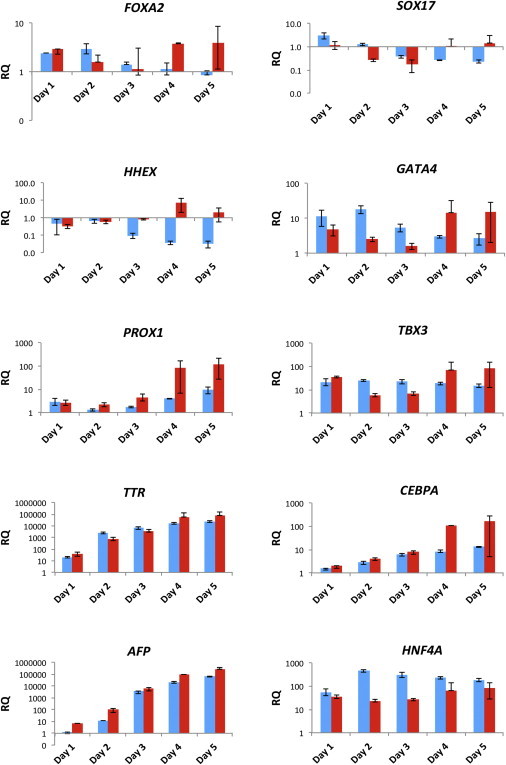
“We monitored developmentally relevant markers of primitive streak (T, MIXL1, GSC, and FOXA2), mesendoderm (T and FOXA2), and definitive endoderm (HHEX, CER1, SOX17, and FOXA2).”
BackgroundChambers, S. M., Qi, Y., Mica, Y., Lee, G., Zhang, X., Niu, L., Bilsland, J., Cao, L., Stevens, E. B., Whiting, P. J., et al. (2012) · Nature Biotechnology · doi:10.1038/nbt.2249 · Cited by 604 · cited 2×
“Some recent progress has been made in replacing growth factors for the differentiation of mesoderm and ectoderm (Chambers et al., 2012; Lian et al., 2012), and efforts have been undertaken to find suitable candidates for the production of definitive endoderm (DE), exemplified by the Melton group, who identified IDE1 a…”
BackgroundDifferentiation and Transplantation of Human Embryonic Stem Cell–Derived Hepatocytes
Basma, H., Soto–Gutiérrez, A., Yannam, G. R., Liu, L., Ito, R., Yamamoto, T., Ellis, E. C. S., Carson, S. D., Sato, S., Chen, Y., et al. (2008) · Gastroenterology · doi:10.1053/j.gastro.2008.10.047 · Cited by 509 · cited 1×
“Early protocols for the generation of hepatocytes from pluripotent cells relied on the use of embryoid body formation (Baharvand et al., 2006; Basma et al., 2009; Imamura et al., 2004).”
BackgroundEfficient generation of hepatocyte-like cells from human induced pluripotent stem cells
Song, Z., Cai, J., Liu, Y., Zhao, D., Yong, J., Duo, S., Song, X., Guo, Y., Zhao, Y., Qin, H., et al. (2009) · Cell Research · doi:10.1038/cr.2009.107 · Cited by 499 · cited 1×
“…growth factor (VEGF), epidermal growth factor (EGF), and bone morphogenetic protein 4 (BMP4) (Agarwal et al., 2008; Brolén et al., 2010; Cai et al., 2007; Chen et al., 2012; Hay et al., 2008; Liu et al., 2010; Si-Tayeb et al., 2010b; Song et al., 2009; Sullivan et al., 2010; Touboul et al., 2010).”
BackgroundTouboul, T., Hannan, N. R. F., Corbineau, S., Martinez, A., Martinet, C., Branchereau, S., Goulinet, S., Strick‐Marchand, H., Pedersen, R. A., Santo, J. P. D., et al. (2009) · Hepatology · doi:10.1002/hep.23506 · Cited by 499 · cited 3×
“…growth factor (VEGF), epidermal growth factor (EGF), and bone morphogenetic protein 4 (BMP4) (Agarwal et al., 2008; Brolén et al., 2010; Cai et al., 2007; Chen et al., 2012; Hay et al., 2008; Liu et al., 2010; Si-Tayeb et al., 2010b; Song et al., 2009; Sullivan et al., 2010; Touboul et al., 2010).”
BackgroundMonaghan, A. P., Kaestner, K. H., Grau, E., & Schütz, G. (1993) · Development · doi:10.1242/dev.119.3.567 · Cited by 497
Generation of Functional Human Hepatic Endoderm From Human Induced Pluripotent Stem Cells
Sullivan, G. J., Hay, D. C., Park, I.-H., Fletcher, J., Hannoun, Z., Payne, C. M., Dalgetty, D., Black, J. R., Ross, J. A., Samuel, K., et al. (2010) · Hepatology · doi:10.1002/hep.23335 · Cited by 445 · cited 10×
“We finally settled on a modified formulation of Leibovitz L-15 medium (L-15), which has been described in the literature as a standard method to generate mature hepatocytes (Hay et al., 2008; Sullivan et al., 2010).”
BackgroundMethodInfluentialSelf-citationGeneration of Hepatocyte-Like Cells from Human Embryonic Stem Cells
Rambhatla, L., Chiu, C.-P., Kundu, P., Peng, Y., & Carpenter, M. K. (2003) · Cell Transplantation · doi:10.3727/000000003783985179 · Cited by 437 · cited 1×
“There are numerous reports of the utility of the small molecule DMSO in stem cell differentiation and specifically in the generation of hepatic progenitors (Hay et al., 2008; Rambhatla et al., 2003; Soto-Gutierrez et al., 2006; Sullivan et al., 2010).”
BackgroundHay, D. C., Fletcher, J. M., Payne, C. M., Terrace, J. D., Gallagher, R., Snoeys, J., Black, J. R., Wojtacha, D., Samuel, K., Hannoun, Z., et al. (2008) · Proceedings of the National Academy of Sciences · doi:10.1073/pnas.0806522105 · Cited by 434 · cited 16×
“We finally settled on a modified formulation of Leibovitz L-15 medium (L-15), which has been described in the literature as a standard method to generate mature hepatocytes (Hay et al., 2008; Sullivan et al., 2010).”
BackgroundMethodInfluentialDifferentiation of human embryonic stem cells into hepatocytes in 2D and 3D culture systems in vitro
Baharvand, H., Hashemi, S. M., Kazemi Ashtiani, S., & Farrokhi, A. (2006) · The International Journal of Developmental Biology · doi:10.1387/ijdb.052072hb · Cited by 429 · cited 1×
“Early protocols for the generation of hepatocytes from pluripotent cells relied on the use of embryoid body formation (Baharvand et al., 2006; Basma et al., 2009; Imamura et al., 2004).”
BackgroundBorowiak, M., Maehr, R., Chen, S., Chen, A. E., Tang, W., Fox, J. L., Schreiber, S. L., & Melton, D. A. (2009) · Cell stem cell · doi:10.1016/j.stem.2009.01.014 · Cited by 419 · cited 2×
“…factors for the differentiation of mesoderm and ectoderm (Chambers et al., 2012; Lian et al., 2012), and efforts have been undertaken to find suitable candidates for the production of definitive endoderm (DE), exemplified by the Melton group, who identified IDE1 and 2 (Borowiak et al., 2009).”
BackgroundEfficient Differentiation of Functional Hepatocytes from Human Embryonic Stem Cells
Agarwal, S., Holton, K., & Lanza, R. (2008) · Stem Cells · doi:10.1634/stemcells.2007-1102 · Cited by 402 · cited 2×
“…growth factor 4 (FGF4), vascular endothelial growth factor (VEGF), epidermal growth factor (EGF), and bone morphogenetic protein 4 (BMP4) (Agarwal et al., 2008; Brolén et al., 2010; Cai et al., 2007; Chen et al., 2012; Hay et al., 2008; Liu et al., 2010; Si-Tayeb et al., 2010b; Song et…”
BackgroundHepatocyte migration during liver development requires Prox1
Sosa-Pineda, B., Wigle, J. T., & Oliver, G. (2000) · Nature Genetics · doi:10.1038/76996 · Cited by 381 · cited 2×
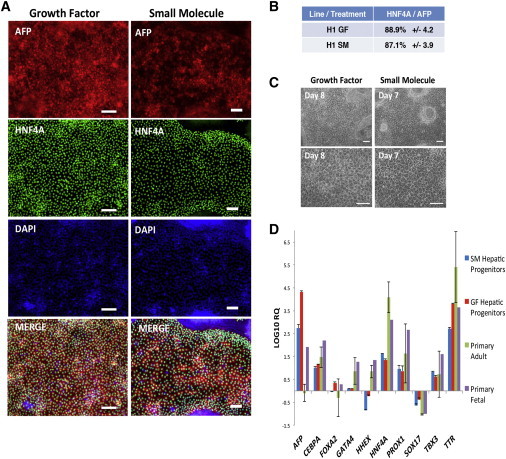
“4 j 939–952 j May 12, 2015 j a2015 The Autho there was an increase in expression of PROX1 and TBX3, which are believed to interact in vivo to promote themigration and proliferation of hepatoblasts from the primary liver bud (Sosa-Pineda et al., 2000; Lüdtke et al., 2009).”
BackgroundMethodGastrulation in the mouse: The role of the homeobox gene goosecoid
Blum, M., Gaunt, S. J., Cho, K. W. Y., Steinbeißer, H., Blumberg, B., Bittner, D., & Robertis, E. M. D. (1992) · Cell · doi:10.1016/0092-8674(92)90632-m · Cited by 376 · cited 3×
“We monitored developmentally relevant markers of primitive streak (T, MIXL1, GSC, and FOXA2), mesendoderm (T and FOXA2), and definitive endoderm (HHEX, CER1, SOX17, and FOXA2).”
BackgroundProduction of hepatocyte-like cells from human pluripotent stem cells
Hannan, N. R. F., Segeritz, C., Touboul, T., & Vallier, L. (2013) · Nature Protocols · doi:10.1038/nprot.2012.153 · Cited by 327
Chen, Y.-F., Tseng, C.-Y., Wang, H.-W., Kuo, H.-C., Yang, V. W., & Lee, O. K. (2012) · Hepatology · doi:10.1002/hep.24790 · Cited by 291 · cited 1×
“…growth factor (VEGF), epidermal growth factor (EGF), and bone morphogenetic protein 4 (BMP4) (Agarwal et al., 2008; Brolén et al., 2010; Cai et al., 2007; Chen et al., 2012; Hay et al., 2008; Liu et al., 2010; Si-Tayeb et al., 2010b; Song et al., 2009; Sullivan et al., 2010; Touboul et al., 2010).”
BackgroundGeneration of Endoderm-Derived Human Induced Pluripotent Stem Cells From Primary Hepatocytes
Liu, H., Ye, Z., Kim, Y., Sharkis, S. J., & Jang, Y.-Y. (2010) · Hepatology · doi:10.1002/hep.23626 · Cited by 256 · cited 3×
“…growth factor (VEGF), epidermal growth factor (EGF), and bone morphogenetic protein 4 (BMP4) (Agarwal et al., 2008; Brolén et al., 2010; Cai et al., 2007; Chen et al., 2012; Hay et al., 2008; Liu et al., 2010; Si-Tayeb et al., 2010b; Song et al., 2009; Sullivan et al., 2010; Touboul et al., 2010).”
BackgroundFrom fertilization to gastrulation: axis formation in the mouse embryo
Lu, C. C., Brennan, J., & Robertson, E. J. (2001) · Current Opinion in Genetics & Development · doi:10.1016/s0959-437x(00)00208-2 · Cited by 240 · cited 1×
“We observed a rapid upregulation of NODAL within 4 hr of exposure to CHIR99021, which is indicative of a transition toward a PS population (Figure 3) (Lu et al., 2001).”
BackgroundKunisada, Y., Tsubooka-Yamazoe, N., Shoji, M., & Hosoya, M. (2011) · Stem Cell Research · doi:10.1016/j.scr.2011.10.002 · Cited by 228 · cited 13×
“Phase I of differentiation consists of a 24-hr treatment with RPMI-B27 ± insulin (RPMI 1640 GlutaMAX + B27 supplement, both from Life Technologies) plus 3–4 mM CHIR99021 (Stemgent), followed by a 24-hr treatment with RPMI-B27 alone.”
BackgroundInfluentialSoto–Gutiérrez, A., Navarro–Álvarez, N., Zhao, D., Rivas‐Carrillo, J. D., LEBKOWSKI, J. S., Tanaka, N., Fox, I. J., & Kobayashi, N. (2007) · Nature Protocols · doi:10.1038/nprot.2007.18 · Cited by 132 · cited 2×
“The use of DMSO to drive DE toward a hepatic fate is well established in the field (Hay et al., 2008; Soto-Gutiérrez et al., 2007; Sullivan et al., 2010), and we show here that it is equally successful when employed following CHIR99021 treatment as with activin A and Wnt3a.”
Brolén, G., Sivertsson, L., Björquist, P., Eriksson, G., Ek, M., Semb, H., Johansson, I., Andersson, T. B., Ingelman‐Sundberg, M., & Heins, N. (2009) · Journal of Biotechnology · doi:10.1016/j.jbiotec.2009.11.007 · Cited by 120 · cited 3×
“…4 (FGF4), vascular endothelial growth factor (VEGF), epidermal growth factor (EGF), and bone morphogenetic protein 4 (BMP4) (Agarwal et al., 2008; Brolén et al., 2010; Cai et al., 2007; Chen et al., 2012; Hay et al., 2008; Liu et al., 2010; Si-Tayeb et al., 2010b; Song et al., 2009; Sullivan et…”
BackgroundLüdtke, T. H. ‐., Christoffels, V. M., Petry, M., & Kispert, A. (2009) · Hepatology · doi:10.1002/hep.22700 · Cited by 117 · cited 1×
“…of PROX1 and TBX3, which are believed to interact in vivo to promote themigration and proliferation of hepatoblasts from the primary liver bud (Sosa-Pineda et al., 2000; Lüdtke et al., 2009). rs The human embryonic stem cell line H1 was differentiated in RPMI-B27 supplemented with 3 mM CHIR99021.”
MethodAccurate Prediction of Drug-Induced Liver Injury Using Stem Cell-Derived Populations
Szkolnicka, D., Farnworth, S. L., Lucendo‐Villarin, B., Storck, C., Zhou, W., Iredale, J. P., Flint, O. P., & Hay, D. C. (2013) · Stem Cells Translational Medicine · doi:10.5966/sctm.2013-0146 · Cited by 105 · cited 1×
“Initially, phase III was optimized using the commercially available base mediumHepatoZYME that has been shown to provide supportive conditions for hepatocyte maturation (Szkolnicka et al., 2014).”
MethodAsahina, K., Fujimori, H., Shimizu‐Saito, K., Kumashiro, Y., Okamura, K., Tanaka, Y., Teramoto, K., Arii, S., & Teraoka, H. (2004) · Genes to Cells · doi:10.1111/j.1365-2443.2004.00809.x · Cited by 103 · cited 1×
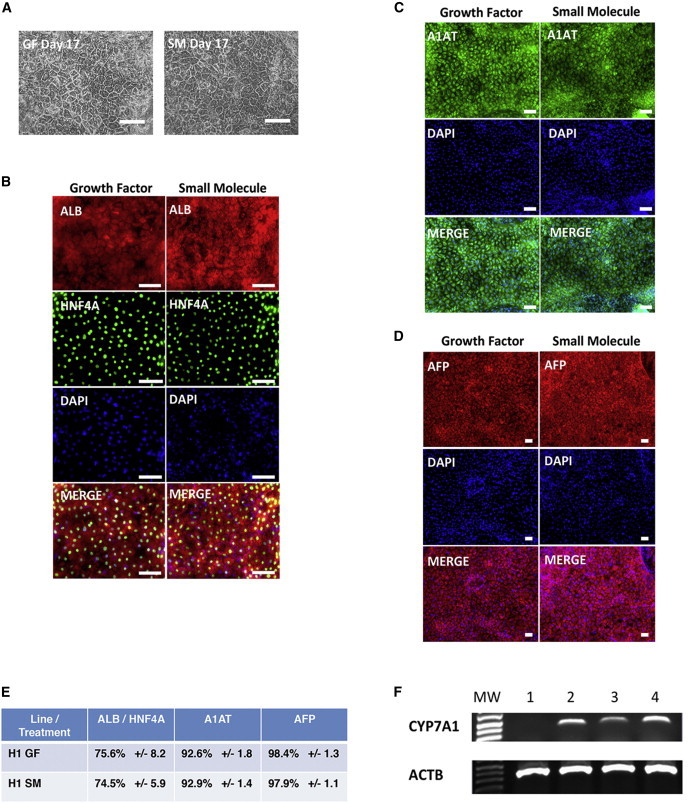
“To corroborate that the source of the HLCs is from DE rather than from yolk sac, we demonstrated that the DE origin marker CYP7A1 was expressed (Asahina et al., 2004) (Figure 6F).”
BackgroundEngert, S., Burtscher, I., Liao, W. P., Dulev, S., Schotta, G., & Lickert, H. (2013) · Development · doi:10.1242/dev.088765 · Cited by 101 · cited 3×
“The rationale to examine GSK-3 rs inhibition as a route to producing DE has a basis in the observations of Lickert and colleagues (Engert et al., 2013), who demonstrated that Wnt signaling regulates SOX17 expression.”
BackgroundTan, J. Y., Sriram, G., Rufaihah, A. J., Neoh, K. G., & Cao, T. (2013) · Stem Cells and Development · doi:10.1089/scd.2012.0590 · Cited by 97 · cited 14×
“Recent studies have also demonstrated the utility of other small molecules in priming pluripotent cells for differentiation toward endoderm (Tahamtani et al., 2013) and mesoderm (Tan et al., 2013).”
BackgroundInfluentialImamura, T., Cui, L., Teng, R., Johkura, K., Okouchi, Y., Asanuma, K., Ogiwara, N., & Sasaki, K. (2004) · Tissue Engineering · doi:10.1089/ten.2004.10.1716 · Cited by 97 · cited 1×
“Early protocols for the generation of hepatocytes from pluripotent cells relied on the use of embryoid body formation (Baharvand et al., 2006; Basma et al., 2009; Imamura et al., 2004).”
BackgroundNakanishi, M., Kurisaki, A., Hayashi, Y., Warashina, M., Ishiura, S., Furue, M. K., & Asashima, M. (2008) · The FASEB Journal · doi:10.1096/fj.08-111203 · Cited by 86 · cited 2×
“A number of publications have demonstrated that Wnt signaling is required to specify DE (Engert et al., 2013; Nakanishi et al., 2009), and we have found that a pulse of GSK-3 inhibition is sufficient to produce Cell Reports j Vol. 4 j 939–952 j May 12, 2015 j ª2015 The Authors 939 (A) The normal…”
BackgroundSineva, G. S., & Pospelov, V. A. (2010) · Biology of the Cell · doi:10.1042/bc20100016 · Cited by 67 · cited 1×
“…BIO and CHIR99021 are potent pharmacological GSK3-specific inhibitors that result in activation of the Wnt signaling pathway (Sato et al., 2004; Sineva and Pospelov, 2010), so we next assessed the ability of the protein Wnt3a alone to drive differentiation toward DE. Figure 2C demonstrates…”
BackgroundSoto–Gutiérrez, A., Navarro–Álvarez, N., Rivas‐Carrillo, J. D., Chen, Y., Yamatsuji, T., Tanaka, N., & Kobayashi, N. (2006) · Cell Transplantation · doi:10.3727/000000006783981945 · Cited by 57 · cited 1×
“There are numerous reports of the utility of the small molecule DMSO in stem cell differentiation and specifically in the generation of hepatic progenitors (Hay et al., 2008; Rambhatla et al., 2003; Soto-Gutierrez et al., 2006; Sullivan et al., 2010).”
BackgroundEvaluation of Metabolically Stabilized Angiotensin IV Analogs as Procognitive/Antidementia Agents
McCoy, A. T., Benoist, C. C., Wright, J. W., Kawas, L. H., Bule-Ghogare, J. M., Zhu, M., Appleyard, S. M., Wayman, G. A., & Harding, J. W. (2012) · Journal of Pharmacology and Experimental Therapeutics · doi:10.1124/jpet.112.199497 · Cited by 54 · cited 3×
“We identified a potent HGF mimetic called N-hexanoic-Tyr, Ile-(6) aminohexanoic amide, or dihexa, originally developed as an anti-dementia drug (McCoy et al., 2013).”
BackgroundInfluentialDerivation of 30 human embryonic stem cell lines—improving the quality
Ström, S., Holm, F., Bergström, R., Strömberg, A., & Hovatta, O. (2010) · In vitro Cellular & Developmental Biology-Animal · doi:10.1007/s11626-010-9308-0 · Cited by 53 · cited 1×
“H1 hESCs (WiCell) and 207 hESCs (Ström et al., 2010) and Detroit 551 (ATCC CCL-110) hiPSCs were maintained at 37 C/5% CO2 in feeder-free conditions using growth-factor-reduced Matrigel (Sigma-Aldrich) and E8 Medium (Life Technologies), with routine passaging performed at a 1:3 ratio using 0.5 mM…”
MethodInfluentialThe Making of the Liver: Competence in the Foregut Endoderm and Induction of Liver-Specific Genes
Kaestner, K. H. (2005) · Cell Cycle · doi:10.4161/cc.4.9.2033 · Cited by 47 · cited 2×
“See also Figure S2. progenitors, we observed maintenance of FOXA2 levels and an induction of GATA4, both of which are known to be pioneer factors critical to promote the hepatic gene expression program (Kaestner, 2005).”
BackgroundTahamtani, Y., Azarnia, M., Farrokhi, A., Sharifi‐Zarchi, A., Aghdami, N., & Baharvand, H. (2012) · Stem Cells and Development · doi:10.1089/scd.2012.0453 · Cited by 41 · cited 3×
“Following studies of the utility of GSK-3 inhibition in priming pluripotent cells for endodermal differentiation (Tahamtani et al., 2013) and reports that Wnt/b-catenin signaling regulates SOX17 expression and is essential for endoderm formation (Engert et al., 2013), we set out to establish…”
BackgroundGeneration of Functional Hepatic Cells from Pluripotent Stem Cells
Han, S. (2012) · Journal of Stem Cell Research & Therapy · doi:10.4172/2157-7633.s10-008 · Cited by 26 · cited 6×
“However, HepatoZYME is a proprietary reagent and contains the growth factor EGF and thus was unsuitable for this application (Garcia et al., 2001).”
BackgroundMethodInfluentialGarcia, M. C., Thangavel, C., & Shapiro, B. (2001) · PubMed · Cited by 17
What are the limits to cell plasticity?
Taylor, J., Wilmut, I., & Sullivan, G. J. (2010) · Cell Research · doi:10.1038/cr.2010.59 · Cited by 6 · cited 1×
“Human embryonic stem cells (hESCs) and induced pluripotent stem cells (hiPSCs) offer a potentially limitless source of cells for industrial and clinical translation, and the everadvancing field of cellular reprogramming has redefined the limits of cell plasticity (Taylor et al., 2010).”
BackgroundSelf-citation
Cited by
Sorted by citations
Zhao, Z., Chen, X., Dowbaj, A. M., Sljukic, A., Bratlie, K., Lin, L., Fong, E. L. S., Balachander, G. M., Chen, Z., Soragni, A., et al. (2022) · Nature Reviews Methods Primers · doi:10.1038/s43586-022-00174-y · Cited by 1,082
Cell sources for in vitro human liver cell culture models
Zeilinger, K., Freyer, N., Damm, G., Seehofer, D., & Knöspel, F. (2016) · Experimental Biology and Medicine · doi:10.1177/1535370216657448 · Cited by 230
Cardiac differentiation of human pluripotent stem cells in scalable suspension culture
Kempf, H., Kropp, C., Olmer, R., Martin, U., & Zweigerdt, R. (2015) · Nature Protocols · doi:10.1038/nprot.2015.089 · Cited by 161
Recombinant Laminins Drive the Differentiation and Self-Organization of hESC-Derived Hepatocytes
Cameron, K., Tan, R., Schmidt‐Heck, W., Campos, G., Lyall, M. J., Wang, Y., Lucendo‐Villarin, B., Szkolnicka, D., Bates, N., Kimber, S. J., et al. (2015) · Stem Cell Reports · doi:10.1016/j.stemcr.2015.10.016 · Cited by 151
“Other studies have used small molecules to replace growth factors to drive down the cost of the method (Hay et al., 2007, 2008; Siller et al., 2015); however, those publishedmethods both still rely upon the use of undefined components, highlighting the need to develop defined systems.”
MethodLiver Organoids: Recent Developments, Limitations and Potential
Harrison, S. P., Baumgarten, S., Verma, R., Lunov, O., Dejneka, A., & Sullivan, G. J. (2021) · Frontiers in Medicine · doi:10.3389/fmed.2021.574047 · Cited by 152
Self-citation
Metadata
- Authors
- Siller, R., Greenhough, S., Naumovska, E., & Sullivan, G. J.
- Affiliations
- University of Oslo (NO)
- Oslo University Hospital (NO)
- Corresponding author
- Sullivan, Gareth J.
- Venue
- Stem Cell Reports
- Publisher
- Elsevier BV
- Published
- 2015-05
- Volume
- 4
- Issue
- 5
- Pages
- 939-952
- ISSN
- 2213-6711 (ISSN-L)
- PMC
- PMC4437467
- OpenAlex
- W2012281335
- Cited by
- 203
- References
- 48
- Citations by year
- 2026: 8 · 2025: 9 · 2024: 11 · 2023: 13 · 2022: 19 · 2021: 30 · 2020: 25 · 2019: 15 · 2018: 27 · 2017: 19 · 2016: 19 · 2015: 6
- FWCI
- 10.27
- Type
- journal article
- Language
- en
- Open access
- gold
- doi.org
- Licence
- Locations
- Stem Cell Reports (publishedVersion, cc-by-nc-nd)
- Europe PMC (PubMed Central) (publishedVersion, cc-by-nc-nd)
- PubMed Central (publishedVersion, cc-by-nc-nd)
- PubMed (publishedVersion)
- DOAJ (DOAJ: Directory of Open Access Journals) (submittedVersion, cc-by-sa)
- NORA - Norwegian Open Research Archives (submittedVersion, cc-by-nc-nd)
- Topics
- Life Sciences › Biochemistry, Genetics and Molecular Biology › Molecular Biology › Pluripotent Stem Cells Research
- Life Sciences › Biochemistry, Genetics and Molecular Biology › Cell Biology › Mesenchymal stem cell research
- Health Sciences › Medicine › Endocrinology, Diabetes and Metabolism › Pancreatic function and diabetes
- Keywords
- hepatocyte differentiation, human pluripotent stem cells, small molecules, human embryonic stem cells, induced pluripotent stem cells, hepatocyte-like cells, glycogen storage, cytochrome P450 activity, hepatic differentiation
- MeSH terms
- Blood Proteins, Cell Differentiation, Cells, Cultured, Dexamethasone, Dimethyl Sulfoxide, Glycogen, Humans, Microscopy, Fluorescence, Oligopeptides, Proto-Oncogene Proteins c-met, Hepatocytes, Glycogen Synthase Kinase 3, Pluripotent Stem Cells, Small Molecule Libraries
About these checks
Registry, retraction, Cites and statistics results are computed, not judged, with one exception: a printed reference that no index lists is read once by a model before it counts as a citation error. Claims are extracted by a model and kept only when their quote appears verbatim in the text; each cited source is then checked, with a model’s help, for whether it says what the claim relies on. Those verdicts can be wrong — read the claim’s quote and the cited source before relying on one.
Statistics and arithmetic are recomputed, not judged.
Confidence bands are shown only for fields calibrated on our annotated test set. None is calibrated yet, so no band is shown.
What counts as a claim ›How we measure confidence ›How we check this ›
Are you an author, or do you see a problem with this page? Request a review
