

The DOI matches its Crossref record; 152 of the 152 references it cites were found in a registry or an index.
Roles of Supplementary Motor Areas in Auditory Processing and Auditory Imagery
Open accessAbstract
Although the supplementary and pre-supplementary motor areas have been intensely investigated in relation to their motor functions, they are also consistently reported in studies of auditory processing and auditory imagery. This involvement is commonly overlooked, in contrast to lateral premotor and inferior prefrontal areas. We argue here for the engagement of supplementary motor areas across a variety of sound categories, including speech, vocalizations, and music, and we discuss how our understanding of auditory processes in these regions relate to findings and hypotheses from the motor literature. We suggest that supplementary and pre-supplementary motor areas play a role in facilitating spontaneous motor responses to sound, and in supporting a flexible engagement of sensorimotor processes to enable imagery and to guide auditory perception.
Overview
The claims and statistics of this paper haven’t been checked yet.
Run the check — free, no account needed. It reads the open-access text and checks the sources it cites.
Integrity signals
Registry
Cites
Statistics
Figures
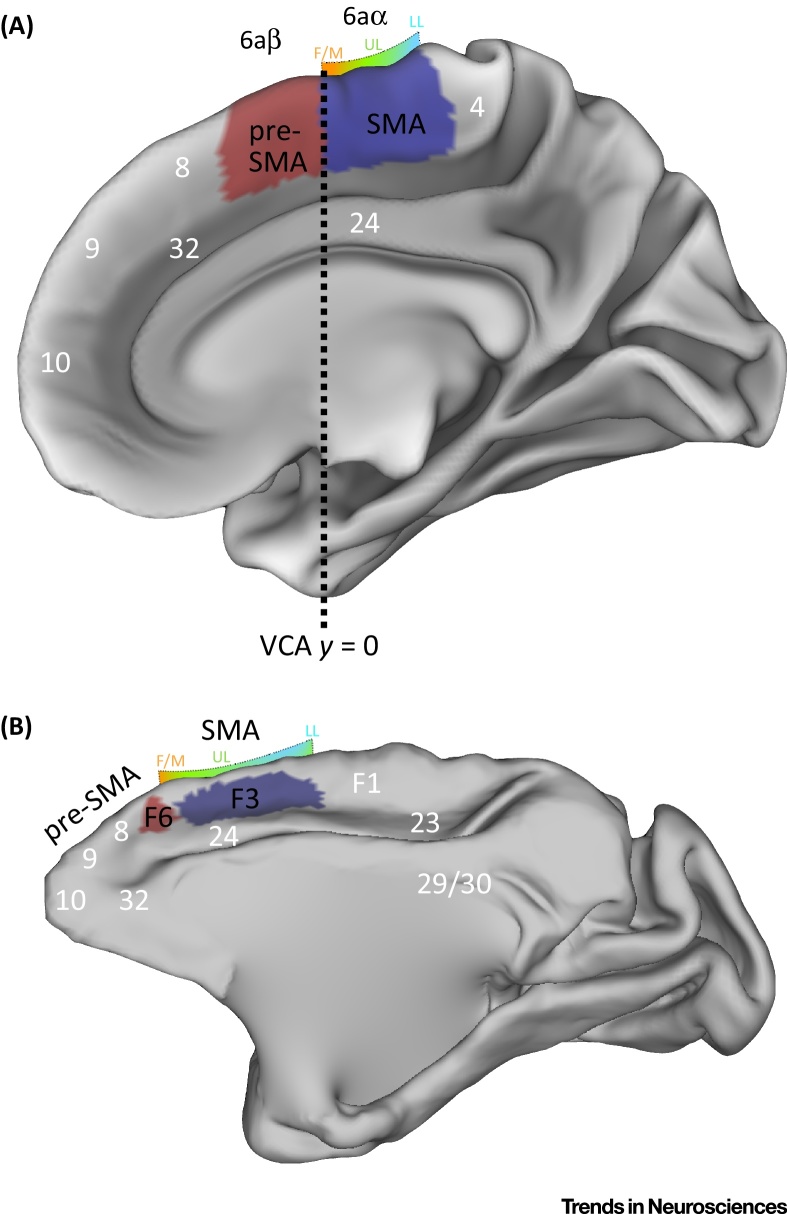
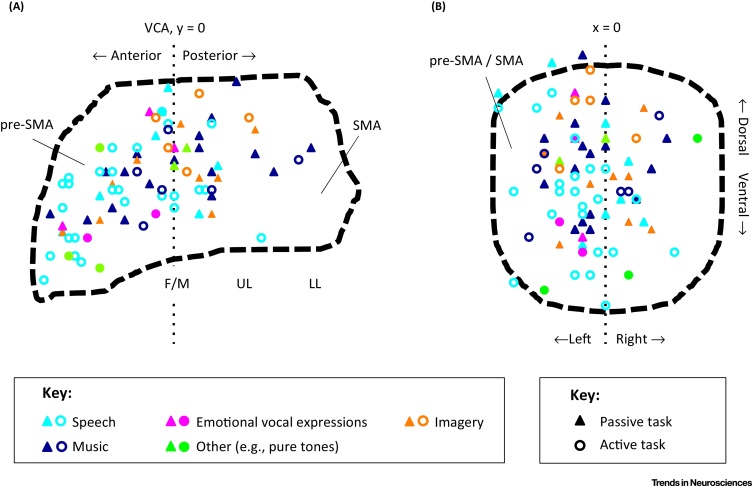
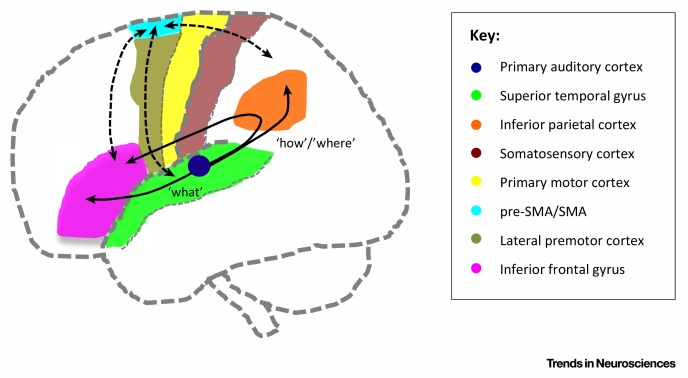
Verification
Claims the paper makes
The claims and statistics of this paper haven’t been checked yet.
Run the check — free, no account needed. It reads the open-access text and checks the sources it cites.
Claims other papers make about this one
Each is checked against this paper’s own text: does it say what the citing paper says it does?
In the citing paper
“The experience of NCVH likely also involves regions associated with the generation and monitoring of speech-motor imagery, as well as sensorimotor processes, such as the supplementary and pre-supplementary motor areas (SMA/pre-SMA; Linden et al., 2011;Lima et al., 2016).”
From Distinct processing of ambiguous speech in people with non-clinical auditory verbal hallucinations (2017) · cites this paper as Lima et al., 2016
Self-check
Percentages, sums and reported differences re-computed from the paper’s own numbers.
The self-check needs the paper’s full text.
Citations
Cites
The role of the medial frontal cortex in cognitive control
Ridderinkhof, K. R., Ullsperger, M., Crone, E. A., & Nieuwenhuis, S. (2004) · Science · doi:10.1126/science.1100301 · Cited by 2,974
Where do you know what you know? The representation of semantic knowledge in the human brain
Patterson, K., Nestor, P. J., & Rogers, T. T. (2007) · Nature Reviews Neuroscience · doi:10.1038/nrn2277 · Cited by 2,706
Functional role of the supplementary and pre-supplementary motor areas
Nachev, P., Kennard, C., & Husain, M. (2008) · Nature Reviews Neuroscience · doi:10.1038/nrn2478 · Cited by 1,928
When the brain plays music: auditory–motor interactions in music perception and production
Zatorre, R. J., Chen, J. L., & Penhune, V. B. (2007) · Nature reviews. Neuroscience · doi:10.1038/nrn2152 · Cited by 1,896
Maps and streams in the auditory cortex: nonhuman primates illuminate human speech processing
Rauschecker, J. P., & Scott, S. K. (2009) · Nature Neuroscience · doi:10.1038/nn.2331 · Cited by 1,766
Motor Areas of the Medial Wall: A Review of Their Location and Functional Activation
Picard, N., & Strick, P. L. (1996) · Cerebral Cortex · doi:10.1093/cercor/6.3.342 · Cited by 1,712
Brain Structures Differ between Musicians and Non-Musicians
Christian Gaser, B., & Gottfried Schlaug, A. (2003) · Journal of Neuroscience · doi:10.1523/jneurosci.23-27-09240.2003 · Cited by 1,626
The origin of corticospinal projections from the premotor areas in the frontal lobe
Dum, R., & Strick, P. (1991) · Journal of Neuroscience · doi:10.1523/jneurosci.11-03-00667.1991 · Cited by 1,447
Neuroplasticity Subserving Motor Skill Learning
Dayan, E., & Cohen, L. G. (2011) · Neuron · doi:10.1016/j.neuron.2011.10.008 · Cited by 1,408
The emulation theory of representation: Motor control, imagery, and perception
Grush, R. (2004) · Behavioral and Brain Sciences · doi:10.1017/s0140525x04000093 · Cited by 1,387 · cited 1×
“These ideas resonate with the ‘emulation’ framework discussed in relation to action control, and generalized to motor imagery, perception, and prediction [112,113].”
Research works printed but not linked: 1
- Vogt, 1919, Allgemeine ergebnisse unserer hirnforschung, Journal für Psychologie und Neurologie, 25, 277
Cited by
Sorted by citations
Large-scale cortical networks for hierarchical prediction and prediction error in the primate brain
Chao, Z. C., Takaura, K., Wang, L., Fujii, N., & Dehaene, S. (2018) · Neuron · doi:10.1016/j.neuron.2018.10.004 · Cited by 238
How Beat Perception Co-opts Motor Neurophysiology
Cannon, J. J., & Patel, A. D. (2020) · Trends in Cognitive Sciences · doi:10.1016/j.tics.2020.11.002 · Cited by 232
Haslbeck, F. B., András, J., Held, U., Bassler, D., Bucher, H.-U., & Hagmann, C. F. (2020) · NeuroImage Clinical · doi:10.1016/j.nicl.2020.102171 · Cited by 146
Distinct processing of ambiguous speech in people with non-clinical auditory verbal hallucinations
Alderson-Day, B., Lima, C. F., Evans, S., Krishnan, S., Shanmugalingam, P., Fernyhough, C., & Scott, S. K. (2017) · Brain · doi:10.1093/brain/awx206 · Cited by 108
Towards a neural model of infant cry perception
Witteman, J., Van IJzendoorn, M. H., Rilling, J. K., Bos, P. A., Schiller, N. O., & Bakermans-Kranenburg, M. J. (2019) · Neuroscience & Biobehavioral Reviews · doi:10.1016/j.neubiorev.2019.01.026 · Cited by 94
Chen, Q., Beaty, R. E., & Qiu, J. (2020) · Human Brain Mapping · doi:10.1002/hbm.25025 · Cited by 97
Age‐related hearing loss and cognitive decline: MRI and cellular evidence
Jafari, Z., Kolb, B. E., & Mohajerani, M. H. (2021) · Annals of the New York Academy of Sciences · doi:10.1111/nyas.14617 · Cited by 81
The role of the cerebellum in adaptation: ALE meta‐analyses on sensory feedback error
Johnson, J. F., Belyk, M., Schwartze, M., Pinheiro, A. P., & Kotz, S. A. (2019) · Human Brain Mapping · doi:10.1002/hbm.24681 · Cited by 75
Shared neural resources of rhythm and syntax: An ALE meta-analysis
Heard, M., & Lee, Y. S. (2019) · Neuropsychologia · doi:10.1016/j.neuropsychologia.2019.107284 · Cited by 82
Kim, S. J., Paeng, S. H., & Kang, S. Y. (2018) · Journal of Clinical Neurology · doi:10.3988/jcn.2018.14.3.320 · Cited by 65
Is the voice an auditory face? An ALE meta-analysis comparing vocal and facial emotion processing
Schirmer, A. (2017) · Social Cognitive and Affective Neuroscience · doi:10.1093/scan/nsx142 · Cited by 63
Neural network retuning and neural predictors of learning success associated with cello training
Wollman, I., Penhune, V. B., Segado, M., Carpentier, T., & Zatorre, R. J. (2018) · Proceedings of the National Academy of Sciences · doi:10.1073/pnas.1721414115 · Cited by 65
Loh, K. K., Procyk, E., Neveu, R., Lamberton, F., Hopkins, W. D., Petrides, M., & Amiez, C. (2020) · Proceedings of the National Academy of Sciences · doi:10.1073/pnas.1916459117 · Cited by 54
Chan, M. M. Y., & Han, Y. M. Y. (2021) · Neuropsychology · doi:10.1037/neu0000777 · Cited by 57
Reduced Laughter Contagion in Boys at Risk for Psychopathy
O’Nions, E., Lima, C. F., Scott, S. K., Roberts, R. E., McCrory, E. J. P., & Viding, E. M. (2017) · Current Biology · doi:10.1016/j.cub.2017.08.062 · Cited by 59
Frequency-specific brain dynamics related to prediction during language comprehension
Armeni, K., Willems, R. M., van den Bosch, A. P. J., & Schoffelen, J. (2019) · NeuroImage · doi:10.1016/j.neuroimage.2019.04.083 · Cited by 45
Vitório, R. R., Stuart, S., Gobbi, L. T. B., Rochester, L., Alcock, L., & Pantall, A. (2018) · Neurorehabilitation and neural repair · doi:10.1177/1545968318805159 · Cited by 49
Enhanced recognition of vocal emotions in individuals with naturally good musical abilities.
Correia, A. I., Castro, S. L., MacGregor, C., Müllensiefen, D., Schellenberg, E. G., & Lima, C. F. (2020) · Emotion · doi:10.1037/emo0000770 · Cited by 58
Motor output, neural states and auditory perception
Reznik, D., & Mukamel, R. (2018) · Neuroscience & Biobehavioral Reviews · doi:10.1016/j.neubiorev.2018.10.021 · Cited by 47
Integration of somatosensory and motor-related information in the auditory system
Lohse, M., Zimmer-Harwood, P., Dahmen, J. C., & King, A. J. (2022) · Frontiers in Neuroscience · doi:10.3389/fnins.2022.1010211 · Cited by 55
Branco, P., Seixas, D., & Castro, S. L. (2019) · Human Brain Mapping · doi:10.1002/hbm.24821 · Cited by 47
Impaired functional connectivity of limbic system in migraine without aura
Wei, H., Chen, J., Chen, Y., Yu, Y., Zhou, G., Qu, L.-J., Yin, X., Li, J., & Zhang, H. (2019) · Brain Imaging and Behavior · doi:10.1007/s11682-019-00116-5 · Cited by 45
Xu, X., Jiao, Y., Tang, T., Lu, C., Zhang, J., Salvi, R., & Teng, G. (2019) · Frontiers in Neuroscience · doi:10.3389/fnins.2019.00246 · Cited by 47
The Music of Silence. Part I: Responses to Musical Imagery Encode Melodic Expectations and Acoustics
Marion, G., Liberto, G. M. D., & Shamma, S. (2021) · Journal of Neuroscience · doi:10.1523/jneurosci.0183-21.2021 · Cited by 47
Mapping Specific Mental Content during Musical Imagery
Regev, M., Halpern, A. R., Owen, A. M., Patel, A. D., & Zatorre, R. J. (2021) · Cerebral Cortex · doi:10.1093/cercor/bhab036 · Cited by 44
Atypical MEG inter-subject correlation during listening to continuous natural speech in dyslexia
Thiede, A., Glerean, E., Kujala, T., & Parkkonen, L. T. (2020) · NeuroImage · doi:10.1016/j.neuroimage.2020.116799 · Cited by 39
Zhe, X., Chen, L., Zhang, D., Tang, M., Gao, J., Ai, K., Liu, W., Lei, X., & Zhang, X. (2021) · Frontiers in Human Neuroscience · doi:10.3389/fnhum.2021.717130 · Cited by 40
Quantitative MRI reveals differences in striatal myelin in children with DLD
Krishnan, S., Cler, G. J., Smith, H. J., Willis, H. E., Asaridou, S. S., Healy, M. P., Papp, D., & Watkins, K. E. (2022) · eLife · doi:10.7554/elife.74242 · Cited by 42
Wang, L., Peng, J., Xiang, W., Huang, Y.-J., & Chen, A. (2022) · Frontiers in Neuroscience · doi:10.3389/fnins.2022.1043575 · Cited by 36
Directed functional connectivity of the hippocampus in patients with presbycusis
Chen, Y.-C., Yong, W., Xing, C.-H., Feng, Y., Haidari, N. A., Xu, J.-J., Gu, J.-P., Yin, X.-D., & Wu, Y. (2019) · Brain Imaging and Behavior · doi:10.1007/s11682-019-00162-z · Cited by 34
The language of music: Common neural codes for structured sequences in music and natural language
Chiang, J. N., Rosenberg, M., Bufford, C. A., Stephens, D., Lysy, A., & Monti, M. M. (2018) · Brain and Language · doi:10.1016/j.bandl.2018.07.003 · Cited by 40
Zhou, X., Zhang, C., Li, L., Zhang, Y., Zhang, W., Yin, W., Yu, X., Zhu, X., Qian, Y., & Sun, Z. (2020) · Frontiers in Aging Neuroscience · doi:10.3389/fnagi.2020.00234 · Cited by 34
Zhang, Y., Chen, G., Wen, H., Lu, K., & Liu, Z. (2017) · Scientific Reports · doi:10.1038/s41598-017-17178-4 · Cited by 37
Visual imagery during real-time fMRI neurofeedback from occipital and superior parietal cortex
Andersson, P. U., Ragni, F., & Lingnau, A. (2019) · NeuroImage · doi:10.1016/j.neuroimage.2019.06.057 · Cited by 33
Resting state functional connectivity underlying musical creativity
Bashwiner, D., Bacon, D., Wertz, C. J., Flores, R. A., Chohan, M. O., & Jung, R. E. (2020) · NeuroImage · doi:10.1016/j.neuroimage.2020.116940 · Cited by 33
Does Music Training Improve Emotion Recognition Abilities? A Critical Review
Martins, M., Pinheiro, A. P., & Lima, C. F. (2021) · Emotion Review · doi:10.1177/17540739211022035 · Cited by 42
Ogawa, T., Shimobayashi, H., Hirayama, J.-I., & Kawanabe, M. (2021) · NeuroImage · doi:10.1016/j.neuroimage.2021.118794 · Cited by 32
Real and imagined sensory feedback have comparable effects on action anticipation
Pinheiro, A. P., Schwartze, M., Gutiérrez-Domínguez, F.-J., & Kotz, S. A. (2020) · Cortex · doi:10.1016/j.cortex.2020.04.030 · Cited by 32
Landers, M. J. F., Meesters, S., van Zandvoort, M. J. E., Baene, W. D., & Rutten, G.-J. M. (2021) · Brain Imaging and Behavior · doi:10.1007/s11682-021-00581-x · Cited by 30
Aesthetic experience models human learning
Starr, G. G. (2023) · Frontiers in Human Neuroscience · doi:10.3389/fnhum.2023.1146083 · Cited by 43
Mapping critical hubs of receptive and expressive language using MEG: A comparison against fMRI
Youssofzadeh, V., & Abbas Babajani-feremi, A. (2019) · NeuroImage · doi:10.1016/j.neuroimage.2019.116029 · Cited by 31
Krishnan, S., Lima, C. F., Evans, S., Chen, S., Guldner, S., Yeff, H., Manly, T., & Scott, S. K. (2018) · Cerebral Cortex · doi:10.1093/cercor/bhy208 · Cited by 29
Temporal expectancies driven by self- and externally generated rhythms
Jones, A., Hsu, Y., Granjon, L., & Waszak, F. (2017) · NeuroImage · doi:10.1016/j.neuroimage.2017.05.042 · Cited by 29
Absolute and relative pitch processing in the human brain: neural and behavioral evidence
Leipold, S., Brauchli, C., Greber, M., & Jäncke, L. (2019) · Brain Structure and Function · doi:10.1007/s00429-019-01872-2 · Cited by 32
Hippocampus plays a role in speech feedback processing
van de Ven, V. G., Waldorp, L., & Christoffels, I. K. (2020) · NeuroImage · doi:10.1016/j.neuroimage.2020.117319 · Cited by 32
Franz, M., Schmidt, B. K., Hecht, H., Naumann, E., & Miltner, W. H. R. (2020) · PLoS ONE · doi:10.1371/journal.pone.0240832 · Cited by 30
Scott, S. K. (2021) · Philosophical Transactions of the Royal Society B Biological Sciences · doi:10.1098/rstb.2020.0395 · Cited by 27
Is It Speech or Song? Effect of Melody Priming on Pitch Perception of Modified Mandarin Speech
Tsai, C., & Li, C. (2019) · Brain Sciences · doi:10.3390/brainsci9100286 · Cited by 26
Han, Y., Jing, Y., Shi, Y., Mo, H., Wan, Y., Zhou, H.-W., & Deng, F. (2024) · Journal of Neurology · doi:10.1007/s00415-024-12358-5 · Cited by 27
Effective Connectivity for Default Mode Network Analysis of Alcoholism
Khan, D. M., Kamel, N., Mustapha, M., & Hill, T. (2020) · Brain Connectivity · doi:10.1089/brain.2019.0721 · Cited by 24
Disrupted Regional Homogeneity in Major Depressive Disorder With Gastrointestinal Symptoms at Rest
Yan, M., Chen, J., Liu, F., Li, H., Huang, R., Tang, Y., Zhao, J., & Guo, W. (2021) · Frontiers in Psychiatry · doi:10.3389/fpsyt.2021.636820 · Cited by 26
Speech sound categorization: The contribution of non-auditory and auditory cortical regions
Preisig, B. C., Riecke, L., & Hervais‐Adelman, A. (2022) · NeuroImage · doi:10.1016/j.neuroimage.2022.119375 · Cited by 25
The Literary and Recent Scientific History of the Earworm: A Review and Theoretical Framework
Beaman, C. P. (2018) · Auditory Perception & Cognition · doi:10.1080/25742442.2018.1533735 · Cited by 29
Skrobisz, K., Piotrowicz, G., Naumczyk, P., Sabisz, A., Markiet, K., Rydzewska, G. M., & Szurowska, E. (2020) · Frontiers in Psychiatry · doi:10.3389/fpsyt.2020.00461 · Cited by 25
Temporally resolved neural dynamics underlying handwriting
Pei, L., Longcamp, M., Leung, F. K.-S., & Ouyang, G. (2021) · NeuroImage · doi:10.1016/j.neuroimage.2021.118578 · Cited by 23
Parcellation-based modeling of the supplementary motor area
Sheets, J. R., Briggs, R. G., Young, I. M., Bai, M. Y., Lin, Y., Poologaindran, A., Conner, A. K., O’Neal, C. M., Baker, C. M., Glenn, C. A., et al. (2021) · Journal of the Neurological Sciences · doi:10.1016/j.jns.2021.117322 · Cited by 24
Yi, C., Chen, C., Si, Y., Li, F., Zhang, T., Liao, Y., Jiang, Y., Yao, D., & Xu, P. (2020) · Neural Networks · doi:10.1016/j.neunet.2020.02.021 · Cited by 23
Hincapié, A.-S., Lajnef, T., Pascarella, A., Guiraud-Vinatea, H., Laaksonen, H., Bayle, D. J., Jerbi, K., & Véronique Boulenger, A. (2021) · NeuroImage · doi:10.1016/j.neuroimage.2021.118577 · Cited by 24
Neural Development of Speech Sensorimotor Learning
Ohashi, H., & Ostry, D. J. (2021) · Journal of Neuroscience · doi:10.1523/jneurosci.2884-20.2021 · Cited by 26
Si, X., Li, S., Xiang, S., Yu, J., & Ming, D. (2021) · Journal of Neural Engineering · doi:10.1088/1741-2552/ac25d9 · Cited by 23
Gastaldon, S., Busan, P., Arcara, G., & Peressotti, F. (2023) · Cerebral Cortex · doi:10.1093/cercor/bhad004 · Cited by 23
Some Methodological and Conceptual Considerations in Studies of Auditory Imagery
Hubbard, T. L. (2018) · Auditory Perception & Cognition · doi:10.1080/25742442.2018.1499001 · Cited by 24
Listening to familiar music induces continuous inhibition of alpha and low-beta power
Malekmohammadi, A., Ehrlich, S. K., Rauschecker, J. P., & Cheng, G. (2023) · Journal of Neurophysiology · doi:10.1152/jn.00269.2022 · Cited by 21
Mu-opioid receptor system modulates responses to vocal bonding and distress signals in humans
Sun, L., Lukkarinen, L., Putkinen, V., Karlsson, H. K., Hirvonen, J., Tiihonen, J., Lauerma, H., Scott, S. K., & Nummenmaa, L. (2022) · Philosophical Transactions of the Royal Society B Biological Sciences · doi:10.1098/rstb.2021.0181 · Cited by 23
Correia, A. I., Branco, P., Martins, M., Reis, A. M., Martins, N., Castro, S. L., & Lima, C. F. (2019) · NeuroImage · doi:10.1016/j.neuroimage.2019.116052 · Cited by 23
How passive is passive listening? Toward a sensorimotor theory of auditory perception
Froese, T., & González-Grandón, X. A. (2019) · Phenomenology and the Cognitive Sciences · doi:10.1007/s11097-019-09641-6 · Cited by 25
Discerning the functional networks behind processing of music and speech through human vocalizations
Angulo‐Perkins, A., & Concha, L. (2019) · PLoS ONE · doi:10.1371/journal.pone.0222796 · Cited by 21
Ren, F., Ma, W., Zong, W., Li, N., Xiao, L., Li, F., Wu, L., Li, H., Li, M., & Gao, F. (2021) · Frontiers in Aging Neuroscience · doi:10.3389/fnagi.2021.649874 · Cited by 20
Karimi-Boroujeni, M., Dajani, H. R., & Giguère, C. (2023) · Journal of Speech Language and Hearing Research · doi:10.1044/2022_jslhr-22-00125 · Cited by 22
de Borman, A., Wittevrongel, B., Dauwe, I., Carrette, E., Meurs, A., Roost, D. V., Boon, P., & Hulle, M. M. V. (2024) · Communications Biology · doi:10.1038/s42003-024-06518-6 · Cited by 19
Sound omission related brain responses in children
Dercksen, T., Widmann, A., Scharf, F., & Wetzel, N. (2021) · Developmental Cognitive Neuroscience · doi:10.1016/j.dcn.2021.101045 · Cited by 21
Functional Organization of Auditory and Reward Systems in Aging
Belden, A. G., Quinci, M. A., Geddes, M. R., Donovan, N. J., Hanser, S. B., & Loui, P. (2023) · Journal of Cognitive Neuroscience · doi:10.1162/jocn_a_02028 · Cited by 21
Neural correlates and functional connectivity of lexical tone processing in reading
Kwok, V. P. Y., Matthews, S., Yakpo, K., & Tan, L. H. (2019) · Brain and Language · doi:10.1016/j.bandl.2019.104662 · Cited by 18
Pretto, M. D., Rochat, L., & Spierer, L. (2017) · Scientific Reports · doi:10.1038/s41598-017-10832-x · Cited by 18
Caenegem, E. E. V., Verdú, M. M., Waltzing, B. M., Hamoline, G., McAteer, S. M., Frahm, L., & Hardwick, R. M. (2024) · Neuroscience & Biobehavioral Reviews · doi:10.1016/j.neubiorev.2024.105902 · Cited by 21
Why art? The role of arts in arts and health
Vickhoff, B. (2023) · Frontiers in Psychology · doi:10.3389/fpsyg.2023.765019 · Cited by 24
The Scanner as the Stimulus: Deficient Gamma-BOLD Coupling in Schizophrenia at Rest
Jacob, M., Sargent, K., Roach, B. J., Shamshiri, E., Mathalon, D. H., & Ford, J. M. (2023) · Schizophrenia Bulletin · doi:10.1093/schbul/sbad014 · Cited by 17
Role of the supplementary motor area in auditory sensory attenuation
Jo, H.-G., Habel, U., & Schmidt, S. (2019) · Brain Structure and Function · doi:10.1007/s00429-019-01920-x · Cited by 17
Decoding expectation and surprise in dementia: the paradigm of music
Benhamou, E., Zhao, S., Sivasathiaseelan, H., Johnson, J. C. S., Requena‐Komuro, M., Bond, R. L., van Leeuwen, J. E. P., Russell, L. L., Greaves, C. V., Nelson, A., et al. (2021) · Brain Communications · doi:10.1093/braincomms/fcab173 · Cited by 17
Learning Speech Production and Perception through Sensorimotor Interactions
Shamma, S., Patel, P., Mukherjee, S., Marion, G., Khalighinejad, B., Han, C., Herrero, J. L., Bickel, S., Mehta, A. D., & Mesgarani, N. (2020) · Cerebral Cortex Communications · doi:10.1093/texcom/tgaa091 · Cited by 21
Authentic and posed emotional vocalizations trigger distinct facial responses
Lima, C. F., Arriaga, P., Anikin, A., Pires, A. R., Frade, S., Neves, L., & Scott, S. K. (2021) · Cortex · doi:10.1016/j.cortex.2021.04.015 · Cited by 15
Music-based techniques and related devices in neurorehabilitation: a scoping review
Tramontano, M., Angelis, S. D., Mastrogiacomo, S., Princi, A. A., Ciancarelli, I., Frizziero, A., Iosa, M., Paolucci, S., & Morone, G. (2021) · Expert Review of Medical Devices · doi:10.1080/17434440.2021.1947793 · Cited by 16
Youssofzadeh, V., Roy, S., Chowdhury, A., Izadysadr, A., Parkkonen, L. T., Raghavan, M., & Prasad, G. (2023) · Human Brain Mapping · doi:10.1002/hbm.26284 · Cited by 19
Somatosensory omissions reveal action‐related predictive processing
Dercksen, T., Widmann, A., Noesselt, T., & Wetzel, N. (2023) · Human Brain Mapping · doi:10.1002/hbm.26550 · Cited by 16
Conant, L. L., Liebenthal, E., Desai, A., Seidenberg, M. S., & Binder, J. R. (2020) · Neuropsychologia · doi:10.1016/j.neuropsychologia.2020.107543 · Cited by 15
Pre-SMA activation and the perception of contagiousness and authenticity in laughter sounds
Billing, A., Cooper, R. J., & Scott, S. K. (2021) · Cortex · doi:10.1016/j.cortex.2021.06.010 · Cited by 19
Dai, G., Chen, M., Chen, X., Guo, Z., Li, T., Jones, J. A., Wu, X., Li, J., Liu, P., Liu, H., et al. (2022) · NeuroImage · doi:10.1016/j.neuroimage.2022.119767 · Cited by 19
Zhang, T., Li, M., Zhang, L., Biswal, B. B., Yao, D., & Xu, P. (2018) · IEEE Access · doi:10.1109/access.2018.2875492 · Cited by 15
Chien, P., Friederici, A. D., Hartwigsen, G., & Sammler, D. (2020) · Human Brain Mapping · doi:10.1002/hbm.25214 · Cited by 13
Decoding reveals the neural representation of perceived and imagined musical sounds
Quiroga‐Martinez, D. R., Fernández‐Rubio, G., Bonetti, L., Achyutuni, K. G., Tzovara, A., Knight, R. T., & Vuust, P. (2024) · PLoS Biology · doi:10.1371/journal.pbio.3002858 · Cited by 14
Shared premotor activity in spoken and written communication
Longcamp, M., Hupé, J., Ruiz, M. J., Vayssière, N., & Sato, M. (2019) · Brain and Language · doi:10.1016/j.bandl.2019.104694 · Cited by 15
Audio and visual speech emotion activate the left pre-supplementary motor area
Rovetti, J., Copelli, F., & Russo, F. (2021) · Cognitive Affective & Behavioral Neuroscience · doi:10.3758/s13415-021-00961-2 · Cited by 11
Multivariate fMRI pattern analysis of fear perception across modalities
Whitehead, J. C., & Armony, J. L. (2018) · European Journal of Neuroscience · doi:10.1111/ejn.14322 · Cited by 12
Externalization Errors of Olfactory Source Monitoring in Healthy Controls—An fMRI Study
Leclerc, M., Kellermann, T., Freiherr, J., Clemens, B., Habel, U., & Regenbogen, C. (2019) · Chemical Senses · doi:10.1093/chemse/bjz055 · Cited by 16
Phase‐encoded fMRI tracks down brainstorms of natural language processing with subsecond precision
Lei, V. L. C., Leong, T. I., Leong, C. T., Liu, L., Choi, C. U., Sereno, M. I., Li, D., & Huang, R. (2024) · Human Brain Mapping · doi:10.1002/hbm.26617 · Cited by 11
Gallet, C., Clavreul, A., Bernard, F., Meneï, P., & D, J.-M. L. M. (2022) · Frontiers in Neuroanatomy · doi:10.3389/fnana.2022.1025866 · Cited by 13
Durfee, A. Z., Sheppard, S. M., Meier, E. L., Bunker, L. D., Cui, E., Crainiceanu, C. M., & Hillis, A. E. (2021) · Brain Sciences · doi:10.3390/brainsci11050667 · Cited by 11
Dobos, D., Szabó, E., Baksa, D., Gecse, K., Kocsel, N., Pap, D., Zsombók, T., Kozák, L. R., Kökönyei, G., & Juhász, G. (2022) · Frontiers in Behavioral Neuroscience · doi:10.3389/fnbeh.2021.780081 · Cited by 13
Why do Songs get “Stuck in our Heads”? Towards a Theory for Explaining Earworms
Arthur, C. (2023) · Music & Science · doi:10.1177/20592043231164581 · Cited by 11
Neuroscience of the auditory-motor system: How does sound interact with movement?
Lezama-Espinosa, C., & Hernández-Montiel, H. L. (2020) · Behavioural Brain Research · doi:10.1016/j.bbr.2020.112535 · Cited by 10
Metadata
- Authors
- Lima, C. F., Krishnan, S., & Scott, S. K.
- Affiliations
- University College London (GB)
- University of Oxford (GB)
- Corresponding author
- Scott, Sophie K.
- Venue
- Trends in Neurosciences
- Publisher
- Elsevier BV
- Published
- 2016-08
- Volume
- 39
- Issue
- 8
- Pages
- 527-542
- ISSN
- 0166-2236 (ISSN-L)
- PMC
- PMC5441995
- OpenAlex
- W2473628615
- Cited by
- 227
- References
- 152
- Citations by year
- 2026: 17 · 2025: 20 · 2024: 29 · 2023: 21 · 2022: 21 · 2021: 38 · 2020: 25 · 2019: 31 · 2018: 17 · 2017: 8
- FWCI
- 1.97
- Type
- journal article
- Language
- en
- Open access
- hybrid
- doi.org
- Locations
- Trends in Neurosciences (publishedVersion, cc-by)
- Europe PMC (PubMed Central) (publishedVersion, cc-by)
- PubMed Central (publishedVersion, cc-by)
- PubMed (publishedVersion)
- UCL Discovery (University College London) (submittedVersion)
- Portuguese National Funding Agency for Science, Research and Technology (RCAAP Project by FCT) (submittedVersion)
- Funders
- Wellcome Trust (WT090961MA, 090961)
- Topics
- Life Sciences › Neuroscience › Cognitive Neuroscience › Neuroscience and Music Perception
- Life Sciences › Neuroscience › Cognitive Neuroscience › Neurobiology of Language and Bilingualism
- Social Sciences › Psychology › Experimental and Cognitive Psychology › Multisensory perception and integration
- Keywords
- supplementary motor area, pre-supplementary motor area, auditory processing, auditory imagery, sensorimotor integration, speech perception, vocalizations, music perception, auditory perception
- MeSH terms
- Animals, Auditory Perception, Humans, Imagination, Motor Activity, Motor Cortex
About these checks
Registry, retraction, Cites and statistics results are computed, not judged, with one exception: a printed reference that no index lists is read once by a model before it counts as a citation error. Claims are extracted by a model and kept only when their quote appears verbatim in the text; each cited source is then checked, with a model’s help, for whether it says what the claim relies on. Those verdicts can be wrong — read the claim’s quote and the cited source before relying on one.
Statistics and arithmetic are recomputed, not judged.
Confidence bands are shown only for fields calibrated on our annotated test set. None is calibrated yet, so no band is shown.
What counts as a claim ›How we measure confidence ›How we check this ›
Are you an author, or do you see a problem with this page? Request a review
