

The DOI matches its Crossref record; 152 of the 152 references it cites were found in a registry or an index.
Roles of Supplementary Motor Areas in Auditory Processing and Auditory Imagery
Open accessAbstract
Although the supplementary and pre-supplementary motor areas have been intensely investigated in relation to their motor functions, they are also consistently reported in studies of auditory processing and auditory imagery. This involvement is commonly overlooked, in contrast to lateral premotor and inferior prefrontal areas. We argue here for the engagement of supplementary motor areas across a variety of sound categories, including speech, vocalizations, and music, and we discuss how our understanding of auditory processes in these regions relate to findings and hypotheses from the motor literature. We suggest that supplementary and pre-supplementary motor areas play a role in facilitating spontaneous motor responses to sound, and in supporting a flexible engagement of sensorimotor processes to enable imagery and to guide auditory perception.
Overview
The claims and statistics of this paper haven’t been checked yet.
Run the check — free, no account needed. It reads the open-access text and checks the sources it cites.
Integrity signals
Registry
Cites
Statistics
Figures
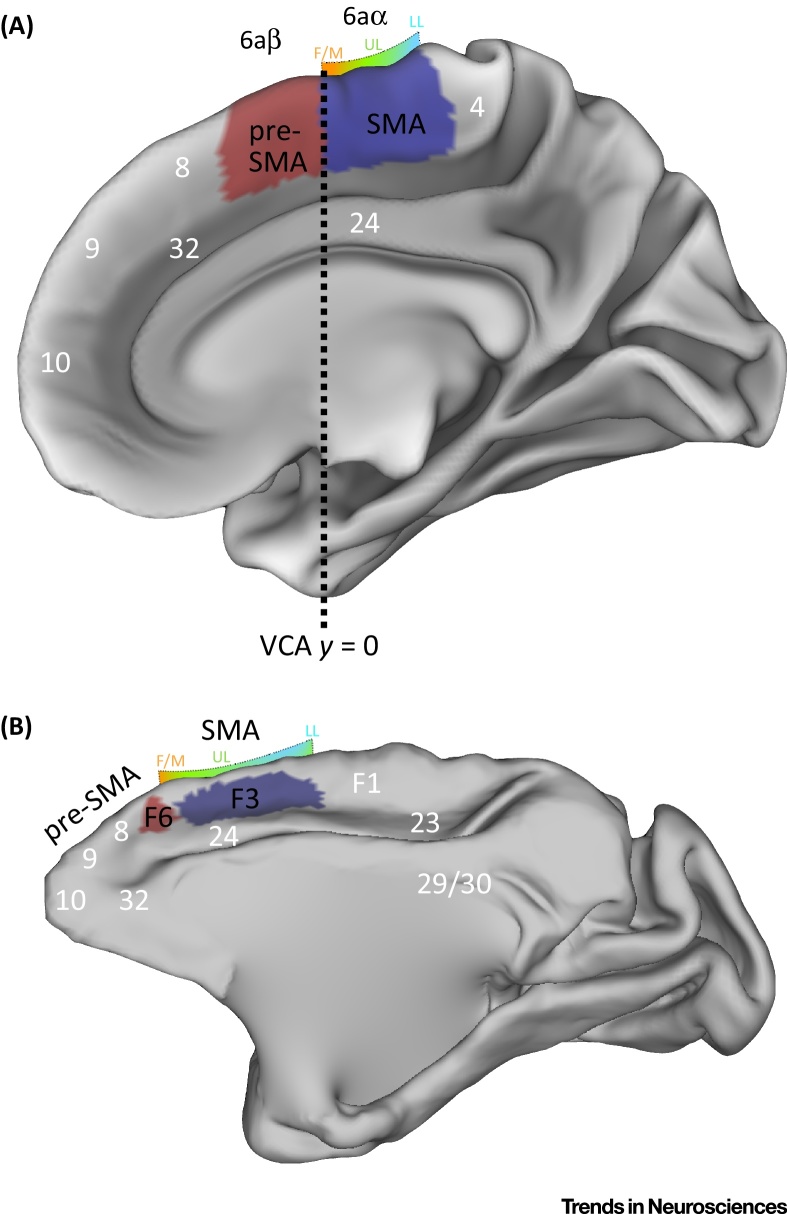
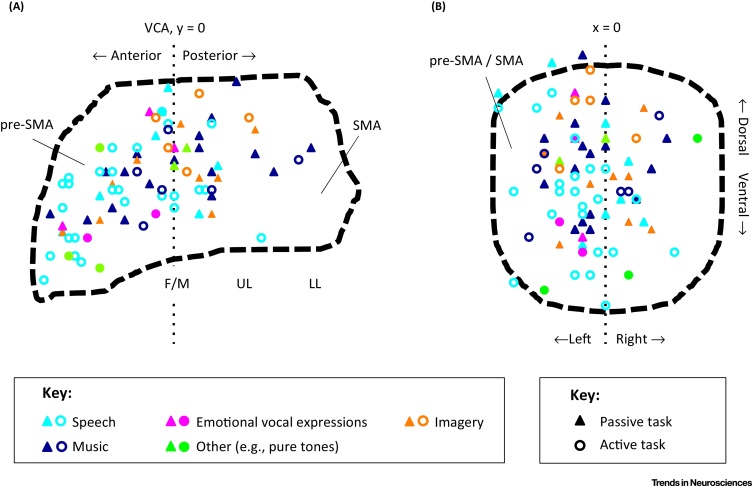
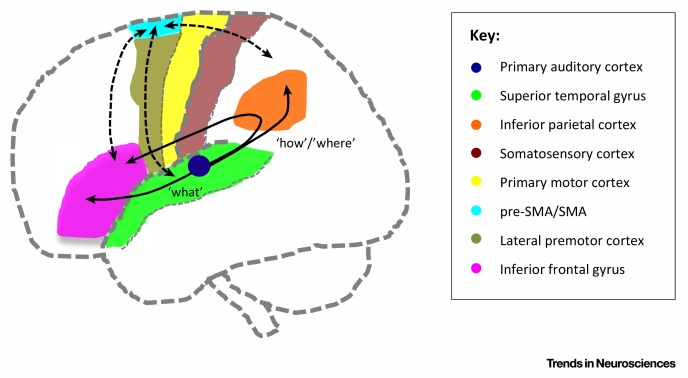
Verification
Claims the paper makes
The claims and statistics of this paper haven’t been checked yet.
Run the check — free, no account needed. It reads the open-access text and checks the sources it cites.
Claims other papers make about this one
Each is checked against this paper’s own text: does it say what the citing paper says it does?
In the citing paper
“The experience of NCVH likely also involves regions associated with the generation and monitoring of speech-motor imagery, as well as sensorimotor processes, such as the supplementary and pre-supplementary motor areas (SMA/pre-SMA; Linden et al., 2011;Lima et al., 2016).”
From Distinct processing of ambiguous speech in people with non-clinical auditory verbal hallucinations (2017) · cites this paper as Lima et al., 2016
Self-check
Percentages, sums and reported differences re-computed from the paper’s own numbers.
The self-check needs the paper’s full text.
Citations
Cites
The role of the medial frontal cortex in cognitive control
Ridderinkhof, K. R., Ullsperger, M., Crone, E. A., & Nieuwenhuis, S. (2004) · Science · doi:10.1126/science.1100301 · Cited by 2,974
Where do you know what you know? The representation of semantic knowledge in the human brain
Patterson, K., Nestor, P. J., & Rogers, T. T. (2007) · Nature Reviews Neuroscience · doi:10.1038/nrn2277 · Cited by 2,706
Functional role of the supplementary and pre-supplementary motor areas
Nachev, P., Kennard, C., & Husain, M. (2008) · Nature Reviews Neuroscience · doi:10.1038/nrn2478 · Cited by 1,928
When the brain plays music: auditory–motor interactions in music perception and production
Zatorre, R. J., Chen, J. L., & Penhune, V. B. (2007) · Nature reviews. Neuroscience · doi:10.1038/nrn2152 · Cited by 1,896
Maps and streams in the auditory cortex: nonhuman primates illuminate human speech processing
Rauschecker, J. P., & Scott, S. K. (2009) · Nature Neuroscience · doi:10.1038/nn.2331 · Cited by 1,766
Motor Areas of the Medial Wall: A Review of Their Location and Functional Activation
Picard, N., & Strick, P. L. (1996) · Cerebral Cortex · doi:10.1093/cercor/6.3.342 · Cited by 1,712
Brain Structures Differ between Musicians and Non-Musicians
Christian Gaser, B., & Gottfried Schlaug, A. (2003) · Journal of Neuroscience · doi:10.1523/jneurosci.23-27-09240.2003 · Cited by 1,626
The origin of corticospinal projections from the premotor areas in the frontal lobe
Dum, R., & Strick, P. (1991) · Journal of Neuroscience · doi:10.1523/jneurosci.11-03-00667.1991 · Cited by 1,447
Neuroplasticity Subserving Motor Skill Learning
Dayan, E., & Cohen, L. G. (2011) · Neuron · doi:10.1016/j.neuron.2011.10.008 · Cited by 1,408
The emulation theory of representation: Motor control, imagery, and perception
Grush, R. (2004) · Behavioral and Brain Sciences · doi:10.1017/s0140525x04000093 · Cited by 1,387 · cited 1×
“These ideas resonate with the ‘emulation’ framework discussed in relation to action control, and generalized to motor imagery, perception, and prediction [112,113].”
ALE meta-analysis of action observation and imitation in the human brain
Caspers, S., Zilles, K., Laird, A. R., & Eickhoff, S. B. (2010) · NeuroImage · doi:10.1016/j.neuroimage.2009.12.112 · Cited by 1,386
Single-Neuron Responses in Humans during Execution and Observation of Actions
Mukamel, R., Ekstrom, A. D., Kaplan, J., Iacoboni, M., & Fried, I. (2010) · Current Biology · doi:10.1016/j.cub.2010.02.045 · Cited by 1,178
Human volition: towards a neuroscience of will
Haggard, P. (2008) · Nature Reviews Neuroscience · doi:10.1038/nrn2497 · Cited by 1,134
Rhythm and Beat Perception in Motor Areas of the Brain
Grahn, J. A., & Brett, M. (2007) · Journal of Cognitive Neuroscience · doi:10.1162/jocn.2007.19.5.893 · Cited by 1,059
Listening to Musical Rhythms Recruits Motor Regions of the Brain
Chen, J. L., Penhune, V. B., & Zatorre, R. J. (2008) · Cerebral Cortex · doi:10.1093/cercor/bhn042 · Cited by 858
A Weighted and Directed Interareal Connectivity Matrix for Macaque Cerebral Cortex
Markov, N. T., Ercsey-Ravasz, M. M., Ribeiro Gomes, A. R., Lamy, C., Magrou, L., Vezoli, J., Misery, P., Falchier, A., Quilodran, R., Gariel, M. A., et al. (2014) · Cerebral Cortex · doi:10.1093/cercor/bhs270 · Cited by 857
Short frontal lobe connections of the human brain
Catani, M., Dell’Acqua, F., Vergani, F., Malik, F., Hodge, H., Roy, P. K., Valabrègue, R., & de Schotten, M. T. (2011) · Cortex · doi:10.1016/j.cortex.2011.12.001 · Cited by 828
Corticocortical connections of area F3 (SMA‐proper) and area F6 (pre‐SMA) in the macaque monkey
Luppino, G., Matelli, M., Camarda, R., & Rizzolatti, G. (1993) · The Journal of Comparative Neurology · doi:10.1002/cne.903380109 · Cited by 795
Functional organization of human supplementary motor cortex studied by electrical stimulation
Fried, I., Katz, A., McCarthy, G., Sass, K., Williamson, P., Spencer, S., & Spencer, D. (1991) · The Journal of Neuroscience · doi:10.1523/jneurosci.11-11-03656.1991 · Cited by 791
THE SUPPLEMENTARY MOTOR AREA OF THE CEREBRAL CORTEX
Penfield, W. G. (1951) · A M A Archives of Neurology & Psychiatry · doi:10.1001/archneurpsyc.1951.02320090038004 · Cited by 759
Empathy and the somatotopic auditory mirror system in humans
Gazzola, V., Aziz-Zadeh, L., & Keysers, C. (2006) · Current Biology · doi:10.1016/j.cub.2006.07.072 · Cited by 752
Gazzola, V., & Keysers, C. (2008) · Cerebral Cortex · doi:10.1093/cercor/bhn181 · Cited by 740
Mayka, M. A., Corcos, D. M., Leurgans, S. E., & Vaillancourt, D. E. (2006) · NeuroImage · doi:10.1016/j.neuroimage.2006.02.004 · Cited by 731
Changes in connectivity profiles define functionally distinct regions in human medial frontal cortex
Johansen‐Berg, H., Behrens, T. E. J., Robson, M. D., Drobnjak, I., Rushworth, M. F. S., Brady, J. M., Smith, S. M., Higham, D. J., & Matthews, P. M. (2004) · Proceedings of the National Academy of Sciences · doi:10.1073/pnas.0403743101 · Cited by 706
The neuroanatomical and functional organization of speech perception
Scott, S. K., & Johnsrude, I. S. (2003) · Trends in Neurosciences · doi:10.1016/s0166-2236(02)00037-1 · Cited by 704
Bangert, M., Peschel, T., Schlaug, G., Rotte, M., Drescher, D., Hinrichs, H., Heinze, H., & ALTENMÜLLER, E. O. (2005) · NeuroImage · doi:10.1016/j.neuroimage.2005.10.044 · Cited by 699
Architecture and frontal cortical connections of the premotor cortex (area 6) in the rhesus monkey
Barbas, H., & Pandya, D. N. (1987) · Journal of Comparative Neurology · doi:10.1002/cne.902560203 · Cited by 690
Ehrsson, H. H., Geyer, S., & Naito, E. (2003) · Journal of Neurophysiology · doi:10.1152/jn.01113.2002 · Cited by 659
Neural mechanisms underlying auditory feedback control of speech
Tourville, J. A., Reilly, K. J., & Guenther, F. H. (2008) · NeuroImage · doi:10.1016/j.neuroimage.2007.09.054 · Cited by 649
Muakkassa, K. F., & Strick, P. L. (1979) · Brain Research · doi:10.1016/0006-8993(79)90928-4 · Cited by 630
Internalized Timing of Isochronous Sounds Is Represented in Neuromagnetic Beta Oscillations
Fujioka, T., Trainor, L. J., Large, E. W., & Roß, B. (2012) · Journal of Neuroscience · doi:10.1523/jneurosci.4107-11.2012 · Cited by 623
A quantitative meta-analysis and review of motor learning in the human brain
Hardwick, R. M., Rottschy, C., Miall, R. C., & Eickhoff, S. B. (2012) · NeuroImage · doi:10.1016/j.neuroimage.2012.11.020 · Cited by 607
Rhythmic engagement with music in infancy
Zentner, M. R., & Eerola, T. (2010) · Proceedings of the National Academy of Sciences · doi:10.1073/pnas.1000121107 · Cited by 595
The supplementary motor area in the cerebral cortex
Tanji, J. (1994) · Neuroscience Research · doi:10.1016/0168-0102(94)90038-8 · Cited by 583
Separate neural subsystems within ‘Wernicke's area’
Wise, R. J. S., Scott, S. K., Blank, S. C., Mummery, C. J., Murphy, K., & Warburton, E. A. (2001) · Brain · doi:10.1093/brain/124.1.83 · Cited by 572
Prediction of external events with our motor system: towards a new framework
Schubotz, R. I. (2007) · Trends in Cognitive Sciences · doi:10.1016/j.tics.2007.02.006 · Cited by 559
Luppino, G., Matelli, M., Camarda, R., D, V. G. M., & Rizzolatti, G. (1991) · The Journal of Comparative Neurology · doi:10.1002/cne.903110403 · Cited by 543
Rizzolatti, G., Cattaneo, L., Fabbri‐Destro, M., & Rozzi, S. (2014) · Physiological Reviews · doi:10.1152/physrev.00009.2013 · Cited by 523
Taubert, M., Draganski, B., Anwander, A., Müller, K., Horstmann, A., Villringer, A., & Ragert, P. (2010) · The Journal of Neuroscience · doi:10.1523/jneurosci.2567-10.2010 · Cited by 514
Music and Emotions in the Brain: Familiarity Matters
Pereira, C. S., Teixeira, J., Figueiredo, P., Xavier, J. A., Castro, S. L., & Brattico, E. (2011) · PLoS ONE · doi:10.1371/journal.pone.0027241 · Cited by 513
Interconnections between the prefrontal cortex and the premotor areas in the frontal lobe
Lu, M., Preston, J. B., & Strick, P. L. (1994) · The Journal of Comparative Neurology · doi:10.1002/cne.903410308 · Cited by 501
Matsuzaka, Y., Aizawa, H., & Tanji, J. (1992) · Journal of Neurophysiology · doi:10.1152/jn.1992.68.3.653 · Cited by 500
A novel frontal pathway underlies verbal fluency in primary progressive aphasia
Catani, M., Mesulam, M. M., Jakobsen, E., Malik, F., Martersteck, A., Wieneke, C. A., Thompson, C. K., de Schotten, M. T., Dell’Acqua, F., Weıntraub, S., et al. (2013) · Brain · doi:10.1093/brain/awt163 · Cited by 480
Swann, N. C., Cai, W., Conner, C. R., Pieters, T. A., Claffey, M. P., George, J. S., Aron, A. R., & Tandon, N. (2012) · NeuroImage · doi:10.1016/j.neuroimage.2011.09.049 · Cited by 459
Hearing in the Mind's Ear: A PET Investigation of Musical Imagery and Perception
Zatorre, R. J., Halpern, A. R., Perry, D. W., Meyer, E., & Evans, A. C. (1996) · Journal of Cognitive Neuroscience · doi:10.1162/jocn.1996.8.1.29 · Cited by 439 · cited 7×
“Auditory cortex activity during imagery is thought to reflect the instantiation of sound-like representations as controlled by higher-order cortical mechanisms [13,73], contributing to the phenomenological experience of ‘hearing’.”
BackgroundMethodInfluentialCortical speech processing unplugged: a timely subcortico-cortical framework
Kotz, S. A., & Schwartze, M. (2010) · Trends in Cognitive Sciences · doi:10.1016/j.tics.2010.06.005 · Cited by 438
Akkal, D., Dum, R. P., & Strick, P. L. (2007) · Journal of Neuroscience · doi:10.1523/jneurosci.3134-07.2007 · Cited by 437
Listening to rhythms activates motor and premotor cortices
Bengtsson, S., Ullén, F., Ehrsson, H. H., Hashimoto, T., Kito, T., Naito, E., Forssberg, H., & Sadato, N. (2008) · Cortex · doi:10.1016/j.cortex.2008.07.002 · Cited by 424
Spinal Cord Terminations of the Medial Wall Motor Areas in Macaque Monkeys
Dum, R. P., & Strick, P. L. (1996) · Journal of Neuroscience · doi:10.1523/jneurosci.16-20-06513.1996 · Cited by 421
GATA-3 Is Involved in the Development of Serotonergic Neurons in the Caudal Raphe Nuclei
van Doorninck, J. H., van der Wees, J., Karis, A., Sabel-Goedknegt, E., Coesmans, M., Rutteman, M., Grosveld, F. G., & Zeeuw, C. I. D. (1999) · Journal of Neuroscience · doi:10.1523/jneurosci.19-12-j0002.1999 · Cited by 415
The role of the supplementary motor area (SMA) in word production
Alario, F.-X., Chainay, H., Lehericy, S., & Cohen, L. (2006) · Brain Research · doi:10.1016/j.brainres.2005.11.104 · Cited by 377
Speech production: Wernicke, Broca and beyond
Blank, S. C. (2002) · Brain · doi:10.1093/brain/awf191 · Cited by 342
The efferent and afferent connections of the supplementary motor area
Jürgens, U. (1984) · Brain Research · doi:10.1016/0006-8993(84)91341-6 · Cited by 322
Lehéricy, S. (2004) · Cerebral Cortex · doi:10.1093/cercor/bhh091 · Cited by 311
Swinging in the brain: shared neural substrates for behaviors related to sequencing and music
Janata, P., & Grafton, S. T. (2003) · Nature Neuroscience · doi:10.1038/nn1081 · Cited by 298
Long-term effects of motor training on resting-state networks and underlying brain structure
Taubert, M., Lohmann, G., Margulies, D. S., Villringer, A., & Ragert, P. (2011) · NeuroImage · doi:10.1016/j.neuroimage.2011.05.078 · Cited by 297
Behavioral and neural correlates of perceived and imagined musical timbre
Halpern, A. R., Zatorre, R. J., Bouffard, M. A., & Johnson, J. A. (2004) · Neuropsychologia · doi:10.1016/j.neuropsychologia.2003.12.017 · Cited by 295
Structural neuroplasticity in the sensorimotor network of professional female ballet dancers
Hänggi, J., Koeneke, S., Bezzola, L., & Jäncke, L. (2009) · Human Brain Mapping · doi:10.1002/hbm.20928 · Cited by 294
An expanded role for the dorsal auditory pathway in sensorimotor control and integration
Rauschecker, J. P. (2010) · Hearing Research · doi:10.1016/j.heares.2010.09.001 · Cited by 294
The somatotopic organization of the supplementary motor area: intracortical microstimulation mapping
Mitz, A., & Wise, S. (1987) · Journal of Neuroscience · doi:10.1523/jneurosci.07-04-01010.1987 · Cited by 293
Neuronal Correlates of Perception, Imagery, and Memory for Familiar Tunes
Herholz, S. C., Halpern, A. R., & Zatorre, R. J. (2012) · Journal of Cognitive Neuroscience · doi:10.1162/jocn_a_00216 · Cited by 287
Dorsal and Ventral Pathways for Prosody
Sammler, D., Grosbras, M., Anwander, A., Bestelmeyer, P. E. G., & Belin, P. (2015) · Current Biology · doi:10.1016/j.cub.2015.10.009 · Cited by 284
Functional–anatomical concepts of human premotor cortex: evidence from fMRI and PET studies
Schubotz, R. I., & von Cramon, D. Y. (2003) · NeuroImage · doi:10.1016/j.neuroimage.2003.09.014 · Cited by 281
Action Monitoring and Medial Frontal Cortex: Leading Role of Supplementary Motor Area
Bonini, F., Burle, B., Liégeois‐Chauvel, C., Régis, J. M., Chauvel, P., & Vidal, F. (2014) · Science · doi:10.1126/science.1247412 · Cited by 271
Neurons related to reaching-grasping arm movements in the rostral part of area 6 (area 6a?)
Rizzolatti, G., Gentilucci, M., Camarda, R., D, V. G. M., Luppino, G., Matelli, M., & Fogassi, L. (1990) · Experimental Brain Research · doi:10.1007/bf00231253 · Cited by 267
Embodied Cognition and Mirror Neurons: A Critical Assessment
Caramazza, A., Anzellotti, S., Strnad, L., & Lingnau, A. (2014) · Annual Review of Neuroscience · doi:10.1146/annurev-neuro-071013-013950 · Cited by 265
Positive Emotions Preferentially Engage an Auditory–Motor “Mirror” System
Warren, J. E., Sauter, D. A., Eisner, F., Wiland, J., Dresner, M. A., Wise, R. J. S., Rosen, S., & Scott, S. K. (2006) · Journal of Neuroscience · doi:10.1523/jneurosci.3907-06.2006 · Cited by 264
メチル化DNA結合タンパク質MBD2はグルココルチコイド受容体のNGFI-A(egr-1)媒介転写活性化を促進する
Ian, C., Castleden, I. R., Shelley, E. B., Stephen, D., Sergiy, D., Josie, D., Tie-Yuan, Z., Moshe Szyf, A., & Michael, J. M. (2014) · Philosophical Transactions of the Royal Society B Biological Sciences · Cited by 255
Neural correlates of verbal feedback processing: an fMRI study employing overt speech
Christoffels, I. K., Formisano, E., & Schiller, N. O. (2007) · Human Brain Mapping · doi:10.1002/hbm.20315 · Cited by 254
Scott, S. K., McGettigan, C., & Eisner, F. (2009) · Nature Reviews Neuroscience · doi:10.1038/nrn2603 · Cited by 251
Self-citationPeelle, J. E., Troiani, V., Wingfield, A., & Grossman, M. (2010) · Cerebral Cortex · doi:10.1093/cercor/bhp142 · Cited by 245
Pinho, A. L., de Manzano, Ö., Fransson, P., Eriksson, H., & Ullén, F. (2014) · Journal of Neuroscience · doi:10.1523/jneurosci.4769-13.2014 · Cited by 244
Brain Activation during Anticipation of Sound Sequences
Leaver, A. M., Lare, J. V., Zielinski, B. A., Halpern, A. R., & Rauschecker, J. P. (2009) · Journal of Neuroscience · doi:10.1523/jneurosci.4921-08.2009 · Cited by 238
A functional study of auditory verbal imagery
SHERGILL, S. S., BULLMORE, E. T., BRAMMER, M. J., WILLIAMS, S. C. R., MURRAY, R. M., & McGUIRE, P. K. (2001) · Psychological Medicine · doi:10.1017/s003329170100335x · Cited by 237
Zilles, K., Gottfried Schlaug, A., Matelli, M., Luppino, G., Schleicher, A., Qü, M., Dabringhaus, A., Seitz, R. J., & Roland, P. E. (1995) · PubMed · Cited by 232
Noise differentially impacts phoneme representations in the auditory and speech motor systems
Du, Y., Buchsbaum, B. R., Grady, C. L., & Alain, C. (2014) · Proceedings of the National Academy of Sciences · doi:10.1073/pnas.1318738111 · Cited by 232
The Brain of Opera Singers: Experience-Dependent Changes in Functional Activation
Kleber, B., Veit, R., Birbaumer, N., Gruzelier, J. H., & Lotze, M. (2009) · Cerebral Cortex · doi:10.1093/cercor/bhp177 · Cited by 229
Neural bases of individual differences in beat perception
Grahn, J. A., & McAuley, J. D. (2009) · NeuroImage · doi:10.1016/j.neuroimage.2009.04.039 · Cited by 213
Scott, S. K., Lavan, N., Chen, S., & McGettigan, C. (2014) · Trends in Cognitive Sciences · doi:10.1016/j.tics.2014.09.002 · Cited by 206
Predictive motor control of sensory dynamics in auditory active sensing
Morillon, B., Hackett, T. A., Kajikawa, Y., & Schroeder, C. E. (2015) · Current Opinion in Neurobiology · doi:10.1016/j.conb.2014.12.005 · Cited by 202
A comparison of five fMRI protocols for mapping speech comprehension systems
Binder, J. R., Swanson, S. J., Hammeke, T. A., & Sabsevitz, D. S. (2008) · Epilepsia · doi:10.1111/j.1528-1167.2008.01683.x · Cited by 202
Musically Cued Gait-Training Improves Both Perceptual and Motor Timing in Parkinson’s Disease
Benoit, C.-É., Bella, S. D., Farrugia, N., Obrig, H., Mainka, S., & Kotz, S. A. (2014) · Frontiers in Human Neuroscience · doi:10.3389/fnhum.2014.00494 · Cited by 194
Fontaine, D., Capelle, L., & Duffau, H. (2002) · Neurosurgery · doi:10.1097/00006123-200202000-00011 · Cited by 193
Inferring a dual-stream model of mentalizing from associative white matter fibres disconnection
Herbet, G., Lafargue, G., Bonnetblanc, F., Moritz‐Gasser, S., de Champfleur, N. M., & Duffau, H. (2014) · Brain · doi:10.1093/brain/awt370 · Cited by 192
Meister, I. G., Krings, T., Foltys, H., Boroojerdi, B., Müller, M., Töpper, R., & Thron, A. K. (2005) · Human Brain Mapping · doi:10.1002/hbm.20112 · Cited by 185
White matter connections of the supplementary motor area in humans
Vergani, F., Lacerda, L., Martino, J., Attems, J., Morris, C., Mitchell, P., de Schotten, M. T., & Dell'Acqua, F. (2014) · Journal of Neurology, Neurosurgery & Psychiatry · doi:10.1136/jnnp-2013-307492 · Cited by 183
I. A record of experiments upon the functions of the cerebral cortex
Horsley, V. A. H., & Schäfer, E. A. (1888) · Philosophical Transactions of the Royal Society of London (B ) · doi:10.1098/rstb.1888.0001 · Cited by 180
McNorgan, C. (2012) · Frontiers in Human Neuroscience · doi:10.3389/fnhum.2012.00285 · Cited by 178
Mental imagery of speech implicates two mechanisms of perceptual reactivation.
Tian, X., Zarate, J. M., & Poeppel, D. (2016) · Cortex · doi:10.1016/j.cortex.2016.01.002 · Cited by 178
Activation of Sensory-Motor Areas in Sentence Comprehension
Desai, R. H., Binder, J. R., Conant, L. L., & Seidenberg, M. S. (2009) · Cerebral Cortex · doi:10.1093/cercor/bhp115 · Cited by 175
Multiple Stages of Auditory Speech Perception Reflected in Event-Related fMRI
Obleser, J., Zimmermann, J. B., van Meter, J., & Rauschecker, J. P. (2006) · Cerebral Cortex · doi:10.1093/cercor/bhl133 · Cited by 174
Somatotopy of monkey premotor cortex examined with microstimulation
Godschalk, M., Mitz, A. R., Duin, B. V., & Burga, H. V. D. (1995) · Neuroscience Research · doi:10.1016/0168-0102(95)00950-7 · Cited by 172
Presupplementary Motor Area Activation during Sequence Learning Reflects Visuo-Motor Association
Sakai, K., Hikosaka, O., Miyauchi, S., Sasaki, Y., Fujimaki, N., & Pütz, B. (1999) · Journal of Neuroscience · doi:10.1523/jneurosci.19-10-j0002.1999 · Cited by 170
Margulis, E. H., Mlsna, L. M., Uppunda, A. K., Parrish, T. B., & Wong, P. C. M. (2007) · Human Brain Mapping · doi:10.1002/hbm.20503 · Cited by 163
Scott, S. K., Rosen, S., Wickham, L., & Wise, R. J. S. (2004) · The Journal of the Acoustical Society of America · doi:10.1121/1.1639336 · Cited by 163
Cortical lesion effects and vocalization in the squirrel monkey
Kirzinger, A., & Jürgens, U. (1982) · Brain Research · doi:10.1016/0006-8993(82)91204-5 · Cited by 157
Repp, B. H. (2001) · Journal of Experimental Psychology Human Perception & Performance · doi:10.1037/0096-1523.27.3.600 · Cited by 154
Functional dissociation of pre-SMA and SMA-proper in temporal processing
Schwartze, M., Rothermich, K., & Kotz, S. A. (2011) · NeuroImage · doi:10.1016/j.neuroimage.2011.11.089 · Cited by 151
Adank, P. (2012) · Brain and Language · doi:10.1016/j.bandl.2012.04.014 · Cited by 146
Learning to play a melody: An fMRI study examining the formation of auditory-motor associations
Chen, J. L., Rae, C. L., & Watkins, K. E. (2011) · NeuroImage · doi:10.1016/j.neuroimage.2011.08.012 · Cited by 144
Brain networks underlying mental imagery of auditory and visual information
Zvyagintsev, M., Clemens, B., Chechko, N., Mathiak, K. A., Sack, A. T., & Mathiak, K. (2013) · European Journal of Neuroscience · doi:10.1111/ejn.12140 · Cited by 142
McGettigan, C., Walsh, E., Jessop, R., Agnew, Z. K., Sauter, D. A., Warren, J. E., & Scott, S. K. (2013) · Cerebral Cortex · doi:10.1093/cercor/bht227 · Cited by 140
Aziz‐Zadeh, L., Sheng, T., & Gheytanchi, A. (2010) · PLoS ONE · doi:10.1371/journal.pone.0008759 · Cited by 138
Does motor imagery share neural networks with executed movement: a multivariate fMRI analysis
Sharma, N., & Baron, J. (2013) · Frontiers in Human Neuroscience · doi:10.3389/fnhum.2013.00564 · Cited by 129
Modality-Specific Cognitive Function of Medial and Lateral Human Brodmann Area 6
Tanaka, S., Honda, M., & Sadato, N. (2005) · Journal of Neuroscience · doi:10.1523/jneurosci.4324-04.2005 · Cited by 128
Neural mechanisms for illusory filling-in of degraded speech
Shahin, A. J., Bishop, C. W., & Miller, L. M. (2008) · NeuroImage · doi:10.1016/j.neuroimage.2008.09.045 · Cited by 127
Lee, Y. S., Turkeltaub, P. E., Granger, R., & Raizada, R. D. S. (2012) · Journal of Neuroscience · doi:10.1523/jneurosci.3814-11.2012 · Cited by 125
Gauvin, H. S., Baene, W. D., Braß, M., & Hartsuiker, R. J. (2015) · NeuroImage · doi:10.1016/j.neuroimage.2015.11.037 · Cited by 124
Peretz, I., Gosselin, N. H., Belin, P., Zatorre, R. J., Plailly, J., & Tillmann, B. (2009) · Annals of the New York Academy of Sciences · doi:10.1111/j.1749-6632.2009.04557.x · Cited by 121
On-line plasticity in spoken sentence comprehension: Adapting to time-compressed speech
Adank, P., & Devlin, J. T. (2009) · NeuroImage · doi:10.1016/j.neuroimage.2009.07.032 · Cited by 118
The brain’s voices: comparing nonclinical auditory hallucinations and imagery
Linden, D. E. J., Thornton, K., Kuswanto, C. N., Johnston, S. J., van de Ven, V., & Jackson, M. C. (2011) · Cerebral Cortex · doi:10.1093/cercor/bhq097 · Cited by 117
Auditory-Motor Processing of Speech Sounds
Möttönen, R., Dutton, R., & Watkins, K. E. (2012) · Cerebral Cortex · doi:10.1093/cercor/bhs110 · Cited by 112
Focused attention in a simple dichotic listening task: an fMRI experiment
Jäncke, L., Specht, K., Shah, J. N., & Hugdahl, K. (2003) · Cognitive Brain Research · doi:10.1016/s0926-6410(02)00281-1 · Cited by 107
Neural Aspects of Sentence Comprehension: Syntactic Complexity, Reversibility, and Reanalysis
Meltzer, J. A., McArdle, J. J., Schafer, R. J., & Braun, A. R. (2009) · Cerebral Cortex · doi:10.1093/cercor/bhp249 · Cited by 104
Neural Responses to Complex Auditory Rhythms: The Role of Attending
Chapin, H. L., Zanto, T. P., Jantzen, K. J., Kelso, J. A. S., Steinberg, F. L., & Large, E. W. (2010) · Frontiers in Psychology · doi:10.3389/fpsyg.2010.00224 · Cited by 103
Adaptation to Vocal Expressions Reveals Multistep Perception of Auditory Emotion
Bestelmeyer, P. E. G., Maurage, P., Rouger, J., Latinus, M., & Belin, P. (2014) · Journal of Neuroscience · doi:10.1523/jneurosci.4820-13.2014 · Cited by 100
Parcellation of human mesial area 6: cytoarchitectonic evidence for three separate areas
Vorobiev, V., Govoni, P., Rizzolatti, G., Matelli, M., & Luppino, G. (1998) · European Journal of Neuroscience · doi:10.1046/j.1460-9568.1998.00236.x · Cited by 99
Kurata, K., Tsuji, T., Naraki, S., Seino, M., & Abe, Y. (2000) · Journal of Neurophysiology · doi:10.1152/jn.2000.84.3.1667 · Cited by 93
Activation of premotor vocal areas during musical discrimination
Brown, S., & Martinez, M. J. (2006) · Brain and Cognition · doi:10.1016/j.bandc.2006.08.006 · Cited by 91
Projections from the superior temporal sulcus to the agranular frontal cortex in the macaque
Luppino, G., Calzavara, R., Rozzi, S., & Matelli, M. (2001) · European Journal of Neuroscience · doi:10.1046/j.0953-816x.2001.01734.x · Cited by 89
Lima, C. F., Lavan, N., Evans, S., Agnew, Z. K., Halpern, A. R., Shanmugalingam, P., Meekings, S., Boebinger, D., Ostarek, M., McGettigan, C., et al. (2015) · Cerebral Cortex · doi:10.1093/cercor/bhv134 · Cited by 86
Long-term intensive training induced brain structural changes in world class gymnasts
Huang, R., Lü, M., Song, Z., & Wang, J. (2013) · Brain Structure and Function · doi:10.1007/s00429-013-0677-5 · Cited by 84
Zeharia, N., Hertz, U., Flash, T., & Amedi, A. (2012) · Proceedings of the National Academy of Sciences · doi:10.1073/pnas.1119125109 · Cited by 83
Take a breath and take the turn: how breathing meets turns in spontaneous dialogue
Rochet‐Capellan, A., & Fuchs, S. I. (2014) · Philosophical Transactions of the Royal Society B Biological Sciences · doi:10.1098/rstb.2013.0399 · Cited by 83
Farrugia, N., Jakubowski, K., Cusack, R., & Stewart, L. (2015) · Consciousness and Cognition · doi:10.1016/j.concog.2015.04.020 · Cited by 76
Banissy, M. J., Sauter, D. A., Ward, J., Warren, J. E., Walsh, V., & Scott, S. K. (2010) · Journal of Neuroscience · doi:10.1523/jneurosci.0786-10.2010 · Cited by 76
van de Ven, V., Esposito, F., & Christoffels, I. K. (2009) · NeuroImage · doi:10.1016/j.neuroimage.2009.05.057 · Cited by 72
Neural Dynamics of Phonological Processing in the Dorsal Auditory Stream
Liebenthal, E., Sabri, M., Beardsley, S. A., Mangalathu-Arumana, J., & Desai, A. (2013) · Journal of Neuroscience · doi:10.1523/jneurosci.1511-13.2013 · Cited by 71
Nastase, S. A., Iacovella, V., & Hasson, U. (2013) · Human Brain Mapping · doi:10.1002/hbm.22238 · Cited by 70
Foot, face and hand representation in the human supplementary motor area
Chainay, H., Krainik, A., Tanguy, M., Gérardin, E., Bihan, D. L., & Lehéricy, S. (2004) · Neuroreport · doi:10.1097/00001756-200404090-00005 · Cited by 69
Woods, E. A., Hernández, A. E., Wagner, V. E., & Beilock, S. L. (2014) · Brain and Cognition · doi:10.1016/j.bandc.2014.03.007 · Cited by 68
Auditory imagery and the poor-pitch singer
Pfordresher, P. Q., & Halpern, A. R. (2013) · Psychonomic Bulletin & Review · doi:10.3758/s13423-013-0401-8 · Cited by 68
Russo, G. S., Backus, D. A., Ye, S., & Crutcher, M. D. (2002) · Journal of Neurophysiology · doi:10.1152/jn.00306.2002 · Cited by 62
Sequence learning in pianists and nonpianists: An fMRI study of motor expertise
LANDAU, S. M., & D'ESPOSITO, M. (2006) · Cognitive, Affective, & Behavioral Neuroscience · doi:10.3758/cabn.6.3.246 · Cited by 62
From Language Comprehension to Action Understanding and Back Again
Tremblay, P., & Small, S. L. (2010) · Cerebral Cortex · doi:10.1093/cercor/bhq189 · Cited by 62
Neuroanatomical correlates of brain–computer interface performance
Kasahara, K., DaSalla, C. S., Honda, M., & Hanakawa, T. (2015) · NeuroImage · doi:10.1016/j.neuroimage.2015.01.055 · Cited by 59
Discriminating between auditory and motor cortical responses to speech and nonspeech mouth sounds
Agnew, Z. K., McGettigan, C., & Scott, S. K. (2011) · Journal of Cognitive Neuroscience · doi:10.1162/jocn_a_00106 · Cited by 59
Self-citationSelf awareness and speech processing: an fMRI study
Jardri, R., Pins, D., Bubrovszky, M., Despretz, P., Pruvo, J.-P., Steinling, M., & Thomas, P. (2007) · NeuroImage · doi:10.1016/j.neuroimage.2007.02.002 · Cited by 57
Structural Brain Correlates Associated with Professional Handball Playing
Hänggi, J., Langer, N., Lutz, K., Birrer, K., Mérillat, S., & Jäncke, L. (2015) · PLoS ONE · doi:10.1371/journal.pone.0124222 · Cited by 55
Understanding non-biological dynamics with your own premotor system
Wolfensteller, U., Schubotz, R. I., & von Cramon, D. Y. (2007) · NeuroImage · doi:10.1016/j.neuroimage.2007.03.040 · Cited by 54
Reznik, D., Ossmy, O., & Mukamel, R. (2015) · Journal of Neuroscience · doi:10.1523/jneurosci.3723-14.2015 · Cited by 53
An fMRI Investigation of Speech and Tone Segmentation
LoCasto, P. C., Krebs-Noble, D., Gullapalli, R. P., & Burton, M. W. (2004) · Journal of Cognitive Neuroscience · doi:10.1162/0898929042568433 · Cited by 52
Accent imitation positively affects language attitudes
Adank, P., Stewart, A. J., Connell, L., & Wood, J. S. (2013) · Frontiers in Psychology · doi:10.3389/fpsyg.2013.00280 · Cited by 45
Raij, T. T., & Riekki, T. J. J. (2012) · NeuroImage Clinical · doi:10.1016/j.nicl.2012.09.007 · Cited by 38
Articulatory movements modulate auditory responses to speech.
Agnew, Z. K., McGettigan, C., Banks, B., & Scott, S. K. (2013) · NeuroImage · doi:10.1016/j.neuroimage.2012.08.020 · Cited by 36
Cebrian, A. N., & Janata, P. (2010) · Brain Research · doi:10.1016/j.brainres.2010.04.026 · Cited by 29
Non-verbal emotion communication training induces specific changes in brain function and structure
Kreifelts, B., Jacob, H., Brück, C., Erb, M., Ethofer, T., & Wildgruber, D. (2013) · Frontiers in Human Neuroscience · doi:10.3389/fnhum.2013.00648 · Cited by 24
Herrmann, B., Henry, M. J., Scharinger, M., & Obleser, J. (2014) · NeuroImage · doi:10.1016/j.neuroimage.2014.07.026 · Cited by 23
The role of accent imitation in sensorimotor integration during processing of intelligible speech
Adank, P., Rueschemeyer, S., & Harold Bekkering, A. (2013) · Frontiers in Human Neuroscience · doi:10.3389/fnhum.2013.00634 · Cited by 21
Disrupting SMA activity modulates explicit and implicit emotional responses: An rTMS study
Rodigari, A., & Oliveri, M. (2014) · Neuroscience Letters · doi:10.1016/j.neulet.2014.07.012 · Cited by 20
Recognizing the authenticity of emotional expressions: F0 contour matters when you need to know
Drolet, M., Schubotz, R. I., & Fischer, J. (2014) · Frontiers in Human Neuroscience · doi:10.3389/fnhum.2014.00144 · Cited by 13
Terminal dendritic sprouting and reactive synaptogenesis in the postnatal organ of Corti in culture
Sobkowicz, H. M., August, B. K., Slapnick, S. M., & Luthy, D. F. (1998) · The Journal of Comparative Neurology · doi:10.1002/(sici)1096-9861(19980727)397:2 · Cited by 9
Research works printed but not linked: 1
- Vogt, 1919, Allgemeine ergebnisse unserer hirnforschung, Journal für Psychologie und Neurologie, 25, 277
Cited by
Sorted by citations
Large-scale cortical networks for hierarchical prediction and prediction error in the primate brain
Chao, Z. C., Takaura, K., Wang, L., Fujii, N., & Dehaene, S. (2018) · Neuron · doi:10.1016/j.neuron.2018.10.004 · Cited by 238
How Beat Perception Co-opts Motor Neurophysiology
Cannon, J. J., & Patel, A. D. (2020) · Trends in Cognitive Sciences · doi:10.1016/j.tics.2020.11.002 · Cited by 232
Haslbeck, F. B., András, J., Held, U., Bassler, D., Bucher, H.-U., & Hagmann, C. F. (2020) · NeuroImage Clinical · doi:10.1016/j.nicl.2020.102171 · Cited by 146
Distinct processing of ambiguous speech in people with non-clinical auditory verbal hallucinations
Alderson-Day, B., Lima, C. F., Evans, S., Krishnan, S., Shanmugalingam, P., Fernyhough, C., & Scott, S. K. (2017) · Brain · doi:10.1093/brain/awx206 · Cited by 108
Towards a neural model of infant cry perception
Witteman, J., Van IJzendoorn, M. H., Rilling, J. K., Bos, P. A., Schiller, N. O., & Bakermans-Kranenburg, M. J. (2019) · Neuroscience & Biobehavioral Reviews · doi:10.1016/j.neubiorev.2019.01.026 · Cited by 94
Metadata
- Authors
- Lima, C. F., Krishnan, S., & Scott, S. K.
- Affiliations
- University College London (GB)
- University of Oxford (GB)
- Corresponding author
- Scott, Sophie K.
- Venue
- Trends in Neurosciences
- Publisher
- Elsevier BV
- Published
- 2016-08
- Volume
- 39
- Issue
- 8
- Pages
- 527-542
- ISSN
- 0166-2236 (ISSN-L)
- PMC
- PMC5441995
- OpenAlex
- W2473628615
- Cited by
- 227
- References
- 152
- Citations by year
- 2026: 17 · 2025: 20 · 2024: 29 · 2023: 21 · 2022: 21 · 2021: 38 · 2020: 25 · 2019: 31 · 2018: 17 · 2017: 8
- FWCI
- 1.97
- Type
- journal article
- Language
- en
- Open access
- hybrid
- doi.org
- Locations
- Trends in Neurosciences (publishedVersion, cc-by)
- Europe PMC (PubMed Central) (publishedVersion, cc-by)
- PubMed Central (publishedVersion, cc-by)
- PubMed (publishedVersion)
- UCL Discovery (University College London) (submittedVersion)
- Portuguese National Funding Agency for Science, Research and Technology (RCAAP Project by FCT) (submittedVersion)
- Funders
- Wellcome Trust (WT090961MA, 090961)
- Topics
- Life Sciences › Neuroscience › Cognitive Neuroscience › Neuroscience and Music Perception
- Life Sciences › Neuroscience › Cognitive Neuroscience › Neurobiology of Language and Bilingualism
- Social Sciences › Psychology › Experimental and Cognitive Psychology › Multisensory perception and integration
- Keywords
- supplementary motor area, pre-supplementary motor area, auditory processing, auditory imagery, sensorimotor integration, speech perception, vocalizations, music perception, auditory perception
- MeSH terms
- Animals, Auditory Perception, Humans, Imagination, Motor Activity, Motor Cortex
About these checks
Registry, retraction, Cites and statistics results are computed, not judged, with one exception: a printed reference that no index lists is read once by a model before it counts as a citation error. Claims are extracted by a model and kept only when their quote appears verbatim in the text; each cited source is then checked, with a model’s help, for whether it says what the claim relies on. Those verdicts can be wrong — read the claim’s quote and the cited source before relying on one.
Statistics and arithmetic are recomputed, not judged.
Confidence bands are shown only for fields calibrated on our annotated test set. None is calibrated yet, so no band is shown.
What counts as a claim ›How we measure confidence ›How we check this ›
Are you an author, or do you see a problem with this page? Request a review
