

The DOI matches its Crossref record; 53 of the 53 references it cites were found in a registry or an index.
A single dose of self-transcribing and replicating RNA-based SARS-CoV-2 vaccine produces protective adaptive immunity in mice
Open accessPublished version of a preprint
Abstract
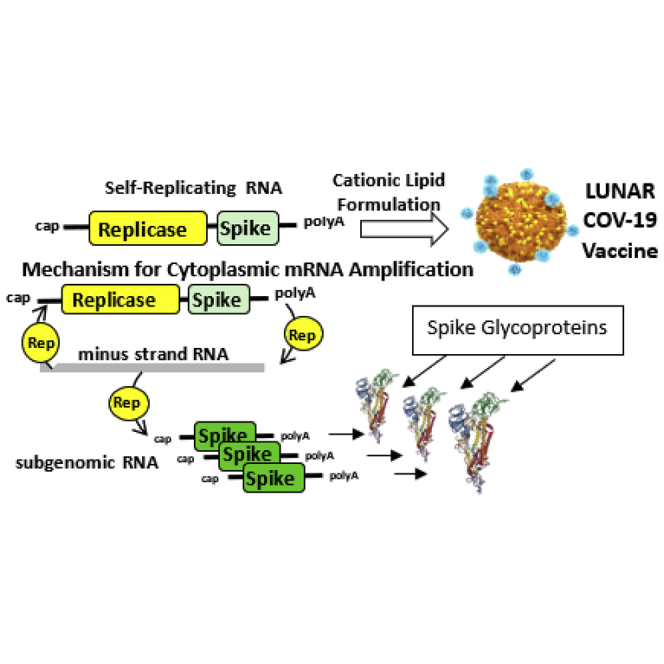
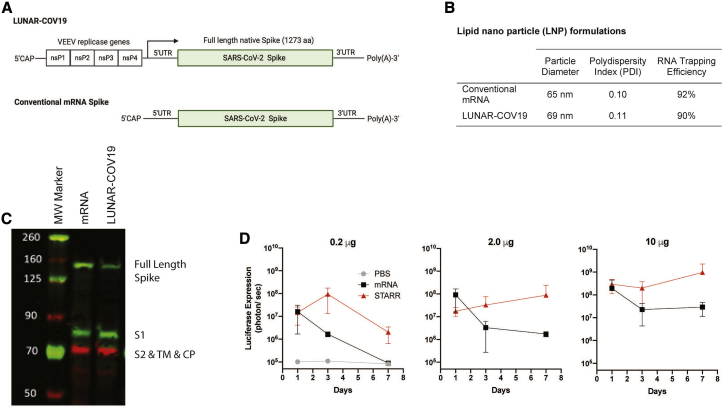
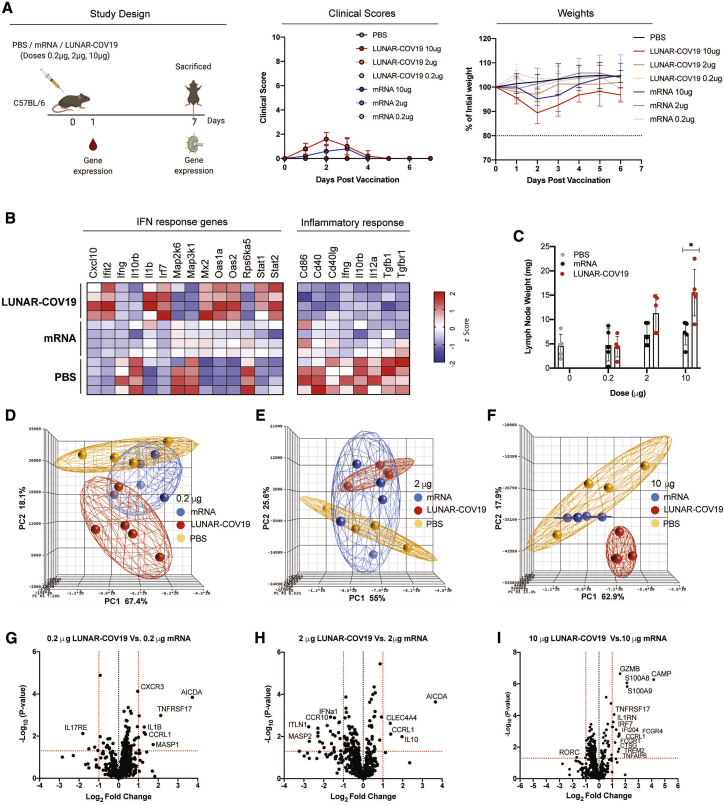
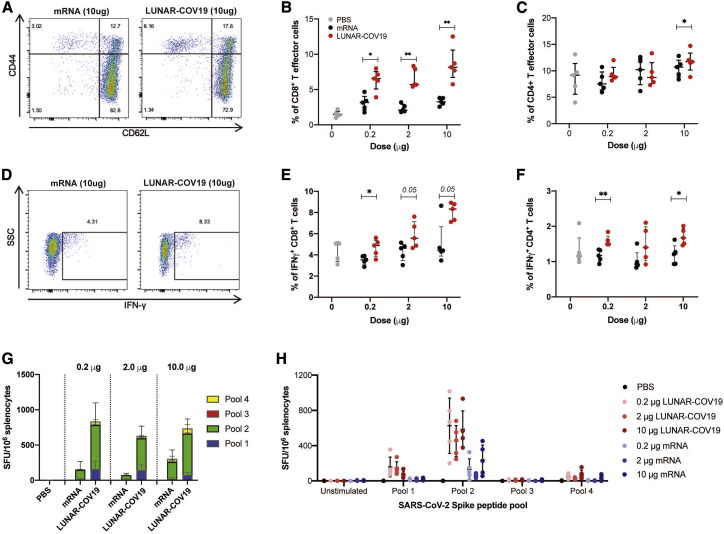
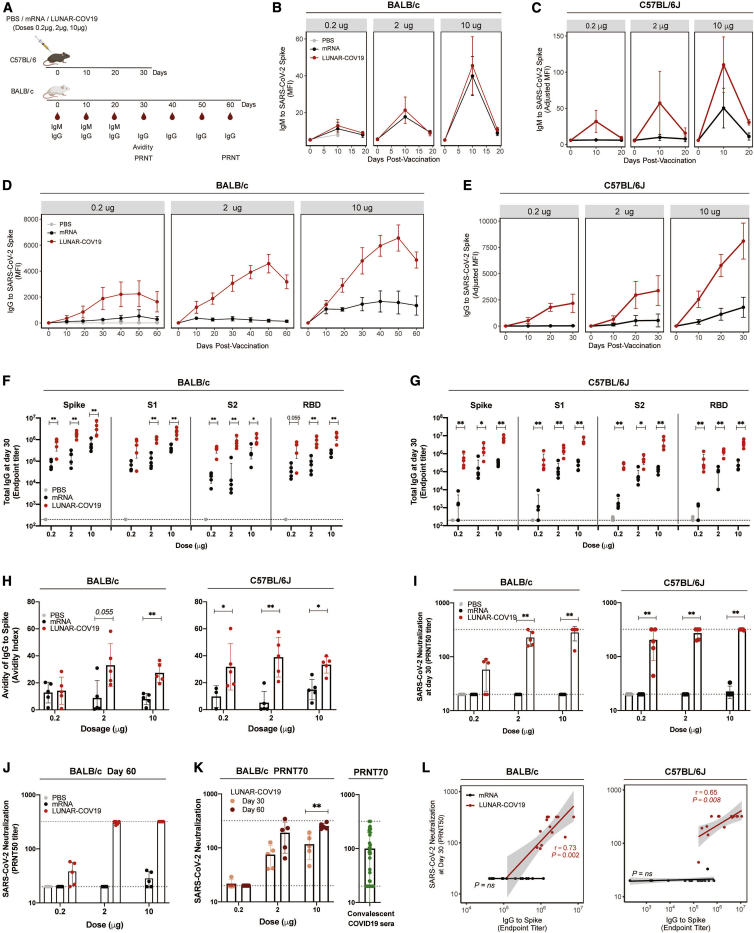
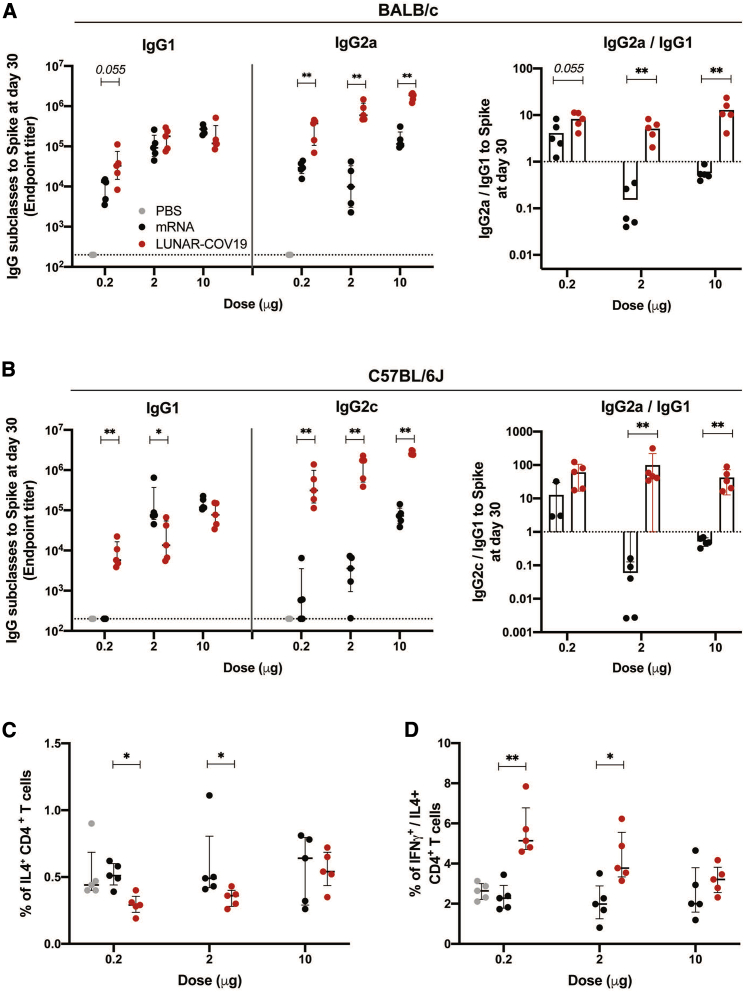
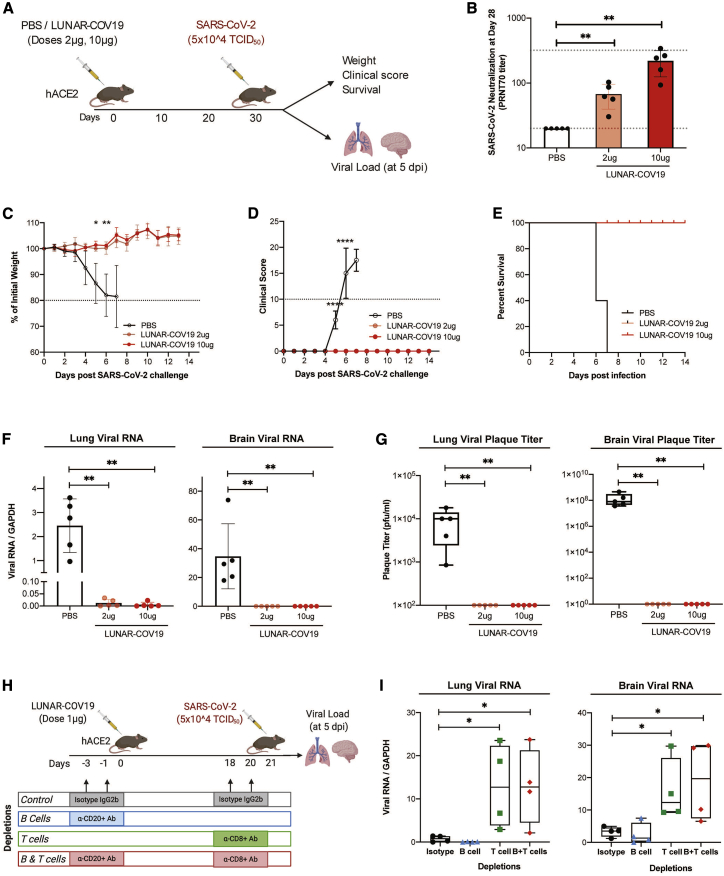
A self-transcribing and replicating RNA (STARR)-based vaccine (LUNAR-COV19) has been developed to prevent SARS-CoV-2 infection. The vaccine encodes an alphavirus-based replicon and the SARS-CoV-2 full-length spike glycoprotein. Translation of the replicon produces a replicase complex that amplifies and prolongs SARS-CoV-2 spike glycoprotein expression. A single prime vaccination in mice led to robust antibody responses, with neutralizing antibody titers increasing up to day 60. Activation of cell-mediated immunity produced a strong viral antigen-specific CD8 + T lymphocyte response. Assaying for intracellular cytokine staining for interferon (IFN)γ and interleukin-4 (IL-4)-positive CD4 + T helper (Th) lymphocytes as well as anti-spike glycoprotein immunoglobulin G (IgG)2a/IgG1 ratios supported a strong Th1-dominant immune response. Finally, single LUNAR-COV19 vaccination at both 2 μg and 10 μg doses completely protected human ACE2 transgenic mice from both mortality and even measurable infection following wild-type SARS-CoV-2 challenge. Our findings collectively suggest the potential of LUNAR-COV19 as a single-dose vaccine.
Overview
The claims and statistics of this paper haven’t been checked yet.
Run the check — free, no account needed. It reads the open-access text and checks the sources it cites.
Integrity signals
Registry
Cites
Statistics
Figures
Verification
Claims the paper makes
The claims and statistics of this paper haven’t been checked yet.
Run the check — free, no account needed. It reads the open-access text and checks the sources it cites.
Claims other papers make about this one
Each is checked against this paper’s own text: does it say what the citing paper says it does?
The source backs part of the claim, not all of it — or backs it for a different population, condition or comparison.
In the citing paper
“Depletion of CD8+ T cells following immunization with mRNA vaccine, prior to SARS-CoV-2 challenge, led to different outcomes in a transgenic mouse model, possibly due to the vaccine dose used and variability in nAb concentrations14,35.”
From Efficacy of an unmodified bivalent mRNA vaccine against SARS-CoV-2 variants in female small animal models (2023) · cites this paper as [35]
Experimental — accuracy not yet measuredIn the citing paper
“Recently, two different saRNA vaccines developed independently by Arcturus Therapeutics and Imperial College London have shown favorable immune responses against SARS-CoV-2, and have entered clinical trials.211–213”
From Advances in COVID-19 mRNA vaccine development (2022) · cites this paper as [213]
In the citing paper
“In transgenic mice expressing human angiotensin-converting enzyme 2, doses of 2 µg and 10 µg produced strong T cell responses, high IgG titres and protected mice from SARS-CoV-2 infection137.”
From mRNA vaccines for infectious diseases: principles, delivery and clinical translation (2021) · cites this paper as [137]
Self-check
Percentages, sums and reported differences re-computed from the paper’s own numbers.
The self-check needs the paper’s full text.
Citations
Cites
Safety and Efficacy of the BNT162b2 mRNA Covid-19 Vaccine
Polack, F. P., Thomas, S. J., Kitchin, N., Absalon, J., Gurtman, A., Lockhart, S., Perez, J. L., Pérez Marc, G., Moreira, E. D., Zerbini, C., et al. (2020) · New England Journal of Medicine · doi:10.1056/nejmoa2034577 · Cited by 14,592
Grifoni, A., Weiskopf, D., Ramirez, S. I., Mateus, J., Dan, J. M., Moderbacher, C. R., Rawlings, S. A., Sutherland, A., Premkumar, L., Jadi, R. S., et al. (2020) · Cell · doi:10.1016/j.cell.2020.05.015 · Cited by 3,595
An mRNA Vaccine against SARS-CoV-2 — Preliminary Report
Jackson, L. A., Anderson, E. J., Rouphael, N. G., Roberts, P. C., Makhene, M., Coler, R. N., McCullough, M. P., Chappell, J. D., Denison, M. R., Stevens, L. J., et al. (2020) · New England Journal of Medicine · doi:10.1056/nejmoa2022483 · Cited by 3,237 · cited 1×
“Furthermore, recent results 66 from early phase COVID-19 vaccine trials have suggested that more than one dose would be 67 needed to elicit reasonable levels of adaptive immune memory [7-9].”
RNA-Based COVID-19 Vaccine BNT162b2 Selected for a Pivotal Efficacy Study
Walsh, E. E., Frenck, R., Falsey, A. R., Kitchin, N., Absalon, J., Gurtman, A., Lockhart, S., Neuzil, K., Mulligan, M. J., Bailey, R., et al. (2020) · doi:10.1101/2020.08.17.20176651 · Cited by 2,615
Folegatti, P. M., Ewer, K. J., Aley, P. K., Angus, B., Becker, S., Belij-Rammerstorfer, S., Bellamy, D., Bibi, S., Bittaye, M., Clutterbuck, E. A., et al. (2020) · The Lancet · doi:10.1016/s0140-6736(20)31604-4 · Cited by 2,419
Self-citationThe COVID-19 vaccine development landscape
Le, T. T., Andreadakis, Z., Kumar, A., Román, R. G., Tollefsen, S., Saville, M. K., & Mayhew, S. (2020) · Nature Reviews Drug Discovery · doi:10.1038/d41573-020-00073-5 · Cited by 2,002
SARS-CoV-2-specific T cell immunity in cases of COVID-19 and SARS, and uninfected controls
Le Bert, N., Tan, A. T., Kunasegaran, K., Tham, C. Y. L., Hafezi, M., Chia, A., Chng, M. H. Y., Lin, M., Tan, N., Linster, M., et al. (2020) · Nature · doi:10.1038/s41586-020-2550-z · Cited by 1,887 · cited 2×
“As suggested by 368 recent findings on T cell responses to SARS-CoV-2 and other coronavirus infections [38-40], 369 the development of T cell memory could be important for long-term immunity.”
MethodResultSelf-citationSARS-CoV-2 mRNA Vaccine Design Enabled by Prototype Pathogen Preparedness
Corbett, K. S., Edwards, D. K., Leist, S. R., Abiona, O. M., Boyoglu-Barnum, S., Gillespie, R. A., Himansu, S., Schäfer, A., Ziwawo, C. T., DiPiazza, A. T., et al. (2020) · Nature · doi:10.1038/s41586-020-2622-0 · Cited by 1,615 · cited 1×
“In addition, significant reduction in lung viral RNAwas observed following challenge with amouse-adapted virus (SARS-CoV-2 MA).(37) However, unlike the lethal challenge model in the present study, the virus RNA titers with the mouse-adapted strain peaked at day 2 post-infection and were cleared by day 4 post-infection…”
Developing Covid-19 Vaccines at Pandemic Speed
Lurie, N., Saville, M., Hatchett, R., & Halton, J. (2020) · New England Journal of Medicine · doi:10.1056/nejmp2005630 · Cited by 1,557
Safety and Immunogenicity of SARS-CoV-2 mRNA-1273 Vaccine in Older Adults
Anderson, E. J., Rouphael, N. G., Widge, A. T., Jackson, L. A., Roberts, P. C., Makhene, M., Chappell, J. D., Denison, M. R., Stevens, L. J., Pruijssers, A. J., et al. (2020) · New England Journal of Medicine · doi:10.1056/nejmoa2028436 · Cited by 1,523
Research works printed but not linked: 1
- Walsh, 2020, Safety and Immunogenicity of Two RNA-Based Covid-19 Vaccine Candidates, N. Engl. J. Med., 383, 2439, 10.1056/NEJMoa2027906 · DOI · Paper page
Cited by
Sorted by citations
Items 101–193 of 193
Bayat, M., Asemani, Y., & Najafi, S. (2021) · International Immunopharmacology · doi:10.1016/j.intimp.2021.107679 · Cited by 15
A potential silver lining of delaying the second dose
Martinez, D. R., & Ooi, E. E. (2022) · Nature Immunology · doi:10.1038/s41590-022-01143-z · Cited by 12
Self-citationNon-viral delivery of RNA for therapeutic T cell engineering
Berdecka, D., Smedt, S. C. D., Vos, W. H. D., & Braeckmans, K. (2024) · Advanced Drug Delivery Reviews · doi:10.1016/j.addr.2024.115215 · Cited by 14
Warzak, D. A., Pike, W. A., & Luttgeharm, K. D. (2023) · SLAS TECHNOLOGY · doi:10.1016/j.slast.2023.06.005 · Cited by 11
Gulati, G. K., Simpson, A., MacMillen, Z., Krieger, K., Sharma, S., Erasmus, J. H., Reed, S. G., Davie, J. W., Avril, M., & Khandhar, A. P. (2024) · Journal of Controlled Release · doi:10.1016/j.jconrel.2024.11.023 · Cited by 11
Research progress of mosquito-borne virus mRNA vaccines
Sun, N., Su, Z., & Zheng, X. (2024) · Molecular Therapy — Methods & Clinical Development · doi:10.1016/j.omtm.2024.101398 · Cited by 11
Multimeric RNAs for efficient RNA-based therapeutics and vaccines
Kim, D., Han, S. W., Ji, Y., Moon, S., Nam, H., & Lee, J. B. (2022) · Journal of Controlled Release · doi:10.1016/j.jconrel.2022.03.052 · Cited by 11
Race with virus evolution: The development and application of mRNA vaccines against SARS-CoV-2
Lee, K.-M., Lin, S., Wu, C.-J., & Kuo, R. (2023) · Biomedical Journal · doi:10.1016/j.bj.2023.01.002 · Cited by 14
“[85] de Alwis R, Gan ES, Chen S, Leong YS, Tan HC, Zhang SL, et al.”
RNA Vaccines against Infectious Diseases: Vital Progress with Room for Improvement
Abdelzaher, H. M., Gabr, A. S., Saleh, B. M., Gawad, R. M. A., Nour, A. A., & Abdelnaser, A. (2021) · Vaccines · doi:10.3390/vaccines9111211 · Cited by 12
Raines, S. L. M., Falcinelli, S. D., Peterson, J. J., Gulck, E. R. V., Allard, B., Kirchherr, J., Vega, J. B., Nájera, I., Boden, D., Archin, N. M., et al. (2024) · Antimicrobial Agents and Chemotherapy · doi:10.1128/aac.00201-24 · Cited by 10
Self-citationSingh, O. N., Berry, U., Joshi, G., Asuru, T. R., Chandrasekar, K., Narayanan, S., Srivastava, P., Tiwari, M., Chattopadhyay, S., Mehdi, F., et al. (2025) · iScience · doi:10.1016/j.isci.2025.113498 · Cited by 13
Mahalingam, G., Rachamalla, H. K., Arjunan, P., Periyasami, Y., M, S., Thangavel, S., Mohankumar, K. M., Moorthy, M., Velayudhan, S., Srivastava, A., et al. (2022) · Frontiers in Pharmacology · doi:10.3389/fphar.2022.840727 · Cited by 8
Alishetty, S., Carrasco, M. J., Alameh, M., Paige, M. A., Said, H., Wright, L., Narayanan, A., Alem, F., Hernandez, K. R., Gillevet, P. M., et al. (2021) · Research Square · doi:10.21203/rs.3.rs-798453/v1 · Cited by 10
Development of non-viral targeted RNA delivery vehicles – a key factor in success of therapeutic RNA
Choudry, M. W., Riaz, R., Raza, M. H., Nawaz, P., Ahmad, B. M., Jahan, N., Rafique, S., Afzal, S., Amin, I., & Shahid, M. (2024) · Journal of drug targeting · doi:10.1080/1061186x.2024.2416241 · Cited by 10
Sokhangouy, S. K., Behzadi, M., Rezaei, S., Farjami, M., Haghshenas, M., Sefidbakht, Y., & Mozaffari‐Jovin, S. (2025) · Biotechnology Journal · doi:10.1002/biot.202400596 · Cited by 9
“ARCT-021, an saRNA-LNP vaccine by Arcturus Therapeutics, encodes the full-length, nonmutated spike protein, using STARR technology and LUNAR nanoparticles [72].”
Optimizing the Delivery of mRNA to Mesenchymal Stem Cells for Tissue Engineering Applications
McCormick, K., Herrero, J. M., Haas, H., Fattah, S., Heise, A., O’Brien, F. J., & Cryan, S. (2024) · Molecular Pharmaceutics · doi:10.1021/acs.molpharmaceut.3c00898 · Cited by 11
Jennewein, M. F., Schultz, M. D., Beaver, S., Battisti, P., Bakken, J., Hanson, D., Akther, J., Zhou, F., Mohamath, R., Singh, J., et al. (2022) · bioRxiv (Cold Spring Harbor Laboratory) · doi:10.1101/2022.11.10.515993 · Cited by 9
Replicon RNA vaccines: design, delivery, and immunogenicity in infectious diseases and cancer
Tang, L., Que, H., Wei, Y., Yang, T., Tong, A., & Wei, X. (2025) · Journal of Hematology & Oncology · doi:10.1186/s13045-025-01694-2 · Cited by 11
“Alwis et al. immunized mice with a single dose of VEEV-based replicon vaccine against SARS-CoV-2, and detected strong cellular immunity responses, including increasing antigen-specific CD8 + T cells, and IFN-γ and IL-4-positive CD4 + T helper lymphocytes [118].”
Present and future of lipid nanoparticle-mRNA technology in phenylketonuria disease treatment
Dı́az-Trelles, R., & Pérez‐García, C. G. (2022) · International review of cytology · doi:10.1016/bs.ircmb.2022.04.008 · Cited by 8
Koseki, T., Teramachi, M., Koga, M., Ko, M. S. H., Amano, T., Yu, H., Amano, M., Leyder, E. C., Badiola, M., Ray, P., et al. (2023) · Vaccines · doi:10.3390/vaccines11121767 · Cited by 9
Discovery platforms for RNA therapeutics
Ciucci, G., Braga, L., & Zacchigna, S. (2024) · British Journal of Pharmacology · doi:10.1111/bph.16424 · Cited by 8
“Finally, new RNA-based vaccines are in phase 3 for SARS-Cov-2 (LUNAR-COV19 and ARCoV) (Chen, Hu, et al., 2022; de Alwis et al., 2021), melanoma (Schuler-Thurner et al., 2015) and advanced renal cell carcinoma (Amin et al., 2015). mRNA replacement therapies have reached the clinical stage for cystic…”
mRNA vaccines against infectious diseases and future direction
Aleem, M. T., Munir, F., Shakoor, A., & Gao, F. (2024) · International Immunopharmacology · doi:10.1016/j.intimp.2024.112320 · Cited by 10
Kimura, T., Reed, J., Warner, N. L., Fredericks, M., Lewis, T. B., Lafferty, A., Hodge, E. A., Simpson, A., Hinkley, T. C., Khandhar, A. P., et al. (2025) · Molecular Therapy — Nucleic Acids · doi:10.1016/j.omtn.2025.102595 · Cited by 7
“7,10,11,15 However, our findings across species (rodents and primates) suggest that localized innate responses are more critical for immunogenicity than systemic innate responses.”
Improved mRNA-based RSV vaccine with PreF forming enveloped virus-like particles
Chai, P., Shi, Y., Li, X., Yang, M., Liu, X., Liu, M., Yu, J., Yin, X., Li, D., Li, K., et al. (2025) · npj Vaccines · doi:10.1038/s41541-025-01205-x · Cited by 8
“Moreover, it is consistent with a previous report that mRNA vaccine activates the type I IFN signaling pathway 42 .”
Casmil, I. C., Huang, C., & Blakney, A. K. (2023) · Scientific Reports · doi:10.1038/s41598-023-46314-6 · Cited by 9
Wang, N., & Wang, T. (2024) · Biotechnology Journal · doi:10.1002/biot.202300658 · Cited by 11
“[128] In a phase I/II clinical trial, ARCT-021 was well tolerated up to one 7.5 μ g dose and two 5.0 μ g doses, and seroconversion rate for anti-S IgG was 100% in all cohorts, except for the 1 μ g one dose in younger adults and the 7.5 μ g one-dose in older adults.”
InfluentialApplications of self-replicating RNA
Lundstrom, K. H. (2022) · International review of cytology · doi:10.1016/bs.ircmb.2022.03.006 · Cited by 7
Nanomaterials to combat SARS-CoV-2: Strategies to prevent, diagnose and treat COVID-19
Valenzuela-Fernández, A., Cabrera-Rodríguez, R., Ciuffreda, L., Pérez-Yanes, S., Estévez‐Herrera, J., González‐Montelongo, R., Alcoba-Flórez, J., Trujillo‐González, R., de Artola, D. G.-M., Gil-Campesino, H., et al. (2022) · Frontiers in Bioengineering and Biotechnology · doi:10.3389/fbioe.2022.1052436 · Cited by 8
Lu, H.-H., Alves, R. P. D. S., Li, Q. H., Eder, L., Timis, J., Madany, H., Chuensirikulchai, K., Varghese, K., Singh, A. D., Tran, L. L., et al. (2025) · JCI Insight · doi:10.1172/jci.insight.187405 · Cited by 7
“Sustained antigen expression has the potential to elicit more robust and durable immune responses compared with conventional mRNA vaccines (7, 8) and, as a result, could support single-and low-dose immunization, thereby reducing manufacturing costs, facilitating rapid deployment, and potentially…”
Respiratory mucosal vaccines: Applications, delivery strategies and design considerations
Shi, T., Ye, Y., Fan, Z., Yang, Q., Ma, Y., & Zhu, J. (2025) · Biomedicine & Pharmacotherapy · doi:10.1016/j.biopha.2025.118326 · Cited by 8
Low-dose single-shot COVID-19 mRNA vaccines lie ahead
Sanders, N. N. (2021) · Molecular Therapy · doi:10.1016/j.ymthe.2021.05.003 · Cited by 5
“Of note, Mishra et al.(1) used a self-complementary vector, which has been implicated in heightened innate immune and T cell responses in mice when delivered systemically,(9) potentially contributing to the observed systemic immune activation.”
InfluentialRNA technology and nanocarriers empowering in vivo chimeric antigen receptor therapy
Cai, J., Chen, S., Liu, Z., Li, H., Wang, P., Yang, F., Li, Y., Chen, K., Sun, M., & Qiu, M. (2024) · Immunology · doi:10.1111/imm.13861 · Cited by 5
“This enables the vaccine to achieve the same level of protein expression with approximately one-sixth the dose of linear mRNA [173, 174]. saRNA-based vaccine has already been entered clinical trial [175, 176].”
Self-citationSelf-amplifying RNA virus vectors for drug delivery
Lundstrom, K. H. (2025) · Expert Opinion on Drug Delivery · doi:10.1080/17425247.2024.2445675 · Cited by 5
Baray, J. C., Khan, M. M. R., Mahmud, A., Islam, M. J., Myti, S., Ali, M. R., Sarker, M. E. H., Kumar, S., Chowdhury, M. M. H., Roy, R., et al. (2020) · bioRxiv (Cold Spring Harbor Laboratory) · doi:10.1101/2020.09.29.319061 · Cited by 5
Immunogenicity and protective efficacy of the HC009 mRNA vaccine against SARS-CoV-2
Liu, J., Han, H., Yang, B., Zhang, N., Li, J., Chen, X., Wu, J., Zhao, Y., & Yang, Y. (2024) · Frontiers in Immunology · doi:10.3389/fimmu.2024.1416375 · Cited by 4
Application in gene therapy and DNA/RNA vaccines
Limeres, M. J., Toscanini, M. A., Devoto, T. B., Ladetto, M. F., Castro, G. R., & Cuestas, M. L. (2022) · Elsevier eBooks · doi:10.1016/b978-0-323-91229-7.00001-5 · Cited by 4
Sun, Z. F., Liu, Y., Zhang, H., Ge, T., Pan, Y., Liu, Y., Wu, M., Shan, T., Zhu, G., Wu, Q., et al. (2025) · bioRxiv (Cold Spring Harbor Laboratory) · doi:10.1101/2025.03.30.644708 · Cited by 4
Singh, N. S. S., Gataa, I. S., Saleh, L. H., Ganesan, S., Kavitha, V., Maharana, L., Sharma, R., Latipova, M., Madatova, N., Jumanazarov, D., et al. (2025) · Archives of Microbiology · doi:10.1007/s00203-025-04596-6 · Cited by 4
“…intramuscular administration of 0.2–10 μg saRNA encoding the spike protein elicited signif - icantly higher S-specific IgG titers and Th1-biased cellular responses compared to dose-matched conventional mRNA, highlighting its dose-sparing and enhanced immunogenicity (De Alwis et al. 2021 ).”
InfluentialComprehensive Review on Viral RNA Extraction Strategies for Enhanced Molecular Diagnostics
Artika, I. M., Ma’roef, C. N., Johar, E., Yudhaputri, F. A., & Myint, K. S. A. (2025) · Interdisciplinary Perspectives on Infectious Diseases · doi:10.1155/ipid/5579320 · Cited by 3
Miyake-Stoner, S. J., Maine, C. J., Chou, A. C., Dailey, G. P., Spasova, D. S., Domingo, C. C., Sparks, J., Picarda, G. G. A., Lyerly, H. K., Crosby, E. J., et al. (2026) · Molecular Therapy · doi:10.1016/j.ymthe.2026.03.026 · Cited by 3
Koseki, T., Teramachi, M., Koga, M., Ko, M. S. H., Amano, T., Yu, H., Amano, M., Leyder, E. C., Badiola, M., Ray, P., et al. (2023) · medRxiv · doi:10.1101/2023.10.07.23296699 · Cited by 3
Nguyen, V. H., Crépey, P., Pivette, J. M., Settembre, E., Rajaram, S., Youhanna, J., Ferraro, A., Chang, C., van Boxmeer, J., & Mould-Quevedo, J. F. (2024) · Vaccines · doi:10.3390/vaccines12101161 · Cited by 2
Mahmood, N. M. S., Mahmud, A. M. R., & Maulood, I. M. (2025) · Acta Diabetologica · doi:10.1007/s00592-025-02479-2 · Cited by 2
Pierce, S. R., Shi, H., Caetano, C. C. D. S., Prots, D. A., Carlock, M. A., Cervantes, A. M., Hua, B. L., Rappaport, A., Larson, H., Scallan, C. D., et al. (2025) · Vaccine · doi:10.1016/j.vaccine.2025.127449 · Cited by 2
Sun, Z. F., Liu, Y., Zhang, H., Ge, T., Pan, Y., Liu, Y., Wu, M., Shan, T., Zhu, G., Wu, Q., et al. (2025) · Vaccine · doi:10.1016/j.vaccine.2025.128055 · Cited by 2
Application of self-amplifying mRNA technology in the development of infectious disease vaccines
Li, X., Wang, X., & Zhang, B. (2023) · Chinese Science Bulletin (Chinese Version) · doi:10.1360/tb-2023-0902 · Cited by 3
Kanechi, R., Shishido, T., Tachikawa, M., Nishimura, T., Sawada, A., Okade, H., Ishikawa, D., Yamaguchi, H., & Araki, M. (2025) · Biochemistry and Biophysics Reports · doi:10.1016/j.bbrep.2025.101999 · Cited by 2
“In this way, the mRNA contained in the saRNA vaccine is amplified in host cells, resulting in increased and prolonged antigen protein expression in mice administrated with the saRNA vaccine than the protein expression in mice administrated an equivalent dose of conventional mRNA vaccine [11].”
Smith, T. S., Singh, P., Bhana, R., Kairuz, D., Bloom, K. M., Maepa, M. B., Ely, A., & Arbuthnot, P. B. (2025) · Viruses · doi:10.3390/v17081090 · Cited by 5
“LNPs were formulated by mixing an ethanolic lipid solution with mRNA in an acidic aqueous buffer, as previously outlined [34].”
InfluentialRNA-based vaccines against SARS-CoV-2
Rosales‐Mendoza, S., Wong-Arce, A., & Betancourt-Mendiola, L. (2021) · Elsevier eBooks · doi:10.1016/b978-0-323-90248-9.00014-0 · Cited by 2
Prophylactic Ribonucleic Acid Vaccines to Combat RNA Viral Infections in Humans
Louis, I. V.-S., & Abadie, J. M. (2022) · IntechOpen eBooks · doi:10.5772/intechopen.108163 · Cited by 3
RNA vaccines in infectious diseases: A systematic review
Beirigo, E. D. F., Franco, P. I. R., Neto, J. R. D. C., Guerra, R. O., Farnesi-de-Assunção, T. S., Sousa, I. D. O. F., Obata, M. M. S., Rodrigues, W. F., Machado, J. R., & da Silva, M. V. (2023) · Microbial Pathogenesis · doi:10.1016/j.micpath.2023.106372 · Cited by 3
Comes, J. D. G., Poniman, M., van Oosten, L., Doets, K., de Cloe, S., Geertsema, C., & Pijlman, G. P. (2023) · Biotechnology Journal · doi:10.1002/biot.202300254 · Cited by 2
Corleis, B., Hoffmann, D., Rauch, S., Fricke, C., Roth, N., Gergen, J., Kovacikova, K., Schlottau, K., Halwe, N. J., Ulrich, L., et al. (2022) · bioRxiv (Cold Spring Harbor Laboratory) · doi:10.1101/2022.04.20.485440 · Cited by 2
“23,24 Interest in vaccine-elicited T cell responses has increased due to immune escape by various VOCs, including Omicron.”
BackgroundThe Nobel Prize awarded to pioneers of mRNA vaccines
Herzog, R. W., & Giangrande, P. H. (2023) · Molecular Therapy · doi:10.1016/j.ymthe.2023.10.006 · Cited by 2
Zhai, Y., Ku, M., Yang, K., Patil, A., Prabhala, P., He, L., Man, Y., Spörri, S. B., Gharpure, S., Isaacs, A. R., et al. (2025) · bioRxiv (Cold Spring Harbor Laboratory) · doi:10.1101/2025.04.16.649172 · Cited by 2
“Our on-chip study confirmed previous reports that SAM vaccines can induce similar immune responses at doses 10 times lower than those required for NAM vaccines 57 .”
Zhu, Y., He, W., Hu, R., Liu, X., Li, M., & Liu, Y. (2024) · Vaccines · doi:10.3390/vaccines12111292 · Cited by 1
Liu, H.-L., Lin, S., Hung, W., Chang, D. C., & Lin, S.-L. (2025) · Biochemical and Biophysical Research Communications · doi:10.1016/j.bbrc.2025.151654 · Cited by 1
Li, H., Tong, L., Chen, S., Bi, Z., Hu, G., Chen, W.-L., Yu, J.-L., Tao, R.-N., Huang, T., Xia, S.-H., et al. (2026) · Poultry Science · doi:10.1016/j.psj.2026.106632 · Cited by 1
“Moreover, a single administration of saRNA vaccine can induce durable humoral immune responses (Alwis et al., 2021).”
Self-citationZhang, K., Liu, C., Ge, R., Zhang, Z., Liu, Q., Mo, O., Li, X., Liu, X., Li, H., & Hao, P. (2026) · Journal of Controlled Release · doi:10.1016/j.jconrel.2026.114740 · Cited by 2
Lipid nanoparticles as a platform technology for translational nanomedicine
Rakibe, S. S., & Yadav, K. S. (2026) · Journal of Drug Delivery Science and Technology · doi:10.1016/j.jddst.2026.108587 · Cited by 1
Zhai, Y., Ku, M., Yang, K., Patil, A., Prabhala, P., He, L., Man, Y., Rahman, M., Menon, K., Spörri, S. B., et al. (2026) · iScience · doi:10.1016/j.isci.2026.116416 · Cited by 3
RNA therapeutics for infectious diseases
Tu, L. M. T. P. P. L. M., Pham, T. T. D., & Than, V. T. (2024) · Progress in molecular biology and translational science · doi:10.1016/bs.pmbts.2024.01.002 · Cited by 1
Fu, J., Feng, S., Du, B., Dong, H., Lin, J., & Yongfeng, J. (2021) · Scientia Sinica Vitae · doi:10.1360/ssv-2021-0376 · Cited by 1
Therapeutic and prophylactic applications of self-replicating RNA viruses
Lundstrom, K. H. (2022) · Exploration of Immunology · doi:10.37349/ei.2022.00050 · Cited by 1
“Moreover, BALB/c mice immunized with the VEE-based self-transcribing and replicating RNA (STARR)-based vaccine (LUNAR-COV19) expressing the full-length SARS-CoV-2 S protein generated robust neutralizing immune responses [85].”
BackgroundA Comprehensive Review of Vaccines against Covid-19
Minh, P. H., Linh, V. K., Hải, N. T., & Tùng, B. T. (2021) · VNU Journal of Science Medical and Pharmaceutical Sciences · doi:10.25073/2588-1132/vnumps.4365 · Cited by 1
Hussain, H., Ganesh, A., Milane, L. S., & Amiji, M. M. (2023) · Expert Opinion on Drug Delivery · doi:10.1080/17425247.2023.2189697 · Cited by 1
Defining neutralization and allostery by antibodies against COVID-19 variantsPreprint
Tulsian, N. K., Raghuvamsi, P. V., Qian, X., Gu, Y., Shunmuganathan, B. D. O., Samsudin, F., Wong, Y. H., Lin, J., Purushotorman, K., Kozma, M., et al. (2023) · Research Square · doi:10.21203/rs.3.rs-2465199/v1 · Cited by 1
Kanechi, R., Shishido, T., Tachikawa, M., Nishimura, T., Sawada, A., Okade, H., Ishikawa, D., Yamaguchi, H., & Araki, M. (2024) · bioRxiv (Cold Spring Harbor Laboratory) · doi:10.1101/2024.10.07.615730 · Cited by 1
“In this way, the mRNA contained in the saRNA vaccine is amplified in host cells, resulting in increased and prolonged antigen protein expression in mice administrated with the saRNA vaccine than the protein expression in mice administrated an equivalent dose of conventional mRNA vaccine[11].”
BackgroundDesign and Development of mRNA Vaccines to Combat the COVID ‐19 Pandemic
Tombácz, I. (2024) · Wiley eBooks · doi:10.1002/9783527838394.ch8 · Cited by 1
Self‐Replicating RNA Viruses for Vaccine Development
Lundstrom, K. H. (2024) · doi:10.1002/9783527838394.ch4 · Cited by 1
Syenina, A., Gan, E. S., Toh, J. Z. N., de Alwis, R., Lin, L. Z., Tham, C. Y. L., Yee, J. X., Leong, Y. S., Sam, H., Cheong, C., et al. (2021) · SSRN Electronic Journal · doi:10.2139/ssrn.3985604
Self-citationMapping the allosteric effects that define functional activity of SARS-CoV-2 specific antibodiesPreprint
Tulsian, N. K., Raghuvamsi, P. V., Qian, X., Gu, Y., Shunmuganathan, B. D. O., Samsudin, F., Wong, Y. H., Lin, J., Purushotorman, K., Kozma, M., et al. (2021) · bioRxiv (Cold Spring Harbor Laboratory) · doi:10.1101/2021.12.27.474251
“Heavy (1-226) and light (1-216) chains were 582 modelled separately along with intramolecular disulphide bonds.”
BackgroundThe mRNA Technology in Cancer Immunotherapy
Persano, F., Leporatti, S., Persano, S., Guevara, M. L., & Gigli, G. (2022) · Current Nanomaterials · doi:10.2174/2405461507666220131110055
da Silva, J. R. (2021) · Digital Library of Theses and Dissertations (Universidade de São Paulo) · doi:10.11606/t.42.2021.tde-17032022-102622
Vanone, F., Leonardelli, L., Marchetti, L., & Selvaggio, G. (2024) · SSRN Electronic Journal · doi:10.2139/ssrn.4742779
Self-Replicating RNA Derived from the Genomes of Positive-Strand RNA Viruses
Meyers, G., & Tews, B. A. (2024) · Methods in molecular biology · doi:10.1007/978-1-0716-3770-8_2
New Generation Self-Replicating RNA Vaccines Derived from Pestivirus Genome
Démoulins, T., Techakriengkrai, N., Ebensen, T., Schulze, K., Liniger, M., Gerber, M., Nedumpun, T., McCullough, K. C., Guzmán, C. A., Suradhat, S., et al. (2024) · Methods in molecular biology · doi:10.1007/978-1-0716-3770-8_4
COVID-19 Vaccine Manufacturing Processes: Making the Molecules to Solve the Pandemic
Romine, J. A. S., Kolodziej, S. A., Vetter, T., & Dux, M. P. (2024) · Springer eBooks · doi:10.1007/978-3-031-62007-2_8
Nanomedicine’s Role in the COVID-19 Vaccine Development and Optimization
Kumar, J., Malhotra, J., Yadav, A. S., & Bhati, A. S. (2024) · Nanotechnology in the life sciences · doi:10.1007/978-3-031-72467-1_3
RNA Viruses and Vaccine Development
Lundstrom, K. H. (2025) · Springer eBooks · doi:10.1007/978-3-031-77911-4_8
Mudla, A., Quintana, D. D., Atallah, C. F., Savoy, L. R., Leu, A. I., Dam, T., Acharya, G., Rajappan, K., & Chivukula, P. (2026) · bioRxiv (Cold Spring Harbor Laboratory) · doi:10.64898/2026.03.20.713290
Self-citationNa, H., Lee, S.-M., Ahn, S.-H., Lee, H. K., Lee, J., & Choi, K.-C. (2026) · Journal of Controlled Release · doi:10.1016/j.jconrel.2026.115040
Li, Y., Zhang, Z., Zhu, Z., Chen, Y., Yang, N., Wang, Z., Zhang, X., Jiang, L., Wang, P., Liu, N., et al. (2026) · Journal of Controlled Release · doi:10.1016/j.jconrel.2026.115088
Distinct Innate Immune Responses Following Inoculation With a Replicon mRNA COVID‐19 Vaccine
Nakayama, T., Ito, T., & Katayama, K. (2026) · Microbiology and Immunology · doi:10.1111/1348-0421.70068
Azizi, H., Agbayani, G., Renner, T. M., Simard, B., Iqbal, U., Dudani, R., Jia, Y., McCluskie, M. J., & Akache, B. (2026) · Molecular Therapy Advances · doi:10.1016/j.omta.2026.201789
“3,4 In fact, the recent approval of the first VEEV-based saRNA COVID-19 vaccine Kostaive (ARCT-154) in Japan and EU reiterates the potential of saRNA as a potent vaccine platform.”
Kim, B. K., Park, J.-H., Choi, W.-S., Oh, S., An, S. H., Lee, G. C., Chokkakula, S., Kim, C.-U., Jeong, J. H., Min, S. C., et al. (2026) · Molecular Therapy · doi:10.1016/j.ymthe.2026.07.047
Nanotechnology-Mediated Delivery of Vaccines in COVID-19 Management
Nakka, N. M. R., Rachamala, H. K., Nakka, S. B., Chakraborty, A., & Angom, R. S. (2026) · Nanomedicine and nanotoxicology · doi:10.1007/978-3-032-29006-9_14
SaRNA Vaccines and Their Controlled and Self-Limiting Mechanism
Masselli, R. (2026) · World Journal of Vaccines · doi:10.4236/wjv.2026.163004
Novel EG95-based mRNA vaccines induce long-term protective immunity against echinococcosis
Chen, W.-G., Li, L., Dai, G.-D., Wu, Y.-D., Zhu, C.-G., Zhang, H., Li, X.-R., Li, L., Zhang, N., Wang, L., et al. (2026) · PLoS Pathogens · doi:10.1371/journal.ppat.1014659
Arribas, M., del Pozo‐Rodríguez, A., Rujas, E., Rodríguez‐Gascón, A., Apellániz, B., & Solinís, M. Á. (2026) · Journal of Drug Delivery Science and Technology · doi:10.1016/j.jddst.2026.109035
SAM COBRA vaccine antibody response to influenza
Ross, T. (2025) · ImmPort · doi:10.21430/m3xnzulswc
LNP vs LION multivalent in NHPs
Kimura, T. (2026) · ImmPort · doi:10.21430/m32e3x1j9n
Metadata
- Authors
- de Alwis, R., Gan, E. S., Chen, S., Leong, Y. S., Tan, H. C., Zhang, S. L., Yau, C., Low, J. G. H., Kalimuddin, S., Matsuda, D., Allen, E. C., Hartman, P., Park, K.-J. J., Alayyoubi, M., Bhaskaran, H., Dukanovic, A., Bao, Y., Clemente, B., Vega, J., Roberts, S., Gonzalez, J. A., Sablad, M., Yelin, R., Taylor, W., Tachikawa, K., Parker, S., Karmali, P., Davis, J., Sullivan, B. M., Sullivan, S. M., Hughes, S. G., Chivukula, P., & Ooi, E. E.
- Affiliations
- Duke-NUS Medical School (SG)
- SingHealth (SG)
- National University of Singapore (SG)
- Arcturus Therapeutics (United States) (US)
- Corresponding author
- Sullivan, Sean M.
- ORCID
- Venue
- Molecular Therapy
- Publisher
- Elsevier BV
- Published
- 2021-06
- Volume
- 29
- Issue
- 6
- Pages
- 1970-1983
- ISSN
- 1525-0016 (ISSN-L)
- PMC
- PMC8019652
- OpenAlex
- W3139674533
- Cited by
- 191
- References
- 53
- Citations by year
- 2026: 15 · 2025: 24 · 2024: 34 · 2023: 35 · 2022: 36 · 2021: 44
- FWCI
- 11.80
- Type
- journal article
- Language
- en
- Open access
- hybrid
- doi.org
- Licence
- Locations
- Molecular Therapy (publishedVersion, cc-by-nc-nd)
- bioRxiv (Cold Spring Harbor Laboratory) (acceptedVersion)
- PubMed Central (publishedVersion, cc-by-nc-nd)
- PubMed (publishedVersion)
- Funders
- National Medical Research Council
- Economic Development Board - Singapore
- Topics
- Health Sciences › Medicine › Infectious Diseases › SARS-CoV-2 and COVID-19 Research
- Life Sciences › Agricultural and Biological Sciences › Animal Science and Zoology › Animal Virus Infections Studies
- Life Sciences › Immunology and Microbiology › Immunology › Immunotherapy and Immune Responses
- Keywords
- COVID-19 vaccines, alphavirus replicon, spike protein, single-dose vaccination, neutralizing antibodies, CD8+ T cell responses, Th1 response, vaccine protection
- MeSH terms
- Angiotensin-Converting Enzyme 2, COVID-19, SARS-CoV-2, COVID-19 Vaccines, mRNA Vaccines, Alphavirus, Animals, Antibodies, Viral, Female, Humans, Immunity, Cellular, Interferon-gamma, Mice, Transgenic, Replicon, Vaccination, Vaccines, Synthetic, Interleukin-4, Gene Expression, Treatment Outcome, CD8-Positive T-Lymphocytes, Th1 Cells, Transgenes, Mice, Immunity, Humoral, Antibodies, Neutralizing, Spike Glycoprotein, Coronavirus
About these checks
Registry, retraction, Cites and statistics results are computed, not judged, with one exception: a printed reference that no index lists is read once by a model before it counts as a citation error. Claims are extracted by a model and kept only when their quote appears verbatim in the text; each cited source is then checked, with a model’s help, for whether it says what the claim relies on. Those verdicts can be wrong — read the claim’s quote and the cited source before relying on one.
Statistics and arithmetic are recomputed, not judged.
Confidence bands are shown only for fields calibrated on our annotated test set. None is calibrated yet, so no band is shown.
What counts as a claim ›How we measure confidence ›How we check this ›
Are you an author, or do you see a problem with this page? Request a review
