

Transforming growth factor-beta stimulates the expression of fibronectin and collagen and their incorporation into the extracellular matrix.
Open accessThe DOI matches its Crossref record; 59 of the 59 references it cites were found in a registry or an index.
Abstract
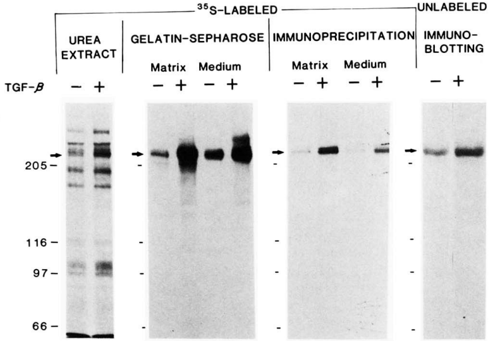
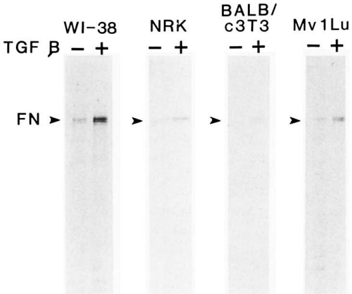
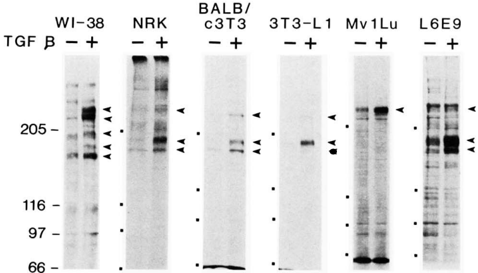
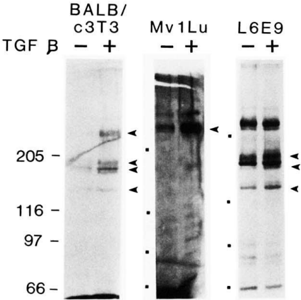
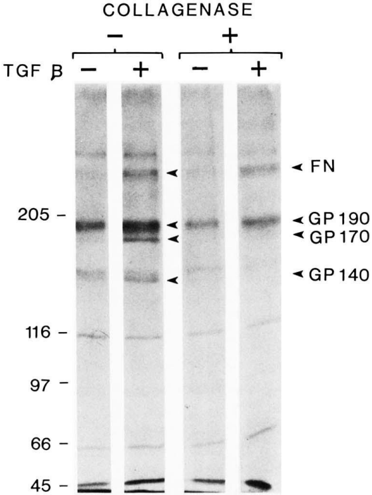
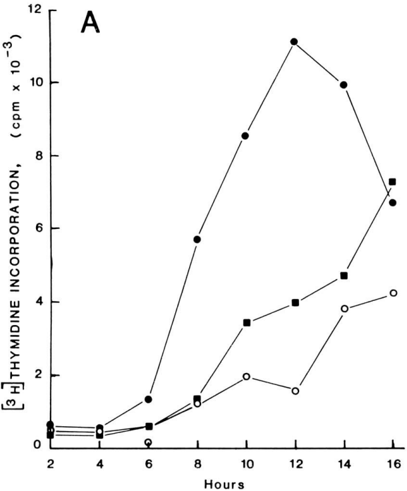
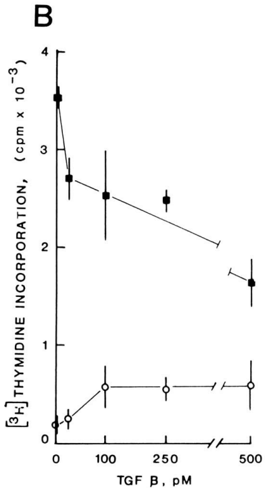
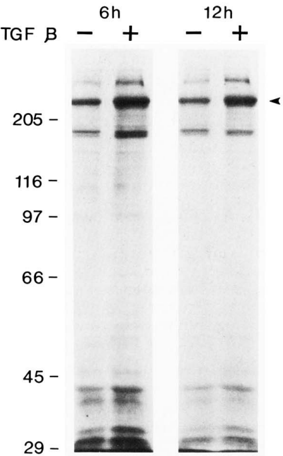
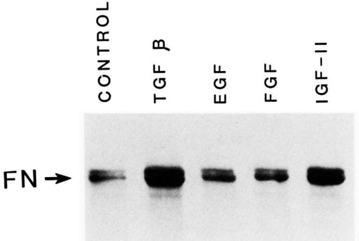
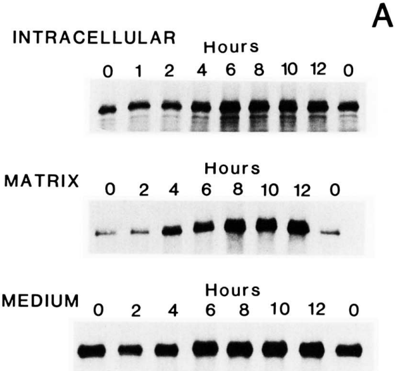
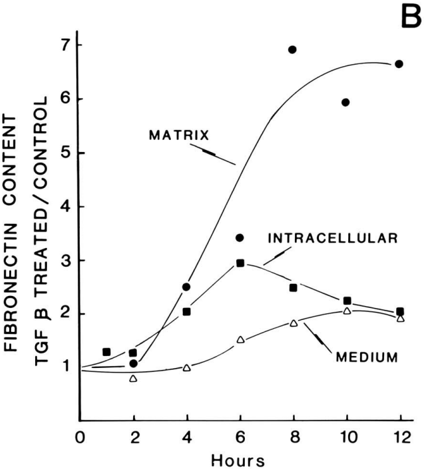
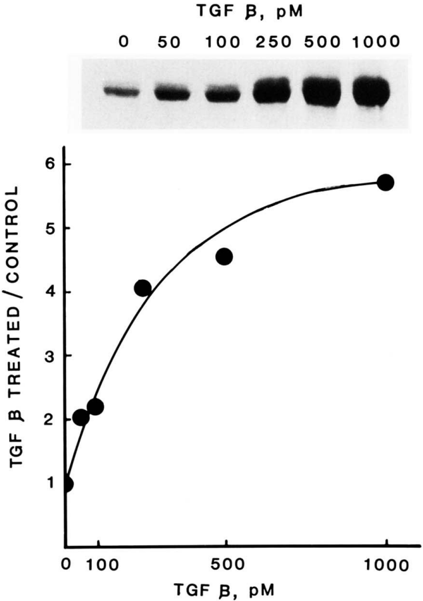
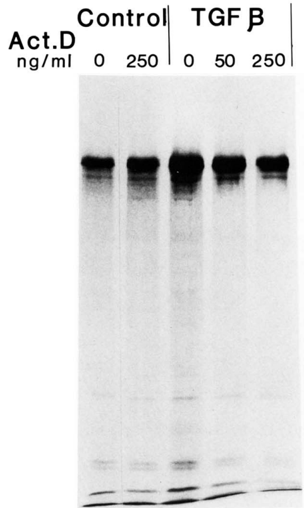
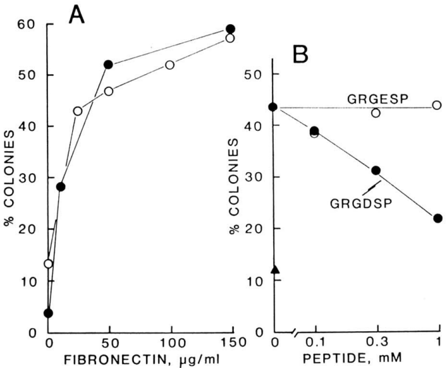
We have examined whether the extracellular matrix is a biochemical target for transforming growth factor-beta (TGFbeta). We find that TGFbeta increases the expression of the major extracellular matrix proteins, fibronectin and collagen. This effect is a general response to TGFbeta seen in primary cultures and established lines of cells from various types, normal and transformed. The relative incorporation of fibronectin and collagen into the matrix also increases in response to TGFbeta. The effect of TGFbeta on fibronectin levels as characterized in chick embryo fibroblasts is rapid, selective, persistent, and specific, and involves transcriptional events; it is not mimicked by other growth factors tested. The induction of anchorage-independent growth of normal fibroblasts by TGFbeta is mimicked by fibronectin and is specifically blocked by inhibitors of fibronectin binding to its cell surface receptor. The results demonstrate a functional involvement of fibronectin in mediating cellular responses to TGFbeta, and suggest a model for TGFbeta action based on the control of the extracellular matrix in target cells.
Overview
The claims and statistics of this paper haven’t been checked yet.
Free: it reads the open-access text and checks the first 5 claims that cite a source we can check. Create a free account to check every claim.
Integrity signals
Registry
Cites
Statistics
Figures
Verification
Claims the paper makes
The claims and statistics of this paper haven’t been checked yet.
Free: it reads the open-access text and checks the first 5 claims that cite a source we can check. Create a free account to check every claim.
Claims other papers make about this one
Each is checked against this paper’s own text: does it say what the citing paper says it does?
The source backs part of the claim, not all of it — or backs it for a different population, condition or comparison.
In the citing paper
“TGF-β released by these macrophages attracts local fibroblast populations, and induces their activation on arrival (Ignotz and Massagué, 1986).”
From Foreign Body Reaction to Implanted Biomaterials and Its Impact in Nerve Neuroprosthetics (2021) · cites this paper as Ignotz and Massagué, 1986
Experimental — accuracy not yet measuredThe source backs part of the claim, not all of it — or backs it for a different population, condition or comparison.
In the citing paper
“TGF-β lies at the heart of the fibrotic response in FBR, driving the activation of fibroblasts surrounding the implant into myofibroblasts (Ignotz and Massagué, 1986).”
From Foreign Body Reaction to Implanted Biomaterials and Its Impact in Nerve Neuroprosthetics (2021) · cites this paper as Ignotz and Massagué, 1986
Experimental — accuracy not yet measuredIn the citing paper
“TGF-b stimulates the synthesis of collagen and fibronectin in a variety of cell lines, 78,79 as well as many other ECM components including hyaluronic acid, TSP, tenascin, and others.”
From Interactions between extracellular matrix and growth factors in wound healing (2009) · cites this paper as [78]
Self-check
Percentages, sums and reported differences re-computed from the paper’s own numbers.
The self-check needs the paper’s full text.
Citations
Cites
Cleavage of Structural Proteins during the Assembly of the Head of Bacteriophage T4
LAEMMLI, U. K. (1970) · Nature · doi:10.1038/227680a0 · Cited by 249,961
Burnette, W. N. (1981) · Analytical Biochemistry · doi:10.1016/0003-2697(81)90281-5 · Cited by 8,429
Pierschbacher, M. D., & Ruoslahti, E. (1984) · Nature · doi:10.1038/309030a0 · Cited by 3,658
Binding of soluble form of fibroblast surface protein, fibronectin, to collagen
Engvall, E., & Ruoslahti, E. (1977) · International Journal of Cancer · doi:10.1002/ijc.2910200102 · Cited by 1,947
Derynck, R., Jarrett, J. A., Chen, E. Y., Eaton, D. H., Bell, J. R., Assoian, R. K., Roberts, A. B., Sporn, M. B., & Goeddel, D. V. (1985) · Nature · doi:10.1038/316701a0 · Cited by 1,667
Assoian, R. K., Komoriya, A., Meyers, C. A., Miller, D. M., & Sporn, M. B. (1983) · Journal of Biological Chemistry · doi:10.1016/s0021-9258(18)32345-7 · Cited by 1,598
Growth factors from murine sarcoma virus-transformed cells.
de Larco, J. E., & Todaro, G. J. (1978) · Proceedings of the National Academy of Sciences · doi:10.1073/pnas.75.8.4001 · Cited by 1,461
Autocrine growth factors and cancer
Sporn, M. B., & Roberts, A. B. (1985) · Nature · doi:10.1038/313745a0 · Cited by 1,438
Epidermal Growth Factor and a New Derivative
Savage, C. R., & Cohen, S. (1972) · Journal of Biological Chemistry · doi:10.1016/s0021-9258(19)44568-7 · Cited by 1,208
Pytela, R., Pierschbacher, M. D., & Ruoslahti, E. (1985) · Cell · doi:10.1016/0092-8674(85)90322-8 · Cited by 1,101
Research works printed but not linked: 7
- Assoian, R. K., Grotendorst, G. R., Miller, D. M., and Sporn, M. B. Assoian, R. K., Komoriya, A., Meyers, C. A., Miller, D. M., and Sporn, Balian, G., Click, E. M., Crouch, E., Davidson, J. M., and Bornstein, Boerner, P., Resnick, R. J., and Racker, E. (1985) Proc. Nutl. Acad.
- Hakomori, S., Fukuda, M., Sekiguchi, K., and Carter, W. G. (1984) in Biochemistry (Piez, K. A., and Reddi, A. H., eds) pp. 229-275, Elsevier/North-Holland, New York
- Iwata, K. K., Fryling, C. M., Knott, W. B., and Todaro, G. J. (1985)
- Krieg, T., Aumailley, M., Dessau, W., Wiestner, M., and Muller, P. Kurkinen, M., Vaheri, A., Roberts, P. J., and Stenman, S. (1980) Lab.
- Pytela, R., Pierschbacher, M. D., and Ruoslahti, E. (1985) Cell 4 0 , Roberts, A. B, Anzano, M. A,, Lamb, L. C., Smith, J. M., and Sporn, M. B. (1981) Proc. Natl. Acad. Sci. U. S. A. 7 8 , 5339-5343
- Shipley, G. D., Tucker, R. F., and Moses, H. L. (1985) Proc. Natl.
- Wagner, D. D., Ivatt, R., Destree, A. T., and Hynes, R. 0. (1981) J. Yamada, K. M. (1983) in Cell Interactions and Development (Yamada, Yamada, K. M., and Weston, J. A. (1974) Proc. Natl. Acad. Sci. U. S. Yamada, K. M., Yamada, S. S., and Pastan, I. (1976) Proc. Natl. 4551-4554 Sci. U. S. A. 81,5985-5988 191-198 119-123
Cited by
Items 401–500 of 1,012
Myofibroblasts and the extracellular matrix network in post-myocardial infarction cardiac remodeling
Ma, Y., de Castro Brás, L. E., Toba, H., Iyer, R. P., Hall, M. E., Winniford, M. D., Lange, R. A., Tyagi, S. C., & Lindsey, M. L. (2014) · Pflügers Archiv - European Journal of Physiology · doi:10.1007/s00424-014-1463-9 · Cited by 162
“Myofibroblasts express large amounts of α-smooth muscle actin (α-SMA), vimentin, desmin, and fibronectin extra domain A (EDA) markers [5].”
BackgroundInfluentialAssociation of transforming growth factor-β1 with prostate cancer: An immunohistochemical study
Truong, L. D., Kadmon, D., McCune, B. K., Flanders, K. C., Scardino, P. T., & Thompson, T. C. (1993) · Human Pathology · doi:10.1016/0046-8177(93)90055-l · Cited by 167
Varani, J., Perone, P., Fligiel, S. E. G., Fisher, G. J., & Voorhees, J. J. (2002) · Journal of Investigative Dermatology · doi:10.1046/j.1523-1747.2002.01810.x · Cited by 162
“TGF-b is a potent stimulator of collagen production (Ignotz and Massague, 1986), and our own preliminary studies with fibroblasts in monolayer culture demonstrated that addition of 1 ng per ml TGF-b increased type I procollagen production from 744 ng per 1 3 10 5 cells to 1837 ng per 1 3 10 5 cells.”
Nickoloff, B. J., Mitra, R. S., Riser, B. L., Dixit, V. M., & Varani, J. (1988) · PubMed · Cited by 162
Like, B., & Massagué, J. (1986) · Journal of Biological Chemistry · doi:10.1016/s0021-9258(18)67035-8 · Cited by 168
Self-citationRegulation of Collagen Gene Expression
Bornstein, P., & Sage, H. (1989) · Progress in Nucleic Acid Research and Molecular Biology · doi:10.1016/s0079-6603(08)60695-9 · Cited by 166
El-Sakka, A. I., Hassoba, H. M., Chui, R. M., Bhatnagar, R. S., Dahiya, R., & Lue, T. F. (1997) · Journal of Urology · doi:10.1016/s0022-5347(01)68236-3 · Cited by 163
Godin, I., & Wylie, C. C. (1991) · Development · doi:10.1242/dev.113.4.1451 · Cited by 160
Salbert, G. (1993) · Molecular Endocrinology · doi:10.1210/me.7.10.1347 · Cited by 159
Quaglino, D., Nanney, L. B., Ditesheim, J. A., & Davidson, J. M. (1991) · PubMed · Cited by 188
Enenstein, J., Waleh, N. S., & Kramer, R. H. (1992) · Experimental Cell Research · doi:10.1016/0014-4827(92)90028-7 · Cited by 162
Transforming growth factor β levels in rat wound chambers
Cromack, D. T., Sporn, M. B., Roberts, A. B., Merino, M. J., Dart, L. L., & Norton, J. A. (1987) · Journal of Surgical Research · doi:10.1016/0022-4804(87)90005-9 · Cited by 161
Waltenberger, J. L., Lundin, L. B., Öberg, K., Wilander, E., Miyazono, K., Heldin, C., & Funa, K. (1993) · PubMed · Cited by 171
Kirk, T. Z., Mark, M. E., Chua, C. C., Chua, B. H., & Mayes, M. D. (1995) · Journal of Biological Chemistry · doi:10.1074/jbc.270.7.3423 · Cited by 158
Hebda, P. A. (1988) · Journal of Investigative Dermatology · doi:10.1111/1523-1747.ep12476480 · Cited by 158
Jimenez, S. A., Varga, J., Olsen, A., Li, L., Diaz, A., Herhal, J., & Koch, J. (1994) · Journal of Biological Chemistry · doi:10.1016/s0021-9258(18)99930-8 · Cited by 156
Sankar, S., Mahooti-Brooks, N., Bensen, L., McCarthy, T. L., Centrella, M., & Madri, J. A. (1996) · Journal of Clinical Investigation · doi:10.1172/jci118565 · Cited by 159
Zhang, K., Garner, W. L., Cohen, L. V., Rodriguez, J. L., & Phan, S. H. (1995) · Journal of Investigative Dermatology · doi:10.1111/1523-1747.ep12606979 · Cited by 155
Neutrophils and macrophages accumulate sequentially following Achilles tendon injury
Marsolais, D., Cǒté, C. H., & Frenette, J. (2001) · Journal of Orthopaedic Research · doi:10.1016/s0736-0266(01)00031-6 · Cited by 153
Fromigué, O., Marie, P. J., & Lomri, A. (1998) · Journal of Cellular Biochemistry · doi:10.1002/(sici)1097-4644(19980315)68:4<411::aid-jcb2>3.0.co;2-t · Cited by 159
Westerhausen, D. R., Hopkins, W. E., & Billadello, J. J. (1991) · Journal of Biological Chemistry · doi:10.1016/s0021-9258(17)35287-0 · Cited by 157
Role of peptide growth factors in the prostate: A review
Steiner, M. S. (1993) · Urology · doi:10.1016/0090-4295(93)90352-b · Cited by 168
Transforming growth factor ? regulation of cell proliferation
Moses, H. L., Coffey, R. J., Leof, E. B., Lyons, R. M., & Keski-Oja, J. (1987) · Journal of Cellular Physiology · doi:10.1002/jcp.1041330403 · Cited by 154
Binding of Transforming Growth Factor-β to Cell Surface Proteins Varies with Cell Type
Segarini, P. R., Rosen, D. M., & Seyedin, S. M. (1989) · Molecular Endocrinology · doi:10.1210/mend-3-2-261 · Cited by 155
Ito, N., Kawata, S., Tamura, S., Takaishi, K., Shirai, Y., Kiso, S., Yabuuchi, I., Matsuda, Y., Nishioka, M., & Tarui, S. (1991) · PubMed · Cited by 152
Soma, Y., & Grotendorst, G. R. (1989) · Journal of Cellular Physiology · doi:10.1002/jcp.1041400209 · Cited by 153
The efficacy of autologous platelet gel in pain control and blood loss in total knee arthroplasty
Gardner, M. J., Demetrakopoulos, D., Klepchick, P. R., & Mooar, P. A. (2006) · International Orthopaedics · doi:10.1007/s00264-006-0174-z · Cited by 151
IMOKAWA, S., SATO, A., HAYAKAWA, H., KOTANI, M., URANO, T., & TAKADA, A. (1997) · American Journal of Respiratory and Critical Care Medicine · doi:10.1164/ajrccm.156.2.9608094 · Cited by 153
Yamagishi, S., Inagaki, Y., Okamoto, T., Amano, S., Koga, K., & Takeuchi, M. (2003) · Kidney International · doi:10.1046/j.1523-1755.2003.00752.x · Cited by 168
TENASCIN EXPRESSION DURING WOUND HEALING IN HUMAN SKIN
LATIJNHOUWERS, M. A., BERGERS, M., VAN BERGEN, B. H., SPRUIJT, K. I., ANDRIESSEN, M. P., & SCHALKWIJK, J. (1996) · The Journal of Pathology · doi:10.1002/(sici)1096-9896(199601)178:1<30::aid-path442>3.0.co;2-7 · Cited by 84
Guo, T., Zhao, J., Chang, J., Ding, Z., Hong, H., Chen, J., & Zhang, J. (2005) · Biomaterials · doi:10.1016/j.biomaterials.2005.08.015 · Cited by 151
Koeneman, K. S., Yeung, F., & Chung, L. W. K. (1999) · The Prostate · doi:10.1002/(sici)1097-0045(19990601)39:4<291::aid-pros10>3.0.co;2-9 · Cited by 443
Transforming growth factor beta1 in ductal carcinoma in situ and invasive carcinomas of the breast
Walker, R. A., & Dearing, S. J. (1992) · European Journal of Cancer · doi:10.1016/s0959-8049(05)80116-9 · Cited by 151
Integrin heterodimer and receptor complexity in avian and mammalian cells.
Hynes, R. O., Marcantonio, E. E., Stepp, M. A., Urry, L. A., & Yee, G. H. (1989) · The Journal of Cell Biology · doi:10.1083/jcb.109.1.409 · Cited by 150
Pires, D., Xavier, M., Araújo, T. G., Silva, J. A., Aimbire, F., & Albertini, R. (2010) · Lasers in Medical Science · doi:10.1007/s10103-010-0811-z · Cited by 149
Fibronectin Matrix Turnover Occurs through a Caveolin-1–dependent Process
Sottile, J., & Chandler, J. (2005) · Molecular Biology of the Cell · doi:10.1091/mbc.e04-08-0672 · Cited by 149
“Transforming growth factor- (Ignotz and Massague, 1986; Allen-Hoffmann et al., 1988), PDGF (Sarkissian and Lafyatis, 1998), PKC (Sommers and Mosher, 1993), integrin-linked kinase (Wu et al., 1998), and agents that stimulate cell contractility (such as lysophophatidic acid, LPA; Burridge et al.,…”
Nakatani, T., Marui, T., Hitora, T., Doita, M., Nishida, K., & Kurosaka, M. (2002) · Journal of Orthopaedic Research® · doi:10.1016/s0736-0266(02)00046-3 · Cited by 170
Peltonen, J. T. K., Kähäri, L., Jaakkola, S., Kähäri, V., Varga, J., Uitto, J., & Jiménez, S. A. (1990) · Journal of Investigative Dermatology · doi:10.1111/1523-1747.ep12874491 · Cited by 154
Jakowlew, S. B., Mead, J. E., Danielpour, D., Wu, J., Roberts, A. B., & Fausto, N. (1991) · Cell Regulation · doi:10.1091/mbc.2.7.535 · Cited by 147
Martyré, M., Magdelénat, H., Bryckaert, M., Lainé‐Bidron, C., & Calvo, F. M. (1991) · British Journal of Haematology · doi:10.1111/j.1365-2141.1991.tb07952.x · Cited by 147
The Cellular Derivation and the Life Span of the Myofibroblast
Gabbiani, G. (1996) · Pathology - Research and Practice · doi:10.1016/s0344-0338(96)80092-6 · Cited by 147
αv integrins: key regulators of tissue fibrosis
Conroy, K. P., Kitto, L. J., & Henderson, N. C. (2016) · Cell and Tissue Research · doi:10.1007/s00441-016-2407-9 · Cited by 147
“Secreted transforming growth factor beta (TGFβ) is a key regulator of fibrosis in multiple organs (Ignotz and Massagué 1986; Roberts et al. 1986; Hynes 2002; Leask and Abraham 2004).”
Varga, J., & Jiménez, S. A. (1986) · Biochemical and Biophysical Research Communications · doi:10.1016/s0006-291x(86)80591-5 · Cited by 146
The decapentaplegic gene: a TGF-β homologue controlling pattern formation in Drosophila
Gelbart, W. M. (1989) · Development · doi:10.1242/dev.107.supplement.65 · Cited by 146
Recklies, A. D., Baillargeon, L., & White, C. (1998) · Arthritis & Rheumatism · doi:10.1002/1529-0131(199806)41:6<997::aid-art6>3.0.co;2-g · Cited by 146
Wasting mechanisms in muscular dystrophy
Shin, J. S., Tajrishi, M. M., Ogura, Y., & Kumar, A. (2013) · The International Journal of Biochemistry & Cell Biology · doi:10.1016/j.biocel.2013.05.001 · Cited by 163
Wyss‐Coray, T., Borrow, P., Brooker, M. J., & Mucke, L. (1997) · Journal of Neuroimmunology · doi:10.1016/s0165-5728(97)00049-0 · Cited by 156
Periostin modulates myofibroblast differentiation during full-thickness cutaneous wound repair
Elliott, C. G., Wang, J., Guo, X., Xu, S.-W., Eastwood, M., Guan, J., Leask, A., Conway, S. J., & Hamilton, D. W. (2012) · Journal of Cell Science · doi:10.1242/jcs.087841 · Cited by 147
“69), a process for which TGFb signaling is of great importance (Ignotz and Massague, 1986; Roberts et al., 1986; Wang et al., 2007b).”
BackgroundDatta, P. K., Blake, M. C., & Moses, H. L. (2000) · Journal of Biological Chemistry · doi:10.1074/jbc.c000508200 · Cited by 143
Schor, S. L., Schor, A. M., Grey, A. M., & Rushton, G. (1988) · Journal of Cell Science · doi:10.1242/jcs.90.3.391 · Cited by 146
Reynolds, L. E., Conti, F. J. A., Lucas, M., Grose, R. P., Robinson, S. D., Stone, M., Saunders, G., Dickson, C., Hynes, R. O., Lacy‐Hulbert, A., et al. (2005) · Nature Medicine · doi:10.1038/nm1165 · Cited by 161
Transforming growth factor-β1 gene polymorphisms and coronary artery disease
Syrris, P., Carter, N. D., Metcalfe, J. C., Kemp, P. R., Grainger, D. J., Kaski, J. C., Crossman, D. C., Francis, S., Gunn, J. P., Jeffery, S., et al. (1998) · Clinical Science · doi:10.1042/cs0950659 · Cited by 151
Fraser, S. P., Grimes, J. A., & Djamgoz, M. B. A. (2000) · The Prostate · doi:10.1002/1097-0045(20000615)44:1<61::aid-pros9>3.0.co;2-3 · Cited by 99
Botney, M. D., Bahadori, L. M., & Gold, L. I. (1994) · PubMed · Cited by 162
Fibronectin‐associated transforming growth factor
Fava, R. A., & McClure, D. B. (1987) · Journal of Cellular Physiology · doi:10.1002/jcp.1041310207 · Cited by 143
Carnes, M. E., & Pins, G. D. (2020) · Bioengineering · doi:10.3390/bioengineering7030085 · Cited by 156
“In addition to chemotactically recruiting inflammatory cells, TGF-β stimulates the synthesis of ECM molecules including fibronectin, collagens, and proteoglycans [57,98,99].”
BackgroundGoldman, M. P., Sadick, N. S., & WEISS, R. A. (1995) · Dermatologic Surgery · doi:10.1111/j.1524-4725.1995.tb00107.x · Cited by 141
Ghahary, A., Shen, Y. J., Nedelec, B., Wang, R., Scott, P. G., & Tredget, E. E. (1996) · Journal of Investigative Dermatology · doi:10.1111/1523-1747.ep12343658 · Cited by 160
Laethem, J. V., Deviere, J. M., Résibois, A., Rickaert, F., Vertongen, P., Ohtani, H., Cremer, M., Miyazono, K., & Robberecht, P. (1995) · Gastroenterology · doi:10.1016/0016-5085(95)90152-3 · Cited by 148
Hyaluronan Regulates Transforming Growth Factor-β1 Receptor Compartmentalization
Ito, T., Williams, J. D., Fraser, D. J., & Phillips, A. O. (2004) · Journal of Biological Chemistry · doi:10.1074/jbc.m403135200 · Cited by 157
Gustafsson, B. I., Hauso, Ø., Drozdov, I. A., Kidd, M. S., & Modlin, I. M. (2008) · International Journal of Cardiology · doi:10.1016/j.ijcard.2008.02.019 · Cited by 148
Liu, C., Yao, J. J., Mercola, D., & Adamson, E. D. (2000) · Journal of Biological Chemistry · doi:10.1074/jbc.m909046199 · Cited by 139
Leask, A., Denton, C. P., & Abraham, D. J. (2004) · Journal of Investigative Dermatology · doi:10.1046/j.0022-202x.2003.22133.x · Cited by 138
Breen, E. C., Ignotz, R. A., McCabe, L., Stein, J. L., Stein, G. S., & Lian, J. B. (1994) · Journal of Cellular Physiology · doi:10.1002/jcp.1041600214 · Cited by 138
Self-citationBilirubin Ameliorates Bleomycin-Induced Pulmonary Fibrosis in Rats
WANG, H.-D., YAMAYA, M., OKINAGA, S., JIA, Y.-X., KAMANAKA, M., TAKAHASHI, H., GUO, L.-Y., OHRUI, T., & SASAKI, H. (2002) · American Journal of Respiratory and Critical Care Medicine · doi:10.1164/ajrccm.165.3.2003149 · Cited by 139
The role of transforming growth factor beta in Dupuytren's disease
Badalamente, M. A., Sampson, S. P., Hurst, L. C., Dowd, A., & Miyasaka, K. C. (1996) · The Journal Of Hand Surgery · doi:10.1016/s0363-5023(96)80102-x · Cited by 138
Role of Mast Cell Tryptase in Renal Interstitial Fibrosis
KONDO, S., KAGAMI, S., KIDO, H., STRUTZ, F., MU[Combining Diaeresis]LLER, G. A., & KURODA, Y. (2001) · Journal of the American Society of Nephrology · doi:10.1681/asn.v1281668 · Cited by 138
Falanga, V., Tiegs, S. L., Alstadt, S. P., Roberts, A. B., & Sporn, M. B. (1987) · Journal of Investigative Dermatology · doi:10.1111/1523-1747.ep12580445 · Cited by 138
Transforming growth factor‐β and megakaryocytes in the pathogenesis of idiopathic myelofibrosis
Martyré, M. C., Romquin, N., Bousse‐Kerdilès, M. L., Chevillard, S., Benyahia, B., Dupriez, B., Demory, J. L., & Bauters, F. (1994) · British Journal of Haematology · doi:10.1111/j.1365-2141.1994.tb04970.x · Cited by 149
Rapraeger, A. C. (1989) · The Journal of Cell Biology · doi:10.1083/jcb.109.5.2509 · Cited by 138
Garrett, Q., Khaw, P. T., Blalock, T. D., Schultz, G. S., Grotendorst, G. R., & Daniels, J. T. (2004) · Investigative Opthalmology & Visual Science · doi:10.1167/iovs.03-0660 · Cited by 136
Molecular genetics of Marfan syndrome
Boileau, C., Jondeau, G., Mizuguchi, T., & Matsumoto, N. (2005) · Current Opinion in Cardiology · doi:10.1097/01.hco.0000162398.21972.cd · Cited by 137
Transforming Growth Factor-β1 Expression and Myofibroblast Formation During Arterial Repair
Shi, Y., O'Brien, J. E., Fard, A., & Zalewski, A. A. (1996) · Arteriosclerosis Thrombosis and Vascular Biology · doi:10.1161/01.atv.16.10.1298 · Cited by 155
Liu, J.-M., & Davidson, J. M. (1988) · Biochemical and Biophysical Research Communications · doi:10.1016/0006-291x(88)90224-0 · Cited by 137
Balanis, N., Wendt, M. K., Schiemann, B. J., Wang, Z., Schiemann, W. P., & Carlin, C. R. (2013) · Journal of Biological Chemistry · doi:10.1074/jbc.m113.475277 · Cited by 135
“Along these lines, enhanced expression of FN is a well established marker of the EMT process (15), and survival analysis of BC patients with high levels of FN expression is predictive for an increased risk of mortality (14).”
Recent progress in genetics of Marfan syndrome and Marfan-associated disorders
Mizuguchi, T., & Matsumoto, N. (2006) · Journal of Human Genetics · doi:10.1007/s10038-006-0078-1 · Cited by 145
“TGFb signaling and connective tissue disorders TGFb is a secreted polypeptide that plays diverse roles in cell proliferation and differentiation, apoptosis, and extracellular matrix formation (Cohen 2003; Derynck et al. 2001; Ignotz and Massague 1986; Massague et al. 2000).”
BackgroundSoulitzis, N., Karyotis, I., Delakas, D., & Spandidos, D. A. (2006) · International Journal of Oncology · doi:10.3892/ijo.29.2.305 · Cited by 162
Overview and General Considerations of Wound Repair
Clark, R. A. F. (1998) · Springer eBooks · doi:10.1007/978-1-4615-1795-5_1 · Cited by 151
Epidermis promotes dermal fibrosis: role in the pathogenesis of hypertrophic scars
Bellemare, J., Roberge, C. J., Bergeron, D., Lopez‐Vallé, C. A., Roy, M., & Moulin, V. J. (2005) · The Journal of Pathology · doi:10.1002/path.1737 · Cited by 135
“TGFβ secretion, which is known for promoting collagen type I (and type III) synthesis [44,45] and for decreasing collagenase production by fibroblasts [46,47], may be upregulated in HKs.”
BackgroundGrowth factors induce 3T3 cells to express bFGF-binding syndecan.
Elenius, K., Määttå, A., Salmivirta, M., & Jalkanen, M. (1992) · Journal of Biological Chemistry · doi:10.1016/s0021-9258(18)42715-9 · Cited by 140
Parola, M., Muraca, R., Dianzani, I., Barrera, G., Leonarduzzi, G., Bendinelli, P., Piccoletti, R., & Poli, G. (1992) · FEBS Letters · doi:10.1016/0014-5793(92)81290-3 · Cited by 135
Pathogenesis of interstitial fibrosis in chronic purine aminonucleoside nephrosis
Jones, C. L., Buch, S. J., Post, M., McCulloch, L., Liu, E., & Eddy, A. A. (1991) · Kidney International · doi:10.1038/ki.1991.310 · Cited by 138
Transforming growth factors and control of neoplastic cell growth
Keski‐Oja, J., Leof, E. B., Lyons, R. M., Coffey, R. J., & Moses, H. L. (1987) · Journal of Cellular Biochemistry · doi:10.1002/jcb.240330204 · Cited by 138
Anti-Inflammatory Effect of Pirfenidone in the Bleomycin-Hamster Model of Lung Inflammation
Iyer, S. N., Hyde, D. M., & Giri, S. N. (2000) · Inflammation · doi:10.1023/a:1007068313370 · Cited by 144
“TGF-b plays a critical role in the BL-induced lung fibrosis by stimulating the synthesis of collagen and fibronectin by fibroblasts (20).”
BackgroundWatson, K. E., Parhami, F., Shin, V., & Demer, L. L. (1998) · Arteriosclerosis Thrombosis and Vascular Biology · doi:10.1161/01.atv.18.12.1964 · Cited by 134
Cheifetz, S., Bassols, A., Stanley, K., Ohta, M., Greenberger, J., & Massagué, J. (1988) · Journal of Biological Chemistry · doi:10.1016/s0021-9258(18)38039-6 · Cited by 134
Self-citationRaghow, B., Irish, P., & Kang, A. H. (1989) · Journal of Clinical Investigation · doi:10.1172/jci114369 · Cited by 138
Transforming growth factor-β and its role in asthma
Duvernelle, C., Freund‐Michel, V., & Frossard, N. (2003) · Pulmonary Pharmacology & Therapeutics · doi:10.1016/s1094-5539(03)00051-8 · Cited by 158
Drug-induced Valvulopathy: An Update
Elangbam, C. S. (2010) · Toxicologic Pathology · doi:10.1177/0192623310378027 · Cited by 133
“growth factor b1 receptor (also known as activin receptor–like kinase, ALK-5) (Ignotz and Massague 1986; Jian et al. 2002; Roth 2007; Waltenberger et al. 1993).”
BackgroundInfluentialTissue architecture and breast cancer: the role of extracellular matrix and steroid hormones.
Hansen, R. K., & Bissell, M. J. (2000) · Endocrine Related Cancer · doi:10.1677/erc.0.0070095 · Cited by 158
“TGFupregulates the expression of a variety of ECM components (Ignotz & Massague 1986), and ECM downregulates TGFexpression (Streuli et al. 1993).”
Expression of fibrogenic cytokines in rat small intestine after fractionated irradiation
Langberg, C. W., Hauer‐Jensen, M., Sung, C., & Kane, C. J. M. (1994) · Radiotherapy and Oncology · doi:10.1016/0167-8140(94)90446-4 · Cited by 146
Liu, X., Sun, S. Q., Hassid, A., & Ostrom, R. S. (2006) · Molecular Pharmacology · doi:10.1124/mol.106.028951 · Cited by 155
“In vitro, the ability of TGF- to stimulate the proliferation of and extracellular matrix production by cultured fibroblasts is well-documented (Ignotz and Massague, 1986; Raghow et al., 1987).”
BackgroundMatrix control of pancreatic cancer: New insights into fibronectin signaling
Topalovski, M., & Brekken, R. A. (2016) · Cancer Letters · doi:10.1016/j.canlet.2015.12.027 · Cited by 132
“It is well established that FN contributes to EMT, in fact, TGF-β (the major driver of EMT), stimulates FN expression and deposition into the ECM, leading to enhanced cell motility [73].”
BackgroundFluticasone Inhibits But Does Not Reverse Allergen-Induced Structural Airway Changes
Vanacker, N. J., Palmans, E., KIPS, J. C., & PAUWELS, R. A. (2001) · American Journal of Respiratory and Critical Care Medicine · doi:10.1164/ajrccm.163.3.2004160 · Cited by 132
Effects of Transforming Growth Factor-β on Matrix Synthesis by Chick Growth Plate Chondrocytes*
O’Keefe, R. J., Puzas, J. E., Brand, J. S., & Rosier, R. N. (1988) · Endocrinology · doi:10.1210/endo-122-6-2953 · Cited by 132
Regulation of TGFβ gene expression in rat liver intoxicated with carbon tetrachloride
Armendariz‐Borunda, J., Seyer, J. M., Kang, A. H., & Raghow, R. (1990) · The FASEB Journal · doi:10.1096/fasebj.4.2.2298342 · Cited by 134
Skinner, M. K., & Moses, H. L. (1989) · Molecular Endocrinology · doi:10.1210/mend-3-4-625 · Cited by 131
Quan, T., He, T., Shao, Y., Lin, L., Kang, S., Voorhees, J. J., & Fisher, G. J. (2006) · American Journal Of Pathology · doi:10.2353/ajpath.2006.060128 · Cited by 140
Pimentel, J. L., Sundell, C. L., Wang, S., Kopp, J. B., Montero, Á., & Martínez–Maldonado, M. (1995) · Kidney International · doi:10.1038/ki.1995.407 · Cited by 139
Keloid Fibroblasts Exhibit an Altered Response to TGF-β
Babu, M., Diegelmann, R. F., & Oliver, N. (1992) · Journal of Investigative Dermatology · doi:10.1111/1523-1747.ep12668146 · Cited by 135
Metadata
- Authors
- Ignotz, R. A., & Massagué, J.
- Affiliations
- University of Massachusetts Chan Medical School (US)
- ORCID
- Massagué, J
- Venue
- Journal of Biological Chemistry
- Publisher
- Elsevier BV
- Published
- 1986-03
- Volume
- 261
- Issue
- 9
- Pages
- 4337-4345
- ISSN
- 0021-9258 (ISSN-L)
- OpenAlex
- W1505978562
- Cited by
- 2,492
- References
- 59
- Citations by year
- 2026: 16 · 2025: 18 · 2024: 43 · 2023: 22 · 2022: 24 · 2021: 33 · 2020: 43 · 2019: 43 · 2018: 39 · 2017: 39 · 2016: 52 · 2015: 33 · 2014: 31 · 2013: 42 · 2012: 40
- FWCI
- 42.28
- Type
- journal article
- Language
- en
- Open access
- hybrid
- doi.org
- Licence
- cc-by
- www.elsevier.com/tdm/userlicense/1.0/ (tdm)
- www.elsevier.com/legal/tdmrep-license (tdm)
- creativecommons.org/licenses/by/4.0/ (vor, 12662 d)
- Locations
- Journal of Biological Chemistry (publishedVersion, cc-by)
- PubMed (publishedVersion)
- Funders
- National Cancer Institute (CA34610)
- Topics
- Life Sciences › Biochemistry, Genetics and Molecular Biology › Molecular Biology › TGF-β signaling in diseases
- Health Sciences › Medicine › Immunology and Allergy › Cell Adhesion Molecules Research
- Health Sciences › Medicine › Hepatology › Liver physiology and pathology
- Keywords
- TGF-beta, fibronectin, collagen, extracellular matrix, gene expression regulation, transcriptional regulation, chicken embryo fibroblasts, anchorage-independent growth, alpha5beta1 integrin, cell surface receptors, growth factor signaling
- MeSH terms
- Animals, Cell Line, Chick Embryo, Collagen, Dactinomycin, DNA Replication, Dose-Response Relationship, Drug, Extracellular Matrix, Fibroblasts, Fibronectins, Humans, Mice, Inbred BALB C, Mink, Peptides, Transforming Growth Factors, Mice, Rats
About these checks
Registry, retraction, Cites and statistics results are computed, not judged, with one exception: a printed reference that no index lists is read once by a model before it counts as a citation error. Claims are extracted by a model and kept only when their quote appears verbatim in the text; each cited source is then checked, with a model’s help, for whether it says what the claim relies on. Those verdicts can be wrong — read the claim’s quote and the cited source before relying on one.
Statistics and arithmetic are recomputed, not judged.
Confidence bands are shown only for fields calibrated on our annotated test set. None is calibrated yet, so no band is shown.
What counts as a claim ›How we measure confidence ›How we check this ›
Are you an author, or do you see a problem with this page? Request a review
Data sources
Bibliographic data: Semantic Scholar, OpenAlex, Crossref.
Contains information from the Semantic Scholar Academic Graph Datasets, made available under the ODC Attribution License (ODC-BY 1.0).
Semantic Scholar’s data is described in: Kinney, R., et al. (2023). The Semantic Scholar Open Data Platform. arXiv:2301.10140.
