

Transforming growth factor-beta stimulates the expression of fibronectin and collagen and their incorporation into the extracellular matrix.
Open accessThe DOI matches its Crossref record; 59 of the 59 references it cites were found in a registry or an index.
Abstract
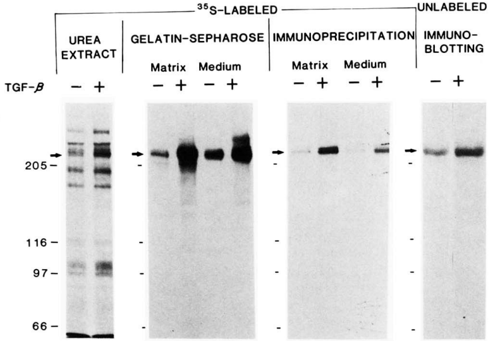
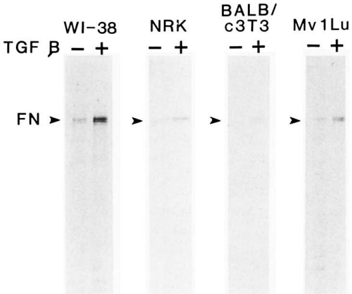
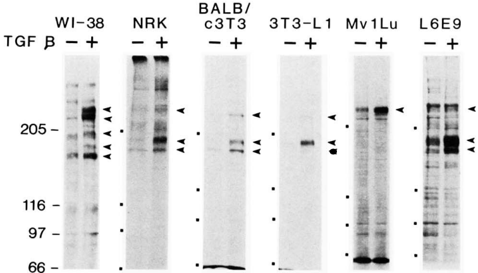
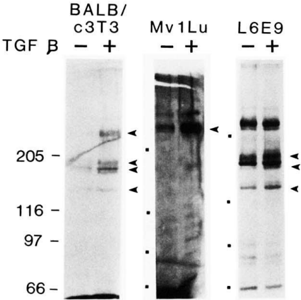
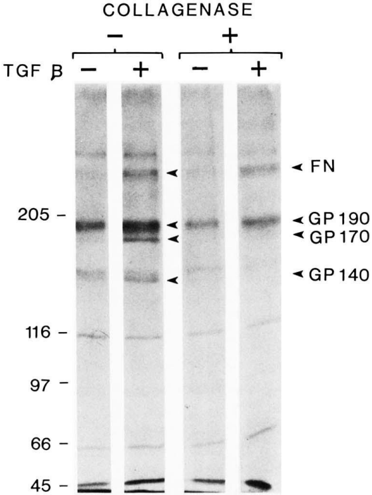
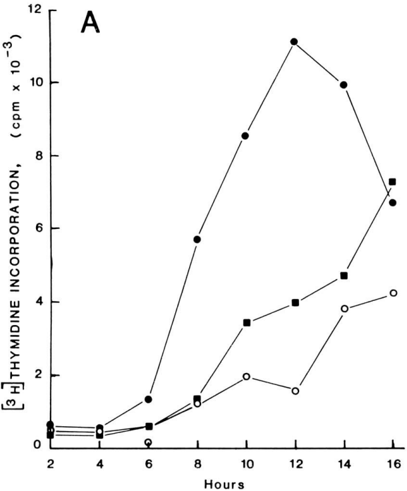
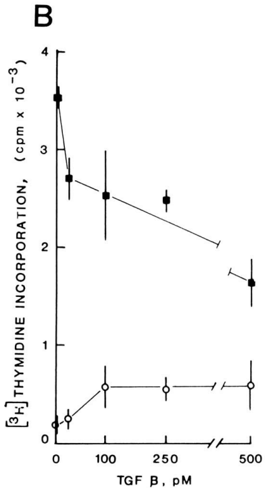
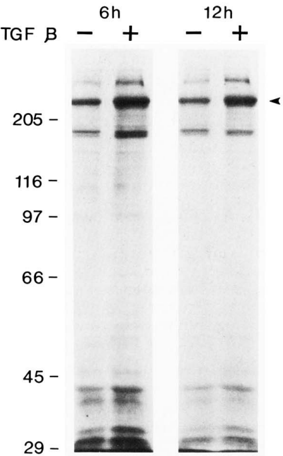
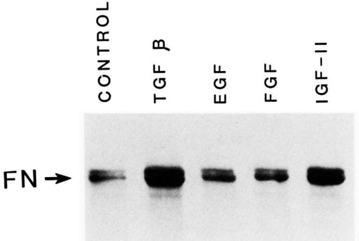
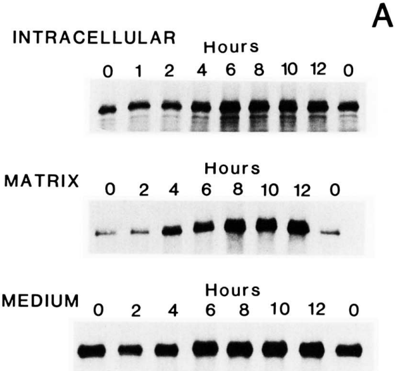
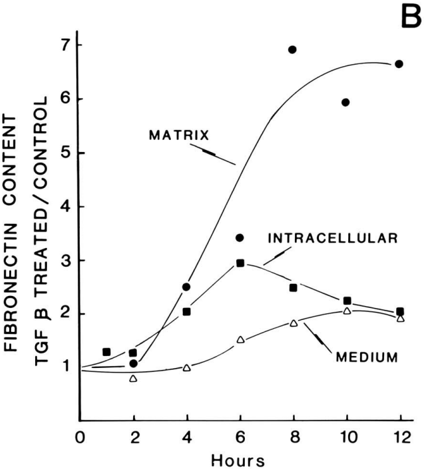
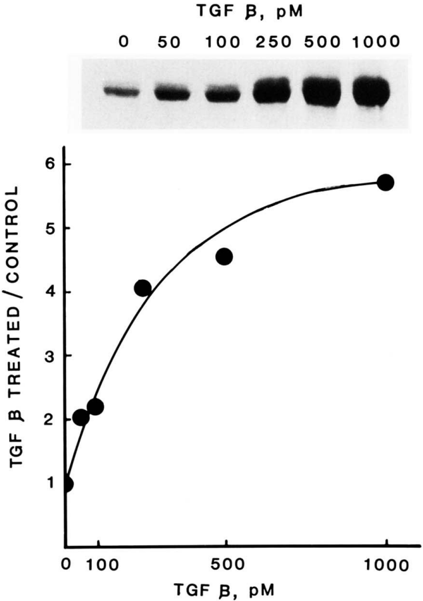
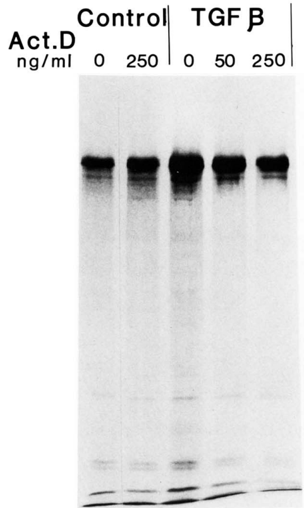
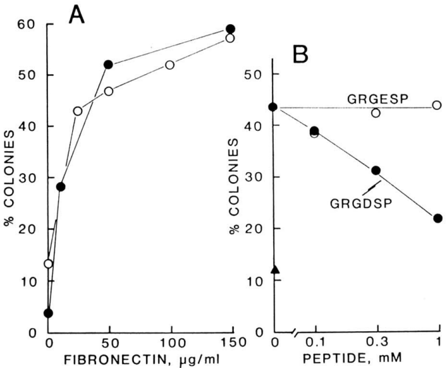
We have examined whether the extracellular matrix is a biochemical target for transforming growth factor-beta (TGFbeta). We find that TGFbeta increases the expression of the major extracellular matrix proteins, fibronectin and collagen. This effect is a general response to TGFbeta seen in primary cultures and established lines of cells from various types, normal and transformed. The relative incorporation of fibronectin and collagen into the matrix also increases in response to TGFbeta. The effect of TGFbeta on fibronectin levels as characterized in chick embryo fibroblasts is rapid, selective, persistent, and specific, and involves transcriptional events; it is not mimicked by other growth factors tested. The induction of anchorage-independent growth of normal fibroblasts by TGFbeta is mimicked by fibronectin and is specifically blocked by inhibitors of fibronectin binding to its cell surface receptor. The results demonstrate a functional involvement of fibronectin in mediating cellular responses to TGFbeta, and suggest a model for TGFbeta action based on the control of the extracellular matrix in target cells.
Overview
The claims and statistics of this paper haven’t been checked yet.
Free: it reads the open-access text and checks the first 5 claims that cite a source we can check. Create a free account to check every claim.
Integrity signals
Registry
Cites
Statistics
Figures
Verification
Claims the paper makes
The claims and statistics of this paper haven’t been checked yet.
Free: it reads the open-access text and checks the first 5 claims that cite a source we can check. Create a free account to check every claim.
Claims other papers make about this one
Each is checked against this paper’s own text: does it say what the citing paper says it does?
The source backs part of the claim, not all of it — or backs it for a different population, condition or comparison.
In the citing paper
“TGF-β released by these macrophages attracts local fibroblast populations, and induces their activation on arrival (Ignotz and Massagué, 1986).”
From Foreign Body Reaction to Implanted Biomaterials and Its Impact in Nerve Neuroprosthetics (2021) · cites this paper as Ignotz and Massagué, 1986
Experimental — accuracy not yet measuredThe source backs part of the claim, not all of it — or backs it for a different population, condition or comparison.
In the citing paper
“TGF-β lies at the heart of the fibrotic response in FBR, driving the activation of fibroblasts surrounding the implant into myofibroblasts (Ignotz and Massagué, 1986).”
From Foreign Body Reaction to Implanted Biomaterials and Its Impact in Nerve Neuroprosthetics (2021) · cites this paper as Ignotz and Massagué, 1986
Experimental — accuracy not yet measuredIn the citing paper
“TGF-b stimulates the synthesis of collagen and fibronectin in a variety of cell lines, 78,79 as well as many other ECM components including hyaluronic acid, TSP, tenascin, and others.”
From Interactions between extracellular matrix and growth factors in wound healing (2009) · cites this paper as [78]
Self-check
Percentages, sums and reported differences re-computed from the paper’s own numbers.
The self-check needs the paper’s full text.
Citations
Cites
Cleavage of Structural Proteins during the Assembly of the Head of Bacteriophage T4
LAEMMLI, U. K. (1970) · Nature · doi:10.1038/227680a0 · Cited by 249,961
Burnette, W. N. (1981) · Analytical Biochemistry · doi:10.1016/0003-2697(81)90281-5 · Cited by 8,429
Pierschbacher, M. D., & Ruoslahti, E. (1984) · Nature · doi:10.1038/309030a0 · Cited by 3,658
Binding of soluble form of fibroblast surface protein, fibronectin, to collagen
Engvall, E., & Ruoslahti, E. (1977) · International Journal of Cancer · doi:10.1002/ijc.2910200102 · Cited by 1,947
Derynck, R., Jarrett, J. A., Chen, E. Y., Eaton, D. H., Bell, J. R., Assoian, R. K., Roberts, A. B., Sporn, M. B., & Goeddel, D. V. (1985) · Nature · doi:10.1038/316701a0 · Cited by 1,667
Assoian, R. K., Komoriya, A., Meyers, C. A., Miller, D. M., & Sporn, M. B. (1983) · Journal of Biological Chemistry · doi:10.1016/s0021-9258(18)32345-7 · Cited by 1,598
Growth factors from murine sarcoma virus-transformed cells.
de Larco, J. E., & Todaro, G. J. (1978) · Proceedings of the National Academy of Sciences · doi:10.1073/pnas.75.8.4001 · Cited by 1,461
Autocrine growth factors and cancer
Sporn, M. B., & Roberts, A. B. (1985) · Nature · doi:10.1038/313745a0 · Cited by 1,438
Epidermal Growth Factor and a New Derivative
Savage, C. R., & Cohen, S. (1972) · Journal of Biological Chemistry · doi:10.1016/s0021-9258(19)44568-7 · Cited by 1,208
Pytela, R., Pierschbacher, M. D., & Ruoslahti, E. (1985) · Cell · doi:10.1016/0092-8674(85)90322-8 · Cited by 1,101
Research works printed but not linked: 7
- Assoian, R. K., Grotendorst, G. R., Miller, D. M., and Sporn, M. B. Assoian, R. K., Komoriya, A., Meyers, C. A., Miller, D. M., and Sporn, Balian, G., Click, E. M., Crouch, E., Davidson, J. M., and Bornstein, Boerner, P., Resnick, R. J., and Racker, E. (1985) Proc. Nutl. Acad.
- Hakomori, S., Fukuda, M., Sekiguchi, K., and Carter, W. G. (1984) in Biochemistry (Piez, K. A., and Reddi, A. H., eds) pp. 229-275, Elsevier/North-Holland, New York
- Iwata, K. K., Fryling, C. M., Knott, W. B., and Todaro, G. J. (1985)
- Krieg, T., Aumailley, M., Dessau, W., Wiestner, M., and Muller, P. Kurkinen, M., Vaheri, A., Roberts, P. J., and Stenman, S. (1980) Lab.
- Pytela, R., Pierschbacher, M. D., and Ruoslahti, E. (1985) Cell 4 0 , Roberts, A. B, Anzano, M. A,, Lamb, L. C., Smith, J. M., and Sporn, M. B. (1981) Proc. Natl. Acad. Sci. U. S. A. 7 8 , 5339-5343
- Shipley, G. D., Tucker, R. F., and Moses, H. L. (1985) Proc. Natl.
- Wagner, D. D., Ivatt, R., Destree, A. T., and Hynes, R. 0. (1981) J. Yamada, K. M. (1983) in Cell Interactions and Development (Yamada, Yamada, K. M., and Weston, J. A. (1974) Proc. Natl. Acad. Sci. U. S. Yamada, K. M., Yamada, S. S., and Pastan, I. (1976) Proc. Natl. 4551-4554 Sci. U. S. A. 81,5985-5988 191-198 119-123
Cited by
Items 301–400 of 1,012
Collagen matrices attenuate the collagen-synthetic response of cultured fibroblasts to TGF-β
Clark, R. A. F., Nielsen, L. D., Welch, M. P., & McPherson, J. M. (1995) · Journal of Cell Science · doi:10.1242/jcs.108.3.1251 · Cited by 204
Progenitor cells of the adult human airway involved in submucosal gland development
Engelhardt, J. F., Schlossberg, H., Yankaskas, J. R., & Dudus, L. (1995) · Development · doi:10.1242/dev.121.7.2031 · Cited by 201
Takeuchi, Y., Nakayama, K., & Matsumoto, T. (1996) · Journal of Biological Chemistry · doi:10.1074/jbc.271.7.3938 · Cited by 201
The Foreign Body Response Demystified
Chandorkar, Y., K, R., & Basu, B. (2019) · ACS Biomaterials Science & Engineering · doi:10.1021/acsbiomaterials.8b00252 · Cited by 201
Cancer-associated fibroblasts: Origin, function, imaging, and therapeutic targeting
Rimal, R., Desai, P., Daware, R., Hosseinnejad, A., Prakash, J., Lammers, T., & Singh, S. (2022) · Advanced Drug Delivery Reviews · doi:10.1016/j.addr.2022.114504 · Cited by 195
Cellular distribution of type I and type II receptors for transforming growth factor-beta.
Cheifetz, S., Like, B., & Massagué, J. (1986) · Journal of Biological Chemistry · doi:10.1016/s0021-9258(18)67611-2 · Cited by 201
Self-citationNoda, M., Yoon, K., Prince, C. W., Butler, W. T., & Rodan, G. A. (1988) · Journal of Biological Chemistry · doi:10.1016/s0021-9258(18)68331-0 · Cited by 202
Human keratinocyte growth factor effects in a porcine model of epidermal wound healing.
Staiano-Coico, L., Krueger, J. G., Rubin, J. S., D'limi, S., Vallat, V. P., Valentino, L., Fahey, T., Hawes, A., Kingston, G., & Madden, M. R. (1993) · The Journal of experimental medicine · doi:10.1084/jem.178.3.865 · Cited by 201
Kothapalli, D., Frazier, K. S., Welply, A., Segarini, P. R., & Grotendorst, G. R. (1997) · PubMed · Cited by 198
Chung, H. L., Hwang, J. B., Park, J. J., & Kim, S. G. (2002) · Journal of Allergy and Clinical Immunology · doi:10.1067/mai.2002.120562 · Cited by 196
Heino, J., & Massagué, J. (1989) · Journal of Biological Chemistry · doi:10.1016/s0021-9258(20)88255-6 · Cited by 199
Self-citationDean, D. C., Newby, R. F., & Bourgeois, S. (1988) · The Journal of cell biology · doi:10.1083/jcb.106.6.2159 · Cited by 198
Redini, F., Galera, P., Mauviel, A., Loyau, G., & Pujol, J.-P. (1988) · FEBS Letters · doi:10.1016/0014-5793(88)81327-9 · Cited by 198
Proline biosynthesis is a vent for TGFβ‐induced mitochondrial redox stress
Schwörer, S., Berisa, M., Violante, S., Qin, W., Zhu, J., Hendrickson, R. C., Cross, J. R., & Thompson, C. B. (2020) · The EMBO Journal · doi:10.15252/embj.2019103334 · Cited by 193
Arslan, A. A., Gold, L. I., Mittal, K., Suen, T.-C., Belitskaya-Levy, I., Tang, M.-S., & Toniolo, P. (2005) · Human Reproduction · doi:10.1093/humrep/deh698 · Cited by 195
“TGF-b proteins are potent inducers of collagens I, III and fibronectin (Ignotz and Massague, 1986).”
BackgroundUrı́a, J. A., Jiménez, M. G., Balbı́n, M., Freije, J. M. P., & López-Otı́n, C. (1998) · Journal of Biological Chemistry · doi:10.1074/jbc.273.16.9769 · Cited by 194
CENTRELLA, M., MASSAGUÉ, J., & CANALIS, E. (1986) · Endocrinology · doi:10.1210/endo-119-5-2306 · Cited by 197
Self-citationHow Do Tissues Respond to Damage at the Cellular Level? The Role of Cytokines in Irradiated Tissues
Barcellos-Hoff, M. H. (1998) · Radiation Research · doi:10.2307/3579813 · Cited by 193
Transforming growth factor-β1 and diabetic nephropathy
Chang, A. S., Hathaway, C. K., Smithies, O., & Kakoki, M. (2016) · American Journal of Physiology-Renal Physiology · doi:10.1152/ajprenal.00502.2015 · Cited by 190
“Previous studies have demonstrated that TGF- 1 stimulates the transcription of the components of ECM, including collagen, fibronectin, and laminin (5, 41).”
BackgroundInflammation 1: its role in the healing of acute wounds
Hart, J. (2002) · Journal of Wound Care · doi:10.12968/jowc.2002.11.6.26411 · Cited by 193
Tomita, H., Egashira, K., Ohara, Y., Takemoto, M., Koyanagi, M., Katoh, M., Yamamoto, H., Tamaki, K., Shimokawa, H., & Takeshita, A. (1998) · Hypertension · doi:10.1161/01.hyp.32.2.273 · Cited by 192
de Souza, R. R. (2002) · Biogerontology · doi:10.1023/a:1021312027486 · Cited by 192
The Role of Macrophages in Early Healing of a Tendon Graft in a Bone Tunnel
Hays, P. L., Kawamura, S., Deng, X.-H., Dagher, E., Mithoefer, K., Ying, L., & Rodeo, S. A. (2008) · The Journal of Bone and Joint Surgery-American Volume · doi:10.2106/jbjs.f.00531 · Cited by 191
Blatti, S. P., Foster, D. N., Ranganathan, G., Moses, H. L., & Getz, M. J. (1988) · Proceedings of the National Academy of Sciences · doi:10.1073/pnas.85.4.1119 · Cited by 189
Transforming growth factor-β: possible roles in carcinogenesis
Roberts, A., Thompson, N., Heine, U., Flanders, C., & Sporn, M. (1988) · British Journal of Cancer · doi:10.1038/bjc.1988.135 · Cited by 195
TGF-β-induced fibrosis: A review on the underlying mechanism and potential therapeutic strategies
Ong, C. H., Tham, C. L., Harith, H. H., Firdaus, N., & Israf, D. A. (2021) · European Journal of Pharmacology · doi:10.1016/j.ejphar.2021.174510 · Cited by 183
The latent transforming growth factor β binding protein (LTBP) family
Öklü, R., & Hesketh, R. (2000) · Biochemical Journal · doi:10.1042/0264-6021:3520601 · Cited by 193
HOCK, J. M., CANALIS, E., & CENTRELLA, M. (1990) · Endocrinology · doi:10.1210/endo-126-1-421 · Cited by 192
Casini, A., Cunningham, M., Rojkind, M., & Lieber, C. S. (1991) · Hepatology · doi:10.1002/hep.1840130424 · Cited by 191
Pathogenetic mechanisms in usual interstitial pneumonia/idiopathic pulmonary fibrosis
White, E. S., Lazar, M. H., & Thannickal, V. J. (2003) · The Journal of Pathology · doi:10.1002/path.1446 · Cited by 190
“In addition, myofibroblasts represent an ‘activated’ fibroblast phenotype with high synthetic capacity for ECM proteins [73,74], growth factors/cytokines [75], growth factor receptors [76], integrins [77], and oxidants [78,79].”
BackgroundRole of growth factors in inflammation and repair
Wahl, S. M., Wong, H., & McCartney‐Francis, N. (1989) · Journal of Cellular Biochemistry · doi:10.1002/jcb.240400208 · Cited by 187
Noda, M., & Rodan, G. A. (1987) · Journal of Cellular Physiology · doi:10.1002/jcp.1041330303 · Cited by 190
Fibronectin-dependent collagen I deposition modulates the cell response to fibronectin
Sottile, J., Shi, F., Rublyevska, I., Chiang, H.-Y., Lust, J., & Chandler, J. (2007) · American Journal of Physiology-Cell Physiology · doi:10.1152/ajpcell.00130.2007 · Cited by 191
“A variety of extracellular signals are known to regulate fibronectin matrix deposition (1, 4, 11, 36, 58, 62, 75).”
BackgroundSato, M. (2006) · Acta Dermato-Venereologica · doi:10.2340/00015555-0101 · Cited by 182
Jester, J. V., Huang, J., Barry-Lane, P. A., Kao, W. W. ‐., Petroll, W. M., & Cavanagh, H. D. (1999) · PubMed · Cited by 213
Stallmach, A., Schuppan, D., Riese, H. H., Matthes, H., & Riecken, E. O. (1992) · Gastroenterology · doi:10.1016/0016-5085(92)90314-o · Cited by 189
Role of Growth Factors in Cutaneous Wound Healing: A Review
Kiritsy, C. P., & Lynch, S. E. (1993) · Critical Reviews in Oral Biology & Medicine · doi:10.1177/10454411930040050401 · Cited by 188
Between molecules and morphology. Extracellular matrix and creation of vascular form.
Vernon, R. B., & Sage, E. H. (1995) · Europe PMC (PubMed Central) · Cited by 213
Glomerular matrix accumulation is linked to inhibition of the plasmin protease system
Tomooka, S., Border, W. A., Marshall, B. C., & Noble, N. A. (1992) · Kidney International · doi:10.1038/ki.1992.442 · Cited by 186
Jakowlew, S. B., Dillard, P. J., Kondaiah, P., Sporn, M. B., & Roberts, A. B. (1988) · Molecular Endocrinology · doi:10.1210/mend-2-8-747 · Cited by 188
Nitric oxide, a protective molecule in the cardiovascular system
Lei, J., Vodovotz, Y., Tzeng, E., & Billiar, T. R. (2013) · Nitric Oxide · doi:10.1016/j.niox.2013.09.004 · Cited by 184
Rodriguez, C., Martinez-Gonzalez, J., Raposo, B., Alcudia, J. F., Guadall, A., & Badimon, L. (2008) · Cardiovascular Research · doi:10.1093/cvr/cvn102 · Cited by 183
“Furthermore, TGFb concomitantly upregulates collagen type I and III synthesis in VSMC and enhances the production of proteoglycans and fibronectin in the rat aorta injury model.(38) Interestingly, fibronectin is involved in LOX proteolytic activation,(39) a mechanism that could participate in the induction of LOX by T…”
BackgroundMatrix Metalloproteinase in Abdominal Aortic Aneurysm and Aortic Dissection
Maguire, E. M., Pearce, S. W. A., Xiao, R., Oo, A. Y., & Xiao, Q. (2019) · Pharmaceuticals · doi:10.3390/ph12030118 · Cited by 187
“Although activation of the TGF –β signaling pathway is generally understood to offer protection against AAA development[99], with important roles in enhancing Type I and III collagen production[100], and increasing expression of protease inhibitors, plasminogen activator inhibitor-1 (PAI-1)[101] and TIMP-1[102].”
BackgroundKhalil, N., Whitman, C., Zuo, L., Danielpour, D., & Greenberg, A. (1993) · Journal of Clinical Investigation · doi:10.1172/jci116771 · Cited by 186
Fontana, L., Chen, Y., Prijatelj, P., Sakai, T., Fässler, R., Sakai, L. Y., & Rifkin, D. B. (2005) · The FASEB Journal · doi:10.1096/fj.05-4134com · Cited by 178
“The TGF- s play pivotal roles in numerous biological processes, such as the immune response (2), regulation of cell proliferation (1), angiogenesis (3), and extracellular matrix (ECM) production (4, 5).”
BackgroundWangoo, A., Johnson, L., Gough, J., Ackbar, R., Inglut, S., Hicks, D., Spencer, Y., Hewinson, G., & Vordermeier, M. (2005) · Journal of Comparative Pathology · doi:10.1016/j.jcpa.2005.05.001 · Cited by 182
Merwin, J. R., Anderson, J. M., Kocher, O., Van Itallie, C. M., & Madri, J. A. (1990) · Journal of Cellular Physiology · doi:10.1002/jcp.1041420115 · Cited by 180
Balza, E., Borsi, L., Allemanni, G., & Zardi, L. (1988) · FEBS Letters · doi:10.1016/0014-5793(88)80580-5 · Cited by 182
Jones, J. A., Spinale, F. G., & Ikonomidis, J. S. (2009) · Journal of Vascular Research · doi:10.1159/000151766 · Cited by 180
Spada, S., Tocci, A., Di Modugno, F., & Nisticò, P. (2021) · Journal of Experimental & Clinical Cancer Research · doi:10.1186/s13046-021-01908-8 · Cited by 172
“Furthermore, TGF-β can regulate the ECM by inducing FN1 synthesis and its incorporation into ECM [114].”
BackgroundSegarini, P. R., & Seyedin, S. M. (1988) · Journal of Biological Chemistry · doi:10.1016/s0021-9258(18)68486-8 · Cited by 183
Jimenez, S. A., Hitraya, E., & Varga, J. (1996) · Rheumatic Disease Clinics of North America · doi:10.1016/s0889-857x(05)70294-5 · Cited by 181
Sandbo, N., & Dulin, N. (2011) · Translational Research · doi:10.1016/j.trsl.2011.05.004 · Cited by 179
“Under stimulation by TGF-β1, fibroblasts respond by altering their ultrastructure, with an increase in cytoskeletal stress fiber formation[95,96], as well as their gene expression profile, with de novo expression cytoskeletal and contractile proteins normally found within smooth muscle cells, modified focal adhesion c…”
Gomez, D., Al Haj Zen, A., Borges, L. F., Philippe, M., Gutierrez, P. S., Jondeau, G., Michel, J., & Vranckx, R. (2009) · The Journal of Pathology · doi:10.1002/path.2516 · Cited by 178
“Smads are a family of transcriptional factors critical for transmitting immediate signals from TGF-β receptors to the nucleus, where they regulate the expression of multiple targets [21]: matrix proteins (collagen, fibronectin [22]), matrix metalloproteinases (MMP-2 [23]), and members of the fibrinolytic system [plasm…”
BackgroundJuliano, R. L. (1987) · Biochimica et Biophysica Acta (BBA) - Reviews on Cancer · doi:10.1016/0304-419x(87)90009-6 · Cited by 179
Keloids and hypertrophic scars: Review and treatment strategies
Urioste, S. S., Arndt, K. A., & Dover, J. S. (1999) · Seminars in Cutaneous Medicine and Surgery · doi:10.1016/s1085-5629(99)80040-6 · Cited by 181
Levine, J. H., Moses, H. L., Gold, L. I., & Nanney, L. B. (1993) · PubMed Central · Cited by 201
Reed, M. J., Vernon, R. B., Abrass, I. B., & Sage, E. H. (1994) · Journal of Cellular Physiology · doi:10.1002/jcp.1041580121 · Cited by 181
Receptors for Transforming Growth Factor-β
Miyazono, K., Ten Duke, P., Ichijo, H., & Heldin, C.-H. (1993) · Advances in Immunology · doi:10.1016/s0065-2776(08)60510-6 · Cited by 181
Biomimetic polymers in pharmaceutical and biomedical sciences
Drotleff, S., Lungwitz, U., Breunig, M., Dennis, A., Blunk, T., Tessmar, J., & Göpferich, A. (2004) · European Journal of Pharmaceutics and Biopharmaceutics · doi:10.1016/j.ejpb.2004.03.018 · Cited by 174
“The tripeptide sequence Arg-Gly-Asp (RGD) has been identified as part of many natural integrin ligands and a motif on several ECM proteins [36].”
BackgroundInfluentialBone Morphogenetic Protein-4 Inhibitor Gremlin Is Overexpressed in Idiopathic Pulmonary Fibrosis
Koli, K., Myllärniemi, M., Vuorinen, K., Salmenkivi, K., Ryynänen, M. J., Kinnula, V. L., & Keski-Oja, J. (2006) · The American Journal of Pathology · doi:10.2353/ajpath.2006.051263 · Cited by 178
“TGF- is thought to play a central role in the progression of IPF because it induces the recruitment and differentiation of myofibroblasts as well as ECM accumulation.(7,8) TGF- can cause persistent induction of fibronectin and collagen expression by mRNA stabilization.”
BackgroundAntifibrotic effect of decorin in a bleomycin hamster model of lung fibrosis
Giri, S. N., Hyde, D. M., Braun, R. K., Gaarde, W., Harper, J. R., & Pierschbacher, M. D. (1997) · Biochemical Pharmacology · doi:10.1016/s0006-2952(97)00343-2 · Cited by 180
Stromal Modulators of TGF-β in Cancer
Costanza, B., Umelo, I., Bellier, J., Castronovo, V., & Turtoi, A. (2017) · Journal of Clinical Medicine · doi:10.3390/jcm6010007 · Cited by 177
“Moreover, the mature active form of TGF- can also induce the expression of some of these stromal inhibitors such as fibronectin [155] and asporin [131], further highlighting the paradox of TGF- and the complexity of its regulation in the tumor microenvironment.”
Inflammatory mediators in wound healing
Henry, G., & Garner, W. L. (2003) · Surgical Clinics of North America · doi:10.1016/s0039-6109(02)00200-1 · Cited by 175
“TGF-b stimulates fibroblast collagen production and prevents collagen degradation by triggering TIMP secretion [82,83].”
BackgroundMatsuoka, M., Pham, N., & Tsukamoto, H. (1989) · Liver · doi:10.1111/j.1600-0676.1989.tb00382.x · Cited by 177
The TGF-β/Smad4 Signaling Pathway in Pancreatic Carcinogenesis and Its Clinical Significance
Ahmed, S., Bradshaw, A.-D., Gera, S., Dewan, M., & Xu, R. (2017) · Journal of Clinical Medicine · doi:10.3390/jcm6010005 · Cited by 174
“Overexpression of TGF-β is a major factor of fibrosis in many tumors [2,75,76].”
BackgroundLi, Q., Muragaki, Y., Hatamura, I., Ueno, H., & Ooshima, A. (1998) · Journal of Vascular Research · doi:10.1159/000025570 · Cited by 174
Gruschwitz, M., Müller, P. U., Sepp, N., Hofer, E., Fontana, A., & Wick, G. (1990) · Journal of Investigative Dermatology · doi:10.1111/1523-1747.ep12874503 · Cited by 175
Expression of vitreous cytokines in proliferative vitreoretinopathy: a prospective study.
Kon, C. H., Occleston, N. L., Aylward, G. W., & Khaw, P. T. (1999) · PubMed · Cited by 173
Chemotactic response of osteoblastlike cells to transforming growth factorβ
Pfeilschifter, J., Wolf, O., Naumann, A., Minne, H. W., Mundy, G. R., & Ziegler, R. (1990) · Journal of Bone and Mineral Research · doi:10.1002/jbmr.5650050805 · Cited by 176
Berman, B., & Duncan, M. R. (1989) · Journal of the American Academy of Dermatology · doi:10.1016/s0190-9622(89)70239-5 · Cited by 176
Myocardial Fibrosis in Transforming Growth Factor β1Heterozygous Mice
Brooks, W. W., & Conrad, C. H. (2000) · Journal of Molecular and Cellular Cardiology · doi:10.1006/jmcc.1999.1065 · Cited by 174
Expression and Regulation of Aggrecanase in Arthritis: The Role of TGF-β
Yamanishi, Y., Boyle, D. L., Clark, M., Maki, R. A., Tortorella, M. D., Arner, E. C., & Firestein, G. S. (2002) · The Journal of Immunology · doi:10.4049/jimmunol.168.3.1405 · Cited by 171
Strategies for anti-fibrotic therapies
Rosenbloom, J., Mendoza, F. A., & Jimenez, S. A. (2013) · Biochimica et Biophysica Acta (BBA) - Molecular Basis of Disease · doi:10.1016/j.bbadis.2012.12.007 · Cited by 170
Sozen, I., & Arici, A. (2002) · Fertility and Sterility · doi:10.1016/s0015-0282(02)03154-0 · Cited by 170
Duncan, M. R., & Berman, B. (1989) · Journal of Investigative Dermatology · doi:10.1016/0022-202x(89)90185-1 · Cited by 170
Kähäri, V.-M., Sandberg, M., Kalimo, H., Vuorio, T., & Vuorio, E. (1988) · Journal of Investigative Dermatology · doi:10.1111/1523-1747.ep12560826 · Cited by 176
Cell adhesion induces expression of growth-associated genes in suspension-arrested fibroblasts.
Dike, L. E., & Farmer, S. R. (1988) · Proceedings of the National Academy of Sciences · doi:10.1073/pnas.85.18.6792 · Cited by 171
SKINNER, M. K., TAKACS, K., & COFFEY, R. J. (1989) · Endocrinology · doi:10.1210/endo-124-2-845 · Cited by 171
Geiser, A. G., Burmester, J. K., Webbink, R., Roberts, A. B., & Sporn, M. B. (1992) · Journal of Biological Chemistry · doi:10.1016/s0021-9258(18)45921-2 · Cited by 173
MicroRNA-221/222 Family Counteracts Myocardial Fibrosis in Pressure Overload–Induced Heart Failure
Verjans, R., Peters, T., Beaumont, F. J., van Leeuwen, R., van Herwaarden, T., Verhesen, W., Munts, C., Bijnen, M., Henkens, M., Diez, J., et al. (2018) · Hypertension · doi:10.1161/hypertensionaha.117.10094 · Cited by 169
Enhanced expression of TGF-β and c-fos mRNAs in the growth plates of developing human long bones
Sandberg, M., Vuorio, T., Hirvonen, H., Alitalo, K., & Vuorio, E. (1988) · Development · doi:10.1242/dev.102.3.461 · Cited by 171
Review of the activation of TGF-β in immunity
Taylor, A. W. (2009) · Journal of Leukocyte Biology · doi:10.1189/jlb.0708415 · Cited by 169
Effect of Basic Fibroblast Growth Factor; An In Vitro Study of Tendon Healing
Chan, B. P., Chan, K. M., Maffulli, N., Webb, S., & Lee, K. K. H. (1997) · Clinical Orthopaedics and Related Research · doi:10.1097/00003086-199709000-00031 · Cited by 172
Immunological functions of the pulmonary epithelium
Thompson, A., Robbins, R., Romberger, D., Sisson, J., Spurzem, Teschler, H., & Rennard, S. (1995) · European Respiratory Journal · doi:10.1183/09031936.95.08010127 · Cited by 171
Matrix-driven cell size change modulates aortic endothelial cell proliferation and sheet migration.
Madri, J. A., Pratt, B. M., & Yannariello‐Brown, J. (1988) · PubMed Central · Cited by 169
Molecular Pharmacology and Pathophysiological Significance of Endothelin
Goto, K., Hama, H., & Kasuya, Y. (1996) · Japanese Journal of Pharmacology · doi:10.1254/jjp.72.261 · Cited by 170
Planchon, S. M., Martins, C. A., Guerrant, R. L., & Roche, J. K. (1994) · The Journal of Immunology · doi:10.4049/jimmunol.153.12.5730 · Cited by 169
Fibronectin matrix assembly enhances adhesion-dependent cell growth
Sottile, J., Hocking, D. C., & Swiatek, P. J. (1998) · Journal of Cell Science · doi:10.1242/jcs.111.19.2933 · Cited by 168
Comprehensive characterization of circular RNAs in ~ 1000 human cancer cell lines
Ruan, H., Xiang, Y., Ko, J., Li, S., Jing, Y., Zhu, X., Ye, Y., Zhang, Z., Mills, T., Feng, J., et al. (2019) · Genome Medicine · doi:10.1186/s13073-019-0663-5 · Cited by 171
Osteogenesis and Bone-Marrow-Derived Cells
Long, M. W. (2001) · Blood Cells, Molecules, and Diseases · doi:10.1006/bcmd.2001.0431 · Cited by 170
The renal tubulointerstitium in diabetes mellitus
Ziyadeh, F. N., & Goldfarb, S. (1991) · Kidney International · doi:10.1038/ki.1991.57 · Cited by 167
Effects of transforming growth factor-beta 1 on human arterial smooth muscle cells in vitro.
Björkerud, S. (1991) · Arteriosclerosis and Thrombosis: A Journal of Vascular Biology · doi:10.1161/01.atv.11.4.892 · Cited by 169
Radiation-Induced Salivary Gland Dysfunction: Mechanisms, Therapeutics and Future Directions
Jasmer, K. J., Gilman, K. E., Muñoz Forti, K., Weisman, G. A., & Limesand, K. H. (2020) · Journal of Clinical Medicine · doi:10.3390/jcm9124095 · Cited by 167
Glukhova, M. A., Frid, M. G., Shekhonin, B. V., Vasilevskaya, T. D., Grunwald, J., Saginati, M., & Koteliansky, V. E. (1989) · The Journal of cell biology · doi:10.1083/jcb.109.1.357 · Cited by 164
Attenuation of CCl 4 -induced hepatic fibrosis by GdCl 3 treatment or dietary glycine
Rivera, C. A., Bradford, B. U., Hunt, K. J., Adachi, Y., Schrum, L. W., Koop, D. R., Burchardt, E.-R., Rippe, R. A., & Thurman, R. G. (2001) · American Journal of Physiology-Gastrointestinal and Liver Physiology · doi:10.1152/ajpgi.2001.281.1.g200 · Cited by 165
“Moreover, in vitro experiments have demonstrated that Kupffer cells isolated from rats exposed to alcohol or CCl4 produce cytokines such as platelet-derived growth factor (PDGF) and transforming growth factor (TGF)-b1 that stimulate proliferation and production of collagen in stellate cells (7, 12, 16, 26, 38, 48).”
Increased expression of matrix metalloproteinase-II in experimental liver fibrosis in rats
Takahara, T., Furui, K., Funaki, J., Nakayama, Y., Itoh, H., Miyabayashi, C., Sato, H., Seiki, M., Ooshima, A., & Watanabe, A. (1995) · Hepatology · doi:10.1002/hep.1840210328 · Cited by 168
Olman, M. A., Mackman, N., Gladson, C. L., Moser, K. M., & Loskutoff, D. J. (1995) · Journal of Clinical Investigation · doi:10.1172/jci118201 · Cited by 164
p53-dependent repression of CDK4 translation in TGF-beta-induced G1 cell-cycle arrest.
Ewen, M. E., Oliver, C. J., Sluss, H. K., Miller, S. J., & Peeper, D. S. (1995) · Genes & Development · doi:10.1101/gad.9.2.204 · Cited by 166
Galdo, F. D., Sotgia, F., de Almeida, C. J., Jasmin, J., Musick, M., Lisanti, M. P., & Jiménez, S. A. (2008) · Arthritis & Rheumatism · doi:10.1002/art.23791 · Cited by 165
Metadata
- Authors
- Ignotz, R. A., & Massagué, J.
- Affiliations
- University of Massachusetts Chan Medical School (US)
- ORCID
- Massagué, J
- Venue
- Journal of Biological Chemistry
- Publisher
- Elsevier BV
- Published
- 1986-03
- Volume
- 261
- Issue
- 9
- Pages
- 4337-4345
- ISSN
- 0021-9258 (ISSN-L)
- OpenAlex
- W1505978562
- Cited by
- 2,492
- References
- 59
- Citations by year
- 2026: 16 · 2025: 18 · 2024: 43 · 2023: 22 · 2022: 24 · 2021: 33 · 2020: 43 · 2019: 43 · 2018: 39 · 2017: 39 · 2016: 52 · 2015: 33 · 2014: 31 · 2013: 42 · 2012: 40
- FWCI
- 42.28
- Type
- journal article
- Language
- en
- Open access
- hybrid
- doi.org
- Licence
- cc-by
- www.elsevier.com/tdm/userlicense/1.0/ (tdm)
- www.elsevier.com/legal/tdmrep-license (tdm)
- creativecommons.org/licenses/by/4.0/ (vor, 12662 d)
- Locations
- Journal of Biological Chemistry (publishedVersion, cc-by)
- PubMed (publishedVersion)
- Funders
- National Cancer Institute (CA34610)
- Topics
- Life Sciences › Biochemistry, Genetics and Molecular Biology › Molecular Biology › TGF-β signaling in diseases
- Health Sciences › Medicine › Immunology and Allergy › Cell Adhesion Molecules Research
- Health Sciences › Medicine › Hepatology › Liver physiology and pathology
- Keywords
- TGF-beta, fibronectin, collagen, extracellular matrix, gene expression regulation, transcriptional regulation, chicken embryo fibroblasts, anchorage-independent growth, alpha5beta1 integrin, cell surface receptors, growth factor signaling
- MeSH terms
- Animals, Cell Line, Chick Embryo, Collagen, Dactinomycin, DNA Replication, Dose-Response Relationship, Drug, Extracellular Matrix, Fibroblasts, Fibronectins, Humans, Mice, Inbred BALB C, Mink, Peptides, Transforming Growth Factors, Mice, Rats
About these checks
Registry, retraction, Cites and statistics results are computed, not judged, with one exception: a printed reference that no index lists is read once by a model before it counts as a citation error. Claims are extracted by a model and kept only when their quote appears verbatim in the text; each cited source is then checked, with a model’s help, for whether it says what the claim relies on. Those verdicts can be wrong — read the claim’s quote and the cited source before relying on one.
Statistics and arithmetic are recomputed, not judged.
Confidence bands are shown only for fields calibrated on our annotated test set. None is calibrated yet, so no band is shown.
What counts as a claim ›How we measure confidence ›How we check this ›
Are you an author, or do you see a problem with this page? Request a review
Data sources
Bibliographic data: Semantic Scholar, OpenAlex, Crossref.
Contains information from the Semantic Scholar Academic Graph Datasets, made available under the ODC Attribution License (ODC-BY 1.0).
Semantic Scholar’s data is described in: Kinney, R., et al. (2023). The Semantic Scholar Open Data Platform. arXiv:2301.10140.
