

Effect of the 13-valent pneumococcal conjugate vaccine on invasive pneumococcal disease in England and Wales 4 years after its introduction: an observational cohort study
Open accessThe DOI matches its Crossref record; 24 of the 24 references it cites were found in a registry or an index.
Abstract
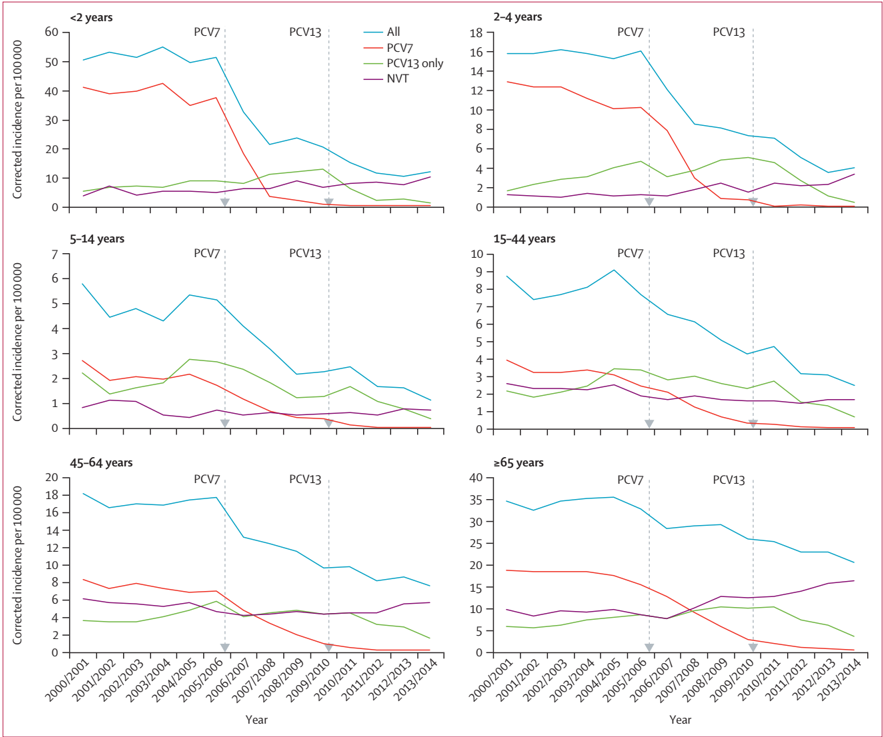
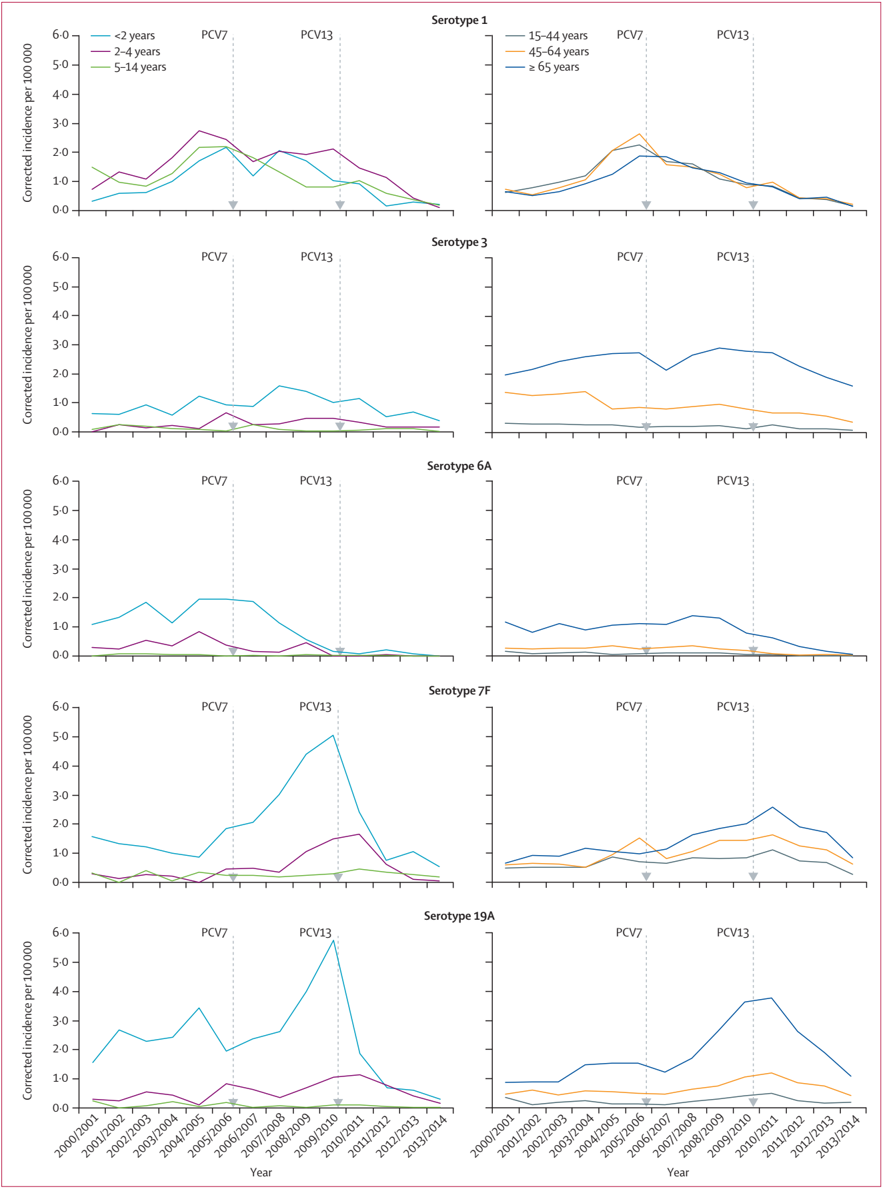
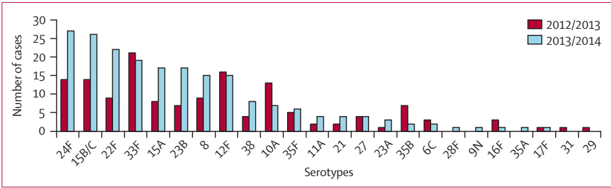
BACKGROUND: The 13-valent pneumococcal conjugate vaccine (PCV13) protects against key serotypes that increased after routine immunisation with the seven-valent vaccine (PCV7), but its potential for herd protection and serotype replacement is uncertain. The aim of this study was to analyse the effect of the 13-valent pneumococcal conjugate vaccine on invasive pneumococcal disease in England and Wales 4 years after its introduction. METHODS: We used a national dataset of electronically reported and serotyped invasive pneumococcal disease cases in England and Wales to estimate incidence rate ratios (IRRs) for vaccine and non-vaccine type invasive pneumococcal disease between July, 2013, and June, 2014, versus the pre-PCV13 and pre-PCV7 baseline. Incidence rates were corrected for missing serotype data and changes in surveillance sensitivity over time. An over-dispersed Poisson model was used to estimate IRRs and confidence intervals. FINDINGS: Incidence of invasive pneumococcal disease in the epidemiological year 2013/14 decreased by 32% compared with the pre-PCV13 baseline (incidence 10·14 per 100,000 in 2008-10 vs 6·85 per 100,000 in 2013/14; IRR 0·68, 95% CI 0·64-0·72). This was due to an 86% reduction of the serotypes covered by PCV7 (1·46 vs 0·20 per 100,000; IRR 0·14, 0·10-0·18) and a 69% reduction of the additional six serotypes covered by PCV13 (4·48 vs 1·40 per 100,000; IRR 0·31, 0·28-0·35). When compared with the pre-PCV7 baseline, there was a 56% overall reduction in invasive pneumococcal disease (15·63 vs 6·85 per 100,000; IRR 0·44, 95% CI 0·43-0·47). Compared with the pre-PCV13 baseline, the incidence of non-PCV13 serotypes increased (incidence all ages 4·19 vs 5·25 per 100,000; IRR 1·25, 95% CI 1·17-1·35) due to increases across a broad range of serotypes in children younger than 5 years and in people aged 45 years or more. In children younger than 5 years, incidence of non-PCV13 serotypes in 2013/14 was higher than in 2012/13 (age <2 years: 12·03 vs 10·83 per 100,000; age 2-4 years: 4·08 vs 3·63 per 100,000). INTERPRETATION: 8 years of PCV use in England and Wales has reduced the overall incidence of invasive pneumococcal disease by more than 50%. The herd protection induced by PCV7 is continuing, and similar indirect protection is occurring from the additional serotypes covered by PCV13. There is, however, evidence of increasing invasive pneumococcal disease due to non-PCV13 serotypes, particularly in children younger than 5 years in 2014. If this increase continues, the maximum benefit of the PCV13 programme in children might already have been achieved. FUNDING: Public Health England funds national surveillance of invasive pneumococcal disease.
Overview
The claims and statistics of this paper haven’t been checked yet.
Free: it reads the open-access text and checks the first 5 claims that cite a source we can check. Create a free account to check every claim.
Integrity signals
Registry
Cites
Statistics
Figures
Verification
Claims the paper makes
The claims and statistics of this paper haven’t been checked yet.
Free: it reads the open-access text and checks the first 5 claims that cite a source we can check. Create a free account to check every claim.
Claims other papers make about this one
Each is checked against this paper’s own text: does it say what the citing paper says it does?
The source backs part of the claim, not all of it — or backs it for a different population, condition or comparison.
In the citing paper
“A 56% reduction in invasive pneumococcal disease (IPD) among adults has been reported since the introduction of the PCV7 into the routine infant schedule and its replacement by PCV13 in April 2010.8”
From Community-acquired acute bacterial meningitis in adults: a clinical update (2019) · cites this paper as [8]
Experimental — accuracy not yet measured
Self-check
Percentages, sums and reported differences re-computed from the paper’s own numbers.
The self-check needs the paper’s full text.
Citations
Cites
O'Brien, K. L., Wolfson, L. J., Watt, J. P., Henkle, E., Deloria-Knoll, M., McCall, N., Lee, E., Mulholland, K., Levine, O. S., & Cherian, T. (2009) · The Lancet · doi:10.1016/s0140-6736(09)61204-6 · Cited by 2,398
Serotype replacement in disease after pneumococcal vaccination
Weinberger, D. M., Malley, R., & Lipsitch, M. (2011) · The Lancet · doi:10.1016/s0140-6736(10)62225-8 · Cited by 1,020
Moore, M. R., Link-Gelles, R., Schaffner, W., Lynfield, R., Lexau, C., Bennett, N. M., Petit, S., Zansky, S. M., Harrison, L. H., Reingold, A., et al. (2015) · The Lancet Infectious Diseases · doi:10.1016/s1473-3099(14)71081-3 · Cited by 733
Miller, E., Andrews, N. J., Waight, P. A., Slack, M. P., & George, R. C. (2011) · The Lancet Infectious Diseases · doi:10.1016/s1473-3099(11)70090-1 · Cited by 643
Self-citationAndrews, N. J., Waight, P. A., Burbidge, P., Pearce, E., Roalfe, L., Zancolli, M., Slack, M., Ladhani, S. N., Miller, E., & Goldblatt, D. (2014) · The Lancet Infectious Diseases · doi:10.1016/s1473-3099(14)70822-9 · Cited by 545
Self-citationFeikin, D. R., Kagucia, E. W., Loo, J. D., Link-Gelles, R., Puhan, M. A., Cherian, T., Levine, O. S., Whitney, C. G., O’Brien, K. L., Moore, M. R., et al. (2013) · PLoS Medicine · doi:10.1371/journal.pmed.1001517 · Cited by 470
Flasche, S., Van Hoek, A. J., Sheasby, E., Waight, P., Andrews, N., Sheppard, C., George, R., & Miller, E. (2011) · PLoS Medicine · doi:10.1371/journal.pmed.1001017 · Cited by 277
Self-citationvan Hoek, A. J., Andrews, N., Waight, P. A., Stowe, J., Gates, P., George, R., & Miller, E. (2012) · Journal of Infection · doi:10.1016/j.jinf.2012.02.017 · Cited by 253
Self-citationAndrews, N. J., Waight, P. A., George, R. C., Slack, M. P. E., & Miller, E. (2012) · Vaccine · doi:10.1016/j.vaccine.2012.09.019 · Cited by 239
Self-citationCooper, D., Yu, X., Sidhu, M., Nahm, M. H., Fernsten, P., & Jansen, K. U. (2011) · Vaccine · doi:10.1016/j.vaccine.2011.06.056 · Cited by 223
Research works printed but not linked: 3
- Roca A, Bojang A, Bottomley C, et al. Eff ect of replacing PCV-7 with PCV-13 in the expanded program of immunization on nasopharyngeal carriage of pneumococci in the Gambia. Pneumonia 2014; 3: 20.
- Nunes MC, Jones S, von Gottberg A, et al. Acquisition of Streptococcus pneumoniae in South African children vaccinated with 7-valent pneumococcal conjugate vaccine (PCV7). Pneumonia 2014; 3: 44.
- Moore M, Link-Gelles R, Guevara R, et al. Case-control study of eff ectiveness of 13-valent pneumococcal conjugate vaccine (PCV13) against Invasive Pneumococcal Disease (IPD) in the US: preliminary estimates. International Symposium on Pneumococci and Pneumococcal Diseases; Hyderabad, India; March 9-13, 2014. Poster 032.
Cited by
Items 401–500 of 590
Nuorti, J. P., Rinta‐Kokko, H., Toropainen, M., Siira, L., Nohynek, H., & PALMU, A. A. I. (2022) · Vaccine · doi:10.1016/j.vaccine.2022.08.047 · Cited by 7
Lan, Y., Liu, L., Hu, D., Ge, L., Xiang, X., Peng, M., Fu, Y., Wang, Y., Li, S., Chen, Y., et al. (2023) · Infection · doi:10.1007/s15010-023-02110-y · Cited by 6
“Vaccination with pneumococcal conjugate vaccines (PCVs) has proven effective in preventing invasive pneumococcal diseases (IPDs), which pose a significant threat to children’s health [7, 8].”
BackgroundThe scope for pneumococcal vaccines that do not prevent transmission
Flasche, S. (2017) · Vaccine · doi:10.1016/j.vaccine.2017.09.073 · Cited by 6
Streptococcus pneumoniaeand chronic endobronchial infections in childhood
Hare, K. M., Leach, A. J., Smith‐Vaughan, H., Chang, A. B., & Grimwood, K. (2017) · Pediatric Pulmonology · doi:10.1002/ppul.23828 · Cited by 6
Hon, K. E., Chan, K. H., Ko, P. L., Cheung, M. H. Y., Tsang, K. Y. C., Chan, L. C. N., Chan, R. W. Y., Leung, T. F., & Ip, M. (2017) · Journal of Tropical Pediatrics · doi:10.1093/tropej/fmx084 · Cited by 6
Chen, C., Beutels, P., & Newall, A. T. (2018) · Vaccine · doi:10.1016/j.vaccine.2018.03.006 · Cited by 7
Glycoconjugate Vaccines: The Clinical Journey
Lockhart, S. P., Scott, D. A., Jansen, K. U., Anderson, A. S., & Gruber, W. C. (2018) · ACS symposium series · doi:10.1021/bk-2018-1290.ch002 · Cited by 7
Th17 responses to pneumococcus in blood and adenoidal cells in children
Oliver, E., Pope, C., Clarke, E., Hewer, C. D. L., Ogunniyi, A. D., Paton, J. C., Mitchell, T. J., Malley, R., & Finn, A. H. R. (2018) · Clinical & Experimental Immunology · doi:10.1111/cei.13225 · Cited by 6
Where are the keys to improve vaccine uptake in adults and elders in European countries?
Gaillat, J. (2020) · Aging Clinical and Experimental Research · doi:10.1007/s40520-019-01443-9 · Cited by 7
Higher valent Pneumococcal Conjugate Vaccines: is it a roller coaster?
Oligbu, G. (2020) · AIMS Public Health · doi:10.3934/publichealth.2020004 · Cited by 6
“These vaccines have led to rapid and sustained declines in IPD, including meningitis caused by the respective vaccine serotypes, in both healthy children and in those with comorbidities [8,9].”
BackgroundHenckaerts, L., Desmet, S., Schalck, N., Lagrou, K., Verhaegen, J., Peetermans, W. E., & Flamaing, J. (2020) · Acta Clinica Belgica · doi:10.1080/17843286.2020.1721131 · Cited by 6
Blasi, F., Pasquale, M. D., Gramegna, A., Viale, P., Iacobello, C., Gori, A., Tumbarello, M., Esposito, S., Richeldi, L., & Bassetti, M. (2021) · Respiratory Medicine · doi:10.1016/j.rmed.2021.106674 · Cited by 6
“Relating to Streptococcus pneumoniae, as a proof of effectiveness the prevalence of invasive and non-invasive pneumococcal disease has drastically decreased both in children and elderly population after the implementation of pneumococcal conjugate vaccines [14].”
Molecular Epidemiology of Paediatric Invasive Pneumococcal Disease in Andalusia, Spain
de Felipe, B., Pacheco, P. O., Gallego, B. C., López-Martín, D., Pérez, J. L. S., Jimenez, Y. G., Vilches, M. J. M., Autero, N. C., Galán, V. G., Morón, F. J., et al. (2022) · Epidemiology and Infection · doi:10.1017/s0950268822001376 · Cited by 8
“This reduction also extends to unvaccinated cohorts of older children and adults due to herd effect [3, 4].”
BackgroundMalaker, R., Hasanuzzaman, M., Hooda, Y., Rahman, H., Das, R. C., Kanon, N., Saha, S., Tanmoy, A. M., Chakraborty, S. R., Saha, S., et al. (2023) · Vaccine · doi:10.1016/j.vaccine.2023.12.007 · Cited by 5
Incidence of pneumococcal disease in children in Germany, 2014–2019: a retrospective cohort study
Weaver, J. P., Hu, T., Podmore, B., Barnett, R., Obermüller, D., Galetzka, W., Qizilbash, N., Häckl, D., Weiss, T. W., Mohanty, S., et al. (2024) · BMC Pediatrics · doi:10.1186/s12887-024-05003-7 · Cited by 5
A global epidemic serotype 14 Streptococcus pneumoniae switching to non-vaccine types
Yue, J., Chen, L., Yao, T., Du, P., Gu, C., Wei, H., Han, K., Rong, C., Wang, C., Zhang, Q., et al. (2025) · Microbiology Spectrum · doi:10.1128/spectrum.03151-24 · Cited by 5
Lodi, L., Catamerò, F., Sarli, W. M., Moriondo, M., Nieddu, F., Ferraro, E., Citera, F., Astorino, V., Giovannini, M., Voarino, M., et al. (2025) · Human Vaccines & Immunotherapeutics · doi:10.1080/21645515.2025.2510005 · Cited by 8
Cleary, D. W., Lo, S. W., Kumar, N., Bentley, S. D., Faust, S. N., & Clarke, S. C. (2023) · Microbial Genomics · doi:10.1099/mgen.0.000945 · Cited by 5
Recurrent or unusual infections in children – when to worry about inborn errors of immunity
Reilly, L., & Emonts, M. (2023) · Therapeutic Advances in Infectious Disease · doi:10.1177/20499361231162978 · Cited by 14
“24 However, there was an increase in infection by non-vaccine strains, leading to introduction of the 13-valent vaccine (PCV13) in the United Kingdom in 2010 without a catch-up campaign.”
BackgroundTorres-Martínez, C., Camacho‐Moreno, G., Patiño, J., Coronell-Rodríguez, W., Leal, A. L., & Gámez, G. (2024) · Infectio · doi:10.22354/24223794.1165 · Cited by 5
“Of particular importance was the impact of the PCV13 vaccine on PDs by serotype 19A, which had become the predominant serotype globally 12,13 .”
Čivljak, R., Draženović, K., Butić, I., Batinjan, M. K.-G., Huljev, E., Vicković, N., Lizatovic, I. K., Grgić, B., Budimir, A., Janeš, A., et al. (2024) · Frontiers in Public Health · doi:10.3389/fpubh.2024.1480348 · Cited by 5
Zimmermann, P., Perrett, K. P., Berbers, G. A. M., & Curtis, N. C. (2019) · Archives of Disease in Childhood · doi:10.1136/archdischild-2018-316254 · Cited by 8
Hospital-onset adult invasive pneumococcal disease in Israel: Sicker patients, different pathogens
Kenig, A., Regev‐Yochay, G., Khakshoor, S., Cohen‐Poradosu, R., Bishara, J., Glikman, D., Hershman-Sarafov, M., Dagan, R., Zimhony, O., Dagan, R., et al. (2019) · International Journal of Infectious Diseases · doi:10.1016/j.ijid.2019.06.013 · Cited by 5
Ladomenou, F., Tzanakaki, G., Kolyva, S., Katsarakis, I., Maraki, S., & Galanakis, E. (2019) · Acta Paediatrica · doi:10.1111/apa.14957 · Cited by 5
Özdemir, H., Yıldız, C., Ötgün, S. N., Erkol, H. G., Karbuz, A., Kocabaş, B. A., Kara, T. T., Gözalan, A., Durmaz, R., Çi̇ftçi̇, E., et al. (2017) · Archivos Argentinos de Pediatria · doi:10.5546/aap.2017.eng.316 · Cited by 5
Morino, S., Kitagami, E., Nakayama, H., Koizumi, Y., Tanaka‐Taya, K., Kinjo, Y., & Oishi, K. (2020) · Vaccine · doi:10.1016/j.vaccine.2020.09.068 · Cited by 5
Swarthout, T. D., Ibarz-Pavón, A. B., Kawalazira, G., Sinjani, G., Chirombo, J., Gori, A., Chalusa, P., Bonomali, F., Nyirenda, R., Bulla, E., et al. (2021) · BMJ Open · doi:10.1136/bmjopen-2021-050312 · Cited by 5
Baqui, A. H., Koffi, A. K., McCollum, E. D., Roy, A. D., Chowdhury, N. H., Rafiqullah, I., Ahmed, Z. B., Mahmud, A., Begum, N., Ahmed, S., et al. (2021) · Vaccine · doi:10.1016/j.vaccine.2021.08.068 · Cited by 5
The Cost-Effectiveness of 13-Valent Pneumococcal Conjugate Vaccine in Seven Chinese Cities
Li, Y., Wang, H., Furnback, W. E., Wang, B. C. M., Zhu, S., & Dong, P. (2021) · Vaccines · doi:10.3390/vaccines9111368 · Cited by 10
“A scenario analysis examined a 2 + 1 vaccination schedule, which has been previously studied, and is suited for situations with high uptake in a national immunization program [39]; a 3 + 1 schedule is recommended in low uptake settings to maximize individual protection.”
BackgroundMethodBar‐Zeev, N., Swarthout, T. D., Everett, D., Alaerts, M., Msefula, J., Brown, C., Bilima, S., Mallewa, J., von Gottberg, A., Verani, J. R., et al. (2020) · SSRN Electronic Journal · doi:10.2139/ssrn.3745169 · Cited by 4
Clifford, S., Knoll, M. D., O’Brien, K. L., Pollington, T. M., Moodley, R., Prieto‐Merino, D., Edmunds, W. J., Flasche, S., & de Waroux, O. L. P. (2023) · medRxiv · doi:10.1101/2023.03.09.23287027 · Cited by 5
Cleary, D. W., Anderson, R., Jones, J., Gladstone, R. A., Osman, K. L., Devine, V. T., Morris, D. E., Lister, A. J. J., Gomer, S., Hocknell, R. E., et al. (2025) · Pneumonia · doi:10.1186/s41479-025-00174-y · Cited by 4
“The introduction of PCVs has alleviated a significant burden of disease from pneumococcal infections both in the UK and worldwide [42, 43].”
Invasive Pneumococcal Diseases Before and After the COVID-19 Pandemic in Italy (2018–2023)
Camilli, R., Giancristofaro, S., Boros, S., Bellini, B., D’Ambrosio, F., Urciuoli, R., Grosso, M. D., Pantosti, A., Palamara, A. T., & D’Ancona, F. “. (2025) · Microorganisms · doi:10.3390/microorganisms13122734 · Cited by 5
“…paper from Lodi et al. [13], focusing on serotype 3 IPD in an Italian region, showed a correlation between serotype 3 and bacteremic pneumonia or otomastoidi-tis, but not with sepsis or meningitis, supporting the hypothesis that PCV13 could prevent only the more disseminated forms of IPD [38–40].”
Li, J., Yung, C. F., Kam, K., Nadua, K. D., Tan, N. W., Thoon, K. C., Maiwald, M., & Chong, C. Y. (2025) · Open Forum Infectious Diseases · doi:10.1093/ofid/ofaf093 · Cited by 4
“PCV formulations contain a limited number of the > 100 known serotypes, and nonvaccine types may replace vaccine serotypes in the upper airway, causing disease [3, 4].”
Trends of serotypes and resistance among Streptococcus pneumoniae in the UK and Ireland (1999–2019)
Horner, C., Reynolds, R., Mushtaq, S., Chaudhry, A., Adkin, R., Allen, M., Longshaw, C. M., Parcell, B. J., & Livermore, D. M. (2025) · Journal of Antimicrobial Chemotherapy · doi:10.1093/jac/dkaf253 · Cited by 8
To Boost or Not to Boost? Lessons from the Australian Pneumococcal Conjugate Vaccination Program
Wiese, A. D., & Grijalva, C. G. (2019) · Clinical Infectious Diseases · doi:10.1093/cid/ciz735 · Cited by 4
Hyams, C. J., Arnold, D., Heath, R., Amin‐Chowdhury, Z., Hettle, D., Ruffino, G., North, P., Grimes, C., Fry, N. K., Williams, P., et al. (2023) · BMJ Open Respiratory Research · doi:10.1136/bmjresp-2022-001440 · Cited by 4
Self-citationLee, M. S. (2023) · Infection and Chemotherapy · doi:10.3947/ic.2023.0112 · Cited by 5
“Resistance to macrolide drugs has been recorded as high as 85% in Hong Kong [43], while it is as https://doi.org/10.3947/ic.2023.0112 Invasive pneumococcal diseases in Korean adults icjournal.org low as 25% in Canada [44] and as low as 7% in the UK [45].”
BackgroundInfluentialFaustini, S. E., Hodson, J. A., Birtwistle, J., Whitelegg, A. M. E., Masuka, S., Singo, M., Chigiga, J., Shields, A. M., Plant, T. D., Drayson, M. T., et al. (2024) · Journal of Infection · doi:10.1016/j.jinf.2024.106282 · Cited by 5
Bertran, M., Abdullahi, F., D'Aeth, J. C., Amin-Chowdhury, Z., Andrews, N. J., Eletu, S. D., Litt, D. J., Ramsay, M. E., Oligbu, G., & Ladhani, S. N. (2025) · Journal of Infection · doi:10.1016/j.jinf.2025.106490 · Cited by 4
Self-citationCha, J., Kim, H. W., Lee, J. H., Lee, S., & Kim, K. (2018) · Journal of Korean Medical Science · doi:10.3346/jkms.2018.33.e340 · Cited by 4
Lee, J., Yoon, Y., Kim, E. J., Lee, D.-H., Baek, Y., Takano, C., Chang, B., Iijima, T., Kilgore, P. E., Hayakawa, S., et al. (2021) · PLoS ONE · doi:10.1371/journal.pone.0246699 · Cited by 5
“pneumoniae serotypes that were not included in the vaccines (such as serotypes 8, 11A, 15A, 15B/C, 22F, 23A, 23B, and 24F) have been increasing in incidence [9, 38].”
BackgroundLee, S., Kim, H. W., Lee, J. H., & Kim, K. (2017) · Vaccine · doi:10.1016/j.vaccine.2017.07.074 · Cited by 5
Valdecantos, R. L., Palladino, R., Vecchio, A. L., Montella, E., Triassi, M., & Nardone, A. (2022) · Vaccines · doi:10.3390/vaccines10091390 · Cited by 4
“IPD incidence in children is being reduced further through universal administration and distribution using broader serotype coverage rather than non-vaccine serotypes, as well as increased vaccination rates [59].”
Backgroundde Felipe, B., Aboza-García, M., González-Galán, V., de la Cueva, I. S., Martín-Quintero, J. A., Pérez, B. A., Coronel‐Rodríguez, C., Palacios-Soria, M. Á., Ruiz-Santaquiteria, M. I. G., Torres-Sánchez, M. J., et al. (2023) · Enfermedades Infecciosas y Microbiología Clínica · doi:10.1016/j.eimc.2022.11.005 · Cited by 4
Chu, K., Hu, Y., Pan, H., Wu, J., Zhu, D., Young, M. M., Luo, L., Yi, Z., Giardina, P. C., Gruber, W. C., et al. (2023) · Human Vaccines & Immunotherapeutics · doi:10.1080/21645515.2023.2235926 · Cited by 4
Assessing the Impact of Pneumococcal Conjugate Vaccines
Murdoch, D. R. (2019) · Clinical Infectious Diseases · doi:10.1093/cid/ciz484 · Cited by 5
Olarte, L., & Ampofo, K. (2022) · Elsevier eBooks · doi:10.1016/b978-0-323-75608-2.00123-3 · Cited by 6
Kozáková, J., Křížová, P., & Malý, M. (2021) · PLoS ONE · doi:10.1371/journal.pone.0247862 · Cited by 6
Scott, A. G. (2020) · doi:10.1093/med/9780198746690.003.0107 · Cited by 4
Prevention is better than cure: time to change the focus of community-acquired pneumonia management
Welte, T. (2015) · European Respiratory Journal · doi:10.1183/09031936.00064015 · Cited by 4
Sibale, L., Phiri, J., Mitole, N., Kalata, N. L., Nyazika, T. K., Kalirani, A., Khwiya, M., Sagawa, G., Thindwa, D., Swarthout, T. D., et al. (2022) · medRxiv · doi:10.1101/2022.10.28.22281638 · Cited by 3
PCV20 in pediatric pneumococcal prevention: expanded coverage, remaining challenges
Principi, N., Argentiero, A., Campana, B. R., & Esposito, S. (2026) · Frontiers in Immunology · doi:10.3389/fimmu.2025.1707345 · Cited by 7
Mendes, D., Averin, A., Atwood, M., Sato, R., Vyse, A., Campling, J., Hariharan, D., Weycker, D., Mugwagwa, T., & Vietri, J. (2026) · Cost Effectiveness and Resource Allocation · doi:10.1186/s12962-025-00709-6 · Cited by 3
“Nonetheless, the burden of both IPD and CAP remains substantial among adults [7–9].”
Özdemir, H., Dağ, N. E., Taşkın, E. Ç., Konca, H. K., Arga, G., Ötgün, S. N., Güriz, H., Elhan, A. H., Çiftçi, E., & İnce, E. (2021) · Mikrobiyoloji Bulteni · doi:10.5578/mb.20219703 · Cited by 3
de Felipe, B., Aboza-García, M., González-Galán, V., de la Cueva, I. S., Martín-Quintero, J. A., Pérez, B. A., Coronel‐Rodríguez, C., Palacios-Soria, M. Á., Ruiz-Santaquiteria, M. I. G., Torres-Sánchez, M. J., et al. (2023) · Enfermedades infecciosas y microbiologia clinica (English ed ) · doi:10.1016/j.eimce.2023.04.008 · Cited by 3
Preventing pneumococcal infections in older adults
Nuorti, P., & Reingold, A. L. (2015) · The Lancet Respiratory Medicine · doi:10.1016/s2213-2600(15)00365-3 · Cited by 3
Impfen ist nicht nur Kindersache!
Kunze, U., & Groman, E. (2017) · Wiener Medizinische Wochenschrift · doi:10.1007/s10354-017-0598-7 · Cited by 4
Immune Responses to Irradiated Pneumococcal Whole Cell Vaccine
Ko, E., Jeong, S., Jwa, M. Y., Kim, A.-R., Ha, Y.-E., Kim, S. K., Jeong, S., Ahn, K. B., Seo, H. S., Yun, C., et al. (2021) · Vaccines · doi:10.3390/vaccines9040405 · Cited by 4
“pneumoniae infections remain the leading cause of child death in developing countries despite the presence of both vaccines [15,16].”
BackgroundÇelik, M., Abdullayeva, M., & Çavuş, S. A. (2022) · Infectious Diseases and Clinical Microbiology · doi:10.36519/idcm.2022.120 · Cited by 3
Lemay, J., Ricketson, L. J., & Kellner, J. D. (2022) · Microorganisms · doi:10.3390/microorganisms10102074 · Cited by 3
Understanding vaccine hesitancy with PCV13 in children: Results of a survey in Shanghai, China
Ni, Y.-H., Xu, Z.-H., & Wang, J. (2023) · PLoS ONE · doi:10.1371/journal.pone.0284810 · Cited by 9
“Invasive pneumococcal disease incidence in children is being reduced further through universal administration and distribution using broader serotype coverage rather than non-vaccine serotypes, as well as increased vaccination rates [4].”
BackgroundIsaeva, G. G., Bayazitova, L. T., Зуфаровна, З. А., Тюпкина, О. Ф., Chazova, T. A., Khusainova, R. M., Tyurin, Y. A., & Ziatdinov, V. B. (2023) · Epidemiology and Vaccinal Prevention · doi:10.31631/2073-3046-2023-22-3-26-35 · Cited by 3
Lv, M., Du, J., Xie, M.-Z., Zhou, Y., Yang, G., Wang, J., Zhang, W., Yang, H., Zhang, S., Cui, F., et al. (2024) · Vaccine · doi:10.1016/j.vaccine.2024.04.015 · Cited by 3
Borys, D., Smulders, R. A., Haranaka, M., Nakano, T., Chichili, G. R., Ebara, M., Hashimoto, A., Iwahana, M., Oizumi, Y., Nanra, J. S., et al. (2024) · Vaccine · doi:10.1016/j.vaccine.2024.126545 · Cited by 3
Sahu, T. A., Jagzape, A. T., Sinha, M., Sinha, R., & Verma, H. K. (2025) · World Journal of Virology · doi:10.5501/wjv.v14.i2.101693 · Cited by 3
Johansen, K., Pfeifer, D., & SALISBURY, D. M. (2017) · Elsevier eBooks · doi:10.1016/b978-0-323-35761-6.00074-2 · Cited by 5
Petráš, M., & Adámková, V. (2016) · Central European Journal of Public Health · doi:10.21101/cejph.a4161 · Cited by 3
Smart Scheduling: Optimizing National Immunization Programs to Achieve Maximum Impact
Ladhani, S. N., & Ramsay, M. E. (2019) · Clinical Infectious Diseases · doi:10.1093/cid/ciz500 · Cited by 3
Self-citationLUCAS, A. E., Wilson, M. R., Sings, H. L., Pugh, S. J., Jones, D., Farkouh, R., Gessner, B. D., & Wasserman, M. (2019) · International Journal of Infectious Diseases and Therapy · doi:10.11648/j.ijidt.20190404.12 · Cited by 4
“For example, after the United Kingdom (UK) introduced PCV13 into the routine pediatric immunization schedule in 2010, vaccine-targeted serotype IPD incidence decreased for PCV13 serotypes other than 19A or plateaued for serotype 19A over the first 4 years following PCV13 introduction in both children and unvaccinated…”
BackgroundInfluentialShen, C., Wang, S.-M., Chi, H., Huang, Y., Huang, L., Huang, Y., Lin, H., Ho, Y.-H., Hsiung, C. A., Liu, C., et al. (2020) · Journal of Biomedical Science · doi:10.1186/s12929-020-00680-9 · Cited by 4
Barbieri, E., Porcu, G., Hu, T., Petigara, T., Senese, F., Prandi, G. M., Scamarcia, A., Cantarutti, L., Cantarutti, A., & Giaquinto, C. (2022) · Children · doi:10.3390/children9050657 · Cited by 3
Pirçon, J., Talarico, C. A., Bollaerts, K., Hausdorff, W. P., & Clarke, C. (2018) · Vaccine · doi:10.1016/j.vaccine.2018.10.003 · Cited by 3
“Previous surveillance studies from England and Wales assumed that an upward trend in overall IPD IRs observed in individuals <65 years in the pre-PCV7 era (2000/01–2005/06) was due to improved surveillance sensitivity and—in the absence of vaccination—would have continued until 2009/10 [16,20], as was reported for oth…”
BackgroundTsuge, M., Miyamoto, M., Miyawaki, R., Kondo, Y., & Tsukahara, H. (2020) · BMC Pediatrics · doi:10.1186/s12887-020-1915-7 · Cited by 4
Editorial Commentary: Pneumococcal Vaccination: Should We Kill the Enemy or Just Disarm It?
Luján, M., & Gallego, M. (2015) · Clinical Infectious Diseases · doi:10.1093/cid/civ805 · Cited by 3
“Some results for serotype replacement in certain geographic areas suggest that the maximum benefit of PCV13 might have been achieved 4 years after its introduction [11].”
BackgroundGuo, B., Chen, G., Chen, M., Huang, R., Mo, J., Lu, K., Ji, Q., Liao, X., & Liao, J. (2024) · Research Square · doi:10.21203/rs.3.rs-5311940/v1 · Cited by 2
Martínez, A. I., Ramos‐Fernández, J. M., Frías, J. P., & Pérez, D. M. (2020) · International Journal of Infectious Diseases · doi:10.1016/j.ijid.2020.06.034 · Cited by 2
Duarte, C., Agudelo, C. I., Castañeda-Orjuela, C. A., Moreno, J., Sanabria, O. M., Bautista, A., & Castañeda, E. (2023) · Enfermedades Infecciosas y Microbiología Clínica · doi:10.1016/j.eimc.2023.07.002 · Cited by 2
Trigeminal TRPV1 regulates pneumococcal nose-to-brain invasion via IL-6/TNF-α signals
Sakatani, H., Kono, M., Hijiya, M., Morita, Y., Sumitomo, T., Inukai, T., Nakamura, S., Koizumi, Y., Maruyama, K., Saika, S., et al. (2025) · mBio · doi:10.1128/mbio.01335-25 · Cited by 3
“Even with the pneumococcal polysaccharide vaccines, invasive infections have not yet been eradicated, mainly due to the increase in non-vac cine strains (5, 6).”
Assessing the effect of social contact structure on the impact of pneumococcal conjugate vaccines
Wong, A., Krämer, S., Weinberger, D. M., & de Cellès, M. D. (2025) · Scientific Reports · doi:10.1038/s41598-025-20255-8 · Cited by 3
“…86% 2007-08: 90% [30] UK [17] Children 1–5 years attending primary care practices 0.49, 0.49, 0.21, 0.08, 0.08, 0.08 [17] 0.659, 0.341 [17] 90% [49] Alaska, US [18] Children 3 months–5 years attending primary care practices 0.38, 0.38, 0.30, 0.10, 0.10, 0.10 [18,23] 0.53, 0.47 [18] 60% [18]…”
InfluentialJoy, N., Ebere, O. C. L., Tochukwu, N., Onochie-Igbinedion, I., Harrison, A., Esimone, C. O., & Ikegbunam, M. (2025) · BMC Infectious Diseases · doi:10.1186/s12879-025-11936-w · Cited by 2
Nikhab, A., Patel, T., Rooney, G., Wasti, S., Abdullahi, F., D'Aeth, J. C., Eletu, S. D., Litt, D. J., & Ladhani, S. N. (2026) · Vaccine · doi:10.1016/j.vaccine.2026.128246 · Cited by 4
Self-citationVaccination – the best method of combating serious infectious diseases
Szymczyk, H. (2016) · Medycyna Ogólna i Nauki o Zdrowiu · doi:10.5604/20834543.1227604 · Cited by 2
“Zaobserwowano znamienne zmniejszenie występowania schorzeń wywoływanych przez pneumokoki [15, 16, 17].”
BackgroundNasopharyngeal carriage of Streptococcus pneumoniae in children from day-care centers in Smolensk
Zharkova, L. P., Кречикова, О. И., Нуримановна, Ч. А., & Kozlov, R. S. (2020) · Clinical Microbiology and Antimicrobial Chemotherapy · doi:10.36488/cmac.2020.2.149-153 · Cited by 2
Safety and Immunogenicity of V114 in Preterm Infants: A Pooled Analysis of Four Phase Three Studies
Chapman, T. J., Patel, S. M., Flores, S. A., Xu, S., Lupinacci, R. J., Shi, Y., Shekar, T., Feemster, K. A., Yi, J., Tamms, G. M., et al. (2023) · The Pediatric Infectious Disease Journal · doi:10.1097/inf.0000000000004069 · Cited by 2
Artemchuk, O., & Evlampidou, I. (2024) · PLoS ONE · doi:10.1371/journal.pone.0304346 · Cited by 2
Walker, N. R., Mortaja, S., Eleftheriadou, A., & Sharma, S. (2024) · The Journal of Laryngology & Otology · doi:10.1017/s0022215124001804 · Cited by 2
Sibale, L., Kalata, N. L., Mitole, N., Nyazika, T. K., Phiri, J., Kusakala, A., Khwiya, M., Sagawa, G., Lo, S. W., Chaguza, C., et al. (2025) · Open Forum Infectious Diseases · doi:10.1093/ofid/ofaf422 · Cited by 3
“In high-and middle-income countries, infant pneumococcal conjugate vaccine (PCV) programs have significantly reduced pneumococcal carriage and IPD in both vaccinated children (direct protection) and unvaccinated older children and adults (indirect protection) [5, 6].”
Vaccination as a solution of the issue of resistance S. pneumoniae
Рубан, А. П., & Struch, S. V. (2021) · Epidemiology and Vaccinal Prevention · doi:10.31631/2073-3046-2021-20-2-83-92 · Cited by 2
Griffin, M. R., & Grijalva, C. G. (2015) · The Lancet Infectious Diseases · doi:10.1016/s1473-3099(15)70085-x · Cited by 2
Lavi, E., & Breuer, O. (2015) · Current Infectious Disease Reports · doi:10.1007/s11908-015-0509-2 · Cited by 2
Ntulume, I., Victoria, N., Adam, A. S., & Aliero, A. A. (2019) · International Journal of Applied Sciences and Biotechnology · doi:10.3126/ijasbt.v7i1.22326 · Cited by 2
Constrained Optimization for Pneumococcal Vaccination in Brazil
Olbrecht, J., Gomez, J. A., Bellinghen, L.-A. V., Vlaenderen, I. V., & Standaert, B. A. (2021) · Value in Health Regional Issues · doi:10.1016/j.vhri.2020.11.011 · Cited by 2
Hernández, M. S., Aguiar-Santana, I. A., Artiles, F., & Gil, E. C. (2018) · Enfermedades infecciosas y microbiologia clinica (English ed ) · doi:10.1016/j.eimce.2017.10.024 · Cited by 2
Bilan français des effets indésirables du vaccin Prévenar 13 ®
Agier, M.-S., Marchand, S., Paret, N., Gautier, S., & Jonville‐Béra, A. ‐. (2017) · Archives de Pédiatrie · doi:10.1016/j.arcped.2017.01.018 · Cited by 2
“Ceci doit être pris en compte dans les décisions de stratégie vaccinale afin que la réduction de l'incidence des infections invasives à pneumocoque due aux sérotypes vaccinaux ne soit pas compensée par une augmentation des infections invasives à pneumocoques de sérotypes non contenus dans Prévenar 13 W .”
BackgroundAmpofo, K., & Byington, C. L. (2017) · Elsevier eBooks · doi:10.1016/b978-0-323-40181-4.00123-7 · Cited by 6
Briko, N. I., Батыршина, Л. Р., & Briko, A. N. (2018) · Journal of microbiology epidemiology immunobiology · doi:10.36233/0372-9311-2018-1-17-23 · Cited by 2
ACTA UNIVERSITATIS OULUENSIS D Medica 1329
Lantto, M. (2015) · Cited by 2
Evans, T. J. (2021) · Elsevier eBooks · doi:10.1016/b978-0-08-102723-3.00249-3 · Cited by 2
Hernández, S., Navas, E., Aznar‐Lou, I., Ciruela, P., García‐García, J. J., Llop, F. A. M., Muñoz‐Almagro, C., Codina, G., de Sevilla, M. F., González‐Peris, S., et al. (2020) · Vaccines · doi:10.3390/vaccines8030387 · Cited by 1
“However, some reports have observed an increase in IPD in children aged < 5 years due to non-PCV13 serotypes [16].”
Result
Metadata
- Authors
- Waight, P. A., Andrews, N. J., Ladhani, S. N., Sheppard, C. L., Slack, M. P. E., & Miller, E.
- Affiliations
- Public Health England (GB)
- Griffith University (AU)
- Corresponding author
- Waight, Pauline A
- Venue
- The Lancet Infectious Diseases
- Publisher
- Elsevier BV
- Published
- 2015-05
- Volume
- 15
- Issue
- 5
- Pages
- 535-543
- ISSN
- 1473-3099 (ISSN-L)
- PMC
- PMC7130081
- OpenAlex
- W2025200855
- Semantic Scholar
- 5c963d5f23c27d4c8d23abdc0b6e3a220537801c
- Cited by
- 589
- References
- 24
- Citations by year
- 2026: 17 · 2025: 28 · 2024: 32 · 2023: 35 · 2022: 40 · 2021: 51 · 2020: 46 · 2019: 69 · 2018: 86 · 2017: 90 · 2016: 61 · 2015: 30
- FWCI
- 69.83
- Type
- journal article
- Language
- en
- Open access
- hybrid
- doi.org
- Licence
- cc-by
- www.elsevier.com/tdm/userlicense/1.0/ (tdm)
- www.elsevier.com/legal/tdmrep-license (tdm)
- creativecommons.org/licenses/by/4.0/ (vor)
- Locations
- The Lancet Infectious Diseases (publishedVersion, cc-by)
- PubMed Central (publishedVersion)
- PubMed (publishedVersion)
- Griffith Research Online (submittedVersion, cc-by-nc-nd)
- Funders
- Public Health England
- Topics
- Health Sciences › Medicine › Epidemiology › Pneumonia and Respiratory Infections
- Life Sciences › Immunology and Microbiology › Microbiology › Bacterial Infections and Vaccines
- Life Sciences › Immunology and Microbiology › Microbiology › Microbial infections and disease research
- Keywords
- 13-valent pneumococcal conjugate vaccine, PCV13, invasive pneumococcal disease, Streptococcus pneumoniae, serotype replacement, herd protection, PCV7, vaccine impact, England and Wales, incidence rate ratio, overdispersion
- MeSH terms
- Adolescent, Adult, Aged, Child, Child, Preschool, England, Female, Humans, Infant, Infant, Newborn, Male, Middle Aged, Pneumococcal Infections, Streptococcus pneumoniae, Wales, Incidence, Poisson Distribution, Vaccines, Conjugate, Pneumococcal Vaccines, Mass Vaccination, Epidemiological Monitoring, Serogroup
About these checks
Registry, retraction, Cites and statistics results are computed, not judged, with one exception: a printed reference that no index lists is read once by a model before it counts as a citation error. Claims are extracted by a model and kept only when their quote appears verbatim in the text; each cited source is then checked, with a model’s help, for whether it says what the claim relies on. Those verdicts can be wrong — read the claim’s quote and the cited source before relying on one.
Statistics and arithmetic are recomputed, not judged.
Confidence bands are shown only for fields calibrated on our annotated test set. None is calibrated yet, so no band is shown.
What counts as a claim ›How we measure confidence ›How we check this ›
Are you an author, or do you see a problem with this page? Request a review
Data sources
Bibliographic data: Semantic Scholar, OpenAlex, Crossref.
Contains information from the Semantic Scholar Academic Graph Datasets, made available under the ODC Attribution License (ODC-BY 1.0).
Semantic Scholar’s data is described in: Kinney, R., et al. (2023). The Semantic Scholar Open Data Platform. arXiv:2301.10140.
