

Trends and mortality effects of vitamin A deficiency in children in 138 low-income and middle-income countries between 1991 and 2013: a pooled analysis of population-based surveys
Open accessThe DOI matches its Crossref record; 43 of the 45 references it cites were found in a registry or an index.
Abstract
BACKGROUND: Vitamin A deficiency is a risk factor for blindness and for mortality from measles and diarrhoea in children aged 6-59 months. We aimed to estimate trends in the prevalence of vitamin A deficiency between 1991 and 2013 and its mortality burden in low-income and middle-income countries. METHODS: We collated 134 population-representative data sources from 83 countries with measured serum retinol concentration data. We used a Bayesian hierarchical model to estimate the prevalence of vitamin A deficiency, defined as a serum retinol concentration lower than 0·70 μmol/L. We estimated the relative risks (RRs) for the effects of vitamin A deficiency on mortality from measles and diarrhoea by pooling effect sizes from randomised trials of vitamin A supplementation. We used information about prevalences of deficiency, RRs, and number of cause-specific child deaths to estimate deaths attributable to vitamin A deficiency. All analyses included a systematic quantification of uncertainty. FINDINGS: In 1991, 39% (95% credible interval 27-52) of children aged 6-59 months in low-income and middle-income countries were vitamin A deficient. In 2013, the prevalence of deficiency was 29% (17-42; posterior probability [PP] of being a true decline=0·81). Vitamin A deficiency significantly declined in east and southeast Asia and Oceania from 42% (19-70) to 6% (1-16; PP>0·99); a decline in Latin America and the Caribbean from 21% (11-33) to 11% (4-23; PP=0·89) also occurred. In 2013, the prevalence of deficiency was highest in sub-Saharan Africa (48%; 25-75) and south Asia (44%; 13-79). 94 500 (54 200-146 800) deaths from diarrhoea and 11 200 (4300-20 500) deaths from measles were attributable to vitamin A deficiency in 2013, which accounted for 1·7% (1·0-2·6) of all deaths in children younger than 5 years in low-income and middle-income countries. More than 95% of these deaths occurred in sub-Saharan Africa and south Asia. INTERPRETATION: Vitamin A deficiency remains prevalent in south Asia and sub-Saharan Africa. Deaths attributable to this deficiency have decreased over time worldwide, and have been almost eliminated in regions other than south Asia and sub-Saharan Africa. This new evidence for both prevalence and absolute burden of vitamin A deficiency should be used to reconsider, and possibly revise, the list of priority countries for high-dose vitamin A supplementation such that a country's priority status takes into account both the prevalence of deficiency and the expected mortality benefits of supplementation. FUNDIN: Bill & Melinda Gates Foundation, Grand Challenges Canada, UK Medical Research Council.
Overview
The claims and statistics of this paper haven’t been checked yet.
Free: it reads the open-access text and checks the first 5 claims that cite a source we can check. Create a free account to check every claim.
Integrity signals
Registry
Cites
Statistics
Figures
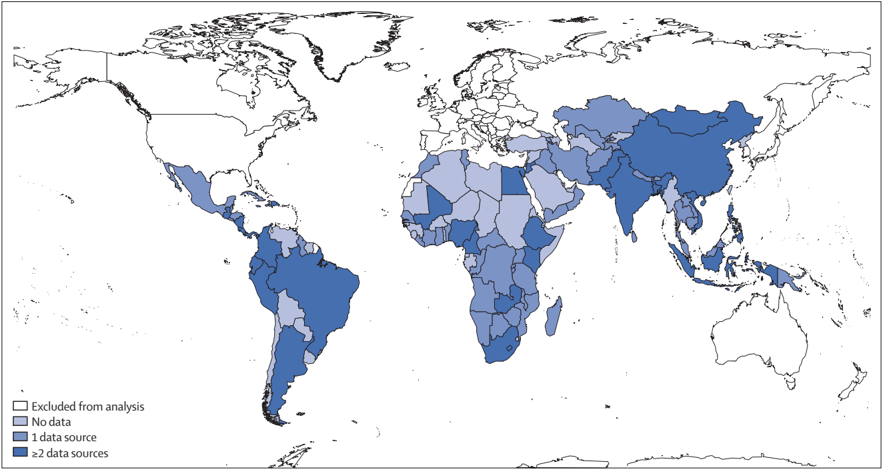
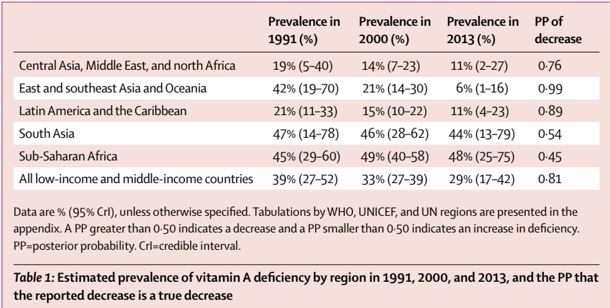
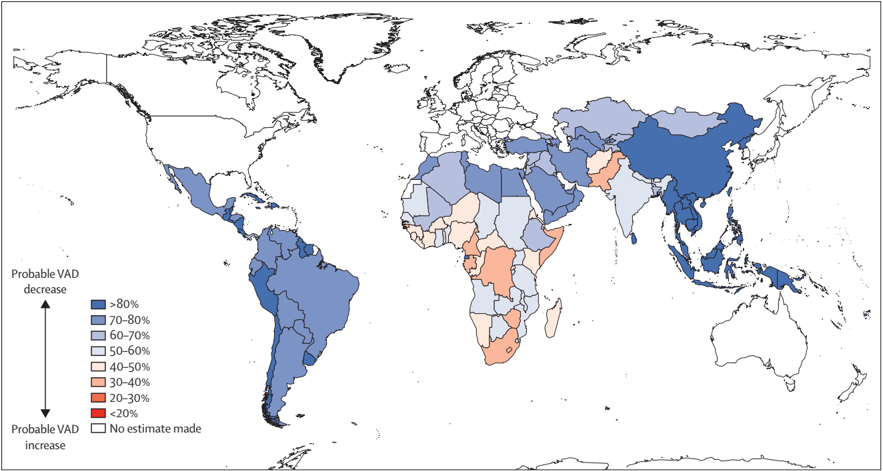
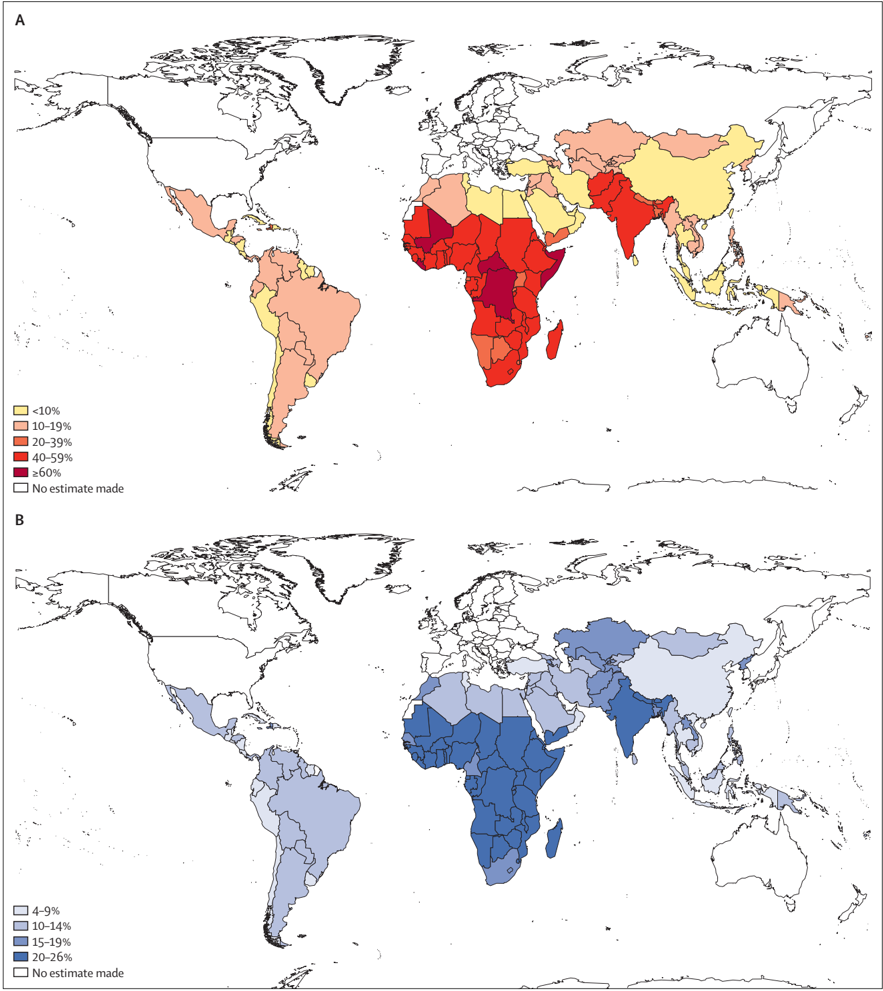
Verification
Claims the paper makes
The claims and statistics of this paper haven’t been checked yet.
Free: it reads the open-access text and checks the first 5 claims that cite a source we can check. Create a free account to check every claim.
Claims other papers make about this one
Each is checked against this paper’s own text: does it say what the citing paper says it does?
The source backs part of the claim, not all of it — or backs it for a different population, condition or comparison.
In the citing paper
“This is of special importance in infants and children, where this intervention reduces the rate of child morbidity and mortality.”
From Vitamin A Update: Forms, Sources, Kinetics, Detection, Function, Deficiency, Therapeutic Use and Toxicity (2021) · cites this paper as [336]
Experimental — accuracy not yet measuredThe source backs part of the claim, not all of it — or backs it for a different population, condition or comparison.
In the citing paper
“it is calculated that approximately one-third of the world’s infant population suffers from hypovitaminosis A”
From Vitamin A Update: Forms, Sources, Kinetics, Detection, Function, Deficiency, Therapeutic Use and Toxicity (2021) · cites this paper as [336]
Experimental — accuracy not yet measuredThe check wasn’t confident either way, so it gives no verdict — never disputed.
In the citing paper
“in developing countries, around 15% of all pregnant women suffer from this deficiency”
From Vitamin A Update: Forms, Sources, Kinetics, Detection, Function, Deficiency, Therapeutic Use and Toxicity (2021) · cites this paper as [336]
Experimental — accuracy not yet measured
Self-check
Percentages, sums and reported differences re-computed from the paper’s own numbers.
The self-check needs the paper’s full text.
Citations
Cites
Lim, S. S., Vos, T., Flaxman, A. D., Danaei, G., Shibuya, K., Adair-Rohani, H., AlMazroa, M. A., Amann, M., Anderson, H. R., Andrews, K. G., et al. (2012) · The Lancet · doi:10.1016/s0140-6736(12)61766-8 · Cited by 11,805
Self-citationMaternal and child undernutrition and overweight in low-income and middle-income countries
Black, R. E., Victora, C. G., Walker, S. P., Bhutta, Z. A., Christian, P., de Onis, M., Ezzati, M., Grantham-McGregor, S., Katz, J., Martorell, R., et al. (2013) · The Lancet · doi:10.1016/s0140-6736(13)60937-x · Cited by 8,475
Self-citationMaternal and child undernutrition: global and regional exposures and health consequences
Black, R. E., Allen, L. H., Bhutta, Z. A., Caulfield, L. E., de Onis, M., Ezzati, M., Mathers, C., & Rivera, J. (2008) · The Lancet · doi:10.1016/s0140-6736(07)61690-0 · Cited by 6,443
Self-citationFinucane, M. M., Stevens, G. A., Cowan, M. J., Danaei, G., Lin, J. K., Paciorek, C. J., Singh, G. M., Gutierrez, H. R., Lu, Y., Bahalim, A. N., et al. (2011) · The Lancet · doi:10.1016/s0140-6736(10)62037-5 · Cited by 4,050
Self-citationSelected major risk factors and global and regional burden of disease
Ezzati, M., Lopez, A. D., Rodgers, A., Vander Hoorn, S., & Murray, C. J. (2002) · The Lancet · doi:10.1016/s0140-6736(02)11403-6 · Cited by 3,594
Self-citationDanaei, G., Finucane, M. M., Lu, Y., Singh, G. M., Cowan, M. J., Paciorek, C. J., Lin, J. K., Farzadfar, F., Khang, Y.-H., Stevens, G. A., et al. (2011) · The Lancet · doi:10.1016/s0140-6736(11)60679-x · Cited by 3,568
Self-citationLiu, L., Oza, S., Hogan, D., Perin, J., Rudan, I., Lawn, J. E., Cousens, S., Mathers, C., & Black, R. E. (2015) · The Lancet · doi:10.1016/s0140-6736(14)61698-6 · Cited by 3,167
Self-citationGlobal burden of childhood pneumonia and diarrhoea
Walker, C. L. F., Rudan, I., Liu, L., Nair, H., Theodoratou, E., Bhutta, Z. A., O'Brien, K. L., Campbell, H., & Black, R. E. (2013) · The Lancet · doi:10.1016/s0140-6736(13)60222-6 · Cited by 2,356
Self-citationStevens, G. A., Finucane, M. M., De-Regil, L. M., Paciorek, C. J., Flaxman, S. R., Branca, F., Peña-Rosas, J. P., Bhutta, Z. A., & Ezzati, M. (2013) · The Lancet Global Health · doi:10.1016/s2214-109x(13)70001-9 · Cited by 1,932
Self-citationDanaei, G., Finucane, M. M., Lin, J. K., Singh, G. M., Paciorek, C. J., Cowan, M. J., Farzadfar, F., Stevens, G. A., Lim, S. S., Riley, L. M., et al. (2011) · The Lancet · doi:10.1016/s0140-6736(10)62036-3 · Cited by 1,239
Self-citation
Research works printed but not linked: 2
- 15. Rice AL, West KP, Black RE. Vitamin A defi ciency. In: Ezzati M, Lopez AD, Rodgers A, Murray CJL, eds. Comparative Quantifi cation of Health Risks. Geneva: World Health Organization; 2006: 211-56.
- 48. West KP Jr, Klemm RDW, Sommer A. Vitamin A saves lives. Sound science, sound policy. World Nutr 2010; 1: 211-29.
Cited by
Items 101–200 of 623
Tan, P. Y., Chan, C. L., Som, S. V., Dye, L., Moore, J. B., Caton, S. J., & Gong, Y. Y. (2024) · Critical Reviews in Food Science and Nutrition · doi:10.1080/10408398.2024.2419539 · Cited by 42
“Conversely, while VAD has generally declined in SEA regions primarily due to the provision of vitamin A supplementation (e.g., Indonesia and Vietnam), it still dispropor-tionally affects populations living in poor and remote areas (Nguyen et al. 2020; Stevens et al. 2015).”
Adekambi, S. A., Okello, J., Rajendran, S., Acheremu, K., Carey, E. E., Low, J. W., & Abidin, P. (2020) · Outlook on Agriculture · doi:10.1177/0030727020950324 · Cited by 36
“For children, lack of vitamin A can cause visual impairment and blindness, significantly increases the risk of illness, and even death, from such common childhood infections as diarrheal disease and measles (Stevens et al., 2015).”
BackgroundTratnjek, L., Jeruc, J., Romih, R., & Zupančič, D. (2021) · International Journal of Molecular Sciences · doi:10.3390/ijms22073510 · Cited by 37
“Squamous cell carcinoma, which accounts for approximately 5% of BC worldwide, is more common in Africa due to schistosomiasis, a protozoan infection that promotes inflammation [35].”
BackgroundInfluentialGarcia‐Casal, M. N., Peña‐Rosas, J. P., Pachón, H., De‐Regil, L. M., Tablante, E. C., & Flores-Urrutia, M. C. (2016) · Cochrane Database of Systematic Reviews · doi:10.1002/14651858.cd012311 · Cited by 36
Self-citationFu, X., Cheng, S., Feng, C., Kang, M., Huang, B., Jiang, Y., Duan, X., Grierson, D. S., & Yang, Z. (2019) · Food Chemistry · doi:10.1016/j.foodchem.2018.12.121 · Cited by 37
Vitamin A in pediatrics: An update from the Nutrition Committee of the French Society of Pediatrics
Vidailhet, M., Rieu, D., Feillet, F., Bocquet, A., Chouraqui, J.-P., Darmaun, D., Dupont, C. M., Frelut, M., Girardet, J.-P., Hankard, R., et al. (2017) · Archives de Pédiatrie · doi:10.1016/j.arcped.2016.11.021 · Cited by 41
Mao, C., Shen, Z., Long, D., Liu, M., Xu, X., Gao, X., Lin, Y., & Wang, X. (2024) · Nutrition Journal · doi:10.1186/s12937-024-00945-1 · Cited by 37
Genome-Wide Association Study and Pathway-Level Analysis of Kernel Color in Maize
Owens, B. F., Mathew, D., Diepenbrock, C., Tiede, T., Wu, D., Mateos-Hernandez, M., Gore, M. A., & Rocheford, T. (2019) · G3 Genes Genomes Genetics · doi:10.1534/g3.119.400040 · Cited by 38
Rabaan, A. A., Mutair, A. S. A., Alhumaid, S., Garout, M. A., Alsubki, R. A., Alshahrani, F. S., Alfouzan, W. A., Alestad, J. H., Alsaleh, A. E., Al-Mozaini, M., et al. (2022) · Medicina · doi:10.3390/medicina58050680 · Cited by 51
A Changing Landscape for Vitamin A Programs
Klemm, R. D. W., Palmer, A., Greig, A., Engle‐Stone, R., & Dalmiya, N. (2016) · Food and Nutrition Bulletin · doi:10.1177/0379572116630481 · Cited by 34
“Yet the majority of VAD prevalence data come from surveys conducted in the 1990’s.(5) There is a need to update the prevalence of VAD and other micronutrient deficiencies at the country, regional, and global levels with representative sampling and reliable and valid indicators and to facilitate the rapid dissemination…”
BackgroundMethodMahayana, I. T., Indrawati, S. G., & Pawiroranu, S. (2017) · International Journal of Ophthalmology · doi:10.18240/ijo.2017.11.21 · Cited by 33
Honarbakhsh, M., Malta, K., Ericsson, A. C., Holloway, C., Kim, Y., Hämmerling, U., & Quadro, L. (2022) · Biochimica et Biophysica Acta (BBA) - Molecular and Cell Biology of Lipids · doi:10.1016/j.bbalip.2022.159122 · Cited by 43
Jiang, W., Li, X., Wang, R., Du, Y., & Zhou, W. (2024) · BMC Public Health · doi:10.1186/s12889-024-17942-y · Cited by 34
“Despite the fact that more than two-thirds of children in developing countries/territories take vitamin A supplements, the prevalence of vitamin A deficiency has not changed obviously [39].”
BackgroundJanmohamed, A., Klemm, R. D. W., & Doledec, D. (2017) · Public Health Nutrition · doi:10.1017/s1368980017000684 · Cited by 30
Dissieka, R., Soohoo, M., Janmohamed, A., & Doledec, D. (2019) · Journal of Public Health in Africa · doi:10.4081/jphia.2019.1032 · Cited by 31
Strategies to achieve adequate vitamin A intake for young children: options for Cameroon
Vosti, S. A., Kagin, J., Engle‐Stone, R., Luo, H., Tarini, A., Clermont, A., Assiene, J. G., Nankap, M., & Brown, K. H. (2019) · Annals of the New York Academy of Sciences · doi:10.1111/nyas.14275 · Cited by 30
“Figure 4 provides estimates of the summary costs of three, 10-year scenarios, nationally and by macroregion: (1) continuing the BAU scenario; (2) pursuing a path toward a more cost-effective set of VA intervention programs, including one validation study; and (3) pursuing a path toward a more cost-effective set of VA…”
BackgroundMethodInfluentialLaillou, A., Baye, K., Zelalem, M., & Chitekwe, S. (2020) · Maternal and Child Nutrition · doi:10.1111/mcn.13132 · Cited by 29
Redox regulation by carotenoids: Evidence and conflicts for their application in cancer
Russo, G. L., Moccia, S., Russo, M., & Spagnuolo, C. (2021) · Biochemical Pharmacology · doi:10.1016/j.bcp.2021.114838 · Cited by 32
Liu, J., Qi, X., Wang, X., Qin, Y., Jiang, S., Han, L., Kang, Z., Shan, L., Liang, L., & Wu, Q. (2022) · Nutrients · doi:10.3390/nu14050931 · Cited by 32
“There are 13 countries where the prevalence of iodine deficiencies in preschool children is more than 50%, and the prevalence of anemia caused by iron deficiencies exceeds 40% in Africa [3].”
BackgroundNanoparticles Based Biofortification in Food Crops: Overview, Implications, and Prospects
din, K. U., Naeem, M. S., Zulifqar, U., Albadrani, G. M., Waraich, E. A., & Hussain, S. (2023) · Springer eBooks · doi:10.1007/978-981-99-4090-5_8 · Cited by 29
Yao, D., Wang, Y., Li, Q., Ouyang, X., Li, Y., Wang, C., Ding, L., Hou, L., Luo, M., & Xiao, Y. (2018) · Scientific Reports · doi:10.1038/s41598-018-19866-1 · Cited by 29
Mostafa, I., Islam, S. F., Mondal, P., Faruque, A. S. G., Ahmed, T., & Hossain, M. I. (2019) · Global Health Action · doi:10.1080/16549716.2019.1588513 · Cited by 28
“Serum retinol concentration is another measure for detecting VAD in the population, and a value of 0.7 mmol/L indicates sub-clinical VAD, even in the absence of apparent clinical symptoms.”
BackgroundInfluentialIrakoze, M. L., Wafula, E. N., & Owaga, E. (2021) · International Journal of Food Science · doi:10.1155/2021/3400329 · Cited by 34
“7% of deaths of children under the age of five are due to vitamin A deficiency [34].”
BackgroundAdigweme, I., Akpalu, E., Yisa, M. N., Donkor, S. A., Jarju, L. B. S., Danso, B., Mendy, A., Jeffries, D. J., Njie, A., Bruce, A., et al. (2022) · Trials · doi:10.1186/s13063-022-06493-5 · Cited by 30
Impacts of vitamin A deficiency on biological rhythms: Insights from the literature
Guo, X., Wang, H., Xu, J., & Hua, H. M. (2022) · Frontiers in Nutrition · doi:10.3389/fnut.2022.886244 · Cited by 28
Udeozor, P. A., Ibiam, U. A., Uti, D. E., Umoru, G. U., Onwe, E. N., Mbonu, O. F., Omang, W. A., Ijoganu, S. I., Anaga, C. O., Mbah, J. O., et al. (2022) · Ibnosina Journal of Medicine and Biomedical Sciences · doi:10.1055/s-0042-1756684 · Cited by 34
A call for aflatoxin control in Asia
Umar, A., Bhatti, H. S., & Honey, S. F. (2023) · CABI Agriculture and Bioscience · doi:10.1186/s43170-023-00169-z · Cited by 31
“These children endure deprived health conditions leading to financial burden on affected nations (Black et al. 2013; Stevens et al. 2015).”
BackgroundShould universal distribution of high dose vitamin A to children cease?
Mason, J., Benn, C. S., Sachdev, H. S., West, K. P., Palmer, A., & Sommer, A. H. (2018) · BMJ · doi:10.1136/bmj.k927 · Cited by 29
Hanson, C., Lyden, E. R., Anderson‐Berry, A., Kocmich, N. J., Rezac, A. J., Delair, S. F., Furtado, J. D., Ormer, M. V., Izevbigie, N., Olateju, E. K., et al. (2018) · Nutrients · doi:10.3390/nu10091286 · Cited by 33
Hong, S. J. (2025) · Journal of Yeungnam Medical Science · doi:10.12701/jyms.2025.42.25 · Cited by 41
“By 2013, the prevalence among children aged 6 to 59 months in low-and mid-https dle-income countries was estimated at 29% [48].”
Mendu, V. V. R., Nair, K. P. M., & Athe, R. (2019) · Clinical Nutrition ESPEN · doi:10.1016/j.clnesp.2019.01.005 · Cited by 27
Palmer, A., Chileshe, J., Hall, A. G., Barffour, M. A., Molobeka, N., West, K. P., & Haskell, M. J. (2016) · Journal of Nutrition · doi:10.3945/jn.116.233700 · Cited by 27
“4) Age, y 22 (20, 30) 22 (21, 29) 23 (20, 28) Parity 3 (2, 5) 3 (2, 4) 2 (1, 4)”
Harari, A., Melnikov, N., Kandel-Kfir, M., Kamari, Y., Mahler, L., Ben‐Amotz, A., Harats, D., Cohen, H., & Shaish, A. (2020) · Nutrients · doi:10.3390/nu12061625 · Cited by 26
The Impact of Vitamin A Deficiency on Tuberculosis Progression
Podell, B. K., Aibana, O., Huang, C.-C., DiLisio, J. E., Harris, M. C., Ackart, D. F., Armann, K., Grover, A., Sévère, P., Juste, M. A. J., et al. (2022) · Clinical Infectious Diseases · doi:10.1093/cid/ciac326 · Cited by 26
Wolde, M., & Tessema, Z. T. (2023) · PLoS ONE · doi:10.1371/journal.pone.0281681 · Cited by 26
Santos, P. D. D. F., Batista, P. S., Torres, L. C. R., Thomazini, M., de Alencar, S. M., & Fávaro-Trindade, C. S. (2023) · Food Research International · doi:10.1016/j.foodres.2023.113174 · Cited by 31
Ji, S. H., Zhou, Y., Zhao, Q., Chen, R., & Su, Z. (2024) · Frontiers in Nutrition · doi:10.3389/fnut.2024.1426790 · Cited by 29
Evaluation of Palm Oil as a Suitable Vegetable Oil for Vitamin A Fortification Programs
Pignitter, M., Hernler, N., Zaunschirm, M., Kienesberger, J., Somoza, M. M., Kraemer, K., & Somoza, V. (2016) · Nutrients · doi:10.3390/nu8060378 · Cited by 26
“Vitamin A deficiency leads to severe health impairments, such as mortality and xerophthalmia [8,9].”
BackgroundGao, Y., Ashish, K. C., Chen, C., Huang, Y., Wang, Y., Zou, S., & Zhou, H. (2020) · Human Vaccines & Immunotherapeutics · doi:10.1080/21645515.2020.1736450 · Cited by 26
“Poorly nourished young children, especially those with insufficient vitamin A levels, are more susceptible to contracting and developing severe measles.(14)”
BackgroundEngle‐Stone, R., Guo, J., Ismaily, S., Addo, O. Y., Ahmed, T., Oaks, B. M., Suchdev, P. S., Flores‐Ayala, R. C., & Williams, A. M. (2020) · American Journal of Clinical Nutrition · doi:10.1093/ajcn/nqaa101 · Cited by 30
“An estimated 29% of preschool children have vitamin A deficiency (7) and up to ∼18% may have anemia amenable to iron provision (8); 17% of the population are at risk of inadequate zinc intake (9).”
BackgroundLuo, H., Zyba, S. J., & Webb, P. (2020) · Global Food Security · doi:10.1016/j.gfs.2020.100453 · Cited by 29
Tiruneh, S. A., Fentie, D. T., Yigizaw, S. T., Abebe, A. A., & Gelaye, K. A. (2021) · PLOS ONE · doi:10.1371/journal.pone.0252639 · Cited by 25
“In 2013, 94 500 (54 200–146 800) diarrhea-related deaths and 11 200 (4300–20 500) measles-related deaths were attribute by vitamin A deficiency in sub-Saharan Africa and South Asia [3].”
BackgroundInfluentialEpidemiology of dry eye disease in Africa: The sparse information, gaps and opportunities
Osae, E. A., Gehlsen, U., Horstmann, J., Siebelmann, S., Stern, M. E., Kumah, D. B., & Steven, P. (2017) · The Ocular Surface · doi:10.1016/j.jtos.2017.01.001 · Cited by 28
Pro‐vitamin A carotenoids in East African highland banana and other Musa cultivars grown in Uganda
Mbabazi, R., Harding, R. M., Khanna, H., Namanya, P., Arinaitwe, G., Tushemereirwe, W., Dale, J. L., & Paul, J. (2019) · Food Science & Nutrition · doi:10.1002/fsn3.1308 · Cited by 28
“Alleviating strategies such as supplementation and food fortification have been implemented in developing countries, including Uganda, over many years and have been demonstrably successful (Stevens et al., 2015).”
BackgroundLiang, Y., Yi, P., Wang, X., Zhang, B., Jie, Z., Soong, L., & Sun, J. (2020) · The Journal of Immunology · doi:10.4049/jimmunol.1901091 · Cited by 26
“than 100,000 deaths among under-5-y-olds from either diarrhea or measles are attributed to VAD in low-income and middle-income countries in 2013 (2).”
BackgroundInfluentialChallenges and perspectives of the double burden of malnutrition in Latin America
Ruiz, Á. H., Madrigal, C., Soto‐Méndez, M. J., & Gil, Á. (2022) · Clínica e Investigación en Arteriosclerosis · doi:10.1016/j.arteri.2021.11.005 · Cited by 28
Zhang, R., Liu, Y., Dong, L., Li, H., Li, Y., Zhou, W., Wu, H.-T., Wang, Y. X., & Wei, W. (2022) · Frontiers in Pediatrics · doi:10.3389/fped.2022.735335 · Cited by 29
Fat Soluble Vitamin Assessment and Supplementation in Cholestasis
Kamath, B. M., Alonso, E. M., Heubi, J. E., Karpen, S. J., Sundaram, S. S., Shneider, B. L., & Sokol, R. J. (2022) · Clinics in Liver Disease · doi:10.1016/j.cld.2022.03.011 · Cited by 29
Suzuki, M., & Tomita, M. (2022) · Frontiers in Nutrition · doi:10.3389/fnut.2022.861619 · Cited by 27
“While the prevalence of VAD has significantly declined over recent decades (3), it remains a concern from a population health perspective that the rate of VAD remains high in many low- and mid-income countries (3, 101, 102) and in specific ethnic/race groups within high-income countries (22).”
BackgroundLittlejohn, P. T., Bar‐Yoseph, H., Edwards, K., Li, H., Ramírez-Contreras, C. Y., Holani, R., Metcalfe‐Roach, A., Fan, Y. M., Yang, T. M.-S., Radisavljevic, N., et al. (2023) · Frontiers in Nutrition · doi:10.3389/fnut.2023.1151670 · Cited by 25
Refocusing vitamin A supplementation programmes to reach the most vulnerable
McLean, E., Klemm, R. D. W., Subramaniam, H. L., & Greig, A. (2020) · BMJ Global Health · doi:10.1136/bmjgh-2019-001997 · Cited by 25
“…revealed little change between 1991 and 2013 in regional VAD prevalence in South Asia and sub-Saharan Africa, authors noted the lack of recent data as a challenge to generating estimates, 10 suggesting the need for a proxy indicator for VAD until national vitamin A (VA) status data are available.”
Beyond food colouring: Lutein-food fortification to enhance health
Shi, H., Nolan, J. M., Flynn, R., & Prado‐Cabrero, A. (2024) · Food Bioscience · doi:10.1016/j.fbio.2024.104085 · Cited by 27
Carotenoid stability and aroma retention during the post‐harvest storage of biofortified maize
Ekpa, O., Fogliano, V., & Linnemann, A. R. (2020) · Journal of the Science of Food and Agriculture · doi:10.1002/jsfa.11039 · Cited by 24
Development and Field Evaluation of Near-Isogenic Lines of GR2-EBRRI dhan29 Golden Rice
Biswas, P. S., Swamy, B. P. M., Kader, M. A., Hossain, M. A., Boncodin, R., Samia, M., Hassan, M. L., Wazuddin, M., MacKenzie, D. J., & Reinke, R. (2021) · Frontiers in Plant Science · doi:10.3389/fpls.2021.619739 · Cited by 24
“The highest prevalence of VAD, which affects about one-third of the children aged 6–59 months worldwide, was observed in sub–Saharan Africa (48%) followed by South Asian (44%) countries (Stevens et al., 2015).”
BackgroundSirakawin, C., Lin, D., Zhou, Z., Wang, X., Kelleher, R., Huang, S., Long, W., Pires‐daSilva, A., Liu, Y., Wang, J., et al. (2023) · Aging Cell · doi:10.1111/acel.14064 · Cited by 25
Degradable poly(β-amino ester) microparticles for cleansing products and food fortification
Zhang, L., Xiao, R., Jin, T., Pan, X., Fransen, K. A., Alsaiari, S. K., Lau, A., He, R., Han, J., Pedretti, B. J., et al. (2024) · Nature Chemical Engineering · doi:10.1038/s44286-024-00151-0 · Cited by 25
“VA was selected as a model nutrient owing to its vulnerability to high temperatures and social importance, affecting approximately 30% of children under 5 years old, leading to blindness and immune dysfunction 44 .”
β-apo-10′-carotenoids support normal embryonic development during vitamin A deficiency
Spiegler, E., Kim, Y., Hoyos, B. E., Narayanasamy, S., Jiang, H., Savio, N., Curley, R. W., Harrison, E. H., Hämmerling, U., & Quadro, L. (2018) · Scientific Reports · doi:10.1038/s41598-018-27071-3 · Cited by 25
Enhancing fish production for food security in Nigeria
Olaifa, E. S., Osabuohien, E. S. C., & Issahaku, H. (2022) · Materials Today Proceedings · doi:10.1016/j.matpr.2022.06.243 · Cited by 23
Berihun, B., Chemir, F., Gebru, M., & GebreEyesus, F. A. (2023) · BMC Pediatrics · doi:10.1186/s12887-023-04059-1 · Cited by 23
“Globally, about 3 in 10 children under the age of 5 years are vitamin A deficient, and an estimated 2% of all deaths are attributable to VAD in this age group [4, 12].”
BackgroundVitamin A deficiency: slow progress towards elimination
Hamer, D. H., & Keusch, G. T. (2015) · The Lancet Global Health · doi:10.1016/s2214-109x(15)00096-0 · Cited by 23
Locks, L. M., Dahal, P., Pokharel, R., Joshi, N., Paudyal, N., Whitehead, R. D., Chitekwe, S., Mei, Z., Lamichhane, B., Garg, A., et al. (2018) · Current Developments in Nutrition · doi:10.1093/cdn/nzy019 · Cited by 25
“Among children aged 6–59 mo in low- and middle-income countries, an estimated 29% are deficient in vitamin A (2)”
BackgroundChen, B., Liu, S., Feng, D., Lu, X., Yang, T., Li, T., Sun, W., & Chen, J. (2020) · Frontiers in Nutrition · doi:10.3389/fnut.2020.580780 · Cited by 25
“It was estimated that 29% of children younger than 5 years suffer from VAD and that for 2% of the children who died in this age group in sub-Saharan Africa and Southern Asia, fatality was due to VAD (2).”
BackgroundHanson, C., Schumacher, M. V., Lyden, E. R., Furtado, J. D., Ormer, M. V., McGinn, E. A., Rilett, K., Cave, C., Johnson, R., Weishaar, K., et al. (2017) · Annals of Nutrition and Metabolism · doi:10.1159/000481292 · Cited by 23
Mbogo, D. M., Muzhingi, T., & Janaswamy, S. (2021) · Journal of Food Science · doi:10.1111/1750-3841.15620 · Cited by 22
Buzigi, E., Pillay, K., & Siwela, M. (2021) · Critical Reviews in Food Science and Nutrition · doi:10.1080/10408398.2021.1896472 · Cited by 24
“Provitamin A biofortification in most LMICs, including those from SSA has targeted mainly three food crops i.e., maize, orange-fleshed sweet potato (OFSP) and cassava (Saltzman et al. 2013).”
BackgroundInfluentialChitekwe, S., Parajuli, K. R., Paudyal, N., Haag, K. C., Renzaho, A. M. N., Issaka, A. I., & Agho, K. (2021) · Maternal and Child Nutrition · doi:10.1111/mcn.13305 · Cited by 23
Fallahasghari, E. Z., Lynge, M. H., Gudnason, E. E., Munkerup, K., Mendes, A. C., & Chronakis, I. S. (2023) · Pharmaceutics · doi:10.3390/pharmaceutics15112633 · Cited by 22
“It also plays an important role in improving the immune system and enhancing the antibody reaction following many vaccinations [5,6].”
BackgroundInfluentialGannon, B. M., Davis, C. R., Nair, N., Grahn, M., & Tanumihardjo, S. A. (2017) · Journal of Nutrition · doi:10.3945/jn.117.247577 · Cited by 22
“7 mmol/L (deficiency cutoff), with the highest prevalence in sub-Saharan Africa and South Asia (44–48%), despite substantial improvement in other areas over the past 2 decades (12).”
BackgroundPrograma Nacional de Suplementação de Vitamina A no Brasil: um estudo de avaliabilidade
de Miranda, W. D., Guimarães, E. A. A., Campos, D. S., Antero, L. S., Beltrão, N. R. M., & da Luz, Z. M. P. (2018) · Revista Panamericana de Salud Pública · doi:10.26633/rpsp.2018.182 · Cited by 22
“As taxas na África subsaariana e no sul da Ásia permaneceram altas e praticamente inalteradas, em 48% e 44%, respectivamente (3).”
BackgroundRetinoic Acid and the Gut Microbiota in Alzheimer’s Disease: Fighting Back-to-Back?
Endres, K. (2019) · Current Alzheimer Research · doi:10.2174/1567205016666190321163705 · Cited by 26
Monroy-Gomez, J., Ferraboschi, C., van Zutphen, K. G., Gavin-Smith, B., Amanquah, D., & Kraemer, K. (2022) · Nutrients · doi:10.3390/nu14183837 · Cited by 23
“In addition, 43% of children are anemic [2] and 30% are vitamin A deficient [3].”
BackgroundDebelo, H., Fiecke, C., Terekhov, A. I., Reuhs, B. L., Hamaker, B. R., & Ferruzzi, M. G. (2023) · NFS Journal · doi:10.1016/j.nfs.2023.100144 · Cited by 23
DEFICIÊNCIA DE VITAMINA A EM CRIANÇAS BRASILEIRAS E VARIÁVEIS ASSOCIADAS
Lima, D. B., Damiani, L. P., & Fujimori, E. (2018) · Revista Paulista de Pediatria · doi:10.1590/1984-0462/;2018;36;2;00013 · Cited by 33
The Bayesian Approach to Decision Making and Analysis in Nutrition Research and Practice
Gleason, P., & Harris, J. E. (2019) · Journal of the Academy of Nutrition and Dietetics · doi:10.1016/j.jand.2019.07.009 · Cited by 25
Sodedji, K. A. F., Ryu, D. H., Choi, J., Agbahoungba, S., Assogbadjo, A. E., N’Guetta, A. S.-P., Jung, J. H., Nho, C. W., & Kim, H. (2022) · International Journal of Molecular Sciences · doi:10.3390/ijms23073696 · Cited by 21
“These findings strongly suggest that producing and promoting cowpea sprouts, especially five-day-old sprouts-based diets, can help prevent carotenoid deficiency, which is more prevalent in areas where cowpea is a staple food crop [32,54].”
BackgroundAlamoodi, A. H., Zaidan, B. B., Zaidan, A. A., Samuri, S. M., Ismail, A. R., Zughoul, O., Faiez, M., Alshafeay, G. A., & Chyad, M. A. (2019) · IEEE Access · doi:10.1109/access.2018.2889540 · Cited by 24
Afolami, I., Samuel, F., den Berg, K. B.-V., Mwangi, M. N., Kalejaiye, O., Sanusi, R. A., Putri, L. A. R., Brivio, F., Brouwer, I. D., & Melse-Boonstra, A. (2021) · British Journal Of Nutrition · doi:10.1017/s0007114521000039 · Cited by 20
“At least one participant was recruited from the twenty compounds identified in the communities, based on the following criteria: (1) their willingness to participate; (2) no visible sign of sickness; (3) older than 3 years and <5 years before study commencement; (4) plasma Hb ≥70 g/l and (5) ability to consume ≥80 % o…”
BackgroundInfluentialJaramillo, A. M., Sierra, S., Chavarriaga‐Aguirre, P., Castillo, D. K., Gkanogiannis, A., López‐Lavalle, L. A. B., Vega, J. P. A., Sun, T., Li, L., Welsch, R., et al. (2022) · PLoS ONE · doi:10.1371/journal.pone.0262412 · Cited by 21
Nguyen, D. D., Prima, S. D., Huijzendveld, R. A., Wright, P. E., Essink, D. R., & Broerse, J. E. W. (2022) · Agriculture & Food Security · doi:10.1186/s40066-021-00350-5 · Cited by 21
“Micronutrient deficiencies are also quite prevalent in this age group; for example, about 29% of CU5 in low- and middle-income countries are vitamin A deficient [5].”
BackgroundImpacts of climate change on ocular health: A scoping review
Wong, Y. L., Wong, S. W., Ting, D. S. J., Muralidhar, A., Sen, S., Schaff, O., Istre-Wilz, H. M., & Erny, B. C. (2023) · The Journal of Climate Change and Health · doi:10.1016/j.joclim.2023.100296 · Cited by 25
“The incidence of night blindness and ocular surface diseases is expected to rise parallel to food insecurity and nutritional deprivation as a result of drought [14,15].”
Godefroy, R., Chaud, P., Ninove, L., Dina, J., Decoppet, A., Casha, P., Hraiech, S., Brouqui, P., & Cassir, N. (2018) · International Journal of Infectious Diseases · doi:10.1016/j.ijid.2018.08.023 · Cited by 21
Lima, R. B. M., Ferreira, H. S., Cavalcante, A. L., Santos, L. G. M. L., Vieira, R. C. D. S., & de Assunção, M. L. (2018) · Jornal de Pediatria · doi:10.1016/j.jped.2018.08.006 · Cited by 20
“6 a 11,9 37 (7,3) 34 (91,9) 2,38 (2,05-2,76) 0,001e 2,50 (2,10-2,96)”
InfluentialMaternal-Fetal Transfer of Vitamin A and Its Impact on Mammalian Embryonic Development
Quadro, L., & Spiegler, E. (2020) · Sub-cellular biochemistry/Subcellular biochemistry · doi:10.1007/978-3-030-42282-0_2 · Cited by 21
Marjan, N., Rahman, A., Rois, R., & Rahman, A. (2021) · BMC Public Health · doi:10.1186/s12889-021-10735-7 · Cited by 20
“According to a UNICEF report, globally about one-third of young children are affected [4], and around 2% of all deaths among under-five years children occurred due to vitamin A deficiency (VAD) [5].”
BackgroundHossain, M. M., Yeasmin, S., Abdulla, F., & Rahman, A. (2021) · BMC Public Health · doi:10.1186/s12889-021-11607-w · Cited by 20
“Globally, about 30% of children under the age of 5 years are vitamin A deficient, and about 2% of all deaths are attributable to VAD in this age group [14, 20].”
BackgroundReddy, G. B., Shalini, T., Ghosh, S., Pullakhandam, R., Kumar, B. N., Kulkarni, B., Laxmaiah, A., Kapil, U., Deb, S., Rajkumar, H., et al. (2021) · European Journal of Nutrition · doi:10.1007/s00394-021-02636-7 · Cited by 21
“Profound VA deficiency (VAD) can lead to a spectrum of eye pathologies ranging from a milder night blindness to more severe clinical conditions such as Bitot spots, corneal scars, keratomalacia and xerophthalmia, as well as an increased risk of morbidity and mortality, especially in younger children [1, 3, 4].”
BackgroundVitamin A deficiency impairs neutrophil-mediated control of Salmonella via SLC11A1 in mice
Lokken-Toyli, K. L., Diaz-Ochoa, V. E., Camacho, L., Stull-Lane, A. R., Hecke, A. E. R. V., Mooney, J. P., Muñoz, A. D. H., Walker, G. T., Hampel, D., Jiang, X., et al. (2024) · Nature Microbiology · doi:10.1038/s41564-024-01613-0 · Cited by 19
“As vitamin A deficiency (VAD) is one of the most prevalent micronutrient deficiencies in sub-Saharan Africa, with an estimated 48% of children under 5 years of age affected 19 , we investigated the role of VAD in the control of systemic S .”
BackgroundVillwock, S. S., Li, L., & Jannink, J. (2024) · New Phytologist · doi:10.1111/nph.20196 · Cited by 21
Ralley, L., Schuch, W., Fraser, P. D., & Bramley, P. M. (2016) · Zeitschrift für Naturforschung C · doi:10.1515/znc-2016-0102 · Cited by 24
Garcêz, L. S., Lima, G. D. S. P., Paiva, A. D. A., da Paz, S. M. R. S., Gomes, É. I. L., Nunes, V. S., de Faria, E. C., & de Barros-Mazon, S. (2016) · Nutrients · doi:10.3390/nu8110669 · Cited by 19
Kaliwile, C., Michelo, C., Sheftel, J., Davis, C. R., Grahn, M., Bwembya, P. A., Simpungwe, E., Mwanza, S., Chileshe, J., & Tanumihardjo, S. A. (2020) · Journal of Nutrition · doi:10.1093/jn/nxaa320 · Cited by 19
Karlsson, O., Kim, R., Hasman, A., & Subramanian, S. V. (2021) · Nutrients · doi:10.3390/nu14010188 · Cited by 23
Engle‐Stone, R., Perkins, A., Clermont, A., Walker, N., Haskell, M. J., Vosti, S. A., & Brown, K. H. (2017) · Journal of Nutrition · doi:10.3945/jn.116.242271 · Cited by 19
Methods for assessment of Vitamin A (Retinoids) and carotenoids
Craft, N. E., & Furr, H. C. (2018) · Elsevier eBooks · doi:10.1016/b978-0-12-813050-6.00002-4 · Cited by 19
Vitamin a supplementation during pregnancy in shaping child growth outcomes: A meta-analysis
Ma, G., Chen, Y., Liu, X., Gao, Y., de Avila, J. M., Zhu, M. J., & Du, . (2022) · Critical Reviews in Food Science and Nutrition · doi:10.1080/10408398.2022.2099810 · Cited by 23
“Accessed September 4, 2021’; Stevens et al. 2015).”
BackgroundMutumba, R., Pesu, H., Mbabazi, J., Greibe, E., Olsen, M. F., Briend, A., Mølgaard, C., Ritz, C., Nabukeera‐Barungi, N., Mupere, E., et al. (2023) · Nutrients · doi:10.3390/nu15153429 · Cited by 22
Bruins, M. J., Kupka, R., Zimmermann, M. B., Lietz, G., Engle‐Stone, R., & Kraemer, K. (2016) · Maternal and Child Nutrition · doi:10.1111/mcn.12334 · Cited by 18
“The adverse effects of vitamin A deficiency include childhood blindness, and the increased risk of mortality from measles and diarrhoea (Stevens et al. 2015).”
BackgroundAnatomy, Head and Neck, Eye Retina
Nguyen, K., Patel, B. C. K., & Tadi, P. K. R. (2019) · StatPearls · Cited by 34
Palmer, A., Jobarteh, M. L., Chipili, M., Greene, M., Oxley, A., Lietz, G., Mwanza, R. N., & Haskell, M. J. (2020) · American Journal of Clinical Nutrition · doi:10.1093/ajcn/nqaa429 · Cited by 18
de Castro, I. R. R., Normando, P., Alves‐Santos, N. H., Bezerra, F. F., Citelli, M., Pedrosa, L. F. C., Jordão, A. A., de Lira, P. I. C., Kurscheidt, F. A., da Silva, P. R. P., et al. (2021) · Cadernos de Saúde Pública · doi:10.1590/0102-311x00301120 · Cited by 18
Metadata
- Authors
- Stevens, G. A., Bennett, J. E., Hennocq, Q., Lu, Y., De-Regil, L. M., Rogers, L., Danaei, G., Li, G., White, R. A., Flaxman, S. R., Oehrle, S.-P., Finucane, M. M., Guerrero, R., Bhutta, Z. A., Then-Paulino, A., Fawzi, W., Black, R. E., & Ezzati, M.
- Affiliations
- World Health Organization (CH)
- MRC Centre for Environment and Health (GB)
- Harvard University (US)
- Norwegian Institute of Public Health (NO)
- Carnegie Mellon University (US)
- Mathematica Policy Research (US)
- Universidad Icesi (CO)
- Aga Khan University (PK)
- Universidad Autónoma de Santo Domingo (DO)
- Johns Hopkins University (US)
- Corresponding author
- Ezzati, Majid
- ORCID
- Venue
- The Lancet Global Health
- Publisher
- Elsevier BV
- Published
- 2015-09
- Volume
- 3
- Issue
- 9
- Pages
- e528-e536
- ISSN
- 2214-109X (ISSN-L)
- OpenAlex
- W2161245837
- Semantic Scholar
- 2479c3ef57898adfd02f8768d770d15657648143
- Cited by
- 572
- References
- 45
- Citations by year
- 2026: 38 · 2025: 46 · 2024: 54 · 2023: 63 · 2022: 85 · 2021: 71 · 2020: 66 · 2019: 46 · 2018: 36 · 2017: 38 · 2016: 25 · 2015: 4
- FWCI
- 33.06
- Type
- journal article
- Language
- en
- Open access
- gold
- doi.org
- Licence
- cc-by-nc-nd
- www.elsevier.com/tdm/userlicense/1.0/ (tdm)
- creativecommons.org/licenses/by-nc-nd/3.0/ (vor)
- Locations
- The Lancet Global Health (publishedVersion, cc-by-nc-nd)
- LA Referencia (Red Federada de Repositorios Institucionales de Publicaciones Científicas) (publishedVersion)
- PubMed (publishedVersion)
- Northumbria Research Link (Northumbria University) (acceptedVersion)
- Biblioteca Digital - Universidad Icesi (submittedVersion, cc-by-nc-nd)
- Digital Access to Scholarship at Harvard (DASH) (Harvard University) (submittedVersion, cc-by)
- DOAJ (DOAJ: Directory of Open Access Journals) (submittedVersion, cc-by-sa)
- NORA - Norwegian Open Research Archives (submittedVersion, other-oa)
- Spiral (Imperial College London) (submittedVersion, other-oa)
- Funders
- World Health Organization
- Wellcome Trust (100693)
- Medical Research Council (MR/K005901/1)
- Topics
- Health Sciences › Nursing › Nutrition and Dietetics › Child Nutrition and Water Access
- Health Sciences › Medicine › Pediatrics, Perinatology and Child Health › Global Maternal and Child Health
- Health Sciences › Medicine › Endocrinology, Diabetes and Metabolism › Vitamin D Research Studies
- Keywords
- vitamin A deficiency, children under five, prevalence trends, mortality burden, measles mortality, diarrhea mortality, serum retinol, vitamin A supplementation, childhood blindness, low- and middle-income countries, attributable mortality, sub-Saharan Africa, South Asia, Latin America and the Caribbean, East and Southeast Asia, Oceania, Bayesian hierarchical model, population survey, micronutrient deficiency
- MeSH terms
- Bayes Theorem, Child, Child, Preschool, Developing Countries, Female, Humans, Infant, Vitamin A Deficiency, Prevalence, Child Mortality
About these checks
Registry, retraction, Cites and statistics results are computed, not judged, with one exception: a printed reference that no index lists is read once by a model before it counts as a citation error. Claims are extracted by a model and kept only when their quote appears verbatim in the text; each cited source is then checked, with a model’s help, for whether it says what the claim relies on. Those verdicts can be wrong — read the claim’s quote and the cited source before relying on one.
Statistics and arithmetic are recomputed, not judged.
Confidence bands are shown only for fields calibrated on our annotated test set. None is calibrated yet, so no band is shown.
What counts as a claim ›How we measure confidence ›How we check this ›
Are you an author, or do you see a problem with this page? Request a review
Data sources
Bibliographic data: Semantic Scholar, OpenAlex, Crossref.
Contains information from the Semantic Scholar Academic Graph Datasets, made available under the ODC Attribution License (ODC-BY 1.0).
Semantic Scholar’s data is described in: Kinney, R., et al. (2023). The Semantic Scholar Open Data Platform. arXiv:2301.10140.
