

Trends and mortality effects of vitamin A deficiency in children in 138 low-income and middle-income countries between 1991 and 2013: a pooled analysis of population-based surveys
Open accessThe DOI matches its Crossref record; 43 of the 45 references it cites were found in a registry or an index.
Abstract
BACKGROUND: Vitamin A deficiency is a risk factor for blindness and for mortality from measles and diarrhoea in children aged 6-59 months. We aimed to estimate trends in the prevalence of vitamin A deficiency between 1991 and 2013 and its mortality burden in low-income and middle-income countries. METHODS: We collated 134 population-representative data sources from 83 countries with measured serum retinol concentration data. We used a Bayesian hierarchical model to estimate the prevalence of vitamin A deficiency, defined as a serum retinol concentration lower than 0·70 μmol/L. We estimated the relative risks (RRs) for the effects of vitamin A deficiency on mortality from measles and diarrhoea by pooling effect sizes from randomised trials of vitamin A supplementation. We used information about prevalences of deficiency, RRs, and number of cause-specific child deaths to estimate deaths attributable to vitamin A deficiency. All analyses included a systematic quantification of uncertainty. FINDINGS: In 1991, 39% (95% credible interval 27-52) of children aged 6-59 months in low-income and middle-income countries were vitamin A deficient. In 2013, the prevalence of deficiency was 29% (17-42; posterior probability [PP] of being a true decline=0·81). Vitamin A deficiency significantly declined in east and southeast Asia and Oceania from 42% (19-70) to 6% (1-16; PP>0·99); a decline in Latin America and the Caribbean from 21% (11-33) to 11% (4-23; PP=0·89) also occurred. In 2013, the prevalence of deficiency was highest in sub-Saharan Africa (48%; 25-75) and south Asia (44%; 13-79). 94 500 (54 200-146 800) deaths from diarrhoea and 11 200 (4300-20 500) deaths from measles were attributable to vitamin A deficiency in 2013, which accounted for 1·7% (1·0-2·6) of all deaths in children younger than 5 years in low-income and middle-income countries. More than 95% of these deaths occurred in sub-Saharan Africa and south Asia. INTERPRETATION: Vitamin A deficiency remains prevalent in south Asia and sub-Saharan Africa. Deaths attributable to this deficiency have decreased over time worldwide, and have been almost eliminated in regions other than south Asia and sub-Saharan Africa. This new evidence for both prevalence and absolute burden of vitamin A deficiency should be used to reconsider, and possibly revise, the list of priority countries for high-dose vitamin A supplementation such that a country's priority status takes into account both the prevalence of deficiency and the expected mortality benefits of supplementation. FUNDIN: Bill & Melinda Gates Foundation, Grand Challenges Canada, UK Medical Research Council.
Overview
The claims and statistics of this paper haven’t been checked yet.
Free: it reads the open-access text and checks the first 5 claims that cite a source we can check. Create a free account to check every claim.
Integrity signals
Registry
Cites
Statistics
Figures
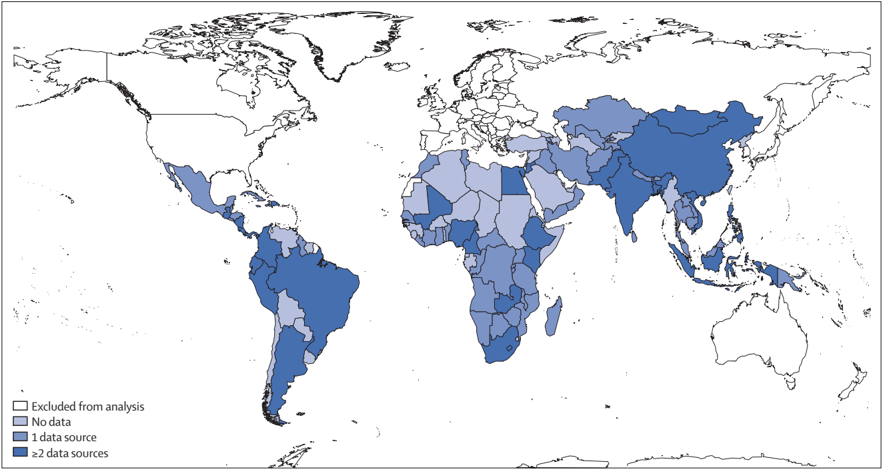
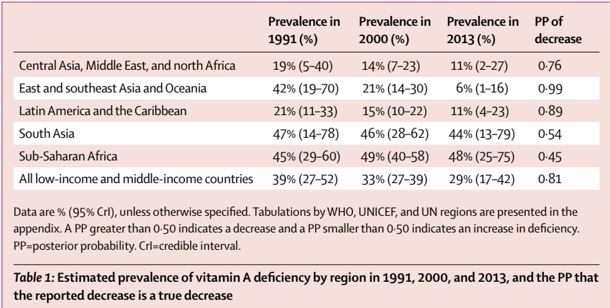
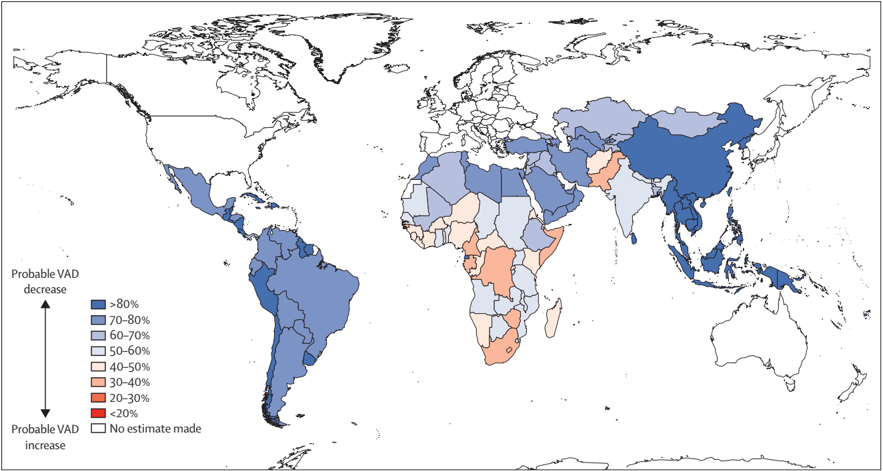
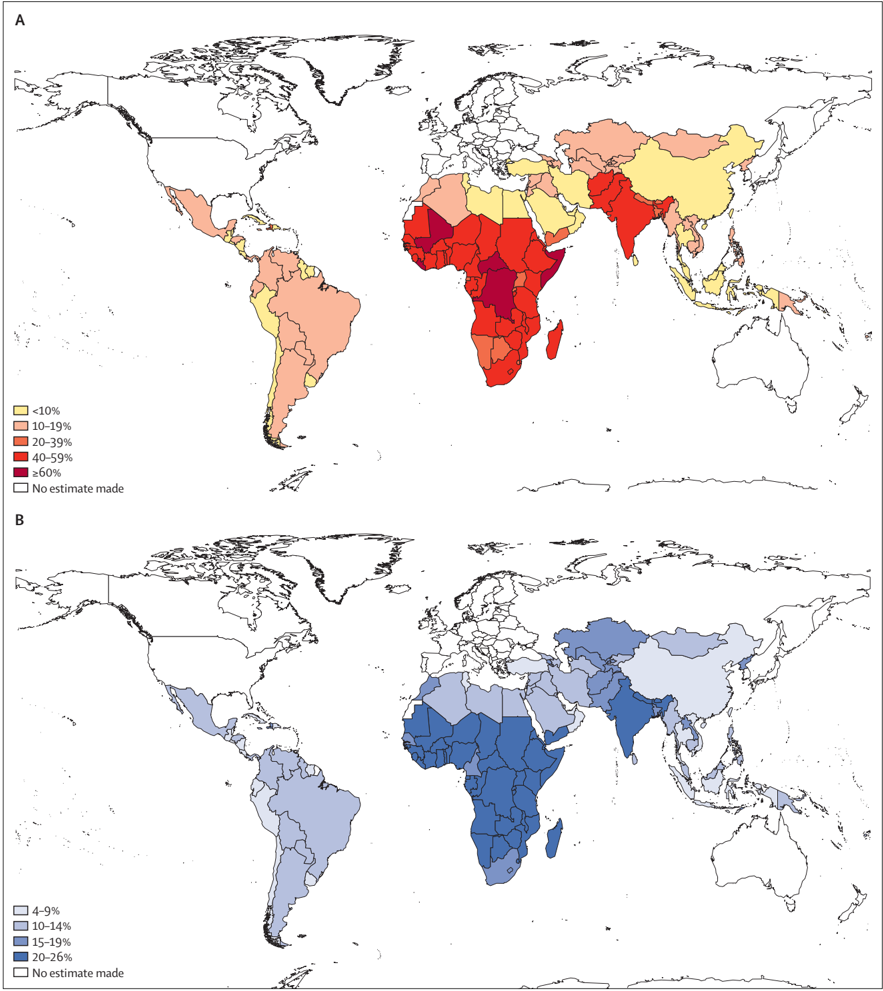
Verification
Claims the paper makes
The claims and statistics of this paper haven’t been checked yet.
Free: it reads the open-access text and checks the first 5 claims that cite a source we can check. Create a free account to check every claim.
Claims other papers make about this one
Each is checked against this paper’s own text: does it say what the citing paper says it does?
The source backs part of the claim, not all of it — or backs it for a different population, condition or comparison.
In the citing paper
“This is of special importance in infants and children, where this intervention reduces the rate of child morbidity and mortality.”
From Vitamin A Update: Forms, Sources, Kinetics, Detection, Function, Deficiency, Therapeutic Use and Toxicity (2021) · cites this paper as [336]
Experimental — accuracy not yet measuredThe source backs part of the claim, not all of it — or backs it for a different population, condition or comparison.
In the citing paper
“it is calculated that approximately one-third of the world’s infant population suffers from hypovitaminosis A”
From Vitamin A Update: Forms, Sources, Kinetics, Detection, Function, Deficiency, Therapeutic Use and Toxicity (2021) · cites this paper as [336]
Experimental — accuracy not yet measuredThe check wasn’t confident either way, so it gives no verdict — never disputed.
In the citing paper
“in developing countries, around 15% of all pregnant women suffer from this deficiency”
From Vitamin A Update: Forms, Sources, Kinetics, Detection, Function, Deficiency, Therapeutic Use and Toxicity (2021) · cites this paper as [336]
Experimental — accuracy not yet measured
Self-check
Percentages, sums and reported differences re-computed from the paper’s own numbers.
The self-check needs the paper’s full text.
Citations
Cites
Lim, S. S., Vos, T., Flaxman, A. D., Danaei, G., Shibuya, K., Adair-Rohani, H., AlMazroa, M. A., Amann, M., Anderson, H. R., Andrews, K. G., et al. (2012) · The Lancet · doi:10.1016/s0140-6736(12)61766-8 · Cited by 11,805
Self-citationMaternal and child undernutrition and overweight in low-income and middle-income countries
Black, R. E., Victora, C. G., Walker, S. P., Bhutta, Z. A., Christian, P., de Onis, M., Ezzati, M., Grantham-McGregor, S., Katz, J., Martorell, R., et al. (2013) · The Lancet · doi:10.1016/s0140-6736(13)60937-x · Cited by 8,475
Self-citationMaternal and child undernutrition: global and regional exposures and health consequences
Black, R. E., Allen, L. H., Bhutta, Z. A., Caulfield, L. E., de Onis, M., Ezzati, M., Mathers, C., & Rivera, J. (2008) · The Lancet · doi:10.1016/s0140-6736(07)61690-0 · Cited by 6,443
Self-citationFinucane, M. M., Stevens, G. A., Cowan, M. J., Danaei, G., Lin, J. K., Paciorek, C. J., Singh, G. M., Gutierrez, H. R., Lu, Y., Bahalim, A. N., et al. (2011) · The Lancet · doi:10.1016/s0140-6736(10)62037-5 · Cited by 4,050
Self-citationSelected major risk factors and global and regional burden of disease
Ezzati, M., Lopez, A. D., Rodgers, A., Vander Hoorn, S., & Murray, C. J. (2002) · The Lancet · doi:10.1016/s0140-6736(02)11403-6 · Cited by 3,594
Self-citationDanaei, G., Finucane, M. M., Lu, Y., Singh, G. M., Cowan, M. J., Paciorek, C. J., Lin, J. K., Farzadfar, F., Khang, Y.-H., Stevens, G. A., et al. (2011) · The Lancet · doi:10.1016/s0140-6736(11)60679-x · Cited by 3,568
Self-citationLiu, L., Oza, S., Hogan, D., Perin, J., Rudan, I., Lawn, J. E., Cousens, S., Mathers, C., & Black, R. E. (2015) · The Lancet · doi:10.1016/s0140-6736(14)61698-6 · Cited by 3,167
Self-citationGlobal burden of childhood pneumonia and diarrhoea
Walker, C. L. F., Rudan, I., Liu, L., Nair, H., Theodoratou, E., Bhutta, Z. A., O'Brien, K. L., Campbell, H., & Black, R. E. (2013) · The Lancet · doi:10.1016/s0140-6736(13)60222-6 · Cited by 2,356
Self-citationStevens, G. A., Finucane, M. M., De-Regil, L. M., Paciorek, C. J., Flaxman, S. R., Branca, F., Peña-Rosas, J. P., Bhutta, Z. A., & Ezzati, M. (2013) · The Lancet Global Health · doi:10.1016/s2214-109x(13)70001-9 · Cited by 1,932
Self-citationDanaei, G., Finucane, M. M., Lin, J. K., Singh, G. M., Paciorek, C. J., Cowan, M. J., Farzadfar, F., Stevens, G. A., Lim, S. S., Riley, L. M., et al. (2011) · The Lancet · doi:10.1016/s0140-6736(10)62036-3 · Cited by 1,239
Self-citation
Research works printed but not linked: 2
- 15. Rice AL, West KP, Black RE. Vitamin A defi ciency. In: Ezzati M, Lopez AD, Rodgers A, Murray CJL, eds. Comparative Quantifi cation of Health Risks. Geneva: World Health Organization; 2006: 211-56.
- 48. West KP Jr, Klemm RDW, Sommer A. Vitamin A saves lives. Sound science, sound policy. World Nutr 2010; 1: 211-29.
Cited by
Items 201–300 of 623
Kebede, A., Jirström, M., Worku, A., Alemu, K., Berhane, H. Y., Turner, C. J., Ekström, E., & Berhane, Y. (2022) · Nutrients · doi:10.3390/nu14020296 · Cited by 20
“In 2017, the prevalence of VAD in Ethiopia was 28%, featuring the second-highest prevalence of VAD among preschoolers in the world [6].”
BackgroundInfluentialWayenbergh, E. V., Langenaeken, N. A., Struyf, N., Goos, P., Foubert, I., & Courtin, C. M. (2023) · Food Research International · doi:10.1016/j.foodres.2023.112911 · Cited by 19
Engle‐Stone, R., Nankap, M., Ndjebayi, A. O., Gimou, M., Friedman, A., Haskell, M. J., Tarini, A., & Brown, K. H. (2017) · Nutrients · doi:10.3390/nu9050522 · Cited by 18
“Vitamin A deficiency (VAD) increases the risk and severity of infections, and was estimated to contribute to tens of thousands of deaths from diarrhea and measles among preschool children worldwide in 2013 [1].”
BackgroundDietary vitamin a intake among Chinese adults: findings from CNTCS2015
Du, W., Wang, H., Wang, Z., Zhang, J., Su, C., Jia, X., Zhang, J., Jiang, H., Huang, F., Ouyang, Y., et al. (2018) · Nutrition Journal · doi:10.1186/s12937-018-0369-3 · Cited by 19
“Vitamin A deficiency remains a major public-health issue in developing countries, especially in low-income regions, such as south Asia and sub-Saharan Africa [2].”
BackgroundValadez, J. J., Berendes, S., Odhiambo, J. A., Vargas, W., Devkota, B., Lako, R. L. L., & Jeffery, C. (2020) · BMJ Global Health · doi:10.1136/bmjgh-2019-002093 · Cited by 18
Vitamin A and Its Related Diseases
Rao, S., Li, T., Li, X., Hou, L., & Sun, W. (2025) · Food Science & Nutrition · doi:10.1002/fsn3.70630 · Cited by 19
“The marginal deficiency rate of vitamin A among children in our country remains at a relatively high level, which is similar to the situation in most emerging developing countries (Stevens et al. 2015; Pfeiffer et al. 2013).”
InfluentialSustaining the blue bounty: Fish food and nutrition security in Nigeria's evolving blue economy
Saba, A. O., Eyo, V. O., Elegbede, I. O., Fakoya, K. A., Ojewole, A. E., Dawodu, F. O., Rashidat, A. A., & Amal, M. N. A. (2024) · AIMS Agriculture and Food · doi:10.3934/agrfood.2024029 · Cited by 23
p38 MAPK signaling mediates retinoic acid‐induced CD103 expression in human dendritic cells
Roe, M. M., Hashimi, M., Swain, S., Woo, K. M., & Bimczok, D. (2020) · Immunology · doi:10.1111/imm.13246 · Cited by 19
Engle‐Stone, R., Wessells, K. R., Haskell, M. J., Kumordzie, S. M., Arnold, C. D., Davis, J. N., Becher, E., Fuseini, A. D., Nyaaba, K. W., Tan, X., et al. (2024) · PLoS ONE · doi:10.1371/journal.pone.0302968 · Cited by 17
The economic, agricultural, and food security repercussions of a wild pollinator collapse in Europe
Feuerbacher, A., Kempen, M., Steidle, J. L. M., & Wieck, C. (2025) · Nature Communications · doi:10.1038/s41467-025-65414-7 · Cited by 17
Tang, W., Zhuang, J., Anselmo, A. C., Xu, X., Duan, A. R., Zhang, R., Sugarman, J. L., Zeng, Y., Rosenberg, E. M., Graf, T. P., et al. (2022) · Proceedings of the National Academy of Sciences · doi:10.1073/pnas.2211534119 · Cited by 16
“The regions most severely impacted by VAD are sub-Saharan Africa and South Asia, where the prevalence of VAD has risen to 48% and 44%, respectively (6).”
Does India Need a Universal High-Dose Vitamin A Supplementation Program?
Greiner, T. H., Mason, J. O., Benn, C. S., & Sachdev, H. S. (2019) · The Indian Journal of Pediatrics · doi:10.1007/s12098-018-02851-x · Cited by 17
Cost‐effectiveness of sunflower oil fortification with vitamin A in Tanzania by scale
Walters, D., Ndau, E., Saleh, N., Mosha, T. C. E., & Horton, S. (2019) · Maternal and Child Nutrition · doi:10.1111/mcn.12720 · Cited by 16
“The highest levels of deficiency are in the Central and Eastern Africa regions, where nearly half of all children are affected (Stevens et al., 2015).”
BackgroundMethodInfluentialLaPorte, M.-F., Vachev, M. V., Fenn, M., & Diepenbrock, C. (2022) · G3 Genes Genomes Genetics · doi:10.1093/g3journal/jkac006 · Cited by 20
Zegeye, B., Olorunsaiye, C. Z., Ahinkorah, B. O., Ameyaw, E. K., Seidu, A., Budu, E., & Yaya, S. (2022) · SAGE Open Medicine · doi:10.1177/20503121221094688 · Cited by 19
de Castro, I. R. R., Normando, P., Farias, D. R., Berti, T. L., Schincaglia, R. M., Andrade, P. G., Bertoni, N., Lacerda, E. M. D. A., dos Anjos, L. A., Boccolini, C. S., et al. (2023) · Cadernos de Saúde Pública · doi:10.1590/0102-311xen194922 · Cited by 16
“The UNICEF model divides the determinants of malnutrition into three levels: (1) enabling determinants, which include political, financial, social, cultural, and environmental conditions; (2) underlying determinants, which include foods, services, and practices available to children and their families; and (3) immedia…”
BackgroundGender equity and reduction of post-harvest losses in agricultural value chains
Nordhagen, S. (2021) · doi:10.36072/wp.20 · Cited by 18
“However, about one quarter of the population suffers from food insecurity, 70% of children in subSaharan Africa and South Asia do not consume a diet of minimum diversity, and about 46% of them are deficient in Vitamin A (2,3).”
BackgroundHess, S. Y., McLain, A. C., Lescinsky, H., Brown, K. H., Afshin, A., Atkin, R., & Osendarp, S. J. (2021) · Public Health Nutrition · doi:10.1017/s1368980021004821 · Cited by 16
“The GBD Collaboration uses two main approaches to estimate the global micronutrient disease burden: (1) micronutrient deficiency as an underlying cause of disease (e.”
MethodHETEROSIS AND LINE-BY-TESTER COMBINING ABILITY ANALYSIS FOR GRAIN YIELD AND PROVITAMIN A IN MAIZE
Tabu, I. M., Lubobo, K., MBUYA, K., & Kimuni, L. N. (2023) · SABRAO Journal of Breeding and Genetics · doi:10.54910/sabrao2023.55.3.8 · Cited by 24
Clinical vitamin A deficiency among preschool aged children in southwest Ethiopia
Nuredin, A., Melis, T., & Oumer, A. (2024) · Frontiers in Nutrition · doi:10.3389/fnut.2024.1267979 · Cited by 15
Lin, K., Qi, Y., & Sun, J. (2025) · Nutrients · doi:10.3390/nu17030572 · Cited by 15
“Vitamin A deficiency (VAD) is a critical public health problem in low-and middle-income countries (LMICs) that significantly increases the risk of morbidity and premature mortality for children under 5 years of age [1].”
InfluentialAssessment of meibomian glands using a custom–made meibographer in dry eye patients in Ghana
Osae, E. A., Ablordeppey, R. K., Horstmann, J., Kumah, D. B., & Steven, P. (2018) · BMC Ophthalmology · doi:10.1186/s12886-018-0869-0 · Cited by 15
Metabolism of Neonatal Vitamin A Supplementation: A Systematic Review
Gannon, B. M., Rogers, L. M., & Tanumihardjo, S. A. (2020) · Advances in Nutrition · doi:10.1093/advances/nmaa137 · Cited by 16
Self-citationAloke, C., Emelike, C. U., Obasi, N. A., Ogbu, P. N., Edeogu, C. O., Uzomba, G. C., Ekakitie, O., Iyaniwura, A. A., Okoro, C. C., Okey, B. P., et al. (2021) · Arabian Journal of Chemistry · doi:10.1016/j.arabjc.2021.103428 · Cited by 19
Baye, K., Laillou, A., Seyoum, Y., Zvandaziva, C., Chimanya, K., & Nyawo, M. (2022) · American Journal of Clinical Nutrition · doi:10.1093/ajcn/nqac082 · Cited by 15
Maazou, A. S., Adetimirin, V. O., Gedil, M. A., Meseka, S. K., Mengesha, W., & Menkir, A. (2022) · Frontiers in Genetics · doi:10.3389/fgene.2022.955420 · Cited by 15
An Overview of the Role of Smallholders in Oil Palm Production Systems in Changing Climate
Abubakar, A., & Ishak, M. Y. (2022) · Nature Environment and Pollution Technology · doi:10.46488/nept.2022.v21i05.004 · Cited by 20
Kulkarni, S., Gilbert, C. E., Giri, N., Hankare, P., Dole, K. S., & Deshpande, M. (2022) · Indian Journal of Ophthalmology · doi:10.4103/ijo.ijo_1930_21 · Cited by 15
“However, vitamin A supplementation coverage with two doses was only 40%–59% in 2018,[29] and VAD still remains a public health problem in India.[30] There is a need to improve primary healthcare and other sustainable interventions to control VAD, such as promotion of breastfeeding, nutrition education, control of ende…”
BackgroundInfluentialPalmer, A., Darnton‐Hill, I., & West, K. P. (2017) · Springer eBooks · doi:10.1007/978-3-319-43739-2_9 · Cited by 18
Engle‐Stone, R., Miller, J. C., Reario, M. F. D. R., Arnold, C. D., Stormer, A., Lafuente, E., Oxley, A., Capanzana, M. V., Cabanilla, C. V. D., Ford, J. L., et al. (2022) · Current Developments in Nutrition · doi:10.1093/cdn/nzac115 · Cited by 15
“Vitamin A deficiency (VAD) has long been recognized as a public health problem contributing to child morbidity and mortality in many lowand middle-income countries (LMICs) (1).”
BackgroundRisk factors for vitamin A and D deficiencies among children under-five in the state of Palestine
Chaudhry, A. B., Hajat, S., Rizkallah, N., & Abu-Rub, A. (2018) · Conflict and Health · doi:10.1186/s13031-018-0148-y · Cited by 16
“Few studies have estimated the overall prevalence of VAD among children in the Middle East alone, however one study estimated the prevalence was 11% in the combined regions of the Middle East, North Africa and Central Asia [15].”
BackgroundNgo, J., & Serra‐Majem, L. (2018) · Elsevier eBooks · doi:10.1016/b978-0-08-100596-5.22064-7 · Cited by 15
Role of vitamin A in health and illness
Marzęda, P., & Łuszczki, J. (2019) · Journal of Pre-Clinical and Clinical Research · doi:10.26444/jpccr/112376 · Cited by 14
“About 95,000 deaths were caused by measles and about 11,000 by diarrhea attributable to the deficiency of vitamin A [64].”
A Review: Growing Rice in the Controlled Environments
Al-Hashimi, A. (2023) · Biosciences Biotechnology Research Asia · doi:10.13005/bbra/3064 · Cited by 14
Scherer, L., Blackstone, N. T., Conrad, Z., Fulgoni, V. L. I., Mathers, J. C., van der Pols, J. C., Willett, W. C., Fantke, P., Pfister, S., Stylianou, K. S., et al. (2024) · The International Journal of Life Cycle Assessment · doi:10.1007/s11367-024-02298-7 · Cited by 15
“…a Western perspective, vitamin D (Holick and Chen 2008) and potassium (Sun and Weaver 2020) would be valuable to consider additionally, and from a global perspective, vitamin A (Stevens et al. 2015), iron (Pasricha et al. 2021), iodine (Pearce et al. 2016), and vitamin B12 (Stabler and Allen 2004).”
Biofortification of tomatoes with beta-carotene through targeted gene editing
Liu, X., Fu, Y., Li, M., Xiong, S., Huang, L., Zhang, S., Zhang, W., Liang, X., Wang, W., Tang, K., et al. (2025) · International Journal of Biological Macromolecules · doi:10.1016/j.ijbiomac.2025.147396 · Cited by 18
Kale, O. E., Awodele, O., & Akindele, A. J. (2019) · Biochemistry Insights · doi:10.1177/1178626419883243 · Cited by 17
Vitamin A Levels Among Pre-School Children of Central and Western China
Chen, Q., Liu, Y., Chen, L., Chen, J., Yang, T., Cheng, Q., & Li, T. (2021) · Frontiers in Public Health · doi:10.3389/fpubh.2021.694106 · Cited by 14
Hess, S. Y., McLain, A. C., Frongillo, E. A., Afshin, A., Kassebaum, N. J., Osendarp, S. J. M., Atkin, R., Rawat, R., & Brown, K. H. (2021) · Current Developments in Nutrition · doi:10.1093/cdn/nzab141 · Cited by 20
Golden Rice: no progress to be seen. Do we still need it?
Wesseler, J., & Zilberman, D. (2016) · Environment and Development Economics · doi:10.1017/s1355770x16000292 · Cited by 14
“But despite reducing Vitamin A deficiency in parts of the world, such as the Philippines, there are still important parts of the world where it prevails, namely in South Asia and Sub-Saharan Africa (Stevens et al., 2015).”
BackgroundLow breastmilk vitamin A concentration is prevalent in rural Ethiopia
Abebe, Z., Haki, G. D., Schweigert�, F. J., Henkel, I. M., & Baye, K. (2018) · European Journal of Clinical Nutrition · doi:10.1038/s41430-018-0334-4 · Cited by 14
Campbell, R. K., Shaikh, S., Schulze, K. J., Arguello, M. A., Ali, H., Wu, L. S. F., West, K. P., & Christian, P. S. (2020) · Nutrients · doi:10.3390/nu12051452 · Cited by 15
“Prevalence of these deficiencies in South Asia are among the highest worldwide [2,10,11].”
BackgroundGriffiths, J. K. (2020) · Elsevier eBooks · doi:10.1016/b978-0-323-55512-8.00144-7 · Cited by 14
Vitamin A supplementation in infants and children
Murray, J. S., & White, J. (2016) · Journal for Specialists in Pediatric Nursing · doi:10.1111/jspn.12156 · Cited by 14
A scoping review on the associations and potential pathways between malnutrition and measlesPreprint
Tran, I. C., Gregory, C. J., O’Connor, P. M., Imohe, A., Do, L. A. H., & Suchdev, P. S. (2023) · medRxiv · doi:10.1101/2023.01.21.23284872 · Cited by 15
“(51) Similarly, in 2017 and 2022, two Cochrane reviews concluded that vitamin A 365 supplementation did not have a significant effect on mortality due to measles, however this evidence 366 was graded as having low certainty.”
BackgroundMulungu, K., Tekelewold, H., Abro, Z., Sevgan, S., Muriithi, B. W., Ecuru, J., Beesigamukama, D., & Kassie, M. B. (2023) · Scientific Reports · doi:10.1038/s41598-023-41217-y · Cited by 13
Vresk, L., Flanagan, M., Daniel, A. I., Potani, I., Bourdon, C., Spiegel-Feld, C., Thind, M. K., Farooqui, A., Ling, C., Miraglia, E., et al. (2024) · Nutrition Reviews · doi:10.1093/nutrit/nuad165 · Cited by 17
Subclinical vitamin A deficiency and anemia among women and preschool children from Northeast India
Meshram, I. I., Kumar, B., Venkaiah, K., & Longvah, T. (2020) · Indian Journal of Community Medicine · doi:10.4103/ijcm.ijcm_356_19 · Cited by 13
“in their study estimated 44% prevalence of VAD (CI: 13–79), which was significantly associated with the occupation of woman and family size,[19] similar to our study.”
ResultMaazou, A. S., Gedil, M. A., Adetimirin, V. O., Meseka, S. K., Mengesha, W., Babalola, D., Offornedo, Q., & Menkir, A. (2021) · Agronomy · doi:10.3390/agronomy11102022 · Cited by 15
Haselow, N., Joshi, V., Bayo, P. N., Murye, J. W., Shaban, N. S., Abebe, K. T., Kassim, I., Shiweredo, T., Vinathan, H., Jaiswal, C., et al. (2022) · Global Health Science and Practice · doi:10.9745/ghsp-d-21-00660 · Cited by 13
“In sub-Saharan Africa, however, VAD prevalence has changed little over the past 30 years and remains high at 48%.(3) It is estimated that 157,000 deaths or 2%–3% of all deaths among children aged younger than 5 years globally are attributable to VAD each year.”
BackgroundZhou, C., Li, M., Xiao, R., Zhao, F. J., & Zhang, F. S. (2022) · Frontiers in Nutrition · doi:10.3389/fnut.2022.845026 · Cited by 14
“Vitamin A is essential for growth and immune function, and deficiencies make people susceptible to infections and death due to depressed immune function (54, 55), it is also vital for vision and is especially important in pregnancy, as it contributes to organogenesis during early fetal development (56).”
BackgroundThe role of genes and environment in the etiology of congenital diaphragmatic hernias
Burns, N. G., & Kardon, G. (2022) · Current topics in developmental biology/Current Topics in Developmental Biology · doi:10.1016/bs.ctdb.2022.10.004 · Cited by 14
“Vitamin A deficiency is a major global health problem, particularly in low-and middle-income countries, most notably in sub-Saharan Africa and southern Asia (Stevens et al., 2015).”
BackgroundThe Impact of Nutritional Interventions on Child Health and Cognitive Development
Bommer, C., Mittal, N., & Vollmer, S. (2020) · Annual Review of Resource Economics · doi:10.1146/annurev-resource-110519-093256 · Cited by 12
“It is further an important risk factor for increased mortality from measles and diarrhea (Stevens et al. 2015).”
BackgroundRapid direct analysis of retinyl palmitate (vitamin A) in fortified vegetable oils by HPLC-FLD
Rimkus, G. G., Schubert, M., Morgan, D. J., & Jungjohann, S. M. (2021) · Food Additives & Contaminants Part A · doi:10.1080/19440049.2021.1977854 · Cited by 12
Tang, K., Eilerts-Spinelli, H., Imohe, A., Adams, K. P., Sandalinas, F., Moloney, G. M., Joy, E. J. M., & Hasman, A. (2023) · BMJ Open · doi:10.1136/bmjopen-2022-062387 · Cited by 13
Hassan, M. Y., Mohamud, R. Y. H., Kassim, M. M., Hussein, A. I., Adan, M. K., Akbulut, U. E., Olum, R., Okot, J., Bongomin, F., & Ahmed, M. A. M. (2023) · IJID Regions · doi:10.1016/j.ijregi.2023.05.003 · Cited by 12
“hese complications can affect most organ systems, and are most comon in young infants, adults aged > 20 years, pregnant women, and hose who are immunocompromised or undernourished, particularly hildren with vitamin A deficiency [7] .”
BackgroundOxley, A., Engle‐Stone, R., Miller, J. C., Reario, M. F. D. R., Stormer, A., Capanzana, M. V., Cabanilla, C. V. D., Haskell, M. J., & Lietz, G. (2020) · Journal of Nutrition · doi:10.1093/jn/nxaa446 · Cited by 12
“Aliquots of frozen serum were also shipped on dry ice to the VitMin Lab (Willstaett, Germany) where they were analyzed for concentrations of RBP, C-reactive protein (CRP), α(1)-acid glycoprotein (AGP), ferritin, and soluble transferrin receptor (sTfR) by sandwich ELISA (25).”
BackgroundMethodInfluentialAdachi, S., Torio, M., Okuzono, S., Motomura, Y., Ichimiya, Y., Sonoda, Y., Nagata, J., Okamoto, M., Notomi, S., Sanefuji, M., et al. (2021) · Nutrition · doi:10.1016/j.nut.2021.111275 · Cited by 13
Kreuze, J. F., Cuéllar, W. J., & Low, J. W. (2021) · Plant pathology in the 21st century · doi:10.1007/978-3-030-57899-2_5 · Cited by 12
Danova, I. (2021) · PROBLEMS of Infectious and Parasitic Diseases · doi:10.58395/pipd.v49i2.69 · Cited by 12
Kumar, R. (2022) · Pediatric Research · doi:10.1038/s41390-022-01969-1 · Cited by 12
Senbanjo, I. O., Owolabi, A. J., Oshikoya, K. A., Hageman, J. H. J., Adeniyi, Y. E., Samuel, F. O., Melse‐Boonstra, A., & Schaafsma, A. (2022) · Frontiers in Nutrition · doi:10.3389/fnut.2022.864856 · Cited by 16
Transgenic Pro-Vitamin A Biofortified Crops for Improving Vitamin A Deficiency and Their Challenges
Lee, H. (2017) · The Open Agriculture Journal · doi:10.2174/1874331501711010011 · Cited by 12
Østergaard, S., Larsen, J., Petersen, L., Smith, G. D., & Agerbo, E. (2019) · Epidemiology · doi:10.1097/ede.0000000000000957 · Cited by 11
Iron, Catechin, and Ferulic Acid Inhibit Cellular Uptake of β-Carotene by Reducing Micellization
Kruger, J., Stuetz, W., & Frank, J. (2019) · Journal of Agricultural and Food Chemistry · doi:10.1021/acs.jafc.9b01417 · Cited by 13
Imdad, A., Rehman, F., Davis, E. W., Ranjit, D., Surin, G. S., Attia, S. L., Lawler, S., Smith, A. A., & Bhutta, Z. A. (2021) · Campbell Systematic Reviews · doi:10.1002/cl2.1141 · Cited by 11
Self-citationBora, K. (2022) · BMJ Global Health · doi:10.1136/bmjgh-2021-007972 · Cited by 15
2023 Africa Agriculture Trade Monitor (AATM)
Odjo, S. P., Traoré, F., & Zaki, C. R. (2023) · AKADEMIYA2063 and International Food Policy Research Institute (IFPRI) eBooks · doi:10.54067/9781737916475 · Cited by 12
Krimsky, S., & Lee, H. (2016) · International Journal of Social Science Studies · doi:10.11114/ijsss.v4i11.1918 · Cited by 15
“Substantial reductions in child mortality resulting from initial trials of vitamin A supplementation (VAS) led to efforts to scale up high-dose VAS, despite controversy on their actual benefits (G. A. Stevens et al., 2015).”
BackgroundInfluentialZhou, Y., Zhang, D., Hu, D., Liu, B., Peng, J., Shen, L., Long, C., Yu, Y., Zhang, Y., Liu, X., et al. (2019) · Reproductive Toxicology · doi:10.1016/j.reprotox.2019.05.063 · Cited by 11
Gannon, B. M., Thakker, V., Bonam, V. S., Haas, J. D., Bonam, W., Finkelstein, J. L., Udipi, S. A., & Mehta, S. (2019) · Food and Nutrition Bulletin · doi:10.1177/0379572119855588 · Cited by 11
Raiten, D. J., Darnton‐Hill, I., Tanumihardjo, S. A., Suchdev, P. S., Udomkesmalee, E., Martínez, C., Mazariegos, D. I., Musonda, M., Kraemer, K., & Martínez, H. (2019) · Advances in Nutrition · doi:10.1093/advances/nmz100 · Cited by 11
“(9), show that whereas the overall prevalence of VAD over the period 1991–2013 was reduced from 39% to 29%, the greatest shifts were occurring in Southeast Asia/Oceania.”
BackgroundChen, H., Lü, J., & Li, Y. (2022) · Frontiers in Nutrition · doi:10.3389/fnut.2022.754351 · Cited by 11
Yu, S., Yin, Y., Wang, D., Xie, S., Cheng, Q., Cheng, X., & Qiu, L. (2018) · International Journal of Mass Spectrometry · doi:10.1016/j.ijms.2018.10.024 · Cited by 12
Gu, R., Chen, H., Adhikari, A., Gu, Y., Kwong, J. S., Li, G., Li, Z., & Pan, Y. (2021) · Cochrane Database of Systematic Reviews · doi:10.1002/14651858.cd014847 · Cited by 11
Self-citationBaye, K. (2019) · Proceedings of The Nutrition Society · doi:10.1017/s0029665119000557 · Cited by 11
“This success has led many countries in Africa and Asia where folate de fi c-iencies are expected to be still high to plan or implement folic acid forti fi cation.”
InfluentialVitamin A deficiency: policy implications of estimates of trends and mortality in children
Mason, J. B., Sanders, D. M., Greiner, T. H., Shrimpton, R., & Yukich, J. O. (2015) · The Lancet Global Health · doi:10.1016/s2214-109x(15)00246-6 · Cited by 11
Nutritional deficiencies in low-sociodemographic-index countries: a population-based study
Li, H., Ren, H., Guo, X., & Chen, Z. (2023) · Frontiers in Nutrition · doi:10.3389/fnut.2023.985221 · Cited by 10
Attia, S. L., Odhiambo, S. A., Mogaka, J. N., Ondondo, R. O., Schadler, A. D., McQuerry, K., Fuchs, G. J., Williams, J. E., McGuire, S., Waterman, C., et al. (2024) · Nutrients · doi:10.3390/nu16193425 · Cited by 11
“Vitamin A deficiency (VAD) affects up to 29% of children under five years in low-and middle-income countries and is one of the most common nutritional disorders globally [1].”
BackgroundAhoudou, I., Sogbohossou, D. E. O., Hotegni, N. V. F., Fanou‐Fogny, N., Moumouni-Moussa, I., & Achigan-Dako, E. G. (2025) · Frontiers in Sustainable Food Systems · doi:10.3389/fsufs.2025.1545827 · Cited by 12
Comparing farmers’ willingness to pay with costs of clean sweet potato seed multiplication in Kenya
Mwangi, C. W., Ateka, J. M., Mbeche, R., Oyugi, L., & Ateka, E. (2022) · Food Security · doi:10.1007/s12571-022-01293-w · Cited by 10
Hodges, J. K., Tan, L., Green, M. H., & Ross, A. C. (2017) · American Journal of Clinical Nutrition · doi:10.3945/ajcn.116.149039 · Cited by 10
“INTRODUCTION The prevalence of vitamin A (VA(4); retinol) deficiency in lowand middle-income countries has declined by w10% since 1991; however, in sub-Saharan Africa and south Asia, VA deficiency remains very common, affecting 1 in every 2 children (1).”
BackgroundCrop biofortification and food security
Shoeb, E., & Hefferon, K. L. (2021) · Elsevier eBooks · doi:10.1016/b978-0-12-822916-3.00018-4 · Cited by 14
Ouédraogo, O., Zeba, A. N., Kaboré, S., Berthé, A., Drabo, K. M., Dabiré, D. B. O., Bambara, E., Ouédraogo, H., Ilboudo, T. P., Konaté, C., et al. (2022) · Public Health Nutrition · doi:10.1017/s1368980022000283 · Cited by 10
“More recently, analysis of data from 183 developing countries showed that between 1991 and 2013, the Public Health Nutrition: 25(5), 1355–1364 doi:10.”
BackgroundYu, L., Wang, Y., Yu, D., Zhang, S., Zheng, F., Ding, N., Zhu, L., Zhu, Q., Sun, W., Li, S., et al. (2022) · Nutrients · doi:10.3390/nu14071444 · Cited by 10
Early Parenting Interventions to Foster Human Capital in Developing Countries
Emmers, D., Carlos, J., Rozelle, S., & Sylvia, S. (2022) · Annual Review of Resource Economics · doi:10.1146/annurev-resource-111220-010215 · Cited by 11
Graßmann, S., Pivovarova‐Ramich, O., Henze, A., Raila, J., Amoako, Y. A., Nyamekye, R. K., Bedu‐Addo, G., Mockenhaupt, F. P., Schulze, M. B., & Danquah, I. (2020) · Nutrients · doi:10.3390/nu12061786 · Cited by 11
“Food fortification and vitamin A supplementation have reduced VAD prevalence in many affected countries, with the exception of sub-Saharan Africa [2].”
BackgroundMulongo, G., Munyua, H. M., Mbabu, A. N., & Maru, J. (2021) · Journal of Agriculture and Food Research · doi:10.1016/j.jafr.2021.100102 · Cited by 14
Villwock, S. S., Parkes, E. Y., Mbanjo, E. G. N., Rabbi, I. Y., & Jannink, J. (2025) · Genetics · doi:10.1093/genetics/iyaf162 · Cited by 9
“Vitamin A deficiency is a global public health burden impacting around half of all children in sub-Saharan Africa despite supplementation initiatives (Stevens et al. 2015).”
Thapa, R., Addo, E. K., Ruit, S., & Bernstein, P. S. (2023) · Journal of Nutrition · doi:10.1016/j.tjnut.2023.02.005 · Cited by 9
Sun, Y., Ma, J., Wei, X., Dong, J., Wu, S., & Huang, Y. (2023) · Nutrients · doi:10.3390/nu15245073 · Cited by 10
Darwar, R., Rowe, L. A., Chadha, M. K., Sanson‐Rosas, A. M., & Arabi, M. (2023) · Maternal and Child Nutrition · doi:10.1111/mcn.13571 · Cited by 10
Vitamin A deficiency in the MENA region: a 30-year analysis (1990–2019)
Safiri, S., Mousavi, S. E., Nejadghaderi, S. A., Asghari, K. M., Karamzad, N., Sullman, M. J. M., Kolahi, A., & Abdollahi, M. (2024) · Frontiers in Nutrition · doi:10.3389/fnut.2024.1413617 · Cited by 9
Greene, M., Kabaghe, G., Musonda, M., & Palmer, A. (2017) · Food and Nutrition Bulletin · doi:10.1177/0379572117733841 · Cited by 9
“Roughly 30% of children aged 6 to 59 months in low- and middle-income countries are classified as VA deficient.(1) Vitamin 1 Department of International Health, Johns Hopkins Bloomberg School of Public Health, Baltimore, MD, USA 2 National Food and Nutrition Commission, Lusaka, Zambia”
BackgroundGannon, B. M., Glahn, R. P., & Mehta, S. (2021) · Current Developments in Nutrition · doi:10.1093/cdn/nzab111 · Cited by 11
Yazew, T., Kumsa, D. M., & Daba, A. (2020) · International Journal of Nutrition and Food Sciences · doi:10.11648/j.ijnfs.20200904.14 · Cited by 12
“The prevalence of vitamin A deficiency in young children and iron deficiency in women in SSA are also the highest across the globe [19, 26].”
BackgroundHaskell, M. J., Young, R., Adu-Afaruwah, S., Lartey, A. A., Okronipa, H., Maleta, K. M., Ashorn, U., Jorgensen, J. M., Fan, Y., Arnold, C. D., et al. (2020) · Journal of Nutrition · doi:10.1093/jn/nxaa439 · Cited by 9
“Although the global prevalence of VAD among children 6–59 mo of age declined from ∼39 to ∼29% between 1991 and 2013, the prevalence of VAD in sub-Saharan Africa remained unchanged at ∼48% (1).”
BackgroundLikoswe, B. H., Joy, E. J. M., Sandalinas, F., Filteau, S., Maleta, K. M., & Phuka, J. C. (2021) · Nutrients · doi:10.3390/nu13030849 · Cited by 11
“Vitamin A deficiency (VAD) is a global challenge, affecting about 48% of pre-school children (PSC) in Sub-Saharan Africa [1].”
BackgroundVitamin a deficiency, anemia, and nutritional status of under 5-year children from Northeast India
Meshram, I., Neeraja, G., & Longvah, T. (2021) · Indian Journal of Community Medicine · doi:10.4103/ijcm.ijcm_62_21 · Cited by 9
“In South Asia, the prevalence has declined from 47% to 44% during the same period.[6]”
BackgroundInfluentialHina, A., Abbasi, A., Imtiaz, S., Haq, I. U., Hassan, A. U., & Chaudhry, A. (2023) · Springer eBooks · doi:10.1007/978-3-031-33957-8_4 · Cited by 10
Metadata
- Authors
- Stevens, G. A., Bennett, J. E., Hennocq, Q., Lu, Y., De-Regil, L. M., Rogers, L., Danaei, G., Li, G., White, R. A., Flaxman, S. R., Oehrle, S.-P., Finucane, M. M., Guerrero, R., Bhutta, Z. A., Then-Paulino, A., Fawzi, W., Black, R. E., & Ezzati, M.
- Affiliations
- World Health Organization (CH)
- MRC Centre for Environment and Health (GB)
- Harvard University (US)
- Norwegian Institute of Public Health (NO)
- Carnegie Mellon University (US)
- Mathematica Policy Research (US)
- Universidad Icesi (CO)
- Aga Khan University (PK)
- Universidad Autónoma de Santo Domingo (DO)
- Johns Hopkins University (US)
- Corresponding author
- Ezzati, Majid
- ORCID
- Venue
- The Lancet Global Health
- Publisher
- Elsevier BV
- Published
- 2015-09
- Volume
- 3
- Issue
- 9
- Pages
- e528-e536
- ISSN
- 2214-109X (ISSN-L)
- OpenAlex
- W2161245837
- Semantic Scholar
- 2479c3ef57898adfd02f8768d770d15657648143
- Cited by
- 572
- References
- 45
- Citations by year
- 2026: 38 · 2025: 46 · 2024: 54 · 2023: 63 · 2022: 85 · 2021: 71 · 2020: 66 · 2019: 46 · 2018: 36 · 2017: 38 · 2016: 25 · 2015: 4
- FWCI
- 33.06
- Type
- journal article
- Language
- en
- Open access
- gold
- doi.org
- Licence
- cc-by-nc-nd
- www.elsevier.com/tdm/userlicense/1.0/ (tdm)
- creativecommons.org/licenses/by-nc-nd/3.0/ (vor)
- Locations
- The Lancet Global Health (publishedVersion, cc-by-nc-nd)
- LA Referencia (Red Federada de Repositorios Institucionales de Publicaciones Científicas) (publishedVersion)
- PubMed (publishedVersion)
- Northumbria Research Link (Northumbria University) (acceptedVersion)
- Biblioteca Digital - Universidad Icesi (submittedVersion, cc-by-nc-nd)
- Digital Access to Scholarship at Harvard (DASH) (Harvard University) (submittedVersion, cc-by)
- DOAJ (DOAJ: Directory of Open Access Journals) (submittedVersion, cc-by-sa)
- NORA - Norwegian Open Research Archives (submittedVersion, other-oa)
- Spiral (Imperial College London) (submittedVersion, other-oa)
- Funders
- World Health Organization
- Wellcome Trust (100693)
- Medical Research Council (MR/K005901/1)
- Topics
- Health Sciences › Nursing › Nutrition and Dietetics › Child Nutrition and Water Access
- Health Sciences › Medicine › Pediatrics, Perinatology and Child Health › Global Maternal and Child Health
- Health Sciences › Medicine › Endocrinology, Diabetes and Metabolism › Vitamin D Research Studies
- Keywords
- vitamin A deficiency, children under five, prevalence trends, mortality burden, measles mortality, diarrhea mortality, serum retinol, vitamin A supplementation, childhood blindness, low- and middle-income countries, attributable mortality, sub-Saharan Africa, South Asia, Latin America and the Caribbean, East and Southeast Asia, Oceania, Bayesian hierarchical model, population survey, micronutrient deficiency
- MeSH terms
- Bayes Theorem, Child, Child, Preschool, Developing Countries, Female, Humans, Infant, Vitamin A Deficiency, Prevalence, Child Mortality
About these checks
Registry, retraction, Cites and statistics results are computed, not judged, with one exception: a printed reference that no index lists is read once by a model before it counts as a citation error. Claims are extracted by a model and kept only when their quote appears verbatim in the text; each cited source is then checked, with a model’s help, for whether it says what the claim relies on. Those verdicts can be wrong — read the claim’s quote and the cited source before relying on one.
Statistics and arithmetic are recomputed, not judged.
Confidence bands are shown only for fields calibrated on our annotated test set. None is calibrated yet, so no band is shown.
What counts as a claim ›How we measure confidence ›How we check this ›
Are you an author, or do you see a problem with this page? Request a review
Data sources
Bibliographic data: Semantic Scholar, OpenAlex, Crossref.
Contains information from the Semantic Scholar Academic Graph Datasets, made available under the ODC Attribution License (ODC-BY 1.0).
Semantic Scholar’s data is described in: Kinney, R., et al. (2023). The Semantic Scholar Open Data Platform. arXiv:2301.10140.
