

Trends and mortality effects of vitamin A deficiency in children in 138 low-income and middle-income countries between 1991 and 2013: a pooled analysis of population-based surveys
Open accessThe DOI matches its Crossref record; 43 of the 45 references it cites were found in a registry or an index.
Abstract
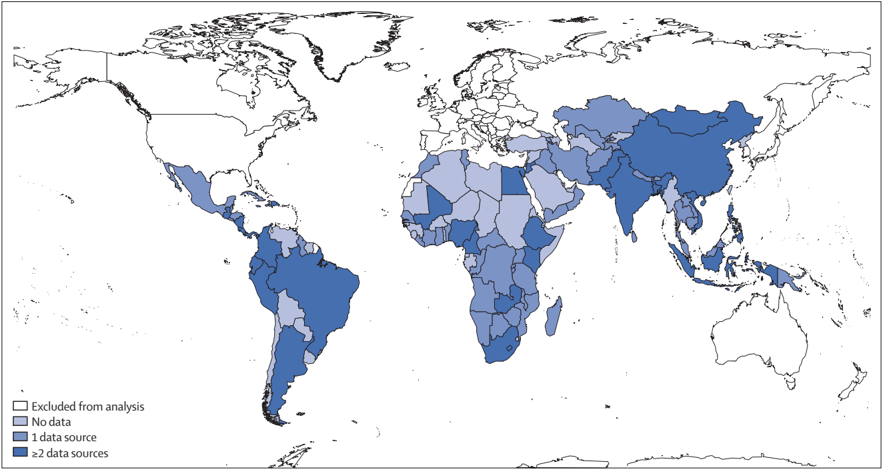
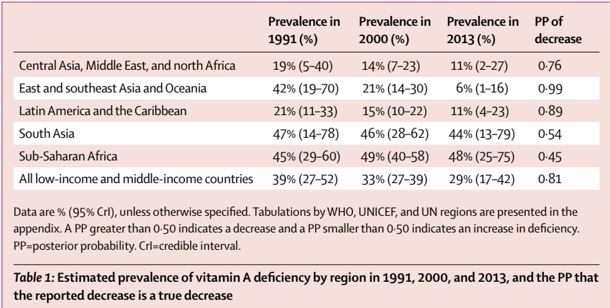
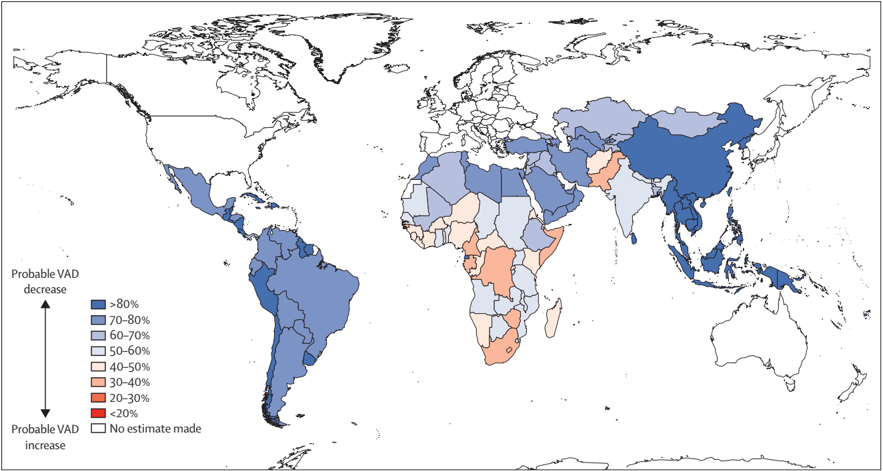
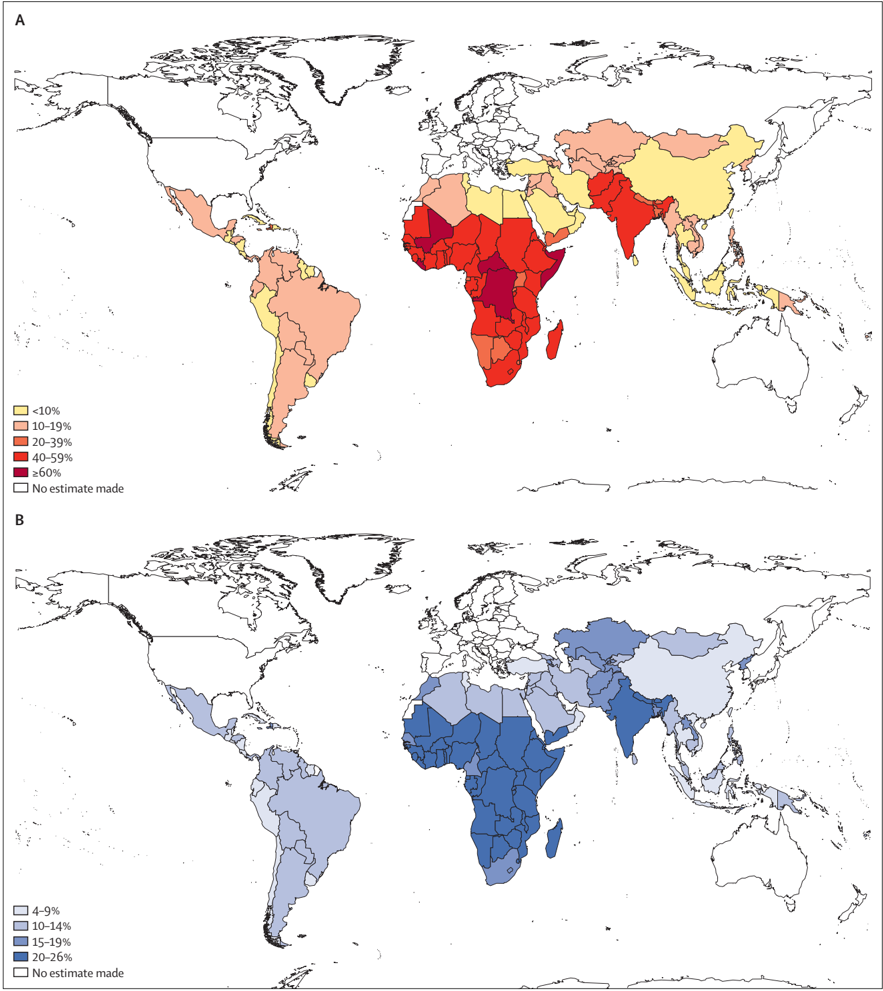
BACKGROUND: Vitamin A deficiency is a risk factor for blindness and for mortality from measles and diarrhoea in children aged 6-59 months. We aimed to estimate trends in the prevalence of vitamin A deficiency between 1991 and 2013 and its mortality burden in low-income and middle-income countries. METHODS: We collated 134 population-representative data sources from 83 countries with measured serum retinol concentration data. We used a Bayesian hierarchical model to estimate the prevalence of vitamin A deficiency, defined as a serum retinol concentration lower than 0·70 μmol/L. We estimated the relative risks (RRs) for the effects of vitamin A deficiency on mortality from measles and diarrhoea by pooling effect sizes from randomised trials of vitamin A supplementation. We used information about prevalences of deficiency, RRs, and number of cause-specific child deaths to estimate deaths attributable to vitamin A deficiency. All analyses included a systematic quantification of uncertainty. FINDINGS: In 1991, 39% (95% credible interval 27-52) of children aged 6-59 months in low-income and middle-income countries were vitamin A deficient. In 2013, the prevalence of deficiency was 29% (17-42; posterior probability [PP] of being a true decline=0·81). Vitamin A deficiency significantly declined in east and southeast Asia and Oceania from 42% (19-70) to 6% (1-16; PP>0·99); a decline in Latin America and the Caribbean from 21% (11-33) to 11% (4-23; PP=0·89) also occurred. In 2013, the prevalence of deficiency was highest in sub-Saharan Africa (48%; 25-75) and south Asia (44%; 13-79). 94 500 (54 200-146 800) deaths from diarrhoea and 11 200 (4300-20 500) deaths from measles were attributable to vitamin A deficiency in 2013, which accounted for 1·7% (1·0-2·6) of all deaths in children younger than 5 years in low-income and middle-income countries. More than 95% of these deaths occurred in sub-Saharan Africa and south Asia. INTERPRETATION: Vitamin A deficiency remains prevalent in south Asia and sub-Saharan Africa. Deaths attributable to this deficiency have decreased over time worldwide, and have been almost eliminated in regions other than south Asia and sub-Saharan Africa. This new evidence for both prevalence and absolute burden of vitamin A deficiency should be used to reconsider, and possibly revise, the list of priority countries for high-dose vitamin A supplementation such that a country's priority status takes into account both the prevalence of deficiency and the expected mortality benefits of supplementation. FUNDIN: Bill & Melinda Gates Foundation, Grand Challenges Canada, UK Medical Research Council.
Overview
The claims and statistics of this paper haven’t been checked yet.
Free: it reads the open-access text and checks the first 5 claims that cite a source we can check. Create a free account to check every claim.
Integrity signals
Registry
Cites
Statistics
Figures
Verification
Claims the paper makes
The claims and statistics of this paper haven’t been checked yet.
Free: it reads the open-access text and checks the first 5 claims that cite a source we can check. Create a free account to check every claim.
Claims other papers make about this one
Each is checked against this paper’s own text: does it say what the citing paper says it does?
The source backs part of the claim, not all of it — or backs it for a different population, condition or comparison.
In the citing paper
“This is of special importance in infants and children, where this intervention reduces the rate of child morbidity and mortality.”
From Vitamin A Update: Forms, Sources, Kinetics, Detection, Function, Deficiency, Therapeutic Use and Toxicity (2021) · cites this paper as [336]
Experimental — accuracy not yet measuredThe source backs part of the claim, not all of it — or backs it for a different population, condition or comparison.
In the citing paper
“it is calculated that approximately one-third of the world’s infant population suffers from hypovitaminosis A”
From Vitamin A Update: Forms, Sources, Kinetics, Detection, Function, Deficiency, Therapeutic Use and Toxicity (2021) · cites this paper as [336]
Experimental — accuracy not yet measuredThe check wasn’t confident either way, so it gives no verdict — never disputed.
In the citing paper
“in developing countries, around 15% of all pregnant women suffer from this deficiency”
From Vitamin A Update: Forms, Sources, Kinetics, Detection, Function, Deficiency, Therapeutic Use and Toxicity (2021) · cites this paper as [336]
Experimental — accuracy not yet measured
Self-check
Percentages, sums and reported differences re-computed from the paper’s own numbers.
The self-check needs the paper’s full text.
Citations
Cites
Lim, S. S., Vos, T., Flaxman, A. D., Danaei, G., Shibuya, K., Adair-Rohani, H., AlMazroa, M. A., Amann, M., Anderson, H. R., Andrews, K. G., et al. (2012) · The Lancet · doi:10.1016/s0140-6736(12)61766-8 · Cited by 11,805
Self-citationMaternal and child undernutrition and overweight in low-income and middle-income countries
Black, R. E., Victora, C. G., Walker, S. P., Bhutta, Z. A., Christian, P., de Onis, M., Ezzati, M., Grantham-McGregor, S., Katz, J., Martorell, R., et al. (2013) · The Lancet · doi:10.1016/s0140-6736(13)60937-x · Cited by 8,475
Self-citationMaternal and child undernutrition: global and regional exposures and health consequences
Black, R. E., Allen, L. H., Bhutta, Z. A., Caulfield, L. E., de Onis, M., Ezzati, M., Mathers, C., & Rivera, J. (2008) · The Lancet · doi:10.1016/s0140-6736(07)61690-0 · Cited by 6,443
Self-citationFinucane, M. M., Stevens, G. A., Cowan, M. J., Danaei, G., Lin, J. K., Paciorek, C. J., Singh, G. M., Gutierrez, H. R., Lu, Y., Bahalim, A. N., et al. (2011) · The Lancet · doi:10.1016/s0140-6736(10)62037-5 · Cited by 4,050
Self-citationSelected major risk factors and global and regional burden of disease
Ezzati, M., Lopez, A. D., Rodgers, A., Vander Hoorn, S., & Murray, C. J. (2002) · The Lancet · doi:10.1016/s0140-6736(02)11403-6 · Cited by 3,594
Self-citationDanaei, G., Finucane, M. M., Lu, Y., Singh, G. M., Cowan, M. J., Paciorek, C. J., Lin, J. K., Farzadfar, F., Khang, Y.-H., Stevens, G. A., et al. (2011) · The Lancet · doi:10.1016/s0140-6736(11)60679-x · Cited by 3,568
Self-citationLiu, L., Oza, S., Hogan, D., Perin, J., Rudan, I., Lawn, J. E., Cousens, S., Mathers, C., & Black, R. E. (2015) · The Lancet · doi:10.1016/s0140-6736(14)61698-6 · Cited by 3,167
Self-citationGlobal burden of childhood pneumonia and diarrhoea
Walker, C. L. F., Rudan, I., Liu, L., Nair, H., Theodoratou, E., Bhutta, Z. A., O'Brien, K. L., Campbell, H., & Black, R. E. (2013) · The Lancet · doi:10.1016/s0140-6736(13)60222-6 · Cited by 2,356
Self-citationStevens, G. A., Finucane, M. M., De-Regil, L. M., Paciorek, C. J., Flaxman, S. R., Branca, F., Peña-Rosas, J. P., Bhutta, Z. A., & Ezzati, M. (2013) · The Lancet Global Health · doi:10.1016/s2214-109x(13)70001-9 · Cited by 1,932
Self-citationDanaei, G., Finucane, M. M., Lin, J. K., Singh, G. M., Paciorek, C. J., Cowan, M. J., Farzadfar, F., Stevens, G. A., Lim, S. S., Riley, L. M., et al. (2011) · The Lancet · doi:10.1016/s0140-6736(10)62036-3 · Cited by 1,239
Self-citation
Research works printed but not linked: 2
- 15. Rice AL, West KP, Black RE. Vitamin A defi ciency. In: Ezzati M, Lopez AD, Rodgers A, Murray CJL, eds. Comparative Quantifi cation of Health Risks. Geneva: World Health Organization; 2006: 211-56.
- 48. West KP Jr, Klemm RDW, Sommer A. Vitamin A saves lives. Sound science, sound policy. World Nutr 2010; 1: 211-29.
Cited by
Items 301–400 of 623
Kupka, R., Nielsen, J. N., Dhillon, C. N., Blankenship, J. L., Haskell, M. J., Baker, S. K., & Brown, K. H. (2016) · Food and Nutrition Bulletin · doi:10.1177/0379572116646280 · Cited by 9
“Vitamin A deficiency (VAD) is a major public health problem and an important contributor to morbidity and mortality among preschool age children worldwide.1 According to most recent global estimates, VAD (defined as serum retinol 0.70 mmol/L) affects 29% of preschool age children in low- and middle-income settings, mo…”
BackgroundInfluentialda Silva, L. L. S., Augusto, R. A., Tietzmann, D. C., Sequeira, L. A. S., Hadler, M. C. C. M., Muniz, P. T., de Lira, P. I. C., Cardoso, M. A., & for the ENFAC Working Group (2016) · Maternal and Child Nutrition · doi:10.1111/mcn.12403 · Cited by 9
“Although this deficiency has decreased over the last few decades, it remains prevalent in some places such as South Asia and sub‐Saharan Africa (Stevens et al., 2015).”
BackgroundInfluentialRaut, M. K., Reddy, J. C., Bera, D., & Warvadekar, K. (2018) · International Journal of Community Medicine and Public Health · doi:10.18203/2394-6040.ijcmph20185279 · Cited by 9
“Further in 2013, VAD accounted for 2% of all deaths in children under 5 years of age in the sub-Saharan Africa region.(14) Most importantly, vitamin A supplements can improve a child’s chance of survival by 12 to 24 per cent.”
BackgroundFood and nutrition security in Eurasia: Evolution, shocks and policies
Burkitbayeva, S., Swinnen, J., & Warrinnier, N. (2020) · Russian Journal of Economics · doi:10.32609/j.ruje.6.49749 · Cited by 9
“Vitamin A deficiency in children below the age of 5 is a risk factor for blindness and mortality from measles and diarrhea (Stevens et al., 2015).”
BackgroundLarge-scale food fortification has great potential to improve child health and nutrition
Keats, E. C., Charbonneau, K. D., Das, J. K., & Bhutta, Z. A. (2021) · Current Opinion in Clinical Nutrition & Metabolic Care · doi:10.1097/mco.0000000000000745 · Cited by 9
“It is estimated that 43% of children under-five globally are anemic, and nearly 30% in LMICs are vitamin A deficient [2,3].”
BackgroundSelf-citationLiu, H., Chen, Q.-X., Yu, L.-C., Yang, T., Chen, J., Miao, J., & Li, T. (2021) · Frontiers in Public Health · doi:10.3389/fpubh.2021.650823 · Cited by 9
Pollinators support the nutrition and income of vulnerable communities
Timberlake, T. P., Sapkota, S., Saville, N. M., Cirtwill, A. R., Baral, S. C., Bhusal, D. R., Devkota, K., Giri, S., Fry, H. A. H., Joshi, D., et al. (2026) · Nature · doi:10.1038/s41586-026-10421-x · Cited by 8
Factors and Molecular Mechanisms of Vitamin A and Childhood Obesity Relationship: A Review
Huang, D., Qian, X., Chen, J., Yating, P. E. N. G., & Zhu, Y. (2023) · Journal of Nutritional Science and Vitaminology · doi:10.3177/jnsv.69.157 · Cited by 9
The multifaceted roles of retinoids in eye development, vision, and retinal degenerative diseases
Engfer, Z. J., & Palczewski, K. (2024) · Current topics in developmental biology/Current Topics in Developmental Biology · doi:10.1016/bs.ctdb.2024.10.003 · Cited by 8
Retinoid dynamics in vision: from visual cycle biology to retina disease treatments
Swigris, J., Widjaja‐Adhi, M. A. K., & Golczak, M. (2025) · Pharmacology & Therapeutics · doi:10.1016/j.pharmthera.2025.108902 · Cited by 8
Vasa, L., Huseynov, R., Varga, I., & Dávid, L. D. (2020) · Geographia Technica · doi:10.21163/gt_2020.152.16 · Cited by 8
“The prevalence of undernourishment in young children, the micro and macro nutrients deficiency in women are the highest in the less developed countries (Stevens et al., 2015).”
BackgroundAmare, T., Sime, T., Legese, G. L., Ferede, M. G., & Alemu, M. B. (2023) · Frontiers in Public Health · doi:10.3389/fpubh.2023.1052016 · Cited by 8
Um, S., Cope, M. R., & Muir, J. A. (2023) · PLOS Global Public Health · doi:10.1371/journal.pgph.0002082 · Cited by 8
Wayenbergh, E. V., Blockx, J., Langenaeken, N. A., Foubert, I., & Courtin, C. M. (2023) · Foods · doi:10.3390/foods13010080 · Cited by 9
Tabu, H. I., Tshiabukole, J. P. K., Kankolongo, A. M., Lubobo, A. K., & Kimuni, L. N. (2023) · Open Agriculture · doi:10.1515/opag-2022-0177 · Cited by 8
Keats, E. C., Imdad, A., Das, J. K., & Bhutta, Z. A. (2018) · Campbell Systematic Reviews · doi:10.1002/cl2.196 · Cited by 10
Self-citationBiofortification of Carotenoids in Agricultural and Horticultural Crops
Shwetha, H. J., Shilpa, S., Arathi, B. P., Marisiddaiah, R., & Lakshminarayana, R. (2020) · Wiley eBooks · doi:10.1002/9781119511144.ch7 · Cited by 11
Campion-Smith, T. J., Kerac, M., McGrath, M., & Berkley, J. A. (2020) · PeerJ · doi:10.7717/peerj.9175 · Cited by 9
Associations Between Nutritional Factors, Obesity and Ocular Diseases: A Narrative Literature Review
Bogdănici, C.-M., Bogdănici, C. M., Pavel, I. A., Ganea, C. V., Donica, V. C., & Cărăușu, E. M. (2025) · Nutrients · doi:10.3390/nu17233798 · Cited by 8
“With progression, more severe signs occur, including xerophthalmia, conjunctival xerosis, Bitot’s spots, corneal xerosis, and keratomalacia, which, if left untreated, can result in irreversible blindness [10].”
Akinsola, O. T., Alamu, E. O., Otegbayo, B. O., Menkir, A., & Maziya-Dixon, B. B. (2020) · Frontiers in Sustainable Food Systems · doi:10.3389/fsufs.2020.576217 · Cited by 7
“In sub-Saharan Africa (SSA) and South Asia, about onethird of children were reported to be vitamin A deficient, which is attributed to more than 95% of deaths with high child mortality (Stevens et al., 2015).”
BackgroundAssociation of Vitamin A Status With Under-Five Mortality in India
Thomas, T. S., Sachdev, H. S., Ghosh, S., Kapil, U., & Kurpad, A. V. (2021) · Indian Pediatrics · doi:10.1007/s13312-022-2466-9 · Cited by 7
Coelho, Y. L., de Paula, H. M. C., Rosa, L. N. S., Marques, I. A., Glanzmann, N., Silva, C. F., da Silva, A. D., Nascimento, C. S., Jr., Pires, A. C. D. S., & da Silva, L. H. M. (2024) · Journal of Inclusion Phenomena and Macrocyclic Chemistry · doi:10.1007/s10847-024-01240-6 · Cited by 7
da Silva, L. R., Normando, P., Schincaglia, R. M., de Castro, I. R. R., Andrade, P. G., Berti, T. L., Lacerda, E. M. D. A., Alves‐Santos, N. H., Carneiro, L. B. V., & Kac, G. (2025) · Current Developments in Nutrition · doi:10.1016/j.cdnut.2025.104567 · Cited by 8
Challenges and perspectives of the double burden of malnutrition in Latin America
Ruiz, Á. H., Madrigal, C., Soto‐Méndez, M. J., & Gil, Á. (2022) · Clínica e Investigación en Arteriosclerosis (English Edition) · doi:10.1016/j.artere.2022.07.001 · Cited by 12
Effects of Food-Based Approaches on Vitamin A Status of Women and Children: A Systematic Review
Nankumbi, J., Grant, F. K. E., Sibeko, L. N., Mercado, E., O’Neil, K., & Cordeiro, L. (2023) · Advances in Nutrition · doi:10.1016/j.advnut.2023.08.009 · Cited by 7
“VAD presents a disabling and potentially fatal public health problem for children under 6 y of age [8,9] with a high prevalence of blindness in children under 3 y [5].”
BackgroundSeufert, J., Krishnan, N., Darmstadt, G. L., Wang, G., Bärnighausen, T., & Geldsetzer, P. (2024) · Public Health · doi:10.1016/j.puhe.2024.01.018 · Cited by 7
Genotype and ripening method affect carotenoid content and bio-accessibility in banana
Munoz, B., Hayes, M., Perkins-Veazie, P. M., Gillitt, N. D., Muñoz, M., Kay, C. D., Lila, M. A., Ferruzzi, M. G., & Iorizzo, M. (2024) · Food & Function · doi:10.1039/d3fo04632j · Cited by 9
Seasonal dynamics of human retinol status in mobile pastoralists in Chad
Crump, L., Béchir, M., Ngandolo, B. N. R., Daugla, D. M., Hattendorf, J., & Zinsstag, J. (2016) · Acta Tropica · doi:10.1016/j.actatropica.2016.11.040 · Cited by 7
Das, T., Panda, L., & Nayak, S. (2020) · Indian Journal of Ophthalmology · doi:10.4103/ijo.ijo_1154_19 · Cited by 7
Enhancement of the phytonutrient content of a gluten-free soup using a composite of vegetables
Manhivi, V. E., Sultanbawa, Y. F., & Sivakumar, D. (2020) · International Journal of Food Properties · doi:10.1080/10942912.2020.1778028 · Cited by 7
Overlapping Vitamin A Intervention Programs: Should We Be Concerned with Excessive Intakes?
Lietz, G. (2020) · Journal of Nutrition · doi:10.1093/jn/nxaa288 · Cited by 7
The contribution of food bioactives and nutrition to the management of COVID-19
Lange, K. W. (2022) · Journal of Future Foods · doi:10.1016/j.jfutfo.2022.03.012 · Cited by 8
Disalvo, L., Varea, A., Matamoros, N., Malpeli, A., Fasano, M. V., & González, H. F. (2019) · Archivos Argentinos de Pediatria · doi:10.5546/aap.2019.eng.19 · Cited by 6
Mulaw, G. F., Masresha, S. A., & Feleke, F. W. (2023) · International Journal of Public Health · doi:10.3389/ijph.2023.1606167 · Cited by 7
Desalegn, B. B., Biazin, B., Amede, T., & Low, J. W. (2024) · Food Science & Nutrition · doi:10.1002/fsn3.4194 · Cited by 7
Kapil, U., & Gupta, A. (2016) · Indian Journal of Public Health · doi:10.4103/0019-557x.188999 · Cited by 6
Biofortification of Staple Crops: Present Status and Future Strategies
Kumar, S., Dikshit, H. K., MISHRA, G. P., Singh, A., Aski, M. S., & Virk, P. S. (2022) · Springer eBooks · doi:10.1007/978-981-16-3280-8_1 · Cited by 8
Lima, R. B. M., Ferreira, H. S., Cavalcante, A. L., Santos, L. G. M. L., Vieira, R. C. D. S., & de Assunção, M. L. (2020) · Jornal de Pediatria (Versão em Português) · doi:10.1016/j.jpedp.2018.11.018 · Cited by 6
Moss, W. J., & Strebel, P. M. (2023) · Elsevier eBooks · doi:10.1016/b978-0-323-79058-1.00038-4 · Cited by 11
Sombié, O. O., Zeba, A. N., Some, J. W., Kazienga, A., Diendéré, J., Bationo, J. F., Davis, C. R., Grahn, M., Tanumihardjo, S. A., Henauw, S. D., et al. (2023) · European Journal of Nutrition · doi:10.1007/s00394-023-03194-w · Cited by 6
“…younger than five years of age (nearly 190 million of the world’s preschool children) have low serum retinol concentrations (< 0.7 µmol/L); 0.9% suffer from night blindness (a symptom of severe VA deficiency) and an estimated 2% of preventable deaths are attributable to VA deficiency [2, 3].”
BackgroundInfluentialde Freitas, M. B., de Castro, I. R. R., Schincaglia, R. M., Carneiro, L. B. V., Alves‐Santos, N. H., Normando, P., Andrade, P. G., & Kac, G. (2023) · Cadernos de Saúde Pública · doi:10.1590/0102-311xen085222 · Cited by 9
Wayenbergh, E. V., Langenaeken, N. A., Verheijen, J., Foubert, I., & Courtin, C. M. (2023) · Food Chemistry · doi:10.1016/j.foodchem.2023.137785 · Cited by 6
Retinol and Betacarotene Status in Mother-Infant Dyads and Associations between Them
Lira, L. Q., de Souza, A. F., Amancio, A. D. M., Bezerra, C. G., Pimentel, J. B., Moia, M. N., & Dimenstein, R. (2017) · Annals of Nutrition and Metabolism · doi:10.1159/000485042 · Cited by 8
da Rosa, H. T., Panzenhagen, A. C., Espitia-Pérez, P., Teixeira, A. A., Roitman, A., Almeida, R. F., Heimfarth, L., & Moreira, J. C. F. (2020) · Mutation Research/Genetic Toxicology and Environmental Mutagenesis · doi:10.1016/j.mrgentox.2020.503239 · Cited by 8
Chuwa, C., Dhiman, A. K., & Kathuria, D. (2020) · Current Journal of Applied Science and Technology · doi:10.9734/cjast/2020/v39i4831266 · Cited by 6
Antoine, T., Borel, P., Govers, R., Meiller, L., Guichard, P., Halimi, C., Gonzalez, T., Nowicki, M., Sauvinet, V., Grino, M., et al. (2021) · Molecular Nutrition & Food Research · doi:10.1002/mnfr.202100451 · Cited by 6
The impact of wheat bran on vitamin A bioaccessibility in lipid-containing systems
Wayenbergh, E. V., Verkempinck, S. H. E., Courtin, C. M., & Grauwet, T. (2025) · Food Chemistry · doi:10.1016/j.foodchem.2025.145082 · Cited by 5
Dallazen, C., Tietzmann, D. C., da Silva, S. A., Nilson, E. A. F., Gonçalves, V. S. S., Lang, R. M. F., Crispim, S. P., Moreira, J. D., García, S. C., & Vítolo, M. R. (2022) · Public Health Nutrition · doi:10.1017/s1368980022000325 · Cited by 5
“Although VAD is still epidemiologically relevant in regions that share risk factors such as poverty, infectious diseases and low availability of dietary sources of vitamin A(29), there is evidence that shows a gradual decrease in the occurrence of this deficiency in recent decades, especially in countries considered t…”
BackgroundNkhata, S. G., Watson, F., Chimbaza, M., Namaumbo, S., Kammwamba, K., Chisapo, G., Ngoma, T. N., Chilembo, M., & Matumba, L. (2024) · Sustainability · doi:10.3390/su16198600 · Cited by 5
Vitamin A Deficiency in Children With Autism Spectrum Disorder
Ozawa, Y., Hikoya, A., Tachibana, N., Komori, M., Fukuda, T., Ishigaki, H., Hiraide, T., & Sato, M. (2025) · Cureus · doi:10.7759/cureus.77129 · Cited by 5
Yuan, H., Yan, B., Chong, Y., Wang, L., & Jiang, Y. Q. (2025) · Frontiers in Microbiology · doi:10.3389/fmicb.2025.1612124 · Cited by 6
Yirdaw, B. W., Moges, A. M., Awoke, S. K., Agmas, M. A., Mekonen, Y., Abebe, A. Y., Gebiru, A. M., Beyene, J. A., & Yimer, B. B. (2025) · BMC Pediatrics · doi:10.1186/s12887-025-06030-8 · Cited by 5
“Ultimately, these severe impacts collectively elevate child morbidity and mortality rates [6, 9, 12, 14, 15].”
InfluentialHooper, L., Esio-Bassey, C., Brainard, J. S., Fynn, J. F., Jennings, A., Jones, N. R., Tailor, B. V., Abdelhamid, A. S., Coe, C., Esgunoglu, L., et al. (2022) · Nutrients · doi:10.3390/nu14030407 · Cited by 6
“While vitamin A deficiency prevalence has fallen from 39% of children aged 6 to 59 months in low- and middle-income countries in 1991 to 29% in 2013, prevalence remains high in sub-Saharan Africa (48%) and South Asia (44%) [1].”
Genetic parameters considering traits of importance for cassava biofortification
Santos, V. D. S., Fukuda, W. M. G., de Oliveira, L. A., Pereira, M. E. C., Nutti, M. R., de Carvalho, J. L. V., & Pereira, H. D. (2023) · Crop Breeding and Applied Biotechnology · doi:10.1590/1984-70332023v23n2a23 · Cited by 5
Li, W., Herrán, O. F., & Villamor, E. (2017) · Food and Nutrition Bulletin · doi:10.1177/0379572117700976 · Cited by 7
“Similar to the findings on zinc, this decline on vitamin A concentrations is not consistent with a reported decrease in vitamin A deficiency in Latin America during a comparable period.(9) There is no evidence for a causal explanation of a nationwide decline in serum retinol between the survey years.”
BackgroundResultRetention of vitamin A after goat milk processing into cheese: a nutritional strategy
do Oriente, S. F., Barreto, F., Tomaszewski, C. A., Barnet, L. S., Souza, N. C., Lisboa, H. M., & Pasquali, M. A. D. B. (2020) · Journal of Food Science and Technology · doi:10.1007/s13197-020-04473-8 · Cited by 5
“In infants and children, the deficiency of VA can cause visual impairment and contribute to increasing the risk of illness (Dantas et al. 2018; Stevens et al. 2015).”
BackgroundPrevalence and Associated Factors of Vitamin A Deficiency among Children and Women in Senegal
Faye, M. H., Dossou, N. I., Badiane, A., Agne-Djigo, A., Sylla, P. M. D. D., Diouf, A., Guiro, A. T., & Wade, S. (2020) · Journal of Nutritional Health & Food Science · doi:10.15226/jnhfs.2020.001176 · Cited by 5
“Subclinical VAD affects more than 30% of under five year old children globally with the highest prevalence rate observed in sub-Saharan Africa (48%) [4].”
BackgroundChildhood Blindness and Visual Impairment
Gilbert, C. E., Vijayalakshmi, P., Bhaskaran, S., Udupihille, T., Muhiddin, H. S., Windy, D. A., Panggalo, I., Ruit, S., Adhikari, S., Hussain, A. H. M. E., et al. (2021) · Springer eBooks · doi:10.1007/978-981-16-3787-2_11 · Cited by 5
Ross, A. C., Hodges, J. K., Wei, C., & Li, Y. (2020) · Elsevier eBooks · doi:10.1016/b978-0-12-805378-2.00016-4 · Cited by 5
Werner, R., Haskell, M. J., Arnold, C. D., Caswell, B., Iannotti, L. L., Lutter, C. K., Maleta, K. M., & Stewart, C. P. (2023) · Current Developments in Nutrition · doi:10.1016/j.cdnut.2023.100053 · Cited by 6
Mangusho, G., Njogu, E., Baingana, R. K., & David-Kigaru, D. M. (2024) · BMC Nutrition · doi:10.1186/s40795-024-00891-5 · Cited by 6
“Worldwide, it is estimated that over 200 million preschool-age children have VAD [7] and it remains a public health problem, particularly in SSA [8].”
BackgroundImprovement of maize-based foods in Sub-Saharan Africa
Ekpa, O. (2020) · doi:10.18174/525331 · Cited by 8
Gutbrod, P., Pottier, D., Shirvani, S., Gutbrod, K., Félicité, D. N., Raissa, E. N., Ngando-Ebongue, G. F., & Dörmann, P. (2024) · Frontiers in Plant Science · doi:10.3389/fpls.2024.1400852 · Cited by 4
Faye, M. H., Diémé, M.-M. A., Nkhoma, P. M., Diouf, A., Panagides, D., Badiane, A., Tsang, B. L., Mama, O. M., Souza, M. A. D., & Dossou, N. I. (2025) · Current Developments in Nutrition · doi:10.1016/j.cdnut.2025.107440 · Cited by 4
Huang, P. H., Zhao, Y., Wang, D., Huang, Y., Zheng, P., Chen, H., Zeng, X., & Lin, X. (2025) · BMC Public Health · doi:10.1186/s12889-025-23256-4 · Cited by 4
“Recent global estimates indicate that 29% of preschool-age children suffer from vitamin A deficiency in low-income and middle-income countries in 2013 [4], while vitamin D deficiency affects up to 1 billion people worldwide [5].”
Peng, F., Lin, X., Liu, S., Zou, H., Yi, C., & Tian, Y. (2025) · Frontiers in Nutrition · doi:10.3389/fnut.2025.1622945 · Cited by 5
Epidemiology of blindness in children
(2017) · Archives of Disease in Childhood · doi:10.1136/archdischild-2016-310532corr1 · Cited by 4
Çilesiz, Y., Altaf, M. T., Nadeem, M. A., Ali, A., Sesiz, U., Alsaleh, A., İlçım, A., Özer, M. S., Erdem, T., Aziz, I., et al. (2025) · Plants · doi:10.3390/plants14050776 · Cited by 4
“Vitamin A has important functions in the body, and its deficiency can lead to various diseases, including night blindness, dry eyes, growth retardation in children, a weakened immune system, and dry skin [18].”
Weintraub, Y., Ben‐Tov, A., Dotan, G., Yerushalmy‐Feler, A., Weiner, D., Levy, D., Lubetzky, R., & Cohen, S. (2019) · Acta Paediatrica · doi:10.1111/apa.14873 · Cited by 4
Amama, E. A., Udefa, A. L., Beshel, F. N., Archibong, E. A., Okpa, S., Nwangwa, J. N., Felix, N. I., & Akronyi, G. (2021) · Physiology and Pharmacology · doi:10.52547/phypha.26.3.8 · Cited by 4
Douthwaite, B., Proietti, C., Polar, V., & Thiele, G. (2022) · Research Evaluation · doi:10.1093/reseval/rvac038 · Cited by 4
Merid, M. W., Aragaw, F. M., Godana, T. N., Kibret, A. A., Alem, A. Z., Asratie, M. H., Chilot, D., & Belay, D. G. (2024) · PLoS ONE · doi:10.1371/journal.pone.0302368 · Cited by 4
“Globally, it is estimated that more than 124 million children require access to VA rich foods or sup-plementations [3].”
BackgroundSelected laboratory-based biomarkers for assessing vitamin A deficiency in at-risk individuals
Gannon, B. M., Huey, S. L., Mehta, N. H., Shrestha, N., Lopez-Perez, L., Martinez, R. X., Rogers, L. M., Garcia‐Casal, M. N., & Mehta, S. (2025) · Cochrane Database of Systematic Reviews · doi:10.1002/14651858.cd013742.pub2 · Cited by 7
Self-citationGender Equity and Vitamin A Supplementation: Moving Beyond Equal Coverage
Nordhagen, S., Bauck, A., & Doledec, D. (2019) · Food and Nutrition Bulletin · doi:10.1177/0379572119860310 · Cited by 4
“children,(3) and more than 80 countries currently have universal VAS programs in place.(4) This makes VAS one of the broadest-reaching child nutrition interventions in the world.”
BackgroundSaad, F., ROGERS, L., Doggui, R., & Al‐Jawaldeh, A. (2021) · Journal of Nutritional Science and Vitaminology · doi:10.3177/jnsv.67.1 · Cited by 4
Self-citationHuang, S., Sun, M. T., Mallipatna, A. C., Carrillo, C., Tang, Y. F., Nweni, K., Win, T., Aung, T. H., Naing, L., Win, Y., et al. (2021) · Indian Journal of Ophthalmology · doi:10.4103/ijo.ijo_3534_20 · Cited by 4
Li, Y., Wei, C., Hodges, J. K., Green, M. H., & Ross, A. C. (2021) · Nutrients · doi:10.3390/nu13124275 · Cited by 4
AKADEMIYA2063 Project Report Nutrient Smart Processing & Trade (NSPT). No. 001
Domgho, L. V. M., Collins, J., Ulimwengu, J. M., & Badiane, O. (2023) · doi:10.54067/nspt.001 · Cited by 4
Corneal manifestations in bariatric surgery-related hypovitaminosis
Cesaro, B., Semeraro, F., Romano, V., & Ferrara, M. (2024) · Eye · doi:10.1038/s41433-024-03180-4 · Cited by 3
QUALITY EVALUATION OF DEVELOPED IRON AND RETINOL ACETATE FORTIFIED YOGURT
Sachdeva, B., Kaushik, R., & Arora, S. (2024) · Journal of Microbiology Biotechnology and Food Sciences · doi:10.55251/jmbfs.10252 · Cited by 3
Maternal and infant outcomes of pregnancy anemia at one month postpartum: a cohort analysis
Zinsstag, L., Sonephet, S., Rigutto‐Farebrother, J., Sayasone, S., Fink, G., & Wallenborn, J. T. (2025) · BMC Pregnancy and Childbirth · doi:10.1186/s12884-025-08137-3 · Cited by 3
“Based on this framework, we adjusted for the following confounding variables: infant biological sex (binary; female, male) and age (continuous) [33, 34], maternal BMI during pregnancy (categorical; under-weight, normal, overweight) [35, 36], highest educational attainment (categorical; primary,…”
Yewodiaw, T. K., Bitewa, M. D., & Tareke, A. A. (2026) · PLoS ONE · doi:10.1371/journal.pone.0339759 · Cited by 3
Hong, Y., Yu, Z., Zhu, W., Sun, J., Zhu, Z., Wang, Z., Cao, M., Lang, Z., Lyu, Y., Liu, P., et al. (2026) · Proceedings of the National Academy of Sciences · doi:10.1073/pnas.2603937123 · Cited by 3
Pengembangan Produk Olesan Menggunakan Oleogel Minyak Sawit Merah sebagai Pensubstitusi Lemak Padat
Rachmawati, A. N., Wulandari, N. A., & Purnomo, E. H. (2024) · Jurnal Teknologi dan Industri Pangan · doi:10.6066/jtip.2024.35.2.139 · Cited by 3
Model of Long-Term Vitamin A Deficiency in the Mammary Gland of Virgin Rats
Gómez, M. E. V., Varas, S. M., & Giménez, M. S. (2017) · OALib · doi:10.4236/oalib.1103887 · Cited by 3
“4% of pre-school children in Africa would be at risk of VAD [2].”
BackgroundEffect of a normal protein diet on oxidative stress and organ damage in malnourished rats
Gourine, H., Grar, H., Dib, W., Mehedi, N., Boualga, A., Saïdi, D., & Khéroua, O. (2018) · Frontiers in Biology · doi:10.1007/s11515-018-1511-5 · Cited by 3
Wilson Hastalıklı Çocukların Nütrisyonel Değerlendirmesi: Tek Merkez Deneyimi
Güngör, Ş. (2019) · Türk Pediatri Arşivi · doi:10.14744/turkpediatriars.2019.42402 · Cited by 3
Rivera-Pasquel, M., Flores, M., Parra-Cabrera, M. S., Quezada-Sanchez, A. D., García‐Guerra, A., & Maldonado‐Hernández, J. (2020) · Nutrients · doi:10.3390/nu13010004 · Cited by 3
“The estimated global prevalence of vitamin A deficiency in children <5 years of age is about 30% [10], while the prevalence of zinc deficiency in pre-school-age children is 17.”
BackgroundGolden Rice, VAD, Covid and Public Health: Saving Lives and Money
Dubock, A. C., Wesseler, J., Russell, R. M., Chen, C., & Zilberman, D. (2022) · IntechOpen eBooks · doi:10.5772/intechopen.101535 · Cited by 3
Progress in Egypt’s Sustainable Development Goals from a Public Health Nutrition Perspective
El-Fatah, N. K. A., & Aboelseoud, A. (2023) · Journal of High Institute of Public Health · doi:10.21608/jhiph.2023.286592 · Cited by 3
“(10) All these factors limit children's ability to grow and survive.”
BackgroundENSURING FOOD SECURITY AT THE HOUSEHOLD LEVEL: SOCIO-ECONOMIC DIAGNOSTICS
Zghurska, O., Tashchenko, A. Y., Dyma, O., Bazhenkov, Y. V., Кубів, С., & Safonov, Y. (2023) · Financial and credit activity problems of theory and practice · doi:10.55643/fcaptp.2.49.2023.4019 · Cited by 3
Ahenda, P., Washburn, D. J., Colwell, B., Lee, S., Gwarzo, I., Kellstedt, D. K., & Maddock, J. E. (2023) · Maternal and Child Health Journal · doi:10.1007/s10995-023-03663-y · Cited by 3
Otoo, G. S., Abano, E. E., Amoah, R. S., Agblemanyo, F. E., Dadzie, R. G., Kizzie‐Hayford, N., Seidu‐Larry, S., & Ampofo‐Asiama, J. (2024) · Legume Science · doi:10.1002/leg3.234 · Cited by 3
“For a whilst now, vitamin A deficiency has posed a significant public health challenge, leading to a rise in preventable blindness especially among children (Stevens et al. 2015).”
BackgroundInsights into the roles of heat-stable protein derived from egg white in vitamin A stabilisation
Gao, Y., Liu, H., Wang, R., Zang, J., & Lv, C. (2024) · International Journal of Food Science & Technology · doi:10.1111/ijfs.17271 · Cited by 3
Gebrekidan, A. Y., Asgedom, Y. S., Woldegeorgis, B. Z., Kassie, G. A., Haile, K. E., Damtew, S. A., Yaekob, A. T., & Ayele, A. D. (2024) · Frontiers in Nutrition · doi:10.3389/fnut.2024.1422805 · Cited by 3
Prevalencia de manifestaciones oculares por deficiencia de vitamina A en niños: revisión sistemática
Castro-Pachón, S., Perilla-Soto, S., Ruiz-Sarmiento, K., Niño-García, J. A., Sánchez-Rosso, M. J., Ordóñez-Caro, M. C., Camacho-Páez, D. S., & Lozada, D. G. (2024) · Archivos de la Sociedad Española de Oftalmología · doi:10.1016/j.oftal.2024.08.014 · Cited by 3
Bašić, S., Juraški, R. G., & Marković, I. (2024) · Clinical gastroenterology · doi:10.1007/978-3-031-69800-2_26 · Cited by 4
Morita, R., Kato, K., Nagashima, R., Momose, M., Mori, S., & Kondo, M. (2025) · Documenta Ophthalmologica · doi:10.1007/s10633-025-10028-z · Cited by 3
“Globally, approximately 30% of children under five-years-of-age suffer from VAD, and about 2% of all deaths in this age group are attributed to VAD [3].”
What is standing in the way of complete prevention of folate preventable neural tube defects?
Mills, J. L., Dimopoulos, A., & Bailey, R. L. (2016) · Birth Defects Research Part A Clinical and Molecular Teratology · doi:10.1002/bdra.23518 · Cited by 3
de Panamá, U., Britton, A., Chu, J. I., de Panamá, U., de Caballero, E. V., de Panamá, U., Ríos-Castillo, I., de Panamá, U., Barría, M., & de Panamá, I. D. I. A. (2017) · Perspectivas en Nutrición Humana · doi:10.17533/udea.penh.v19n2a02 · Cited by 3
“139 Perspectivas en Nutrición Humana sión de la luz a impulsos nerviosos en la retina (4,5).”
BackgroundInfluential
Metadata
- Authors
- Stevens, G. A., Bennett, J. E., Hennocq, Q., Lu, Y., De-Regil, L. M., Rogers, L., Danaei, G., Li, G., White, R. A., Flaxman, S. R., Oehrle, S.-P., Finucane, M. M., Guerrero, R., Bhutta, Z. A., Then-Paulino, A., Fawzi, W., Black, R. E., & Ezzati, M.
- Affiliations
- World Health Organization (CH)
- MRC Centre for Environment and Health (GB)
- Harvard University (US)
- Norwegian Institute of Public Health (NO)
- Carnegie Mellon University (US)
- Mathematica Policy Research (US)
- Universidad Icesi (CO)
- Aga Khan University (PK)
- Universidad Autónoma de Santo Domingo (DO)
- Johns Hopkins University (US)
- Corresponding author
- Ezzati, Majid
- ORCID
- Venue
- The Lancet Global Health
- Publisher
- Elsevier BV
- Published
- 2015-09
- Volume
- 3
- Issue
- 9
- Pages
- e528-e536
- ISSN
- 2214-109X (ISSN-L)
- OpenAlex
- W2161245837
- Semantic Scholar
- 2479c3ef57898adfd02f8768d770d15657648143
- Cited by
- 572
- References
- 45
- Citations by year
- 2026: 38 · 2025: 46 · 2024: 54 · 2023: 63 · 2022: 85 · 2021: 71 · 2020: 66 · 2019: 46 · 2018: 36 · 2017: 38 · 2016: 25 · 2015: 4
- FWCI
- 33.06
- Type
- journal article
- Language
- en
- Open access
- gold
- doi.org
- Licence
- cc-by-nc-nd
- www.elsevier.com/tdm/userlicense/1.0/ (tdm)
- creativecommons.org/licenses/by-nc-nd/3.0/ (vor)
- Locations
- The Lancet Global Health (publishedVersion, cc-by-nc-nd)
- LA Referencia (Red Federada de Repositorios Institucionales de Publicaciones Científicas) (publishedVersion)
- PubMed (publishedVersion)
- Northumbria Research Link (Northumbria University) (acceptedVersion)
- Biblioteca Digital - Universidad Icesi (submittedVersion, cc-by-nc-nd)
- Digital Access to Scholarship at Harvard (DASH) (Harvard University) (submittedVersion, cc-by)
- DOAJ (DOAJ: Directory of Open Access Journals) (submittedVersion, cc-by-sa)
- NORA - Norwegian Open Research Archives (submittedVersion, other-oa)
- Spiral (Imperial College London) (submittedVersion, other-oa)
- Funders
- World Health Organization
- Wellcome Trust (100693)
- Medical Research Council (MR/K005901/1)
- Topics
- Health Sciences › Nursing › Nutrition and Dietetics › Child Nutrition and Water Access
- Health Sciences › Medicine › Pediatrics, Perinatology and Child Health › Global Maternal and Child Health
- Health Sciences › Medicine › Endocrinology, Diabetes and Metabolism › Vitamin D Research Studies
- Keywords
- vitamin A deficiency, children under five, prevalence trends, mortality burden, measles mortality, diarrhea mortality, serum retinol, vitamin A supplementation, childhood blindness, low- and middle-income countries, attributable mortality, sub-Saharan Africa, South Asia, Latin America and the Caribbean, East and Southeast Asia, Oceania, Bayesian hierarchical model, population survey, micronutrient deficiency
- MeSH terms
- Bayes Theorem, Child, Child, Preschool, Developing Countries, Female, Humans, Infant, Vitamin A Deficiency, Prevalence, Child Mortality
About these checks
Registry, retraction, Cites and statistics results are computed, not judged, with one exception: a printed reference that no index lists is read once by a model before it counts as a citation error. Claims are extracted by a model and kept only when their quote appears verbatim in the text; each cited source is then checked, with a model’s help, for whether it says what the claim relies on. Those verdicts can be wrong — read the claim’s quote and the cited source before relying on one.
Statistics and arithmetic are recomputed, not judged.
Confidence bands are shown only for fields calibrated on our annotated test set. None is calibrated yet, so no band is shown.
What counts as a claim ›How we measure confidence ›How we check this ›
Are you an author, or do you see a problem with this page? Request a review
Data sources
Bibliographic data: Semantic Scholar, OpenAlex, Crossref.
Contains information from the Semantic Scholar Academic Graph Datasets, made available under the ODC Attribution License (ODC-BY 1.0).
Semantic Scholar’s data is described in: Kinney, R., et al. (2023). The Semantic Scholar Open Data Platform. arXiv:2301.10140.
