

School-based interventions to prevent anxiety and depression in children and young people: a systematic review and network meta-analysis
Open accessThe DOI matches its Crossref record; 46 of the 46 references it cites were found in a registry or an index.
Abstract
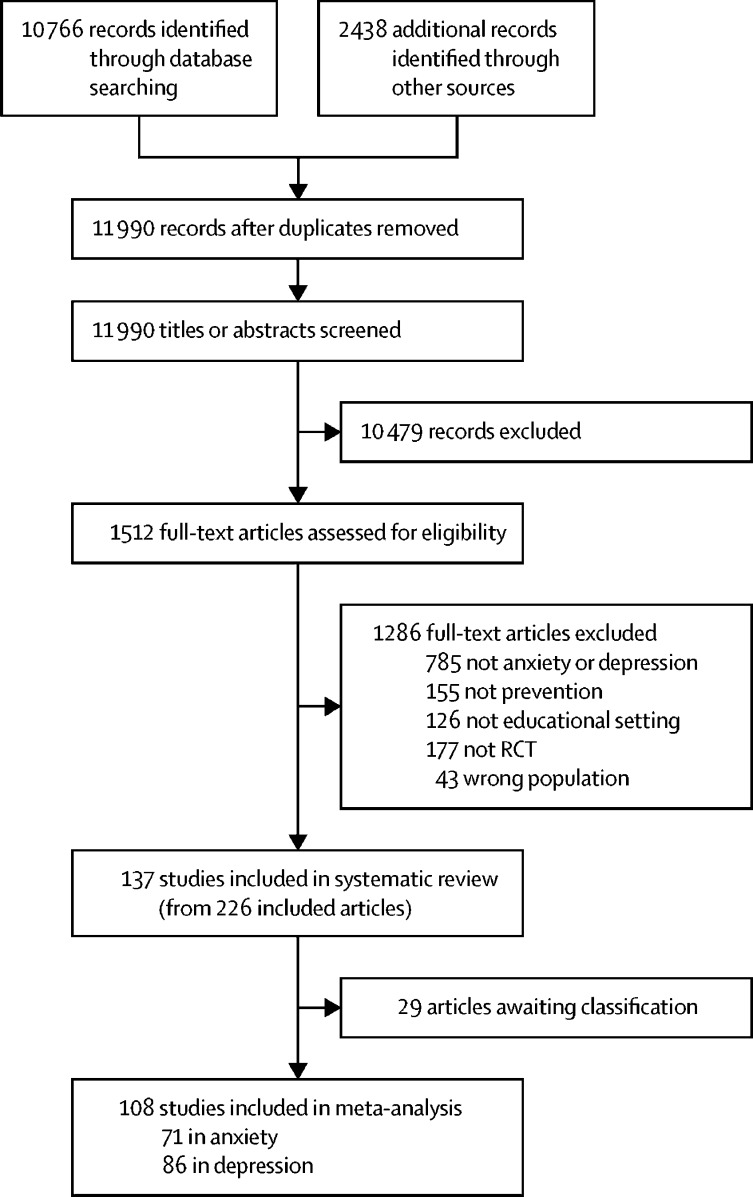
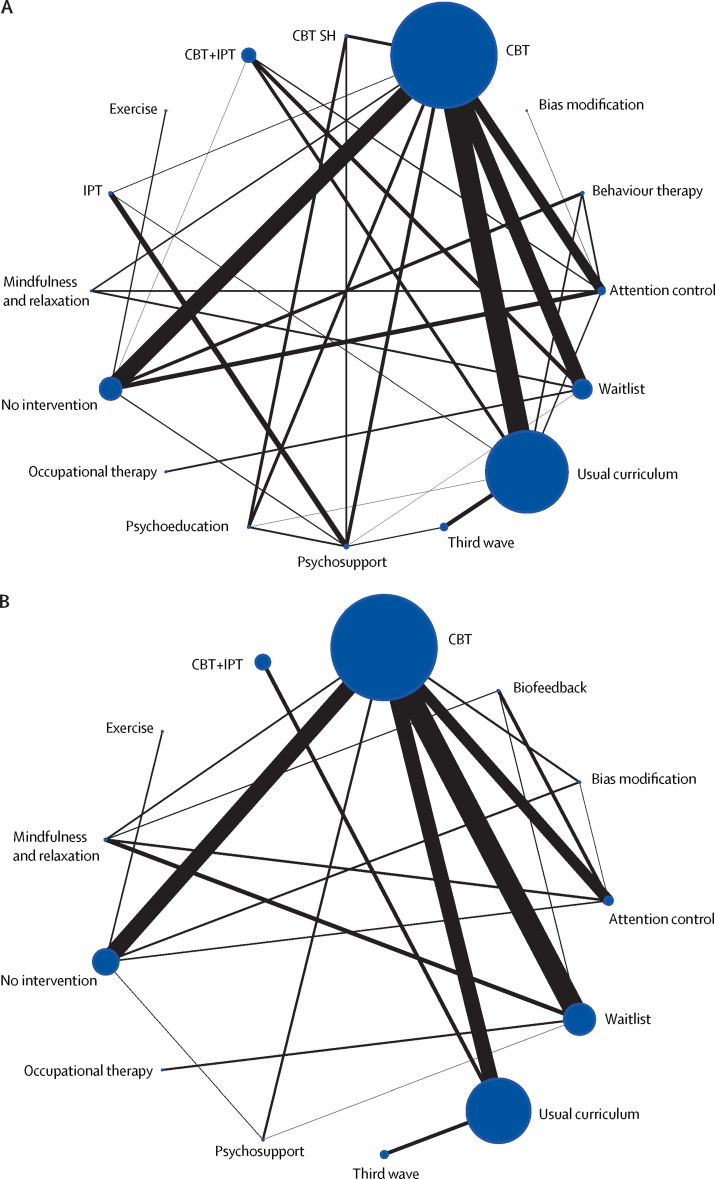
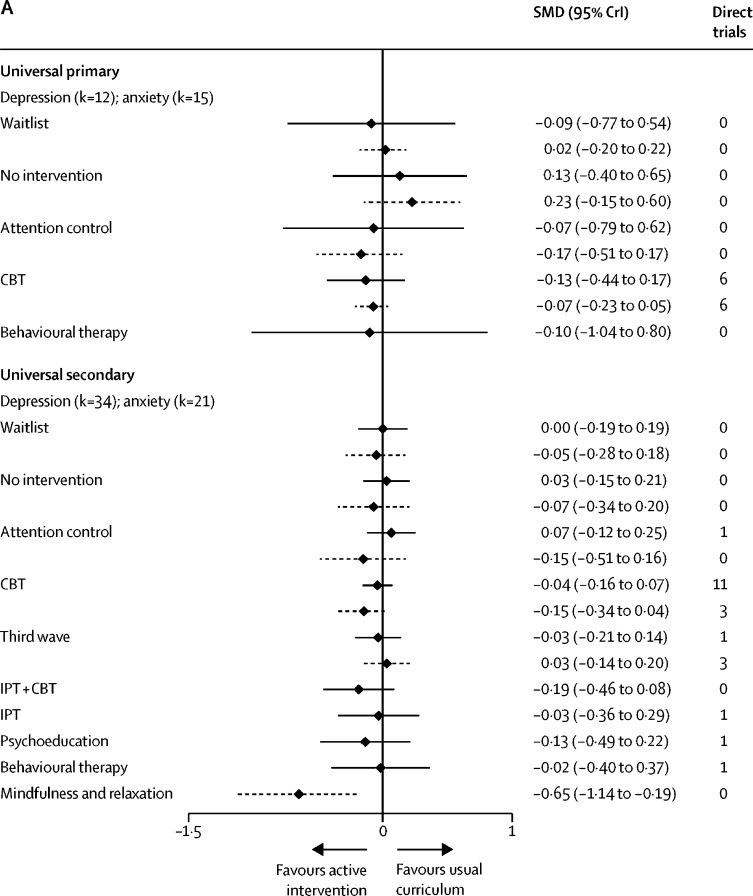
BACKGROUND: Rates of anxiety and depression are increasing among children and young people. Recent policies have focused on primary prevention of mental disorders in children and young people, with schools at the forefront of implementation. There is limited information for the comparative effectiveness of the multiple interventions available. METHODS: We did a systematic review and network meta-analysis, searching MEDLINE, Embase, PsycINFO, and Cochrane Central Register of Controlled trials for published and unpublished, passive and active-controlled randomised and quasi-randomised trials. We included educational setting-based, universal, or targeted interventions in which the primary aim was the prevention of anxiety and depression in children and young people aged 4-18 years. Primary outcomes were post-intervention self-report anxiety and depression, wellbeing, suicidal ideation, or self-harm. We assessed risk of bias following the Cochrane Handbook for Systematic Reviews of Interventions. We estimated standardised mean differences (SMD) using random effects network meta-analysis in a Bayesian framework. The study is registered with PROPSERO, number CRD42016048184. FINDINGS: 1512 full-text articles were independently screened for inclusion by two reviewers, from which 137 studies of 56 620 participants were included. 20 studies were assessed as being at low risk of bias for both random sequence generation and allocation concealment. There was weak evidence to suggest that cognitive behavioural interventions might reduce anxiety in primary and secondary settings. In universal secondary settings, mindfulness and relaxation-based interventions showed a reduction in anxiety symptoms relative to usual curriculum (SMD -0·65, 95% credible interval -1·14 to -0·19). There was a lack of evidence to support any one type of intervention being effective to prevent depression in universal or targeted primary or secondary settings. Comparison-adjusted funnel plots suggest the presence of small-study effects for the universal secondary anxiety analysis. Network meta-analysis was not feasible for wellbeing or suicidal ideation or self-harm outcomes, and results are reported narratively. INTERPRETATION: Considering unclear risk of bias and probable small study effects for anxiety, we conclude there is little evidence that educational setting-based interventions focused solely on the prevention of depression or anxiety are effective. Future research could consider multilevel, systems-based interventions as an alternative to the downstream interventions considered here. FUNDING: UK National Institute for Health Research.
Overview
The claims and statistics of this paper haven’t been checked yet.
Free: it reads the open-access text and checks the first 5 claims that cite a source we can check. Create a free account to check every claim.
Integrity signals
Registry
Cites
Statistics
Figures
Verification
Claims the paper makes
The claims and statistics of this paper haven’t been checked yet.
Free: it reads the open-access text and checks the first 5 claims that cite a source we can check. Create a free account to check every claim.
Claims other papers make about this one
Each is checked against this paper’s own text: does it say what the citing paper says it does?
The source backs part of the claim, not all of it — or backs it for a different population, condition or comparison.
In the citing paper
“In child and adolescent population, MBIs have been related to symptom reduction, increased wellbeing [1,10,14,15,31,32,33,34,35,36]”
From Systematic Review of Mindfulness-Based Interventions in Child-Adolescent Population: A Developmental Perspective (2022) · cites this paper as [1]
Experimental — accuracy not yet measuredThe source backs part of the claim, not all of it — or backs it for a different population, condition or comparison.
In the citing paper
“Psychological interventions may improve affective symptoms 155 , while psychotherapy/ psychoeducation may improve some anxiety symptoms 115 (but not as school-based education intervention 156 )”
From Preventive psychiatry: a blueprint for improving the mental health of young people (2021) · cites this paper as [156]
Experimental — accuracy not yet measuredThe source backs part of the claim, not all of it — or backs it for a different population, condition or comparison.
In the citing paper
“other evidence-based syntheses have disconfirmed initial promising findings relating to the indicated/selective/universal prevention of anxiety and depression 113,115,156 or reduction of substance abuse in young people 154”
From Preventive psychiatry: a blueprint for improving the mental health of young people (2021) · cites this paper as [156]
Experimental — accuracy not yet measuredThe source backs part of the claim, not all of it — or backs it for a different population, condition or comparison.
In the citing paper
“The lack of evidence to favour several preventive interventions 113,115,154,156 may indicate that a one-size-fits-all approach is not effective and may obfuscate the efficacy for specific subgroups of individuals.”
From Preventive psychiatry: a blueprint for improving the mental health of young people (2021) · cites this paper as [156]
Experimental — accuracy not yet measuredThe source backs part of the claim, not all of it — or backs it for a different population, condition or comparison.
In the citing paper
“but not as school-based interventions 156 ***”
From Preventive psychiatry: a blueprint for improving the mental health of young people (2021) · cites this paper as [156]
Experimental — accuracy not yet measured
9 more claims about this paper
Create a free account to see every claim other papers make about this one.
Self-check
Percentages, sums and reported differences re-computed from the paper’s own numbers.
The self-check needs the paper’s full text.
Citations
Cites
Cochrane Handbook for Systematic Reviews of Interventions: Cochrane Book Series
(2008) · doi:10.1002/9780470712184 · Cited by 25,048
Hoffmann, T. C., Glasziou, P. P., Boutron, I., Milne, R., Perera, R., Moher, D., Altman, D. G., Barbour, V., Macdonald, H., Johnston, M., et al. (2014) · BMJ · doi:10.1136/bmj.g1687 · Cited by 10,548
Hutton, B., Salanti, G., Caldwell, D. M., Chaimani, A., Schmid, C. H., Cameron, C., Ioannidis, J. P. A., Straus, S., Thorlund, K., Jansen, J. P., et al. (2015) · Annals of Internal Medicine · doi:10.7326/m14-2385 · Cited by 8,269
Self-citationCochrane Handbook for Systematic Reviews of Interventions
Higgins, J. P. T., Green, S., & Ben Van Den, A. (2020) · International Coaching Psychology Review · doi:10.53841/bpsicpr.2020.15.2.123 · Cited by 5,670
The Lancet Commission on global mental health and sustainable development
Patel, V., Saxena, S., Lund, C., Thornicroft, G., Baingana, F., Bolton, P., Chisholm, D., Collins, P. Y., Cooper, J. L., Eaton, J., et al. (2018) · The Lancet · doi:10.1016/s0140-6736(18)31612-x · Cited by 3,692
Graphical tools for network meta-analysis in STATA
Chaimani, A., Higgins, J. P. T., Mavridis, D., Spyridonos, P., & Salanti, G. (2013) · PLoS ONE · doi:10.1371/journal.pone.0076654 · Cited by 2,473
Global burden of disease in young people aged 10–24 years: a systematic analysis
Gore, F. M., Bloem, P. J., Patton, G. C., Ferguson, J., Joseph, V., Coffey, C., Sawyer, S. M., & Mathers, C. D. (2011) · The Lancet · doi:10.1016/s0140-6736(11)60512-6 · Cited by 2,301
(2009) · Cited by 2,013
Simultaneous comparison of multiple treatments: Combining direct and indirect evidence.
Caldwell, D. M., Ades, A. E., & Higgins, J. P. T. (2005) · BMJ · doi:10.1136/bmj.331.7521.897 · Cited by 1,600
Self-citationThe Interpretation of Random-Effects Meta-Analysis in Decision Models
Ades, A. E., Lu, G., & Higgins, J. P. T. (2005) · Medical Decision Making · doi:10.1177/0272989x05282643 · Cited by 859
Cited by
Items 201–300 of 336
Hulin, J., Huddy, V. C., Oliver, P., Marshall, J. N. G., Mohindra, A., Delaney, B., & Mitchell, C. A. (2024) · BMC Public Health · doi:10.1186/s12889-024-18455-4 · Cited by 8
“However, there remains a lack of consensus on which type of interventions are effective in reducing mental health conditions [19].”
BackgroundDurdurak, B. B., Williams, B., Zhigalov, A., Moore, A., Mallikarjun, P. K., Wong, D. H. S., Marwaha, S., & Morales‐Muñoz, I. (2024) · Epidemiology and Psychiatric Sciences · doi:10.1017/s2045796024000350 · Cited by 4
“…providing early intervention at schools may be an effective strategy to reduce the burden of disease from depression in children and adolescents (Caldwell et al. , 2019; Garcia-Carrion et al. , 2019) while also looking at the role of school personnel in the detection, referral and provision of…”
BackgroundQing, J., Zhang, L., Li, C., & Li, Y. (2024) · Renal Failure · doi:10.1080/0886022x.2024.2367705 · Cited by 4
“Moreover, we performed multiple MR analyses using the leave-one-out approach to ensure that the association between the exposure and outcome was not driven by any single SNP. Funnel plots were employed to confirm the absence of bias in the causal estimates [33].”
Nisar, A., Watkins, R. C., Gillard, D., Grindle, C. F., Thompson, P. A., Pegram, J., & Hastings, R. P. (2025) · Journal of Contextual Behavioral Science · doi:10.1016/j.jcbs.2025.100886 · Cited by 4
Problems with Suicidal Behavior Prevention in Adolescents: a Narrative Literature Review
Пичиков, А. А., & Popov, Y. V. (2022) · Consortium Psychiatricum · doi:10.17816/cp166 · Cited by 7
“They may also be related to provision of support for the upbringing of children, improvement of educational and training opportunities, creation of a favorable school climate, and other conditions associated with maintaining mental health [12, 13].”
BackgroundSælid, G. A., Czajkowski, N. O., Aarø, L. E., Idsøe, T., Helleseter, M. A. D., & Holte, A. (2021) · Research Square · doi:10.21203/rs.3.rs-878704/v1 · Cited by 3
Depression and depressive disorders
Griffith, J. M., McCormick, K. C., & Hankin, B. L. (2023) · Elsevier eBooks · doi:10.1016/b978-0-323-96023-6.00037-3 · Cited by 4
Clancy, A., O’Connor, M., Murphy, E., Connaughton, L., & O’Reilly, G. (2024) · School Psychology International · doi:10.1177/01430343231216971 · Cited by 2
“Caldwell et al. (2019) found insuf fi cient evidence that school-based interventions were effective for the prevention of anxiety and depression in children and young people in their review of 109 studies.”
Lori, Á., Padilla-Muñoz, E. M., Cano‐García, F. J., & Raffone, A. (2025) · Journal of Research in Childhood Education · doi:10.1080/02568543.2025.2470803 · Cited by 2
Lin, Y., Jiang, J. C., Luo, Z., & Hu, Z. (2025) · Psychology in the Schools · doi:10.1002/pits.70067 · Cited by 2
“However, a meta ‐ analysis found weak evidence suggesting that CBT may be effective for anxiety symptoms, and no evidence that CBT can alleviate depressive symptoms (Caldwell et al. 2019).”
Bishop, D. T., & Digaeva, A. (2025) · BMC Public Health · doi:10.1186/s12889-025-23838-2 · Cited by 5
“Recent evidence suggests that school-based interventions designed to increase physical activity may be ineffective [54], and school-based mental health interventions similarly so [20] – but interventions focused on cycling may have potential, not least for increasing motivation to cycle [23].”
Changqing, S., Xue, W., Zhang, P., Zhu, Z., Hu, B., Wang, P., Li, Y., Zhao, M., Hao, J., Zhou, Q., et al. (2025) · Scientific Reports · doi:10.1038/s41598-025-14305-4 · Cited by 2
“In this case, students may show a state of unconscious “resistance” action to learning in classes, that is, they are eager to change or grow in their hearts but are unable to actively participate in learning in actual behavior 59,60 .”
Alsadaan, N., & Ramadan, O. M. E. (2025) · BMC Pediatrics · doi:10.1186/s12887-025-06400-2 · Cited by 7
Frenkel, M. O., Georg, A. K., & Plessner, H. (2020) · Praxis der Kinderpsychologie und Kinderpsychiatrie · doi:10.13109/prkk.2020.69.4.321 · Cited by 3
Depressionen im Kindes- und Jugendalter
Groen, G., & Ihle, W. (2021) · Springer eBooks · doi:10.1007/978-3-662-45995-9_34-1 · Cited by 2
Busse, H., & Fuhr, D. C. (2023) · Public Health Forum · doi:10.1515/pubhef-2023-0059 · Cited by 3
Hossain, S., Strnadová, I., & Danker, J. (2024) · Cambridge Journal of Education · doi:10.1080/0305764x.2024.2377968 · Cited by 4
“Factors positively linked with an indicator/s of ill-being (e.g. depression) were also explored as a barrier to well-being in some studies (Agrawal & Sharma, 2022; Caldwell et al., 2019).”
Cultural contexts of adolescent anxiety: Paradox, ambivalence, and disjuncture
Atkinson, S. (2024) · Social Sciences & Humanities Open · doi:10.1016/j.ssaho.2024.101081 · Cited by 4
Lisk, S. C., James, K., Shearer, J., Byford, S., Stallard, P. N., Deighton, J., Saunders, D. T., Yarrum, J., Fonagy, P., Weaver, T. D., et al. (2024) · BMJ Mental Health · doi:10.1136/bmjment-2024-301192 · Cited by 2
School nurse–delivered anxiety interventions for adolescents: a systematic review and meta-analysis
Osland, I., Håland, Å. T., Himle, J., & Bertelsen, T. B. (2025) · Cogent Psychology · doi:10.1080/23311908.2025.2519529 · Cited by 2
Lopes, D., Ferrão, A., Matança, A. F., Almeida, C., Rosário, F., Santos, J., & Santos, M. I. (2023) · Acta Médica Portuguesa · doi:10.20344/amp.18876 · Cited by 7
The Impact of Stress on Academic Performance: Strategies for High School Students
(2023) · International Journal of Psychiatry · doi:10.33140/ijp.08.05.06 · Cited by 3
Development and Implementation of an Anxiety Management Intervention for Young Children
Nabors, L., Bauer, A. M., & Addy, T. N. A. (2024) · Evidence-Based Practice in Child and Adolescent Mental Health · doi:10.1080/23794925.2024.2303772 · Cited by 3
“Teachers also reported that they felt that anxiety was increasing among young children, and this has been noted in past research (Caldwell et al., 2019; Zhang, 2023).”
Andrews, J. L., Birrell, L., Chapman, C., Teesson, M., Newton, N. C., ALLSOP, S. J., MCBRIDE, N. T., Hides, L. M., Andrews, G., Olsen, N., et al. (2021) · doi:10.31234/osf.io/ytdsj · Cited by 2
Hamdani, S. U., Huma, Z., Zafar, S. W., Suleman, N., Baneen, U.-U., Waqas, A., & Rahman, A. (2022) · Research Square · doi:10.21203/rs.3.rs-1346141/v1 · Cited by 2
Co-Creation of Mental Health Intervention for Adolescents: A Social Hackathon Approach
Baumann, H., & Ksiezarczyk, A.-M. (2026) · Healthcare · doi:10.3390/healthcare14101315 · Cited by 1
“At the same time, average effects are often small, heterogeneity across intervention types is substantial, and many studies offer limited long-term follow-up, making it difficult to identify which approaches produce durable benefit across settings [7,19,20].”
InfluentialThe needs of children questionnaire – Turkish cross-cultural adaptation
Kurt, A., & Dinç, F. (2023) · European Journal of Clinical and Experimental Medicine · doi:10.15584/ejcem.2023.2.16 · Cited by 2
Stevenson, J. (2023) · Springer eBooks · doi:10.1007/978-3-031-45787-6_7 · Cited by 1
Hickey, G., & Stynes, H. (2024) · Irish Educational Studies · doi:10.1080/03323315.2024.2399563 · Cited by 3
Boson, K., Anderberg, M., Wenneberg, P., Vlasman, S., Kapetanovic, S., & Dahlberg, M. (2024) · Scandinavian Journal of Child and Adolescent Psychiatry and Psychology · doi:10.2478/sjcapp-2024-0013 · Cited by 5
Schlegl, S., Hirler, F., Gerich, A., Højlund, M., Stice, E. M., Wade, T. D., Wilfley, D. E., Downs, J. L., Voderholzer, U., Perry, J., et al. (2025) · Journal of Eating Disorders · doi:10.1186/s40337-025-01244-8 · Cited by 5
“There is one previously published NMA on the prevention of mental disorders, by Caldwell et al. [27], published in Lancet Psychiatry.”
Kambara, K., Kira, Y., Matsumoto, M., Hako, S., Ito, T., & Ogata, A. (2025) · Children and Youth Services Review · doi:10.1016/j.childyouth.2025.108343 · Cited by 4
Velez, C. V., Campez, M., Canovas, J. M., Pedronzo, P. M., Ahn, Y. A., Dale, C. F., Dale, S. K., Gwynn, L. A., Jensen‐Doss, A., Pulgarón, E. R., et al. (2025) · JMIR Research Protocols · doi:10.2196/74080 · Cited by 1
“However, while many of these interventions are found to be effective, effect sizes with school-based samples are typically smaller than those with clinic-based samples, and they are often not statistically significant in comparison to clinic-based settings [29-31].”
Sawyer, S. M., Raniti, M. B., & Borschmann, R. (2025) · BJPsych Open · doi:10.1192/bjo.2025.10058 · Cited by 1
Bebbington, N., Robinson, E., Orchard, F., Chapman, C., Dixon, C., & John, M. (2025) · The Cognitive Behaviour Therapist · doi:10.1017/s1754470x25100111 · Cited by 1
“…there has been less evidence for its effectiveness in treating mild to moderate difficulties and some contraindicatory evidence from a systematic review which reported weak evidence for its use in reducing sub-clinical anxiety and depression in school-based interventions (Caldwell et al ., 2019).”
Rouquette, O. Y., DelPozo‐Baños, M., Lee, S. C., & John, A. M. (2025) · BJPsych Open · doi:10.1192/bjo.2025.10827 · Cited by 1
Chen, L., Wang, X., Luo, L., Li, Y., Wu, Y., Lv, G., Wu, X., Chen, L., Chen, L., An, X., et al. (2025) · Clinical and Experimental Hypertension · doi:10.1080/10641963.2025.2560635 · Cited by 2
“15 Cognitive behavioral therapy (CBT), as a traditional treatment for depression and anxiety, 16 was considered to be able to improve students' behavioral and social-emotional needs in the school environment, gain the ability to handle their own emotions, and even effectively reduce depressive…”
Oral, M., & Törüner, E. K. (2025) · Journal of Gazi University Health Sciences Institute · doi:10.59124/guhes.1690978 · Cited by 1
Raniti, M. B., Logan, N., Reavley, N. J., & Neelakantan, L. (2026) · Mental Health & Prevention · doi:10.1016/j.mhp.2026.200476 · Cited by 1
Luo, X., Zhang, Q., Qu, D., Zu, Y., Wang, S., Jin, Y., Liu, B., Xu, Y., Li, G. N., Tian, X., et al. (2026) · The Lancet Child & Adolescent Health · doi:10.1016/s2352-4642(25)00344-x · Cited by 2
Reardon, T. C., Ukoumunne, O. C., Dodd, H. F., Halliday, G., Hill, C., Jasper, B., Jones, B., Lawrence, P. J., Morgan, F., Placzek, A., et al. (2026) · Journal of Child Psychology and Psychiatry · doi:10.1111/jcpp.70119 · Cited by 3
“Universal school-based interventions reach whole classes, but there is only weak evidence of positive effects on anxiety in primary schools (Caldwell et al., 2019) and any reductions in average self-reported anxiety symptoms may not apply for children with elevated anxiety (Stallard et al., 2014).”
Wang, Y., Li, M., Xu, H., He, F., Li, M., Wang, L., & Zang, Y. (2026) · BMC Medicine · doi:10.1186/s12916-026-04816-w · Cited by 2
“While SUIs typically yield modest effect sizes [12, 13] with greater benefits in high-risk subgroups [14], a comprehensive meta-analysis of 137 studies ( N = 56,620) found limited evidence for preventing anxiety or depression symptoms in universal primary school settings [15].”
Uddin, M. S., Sofija, E., Rahman, N., Hossain, S., & Harris, P. (2026) · International Journal of Health Promotion and Education · doi:10.1080/14635240.2026.2649630 · Cited by 3
“Among the 85 reviews, seven were rated as high quality (Gee et al. 2020; Kurz et Arora et al. 2019; Caldwell et al. 2019; Cordier et al. 2021; Feiss et al. 2019; Frydman, Hyman, and 2022; Fulambarkar et al. 2023; Gijzen et al. 2022; Grande et al. 2023; Hugh-Jones et al. 2021; Maggin and Johnson…”
Lima, R. A., Baumeister, H., Pryss, R., Küchler, A., Kraft, R., Berghoff, N., Nagel, L., Reichert, M., Idrees, A. R., Stach, M., et al. (2026) · BMJ Open · doi:10.1136/bmjopen-2025-108674 · Cited by 2
Yao, E. S., Fleming, T. M., Hetrick, S. E., In, S., Thabrew, H., & Clark, T. C. (2026) · Journal of Adolescent Health · doi:10.1016/j.jadohealth.2026.06.009 · Cited by 1
Self-citationWilson, J., Gee, B., Martin, N. C., Maxwell, S. L., Murdoch, J., Clarke, T., Clark, A., Turner, D., Notley, C. J., Katangwe‐Chigamba, T., et al. (2022) · Health and Social Care Delivery Research · doi:10.3310/hnin4621 · Cited by 4
Social anxiety disorder: prevalence and dominant factor among adolescents in urban and rural school
Priasmoro, D. P., Kusuma, I. Y., & Asri, Y. (2024) · International Journal of Public Health Science (IJPHS) · doi:10.11591/ijphs.v13i2.23610 · Cited by 5
Anekar, Y. D. D. (2024) · Journal of Electrical Systems · doi:10.52783/jes.781 · Cited by 1
“The second review finding states that the primary literature focus is on finding severity of depression, anxiety and improving its accuracy whereas others focus on providing online intervention for depression and anxiety [34][35].”
BackgroundWelch, M. G., Ludwig, R. J., Kong, J., Rauh, V., Hane, A. A., Jaffe, M., Witkowski, A., & Myers, M. M. (2024) · Frontiers in Child and Adolescent Psychiatry · doi:10.3389/frcha.2024.1308210 · Cited by 1
Rombouts, M., Monshouwer, K., Duinhof, E. L., Kraiss, J. T., Shields‐Zeeman, L., & Kleinjan, M. (2025) · Mental Health & Prevention · doi:10.1016/j.mhp.2025.200398 · Cited by 3
Quinlan-Davidson, M., Cleverley, K., Barbic, S. P., Courtney, D., Dimitropoulos, G., Hawke, L. D., Nandlall, N., Ma, C., Prebeg, M., & Henderson, J. L. (2025) · Canadian Journal of Public Health · doi:10.17269/s41997-025-01020-w · Cited by 1
“In fact, there is mixed evidence on the effectiveness of school mental health programs (Caldwell et al., 2019).”
Sundaram, N., Lloyd-Houldey, O., Sturgess, J., Allen, E., Michalopoulou, S., Hope, S., Legood, R., Scott, S., Hudson, L. D., Nicholls, D., et al. (2025) · Public Health Research · doi:10.3310/rtrt0202 · Cited by 2
Lloyd-Houldey, O., Sturgess, J., Sundaram, N., Hope, S., Michalopoulou, S., Allen, E., Hudson, L. D., Scott, S., Nicholls, D., Christie, D., et al. (2025) · Public Health Research · doi:10.3310/gfdt2323 · Cited by 1
Islam, M. I., Cheruvu, V. S., Laska, C., Esgin, T., & Martiniuk, A. L. C. (2025) · Journal of School Health · doi:10.1111/josh.70047 · Cited by 1
Preventative Interventions for Childhood and Adolescent Disorders
Werner‐Seidler, A., Beames, J. R., & Torok, M. H. (2021) · Elsevier eBooks · doi:10.1016/b978-0-12-818697-8.00049-2 · Cited by 3
Kovács, M. (2023) · Child and Adolescent Mental Health · doi:10.1111/camh.12653 · Cited by 1
School Mental Health Program: Scenario in India
Kuppili, P. P., & Nebhinani, N. (2020) · Journal of Indian Association for Child and Adolescent Mental Health · doi:10.1177/0973134220200101 · Cited by 4
“There have been controversial findings of the effectiveness of HPS and SMHS on mental health [9,10].”
BackgroundGroup acceptance and commitment therapy for promoting mental health in schools: a feasibility study.
Tang, J. Y. M., Xu, J.-Q., & Wang, Q. (2025) · East Asian Archives of Psychiatry · doi:10.12809/eaap2546
Caldwell, D. M., Davies, S. R., Thorn, J. C., Palmer, J. C., Caro, P., Hetrick, S. E., Gunnell, D., Anwer, S., López-López, J. A., French, C. E., et al. (2021) · Public Health Research · doi:10.3310/phr09080 · Cited by 45
Self-citationBoson, K., Anderberg, M., Hagborg, J. M., Wennberg, P., & Dahlberg, M. (2022) · Research Square · doi:10.21203/rs.3.rs-1295797/v1
Oka, T., Ishikawa, S., Shioiri, T., Maruo, K., Stickley, A., Saito, A., Watanabe, N., Sasamori, H., & Kamio, Y. (2021) · Research Square · doi:10.21203/rs.3.rs-141258/v1
Zhai, S., Li, T., Zhang, D., Qu, Y., Xie, Y., Wu, X., Zou, L., Yang, Y., Tao, F., & Tao, S. (2022) · doi:10.2196/preprints.40745
Campion, J. (2022) · Oxford University Press eBooks · doi:10.1093/med/9780198861478.003.0051
School-based cognitive behavioral interventions for youth with anxiety
Haugland, B. S. M., Wergeland, G. J., & Husabø, E. B. (2023) · Elsevier eBooks · doi:10.1016/b978-0-323-85757-4.00044-4
Fakunmoju, S. B. (2023) · Technium Social Sciences Journal · doi:10.47577/tssj.v42i1.8622 · Cited by 2
Factors Affecting School-Based Mental Health in Adolescents: Scoping Review
Dumar, B., Windarwati, H. D., & Yuliatun, L. (2023) · Jurnal Aisyah Jurnal Ilmu Kesehatan · doi:10.30604/jika.v8i1.1534 · Cited by 3
Brief School-Based Interventions Targeting Student Mental Health or Wellbeing: A Systematic ReviewPreprint
Cohen, K. A., Ito, S., Ahuvia, I. L., Yang, Y., Zhang, Y., Renshaw, T. L., Larson, M. F., Cook, C. R., Hill, S., Liao, J., et al. (2023) · doi:10.31234/osf.io/xemjn
Hossein, D., Yamini, S., & Vazsonyi, A. T. (2023) · Journal of Family Psychology · doi:10.1037/fam0001161.supp
(2023) · Cambridge Prisms Global Mental Health · doi:10.1017/gmh.2023.66.pr10
(2023) · Cambridge Prisms Global Mental Health · doi:10.1017/gmh.2023.66.pr9
(2023) · Cambridge Prisms Global Mental Health · doi:10.1017/gmh.2023.66.pr8
(2023) · Cambridge Prisms Global Mental Health · doi:10.1017/gmh.2023.66.pr7
Tran, T. D. (2023) · Cambridge Prisms Global Mental Health · doi:10.1017/gmh.2023.66.pr6
(2023) · Cambridge Prisms Global Mental Health · doi:10.1017/gmh.2023.66.pr4
(2023) · Cambridge Prisms Global Mental Health · doi:10.1017/gmh.2023.66.pr5
(2023) · Cambridge Prisms Global Mental Health · doi:10.1017/gmh.2023.66.pr2
(2023) · Cambridge Prisms Global Mental Health · doi:10.1017/gmh.2023.66.pr3
Tran, T. D. (2023) · Cambridge Prisms Global Mental Health · doi:10.1017/gmh.2023.66.pr1
effect of the “K” technique on levels of anxiety and salivar cortisol in adolescents
Kolb, A. M., Moreno, A. L., Mainieri, A. S., & Riesgo, R. D. S. (2023) · Psico · doi:10.15448/1980-8623.2023.2.42920
Nakagami, Y., Uwatoko, T., Shimamoto, T., Sakata, M., Toyomoto, R., Yoshida, K., Luo, Y., Shiraishi, N., Tajika, A., Sahker, E., et al. (2024) · doi:10.2196/preprints.56691
Positive Education in Secondary Schools
Platt, I. A. (2024) · Emerald Group Publishing Limited eBooks · doi:10.1108/978-1-83753-156-120241003
Hides, L. M., Pocuca, N., Quinn, C. A., Kavanagh, D. J., & Johnson, D. M. (2024) · The Journal of Positive Psychology · doi:10.1080/17439760.2024.2322431 · Cited by 2
“However, none of the school-based studies targeting depression or anxiety in Caldwell et al. (2019) were conducted in vocational schools.”
Miller, E., & Thabrew, H. (2024) · SSRN Electronic Journal · doi:10.2139/ssrn.4763523
Psychological Well-being and Digital Intervention in Youngster’s - An Overview
Agrawal, S., & -, S. (2024) · International Journal of Scientific Research in Science and Technology · doi:10.32628/ijsrst24112105
Logistic regression analysis of school anxiety as a predictor of school refusal
Giménez-Miralles, M., Galán, M. M., Sandoval, V. N. O., & Teruel, J. D. Á. (2024) · International Journal of Developmental and Educational Psychology Revista INFAD de psicología · doi:10.17060/ijodaep.2024.n1.v1.2632 · Cited by 2
“Consequently, recent policies have emphasized primary prevention of mental disorders (Caldwell et al., 2019).”
BackgroundTerawaki, A., Ogishima, H., Tanaka, Y., Moriishi, C., & Shimada, H. (2024) · Journal of Health Psychology Research · doi:10.11560/jhpr.230901193
del Peral, J. A. M. (2023) · Tendencias pedagógicas/Tendencias pedagógicas · doi:10.15366/tp2023.40.010 · Cited by 2
Universal school-based intervention: personal competence among public school children
Karam, E. G., Barathie, J. A., Kabalan, I., Cassir, Y., Tabet, C. C., & Melhem, N. (2025) · European Child & Adolescent Psychiatry · doi:10.1007/s00787-025-02710-z
“Studies have identified gender and socioeconomic sta - tus (SES) as moderators of intervention effectiveness, with females showing greater responsiveness and those from low SES backgrounds reporting fewer benefits [29– 31].”
Transtornos de ansiedade: fatores genéticos, ambientais e suas implicações clínicas
Oliveira, C. W. D. M., da Silva, J. C. P., Bertazo, M. M., Oliveira, D. F., Nunes, R. L. S., Roma, T. M., del Corsso, C., Rigo, E. M., da Silva, V. B., Alvis, L. B., et al. (2025) · Caderno Pedagógico · doi:10.54033/cadpedv22n6-225 · Cited by 1
Alfonso, T., Jeyaraj, J., Raj, P. M., & Dellagiulia, A. (2025) · Journal of Health Management · doi:10.1177/09720634251326494
Kuwabara, Y., Imamoto, A., Hori, N., Kim, H., Kinjo, A., & Osaki, Y. (2025) · Pediatrics International · doi:10.1111/ped.70063 · Cited by 2
International solutions for the US youth mental health crisis
Debenham, J., Keyes, K. M., Newton, N. C., & Teesson, M. (2025) · Nature Mental Health · doi:10.1038/s44220-025-00435-1
GARVEY, W., Schembri, R., Oberklaid, F., & Hiscock, H. (2025) · Archives of Disease in Childhood · doi:10.1136/archdischild-2025-328728
School based interventions for depression and anxiety in UK
Brown, J. S. L., & Carter, B. (2025) · Journal of Mental Health · doi:10.1080/09638237.2025.2512332 · Cited by 1
“However, in the first narrative analysis of school interventions, Caldwell et al. (2019) did not support this view as strongly.”
InfluentialWest, R., Cardiff, E., Salti, F. A., Roderick, E., & Bhanbhro, S. (2025) · Mental Health Practice · doi:10.7748/mhp.2025.e1742 · Cited by 1
Guo, X., Mueller, M. A. E., Armitage, J. M., Bonell, C. P., Ford, T. J., John, A. M., Lewis, G., Murphy, S., Ploubidis, G. B., Rice, F. J., et al. (2025) · SSRN Electronic Journal · doi:10.2139/ssrn.5409106
Long‐Term Effects of School‐Based CBT in Low‐Risk Children and Adolescents: A Bayesian Meta‐Analysis
Zhang, X., Liang, Z., & Kang, J. (2025) · Journal of Clinical Psychology · doi:10.1002/jclp.70069 · Cited by 1
Hugh‐Jones, S., Prabhu, S. G., Arelingaiah, M., Podiya, J. K., Lakshman, K., Nag, R., Warriner, L., Palmer, A., Hudson, K., Fazel, M. S., et al. (2025) · Frontiers in Public Health · doi:10.3389/fpubh.2025.1670439 · Cited by 6
Andom, F., Bahar, O. S., Namatovu, P., McKay, M. M., Hoagwood, K., & Ssewamala, F. M. (2025) · Global Social Welfare · doi:10.1007/s40609-025-00420-7 · Cited by 1
Metadata
- Authors
- Caldwell, D. M., Davies, S. R., Hetrick, S. E., Palmer, J. C., Caro, P., López-López, J. A., Gunnell, D., Kidger, J., Thomas, J., French, C., Stockings, E., Campbell, R., & Welton, N. J.
- Affiliations
- University of Bristol (GB)
- University of Auckland (NZ)
- University Hospitals Bristol NHS Foundation Trust (GB)
- University College London (GB)
- UNSW Sydney (AU)
- Corresponding author
- Caldwell, Deborah M
- ORCID
- Venue
- The Lancet Psychiatry
- Publisher
- Elsevier BV
- Published
- 2019-12
- Volume
- 6
- Issue
- 12
- Pages
- 1011-1020
- ISSN
- 2215-0366 (ISSN-L)
- PMC
- PMC7029281
- OpenAlex
- W2988840012
- Cited by
- 336
- References
- 46
- Citations by year
- 2026: 35 · 2025: 65 · 2024: 62 · 2023: 69 · 2022: 44 · 2021: 47 · 2020: 12 · 2019: 2
- FWCI
- 5.94
- Type
- journal article
- Language
- en
- Update notices
- erratum (2020-09-01)
- Open access
- hybrid
- doi.org
- Licence
- cc-by
- www.elsevier.com/tdm/userlicense/1.0/ (tdm)
- www.elsevier.com/legal/tdmrep-license (tdm)
- creativecommons.org/licenses/by/4.0/ (vor)
- Locations
- The Lancet Psychiatry (publishedVersion, cc-by)
- Europe PMC (PubMed Central) (publishedVersion, cc-by)
- PubMed Central (publishedVersion, cc-by)
- PubMed (publishedVersion)
- Bristol Research (University of Bristol) (publishedVersion, cc-by)
- UCL Discovery (University College London) (submittedVersion)
- ResearchSpace (University of Auckland) (submittedVersion, cc-by)
- Funders
- Auckland Medical Research Foundation
- Department of Health, Australian Government
- National Institute for Health Research (PHR [15/49/08)
- National Health and Medical Research Council (567062)
- School for Public Health Research
- Medical Research Council
- University of Bristol
- NIHR Biomedical Research Centre, Royal Marsden NHS Foundation Trust/Institute of Cancer Research
- Department of Health & Social Care (1104600)
- Public Health Research Programme
- Topics
- Health Sciences › Medicine › Public Health, Environmental and Occupational Health › School Health and Nursing Education
- Social Sciences › Psychology › Clinical Psychology › Child and Adolescent Psychosocial and Emotional Development
- Health Sciences › Medicine › Psychiatry and Mental health › Mental Health Treatment and Access
- Keywords
- school-based intervention, anxiety prevention, depression prevention, children and young people, primary prevention, cognitive-behavioural intervention, universal interventions, targeted interventions, suicidal ideation, self-harm, well-being, comparative effectiveness
- MeSH terms
- Adolescent, Anxiety, Child, Child, Preschool, Depression, Humans, School Health Services, Cognitive Behavioral Therapy, Suicidal Ideation
About these checks
Registry, retraction, Cites and statistics results are computed, not judged, with one exception: a printed reference that no index lists is read once by a model before it counts as a citation error. Claims are extracted by a model and kept only when their quote appears verbatim in the text; each cited source is then checked, with a model’s help, for whether it says what the claim relies on. Those verdicts can be wrong — read the claim’s quote and the cited source before relying on one.
Statistics and arithmetic are recomputed, not judged.
Confidence bands are shown only for fields calibrated on our annotated test set. None is calibrated yet, so no band is shown.
What counts as a claim ›How we measure confidence ›How we check this ›
Are you an author, or do you see a problem with this page? Request a review
Data sources
Bibliographic data: Semantic Scholar, OpenAlex, Crossref.
Contains information from the Semantic Scholar Academic Graph Datasets, made available under the ODC Attribution License (ODC-BY 1.0).
Semantic Scholar’s data is described in: Kinney, R., et al. (2023). The Semantic Scholar Open Data Platform. arXiv:2301.10140.
