

The DOI matches its Crossref record; 30 of the 31 references it cites were found in a registry or an index.
A mindfulness-based intervention to increase resilience to stress in university students (the Mindful Student Study): a pragmatic randomised controlled trial
Open accessAbstract
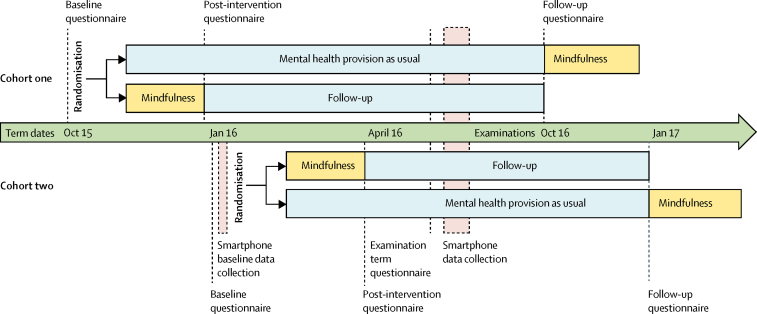
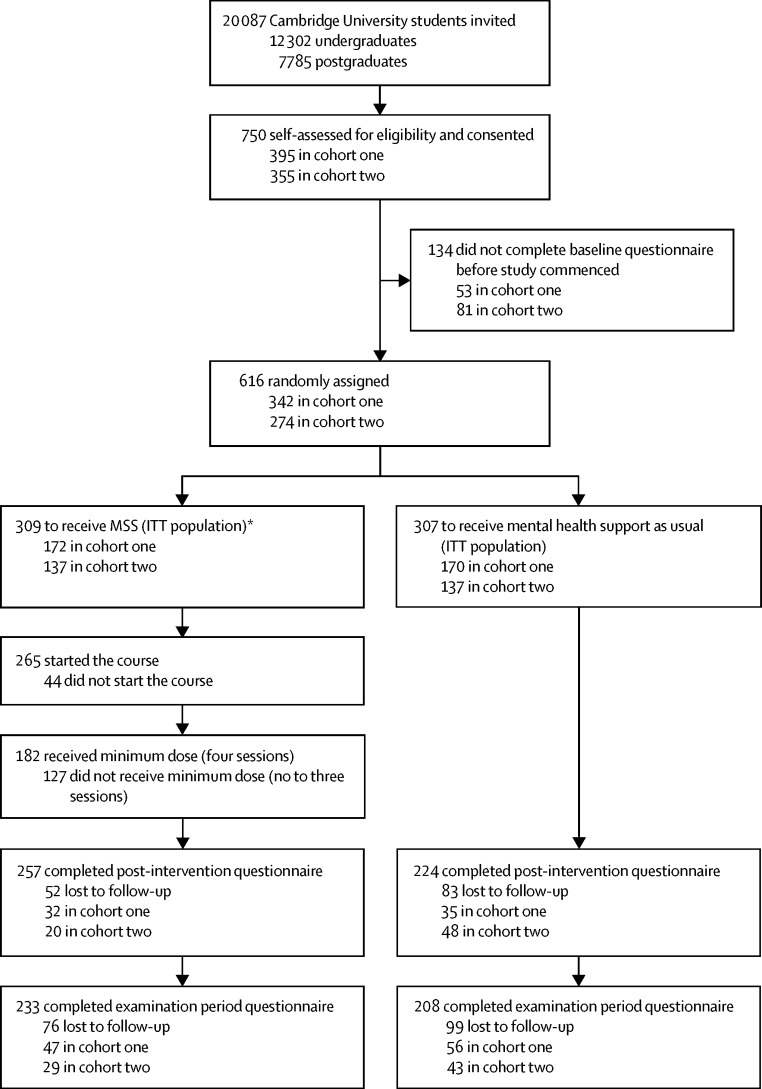
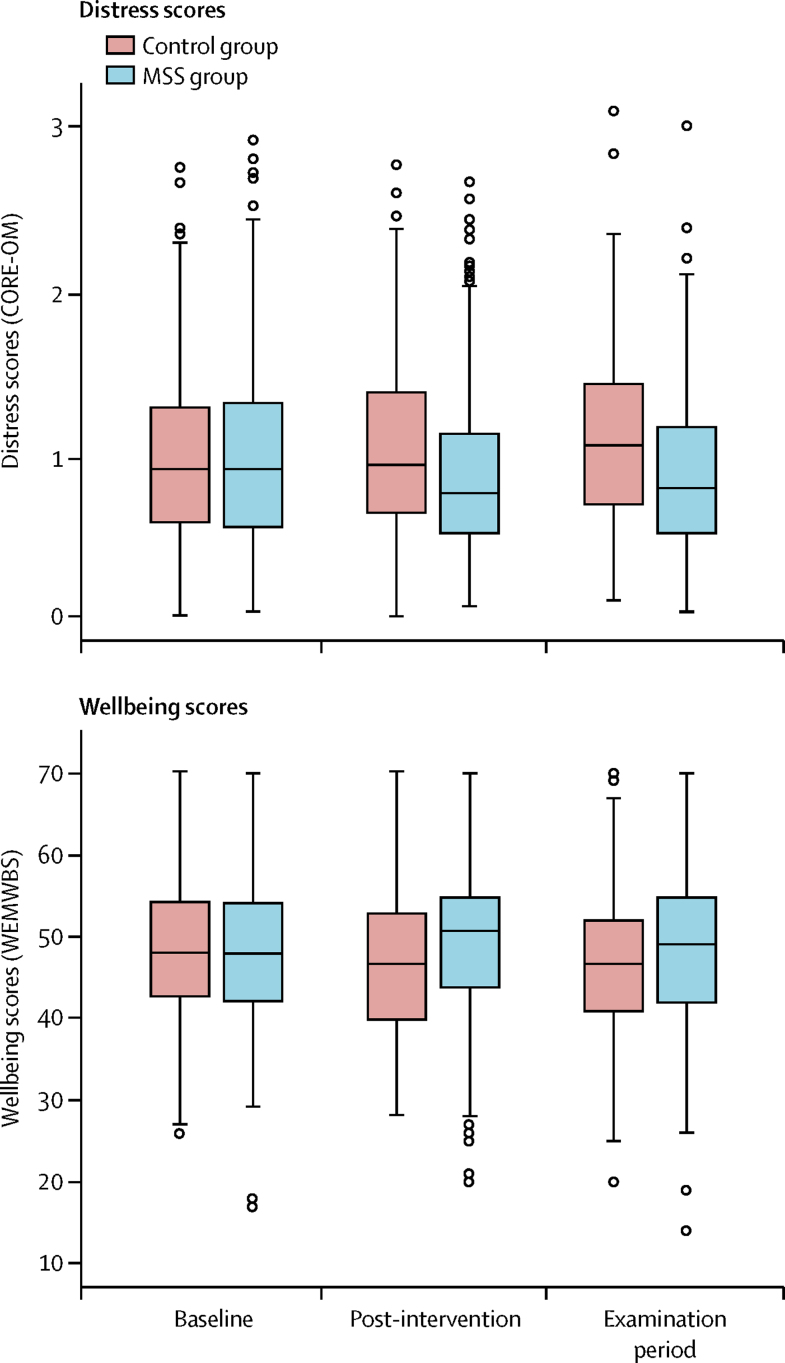
BACKGROUND: The rising number of young people going to university has led to concerns about an increasing demand for student mental health services. We aimed to assess whether provision of mindfulness courses to university students would improve their resilience to stress. METHODS: We did this pragmatic randomised controlled trial at the University of Cambridge, UK. Students aged 18 years or older with no severe mental illness or crisis (self-assessed) were randomly assigned (1:1), via remote survey software using computer-generated random numbers, to receive either an 8 week mindfulness course adapted for university students (Mindfulness Skills for Students [MSS]) plus mental health support as usual, or mental health support as usual alone. Participants and the study management team were aware of group allocation, but allocation was concealed from the researchers, outcome assessors, and study statistician. The primary outcome was self-reported psychological distress during the examination period, as measured with the Clinical Outcomes in Routine Evaluation Outcome Measure (CORE-OM), with higher scores indicating more distress. The primary analysis was by intention to treat. This trial is registered with the Australia and New Zealand Clinical Trials Registry, number ACTRN12615001160527. FINDINGS: Between Sept 28, 2015, and Jan 15, 2016, we randomly assigned 616 students to the MSS group (n=309) or the support as usual group (n=307). 453 (74%) participants completed the CORE-OM during the examination period and 182 (59%) MSS participants completed at least half of the course. MSS reduced distress scores during the examination period compared with support as usual, with mean CORE-OM scores of 0·87 (SD 0·50) in 237 MSS participants versus 1·11 (0·57) in 216 support as usual participants (adjusted mean difference -0·14, 95% CI -0·22 to -0·06; p=0·001), showing a moderate effect size (β -0·44, 95% CI -0·60 to -0·29; p<0·0001). 123 (57%) of 214 participants in the support as usual group had distress scores above an accepted clinical threshold compared with 88 (37%) of 235 participants in the MSS group. On average, six students (95% CI four to ten) needed to be offered the MSS course to prevent one from experiencing clinical levels of distress. No participants had adverse reactions related to self-harm, suicidality, or harm to others. INTERPRETATION: Our findings show that provision of mindfulness training could be an effective component of a wider student mental health strategy. Further comparative effectiveness research with inclusion of controls for non-specific effects is needed to define a range of additional, effective interventions to increase resilience to stress in university students. FUNDING: University of Cambridge and National Institute for Health Research Collaboration for Leadership in Applied Health Research and Care East of England.
Overview
The claims and statistics of this paper haven’t been checked yet.
Run the check — free, no account needed. It reads the open-access text and checks the sources it cites.
Integrity signals
Registry
Cites
Statistics
Figures
Verification
Claims the paper makes
The claims and statistics of this paper haven’t been checked yet.
Run the check — free, no account needed. It reads the open-access text and checks the sources it cites.
Claims other papers make about this one
Each is checked against this paper’s own text: does it say what the citing paper says it does?
The source backs part of the claim, not all of it — or backs it for a different population, condition or comparison.
In the citing paper
“As both a skill and a therapy, mindfulness has been shown to improve symptoms of anxiety, depression, stress, and other mental states (Galante et al. 2018; Ji et al. 2021; Johannsen et al. 2022; Zhu et al. 2021).”
From Changes in Mental Health and EEG Biomarkers of Undergraduates Under Different Patterns of Mindfulness (2024) · cites this paper as Galante et al. 2018
Experimental — accuracy not yet measuredThe source backs part of the claim, not all of it — or backs it for a different population, condition or comparison.
In the citing paper
“Systematic reviews conducted on the effectiveness of meditation programs and mindfulness-based intervention programs led to improvements in resilience to stress, anxiety and depression among university students and other populations, whether delivered offline [9] or online [10–14].”
From Effectiveness of online mindfulness interventions on medical students’ mental health: a systematic review (2021) · cites this paper as [9]
Experimental — accuracy not yet measuredThe check wasn’t confident either way, so it gives no verdict — never disputed.
In the citing paper
“However, none of neuroscientific studies have explored whether and how brief mindfulness training influences certain psychological features especially social support in college students during the COVID-19 pandemic.”
From Changes in Mental Health and EEG Biomarkers of Undergraduates Under Different Patterns of Mindfulness (2024) · cites this paper as Galante et al. 2018
Experimental — accuracy not yet measuredThe check wasn’t confident either way, so it gives no verdict — never disputed.
In the citing paper
“Although personality traits are relatively stable through time they are not cast in stone and can be enhanced, as research has shown, through specific interventions (for reviews and metanalyses see Galante et al., 2018; Gilmartin et al., 2017; Jayawardene et al., 2017; McConville et al., 2017; Quaglia et al., 2016; Spinelli et al., 2018).”
From Specific mindfulness traits protect against negative effects of trait anxiety on medical student wellbeing during high-pressure periods (2021) · cites this paper as Galante et al., 2018
Experimental — accuracy not yet measuredIn the citing paper
“We know from trials in older students that the key skills taught during MT can protect against deterioration in mental health during periods of stress, even if there are no apparent MT-related mental health benefits prior to the onset of stress.11”
In the citing paper
“Four studies set up independent data monitoring and ethics committees [52,85,92,171].”
In the citing paper
“The direction of this bias could favour the effects of MBPs because participants who feel unwell may be less likely to attend assessment sessions or complete self–reported outcomes [52].”
In the citing paper
“Two studies reported a participant abandoning the MBP because s/he felt it was being counterproductive [52,186].”
In the citing paper
“One study actively monitored clinically meaningful adverse events with no significant differences between trial arms [52].”
Self-check
Percentages, sums and reported differences re-computed from the paper’s own numbers.
The self-check needs the paper’s full text.
Citations
Cites
Cohen, J. (1992) · Psychological Bulletin · doi:10.1037//0033-2909.112.1.155 · Cited by 8,771
Our future: a Lancet commission on adolescent health and wellbeing
Patton, G. C., Sawyer, S. M., Santelli, J. S., Ross, D. A., Afifi, R., Allen, N. B., Arora, M., Azzopardi, P., Baldwin, W., Bonell, C., et al. (2016) · The Lancet · doi:10.1016/s0140-6736(16)00579-1 · Cited by 3,785
Meditation Programs for Psychological Stress and Well-being: A Systematic Review and Meta-analysis
Goyal, M., Singh, S., Sibinga, E. M. S., Gould, N. F., Rowland-Seymour, A., Sharma, R., Berger, Z., Sleicher, D., Maron, D. D., Shihab, H. M., et al. (2014) · JAMA Internal Medicine · doi:10.1001/jamainternmed.2013.13018 · Cited by 2,380
Mrazek, M. D., Franklin, M. S., Phillips, D. T., Baird, B., & Schooler, J. W. (2013) · Psychological Science · doi:10.1177/0956797612459659 · Cited by 1,063
Interventions to reduce stress in university students: A review and meta-analysis
Regehr, C., Glancy, D., & Pitts, A. (2013) · Journal of Affective Disorders · doi:10.1016/j.jad.2012.11.026 · Cited by 956
de Vibe, M., Solhaug, I., Tyssen, R., Friborg, O., Rosenvinge, J. H., Sørlie, T., & Bjørndal, A. (2013) · BMC Medical Education · doi:10.1186/1472-6920-13-107 · Cited by 398
Effect of kindness-based meditation on health and well-being: A systematic review and meta-analysis.
Galante, J., Galante, I., Bekkers, M.-J., & Gallacher, J. (2014) · Journal of Consulting and Clinical Psychology · doi:10.1037/a0037249 · Cited by 380
Self-citationMcConville, J., McAleer, R., & Hahne, A. (2017) · EXPLORE · doi:10.1016/j.explore.2016.10.002 · Cited by 336
The mental health of university students in the United Kingdom
Macaskill, A. (2013) · British Journal of Guidance and Counselling · doi:10.1080/03069885.2012.743110 · Cited by 335
Greeson, J. M., Juberg, M. K., Maytan, M., James, K. M., & Rogers, H. (2014) · Journal of American College Health · doi:10.1080/07448481.2014.887571 · Cited by 251
Cited by
Sorted by citations
Items 101–200 of 517
Zhang, L., Zhao, S., Yang, Z., Zheng, H., & Lei, M. (2024) · BMC Psychiatry · doi:10.1186/s12888-024-06017-2 · Cited by 33
“One key aspect is the provision of mental health education and exercise or mindfulness-based programs on campus [35, 36].”
Backgroundvan Wyk, M., Mason, H. D., van Wyk, B. J., Phillips, T. K., & van der Walt, P. E. (2022) · Cogent Psychology · doi:10.1080/23311908.2022.2057660 · Cited by 44
“Guidelines are also needed to assist persons working in SDS capacities with developing interventions focused on addressing resilience, brain-body optimisation, and student success, especially among first-year students (Davidson et al., 2012; Galante et al., 2018; Mason, 2019).”
BackgroundDunning, D., Ahmed, S., Foulkes, L., Griffin, C., Griffiths, K., Leung, J. T., Parker, J., Piera Pi-Sunyer, B., Sakhardande, A., Bennett, M., et al. (2022) · Evidence Based Mental Health · doi:10.1136/ebmental-2022-300460 · Cited by 31
Self-citationNevill, R. E. A., & Havercamp, S. M. (2019) · Journal of Intellectual Disability Research · doi:10.1111/jir.12594 · Cited by 42
“…skills a method for improving coping and resilience in a number of populations experiencing heightened stress, such as university students (Galante et al. 2017; Ramasubramanian 2017), teachers (Skinner & Beers 2016), trauma victims (Thompson et al. 2011) and children with psychological…”
MethodResilience and mindfulness in nurse training on an undergraduate curriculum
Mitchell, A. E. P. (2020) · Perspectives In Psychiatric Care · doi:10.1111/ppc.12714 · Cited by 36
Examining risk and protective factors for psychological health during the COVID-19 pandemic
Racine, S., Miller, A., Mehak, A., & Trolio, V. (2022) · Anxiety, Stress, & Coping · doi:10.1080/10615806.2021.1958789 · Cited by 31
“Our findings are consistent with those suggesting that mindfulness is a transdiagnostic protective factor and potentially an important target for prevention and intervention programs (Galante et al., 2018; Van Gordon et al., 2019).”
BackgroundResultBoccolini, P. D. M. M., Boclin, K. D. L. S., de Sousa, I. M. C., & Boccolini, C. S. (2022) · BMC Complementary Medicine and Therapies · doi:10.1186/s12906-022-03687-x · Cited by 31
“Brazil (total) 1,0 (0,81,1) 1,5 (1,4-1,7) 0,6 (0,50,7) 1,0 (0,91,1) 2,7 (2,43,0) 3,2 (3,03,4) 4,5 (4,1-4,9) 5,2 (5,15,8)”
Exploring Mindfulness Benefits for Students and Teachers in Three German High Schools
Luong, M. T., Gouda, S., Bauer, J., & Schmidt, S. (2019) · Mindfulness · doi:10.1007/s12671-019-01231-6 · Cited by 30
Tormon, R., Lindsay, B. L., Paul, R., Boyce, M., & Johnston, K. (2023) · Learning and Individual Differences · doi:10.1016/j.lindif.2023.102383 · Cited by 41
Sass, S. M., Early, L. M., Long, L., Burke, A., Gwinn, D., & Miller, P. (2018) · Mental Health & Prevention · doi:10.1016/j.mhp.2018.12.002 · Cited by 31
Xiang, L., Wan, H., & Zhu, Y. (2025) · BMC Psychiatry · doi:10.1186/s12888-025-06628-3 · Cited by 29
“Previous studies have examined the impact of CBT on psychological resilience and posttraumatic growth in various patient populations, including individuals with anxiety, depression, and PTSD [19].”
Deshpande, A. G., Johnson, J. R., Casta, A. M., Marien, M. S., & Reiff, M. (2023) · Journal of American College Health · doi:10.1080/07448481.2023.2198028 · Cited by 39
“8,16,17 Researchers have found various types and timespans of MBIs to positively influence university students’ mental health and well-being 8,16,18–21 ; however, studies have found that students’ busy schedules may pose a challenge to the usefulness of these programs by possibly impacting their…”
Sparacio, A., IJzerman, H., Ropovik, I., Giorgini, F., Spiessens, C., Uchino, B. N., Landvatter, J., Tacana, T., Diller, S. J., Derrick, J. L., et al. (2024) · Nature Human Behaviour · doi:10.1038/s41562-024-01907-7 · Cited by 27
“A meta-analysis appraising the evidence of 29 studies found that neuroticism exhibits the most pronounced association with self-reported individual differences in mindfulness among the Big Five personality traits ( r = −0.45; ref.”
InfluentialEffects of flower essences on nursing students’ stress symptoms: a randomized clinical trial
de Albuquerque, L. M. N. F., & Turrini, R. N. T. (2022) · Revista da Escola de Enfermagem da USP · doi:10.1590/1980-220x-reeusp-2021-0307 · Cited by 27
“A randomized controlled study carried out with undergraduate and graduate students in the United Kingdom found that the practice of mindfulness improved well-being during and after the exam period(5).”
BackgroundAl-Najdi, S., Mansoor, A., Hayk, O. A., Al-Hashimi, N., Ali, K., & Daud, A. (2025) · BMC Medical Education · doi:10.1186/s12909-025-06740-8 · Cited by 33
Building resilience to combat stress, burnout, and suicidal ideation among pharmacists
Chisholm‐Burns, M. A. (2019) · American Journal of Health-System Pharmacy · doi:10.1093/ajhp/zxz172 · Cited by 26
Andersson, C., Bergsten, K. L., Lilliengren, P., Norbäck, K., Rask, K., Einhorn, S., & Osika, W. (2020) · Journal of Clinical Psychology · doi:10.1002/jclp.23092 · Cited by 34
Dahanayake, D. M. A., Rajapakse, I. H., Wickramasinghe, A., Chandradasa, M., Rohanachandra, Y. M., Perera, S. R., Nillo, A.-M., & Molodynski, A. (2021) · International Journal of Social Psychiatry · doi:10.1177/00207640211027211 · Cited by 26
“Interventions to improve resilience among students by evidence-based practices such as mindfulness and training to improve crucial interpersonal skills also have the potential to help (Galante et al., 2018).”
BackgroundMirabito, G., & Verhaeghen, P. (2024) · Journal of American College Health · doi:10.1080/07448481.2022.2060708 · Cited by 25
Ching, S. S. Y., & Cheung, K. (2021) · International Journal of Environmental Research and Public Health · doi:10.3390/ijerph18083867 · Cited by 25
“Mindfulness-based training, permeated with elements of flexibility, self-discovery, selfcompassion, and empowerment, with the aim of generating a natural transfer of the skills developed in meditation to their studies, decision making and relationships, is one way to optimize the wellbeing and resilience of students […”
BackgroundMoro, G. L., Soneson, E., Jones, P. B., & Galante, J. (2020) · International Journal of Environmental Research and Public Health · doi:10.3390/ijerph17249445 · Cited by 26
Self-citationLiu, X., Tang, W., Xiao, R., Zhou, W., Huang, H., Lin, R., Tan, C., & Teng, X. (2022) · Child & Youth Care Forum · doi:10.1007/s10566-022-09690-0 · Cited by 32
“Psychological resilience refers to an ability to adapt well to traumatic events, difficult situations, and other stresses (Wagnild & Young, 1993), and is considered an important protective factor for psychological stress (Galante et al., 2018; Greinacher et al., 2019; Kelifa et al., 2020).”
BackgroundTorné‐Ruiz, A., Álvarez, M. R., & Roca, J. (2022) · Nurse Education in Practice · doi:10.1016/j.nepr.2022.103533 · Cited by 25
Mindfulness, Positive Affection and Cognitive Flexibility as Antecedents of Trait Resilience
Sünbül, Z. A. (2020) · Studia Psychologica · doi:10.31577/sp.2020.04.805 · Cited by 28
“The Turkish adaptation study of PANAS yielded Cronbach alpha levels of .83 for positive affect and .86 for negative affect, with a test-retest value of .54 for positive affect and .40 for negative affect subscales (Gençöz, 2000).”
MethodUnderstanding and promoting students’ well-being and performance in university studies
Asikainen, H., Katajavuori, N., & Kaipainen, K. (2019) · Journal of University Teaching and Learning Practice · doi:10.53761/1.16.5.2 · Cited by 26
Qü, P., Zhu, X., Zhou, H., Kang, Z., Li, R., Wen, J., Pan, F., Liu, Y. S., Zhu, T., Cao, Q., et al. (2024) · Frontiers in Psychology · doi:10.3389/fpsyg.2024.1381009 · Cited by 24
Bagley, C., Abubaker, M., & Sawyerr, A. A. A. (2018) · Administrative Sciences · doi:10.3390/admsci8040079 · Cited by 23
“Additional strategies such as increasing “mindfulness” (Galante et al. 2017) may also enhance emotional well-being and endurance in professional students.”
You Are Not Your PhD: Managing Stress During Doctoral Candidature
Lau, R. W. K. (2019) · Springer eBooks · doi:10.1007/978-981-13-9302-0_6 · Cited by 25
Improving university students’ mental health literacy using experiential learning opportunities
Reis, A. C., Nguyen, V. L., Saheb, R., Rutherford, E., & Sperandei, S. (2023) · Health Education Journal · doi:10.1177/00178969221147615 · Cited by 22
“…both internal and external to the university environment (Quinn et al., 2009; Storrie et al., 2010), encouraging help-seeking behaviours (Clough et al., 2020; Wei et al., 2020) and teaching skills relevant to resilience and positive mental health (Galante et al., 2018; Houston et al., 2017).”
BackgroundBarcaccia, B., Medvedev, O. N., Pallini, S., Mastandrea, S., & Fagioli, S. (2024) · Mindfulness · doi:10.1007/s12671-024-02331-8 · Cited by 21
“The studies evaluating the effectiveness of MBIs for university students using randomised controlled trials (RCTs) proved to be beneficial in decreasing stress (Galante et al., 2018, 2021), anxiety, and depression (Dawson et al., 2020; Vorontsova-Wenger et al., 2022).”
Perceived Academic Stress Among Students in Universiti Teknologi Malaysia
Omar, M., Bahaman, A. H., Lubis, F. A., Ahmad, S. A. S., Ibrahim, F., Aziz, S. N. B. A., Ismail, F. D., & Tamuri, A. R. B. (2020) · International Conference on Student and Disable Student Development (ICoSD) · doi:10.2991/assehr.k.200921.021 · Cited by 25
“The only task students were expected to undertake was to study and to study was never perceived as stressful [37].”
BackgroundAdelian, H., Shahraki, S. K., Miri, S., & Farokhzadian, J. (2021) · BMC Women s Health · doi:10.1186/s12905-021-01390-6 · Cited by 21
A mindfulness‐based well‐being group for international students in higher education: A pilot study
Xiong, Y., Prasath, P. R., Zhang, Q., & Jeon, L. (2022) · Journal of Counseling & Development · doi:10.1002/jcad.12432 · Cited by 29
The effects of a therapy dog vs mindfulness vs a student advisor on student anxiety and well-being
Spruin, E., Dempster, T., Islam, S., & Raybould, I. (2020) · Journal of Further and Higher Education · doi:10.1080/0309877x.2020.1804535 · Cited by 20
Participatory Design of a Robotic Mental Well-being Coach
Axelsson, M., Bodala, I. P., & Güneş, H. (2021) · IEEE RO-MAN · doi:10.1109/ro-man50785.2021.9515356 · Cited by 21
“Research has shown that these practices improve the following skills: resilience to stress, fostering emotion regulation strategies and lowering depressive moods [3], [4].”
BackgroundInfluentialLiao, J., Liu, L., Fu, X., Feng, Y., Liu, W., Yue, W., & Yan, J. (2021) · Psychiatry Research · doi:10.1016/j.psychres.2021.114268 · Cited by 21
Bharti, T., Mishra, N., & Ojha, S. C. (2023) · Behavioral Sciences · doi:10.3390/bs13050353 · Cited by 20
Caycho‐Rodríguez, T., Cadena, C. H. G., Reyes-Bossio, M. A., Cabrera-Orosco, I., Guadalupe, L. A. O., & Gallegos, W. L. A. (2019) · Revista Argentina de Ciencias del Comportamiento ( RACC ) · doi:10.32348/1852.4206.v11.n3.24870 · Cited by 28
How I cope at university: Self‐directed stress management strategies of Australian students
Reis, A. C., Saheb, R., Parish, P., Earl, A., Klupp, N. L., & Sperandei, S. (2021) · Stress and Health · doi:10.1002/smi.3058 · Cited by 20
Early trauma and psychosocial outcomes among college students
Colburn, A. R., Kremer, K. P., & Jackson, D. B. (2021) · Children and Youth Services Review · doi:10.1016/j.childyouth.2021.106052 · Cited by 27
Marschin, V., & Herbert, C. (2021) · Frontiers in Psychology · doi:10.3389/fpsyg.2021.645492 · Cited by 20
“, Baghurst and Kelley, 2014) or mindfulness based (exercise) interventions (e.g., for an overview, see Regehr et al., 2013; Galante et al., 2018).”
BackgroundBalci, S., Küchler, A., Ebert, D. D., & Baumeister, H. (2023) · Clinical Psychology in Europe · doi:10.32872/cpe.9341 · Cited by 24
“IMI can also aim at treating mental health problems, e.g. depression, but can also be utilized in promoting health skills (Galante et al., 2018; Sevilla-Llewellyn-Jones et al., 2018).”
BackgroundNamaziandost, E., & Heydarnejad, T. (2023) · Asian-Pacific Journal of Second and Foreign Language Education · doi:10.1186/s40862-023-00207-3 · Cited by 19
“An insight meditation program was employed in a practical randomized controlled experiment that was conducted by Galante et al. (2018) to boost the resilient behavior of university students.”
MethodGuadalupe, L. A. O., Vásquez, D. E. S., Gómez, J. C. A., & Sánchez, A. A. A. (2019) · Terapia psicológica · doi:10.4067/s0718-48082019000200116 · Cited by 42
Shillington, K. J., Johnson, A. M., Mantler, T., Burke, S. M., & Irwin, J. D. (2021) · Journal of Happiness Studies · doi:10.1007/s10902-021-00379-0 · Cited by 20
Sk, S., & Halder, S. (2021) · Journal of College Student Retention Research Theory & Practice · doi:10.1177/15210251211037996 · Cited by 26
Zhang, Y., Wang, T., Jin, S., Zhang, H., Chen, L., & Du, S. (2023) · General Psychiatry · doi:10.1136/gpsych-2022-100926 · Cited by 18
Kannangara, C. S., Allen, R. E., Carson, J. F., Khan, S. Z. N., Waugh, G., & Kandadi, K. R. (2020) · PLoS ONE · doi:10.1371/journal.pone.0235157 · Cited by 21
O’Brien, N., Lawlor, M. P., Chambers, F. C., & O’Brien, W. (2020) · International Journal of Environmental Research and Public Health · doi:10.3390/ijerph17155530 · Cited by 22
Evaluation of the Implementation of a Well-being Promotion Program for College Students
Long, R. B., Kennedy, M., Spink, K. M., & Lengua, L. J. (2021) · Frontiers in Psychiatry · doi:10.3389/fpsyt.2021.610931 · Cited by 18
Polek, E., Neufeld, S., Wilkinson, P. O., Goodyer, I. M., Clair, M. S., Prabhu, G., Dolan, R. J., Bullmore, E. T., Fonagy, P., Štochl, J., et al. (2020) · BMJ Open · doi:10.1136/bmjopen-2019-032494 · Cited by 19
Self-citationAldbyani, A., Wang, G., Qi, Y., Chuanxia, Z., Li, J., Leng, J., & Alhimaidi, A. (2025) · BMC Psychology · doi:10.1186/s40359-025-02807-9 · Cited by 36
“Several systematic studies and meta-analyses have shown that therapies like mindfulness training can improve psychological well-being [34, 48, 49, 58, 62, 63].”
Vidić, Ž. (2021) · Journal of American College Health · doi:10.1080/07448481.2021.1987918 · Cited by 19
He, H., Zhou, S., Peng, C., Wang, R., Tong, S., Hong, L., Cai, F., Jin, W., Jiang, Y., Li, M., et al. (2022) · BMC Psychiatry · doi:10.1186/s12888-022-04041-8 · Cited by 23
“Firstly, training, experience, and perception seem to be essential for enhancing resilience [78].”
BackgroundXue, C. (2023) · Heliyon · doi:10.1016/j.heliyon.2023.e13150 · Cited by 22
Resilience: A panacea for burnout in medical students during clinical training?: A narrative review
Sanjaya, A., Mianto, N. A., Wijayanto, K. R., & Edwin, C. (2024) · Medicine · doi:10.1097/md.0000000000040794 · Cited by 19
How can stress resilience be monitored? A systematic review of measurement in humans
O’Donohue, J. S., Mesagno, C., & O’Brien, B. J. (2019) · Current Psychology · doi:10.1007/s12144-019-00226-9 · Cited by 17
Effects of an 8-Week Mindfulness Course on Affective Polarization
Simonsson, O., Bazin, O., Fisher, S. D., & Goldberg, S. B. (2022) · Mindfulness · doi:10.1007/s12671-021-01808-0 · Cited by 17
Wu, Y., & Qin, L. (2025) · Frontiers in Psychology · doi:10.3389/fpsyg.2025.1405676 · Cited by 23
Crosswell, L. H., & Yun, G. W. (2020) · Behaviour and Information Technology · doi:10.1080/0144929x.2020.1838609 · Cited by 17
Repo, S., Elovainio, M. J., Pyörälä, E., Iriarte-Lûttjohann, M., Tuominen, T., Härkönen, T., Gluschkoff, K., & Paunio, T. (2022) · Advances in Health Sciences Education · doi:10.1007/s10459-022-10116-8 · Cited by 28
“, 1998), increase resilience (Galante et al., 2018) and increase self-regulation (de la Fuente et al.”
BackgroundMethodInfluentialPolese, D., Costanzi, F., Bianchi, P., Frega, A., Bellati, F., Marco, M. P. D., Parisi, P., Bruni, O., Caserta, D., & Cozza, G. (2024) · BMC Women s Health · doi:10.1186/s12905-024-02971-x · Cited by 16
“In Italy, the children and their families lived in isolation for about two months until 3 May 2020, and schools and universities remained closed until September.”
BackgroundEffects of a Mindfulness Program for University Students
Queraltó, J. M., Cladellas, M., Gayete, S., Guarch, M., Maye, I. H., Parpal, G., Toledo, A., Torrent, D., & Portillo, A. T. (2020) · Clínica y Salud · doi:10.5093/clysa2020a24 · Cited by 29
“Anxiety (STAI-T) and mindful awareness (FFMQ) were assessed before and immediately after the intervention.”
BackgroundResultInfluentialSalsabila, H., & Widyasari, P. (2021) · Humanitas Indonesian Psychological Journal · doi:10.26555/humanitas.v18i2.19027 · Cited by 16
“2016), reduce anxiety (Yamada & Victor, 2012), increase concentration (Mapel, 2012), generate habits, and better study planning abilities (Broderick & Jennings, 2012), reduces stress and improves psychological well-being (Galante et al., 2018).”
BackgroundPsychological Interventions for Higher Education Students in Europe: A Systematic Literature Review
Franzoi, I. G., Sauta, M. D., Barbagli, F., Avalle, C., & Granieri, A. (2022) · Youth · doi:10.3390/youth2030017 · Cited by 29
Guo, T., Jiang, D., Kuang, J., Hou, M., Gao, Y., Herold, F., Taylor, A., Huang, Y., & Chen, Y.-M. (2023) · Complementary Therapies in Clinical Practice · doi:10.1016/j.ctcp.2023.101743 · Cited by 15
Lee, S., & Arora, I. S. (2023) · Journal of Clinical Psychology · doi:10.1002/jclp.23509 · Cited by 15
Masry-Herzallah, A., & Watted, A. (2024) · Contemporary Educational Technology · doi:10.30935/cedtech/14336 · Cited by 23
Gerhardt, C., Stocker, D., Looser, D., Holtforth, M. G., & Elfering, A. (2019) · Zeitschrift für Arbeitswissenschaft · doi:10.1007/s41449-019-00154-1 · Cited by 15
Fazia, T., Bubbico, F., Salvato, G., Berzuini, G., Bruno, S., Bottini, G., & Bernardinelli, L. (2020) · International Journal of Environmental Research and Public Health · doi:10.3390/ijerph17228404 · Cited by 18
van Dijk, I., Beek, M. H. C. T. V., Jong, M. A.-D., Lucassen, P. L., van Weel, C., & Speckens, A. E. M. (2022) · Frontiers in Psychology · doi:10.3389/fpsyg.2022.785090 · Cited by 14
Sarfraz, A., Siddiqui, S., Galante, J., & Sikander, S. (2023) · International Journal of Environmental Research and Public Health · doi:10.3390/ijerph20085512 · Cited by 14
Self-citationThe contribution of mindfulness in the association between L2 learners’ engagement and burnout
Wu, J., & Zhao, Q.-F. (2023) · Heliyon · doi:10.1016/j.heliyon.2023.e21769 · Cited by 17
“According to this study, mindfulness may improve pupils ’ general well-being [46,47].”
MethodSim, S., Maldonado, I., Castelnau, P., Barantin, L., Hage, W. E., Andersson, F., & Cottier, J. (2023) · Journal of neuroradiology = Journal de neuroradiologie · doi:10.1016/j.neurad.2023.11.002 · Cited by 12
The relationship between study skills and depressive symptoms among medical residents
AlFaris, E., AlMughthim, M., Irfan, F., Maflehi, N. A., Ponnamperuma, G. G., Alfaris, H., Ahmed, A. M. A., & van der Vleuten, C. P. M. (2019) · BMC Medical Education · doi:10.1186/s12909-019-1870-x · Cited by 14
Lai, A. Y. K., Sit, S. M.-M., Lai, T. T.-K., Wang, M. P., Kong, C., Cheuk, J., Feng, Y., Ip, M., & Lam, T.-H. (2021) · Frontiers in Psychiatry · doi:10.3389/fpsyt.2021.673531 · Cited by 15
Influencing factors of anxiety and depression of discharged COVID-19 patients in Wuhan, China
Dai, Z., Xiao, W., Wang, H., Wu, Y., Huang, Y., Si, M., Fu, J., Chen, X., Jia, M., Leng, Z., et al. (2022) · PLoS ONE · doi:10.1371/journal.pone.0276608 · Cited by 15
“Similar to peace of mind, the effect of mindfulness intervention on improving psychological resilience was obvious [69].”
BackgroundGalante, J., Montero-Marín, J., Vainre, M., Dufour, G., García-Campayo, J., & Jones, P. B. (2024) · PLoS ONE · doi:10.1371/journal.pone.0305928 · Cited by 13
Self-citationNarrative creativity training: A new method for increasing resilience in elementary students
Fletcher, A., Enciso, P. E., & Benveniste, M. (2023) · Journal of Creativity · doi:10.1016/j.yjoc.2023.100061 · Cited by 13
Parpottas, P., Vogazianos, P., & Pezirkianidis, C. (2023) · International Journal of Environmental Research and Public Health · doi:10.3390/ijerph21010022 · Cited by 16
“Past studies suggested some interventions, which can facilitate resilience such as mindfulness [80], resilience journal intervention [81], and coping intervention, which is provided on a group level [82].”
BackgroundLister, K., Andrews, K., Buxton, J., Douce, C., & Seale, J. (2023) · Frontiers in Psychology · doi:10.3389/fpsyg.2023.1076985 · Cited by 13
Reflective peer observations of university teaching: A Canadian case study
Kanuka, H., & Sadowski, C. A. (2020) · Journal of University Teaching and Learning Practice · doi:10.53761/1.17.5.20 · Cited by 13
“The most researched intervention of this type has been Kabat-Zinn’s (2013) Mindfulness-based stress reduction course, which reduces anxiety (Galante et al., 2018), addictions (Garland & Howard, 2018) and eating disorders.”
BackgroundLatino, F., Tafuri, F., Maisuradze, M., & Tafuri, M. G. (2025) · International Journal of Environmental Research and Public Health · doi:10.3390/ijerph22111605 · Cited by 12
“Although resilience and perceived stress are conceptually related, their temporal dynamics may differ [55].”
Prophylactic action of ayahuasca in a non-human primate model of depressive-like behavior
Grilo, M. L. P. D. M., de Sousa, G. M., de Mendonça, L. A. C., Soares, B. L., de Sousa, M. B. C., Palhano-Fontes, F., de Araújo, D. B., Perkins, D., Hallak, J. E. C., & Coelho, N. L. G. (2022) · Frontiers in Behavioral Neuroscience · doi:10.3389/fnbeh.2022.901425 · Cited by 16
The influence of perceived stress and income on mental health in China and Germany
Li, R., Liu, S., Huang, C., Darabi, D., Zhao, M., & Heinzel, S. (2023) · Heliyon · doi:10.1016/j.heliyon.2023.e17344 · Cited by 19
Alotaibi, N. M., Alkhamis, M. A., Alrasheedi, M., Alotaibi, K., Alduaij, L., Alazemi, F., Alfaraj, D., & Alrowaili, D. (2024) · International Journal of Environmental Research and Public Health · doi:10.3390/ijerph21030245 · Cited by 12
“Despite these limitations, we strongly believe that this study’s findings, implications and recommendations are invaluable and call for better management of the challenges and psychological problems faced by students, leading to a positive educational environment in the future.”
BackgroundSaux, O. L., Canada, B., Debarnot, U., Haouhache, N. E. H., Lehot, J.-J., Binay, M., Cortet, M., Rimmelé, T., Duclos, A., Rode, G., et al. (2024) · Academic Medicine · doi:10.1097/acm.0000000000005714 · Cited by 14
Schlechter, P., Meyer, T., Hagen, M., Baranova, K., & Nexhmedin Morina, B. (2025) · Social Psychology of Education · doi:10.1007/s11218-025-10026-8 · Cited by 16
“Implementing targeted interventions, such as mindfulness training or cognitive-behavioral approaches, can equip students with effective coping strategies to manage stress and negative emotions arising from comparative thinking (Galante et al., 2018).”
Mobile Applications for stress management
Anagnostou, M., & Drigas, A. S. (2022) · Scientific Electronic Archives · doi:10.36560/15220221507 · Cited by 12
Mindfulness training in higher education students
Reavley, N. J. (2017) · The Lancet Public Health · doi:10.1016/s2468-2667(17)30241-4 · Cited by 12
Chung, J., Mundy, M. E., & McKenzie, S. P. (2022) · Frontiers in Psychology · doi:10.3389/fpsyg.2022.869765 · Cited by 11
“Furthermore, the evaluation of mindfulnessbased online programs during the pandemic have supported their value in reducing anxiety, stress and increased selfcompassion (González-García et al., 2021; Simonsson et al., 2021; Sun et al., 2021).”
BackgroundPark, H., Noh, K., Choi, S., & Min, J. J. (2023) · International Journal of Intercultural Relations · doi:10.1016/j.ijintrel.2023.101815 · Cited by 17
Lister, K., & Allman, Z. (2024) · Frontiers in Education · doi:10.3389/feduc.2023.1157614 · Cited by 19
Yuan, M., He, Y., Wang, F., Wen, X., Tong, Y., Zhu, D., Wang, G., & Su, P. (2024) · Child Abuse & Neglect · doi:10.1016/j.chiabu.2024.106861 · Cited by 12
Vidić, Ž. (2024) · Current Psychology · doi:10.1007/s12144-024-06395-6 · Cited by 11
“While research on gender differences is not extensive, results suggest females derive greater benefit in the form of stress reduction (Galante et al., 2018).”
García-Pérez, L., Atencia-Rodríguez, M. E., González, M. D. M. C., & Ruz, R. P. (2025) · Journal of American College Health · doi:10.1080/07448481.2025.2492174 · Cited by 15
“These included various forms such as Mindfulness Meditation, 34,36,39,41,48 and Mindfulness-Based Stress Reduction Program (MBSR).”
The Benefits of Mindfulness for University Students
Maher, C. M. (2021) · Building Healthy Academic Communities Journal · doi:10.18061/bhac.v5i1.7735 · Cited by 15
“One must refer to their clinician or healthcare provider regarding the mental health care protocol best suited to their individual needs (Galante et al., 2018).”
BackgroundMethodInfluentialDuffy, B. E., Rose-Wiles, L., & Loesch, M. F. (2021) · The Journal of Academic Librarianship · doi:10.1016/j.acalib.2021.102329 · Cited by 11
Boyd, N., & Alexander, D. (2022) · South African Journal of Psychiatry · doi:10.4102/sajpsychiatry.v28i0.1840 · Cited by 15
Roche, A. I., Adamowicz, J. L., Stegall, M. S., Toovey, C. R., Sirotiak, Z., & Thomas, E. B. K. (2022) · Adversity and Resilience Science · doi:10.1007/s42844-022-00083-9 · Cited by 11
“Importantly, mindfulness components have been included in previous prevention and resilience programs targeting university students (Akeman et al., 2020; Galante et al., 2018; Rith-Najarian et al., 2019), potentially indicating promise for this type of approach more broadly.”
Background
Metadata
- Authors
- Galante, J., Dufour, G., Vainre, M., Wagner, A. P., Stochl, J., Benton, A., Lathia, N., Howarth, E., & Jones, P. B.
- Affiliations
- University of Cambridge (GB)
- National Institute for Health and Care Research (GB)
- University of East Anglia (GB)
- University College London (GB)
- Corresponding author
- Galante, Julieta
- ORCID
- Venue
- The Lancet Public Health
- Publisher
- Elsevier BV
- Published
- 2018-02
- Volume
- 3
- Issue
- 2
- Pages
- e72-e81
- ISSN
- 2468-2667 (ISSN-L)
- PMC
- PMC5813792
- OpenAlex
- W2778288638
- Cited by
- 516
- References
- 31
- Citations by year
- 2026: 42 · 2025: 69 · 2024: 67 · 2023: 68 · 2022: 71 · 2021: 86 · 2020: 56 · 2019: 46 · 2018: 9
- FWCI
- 37.99
- Type
- journal article
- Language
- en
- Open access
- gold
- doi.org
- Licence
- Locations
- The Lancet Public Health (publishedVersion, cc-by)
- Europe PMC (PubMed Central) (publishedVersion, cc-by)
- PubMed Central (publishedVersion, cc-by)
- PubMed (publishedVersion)
- UEA Digital Repository (University of East Anglia) (submittedVersion)
- DOAJ (DOAJ: Directory of Open Access Journals) (submittedVersion, cc-by-sa)
- Apollo (University of Cambridge) (submittedVersion, cc-by)
- Apollo (cc-by)
- Funders
- National Institute for Health Research
- University of Cambridge
- Topics
- Social Sciences › Psychology › Clinical Psychology › Mindfulness and Compassion Interventions
- Social Sciences › Psychology › Developmental and Educational Psychology › Student Stress and Coping
- Social Sciences › Psychology › Applied Psychology › Digital Mental Health Interventions
- Keywords
- mindfulness-based interventions, stress resilience, university students, student mental health, psychological distress, exam period, mental health support, CORE-OM, student well-being, academic stress, student satisfaction, student engagement, student attendance
- MeSH terms
- Adolescent, Adult, Female, United Kingdom, Health Promotion, Humans, Male, Mental Health Services, Stress, Psychological, Student Health Services, Students, Universities, Program Evaluation, Resilience, Psychological, Young Adult, Mindfulness
About these checks
Registry, retraction, Cites and statistics results are computed, not judged, with one exception: a printed reference that no index lists is read once by a model before it counts as a citation error. Claims are extracted by a model and kept only when their quote appears verbatim in the text; each cited source is then checked, with a model’s help, for whether it says what the claim relies on. Those verdicts can be wrong — read the claim’s quote and the cited source before relying on one.
Statistics and arithmetic are recomputed, not judged.
Confidence bands are shown only for fields calibrated on our annotated test set. None is calibrated yet, so no band is shown.
What counts as a claim ›How we measure confidence ›How we check this ›
Are you an author, or do you see a problem with this page? Request a review
