

Workers' health and productivity under occupational heat strain: a systematic review and meta-analysis
Open accessThe DOI matches its Crossref record; 152 of the 160 references it cites were found in a registry or an index, and 1 are not checked yet; 7 of the 26 sources its claims cite were checked for support.
Abstract
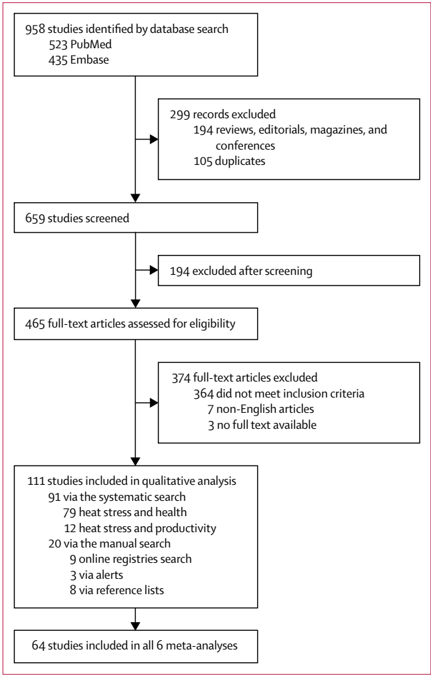
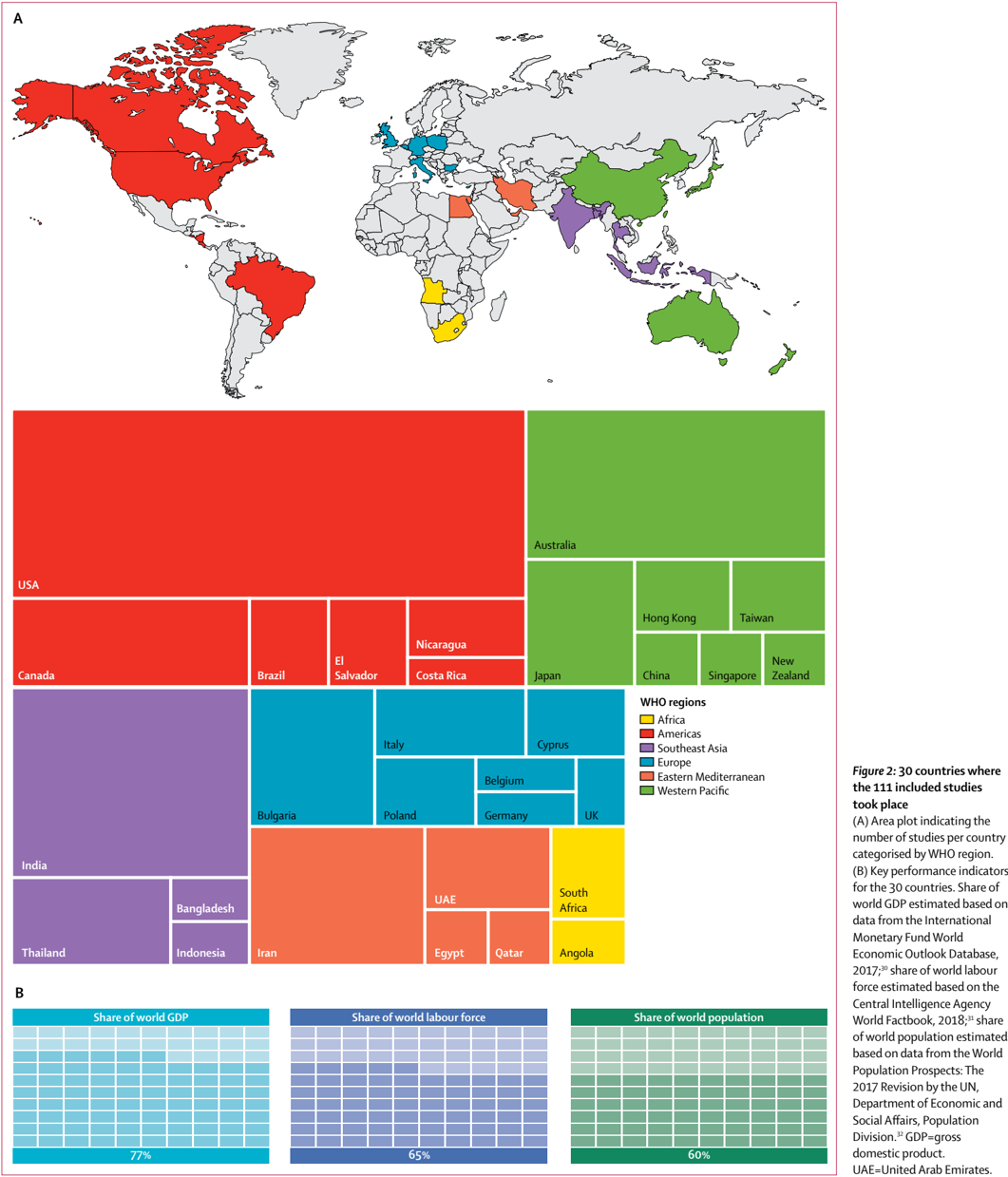
BACKGROUND: Occupational heat strain (ie, the effect of environmental heat stress on the body) directly threatens workers' ability to live healthy and productive lives. We estimated the effects of occupational heat strain on workers' health and productivity outcomes. METHODS: Following PRISMA guidelines for this systematic review and meta-analysis, we searched PubMed and Embase from database inception to Feb 5, 2018, for relevant studies in any labour environment and at any level of occupational heat strain. No restrictions on language, workers' health status, or study design were applied. Occupational heat strain was defined using international health and safety guidelines and standards. We excluded studies that calculated effects using simulations or statistical models instead of actual measurements, and any grey literature. Risk of bias, data extraction, and sensitivity analysis were performed by two independent investigators. Six random-effects meta-analyses estimated the prevalence of occupational heat strain, kidney disease or acute kidney injury, productivity loss, core temperature, change in urine specific gravity, and odds of occupational heat strain occurring during or at the end of a work shift in heat stress conditions. The review protocol is available on PROSPERO, registration number CRD42017083271. FINDINGS: Of 958 reports identified through our systematic search, 111 studies done in 30 countries, including 447 million workers from more than 40 different occupations, were eligible for analysis. Our meta-analyses showed that individuals working a single work shift under heat stress (defined as wet-bulb globe temperature beyond 22·0 or 24·8°C depending on work intensity) were 4·01 times (95% CI 2·45-6·58; nine studies with 11 582 workers) more likely to experience occupational heat strain than an individual working in thermoneutral conditions, while their core temperature was increased by 0·7°C (0·4-1·0; 17 studies with 1090 workers) and their urine specific gravity was increased by 14·5% (0·0031, 0·0014-0·0048; 14 studies with 691 workers). During or at the end of a work shift under heat stress, 35% (31-39; 33 studies with 13 088 workers) of workers experienced occupational heat strain, while 30% (21-39; 11 studies with 8076 workers) reported productivity losses. Finally, 15% (11-19; ten studies with 21 721 workers) of individuals who typically or frequently worked under heat stress (minimum of 6 h per day, 5 days per week, for 2 months of the year) experienced kidney disease or acute kidney injury. Overall, this analysis include a variety of populations, exposures, and occupations to comply with a wider adoption of evidence synthesis, but resulted in large heterogeneity in our meta-analyses. Grading of Recommendations, Assessment, Development and Evaluation analysis revealed moderate confidence for most results and very low confidence in two cases (average core temperature and change in urine specific gravity) due to studies being funded by industry. INTERPRETATION: Occupational heat strain has important health and productivity outcomes and should be recognised as a public health problem. Concerted international action is needed to mitigate its effects in light of climate change and the anticipated rise in heat stress. FUNDING: EU Horizon 2020 research and innovation programme.
Verified 2026-11-22 · 1 reference not checked yet
Overview
CoChat Summary
## TL;DR
This systematic review and meta-analysis found that occupational heat strain is associated with substantial losses in workers’ health and productivity across a very large evidence base. Across 111 studies from 30 countries, workers in heat stress conditions had higher risks of heat strain, dehydration, productivity loss, and kidney-related outcomes.
## Key findings
- The review included 111 studies from 30 countries, covering 447,108,664 workers in more than 40 occupations.
- In six random-effects meta-analyses, working a single shift under heat stress made workers 4.01 times more likely to experience occupational heat strain than thermoneutral conditions (95% CI 2.45–6.58; 9 studies, 11,582 workers).
- Single-shift heat stress increased core temperature by 0.7°C (0.4–1.0; 17 studies, 1,090 workers) and urine specific gravity by 14.5% (0.0014–0.0048; 14 studies, 691 workers).
- During or at the end of a shift in heat stress conditions, 35% of workers experienced occupational heat strain (31–39; 33 studies, 13,088 workers), 30% reported productivity losses (21–39; 11 studies, 8,076 workers), and 15% of those typically or frequently working in heat stress had kidney disease or acute kidney injury (11–19; 10 studies, 21,721 workers).
## Methods
- Systematic review and meta-analysis conducted according to PRISMA; protocol registered on PROSPERO (CRD42017083271).
- Searched PubMed and Embase from inception to Feb 5, 2018; included original quantitative studies in any language, any labor environment, and any occupational heat strain level; excluded grey literature and studies based on simulations/statistical models rather than actual human measurements.
- Two independent investigators handled study selection, risk of bias, extraction, and sensitivity analysis; six random-effects meta-analyses were run for prevalence, odds, mean differences, and related outcomes.
## Limitations
- The authors state that the included studies produced large heterogeneity in the meta-analyses; average I² was 80%.
- The review pooled studies with different populations, exposures, and occupations, which the authors say widened evidence synthesis but increased heterogeneity.
- The text makes evident that some outcomes relied on self-reported tools and that studies were often regionally confined and selected where high prevalence/effects were expected; the authors say this could bias prevalence estimates and limit generalizability to cold regions or jobs not associated with heat exposure.
Model-written summary. Check it against the paper before relying on it.
Integrity signals
Registry
Cites
Statistics
Figures
Verification
Claims the paper makes
4 Valid · 0 Not valid · 10 Not checked · 58 Own results and interpretations
The cited sources support only part of this claim — read each source’s verdict below.
In the paper
“those who are older, obese, unfit, have chronic disease, or experience acute illness or infection are at a high risk for heatinduced pathologies (eg, heat cramps, heat exhaustion, and heat stroke). 1,7,139,147”
What the sources say
- Partly supportedcites [1] 1 Mora C, Dousset B, Caldwell IR, et al. Global risk of deadly heat. Nat Clim Chang 2017; 7: 501-06. sourceExperimental — accuracy not yet measured
The discussion (p. 8) describes an aging population as highly vulnerable to heat, supporting the claim about older individuals. It does not identify obesity, poor fitness, chronic disease, acute illness, or infection as risk factors, or specifically connect those groups to heat cramps, heat exhaustion, and heat stroke. (LLM, conf=0.87)
- Partly supportedcites [7] 7 Kenny GP, Groeller H, McGinn R, Flouris AD. Age, human performance, and physical employment standards. Appl Physiol Nutr Metab 2016; 41 (6 suppl 2) : S92-107 . sourceExperimental — accuracy not yet measured
Kenny et al. (2016) supports most of the risk list: 'Factors affecting work ability in older adults' reports age-related impairments in whole-body heat loss and 60-80% greater heat storage in individuals ≥40 years (Larose et al. 2013, 2014), with those impairments modulated by fitness (low-fitness middle-aged adults losing heat like older counterparts; Stapleton et al. 2015), and 'Impact of chronic health disorders on physical function' states that cardiopulmonary impairments and type 2 diabetes are associated with higher rates of heat illness in hot environments, with the INTRODUCTION naming obesity, diabetes and hypertension as the vulnerable workers the ACGIH TLVs may not protect. However, our copy nowhere treats acute illness or infection as a heat-illness risk factor, and it does not enumerate heat-induced pathologies as heat cramps, heat exhaustion and heat stroke — its outcomes are heat storage, attenuated heat-loss capacity, 'heat illness' and reduced work output. The claim's infection/acute-illness element and the specific pathology spectrum are therefore not attributable to this source. (LLM, conf=0.72)
- Partly supportedcites [139] 139 Flouris AD, McGinn R, Poirier MP, et al. Screening criteria for increased susceptibility to heat stress during work or leisure in hot environments in healthy individuals aged 31-70 years. Temperature (Austin) 2017; 5: 86-99. 142 sourceExperimental — accuracy not yet measured
The Introduction (p.1) supports part of the list: it states that 'heat injuries were more prevalent in unfit, obese, and unacclimatised individuals' and that intrinsic factors 'known to increase an individual's susceptibility to heat stress (SHS)' include sex, age, body composition and cardiorespiratory fitness; the Discussion adds that older adults and 'patients with chronic diseases such as hypertension and type 2 diabetes' are 'more vulnerable populations' (while noting their own cohort excluded chronic disease). However, our copy nowhere mentions acute illness or infection as a risk factor, and it does not enumerate heat cramps, heat exhaustion or heat stroke as the heat-induced pathologies these individuals are at high risk of (the only such wording is in the titles of cited works, e.g. Schickele's 'fatal heat stroke' analysis, ref. 14). So the risk-factor list is only partly attributable to this source. (LLM, conf=0.72)
- Not matchedcites [147] 147 WHO. Quantitative risk assessment of the effects of climate change on selected causes of death, 2030s and 2050s. Geneva: World Health Organization, 2014.
Its entry has no title and year that we can search by.
plainstates an association- Asserted: passes — The authors put it forward as true.
- Checkable: passes — It can be checked against evidence.
- Load-bearing: unclear — It is unclear whether the paper’s conclusions depend on it.
- Based: passes — The paper gives a reason why it holds.
- Partly supported
Every source the paper cites for this claim was checked and supports it.
In the paper
“Our estimate that 35% of individuals working in heat stress conditions experience occupational heat strain is in line with the 30% (95% CI 24-36) prevalence reported for increased susceptibility to heat stress (an inability to mitigate hyperthermia) when working or exercising in hot environments, 139”
What the sources say
- Supportedcites [139] 139 Flouris AD, McGinn R, Poirier MP, et al. Screening criteria for increased susceptibility to heat stress during work or leisure in hot environments in healthy individuals aged 31-70 years. Temperature (Austin) 2017; 5: 86-99. 142 source
The Results section 'SHS in the analysis group' states verbatim: 'Overall, 30% (95% confidence interval: 24-36%) of OLDER individuals were identified as SHSC (Table 2)', and Table 2 (Discussion) gives the same overall prevalence rate of 0.30 § 0.06 for the entire sample. The paper's scope matches the claim's context — sex-specific screening criteria for susceptibility to heat stress (SHS) 'during work and leisure activities in hot environments' (Introduction), with SHSC defined as a reduced capacity to dissipate heat, i.e. elevated rectal temperature/heat storage (equivalent to 'inability to mitigate hyperthermia'). Note that the source's figure is for healthy, physically active adults aged 31-70 (Discussion cautions that the criteria require further validation in sedentary adults and patients with chronic disease), which is the population the 30% prevalence describes. (LLM, conf=0.88)
hedged- Asserted: passes — The authors put it forward as true.
- Checkable: passes — It can be checked against evidence.
- Load-bearing: unclear — It is unclear whether the paper’s conclusions depend on it.
- Based: passes — The paper gives a reason why it holds.
- Supported
A result the paper reports from its own data — it cites no other source for it, so there is none to check. The quote shows it is in the paper.
In the paper
“their urine specific gravity was increased by 14·5% (0·0031, 0·0014-0·0048; 14 studies with 691 workers)”
- Also stated in: § Results · plain
“The average increase due to working in heat stress conditions was 0·0031 (0·0014-0·0048; table; appendix), which is equal to a 14·5% (6·5-22·4) increase.”
- Also stated in: § Discussion · plain
“our analyses show that people who worked a single shift in heat stress conditions had an increase of 14·5% in urine specific gravity compared with those who worked a shift in thermoneutral conditions.”
plainstates a cause- Asserted: passes — The authors put it forward as true.
- Checkable: passes — It can be checked against evidence.
- Load-bearing: passes — The paper’s conclusions depend on it.
- Based: passes — The paper gives a reason why it holds.
- Also stated in: § Results · plain
A result the paper reports from its own data — it cites no other source for it, so there is none to check. The quote shows it is in the paper.
In the paper
“resulted in large heterogeneity with an average I ² of 80% (table)”
- Also stated in: § Summary · plain
“but resulted in large heterogeneity in our meta-analyses”
plain- Asserted: passes — The authors put it forward as true.
- Checkable: passes — It can be checked against evidence.
- Load-bearing: unclear — It is unclear whether the paper’s conclusions depend on it.
- Based: passes — The paper gives a reason why it holds.
- Also stated in: § Summary · plain
A result the paper reports from its own data — it cites no other source for it, so there is none to check. The quote shows it is in the paper.
In the paper
“These studies suggest an average 2·6% productivity decline (individual study estimates: 0·8%, 4 1·4%, 5 1·8%, 56 2·2%, 38 2·8%, 57 4·4%, 55 5·0% 6 ) for every degree increase beyond 24°C WBGT.”
- Also stated in: § Discussion · plain
“These losses increased by 2·6% for every degree increase beyond 24°C WBGT.”
plainstates a cause- Asserted: passes — The authors put it forward as true.
- Checkable: passes — It can be checked against evidence.
- Load-bearing: passes — The paper’s conclusions depend on it.
- Based: passes — The paper gives a reason why it holds.
- Also stated in: § Discussion · plain
25 more claims
Create a free account to see all 72 claims and to verify the 5 references still open.
- Probably not a substantial claim. 31
- It may state two separate claims as one. 23
Claims other papers make about this one
Each is checked against this paper’s own text: does it say what the citing paper says it does?
The source backs part of the claim, not all of it — or backs it for a different population, condition or comparison.
In the citing paper
“However, recent data confirmed that these employees perform the vast majority of their work outdoors and are directly affected by sun exposure, leading to increased heat strain and impaired capacity for manual labor [10,11,12,13].”
From The Impacts of Sun Exposure on Worker Physiology and Cognition: Multi-Country Evidence and Interventions (2021) · cites this paper as [10]
Experimental — accuracy not yet measuredIn the citing paper
“In addition, heat exposure reduces labour productivity and harms the livelihoods of workers and their dependents, particularly when affecting access to quality nutrition, health care, housing, or health-supporting services.94,95”
From The 2024 report of the Lancet Countdown on health and climate change: facing record-breaking threats from delayed action (2024) · cites this paper as [94]
Citations
Cites
Preferred Reporting Items for Systematic Reviews and Meta-Analyses: The PRISMA Statement
Moher, D., Liberati, A., Tetzlaff, J., Altman, D. G., & The PRISMA Group (2009) · PLoS Medicine · doi:10.1371/journal.pmed.1000097 · Cited by 64,042 · cited 2×
“Following PRISMA guidelines, 13 for our systematic review and meta-analysis we searched the PubMed and Embase databases from inception to Nov 30, 2017, for studies that assessed the effect of occupational heat strain on workers’ health or productivity outcomes.”
Preferred reporting items for systematic reviews and meta-analyses: the PRISMA Statement.
(2009) · PubMed Central · Cited by 44,859
Preferred reporting items for systematic reviews and meta-analyses: The PRISMA statement
Moher, D., Liberati, A., Tetzlaff, J., Altman, D. G., & the PRISMA Group* (2009) · Annals of Internal Medicine · doi:10.7326/0003-4819-151-4-200908180-00135 · Cited by 37,554
(2012) · Kidney International Supplements · doi:10.1038/kisup.2012.1 · Cited by 4,326
What is ‘quality of evidence’ and why is it important to clinicians?
Guyatt, G. H., Oxman, A. D., Kunz, R., Vist, G. E., Falck-Ytter, Y., & Schünemann, H. J. (2008) · BMJ · doi:10.1136/bmj.39490.551019.be · Cited by 3,250 · cited 2×
“28 GRADE assessed the quality of the meta-analysis results via methodological design, risk of bias, heterogeneity, indirectness, imprecision, publication bias, and effect sizes displayed in both the included studies in a meta-analysis and the meta-analysis itself.”
Clinical Methods: The History, Physical, and Laboratory Examinations
Kruse, J. A. (1990) · JAMA: The Journal of the American Medical Association · doi:10.1001/jama.1990.03450210108045 · Cited by 2,029
ACSM Position Stand: Exercise and Fluid Replacement
Convertino, V. A., Armstrong, L. E., Coyle, E. F., Mack, G. W., Sawka, M. N., Senay, L. C., & Sherman, W. M. (1996) · Medicine & Science in Sports & Exercise · doi:10.1097/00005768-199610000-00045 · Cited by 1,965
Mora, C., Dousset, B., Caldwell, I. R., Powell, F. E., Geronimo, R. C., Bielecki, C. R., Counsell, C. W. W., Dietrich, B. S., Johnston, E. T., Louis, L. V., et al. (2017) · Nature Climate Change · doi:10.1038/nclimate3322 · Cited by 1,746 · cited 1×
“1,7,139,147 We used the standard definitions of kidney disease and acute kidney injury proposed by the KDIGO clinical practice guidelines workgroup 24 and found that 15% of individuals working in heat stress have these conditions, which is markedly higher than the prevalence rates reported for…”
Climate Change and Extreme Heat Events
Luber, G., & McGeehin, M. (2008) · American Journal of Preventive Medicine · doi:10.1016/j.amepre.2008.08.021 · Cited by 1,243
Evolving importance of kidney disease: from subspecialty to global health burden
Eckardt, K.-U., Coresh, J., Devuyst, O., Johnson, R. J., Köttgen, A., Levey, A. S., & Levin, A. (2013) · The Lancet · doi:10.1016/s0140-6736(13)60439-0 · Cited by 1,159 · cited 1×
“148 and acute kidney injury in high-income (2”
Research works printed but not linked: 6
- 17 ACGIH. Heat Stress and Strain: TLV Physical Agents Documentation. Cincinatti, OH: American Conference of Governmental Industrial Hygienists, 2007 .
- 24 Acute Kidney Injury Work Group. Kidney Disease: Improving Global Outcomes (KDIGO). KDIGO clinical practice guideline for acute kidney injury. Kidney Int 2012; 2 (suppl) : 1-138.
- 78 Krishnan S, Kumar AP, Maruthy KN, Jeremiah PR, Venugopal V. Physiological implications of occupational heat stress for maintenance workers in a residential complex in Chennai-an exploratory intervention trial. Indian J Physiol Pharmacol 2017; 61: 23-29.
- 107 Armed Forces Health Surveillance Center. Update: heat injuries, active component, U.S. Armed Forces, 2011. MSMR 2012; 19: 14-16.
- 108 Armed Forces Health Surveillance Center. Update: heat injuries, active component, U.S. Armed Forces, 2012. MSMR 2013; 20: 17-20.
- 110 Armed Forces Health Surveillance Center. Update: Heat injuries, active component, U.S. Armed Forces, 2014. MSMR 2015; 22: 17-20.
Cited by
Items 301–400 of 564
Smallcombe, J. W., Ranhotty, R. N., Bach, A. J. E., Palutikof, J. P., Tonmoy, F., Joarder, M. A. R., Hossain, M., Morris, N. B., Capon, A. G., Mavros, Y., et al. (2025) · The Lancet Planetary Health · doi:10.1016/j.lanplh.2025.101317 · Cited by 8
“However, heat-related reductions in work output are well documented, 7,28,29 and we observed a 13% reduction in work performance in the no cooling (control) condition compared with air conditioning.”
Areo, I. O., Ashikodi, M. O., Mupenzi, C., & Ediagbonya, T. F. (2025) · Discover Public Health · doi:10.1186/s12982-025-01227-9 · Cited by 10
“Although indoor settings may offer protection from direct sunlight, they can develop microclimates that trap heat and humidity, leading to conditions as severe as, or even more extreme than, outdoor environments [32].”
InfluentialBhati, N., & Sheth, A. (2026) · International Journal of Biometeorology · doi:10.1007/s00484-025-03101-4 · Cited by 6
“Globally, anticipated future global warming conditions will precariously affect the projected occupational thermal stress resilience of workers.”
Nath, A. R. S. B., Sahu, S., & LEE, J. K. W. (2026) · Current Environmental Health Reports · doi:10.1007/s40572-025-00520-8 · Cited by 15
“Specifically, Flouris et al. [ 39] gave meta-analytic evidence that occupational heat strain increases fourfold in workers exposed to WBGT levels above 22.0–24.8 °C, depending on work intensity, alongside a 0.7 °C rise in body core temperature.”
InfluentialRisky working conditions and chronic kidney disease
Lan, R., Yao, Q., Chen, X., Hu, J., Luo, W., Shen, Y., Li, X., Mao, L., Ye, H., & Wang, Z. (2023) · Journal of Occupational Medicine and Toxicology · doi:10.1186/s12995-023-00393-3 · Cited by 10
“Current results also suggest about 30% of people who are regularly exposed to heat at work (at least six hours a day, five days a week, for two months of the year) will experience kidney disease or acute kidney injury [10, 22, 23].”
BackgroundWen, J., Wang, L., Cheng, J., Liu, Y., Ma, T., Wen, Q., Zhou, J., Sun, X., Li, C., Zou, Y., et al. (2024) · Frontiers in Public Health · doi:10.3389/fpubh.2024.1384544 · Cited by 9
Kato, K., Nishi, T., Lee, S., Li, L., Evans, N., & Kiyono, K. (2025) · Sensors · doi:10.3390/s25061832 · Cited by 8
“It is important to distinguish between the concepts of heat stress and thermal strain [28].”
Development of heat stress index for healthcare workers with personal protective equipment
Mao, Y., Zhu, Y., Feng, X., & Fang, Z. (2025) · Energy and Buildings · doi:10.1016/j.enbuild.2025.116150 · Cited by 6
Working in a warming world: Translating thermal physiology to policy-relevant information
Flouris, A. D., Ioannou, L. G., & Nybo, L. (2022) · Temperature · doi:10.1080/23328940.2022.2086414 · Cited by 4
Self-citationDavey, S., Lee, B., Robbins, T., & Thake, D. (2024) · Applied Ergonomics · doi:10.1016/j.apergo.2024.104281 · Cited by 14
Richards, B. J., O’Connor, F. K., Koetje, N. J., Janetos, K. T., McGarr, G. W., & Kenny, G. P. (2024) · American Journal of Industrial Medicine · doi:10.1002/ajim.23664 · Cited by 4
Self-citationUsmani, B. A., Ahmed, M. T., Waqar, T., Allana, A., Ahmed, Z., & Fatmi, Z. (2024) · Urban Climate · doi:10.1016/j.uclim.2024.102177 · Cited by 4
Vale, J. P., Alves, P. G., Neves, S., Nybo, L., Flouris, A. D., & Mayor, T. S. (2021) · International Journal of Sustainable Transportation · doi:10.1080/15568318.2021.1949079 · Cited by 6
“This can lead to heat strain and heatrelated illness (including heat exhaustion and heat stroke), decreased productivity and increased likelihood of work accidents (Brotherhood, 2008; Flouris et al., 2018; Hanna et al., 2011).”
BackgroundSelf-citationRojo‐Rojo, A., Pujalte-Jesús, M. J., Hernández, E., Ruíz, R. M., García-Méndez, J. A., Muñoz-Rubio, G. M., Leal‐Costa, C., & Agea, J. L. D. (2022) · Healthcare · doi:10.3390/healthcare10020267 · Cited by 5
Journeay, W. S., McCormick, J. J., King, K. E., Notley, S. R., Goulet, N., Fujii, N., Amano, T., & Kenny, G. P. (2023) · American Journal of Industrial Medicine · doi:10.1002/ajim.23477 · Cited by 6
Self-citationChen, J.-Q., Zhang, X., Shen, J., Guo, Y., Lei, G.-F., Li, T., Wang, H., & Li, D.-H. (2023) · Psychology Research and Behavior Management · doi:10.2147/prbm.s401764 · Cited by 6
“The prevalence of occupational heat stress has been strongly associated with workplace accident rates, with the majority of accidents reported in certain workplaces found to occur in wet-bulb globe temperatures >25°C. 48 But the temperature of Hainan is well above 25°C.”
Pryor, R. R., Larson, J. R., Vandermark, L. W., Johnson, B. D., & Schlader, Z. J. (2023) · Journal of Occupational and Environmental Hygiene · doi:10.1080/15459624.2023.2221713 · Cited by 6
Perceived challenges and barriers for females working in the heat
Morrissey, M. C., Eason, C. M., Clines, S. H., Kaufman, C. E., & Casa, D. J. (2023) · Journal of Occupational and Environmental Hygiene · doi:10.1080/15459624.2023.2268725 · Cited by 7
“Heat stress has been shown to negatively influence the ability to work and several barriers within a work environment may affect their ability to cope with heat stress or reduce the impact of heat exposure (Kjellstrom et al. 2009; Poga � car et al. 2018; Flouris et al. 2018; Morrissey et al. 2021b).”
BackgroundMental Health Among Healthcare Workers During the COVID-19 Pandemic in Vietnam
Nguyen, N. P. T., Nguyen, H. P. A., Dang, C. K., Phan, M. T., Huynh, Q. N. H., Le, V. T., Dang, C. V., Ho, T. H., Phan, V. T., Dinh, T. V., et al. (2024) · Journal of Preventive Medicine and Public Health · doi:10.3961/jpmph.23.327 · Cited by 6
“The condition was associated with medical is - sues such as acute kidney disease, particularly when chronic dehydration occurred [31].”
BackgroundDebela, M. B., Azage, M., & Begosaw, A. M. (2021) · Research Square · doi:10.21203/rs.3.rs-538186/v1 · Cited by 4
Apreda, C., Ricciardi, G., Reder, A., Mercogliano, P., Capri, G., Mariotti, M., Giallonardo, D., Antonino, G., Domini, S., & Scaramella, C. (2025) · Urban Climate · doi:10.1016/j.uclim.2025.102589 · Cited by 5
Hybrid evaporative-fan cooling vest: multi-scale cooling performance evaluation
Wang, X., Yang, G., Zhang, S., Yan, X., Luo, Y., Chang, S., & Zheng, X. (2025) · Energy and Buildings · doi:10.1016/j.enbuild.2025.116704 · Cited by 4
Global socioeconomic disparities in exposure to extreme heat
Coelho, J. C., Schwartz, J. D., Koutrakis, P., & Réquia, W. J. (2025) · Climatic Change · doi:10.1007/s10584-025-04075-3 · Cited by 3
“Socioeconomic conditions— housing quality and materials, green cover, occupational profiles (e.g., outdoor and infor - mal work), access to cooling and reliable electricity, and healthcare access—systematically shape who is exposed and who can adapt (Flouris et al. 2018; Pavanello et al. 2021).”
InfluentialTao, H., Yuan, Y., Chen, C., Hong, J., Wen, Y., & Zhang, H. (2026) · European Journal of Pharmacology · doi:10.1016/j.ejphar.2026.178696 · Cited by 3
Ionita, G., Bonafede, M., Ariani, F., Marinaccio, A., Morabito, M., & Levi, M. (2023) · International Journal of Environmental Research and Public Health · doi:10.3390/ijerph20054530 · Cited by 3
“Workers under heat stress conditions appear to be four times more likely to experience heat strain compared to individuals working in an environment with neutral temperatures [7].”
BackgroundUrban overheating and its impact on human beings
Santamouris, M. (2024) · Elsevier eBooks · doi:10.1016/b978-0-443-13502-6.00001-4 · Cited by 5
Hess, H. W., Baker, T. B., Tarr, M. L., Zoh, R. S., Johnson, B. D., Hostler, D. P., & Schlader, Z. J. (2024) · American Journal of Physiology-Renal Physiology · doi:10.1152/ajprenal.00089.2024 · Cited by 3
Lucas, R. A. I. (2024) · Experimental Physiology · doi:10.1113/ep091456 · Cited by 4
Tetzlaff, E. J., Kirby, N. V., Ioannou, L. G., Meade, R. D., O’Connor, F. K., Flouris, A. D., & Kenny, G. P. (2025) · Journal of Occupational and Environmental Hygiene · doi:10.1080/15459624.2025.2449947 · Cited by 3
“Though these data were self-reported, this prevalence of heat-related illnesses aligns with a previous meta-analysis, which reported an occupational heat strain prevalence of 35% across more than 40 different occupations and 30 countries (Flouris et al. 2018).”
Self-citationYeasmin, F., Bach, A. J. E., Palutikof, J. P., Tonmoy, F., Tofail, F., Rahman, M., & Rutherford, S. (2025) · Environmental and Occupational Health Practice · doi:10.1539/eohp.2024-0009 · Cited by 3
Pillai, A., Murage, P., & Haque, F. (2025) · Environmental Research · doi:10.1016/j.envres.2025.122928 · Cited by 4
Nizam, C. M., Ismail, A. R., Sukadrin, E. H., Mokhtar, N. K., Abdullah, A., Jusoh, N., & Husshin, N. (2021) · Lecture notes in mechanical engineering · doi:10.1007/978-981-16-4115-2_45 · Cited by 5
Protection to thermal impact of solar radiation: evaluation of selected reflective fabrics
Teunissen, L. P. J., Plaude, L., & Jansen, K. M. B. (2021) · Communications in development and assembling of textile products · doi:10.25367/cdatp.2021.2.p103-114 · Cited by 5
“High ambient temperatures and high levels of humidity create challenging climatic conditions for work and exercise [1-7].”
BackgroundNovikova, T. A., Abramkina, S. S., & Aleshina, Y. A. (2021) · Sanitarnyj vrač (Sanitary Doctor) · doi:10.33920/med-08-2111-05 · Cited by 4
Environmental ergonomics: Commercial kitchens in a semi-tropical city
Gangiah, S. (2022) · doi:10.4102/aosis.2022.bk346 · Cited by 3
Morrissey, M. C., Langan, S. P., Brewer, G. J., Struder, J. F., Navarro, J. S., Nye, M., & Casa, D. J. (2023) · American Journal of Industrial Medicine · doi:10.1002/ajim.23462 · Cited by 5
Validating an advanced smartphone application for thermal advising in cold environments
Eggeling, J., Rydenfält, C., Halder, A., Toftum, J., Nybo, L., Kingma, B., & Gao, C. (2023) · International Journal of Biometeorology · doi:10.1007/s00484-023-02553-w · Cited by 4
“It is important that a thermal stress warning system provides its audience with relevant advice and warnings (Flouris et al. 2018).”
BackgroundSelf-citationOutdoor work: past, present, and future on occupational heat exposure
Bitencourt, D. P., Maia, P. A., Ruas, Á. C., & da Cunha, I. D. Â. (2023) · Revista Brasileira de Saúde Ocupacional · doi:10.1590/2317-6369/36022en2023v48edcinq13 · Cited by 5
Giannaros, C., Galanaki, E., & Agathangelidis, I. (2024) · Climate · doi:10.3390/cli12120210 · Cited by 4
Editorial: Climate change and cardiovascular health
Καλτσάτου, Α., Foster, J., & Ikäheimo, T. M. (2024) · Frontiers in Physiology · doi:10.3389/fphys.2024.1497232 · Cited by 3
Evaluating Heat Risk: Comparing On‐Site WBGT Measurements Versus Smartphone Application Estimates
Grundstein, A., Yeargin, S. W., Cooper, E. R., Cargile, L., Clark, J., Lopez, R. M., Miller, K. C., Montalvo, A. M., Scarneo‐Miller, S. E., & Stearns, R. L. (2025) · GeoHealth · doi:10.1029/2025gh001347 · Cited by 5
Nodoushan, M. J., Jafari, A., Jafarizaveh, M., Nasirzadeh, N., & Golbabaei, F. (2025) · Journal of Public Health · doi:10.1007/s10389-025-02443-y · Cited by 3
Klassen, S., Weiler, A. M., & Hastie, B. (2025) · Current Environmental Health Reports · doi:10.1007/s40572-025-00490-x · Cited by 5
“Hydration is a crucial area for heat-related illness prevention in occupational settings [100], and targeted strategies should take into account situation-and worker-specific factors, including workers’ general level of hydration, clothing, work intensity, and sex [92].”
Wang, J., & Solís, P. (2025) · Energy and AI · doi:10.1016/j.egyai.2025.100580 · Cited by 4
“A 1 ◦ C increase in temperature reduces effective work time by 0.33 % [22], while elevated heat impairs labor efficiency [23].”
InfluentialAnsah, E. W., Ankomah-Appiah, E., & Hormenu, T. (2025) · BMJ Public Health · doi:10.1136/bmjph-2024-001378 · Cited by 2
“For instance, Flouris et al 17 documented a high positive correlation between heat exposure and heightened ambulatory BP in individuals engaged in occupational activities during hot weather conditions.”
Kwaro, D., Kassem, N., Munga, S., Muma, J. O., Gunga, H., Barteit, S., & Maggioni, M. A. (2025) · BMC Public Health · doi:10.1186/s12889-025-24373-w · Cited by 5
“As a result, the core temperature and heart rate rise, leading to physiological strain - a cumulative internal stress response to heat [2, 7, 14].”
InfluentialEchoes of catastrophe: The uneven impacts of climate change on China's transportation productivity
Yao, L., & Chen, W. (2025) · Research in Transportation Business & Management · doi:10.1016/j.rtbm.2025.101546 · Cited by 2
Economic Analysis of a Rest–Shade–Hydration–Sanitation Program at a Nicaraguan Sugar Mill
Schlader, Z. J., Boswell, T., Prince, H., et al. (2025) · Annals of Global Health · doi:10.5334/aogh.4753 · Cited by 2
Cohort Profile for the Heat in Pregnancy- India (HiP-India) Study
Thiruvengadam, R., Raghavan, S., Shanmugam, R., Isaac, T. S., Flores, G. D. J. C., Sathishkumar, A. T., Bulla, S. R., Dayal, P., Ayushi, A., Gosain, M., et al. (2025) · Wellcome Open Research · doi:10.12688/wellcomeopenres.24393.2 · Cited by 3
Yavaşlı, D. D. (2025) · Theoretical and Applied Climatology · doi:10.1007/s00704-025-05972-4 · Cited by 3
O’Connor, F. K., Xu, Z., Hutchins, K. P., Morrissey, M. C., Morris, N. R., Forbes, C., Oberai, M. M., Rutherford, S., Kenny, G. P., & Bach, A. J. E. (2026) · Temperature · doi:10.1080/23328940.2026.2623743 · Cited by 5
Self-citationBuqammaz, M., Almatrouk, J., Kile, M. L., & Kincl, L. D. (2026) · Current Environmental Health Reports · doi:10.1007/s40572-026-00525-x · Cited by 2
“There is substantial evidence that extreme heat causes adverse health effects, including heat cramps, heat exhaustion, heatstroke, hyperthermia, kidney disease, or acute kidney injury, and exacerbates chronic diseases like cardiovascular, lung, and diabetes diseases [•4, 12–14].”
Kenny, G. P., Wagar, K. E., Harris‐Mostert, R. C., Janetos, K. T., McCormick, J. J., King, K. E., Ioannou, L. G., Sigal, R. J., Journeay, W. S., & O’Connor, F. K. (2026) · American Journal of Industrial Medicine · doi:10.1002/ajim.70076 · Cited by 3
“These physiological disturbances can reduce productivity and impair cognitive performance, alertness, dexterity, and coordination [5], thereby increasing the risk of work‐related injuries [6, 7], including traumatic injury such as fractures [8].”
Self-citationHeat-related illnesses in Saudi Arabia: Prevention, early recognition, and public health strategies
Almohammadi, A. A. (2026) · Journal of Umm Al-Qura University for Medical Sciences · doi:10.1007/s44361-025-00018-w · Cited by 9
Thapa, R. J., Shrestha, S., Neupane, D., Wagle, J., & Jha, P. (2026) · Cureus · doi:10.7759/cureus.108607 · Cited by 5
“In Gulf Cooperation Council (GCC) countries, where summer temperatures frequently exceed 45°C, studies among migrant construction workers have documented clinically significant heat strain, dehydration, and electrolyte imbalance despite seasonal midday work bans [20].”
Hitzebelastungen im Arbeitssetting: die Sicht der Arbeitsmedizin
Schoierer, J., Mertes, H., Deering, K., Böse‐O’Reilly, S., & Quartucci, C. (2021) · Medizinisch Wissenschaftliche Verlagsgesellschaft eBooks · doi:10.32745/9783954666270-7 · Cited by 5
Professional health, occupational stress and occupational nursing performance
Coelho, D. V. B. S. D. A., Mueller, L. P., de Aquino, J. C. G., Maciel, M. E. D., Maia, A. M. D. S., Freitas, V. G., Bachega, T. G., Ferreira, T. D., & Oesterreich, S. A. (2022) · Research Society and Development · doi:10.33448/rsd-v11i16.38144 · Cited by 2
Klimawandel ganz nah: Hitzewellen
Nidens, N., Huber, V., Matthies‐Wiesler, F., & Schneider, A. E. (2023) · Die Nephrologie · doi:10.1007/s11560-023-00659-1 · Cited by 2
Comparison of Thermal Indices in Urban Environments with SkyHelios Model
Gangwisch, M., & Matzarakis, A. (2023) · Urban sustainability · doi:10.1007/978-981-99-3675-5_12 · Cited by 2
Malaysia Construction Worker Perception On Heat Stress And Its Impact On Work Performance
Nizam, C. M., Ismail, A. R., & Husshin, N. (2023) · Journal of Business Leadership and Management · doi:10.59762/jblm845920461120231009092253 · Cited by 3
Gourzoulidis, G., Gofa, F., Ioannou, L. G., Konstantakopoulos, I., & Flouris, A. D. (2023) · La Medicina del Lavoro · doi:10.23749/mdl.v114i5.14504 · Cited by 2
“Thermal stress causes accidents as well as illnesses that can be fatal [2].”
BackgroundSelf-citationZand, S., Motlagh, M. S., Golmohammadi, R., Aliabadi, M., Tapak, L., & Babamiri, M. (2024) · Work · doi:10.3233/wor-230360 · Cited by 3
“Occupational heat stress is a serious concern that can negatively affect the health of individuals who work in high temperatures and humidity or engage in physical activities [1, 2].”
InfluentialWen, J., Wang, L., Cheng, J., Ma, T., Wen, Q., Li, C., Zou, Y., Wan, X., Wu, J., & Liu, J. (2024) · Physiological Reports · doi:10.14814/phy2.15946 · Cited by 4
“In a systematic review assessing the impact of occupational heat strain, the studies included in the analysis reported a wide range of WBGT (19.3–52.0°C) and air temperature (21.2–150.0°C, this extreme value was observed in a steel plant worksite) (Flouris et al., 2018).”
BackgroundInfluentialHeat-Related Disorders Among Workers
Kjellstrom, T. E., Lim, J., & LEE, J. K. W. (2024) · Oxford University Press eBooks · doi:10.1093/oso/9780197683293.003.0003 · Cited by 2
The impact of climate change and related extreme weather on people with limb loss
Ruxin, T. R., Morgenroth, D. C., Benmarhnia, T., & Halsne, E. G. (2024) · PM&R · doi:10.1002/pmrj.13154 · Cited by 5
“24 People with amputation due to dysvas-cular disease and diabetes may not only be at risk of acute kidney injury due to extreme heat, but they might also be subject to additional reductions in physical activity 25 and decreased work productivity 26 linked with extreme heat conditions.”
Impact of the changing climate on air pollution, heat stress and human health
Chowdhury, S., Marginean, I., Chaudhary, E., Upadhyay, A., & Aunan, K. (2024) · Elsevier eBooks · doi:10.1016/b978-0-443-16088-2.00009-0 · Cited by 3
Banuet-Martínez, M., Vriezen, R., Yamamoto, S. S., Espinosa-Romero, M. J., Cunsolo, A., & Harper, S. L. (2024) · Environmental Research Letters · doi:10.1088/1748-9326/ad8cf0 · Cited by 4
“…summer, temperatures reached over 40 ◦ C in the Pacific Northwest, severely impacting the agricultural sector by destroying crop yields and decreasing the availability of agricultural labor [7], as heat exposure directly impairs workers’ ability to be out-doors, reducing potential work hours [42].”
Mezőgazdaság és foglalkoztatás a klímaváltozás szorításában
Koós, B., Kovács, K., Váradi, M. M., & Hamza, E. (2025) · Tér és Társadalom · doi:10.17649/tet.38.4.3607 · Cited by 2
Aleshina, Y. A., & Novikova, T. A. (2024) · Hygiene and Sanitation · doi:10.47470/0016-9900-2024-103-5-462-467 · Cited by 2
A nationwide evaluation of crowd-sourced ambient temperature data
deSouza, P., Ibsen, P. C., Westervelt, D. M., Kahn, R. A., Zaitchik, B. F., & Kinney, P. L. (2025) · Frontiers in Environmental Science · doi:10.3389/fenvs.2025.1527855 · Cited by 2
“…of associations between extreme heat and human physiological (Basu and Samet, 2002; Curriero et al., 2002; Guo et al., 2014; Son et al., 2019) and mental health (Lõhmus, 2018; Thompson et al., 2018; Liu et al., 2021), and livelihoods (Burke et al., 2015; Burke et al., 2023; Flouris et al., 2018).”
Heat stress and strain in commercial construction workers in the summer: A pilot study
Specht, J. W., Garcia, S. A., Tourula, E. N., Hite, M. J., Walker, C., Yoder, H. A., Wegman, D. H., Glaser, J. R., Schlader, Z. J., & Amorim, F. T. (2025) · Journal of Occupational and Environmental Hygiene · doi:10.1080/15459624.2025.2500613 · Cited by 9
“When analyzing the impact of job location on heat strain, this study demonstrated that workers had a higher Tcore in uncovered areas compared to those in covered work areas, potentially increasing their risk for heat-related illnesses (Flouris et al. 2018).”
One day of environment‐induced heat stress causes injury to the murine kidney
Roths, M. S., Michael, A., Schlader, Z. J., & Selsby, J. T. (2025) · Experimental Physiology · doi:10.1113/ep092975 · Cited by 2
Barros, J. A. D., Macartney, M. J., Peoples, G. E., Notley, S. R., Herry, C. L., & Kenny, G. P. (2022) · Applied Physiology, Nutrition, and Metabolism · doi:10.1139/apnm-2022-0004 · Cited by 2
Self-citationKajiki, M., Katagiri, A., Matsutake, R., et al. (2024) · Experimental Physiology · doi:10.1113/ep091925 · Cited by 2
“Consequently, drinking carbonated water may help partially alleviate reductions in work productivity due to occupational heat stress (Flouris et al., 2018) by improving mood state.”
BackgroundHeat Stress and Cardiovascular Mortality in Immigrant Workers: Can We Do Something More?
Manfredini, R., Cappadona, R., & Fabbian, F. (2019) · Cardiology · doi:10.1159/000501261 · Cited by 2
Yalew, A. W. (2020) · International Journal of Climate Change Strategies and Management · doi:10.1108/ijccsm-05-2020-0045 · Cited by 4
“The impacts on human health entail effects on health expenditures (Watts et al., 2018) and labor productivity (Flouris et al., 2018; Kjellstrom et al., 2018) which will propel through the rest of the economy (Kompas et al., 2018; Bosello et al., 2006).”
BackgroundBonell, A., Sonko, B. J., Badjie, J., Samateh, T., Saidy, T., Sosseh, F., Sallah, Y., Bajo, K., Murray, K. A., Hirst, J. E., et al. (2021) · SSRN Electronic Journal · doi:10.2139/ssrn.3965382 · Cited by 2
Rhomberg, A., Schröders, J., Vaezghasemi, M., et al. (2024) · Research Square · doi:10.21203/rs.3.rs-5446570/v1 · Cited by 2
Psychophysical Load During the Multistage Marathon des Sables: A Case Study
Ioannou, L. G., Tsoutsoubi, L., Tsianos, G. I., & Flouris, A. D. (2023) · Human performance in extreme environments · doi:10.7771/2327-2937.1156 · Cited by 1
Self-citationOccupational Risks of Agricultural Workers Exposed to Heat: Literature Review
de Faria, J. A. A., de Andrade, E. T., & de Oliveira, F. D. S. (2024) · Revista de Gestão Social e Ambiental · doi:10.24857/rgsa.v18n1-169 · Cited by 1
“Occupational environments with hot and humid climates, heavy physical work loads and/or protective clothing create a strenuous and potentially dangerous environment for the worker (Flouris et al., 2018; Lucas et al., 2014).”
BackgroundMcGregor, G. R. (2024) · Biometeorology · doi:10.1007/978-3-031-69906-1_11 · Cited by 4
Kaufman, C. E., Morrissey, M. C., Marcelino, M., & Casa, D. J. (2025) · American Journal of Industrial Medicine · doi:10.1002/ajim.23734 · Cited by 4
Dehghani, F., Dehghan, H., & Pourabdian, S. (2025) · International Journal of Preventive Medicine · doi:10.4103/ijpvm.ijpvm_208_22 · Cited by 1
“[5,6] Inability to adjust the core body temperature (CBT) as well as insufficient heat dissipation could lead to heat stress.”
The physiology of extreme temperatures: from cold to hot and hazard to health
Kenny, G. P., & Meade, R. D. (2025) · Applied Physiology, Nutrition, and Metabolism · doi:10.1139/apnm-2025-0262 · Cited by 1
Self-citationCarrier, K., & Padilla, B. I. (2025) · The Journal for Nurse Practitioners · doi:10.1016/j.nurpra.2025.105512 · Cited by 1
Are we overestimating radiant effects? Re-examining view factors in the seated posture
Youssef, N., & D’Avignon, K. (2025) · Building and Environment · doi:10.1016/j.buildenv.2025.113866 · Cited by 1
Li, M., Zhang, Y., Wu, C., Yu, J., Li, J., Wu, J., Lin, J., & Xiang, J. (2025) · BMC Public Health · doi:10.1186/s12889-025-24592-1 · Cited by 3
Connor, K. R., Brazelton, S. C., Greenfield, A. M., Charkoudian, N., Chapman, C. L., & Giersch, G. E. W. (2025) · American Journal of Physiology-Regulatory, Integrative and Comparative Physiology · doi:10.1152/ajpregu.00215.2025 · Cited by 1
Tamim, A. R., Patwary, M. M., Bardhan, M., Badhon, M. I. A., Rahman, M. S., Sakib, I. C., Iftikhar, A., Kabir, M. P., Pitol, M. N. S., Saha, C., et al. (2026) · Scientific Reports · doi:10.1038/s41598-026-53118-x · Cited by 1
Strickland, J., Ghisoni, M., Marshall, H., Whitehead, T. M., Nenchev, B., Pellegrini, B., Phillips, C., Tassenberg, K., Davey, S., Dorman, S. C., et al. (2025) · Communications Engineering · doi:10.1038/s44172-025-00548-6 · Cited by 6
“In these thermally challenging settings, precise, continuous core body temperature (CBT) monitoring will help prevent or attenuate heat-related physical and cognitive symptoms, as wellaspotentiallyfatalconditionssuchasheatstroke 8 and,inthelong-term, chronic kidney disease 9 .”
Rhomberg, A., Schröders, J., Pokhrel, S. M., Basnet, O., Maharjan, S., Vaezghasemi, M., & Ashish, K. C. (2025) · Discover Public Health · doi:10.1186/s12982-025-01053-z · Cited by 4
“Heat stress causes hyperthermia and heat-related illness, while exacerbating cardiovascular, respiratory and renal illness, as well as mental health issues [4–6].”
Zhuo, F., Gaurani, R. J., Low, I. C. C., Deshayes, T. A., Lee, J. K. W., Cheung, S. S., Choo, P. L., & Tan, X. R. (2026) · Journal of Exercise Science & Fitness · doi:10.1016/j.jesf.2025.200436 · Cited by 1
Glunz, E., Heidenreich, A., & Gerhold, L. (2025) · Journal of Environmental Psychology · doi:10.1016/j.jenvp.2025.102893 · Cited by 4
Eggert, E., Gunga, H.-C., Sie, A. B., Ouèrmi, L., Ouédraogo, W. A., Kwaro, D., Sauerborn, R., Bunker, A., Barteit, S., Bärnighausen, T., et al. (2025) · The Lancet Planetary Health · doi:10.1016/j.lanplh.2025.101344 · Cited by 5
Occupational heat risk at the 2026 FIFA World Cup: implications for worker safety
Grundstein, A., Morrissey, M. C., Stearns, R. L., & Racinais, S. (2026) · Applied Physiology, Nutrition, and Metabolism · doi:10.1139/apnm-2025-0427 · Cited by 4
Impacts of heat on sleep quality among heat-exposed workers: a systematic review
Raja, M., Venugopal, V., Mathangi, D. C., Kantipudi, S. J., Kumar, K. M., Panda, S., & Latha, P. K. (2026) · Annals of Occupational and Environmental Medicine · doi:10.35371/aoem.2026.38.e3 · Cited by 5
“Reviews of occupational heat strain have already documented increased risks of dehydration, renal dysfunction, accidents, and reduced productivity, 5,33 yet the contribution of sleep disturbance to these adverse outcomes has received little systematic attention.”
Extreme heat risk perceptions and readiness in schools
Hudson, P., Dunlop, L., & Diepen, M. T. (2026) · International Journal of Disaster Risk Reduction · doi:10.1016/j.ijdrr.2026.106109 · Cited by 3
Zhao, Y., Xu, Q., Wu, X., Song, Y., Yang, X., & Liu, W. (2026) · Building Simulation · doi:10.1007/s12273-026-1422-3 · Cited by 2
“Occupational thermal environments involving both high temperatures (≥32 °C) and thermal radiation are prevalent (Flouris et al. 2018; Sharma et al. 2021; Boyd et al. 2025).”
Rojo, E. M., & Bosworth, H. B. (2026) · Frontiers in Public Health · doi:10.3389/fpubh.2026.1801198 · Cited by 1
Yurugi, S., & Nishiura, H. (2026) · Epidemiologia · doi:10.3390/epidemiologia7030060 · Cited by 2
“These features could directly impact the occupational risk of heat exposure and sustainability of working conditions [31,32,36].”
Metadata
- Authors
- Flouris, A. D., Dinas, P. C., Ioannou, L. G., Nybo, L., Havenith, G., Kenny, G. P., & Kjellstrom, T.
- Affiliations
- University of Thessaly (GR)
- University of Copenhagen (DK)
- Loughborough University (GB)
- University of Ottawa (CA)
- Centre for Technology Research & Innovation (Cyprus) (CY)
- Corresponding author
- Flouris, Andreas D
- ORCID
- Venue
- The Lancet Planetary Health
- Publisher
- Elsevier BV
- Published
- 2018-12
- Volume
- 2
- Issue
- 12
- Pages
- e521-e531
- ISSN
- 2542-5196 (ISSN-L)
- OpenAlex
- W2903225676
- Semantic Scholar
- 16332d72ac34b9fbd282919db94e00812b72dc46
- Cited by
- 579
- References
- 160
- Citations by year
- 2026: 128 · 2025: 113 · 2024: 84 · 2023: 75 · 2022: 58 · 2021: 65 · 2020: 35 · 2019: 19
- FWCI
- 3.91
- Type
- journal article
- Language
- en
- Open access
- gold
- doi.org
- Licence
- cc-by-nc-nd
- www.elsevier.com/tdm/userlicense/1.0/ (tdm)
- creativecommons.org/licenses/by-nc-nd/4.0/ (vor)
- Locations
- The Lancet Planetary Health (publishedVersion, cc-by-nc-nd)
- PubMed (publishedVersion)
- Research at the University of Copenhagen (University of Copenhagen) (publishedVersion, cc-by-nc-nd)
- DOAJ (DOAJ: Directory of Open Access Journals) (submittedVersion, cc-by-sa)
- Loughborough University Institutional Repository (Loughborough University) (submittedVersion, cc-by-nc-nd)
- Loughborough University Research Repository (Loughborough University) (submittedVersion, cc-by-nc-nd)
- University of Thessaly Institutional Repository (University of Thessaly) (submittedVersion, cc-by-nc-nd)
- Topics
- Health Sciences › Medicine › Physiology (medical) › Thermoregulation and physiological responses
- Health Sciences › Medicine › Public Health, Environmental and Occupational Health › Occupational Health and Safety in Workplaces
- Life Sciences › Agricultural and Biological Sciences › Animal Science and Zoology › Effects of Environmental Stressors on Livestock
- Keywords
- heat stress, employee health, productivity loss, core body temperature, urine specific gravity, acute kidney injury, kidney disease, wet bulb globe temperature, shift work, occupational health
- MeSH terms
- Efficiency, Hot Temperature, Humans, Occupational Diseases, Occupational Health, Occupational Exposure, Heat Stress Disorders
About these checks
Registry, retraction, Cites and statistics results are computed, not judged, with one exception: a printed reference that no index lists is read once by a model before it counts as a citation error. Claims are extracted by a model and kept only when their quote appears verbatim in the text; each cited source is then checked, with a model’s help, for whether it says what the claim relies on. Those verdicts can be wrong — read the claim’s quote and the cited source before relying on one.
The claim verdicts this report counts are experimental: their accuracy is not yet measured.
A language model drew the claims from the paper on 2026-10-10, under version 3 of the claim definition (model deepseek-v4.1-flash, prompt extract-v3).
A second model labelled each claim on 2026-10-10 (model jev-1.13-20260917, definition revision gold-guideline-v0.2).
Cited sources are checked with a language model’s help (gpt-6-sol and qwen3.8-omni-flash).
Statistics and arithmetic are recomputed, not judged.
Confidence bands are shown only for fields calibrated on our annotated test set. None is calibrated yet, so no band is shown.
What counts as a claim ›How we measure confidence ›How we check this ›
Are you an author, or do you see a problem with this page? Request a review
Data sources
Bibliographic data: Semantic Scholar, OpenAlex, Crossref.
Contains information from the Semantic Scholar Academic Graph Datasets, made available under the ODC Attribution License (ODC-BY 1.0).
Semantic Scholar’s data is described in: Kinney, R., et al. (2023). The Semantic Scholar Open Data Platform. arXiv:2301.10140.
