

Workers' health and productivity under occupational heat strain: a systematic review and meta-analysis
Open accessThe DOI matches its Crossref record; 152 of the 160 references it cites were found in a registry or an index, and 1 are not checked yet; 7 of the 26 sources its claims cite were checked for support.
Abstract
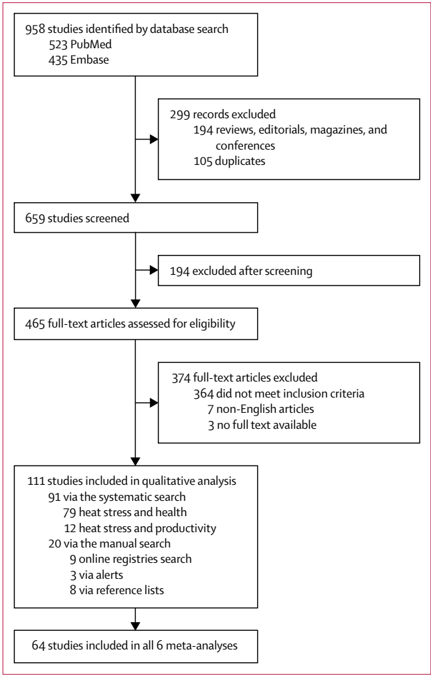
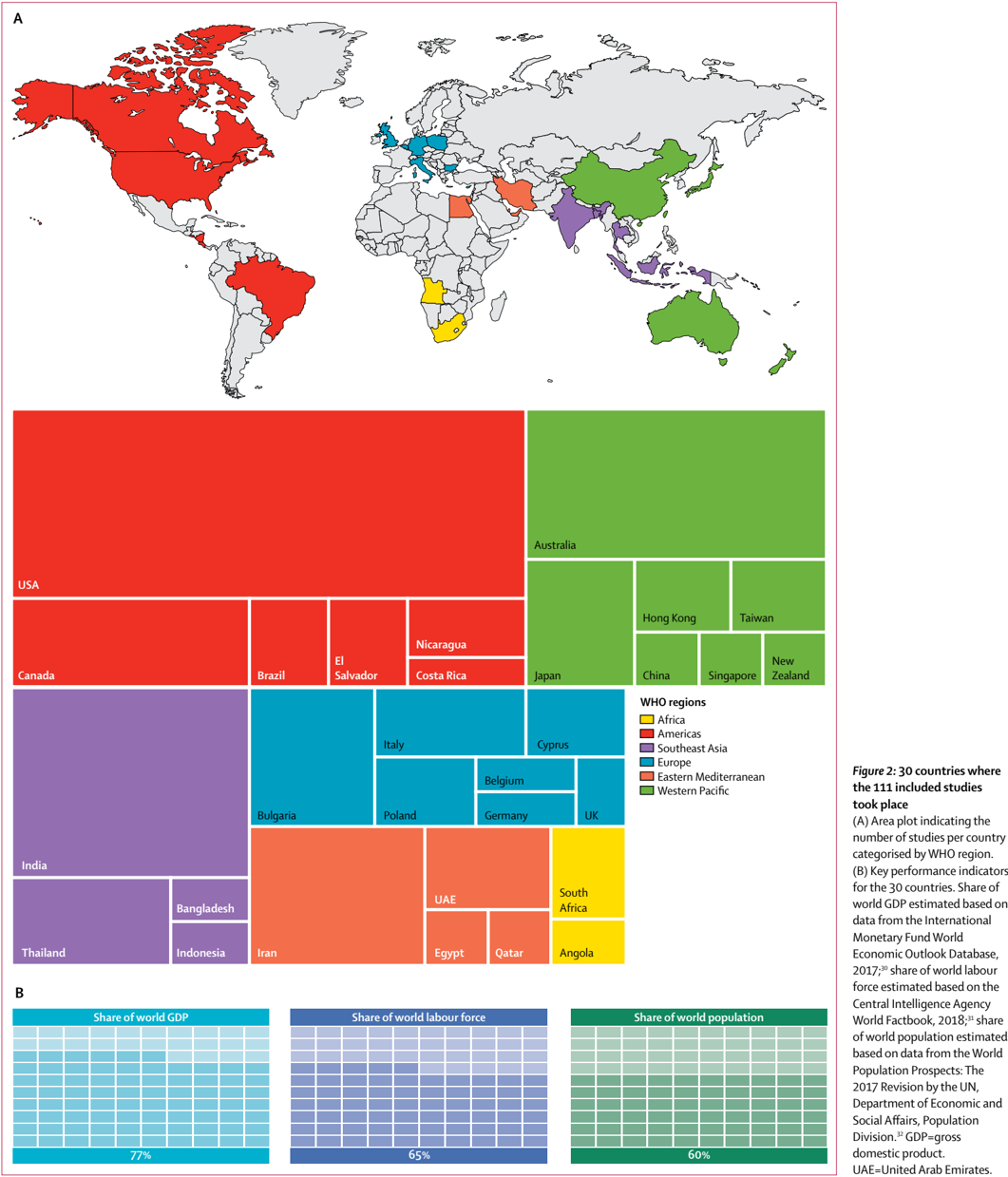
BACKGROUND: Occupational heat strain (ie, the effect of environmental heat stress on the body) directly threatens workers' ability to live healthy and productive lives. We estimated the effects of occupational heat strain on workers' health and productivity outcomes. METHODS: Following PRISMA guidelines for this systematic review and meta-analysis, we searched PubMed and Embase from database inception to Feb 5, 2018, for relevant studies in any labour environment and at any level of occupational heat strain. No restrictions on language, workers' health status, or study design were applied. Occupational heat strain was defined using international health and safety guidelines and standards. We excluded studies that calculated effects using simulations or statistical models instead of actual measurements, and any grey literature. Risk of bias, data extraction, and sensitivity analysis were performed by two independent investigators. Six random-effects meta-analyses estimated the prevalence of occupational heat strain, kidney disease or acute kidney injury, productivity loss, core temperature, change in urine specific gravity, and odds of occupational heat strain occurring during or at the end of a work shift in heat stress conditions. The review protocol is available on PROSPERO, registration number CRD42017083271. FINDINGS: Of 958 reports identified through our systematic search, 111 studies done in 30 countries, including 447 million workers from more than 40 different occupations, were eligible for analysis. Our meta-analyses showed that individuals working a single work shift under heat stress (defined as wet-bulb globe temperature beyond 22·0 or 24·8°C depending on work intensity) were 4·01 times (95% CI 2·45-6·58; nine studies with 11 582 workers) more likely to experience occupational heat strain than an individual working in thermoneutral conditions, while their core temperature was increased by 0·7°C (0·4-1·0; 17 studies with 1090 workers) and their urine specific gravity was increased by 14·5% (0·0031, 0·0014-0·0048; 14 studies with 691 workers). During or at the end of a work shift under heat stress, 35% (31-39; 33 studies with 13 088 workers) of workers experienced occupational heat strain, while 30% (21-39; 11 studies with 8076 workers) reported productivity losses. Finally, 15% (11-19; ten studies with 21 721 workers) of individuals who typically or frequently worked under heat stress (minimum of 6 h per day, 5 days per week, for 2 months of the year) experienced kidney disease or acute kidney injury. Overall, this analysis include a variety of populations, exposures, and occupations to comply with a wider adoption of evidence synthesis, but resulted in large heterogeneity in our meta-analyses. Grading of Recommendations, Assessment, Development and Evaluation analysis revealed moderate confidence for most results and very low confidence in two cases (average core temperature and change in urine specific gravity) due to studies being funded by industry. INTERPRETATION: Occupational heat strain has important health and productivity outcomes and should be recognised as a public health problem. Concerted international action is needed to mitigate its effects in light of climate change and the anticipated rise in heat stress. FUNDING: EU Horizon 2020 research and innovation programme.
Verified 2026-11-22 · 1 reference not checked yet
Overview
CoChat Summary
## TL;DR
This systematic review and meta-analysis found that occupational heat strain is associated with substantial losses in workers’ health and productivity across a very large evidence base. Across 111 studies from 30 countries, workers in heat stress conditions had higher risks of heat strain, dehydration, productivity loss, and kidney-related outcomes.
## Key findings
- The review included 111 studies from 30 countries, covering 447,108,664 workers in more than 40 occupations.
- In six random-effects meta-analyses, working a single shift under heat stress made workers 4.01 times more likely to experience occupational heat strain than thermoneutral conditions (95% CI 2.45–6.58; 9 studies, 11,582 workers).
- Single-shift heat stress increased core temperature by 0.7°C (0.4–1.0; 17 studies, 1,090 workers) and urine specific gravity by 14.5% (0.0014–0.0048; 14 studies, 691 workers).
- During or at the end of a shift in heat stress conditions, 35% of workers experienced occupational heat strain (31–39; 33 studies, 13,088 workers), 30% reported productivity losses (21–39; 11 studies, 8,076 workers), and 15% of those typically or frequently working in heat stress had kidney disease or acute kidney injury (11–19; 10 studies, 21,721 workers).
## Methods
- Systematic review and meta-analysis conducted according to PRISMA; protocol registered on PROSPERO (CRD42017083271).
- Searched PubMed and Embase from inception to Feb 5, 2018; included original quantitative studies in any language, any labor environment, and any occupational heat strain level; excluded grey literature and studies based on simulations/statistical models rather than actual human measurements.
- Two independent investigators handled study selection, risk of bias, extraction, and sensitivity analysis; six random-effects meta-analyses were run for prevalence, odds, mean differences, and related outcomes.
## Limitations
- The authors state that the included studies produced large heterogeneity in the meta-analyses; average I² was 80%.
- The review pooled studies with different populations, exposures, and occupations, which the authors say widened evidence synthesis but increased heterogeneity.
- The text makes evident that some outcomes relied on self-reported tools and that studies were often regionally confined and selected where high prevalence/effects were expected; the authors say this could bias prevalence estimates and limit generalizability to cold regions or jobs not associated with heat exposure.
Model-written summary. Check it against the paper before relying on it.
Integrity signals
Registry
Cites
Statistics
Figures
Verification
Claims the paper makes
4 Valid · 0 Not valid · 10 Not checked · 58 Own results and interpretations
The cited sources support only part of this claim — read each source’s verdict below.
In the paper
“those who are older, obese, unfit, have chronic disease, or experience acute illness or infection are at a high risk for heatinduced pathologies (eg, heat cramps, heat exhaustion, and heat stroke). 1,7,139,147”
What the sources say
- Partly supportedcites [1] 1 Mora C, Dousset B, Caldwell IR, et al. Global risk of deadly heat. Nat Clim Chang 2017; 7: 501-06. sourceExperimental — accuracy not yet measured
The discussion (p. 8) describes an aging population as highly vulnerable to heat, supporting the claim about older individuals. It does not identify obesity, poor fitness, chronic disease, acute illness, or infection as risk factors, or specifically connect those groups to heat cramps, heat exhaustion, and heat stroke. (LLM, conf=0.87)
- Partly supportedcites [7] 7 Kenny GP, Groeller H, McGinn R, Flouris AD. Age, human performance, and physical employment standards. Appl Physiol Nutr Metab 2016; 41 (6 suppl 2) : S92-107 . sourceExperimental — accuracy not yet measured
Kenny et al. (2016) supports most of the risk list: 'Factors affecting work ability in older adults' reports age-related impairments in whole-body heat loss and 60-80% greater heat storage in individuals ≥40 years (Larose et al. 2013, 2014), with those impairments modulated by fitness (low-fitness middle-aged adults losing heat like older counterparts; Stapleton et al. 2015), and 'Impact of chronic health disorders on physical function' states that cardiopulmonary impairments and type 2 diabetes are associated with higher rates of heat illness in hot environments, with the INTRODUCTION naming obesity, diabetes and hypertension as the vulnerable workers the ACGIH TLVs may not protect. However, our copy nowhere treats acute illness or infection as a heat-illness risk factor, and it does not enumerate heat-induced pathologies as heat cramps, heat exhaustion and heat stroke — its outcomes are heat storage, attenuated heat-loss capacity, 'heat illness' and reduced work output. The claim's infection/acute-illness element and the specific pathology spectrum are therefore not attributable to this source. (LLM, conf=0.72)
- Partly supportedcites [139] 139 Flouris AD, McGinn R, Poirier MP, et al. Screening criteria for increased susceptibility to heat stress during work or leisure in hot environments in healthy individuals aged 31-70 years. Temperature (Austin) 2017; 5: 86-99. 142 sourceExperimental — accuracy not yet measured
The Introduction (p.1) supports part of the list: it states that 'heat injuries were more prevalent in unfit, obese, and unacclimatised individuals' and that intrinsic factors 'known to increase an individual's susceptibility to heat stress (SHS)' include sex, age, body composition and cardiorespiratory fitness; the Discussion adds that older adults and 'patients with chronic diseases such as hypertension and type 2 diabetes' are 'more vulnerable populations' (while noting their own cohort excluded chronic disease). However, our copy nowhere mentions acute illness or infection as a risk factor, and it does not enumerate heat cramps, heat exhaustion or heat stroke as the heat-induced pathologies these individuals are at high risk of (the only such wording is in the titles of cited works, e.g. Schickele's 'fatal heat stroke' analysis, ref. 14). So the risk-factor list is only partly attributable to this source. (LLM, conf=0.72)
- Not matchedcites [147] 147 WHO. Quantitative risk assessment of the effects of climate change on selected causes of death, 2030s and 2050s. Geneva: World Health Organization, 2014.
Its entry has no title and year that we can search by.
plainstates an association- Asserted: passes — The authors put it forward as true.
- Checkable: passes — It can be checked against evidence.
- Load-bearing: unclear — It is unclear whether the paper’s conclusions depend on it.
- Based: passes — The paper gives a reason why it holds.
- Partly supported
Every source the paper cites for this claim was checked and supports it.
In the paper
“Our estimate that 35% of individuals working in heat stress conditions experience occupational heat strain is in line with the 30% (95% CI 24-36) prevalence reported for increased susceptibility to heat stress (an inability to mitigate hyperthermia) when working or exercising in hot environments, 139”
What the sources say
- Supportedcites [139] 139 Flouris AD, McGinn R, Poirier MP, et al. Screening criteria for increased susceptibility to heat stress during work or leisure in hot environments in healthy individuals aged 31-70 years. Temperature (Austin) 2017; 5: 86-99. 142 source
The Results section 'SHS in the analysis group' states verbatim: 'Overall, 30% (95% confidence interval: 24-36%) of OLDER individuals were identified as SHSC (Table 2)', and Table 2 (Discussion) gives the same overall prevalence rate of 0.30 § 0.06 for the entire sample. The paper's scope matches the claim's context — sex-specific screening criteria for susceptibility to heat stress (SHS) 'during work and leisure activities in hot environments' (Introduction), with SHSC defined as a reduced capacity to dissipate heat, i.e. elevated rectal temperature/heat storage (equivalent to 'inability to mitigate hyperthermia'). Note that the source's figure is for healthy, physically active adults aged 31-70 (Discussion cautions that the criteria require further validation in sedentary adults and patients with chronic disease), which is the population the 30% prevalence describes. (LLM, conf=0.88)
hedged- Asserted: passes — The authors put it forward as true.
- Checkable: passes — It can be checked against evidence.
- Load-bearing: unclear — It is unclear whether the paper’s conclusions depend on it.
- Based: passes — The paper gives a reason why it holds.
- Supported
A result the paper reports from its own data — it cites no other source for it, so there is none to check. The quote shows it is in the paper.
In the paper
“their urine specific gravity was increased by 14·5% (0·0031, 0·0014-0·0048; 14 studies with 691 workers)”
- Also stated in: § Results · plain
“The average increase due to working in heat stress conditions was 0·0031 (0·0014-0·0048; table; appendix), which is equal to a 14·5% (6·5-22·4) increase.”
- Also stated in: § Discussion · plain
“our analyses show that people who worked a single shift in heat stress conditions had an increase of 14·5% in urine specific gravity compared with those who worked a shift in thermoneutral conditions.”
plainstates a cause- Asserted: passes — The authors put it forward as true.
- Checkable: passes — It can be checked against evidence.
- Load-bearing: passes — The paper’s conclusions depend on it.
- Based: passes — The paper gives a reason why it holds.
- Also stated in: § Results · plain
A result the paper reports from its own data — it cites no other source for it, so there is none to check. The quote shows it is in the paper.
In the paper
“resulted in large heterogeneity with an average I ² of 80% (table)”
- Also stated in: § Summary · plain
“but resulted in large heterogeneity in our meta-analyses”
plain- Asserted: passes — The authors put it forward as true.
- Checkable: passes — It can be checked against evidence.
- Load-bearing: unclear — It is unclear whether the paper’s conclusions depend on it.
- Based: passes — The paper gives a reason why it holds.
- Also stated in: § Summary · plain
A result the paper reports from its own data — it cites no other source for it, so there is none to check. The quote shows it is in the paper.
In the paper
“These studies suggest an average 2·6% productivity decline (individual study estimates: 0·8%, 4 1·4%, 5 1·8%, 56 2·2%, 38 2·8%, 57 4·4%, 55 5·0% 6 ) for every degree increase beyond 24°C WBGT.”
- Also stated in: § Discussion · plain
“These losses increased by 2·6% for every degree increase beyond 24°C WBGT.”
plainstates a cause- Asserted: passes — The authors put it forward as true.
- Checkable: passes — It can be checked against evidence.
- Load-bearing: passes — The paper’s conclusions depend on it.
- Based: passes — The paper gives a reason why it holds.
- Also stated in: § Discussion · plain
25 more claims
Create a free account to see all 72 claims and to verify the 5 references still open.
- Probably not a substantial claim. 31
- It may state two separate claims as one. 23
Claims other papers make about this one
Each is checked against this paper’s own text: does it say what the citing paper says it does?
The source backs part of the claim, not all of it — or backs it for a different population, condition or comparison.
In the citing paper
“However, recent data confirmed that these employees perform the vast majority of their work outdoors and are directly affected by sun exposure, leading to increased heat strain and impaired capacity for manual labor [10,11,12,13].”
From The Impacts of Sun Exposure on Worker Physiology and Cognition: Multi-Country Evidence and Interventions (2021) · cites this paper as [10]
Experimental — accuracy not yet measuredIn the citing paper
“In addition, heat exposure reduces labour productivity and harms the livelihoods of workers and their dependents, particularly when affecting access to quality nutrition, health care, housing, or health-supporting services.94,95”
From The 2024 report of the Lancet Countdown on health and climate change: facing record-breaking threats from delayed action (2024) · cites this paper as [94]
Citations
Cites
Preferred Reporting Items for Systematic Reviews and Meta-Analyses: The PRISMA Statement
Moher, D., Liberati, A., Tetzlaff, J., Altman, D. G., & The PRISMA Group (2009) · PLoS Medicine · doi:10.1371/journal.pmed.1000097 · Cited by 64,042 · cited 2×
“Following PRISMA guidelines, 13 for our systematic review and meta-analysis we searched the PubMed and Embase databases from inception to Nov 30, 2017, for studies that assessed the effect of occupational heat strain on workers’ health or productivity outcomes.”
Preferred reporting items for systematic reviews and meta-analyses: the PRISMA Statement.
(2009) · PubMed Central · Cited by 44,859
Preferred reporting items for systematic reviews and meta-analyses: The PRISMA statement
Moher, D., Liberati, A., Tetzlaff, J., Altman, D. G., & the PRISMA Group* (2009) · Annals of Internal Medicine · doi:10.7326/0003-4819-151-4-200908180-00135 · Cited by 37,554
(2012) · Kidney International Supplements · doi:10.1038/kisup.2012.1 · Cited by 4,326
What is ‘quality of evidence’ and why is it important to clinicians?
Guyatt, G. H., Oxman, A. D., Kunz, R., Vist, G. E., Falck-Ytter, Y., & Schünemann, H. J. (2008) · BMJ · doi:10.1136/bmj.39490.551019.be · Cited by 3,250 · cited 2×
“28 GRADE assessed the quality of the meta-analysis results via methodological design, risk of bias, heterogeneity, indirectness, imprecision, publication bias, and effect sizes displayed in both the included studies in a meta-analysis and the meta-analysis itself.”
Clinical Methods: The History, Physical, and Laboratory Examinations
Kruse, J. A. (1990) · JAMA: The Journal of the American Medical Association · doi:10.1001/jama.1990.03450210108045 · Cited by 2,029
ACSM Position Stand: Exercise and Fluid Replacement
Convertino, V. A., Armstrong, L. E., Coyle, E. F., Mack, G. W., Sawka, M. N., Senay, L. C., & Sherman, W. M. (1996) · Medicine & Science in Sports & Exercise · doi:10.1097/00005768-199610000-00045 · Cited by 1,965
Mora, C., Dousset, B., Caldwell, I. R., Powell, F. E., Geronimo, R. C., Bielecki, C. R., Counsell, C. W. W., Dietrich, B. S., Johnston, E. T., Louis, L. V., et al. (2017) · Nature Climate Change · doi:10.1038/nclimate3322 · Cited by 1,746 · cited 1×
“1,7,139,147 We used the standard definitions of kidney disease and acute kidney injury proposed by the KDIGO clinical practice guidelines workgroup 24 and found that 15% of individuals working in heat stress have these conditions, which is markedly higher than the prevalence rates reported for…”
Climate Change and Extreme Heat Events
Luber, G., & McGeehin, M. (2008) · American Journal of Preventive Medicine · doi:10.1016/j.amepre.2008.08.021 · Cited by 1,243
Evolving importance of kidney disease: from subspecialty to global health burden
Eckardt, K.-U., Coresh, J., Devuyst, O., Johnson, R. J., Köttgen, A., Levey, A. S., & Levin, A. (2013) · The Lancet · doi:10.1016/s0140-6736(13)60439-0 · Cited by 1,159 · cited 1×
“148 and acute kidney injury in high-income (2”
Excess mortality related to the August 2003 heat wave in France
Fouillet, A., Rey, G., Laurent, F., Pavillon, G., Bellec, S., Guihenneuc-Jouyaux, C., Clavel, J., Jougla, E., & Hémon, D. (2006) · International Archives of Occupational and Environmental Health · doi:10.1007/s00420-006-0089-4 · Cited by 1,023 · cited 1×
“…strain is in line with the 30% (95% CI 24–36) prevalence reported for increased susceptibility to heat stress (an inability to mitigate hyperthermia) when working or exercising in hot environments, 139 and with epidemiological data 140,141 for morbidity and mortality during extreme heat events.”
Acute kidney injury: an increasing global concern
Lameire, N. H., Bagga, A., Cruz, D., De Maeseneer, J., Endre, Z., Kellum, J. A., Liu, K. D., Mehta, R. L., Pannu, N., Van Biesen, W., et al. (2013) · The Lancet · doi:10.1016/s0140-6736(13)60647-9 · Cited by 1,001
Incidence and Mortality of Acute Renal Failure in Medicare Beneficiaries, 1992 to 2001
Xue, J. L., Daniels, F., Star, R. A., Kimmel, P. L., Eggers, P. W., Molitoris, B. A., Himmelfarb, J., & Collins, A. J. (2006) · Journal of the American Society of Nephrology · doi:10.1681/asn.2005060668 · Cited by 765
American College of Sports Medicine Position Stand: Exercise and Fluid Replacement
Shephard, R. J. (2007) · Yearbook of Sports Medicine · doi:10.1016/s0162-0908(08)70206-x · Cited by 667
Heatwaves and health : guidance on warning-system development.
McGregor, G. R., Bessmoulin, P., Ebi, K. L., & Menne, B. (2015) · Durham Research Online (Durham University) · Cited by 588
Declining Mortality in Patients with Acute Renal Failure, 1988 to 2002
Waikar, S. S., Curhan, G. C., Wald, R., McCarthy, E. P., & Chertow, G. M. (2006) · Journal of the American Society of Nephrology · doi:10.1681/asn.2005091017 · Cited by 587
Margulis, A. V., Pladevall, M., Riera-Guardia, N., Varas-Lorenzo, C., Hazell, L., Berkman, N., Viswanathan, M., & Perez-Gutthann, S. (2014) · Clinical Epidemiology · doi:10.2147/clep.s66677 · Cited by 441
Mackowiak, P. A. (1992) · JAMA: The Journal of the American Medical Association · doi:10.1001/jama.1992.03490120092034 · Cited by 419 · cited 1×
“While core temperature thresholds for hyperthermia, fever, and heat injury vary across individuals, 144 those who are older, obese, unfit, have chronic disease, or experience acute illness or infection are at a high risk for heat-induced pathologies (eg, heat cramps, heat exhaustion, and heat…”
Lowe, D., Ebi, K. L., & Forsberg, B. (2011) · International Journal of Environmental Research and Public Health · doi:10.3390/ijerph8124623 · Cited by 391
García-Trabanino, R., Jarquín, E., Wesseling, C., Johnson, R. J., González-Quiroz, M., Weiss, I., Glaser, J., José Vindell, J., Stockfelt, L., Roncal, C., et al. (2015) · Environmental Research · doi:10.1016/j.envres.2015.07.007 · Cited by 337
Urinary lithiasis : Etiology, diagnosis, and medical management
Menon, M. (1998) · Medical Entomology and Zoology · Cited by 309
Gubernot, D. M., Anderson, G. B., & Hunting, K. L. (2015) · American Journal of Industrial Medicine · doi:10.1002/ajim.22381 · Cited by 259
SAHU, S., SETT, M., & KJELLSTROM, T. (2013) · Industrial Health · doi:10.2486/indhealth.2013-0006 · Cited by 249 · cited 1×
“4,6,26,33–35, 39–”
Self-citationLamb, S., & Kwok, K. C. S. (2016) · Applied Ergonomics · doi:10.1016/j.apergo.2015.07.010 · Cited by 228
Physiology of Thermoregulation
Kurz, A. (2008) · Best Practice & Research Clinical Anaesthesiology · doi:10.1016/j.bpa.2008.06.004 · Cited by 222
Spatial patterns of natural hazards mortality in the United States
Borden, K. A., & Cutter, S. L. (2008) · International Journal of Health Geographics · doi:10.1186/1476-072x-7-64 · Cited by 220
(2013) · Europe PMC (PubMed Central) · Cited by 200
The impact of major heat waves on all-cause and cause-specific mortality in France from 1971 to 2003
Rey, G., Jougla, E., Fouillet, A., Pavillon, G., Bessemoulin, P., Frayssinet, P., Clavel, J., & Hémon, D. (2007) · International Archives of Occupational and Environmental Health · doi:10.1007/s00420-007-0173-4 · Cited by 188
Ioannidis, J. (2017) · British Journal of Sports Medicine · doi:10.1136/bjsports-2017-097621 · Cited by 188 · cited 1×
“154 While this approach allowed us to form a meaningful conclusion instead of narrowing down our research question, it resulted in large heterogeneity in our meta-analyses.”
Occupational Heat Stress Profiles in Selected Workplaces in India
Venugopal, V., Chinnadurai, J., Lucas, R., & Kjellstrom, T. (2015) · International Journal of Environmental Research and Public Health · doi:10.3390/ijerph13010089 · Cited by 186
Self-citationHeat exhaustion in a deep underground metalliferous mine
Donoghue, A. M., Sinclair, M. J., & Bates, G. P. (2000) · Occupational and Environmental Medicine · doi:10.1136/oem.57.3.165 · Cited by 173
Occupational Heat Stress Impacts on Health and Productivity in a Steel Industry in Southern India
Krishnamurthy, M., Ramalingam, P., Perumal, K., Kamalakannan, L. P., Chinnadurai, J., Shanmugam, R., Srinivasan, K., & Venugopal, V. (2017) · Safety and Health at Work · doi:10.1016/j.shaw.2016.08.005 · Cited by 170
TAWATSUPA, B., YIENGPRUGSAWAN, V., KJELLSTROM, T., BERECKI-GISOLF, J., SEUBSMAN, S.-A., & SLEIGH, A. (2013) · Industrial Health · doi:10.2486/indhealth.2012-0138 · Cited by 169
Self-citationWesseling, C., Aragón, A., González, M., Weiss, I., Glaser, J., Rivard, C. J., Roncal-Jiménez, C., Correa-Rotter, R., & Johnson, R. J. (2016) · BMJ Open · doi:10.1136/bmjopen-2016-011034 · Cited by 167
Assessment of hydration status in a large population
Baron, S., Courbebaisse, M., Lepicard, E. M., & Friedlander, G. (2015) · British Journal of Nutrition · doi:10.1017/s0007114514003213 · Cited by 166
Xiang, J., Bi, P., Pisaniello, D., Hansen, A., & Sullivan, T. (2014) · Occupational and Environmental Medicine · doi:10.1136/oemed-2013-101584 · Cited by 155
Intervention to diminish dehydration and kidney damage among sugarcane workers
Wegman, D. H., Apelqvist, J., Bottai, M., Ekström, U., Gárcía-Trabanino, R., Glaser, J. R., Hogstedt, C., Jakobsson, K., Jarquin, E. R., Lucas, R. A. I., et al. (2017) · Scandinavian Journal of Work Environment & Health · doi:10.5271/sjweh.3659 · Cited by 149
Yi, W., & Chan, A. (2017) · International Journal of Environmental Research and Public Health · doi:10.3390/ijerph14091055 · Cited by 147
Hot Occupation and Nephrolithiasis
Borghi, L., Meschi, T., Amato, F., Novarini, A., Romanelli, A., & Cigala, F. (1993) · The Journal of Urology · doi:10.1016/s0022-5347(17)35887-1 · Cited by 147
Perceived heat stress and health effects on construction workers
Dutta, P., Rajiva, A., Andhare, D., Azhar, G., Tiwari, A., Sheffield, P., & Ahmedabad Heat and Climate Study Group (2015) · Indian Journal of Occupational and Environmental Medicine · doi:10.4103/0019-5278.174002 · Cited by 145
Effects of occupational heat exposure on female brick workers in West Bengal, India
Sett, M., & Sahu, S. (2014) · Global Health Action · doi:10.3402/gha.v7.21923 · Cited by 144
Public Health Impact of Heat-Related Illness Among Migrant Farmworkers
Fleischer, N. L., Tiesman, H. M., Sumitani, J., Mize, T., Amarnath, K. K., Bayakly, A. R., & Murphy, M. W. (2013) · American Journal of Preventive Medicine · doi:10.1016/j.amepre.2012.10.020 · Cited by 144
Tawatsupa, B., Lim, L.-Y., Kjellstrom, T., Seubsman, S.-A., Sleigh, A., & The Thai Cohort Study team (2010) · Global Health Action · doi:10.3402/gha.v3i0.5034 · Cited by 143
Self-citationBates, G. P., & Schneider, J. (2008) · Journal of Occupational Medicine and Toxicology · doi:10.1186/1745-6673-3-21 · Cited by 143
Heat strain, volume depletion and kidney function in California agricultural workers
Moyce, S., Mitchell, D., Armitage, T., Tancredi, D., Joseph, J., & Schenker, M. (2017) · Occupational and Environmental Medicine · doi:10.1136/oemed-2016-103848 · Cited by 143
Fever in the critically ill medical patient
Laupland, K. B. (2009) · Critical Care Medicine · doi:10.1097/ccm.0b013e3181aa6117 · Cited by 139
Fluid losses and hydration status of industrial workers under thermal stress working extended shifts
Brake, D. J., & Bates, G. P. (2003) · Occupational and Environmental Medicine · doi:10.1136/oem.60.2.90 · Cited by 138
Tawatsupa, B., Lim, L. L.-Y., Kjellstrom, T., Seubsman, S.-A., Sleigh, A., & Study Team, T. T. C. (2012) · Journal of Epidemiology · doi:10.2188/jea.je20110082 · Cited by 133
Self-citationAge, human performance, and physical employment standards
Kenny, G. P., Groeller, H., McGinn, R., & Flouris, A. D. (2016) · Applied Physiology, Nutrition, and Metabolism · doi:10.1139/apnm-2015-0483 · Cited by 128 · cited 1×
“1,7,139,147 We used the standard definitions of kidney disease and acute kidney injury proposed by the KDIGO clinical practice guidelines workgroup 24 and found that 15% of individuals working in heat stress have these conditions, which is markedly higher than the prevalence rates reported for…”
Self-citationOccupational heat illness in Washington State, 1995–2005
Bonauto, D., Anderson, R., Rauser, E., & Burke, B. (2007) · American Journal of Industrial Medicine · doi:10.1002/ajim.20517 · Cited by 127
High kidney stone risk in men working in steel industry at hot temperatures
Atan, L., Andreoni, C., Ortiz, V., Silva, E. K., Pitta, R., Atan, F., & Srougi, M. (2005) · Urology · doi:10.1016/j.urology.2004.11.048 · Cited by 127
Epidemiology of Acute Kidney Injury in Africa
Naicker, S., Aboud, O., & Gharbi, M. B. (2008) · Seminars in Nephrology · doi:10.1016/j.semnephrol.2008.04.003 · Cited by 124 · cited 1×
“151,152 countries.”
Venugopal, V., Rekha, S., Manikandan, K., Latha, P. K., Vennila, V., Ganesan, N., Kumaravel, P., & Chinnadurai, S. J. (2016) · Global Health Action · doi:10.3402/gha.v9.31945 · Cited by 123 · cited 2×
“4,6,26,33–35, 39–”
Sawka, M. N. (2007) · Medicine & Science in Sports & Exercise · doi:10.1249/01.mss.0000272779.34140.3b · Cited by 121
Symptoms of Heat Illness Among Latino Farm Workers in North Carolina
Mirabelli, M. C., Quandt, S. A., Crain, R., Grzywacz, J. G., Robinson, E. N., Vallejos, Q. M., & Arcury, T. A. (2010) · American Journal of Preventive Medicine · doi:10.1016/j.amepre.2010.07.008 · Cited by 119
Outdoor temperature is associated with serum HDL and LDL
Halonen, J. I., Zanobetti, A., Sparrow, D., Vokonas, P. S., & Schwartz, J. (2011) · Environmental Research · doi:10.1016/j.envres.2010.12.001 · Cited by 118 · cited 1×
“25,26 For meta-analysis two, we estimated the prevalence of kidney disease or acute kidney injury in individuals who frequently or typically work in heat stress conditions (minimum of 6 h per day, 5 days per week, for 2 months of the year for typical occupations, or minimum of 12 h per day, 2 days…”
Ioannou, L. G., Tsoutsoubi, L., Samoutis, G., Bogataj, L. K., Kenny, G. P., Nybo, L., Kjellstrom, T., & Flouris, A. D. (2017) · Temperature · doi:10.1080/23328940.2017.1338210 · Cited by 103 · cited 2×
“4,6,26,33–35, 39–”
Self-citationHeat‐Related symptoms in sugarcane harvesters
Crowe, J., Nilsson, M., Kjellstrom, T., & Wesseling, C. (2015) · American Journal of Industrial Medicine · doi:10.1002/ajim.22450 · Cited by 95
Self-citationHot environment and health problems of outdoor workers at a construction site
MORIOKA, I., MIYAI, N., & MIYASHITA, K. (2006) · Industrial Health · doi:10.2486/indhealth.44.474 · Cited by 94 · cited 1×
“113,120 It is important to note that seven 67,74,85,87,94,132,135 of the 47 studies excluded in our meta-analyses showed no effect of workplace environmental heat stress on the prevalence of heat-related illness or health outcomes.”
Deep Body Core Temperatures in Industrial Workers Under Thermal Stress
Brake, D. J., & Bates, G. P. (2002) · Journal of Occupational and Environmental Medicine · doi:10.1097/00043764-200202000-00007 · Cited by 93
Heat Stress Evaluation and Worker Fatigue in a Steel Plant
Chen, M.-L., Chen, C.-J., Yeh, W.-Y., Huang, J.-W., & Mao, I.-F. (2003) · AIHA Journal · doi:10.1080/15428110308984827 · Cited by 93
Xiang, J., Hansen, A., Pisaniello, D., & Bi, P. (2016) · BMC Public Health · doi:10.1186/s12889-016-3241-4 · Cited by 91
Evaluating Effects of Heat Stress on Cognitive Function among Workers in a Hot Industry
Mazloumi, A., Golbabaei, F., Mahmood Khani, S. M. K., Kazemi, Z., Hosseini, M., Abbasinia, M., & Farhang Dehghan, S. (2014) · Tabriz University of Medical Sciences · doi:10.5681/hpp.2014.031 · Cited by 90 · cited 1×
“113,120 It is important to note that seven 67,74,85,87,94,132,135 of the 47 studies excluded in our meta-analyses showed no effect of workplace environmental heat stress on the prevalence of heat-related illness or health outcomes.”
Heat-Related Illness among Oregon Farmworkers
Bethel, J., & Harger, R. (2014) · International Journal of Environmental Research and Public Health · doi:10.3390/ijerph110909273 · Cited by 88
Hamerezaee, M., Dehghan, S. F., Golbabaei, F., Fathi, A. O.-L., Barzegar, L., & Heidarnejad, N. (2017) · Safety and Health at Work · doi:10.1016/j.shaw.2017.07.003 · Cited by 87
Risk Factors for Heat-Related Illness in Washington Crop Workers
Spector, J. T., Krenz, J., & Blank, K. N. (2015) · Journal of Agromedicine · doi:10.1080/1059924x.2015.1047107 · Cited by 85
Heat illness and death among workers - United States, 2012-2013.
(2014) · PubMed Central · Cited by 83
Singh, A., Kamal, R., Mudiam, M. K. R., Gupta, M. K., Satyanarayana, G. N. V., Bihari, V., Shukla, N. K., Khan, A. H., & Kesavachandran, C. N. (2016) · PLoS ONE · doi:10.1371/journal.pone.0148641 · Cited by 78
Update: Heat illness, active component, U.S. Armed Forces, 2021.
Williams, V., & Oh, G. (2022) · PubMed · Cited by 76
Fertility and semen quality of workers exposed to high temperatures in the ceramics industry
Figa-Talamanca, I., Dell'Orco, V., Pupi, A., Dondero, F., Gandini, L., Lenzi, A., Lombardo, F., Scavalli, P., & Mancini, G. (1992) · Reproductive Toxicology · doi:10.1016/0890-6238(92)90036-s · Cited by 75
Flouris, A. D., McGinn, R., Poirier, M. P., Louie, J. C., Ioannou, L. G., Tsoutsoubi, L., Sigal, R. J., Boulay, P., Hardcastle, S. G., & Kenny, G. P. (2018) · Temperature · doi:10.1080/23328940.2017.1381800 · Cited by 74
Self-citationAn Evaluation of the Physiological Strain Experienced by Electrical Utility Workers in North America
Meade, R. D., Lauzon, M., Poirier, M. P., Flouris, A. D., & Kenny, G. P. (2015) · Journal of Occupational and Environmental Hygiene · doi:10.1080/15459624.2015.1043054 · Cited by 74
Self-citationMazlomi, A., Golbabaei, F., Farhang Dehghan, S., Abbasinia, M., Mahmoud Khani, S., Ansari, M., & Hosseini, M. (2017) · International Journal of Occupational Safety and Ergonomics · doi:10.1080/10803548.2016.1251137 · Cited by 74
Incidence and Etiology of Acute Kidney Injury in Southern India
Krishnamurthy, S., Mondal, N., Narayanan, P., Biswal, N., Srinivasan, S., & Soundravally, R. (2013) · The Indian Journal of Pediatrics · doi:10.1007/s12098-012-0791-z · Cited by 73
GUN, R. T., & BUDD, G. M. (1995) · Ergonomics · doi:10.1080/00140139508925195 · Cited by 70
Risk Factors for Heatstroke among Japanese Forestry Workers
Maeda, T., Kaneko, S., Ohta, M., Tanaka, K., Sasaki, A., & Fukushima, T. (2006) · Journal of Occupational Health · doi:10.1539/joh.48.223 · Cited by 66
Heat stress assessment among workers in a Nicaraguan sugarcane farm
Delgado Cortez, O. (2009) · Global Health Action · doi:10.3402/gha.v2i0.2069 · Cited by 66
Riccò, M. (2017) · International Journal of Occupational Medicine and Environmental Health · doi:10.13075/ijomeh.1896.01114 · Cited by 66
Core body temperature in obesity
Heikens, M. J., Gorbach, A. M., Eden, H. S., Savastano, D. M., Chen, K. Y., Skarulis, M. C., & Yanovski, J. A. (2011) · The American Journal of Clinical Nutrition · doi:10.3945/ajcn.110.006270 · Cited by 65 · cited 1×
“When compared with normative values for healthy, 142–144 obese, 145 or acutely-ill 146 adults, the average core temperature of 37·6°C estimated for individuals working a shift under heat stress is considered borderline hyperthermia or pyrexia.”
Classification of Heat‐Related Illness Symptoms Among Florida Farmworkers
Mutic, A. D., Mix, J. M., Elon, L., Mutic, N. J., Economos, J., Flocks, J., Tovar‐Aguilar, A. J., & McCauley, L. A. (2018) · Journal of Nursing Scholarship · doi:10.1111/jnu.12355 · Cited by 65
Physiological Strain of Miners at Hot Working Places in German Coal Mines
KALKOWSKY, B., & KAMPMANN, B. (2006) · Industrial Health · doi:10.2486/indhealth.44.465 · Cited by 64
Hydration Status of Expatriate Manual Workers During Summer in the Middle East
(2009) · The Annals of Occupational Hygiene · doi:10.1093/annhyg/mep076 · Cited by 62
INABA, R., & MIRBOD, S. M. (2007) · Industrial Health · doi:10.2486/indhealth.45.91 · Cited by 61 · cited 1×
“113,120 It is important to note that seven 67,74,85,87,94,132,135 of the 47 studies excluded in our meta-analyses showed no effect of workplace environmental heat stress on the prevalence of heat-related illness or health outcomes.”
Heat illness in the U.S. mining industry
Michael Donoghue, A. (2004) · American Journal of Industrial Medicine · doi:10.1002/ajim.10345 · Cited by 61
Health impact of climate change on occupational health and productivity in Thailand
Langkulsen, U., Vichit-Vadakan, N., & Taptagaporn, S. (2010) · Global Health Action · doi:10.3402/gha.v3i0.5607 · Cited by 61
Heat Illness Among North Carolina Latino Farmworkers
Arcury, T. A., Summers, P., Talton, J. W., Chen, H., Sandberg, J. C., Spears Johnson, C. R., & Quandt, S. A. (2015) · Journal of Occupational & Environmental Medicine · doi:10.1097/jom.0000000000000552 · Cited by 60
Meade, R. D., D’Souza, A. W., Krishen, L., & Kenny, G. P. (2017) · Journal of Occupational and Environmental Hygiene · doi:10.1080/15459624.2017.1365151 · Cited by 54 · cited 1×
“4,6,26,33–35, 39–”
Self-citationKownacki, K. L., Kjellberg, S. M., Gooch, P., Dabaieh, M., Anandh, L., & Venugopal, V. (2017) · International Journal of Biometeorology · doi:10.1007/s00484-017-1476-0 · Cited by 54
Heat‐related illness in Washington State agriculture and forestry sectors
Spector, J. T., Krenz, J., Rauser, E., & Bonauto, D. K. (2014) · American Journal of Industrial Medicine · doi:10.1002/ajim.22357 · Cited by 53
Dehghan, H., Mortazavi, S. B., Jafari, M. J., & Maracy, M. R. (2012) · PubMed Central · Cited by 51
Summer outdoor temperature and occupational heat-related illnesses in Quebec (Canada)
Adam-Poupart, A., Smargiassi, A., Busque, M.-A., Duguay, P., Fournier, M., Zayed, J., & Labrèche, F. (2014) · Environmental Research · doi:10.1016/j.envres.2014.07.018 · Cited by 51
Heat exposure and productivity in orchards: Implications for climate change research
Quiller, G., Krenz, J. E., Ebi, K. L., Hess, J. J., Fenske, R. A., Sampson, P. D., Pan, M., & Spector, J. T. (2017) · Archives of Environmental & Occupational Health · doi:10.1080/19338244.2017.1288077 · Cited by 50
Brearley, M. B., Harrington, P., Lee, D. Y., & Taylor, R. (2014) · Journal of Occupational and Environmental Hygiene · doi:10.1080/15459624.2014.957831 · Cited by 49
Weintrob, A. C., Murray, C. K., Lloyd, B. A., et al. (2013) · PubMed · Cited by 47
Work-attributed Illness Arising From Excess Heat Exposure in Ontario, 2004–2010
Fortune, M., Mustard, C., Etches, J., & Chambers, A. (2013) · Canadian Journal of Public Health · doi:10.17269/cjph.104.3984 · Cited by 45
Heat Stress and Strain in an Aluminum Smelter
Logan, P. W., & Bernard, T. E. (1999) · American Industrial Hygiene Association Journal · doi:10.1080/00028899908984488 · Cited by 44
Symptoms of heat illness in surface mine workers
Hunt, A. P., Parker, A. W., & Stewart, I. B. (2012) · International Archives of Occupational and Environmental Health · doi:10.1007/s00420-012-0786-0 · Cited by 44 · cited 1×
“4,6,26,33–35, 39–”
Gomes, J. (2002) · Occupational Medicine · doi:10.1093/occmed/52.3.121 · Cited by 44
Heat Strain and Heat Stress for Workers Wearing Protective Suits at a Hazardous Waste Site
Paull, J. M., & Rosenthal, F. S. (1987) · American Industrial Hygiene Association Journal · doi:10.1080/15298668791385048 · Cited by 42
Workers self-pacing in hot conditions: a case study
Mairiaux, P., & Malchaire, J. (1985) · Applied Ergonomics · doi:10.1016/0003-6870(85)90209-1 · Cited by 42
Exposure to ambient heat and urolithiasis among outdoor workers in Guangzhou, China
Luo, H., Turner, L., Hurst, C. P., Mai, H., Zhang, Y., & Tong, S. (2013) · The Science of The Total Environment · doi:10.1016/j.scitotenv.2013.11.042 · Cited by 40
Dickinson, J. G. (1994) · Journal of the Royal Army Medical Corps · doi:10.1136/jramc-140-01-02 · Cited by 40
Assessment of construction workers’ hydration status using urine specific gravity
Montazer, S., Farshad, A., Monazzam, M., Eyvazlou, M., Yaraghi, A., & Mirkazemi, R. (2013) · International Journal of Occupational Medicine and Environmental Health · doi:10.2478/s13382-013-0143-x · Cited by 38
Mortazavi, S., Dehghan, H., Jafari, M., Maracy, M. R., & Jahangiri, M. (2012) · International Journal of Environmental Health Engineering · doi:10.4103/2277-9183.96144 · Cited by 38
Heat Strain and Hydration Status of Surface Mine Blast Crew Workers
Hunt, A. P., Parker, A. W., & Stewart, I. B. (2014) · Journal of Occupational and Environmental Medicine · doi:10.1097/jom.0000000000000114 · Cited by 38
Global heating: Attention is not enough; we need acute and appropriate actions
Nybo, L., Kjellstrom, T., Bogataj, L. K., & Flouris, A. D. (2017) · Temperature · doi:10.1080/23328940.2017.1338930 · Cited by 36 · cited 2×
“Considering that climate change will aggravate workplace conditions for billions of workers, 1 initiatives to mitigate occupational heat strain have been launched by, among others, WHO, 11 the World Meteorological Association, and the European Commission (Heat Shield) 12 to develop solutions and identify the best prac…”
Self-citationMorano, L. H., Bunn, T. L., Lackovic, M., Lavender, A., Dang, G. T. T., Chalmers, J., Li, Y., Zhang, L., & Flammia, D. (2015) · American Journal of Industrial Medicine · doi:10.1002/ajim.22504 · Cited by 36
Physiological responses to heat strain: A study on personal monitoring for young workers
Lumingu, H. M. M., & Dessureault, P. (2009) · Journal of Thermal Biology · doi:10.1016/j.jtherbio.2009.04.001 · Cited by 35
Thermal Stress in North Western Australian Iron Ore Mining Staff
Peiffer, J. J., & Abbiss, C. R. (2012) · The Annals of Occupational Hygiene · doi:10.1093/annhyg/mes084 · Cited by 34
Dyslipidemia in industrial workers in hot environments
Vangelova, K., Deyanov, C., & Ivanova, M. (2006) · Central European Journal of Public Health · doi:10.21101/cejph.b0049 · Cited by 33
Spector, J. T., Krenz, J. E., Calkins, M. M., Ryan, D. M., Carmona, J., Pan, M., Zemke, A. M., & Sampson, P. D. (2017) · Applied Ergonomics · doi:10.1016/j.apergo.2017.09.002 · Cited by 33 · cited 1×
“113,120 It is important to note that seven 67,74,85,87,94,132,135 of the 47 studies excluded in our meta-analyses showed no effect of workplace environmental heat stress on the prevalence of heat-related illness or health outcomes.”
Update: Heat injuries, active component, U.S. Armed Forces, 2014.
(2011) · PubMed · Cited by 33
Kjellstrom, T. E., Lemke, B., Otto, M., Hyatt, O. M., & Dear, K. B. G. (2014) · Cited by 32
Self-citationCritical body temperature profile as indicator of heat stress vulnerability
NAG, P., DUTTA, P., & NAG, A. (2013) · Industrial Health · doi:10.2486/indhealth.2012-0108 · Cited by 30
Environmental Heat Stress Among Young Working Women: A Pilot Study
Rahman, J., Fakhruddin, S. H. M., Rahman, A., & Halim, M. A. (2017) · Annals of Global Health · doi:10.1016/j.aogh.2016.07.007 · Cited by 30
Blood Pressure and Serum Lipids in Industrial Workers under Intense Noise and a Hot Environment
Vangelova, K. K., & Deyanov, C. (2007) · Reviews on Environmental Health · doi:10.1515/reveh.2007.22.4.303 · Cited by 29
Dehydration and serum electrolyte changes in south african gold miners with heat disorders
Afom, S. B. M. S. (1990) · American Journal of Industrial Medicine · doi:10.1002/ajim.4700170207 · Cited by 29 · cited 1×
“113,120 It is important to note that seven 67,74,85,87,94,132,135 of the 47 studies excluded in our meta-analyses showed no effect of workplace environmental heat stress on the prevalence of heat-related illness or health outcomes.”
Update: Heat injuries, active component, U.S. Army, Navy, Air Force, and Marine Corps, 2015.
Branch, A. F. H. S. (2016) · PubMed · Cited by 28
Al-Saleh, M. A. Q., Armijo-Olivo, S., Thie, N. M. R., Seikaly, H. R., Boulanger, P., Wolfaardt, J., & Major, P. (2012) · PubMed · Cited by 25
Factors Associated With Heat Strain Among Workers at an Aluminum Smelter in Texas
Dang, B. N., & Dowell, C. H. (2014) · Journal of Occupational and Environmental Medicine · doi:10.1097/jom.0000000000000095 · Cited by 24
DeFraites, R. F., Sanchez, J. L., Brandt, C., et al. (2014) · PubMed · Cited by 24
Occupational Heat Strain in a Hot Underground Metal Mine
Lutz, E. A., Reed, R. J., Turner, D., & Littau, S. R. (2014) · Journal of Occupational and Environmental Medicine · doi:10.1097/jom.0000000000000107 · Cited by 22
Risk of Heat-Related Injury to Disaster Relief Workers in a Slow-Onset Flood Disaster
Dellinger, A. M., Kachur, P. S., Sternberg, E., & Russell, J. (1996) · Journal of Occupational & Environmental Medicine · doi:10.1097/00043764-199607000-00011 · Cited by 21
The physiological demands of horseback mustering when wearing an equestrian helmet
Taylor, N. A. S., Caldwell, J. N., & Dyer, R. (2008) · European Journal of Applied Physiology · doi:10.1007/s00421-007-0659-5 · Cited by 20
Cardiac strain among women workers in an industrial laundry
Brabant, C., Bédard, S., & Mergler, D. (1989) · Ergonomics · doi:10.1080/00140138908966136 · Cited by 19
Sexually transmitted infections in U.S. Air Force recruits in basic military training.
Webber, B. J., Pawlak, M. T., Jones, N. M., et al. (2016) · PubMed · Cited by 19
Hurt, L., & Zhong, X. (2015) · PubMed · Cited by 16
Giahi, O., Darvishi, E., Aliabadi, M., et al. (2015) · Work · doi:10.3233/wor-152104 · Cited by 15
Huang, Y., Lin, C., Chang, C.-C., Chen, P., Wang, C.-J., Hsueh, Y., & Chiang, H.-C. (2012) · European Journal of Applied Physiology · doi:10.1007/s00421-012-2401-1 · Cited by 14
Vangelova, K. K., Deyanov, C., Velkova, D., Ivanova, M., & Stanchev, V. (2002) · PubMed · Cited by 13
A new method of acclimatization to heat
Wyndham, C. H., Strydom, N. B., Morrison, J. F., et al. (1954) · European Journal of Applied Physiology · doi:10.1007/bf00935938 · Cited by 12
Heat exposure effects among firefighters
Rao, N., Patel, H., & Saha, A. (2006) · Indian Journal of Occupational and Environmental Medicine · doi:10.4103/0019-5278.29572 · Cited by 12
International expert consultation on chronic kidney disease of unknown etiology
Hoy, W. E. (2016) · Cited by 12
Bardosono, S., & Ilyas, E. I. I. (2014) · Medical Journal of Indonesia · doi:10.13181/mji.v23i2.993 · Cited by 9
Physiological Responses to Thermal Stress in a Glass Bangle Factory
Rastogi, S., GUPTA, B. N., HUSIAN, T., & MATHUR, N. (1988) · Occupational Medicine · doi:10.1093/occmed/38.4.137 · Cited by 9
Content and turnover of water in Bantu miners acclimatizing to humid heat.
Macfarlane, W. V., Howard, B., Morrison, J. F., et al. (1966) · Journal of Applied Physiology · doi:10.1152/jappl.1966.21.3.978 · Cited by 9
An outbreak of occupational dermatosis in an electronics store
Koh, D. S. Q. (1995) · Contact Dermatitis · doi:10.1111/j.1600-0536.1995.tb00620.x · Cited by 8
Heat Exposure Standards and Women's Work
Brabant, C. (1992) · Women & Health · doi:10.1300/j013v18n03_08 · Cited by 7
Voluntary dehydration in men working in heat
Fm, S., & Nowara, M. (1980) · International Archives of Occupational and Environmental Health · doi:10.1007/bf00380013 · Cited by 7
Knez, W. L., Girard, O., Racinais, S., WALSH, A., Gaoua, N., & Grantham, J. (2014) · Industrial Health · doi:10.2486/indhealth.2012-0032 · Cited by 7
Assessment of physical workload in boiler operations
Rodrigues, V. A. J., Braga, C. S., Campos, J. C. C., et al. (2012) · Work · doi:10.3233/wor-2012-1006-406 · Cited by 6
Health complaints, sicknesses and accidents of workers employed in high environmental temperatures.
Wojtczak-Jaroszowa, J., & Jarosz, D. A. (1986) · PubMed · Cited by 5
Assessment of effectiveness of cool coat in reducing heat strain among workers in steel industry
Parameswarappa, S., & Narayana, J. (2017) · Indian Journal of Occupational and Environmental Medicine · doi:10.4103/ijoem.ijoem_70_16 · Cited by 5
Vangelova, K. K., & Deyanov, C. (2000) · Reviews on Environmental Health · doi:10.1515/reveh.2000.15.4.373 · Cited by 4
Biochemical changes and environmental factors in manual and semiautomatic bakeries.
El-Said, K. F., El-Sharkawy, M., & Ha, A. H. (2003) · PubMed · Cited by 4
Heat stress in two manufacturing units
Vangelova, K. K., Deyanov, C., Velkova, D., et al. (2008) · Bulgarian Portal for Open Science · Cited by 2
Heat stress and voluntary dehydration in steelworkers.
Indulski, J. A., & Fm, S. (1988) · PubMed · Cited by 1
Risk Factors for Heat-Related Illness in Washington Crop Workers
Spector, J. T., Krenz, J. E., & Blank, K. N. (2015) · Figshare · doi:10.6084/m9.figshare.1501099
An Evaluation of the Physiological Strain Experienced by North American Electrical Utility Workers
Meade, R. D., Lauzon, M., Poirier, M. P., Flouris, A. D., & Kenny, G. P. (2015) · Medicine & Science in Sports & Exercise · doi:10.1249/01.mss.0000478966.93951.b8
Self-citationHeat Stress Evaluation and Worker Fatigue in a Steel Plant
Chen, M.-L., Chen, C.-J., Yeh, W.-Y., et al. (2003) · AIHA Journal · doi:10.1202/1542-8125(2003)64
Heat Stress and Strain in an Aluminum Smelter
Logan, P. W., & Bernard, T. E. (1999) · AIHAJ · doi:10.1202/0002-8894(1999)060
P077 Heat strain, volume depletion and kidney function in california agricultural workers
Moyce, S., Mitchell, D. C., Armitage, T., Tancredi, D. J., Joseph, J. G., & Schenker, M. B. (2016) · Environmental Exposure Assessment · doi:10.1136/oemed-2016-103951.398
Heat Strain and Heat Stress for Workers Wearing Protective Suits at a Hazardous Waste Site
Paull, J. M., & Rosenthal, F. S. (1987) · AIHAJ · doi:10.1202/0002-8894(1987)048<0458:hsahsf>2.0.co;2
Research works printed but not linked: 6
- 17 ACGIH. Heat Stress and Strain: TLV Physical Agents Documentation. Cincinatti, OH: American Conference of Governmental Industrial Hygienists, 2007 .
- 24 Acute Kidney Injury Work Group. Kidney Disease: Improving Global Outcomes (KDIGO). KDIGO clinical practice guideline for acute kidney injury. Kidney Int 2012; 2 (suppl) : 1-138.
- 78 Krishnan S, Kumar AP, Maruthy KN, Jeremiah PR, Venugopal V. Physiological implications of occupational heat stress for maintenance workers in a residential complex in Chennai-an exploratory intervention trial. Indian J Physiol Pharmacol 2017; 61: 23-29.
- 107 Armed Forces Health Surveillance Center. Update: heat injuries, active component, U.S. Armed Forces, 2011. MSMR 2012; 19: 14-16.
- 108 Armed Forces Health Surveillance Center. Update: heat injuries, active component, U.S. Armed Forces, 2012. MSMR 2013; 20: 17-20.
- 110 Armed Forces Health Surveillance Center. Update: Heat injuries, active component, U.S. Armed Forces, 2014. MSMR 2015; 22: 17-20.
Cited by
Hot weather and heat extremes: health risks
Ebi, K. L., Capon, A., Berry, P., Broderick, C., de Dear, R., Havenith, G., Honda, Y., Kovats, R. S., Ma, W., Malik, A., et al. (2021) · The Lancet · doi:10.1016/s0140-6736(21)01208-3 · Cited by 2,172
Self-citationRomanello, M., Di Napoli, C., Drummond, P., Green, C., Kennard, H., Lampard, P., Scamman, D., Arnell, N., Ayeb-Karlsson, S., Ford, L. B., et al. (2022) · The Lancet · doi:10.1016/s0140-6736(22)01540-9 · Cited by 1,710
Self-citationThe 2021 report of the Lancet Countdown on health and climate change: code red for a healthy future
Romanello, M., McGushin, A., Di Napoli, C., Drummond, P., Hughes, N., Jamart, L., Kennard, H., Lampard, P., Solano Rodriguez, B., Arnell, N., et al. (2021) · The Lancet · doi:10.1016/s0140-6736(21)01787-6 · Cited by 1,603
Self-citationWatts, N., Amann, M., Arnell, N., Ayeb-Karlsson, S., Belesova, K., Boykoff, M., Byass, P., Cai, W., Campbell-Lendrum, D., Capstick, S., et al. (2019) · The Lancet · doi:10.1016/s0140-6736(19)32596-6 · Cited by 1,472
Self-citationRomanello, M., Napoli, C. D., Green, C., Kennard, H., Lampard, P., Scamman, D., Walawender, M., Ali, Z., Ameli, N., Ayeb-Karlsson, S., et al. (2023) · The Lancet · doi:10.1016/s0140-6736(23)01859-7 · Cited by 1,275
Metadata
- Authors
- Flouris, A. D., Dinas, P. C., Ioannou, L. G., Nybo, L., Havenith, G., Kenny, G. P., & Kjellstrom, T.
- Affiliations
- University of Thessaly (GR)
- University of Copenhagen (DK)
- Loughborough University (GB)
- University of Ottawa (CA)
- Centre for Technology Research & Innovation (Cyprus) (CY)
- Corresponding author
- Flouris, Andreas D
- ORCID
- Venue
- The Lancet Planetary Health
- Publisher
- Elsevier BV
- Published
- 2018-12
- Volume
- 2
- Issue
- 12
- Pages
- e521-e531
- ISSN
- 2542-5196 (ISSN-L)
- OpenAlex
- W2903225676
- Semantic Scholar
- 16332d72ac34b9fbd282919db94e00812b72dc46
- Cited by
- 579
- References
- 160
- Citations by year
- 2026: 128 · 2025: 113 · 2024: 84 · 2023: 75 · 2022: 58 · 2021: 65 · 2020: 35 · 2019: 19
- FWCI
- 3.91
- Type
- journal article
- Language
- en
- Open access
- gold
- doi.org
- Licence
- cc-by-nc-nd
- www.elsevier.com/tdm/userlicense/1.0/ (tdm)
- creativecommons.org/licenses/by-nc-nd/4.0/ (vor)
- Locations
- The Lancet Planetary Health (publishedVersion, cc-by-nc-nd)
- PubMed (publishedVersion)
- Research at the University of Copenhagen (University of Copenhagen) (publishedVersion, cc-by-nc-nd)
- DOAJ (DOAJ: Directory of Open Access Journals) (submittedVersion, cc-by-sa)
- Loughborough University Institutional Repository (Loughborough University) (submittedVersion, cc-by-nc-nd)
- Loughborough University Research Repository (Loughborough University) (submittedVersion, cc-by-nc-nd)
- University of Thessaly Institutional Repository (University of Thessaly) (submittedVersion, cc-by-nc-nd)
- Topics
- Health Sciences › Medicine › Physiology (medical) › Thermoregulation and physiological responses
- Health Sciences › Medicine › Public Health, Environmental and Occupational Health › Occupational Health and Safety in Workplaces
- Life Sciences › Agricultural and Biological Sciences › Animal Science and Zoology › Effects of Environmental Stressors on Livestock
- Keywords
- heat stress, employee health, productivity loss, core body temperature, urine specific gravity, acute kidney injury, kidney disease, wet bulb globe temperature, shift work, occupational health
- MeSH terms
- Efficiency, Hot Temperature, Humans, Occupational Diseases, Occupational Health, Occupational Exposure, Heat Stress Disorders
About these checks
Registry, retraction, Cites and statistics results are computed, not judged, with one exception: a printed reference that no index lists is read once by a model before it counts as a citation error. Claims are extracted by a model and kept only when their quote appears verbatim in the text; each cited source is then checked, with a model’s help, for whether it says what the claim relies on. Those verdicts can be wrong — read the claim’s quote and the cited source before relying on one.
The claim verdicts this report counts are experimental: their accuracy is not yet measured.
A language model drew the claims from the paper on 2026-10-10, under version 3 of the claim definition (model deepseek-v4.1-flash, prompt extract-v3).
A second model labelled each claim on 2026-10-10 (model jev-1.13-20260917, definition revision gold-guideline-v0.2).
Cited sources are checked with a language model’s help (gpt-6-sol and qwen3.8-omni-flash).
Statistics and arithmetic are recomputed, not judged.
Confidence bands are shown only for fields calibrated on our annotated test set. None is calibrated yet, so no band is shown.
What counts as a claim ›How we measure confidence ›How we check this ›
Are you an author, or do you see a problem with this page? Request a review
Data sources
Bibliographic data: Semantic Scholar, OpenAlex, Crossref.
Contains information from the Semantic Scholar Academic Graph Datasets, made available under the ODC Attribution License (ODC-BY 1.0).
Semantic Scholar’s data is described in: Kinney, R., et al. (2023). The Semantic Scholar Open Data Platform. arXiv:2301.10140.
