

Workers' health and productivity under occupational heat strain: a systematic review and meta-analysis
Open accessThe DOI matches its Crossref record; 152 of the 160 references it cites were found in a registry or an index, and 1 are not checked yet; 7 of the 26 sources its claims cite were checked for support.
Abstract
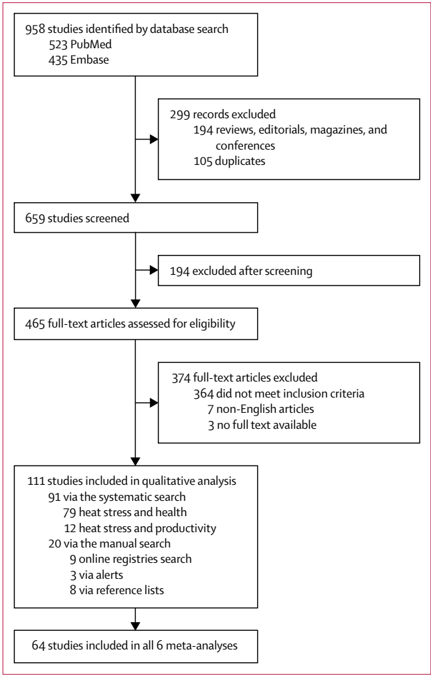
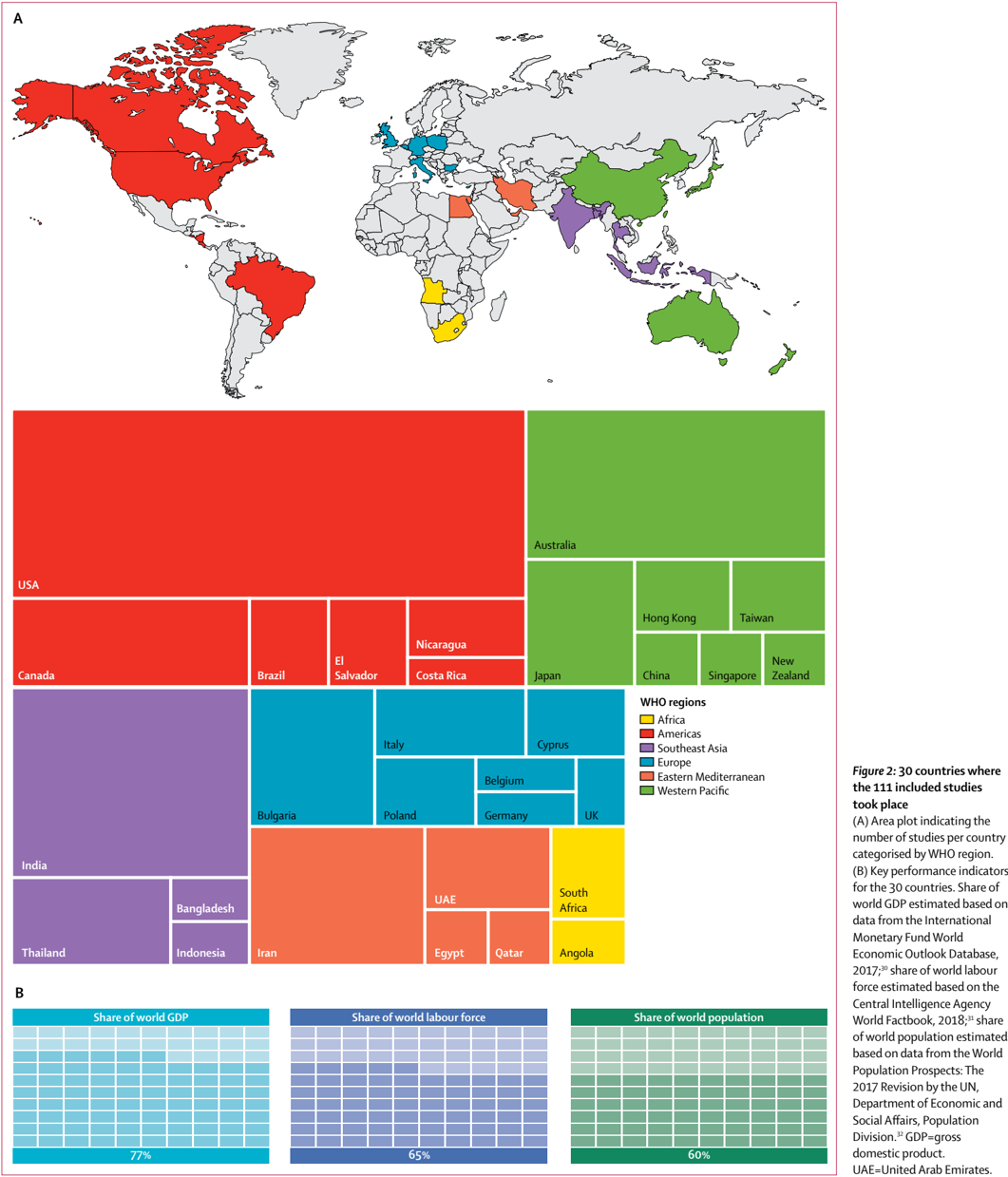
BACKGROUND: Occupational heat strain (ie, the effect of environmental heat stress on the body) directly threatens workers' ability to live healthy and productive lives. We estimated the effects of occupational heat strain on workers' health and productivity outcomes. METHODS: Following PRISMA guidelines for this systematic review and meta-analysis, we searched PubMed and Embase from database inception to Feb 5, 2018, for relevant studies in any labour environment and at any level of occupational heat strain. No restrictions on language, workers' health status, or study design were applied. Occupational heat strain was defined using international health and safety guidelines and standards. We excluded studies that calculated effects using simulations or statistical models instead of actual measurements, and any grey literature. Risk of bias, data extraction, and sensitivity analysis were performed by two independent investigators. Six random-effects meta-analyses estimated the prevalence of occupational heat strain, kidney disease or acute kidney injury, productivity loss, core temperature, change in urine specific gravity, and odds of occupational heat strain occurring during or at the end of a work shift in heat stress conditions. The review protocol is available on PROSPERO, registration number CRD42017083271. FINDINGS: Of 958 reports identified through our systematic search, 111 studies done in 30 countries, including 447 million workers from more than 40 different occupations, were eligible for analysis. Our meta-analyses showed that individuals working a single work shift under heat stress (defined as wet-bulb globe temperature beyond 22·0 or 24·8°C depending on work intensity) were 4·01 times (95% CI 2·45-6·58; nine studies with 11 582 workers) more likely to experience occupational heat strain than an individual working in thermoneutral conditions, while their core temperature was increased by 0·7°C (0·4-1·0; 17 studies with 1090 workers) and their urine specific gravity was increased by 14·5% (0·0031, 0·0014-0·0048; 14 studies with 691 workers). During or at the end of a work shift under heat stress, 35% (31-39; 33 studies with 13 088 workers) of workers experienced occupational heat strain, while 30% (21-39; 11 studies with 8076 workers) reported productivity losses. Finally, 15% (11-19; ten studies with 21 721 workers) of individuals who typically or frequently worked under heat stress (minimum of 6 h per day, 5 days per week, for 2 months of the year) experienced kidney disease or acute kidney injury. Overall, this analysis include a variety of populations, exposures, and occupations to comply with a wider adoption of evidence synthesis, but resulted in large heterogeneity in our meta-analyses. Grading of Recommendations, Assessment, Development and Evaluation analysis revealed moderate confidence for most results and very low confidence in two cases (average core temperature and change in urine specific gravity) due to studies being funded by industry. INTERPRETATION: Occupational heat strain has important health and productivity outcomes and should be recognised as a public health problem. Concerted international action is needed to mitigate its effects in light of climate change and the anticipated rise in heat stress. FUNDING: EU Horizon 2020 research and innovation programme.
Verified 2026-11-22 · 1 reference not checked yet
Overview
CoChat Summary
## TL;DR
This systematic review and meta-analysis found that occupational heat strain is associated with substantial losses in workers’ health and productivity across a very large evidence base. Across 111 studies from 30 countries, workers in heat stress conditions had higher risks of heat strain, dehydration, productivity loss, and kidney-related outcomes.
## Key findings
- The review included 111 studies from 30 countries, covering 447,108,664 workers in more than 40 occupations.
- In six random-effects meta-analyses, working a single shift under heat stress made workers 4.01 times more likely to experience occupational heat strain than thermoneutral conditions (95% CI 2.45–6.58; 9 studies, 11,582 workers).
- Single-shift heat stress increased core temperature by 0.7°C (0.4–1.0; 17 studies, 1,090 workers) and urine specific gravity by 14.5% (0.0014–0.0048; 14 studies, 691 workers).
- During or at the end of a shift in heat stress conditions, 35% of workers experienced occupational heat strain (31–39; 33 studies, 13,088 workers), 30% reported productivity losses (21–39; 11 studies, 8,076 workers), and 15% of those typically or frequently working in heat stress had kidney disease or acute kidney injury (11–19; 10 studies, 21,721 workers).
## Methods
- Systematic review and meta-analysis conducted according to PRISMA; protocol registered on PROSPERO (CRD42017083271).
- Searched PubMed and Embase from inception to Feb 5, 2018; included original quantitative studies in any language, any labor environment, and any occupational heat strain level; excluded grey literature and studies based on simulations/statistical models rather than actual human measurements.
- Two independent investigators handled study selection, risk of bias, extraction, and sensitivity analysis; six random-effects meta-analyses were run for prevalence, odds, mean differences, and related outcomes.
## Limitations
- The authors state that the included studies produced large heterogeneity in the meta-analyses; average I² was 80%.
- The review pooled studies with different populations, exposures, and occupations, which the authors say widened evidence synthesis but increased heterogeneity.
- The text makes evident that some outcomes relied on self-reported tools and that studies were often regionally confined and selected where high prevalence/effects were expected; the authors say this could bias prevalence estimates and limit generalizability to cold regions or jobs not associated with heat exposure.
Model-written summary. Check it against the paper before relying on it.
Integrity signals
Registry
Cites
Statistics
Figures
Verification
Claims the paper makes
4 Valid · 0 Not valid · 10 Not checked · 58 Own results and interpretations
The cited sources support only part of this claim — read each source’s verdict below.
In the paper
“those who are older, obese, unfit, have chronic disease, or experience acute illness or infection are at a high risk for heatinduced pathologies (eg, heat cramps, heat exhaustion, and heat stroke). 1,7,139,147”
What the sources say
- Partly supportedcites [1] 1 Mora C, Dousset B, Caldwell IR, et al. Global risk of deadly heat. Nat Clim Chang 2017; 7: 501-06. sourceExperimental — accuracy not yet measured
The discussion (p. 8) describes an aging population as highly vulnerable to heat, supporting the claim about older individuals. It does not identify obesity, poor fitness, chronic disease, acute illness, or infection as risk factors, or specifically connect those groups to heat cramps, heat exhaustion, and heat stroke. (LLM, conf=0.87)
- Partly supportedcites [7] 7 Kenny GP, Groeller H, McGinn R, Flouris AD. Age, human performance, and physical employment standards. Appl Physiol Nutr Metab 2016; 41 (6 suppl 2) : S92-107 . sourceExperimental — accuracy not yet measured
Kenny et al. (2016) supports most of the risk list: 'Factors affecting work ability in older adults' reports age-related impairments in whole-body heat loss and 60-80% greater heat storage in individuals ≥40 years (Larose et al. 2013, 2014), with those impairments modulated by fitness (low-fitness middle-aged adults losing heat like older counterparts; Stapleton et al. 2015), and 'Impact of chronic health disorders on physical function' states that cardiopulmonary impairments and type 2 diabetes are associated with higher rates of heat illness in hot environments, with the INTRODUCTION naming obesity, diabetes and hypertension as the vulnerable workers the ACGIH TLVs may not protect. However, our copy nowhere treats acute illness or infection as a heat-illness risk factor, and it does not enumerate heat-induced pathologies as heat cramps, heat exhaustion and heat stroke — its outcomes are heat storage, attenuated heat-loss capacity, 'heat illness' and reduced work output. The claim's infection/acute-illness element and the specific pathology spectrum are therefore not attributable to this source. (LLM, conf=0.72)
- Partly supportedcites [139] 139 Flouris AD, McGinn R, Poirier MP, et al. Screening criteria for increased susceptibility to heat stress during work or leisure in hot environments in healthy individuals aged 31-70 years. Temperature (Austin) 2017; 5: 86-99. 142 sourceExperimental — accuracy not yet measured
The Introduction (p.1) supports part of the list: it states that 'heat injuries were more prevalent in unfit, obese, and unacclimatised individuals' and that intrinsic factors 'known to increase an individual's susceptibility to heat stress (SHS)' include sex, age, body composition and cardiorespiratory fitness; the Discussion adds that older adults and 'patients with chronic diseases such as hypertension and type 2 diabetes' are 'more vulnerable populations' (while noting their own cohort excluded chronic disease). However, our copy nowhere mentions acute illness or infection as a risk factor, and it does not enumerate heat cramps, heat exhaustion or heat stroke as the heat-induced pathologies these individuals are at high risk of (the only such wording is in the titles of cited works, e.g. Schickele's 'fatal heat stroke' analysis, ref. 14). So the risk-factor list is only partly attributable to this source. (LLM, conf=0.72)
- Not matchedcites [147] 147 WHO. Quantitative risk assessment of the effects of climate change on selected causes of death, 2030s and 2050s. Geneva: World Health Organization, 2014.
Its entry has no title and year that we can search by.
plainstates an association- Asserted: passes — The authors put it forward as true.
- Checkable: passes — It can be checked against evidence.
- Load-bearing: unclear — It is unclear whether the paper’s conclusions depend on it.
- Based: passes — The paper gives a reason why it holds.
- Partly supported
Every source the paper cites for this claim was checked and supports it.
In the paper
“Our estimate that 35% of individuals working in heat stress conditions experience occupational heat strain is in line with the 30% (95% CI 24-36) prevalence reported for increased susceptibility to heat stress (an inability to mitigate hyperthermia) when working or exercising in hot environments, 139”
What the sources say
- Supportedcites [139] 139 Flouris AD, McGinn R, Poirier MP, et al. Screening criteria for increased susceptibility to heat stress during work or leisure in hot environments in healthy individuals aged 31-70 years. Temperature (Austin) 2017; 5: 86-99. 142 source
The Results section 'SHS in the analysis group' states verbatim: 'Overall, 30% (95% confidence interval: 24-36%) of OLDER individuals were identified as SHSC (Table 2)', and Table 2 (Discussion) gives the same overall prevalence rate of 0.30 § 0.06 for the entire sample. The paper's scope matches the claim's context — sex-specific screening criteria for susceptibility to heat stress (SHS) 'during work and leisure activities in hot environments' (Introduction), with SHSC defined as a reduced capacity to dissipate heat, i.e. elevated rectal temperature/heat storage (equivalent to 'inability to mitigate hyperthermia'). Note that the source's figure is for healthy, physically active adults aged 31-70 (Discussion cautions that the criteria require further validation in sedentary adults and patients with chronic disease), which is the population the 30% prevalence describes. (LLM, conf=0.88)
hedged- Asserted: passes — The authors put it forward as true.
- Checkable: passes — It can be checked against evidence.
- Load-bearing: unclear — It is unclear whether the paper’s conclusions depend on it.
- Based: passes — The paper gives a reason why it holds.
- Supported
A result the paper reports from its own data — it cites no other source for it, so there is none to check. The quote shows it is in the paper.
In the paper
“their urine specific gravity was increased by 14·5% (0·0031, 0·0014-0·0048; 14 studies with 691 workers)”
- Also stated in: § Results · plain
“The average increase due to working in heat stress conditions was 0·0031 (0·0014-0·0048; table; appendix), which is equal to a 14·5% (6·5-22·4) increase.”
- Also stated in: § Discussion · plain
“our analyses show that people who worked a single shift in heat stress conditions had an increase of 14·5% in urine specific gravity compared with those who worked a shift in thermoneutral conditions.”
plainstates a cause- Asserted: passes — The authors put it forward as true.
- Checkable: passes — It can be checked against evidence.
- Load-bearing: passes — The paper’s conclusions depend on it.
- Based: passes — The paper gives a reason why it holds.
- Also stated in: § Results · plain
A result the paper reports from its own data — it cites no other source for it, so there is none to check. The quote shows it is in the paper.
In the paper
“resulted in large heterogeneity with an average I ² of 80% (table)”
- Also stated in: § Summary · plain
“but resulted in large heterogeneity in our meta-analyses”
plain- Asserted: passes — The authors put it forward as true.
- Checkable: passes — It can be checked against evidence.
- Load-bearing: unclear — It is unclear whether the paper’s conclusions depend on it.
- Based: passes — The paper gives a reason why it holds.
- Also stated in: § Summary · plain
A result the paper reports from its own data — it cites no other source for it, so there is none to check. The quote shows it is in the paper.
In the paper
“These studies suggest an average 2·6% productivity decline (individual study estimates: 0·8%, 4 1·4%, 5 1·8%, 56 2·2%, 38 2·8%, 57 4·4%, 55 5·0% 6 ) for every degree increase beyond 24°C WBGT.”
- Also stated in: § Discussion · plain
“These losses increased by 2·6% for every degree increase beyond 24°C WBGT.”
plainstates a cause- Asserted: passes — The authors put it forward as true.
- Checkable: passes — It can be checked against evidence.
- Load-bearing: passes — The paper’s conclusions depend on it.
- Based: passes — The paper gives a reason why it holds.
- Also stated in: § Discussion · plain
25 more claims
Create a free account to see all 72 claims and to verify the 5 references still open.
- Probably not a substantial claim. 31
- It may state two separate claims as one. 23
Claims other papers make about this one
Each is checked against this paper’s own text: does it say what the citing paper says it does?
The source backs part of the claim, not all of it — or backs it for a different population, condition or comparison.
In the citing paper
“However, recent data confirmed that these employees perform the vast majority of their work outdoors and are directly affected by sun exposure, leading to increased heat strain and impaired capacity for manual labor [10,11,12,13].”
From The Impacts of Sun Exposure on Worker Physiology and Cognition: Multi-Country Evidence and Interventions (2021) · cites this paper as [10]
Experimental — accuracy not yet measuredIn the citing paper
“In addition, heat exposure reduces labour productivity and harms the livelihoods of workers and their dependents, particularly when affecting access to quality nutrition, health care, housing, or health-supporting services.94,95”
From The 2024 report of the Lancet Countdown on health and climate change: facing record-breaking threats from delayed action (2024) · cites this paper as [94]
Citations
Cites
Preferred Reporting Items for Systematic Reviews and Meta-Analyses: The PRISMA Statement
Moher, D., Liberati, A., Tetzlaff, J., Altman, D. G., & The PRISMA Group (2009) · PLoS Medicine · doi:10.1371/journal.pmed.1000097 · Cited by 64,042 · cited 2×
“Following PRISMA guidelines, 13 for our systematic review and meta-analysis we searched the PubMed and Embase databases from inception to Nov 30, 2017, for studies that assessed the effect of occupational heat strain on workers’ health or productivity outcomes.”
Preferred reporting items for systematic reviews and meta-analyses: the PRISMA Statement.
(2009) · PubMed Central · Cited by 44,859
Preferred reporting items for systematic reviews and meta-analyses: The PRISMA statement
Moher, D., Liberati, A., Tetzlaff, J., Altman, D. G., & the PRISMA Group* (2009) · Annals of Internal Medicine · doi:10.7326/0003-4819-151-4-200908180-00135 · Cited by 37,554
(2012) · Kidney International Supplements · doi:10.1038/kisup.2012.1 · Cited by 4,326
What is ‘quality of evidence’ and why is it important to clinicians?
Guyatt, G. H., Oxman, A. D., Kunz, R., Vist, G. E., Falck-Ytter, Y., & Schünemann, H. J. (2008) · BMJ · doi:10.1136/bmj.39490.551019.be · Cited by 3,250 · cited 2×
“28 GRADE assessed the quality of the meta-analysis results via methodological design, risk of bias, heterogeneity, indirectness, imprecision, publication bias, and effect sizes displayed in both the included studies in a meta-analysis and the meta-analysis itself.”
Clinical Methods: The History, Physical, and Laboratory Examinations
Kruse, J. A. (1990) · JAMA: The Journal of the American Medical Association · doi:10.1001/jama.1990.03450210108045 · Cited by 2,029
ACSM Position Stand: Exercise and Fluid Replacement
Convertino, V. A., Armstrong, L. E., Coyle, E. F., Mack, G. W., Sawka, M. N., Senay, L. C., & Sherman, W. M. (1996) · Medicine & Science in Sports & Exercise · doi:10.1097/00005768-199610000-00045 · Cited by 1,965
Mora, C., Dousset, B., Caldwell, I. R., Powell, F. E., Geronimo, R. C., Bielecki, C. R., Counsell, C. W. W., Dietrich, B. S., Johnston, E. T., Louis, L. V., et al. (2017) · Nature Climate Change · doi:10.1038/nclimate3322 · Cited by 1,746 · cited 1×
“1,7,139,147 We used the standard definitions of kidney disease and acute kidney injury proposed by the KDIGO clinical practice guidelines workgroup 24 and found that 15% of individuals working in heat stress have these conditions, which is markedly higher than the prevalence rates reported for…”
Climate Change and Extreme Heat Events
Luber, G., & McGeehin, M. (2008) · American Journal of Preventive Medicine · doi:10.1016/j.amepre.2008.08.021 · Cited by 1,243
Evolving importance of kidney disease: from subspecialty to global health burden
Eckardt, K.-U., Coresh, J., Devuyst, O., Johnson, R. J., Köttgen, A., Levey, A. S., & Levin, A. (2013) · The Lancet · doi:10.1016/s0140-6736(13)60439-0 · Cited by 1,159 · cited 1×
“148 and acute kidney injury in high-income (2”
Research works printed but not linked: 6
- 17 ACGIH. Heat Stress and Strain: TLV Physical Agents Documentation. Cincinatti, OH: American Conference of Governmental Industrial Hygienists, 2007 .
- 24 Acute Kidney Injury Work Group. Kidney Disease: Improving Global Outcomes (KDIGO). KDIGO clinical practice guideline for acute kidney injury. Kidney Int 2012; 2 (suppl) : 1-138.
- 78 Krishnan S, Kumar AP, Maruthy KN, Jeremiah PR, Venugopal V. Physiological implications of occupational heat stress for maintenance workers in a residential complex in Chennai-an exploratory intervention trial. Indian J Physiol Pharmacol 2017; 61: 23-29.
- 107 Armed Forces Health Surveillance Center. Update: heat injuries, active component, U.S. Armed Forces, 2011. MSMR 2012; 19: 14-16.
- 108 Armed Forces Health Surveillance Center. Update: heat injuries, active component, U.S. Armed Forces, 2012. MSMR 2013; 20: 17-20.
- 110 Armed Forces Health Surveillance Center. Update: Heat injuries, active component, U.S. Armed Forces, 2014. MSMR 2015; 22: 17-20.
Cited by
Items 201–300 of 564
Adamopoulos, I., Syrou, N. F., Lamnisos, D., Valamontes, A., Karantonis, J. T., Tsirkas, P., & Dounias, G. (2025) · European Journal of Sustainable Development Research · doi:10.29333/ejosdr/17273 · Cited by 14
“Climate-related risks, including rising temperatures, extreme weather events, and the emergence of novel pathogens, have amplified the demands placed on PHIs, making their role in public health more complex and essential (Adamopoulos et al., 2023; EU-OSHA, 2021a, 2021b; Flouris et al., 2018).”
Krenz, J. E., Santos, É. C., Torres, E., Palmández, P., Carmona, J., Blancas, M., Marquez, D., Sampson, P. D., & Spector, J. T. (2021) · Contemporary Clinical Trials Communications · doi:10.1016/j.conctc.2021.100795 · Cited by 15
A comprehensive evaluation of heat stress and heat strain in a sample of sugarcane cutters in Brazil
McKenna, Z. J., Nava, R. C., Magalhães, C. O. D. E., Magalhães, F. D. C., Moreira, C. M., Shibuya, E., da Cunha, I. D. Â., Maia, P. A., Roscani, R. C., Rocha‐Vieira, E., et al. (2023) · Journal of Applied Physiology · doi:10.1152/japplphysiol.00555.2023 · Cited by 12
Rossi, M. F., Leone, R., & Moscato, U. (2025) · Atmosphere · doi:10.3390/atmos16070839 · Cited by 17
Cardiovascular responses to orthostasis during a simulated 3-day heatwave
Fisher, J. T., Ciuha, U., Ioannou, L. G., Simpson, L. L., Possnig, C., Lawley, J. S., & Mekjavić, I. B. (2022) · Scientific Reports · doi:10.1038/s41598-022-24216-3 · Cited by 10
Self-citationDonnan, K. J., Williams, E. L., & Bargh, M. J. (2023) · Temperature · doi:10.1080/23328940.2022.2157645 · Cited by 21
“Such impacts may also lead to economic damages through reduced working capacity and lower productivity [91,92].”
BackgroundFerraro, S. D., Falcone, T., Morabito, M., Bonafede, M., Marinaccio, A., Gao, C., & Molinaro, V. (2023) · Journal of Thermal Biology · doi:10.1016/j.jtherbio.2023.103772 · Cited by 11
Gangwisch, M., Ludwig, S., & Matzarakis, A. (2024) · Atmosphere · doi:10.3390/atmos15010125 · Cited by 13
Kuhn, S., Opoku, R., Diaba, D. D., Agyarko, K. A., & Never, B. (2024) · Sustainable Production and Consumption · doi:10.1016/j.spc.2024.02.016 · Cited by 12
Tetzlaff, E. J., Ioannou, L. G., O’Connor, F. K., Καλτσάτου, Α., Ly, V., & Kenny, G. P. (2024) · American Journal of Industrial Medicine · doi:10.1002/ajim.23672 · Cited by 17
Self-citationFreemas, J. A., Goss, C. S., Ables, R., Baker, T. B., Bruinvels, G., Mündel, T., Martin, B. J., Carter, S. J., Chapman, R. F., & Schlader, Z. J. (2023) · Journal of Applied Physiology · doi:10.1152/japplphysiol.00580.2022 · Cited by 15
Tetzlaff, E. J., Goulet, N., Gorman, M., Ioannou, L. G., & Kenny, G. P. (2023) · Healthcare · doi:10.3390/healthcare11172423 · Cited by 12
“With rising global temperatures and the increasing frequency and intensity of extreme heat events, climate change will have an increasingly detrimental effect on workplaces worldwide [1,2], and will directly threaten the health, safety, and well-being of billions of workers [85].”
BackgroundInfluentialSelf-citationFlouris, A. D., Friesen, B. J., Herry, C. L., SEELY, A. J. E., Notley, S. R., & Kenny, G. P. (2019) · Experimental Physiology · doi:10.1113/ep087297 · Cited by 10
“…participation of older individuals (who have a limited capacity to dissipate heat during work and leisure activities in hot environments; Flouris et al., 2018b) in such events (Tsoutsoubi, Ioannou, Amorim, Tsianos, & Flouris, 2018); and (iii) the warming climate (Flouris & Kenny,…”
BackgroundSelf-citationEvaluation of Phase Change Materials for Personal Cooling Applications
Teunissen, L. P. J., Janssen, E., Schootstra, J., Plaude, L., & Jansen, K. M. B. (2021) · Clothing and Textiles Research Journal · doi:10.1177/0887302x211053007 · Cited by 10
“Working and exercising in thermally challenging conditions negatively impact health, comfort, and performance (Flouris et al., 2018; Galloway & Maughan, 1997; Gonzalez-Alonso et al., 1999; Lucas et al., 2014; Maughan et al., 2012).”
BackgroundNorthern Hemisphere Urban Heat Stress and Associated Labor Hour Hazard from ERA5 Reanalysis
Lee, S., Lung, S. C., Chiu, P., Wang, W.-C., Tsai, I., & Lin, T.-H. (2022) · International Journal of Environmental Research and Public Health · doi:10.3390/ijerph19138163 · Cited by 12
“Since heat stress is closely tied to health, safety, economic factors, transportation, comfort levels, and many other concerns, any substantial change will have an impact on all aspects of human activity [24].”
BackgroundGiannaros, C., Agathangelidis, I., Galanaki, E., Cartalis, C., Kotroni, V., Lagouvardos, K., Giannaros, T. M., & Matzarakis, A. (2024) · Scientific Data · doi:10.1038/s41597-024-02923-y · Cited by 14
High-frequency data reveal limits of adaptation to heat in animal agriculture
Palandri, C., Frank, E., Kimhi, A., Lavon, Y., Ezra, E., & Fishman, R. (2025) · Science Advances · doi:10.1126/sciadv.adw4780 · Cited by 14
“Multiple studies have documented deleterious effects on humans, in terms of productivity, behavior, and morbidity and mortality rates, and on livestock, specifically cow milk production and pig growth ( 18 – 21 ).”
der Horst, L. V., Bouaddi, O., Williams, S. J., Jago, M., Lau, K. M., Furber, B., Hargreaves, S., Zaini, A. Z., El‐Ghitany, E. M., Loganathan, T., et al. (2025) · BMC Global and Public Health · doi:10.1186/s44263-025-00224-z · Cited by 16
“OHS has been found to include heat stroke, heat cramps, and heat exhaustion, and 15% of cases involve kidney disease or acute kidney injury (AKI) [13].”
Self-citationCheng, I. (2022) · Asian and Pacific migration journal · doi:10.1177/01171968221126193 · Cited by 11
“On the other hand, migrant workers’ health is also an issue of financing (Freeman and Kessler, 2008; Loganathan et al., 2020; Tangcharoensathien et al., 2017) and of their productivity (e.g., Flouris et al., 2018).”
BackgroundAlSahow, A. (2023) · International Journal of Nephrology · doi:10.1155/2023/2636507 · Cited by 9
Tetzlaff, E. J., Cassan, C., Goulet, N., Gorman, M., Hogya, B., & Kenny, G. P. (2024) · American Journal of Industrial Medicine · doi:10.1002/ajim.23576 · Cited by 11
Self-citationQuartucci, C., Wibowo, R., Do, V., Böse‐O’Reilly, S., Nowak, D., Weilnhammer, V., Weinmann, T., & Rakete, S. (2024) · Journal of Occupational Medicine and Toxicology · doi:10.1186/s12995-024-00418-5 · Cited by 16
“Moreover, rising global temperatures are closely linked to adverse health effects including dehydration [2], cardiovascular disease [3] and kidney disease [4, 5].”
BackgroundO’Connor, F. K., Meade, R. D., Notley, S. R., Ioannou, L. G., Flouris, A. D., & Kenny, G. P. (2024) · Journal of Occupational and Environmental Hygiene · doi:10.1080/15459624.2024.2406227 · Cited by 11
“Due to rising global temperatures, the number of workers tasked with performing their duties in hot environments is growing (Flouris et al. 2018; Notley et al. 2022a).”
Self-citationSandoval, N., Harris, C., Reyna, J., Fontanini, A., Liu, L., Stenger, K., White, P. R., & Landis, A. E. (2025) · Applied Energy · doi:10.1016/j.apenergy.2025.125498 · Cited by 12
Where heat does not come in waves: a framework for understanding and managing chronic heat
Cruz, M., Mach, K. J., Turek‐Hankins, L. L., Ashad‐Bishop, K. C., Bailey, Z., Evans, S. D., Fanning, A., Fernandez-Burgos, M., Gilbert, J., Howard, B., et al. (2025) · Environmental Research Climate · doi:10.1088/2752-5295/adc827 · Cited by 18
Uchiyama, K., King, J., Wallman, K. E., Taggart, S. M., Dugan, C., & Girard, O. (2022) · European Journal of Applied Physiology · doi:10.1007/s00421-022-04979-3 · Cited by 12
McCormick, J. J., King, K. E., Notley, S. R., Fujii, N., Boulay, P., Sigal, R. J., Amano, T., & Kenny, G. P. (2022) · Journal of Thermal Biology · doi:10.1016/j.jtherbio.2022.103344 · Cited by 15
Self-citationClimate attribution of interpersonal violence: International evidence
Li, J., Feng, C. Q., & Yang, J. (2023) · Environmental Research · doi:10.1016/j.envres.2023.116836 · Cited by 23
Extreme heat experience influences public support for local climate adaptation policies in Germany
Zanocco, C. M., & Sousa‐Silva, R. (2023) · Urban Climate · doi:10.1016/j.uclim.2023.101759 · Cited by 10
Whole-body heat exchange in women during constant- and variable-intensity work in the heat
Notley, S. R., D’Souza, A. W., Meade, R. D., Richards, B. J., & Kenny, G. P. (2020) · European Journal of Applied Physiology · doi:10.1007/s00421-020-04486-3 · Cited by 9
Self-citationAge differences in cardiac autonomic regulation during intermittent exercise in the heat
Καλτσάτου, Α., Flouris, A. D., Herry, C. L., Notley, S. R., SEELY, A. J. E., Wright, H. E., & Kenny, G. P. (2020) · European Journal of Applied Physiology · doi:10.1007/s00421-019-04290-8 · Cited by 9
Self-citationEffect of Food Security on Health in Developing Countries
Subramaniam, Y., Loganathan, N., & Tang, C. F. (2023) · International Journal of Social Determinants of Health and Health Services · doi:10.1177/27551938231163991 · Cited by 15
“This is in line with the studies by McPake and colleagues and Flouris and colleagues, 2,3 who observed that workers with better health have the capacity to produce more as they can work longer and increase the supply of workers.”
ResultZhao, Z., Lu, H., Meng, R., Si, Z., Wang, H., Wang, X., Chen, J., Zheng, Y., Wang, H., Hu, J., et al. (2024) · Lipids in Health and Disease · doi:10.1186/s12944-023-01994-x · Cited by 10
“Previous studies have shown that specific occupation-related factors in steel enterprises have a significant impact on obesity in steel workers [15, 16].”
BackgroundChapman, C. L., Johnson, B. D., Hostler, D. P., & Schlader, Z. J. (2024) · Journal of Occupational and Environmental Hygiene · doi:10.1080/15459624.2024.2315161 · Cited by 9
“Additionally, participants in the present study were unacclimatized to heat, a state that increases health risks during occupational heat stress (Sawka et al. 2011; Flouris et al. 2018; Health et al. 2018).”
BackgroundMcCubbin, A. J., Irwin, C. G., & Costa, R. J. S. (2024) · Current Nutrition Reports · doi:10.1007/s13668-024-00554-8 · Cited by 17
“…with a 50% reduction in labor productivity [4], reduced athletic performance, and increased risk of exertional heat illness (EHI) [5], a continuum of health outcomes from mild to potentially fatal, and usually but not always related to the extent and duration of core temperature elevation [5, 6].”
BackgroundCaste Inequality in Occupational Exposure to Heat Waves in India
Shah, A., Thapliyal, S., Sugathan, A., Mishra, V. K., & Malghan, D. V. (2025) · Demography · doi:10.1215/00703370-11803010 · Cited by 16
Sadeghi, K., Viswanathan, S. H., Joshi, A., Bartels, L., Wereski, S., Jose, C. T., Mihaleva, G., Abdullah, M. G., Middel, A., & Rykaczewski, K. (2025) · Building and Environment · doi:10.1016/j.buildenv.2025.112934 · Cited by 12
“The increasing frequency and intensity of heat waves [1,2] and associated negative impacts on health [3,4], livability [5], and productivity [6–8] across the globe are stimulating efforts to design outdoor built environments to promote thermal comfort and safety [9–20].”
The Exposome and the Kidney: A Silent Dialogue Shaping Chronic Kidney Disease
Alvarenga, L., Ribeiro, M. M., Cardozo, L., Borges, N. A., Stenvinkel, P., & Mafra, D. (2025) · Journal of Xenobiotics · doi:10.3390/jox15030073 · Cited by 10
“A systematic review and meta-analysis reported that 15% of individuals who regularly worked under heat stress developed CKD or AKI [23].”
Shkembi, A., Payne-Sturges, D., Park, S. K., & Neitzel, R. L. (2025) · Journal of Exposure Science & Environmental Epidemiology · doi:10.1038/s41370-025-00813-y · Cited by 12
Yang, L., Yang, C., Zhou, W., Liu, L., & Wang, C. (2025) · Journal of Cleaner Production · doi:10.1016/j.jclepro.2025.147036 · Cited by 11
Tetzlaff, E. J., Richards, B. J., Wagar, K. E., Harris‐Mostert, R. C., Journeay, W. S., O’Connor, F. K., & Kenny, G. P. (2024) · NEW SOLUTIONS A Journal of Environmental and Occupational Health Policy · doi:10.1177/10482911241298948 · Cited by 9
Self-citationToma, R., Kuklane, K., Fojtlín, M., Fišer, J., & Jícha, M. (2020) · Journal of Industrial Textiles · doi:10.1177/1528083719900672 · Cited by 7
Effect of the historic Spanish heatwave over glycemic control in adult patients with type 1 diabetes
Moreno-Fernández, J., Sastre, J., Herránz, S., Pinés, P. J., Gómez, F. J., Quiroga, I., Moya, A. J., Gonzalvo, C., Moragrega, R. M., Calderón-Vicente, D., et al. (2023) · The Science of The Total Environment · doi:10.1016/j.scitotenv.2023.164045 · Cited by 9
An exploratory survey of heat stress management programs in the electric power industry
Καλτσάτου, Α., Notley, S. R., Flouris, A. D., & Kenny, G. P. (2021) · Journal of Occupational and Environmental Hygiene · doi:10.1080/15459624.2021.1954187 · Cited by 8
“Such elevations in the overall physiological response to heat stress (i.e., heat strain) can induce significant reductions in worker productivity (Flouris et al. 2018) and cognitive function (Hunter et al. 2002; Ioannou et al. 2021; Razmjou 1996; Razmjou and Kjellberg 1992) leading to an elevated…”
BackgroundInfluentialSelf-citationThe impact of heat on kidney health: A PRISMA-compliant bibliometric analysis
Al-Bouwarthan, M., AlMulla, A. A., & Muhammad, Y. (2022) · Medicine · doi:10.1097/md.0000000000030328 · Cited by 11
“2018 Flouris et al([44]) Lancet Planet Health 10.”
BackgroundPlateau in Core Temperature during Shorter but Not Longer Work/Rest Cycles in Heat
Bachraty, J. P., Qiao, J., Powers, E. S., Vandermark, L. W., Pryor, J. L., & Pryor, R. R. (2024) · International Journal of Environmental Research and Public Health · doi:10.3390/ijerph21030371 · Cited by 8
“…may leave workers more vulnerable to negative health and work consequences of excessive hyperthermia, including cardiovascular events [9,10], heat illnesses [5,6], workplace injury [7,8], fatigue [33–35], and decreased work productivity [3,4] even when following the recommended work/rest cycles.”
BackgroundHeat causes large earnings losses for informal-sector workers in India
Das, S., & Somanathan, E. (2024) · Environmental Research Letters · doi:10.1088/1748-9326/ad7da4 · Cited by 10
“A systematic review and meta-analysis found that exposure to heat has adverse effects on health and productivity (Flouris et al 2018).”
Glutamine Supplementation: A Possible Strategy to Help Mitigate Health Risks of Heat‐Related Illness
Zuhl, M., Specht, J. W., Beatty, S., & Mermier, C. M. (2024) · Journal of Nutrition and Metabolism · doi:10.1155/jnme/1638244 · Cited by 7
“…times more likely to experience heat injury (e.g., dehydration, palor, nausea, vomiting, confusion) after a single shift under hot conditions when compared to workers in ambient temperatures, and 15% of individuals who consistently work in the heat are susceptible to heat-related injuries [20].”
Ding, R., Wang, Y., Yu, Y., Meng, X., Gong, Q., Tang, Y., Wang, J., Mu, X., Li, H., Zhou, H., et al. (2025) · Environmental Health Perspectives · doi:10.1289/ehp14172 · Cited by 11
Mu, L., Xue, S., Tuo, W., Wu, X., Hou, L., & Li, G. (2025) · International Journal of Hyperthermia · doi:10.1080/02656736.2025.2463477 · Cited by 8
“15% of individuals who typically work under heat stress suffered from kidney disease or acute kidney injury [25].”
Wibowo, R., Satow, M., Quartucci, C., Weinmann, T., Koller, D., Daanen, H. A. M., Nowak, D., Böse‐O’Reilly, S., & Rakete, S. (2025) · Annals of Work Exposures and Health · doi:10.1093/annweh/wxaf026 · Cited by 16
“This raises concerns about their health, performance, and well-being (Flouris et al. 2018; Casanueva et al. 2019; Ebi et al. 2021).”
InfluentialDescriptive analysis of occupational accidents in Spain and their relationship with heatwaves
Santurtún, A., de Moraes, S. L., Fdez-Arróyabe, P., Obregón, M., & Almendra, R. (2023) · Preventive Medicine · doi:10.1016/j.ypmed.2023.107697 · Cited by 13
Chapman, C. L., Holt, S. M., O’Connell, C. T., Brazelton, S. C., Medved, H. N., Howells, W. A. B., Reed, E. L., Needham, K. W., Halliwill, J. R., & Minson, C. T. (2024) · Journal of Applied Physiology · doi:10.1152/japplphysiol.00728.2023 · Cited by 8
An exploratory survey of on-site heat stress management practices in the Canadian mining industry
Tetzlaff, E. J., O’Connor, F. K., Meade, R. D., et al. (2024) · Journal of Occupational and Environmental Hygiene · doi:10.1080/15459624.2024.2332722 · Cited by 7
“Heat stress is a growing concern across many work-places as it endangers worker health, safety, and productivity (Flouris et al. 2018).”
BackgroundSelf-citationEnvironmental factors and chronic kidney disease: a case-control study
Ghelichi-Ghojogh, M., Fararouei, M., Seif, M., & Pakfetrat, M. (2024) · Scientific Reports · doi:10.1038/s41598-024-72685-5 · Cited by 9
Kidney health risk of migrant workers: An issue we can no longer overlook
Aryal, N., Regmi, P., Sedhain, A., et al. (2021) · Health Prospect · doi:10.3126/hprospect.v20i1.38675 · Cited by 7
“A systematic review showed that 15% of individuals working in extreme heat had kidney problems [12] and the environmental working condition for thousands of lowskilled labour migrants, suggesting a hidden population of people with (potential) kidney problems.”
BackgroundJahangiri, H., Zamanian, Z., Daneshmandi, H., Seif, M., & Jamshidi, H. (2022) · Ergonomics · doi:10.1080/00140139.2022.2145375 · Cited by 8
“…the risk of hyperthermia-related diseases (Leon and Bouchama 2011) and dehydration-related diseases including acute and chronic kidney diseases (Flouris et al. 2018; Tawatsupa et al. 2012), increased accidents due to reduced decision-making (Spector et al. 2019; Tawatsupa et al. 2013; Taylor…”
BackgroundHeat exposure and occupational health
Pisaniello, D., & Corleto, R. D. (2022) · Elsevier eBooks · doi:10.1016/b978-0-12-819080-7.00004-5 · Cited by 7
Human health and productivity outcomes associated with indoor air quality: a systematic reviewPreprint
Palacios, J., Steele, K. S., & Zheng, S. (2021) · SSRN Electronic Journal · doi:10.2139/ssrn.3881998 · Cited by 14
Impact of Heat and Mitigation Strategies on Healthcare Professionals: A Scoping Review
Freire, K., Green, E., Kernaghan, L., Castelletto, K., & Schubert, J. A. (2025) · Public Health Nursing · doi:10.1111/phn.13534 · Cited by 12
Rodrigues, C. M. L., & Cruz, L. C. (2025) · International Journal of Environmental Research and Public Health · doi:10.3390/ijerph22111666 · Cited by 6
“Our findings are consistent with reviews demonstrating that occupational heat exposure compromises health, cognition, and productivity [5,7,8] and extend meta-analytic evidence linking ambient heat to mental health outcomes [2,6].”
Slimani, A. L., Mazouz, S., & Nekhila, S. (2025) · Sustainability · doi:10.3390/su172210229 · Cited by 9
Advances and Challenges in Wearable Sensors for Health Monitoring
Brazaca, L. C., Lozano, A. M., Mayol, B., Scheidt, D. T., Fazio, D. D., Kim, E., Maroli, G., Rosati, G., Ates, H. C., Wang, H., et al. (2026) · ACS Applied Materials & Interfaces · doi:10.1021/acsami.6c04520 · Cited by 13
Where do you live and what do you do? Two questions that might impact your kidney health
Aoun, M., & Chelala, D. N. (2022) · Frontiers in Nephrology · doi:10.3389/fneph.2022.1011964 · Cited by 8
Gellert, G. A., Montgomery, S., Gellert, T. E., et al. (2022) · Journal of Ecophysiology and Occupational Health · doi:10.18311/jeoh/2022/29945 · Cited by 6
Employing PCM vests to improve the thermal comfort for staff wearing mascot costumes in summer
Liu, Z., Wang, R., Liu, Z., Wang, Z., & Meng, X. (2024) · Journal of Energy Storage · doi:10.1016/j.est.2024.111732 · Cited by 7
Nutritional Considerations in Exercise-Based Heat Acclimation: A Narrative Review
Rosbrook, P., Margolis, L. M., & Pryor, J. L. (2024) · Sports Medicine · doi:10.1007/s40279-024-02109-x · Cited by 7
“Exercise in the heat evokes physiological strain across multiple biological systems, which if left unmitigated through preventative and/or acute countermeasures leads to impaired performance or, more severely, exertional heat illnesses, including death [28].”
O’Connor, F. K., Richards, B. J., Ioannou, L. G., & Kenny, G. P. (2025) · Journal of Thermal Biology · doi:10.1016/j.jtherbio.2025.104077 · Cited by 6
Self-citationPredicting Deep Body Temperature (Tb) from Forehead Skin Temperature: Tb or Not Tb?
Fisher, J. T., Ciuha, U., Tipton, M., Ioannou, L. G., & Mekjavić, I. B. (2022) · Sensors · doi:10.3390/s22030826 · Cited by 7
Self-citationBartman, N. E., Larson, J. R., Looney, D. P., Johnson, B. D., Schlader, Z. J., Hostler, D. P., & Pryor, R. R. (2022) · Journal of Occupational and Environmental Hygiene · doi:10.1080/15459624.2022.2123493 · Cited by 6
“Together, these effects result in a reduction in total work completed in hot environments (Flouris et al. 2018).”
BackgroundOccupational risk of developing chronic non-communicable diseases in bearing production workers
Novikova, T. A., Bezrukova, G. A., Александровна, К. Н., Геннадьевна, М. А., Aleshina, Y. A., & Raikova, S. V. (2023) · Health Care of the Russian Federation · doi:10.47470/0044-197x-2023-67-6-562-569 · Cited by 11
Lee, B., Flood, T. R., Russell, S. L., McCormick, J. J., Fujii, N., & Kenny, G. P. (2024) · European Journal of Applied Physiology · doi:10.1007/s00421-024-05505-3 · Cited by 8
“Consequently, older workers and those with chronic disease such as type 2 diabetes (T2D) or hypertension (HTN) are more susceptible to heat-related illnesses and other adverse events associated with work in hot environments (Kenny et al. 2010; Kenny et al. 2016a; Flouris et al. 2018).”
Self-citationMantzios, K., Ioannou, L. G., Nikolaki, E., Gkiata, P., Charachousou, G., Tsoutsoubi, L., Dinas, P. C., & Flouris, A. D. (2024) · Journal of Science in Sport and Exercise · doi:10.1007/s42978-024-00309-5 · Cited by 9
“Hot environments appear to be most dangerous, as the human capacity for performing physical and mental tasks has been consistently demonstrated to be adversely affected in the heat [13, 14, 28, 48].”
Self-citationGreen, L., Ashton, K., Azam, S., Clemens, T., & Bellis, M. A. (2022) · Impact Assessment and Project Appraisal · doi:10.1080/14615517.2022.2154434 · Cited by 6
Pourvakhshoori, N., Poursadeghiyan, M., Khankeh, H. R., Harouni, G. G., & Farrokhi, M. (2020) · Journal of Environmental Health Science and Engineering · doi:10.1007/s40201-020-00463-2 · Cited by 8
Heat Exchange in Young and Older Men during Constant- and Variable-Intensity Work
Notley, S. R., Meade, R. D., D’Souza, A. W., Rutherford, M. M., Kim, J., & Kenny, G. P. (2020) · Medicine & Science in Sports & Exercise · doi:10.1249/mss.0000000000002410 · Cited by 6
Self-citationDavis, C. J., & Hanna, L. (2020) · Regional Environmental Change · doi:10.1007/s10113-020-01706-6 · Cited by 6
(2013) · CRC Press eBooks · doi:10.1201/b14391-42 · Cited by 7
Assessing the risk of acute kidney injury following exercise in the heat: Timing is important
Chapman, C. L., & Schlader, Z. J. (2020) · Temperature · doi:10.1080/23328940.2020.1741333 · Cited by 6
“We recruited a subject population with similar demographics to those at risk for kidney disease and/or acute kidney injury during physical work in the heat [1,3].”
BackgroundMethodMasoud, A. A., Li, Z., Deyhle, M. R., Siegler, J., Specht, J., McKenna, Z. J., Mermier, C., & Amorim, F. (2025) · European Journal of Applied Physiology · doi:10.1007/s00421-025-05850-x · Cited by 6
“…are reports documenting an increase in the prevalence of chronic kidney disease from nontraditional origins (CKDnt) amongst outdoor laborers around the world (Chapman et al. 2021; Flouris et al. 2018; Glaser et al. 2016; World Health Organization 2016; Johnson et al. 2019; Wesseling et al. 2016).”
Koetje, N. J., Kirby, N. V., O’Connor, F. K., Richards, B. J., Janetos, K. T., Ioannou, L. G., & Kenny, G. P. (2025) · European Journal of Applied Physiology · doi:10.1007/s00421-025-05705-5 · Cited by 8
“Performing physical work under heat stress while in a sleep-deprived state may therefore exacerbate these exposure-related risks (Cuddy and Ruby 2011; Flouris et al. 2018; Jay and Kenny 2010; Minard 1967).”
Self-citationHeat exposure, heat strain, and off-work recovery of Guatemalan sugarcane workers
Krisher, L. K., Hernandez, K. V., Li, Y., Butler-Dawson, J., Jaramillo, D., Yoder, H. A., Miller, K. E., Johnson, E. C., James, K. A., Dally, M. J., et al. (2025) · American Journal of Physiology-Regulatory, Integrative and Comparative Physiology · doi:10.1152/ajpregu.00004.2025 · Cited by 9
Social and Labor Policies or Programs as Structural Determinants of Occupational Heat Vulnerability
Schinasi, L. H., Moore, C., Williams, A. A., & Schnake-Mahl, A. S. (2025) · American Journal of Industrial Medicine · doi:10.1002/ajim.23739 · Cited by 7
High Environmental Heat Exposure Is a Risk Factor for Acute Kidney Injury and Chronic Kidney Disease
Nguyen, H., Becker, B., Bolisetty, S., Kasztan, M., Sanders, P. W., & Hyndman, K. A. (2025) · Seminars in Nephrology · doi:10.1016/j.semnephrol.2025.151664 · Cited by 7
Zhang, R., Lin, Y., Li, W., Wang, S., & Cao, S.-J. (2026) · Energy Conversion and Management · doi:10.1016/j.enconman.2026.121097 · Cited by 5
Yuan, L., Honda, Y., Madaniyazi, L., Tobías, A., Ng, C. F. S., & Hashizume, M. (2025) · Environmental Health Perspectives · doi:10.1289/ehp15226 · Cited by 5
“1,28 Moreover, previous literature has found an association between higher temperatures and an increased risk of suicide.”
Gejala Heat Strain pada Pekerja Pembuat Tahu di Kawasan Kamboja Kota Palembang
Zulhanda, D., Lestari, M., Andarini, D., et al. (2021) · JURNAL KESEHATAN LINGKUNGAN INDONESIA · doi:10.14710/jkli.20.2.120-127 · Cited by 5
Effect of Co-exposure to Heat and Psychological Stressors on Sperm DNA and Semen Parameters
Abdollahi, F., Dehghan, S. F., Amanpour, S., Haghparast, A., Sabour, S., & Zendehdel, R. (2021) · Toxicology Reports · doi:10.1016/j.toxrep.2021.11.015 · Cited by 5
“Heat stress directly affects the health and performance of workers [15].”
BackgroundLipponen, A. H., Mikkonen, S. J., Kollanus, V., Tiittanen, P., & Lanki, T. (2023) · Environmental Research · doi:10.1016/j.envres.2023.117396 · Cited by 5
“These studies show that excess heat reduces work productivity, increases injury risk, induces directly heat related health conditions, such as dehydration and heat stress, and influences workers general health (Binazzi et al., 2019; Flouris et al., 2018; Levi et al., 2018).”
Trabalho a céu aberto: passado, presente e futuro sobre exposição ocupacional ao calor
Bitencourt, D. P., Maia, P. A., Ruas, Á. C., & da Cunha, I. D. Â. (2023) · Revista Brasileira de Saúde Ocupacional · doi:10.1590/2317-6369/36022pt2023v48edcinq13 · Cited by 8
Adli, M. I., Hernandez, M., & Patiño‐Echeverri, D. (2024) · Energy Sustainable Development/Energy for sustainable development · doi:10.1016/j.esd.2024.101379 · Cited by 7
Koch, S., Buekers, J., Espinosa, A., Gómez-Salgado, J. C., Pombo, G., Werkman, L., Arjona, L., Al-Rashed, A. M., Caplin, B., Kogevinas, M., et al. (2025) · Environmental Research · doi:10.1016/j.envres.2025.121420 · Cited by 7
Comparison of women’s heat risk profiles among those working in indoor and outdoor sectors
Shanmugam, R., Latha, P. K., & Venugopal, V. (2023) · Archives of Environmental & Occupational Health · doi:10.1080/19338244.2023.2272733 · Cited by 7
“4,42,44,45 The heat-exposed OWW had a 1.3-fold increased risk of dehydration, which attains statistical significance in multivariate models after controlling for possible confounders (Table 4).”
BackgroundInfluentialGenetic Programming for Prediction of Heat Stress Hazard in Underground Coal Mine EnvironmentPreprint
Mishra, D. P., Roy, S., Bhattacharjee, R. M., & Agrawal, H. (2022) · Research Square · doi:10.21203/rs.3.rs-1244556/v1 · Cited by 5
Neesham-McTiernan, T., Randle-Boggis, R., Cinderby, S., Cotton, M., Hartley, S. E., & Lamanna, C. A. (2023) · Research Square · doi:10.21203/rs.3.rs-2520319/v1 · Cited by 9
Schlader, Z. J., Boswell, T., Prince, H., et al. (2025) · medRxiv · doi:10.1101/2025.02.19.25322486 · Cited by 5
Heat and Productivity: Evidence from Flight On-Time Performance
Yu, Z., & Shi, Y. (2024) · Journal of the Association of Environmental and Resource Economists · doi:10.1086/733369 · Cited by 6
Moore, D. C., Notley, S. R., Aisbett, B., & Main, L. C. (2025) · Applied Physiology, Nutrition, and Metabolism · doi:10.1139/apnm-2024-0391 · Cited by 6
O’Connor, F. K., Janetos, K. T., Richards, B. J., Harris‐Mostert, R. C., Wagar, K. E., Ioannou, L. G., McCormick, J. J., Meade, R. D., Tetzlaff, E. J., Sigal, R. J., et al. (2025) · American Journal of Industrial Medicine · doi:10.1002/ajim.70015 · Cited by 6
Self-citationO’Connor, F. K., Janetos, K. T., Richards, B. J., Harris‐Mostert, R. C., Wagar, K. E., Ioannou, L. G., McCormick, J. J., Meade, R. D., Tetzlaff, E. J., Sigal, R. J., et al. (2025) · American Journal of Industrial Medicine · doi:10.1002/ajim.70013 · Cited by 5
“…to the fact that workers may experience excessive fatigue and dehydration [19, 20] following prolonged, physically demanding work, leading to impairments in ther-moregulation [58], reductions in work capacity and cognitive function [49, 53] as well an elevated risk of a heat ‐ related injury [58].”
Self-citation
Metadata
- Authors
- Flouris, A. D., Dinas, P. C., Ioannou, L. G., Nybo, L., Havenith, G., Kenny, G. P., & Kjellstrom, T.
- Affiliations
- University of Thessaly (GR)
- University of Copenhagen (DK)
- Loughborough University (GB)
- University of Ottawa (CA)
- Centre for Technology Research & Innovation (Cyprus) (CY)
- Corresponding author
- Flouris, Andreas D
- ORCID
- Venue
- The Lancet Planetary Health
- Publisher
- Elsevier BV
- Published
- 2018-12
- Volume
- 2
- Issue
- 12
- Pages
- e521-e531
- ISSN
- 2542-5196 (ISSN-L)
- OpenAlex
- W2903225676
- Semantic Scholar
- 16332d72ac34b9fbd282919db94e00812b72dc46
- Cited by
- 579
- References
- 160
- Citations by year
- 2026: 128 · 2025: 113 · 2024: 84 · 2023: 75 · 2022: 58 · 2021: 65 · 2020: 35 · 2019: 19
- FWCI
- 3.91
- Type
- journal article
- Language
- en
- Open access
- gold
- doi.org
- Licence
- cc-by-nc-nd
- www.elsevier.com/tdm/userlicense/1.0/ (tdm)
- creativecommons.org/licenses/by-nc-nd/4.0/ (vor)
- Locations
- The Lancet Planetary Health (publishedVersion, cc-by-nc-nd)
- PubMed (publishedVersion)
- Research at the University of Copenhagen (University of Copenhagen) (publishedVersion, cc-by-nc-nd)
- DOAJ (DOAJ: Directory of Open Access Journals) (submittedVersion, cc-by-sa)
- Loughborough University Institutional Repository (Loughborough University) (submittedVersion, cc-by-nc-nd)
- Loughborough University Research Repository (Loughborough University) (submittedVersion, cc-by-nc-nd)
- University of Thessaly Institutional Repository (University of Thessaly) (submittedVersion, cc-by-nc-nd)
- Topics
- Health Sciences › Medicine › Physiology (medical) › Thermoregulation and physiological responses
- Health Sciences › Medicine › Public Health, Environmental and Occupational Health › Occupational Health and Safety in Workplaces
- Life Sciences › Agricultural and Biological Sciences › Animal Science and Zoology › Effects of Environmental Stressors on Livestock
- Keywords
- heat stress, employee health, productivity loss, core body temperature, urine specific gravity, acute kidney injury, kidney disease, wet bulb globe temperature, shift work, occupational health
- MeSH terms
- Efficiency, Hot Temperature, Humans, Occupational Diseases, Occupational Health, Occupational Exposure, Heat Stress Disorders
About these checks
Registry, retraction, Cites and statistics results are computed, not judged, with one exception: a printed reference that no index lists is read once by a model before it counts as a citation error. Claims are extracted by a model and kept only when their quote appears verbatim in the text; each cited source is then checked, with a model’s help, for whether it says what the claim relies on. Those verdicts can be wrong — read the claim’s quote and the cited source before relying on one.
The claim verdicts this report counts are experimental: their accuracy is not yet measured.
A language model drew the claims from the paper on 2026-10-10, under version 3 of the claim definition (model deepseek-v4.1-flash, prompt extract-v3).
A second model labelled each claim on 2026-10-10 (model jev-1.13-20260917, definition revision gold-guideline-v0.2).
Cited sources are checked with a language model’s help (gpt-6-sol and qwen3.8-omni-flash).
Statistics and arithmetic are recomputed, not judged.
Confidence bands are shown only for fields calibrated on our annotated test set. None is calibrated yet, so no band is shown.
What counts as a claim ›How we measure confidence ›How we check this ›
Are you an author, or do you see a problem with this page? Request a review
Data sources
Bibliographic data: Semantic Scholar, OpenAlex, Crossref.
Contains information from the Semantic Scholar Academic Graph Datasets, made available under the ODC Attribution License (ODC-BY 1.0).
Semantic Scholar’s data is described in: Kinney, R., et al. (2023). The Semantic Scholar Open Data Platform. arXiv:2301.10140.
