

Biomarkers of neurodegeneration across the Global South
Open accessThe DOI matches its Crossref record; 162 of the 163 references it cites were found in a registry or an index.
Abstract
Research on neurodegenerative diseases has predominantly focused on high-income countries in the Global North. This Series paper describes the state of biomarker evidence for neurodegeneration in the Global South, including Latin America, Africa, and countries in south, east, and southeast Asia. Latin America shows growth in fluid biomarker and neuroimaging research, with notable advancements in genetics. Research in Africa focuses on genetics and cognition but there is a paucity of data on fluid and neuroimaging biomarkers. South and east Asia, particularly India and China, has achieved substantial progress in plasma, neuroimaging, and genetic studies. However, all three regions face several challenges in the form of a lack of harmonisation, insufficient funding, and few comparative studies both within the Global South, and between the Global North and Global South. Other barriers include scarce infrastructure, lack of knowledge centralisation, genetic and cultural diversity, sociocultural stigmas, and restricted access to tools such as PET scans. However, the diverse ethnic, genetic, economic, and cultural backgrounds in the Global South present unique opportunities for bidirectional learning, underscoring the need for global collaboration to enhance the understanding of dementia and brain health.
Overview
The claims and statistics of this paper haven’t been checked yet.
Free: it reads the open-access text and checks the first 5 claims that cite a source we can check. Create a free account to check every claim.
Integrity signals
Registry
Cites
Statistics
Figures
Verification
Claims the paper makes
The claims and statistics of this paper haven’t been checked yet.
Free: it reads the open-access text and checks the first 5 claims that cite a source we can check. Create a free account to check every claim.
Claims other papers make about this one
Each is checked against this paper’s own text: does it say what the citing paper says it does?
The source backs part of the claim, not all of it — or backs it for a different population, condition or comparison.
In the citing paper
“While extensively studied in high-income countries, resilience remains underexplored in the majority world, including low-, middleand upper-middle-income countries—where socioeconomic inequities, environmental stressors, large burdens of infectious and noncommunicable diseases and limited healthcare access shape unique health trajectories6–15.”
From Resilience and brain health in global populations (2025) · cites this paper as [12]
Experimental — accuracy not yet measured
Self-check
Percentages, sums and reported differences re-computed from the paper’s own numbers.
The self-check needs the paper’s full text.
Citations
Cites
1 retracted
Dementia prevention, intervention, and care: 2020 report of the Lancet Commission
Livingston, G., Huntley, J., Sommerlad, A., Ames, D., Ballard, C., Banerjee, S., Brayne, C., Burns, A., Cohen-Mansfield, J., Cooper, C., et al. (2020) · The Lancet · doi:10.1016/s0140-6736(20)30367-6 · Cited by 10,430 · cited 3×
“74 Brazilian studies successfully implemented the amyloid and [ 18 F]FDG-PET in the context of the 2018 NIA-Alzheimer’s Association research framework but highlighted clinical biomarker mismatches with sociodemographic effects.”
BackgroundMethodRetractedNichols, E., Steinmetz, J. D., Vollset, S. E., Fukutaki, K., Chalek, J., Abd-Allah, F., Abdoli, A., Abualhasan, A., Abu-Gharbieh, E., Akram, T. T., et al. (2022) · The Lancet Public Health · doi:10.1016/s2468-2667(21)00249-8 · Cited by 5,575
Biomarker definitions and their applications
Califf, R. M. (2018) · Experimental Biology and Medicine · doi:10.1177/1535370217750088 · Cited by 1,528
The exposome and health: Where chemistry meets biology
Vermeulen, R., Schymanski, E. L., Barabási, A.-L., & Miller, G. W. (2020) · Science · doi:10.1126/science.aay3164 · Cited by 1,065
Analysis of polygenic risk score usage and performance in diverse human populations
Duncan, L., Shen, H., Gelaye, B., Meijsen, J., Ressler, K., Feldman, M., Peterson, R., & Domingue, B. (2019) · Nature Communications · doi:10.1038/s41467-019-11112-0 · Cited by 1,038
A roadmap to increase diversity in genomic studies
Fatumo, S., Chikowore, T., Choudhury, A., Ayub, M., Martin, A. R., & Kuchenbaecker, K. (2022) · Nature Medicine · doi:10.1038/s41591-021-01672-4 · Cited by 707
Reiman, E. M., Quiroz, Y. T., Fleisher, A. S., Chen, K., Velez-Pardo, C., Jimenez-Del-Rio, M., Fagan, A. M., Shah, A. R., Alvarez, S., Arbelaez, A., et al. (2012) · The Lancet Neurology · doi:10.1016/s1474-4422(12)70228-4 · Cited by 541
The probabilistic model of Alzheimer disease: the amyloid hypothesis revised
Frisoni, G. B., Altomare, D., Thal, D. R., Ribaldi, F., van der Kant, R., Ossenkoppele, R., Blennow, K., Cummings, J., van Duijn, C., Nilsson, P. M., et al. (2022) · Nature Reviews Neuroscience · doi:10.1038/s41583-021-00533-w · Cited by 513
In vivo cortical spreading pattern of tau and amyloid in the Alzheimer disease spectrum
Cho, H., Choi, J. Y., Hwang, M. S., Kim, Y. J., Lee, H. M., Lee, H. S., Lee, J. H., Ryu, Y. H., Lee, M. S., & Lyoo, C. H. (2016) · Annals of Neurology · doi:10.1002/ana.24711 · Cited by 499
Self-citationThe National Institute on Aging Health Disparities Research Framework
Hill, P., Pérez-Stable, M., Anderson, P., & Bernard, M. (2015) · Ethnicity & Disease · doi:10.18865/ed.25.3.245 · Cited by 386
Understanding the rise of cardiometabolic diseases in low- and middle-income countries
Miranda, J. J., Barrientos-Gutiérrez, T., Corvalan, C., Hyder, A. A., Lazo-Porras, M., Oni, T., & Wells, J. C. K. (2019) · Nature Medicine · doi:10.1038/s41591-019-0644-7 · Cited by 365
Community screening interview for dementia (CSI ?D?); performance in five disparate study sites
Hall, K. S., Gao, S., Emsley, C. L., Ogunniyi, A. O., Morgan, O., & Hendrie, H. C. (2000) · International Journal of Geriatric Psychiatry · doi:10.1002/1099-1166(200006)15:6<521::aid-gps182>3.0.co;2-f · Cited by 259 · cited 1×
“56 The CSID was subsequently translated into multiple local African languages and used for dementia screening in rural populations in Kenya and Tanzania in east Africa.”
MethodBaez, S., Flichtentrei, D., Prats, M., Mastandueno, R., García, A. M., Cetkovich, M., & Ibáñez, A. (2017) · PLOS ONE · doi:10.1371/journal.pone.0179336 · Cited by 245
Fleisher, A. S., Chen, K., Quiroz, Y. T., Jakimovich, L. J., Gomez, M. G., Langois, C. M., Langbaum, J. B., Ayutyanont, N., Roontiva, A., Thiyyagura, P., et al. (2012) · The Lancet Neurology · doi:10.1016/s1474-4422(12)70227-2 · Cited by 242
EEG evidence of compensatory mechanisms in preclinical Alzheimer’s disease
Gaubert, S., Raimondo, F., Houot, M., Corsi, M.-C., Naccache, L., Diego Sitt, J., Hermann, B., Oudiette, D., Gagliardi, G., Habert, M.-O., et al. (2019) · Brain · doi:10.1093/brain/awz150 · Cited by 235
Dementia in Latin America: Assessing the present and envisioning the future
Parra, M. A., Baez, S., Allegri, R., Nitrini, R., Lopera, F., Slachevsky, A., Custodio, N., Lira, D., Piguet, O., Kumfor, F., et al. (2018) · Neurology · doi:10.1212/wnl.0000000000004897 · Cited by 211 · cited 2×
“The rich admixture of Indigenous, African, and European ancestries 14-16, 70, 75 in the region influenced genetic mutations and risk across diseases.”
BackgroundAllostatic Load and Frailty in Older Adults
Gruenewald, T. L., Seeman, T. E., Karlamangla, A. S., & Sarkisian, C. A. (2009) · Journal of the American Geriatrics Society · doi:10.1111/j.1532-5415.2009.02389.x · Cited by 208 · cited 1×
“2,7,8 This imbalance highlights 32-34 This multifactorial framework can be applied to the new definitions proposed by the NIA and the Alzheimer’s Association, contributing to refining the AT(N) binary scheme in Alzheimer’s disease.”
Quiroz, Y. T., Sperling, R. A., Norton, D. J., Baena, A., Arboleda-Velasquez, J. F., Cosio, D., Schultz, A., Lapoint, M., Guzman-Velez, E., Miller, J. B., et al. (2018) · JAMA Neurology · doi:10.1001/jamaneurol.2017.4907 · Cited by 186
Dementia in Africa: current evidence, knowledge gaps, and future directions
Akinyemi, R. O., Yaria, J., Ojagbemi, A., Guerchet, M., Okubadejo, N., Njamnshi, A. K., Sarfo, F. S., Akpalu, A., Ogbole, G., Ayantayo, T., et al. (2022) · Alzheimer's & Dementia · doi:10.1002/alz.12432 · Cited by 184 · cited 2×
“21 As less than 3% of studies originate from African, Indigenous, or Latin American participants, 135 little is known about the genetic diversity, 14,17,19 polygenic risk scores, socioeconomic disparities, 8 or the biology of ageing in these under-represented populations.”
BackgroundSelf-citationImpaired insulin signalling and allostatic load in Alzheimer disease
De Felice, F. G., Gonçalves, R. A., & Ferreira, S. T. (2022) · Nature Reviews Neuroscience · doi:10.1038/s41583-022-00558-9 · Cited by 177
Brain–phenotype models fail for individuals who defy sample stereotypes
Greene, A. S., Shen, X., Noble, S., Horien, C., Hahn, C. A., Arora, J., Tokoglu, F., Spann, M. N., Carrión, C. I., Barron, D. S., et al. (2022) · Nature · doi:10.1038/s41586-022-05118-w · Cited by 167 · cited 3×
“The Global South is characterised by large heterogeneity within and between regions, 1,3,4,8,17-19 with areas of expertise, disparities, and gaps, suggesting the need for different approaches across different regions to support the development of biomarkers.”
BackgroundBottaccioli, A. G., Bottaccioli, F., & Minelli, A. (2019) · Annals of the New York Academy of Sciences · doi:10.1111/nyas.13728 · Cited by 159
Rizig, M., Bandres-Ciga, S., Makarious, M. B., Ojo, O. O., Crea, P. W., Abiodun, O. V., Levine, K. S., Abubakar, S. A., Achoru, C. O., Vitale, D., et al. (2023) · The Lancet Neurology · doi:10.1016/s1474-4422(23)00283-1 · Cited by 159
Self-citationPredicting Age From Brain EEG Signals—A Machine Learning Approach
Al Zoubi, O., Ki Wong, C., Kuplicki, R. T., Yeh, H.-W., Mayeli, A., Refai, H., Paulus, M., & Bodurka, J. (2018) · Frontiers in Aging Neuroscience · doi:10.3389/fnagi.2018.00184 · Cited by 154
Dementia in Latin America: Paving the way toward a regional action plan
Parra, M. A., Baez, S., Sedeño, L., Gonzalez Campo, C., Santamaría‐García, H., Aprahamian, I., Bertolucci, P. H., Bustin, J., Camargos Bicalho, M. A., Cano‐Gutierrez, C., et al. (2021) · Alzheimer's & Dementia · doi:10.1002/alz.12202 · Cited by 147 · cited 2×
“21 As less than 3% of studies originate from African, Indigenous, or Latin American participants, 135 little is known about the genetic diversity, 14,17,19 polygenic risk scores, socioeconomic disparities, 8 or the biology of ageing in these under-represented populations.”
BackgroundDiversity in Alzheimer's disease drug trials: the importance of eligibility criteria
Franzen, S., Smith, J. E., van den Berg, E., Rivera Mindt, M., van Bruchem‐Visser, R. L., Abner, E. L., Schneider, L. S., Prins, N. D., Babulal, G. M., & Papma, J. M. (2022) · Alzheimer's & Dementia · doi:10.1002/alz.12433 · Cited by 146
Gold, M., Amatniek, J., Carrillo, M. C., Cedarbaum, J. M., Hendrix, J. A., Miller, B. B., Robillard, J. M., Rice, J. J., Soares, H., Tome, M. B., et al. (2018) · Alzheimer's & Dementia: Translational Research & Clinical Interventions · doi:10.1016/j.trci.2018.04.003 · Cited by 143
Factors associated with healthy aging in Latin American populations
Santamaria-Garcia, H., Sainz-Ballesteros, A., Hernandez, H., Moguilner, S., Maito, M., Ochoa-Rosales, C., Corley, M., Valcour, V., Miranda, J. J., Lawlor, B., et al. (2023) · Nature Medicine · doi:10.1038/s41591-023-02495-1 · Cited by 141 · cited 1×
“The Global South is characterised by large heterogeneity within and between regions, 1,3,4,8,17-19 with areas of expertise, disparities, and gaps, suggesting the need for different approaches across different regions to support the development of biomarkers.”
BackgroundAPOE ε4 and the risk for Alzheimer disease and cognitive decline in African Americans and Yoruba
Hendrie, H. C., Murrell, J., Baiyewu, O., Lane, K. A., Purnell, C., Ogunniyi, A., Unverzagt, F. W., Hall, K., Callahan, C. M., Saykin, A. J., et al. (2014) · International Psychogeriatrics · doi:10.1017/s1041610214000167 · Cited by 123
Stephan, B. C. M., Pakpahan, E., Siervo, M., Licher, S., Muniz-Terrera, G., Mohan, D., Acosta, D., Rodriguez Pichardo, G., Sosa, A. L., Acosta, I., et al. (2020) · The Lancet Global Health · doi:10.1016/s2214-109x(20)30062-0 · Cited by 111
Ibanez, A., Yokoyama, J. S., Possin, K. L., Matallana, D., Lopera, F., Nitrini, R., Takada, L. T., Custodio, N., Sosa Ortiz, A. L., Avila-Funes, J. A., et al. (2021) · Frontiers in Neurology · doi:10.3389/fneur.2021.631722 · Cited by 111
Self-citationGenuine high-order interactions in brain networks and neurodegeneration
Herzog, R., Rosas, F. E., Whelan, R., Fittipaldi, S., Santamaria-Garcia, H., Cruzat, J., Birba, A., Moguilner, S., Tagliazucchi, E., Prado, P., et al. (2022) · Neurobiology of Disease · doi:10.1016/j.nbd.2022.105918 · Cited by 108
Jia, J., Meng, R., Sun, Y., Sun, W., Ji, X., & Jia, L. (2005) · Neuroscience Letters · doi:10.1016/j.neulet.2005.03.051 · Cited by 104
Biomarkers for Alzheimer Disease: Classical and Novel Candidates’ Review
Kadmiri, N. E., Said, N., Slassi, I., Moutawakil, B. E., & Nadifi, S. (2017) · Neuroscience · doi:10.1016/j.neuroscience.2017.07.017 · Cited by 104
Gleason, C. E., Zuelsdorff, M., Gooding, D. C., Kind, A. J. H., Johnson, A. L., James, T. T., Lambrou, N. H., Wyman, M. F., Ketchum, F. B., Gee, A., et al. (2022) · Alzheimer's & Dementia · doi:10.1002/alz.12511 · Cited by 104
Chong, J. R., Ashton, N. J., Karikari, T. K., Tanaka, T., Saridin, F. N., Reilhac, A., Robins, E. G., Nai, Y., Vrooman, H. A., Hilal, S., et al. (2021) · Alzheimer s & Dementia · doi:10.1002/alz.12332 · Cited by 102
Tiwari, S. C., Tripathi, R. K., & Kumar, A. (2008) · International Psychogeriatrics · doi:10.1017/s1041610208007916 · Cited by 95
World dementia: One approach does not fit all
Alladi, S., & Hachinski, V. (2018) · Neurology · doi:10.1212/wnl.0000000000005941 · Cited by 89 · cited 2×
“138-140, 148 Including diverse populations in research on biomarkers should be handled ethically and responsibly, In Africa, the African Dementia Consortium brings together over 100 researchers in a multidisciplinary framework to generate clinical and socioeconomic datasets to improve the…”
BackgroundMethodRelevance of biomarkers across different neurodegenerative diseases
Ehrenberg, A. J., Khatun, A., Coomans, E., Betts, M. J., Capraro, F., Thijssen, E. H., Senkevich, K., Bharucha, T., Jafarpour, M., Young, P. N. E., et al. (2020) · Alzheimer's Research & Therapy · doi:10.1186/s13195-020-00601-w · Cited by 79 · cited 1×
“83 Specific associations between subicular volumes, A β deposition, and hippocampal subfield volume reductions emphasised the higher potential of early-phase 11 C-Pittsburgh compound B ([ 11 C]PiB)- PET in offering insights into neurodegeneration than [ 18 F]fluorodeoxyglucose ([ 18 F]FDG)- PET.”
BackgroundNeuroecological links of the exposome and One Health
Ibanez, A., Melloni, L., Świeboda, P., Hynes, W., Ikiz, B., Ayadi, R., Thioye, M., Walss-Bass, C., Güntekin, B., Mishra, J., et al. (2024) · Neuron · doi:10.1016/j.neuron.2024.04.016 · Cited by 79
Self-citationPaddick, S.-M., Gray, W. K., Ogunjimi, L., lwezuala, B., Olakehinde, O., Kisoli, A., Kissima, J., Mbowe, G., Mkenda, S., Dotchin, C. L., et al. (2015) · BMC Geriatrics · doi:10.1186/s12877-015-0040-1 · Cited by 78
A predictive coding framework of allostatic–interoceptive overload in frontotemporal dementia
Migeot, J. A., Duran-Aniotz, C. A., Signorelli, C. M., Piguet, O., & Ibáñez, A. (2022) · Trends in Neurosciences · doi:10.1016/j.tins.2022.08.005 · Cited by 76
Self-citationContemporary views on dementia as witchcraft in sub‐Saharan Africa: A systematic literature review
Brooke, J., & Ojo, O. (2020) · Journal of Clinical Nursing · doi:10.1111/jocn.15066 · Cited by 74
Maito, M. A., Santamaría-García, H., Moguilner, S., Possin, K. L., Godoy, M. E., Avila-Funes, J. A., Behrens, M. I., Brusco, I. L., Bruno, M. A., Cardona, J. F., et al. (2023) · The Lancet Regional Health - Americas · doi:10.1016/j.lana.2022.100387 · Cited by 73 · cited 2×
“Despite the fact that computational developments have started to control for the substantial sources of variability between studies, 27 harmonisation and standardisation of assessments are urgently needed.”
BackgroundBlanco, K., Salcidua, S., Orellana, P., Sauma-Pérez, T., León, T., Steinmetz, L. C. L., Ibañez, A., Duran-Aniotz, C., & de la Cruz, R. (2023) · Alzheimer's Research & Therapy · doi:10.1186/s13195-023-01304-8 · Cited by 73
Self-citationThe mind’s golden cage and cognition in the wild
Ibanez, A. (2022) · Trends in Cognitive Sciences · doi:10.1016/j.tics.2022.07.008 · Cited by 71
Allostatic interoceptive overload in frontotemporal dementia
Birba, A., Santamaría-García, H., Prado, P., Cruzat, J., Ballesteros, A. S., Legaz, A., Fittipaldi, S., Duran-Aniotz, C., Slachevsky, A., Santibañez, R., et al. (2022) · Biological Psychiatry · doi:10.1016/j.biopsych.2022.02.955 · Cited by 70
Self-citationSpittel, S., Maier, A., & Kraus, E. (2019) · Journal of Global Health · doi:10.7189/jogh.09.020419 · Cited by 69 · cited 9×
“138-140, 148 Including diverse populations in research on biomarkers should be handled ethically and responsibly, In Africa, the African Dementia Consortium brings together over 100 researchers in a multidisciplinary framework to generate clinical and socioeconomic datasets to improve the characterisation of dementia…”
BackgroundInfluentialDementia Diagnosis in Seven Languages: The Addenbrooke’s Cognitive Examination-III in India
Mekala, S., Paplikar, A., Mioshi, E., Kaul, S., Divyaraj, G., Coughlan, G., Ellajosyula, R., Jala, S., Menon, R. N., Narayanan, J., et al. (2020) · Archives of Clinical Neuropsychology · doi:10.1093/arclin/acaa013 · Cited by 69 · cited 1×
“Most studies came from South Korea, Singapore, India, Thailand, Indonesia, and the Philippines using 62 Cognitive functions in rural Indonesian populations were influenced by the level of education.”
BackgroundRondina, J. M., Ferreira, L. K., Duran, F., Kubo, R., Ono, C. R., Leite, C. C., Smid, J., Nitríni, R., Buchpiguel, C. A., & Busatto, G. F. (2017) · NeuroImage Clinical · doi:10.1016/j.nicl.2017.10.026 · Cited by 68
Time to synergize mental health with brain health
Ibanez, A., & Zimmer, E. R. (2023) · Nature Mental Health · doi:10.1038/s44220-023-00086-0 · Cited by 66 · cited 1×
“2,7,8 This imbalance highlights 32-34 This multifactorial framework can be applied to the new definitions proposed by the NIA and the Alzheimer’s Association, contributing to refining the AT(N) binary scheme in Alzheimer’s disease.”
Self-citationAfrican ancestry protects against Alzheimer's disease-related neuropathology
the Brazilian Aging Brain Study Group, Schlesinger, D., Grinberg, L. T., Alba, J. G., Naslavsky, M. S., Licinio, L., Farfel, J. M., Suemoto, C. K., de Lucena Ferretti, R. E., Leite, R. E. P., et al. (2013) · Molecular Psychiatry · doi:10.1038/mp.2011.136 · Cited by 65 · cited 1×
“Evidence of risk associated with the APOE ε 4 allele among Africans is conflicting, 134 with less than 2% of genome-wide association studies comprising African data.”
BackgroundDementia caregiving across Latin America and the Caribbean and brain health diplomacy
Ibáñez, A., Pina-Escudero, S. D., Possin, K. L., Quiroz, Y. T., Peres, F. A., Slachevsky, A., Sosa, A. L., Brucki, S. M. D., & Miller, B. L. (2021) · The Lancet Healthy Longevity · doi:10.1016/s2666-7568(21)00031-3 · Cited by 65
Self-citationRajabli, F., Beecham, G. W., Hendrie, H. C., Baiyewu, O., Ogunniyi, A., Gao, S., Kushch, N. A., Lipkin-Vasquez, M., Hamilton-Nelson, K. L., Young, J. I., et al. (2022) · PLOS Genetics · doi:10.1371/journal.pgen.1009977 · Cited by 65
Zugman, A., Alliende, L. M., Medel, V., Bethlehem, R. A. I., Seidlitz, J., Ringlein, G., Arango, C., Arnatkevičiūtė, A., Asmal, L., Bellgrove, M., et al. (2023) · Proceedings of the National Academy of Sciences · doi:10.1073/pnas.2218782120 · Cited by 65
A synergetic turn in cognitive neuroscience of brain diseases
Ibanez, A., Kringelbach, M. L., & Deco, G. (2024) · Trends in Cognitive Sciences · doi:10.1016/j.tics.2023.12.006 · Cited by 65
The efficacy of plasma biomarkers in early diagnosis of Alzheimer's disease
Wang, T., Xiao, S., Liu, Y., Lin, Z., Su, N., Li, X., Li, G., Zhang, M., & Fang, Y. (2014) · International Journal of Geriatric Psychiatry · doi:10.1002/gps.4053 · Cited by 64 · cited 1×
“46-49 Studies in China investigated multiple markers such as A β 42, total tau, phosphorylated tau, neurofilament light, 50-52 and glial fibrillary acidic protein and identified that elevated levels of phosphorylated tau and glial fibrillary acidic protein are associated with cortical thickness.”
BackgroundRecent advances in research on Alzheimer's disease in China
Zhang, Y., Li, Y., & Ma, L. (2020) · Journal of Clinical Neuroscience · doi:10.1016/j.jocn.2020.09.018 · Cited by 64 · cited 3×
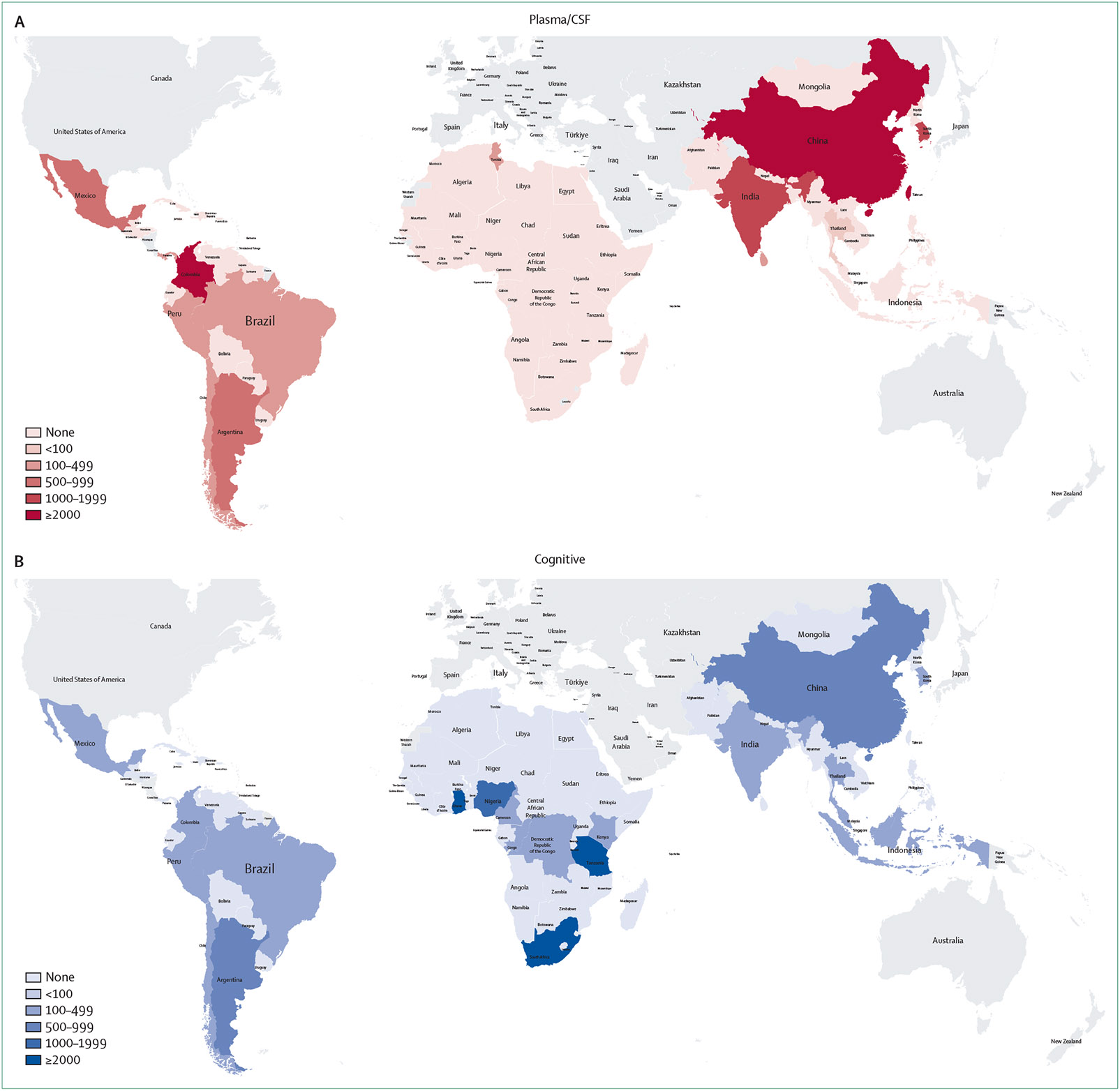
“Taiwan had presence in both plasma and CSF research, whereas Thailand and Singapore primarily focused on CSF biomarker research.”
BackgroundYescas, P., Huertas‐Vázquez, A., Villarreal-Molina, M. T., Rasmussen, A., Tusié-Luna, M. T., López, M., Canizales‐Quinteros, S., & Alonso, M. E. (2006) · Neurogenetics · doi:10.1007/s10048-006-0043-3 · Cited by 62
Blood biomarkers for Alzheimer's disease and related disorders
Zetterberg, H., & Schott, J. M. (2022) · Acta Neurologica Scandinavica · doi:10.1111/ane.13628 · Cited by 60 · cited 2×
“152 Similarly, cognitive digital biomarkers in the Global South should be systematically examined to establish their specificity and generalisability across different populations and their potential to be more accessible 21 to people in rural areas and outside capital cities.”
BackgroundAddressing the gaps between socioeconomic disparities and biological models of dementia
Ibáñez, A., Legaz, A., & Ruiz-Adame, M. (2023) · Brain · doi:10.1093/brain/awad236 · Cited by 60 · cited 2×
“The Global South is characterised by large heterogeneity within and between regions, 1,3,4,8,17-19 with areas of expertise, disparities, and gaps, suggesting the need for different approaches across different regions to support the development of biomarkers.”
BackgroundArango, D., Cruts, M., Torres, O., Backhovens, H., Serrano, M. L., Villareal, E., Monta�es, P., Matallana, D., Cano, C., Van Broeckhoven, C., et al. (2001) · American Journal of Medical Genetics · doi:10.1002/1096-8628(20011001)103:2<138::aid-ajmg1529>3.0.co;2-8 · Cited by 58
Temporal irreversibility of large-scale brain dynamics in Alzheimer's disease
Cruzat, J., Herzog, R., Prado, P., Sanz-Perl, Y., Gonzalez-Gomez, R., Moguilner, S., Kringelbach, M. L., Deco, G., Tagliazucchi, E., & Ibañez, A. (2023) · The Journal of Neuroscience · doi:10.1523/jneurosci.1312-22.2022 · Cited by 57
Huber, H., Blennow, K., Zetterberg, H., Boada, M., Jeromin, A., Weninger, H., Núñez‐Llaves, R., Aguilera, N., Ramis, M., Simrén, J., et al. (2024) · Alzheimer s & Dementia · doi:10.1002/alz.13697 · Cited by 57 · cited 1×
“For example, the measurement of neurofilament light protein, glial fibrillary acidic protein, phosphorylated tau, and A β in dried blood spots 152,153 has the advantage of being unaffected by pre-analytical factors, such as time to centrifugation, temperature of freezing, and tube type.”
BackgroundAnalysis of LRRK2, SNCA, Parkin, PINK1, and DJ-1 in Zambian patients with Parkinson's disease
Yonova-Doing, E., Atadzhanov, M., Quadri, M., Kelly, P., Shawa, N., Musonda, S. T. S., Simons, E. J., Breedveld, G. J., Oostra, B. A., & Bonifati, V. (2012) · Parkinsonism & Related Disorders · doi:10.1016/j.parkreldis.2012.02.018 · Cited by 56
Biomarkers for dementia in Latin American countries: Gaps and opportunities
Parra, M. A., Orellana, P., Leon, T., Victoria, C. G., Henriquez, F., Gomez, R., Avalos, C., Damian, A., Slachevsky, A., Ibañez, A., et al. (2023) · Alzheimer's & Dementia · doi:10.1002/alz.12757 · Cited by 54
Self-citationAguillon, D., Langella, S., Chen, Y., Sanchez, J. S., Su, Y., Vila‐Castelar, C., Vasquez, D., Zetterberg, H., Hansson, O., Dage, J. L., et al. (2023) · Alzheimer's & Dementia · doi:10.1002/alz.12906 · Cited by 54
Gao, F., Dai, L., Wang, Q., Liu, C., Deng, K., Cheng, Z., Lv, X., Wu, Y., Zhang, Z., Tao, Q., et al. (2023) · 中国科学通报:英文版 · doi:10.1016/j.scib.2023.07.009 · Cited by 52 · cited 1×
“53 Neurofilament light levels were significantly associated with Alzheimer’s disease and inversely correlated with cognitive function.”
BackgroundGlobal North–Global South research partnerships are still inequitable
Rakotonarivo, O. S., & Andriamihaja, O. R. (2023) · Nature Human Behaviour · doi:10.1038/s41562-023-01728-0 · Cited by 51
Mirandez, R. M., Aprahamian, I., Talib, L. L., Forlenza, O. V., & Radanovic, M. (2017) · International Psychogeriatrics · doi:10.1017/s1041610217000102 · Cited by 50 · cited 1×
“…had lower levels of A β 1–42 and higher levels of total tau and phosphorylated tau181 than did the healthy controls 35,39-41 and individuals presenting with MCI; 35,39,41-43 in addition, combined biomarker ratios (eg, A β 1–42 to phosphorylated tau181) showed potential as diagnostic tools.”
BackgroundSoman, S. M., Raghavan, S., Rajesh, P. G., Mohanan, N., Thomas, B., Kesavadas, C., & Menon, R. N. (2020) · Journal of the Neurological Sciences · doi:10.1016/j.jns.2020.117093 · Cited by 49 · cited 1×
“93 Ethnic variations in neuroimaging markers were observed alongside potential markers offering high sensitivity and specificity in detecting cerebrovascular disease and neurodegeneration.”
BackgroundAlzheimer's disease diagnosis and management: Perspectives from around the world
Kerwin, D., Abdelnour, C., Caramelli, P., Ogunniyi, A., Shi, J., Zetterberg, H., & Traber, M. (2022) · Alzheimer's & Dementia: Diagnosis, Assessment & Disease Monitoring · doi:10.1002/dad2.12334 · Cited by 49 · cited 1×
“136 Sociocultural stigma is tied to traditional spiritual beliefs, linking behaviours related to dementia to witchcraft in some parts of sub-Saharan Africa, 143-145 but without sufficient investigation in understanding how dementia is conceptualised within Indigenous knowledge systems.”
BackgroundFDG‐PET Patterns Predict Amyloid Deposition and Clinical Profile in Corticobasal Syndrome
Parmera, J. B., Coutinho, A. M., Aranha, M. R., Studart‐Neto, A., Carneiro, C. D. G., de Almeida, I. J., Solla, D. J. F., Ono, C. R., Barbosa, E. R., Nitríni, R., et al. (2020) · Movement Disorders · doi:10.1002/mds.28373 · Cited by 48
de Araújo, N. B., Nielsen, T. R., Engedal, K., Barca, M. L., Coutinho, E. S. F., & Laks, J. (2018) · Brazilian Journal of Psychiatry · doi:10.1590/1516-4446-2017-2284 · Cited by 47
Magklara, E., Stephan, B. C. M., & Robinson, L. (2019) · International Journal of Geriatric Psychiatry · doi:10.1002/gps.4969 · Cited by 47 · cited 1×
“…although neuropsychological testing is a challenge in the Global South because of the scarcity of standard tools and culturally adapted cutoffs, 147 standardisation of instruments might not be sufficient for valid measurement, but might additionally need to be combined with harmonised…”
BackgroundGlobal South research is critical for understanding brain health, ageing and dementia
Baez, S., Alladi, S., & Ibanez, A. (2023) · Clinical and Translational Medicine · doi:10.1002/ctm2.1486 · Cited by 47
The impact of regional heterogeneity in whole-brain dynamics in the presence of oscillations
Perl, Y. S., Zamora‐López, G., Montbrió, E., Monge-Asensio, M., Vohryzek, J., Fittipaldi, S., Campo, C. G., Moguilner, S., Ibáñez, A. M., Tagliazucchi, E., et al. (2023) · Network Neuroscience · doi:10.1162/netn_a_00299 · Cited by 41
Apolipoprotein E Gene Polymorphism in Indian Patients with Alzheimer’s Disease and Vascular Dementia
Luthra, K., Tripathi, M., Grover, R., Dwivedi, M., Kumar, A., & Dey, A. B. (2004) · Dementia and Geriatric Cognitive Disorders · doi:10.1159/000076345 · Cited by 40
Moguilner, S., Birba, A., Fittipaldi, S., Gonzalez-Campo, C., Tagliazucchi, E., Reyes, P., Matallana, D., Parra, M. A., Slachevsky, A., Farías, G., et al. (2022) · Journal of Neural Engineering · doi:10.1088/1741-2552/ac87d0 · Cited by 40 · cited 1×
“The rich admixture of Indigenous, African, and European ancestries 14-16, 70, 75 in the region influenced genetic mutations and risk across diseases.”
BackgroundLi, W.-W., Shen, Y.-Y., Tian, D.-Y., Bu, X.-L., Zeng, F., Liu, Y.-H., Chen, Y., Yao, X.-Q., Li, H.-Y., Chen, D.-W., et al. (2019) · Journal of Alzheimer's Disease · doi:10.3233/jad-190056 · Cited by 39
Masika, G. M., Yu, D. S. F., & Li, P. W. C. (2021) · Archives of Clinical Neuropsychology · doi:10.1093/arclin/acz086 · Cited by 39 · cited 1×
“61 The strength of these tests flowed from development of culturally adapted cognitive assessments and use of multimodal approaches.”
BackgroundMoguilner, S., Whelan, R., Adams, H., Valcour, V., Tagliazucchi, E., & Ibáñez, A. (2023) · eBioMedicine · doi:10.1016/j.ebiom.2023.104540 · Cited by 39
Self-citationHendrie, H. C., Lane, K. A., Ogunniyi, A., Baiyewu, O., Gureje, O., Evans, R., Smith-Gamble, V., Pettaway, M., Unverzagt, F. W., Gao, S., et al. (2006) · International Psychogeriatrics · doi:10.1017/s104161020500308x · Cited by 37 · cited 1×
“60 Adapted cognitive tests such as the Kiswahili version of the MoCA showed acceptable reliability, concurrent validity, sensitivity, and specificity in diagnosing MCI and dementia.”
MethodLim, J. L., Lohmann, K., Tan, A. H., Tay, Y. W., Ibrahim, K. A., Aziz, Z. A., Mawardi, A. S., Puvanarajah, S. D., Lim, T. T., Looi, I., et al. (2021) · Journal of Neural Transmission · doi:10.1007/s00702-021-02421-0 · Cited by 37
Amerindian Genetic Ancestry Protects against Alzheimer’s Disease
Benedet, A. L., Moraes, C. F., Camargos, E. F., Oliveira, L. F., Souza, V. C., Lins, T. C. D. L., Henriques, A. D., Carmo, D. G. S., Machado‐Silva, W., de Araújo, C. N., et al. (2012) · Dementia and Geriatric Cognitive Disorders · doi:10.1159/000339672 · Cited by 36
Fittipaldi, S., Legaz, A., Maito, M., Hernandez, H., Altschuler, F., Canziani, V., Moguilner, S., Gillan, C. M., Castillo, J., Lillo, P., et al. (2024) · Nature Mental Health · doi:10.1038/s44220-023-00164-3 · Cited by 36 · cited 1×
“The Global South is characterised by large heterogeneity within and between regions, 1,3,4,8,17-19 with areas of expertise, disparities, and gaps, suggesting the need for different approaches across different regions to support the development of biomarkers.”
BackgroundDuran-Aniotz, C. A., Sanhueza, J., Grinberg, L. T., Slachevsky, A., Valcour, V., Robertson, I. H., LAWLOR, B. A., Miller, B. L., & Ibáñez, A. M. (2022) · Alzheimer s & Dementia · doi:10.1002/alz.12710 · Cited by 35
Self-citationThe African Dementia Consortium
Akinyemi, R., Owolabi, M. O., Okubadejo, N. U., Ogunniyi, A. O., & Kalaria, R. N. (2022) · The Lancet Neurology · doi:10.1016/s1474-4422(22)00475-6 · Cited by 35
Self-citationReis, T., Brandão, C. O., Coutinho, E. S. F., Engelhardt, E., & Laks, J. (2012) · CNS Neuroscience & Therapeutics · doi:10.1111/j.1755-5949.2012.00311.x · Cited by 34 · cited 1×
“Research carried out in Taiwan examined plasma biomarkers such as A β 1–42, A β 1–40, total tau, and phosphorylated tau, with one study highlighting the potential role of SORL1 in Alzheimer’s disease and MCI.”
BackgroundMultimodal mechanisms of human socially reinforced learning across neurodegenerative diseases
Legaz, A., Abrevaya, S., Dottori, M., González Campo, C., Birba, A., Martorell Caro, M., Aguirre, J., Slachevsky, A., Aranguiz, R., Serrano, C., et al. (2022) · Brain · doi:10.1093/brain/awab345 · Cited by 34
Mansoori, N., Tripathi, M., Alam, R., Luthra, K., Ramakrishnan, L., Parveen, S., & Mukhopadhyay, A. K. (2010) · Dementia and Geriatric Cognitive Disorders · doi:10.1159/000321666 · Cited by 33
Chou, C., Liao, Y., Lee, W., Wang, S., & Fuh, J. (2016) · Alzheimer s Research & Therapy · doi:10.1186/s13195-016-0222-x · Cited by 33
Genetic origin of a large family with a novel PSEN1 mutation (Ile416Thr)
Aguilar, L. R., Acosta‐Uribe, J., Giraldo, M., Moreno, S., Baena, A. Y., Alzate, D., Cuastumal, A. R., Aguillon, D. F., Madrigal, L., Saldarriaga, A., et al. (2019) · Alzheimer s & Dementia · doi:10.1016/j.jalz.2018.12.010 · Cited by 33
The necessity of diplomacy in brain health
Dawson, W. D., Bobrow, K., Ibáñez, A. M., Booi, L., Pintado‐Caipa, M., Yamamoto, S., Tarnanas, I., Evans, T., Comas‐Herrera, A., Cummings, J. L., et al. (2020) · The Lancet Neurology · doi:10.1016/s1474-4422(20)30358-6 · Cited by 33
Misconception of dementia-related disorders in Sub-Saharan Africa
Adebisi, A. T., & Salawu, M. A. (2023) · Frontiers in Neurology · doi:10.3389/fneur.2023.1148076 · Cited by 32 · cited 9×
“138-140, 148 Including diverse populations in research on biomarkers should be handled ethically and responsibly, In Africa, the African Dementia Consortium brings together over 100 researchers in a multidisciplinary framework to generate clinical and socioeconomic datasets to improve the characterisation of dementia…”
BackgroundInfluentialAkinyemi, R., Firbank, M., Ogbole, G. I., Allan, L. M., Owolabi, M. O., Akinyemi, J. O., Yusuf, B. P., Ogunseyinde, O. A., Ogunniyi, A. O., & Kalaria, R. N. (2015) · BMC Research Notes · doi:10.1186/s13104-015-1552-7 · Cited by 31 · cited 1×
“84 Additionally, a significant association was reported between carotid artery plaque and abnormal cognitive functions.”
BackgroundSelf-citationGray, W. K., Paddick, S. M., Collingwood, C., Kisoli, A., Mbowe, G., Mkenda, S., Lissu, C., Rogathi, J., Kissima, J., Walker, R. W., et al. (2016) · International Journal of Geriatric Psychiatry · doi:10.1002/gps.4415 · Cited by 31
Nichols, E., Ng, D. K., Hayat, S. A., Langa, K. M., Lee, J., Steptoe, A., Deal, J. A., & Gross, A. L. (2022) · Alzheimer s & Dementia · doi:10.1002/alz.12740 · Cited by 31 · cited 1×
“146 Therefore, although neuropsychological testing is a challenge in the Global South because of the scarcity of standard tools and culturally adapted cutoffs, 147 standardisation of instruments might not be sufficient for valid measurement, but might additionally need to be combined with…”
BackgroundMaestre, G., Carrillo, M., Kalaria, R., Acosta, D., Adams, L., Adoukonou, T., Akinwande, K., Akinyemi, J., Akinyemi, R., Akpa, O., et al. (2023) · Alzheimer's & Dementia · doi:10.1002/alz.13025 · Cited by 31
Self-citationAkinyemi, R., Salami, A. A., Akinyemi, J. O., Ojagbemi, A., Olopade, F. I., Coker, M. M., Farombi, T., Nweke, M. C., Arulogun, O., Jegede, A., et al. (2018) · Brain Research Bulletin · doi:10.1016/j.brainresbull.2018.08.014 · Cited by 30 · cited 1×
“Although not a focus of this study, notably, brain banks have been established in Brazil, Argentina, India, Mexico, China, and Nigeria 132,133 (although they are still less common than in the Global North), offering the potential for unique discoveries across neurodegenerative diseases.”
BackgroundSelf-citationPark, J.-H., Park, I., Youm, E. M., Lee, S., Park, J.-H., Lee, J., Lee, D. Y., Byun, M. S., Lee, J. H., Yi, D., et al. (2021) · Translational Psychiatry · doi:10.1038/s41398-021-01412-9 · Cited by 30
Ibanez, A., Maito, M., Botero-Rodríguez, F., Fittipaldi, S., Coronel, C., Migeot, J., Lacroix, A., Lawlor, B., Duran-Aniotz, C., Baez, S., et al. (2024) · Nature Aging · doi:10.1038/s43587-024-00648-6 · Cited by 30
Self-citationSmach, M. A., Edziri, H., Charfeddine, B., Ben Othman, L., Lammouchi, T., Ltaief, A., Nafati, S., Dridi, H., Bennamou, S., & Limem, K. (2012) · Dementia and Geriatric Cognitive Disorders Extra · doi:10.1159/000329910 · Cited by 29 · cited 1×
“A study in Tunisia that examined CSF biomarkers in 103 participants with Alzheimer’s disease and non-Alzheimer’s disease dementia 45 found that the average folate levels in the CSF were lower in participants with Alzheimer’s disease than in controls.”
BackgroundVal66Met polymorphism and BDNF levels in Alzheimer's disease patients in North Indian population
Nirmal, S., Tripathi, M., Sagar, R., & Subbiah, V. (2013) · International Journal of Neuroscience · doi:10.3109/00207454.2012.762515 · Cited by 29
GRN and MAPT Mutations in 2 Frontotemporal Dementia Research Centers in Brazil
Takada, L. T., Bahia, V. S., Guimarães, H. C., Costa, T. V. M. M., Vale, T. C., Rodriguez, R. D., Porto, F. H. G., Machado, J. C. B., Beato, R. G., Cesar, K. G., et al. (2016) · Alzheimer Disease & Associated Disorders · doi:10.1097/wad.0000000000000153 · Cited by 29
Cecchini, M. A., Yassuda, M. S., Squarzoni, P., Coutinho, A. M., Faria, D. D. P., Duran, F., da Costa, N. A., Porto, F. H. D. G., Nitríni, R., Forlenza, O. V., et al. (2021) · Brain and Cognition · doi:10.1016/j.bandc.2021.105749 · Cited by 29 · cited 1×
“The rich admixture of Indigenous, African, and European ancestries 14-16, 70, 75 in the region influenced genetic mutations and risk across diseases.”
BackgroundApolipoprotein E and Presenilin-1 Allelic Variation and Alzheimer's Disease in India
Chandak, G. R., Sridevi, M. U., Vas, C. J., Panikker, D. M., & Singh, L. (2002) · Human Biology · doi:10.1353/hub.2002.0051 · Cited by 28
Kandimalla, R. J. L., Prabhakar, S., Binukumar, B. K., Wani, W. Y., Sharma, D. R., Grover, V., Bhardwaj, N., Jain, K., & Gill, K. D. (2010) · Neuroscience Letters · doi:10.1016/j.neulet.2010.06.075 · Cited by 28
Social factors and the outcome of dementia
Orrell, M. W., Butler, R., & Bebbington, P. (2000) · International Journal of Geriatric Psychiatry · doi:10.1002/1099-1166(200006)15:6<515::aid-gps147>3.0.co;2-u · Cited by 28
Inflammatory and Pro-resolving Mediators in Frontotemporal Dementia and Alzheimer’s Disease
Fraga, V. G., Magalhães, C. A., Loures, C. D. M. G., de Souza, L. C., Guimarães, H. C., Zauli, D. A. G., Carvalho, M. D. G., Ferreira, C. N., Caramelli, P., de Sousa, L. P., et al. (2019) · Neuroscience · doi:10.1016/j.neuroscience.2019.09.008 · Cited by 28
Dumois‐Petersen, S., Gallegos‐Arreola, M. P., Magaña‐Torres, M. T., Perea, F. J., Ringman, J. M., & Figuera, L. E. (2020) · American Journal of Medical Genetics Part C Seminars in Medical Genetics · doi:10.1002/ajmg.c.31865 · Cited by 28
Kandiah, N., Choi, S. H., Hu, C., Ishii, K., Kasuga, K., & Mok, V. (2022) · Journal of Alzheimer s Disease Reports · doi:10.3233/adr-220059 · Cited by 28
Sánchez, S. M., Duarte-Abritta, B., Abulafia, C., Pino, G. D., Bocaccio, H., Castro, M. N., Sevlever, G. E., Fonzo, G. A., Nemeroff, C. B., Gustafson, D., et al. (2020) · Journal of Psychiatric Research · doi:10.1016/j.jpsychires.2019.12.019 · Cited by 27
Itzcovich, T., Xi, Z., Martinetto, H., Chrem-Méndez, P., Russo, M. J., Ambrosi, B., Uchitel, O. D., Nogués, M. A., Silva, E., Rojas, G. J., et al. (2016) · Neurobiology of Aging · doi:10.1016/j.neurobiolaging.2016.02.001 · Cited by 26
Hong, Y. J., Park, K. W., Kang, D., & Lee, J. (2019) · Dementia and Neurocognitive Disorders · doi:10.12779/dnd.2019.18.1.19 · Cited by 26
Vishnu, V. Y., Modi, M., Sharma, S., Mohanty, M., Goyal, M., Lal, V., Khandelwal, N. K., Mittal, B. R., & Prabhakar, S. K. (2016) · PLoS ONE · doi:10.1371/journal.pone.0166369 · Cited by 25 · cited 1×
“46-49 Studies in China investigated multiple markers such as A β 42, total tau, phosphorylated tau, neurofilament light, 50-52 and glial fibrillary acidic protein and identified that elevated levels of phosphorylated tau and glial fibrillary acidic protein are associated with cortical thickness.”
BackgroundVirtual reality-based monitoring test for MCI: A multicenter feasibility study
Jang, S., Choi, S., Son, S. J., Oh, J., Ha, J.-H., Kim, W. J., Roh, H. W., Kim, K. Y., Lee, S., Jung, E.-J., et al. (2023) · Frontiers in Psychiatry · doi:10.3389/fpsyt.2022.1057513 · Cited by 25
Multifactorial Analysis of a Biomarker Pool for Alzheimer Disease Risk in a North Indian Population
Talwar, P., Grover, S., Sinha, J., Chandna, P., Agarwal, R., Kushwaha, S. S., & Kukreti, R. (2017) · Dementia and Geriatric Cognitive Disorders · doi:10.1159/000477206 · Cited by 24 · cited 1×
“118 Variations and mutations in APOE, 119-122 PGRN, MAPT, 123,124 and others were associated with disease risk, with strong association between APOE ε 4 allele and Alzheimer’s disease and vascular dementia.”
BackgroundAniwattanapong, D., Tangwongchai, S., Supasitthumrong, T., Hemrunroj, S., Tunvirachaisakul, C., Tawankanjanachot, I., Chuchuen, P., Snabboon, T., Carvalho, A. F., & Maes, M. H. J. (2018) · Aging & Mental Health · doi:10.1080/13607863.2018.1501668 · Cited by 24 · cited 1×
“…assessments with biomarkers and identified significant associations between the Thai version of the Boston Naming Test and the APOE ε 4 allele, 64 with another study addressing the cultural and educational factors influencing the detection of cognitive impairment using the Hindi version of…”
MethodNiikado, M., Chrem-Méndez, P., Itzcovich, T., Barbieri-Kennedy, M., Calandri, I., Martinetto, H., Serra, M., Calvar, J., Campos, J., Russo, M. J., et al. (2019) · The Journals of Gerontology: Series A · doi:10.1093/gerona/gly179 · Cited by 20 · cited 1×
“36 With respect to blood (plasma or serum) biomarkers for Alzheimer’s disease, CTACK, MIG, and SDF-1 α had discriminative power, with AnxA1 and LX4A capable of distin-guishing Alzheimer’s disease from behavioural variant frontotemporal dementia.”
BackgroundItzcovich, T., Chrem-Méndez, P., Vázquez, S., Kennedy, M. B., Niikado, M., Martinetto, H., Allegri, R., Sevlever, G. E., & Surace, E. I. (2019) · Neurobiology of Aging · doi:10.1016/j.neurobiolaging.2019.05.001 · Cited by 20
Lourenco, M. V., Borelli, W. V., Duran-Aniotz, C. A., Zimmer, E. R., & de Castro, S. S. (2023) · Alzheimer s & Dementia Translational Research & Clinical Interventions · doi:10.1002/trc2.12378 · Cited by 19 · cited 1×
“151 Such a step will also improve the understanding of polygenic risk factors and interactions with the exposome in the characterisation of biomarkers.”
BackgroundSelf-citationMoreno, D. J., Pino, S., Gallardo, Á. M. R., Lopera, F. J., Ostos, H., Vía, M., & Bedoya, G. (2017) · Alzheimer Disease & Associated Disorders · doi:10.1097/wad.0000000000000195 · Cited by 17
Mworozi, K., Ameda, F., Byanyima, R. K., & Nakasujja, N. (2019) · Journal of Clinical Neuroscience · doi:10.1016/j.jocn.2019.06.011 · Cited by 17 · cited 1×
“85 A subsequent study in South Africa conducted analyses of glucose metabolism patterns using [ 18 F]FDG-PET scans to observe association with cognitive imbalances in Parkinson’s disease and parkinsonian-plus disorders, including multiple system atrophy and dementia with Lewy bodies.”
MethodGenetic study on frontotemporal lobar degeneration in India
Das, G., Sadhukhan, T., Sadhukhan, D., Biswas, A., Pal, S., Ghosh, A., Das, S. K., Ray, K., & Ray, J. (2013) · Parkinsonism & Related Disorders · doi:10.1016/j.parkreldis.2012.11.015 · Cited by 16 · cited 1×
“118 Variations and mutations in APOE, 119-122 PGRN, MAPT, 123,124 and others were associated with disease risk, with strong association between APOE ε 4 allele and Alzheimer’s disease and vascular dementia.”
BackgroundMallika, A. P., Jairani, P. S., Raghavan, S. K., Verghese, J., Gopala, S., Srinivas, P., & Mathuranath, P. S. (2015) · Neurobiology of Aging · doi:10.1016/j.neurobiolaging.2015.11.026 · Cited by 16
Jairani, P. S., Mallika, A. P., Gopala, S., Verghese, J., & Mathuranath, P. S. (2016) · Dementia and Geriatric Cognitive Disorders · doi:10.1159/000447446 · Cited by 16
Banking brain tissue for research
Klioueva, N. M., Bovenberg, J. A., & Huitinga, I. (2017) · Handbook of clinical neurology · doi:10.1016/b978-0-12-802395-2.00002-x · Cited by 16 · cited 7×
“114 Protective loci against APOE ε 4-associated risk for Alzheimer’s disease in African ancestry populations in Nigeria have also been reported.”
BackgroundInfluentialPopulation normative data for three cognitive screening tools for older adults in sub-Saharan Africa
Gray, W. K., Paddick, S., Ogunniyi, A. O., Olakehinde, O. O., Dotchin, C. L., Kissima, J., Urasa, S. J., Kisoli, A., Rogathi, J. J., Mushi, D., et al. (2021) · Dementia & Neuropsychologia · doi:10.1590/1980-57642021dn15-030005 · Cited by 16 · cited 1×
“59 In Ibadan, Nigeria, an adequate association was found between the Clinician Home-based Interview to assess Function and Blessed Dementia Scale.”
BackgroundMoguilner, S., Herzog, R., Perl, Y. S., Medel, V., Cruzat, J., Coronel, C., Kringelbach, M., Deco, G., Ibáñez, A., & Tagliazucchi, E. (2024) · Alzheimer's Research & Therapy · doi:10.1186/s13195-024-01449-0 · Cited by 16 · cited 1×
“10 Robust computational frameworks to assess multimodal neuroimaging, 141 especially new techniques involving whole-brain modeling, 20 generative biophysical models, 142 and deep learning, are absent.”
MethodOkubadejo, N. U., Okunoye, O., Ojo, O. O., Arabambi, B., Akinyemi, R., Osaigbovo, G. O., Abubakar, S., Iwuozo, E. U., Wahab, K., Agabi, O. P., et al. (2022) · npj Parkinson's Disease · doi:10.1038/s41531-022-00411-x · Cited by 16
Self-citationMutation burden profile in familial Alzheimer's disease cases from India
Adhikarla, S., Sen, S., Kota, L. N., Viswanath, B., Purushottam, M., Varghese, M., Jain, S., Panicker, M. M., & Mukherjee, O. (2017) · Neurobiology of Aging · doi:10.1016/j.neurobiolaging.2017.12.002 · Cited by 14
Interethnic differences in neuroimaging markers and cognition in Asians, a population-based study
Wong, L. C. K., Wong, M. Y. Z., Tan, C. S., Vrooman, H. A., Venketasubramanian, N., Cheng, C., Chen, C., & Hilal, S. (2020) · Scientific Reports · doi:10.1038/s41598-020-59618-8 · Cited by 14
Tan, Y. J., Yong, A. C. W., Foo, J. N., Lian, M. M., Lim, W. K., Dominguez, J. C., Fong, Z. H., Narasimhalu, K., Chiew, H. J., Ng, K. P., et al. (2023) · Annals of Clinical and Translational Neurology · doi:10.1002/acn3.51744 · Cited by 14 · cited 1×
“123,125 These include potentially pathogenic gene mutations such as GRN, SQSTM1, LRRK2, NOTCH3, and HTRA1.”
BackgroundTakada, L. T., Aláez‐Verson, C., Burgute, B. D., Nitríni, R., Sosa, A. L., Castilhos, R. M., Chaves, M. L. F., Longoria-Ibarrola, E. M., Carrillo‐Sánchez, K., Brucki, S. M. D., et al. (2022) · Alzheimer s Research & Therapy · doi:10.1186/s13195-022-01052-1 · Cited by 13
Genotype-phenotype correlation in Tunisian patients with Amyotrophic Lateral Sclerosis
Kacem, I., Sghaier, I., Peverelli, S., Souissi, E., Ticozzi, N., Gharbi, A., Ratti, A., Gargouri, A., Silani, V., & Gouider, R. (2022) · Neurobiology of Aging · doi:10.1016/j.neurobiolaging.2022.08.002 · Cited by 13
Russo, M. J., Cohen, G., Chrem, P., Campos, J., Nahas, F., Surace, E. I., Vázquez, S., Gustafson, D., Guinjoan, S., Allegri, R., et al. (2016) · Neuropsychiatric Disease and Treatment · doi:10.2147/ndt.s107051 · Cited by 12 · cited 2×
“…had lower levels of A β 1–42 and higher levels of total tau and phosphorylated tau181 than did the healthy controls 35,39-41 and individuals presenting with MCI; 35,39,41-43 in addition, combined biomarker ratios (eg, A β 1–42 to phosphorylated tau181) showed potential as diagnostic tools.”
BackgroundClinical and genetic data of Huntington disease in Moroccan patients
Bouhouche, A., Regragui, W., Lamghari, H., Khaldi, K., Birouk, N., Lytim, S., Bellamine, S., Kriouile, Y., Bouslam, N., Haddou, E. H. A. B., et al. (2016) · African Health Sciences · doi:10.4314/ahs.v15i4.23 · Cited by 11
Méndez, P. C., Calandri, I. L., Nahas, F., Russo, M. J., Demey, I., Martín, M., Clarens, M. F., Harris, P., Tapajóz, F., Campos, J., et al. (2018) · Arquivos de Neuro-Psiquiatria · doi:10.1590/0004-282x20180025 · Cited by 11 · cited 2×
“…had lower levels of A β 1–42 and higher levels of total tau and phosphorylated tau181 than did the healthy controls 35,39-41 and individuals presenting with MCI; 35,39,41-43 in addition, combined biomarker ratios (eg, A β 1–42 to phosphorylated tau181) showed potential as diagnostic tools.”
BackgroundSalcher‐Konrad, M., Naci, H., McDaid, D., Alladi, S., Oliveira, D., Fry, A., Hussein, S., Knapp, M. R. J., Musyimi, C. W., Ndetei, D. M., et al. (2019) · BMJ Open · doi:10.1136/bmjopen-2018-027851 · Cited by 11 · cited 1×
“138-140, 148 Including diverse populations in research on biomarkers should be handled ethically and responsibly, In Africa, the African Dementia Consortium brings together over 100 researchers in a multidisciplinary framework to generate clinical and socioeconomic datasets to improve the…”
BackgroundClarens, M. F., Crivelli, L., Calandri, I. L., Méndez, P. C., Martín, M., Russo, M. J., Campos, J., Surace, E. I., Vázquez, S., Sevlever, G. E., et al. (2020) · Applied Neuropsychology Adult · doi:10.1080/23279095.2020.1756816 · Cited by 11 · cited 4×
“Research carried out in Taiwan examined plasma biomarkers such as A β 1–42, A β 1–40, total tau, and phosphorylated tau, with one study highlighting the potential role of SORL1 in Alzheimer’s disease and MCI.”
BackgroundInfluentialCarneiro, C. D. G., Faria, D. D. P., Coutinho, A. M., Ono, C. R., Duran, F., da Costa, N. A., Garcez, A. T., Squarzoni, P., Forlenza, O. V., Brucki, S. M. D., et al. (2022) · Brazilian Journal of Psychiatry · doi:10.47626/1516-4446-2021-2374 · Cited by 11
Cheng, H.-R., Lin, R.-R., Li, H., Xue, Y., Gao, P.-R., Chen, D.-F., Tao, Q., & Wu, Z. (2022) · Neurobiology of Aging · doi:10.1016/j.neurobiolaging.2022.12.009 · Cited by 11
Influence of low frequency PSEN1 variants on familial Alzheimer’s disease risk in Brazil
Abdala, B. B., dos Santos, J. M., Gonçalves, A. P., da Motta, L. B., Laks, J., de Borges, M. B., Pimentel, M. M. G., & Santos-Rebouças, C. B. (2017) · Neuroscience Letters · doi:10.1016/j.neulet.2017.05.053 · Cited by 10
The next generation of leaders advocating for brain health
Smith, D. G. (2017) · The Lancet Neurology · doi:10.1016/s1474-4422(17)30359-9 · Cited by 10
Allegri, R., Méndez, P. C., Russo, M. J., Cohen, G., Calandri, I. L., Campos, J., Nahas, F., Surace, E. I., Vázquez, S., & Sevlever, G. E. (2018) · Neurología · doi:10.1016/j.nrl.2017.12.011 · Cited by 10 · cited 3×
“35-38 Individuals with Alzheimer’s disease generally had lower levels of A β 1–42 and higher levels of total tau and phosphorylated tau181 than did the healthy controls 35,39-41 and individuals presenting with MCI; 35,39,41-43 in addition, combined biomarker ratios (eg, A β 1–42 to phosphorylated tau181) showed potent…”
BackgroundSubjective sleep parameters in prodromal Alzheimer’s disease: a case-control study
Borges, C. R., Piovezan, R. D., Poyares, D. R., Busatto, G. F., Studart‐Neto, A., Coutinho, A. M., Tufik, S. B., Nitríni, R., & Brucki, S. M. D. (2021) · Brazilian Journal of Psychiatry · doi:10.1590/1516-4446-2020-1503 · Cited by 10
Schwinne, M., Alonso, Á., Roberts, B. R., Hickle, S. D., Verberk, I. M. W., Epenge, E., Gikelekele, G., Tshengele, N., Kavugho, I., Mampunza, S. M. M., et al. (2024) · Journal of Alzheimer s Disease · doi:10.3233/jad-230976 · Cited by 10
Huded, C. B., Bharath, S., Chandra, S., Sivakumar, P. T., Varghese, M., & Subramanian, S. (2014) · Asian Journal of Psychiatry · doi:10.1016/j.ajp.2014.10.007 · Cited by 8
Chemokine profile in Alzheimer’s disease: Results from a Mexican population
Góngora‐Rivera, F., González-Aquines, A., Ortiz-Jiménez, X. A., de la Garza, C. E. M., & Salinas-Carmona, M. C. (2020) · Journal of Clinical Neuroscience · doi:10.1016/j.jocn.2019.12.051 · Cited by 8 · cited 1×
“37 To the best of our knowledge, no plasma studies with A β , tau, or neurodegeneration biomarkers related to sporadic cases of Alzheimer’s disease or FTLD have been performed in Latin America.”
BackgroundKretzschmar, G. C., Alencar, N. M., da Silva, S. S. L., Sulzbach, C. D., Meissner, C. G., Petzl‐Erler, M. L., de Souza, R. L. R., & Boldt, A. B. W. (2021) · Frontiers in Molecular Biosciences · doi:10.3389/fmolb.2021.632314 · Cited by 8
The Brain Research Africa Initiative (BRAIN)
NJAMNSHI, A. K., Ngarka, L., Njamnshi, W. Y., Ahidjo, N., Chabwine, J. N., Hachinski, V., Ahidjo, N., Annoni, J. M., Chabwine, J. N., Hachinski, V., et al. (2023) · The Lancet Neurology · doi:10.1016/s1474-4422(23)00164-3 · Cited by 8 · cited 1×
“163 Each of these approaches illustrates the importance of customised local and regional models that can facilitate translational genomics and improve the understanding of global dementia phenotypes, with potential to identify causal genetic variants.”
BackgroundC9ORF72 G4C2-repeat expansion and frontotemporal dementia first reported case in Argentina
Suarez, M. F., Surace, E. I., Harris, P., Tapajóz, F., Sevlever, G. E., Allegri, R., & Russo, G. N. (2016) · Neurocase · doi:10.1080/13554794.2016.1186700 · Cited by 7
Association between dementia and vascular disease-associated polymorphisms in a Tunisian population
Hamdouni, H., Achour, O., Salma, N., Rejeb, J., Mariam, A., Mariem, M., Mariem, N., Rejeb, N. B., Asma, O., Sana, B. A., et al. (2017) · International Journal of Neuroscience · doi:10.1080/00207454.2017.1348353 · Cited by 7
Leroi, I., Karanja, W., Adrion, E., Alladi, S., Custodio, N., Goswami, S. P., Guerchet, M., Gubner, J. M., Ibáñez, A. M., Ilinca, S., et al. (2022) · International Journal of Geriatric Psychiatry · doi:10.1002/gps.5762 · Cited by 7
Suh, J., Park, Y. H., Kim, H., Jang, J., Kang, M. J., Yang, J., Baek, M. J., & Kim, S. (2019) · International Journal of Geriatric Psychiatry · doi:10.1002/gps.5072 · Cited by 6
Utility of 18F FDG-PET in Parkinsonism in an African population
Amod, F., Bhigjee, A., & Nyakale, N. (2022) · eNeurologicalSci · doi:10.1016/j.ensci.2022.100399 · Cited by 6 · cited 1×
“86 The analyses presented encouraging results regarding sensitivity, specificity, and agreement percentages in diagnoses.”
BackgroundMarcelo Miranda, C., María Leonor Bustamante, C., & Luisa Herrera, C. (2017) · Revista médica de Chile · doi:10.4067/s0034-98872017000700896 · Cited by 6
Chakraborty, S., Mandal, S., Kundu, S., & Sau, A. (2022) · Archives of Mental Health · doi:10.4103/amh.amh_87_21 · Cited by 4 · cited 1×
“…of results, primarily from MRI, provided clear delineations about biomarkers between different conditions (Huntington’s disease, MCI, and Alzheimer’s disease) across studies, with correlations with cognition, protein accumulations, and atrophy, 87-92 where few assessed functional brain activity.”
BackgroundFox‐Fuller, J. T., Martinez, J. E., Baena, A. Y., Londono, N., Munera, D., Noriega-Makarskyy, D. T., Vila‐Castelar, C., Aduen, P. A., Lopera, F. J., Cronin‐Golomb, A., et al. (2023) · The Journal of Prevention of Alzheimer s Disease · doi:10.14283/jpad.2023.14 · Cited by 4
Diverse factors shape healthy aging in Latin America
Walters, H. (2023) · Nature Aging · doi:10.1038/s43587-023-00508-9 · Cited by 4
Okubadejo, N. U., Okunoye, O., Ojo, O. O., et al. (2022) · Research Square · doi:10.21203/rs.3.rs-1753416/v1 · Cited by 1
Research works printed but not linked: 1
- 63. Sjahrir H, Ritarwan K, Tarigan S, Rambe AS, Lubis ID, Bhakti I. The Mini Mental State Examination in healthy individuals in Medan, Indonesia by age and education level. Neurol J Seast Asia 2001; 6: 19– 22.
Cited by
Resilience and brain health in global populations
Udeh-Momoh, C. T., Migeot, J., Blackmon, K., Mielke, M. M., Melloni, M., Cox, L., Yaffe, K., Santamaria-Garcia, H., Stern, Y., & Ibanez, A. (2025) · Nature Medicine · doi:10.1038/s41591-025-03846-w · Cited by 42
Recent advances in neuroimaging of Alzheimer's disease and related dementias
Ottoy, J., Owsicki, N., Bilgel, M., Binette, A. P., Salvadó, G., Kang, M. S., Cash, D. M., Ewers, M., Joie, R. L., Wisse, L. E. M., et al. (2025) · Alzheimer s & Dementia · doi:10.1002/alz.70648 · Cited by 40
Legaz, A., Altschuler, F., Gonzalez-Gomez, R., Hernández, H., Baez, S., Migeot, J., Fittipaldi, S., Medel, V., Maito, M. A., Godoy, M. E., et al. (2024) · Nature Aging · doi:10.1038/s43587-024-00781-2 · Cited by 36
“Also, as differences in the aging and dementia phenotype are observed in the global south versus north 28,44 , future work should be extended worldwide 5 .”
Computational whole-body-exposome models for global precision brain health
Ibáñez, A. M., Duran-Aniotz, C. A., Migeot, J., Báez, S., Fittipaldi, S., Coronel‐Oliveros, C., Eyre, H. A., Udeh‐Momoh, C. T., Zetterberg, H., Alladi, S., et al. (2025) · Nature Communications · doi:10.1038/s41467-025-67448-3 · Cited by 33
“Protective variants such as APOE ε 3 Christchurch 124 and RELN 125 , identi fi ed inLAC, renew genetics-informed trial prospects 51 .”
Self-citationSerrano‐Pozo, A., Escott‐Price, V., Grinberg, L. T., Pascoal, T. A., Suárez‐Calvet, M., Dubois, B., & Sperling, R. A. (2026) · The Lancet · doi:10.1016/s0140-6736(26)00198-4 · Cited by 22
Metadata
- Authors
- McGlinchey, E., Duran-Aniotz, C., Akinyemi, R., Arshad, F., Zimmer, E. R., Cho, H., Adewale, B. A., & Ibanez, A.
- Affiliations
- University of California, San Francisco (US)
- Adolfo Ibáñez University (CL)
- Universidade Federal do Rio Grande do Sul (BR)
- University of Ibadan (NG)
- Corresponding author
- McGlinchey, Eimear
- ORCID
- Venue
- The Lancet Healthy Longevity
- Publisher
- Elsevier BV
- Published
- 2024-10
- Volume
- 5
- Issue
- 10
- Pages
- 100616
- ISSN
- 2666-7568 (ISSN-L)
- PMC
- PMC11540104
- OpenAlex
- W4403087807
- Cited by
- 32
- References
- 163
- Citations by year
- 2026: 11 · 2025: 19 · 2024: 2
- FWCI
- 2.54
- Type
- journal article
- Language
- en
- Update notices
- erratum (2024-11-01)
- Open access
- gold
- doi.org
- Licence
- cc-by
- www.elsevier.com/tdm/userlicense/1.0/ (tdm)
- www.elsevier.com/legal/tdmrep-license (tdm)
- creativecommons.org/licenses/by/4.0/ (vor)
- Locations
- The Lancet Healthy Longevity (publishedVersion, cc-by)
- PubMed (publishedVersion)
- PubMed Central (acceptedVersion, cc-by)
- DOAJ (DOAJ: Directory of Open Access Journals) (submittedVersion, cc-by-sa)
- Funders
- Alzheimer's Association (20-725707, SG-20- 725707, AARGD-21-850670, Serra-1912-31365)
- Global Brain Health Institute
- Conselho Nacional de Desenvolvimento Científico e Tecnológico (409066/2022-2, 312306/2021-0, 435642/2018- 9, 465671/2014‐4, 312410/2018‐2, 21/2551-0000673-0, 2014-4, 16/2551‐0000475‐7)
- Fundação de Amparo à Pesquisa do Estado do Rio Grande do Sul (16/2551–0000475–7, 2014-4, 16/2551, 21/2551- 0000673-0)
- Instituto Nacional de Ciência e Tecnologia para Excitotoxicidade e Neuroproteção (# 465671/2014-4)
- Instituto Serrapilheira (Serra‐1912‐31365)
- Agencia Nacional de Investigación y Desarrollo (ANID/PIA/ANILLOS ACT210096, ACT210096, FONDAP-15150012, PIA/ANILLOS ACT210096, 15150012, ID20I10152, 1210195, 1210622, 1210176, 1220995)
- National Institutes of Health (15150012)
- National Institute on Aging (R01AG057234, R01AG072547, P01AG019724, U19AG074865, R01AG075775)
- Fogarty International Center
- Fondo de Fomento al Desarrollo Científico y Tecnológico (ID20I10152)
- Fondo de Financiamiento de Centros de Investigación en Áreas Prioritarias (15150012)
- Topics
- Health Sciences › Medicine › Psychiatry and Mental health › Dementia and Cognitive Impairment Research
- Life Sciences › Neuroscience › Cellular and Molecular Neuroscience › Alzheimer's disease research and treatments
- Life Sciences › Neuroscience › Neurology › Neurological Disease Mechanisms and Treatments
- Keywords
- neurodegenerative diseases, biomarkers, Global South, dementia, fluid biomarkers, neuroimaging biomarkers, genetic biomarkers, plasma biomarkers, Latin America, Africa, South and East Asia, international cooperation, brain health, sociocultural stigma
- MeSH terms
- Africa, Humans, Latin America, Global Health, Biomarkers, Neurodegenerative Diseases, Neuroimaging
About these checks
Registry, retraction, Cites and statistics results are computed, not judged, with one exception: a printed reference that no index lists is read once by a model before it counts as a citation error. Claims are extracted by a model and kept only when their quote appears verbatim in the text; each cited source is then checked, with a model’s help, for whether it says what the claim relies on. Those verdicts can be wrong — read the claim’s quote and the cited source before relying on one.
Statistics and arithmetic are recomputed, not judged.
Confidence bands are shown only for fields calibrated on our annotated test set. None is calibrated yet, so no band is shown.
What counts as a claim ›How we measure confidence ›How we check this ›
Are you an author, or do you see a problem with this page? Request a review
Data sources
Bibliographic data: Semantic Scholar, OpenAlex, Crossref.
Contains information from the Semantic Scholar Academic Graph Datasets, made available under the ODC Attribution License (ODC-BY 1.0).
Semantic Scholar’s data is described in: Kinney, R., et al. (2023). The Semantic Scholar Open Data Platform. arXiv:2301.10140.
