

Is self-guided internet-based cognitive behavioural therapy (iCBT) harmful? An individual participant data meta-analysis
Open accessThe DOI matches its Crossref record; 58 of the 61 references it cites were found in a registry or an index.
Abstract
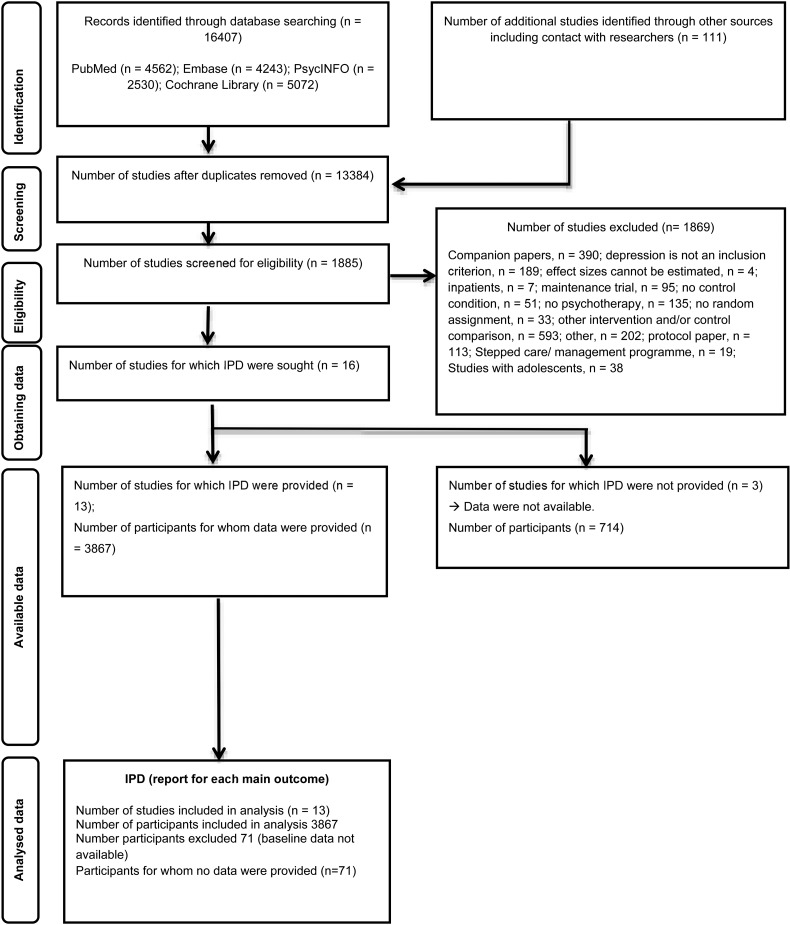
Background: Little is known about potential harmful effects as a consequence of self-guided internet-based cognitive behaviour therapy (iCBT), such as symptom deterioration rates. Thus, safety concerns remain and hamper the implementation of self-guided iCBT into clinical practice. We aimed to conduct an individual participant data (IPD) meta-analysis to determine the prevalence of clinically significant deterioration (symptom worsening) in adults with depressive symptoms who received self-guided iCBT compared with control conditions. Several socio-demographic, clinical and study-level variables were tested as potential moderators of deterioration. Methods: Randomised controlled trials that reported results of self-guided iCBT compared with control conditions in adults with symptoms of depression were selected. Mixed effects models with participants nested within studies were used to examine possible clinically significant deterioration rates. Results: Thirteen out of 16 eligible trials were included in the present IPD meta-analysis. Of the 3805 participants analysed, 7.2% showed clinically significant deterioration (5.8% and 9.1% of participants in the intervention and control groups, respectively). Participants in self-guided iCBT were less likely to deteriorate (OR 0.62, p < 0.001) compared with control conditions. None of the examined participant- and study-level moderators were significantly associated with deterioration rates. Conclusions: Self-guided iCBT has a lower rate of negative outcomes on symptoms than control conditions and could be a first step treatment approach for adult depression as well as an alternative to watchful waiting in general practice.
Overview
The claims and statistics of this paper haven’t been checked yet.
Free: it reads the open-access text and checks the first 5 claims that cite a source we can check. Create a free account to check every claim.
Integrity signals
Registry
Cites
Statistics
Figures
Verification
Claims the paper makes
The claims and statistics of this paper haven’t been checked yet.
Free: it reads the open-access text and checks the first 5 claims that cite a source we can check. Create a free account to check every claim.
Claims other papers make about this one
Each is checked against this paper’s own text: does it say what the citing paper says it does?
The source backs part of the claim, not all of it — or backs it for a different population, condition or comparison.
In the citing paper
“The results obtained so far are consistent and promising, showing that Internet-based interventions are effective in treating depression.”
From Protocol for a randomized controlled dismantling study of an internet-based intervention for depressive symptoms: Exploring the contribution of behavioral activation and positive psychotherapy strategies (2019) · cites this paper as [47]
Experimental — accuracy not yet measuredThe cited source says what the claim attributes to it.
In the citing paper
“No examined moderators were significantly associ ated with the deterioration rate.”
From Internet-delivered psychological treatments: from innovation to implementation (2019) · cites this paper as [80]
The cited source says what the claim attributes to it.
In the citing paper
“Another patientlevel metaanalysis focused on selfguided Internet treatments for depression 80 , and found that, of the 3,805 participants analyzed, 5.8% in the treatment groups and 9.1% in the control groups had deteriorated (odds ratio=0.62,p<0.001).”
From Internet-delivered psychological treatments: from innovation to implementation (2019) · cites this paper as [80]
Self-check
Percentages, sums and reported differences re-computed from the paper’s own numbers.
The self-check needs the paper’s full text.
Citations
Cites
Bias in meta-analysis detected by a simple, graphical test
Egger, M., Smith, G. D., Schneider, M., & Minder, C. (1997) · BMJ · doi:10.1136/bmj.315.7109.629 · Cited by 56,722 · cited 1×
“Publication bias was examined by visually inspecting funnel plots and by using the Duval and Tweedie’s trim and fill method, which yields an estimate of the effect size after adjusting for publication bias (Egger et al. 1997; Duval & Tweedie, 2000).”
MethodThe CES-D Scale: A Self-Report Depression Scale for Research in the General Population
Radloff, L. S. (1977) · Applied Psychological Measurement · doi:10.1177/014662167700100306 · Cited by 53,267
The PHQ-9: Validity of a brief depression severity measure
Kroenke, K., Spitzer, R. L., & Williams, J. B. W. (2001) · Journal of General Internal Medicine · doi:10.1046/j.1525-1497.2001.016009606.x · Cited by 44,910 · cited 2×
“…studies used either the Beck Depression Inventory [BDI-I (Beck et al. 1961) or BDI-II (Beck et al. 1996)], the Centre for Epidemiological Studies Depression Scale [CES-D (Radloff, 1977)] or the Patient Health Questionnaire [PHQ-9 (Kroenke et al. 2001)] as outcome measures of depression severity.”
MethodAn inventory for measuring depression
BECK, A. T. (1961) · Archives of General Psychiatry · doi:10.1001/archpsyc.1961.01710120031004 · Cited by 38,032 · cited 1×
“The included studies used either the Beck Depression Inventory [BDI-I (Beck et al. 1961) or BDI-II (Beck et al. 1996)], the Centre for Epidemiological Studies Depression Scale [CES-D (Radloff, 1977)] or the Patient Health Questionnaire [PHQ-9 (Kroenke et al. 2001)] as outcome measures of depression…”
MethodStatistical Power Analysis for the Behavioral Sciences (2nd ed.).
Lachenbruch, P. A., & Cohen, J. (1989) · Journal of the American Statistical Association · doi:10.2307/2290095 · Cited by 37,395
Multiple Imputation for Nonresponse in Surveys
Rubin, D. B. (1987) · Wiley Series in Probability and Statistics · doi:10.1002/9780470316696 · Cited by 20,701
Duval, S., & Tweedie, R. (2000) · Biometrics · doi:10.1111/j.0006-341x.2000.00455.x · Cited by 14,099 · cited 1×
“Publication bias was examined by visually inspecting funnel plots and by using the Duval and Tweedie’s trim and fill method, which yields an estimate of the effect size after adjusting for publication bias (Egger et al. 1997; Duval & Tweedie, 2000).”
MethodJacobson, N. S., & Truax, P. (1991) · Journal of Consulting and Clinical Psychology · doi:10.1037/0022-006x.59.1.12 · Cited by 7,770 · cited 2×
“We classified ‘clinically significant deterioration’ according to each participant’s reliable change index (RCI) (Jacobson & Truax, 1991), which is the most commonly used method for calculating clinically significant negative effects.”
BackgroundMethodInfluentialBeck, A. T., Steer, R. A., & Brown, G. (2011) · PsycTESTS Dataset · doi:10.1037/t00742-000 · Cited by 7,535
Scoville, W. B. (1949) · Journal of neurosurgery · doi:10.3171/jns.1949.6.1.0065 · Cited by 7,381
Research works printed but not linked: 1
- Higgins J and Green S (2011) Handbook for Systematic Reviews of Interventions. version 5.1. 0 [updated March 2011]. Chichester, UK: John Wiley & Sons, Ltd.
Cited by
Internet-delivered psychological treatments: from innovation to implementation
Andersson, G., Titov, N., Dear, B. F., Rozental, A., & Carlbring, P. (2019) · World Psychiatry · doi:10.1002/wps.20610 · Cited by 750
Self-citationDigital interventions for the treatment of depression: a meta-analytic review
Moshe, I., Terhorst, Y., Philippi, P., Domhardt, M., Cuijpers, P., Cristea, I., Pulkki-Råback, L., Baumeister, H., & Sander, L. B. (2021) · Psychological Bulletin · doi:10.1037/bul0000334 · Cited by 390
Self-citationPhilippe, T. J., Sikder, N., Jackson, A., Koblanski, M. E., Liow, E., Pilarinos, A., & Vasarhelyi, K. (2022) · JMIR Mental Health · doi:10.2196/35159 · Cited by 436
Virtual reality exposure therapy for social anxiety disorder: A randomized controlled trial.
Anderson, P. L., Price, M., Edwards, S. M., Obasaju, M. A., Schmertz, S. K., Zimand, E., & Calamaras, M. R. (2013) · Journal of Consulting and Clinical Psychology · doi:10.1037/a0033559 · Cited by 371
Targets and Outcomes of Psychotherapies for Mental Disorders: An Overview
Cuijpers, P. (2019) · World Psychiatry · doi:10.1002/wps.20661 · Cited by 206
Psychological treatment of depression: A systematic overview of a 'Meta-Analytic Research Domain'
Cuijpers, P., Miguel, C., Harrer, M., Plessen, C. Y., Ciharova, M., Papola, D., Ebert, D., & Karyotaki, E. (2023) · Journal of Affective Disorders · doi:10.1016/j.jad.2023.05.011 · Cited by 136
Self-citationTaylor, C. B., Graham, A. K., Flatt, R. E., Waldherr, K., & Fitzsimmons-Craft, E. E. (2021) · European Journal of Public Health · doi:10.1093/eurpub/ckz208 · Cited by 114
Domhardt, M., Steubl, L., & Baumeister, H. (2020) · Zeitschrift für Kinder- und Jugendpsychiatrie und Psychotherapie · doi:10.1024/1422-4917/a000625 · Cited by 101
“Third, despite the overall importance of information on possible adverse events of IMIs, the evidence base for children and adolescents lags behind the fi eld in adults, where comprehensive knowledge on the safety of these interventions already exists (Ebert et al., 2016; Karyotaki et al., 2018).”
Domhardt, M., Steubl, L., Boettcher, J., Buntrock, C., Karyotaki, E., Ebert, D. D., Cuijpers, P., & Baumeister, H. (2021) · Clinical Psychology Review · doi:10.1016/j.cpr.2020.101953 · Cited by 106
Self-citationKaiser, J., Hanschmidt, F., & Kersting, A. (2021) · Computers in Human Behavior · doi:10.1016/j.chb.2020.106512 · Cited by 106
O’Connor, E., Perdue, L. A., Coppola, E. L., Henninger, M. L., Thomas, R. G., & Gaynes, B. N. (2023) · JAMA · doi:10.1001/jama.2023.7787 · Cited by 128
Topooco, N., Byléhn, S., Dahlström Nysäter, E., Holmlund, J., Lindegaard, J., Johansson, S., Åberg, L., Bergman Nordgren, L., Zetterqvist, M., & Andersson, G. (2019) · Journal of Medical Internet Research · doi:10.2196/13393 · Cited by 90
“8% of adult study participants experiencing significant deterioration following self-guided programs [91]; no review has investigated youth.”
BackgroundSelf-citationLöbner, M., Pabst, A., Stein, J., Dorow, M., Matschinger, H., Luppa, M., Maroß, A., Kersting, A., König, H.-H., & Riedel-Heller, S. G. (2018) · Journal of Affective Disorders · doi:10.1016/j.jad.2018.06.008 · Cited by 72
Deterioration rates in Virtual Reality Therapy: An individual patient data level meta-analysis
Fernández-Álvarez, J., Rozental, A., Carlbring, P., Colombo, D., Riva, G., Anderson, P. L., Baños, R. M., Benbow, A. A., Bouchard, S., Bretón-López, J. M., et al. (2019) · Journal of Anxiety Disorders · doi:10.1016/j.janxdis.2018.06.005 · Cited by 79
Self-citationDomhardt, M., Letsch, J., Kybelka, J., Koenigbauer, J., Doebler, P., & Baumeister, H. (2020) · Journal of Affective Disorders · doi:10.1016/j.jad.2020.06.059 · Cited by 75
Rozental, A., Andersson, G., & Carlbring, P. (2019) · Frontiers in Psychology · doi:10.3389/fpsyg.2019.00589 · Cited by 74
“In comparison to a wait-list control, the odds ratio for deterioration in treatment is nevertheless lower, suggesting that the benefits of receiving help still outweigh the risks (Karyotaki et al., 2018).”
Guerra, O., & Eboreime, E. (2021) · Behavioral Sciences · doi:10.3390/bs11090119 · Cited by 105
Does gender role explain a high risk of depression? A meta-analytic review of 40 years of evidence
Lin, J., Zou, L., Lin, W., Becker, B., Yeung, A., Cuijpers, P. J., & Li, H. (2021) · Journal of Affective Disorders · doi:10.1016/j.jad.2021.07.018 · Cited by 97
Self-citationBrog, N. A., Hegy, J. K., Berger, T., & Znoj, H. (2022) · Internet Interventions · doi:10.1016/j.invent.2021.100492 · Cited by 63
“This result contradicts meta-analyses that showed that deterioration rates are lower in internet-based self-help interventions compared to control groups (Ebert et al., 2016; Karyotaki et al., 2018).”
Self-citationKählke, F., Buntrock, C., Smit, F., & Ebert, D. D. (2022) · npj Digital Medicine · doi:10.1038/s41746-022-00702-w · Cited by 61
Cuijpers, P., Ciharova, M., Quero, S., Miguel, C., Driessen, E., Harrer, M., Purgato, M., Ebert, D., & Karyotaki, E. (2022) · Journal of Personalized Medicine · doi:10.3390/jpm12010093 · Cited by 55
Self-citationBaumeister, H., Paganini, S., Sander, L. B., Lin, J., Schlicker, S., Terhorst, Y., Moshagen, M., Bengel, J., Lehr, D., & Ebert, D. D. (2021) · Psychotherapy and Psychosomatics · doi:10.1159/000511881 · Cited by 55
Mendes-Santos, C., Nunes, F., Weiderpass, E., Santana, R., & Andersson, G. (2021) · doi:10.2196/preprints.32558 · Cited by 52
“A previous meta-analysis showed that digital mental health interventions could be efficacious for individuals presenting with severe symptoms and suicidal ideation, and there is little evidence that these groups present an increased risk of adverse events [53,54].”
BackgroundSelf-citationTurner, D. T., Reijnders, M., van der Gaag, M., Karyotaki, E., Valmaggia, L., Moritz, S., Lecomte, T., Turkington, D., Penadés, R., Elkis, H., et al. (2020) · Frontiers in Psychiatry · doi:10.3389/fpsyt.2020.00402 · Cited by 59
“We also note the inclusion of two RCTs of group-based CBTp (31, 40) and one RCT that combined group and individual approaches (21).”
BackgroundSelf-citationPote, H. L., Rees, A., Holloway-Biddle, C., & Griffith, E. (2021) · Digital Health · doi:10.1177/2055207620985396 · Cited by 56
“The maintenance of treatment gains over time is also uncertain, with some reviews showing comparable deterioration rates between self-guided CCBT, guided interventions and face-to-face treatments.(8) Hollis et al.”
ResultOnline psychotherapy: trailblazing digital healthcare
McDonald, A., Eccles, J. A., Fallahkhair, S., & Critchley, H. D. (2020) · BJPsych Bulletin · doi:10.1192/bjb.2019.66 · Cited by 45
Systematic review and meta-analysis of adverse events in clinical trials of mental health apps
Linardon, J., Fuller-Tyszkiewicz, M., Firth, J., Goldberg, S. B., Anderson, C., McClure, Z., & Torous, J. (2024) · npj Digital Medicine · doi:10.1038/s41746-024-01388-y · Cited by 44
Klein, J. P., Rozental, A., Sürig, S., & Moritz, S. (2024) · Psychotherapy and Psychosomatics · doi:10.1159/000540212 · Cited by 50
“…value in studies of psychological interventions Assessments based on the primary outcome measure (cid:129) Rates of non-response or deterioration [57] (cid:129) Might be a reverse proxy of effectiveness [40] (cid:129) Fail to cover emergence of new symptoms (e.g., resurfacing of unpleasant…”
Self-citationKlein, J. P., Knaevelsrud, C., Bohus, M., Ebert, D. D., Gerlinger, G., Günther, K., Jacobi, C., Löbner, M., Riedel-Heller, S. G., Sander, J., et al. (2018) · Der Nervenarzt · doi:10.1007/s00115-018-0591-4 · Cited by 47
Self-citationLin, A., & Espay, A. J. (2021) · Epilepsy & Behavior Reports · doi:10.1016/j.ebr.2021.100469 · Cited by 36
“In general, iCBT seems to be safe [26].”
BackgroundKemmeren, L. L., van Schaik, A., Smit, J. H., Ruwaard, J., Rocha, A., Henriques, M., Ebert, D. D., Titzler, I., Hazo, J.-B., Dorsey, M., et al. (2019) · JMIR Mental Health · doi:10.2196/12707 · Cited by 36
“In controlled research settings, Web-based interventions have proven to be efficacious in the treatment of depression when compared with nonintervening [4,5], even for patients with more severe symptoms [6,7].”
BackgroundSelf-citationMamukashvili-Delau, M., Koburger, N., Dietrich, S., & Rummel‐Kluge, C. (2022) · BMC Psychiatry · doi:10.1186/s12888-022-04325-z · Cited by 46
Broglia, E., Millings, A., & Barkham, M. (2019) · JMIR mHealth and uHealth · doi:10.2196/14318 · Cited by 33
“These findings are consistent with a meta-analysis of 16 clinical trials comparing internet-based cognitive behavioral therapy (iCBT) versus waitlist control groups, demonstrating less worsening of symptoms for intervention groups [20].”
ResultJensen, K. H. K., Krog, M. C., Koert, E., Hedegaard, S., Chonovitsch, M., Schmidt, L., Kolte, A. M., & Nielsen, H. S. (2021) · Reproductive BioMedicine Online · doi:10.1016/j.rbmo.2021.04.018 · Cited by 38
Duffy, D. J., Richards, D., Hisler, G. C., & Timulák, L. (2025) · Journal of Medical Internet Research · doi:10.2196/47927 · Cited by 43
“Both positive and negative associations have been observed for marital status, employment status [39,67,71], and education level [67] with adherence.”
Kerber, A., Beintner, I., Burchert, S., & Knaevelsrud, C. (2023) · JMIR Mental Health · doi:10.2196/45068 · Cited by 39
“Given the fact that more than half of the participants reported moderate or moderately severe symptoms of depression at baseline, this is an expected finding and corresponds with the prevalence of suicidal ideation in adults with major depression [85,86].”
ResultZainal, N. H., Soh, C. P., Doren, N. V., & Benjet, C. L. (2024) · Clinical Psychology Review · doi:10.1016/j.cpr.2024.102518 · Cited by 43
Negative effects in internet-based interventions for depression: a qualitative content analysis
Fenski, F., Rozental, A., Heinrich, M., Knaevelsrud, C., Zagorscak, P., & Boettcher, J. (2021) · Internet Interventions · doi:10.1016/j.invent.2021.100469 · Cited by 28
Karyotaki, E., Klein, A. M., Riper, H., Wit, L. D., Krijnen, L., Bol, E., Bolinski, F., Burger, S., Ebert, D. D., Auerbach, R. P., et al. (2019) · BMJ Open · doi:10.1136/bmjopen-2018-028739 · Cited by 28
Self-citationDülsen, P., & Baumeister, H. (2024) · European Child & Adolescent Psychiatry · doi:10.1007/s00787-024-02404-y · Cited by 37
Cuijpers, P. J., Harrer, M., & Furukawa, T. A. (2026) · World Psychiatry · doi:10.1002/wps.70002 · Cited by 37
Self-citationOnline mental health communities, self-efficacy and transition to further support
Prescott, J., Rathbone, A. L., & Hanley, T. (2020) · Mental Health Review Journal · doi:10.1108/mhrj-12-2019-0048 · Cited by 43
Contextualizing the negative effects of psychotherapy
Rosendahl, J., Klatte, R., Frenzl, D., Castonguay, L. G., Vybíral, Z., & Strauss, B. M. (2025) · Nature Reviews Psychology · doi:10.1038/s44159-025-00472-8 · Cited by 35
“Clinically relevant deterioration rates of Internet-based psychotherapy across different mental health disorders ranged from 3.6% 116 to 5.8% 117,118”
InfluentialBücker, L., Schnakenberg, P., Karyotaki, E., Moritz, S., & Westermann, S. (2019) · Journal of Medical Internet Research · doi:10.2196/14240 · Cited by 27
“Interestingly, within another study by Karyotaki et al [73], it was found that individuals with more severe baseline symptoms were more likely to improve than individuals with less severe baseline symptoms after treatment with guided internet-based interventions, which means that the findings are…”
Self-citationde Valle, M. K., & Wade, T. D. (2022) · International Journal of Eating Disorders · doi:10.1002/eat.23756 · Cited by 40
Kahlon, S., Lindner, P., & Nordgreen, T. (2023) · Frontiers in Virtual Reality · doi:10.3389/frvir.2023.1240778 · Cited by 40
Bress, J. N., Falk, A. E., Schier, M. M., Jaywant, A., Moroney, E., Dargis, M. A., Bennett, S. M., Scult, M. A., Volpp, K. G. M., Asch, D. A., et al. (2024) · JAMA Network Open · doi:10.1001/jamanetworkopen.2024.28372 · Cited by 40
Wootton, B. M., Karin, E., Dear, B. F., Staples, L., Nielssen, O. B., Kayrouz, R., & Titov, N. (2021) · Journal of Anxiety Disorders · doi:10.1016/j.janxdis.2021.102444 · Cited by 28
Kemmeren, L. L., van Schaik, A., Draisma, S., Kleiboer, A., Riper, H., & Smit, J. H. (2023) · Cognitive Therapy and Research · doi:10.1007/s10608-023-10363-y · Cited by 22
“Within the domain of online interventions, it has for example been found that self-help as well as guided iCBT groups had lower risk of reliable deterioration than waiting list controls (Ebert et al., 2016; Karyotaki et al., 2018; Rozental, Magnusson, Boettcher, Andersson, & Carlbring, 2017).”
BackgroundSelf-citationEvidence on Technology-Based Psychological Interventions in Diagnosed Depression: Systematic Review
Köhnen, M., Dreier, M., Seeralan, T., Kriston, L., Härter, M., Baumeister, H., & Liebherz, S. (2021) · JMIR Mental Health · doi:10.2196/21700 · Cited by 23
“Although there are 2 meta-analyses assessing the safety of TBIs, both studies focused only on depressive symptom deterioration in guided [22] and self-administered [23] internet-based therapy.”
Storebø, O. J., Ribeiro, J. P., Kongerslev, M., Stoffers‐Winterling, J., Jørgensen, M. S., Lieb, K., BATEMAN, A. W., Kirubakaran, R., Dérian, N., Karyotaki, E., et al. (2021) · BMJ Open · doi:10.1136/bmjopen-2020-047416 · Cited by 23
Self-citationSextl-Plötz, T., Steinhoff, M., Baumeister, H., Cuijpers, P. J., Ebert, D. D., & Zarski, A. (2024) · Internet Interventions · doi:10.1016/j.invent.2024.100760 · Cited by 26
“…2004, 2017), not all patients treated with IMIs benefit to the same extent, with some benefitting to a great extent and others not responding to treatment or even experiencing symptom deterioration (Cuijpers et al., 2021; Ebert et al., 2016; Karyotaki et al., 2018b; Rozental et al., 2019).”
Self-citationWang, S., Gao, L., Wang, C., Bai, J., Shen, M., Zhao, X., & Lin, M. F. (2025) · Frontiers in Psychiatry · doi:10.3389/fpsyt.2024.1433558 · Cited by 22
Digital interventions in adult mental healthcare settings: recent evidence and future directions
Dülsen, P., Bendig, E., Küchler, A., Christensen, H. M., & Baumeister, H. (2020) · Current Opinion in Psychiatry · doi:10.1097/yco.0000000000000614 · Cited by 20
Self-citationKeller, F. M., Dahmen, A., Derksen, C., Kötting, L., & Lippke, S. (2021) · International Journal of Environmental Research and Public Health · doi:10.3390/ijerph18178936 · Cited by 20
Palacios, J. E., Enrique, Á., Mooney, O., Farrell, S., Earley, C., Duffy, D. J., Eilert, N., Harty, S., Timulák, L., & Richards, D. (2022) · Clinical Psychology & Psychotherapy · doi:10.1002/cpp.2743 · Cited by 23
“…of iCBT in treating depression and anxiety (e.g., Andrews et al., 2018; Richards et al., 2020; Wright et al., 2019), and its capacity to produce remission rates that are comparable to face-to-face delivered CBT treatments (Andersson et al., 2018; Andrews et al., 2018; Karyotaki et al., 2018).”
BackgroundTur, C., Campos, D., Suso‐Ribera, C., Kazlauskas, E., Castilla, D., Zaragozá, I., García‐Palacios, A., & Quero, S. (2022) · Internet Interventions · doi:10.1016/j.invent.2022.100558 · Cited by 22
Promises and risks of web-based interventions in the treatment of depression
Hegerl, U., & Oehler, C. (2020) · Dialogues in Clinical Neuroscience · doi:10.31887/dcns.2020.22.2/uhegerl · Cited by 17
Guerra, O., Agyapong, V. I. O., & Nkire, N. (2022) · International Journal of Environmental Research and Public Health · doi:10.3390/ijerph19105937 · Cited by 27
Jonsson, U., Linton, S. J., Ybrandt, H., Ringborg, A., Leander, L., Moberg, K., Hultcrantz, M., & Arnberg, F. K. (2022) · Journal of Affective Disorders · doi:10.1016/j.jad.2022.11.036 · Cited by 20
“For instance, recent individual participant data meta-analyses indicate that participants in both guided and self-guided iCBT are less likely to deteriorate than waitlist controls (Ebert et al., 2016; Karyotaki et al., 2018; Rozental et al., 2017).”
ResultOehler, C., Görges, F., Böttger, D., Hug, J., Koburger, N., Kohls, E., & Rummel‐Kluge, C. (2019) · BMC Psychiatry · doi:10.1186/s12888-019-2063-1 · Cited by 17
“tom deterioration in RCTs on internet-interventions is comparable to psychotherapy studies [19], and occur less often in the intervention group compared to the control conditions [20], other possible undesired effects such as”
ResultLiem, A., Garabiles, M. R., Pakingan, K. A., Chen, W. L., Lam, A. I. F., Burchert, S., & Hall, B. J. (2020) · Implementation Science Communications · doi:10.1186/s43058-020-00072-y · Cited by 18
“Similar interventions have been found to be safe for treating depression [64, 65].”
BackgroundAvailability of Internet-Based Cognitive-Behavioral Therapies for Depression: A Systematic ReviewPreprint
Buss, J., Steinberg, J. S., Banks, G., Horani, D., Rutter, L. A., Wasil, A. R., Ramírez, I., & Lorenzo‐Luaces, L. (2020) · PsyArXiv (OSF Preprints) · doi:10.1016/j.beth.2023.06.003 · Cited by 21
Betz, L. T., Jacob, G. A., Knitza, J., Köhm, M., & Behrens, F. (2024) · npj Mental Health Research · doi:10.1038/s44184-024-00085-8 · Cited by 22
Reconsidering the ethics of exclusion criteria in research on digital mental health interventions
McCall, H. C., Hadjistavropoulos, H. D., & Loutzenhiser, L. (2019) · Ethics & Behavior · doi:10.1080/10508422.2019.1684295 · Cited by 21
“…suicidal ideation predict more favorable outcomes (Bower et al., 2013; Cientanni et al., 2019; Hadjistavropoulos et al., 2016; Kessler et al., 2009; Rozental et al., 2017; Williams & Andrews, 2013) or do not predict outcomes (Ebert et al., 2016; Karyotaki et al., 2018; Lorenzo-Luaces et al., 2018).”
BackgroundMethodInfluentialBielinski, L. L., & Berger, T. (2020) · Counseling Psychology and Psychotherapy · doi:10.17759/cpp.2020280305 · Cited by 21
Self-citationPeiper, N. C., Nelson, B. W., Aschbacher, K., & Forman‐Hoffman, V. L. (2023) · Social Psychiatry and Psychiatric Epidemiology · doi:10.1007/s00127-022-02402-y · Cited by 13
Batterham, P. J., Gulliver, A., Kurz, E., Farrer, L. M., Vis, C., Schuurmans, J., & Calear, A. L. (2022) · Journal of Medical Internet Research · doi:10.2196/34769 · Cited by 13
“In addition, self-guided interventions that do not require clinician support have been found to be safe and effective in reducing the symptoms of depression and anxiety [15,21,22], particularly for people with mild to moderate symptom severity.”
BackgroundSelf-citationGuillén, V., García‐Palacios, A., Miñana, S. B., Baños, R., Botella, C., & Marco, J. H. (2020) · Journal of Personality Disorders · doi:10.1521/pedi_2020_34_477 · Cited by 20
Self-citationRauen, K., Vetter, S., Eisele, A., Biskup, E. M., Delsignore, A., Rufer, M., & Weidt, S. (2020) · Frontiers in Digital Health · doi:10.3389/fdgth.2020.00004 · Cited by 12
“However, there is evidence that ICBT is superior over control groups and is not only an alternative to watchful waiting (46, 47).”
BackgroundKlein, J. P., Hauer, A., Berger, T., Faßbinder, E., Schweiger, U., & Jacob, G. A. (2018) · Frontiers in Psychiatry · doi:10.3389/fpsyt.2018.00439 · Cited by 11
“This trial has been approved by the research ethics committee of the University of Lübeck[17-346].”
MethodInfluentialSelf-citationBatterham, P. J., Christensen, H. M., Calear, A. L., Werner‐Seidler, A., & Kazan, D. (2020) · Archives of Suicide Research · doi:10.1080/13811118.2020.1848671 · Cited by 10
“Further, this rate of clinically significant deterioration was significantly lower than the rate seen in participants allocated to a control condition at the post-treatment assessment (Ebert et al., 2016; Karyotaki et al., 2018).”
BackgroundResultSelf-citationSleep problems and worrying precede psychotic symptoms during an online intervention for psychosis
Lüdtke, T., Pfuhl, G., Moritz, S., Rüegg, N., Berger, T., & Westermann, S. (2020) · British Journal of Clinical Psychology · doi:10.1111/bjc.12270 · Cited by 14
“However, the unequal gender distribution is not surprising when considering that online interventions for other disorders, such as depression, seem to attract female users particularly (e.g., 67% female participants in Karyotaki et al., 2018).”
BackgroundSelf-citationFarrell, D. P., Fadeeva, A., Zat, Z., Knibbs, L., Miller, P. W., Barron, I. G., Mattheß, H., Mattheß, C., Gazit, N., & Kiernan, M. D. (2022) · Frontiers in Psychology · doi:10.3389/fpsyg.2022.901855 · Cited by 22
“…et al., 2003; Ruskin et al., 2004; Christopher Frueh et al., 2007; Germain et al., 2010; Osenbach et al., 2013; Rousmaniere et al., 2014; Berryhill et al., 2018, 2019; Karyotaki et al., 2018a,b; Tuerk et al., 2018; Turgoose et al., 2018; Watts et al., 2020; Weinberg, 2020a; Wind et al., 2020b).”
BackgroundMeyerhoff, J., Kruzan, K. P., Kim, K. A., Orden, K. A. V., & Mohr, D. C. (2022) · Archives of Suicide Research · doi:10.1080/13811118.2022.2096520 · Cited by 10
“Across all participants, the rate of net increases in suicidal ideation severity [5.3% (16/301) was in line with previous literature on symptom deterioration in internet-based and face-to face-treatments (Batterham et al., 2020; Ebert et al., 2016; Karyotaki et al., 2018).”
BackgroundResultInfluentialBalci, S., Küchler, A., Ebert, D. D., & Baumeister, H. (2024) · BMC Digital Health · doi:10.1186/s44247-024-00074-z · Cited by 12
“The negative effects observed among the intervention group were comparable to other reviews concerning participants receiving internet-based cognitive behavioral therapy (ICBT) [78, 79].”
ResultHadjistavropoulos, H. D., McCall, H. C., Dear, B. F., Beahm, J. D., Carleton, R. N., & Titov, N. (2024) · Journal of Anxiety Disorders · doi:10.1016/j.janxdis.2024.102861 · Cited by 14
Klein, J. P., Barthel, B., Berger, T., & Moritz, S. (2020) · Internet Interventions · doi:10.1016/j.invent.2020.100341 · Cited by 11
Self-citationKeller, F. M., Dahmen, A., Derksen, C., Kötting, L., & Lippke, S. (2021) · JMIR Mental Health · doi:10.2196/30610 · Cited by 12
“The digital group training for depression was based on cognitive behavioral therapy (CBT) and contained evidence-based components of eCBT and internet-delivered CBT interventions, based on the current state of the art [37-39].”
MethodLangergaard, A., Mathiasen, K., Søndergaard, J., Sørensen, S. S., Laursen, S. L., Xylander, A. A. P., Lichtenstein, M. B., & Ehlers, L. H. (2022) · Internet Interventions · doi:10.1016/j.invent.2022.100513 · Cited by 10
“However, it is a low-intensity treatment format that presupposes a high degree of patient engagement (Karyotaki et al., 2018).”
BackgroundMira, A., Díaz-García, A., Castilla, D., Campos, D., Romero, S., Bretón-López, J., García-Palacios, A., Baños, R., & Botella, C. (2019) · BMC Psychiatry · doi:10.1186/s12888-019-2099-2 · Cited by 9
Self-citationTur, C., Campos, D., Herrero, R., Mor, S., López-Montoyo, A., Castilla, D., & Quero, S. (2021) · BMJ Open · doi:10.1136/bmjopen-2020-046477 · Cited by 9
Cumpanasoiu, D. C., Enrique, Á., Palacios, J. E., Duffy, D. J., McNamara, S., & Richards, D. (2023) · JMIR mhealth and uhealth · doi:10.2196/41815 · Cited by 13
“2% (10/194) of participants in the intervention arm deteriorated (ie, increases in PHQ-9 score ≥6 or GAD-7 score ≥4) [42], which is in line with a recent individual patient data meta-analysis [43] that suggested only 5.”
ResultGonzález-Robles, A., Roca, P., Díaz‐García, A., García‐Palacios, A., & Botella, C. (2022) · JMIR Mental Health · doi:10.2196/40268 · Cited by 10
“The literature has shown that iCBT for emotional disorders is accessible [7], easy to disseminate [8], safe [9], and effective in both short- and long-term periods.”
Self-citationResearch on negative effects of psychotherapies: The next steps.
Cuijpers, P. J. (2021) · Clinical Psychology Science and Practice · doi:10.1037/cps0000011 · Cited by 8
Self-citationLoughnan, S. A., Boyle, F. M., Ellwood, D. A., Crocker, S., Lancaster, A., Astell, C., Dean, J., Horey, D., Callander, E. J., Jackson, C. L., et al. (2022) · Trials · doi:10.1186/s13063-022-06363-0 · Cited by 13
“The PGS-SF has been widely used and translated into multiple languages [49].”
BackgroundInfluentialBaumeister, A., Schmotz, S., Weidinger, S., & Moritz, S. (2023) · Behavior Therapy · doi:10.1016/j.beth.2023.05.013 · Cited by 11
Self-citationMurthy, R. S. (2018) · Asian Journal of Psychiatry · doi:10.1016/j.ajp.2018.11.007 · Cited by 9
Ozmen, S., Amarnath, A., Struijs, S. Y., de Wit, L. M., & Cuijpers, P. J. (2023) · JMIR Research Protocols · doi:10.2196/44907 · Cited by 14
“Moreover, individual patient data meta-analyses showed that participants who received an internet-based program for depression had a lower risk of clinical deterioration when compared with the control group [20,42].”
Self-citationCommentary: The Impact of Digital Technology on Psychological Treatments and Their Dissemination
Heeren, A. (2018) · Frontiers in Psychology · doi:10.3389/fpsyg.2018.01571 · Cited by 10
“Although it is unknown whether these patients dropped-out as a result of the intervention or because they get worse and cannot be followed-up (Holmes et al., 2018; Karyotaki et al., 2018), nonadherence constitutes a significant barrier that should imperatively be considered before promoting the global dissemination of…”
BackgroundNævdal, R., Vis, C., & Kenter, R. M. F. (2025) · Internet Interventions · doi:10.1016/j.invent.2025.100881 · Cited by 6
“…indicates that iCBT, particularly when guided by a therapist, can achieve comparable outcomes to face-to-face therapy while requiring fewer clinical resources (Carlbring et al., 2018; Etzel-mueller et al., 2020; Hedman-Lagerl ¨ of et al., 2023; Karyotaki et al., 2018; K ¨ all et al., 2024).”
Buss, J., Lorenzo‐Luaces, L., Banks, G., Horani, D., Rutter, L. A., & Wasil, A. R. (2020) · doi:10.31234/osf.io/2jwgd · Cited by 6
Amarnath, A., Ozmen, S., van Klaveren, C., van Straten, A., Pei, J., de Wit, L., Raabe, R. E., Cuijpers, P., & Struijs, S. Y. (2025) · Internet Interventions · doi:10.1016/j.invent.2025.100878 · Cited by 6
“Depression, anxiety, and quality of life improved from baseline to post-test, but these changes did not differ significantly from the control condition - a pattern similar to findings from a guided iCBT for perfectionism (Shafran et al., 2017).”
InfluentialSelf-citationSchulte, C. E., Sextl-Plötz, T., Baumeister, H., Titzler, I., Sander, L., Sachser, C., Steubl, L., & Zarski, A. (2024) · Internet Interventions · doi:10.1016/j.invent.2024.100710 · Cited by 5
“…adapting the treatment may hold significant importance, because both deterioration and a lack of treatment effects do occur, and can potentially discourage participants from seeking further treatment (Ebert et al., 2016; Karyotaki et al., 2018; Lutz et al., 2015; Rozental et al., 2014, 2017, 2019).”
BackgroundSafety and Efficacy of Modular Digital Psychotherapy for Social Anxiety: Randomized Controlled Trial
Garvert, M. M., McFadyen, J., Linke, S., McCloud, T. L., Meyer, S. S., Sobanska, S., Sharp, P. B., Long, A., Huys, Q. J. M., & Ahmadi, M. (2025) · Journal of Medical Internet Research · doi:10.2196/64138 · Cited by 6
“This finding is also consistent with a recent meta-analysis that found that iCBT is generally safer than control conditions [38].”
Pape, L. M., Antypa, N., Spinhoven, P., van Straten, A., Struijs, S. Y., Struijs, S., Garnefski, N., Kraaij, V., Salemink, E., Hurks, P. P. M., et al. (2025) · Scientific Reports · doi:10.1038/s41598-025-04891-8 · Cited by 7
“Digital CBT-I self-help interventions for insomnia are considered an easily accessible and scalable first-step treatment approach 8 , which is cost-effective compared to care as usual and sleep medication 9,10 .”
Horizon: Resilience – Design of a Serious Game for Ecological Momentary Intervention for Depression
Gómez-Cambronero, Á., Casteleyn, S., & Pastor, A. M. (2021) · Annual Symposium on Computer-Human Interaction in Play · doi:10.1145/3450337.3483500 · Cited by 5
“To alleviate barriers to access, technology-based psychological treatments, such as internet interventions, were developed [16] and shown to be effective [15] for depression.”
MethodAcrophobia and consumer-based automated virtual reality cognitive behavior therapy
Donker, T., & Heinrichs, M. (2023) · Elsevier eBooks · doi:10.1016/b978-0-323-85726-0.00035-1 · Cited by 4
Guertler, D., Krause, K., Möhring, A., Bischof, G., Batra, A., Freyer‐Adam, J., Ulbricht, S., Rumpf, H., Wurm, S., Cuijpers, P. J., et al. (2023) · Journal of Affective Disorders · doi:10.1016/j.jad.2023.06.059 · Cited by 5
Self-citation
Metadata
- Authors
- Karyotaki, E., Kemmeren, L., Riper, H., Twisk, J., Hoogendoorn, A., Kleiboer, A., Mira, A., Mackinnon, A., Meyer, B., Botella, C., Littlewood, E., Andersson, G., Christensen, H., Klein, J. P., Schröder, J., Bretón-López, J., Scheider, J., Griffiths, K., Farrer, L., Huibers, M. J. H., Phillips, R., Gilbody, S., Moritz, S., Berger, T., Pop, V., Spek, V., & Cuijpers, P.
- Affiliations
- Vrije Universiteit Amsterdam (NL)
- Amsterdam Public Health (NL)
- Universitat Jaume I (ES)
- The University of Melbourne (AU)
- City, University of London (GB)
- University of York (GB)
- Linköping University (SE)
- Black Dog Institute (AU)
- University of Lübeck (DE)
- University Medical Center Hamburg-Eppendorf (DE)
- University of Nottingham (GB)
- Australian National University (AU)
- King's College London (GB)
- University of Bern (CH)
- Tilburg University (NL)
- Corresponding author
- Karyotaki, Eirini
- ORCID
- Karyotaki, Eirini
- Kemmeren, Lise
- Riper, Heleen
- Twisk, Jos
- Hoogendoorn, Adriaan
- Kleiboer, Annet
- Mira, Adriana
- Mackinnon, Andrew
- Meyer, Björn
- Botella, Cristina
- Littlewood, Elizabeth
- Andersson, Gerhard
- Christensen, Helen
- Klein, Jan P.
- Schröder, Johanna
- Bretón-López, Juana
- Farrer, Louise
- Huibers, Marcus J. H.
- Phillips, Rachel
- Gilbody, Simon
- Moritz, Steffen
- Berger, Thomas
- Spek, Viola
- Cuijpers, Pim
- Venue
- Psychological Medicine
- Publisher
- Cambridge University Press (CUP)
- Published
- 2018-03-15
- Volume
- 48
- Issue
- 15
- Pages
- 2456-2466
- ISSN
- 0033-2917 (ISSN-L)
- 1469-8978
- PMC
- PMC6190066
- OpenAlex
- W2794073751
- Cited by
- 167
- References
- 61
- Citations by year
- 2026: 10 · 2025: 20 · 2024: 19 · 2023: 23 · 2022: 24 · 2021: 23 · 2020: 21 · 2019: 17 · 2018: 8
- FWCI
- 2.34
- Type
- journal article
- Language
- en
- Open access
- hybrid
- doi.org
- Locations
- Psychological Medicine (publishedVersion, cc-by)
- Europe PMC (PubMed Central) (publishedVersion, cc-by)
- PubMed Central (publishedVersion, cc-by)
- PubMed (publishedVersion)
- Pure Amsterdam UMC (publishedVersion, cc-by)
- VU Research Portal (publishedVersion, other-oa)
- White Rose Research Online (University of Leeds, The University of Sheffield, University of York) (submittedVersion)
- Minerva Access (University of Melbourne) (submittedVersion, cc-by)
- Repositori UJI (Universitat Jaume I) (submittedVersion, other-oa)
- Research portal (Tilburg University) (submittedVersion, other-oa)
- Data Archiving and Networked Services (DANS) (submittedVersion, other-oa)
- KTH Publication Database DiVA (KTH Royal Institute of Technology) (submittedVersion, other-oa)
- BORIS (University Library Bern) (submittedVersion, cc-by)
- LA Referencia (Red Federada de Repositorios Institucionales de Publicaciones Científicas) (submittedVersion, cc-by-sa)
- ANU Open Research (Australian National University) (submittedVersion, cc-by)
- Amsterdam UMC (VU Amsterdam) - Institutional Repository (submittedVersion, other-oa)
- Spiral (Imperial College London) (submittedVersion, other-oa)
- Funders
- European Commission (603098)
- Bundesministerium für Gesundheit
- Servier
- Topics
- Social Sciences › Psychology › Applied Psychology › Digital Mental Health Interventions
- Social Sciences › Psychology › Experimental and Cognitive Psychology › Anxiety, Depression, Psychometrics, Treatment, Cognitive Processes
- Health Sciences › Medicine › Psychiatry and Mental health › Mental Health Treatment and Access
- Keywords
- internet-based cognitive behavioral therapy, self-guided treatment, depression, symptom deterioration, treatment safety, adverse effects, adults, expectant management
- MeSH terms
- Depression, Depressive Disorder, Humans, Cognitive Behavioral Therapy, Outcome Assessment, Health Care, Telemedicine, Internet
About these checks
Registry, retraction, Cites and statistics results are computed, not judged, with one exception: a printed reference that no index lists is read once by a model before it counts as a citation error. Claims are extracted by a model and kept only when their quote appears verbatim in the text; each cited source is then checked, with a model’s help, for whether it says what the claim relies on. Those verdicts can be wrong — read the claim’s quote and the cited source before relying on one.
Statistics and arithmetic are recomputed, not judged.
Confidence bands are shown only for fields calibrated on our annotated test set. None is calibrated yet, so no band is shown.
What counts as a claim ›How we measure confidence ›How we check this ›
Are you an author, or do you see a problem with this page? Request a review
Data sources
Bibliographic data: Semantic Scholar, OpenAlex, Crossref.
Contains information from the Semantic Scholar Academic Graph Datasets, made available under the ODC Attribution License (ODC-BY 1.0).
Semantic Scholar’s data is described in: Kinney, R., et al. (2023). The Semantic Scholar Open Data Platform. arXiv:2301.10140.
