

Mirror neurons: From origin to function
Open accessThe DOI matches its Crossref record; 544 of the 550 references it cites were found in a registry or an index, and 1 are not checked yet; 14 of the 73 sources its claims cite were checked for support.
Abstract
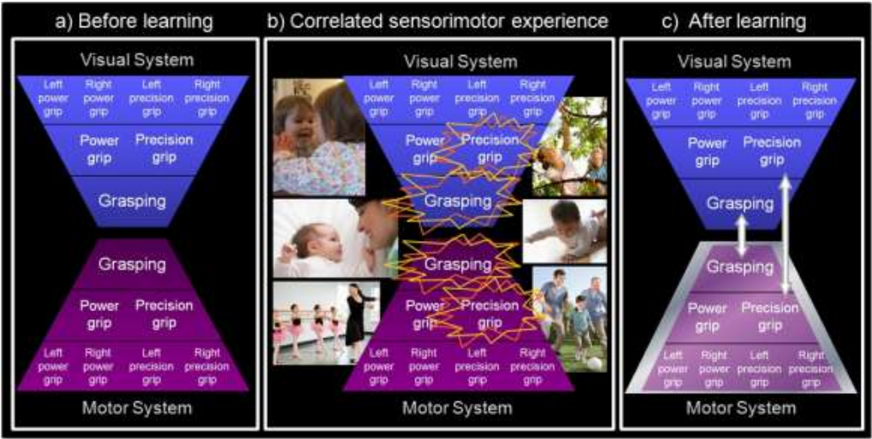
This article argues that mirror neurons originate in sensorimotor associative learning and therefore a new approach is needed to investigate their functions. Mirror neurons were discovered about 20 years ago in the monkey brain, and there is now evidence that they are also present in the human brain. The intriguing feature of many mirror neurons is that they fire not only when the animal is performing an action, such as grasping an object using a power grip, but also when the animal passively observes a similar action performed by another agent. It is widely believed that mirror neurons are a genetic adaptation for action understanding; that they were designed by evolution to fulfill a specific socio-cognitive function. In contrast, we argue that mirror neurons are forged by domain-general processes of associative learning in the course of individual development, and, although they may have psychological functions, they do not necessarily have a specific evolutionary purpose or adaptive function. The evidence supporting this view shows that (1) mirror neurons do not consistently encode action "goals"; (2) the contingency- and context-sensitive nature of associative learning explains the full range of mirror neuron properties; (3) human infants receive enough sensorimotor experience to support associative learning of mirror neurons ("wealth of the stimulus"); and (4) mirror neurons can be changed in radical ways by sensorimotor training. The associative account implies that reliable information about the function of mirror neurons can be obtained only by research based on developmental history, system-level theory, and careful experimentation.
Verified 2026-11-25 · 1 reference not checked yet
Overview
CoChat Summary
TL;DR
The paper argues that mirror neurons are forged by domain-general sensorimotor associative learning rather than being a genetic adaptation for action understanding. It reviews evidence that mirror neuron properties are contingency- and context-sensitive, that infants receive sufficient sensorimotor experience, and that mirror responses can be changed radically by training.
Key findings
- Mirror neurons do not consistently encode action “goals”: 73% of mirror-neuron responses modulated by observation of object-directed grasping also showed similar modulation for pantomimed grasping; many MNs show left/right-hand sensitivity (37.5%), direction sensitivity (64%), peripersonal/extrapersonal selectivity (53%), and view dependence (74%).
- Associative learning’s contingency sensitivity and contextual modulation can explain the full range of reported MN field properties, including strictly congruent, broadly congruent, logically-related, tool-use, and audiovisual MNs.
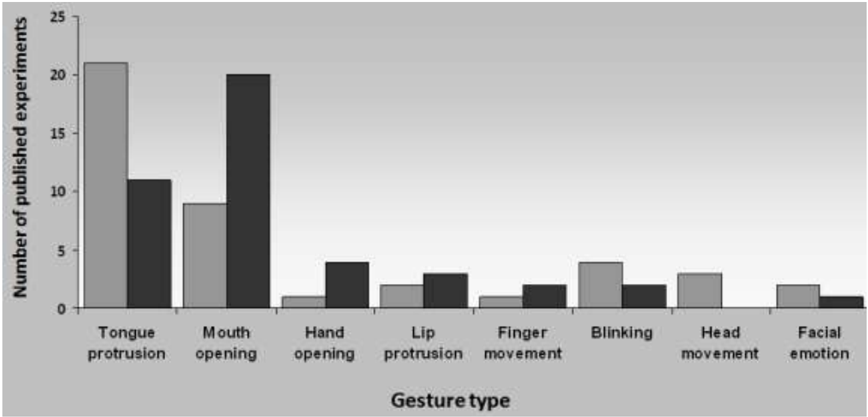
- Human infants receive a “wealth of the stimulus”: in face-to-face caregiver interaction they are imitated on average once per minute, and when contingency is high infants can learn action-effect associations in just a few trials.
- Brief sensorimotor training changes mirror mechanisms: approximately 50 minutes of pincer-hand training made automatic imitation for a robotic pincer as strong as for a human hand, and approximately 90 minutes of counter-mirror training reversed MEP mirror responses.
Methods
- Theoretical review/target article; no new empirical data or sample. It synthesizes monkey single-unit recording, human fMRI, TMS/MEP, automatic imitation, infant imitation/EEG, and adult sensorimotor-training studies.
- Main analysis is conceptual: it compares the genetic account and associative account, evaluates four kinds of evidence—goal coding, learning mechanisms, infant development, and adult sensorimotor plasticity—and discusses canalization/exaptation alternatives and methodological implications.
Limitations
- Stated: there is no consensus on what “action understanding” means or how it differs from action perception/recognition, making functional claims hard to test; human MN activity cannot be localized precisely, and many studies assume ventral PMC/IPL activity is MN activity even though fewer than 20% of neurons in classical mirror areas may be MNs.
- Stated: no studies systematically test effects of sensorimotor learning on MN responses in monkeys; the paper calls for research based on developmental history, system-level theory, and careful experimentation.
- Evident from the text: as a theoretical review, it does not provide new primary data, and much human evidence relies on indirect measures (fMRI, MEPs, automatic imitation) rather than single-unit recording.
Model-written summary. Check it against the paper before relying on it.
Integrity signals
Registry
Cites
Statistics
Figures
Verification
Claims the paper makes
11 Valid · 9 Not valid · 29 Not checked · 106 Own results and interpretations
Every source the paper cites for this claim was checked and supports it.
In the paper
“Only one study purports to offer direct evidence - from single cell recording - of MNs in the human brain (Mukamel et al., 2010).”
What the sources say
- Supportedcites Mukamel et al., 2010 matched to “Single-Neuron Responses in Humans during Execution and Observation of Actions” (2010) source
The Summary reports extracellular recordings from 1,177 cells in human patients and neurons that responded during both action observation and execution. The Discussion says the findings demonstrate mirror mechanisms in humans at the single-neuron level. The citation identifies Mukamel et al. as the study offering that direct evidence; the paper does not itself establish the citing authors’ broader 'only one study' framing. (LLM, conf=0.91)
hedged- Asserted: passes — The authors put it forward as true.
- Checkable: passes — It can be checked against evidence.
- Load-bearing: unclear — It is unclear whether the paper’s conclusions depend on it.
- Based: passes — The paper gives a reason why it holds.
- Supported
The cited sources support only part of this claim — read each source’s verdict below.
In the paper
“Even when action stimuli are presented, intention understanding does not necessarily recruit mirror areas”
What the sources say
- Supportedcites Brass, Schmitt, Spengler, & Gergely, 2007 matched to “Investigating Action Understanding: Inferential Processes versus Action Simulation” (2007) source
The Results (p. ~2, ROI analysis) report that with action stimuli presented, no differential activation was found in the mirror system (inferior frontal or inferior parietal cortex) even at an uncorrected p < .001, while intention/goal discrimination activated the STS, pSTS and aFMC; the Discussion states 'no differential activation was found in the mirror network as a function of context-based plausibility.' The Discussion further limits the mirror network's role to familiar actions in stereotypic contexts, i.e. mirror recruitment is not required for understanding the intention ('why') of an observed action — matching the hedged 'does not necessarily'. The paper's own caveat ('do not exclude the possibility that the mirror network is involved') is consistent with, not contrary to, a 'not necessarily' claim. (LLM, conf=0.85)
- Partly supportedcites de Lange, Spronk, Willems, Toni, & Bekkering, 2008 matched to “Complementary Systems for Understanding Action Intentions” (2008) sourceExperimental — accuracy not yet measured
The Results and Discussion (page not specified in our copy) show that reflecting on observed actions’ intentions engages mentalizing regions outside the mirror-neuron system. But the paper also reports that the inferior frontal gyrus, a mirror-system area, encodes observed actions’ intentionality automatically. It does not establish that intention understanding occurs without recruiting mirror areas. (LLM, conf=0.84)
plain- Asserted: passes — The authors put it forward as true.
- Checkable: passes — It can be checked against evidence.
- Load-bearing: passes — The paper’s conclusions depend on it.
- Based: passes — The paper gives a reason why it holds.
- Supported
Every source the paper cites for this claim was checked and supports it.
In the paper
“with rare exceptions (Mukamel et al., 2010), MN activity cannot be localized precisely within the human brain.”
What the sources say
- Supportedcites Mukamel et al., 2010 matched to “Single-Neuron Responses in Humans during Execution and Observation of Actions” (2010) source
The citation identifies Mukamel et al. as a rare exception, rather than attributing the general localization limit to them. The Results describe single-neuron recordings in named human brain regions and refer to the anatomical locations of the electrodes; the Discussion reports mirroring responses at the single-cell level in the medial frontal and temporal cortex. (LLM, conf=0.91)
plain- Asserted: passes — The authors put it forward as true.
- Checkable: passes — It can be checked against evidence.
- Load-bearing: passes — The paper’s conclusions depend on it.
- Based: passes — The paper gives a reason why it holds.
- Supported
The cited sources support only part of this claim — read each source’s verdict below.
In the paper
“there is no evidence that the tendency of infants to look at their own hands evolved to promote the development of MNs or action understanding rather than visuomotor control”
What the sources say
- Partly supportedcites Del Giudice et al., 2009 matched to “Programmed to learn? The ontogeny of mirror neurons” (2009) sourceExperimental — accuracy not yet measured
The Conclusions (page unavailable) say infants’ attention to their own moving hands may have evolved primarily to support visuomotor control, rather than for the adaptive value of a mirror system. But the paper presents this as a tentative evolutionary account compatible with different scenarios; it does not establish the claim’s categorical statement that there is no evidence for the alternative. (LLM, conf=0.82)
plain- Asserted: passes — The authors put it forward as true.
- Checkable: passes — It can be checked against evidence.
- Load-bearing: passes — The paper’s conclusions depend on it.
- Based: passes — The paper gives a reason why it holds.
- Partly supported
The cited sources support only part of this claim — read each source’s verdict below.
In the paper
“It has long been recognized that associative learning depends, not only on contiguity - events occurring close together in time - but also on contingency - the degree to which one event reliably predicts the other.”
What the sources say
- Not checked — no full text of the sourcecites Elsner & Hommel, 2004 matched to “Contiguity and contingency in action-effect learning” (2004) source
- Partly supportedcites Rescorla, 1968 matched to “Probability of shock in the presence and absence of cs in fear conditioning.” (1968) sourceExperimental — accuracy not yet measured
The opening passage defines contingency as the probability of the unconditioned stimulus in the presence versus absence of the conditioned stimulus, and the Discussion reports that pairings alone did not produce conditioning when that probability did not increase. This supports the contrast with contiguity for Pavlovian fear conditioning, but the paper does not establish the claim for associative learning generally. (LLM, conf=0.82)
- Not checked — no full text of the sourcecites Schultz & Dickinson, 2000 matched to “Neuronal Coding of Prediction Errors” (2000) source
boostedstates a cause- Asserted: passes — The authors put it forward as true.
- Checkable: passes — It can be checked against evidence.
- Load-bearing: passes — The paper’s conclusions depend on it.
- Based: passes — The paper gives a reason why it holds.
81 more claims · 5 with their cited sources checked
Create a free account to see all 155 claims and to verify the 6 references still open.
- It may state two separate claims as one. 26
- Probably not a substantial claim. 52
Citations
Cites
Wu, Y. (1999) · Technometrics · doi:10.1080/00401706.1999.10485951 · Cited by 27,221
James, W. (1913) · Henry Holt and Company eBooks · doi:10.1037/11059-000 · Cited by 25,226
Rudin, W. (1973) · Cited by 13,740
A feature-integration theory of attention.
Treisman, A. M., & Gelade, G. (1980) · Cognitive Psychology · doi:10.1016/0010-0285(80)90005-5 · Cited by 12,366
Rescorla, R. A. (1972) · Medical Entomology and Zoology · Cited by 9,661
Chomsky, N. (2014) · The MIT Press eBooks · doi:10.7551/mitpress/9780262527347.001.0001 · Cited by 8,244
Distributed hierarchical processing in the primate cerebral cortex
Felleman, D. J., & Van Essen, D. C. (1991) · Cerebral Cortex · doi:10.1093/cercor/1.1.1 · Cited by 7,783
Rizzolatti, G., & Craighero, L. (2004) · Annual Review of Neuroscience · doi:10.1146/annurev.neuro.27.070203.144230 · Cited by 7,433 · cited 4×
“…“the mirror neuron mechanism is a mechanism of great evolutionary importance through which primates understand actions done by their conspecifics” (Rizzolatti & Craighero, 2004, p.172) and that “in their basic properties, MNs constitute a relatively simple action-perception mechanism that could…”
BackgroundInfluentialCulture and the Evolutionary Process
Griesemer, J. R., Boyd, R., & Richerson, P. J. (1986) · The Condor · doi:10.2307/1367778 · Cited by 7,034
Whatever next? Predictive brains, situated agents, and the future of cognitive science
Clark, A. (2013) · Behavioral and Brain Sciences · doi:10.1017/s0140525x12000477 · Cited by 5,924
Research works printed but not linked: 3
- Press, C., Catmur, C., Cook, R., Widman, H., Heyes, C., & Bird, G. (2012). fMRI adaptation reveals geometric shape 'mirror neurons'. PLoS One, 7 (12), e51934.
- Elman, J. L., Bates, E., Johnson, M. H., Karmiloff-Smith, A., Parisi, D., & Plunkett, K. (1996). Rethinking innateness: Connectionism in a developmental framework: Cambridge, MA: MIT Press.
- Pawlby, S. J. (1977). Imitative interaction. In H. Schaffer (Ed.), Studies in mother-infant interaction (pp. 203-224). New York: Academic Press.
Cited by
Items 301–400 of 618
Neurones miroirs, substrat neuronal de la compréhension de l’action?
Zarka, D., Cebolla, A. M., & Chéron, G. (2021) · L Encéphale · doi:10.1016/j.encep.2021.06.005 · Cited by 10
Aggression: The dark side of mirror neurons sheds light on their functions
Ferrari, P. F., Méndez, C. A., & Coudé, G. (2023) · Current Biology · doi:10.1016/j.cub.2023.03.028 · Cited by 6
Activity of the Mirror Neuron System in People with Depressive Symptomatology
Karimova, E., Smolskaya, D. V., & Naratkina, A. A. (2023) · Neuroscience and Behavioral Physiology · doi:10.1007/s11055-023-01516-3 · Cited by 6
“In addition, these subjects had more dif fi culty distinguishing between faces with positive and neutral emotions [Goodin et al., 2019]. basic social skills when they are as young as a few months old, though they are similar to those underlying our social behavior as adults [Cook et al., 2014].”
Xu, A., van Niekerk, D. R., Gerazov, B., Krug, P. K., Birkholz, P., Prom–on, S., Halliday, L. F., & Xu, Y. (2024) · Journal of Phonetics · doi:10.1016/j.wocn.2024.101338 · Cited by 7
Automatic facial reactions to emotional body expressions are not driven by emotional experience.
Shaham, G., & Aviezer, H. (2022) · Emotion · doi:10.1037/emo0000742 · Cited by 8
Ritual and Religion as Social Technologies of Cooperation
Kavanagh, C. M., Jong, J., & Whitehouse, H. (2020) · Cambridge University Press eBooks · doi:10.1017/9781108695374.016 · Cited by 10
Communicative intentions in autism spectrum disorder
Schütz, M., Ciaramidaro, A., Martinelli, A., Öller, R., Hartmann, D., Hein, G., Iotzov, V., Colle, L., Becchio, C., Walter, H., et al. (2020) · Research in Autism · doi:10.1016/j.rasd.2020.101666 · Cited by 8
Vandervert, L. R., & Moe, K. (2021) · Cerebellum & Ataxias · doi:10.1186/s40673-021-00136-2 · Cited by 7
“and stimulus generalization ([28]; Laland & Bateson”
Imitation and culture: what gives?Preprint
Heyes, C. M. (2021) · doi:10.31234/osf.io/bfcx9 · Cited by 6
Self-citationToward a functional account of the human mirror system
Enticott, P. G. (2015) · Physics of Life Reviews · doi:10.1016/j.plrev.2015.01.018 · Cited by 5
The Spectromorphology of Recorded Popular Music
Zagorski‐Thomas, S. (2018) · doi:10.1093/oso/9780199985227.003.0016 · Cited by 5
Cultural Priming Effects and the Human Brain
Han, S., & Northoff, G. (2020) · Cambridge University Press eBooks · doi:10.1017/9781108695374.011 · Cited by 7
Introduction: Co-constructing Culture, Mind, and Brain
Kirmayer, L. J., Worthman, C. M., & Kitayama, S. (2020) · Cambridge University Press eBooks · doi:10.1017/9781108695374.002 · Cited by 11
Understanding Atypical Social Behaviour Using Social Cognitive Theory: Lessons from Autism
Livingston, L. A., & Happe, F. G. E. (2021) · Oxford University Press eBooks · doi:10.1093/oso/9780198843290.003.0007 · Cited by 8
Cognitive Twists: The Coevolution of Learning and Genes in Human Cognition
Tramacere, A., & Mafessoni, F. (2022) · Review of Philosophy and Psychology · doi:10.1007/s13164-022-00670-w · Cited by 6
“Changes in genes during human phylogeny did not occur for determining the development of cultural learning (Cook et al. 2014; Heyes, 2010, 2018b).”
Towards a Biologically Coherent Account of the Brain and How It Develops
Marshall, P. J. (2024) · Human Development · doi:10.1159/000540024 · Cited by 6
“Although the use of the term “ genetic blueprint ” may be shorthand for a complex array of developmental processes, it still signals a conviction that we must primarily look to DNA to explain robustness in cortical arealization or other reliable developmental outcomes that appear to take place independently of externa…”
InfluentialAutomatic imitation of intransitive actions in macaws
Haldar, E., Subramanya, P., & von Bayern, A. M. P. (2024) · iScience · doi:10.1016/j.isci.2024.111514 · Cited by 4
Insights into Social Perception in Autism
Shah, P., & Sowden, S. (2015) · Journal of Neuroscience · doi:10.1523/jneurosci.1216-15.2015 · Cited by 8
“…number of studies showing— by carefully designing stimuli, implementing appropriate control conditions, and minimizing extraneous cognitive demands—that several aspects of social perception are intact in ASD (e.g., social orienting, facial adaptation; Shah et al., 2013; R. Cook et al., 2014a).”
BackgroundResultEmergence Of Consciousness And Qualia From A Complex Brain
Korf, J. (2014) · Folia Medica · doi:10.1515/folmed-2015-0010 · Cited by 5
The future of social cognition: paradigms, concepts and experiments
Gangopadhyay, N. (2016) · Synthese · doi:10.1007/s11229-016-1162-5 · Cited by 7
“(iii) the ontogeny of MNS—is it innate or a result of learning (Heyes 2010; Cook et al. 2014)?”
BackgroundThe Social Function of the Human Mirror System: A Motor Chauvinist View
Hamilton, A. F. D. C. (2016) · Cambridge University Press eBooks · doi:10.1017/cbo9781107279353.016 · Cited by 7
“The implication of such studies is that the same associative, sensori-motor processes underlie both response to observed actions and responses to other visual cues Detailed discussion of what this means for our understanding of the origins of the MNS can be found elsewhere (Cook et al., 2014).”
BackgroundMirror and (absence of) counter-mirror responses to action sounds measured with TMS
Ticini, L. F., Schütz‐Bosbach, S., & Waszak, F. (2017) · Social Cognitive and Affective Neuroscience · doi:10.1093/scan/nsx106 · Cited by 6
“However, there is no consensus on this, yet (e.g. Cook et al. , 2014; Rizzolatti, 2014; Keysers et al. , 2014).”
BackgroundBurgess, J. D., Major, B. P., McNeel, C., Clark, G. M., Lum, J. A. G., & Enticott, P. G. (2019) · Frontiers in Human Neuroscience · doi:10.3389/fnhum.2019.00215 · Cited by 5
Soriano, M., Koul, A., Becchio, C., & Cavallo, A. (2019) · Neuropsychologia · doi:10.1016/j.neuropsychologia.2019.107205 · Cited by 5
Welsh, T. N., Reid, C., Manson, G. A., Constable, M., & Tremblay, L. (2020) · Acta Psychologica · doi:10.1016/j.actpsy.2020.103028 · Cited by 7
van den Dool, J. (2018) · Landscapes: the arts, aesthetics, and education · doi:10.1007/978-3-319-91599-9_15 · Cited by 7
The Cultural Brain as Historical Artifact
Boddice, R. (2020) · Cambridge University Press eBooks · doi:10.1017/9781108695374.018 · Cited by 9
Brown, R. L. (2021) · Synthese · doi:10.1007/s11229-021-03190-9 · Cited by 5
Buchanan, J. J. (2018) · Experimental Brain Research · doi:10.1007/s00221-018-5428-7 · Cited by 5
What are reaction time indices of automatic imitation measuring?Preprint
Ramsey, R. (2018) · PsyArXiv (OSF Preprints) · doi:10.31234/osf.io/n8xvq · Cited by 6
Infants’ expectations for helping in imitatorsPreprint
Pepe, B., & Powell, L. J. (2023) · doi:10.31219/osf.io/cjnkb · Cited by 5
Automatic imitation is modulated by stimulus clarity but not by animacy
Wilt, H., Wu, Y., Trotter, A. S., & Adank, P. (2024) · Attention Perception & Psychophysics · doi:10.3758/s13414-024-02935-1 · Cited by 7
“Self-other overlap accounts (Brass & Heyes, 2005; Cook et al., 2014; Greenwald, 1970; Heyes, 2005, 2011; Prinz, 1997) explain decreases in automatic imitation in terms of the strength of sensorimotor associations between observed distractor stimuli and the response.”
BackgroundKaur, V. (2024) · Journal of Business Venturing Insights · doi:10.1016/j.jbvi.2024.e00497 · Cited by 7
Kaur, V. (2025) · Entrepreneurship and Regional Development · doi:10.1080/08985626.2025.2476694 · Cited by 4
“The ‘adaptation hypothesis’ suggests that MNs are a genetic adaptation that evolved to help us understand and learn from others (Cook et al. 2014).”
View-Invariant Visuomotor Processing in Computational Mirror Neuron System for Humanoid
Dawood, F., & Loo, C. K. (2016) · PLoS ONE · doi:10.1371/journal.pone.0152003 · Cited by 7
“The associative hypothesis implies that the perceptual-motor coupling properties of mirror mechanism results from an associative learning process [19].”
BackgroundMeunier, H. (2018) · Organizational Research Methods · doi:10.1177/1094428118756741 · Cited by 5
The Reward of Musical Emotions and Expectations
Gold, B. P., & Zatorre, R. J. (2020) · Cambridge University Press eBooks · doi:10.1017/9781108695374.021 · Cited by 6
Thompson, E. L., Long, E. L., Bird, G., & Catmur, C. (2022) · Quarterly Journal of Experimental Psychology · doi:10.1177/17470218221078019 · Cited by 5
“…is as yet no clear consensus on the definition of the term action understanding (Gallese et al., 1996; Kilner, 2011; Rizzolatti & Craighero, 2004; Rizzolatti & Sinigaglia, 2010; Spunt & Adolphs, 2014; Umiltà et al., 2001; see Cook et al., 2014; Hickok, 2009, for further discussion of this issue).”
BackgroundSelf-citationEmotion-aware Human–Robot Interaction and Social Robots
Tian, L., Oviatt, S. L., Muszyński, M., Chamberlain, B. C., Healey, J., & Sano, A. (2022) · ACM eBooks · doi:10.1145/3502398.3502407 · Cited by 6
LINGUISTIC MEANING MEETS LINGUISTIC FORM IN ACTION
de Figueiredo, N. M., & Cuffari, E. C. (2022) · Manuscrito · doi:10.1590/0100-6045.2022.v45n1.ne · Cited by 4
Atypical biological kinematics are represented during observational practice.
Foster, N. C., Bennett, S. J., Causer, J., Bird, G., Andrew, M., & Hayes, S. J. (2018) · Journal of Experimental Psychology Human Perception & Performance · doi:10.1037/xhp0000516 · Cited by 5
Self-citationZum Konzept der Mentalisierung in Theorie und Behandlungstechnik der Psychosen
Montag, C. (2015) · Forum der Psychoanalyse · doi:10.1007/s00451-015-0217-4 · Cited by 6
“Möglicherweise vermitteln Spiegelmechanismen als Resultat, weniger als Basis, eines sozialen Lernprozesses eine Einbettung in die interpersonelle Welt (Cook et al. 2014).”
BackgroundThe Control of Shared Representations and Social Cognition
Bardi, L., & Braß, M. (2016) · Cambridge University Press eBooks · doi:10.1017/cbo9781107279353.009 · Cited by 5
¿Cuál es la relación entre Funciones Ejecutivas y Mentalización?
López‐Silva, P., & Bustos, P. (2017) · Universitas Psychologica · doi:10.11144/javeriana.upsy16-4.crmd · Cited by 8
“…estar libre de críticas, se ha sugerido que la capacidad de mentalización también dependería del desarrollo y funcionamiento de la habilidad de imitar conductas (Cook et al., 2014; Ferrari & Rizzolatti, 2014; Press, Richardson, & Bird, 2010; Rizzolatti & Sinigaglia, 2010; Rizzolatti et al., 1996).”
BackgroundInfluentialGiesen, C. G., & Rothermund, K. (2022) · Psychonomic Bulletin & Review · doi:10.3758/s13423-022-02058-4 · Cited by 7
“In this regard, imitative tendencies represent learnt responses that evolved as a consequence of self-observation and social interaction with other individuals (e.g., as a result of being imitated; Cook et al., 2014; Efferson et al., 2008; Ray & Heyes, 2011).”
BackgroundA task control theory of mirror-touch synesthesia
Heyes, C. M., & Catmur, C. (2015) · Cognitive Neuroscience · doi:10.1080/17588928.2015.1057485 · Cited by 5
Self-citationMurray, M. D. (2021) · SSRN Electronic Journal · doi:10.2139/ssrn.3886182 · Cited by 6
Differences in working memory coding of biological motion attributed to oneself and othersPreprint
Wozniak, M. M., Schmidt, T. T., Wu, Y., et al. (2021) · bioRxiv (Cold Spring Harbor Laboratory) · doi:10.1101/2021.08.16.456121 · Cited by 4
Eye contact modulates facial mimicry in 4-month-old infants: an EMG and fNIRS studyPreprint
de Klerk, C. C. J. M., Hamilton, A. F. D. C., & Southgate, V. (2018) · PsyArXiv (OSF Preprints) · doi:10.31234/osf.io/b8jwy · Cited by 4
Immersive Virtual Reality Serious Game for Facial Expression Training
Martins, J. J., Castelo‐Branco, M., & Simões, M. A. (2024) · IEEE International Conference on Serious Games and Applications for Health (SeGAH) · doi:10.1109/segah61285.2024.10639571 · Cited by 3
“This approach aligns with findings from [3], [4], which highlight the interplay between action and perception in social cognition, suggesting that engaging in facial expression production could indeed facilitate emotional recognition and empathy by reinforcing neural pathways associated with…”
ResultThe basic theory and application of the mirror neuron system in dysphagia after stroke
Wang, L., Li, Y., Liu, R., Li, H., Wang, L., & Zeng, X. (2025) · Behavioural Brain Research · doi:10.1016/j.bbr.2025.115430 · Cited by 4
Joining forces: Motor control meets mirror neurons
Casile, A. (2015) · Physics of Life Reviews · doi:10.1016/j.plrev.2015.01.003 · Cited by 3
Emotions in Interpersonal Life
Parkinson, B. (2014) · Oxford University Press eBooks · doi:10.1093/oxfordhb/9780199942237.013.004 · Cited by 5
Electrophysiological indicators of gesture perception
Cabrera, M. E., Novak, K. D., Foti, D., Voyles, R. M., & Wachs, J. P. (2020) · Experimental Brain Research · doi:10.1007/s00221-020-05724-y · Cited by 4
Being There: Foundations, Theory, Method
Worthman, C. M. (2020) · Cambridge University Press eBooks · doi:10.1017/9781108695374.007 · Cited by 3
Ge, S., He, J., Lin, P., Wang, R., Iramina, K., Leng, Y., Wang, H., Zheng, W., Xiao, C., & Li, Z. (2022) · IEEE Transactions on Biomedical Engineering · doi:10.1109/tbme.2022.3201547 · Cited by 4
“The meta-analysis revealed that studies related to “action observation” reported significant activation in several key regions of mirror neuron networks in which the primary function is related to action observation and understanding [61], including”
BackgroundChimpanzees demonstrate a behavioural signature of human joint action
Constable, M., McEwen, E. S., Knoblich, G., Gibson, C., Addison, A., Nestor, S., & Call, J. (2024) · Cognition · doi:10.1016/j.cognition.2024.105747 · Cited by 3
“Associative learning is commonly raised within the comparative literature (Heyes, 2012), and has also been raised pertaining to human joint action processes (Cook, Bird, Catmur, Press, & Heyes, 2014; Heyes, 2016; Heyes & Catmur, 2022).”
BackgroundTop-Down Modulation of Motor Priming by Belief About Animacy: A Registered Replication Report
Cracco, E., Liepelt, R., Braß, M., & Genschow, O. (2023) · Experimental Psychology (formerly Zeitschrift für Experimentelle Psychologie) · doi:10.1027/1618-3169/a000605 · Cited by 4
Bodies and Other Objects: The Sensorimotor Foundations of Cognition
Ellis, R. (2018) · Cited by 3
Gallagher, S. (2020) · Oxford University Press eBooks · doi:10.1093/oso/9780198846345.003.0006 · Cited by 4
Neurocognitive Explorations of Social Mimicry
Obhi, S. S. (2016) · Cambridge University Press eBooks · doi:10.1017/cbo9781107279353.010 · Cited by 3
Duan, J., Yang, Z., He, X., Shao, M., & Yin, J. (2017) · Experimental Brain Research · doi:10.1007/s00221-017-5111-4 · Cited by 3
Mécanismes neuronaux pour la communication chez les primates
Sliwa, J., Takahashi, D. Y., & Shepherd, S. V. (2018) · Revue de primatologie · doi:10.4000/primatologie.2950 · Cited by 3
Editorial: Cortex Discussion Forum on “The meaning of mirror neurons”
Kessler, K., & Garrod, S. (2013) · Cortex · doi:10.1016/j.cortex.2013.09.009 · Cited by 3
Automatic imitation of in- and out-group membersPreprint
Genschow, O., Westfal, M., Cracco, E., & Crusius, J. (2021) · doi:10.31234/osf.io/yurdk · Cited by 3
Tool evolution as a prerequisite for consciousness
Korth, C. (2025) · Reviews in the Neurosciences · doi:10.1515/revneuro-2024-0166 · Cited by 2
Infants’ motor simulation of observed actions is modulated by the visibility of the actor’s body
Boyer, T. W., Harding, S., & Bertenthal, B. I. (2017) · Cognition · doi:10.1016/j.cognition.2017.03.014 · Cited by 3
Reflections of Others and of Self: The Mirror Neuron System’s Relationship to Empathy
Woodruff, C. C. (2018) · Elsevier eBooks · doi:10.1016/b978-0-12-809837-0.00006-4 · Cited by 6
Comparative Analysis of Autism Spectrum Disorders and Schizophrenia in Childhood
Luschekina, E. A., & Стрелец, В. Б. (2020) · Human Physiology · doi:10.1134/s0362119720010119 · Cited by 3
“These research programs are based on coding action sequences and the ability to consider the context of the situation in unexpected circumstances and to conduct sensorimotor trainings [96].”
(2020) · doi:10.1017/9781108339216 · Cited by 2
Study subnetwork developing pattern of autism children by non-negative matrix factorization
Zheng, J., Shao, L., Zheng, Y. L., Lai, X., & Duan, F. (2023) · Computers in Biology and Medicine · doi:10.1016/j.compbiomed.2023.106816 · Cited by 2
Predicting and coding sound into action translation in spinal cord injured people
Grisoni, L., Piperno, G., Moreau, Q., Molinari, M., Scivoletto, G., & Aglioti, S. M. (2024) · European Journal of Neuroscience · doi:10.1111/ejn.16258 · Cited by 2
“According to the associative account , motor resonance, particularly in its perception-into-action translation instance (Pulvermüller & Fadiga, 2010), would emerge as a by-product of associative (Hebbian-like) learning during development (Cook et al., 2014; Heyes, 2010; Heyes & Catmur, 2022).”
BackgroundSuzuki, C., Ikeda, Y., Tateno, A., Okubo, Y., Fukayama, H., & Suzuki, H. (2024) · Journal of Pain · doi:10.1016/j.jpain.2024.104672 · Cited by 7
Maimaitiaili, D., Shi, J., Shan, C., et al. (2024) · Brain Circulation · doi:10.4103/bc.bc_13_24 · Cited by 2
Brigante, G., Lazzaretti, C., Ahmad, A. H., Colzani, M., Vignali, F., Zoli, M., & Simoni, M. (2025) · Andrology · doi:10.1111/andr.70037 · Cited by 2
“91,92 This is why they are multimodal and why when a human sees another human doing the same thing, it does not mean they see the same movement.”
Choisdealbha, Á. N., & Meltzoff, A. N. (2025) · Infant Behavior and Development · doi:10.1016/j.infbeh.2025.102100 · Cited by 2
“Although many of the far-ranging hypotheses about the role of mirror neurons in human cognition have come under deserved scrutiny (Cook et al., 2014; Heyes & Catmur, 2022), the influence of these findings on the field of infant action processing is evident (e.g., Fox et al., 2016).”
Human infants’ perception and understanding of others’ actions
Bertenthal, B. I., & Boyer, T. W. (2025) · Infant Behavior and Development · doi:10.1016/j.infbeh.2025.102098 · Cited by 5
The infant neural mirroring system: A quarter-century in review
Bryant, L. J. (2025) · Infant Behavior and Development · doi:10.1016/j.infbeh.2025.102112 · Cited by 2
Gallagher, S. (2020) · Oxford University Press eBooks · doi:10.1093/oso/9780198846345.003.0007 · Cited by 2
The role of handedness-dependent sensorimotor experience in the development of mirroring
Mori, H., Yamamoto, S., Aihara, T., & Uehara, S. (2014) · Neuroscience Letters · doi:10.1016/j.neulet.2014.10.012 · Cited by 3
From Vicarious Actions to Moral Behavior
Keysers, C., & Gazzola, V. (2016) · Issues in science and religion: publications of the European Society for the Study of Science and Theology · doi:10.1007/978-3-319-26769-2_8 · Cited by 2
Treviranus, G. R. S. (2017) · Universal Journal of Psychology · doi:10.13189/ujp.2017.050202 · Cited by 2
““5+Action” refers to the intuitive, particularly human, parietal [29] high-dimensional cognitive processing required to understand [8,30] articulated body-chains through efference copies [31].”
BackgroundFight, flight or finished: forced fitness behaviours in Game of Thrones
Rhodes, R. E., & Zehr, E. P. (2017) · British Journal of Sports Medicine · doi:10.1136/bjsports-2017-098170 · Cited by 4
Dick, F., & Krishnan, S. (2018) · Journal of Neurolinguistics · doi:10.1016/j.jneuroling.2018.06.003 · Cited by 2
“…2009) is that internal motor models are spontaneously produced when participants listen to sounds they are expert at producing, reflecting a consequence of the unique long-term associations between perception and production systems that develop in visuo-and audio-motor experts (Cook et al., 2014).”
Capturing Context Is Not Enough: The Embodied Impact of Story and Emotion in Ethnographic Film
Lemelson, R., & Tucker, A. (2020) · Cambridge University Press eBooks · doi:10.1017/9781108695374.023 · Cited by 2
The Mirror Neuron System Activity is Higher with Personal Direct Interaction
Karimova, E., Burkitbaev, S., & Katermin, N. S. (2021) · Advances in intelligent systems and computing · doi:10.1007/978-3-030-71637-0_13 · Cited by 2
Stendel, M. S., Ramstead, M. J. D., & Veissière, S. P. L. (2020) · Cambridge University Press eBooks · doi:10.1017/9781108695374.026 · Cited by 2
Action Understanding Promoted by Interoception in Children: A Developmental Model
Zhou, H. X., Gao, Q., Chen, W., & Wei, Q. (2022) · Frontiers in Psychology · doi:10.3389/fpsyg.2022.724677 · Cited by 5
“The dual attention system (Corbetta and Shulman, 2002) proposes two different attention systems.”
BackgroundACTIVITY OF THE MIRROR NEURON SYSTEM IN PEOPLE WITH DEPRESSIVE SYMPTOMS
Karimova, E., Smolskaya, D. V., & Naratkina, A. A. (2023) · Журнал высшей нервной деятельности им И П Павлова · doi:10.31857/s0044467723020053 · Cited by 4
Clarificando el rol de la mentalización en el desarrollo de las funciones ejecutivas
López‐Silva, P., & Bustos, P. (2017) · Redalyc (Universidad Autónoma del Estado de México) · Cited by 3
Ellis, R. (2018) · Cambridge University Press eBooks · doi:10.1017/9781107446809.005 · Cited by 2
Effects of spatiotemporal (dis)continuity on working memory for human movements
Chiou, S. (2022) · Acta Psychologica · doi:10.1016/j.actpsy.2022.103719 · Cited by 2
Foster, N. C. (2019) · Liverpool John Moores University · doi:10.24377/ljmu.t.00010122 · Cited by 2
Schuster, B. A., Fraser, D. S., van den Bosch, J. J. F., Sowden, S., Gordon, A. S., Huh, D., & Cook, J. L. (2021) · Research Square · doi:10.21203/rs.3.rs-208776/v1 · Cited by 2
Top-Down Modulation of Motor Priming by Belief About Animacy: A Registered Replication ReportPreprint
Cracco, E., Liepelt, R., Braß, M., & Genschow, O. (2021) · doi:10.31234/osf.io/9q5rc · Cited by 2
Normative Processing Needs Multiple Levels of Explanation: From Algorithm to Implementation
Vogel, T. A., & Lockwood, P. L. (2023) · Perspectives on Psychological Science · doi:10.1177/17456916231187393 · Cited by 2
“We have previously discussed how this Marrian framework (Lockwood, Apps, & Chang, 2020) might be useful in resolving debates surrounding whether social learning is specifically social or arises from domain-general associative learning mechanisms (Catmur et al., 2009; Cook et al., 2014; Heyes, 2012).”
BackgroundBinding and Perspective Taking as Inference in a Generative Neural Network Model
Sadeghi, M., Schrodt, F., Otte, S., & Butz, M. V. (2021) · Lecture notes in computer science · doi:10.1007/978-3-030-86365-4_1 · Cited by 3
“sed to play a fundamental role in this respect. It appears to project and interpret visual information about others with the help of ones own motor repertoire (Gallese, Keysers, and Rizzolatti 2004). Cook et al. (2014) argue that the involved mirror neurons can develop purely via associative learning mechanisms. Two f…”
BackgroundEmbodied Numerosity: Sensori-Motor and Body Movement Influence Spatial-Numerical Representation
朱, 荣. (2016) · Advances in Psychology · doi:10.12677/ap.2016.610140 · Cited by 1
“…具身认知对空间数量表征的解释 感觉运动、身体运动以及手指计数与空间数量关系的研究符合近年来比较流行的具身认知的观点。 具身认知观认为,人类认知自己的世界是从自己的身体开始感知的,强调身体运动体验的作用,而空间 关系是人类从自己的身体与外部事物的接触中获得的最直接的关系,随着空间关系不断作用于人体,最 后形成抽象性的意向图式(李其维,2008;叶浩生,2010)。意象图式是身体图式的细化,意象图式是在人 对世界的基本关系理解的基础之上形成的,来源于人自身的经验。人的身体可以分为“身前”、“身后”、 “上体”、“下身”等空间方位,人身体的特点使得人们与外部世界形成一种空间关系。王一峰等(2010)…”
The Neural Mechanisms Underlying Social Norms: Norm Detection, Punishment, and Compliance
Mu, Y., & Gelfand, M. J. (2020) · Cambridge University Press eBooks · doi:10.1017/9781108695374.015 · Cited by 2
Introduction to Applied Affective Computing
Tian, L., Oviatt, S. L., Muszyński, M., Chamberlain, B. C., Healey, J., & Sano, A. (2022) · ACM eBooks · doi:10.1145/3502398.3502400 · Cited by 1
Metadata
- Authors
- Cook, R., Bird, G., Catmur, C., Press, C., & Heyes, C.
- Affiliations
- City, University of London (GB)
- King's College London (GB)
- University of Surrey (GB)
- University of London (GB)
- University of Oxford (GB)
- Venue
- Behavioral and Brain Sciences
- Publisher
- Cambridge University Press (CUP)
- Published
- 2014-04
- Volume
- 37
- Issue
- 2
- Pages
- 177-192
- ISSN
- 0140-525X (ISSN-L)
- 1469-1825
- OpenAlex
- W2096117537
- Semantic Scholar
- 6bc7f93eb174e03ff59e789f9dcc514969c1737b
- Cited by
- 647
- References
- 550
- Citations by year
- 2026: 32 · 2025: 34 · 2024: 48 · 2023: 38 · 2022: 66 · 2021: 47 · 2020: 74 · 2019: 55 · 2018: 61 · 2017: 56 · 2016: 51 · 2015: 46 · 2014: 29
- FWCI
- 7.52
- Type
- journal article
- Language
- en
- Open access
- green
- kclpure.kcl.ac.uk
- Locations
- Behavioral and Brain Sciences (publishedVersion)
- PubMed (publishedVersion)
- Surrey Research Insight Open Access (The University of Surrey) (submittedVersion)
- Research Portal (King's College London) (submittedVersion)
- City Research Online (City University London) (submittedVersion)
- BIROn (Birkbeck, University of London) (submittedVersion)
- UCL Discovery (University College London) (submittedVersion)
- Iris (University of Trento) (submittedVersion)
- Funders
- Economic and Social Research Council (ES/K00140X/1)
- Topics
- Social Sciences › Psychology › Social Psychology › Action Observation and Synchronization
- Life Sciences › Neuroscience › Cognitive Neuroscience › Motor Control and Adaptation
- Life Sciences › Agricultural and Biological Sciences › Ecology, Evolution, Behavior and Systematics › Primate Behavior and Ecology
- Keywords
- mirror neurons, action understanding, action observation, evolutionary function, contingency learning, sensorimotor training, power grip, action goals
- MeSH terms
- Animals, Association Learning, Brain, Biological Evolution, Humans, Learning, Social Behavior, Social Perception, Mirror Neurons
About these checks
Registry, retraction, Cites and statistics results are computed, not judged, with one exception: a printed reference that no index lists is read once by a model before it counts as a citation error. Claims are extracted by a model and kept only when their quote appears verbatim in the text; each cited source is then checked, with a model’s help, for whether it says what the claim relies on. Those verdicts can be wrong — read the claim’s quote and the cited source before relying on one.
The claim verdicts this report counts are experimental: their accuracy is not yet measured.
A language model drew the claims from the paper on 2026-10-10, under version 3 of the claim definition (model deepseek-v4.1-flash, prompt extract-v3).
A second model labelled each claim on 2026-10-10 (model jev-1.13-20260917, definition revision gold-guideline-v0.2).
Cited sources are checked with a language model’s help (gpt-6-sol and qwen3.8-omni-flash).
Statistics and arithmetic are recomputed, not judged.
Confidence bands are shown only for fields calibrated on our annotated test set. None is calibrated yet, so no band is shown.
What counts as a claim ›How we measure confidence ›How we check this ›
Are you an author, or do you see a problem with this page? Request a review
Data sources
Bibliographic data: Semantic Scholar, OpenAlex, Crossref.
Contains information from the Semantic Scholar Academic Graph Datasets, made available under the ODC Attribution License (ODC-BY 1.0).
Semantic Scholar’s data is described in: Kinney, R., et al. (2023). The Semantic Scholar Open Data Platform. arXiv:2301.10140.
