

Mirror neurons: From origin to function
Open accessThe DOI matches its Crossref record; 544 of the 550 references it cites were found in a registry or an index, and 1 are not checked yet; 14 of the 73 sources its claims cite were checked for support.
Abstract
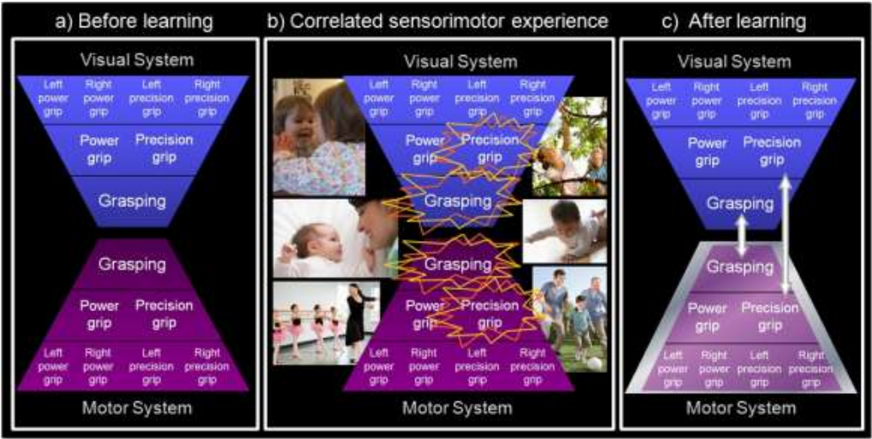
This article argues that mirror neurons originate in sensorimotor associative learning and therefore a new approach is needed to investigate their functions. Mirror neurons were discovered about 20 years ago in the monkey brain, and there is now evidence that they are also present in the human brain. The intriguing feature of many mirror neurons is that they fire not only when the animal is performing an action, such as grasping an object using a power grip, but also when the animal passively observes a similar action performed by another agent. It is widely believed that mirror neurons are a genetic adaptation for action understanding; that they were designed by evolution to fulfill a specific socio-cognitive function. In contrast, we argue that mirror neurons are forged by domain-general processes of associative learning in the course of individual development, and, although they may have psychological functions, they do not necessarily have a specific evolutionary purpose or adaptive function. The evidence supporting this view shows that (1) mirror neurons do not consistently encode action "goals"; (2) the contingency- and context-sensitive nature of associative learning explains the full range of mirror neuron properties; (3) human infants receive enough sensorimotor experience to support associative learning of mirror neurons ("wealth of the stimulus"); and (4) mirror neurons can be changed in radical ways by sensorimotor training. The associative account implies that reliable information about the function of mirror neurons can be obtained only by research based on developmental history, system-level theory, and careful experimentation.
Verified 2026-11-25 · 1 reference not checked yet
Overview
CoChat Summary
TL;DR
The paper argues that mirror neurons are forged by domain-general sensorimotor associative learning rather than being a genetic adaptation for action understanding. It reviews evidence that mirror neuron properties are contingency- and context-sensitive, that infants receive sufficient sensorimotor experience, and that mirror responses can be changed radically by training.
Key findings
- Mirror neurons do not consistently encode action “goals”: 73% of mirror-neuron responses modulated by observation of object-directed grasping also showed similar modulation for pantomimed grasping; many MNs show left/right-hand sensitivity (37.5%), direction sensitivity (64%), peripersonal/extrapersonal selectivity (53%), and view dependence (74%).
- Associative learning’s contingency sensitivity and contextual modulation can explain the full range of reported MN field properties, including strictly congruent, broadly congruent, logically-related, tool-use, and audiovisual MNs.
- Human infants receive a “wealth of the stimulus”: in face-to-face caregiver interaction they are imitated on average once per minute, and when contingency is high infants can learn action-effect associations in just a few trials.
- Brief sensorimotor training changes mirror mechanisms: approximately 50 minutes of pincer-hand training made automatic imitation for a robotic pincer as strong as for a human hand, and approximately 90 minutes of counter-mirror training reversed MEP mirror responses.
Methods
- Theoretical review/target article; no new empirical data or sample. It synthesizes monkey single-unit recording, human fMRI, TMS/MEP, automatic imitation, infant imitation/EEG, and adult sensorimotor-training studies.
- Main analysis is conceptual: it compares the genetic account and associative account, evaluates four kinds of evidence—goal coding, learning mechanisms, infant development, and adult sensorimotor plasticity—and discusses canalization/exaptation alternatives and methodological implications.
Limitations
- Stated: there is no consensus on what “action understanding” means or how it differs from action perception/recognition, making functional claims hard to test; human MN activity cannot be localized precisely, and many studies assume ventral PMC/IPL activity is MN activity even though fewer than 20% of neurons in classical mirror areas may be MNs.
- Stated: no studies systematically test effects of sensorimotor learning on MN responses in monkeys; the paper calls for research based on developmental history, system-level theory, and careful experimentation.
- Evident from the text: as a theoretical review, it does not provide new primary data, and much human evidence relies on indirect measures (fMRI, MEPs, automatic imitation) rather than single-unit recording.
Model-written summary. Check it against the paper before relying on it.
Integrity signals
Registry
Cites
Statistics
Figures
Verification
Claims the paper makes
11 Valid · 9 Not valid · 29 Not checked · 106 Own results and interpretations
Every source the paper cites for this claim was checked and supports it.
In the paper
“Only one study purports to offer direct evidence - from single cell recording - of MNs in the human brain (Mukamel et al., 2010).”
What the sources say
- Supportedcites Mukamel et al., 2010 matched to “Single-Neuron Responses in Humans during Execution and Observation of Actions” (2010) source
The Summary reports extracellular recordings from 1,177 cells in human patients and neurons that responded during both action observation and execution. The Discussion says the findings demonstrate mirror mechanisms in humans at the single-neuron level. The citation identifies Mukamel et al. as the study offering that direct evidence; the paper does not itself establish the citing authors’ broader 'only one study' framing. (LLM, conf=0.91)
hedged- Asserted: passes — The authors put it forward as true.
- Checkable: passes — It can be checked against evidence.
- Load-bearing: unclear — It is unclear whether the paper’s conclusions depend on it.
- Based: passes — The paper gives a reason why it holds.
- Supported
The cited sources support only part of this claim — read each source’s verdict below.
In the paper
“Even when action stimuli are presented, intention understanding does not necessarily recruit mirror areas”
What the sources say
- Supportedcites Brass, Schmitt, Spengler, & Gergely, 2007 matched to “Investigating Action Understanding: Inferential Processes versus Action Simulation” (2007) source
The Results (p. ~2, ROI analysis) report that with action stimuli presented, no differential activation was found in the mirror system (inferior frontal or inferior parietal cortex) even at an uncorrected p < .001, while intention/goal discrimination activated the STS, pSTS and aFMC; the Discussion states 'no differential activation was found in the mirror network as a function of context-based plausibility.' The Discussion further limits the mirror network's role to familiar actions in stereotypic contexts, i.e. mirror recruitment is not required for understanding the intention ('why') of an observed action — matching the hedged 'does not necessarily'. The paper's own caveat ('do not exclude the possibility that the mirror network is involved') is consistent with, not contrary to, a 'not necessarily' claim. (LLM, conf=0.85)
- Partly supportedcites de Lange, Spronk, Willems, Toni, & Bekkering, 2008 matched to “Complementary Systems for Understanding Action Intentions” (2008) sourceExperimental — accuracy not yet measured
The Results and Discussion (page not specified in our copy) show that reflecting on observed actions’ intentions engages mentalizing regions outside the mirror-neuron system. But the paper also reports that the inferior frontal gyrus, a mirror-system area, encodes observed actions’ intentionality automatically. It does not establish that intention understanding occurs without recruiting mirror areas. (LLM, conf=0.84)
plain- Asserted: passes — The authors put it forward as true.
- Checkable: passes — It can be checked against evidence.
- Load-bearing: passes — The paper’s conclusions depend on it.
- Based: passes — The paper gives a reason why it holds.
- Supported
Every source the paper cites for this claim was checked and supports it.
In the paper
“with rare exceptions (Mukamel et al., 2010), MN activity cannot be localized precisely within the human brain.”
What the sources say
- Supportedcites Mukamel et al., 2010 matched to “Single-Neuron Responses in Humans during Execution and Observation of Actions” (2010) source
The citation identifies Mukamel et al. as a rare exception, rather than attributing the general localization limit to them. The Results describe single-neuron recordings in named human brain regions and refer to the anatomical locations of the electrodes; the Discussion reports mirroring responses at the single-cell level in the medial frontal and temporal cortex. (LLM, conf=0.91)
plain- Asserted: passes — The authors put it forward as true.
- Checkable: passes — It can be checked against evidence.
- Load-bearing: passes — The paper’s conclusions depend on it.
- Based: passes — The paper gives a reason why it holds.
- Supported
The cited sources support only part of this claim — read each source’s verdict below.
In the paper
“there is no evidence that the tendency of infants to look at their own hands evolved to promote the development of MNs or action understanding rather than visuomotor control”
What the sources say
- Partly supportedcites Del Giudice et al., 2009 matched to “Programmed to learn? The ontogeny of mirror neurons” (2009) sourceExperimental — accuracy not yet measured
The Conclusions (page unavailable) say infants’ attention to their own moving hands may have evolved primarily to support visuomotor control, rather than for the adaptive value of a mirror system. But the paper presents this as a tentative evolutionary account compatible with different scenarios; it does not establish the claim’s categorical statement that there is no evidence for the alternative. (LLM, conf=0.82)
plain- Asserted: passes — The authors put it forward as true.
- Checkable: passes — It can be checked against evidence.
- Load-bearing: passes — The paper’s conclusions depend on it.
- Based: passes — The paper gives a reason why it holds.
- Partly supported
The cited sources support only part of this claim — read each source’s verdict below.
In the paper
“It has long been recognized that associative learning depends, not only on contiguity - events occurring close together in time - but also on contingency - the degree to which one event reliably predicts the other.”
What the sources say
- Not checked — no full text of the sourcecites Elsner & Hommel, 2004 matched to “Contiguity and contingency in action-effect learning” (2004) source
- Partly supportedcites Rescorla, 1968 matched to “Probability of shock in the presence and absence of cs in fear conditioning.” (1968) sourceExperimental — accuracy not yet measured
The opening passage defines contingency as the probability of the unconditioned stimulus in the presence versus absence of the conditioned stimulus, and the Discussion reports that pairings alone did not produce conditioning when that probability did not increase. This supports the contrast with contiguity for Pavlovian fear conditioning, but the paper does not establish the claim for associative learning generally. (LLM, conf=0.82)
- Not checked — no full text of the sourcecites Schultz & Dickinson, 2000 matched to “Neuronal Coding of Prediction Errors” (2000) source
boostedstates a cause- Asserted: passes — The authors put it forward as true.
- Checkable: passes — It can be checked against evidence.
- Load-bearing: passes — The paper’s conclusions depend on it.
- Based: passes — The paper gives a reason why it holds.
81 more claims · 5 with their cited sources checked
Create a free account to see all 155 claims and to verify the 6 references still open.
- It may state two separate claims as one. 26
- Probably not a substantial claim. 52
Citations
Cites
Wu, Y. (1999) · Technometrics · doi:10.1080/00401706.1999.10485951 · Cited by 27,221
James, W. (1913) · Henry Holt and Company eBooks · doi:10.1037/11059-000 · Cited by 25,226
Rudin, W. (1973) · Cited by 13,740
A feature-integration theory of attention.
Treisman, A. M., & Gelade, G. (1980) · Cognitive Psychology · doi:10.1016/0010-0285(80)90005-5 · Cited by 12,366
Rescorla, R. A. (1972) · Medical Entomology and Zoology · Cited by 9,661
Chomsky, N. (2014) · The MIT Press eBooks · doi:10.7551/mitpress/9780262527347.001.0001 · Cited by 8,244
Distributed hierarchical processing in the primate cerebral cortex
Felleman, D. J., & Van Essen, D. C. (1991) · Cerebral Cortex · doi:10.1093/cercor/1.1.1 · Cited by 7,783
Rizzolatti, G., & Craighero, L. (2004) · Annual Review of Neuroscience · doi:10.1146/annurev.neuro.27.070203.144230 · Cited by 7,433 · cited 4×
“…“the mirror neuron mechanism is a mechanism of great evolutionary importance through which primates understand actions done by their conspecifics” (Rizzolatti & Craighero, 2004, p.172) and that “in their basic properties, MNs constitute a relatively simple action-perception mechanism that could…”
BackgroundInfluentialCulture and the Evolutionary Process
Griesemer, J. R., Boyd, R., & Richerson, P. J. (1986) · The Condor · doi:10.2307/1367778 · Cited by 7,034
Whatever next? Predictive brains, situated agents, and the future of cognitive science
Clark, A. (2013) · Behavioral and Brain Sciences · doi:10.1017/s0140525x12000477 · Cited by 5,924
Research works printed but not linked: 3
- Press, C., Catmur, C., Cook, R., Widman, H., Heyes, C., & Bird, G. (2012). fMRI adaptation reveals geometric shape 'mirror neurons'. PLoS One, 7 (12), e51934.
- Elman, J. L., Bates, E., Johnson, M. H., Karmiloff-Smith, A., Parisi, D., & Plunkett, K. (1996). Rethinking innateness: Connectionism in a developmental framework: Cambridge, MA: MIT Press.
- Pawlby, S. J. (1977). Imitative interaction. In H. Schaffer (Ed.), Studies in mother-infant interaction (pp. 203-224). New York: Academic Press.
Cited by
Bird, G., & Viding, E. (2014) · Neuroscience & Biobehavioral Reviews · doi:10.1016/j.neubiorev.2014.09.021 · Cited by 472
“Although largely untested in the domain of emotional contagion, a substantial body of evidence supports the Associative Sequence Learning model of action imitation (Heyes, 2010, Cook et al., 2014).”
BackgroundSelf-citationAssessing human mirror activity with EEG mu rhythm: A meta-analysis.
Fox, N. A., Bakermans-Kranenburg, M. J., Yoo, K. H., Bowman, L. C., Cannon, E. N., Vanderwert, R. E., Ferrari, P. F., & van IJzendoorn, M. H. (2016) · Psychological Bulletin · doi:10.1037/bul0000031 · Cited by 440
“Indeed, the literature on mirror neuron research in nonhuman primates debates the importance of goal-directed actions in eliciting mirror neuron activity (e.g., Cook & Bird, 2013; Cook et al., 2014; Fabbri-Destro & Rizzolatti, 2008).”
The Structure of Social Cognition: In(ter)dependence of Sociocognitive Processes
Happé, F., Cook, J. L., & Bird, G. (2017) · Annual Review of Psychology · doi:10.1146/annurev-psych-010416-044046 · Cited by 413
“Further evidence for dissociable mechanisms underlying social learning and nonsocial learning comes from a recent study by J. Cook et al. (2014b) that demonstrated that social and nonsocial learning dissociate with respect to their relationship with social dominance.”
BackgroundSelf-citationAtzil, S., Gao, W., Fradkin, I., & Barrett, L. F. (2018) · Nature Human Behaviour · doi:10.1038/s41562-018-0384-6 · Cited by 415
Gallagher, S. (2020) · doi:10.1093/oso/9780198846345.001.0001 · Cited by 359
Mirror neurons 30 years later: implications and applications
Bonini, L., Rotunno, C., Arcuri, E., & Gallese, V. (2022) · Trends in Cognitive Sciences · doi:10.1016/j.tics.2022.06.003 · Cited by 316
“Following years of debate over the origin and functions of MNs [111], researchers have finally reached a basic agreement regarding the involvement of MN brain regions in the perception of motor actions, human speech discrimination, and imitative responses [10].”
Neural reuse of action perception circuits for language, concepts and communication
Pulvermüller, F. (2018) · Progress in Neurobiology · doi:10.1016/j.pneurobio.2017.07.001 · Cited by 288
“However, some arguments have recently been raised against a strictly innate human ability to repeat body movements (Cook et al., 2014).”
BackgroundComprehensive longitudinal study challenges the existence of neonatal imitation in humans
Oostenbroek, J., Suddendorf, T., Nielsen, M., Redshaw, J., Kennedy-Costantini, S., Davis, J., Clark, S., & Slaughter, V. (2016) · Current Biology · doi:10.1016/j.cub.2016.03.047 · Cited by 262
“are an innate adaptation for imitation and action understanding [8, 9] or a by-product of associative learning [27, 28].”
The Perceptual Prediction Paradox
Press, C., Kok, P., & Yon, D. (2020) · Trends in Cognitive Sciences · doi:10.1016/j.tics.2019.11.003 · Cited by 246
Self-citationWhat Happened to Mirror Neurons?
Heyes, C., & Catmur, C. (2022) · Perspectives on Psychological Science · doi:10.1177/1745691621990638 · Cited by 286
“One of them, a target article with commentaries in The Behavioral and Brain Sciences, did not contest the existence of mirror neurons, or that they contribute to social behaviour, but marshalled evidence that they are forged by sensorimotor associative learning (Cook et al., 2014).”
BackgroundInfluentialSelf-citationThe role of shared neural activations, mirror neurons, and morality in empathy – A critical comment
Lamm, C., & Majdandžić, J. (2015) · Neuroscience Research · doi:10.1016/j.neures.2014.10.008 · Cited by 252
“These presumptions are incorrect if applied to mirror neurons (which seem to be highly malleable by learning processes, see Cook et al., 2014; Heyes, 2010, for recent in-depth review) and therefore lead to equally false assertions if applied to the construct of empathy – for example, that we have a…”
Towards a second-person neuropsychiatry
Schilbach, L. (2016) · Philosophical Transactions of the Royal Society B: Biological Sciences · doi:10.1098/rstb.2015.0081 · Cited by 251
“[126,127]; see figure 1 for a depiction of the relevant brain regions).”
BackgroundEmbodied Cognition and Mirror Neurons: A Critical Assessment
Caramazza, A., Anzellotti, S., Strnad, L., & Lingnau, A. (2014) · Annual Review of Neuroscience · doi:10.1146/annurev-neuro-071013-013950 · Cited by 245
Hebbian learning and predictive mirror neurons for actions, sensations and emotions
Keysers, C., & Gazzola, V. (2014) · Philosophical Transactions of the Royal Society B: Biological Sciences · doi:10.1098/rstb.2013.0175 · Cited by 228
The neuroscience of body memory: From the self through the space to the others
Riva, G. (2018) · Cortex · doi:10.1016/j.cortex.2017.07.013 · Cited by 229
Who Knows? Metacognitive Social Learning Strategies
Heyes, C. (2016) · Trends in Cognitive Sciences · doi:10.1016/j.tics.2015.12.007 · Cited by 218
“People Are (Sometimes) Like Cooks Associative processes are powerful determinants of human as well as animal behaviour [23–26].”
BackgroundSelf-citationAutomatic imitation: A meta-analysis.
Cracco, E., Bardi, L., Desmet, C., Genschow, O., Rigoni, D., De Coster, L., Radkova, I., Deschrijver, E., & Brass, M. (2018) · Psychological Bulletin · doi:10.1037/bul0000143 · Cited by 228
“More specifically, ASL interprets mirror neurons in the context of associative networks (Cook et al., 2014; Heyes, 2010) and IM sees mirror neurons as the neurophysiological manifestation of ideomotor representations (Brass & Muhle-Karbe, 2014).”
BackgroundMethodResultInfluentialIs There a ‘Social’ Brain? Implementations and Algorithms
Lockwood, P. L., Apps, M. A. J., & Chang, S. W. C. (2020) · Trends in Cognitive Sciences · doi:10.1016/j.tics.2020.06.011 · Cited by 208
Heyes, C. (2018) · Neuroscience & Biobehavioral Reviews · doi:10.1016/j.neubiorev.2018.11.001 · Cited by 213
Self-citationEvolutionary neuroscience of cumulative culture
Stout, D., & Hecht, E. E. (2017) · Proceedings of the National Academy of Sciences · doi:10.1073/pnas.1620738114 · Cited by 203
“As argued above, such models of self-action control likely form the basis for understanding and copying the observed actions of others through a process of matching, often referred to as “motor resonance” (42).”
BackgroundResultNaish, K. R., Houston-Price, C., Bremner, A. J., & Holmes, N. P. (2014) · Neuropsychologia · doi:10.1016/j.neuropsychologia.2014.09.034 · Cited by 202
The interpretation of mu suppression as an index of mirror neuron activity: past, present and future
Hobson, H. M., & Bishop, D. V. M. (2017) · Royal Society Open Science · doi:10.1098/rsos.160662 · Cited by 188
Insights from insects about adaptive social information use
Grüter, C., & Leadbeater, E. (2014) · Trends in Ecology & Evolution · doi:10.1016/j.tree.2014.01.004 · Cited by 167
From movement kinematics to social cognition: the case of autism
Cook, J. (2016) · Philosophical Transactions of the Royal Society B: Biological Sciences · doi:10.1098/rstb.2015.0372 · Cited by 145
Simpson, E. A., Murray, L., Paukner, A., & Ferrari, P. F. (2014) · Philosophical Transactions of the Royal Society B: Biological Sciences · doi:10.1098/rstb.2013.0289 · Cited by 150
“Further, in this account, these connections are refined through Hebbian learning processes, and become tuned so that visual and motor information become matched in the course of development [92].”
Typical action perception and interpretation without motor simulation
Vannuscorps, G., & Caramazza, A. (2015) · Proceedings of the National Academy of Sciences · doi:10.1073/pnas.1516978112 · Cited by 154
“Effector-independent motor simulation thus requires the prior categorization of the observed action as an act of a particular type that, once interpreted, can be associated with the motor program of the same action executed with a different effector from the observed one (36, 41, 42).”
BackgroundNeural Efficiency in Athletes: A Systematic Review
Li, L., & Smith, D. M. (2021) · Frontiers in Behavioral Neuroscience · doi:10.3389/fnbeh.2021.698555 · Cited by 207
Powell, L. J., & Spelke, E. S. (2017) · Cognition · doi:10.1016/j.cognition.2017.09.007 · Cited by 163
Self–other control processes in social cognition: from imitation to empathy
de Guzman, M., Bird, G., Banissy, M. J., & Catmur, C. (2016) · Philosophical Transactions of the Royal Society B: Biological Sciences · doi:10.1098/rstb.2015.0079 · Cited by 129
Self-citationCharpentier, C. J., Iigaya, K., & O’Doherty, J. P. (2020) · Neuron · doi:10.1016/j.neuron.2020.02.028 · Cited by 158
“Choice imitation was expected to recruit fronto-parietal regions of the mirror neuron system (namely, the pre-motor cortex, inferior parietal cortex, and dlPFC; Catmur et al., 2009;Cook et al., 2014;Gazzola andKeysers, 2009; Rizzolatti and Craighero, 2004), and emulation was predicted to recruit regions of the mentali…”
Two different mirror neuron networks: The sensorimotor (hand) and limbic (face) pathways
Ferrari, P. F., Gerbella, M., Coudé, G., & Rozzi, S. (2017) · Neuroscience · doi:10.1016/j.neuroscience.2017.06.052 · Cited by 147
“From a theoretical point of view it has been suggested that mouth and hand MNs are formed through different developmental trajectories with the former, being involved in communication, relying on face-to-face interactions occurring in the first phases of postnatal life (Casile et al., 2011; Cook et al., 2014; Tramacer…”
InfluentialSocial Support and Cognition: A Systematic Review
Costa‐Cordella, S., Arévalo-Romero, C. A., Parada, F. J., & Rossi, A. (2021) · Frontiers in Psychology · doi:10.3389/fpsyg.2021.637060 · Cited by 160
The Extended Mirror Neuron Network: Anatomy, Origin, and Functions
Bonini, L. (2016) · The Neuroscientist · doi:10.1177/1073858415626400 · Cited by 149
Mirror neurons through the lens of epigenetics
Ferrari, P. F., Tramacere, A., Simpson, E. A., & Iriki, A. (2013) · Trends in Cognitive Sciences · doi:10.1016/j.tics.2013.07.003 · Cited by 112
“, faces, hands) occurs from birth to develop sensorimotor control (as in the case of visually-guided hand grasping), and not specifically for producing mirror neurons [12] [13].”
BackgroundInfluentialEffects of TMS over Premotor and Superior Temporal Cortices on Biological Motion Perception
van Kemenade, B. M., Muggleton, N. G., Walsh, V., & Saygın, A. P. (2012) · Journal of Cognitive Neuroscience · doi:10.1162/jocn_a_00194 · Cited by 123
Crossmodal and action-specific: neuroimaging the human mirror neuron system
Oosterhof, N. N., Tipper, S. P., & Downing, P. E. (2013) · Trends in Cognitive Sciences · doi:10.1016/j.tics.2013.04.012 · Cited by 122
Murray, L., Pascalis, L. D., Bozicevic, L., Hawkins, L. B., Sclafani, V., & Ferrari, P. F. (2016) · Scientific Reports · doi:10.1038/srep39019 · Cited by 128
“The first account emphasizes the frequency of parental contingent responsiveness during early interactions, and its potential to reinforce the occurrence of infant behaviours, including their social expressions 15,16 .”
What modulates the Mirror Neuron System during action observation?
Kemmerer, D. L. (2021) · Progress in Neurobiology · doi:10.1016/j.pneurobio.2021.102128 · Cited by 142
Motor System Activation Predicts Goal Imitation in 7-Month-Old Infants
Filippi, C. A., Cannon, E. N., Fox, N. A., Thorpe, S., Ferrari, P. F., & Woodward, A. L. (2016) · Psychological Science · doi:10.1177/0956797616632231 · Cited by 109
EEG theta and Mu oscillations during perception of human and robot actions
Urgen, B. A., Plank, M., Ishiguro, H., Poizner, H., & Saygin, A. P. (2013) · Frontiers in Neurorobotics · doi:10.3389/fnbot.2013.00019 · Cited by 99
“Lifelike humanoid robots are becoming commonplace, and assistive technologies based on social robotics are being developed for many application domains (e.g., Kanda et al., 2004; Coradeschi et al., 2006).”
BackgroundMichael, J., Sandberg, K., Skewes, J., Wolf, T., Blicher, J. U., Overgaard, M. S., & Frith, C. (2014) · Psychological Science · doi:10.1177/0956797613520608 · Cited by 107
Cognitive Science: An Introduction to the Science of the Mind
Bermúdez, J. L. (2020) · Cited by 119
Automatic facial mimicry in response to dynamic emotional stimuli in five-month-old infants
Isomura, T., & Nakano, T. (2016) · Proceedings of the Royal Society B Biological Sciences · doi:10.1098/rspb.2016.1948 · Cited by 107
Baby steps: investigating the development of perceptual–motor couplings in infancy
de Klerk, C. C. J. M., Johnson, M. H., Heyes, C. M., & Southgate, V. (2014) · Developmental Science · doi:10.1111/desc.12226 · Cited by 99
“…couplings comes from self-observation (either direct or through a mirror), from socially synchronous actions (e.g. performing the same dance moves in a group), and from imitative social partners (e.g. a mother imitating her infant’s facial expressions) (Cook et al., 2014; Heyes, 2001).”
BackgroundResultInfluentialSelf-citationConcepts, goals and the control of survival-related behaviors
Feldman Barrett, L., & Finlay, B. L. (2018) · Current Opinion in Behavioral Sciences · doi:10.1016/j.cobeha.2018.10.001 · Cited by 89
“Action concepts not only give rise to motor movements but they also allow animals to anticipate and understand the actions of others [36].”
Yuan, C., Zhu, H., Ren, Z., Yuan, M., Gao, M., Zhang, Y., Li, Y., Meng, Y., Gong, Q., Lui, S., et al. (2017) · Comprehensive Psychiatry · doi:10.1016/j.comppsych.2017.12.002 · Cited by 92
Catmur, C. (2015) · Consciousness and Cognition · doi:10.1016/j.concog.2015.03.012 · Cited by 97
Self-citationThe role of sensorimotor experience in the development of mimicry in infancy
de Klerk, C. C. J. M., Lamy‐Yang, I., & Southgate, V. (2018) · Developmental Science · doi:10.1111/desc.12771 · Cited by 91
Do informal musical activities shape auditory skill development in preschool-age children?
Putkinen, V., Saarikivi, K., & Tervaniemi, M. H. (2013) · Frontiers in Psychology · doi:10.3389/fpsyg.2013.00572 · Cited by 110
Stanyon, R., & Bigoni, F. (2014) · Neuroscience & Biobehavioral Reviews · doi:10.1016/j.neubiorev.2014.10.001 · Cited by 89
Wang, Z., Qiao, D., Yan, J., Tang, G., Li, B., & Ning, D. (2022) · Ocean Engineering · doi:10.1016/j.oceaneng.2022.110905 · Cited by 84
The evolution of cognitive mechanisms in response to cultural innovations
Lotem, A., Halpern, J. Y., Edelman, S., & Kolodny, O. (2017) · Proceedings of the National Academy of Sciences · doi:10.1073/pnas.1620742114 · Cited by 77
“In practice, however, clear evidence showing the effect of culture on cognition is lacking, and alternative accounts for the evolution of advanced cognition and culture through domain-general learning principles cannot be ruled out (1, 2, 20).”
BackgroundResultEye contact modulates facial mimicry in 4-month-old infants: An EMG and fNIRS study
de Klerk, C. C. J. M., Hamilton, A. F. D. C., & Southgate, V. (2018) · Cortex · doi:10.1016/j.cortex.2018.05.002 · Cited by 95
Giese, M. A., & Rizzolatti, G. (2015) · Neuron · doi:10.1016/j.neuron.2015.09.040 · Cited by 88
“2005; Rizzolatti and Arbib, 1998); (2) the issue of howmirror neurons emerge in terms of learning and evolution (Cook et al., 2014; Keysers and Perrett, 2004); (3) the relationship between action processing and social cognition (Gallese et al.”
BackgroundMadsen, E. A., Persson, T., Sayehli, S., Lenninger, S., & Sonesson, G. (2013) · PLoS ONE · doi:10.1371/journal.pone.0076266 · Cited by 80
Through the forest of motor representations
Ferretti, G. (2016) · Consciousness and Cognition · doi:10.1016/j.concog.2016.05.013 · Cited by 82
“1); (B2) mirror neurons, which respond when the monkey – for the bridge between the experimental results on human and non-human primates see footnote 19 – observes an action performed by another individual, or when it performs the same or a similar action (Cook et al., 2014).”
BackgroundInfluentialMurgia, M., Pili, R., Corona, F., Sors, F., Agostini, T., Bernardis, P., Casula, C., Cossu, G., Guicciardi, M., & Pau, M. (2018) · Frontiers in Neurology · doi:10.3389/fneur.2018.00348 · Cited by 94
“As regards the neurophysiological evidence, it is well-known that the neurons with mirror properties (39) are associated with imitation (40).”
BackgroundSowden, S., Koehne, S., Catmur, C., Dziobek, I., & Bird, G. (2016) · Autism Research · doi:10.1002/aur.1511 · Cited by 74
Self-citationConceptualizing and testing action understanding
Thompson, E., Bird, G., & Catmur, C. (2019) · Neuroscience & Biobehavioral Reviews · doi:10.1016/j.neubiorev.2019.08.002 · Cited by 73
“Therefore, the prior experience argument would suggest that these neurons are firing due to a learnt association between a stimulus (tool opening) and the associated action (hand closing), rather than the encoding of a goal (Cook et al., 2014).”
BackgroundInfluentialSelf-citationA social insect perspective on the evolution of social learning mechanisms
Leadbeater, E., & Dawson, E. H. (2017) · Proceedings of the National Academy of Sciences · doi:10.1073/pnas.1620744114 · Cited by 85
The body in interaction: Its multiple modalities and temporalities
Deppermann, A., & Streeck, J. (2018) · Pragmatics & beyond. New series · doi:10.1075/pbns.293.intro · Cited by 86
“They can be considered the neurophysiological basis of culturally shared action types, resting themselves on associative learning from prior experiences of social interaction (Heyes 2009; Cook et al. 2014) - only what is familiar can be “mirrored”.”
BackgroundWiltshire, T. J., Lobato, E. J. C., McConnell, D. S., & Fiore, S. M. (2015) · Frontiers in Human Neuroscience · doi:10.3389/fnhum.2014.01007 · Cited by 75
Bohn, M., Call, J., & Tomasello, M. (2018) · Developmental Science · doi:10.1111/desc.12757 · Cited by 66
Farmer, H., & Maister, L. (2017) · Social Justice Research · doi:10.1007/s11211-017-0294-1 · Cited by 81
Précis of Cognitive Gadgets: The Cultural Evolution of Thinking
Heyes, C. M. (2018) · Behavioral and Brain Sciences · doi:10.1017/s0140525x18002145 · Cited by 95
Self-citationWhat evolves in the evolution of social learning?
Leadbeater, E. (2015) · Journal of Zoology · doi:10.1111/jzo.12197 · Cited by 71
Ge, S., Liu, H., Lin, P., Gao, J., Xiao, C., & Li, Z. (2018) · Frontiers in Behavioral Neuroscience · doi:10.3389/fnbeh.2018.00283 · Cited by 77
A Multi-scale View of the Emergent Complexity of Life: A Free-Energy Proposal
Hesp, C., Ramstead, M., Constant, A., Badcock, P., Kirchhoff, M., & Friston, K. (2019) · Springer Proceedings in Complexity · doi:10.1007/978-3-030-00075-2_7 · Cited by 63
Bridging the Mechanical and the Human Mind: Spontaneous Mimicry of a Physically Present Android
Hofree, G., Ruvolo, P., Bartlett, M. S., & Winkielman, P. (2014) · PLoS ONE · doi:10.1371/journal.pone.0099934 · Cited by 68
“In fact, the most recent formulation of associative sequence-learning (ASL) accounts of mimicry explicitly acknowledges the role of such high-order variables [45].”
Homo imitans? Seven reasons why imitation couldn't possibly be associative
Heyes, C. M. (2016) · Philosophical Transactions of the Royal Society B Biological Sciences · doi:10.1098/rstb.2015.0069 · Cited by 71
Self-citationAction perception and motor imagery: Mental practice of action
Savaki, H. E., & Raos, V. (2019) · Progress in Neurobiology · doi:10.1016/j.pneurobio.2019.01.007 · Cited by 72
Predicted action consequences are perceptually facilitated before cancellation.
Yon, D., & Press, C. (2017) · Journal of Experimental Psychology Human Perception & Performance · doi:10.1037/xhp0000385 · Cited by 69
Self-citationHeyes, C. M. (2013) · Cortex · doi:10.1016/j.cortex.2013.07.002 · Cited by 63
Self-citationMore than an imitation game: Top-down modulation of the human mirror system
Campbell, M. E. J., & Cunnington, R. (2017) · Neuroscience & Biobehavioral Reviews · doi:10.1016/j.neubiorev.2017.01.035 · Cited by 70
“Therefore, the hypothesised function of mirror neurons is offered as an account of the origin of mirror neurons (Cook et al., 2014).”
InfluentialXiao, R., Shida-Tokeshi, J., Vanderbilt, D. L., & Smith, B. A. (2018) · PLoS ONE · doi:10.1371/journal.pone.0190276 · Cited by 65
Neural Mechanisms of Communication
Sliwa, J., Takahashi, D. Y., & Shepherd, S. V. (2016) · Wiley eBooks · doi:10.1002/9781118316757.ch16 · Cited by 58
The Mimicry Among Us: Intra- and Inter-Personal Mechanisms of Spontaneous Mimicry
Arnold, A. J., & Winkielman, P. (2019) · Journal of Nonverbal Behavior · doi:10.1007/s10919-019-00324-z · Cited by 70
Imitation and culture: What gives?
Heyes, C. M. (2021) · Mind & Language · doi:10.1111/mila.12388 · Cited by 78
Self-citationAction biases perceptual decisions toward expected outcomes.
Yon, D., Zainzinger, V., de Lange, F. P., Eimer, M., & Press, C. (2021) · Journal of Experimental Psychology General · doi:10.1037/xge0000826 · Cited by 55
“After finding broad support for this idea (e.g., Cook, Bird, Catmur, Press, & Heyes, 2014; Press et al., 2012), we began to investigate whether domain-general models can explain the functional influence of sensorimotor predictions on perception as well as the origin of such representations.”
Self-citationHeyes, C. M. (2016) · Current Biology · doi:10.1016/j.cub.2016.03.060 · Cited by 64
“The latest findings [2] on neonatal imitation also undermine the view that humans, and monkeys, genetically inherit a predisposition to develop mirror neurons; single cells that fire when a particular action, such as grasping, is observed, and when the same action is executed [13].”
Self-citationBeyond action-specific simulation: domain-general motor contributions to perception
Press, C., & Cook, R. (2015) · Trends in Cognitive Sciences · doi:10.1016/j.tics.2015.01.006 · Cited by 54
Self-citationFuelscher, I. T., Williams, J., Enticott, P. G., & Hyde, C. E. (2015) · Research in Developmental Disabilities · doi:10.1016/j.ridd.2015.07.027 · Cited by 56
Toward a neural basis for peer-interaction: what makes peer-learning tick?
Clark, I., & Dumas, G. (2015) · Frontiers in Psychology · doi:10.3389/fpsyg.2015.00028 · Cited by 67
“These findings suggest that the MNS begins construction of the social foundation required for peer-learning (see Cook et al., 2014).”
BackgroundLiu, T., Chen, Y., Chen, D., Li, C., Qiu, Y., & Wang, J. (2017) · NeuroReport · doi:10.1097/wnr.0000000000000724 · Cited by 48
What are reaction time indices of automatic imitation measuring?
Ramsey, R. (2018) · Consciousness and Cognition · doi:10.1016/j.concog.2018.08.006 · Cited by 56
Is that me in the mirror? Depersonalisation modulates tactile mirroring mechanisms
Adler, J., Schabinger, N., Michal, M., Beutel, M. E., & Gillmeister, H. (2016) · Neuropsychologia · doi:10.1016/j.neuropsychologia.2016.03.009 · Cited by 49
“While the involvement of the MNS in higher functions like intention understanding is debated (e.g. Cook et al., 2014; Dinstein et al., 2008), studies over the past two decades have revealed mirror-like cortical activations not only for motor actions (see Avenanti et al. (2013) for a recent review),…”
BackgroundA Brain for Speech. Evolutionary Continuity in Primate and Human Auditory-Vocal Processing
Aboitiz, F. (2018) · Frontiers in Neuroscience · doi:10.3389/fnins.2018.00174 · Cited by 51
“The notion of mirror neurons as representing other agent’s intentions or goals has been questioned by some authors and this is now a matter of intense debate (Cook et al., 2014; Hickok, 2014).”
BackgroundTruskanov, N., & Prat, Y. (2018) · Philosophical Transactions of the Royal Society B Biological Sciences · doi:10.1098/rstb.2017.0050 · Cited by 49
Comparative connectomics of the primate social brain
Yokoyama, C., Autio, J. A., Ikeda, T., Sallet, J., Mars, R. B., Essen, D. C. V., Glasser, M. F., Sadato, N., & Hayashi, T. (2021) · NeuroImage · doi:10.1016/j.neuroimage.2021.118693 · Cited by 88
“, intention), as well as in domain-general visual-motor associative learning (Cook et al., 2014; Heyes and Catmur, 2021).”
BackgroundSchulte‐Rüther, M., Otte, E., Adigüzel, K., Firk, C., Herpertz‐Dahlmann, B., Koch, I., & Konrad, K. (2016) · Autism Research · doi:10.1002/aur.1654 · Cited by 58
“…idea that the association between social-cognitive processing, action understanding, and the MNS may not be ontogenetically, but may emerge from of domaingeneral mechanisms of associative learning [Cook et al., 2014] or be mediated by other mechanisms such as increased attention to social stimuli.”
BackgroundThe functions of imitative behaviour in humans
Farmer, H., Ciaunica, A., & Hamilton, A. F. D. C. (2018) · Mind & Language · doi:10.1111/mila.12189 · Cited by 57
“In contrast, the strongly empiricist Associative Learning account (ASL account) of imitation focuses on the role of postnatal learning in forging the visual–motor links that support imitation (Cook et al., 2014; Heyes, 2001).”
BackgroundColl, M., Press, C., Hobson, H., Catmur, C., & Bird, G. (2017) · Journal of Neuroscience · doi:10.1523/jneurosci.3393-16.2017 · Cited by 54
“The crossmodal specificity of the mu rhythm to somatosensory features of actions suggests that the central mu rhythm response to action observation and execution observed in the current and previous studies might be better explained by sensory processing rather than motor mirroring (Dinstein et al., 2008; Cook et al.,…”
BackgroundInfluentialSelf-citationSeven computations of the social brain
Molapour, T., Hagan, C. C., Silston, B., Wu, H., Ramstead, M. J. D., Friston, K. J., & Mobbs, D. (2021) · Social Cognitive and Affective Neuroscience · doi:10.1093/scan/nsab024 · Cited by 48
“The so-called mirror neuron system purports to provide a vicarious experience to observers, though the interpretation of exactly what this system does is still under debate (Cook et al., 2014).”
BackgroundCross-modal repetition effects in the mu rhythm indicate tactile mirroring during action observation
Coll, M., Bird, G., Catmur, C., & Press, C. (2014) · Cortex · doi:10.1016/j.cortex.2014.08.024 · Cited by 51
Self-citationNovel stable dendrimersome formulation for safe bioimaging applications
Filippi, M., Patrucco, D., Martinelli, J., Botta, M., Castro‐Hartmann, P., Tei, L., & Terreno, E. (2015) · Nanoscale · doi:10.1039/c5nr02695d · Cited by 44
Farina, E., Baglio, F., Pomati, S., D'Amico, A., Campini, I., Tella, S. D., Belloni, G., & Pozzo, T. (2017) · Frontiers in Aging Neuroscience · doi:10.3389/fnagi.2017.00371 · Cited by 48
“The fronto-parietal network activated in our study is considered part of the human MN network (Rizzolatti and Craighero, 2004), given the established homology between the BA6 (human) and the ventral premotor cortex (monkey), the BA40 (human), and PF-PFG (monkey) parietal cortex (Cook et al., 2014).”
BackgroundBai, Z., Fong, K. N. K., Zhang, J., & Hu, Z. (2019) · Brain and Behavior · doi:10.1002/brb3.1489 · Cited by 56
Neonatal Imitation: Theory, Experimental Design, and Significance for the Field of Social Cognition
Vincini, S., Jhang, Y., Buder, E. H., & Gallagher, S. (2017) · Frontiers in Psychology · doi:10.3389/fpsyg.2017.01323 · Cited by 47
“Genetically programmed direct matching is the name we assign to the psychological model of differential imitation that is most naturally associated with the classical genetic account of mirror neurons (Cook et al., 2014; Tramacere et al., 2015).”
BackgroundMirror neurons and their relationship with neurodegenerative disorders
Farina, E., Borgnis, F., & Pozzo, T. (2020) · Journal of Neuroscience Research · doi:10.1002/jnr.24579 · Cited by 72
Re-analysis of data reveals no evidence for neonatal imitation in rhesus macaques
Redshaw, J. (2019) · Biology Letters · doi:10.1098/rsbl.2019.0342 · Cited by 44
Metadata
- Authors
- Cook, R., Bird, G., Catmur, C., Press, C., & Heyes, C.
- Affiliations
- City, University of London (GB)
- King's College London (GB)
- University of Surrey (GB)
- University of London (GB)
- University of Oxford (GB)
- Venue
- Behavioral and Brain Sciences
- Publisher
- Cambridge University Press (CUP)
- Published
- 2014-04
- Volume
- 37
- Issue
- 2
- Pages
- 177-192
- ISSN
- 0140-525X (ISSN-L)
- 1469-1825
- OpenAlex
- W2096117537
- Semantic Scholar
- 6bc7f93eb174e03ff59e789f9dcc514969c1737b
- Cited by
- 647
- References
- 550
- Citations by year
- 2026: 32 · 2025: 34 · 2024: 48 · 2023: 38 · 2022: 66 · 2021: 47 · 2020: 74 · 2019: 55 · 2018: 61 · 2017: 56 · 2016: 51 · 2015: 46 · 2014: 29
- FWCI
- 7.52
- Type
- journal article
- Language
- en
- Open access
- green
- kclpure.kcl.ac.uk
- Locations
- Behavioral and Brain Sciences (publishedVersion)
- PubMed (publishedVersion)
- Surrey Research Insight Open Access (The University of Surrey) (submittedVersion)
- Research Portal (King's College London) (submittedVersion)
- City Research Online (City University London) (submittedVersion)
- BIROn (Birkbeck, University of London) (submittedVersion)
- UCL Discovery (University College London) (submittedVersion)
- Iris (University of Trento) (submittedVersion)
- Funders
- Economic and Social Research Council (ES/K00140X/1)
- Topics
- Social Sciences › Psychology › Social Psychology › Action Observation and Synchronization
- Life Sciences › Neuroscience › Cognitive Neuroscience › Motor Control and Adaptation
- Life Sciences › Agricultural and Biological Sciences › Ecology, Evolution, Behavior and Systematics › Primate Behavior and Ecology
- Keywords
- mirror neurons, action understanding, action observation, evolutionary function, contingency learning, sensorimotor training, power grip, action goals
- MeSH terms
- Animals, Association Learning, Brain, Biological Evolution, Humans, Learning, Social Behavior, Social Perception, Mirror Neurons
About these checks
Registry, retraction, Cites and statistics results are computed, not judged, with one exception: a printed reference that no index lists is read once by a model before it counts as a citation error. Claims are extracted by a model and kept only when their quote appears verbatim in the text; each cited source is then checked, with a model’s help, for whether it says what the claim relies on. Those verdicts can be wrong — read the claim’s quote and the cited source before relying on one.
The claim verdicts this report counts are experimental: their accuracy is not yet measured.
A language model drew the claims from the paper on 2026-10-10, under version 3 of the claim definition (model deepseek-v4.1-flash, prompt extract-v3).
A second model labelled each claim on 2026-10-10 (model jev-1.13-20260917, definition revision gold-guideline-v0.2).
Cited sources are checked with a language model’s help (gpt-6-sol and qwen3.8-omni-flash).
Statistics and arithmetic are recomputed, not judged.
Confidence bands are shown only for fields calibrated on our annotated test set. None is calibrated yet, so no band is shown.
What counts as a claim ›How we measure confidence ›How we check this ›
Are you an author, or do you see a problem with this page? Request a review
Data sources
Bibliographic data: Semantic Scholar, OpenAlex, Crossref.
Contains information from the Semantic Scholar Academic Graph Datasets, made available under the ODC Attribution License (ODC-BY 1.0).
Semantic Scholar’s data is described in: Kinney, R., et al. (2023). The Semantic Scholar Open Data Platform. arXiv:2301.10140.
