

Mirror neurons: From origin to function
Open accessThe DOI matches its Crossref record; 544 of the 550 references it cites were found in a registry or an index, and 1 are not checked yet; 14 of the 73 sources its claims cite were checked for support.
Abstract
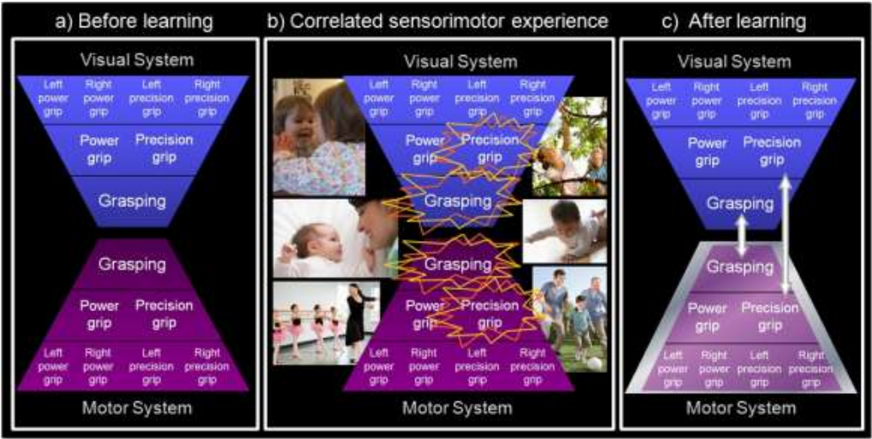
This article argues that mirror neurons originate in sensorimotor associative learning and therefore a new approach is needed to investigate their functions. Mirror neurons were discovered about 20 years ago in the monkey brain, and there is now evidence that they are also present in the human brain. The intriguing feature of many mirror neurons is that they fire not only when the animal is performing an action, such as grasping an object using a power grip, but also when the animal passively observes a similar action performed by another agent. It is widely believed that mirror neurons are a genetic adaptation for action understanding; that they were designed by evolution to fulfill a specific socio-cognitive function. In contrast, we argue that mirror neurons are forged by domain-general processes of associative learning in the course of individual development, and, although they may have psychological functions, they do not necessarily have a specific evolutionary purpose or adaptive function. The evidence supporting this view shows that (1) mirror neurons do not consistently encode action "goals"; (2) the contingency- and context-sensitive nature of associative learning explains the full range of mirror neuron properties; (3) human infants receive enough sensorimotor experience to support associative learning of mirror neurons ("wealth of the stimulus"); and (4) mirror neurons can be changed in radical ways by sensorimotor training. The associative account implies that reliable information about the function of mirror neurons can be obtained only by research based on developmental history, system-level theory, and careful experimentation.
Verified 2026-11-25 · 1 reference not checked yet
Overview
CoChat Summary
TL;DR
The paper argues that mirror neurons are forged by domain-general sensorimotor associative learning rather than being a genetic adaptation for action understanding. It reviews evidence that mirror neuron properties are contingency- and context-sensitive, that infants receive sufficient sensorimotor experience, and that mirror responses can be changed radically by training.
Key findings
- Mirror neurons do not consistently encode action “goals”: 73% of mirror-neuron responses modulated by observation of object-directed grasping also showed similar modulation for pantomimed grasping; many MNs show left/right-hand sensitivity (37.5%), direction sensitivity (64%), peripersonal/extrapersonal selectivity (53%), and view dependence (74%).
- Associative learning’s contingency sensitivity and contextual modulation can explain the full range of reported MN field properties, including strictly congruent, broadly congruent, logically-related, tool-use, and audiovisual MNs.
- Human infants receive a “wealth of the stimulus”: in face-to-face caregiver interaction they are imitated on average once per minute, and when contingency is high infants can learn action-effect associations in just a few trials.
- Brief sensorimotor training changes mirror mechanisms: approximately 50 minutes of pincer-hand training made automatic imitation for a robotic pincer as strong as for a human hand, and approximately 90 minutes of counter-mirror training reversed MEP mirror responses.
Methods
- Theoretical review/target article; no new empirical data or sample. It synthesizes monkey single-unit recording, human fMRI, TMS/MEP, automatic imitation, infant imitation/EEG, and adult sensorimotor-training studies.
- Main analysis is conceptual: it compares the genetic account and associative account, evaluates four kinds of evidence—goal coding, learning mechanisms, infant development, and adult sensorimotor plasticity—and discusses canalization/exaptation alternatives and methodological implications.
Limitations
- Stated: there is no consensus on what “action understanding” means or how it differs from action perception/recognition, making functional claims hard to test; human MN activity cannot be localized precisely, and many studies assume ventral PMC/IPL activity is MN activity even though fewer than 20% of neurons in classical mirror areas may be MNs.
- Stated: no studies systematically test effects of sensorimotor learning on MN responses in monkeys; the paper calls for research based on developmental history, system-level theory, and careful experimentation.
- Evident from the text: as a theoretical review, it does not provide new primary data, and much human evidence relies on indirect measures (fMRI, MEPs, automatic imitation) rather than single-unit recording.
Model-written summary. Check it against the paper before relying on it.
Integrity signals
Registry
Cites
Statistics
Figures
Verification
Claims the paper makes
11 Valid · 9 Not valid · 29 Not checked · 106 Own results and interpretations
Every source the paper cites for this claim was checked and supports it.
In the paper
“Only one study purports to offer direct evidence - from single cell recording - of MNs in the human brain (Mukamel et al., 2010).”
What the sources say
- Supportedcites Mukamel et al., 2010 matched to “Single-Neuron Responses in Humans during Execution and Observation of Actions” (2010) source
The Summary reports extracellular recordings from 1,177 cells in human patients and neurons that responded during both action observation and execution. The Discussion says the findings demonstrate mirror mechanisms in humans at the single-neuron level. The citation identifies Mukamel et al. as the study offering that direct evidence; the paper does not itself establish the citing authors’ broader 'only one study' framing. (LLM, conf=0.91)
hedged- Asserted: passes — The authors put it forward as true.
- Checkable: passes — It can be checked against evidence.
- Load-bearing: unclear — It is unclear whether the paper’s conclusions depend on it.
- Based: passes — The paper gives a reason why it holds.
- Supported
The cited sources support only part of this claim — read each source’s verdict below.
In the paper
“Even when action stimuli are presented, intention understanding does not necessarily recruit mirror areas”
What the sources say
- Supportedcites Brass, Schmitt, Spengler, & Gergely, 2007 matched to “Investigating Action Understanding: Inferential Processes versus Action Simulation” (2007) source
The Results (p. ~2, ROI analysis) report that with action stimuli presented, no differential activation was found in the mirror system (inferior frontal or inferior parietal cortex) even at an uncorrected p < .001, while intention/goal discrimination activated the STS, pSTS and aFMC; the Discussion states 'no differential activation was found in the mirror network as a function of context-based plausibility.' The Discussion further limits the mirror network's role to familiar actions in stereotypic contexts, i.e. mirror recruitment is not required for understanding the intention ('why') of an observed action — matching the hedged 'does not necessarily'. The paper's own caveat ('do not exclude the possibility that the mirror network is involved') is consistent with, not contrary to, a 'not necessarily' claim. (LLM, conf=0.85)
- Partly supportedcites de Lange, Spronk, Willems, Toni, & Bekkering, 2008 matched to “Complementary Systems for Understanding Action Intentions” (2008) sourceExperimental — accuracy not yet measured
The Results and Discussion (page not specified in our copy) show that reflecting on observed actions’ intentions engages mentalizing regions outside the mirror-neuron system. But the paper also reports that the inferior frontal gyrus, a mirror-system area, encodes observed actions’ intentionality automatically. It does not establish that intention understanding occurs without recruiting mirror areas. (LLM, conf=0.84)
plain- Asserted: passes — The authors put it forward as true.
- Checkable: passes — It can be checked against evidence.
- Load-bearing: passes — The paper’s conclusions depend on it.
- Based: passes — The paper gives a reason why it holds.
- Supported
Every source the paper cites for this claim was checked and supports it.
In the paper
“with rare exceptions (Mukamel et al., 2010), MN activity cannot be localized precisely within the human brain.”
What the sources say
- Supportedcites Mukamel et al., 2010 matched to “Single-Neuron Responses in Humans during Execution and Observation of Actions” (2010) source
The citation identifies Mukamel et al. as a rare exception, rather than attributing the general localization limit to them. The Results describe single-neuron recordings in named human brain regions and refer to the anatomical locations of the electrodes; the Discussion reports mirroring responses at the single-cell level in the medial frontal and temporal cortex. (LLM, conf=0.91)
plain- Asserted: passes — The authors put it forward as true.
- Checkable: passes — It can be checked against evidence.
- Load-bearing: passes — The paper’s conclusions depend on it.
- Based: passes — The paper gives a reason why it holds.
- Supported
The cited sources support only part of this claim — read each source’s verdict below.
In the paper
“there is no evidence that the tendency of infants to look at their own hands evolved to promote the development of MNs or action understanding rather than visuomotor control”
What the sources say
- Partly supportedcites Del Giudice et al., 2009 matched to “Programmed to learn? The ontogeny of mirror neurons” (2009) sourceExperimental — accuracy not yet measured
The Conclusions (page unavailable) say infants’ attention to their own moving hands may have evolved primarily to support visuomotor control, rather than for the adaptive value of a mirror system. But the paper presents this as a tentative evolutionary account compatible with different scenarios; it does not establish the claim’s categorical statement that there is no evidence for the alternative. (LLM, conf=0.82)
plain- Asserted: passes — The authors put it forward as true.
- Checkable: passes — It can be checked against evidence.
- Load-bearing: passes — The paper’s conclusions depend on it.
- Based: passes — The paper gives a reason why it holds.
- Partly supported
The cited sources support only part of this claim — read each source’s verdict below.
In the paper
“It has long been recognized that associative learning depends, not only on contiguity - events occurring close together in time - but also on contingency - the degree to which one event reliably predicts the other.”
What the sources say
- Not checked — no full text of the sourcecites Elsner & Hommel, 2004 matched to “Contiguity and contingency in action-effect learning” (2004) source
- Partly supportedcites Rescorla, 1968 matched to “Probability of shock in the presence and absence of cs in fear conditioning.” (1968) sourceExperimental — accuracy not yet measured
The opening passage defines contingency as the probability of the unconditioned stimulus in the presence versus absence of the conditioned stimulus, and the Discussion reports that pairings alone did not produce conditioning when that probability did not increase. This supports the contrast with contiguity for Pavlovian fear conditioning, but the paper does not establish the claim for associative learning generally. (LLM, conf=0.82)
- Not checked — no full text of the sourcecites Schultz & Dickinson, 2000 matched to “Neuronal Coding of Prediction Errors” (2000) source
boostedstates a cause- Asserted: passes — The authors put it forward as true.
- Checkable: passes — It can be checked against evidence.
- Load-bearing: passes — The paper’s conclusions depend on it.
- Based: passes — The paper gives a reason why it holds.
81 more claims · 5 with their cited sources checked
Create a free account to see all 155 claims and to verify the 6 references still open.
- It may state two separate claims as one. 26
- Probably not a substantial claim. 52
Citations
Cites
Wu, Y. (1999) · Technometrics · doi:10.1080/00401706.1999.10485951 · Cited by 27,221
James, W. (1913) · Henry Holt and Company eBooks · doi:10.1037/11059-000 · Cited by 25,226
Rudin, W. (1973) · Cited by 13,740
A feature-integration theory of attention.
Treisman, A. M., & Gelade, G. (1980) · Cognitive Psychology · doi:10.1016/0010-0285(80)90005-5 · Cited by 12,366
Rescorla, R. A. (1972) · Medical Entomology and Zoology · Cited by 9,661
Chomsky, N. (2014) · The MIT Press eBooks · doi:10.7551/mitpress/9780262527347.001.0001 · Cited by 8,244
Distributed hierarchical processing in the primate cerebral cortex
Felleman, D. J., & Van Essen, D. C. (1991) · Cerebral Cortex · doi:10.1093/cercor/1.1.1 · Cited by 7,783
Rizzolatti, G., & Craighero, L. (2004) · Annual Review of Neuroscience · doi:10.1146/annurev.neuro.27.070203.144230 · Cited by 7,433 · cited 4×
“…“the mirror neuron mechanism is a mechanism of great evolutionary importance through which primates understand actions done by their conspecifics” (Rizzolatti & Craighero, 2004, p.172) and that “in their basic properties, MNs constitute a relatively simple action-perception mechanism that could…”
BackgroundInfluentialCulture and the Evolutionary Process
Griesemer, J. R., Boyd, R., & Richerson, P. J. (1986) · The Condor · doi:10.2307/1367778 · Cited by 7,034
Whatever next? Predictive brains, situated agents, and the future of cognitive science
Clark, A. (2013) · Behavioral and Brain Sciences · doi:10.1017/s0140525x12000477 · Cited by 5,924
Research works printed but not linked: 3
- Press, C., Catmur, C., Cook, R., Widman, H., Heyes, C., & Bird, G. (2012). fMRI adaptation reveals geometric shape 'mirror neurons'. PLoS One, 7 (12), e51934.
- Elman, J. L., Bates, E., Johnson, M. H., Karmiloff-Smith, A., Parisi, D., & Plunkett, K. (1996). Rethinking innateness: Connectionism in a developmental framework: Cambridge, MA: MIT Press.
- Pawlby, S. J. (1977). Imitative interaction. In H. Schaffer (Ed.), Studies in mother-infant interaction (pp. 203-224). New York: Academic Press.
Cited by
Items 101–200 of 618
Embodied self-other overlap in romantic love: a review and integrative perspective
Quintard, V., Jouffe, S., Hommel, B., & Bouquet, C. A. (2020) · Psychological Research · doi:10.1007/s00426-020-01301-8 · Cited by 52
Self‐processing in individuals with autism spectrum disorder
Nijhof, A. D., & Bird, G. (2019) · Autism Research · doi:10.1002/aur.2200 · Cited by 49
Self-citationNo evidence for a common self-bias across cognitive domains
Nijhof, A. D., Shapiro, K. L., Catmur, C., & Bird, G. (2020) · Cognition · doi:10.1016/j.cognition.2020.104186 · Cited by 47
“These links have been argued to be crucial in the development of imitation (Catmur, Walsh, & Heyes, 2009; Cook, Bird, Catmur, Press, & Heyes, 2014), empathy (Bird & Viding, 2014; Heyes & Bird, 2007; Quattrocki & Friston, 2014), and Theory of Mind (Ondobaka, Kilner, & Friston, 2017).”
Self-citationWhat happened to mirror neurons?Preprint
Heyes, C. M., & Catmur, C. (2020) · doi:10.31234/osf.io/dtnqg · Cited by 42
Self-citationDo Newborns Have the Ability to Imitate?
Slaughter, V. P. (2021) · Trends in Cognitive Sciences · doi:10.1016/j.tics.2021.02.006 · Cited by 48
Holding Biological Motion in Working Memory: An fMRI Study
Lu, X., Huang, J., Yi, Y., Shen, M., Weng, X., & Gao, Z. (2016) · Frontiers in Human Neuroscience · doi:10.3389/fnhum.2016.00251 · Cited by 40
“Therefore, both EEG and fMRI evidence suggest that we retain BM stimuli by simulating BM via our cortical motor system (Cook et al., 2014).”
BackgroundKemmerer, D. L. (2014) · Language and Cognition · doi:10.1017/langcog.2014.36 · Cited by 42
Relativity in Social Cognition: Basic processes and novel applications of social comparisons
Unkelbach, C., Alves, H., Baldwin, M. W., Crusius, J., Diel, K., Galinsky, A. D., Gast, A., Hofmann, W., Imhoff, R., Genschow, O., et al. (2023) · European Review of Social Psychology · doi:10.1080/10463283.2022.2161043 · Cited by 44
Observation and imitation of actions performed by humans, androids, and robots: an EMG study
Hofree, G., Ürgen, B. A., Winkielman, P., & Saygın, A. P. (2015) · Frontiers in Human Neuroscience · doi:10.3389/fnhum.2015.00364 · Cited by 52
“…and implications on social functioning and development became a matter of debate (Hickok, 2009) and, more importantly, of empirical investigation (e.g., Nelissen et al., 2005; Dinstein et al., 2007; Kilner et al., 2009; Lingnau et al., 2009; Mukamel et al., 2010; Hamilton, 2013; Cook et al., 2014).”
BackgroundTramacere, A., Pievani, T., & Ferrari, P. F. (2016) · Biological reviews/Biological reviews of the Cambridge Philosophical Society · doi:10.1111/brv.12310 · Cited by 43
“According to an associative model (Cook et al., 2014), MNs acquire ontogenetically their observation–execution matching properties through a domain-general process of sensorimotor associative learning.”
BackgroundMethodInfluentialMovement kinematics drive chain selection toward intention detection
Soriano, M., Cavallo, A., D’Ausilio, A., Becchio, C., & Fadiga, L. (2018) · Proceedings of the National Academy of Sciences · doi:10.1073/pnas.1809825115 · Cited by 39
Domain-specific and domain-general processes in social perception – A complementary approach
Michael, J., & D’Ausilio, A. (2014) · Consciousness and Cognition · doi:10.1016/j.concog.2014.12.009 · Cited by 36
“(2014) have proposed a deflationary explanation according to which the activation of motor areas during passive observation may result from domain-general associative learning (Cook et al., 2014).”
BackgroundGrisoni, L., Mohr, B., & Pulvermüller, F. (2019) · NeuroImage · doi:10.1016/j.neuroimage.2019.05.071 · Cited by 38
Inducing a concurrent motor load reduces categorization precision for facial expressions.
Ipser, A., & Cook, R. (2015) · Journal of Experimental Psychology Human Perception & Performance · doi:10.1037/xhp0000177 · Cited by 41
Self-citationCortical signatures of vicarious tactile experience in four-month-old infants
Rigato, S., Banissy, M. J., Romanska, A., Jha, R. T., van Velzen, J. L., & Bremner, A. J. (2017) · Developmental Cognitive Neuroscience · doi:10.1016/j.dcn.2017.09.003 · Cited by 38
“Such an account would be consistent with recent associative learning accounts of the development of action mirroring in early life (Cook et al., 2014; Heyes, 2010; Ray and Heyes, 2011).”
ResultZult, T., Goodall, S., Thomas, K., Hortobágyi, T., & Howatson, G. (2015) · Journal of Neurophysiology · doi:10.1152/jn.00686.2014 · Cited by 35
“Observation of a motor act performed by oneself, observation of a motor act performed by someone else, viewing a motor act in a mirror (which is often the case in dance and sport practice) all activate the same neural structures as the actual movement execution, producing subliminal facilitation of neurons forming the…”
BackgroundKilroy, E., Cermak, S. A., & Aziz‐Zadeh, L. (2019) · Brain Sciences · doi:10.3390/brainsci9040075 · Cited by 40
Automatic imitation of multiple agents: Simultaneous or random representation?
Cracco, E., & Braß, M. (2018) · Journal of Experimental Psychology Human Perception & Performance · doi:10.1037/xhp0000489 · Cited by 39
Eliminating mirror responses by instructions
Bardi, L., Bundt, C., Notebaert, W., & Braß, M. (2015) · Cortex · doi:10.1016/j.cortex.2015.04.018 · Cited by 40
“It was claimed that such a ‘mirror mechanism’ forms the basis for imitation, action understanding and social cognition (Bastiaansen, Thioux, & Keysers, 2009; Brass & Heyes, 2005; Cook et al., 2014; Gallese, 2003; Gallese & Goldman, 1998; Hurley, 2008; Rizzolatti & Craighero, 2004).”
BackgroundGalvez-Pol, A., Förster, B., & Calvo‐Merino, B. (2020) · Neuroscience & Biobehavioral Reviews · doi:10.1016/j.neubiorev.2020.06.014 · Cited by 43
Effective connectivity of the human mirror neuron system during social cognition
Sadeghi, S., Schmidt, S. N. L., Mier, D. U., & Haß, J. (2022) · Social Cognitive and Affective Neuroscience · doi:10.1093/scan/nsab138 · Cited by 42
“…processes (see Bekkali et al., 2020 for a meta-analysis), including imitation (Iacoboni, 2005; Molenberghs et al., 2009), action learning (Cook et al., 2014), emotion recognition (Keuken et al., 2011), theory of mind (ToM) (Gallese and Goldman, 1998; Mier et al., 2010b) and empathy…”
BackgroundDevelopment of Social Working Memory in Preschoolers and Its Relation to Theory of Mind
He, J., Guo, D., Zhai, S., Shen, M., & Gao, Z. (2019) · Child Development · doi:10.1111/cdev.13025 · Cited by 35
Jing, Y., Lin, T., Li, W., Wu, C., Li, X., Ding, Q., Wu, M., Xu, G., & Lan, Y. (2020) · Frontiers in Neuroscience · doi:10.3389/fnins.2020.00867 · Cited by 32
Ionta, S. (2021) · Frontiers in Human Neuroscience · doi:10.3389/fnhum.2021.689912 · Cited by 40
“The neural architecture for such visuo-motor couplings would be present already at birth (Meltzoff and Moore, 1977) and it would be promoted by the repeated exposure to sensorimotor events (Cook et al., 2014), being its development further depending on experience (Simpson et al.”
BackgroundObjects that direct visuospatial attention produce the search advantage for facing dyads.
Vestner, T., Over, H., Gray, K. L. H., & Cook, R. (2022) · Journal of Experimental Psychology General · doi:10.1037/xge0001067 · Cited by 37
Self-citationTime on your hands: Perceived duration of sensory events is biased toward concurrent actions.
Yon, D., Edey, R., Ivry, R. B., & Press, C. (2017) · Journal of Experimental Psychology General · doi:10.1037/xge0000254 · Cited by 42
Self-citationAdaptive Empathy: A Model for Learning Empathic Responses in Response to Feedback
Shamay‐Tsoory, S., & Hertz, U. (2022) · Perspectives on Psychological Science · doi:10.1177/17456916211031926 · Cited by 44
“The observation-execution system was shown to be engaged during such adaptive on-line interaction (Cook et al., 2014).”
MethodAnimacy and the prediction of behaviour
Schultz, J., & Frith, C. (2022) · Neuroscience & Biobehavioral Reviews · doi:10.1016/j.neubiorev.2022.104766 · Cited by 40
Automatic imitation? Imitative compatibility affects responses at high perceptual load.
Catmur, C. (2016) · Journal of Experimental Psychology: Human Perception and Performance · doi:10.1037/xhp0000166 · Cited by 30
Self-citationCarr, E. W., & Winkielman, P. (2014) · Frontiers in Human Neuroscience · doi:10.3389/fnhum.2014.00505 · Cited by 35
“Critically however, the MNS does not code the goal-directed nature of observed actions, nor does it necessarily even strictly “mirror” those perceived behaviors (Cook and Bird, 2013; Cook et al., 2014).”
BackgroundThe role of mirror neurons in observational motor learning: an integrative review
Lago-Rodríguez, Á., Cheeran, B., Koch, G., Hortobagy, T., & Fernández‐del‐Olmo, M. (2014) · Dialnet (Universidad de la Rioja) · Cited by 53
Human-Robot Collaboration: From Psychology to Social RoboticsPreprint
Bütepage, J., & Kragić, D. (2017) · arXiv (Cornell University) · doi:10.48550/arxiv.1705.10146 · Cited by 73
“While some studies argue that the mirror neuron system is genetically predefined (44), a more recent direction suggests that it is the result of associative learning in a social context (45, 46).”
BackgroundLanguage writ large: LLMs, ChatGPT, meaning, and understanding
Harnad, S. R. (2025) · Frontiers in Artificial Intelligence · doi:10.3389/frai.2024.1490698 · Cited by 86
“Since OG is a (perception/production) mirror capacity , imitation learning, a kind of a combination of unsupervised and supervised/reinforcement learning, is also involved in human OG learning (with the help, in humans, of “mirror-neurons”) (Cook et al., 2014).”
Brunsdon, V. E. A., Bradford, E. E. F., & Ferguson, H. J. (2019) · Developmental Cognitive Neuroscience · doi:10.1016/j.dcn.2019.100659 · Cited by 33
Group membership does not modulate automatic imitation
Genschow, O., Westfal, M., Cracco, E., & Crusius, J. (2021) · Psychological Research · doi:10.1007/s00426-021-01526-1 · Cited by 32
What are cognitive processes? An example-based approach
Newen, A. (2015) · Synthese · doi:10.1007/s11229-015-0812-3 · Cited by 42
“Recent philosophy of mind has seen intense discussion concerning whether cognition is brain-bound (Adams and Aizawa 2008) or extended (Clark and Chalmers 1998; Menary 2010), embodied (Gallagher 2005), embedded (Robbins and Aydede 2009) or B Albert Newen albert.newen@rub.de 1 Institute of Philosophy…”
Interbrain cortical synchronization encodes multiple aspects of social interactions in monkey pairs
Tseng, P.-H., Rajangam, S., Lehew, G., Lebedev, M., & Nicolelis, M. A. L. (2018) · Scientific Reports · doi:10.1038/s41598-018-22679-x · Cited by 36
A Bio-Inspired Mechanism for Learning Robot Motion From Mirrored Human Demonstrations
Zahra, O., Tolu, S., Zhou, P., Duan, A., & Navarro-Alarcón, D. (2022) · Frontiers in Neurorobotics · doi:10.3389/fnbot.2022.826410 · Cited by 28
“In primates, specific neurons in several brain regions, called mirror neurons , are proven to trigger almost the same output while executing or observing the same task (Heyes, 2010; Cook et al., 2014).”
BackgroundTPJ-M1 interaction in the control of shared representations: New insights from tDCS and TMS combined
Bardi, L., Gheza, D., & Brass, M. (2017) · NeuroImage · doi:10.1016/j.neuroimage.2016.10.050 · Cited by 22
Corsi, E., Cardi, V., Sowden, S., Coll, M., Cascino, G., Ricca, V., Treasure, J. L., Bird, G., & Monteleone, A. M. (2021) · International Journal of Eating Disorders · doi:10.1002/eat.23556 · Cited by 33
Self-citationThe complexity of understanding others as the evolutionary origin of empathy and emotional contagion
Mafessoni, F., & Lachmann, M. (2019) · Scientific Reports · doi:10.1038/s41598-019-41835-5 · Cited by 41
Synchronization between instructor and observer when learning a complex bimanual skill
Kostorz, K., Flanagin, V. L., & Glasauer, S. (2020) · NeuroImage · doi:10.1016/j.neuroimage.2020.116659 · Cited by 26
Method and Evidence: Gesture and Iconicity in the Evolution of Language
Irvine, E. (2016) · Mind & Language · doi:10.1111/mila.12102 · Cited by 31
“…learning was likely important in 1 This research makes it possible to make a case for gesture-first hypotheses without relying on controversial mirror-neurons (Cook et al. 2014; Heyes, 2010a, 2010b), and is perhaps best developed by Tomasello and Sterelny. already been the target of selection 2 .”
BackgroundMethodCulture, Mind, and Brain: Emerging Concepts, Models, and Applications
Kirmayer, L. J., Worthman, C. M., Kitayama, S., Lemelson, R., & Cummings, C. (2020) · Cambridge University Press eBooks · doi:10.1017/9781108695374 · Cited by 32
Culture in Mind – An Enactivist Account: Not Cognitive Penetration but Cultural Permeation
Hutto, D. D., Gallagher, S., Ilundáin‐Agurruza, J., & Hipólito, I. (2020) · Cambridge University Press eBooks · doi:10.1017/9781108695374.009 · Cited by 39
Intentionally not imitating: Insula cortex engaged for top-down control of action mirroring
Campbell, M. E. J., Mehrkanoon, S., & Cunnington, R. (2018) · Neuropsychologia · doi:10.1016/j.neuropsychologia.2018.01.037 · Cited by 26
“This suggests that mirror neurons code movement goals for understanding action intentions (Sinigaglia, 2013; for contrasting arguements see: Cook & Bird 2013; Cook et al., 2014).”
BackgroundThe evolution of continuous learning of the structure of the environment
Kolodny, O., Edelman, S., & Lotem, A. (2014) · Journal of The Royal Society Interface · doi:10.1098/rsif.2013.1091 · Cited by 27
Are you looking at me? Mu suppression modulation by facial expression direction
Ensenberg-Diamant, N., Perry, A., & Aviezer, H. (2016) · Cognitive Affective & Behavioral Neuroscience · doi:10.3758/s13415-016-0470-z · Cited by 29
“Associative accounts postulate that the mirror properties of the human MNs are not wholly innate or fixed and thusmay bemodulated by experience (Cook et al., 2014).”
BackgroundArbilly, M., & Lotem, A. (2017) · Proceedings of the Royal Society B Biological Sciences · doi:10.1098/rspb.2017.1616 · Cited by 40
Imitation inhibition in children with Tourette syndrome
Brandt, V. C., Moczydlowski, A., Jonas, M., Boelmans, K., Bäumer, T., Braß, M., & Münchau, A. M. (2017) · Journal of Neuropsychology · doi:10.1111/jnp.12132 · Cited by 25
Mirroring Brains: How we understand others from the inside
Rizzolatti, G., & Sinigaglia, C. (2023) · doi:10.1093/oso/9780198871705.001.0001 · Cited by 34
Paired Associative Stimulation drives the emergence of motor resonance
Guidali, G., Carneiro, M. I. S., & Bolognini, N. (2020) · Brain stimulation · doi:10.1016/j.brs.2020.01.017 · Cited by 25
No evidence for somatosensory attenuation during action observation of self‐touch
Kilteni, K., Engeler, P., Boberg, I., Maurex, L., & Ehrsson, H. H. (2021) · European Journal of Neuroscience · doi:10.1111/ejn.15436 · Cited by 27
Casartelli, L., & Chiamulera, C. (2015) · Cognitive Affective & Behavioral Neuroscience · doi:10.3758/s13415-015-0399-7 · Cited by 25
Mirroring ‘meaningful’ actions: Sensorimotor learning modulates imitation of goal-directed actions
Catmur, C., & Heyes, C. M. (2018) · Quarterly Journal of Experimental Psychology · doi:10.1080/17470218.2017.1344257 · Cited by 30
Self-citationMa, G., Jin, C., Wang, H., Li, P., & Kang, H. S. (2022) · Ocean Engineering · doi:10.1016/j.oceaneng.2022.113287 · Cited by 26
Visual and Motor Features of the Meanings of Action Verbs: A Cognitive Neuroscience Perspective
Kemmerer, D. L. (2014) · Springer eBooks · doi:10.1007/978-3-319-10112-5_9 · Cited by 27
Wang, T., Chen, Y.-H., & Sawan, M. (2023) · Bioengineering · doi:10.3390/bioengineering10030281 · Cited by 26
“MNs were found in area F5 of the ventral premotor cortex located in the frontal lobe, and the inferior parietal lobule [44].”
BackgroundMessum, P., & Howard, I. S. (2015) · Journal of Phonetics · doi:10.1016/j.wocn.2015.08.005 · Cited by 33
“As Cook et al. (2014, p. 186) point out, “ A common misconception about associative learning is that it always occurs slowly.”
InfluentialCandidi, M., Sacheli, L. M., & Aglioti, S. M. (2015) · Physics of Life Reviews · doi:10.1016/j.plrev.2015.01.023 · Cited by 29
Papadourakis, V., & Raos, V. (2017) · Journal of Neurophysiology · doi:10.1152/jn.00816.2016 · Cited by 27
“The sensitivity of MirNs to low-level features of the observed actions has also been proposed by other researchers (Cook and Bird 2013; Cook et al. 2014).”
BackgroundBridging the species gap in translational research for neurodevelopmental disorders
Ryan, A. M., Berman, R. F., & Bauman, M. D. (2018) · Neurobiology of Learning and Memory · doi:10.1016/j.nlm.2018.10.006 · Cited by 28
Berchicci, M., Tamburro, G., & Comani, S. (2015) · Frontiers in Human Neuroscience · doi:10.3389/fnhum.2015.00039 · Cited by 29
The cultural evolution of cultural evolutionPreprint
Birch, J., & Heyes, C. M. (2020) · doi:10.31234/osf.io/nmuva · Cited by 24
Self-citationTruskanov, N., & Lotem, A. (2017) · Proceedings of the Royal Society B Biological Sciences · doi:10.1098/rspb.2016.2744 · Cited by 27
Tian, L., Oviatt, S. L., Muszyński, M., Chamberlain, B. C., Healey, J., & Sano, A. (2022) · ACM eBooks · doi:10.1145/3502398 · Cited by 31
Lahuerta-Martín, S., Llamas‐Ramos, R., & Llamas‐Ramos, I. (2022) · Journal of Clinical Medicine · doi:10.3390/jcm11144236 · Cited by 27
Basavaraju, R., Mehta, U. M., Pascual‐Leone, Á., & Thirthalli, J. (2018) · Bipolar Disorders · doi:10.1111/bdi.12723 · Cited by 28
Altered Central Autonomic Network in Baseball Players: A Resting-state fMRI Study
Sie, J., Chen, Y.-H., Chang, C., Yen, N., Chu, W., & Shiau, Y.-H. (2019) · Scientific Reports · doi:10.1038/s41598-018-36329-9 · Cited by 26
Wan, C., Zhang, Q., Qiu, Y., Zhang, W., Nie, Y., Zeng, S., Wang, J., Shen, X., Cui, Y., Wu, X., et al. (2025) · Journal of NeuroEngineering and Rehabilitation · doi:10.1186/s12984-025-01730-9 · Cited by 28
“Both patient-initiated motor imagery and motor observation with the aid of video or mirroring can effectively activate mirror neurons to promote motor function recovery [42, 43].”
Fiave, P. A., Sharma, S., Jastorff, J., & Nelissen, K. (2018) · NeuroImage · doi:10.1016/j.neuroimage.2018.05.043 · Cited by 27
“Both humans (Allison et al., 2000; Oosterhof et al., 2013; Wurm and Lingnau, 2015; Vander Wyk et al., 2012; Deen et al., 2015; Jastorff et al., 2016) and monkeys (Perrett et al., 1989; Puce and Perrett, 2003; Barraclough et al., 2009; Nelissen et al., 2006, 2011; Jastorff et al., 2012) have several…”
Sample magic: (conjuring) phonographic ghosts and meta-illusions in contemporary hip-hop production
Exarchos, M. (2019) · Popular Music · doi:10.1017/s0261143018000685 · Cited by 21
“Coercing the listener into sympathetic motion through constructed experiences that trigger the right kind of neural mirroring (Cook et al. 2014), as Zagorski-Thomas demonstrates above.”
Manenti, R., Bianchi, M., Cosseddu, M., Brambilla, M., Rizzetti, M. C., Padovani, A., Borroni, B., & Cotelli, M. (2015) · Frontiers in Aging Neuroscience · doi:10.3389/fnagi.2015.00049 · Cited by 23
“A possible explanation of our results is that anodal tDCS effects the brain network involved in action-language and action-representation (Rizzolatti et al., 2001; Cook et al., 2014; Passingham et al., 2014).”
ResultAntunes, G., da Silva, S. F. F., & de Souza, F. M. S. (2018) · International Journal of Neural Systems · doi:10.1142/s0129065717500587 · Cited by 21
40 years of Bio-Psycho-Social model: what’s new?
Холмогорова, А. Б., & Rychkova, O. V. (2017) · Social Psychology and Society · doi:10.17759/sps.2017080402 · Cited by 31
Visual feedback therapy for restoration of upper limb function of stroke patients
Zhu, M., Zeng, M., Shi, M., Gu, X., Shen, F., Zheng, Y., & Jia, Y. (2020) · International Journal of Nursing Sciences · doi:10.1016/j.ijnss.2020.04.004 · Cited by 24
Dance, aging, and neuroplasticity: an integrative review
Nascimento, M. D. M. (2021) · Neurocase · doi:10.1080/13554794.2021.1966047 · Cited by 27
“This memory mechanism is capable of activating mirror neurons, which stimulate a larger network of neurons, favoring the reconnection of a large number of synapses (Cook et al., 2014).”
BackgroundInfluentialRajaratnam, V., Rahman, N., & Dong, C. (2021) · Annals of The Royal College of Surgeons of England · doi:10.1308/rcsann.2020.7132 · Cited by 25
Guo, P., Hu, S., Jiang, X., Zheng, H., Mo, D., Cao, X., Zhu, J., & Zhong, H. (2022) · Frontiers in Psychiatry · doi:10.3389/fpsyt.2022.798105 · Cited by 28
“The precentral gyrus is considered to be the core area of the mirror-neuron system and plays a fundamental role in both action understanding and imitation (67), associated with the realization of a variety of social cognitive functions (68, 69).”
BackgroundTurrini, S., Fiori, F., Bevacqua, N., Saracini, C., Lucero, B. A., Candidi, M., & Avenanti, A. (2024) · Proceedings of the National Academy of Sciences · doi:10.1073/pnas.2404925121 · Cited by 27
Deciphering human motion to discriminate social interactions: a developmental neuroimaging study
Sapey‐Triomphe, L., Centelles, L., Roth, M., Fonlupt, P., Hénaff, M., Schmitz, C., & Assaiante, C. (2016) · Social Cognitive and Affective Neuroscience · doi:10.1093/scan/nsw117 · Cited by 27
“Indeed, according to a developmental account of the mirror neuron system function, it is forged by sensori-motor experience in the course of individual development (Heyes, 2013; Cook et al., 2014).”
BackgroundNon-invasive stimulation of the social brain: the methodological challenges
Penton, T., Catmur, C., Banissy, M. J., Bird, G., & Walsh, V. (2022) · Social Cognitive and Affective Neuroscience · doi:10.1093/scan/nsaa102 · Cited by 21
“It has been suggested that this ability to map observed movements onto the observer’s own motor representations may assists in understanding another’s actions (Rizzolatti and Sinigaglia, 2010), although a re-analysis of available data suggests mirror neurons instead respond to socially contingent actions (e.g. imitati…”
Self-citationMurray, L., Bozicevic, L., Ferrari, P. F., Vaillancourt, K., Dalton, L. J., Goodacre, T., Chakrabarti, B., Bicknell, S., Cooper, P., Stein, A. L., et al. (2018) · Neural Plasticity · doi:10.1155/2018/5314657 · Cited by 25
“It has been suggested that mirroring is effective by virtue of its being frequent and highly contingent [36, 37].”
BackgroundGendron, M., Mesquita, B., & Barrett, L. F. (2020) · Culture, Mind, and Brain · doi:10.1017/9781108695374.010 · Cited by 20
Association but not Recognition: an Alternative Model for Differential Imitation from 0 to 2 Months
Vincini, S., & Jhang, Y. (2017) · Review of Philosophy and Psychology · doi:10.1007/s13164-017-0373-0 · Cited by 21
Embodied learning of a generative neural model for biological motion perception and inference
Schrodt, F., Layher, G., Neumann, H., & Butz, M. V. (2015) · Frontiers in Computational Neuroscience · doi:10.3389/fncom.2015.00079 · Cited by 22
Becoming better together: The early development of interpersonal coordination
Meyer, M., & Hunnius, S. (2020) · Progress in brain research · doi:10.1016/bs.pbr.2020.06.012 · Cited by 26
Exploring the relationship between social power and the ERP components of empathy for pain
Galang, C. M., Jenkins, M. A., Fahim, G., & Obhi, S. S. (2021) · Social Neuroscience · doi:10.1080/17470919.2021.1886165 · Cited by 24
Ando, A. M. C., Pineda, J. A., Giromini, L., Soghoyan, G., QunYang, Bohm, M., Maryanovsky, D., & Zennaro, A. (2017) · Brain Research · doi:10.1016/j.brainres.2017.12.007 · Cited by 21
How passive is passive listening? Toward a sensorimotor theory of auditory perception
Froese, T., & González-Grandón, X. A. (2019) · Phenomenology and the Cognitive Sciences · doi:10.1007/s11097-019-09641-6 · Cited by 46
The ideomotor recycling theory for tool use, language, and foresight
Badets, A., & Osiurak, F. (2016) · Experimental Brain Research · doi:10.1007/s00221-016-4812-4 · Cited by 24
Brain asymmetry in the white matter making and globularity
Theofanopoulou, C. (2015) · Frontiers in Psychology · doi:10.3389/fpsyg.2015.01355 · Cited by 20
“What is not yet appreciated is that MN respond to the observation of lipsmacking and hand- actions (Ferrari et al., 2003) by inhibiting Frontiers in Psychology | www.frontiersin.org 6 September 2015 | Volume 6 | Article 1355 mu rhythm (Vanderwert et al., 2013; Cook et al., 2014).”
BackgroundThe rediscovered motor-related area 55b emerges as a core hub of music perception
Siman-Tov, T., Gordon, C. R., Avisdris, N., Shany, O., Lerner, A., Shuster, O., Granot, R., & Hendler, T. (2022) · Communications Biology · doi:10.1038/s42003-022-04009-0 · Cited by 25
Tedeschi, R., Platano, D., Donati, D., & Giorgi, F. (2024) · Journal of Clinical Medicine · doi:10.3390/jcm13154539 · Cited by 20
“This activation can lead to empathy in actions and plays a crucial role in motor learning processes [16].”
BackgroundEffects of Sequences of Cognitions on Group Performance Over Time
Molenaar, I., & Chiu, M. M. (2017) · Small Group Research · doi:10.1177/1046496416689710 · Cited by 19
Pictures, Emotions, and the Dorsal/Ventral Account of Picture Perception
Ferretti, G. (2017) · Review of Philosophy and Psychology · doi:10.1007/s13164-017-0330-y · Cited by 26
Action observation effects reflect the modular organization of the human motor system
Hilt, P. M., Bartoli, E., Ferrari, E., Jacono, M., Fadiga, L., & D’Ausilio, A. (2017) · Cortex · doi:10.1016/j.cortex.2017.07.020 · Cited by 19
Cultural Differences in Perceiving Sounds Generated by Others: Self Matters
Cao, L., & Groß, J. (2015) · Frontiers in Psychology · doi:10.3389/fpsyg.2015.01865 · Cited by 26
“…(mean = 0.43, SD = 0.16) (t(29) = 3.20, p < 0.01, CI = [0.02, 0.11], Cohen’s d = 0.58), which was not the case for British participants (‘other’ conditions: mean = 0.52, SD = 0.16; ‘computer’ condition: mean = 0.52, SD = 0.15; t(26) = −0.11, p = 0.91, CI = [−0.05, 0.04], Cohen’s d = −0.02).”
BackgroundInfluentialEEG-Based Evidence of Mirror Neuron Activity from App-Mediated Stroke Patient Observation
Kim, J.-C., & Lee, H.-M. (2021) · Medicina · doi:10.3390/medicina57090979 · Cited by 20
Miss, F. M., Adriaense, J. E. C., & Burkart, J. M. (2022) · Neuroscience & Biobehavioral Reviews · doi:10.1016/j.neubiorev.2022.104924 · Cited by 29
“Even though mirror neurons may play a role in action understanding (Cook et al., 2014; Rizzolatti et al., 2001; Umiltà et al., 2001), a sole bottom-up “mirroring” of action goals J ur na l P re -p ro of”
Background
Metadata
- Authors
- Cook, R., Bird, G., Catmur, C., Press, C., & Heyes, C.
- Affiliations
- City, University of London (GB)
- King's College London (GB)
- University of Surrey (GB)
- University of London (GB)
- University of Oxford (GB)
- Venue
- Behavioral and Brain Sciences
- Publisher
- Cambridge University Press (CUP)
- Published
- 2014-04
- Volume
- 37
- Issue
- 2
- Pages
- 177-192
- ISSN
- 0140-525X (ISSN-L)
- 1469-1825
- OpenAlex
- W2096117537
- Semantic Scholar
- 6bc7f93eb174e03ff59e789f9dcc514969c1737b
- Cited by
- 647
- References
- 550
- Citations by year
- 2026: 32 · 2025: 34 · 2024: 48 · 2023: 38 · 2022: 66 · 2021: 47 · 2020: 74 · 2019: 55 · 2018: 61 · 2017: 56 · 2016: 51 · 2015: 46 · 2014: 29
- FWCI
- 7.52
- Type
- journal article
- Language
- en
- Open access
- green
- kclpure.kcl.ac.uk
- Locations
- Behavioral and Brain Sciences (publishedVersion)
- PubMed (publishedVersion)
- Surrey Research Insight Open Access (The University of Surrey) (submittedVersion)
- Research Portal (King's College London) (submittedVersion)
- City Research Online (City University London) (submittedVersion)
- BIROn (Birkbeck, University of London) (submittedVersion)
- UCL Discovery (University College London) (submittedVersion)
- Iris (University of Trento) (submittedVersion)
- Funders
- Economic and Social Research Council (ES/K00140X/1)
- Topics
- Social Sciences › Psychology › Social Psychology › Action Observation and Synchronization
- Life Sciences › Neuroscience › Cognitive Neuroscience › Motor Control and Adaptation
- Life Sciences › Agricultural and Biological Sciences › Ecology, Evolution, Behavior and Systematics › Primate Behavior and Ecology
- Keywords
- mirror neurons, action understanding, action observation, evolutionary function, contingency learning, sensorimotor training, power grip, action goals
- MeSH terms
- Animals, Association Learning, Brain, Biological Evolution, Humans, Learning, Social Behavior, Social Perception, Mirror Neurons
About these checks
Registry, retraction, Cites and statistics results are computed, not judged, with one exception: a printed reference that no index lists is read once by a model before it counts as a citation error. Claims are extracted by a model and kept only when their quote appears verbatim in the text; each cited source is then checked, with a model’s help, for whether it says what the claim relies on. Those verdicts can be wrong — read the claim’s quote and the cited source before relying on one.
The claim verdicts this report counts are experimental: their accuracy is not yet measured.
A language model drew the claims from the paper on 2026-10-10, under version 3 of the claim definition (model deepseek-v4.1-flash, prompt extract-v3).
A second model labelled each claim on 2026-10-10 (model jev-1.13-20260917, definition revision gold-guideline-v0.2).
Cited sources are checked with a language model’s help (gpt-6-sol and qwen3.8-omni-flash).
Statistics and arithmetic are recomputed, not judged.
Confidence bands are shown only for fields calibrated on our annotated test set. None is calibrated yet, so no band is shown.
What counts as a claim ›How we measure confidence ›How we check this ›
Are you an author, or do you see a problem with this page? Request a review
Data sources
Bibliographic data: Semantic Scholar, OpenAlex, Crossref.
Contains information from the Semantic Scholar Academic Graph Datasets, made available under the ODC Attribution License (ODC-BY 1.0).
Semantic Scholar’s data is described in: Kinney, R., et al. (2023). The Semantic Scholar Open Data Platform. arXiv:2301.10140.
