

Towards microbial fermentation metabolites as markers for health benefits of prebiotics
Open accessThe DOI matches its Crossref record; 269 of the 269 references it cites were found in a registry or an index.
Abstract
Available evidence on the bioactive, nutritional and putative detrimental properties of gut microbial metabolites has been evaluated to support a more integrated view of how prebiotics might affect host health throughout life. The present literature inventory targeted evidence for the physiological and nutritional effects of metabolites, for example, SCFA, the potential toxicity of other metabolites and attempted to determine normal concentration ranges. Furthermore, the biological relevance of more holistic approaches like faecal water toxicity assays and metabolomics and the limitations of faecal measurements were addressed. Existing literature indicates that protein fermentation metabolites (phenol, p-cresol, indole, ammonia), typically considered as potentially harmful, occur at concentration ranges in the colon such that no toxic effects are expected either locally or following systemic absorption. The endproducts of saccharolytic fermentation, SCFA, may have effects on colonic health, host physiology, immunity, lipid and protein metabolism and appetite control. However, measuring SCFA concentrations in faeces is insufficient to assess the dynamic processes of their nutrikinetics. Existing literature on the usefulness of faecal water toxicity measures as indicators of cancer risk seems limited. In conclusion, at present there is insufficient evidence to use changes in faecal bacterial metabolite concentrations as markers of prebiotic effectiveness. Integration of results from metabolomics and metagenomics holds promise for understanding the health implications of prebiotic microbiome modulation but adequate tools for data integration and interpretation are currently lacking. Similarly, studies measuring metabolite fluxes in different body compartments to provide a more accurate picture of their nutrikinetics are needed.
Overview
The claims and statistics of this paper haven’t been checked yet.
Free: it reads the open-access text and checks the first 5 claims that cite a source we can check. Create a free account to check every claim.
Integrity signals
Registry
Cites
Statistics
Figures
Verification
Claims the paper makes
The claims and statistics of this paper haven’t been checked yet.
Free: it reads the open-access text and checks the first 5 claims that cite a source we can check. Create a free account to check every claim.
Claims other papers make about this one
Each is checked against this paper’s own text: does it say what the citing paper says it does?
In the citing paper
“These fermented products include acetate, propionate, and butyrate, approximately in a 60:20:20 ratio, respectively [215], and the two non-digestible carbohydrate categories are soluble (pectin, guar gum, psyllium, inulin) and insoluble fiber (cellulose, hemicellulose, lignin) [216].”
From Impact of Protein Intake in Older Adults with Sarcopenia and Obesity: A Gut Microbiota Perspective (2020) · cites this paper as [215]
Self-check
Percentages, sums and reported differences re-computed from the paper’s own numbers.
The self-check needs the paper’s full text.
Citations
Cites
Items 201–269 of 269
Windey, K., De Preter, V., Louat, T., Schuit, F., Herman, J., Vansant, G., & Verbeke, K. (2012) · PLoS ONE · doi:10.1371/journal.pone.0052387 · Cited by 72 · cited 2×
“degree of protein fermentation by changing dietary intake did not affect faecal water toxicity((103)).”
BackgroundSelf-citationGaining Insight into Microbial Physiology in the Large Intestine: A Special Role for Stable Isotopes
de Graaf, A. A., & Venema, K. (2007) · Advances in microbial physiology/Advances in Microbial Physiology · doi:10.1016/s0065-2911(07)53002-x · Cited by 71
Glei, M., Haber, J. E., Oßwald, K., Seidel, C., Persin, C., Jahreis, G., & Pool-Zobel, B. (2005) · Biomarkers · doi:10.1080/13547500500138963 · Cited by 70 · cited 1×
“…plain sourdough bread, bread supplemented with prebiotics (inulin, linseed and soya flours) or bread additionally supplemented with anti-oxidants resulted, in the non-smoker group, in about 50 % reduction in DNA strand breaks induced by faecal water with both the control and test breads (202) .”
Kedia, G., Vázquez, J. A., Charalampopoulos, D., & Pandiella, S. S. (2008) · Current Microbiology · doi:10.1007/s00284-008-9335-1 · Cited by 70
Effect of exclusive enteral nutrition on gut microflora function in children with Crohn's disease
Tjellström, B., Högberg, L., Stenhammar, L., Magnusson, K.-E., Midtvedt, T., Norin, E., & Sundqvist, T. (2012) · Scandinavian Journal of Gastroenterology · doi:10.3109/00365521.2012.703234 · Cited by 69 · cited 1×
“Functional analysis of the microbiota revealed remarkably lower levels of faecal SCFA in IBD (81–83) whereas total SCFA and in particular acetate were found increased in coeliac disease (84–86) .”
Noack, J. A., Timm, D. A., Hospattankar, A. V., & Slavin, J. L. (2013) · Nutrients · doi:10.3390/nu5051500 · Cited by 67 · cited 1×
“A colour version of this figure can be found online at http://www.journals.cambridge.org/nrr guar gum, long-chain arabinoxylans, oats and oat fractions (oat bran and b -glucan), pectin, pulses, wheat dextrin and pyrodextrins (47–56) whereas oligofructose predominantly yields acetate (57) .”
Faecal short‐chain fatty acids in breast‐fed and bottle‐fed infants
Siigur, U., Ormisson, A., & Tamm, A. (1993) · Acta Paediatrica · doi:10.1111/j.1651-2227.1993.tb12747.x · Cited by 66
Cloetens, L., De Preter, V., Swennen, K., Broekaert, W. F., Courtin, C. M., Delcour, J. A., Rutgeerts, P., & Verbeke, K. (2008) · Journal of the American College of Nutrition · doi:10.1080/07315724.2008.10719733 · Cited by 64
Self-citationHuman colonocyte detoxification
ROEDIGER, W. E. W., & BABIDGE, W. (1997) · Gut · doi:10.1136/gut.41.6.731 · Cited by 63 · cited 1×
“and are excreted in urine after sulfate or glucuronide conjugation in the mucosa or the liver((114)).”
BackgroundTjellström, B., Högberg, L., Stenhammar, L., Fälth‐Magnusson, K., Magnusson, K., Norin, E. L., Sundqvist, T., & Midtvedt, T. (2013) · Microbial Ecology in Health and Disease · doi:10.3402/mehd.v24i0.20905 · Cited by 63 · cited 2×
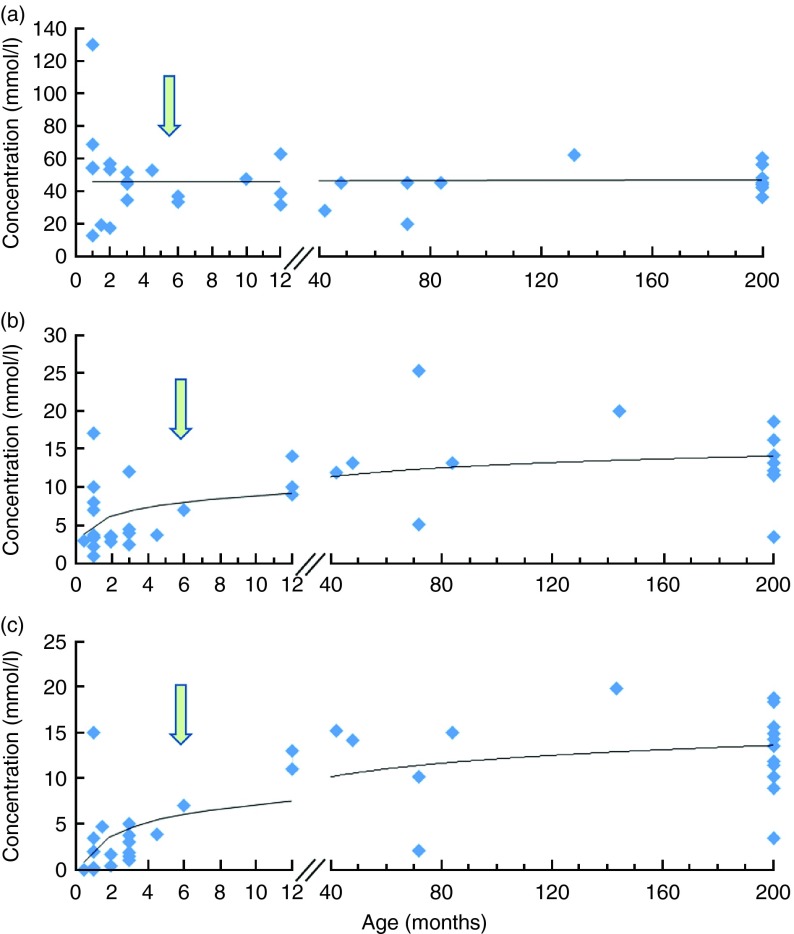
“The figures summarises the data reported in several studies (15,17,71,84,126,228–235) .”
Tiihonen, K., Ouwehand, A. C., & Rautonen, N. (2010) · British Journal of Nutrition · doi:10.1017/s0007114509992807 · Cited by 63 · cited 3×
“Healthy subjects 11; 35 ^ 10 years Mean (SEM) 23·3 (1·5) mmol/g faeces Birkett (1996)((104)) 112; range 0–1 years Mean (SD) 7·7 (7·1) mmol/g faeces Heavey (2003)((251)) 16; range 23–66 years Mean (SEM) 14·1 (1·7) mmol/g faeces Clarke (2011)((252)) 12; range 27–49 years Mean (SD) 5·1 (2·5) mmol/g faeces Slavin (2011)((…”
BackgroundSlavin, J., & Feirtag, J. (2011) · Food Funct. · doi:10.1039/c0fo00101e · Cited by 61 · cited 1×
“Healthy subjects 11; 35 ^ 10 years Mean (SEM) 23·3 (1·5) mmol/g faeces Birkett (1996)((104)) 112; range 0–1 years Mean (SD) 7·7 (7·1) mmol/g faeces Heavey (2003)((251)) 16; range 23–66 years Mean (SEM) 14·1 (1·7) mmol/g faeces Clarke (2011)((252)) 12; range 27–49 years Mean (SD) 5·1 (2·5) mmol/g faeces Slavin (2011)((…”
McOrist, A. L., Abell, G. C. J., Cooke, C., & Nyland, K. (2008) · British Journal of Nutrition · doi:10.1017/s0007114507886351 · Cited by 60
Profiling of Phenols in Human Fecal Water after Raspberry Supplementation
Gill, C. I. R., McDougall, G. J., Glidewell, S., Stewart, D., Shen, Q., Tuohy, K., Dobbin, A., Boyd, A., Brown, E., Haldar, S., et al. (2010) · Journal of Agricultural and Food Chemistry · doi:10.1021/jf1017143 · Cited by 60 · cited 1×
“Changes in barrier function are assessed from impairment of tight junctions using transepithelial resistance (191,192) or phenol red leakage (193,194) in Caco-2 cells, and invasive potential of HTC116 cells using fluorescence-activated cell sorting (FACS) analysis (191) .”
Self-citationNegative association of acetate with visceral adipose tissue and insulin levels
Layden, B., Yalamanchi, Wolever, Dunaif, & Lowe (2012) · Diabetes, Metabolic Syndrome and Obesity: Targets and Therapy · doi:10.2147/dmso.s29244 · Cited by 56 · cited 1×
“A recent study in obese individuals even showed an inverse association between serum acetate levels and visceral adipose tissue((23)).”
BackgroundIn vitro fermentation of carbohydrate by breast fed and formula fed infants
Parrett, A. M., & Edwards, C. A. (1997) · Archives of Disease in Childhood · doi:10.1136/adc.76.3.249 · Cited by 56 · cited 1×
“The figures summarises the data reported in several studies (15,17,71,84,126,228–235) .”
Self-citationTimm, D. A., Stewart, M. L., Hospattankar, A., & Slavin, J. L. (2010) · Journal of Medicinal Food · doi:10.1089/jmf.2009.0135 · Cited by 51 · cited 1×
“The relative proportions of the SCFA vary between individuals and are particularly sensitive to the type of carbohydrate being fermented (45,46) .”
Guérin-Danan, C., Andrieux, C., Popot, F., Charpilienne, A., Vaissade, P., Gaudichon, C., Pedone, C., Bouley, C., & Szylit, O. (1997) · Journal of Pediatric Gastroenterology and Nutrition · doi:10.1097/00005176-199709000-00007 · Cited by 51
Alles, M. S., Katan, M., Salemans, J., Laere, K. V., Gerichhausen, M. J. W., Rozendaal, M., & Nagengast, F. (1997) · American Journal of Clinical Nutrition · doi:10.1093/ajcn/66.5.1286 · Cited by 50 · cited 1×
“metabolites, faecal BCFA concentrations are reduced after prebiotic intake((106,146,147)).”
BackgroundInter- and intra-individual variation of faecal water — genotoxicity in human colon cells
Oßwald, K., Becker, T. W., Grimm, M., Jahreis, G., & Pool-Zobel, B. L. (2000) · Mutation Research/Genetic Toxicology and Environmental Mutagenesis · doi:10.1016/s1383-5718(00)00113-3 · Cited by 50 · cited 1×
“One approach that might be useful for this purpose is the functional analysis of faecal water (for a review, see Osswald et al. (183) ).”
Glinghammar, B. (1999) · Carcinogenesis · doi:10.1093/carcin/20.6.969 · Cited by 50 · cited 1×
“…HT-29 and HCT 116, faecal water or their lipid extracts were found to activate activator protein-1 (AP-1), a transcription factor associated with the promotion of neoplastic transformation (197) , and to induce COX-2 promotor activity, which has been implicated in colon carcinogenesis (198) .”
Sarbini, S. R., Kolida, S., Gibson, G. R., & Rastall, R. A. (2013) · British Journal of Nutrition · doi:10.1017/s0007114512004205 · Cited by 50
Verbeke, K., Ferchaud‐Roucher, V., Preston, T., Small, A. C., Henckaerts, L., Krempf, M., Wang, H., Vonk, R. J., & Priebe, M. G. (2010) · European Journal of Clinical Nutrition · doi:10.1038/ejcn.2010.92 · Cited by 49
Self-citationDe Preter, V., Arijs, I., Windey, K., Vanhove, W., Vermeire, S., Schuit, F., Rutgeerts, P., & Verbeke, K. (2012) · Inflammatory Bowel Diseases · doi:10.1002/ibd.22949 · Cited by 49 · cited 1×
“However, detoxification of sulfide by the mucosal thiosulfate sulfur-transferase enzyme to the less toxic thiocyanate is impaired in UC patients (137) .”
Self-citationThe influence of adding fats of varying saturation on the glycaemic response of white bread
Henry, >. J. K., Lightowler, H. J., Newens, K. J., & Pata, N. (2008) · International Journal of Food Sciences and Nutrition · doi:10.1080/09637480701664183 · Cited by 48 · cited 1×
“However, other food macromolecules ingested at the same meal, for example, red wine polyphenols or fat, and the load of complex carbohydrates like starch, can also determine the amount that reaches the colon (160,161) .”
Theil, P. K., Jørgensen, H., Serena, A., Hendrickson, J., & Bach Knudsen, K. E. (2011) · British Journal of Nutrition · doi:10.1017/s0007114510003715 · Cited by 48 · cited 1×
“Healthy subjects 10; 21–34 years Mean (SD) 218 (99) 72 (37) 58·7 (54·5) 378 (188) mmol/g dry weight Whelan (2005)((236))”
De Preter, V., Coopmans, T., Rutgeerts, P., & Verbeke, K. (2006) · Journal of the American College of Nutrition · doi:10.1080/07315724.2006.10719570 · Cited by 47
Self-citationFecal mutagens in two Japanese populations with different colon cancer risks.
Mower, H. F., Ichinotsubo, D., Wang, L. W., Mandel, M., Stemmermann, G. N., Nomura, A. M. Y., Heilbrun, L. K., Kamiyama, S., & Shimada, A. (1982) · PubMed · Cited by 47
Soybean Isoflavones in Bone Health
Ishimi, Y. (2009) · Forum of Nutrition · doi:10.1159/000212743 · Cited by 45 · cited 1×
“Daidzein Equol Phyto-oeotrogen important for heart and bone health, and possible colon cancer protectants Jackman (2007) (260) Ishimi (2009) (261) Davis (2009) (262) Selma (2009) (263)”
Cytotoxicity of organic acids produced by anaerobic intestinal bacteria on cultured epithelial cells
Sakurazawa, T., & Ohkusa, T. (2005) · Journal of Gastroenterology · doi:10.1007/s00535-005-1594-z · Cited by 45 · cited 1×
“teria and both isovalerate and isobutyrate were able to induce apoptosis((148)).”
BackgroundColonic Luminal Hydrogen Sulfide Is Not Elevated in Ulcerative Colitis
Moore, J., Babidge, W., Millard, S. M., & Roediger, W. E. W. (1998) · Digestive Diseases and Sciences · doi:10.1023/a:1018848709769 · Cited by 44 · cited 1×
“Whilst some studies found elevated faecal sulfide levels in patients with UC (134,135) , others did not (136) .”
Faber, T. A., Hopkins, A., Middelbos, I. S., Price, N. P. J., & Fahey, G. C., Jr. (2010) · Journal of Animal Science · doi:10.2527/jas.2010-3028 · Cited by 44
Wu, W., Cheng, H.-C., & Chen, H. (2010) · British Journal Of Nutrition · doi:10.1017/s0007114510004009 · Cited by 42
Differential fermentation of glucose-based carbohydrates in vitro by human faecal bacteria
Laurentin, A., & Edwards, C. A. (2004) · European Journal of Nutrition · doi:10.1007/s00394-004-0457-3 · Cited by 40
Self-citationRoles of mucosal bacteria and succinic acid in colitis caused by dextran sulfate sodium in mice.
Ariake, K., Ohkusa, T., Sakurazawa, T., Kumagai, J., Eishi, Y., Hoshi, S., & Yajima, T. (2000) · PubMed · Cited by 39
Parrett, A., Edwards, C. A., & lokerse, E. (1997) · American Journal of Clinical Nutrition · doi:10.1093/ajcn/65.4.927 · Cited by 39 · cited 1×
“duction of SCFA from carbohydrates using faeces from healthy individuals and patients((71)).”
BackgroundSelf-citationEffect of Colonic Luminal Components on Induction of Apoptosis in Human Colonic Cell Lines
Haza, A. I., Glinghammar, B., Grandien, A., & Rafter, J. (2000) · Nutrition and Cancer · doi:10.1207/s15327914nc3601_12 · Cited by 38 · cited 1×
“Finally, the effects of faecal water on apoptosis rates in the human colon-derived cell lines HT-29 and FHC (fetal human cells) Microbial metabolites and prebiotic benefits 55 have been evaluated (196) .”
Hobden, M. R., Martin-Morales, A., Guérin-Deremaux, L., Wils, D., Costabile, A., Walton, G. E., Rowland, I., Kennedy, O. B., & Gibson, G. R. (2013) · PLoS ONE · doi:10.1371/journal.pone.0077128 · Cited by 38
Butyrate absorption and lactate secretion in ulcerative colitis
Hove, H., Holtug, K., Jeppesen, P. B., & Brøbech, P. (1995) · Diseases of the Colon & Rectum · doi:10.1007/bf02148853 · Cited by 37 · cited 3×
“Healthy subjects 10; 21–34 years Mean (SD) 218 (99) 72 (37) 58·7 (54·5) 378 (188) mmol/g dry weight Whelan (2005)((236))”
BackgroundKlinder, A., Karlsson, P. C., Clune, Y., Hughes, R., Glei, M., Rafter, J. J., Rowland, I., Collins, J. K., & Pool-Zobel, B. L. (2007) · Nutrition and Cancer · doi:10.1080/01635580701274848 · Cited by 36 · cited 1×
“Use of a controlled dietary regimen for 9 d was of insufficient length to reduce interindividual variability, suggesting that changing the genotoxic potential of the gut microbiota may require much longer (188) .”
Preter, V. D., Ghebretinsae, A. H., Abrahantes, J. C., Windey, K., Rutgeerts, P. J., & Verbeke, K. (2011) · Molecular Nutrition & Food Research · doi:10.1002/mnfr.201000442 · Cited by 33 · cited 1×
“So far, only a few intervention studies in human subjects applied metabolomics to evaluate the impact of a synbiotic (220–222) .”
Self-citationProfiles of Microbial Fatty Acids in the Human Metabolome are Disease-Specific
Ktsoyan, Z. A., Nv, B., Sedrakyan, A., Osipov, G. A., Khachatryan, Z., Kelly, D., Manukyan, G. P., Arakelova, K. A., Hovhannisyan, A. I., Olenin, A. Y., et al. (2011) · Frontiers in Microbiology · doi:10.3389/fmicb.2010.00148 · Cited by 33
Norin, E. L., Midtvedt, T., & Björkstén, B. (2004) · Microbial Ecology in Health and Disease · doi:10.3402/mehd.v16i1.7950 · Cited by 33
Intestinal microbiota and overweight
Lyra, A., Lahtinen, S., Tiihonen, K., & Ouwehand, A. (2010) · Beneficial Microbes · doi:10.3920/bm2010.0030 · Cited by 32 · cited 1×
“Firmicutes:Bacteroidetes ratio in the obese((59,60)).”
Martin, F., Collino, S., & Rezzi, S. (2011) · Magnetic Resonance in Chemistry · doi:10.1002/mrc.2810 · Cited by 30
Fecal water from ileostomic patients consuming oat β‐glucan enhances immune responses in enterocytes
Ramakers, J. D., Volman, J. J., Biörklund, M., Önning, G., Mensink, R. P., & Plat, J. (2007) · Molecular Nutrition & Food Research · doi:10.1002/mnfr.200600149 · Cited by 30
Andrieux, C., Membré, J., Cayuela, C., & Antoine, J. M. (2002) · Scandinavian Journal of Gastroenterology · doi:10.1080/gas.37.7.792.798 · Cited by 29
Jouët, P., Moussata, D., Duboc, H., Boschetti, G., Attar, A., Gorbatchef, C., Sabaté, J. ‐., Coffin, B., & Flourié, B. (2013) · Neurogastroenterology & Motility · doi:10.1111/nmo.12212 · Cited by 29 · cited 1×
“In a recent study in ten volunteers, infusion of a 100 m M -SCFA solution did not affect the phasic or tonic motor activity of the colon or the number of high-amplitude-propagated contractions (178) .”
Heavey, P., Savage, S.-A. H., Parrett, A., Cecchini, C., Edwards, C. A., & Rowland, I. R. (2003) · British Journal Of Nutrition · doi:10.1079/bjn2002814 · Cited by 28
Self-citationNordling, M. M., Glinghammar, B., Karlsson, P. C., de Kok, T. M. C. M., & Rafter, J. J. (2003) · Scandinavian Journal of Gastroenterology · doi:10.1080/00365520310002913 · Cited by 27 · cited 1×
“…measured by colorimetric cell viability assays based on the cleavage of a tetrazolium salt (for example, 3-(4,5-dimethylthiazol-2-yl)-2,5-diphenyltetrazolium bromide (MTT) or water-soluble tetrazolium salt 1 (WST-1)) in the mitochondria of living cells to a coloured formazan derivative (189,190) .”
Gonçalves, P., Catarino, T. A., Gregório, I., & Martel, F. (2012) · Journal of Cellular Biochemistry · doi:10.1002/jcb.24172 · Cited by 26 · cited 1×
“Therefore, SCFA absorption might be reduced in the obese (69,70) .”
Samuelsson, U., & Ludvigsson, J. (2003) · Diabetic Medicine · doi:10.1046/j.1464-5491.2003.01066.x · Cited by 25
Wutzke, K. D., Lotz, M., & Zipprich, C. (2010) · European Journal of Clinical Nutrition · doi:10.1038/ejcn.2010.120 · Cited by 24
Bianchi, M. A., Scazzina, F., Rio, D. D., Valtueña, S., Pellegrini, N., Franzini, L., Callegari, M. L., Pellacani, C., Buschini, A., Zavaroni, I., et al. (2010) · British Journal Of Nutrition · doi:10.1017/s0007114510002424 · Cited by 24 · cited 1×
“Healthy subjects 11; 35 ^ 10 years Mean (SEM) 23·3 (1·5) mmol/g faeces Birkett (1996)((104)) 112; range 0–1 years Mean (SD) 7·7 (7·1) mmol/g faeces Heavey (2003)((251)) 16; range 23–66 years Mean (SEM) 14·1 (1·7) mmol/g faeces Clarke (2011)((252)) 12; range 27–49 years Mean (SD) 5·1 (2·5) mmol/g faeces Slavin (2011)((…”
Norin, E. L., Midtvedt, T., & Björkstén, B. (2004) · Microbial Ecology in Health and Disease · doi:10.1080/08910600410026364 · Cited by 24
Zeng, H., & Davis, C. D. (2003) · Journal of Nutrition · doi:10.1093/jn/133.8.2682 · Cited by 21
Serum D-lactate: a useful diagnostic marker for acute appendicitis.
Düzgün, A. P., Buğdaycı, G., Sayın, B., Özmen, M. M., Ozer, M. V., & Coşkun, F. (2007) · PubMed · Cited by 20
Recent Perspectives on the Relations between Fecal Mutagenicity, Genotoxicity, and Diet
Gratz, S. W., Wallace, R. J., & El-Nezami, H. S. (2011) · Frontiers in Pharmacology · doi:10.3389/fphar.2011.00004 · Cited by 20 · cited 2×
“A number of assays have been used for this purpose, including the Ames Salmonella test and SOS Chromo test for bacterial mutagenicity (184–187) .”
Benassi-Evans, B., Clifton, P. M., Noakes, M., & Fenech, M. F. (2010) · Mutation Research/Genetic Toxicology and Environmental Mutagenesis · doi:10.1016/j.mrgentox.2010.08.009 · Cited by 19
Effect of Fecal Water on an In Vitro Model of Colonic Mucosal Barrier Function
Gill, C. I. R., Heavey, P., McConville, E., Bradbury, I., Fässler, C., Mueller, S., Cresci, A., Dore, J. M., Norin, E. L., & Rowland, I. R. (2007) · Nutrition and Cancer · doi:10.1080/01635580701268220 · Cited by 19 · cited 1×
“In contrast, among participants in the pan-European project on the elderly gut microbiota (CROWNALIFE), elderly Europeans (76 ^ (20) .”
Targeted Metabolomics: a New Section in the Journal of Agricultural and Food Chemistry
Seiber, J. N., Molyneux, R. J., & Schieberle, P. (2013) · Journal of Agricultural and Food Chemistry · doi:10.1021/jf4046254 · Cited by 19 · cited 1×
“…have allowed the development of ‘targeted metabolomics’ approaches where there are panels of specific metabolites, often of related physiological relevance, as an example metabolites related to diabetes or dyslipidaemia, can be accurately and reproducibly quantified in blood and urine (218) .”
Tjellström, B., Stenhammar, L., Högberg, L., Fälth‐Magnusson, K., Magnusson, K., Midtvedt, T., Sundqvist, T., & Norin, E. L. (2010) · Scandinavian Journal of Gastroenterology · doi:10.3109/00365521.2010.483738 · Cited by 16
Reimer, R. A., Pelletier, X., Carabin, I. G., Lyon, M. R., Gahler, R. J., & Wood, S. (2012) · Journal of Human Nutrition and Dietetics · doi:10.1111/j.1365-277x.2012.01230.x · Cited by 15 · cited 1×
“20; 20–40 years Mean (SEM) 320·3 (24·9) 97·3 (10·5) 93·8 (9·13) 511·4 (41·9) mmol/g dry weight Boler (2011)((111)) 13; 23–58 years Median (IQR) 52·2 23·2 (13·6–37·3) 36·8 (5–128) 119·3 (64·5–197·0) mmol/g wet weight Lewis (1997)((237)) 60; 18–24 years Mean (SEM) 198·4 (14·2) 55·2 (4·7) 50·5 (4·9) 304·1 mmol/g dry weig…”
Microbial Amino Acid Metabolites and Bladder Cancer: No Evidence of Promoting Activity in Man
RENWICK, A. G., Thakrar, A., Lawrie, C. A., & George, C. F. (1988) · Human Toxicology · doi:10.1177/096032718800700307 · Cited by 15 · cited 2×
“In a study in patients with bladder cancer there was no evidence that phenolic microbial metabolites had promoting or co-carcinogenic activity for the human urinary bladder, as the urinary excretion of p-cresol, phenol and indoxyl sulfate was not different in the patients as compared with controls((118)).”
ResultEffects of Methionine and Inorganic Sulfate on Indole Toxicity and Indican Excretion in Rats
Roe, D. A. (1971) · Journal of Nutrition · doi:10.1093/jn/101.5.645 · Cited by 12 · cited 1×
“Rats fed a low-protein diet supplemented with indole (0·25–2 %) showed overall weight loss and growth retardation as well as haemolytic anaemia((124)).”
HIGH LEVELS OF FAECAL p-CRESOL IN A GROUP OF HYPERACTIVE CHILDREN
Adams, R. F., Murray, K. E., & Earl, J. W. (1985) · The Lancet · doi:10.1016/s0140-6736(85)91603-4 · Cited by 11
Bosworth, D., & Venitt, S. (1986) · Mutagenesis · doi:10.1093/mutage/1.2.143 · Cited by 9
Urinary indican in diabetes mellitus.
Nl, P., Saxena, S. K., Mp, M., Hk, K., & Kumar, A. (1977) · PubMed · Cited by 5
Urinary indican excretion in cirrhosis of liver.
Nl, P., Mp, M., Hk, K., & Kumar, A. B. (1976) · PubMed · Cited by 3
Research works printed but not linked: 1
- Morrow DMP, Ryan MP & McGlynn H (1996) An in vitro model to assess tumour promotor activity. Br J Cancer 74, 68.
Cited by
The role of short-chain fatty acids in microbiota–gut–brain communication
Dalile, B., Van Oudenhove, L., Vervliet, B., & Verbeke, K. (2019) · Nature Reviews Gastroenterology & Hepatology · doi:10.1038/s41575-019-0157-3 · Cited by 3,357
Self-citationProbiotics and prebiotics in intestinal health and disease: from biology to the clinic
Sanders, M. E., Merenstein, D. J., Reid, G., Gibson, G. R., & Rastall, R. A. (2019) · Nature Reviews Gastroenterology & Hepatology · doi:10.1038/s41575-019-0173-3 · Cited by 2,059
Gut Microbiota and Short Chain Fatty Acids: Implications in Glucose Homeostasis
Portincasa, P., Bonfrate, L., Vacca, M., De Angelis, M., Farella, I., Lanza, E., Khalil, M., Wang, D. Q.-H., Sperandio, M., & Di Ciaula, A. (2022) · International Journal of Molecular Sciences · doi:10.3390/ijms23031105 · Cited by 969
The neuropharmacology of butyrate: the bread and butter of the microbiota-gut-brain axis
Stilling, R. M., van de Wouw, M., Clarke, G., Stanton, C., Dinan, T. G., & Cryan, J. F. (2016) · Neurochemistry International · doi:10.1016/j.neuint.2016.06.011 · Cited by 891
“faecal concentrations do not necessarily represent SCFA production rates or concentrations present in the colon (den Besten et al., 2013; Rechkemmer et al., 1988; Verbeke et al., 2015).”
BackgroundMouse models for human intestinal microbiota research: a critical evaluation
Hugenholtz, F., & de Vos, W. M. (2018) · Cellular and Molecular Life Sciences · doi:10.1007/s00018-017-2693-8 · Cited by 577
“The housing effect seems even to be larger than the effect of the genetic background [76, 90, 91].”
Background
Metadata
- Authors
- Verbeke, K. A., Boobis, A. R., Chiodini, A., Edwards, C. A., Franck, A., Kleerebezem, M., Nauta, A., Raes, J., van Tol, E. A. F., & Tuohy, K. M.
- Affiliations
- KU Leuven (BE)
- Imperial College London (GB)
- European Commission (BE)
- University of Glasgow (GB)
- Cargill (Belgium) (BE)
- Wageningen University & Research (NL)
- FrieslandCampina (Netherlands) (NL)
- Vrije Universiteit Brussel (BE)
- Fondazione Edmund Mach (IT)
- Corresponding author
- Chiodini, Alessandro
- ORCID
- Venue
- Nutrition Research Reviews
- Publisher
- Cambridge University Press (CUP)
- Published
- 2015-06
- Volume
- 28
- Issue
- 1
- Pages
- 42-66
- ISSN
- 0954-4224 (ISSN-L)
- 1475-2700
- PMC
- PMC4501371
- OpenAlex
- W2126018988
- Cited by
- 343
- References
- 269
- Citations by year
- 2026: 16 · 2025: 26 · 2024: 36 · 2023: 34 · 2022: 47 · 2021: 37 · 2020: 35 · 2019: 34 · 2018: 34 · 2017: 27 · 2016: 15 · 2015: 2
- FWCI
- 2.52
- Type
- journal article
- Language
- en
- Open access
- hybrid
- doi.org
- Locations
- Nutrition Research Reviews (publishedVersion, cc-by)
- PubMed Central (publishedVersion, cc-by)
- PubMed (publishedVersion)
- ENLIGHTEN (Jurnal Bimbingan dan Konseling Islam) (acceptedVersion)
- Socio-Environmental Systems Modeling (acceptedVersion, cc-by)
- Lirias (KU Leuven) (submittedVersion, cc-by)
- CINECA IRIS Institutional Research Information System (Fondazione Edmund Mach) (submittedVersion, cc-by-nc-sa)
- eSpace (Curtin University) (submittedVersion)
- VUBIR (Vrije Universiteit Brussel) (submittedVersion)
- Data Archiving and Networked Services (DANS) (submittedVersion, cc-by)
- Funders
- Institut National de la Recherche Agronomique
- Topics
- Life Sciences › Biochemistry, Genetics and Molecular Biology › Molecular Biology › Gut microbiota and health
- Health Sciences › Nursing › Nutrition and Dietetics › Microbial Metabolites in Food Biotechnology
- Life Sciences › Agricultural and Biological Sciences › Food Science › Probiotics and Fermented Foods
- Keywords
- prebiotics, gut microbiota metabolites, short-chain fatty acids, p-cresol, indole, phenols, ammonia, cancer risk, metabolomics, metagenomics, colonic health, host immunity, metabolite toxicity
- MeSH terms
- Gastrointestinal Microbiome, Bacteria, Carbohydrates, Colon, Fatty Acids, Fatty Acids, Volatile, Feces, Fermentation, Health Promotion, Humans, Intestines, Plants, Proteins, Metabolomics, Metagenomics, Prebiotics, Polyphenols
About these checks
Registry, retraction, Cites and statistics results are computed, not judged, with one exception: a printed reference that no index lists is read once by a model before it counts as a citation error. Claims are extracted by a model and kept only when their quote appears verbatim in the text; each cited source is then checked, with a model’s help, for whether it says what the claim relies on. Those verdicts can be wrong — read the claim’s quote and the cited source before relying on one.
Statistics and arithmetic are recomputed, not judged.
Confidence bands are shown only for fields calibrated on our annotated test set. None is calibrated yet, so no band is shown.
What counts as a claim ›How we measure confidence ›How we check this ›
Are you an author, or do you see a problem with this page? Request a review
Data sources
Bibliographic data: Semantic Scholar, OpenAlex, Crossref.
Contains information from the Semantic Scholar Academic Graph Datasets, made available under the ODC Attribution License (ODC-BY 1.0).
Semantic Scholar’s data is described in: Kinney, R., et al. (2023). The Semantic Scholar Open Data Platform. arXiv:2301.10140.
