

Transcranial direct current stimulation for major depression: an updated systematic review and meta-analysis
Open accessThe DOI matches its Crossref record; 31 of the 31 references it cites were found in a registry or an index.
Abstract
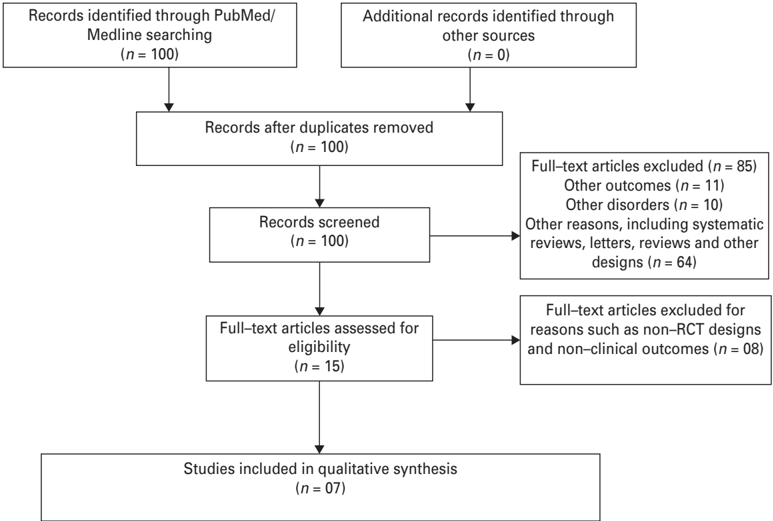
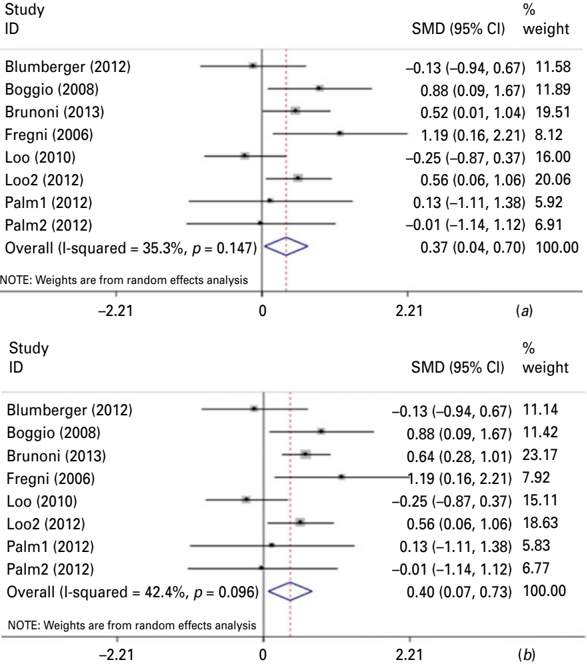
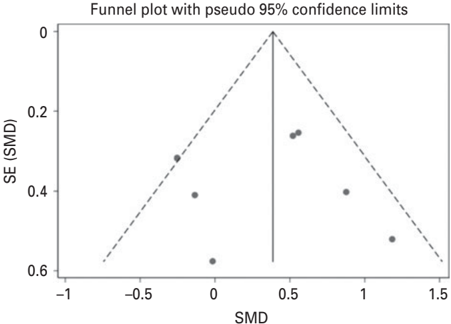
Transcranial direct cranial stimulation (tDCS) is a promising non-pharmacological intervention for treating major depressive disorder (MDD). However, results from randomized controlled trials (RCTs) and meta-analyses are mixed. Our aim was to assess the efficacy of tDCS as a treatment for MDD. We performed a systematic review in Medline and other databases from the first RCT available until January 2014. The main outcome was the Hedges' g for continuous scores; secondary outcomes were the odds ratio (ORs) to achieve response and remission. We used a random-effects model. Seven RCTs (n = 259) were included, most with small sample sizes that assessed tDCS as either a monotherapy or as an add-on therapy. Active vs. sham tDCS was significantly superior for all outcomes (g = 0.37; 95% CI 0.04-0.7; ORs for response and remission were, respectively, 1.63; 95% CI = 1.26-2.12 and 2.50; 95% CI = 1.26-2.49). Risk of publication bias was low. No predictors of response were identified, possibly owing to low statistical power. In summary, active tDCS was statistically superior to sham tDCS for the acute depression treatment, although its role as a clinical intervention is still unclear owing to the mixed findings and heterogeneity of the reviewed studies. Further RCTs with larger sample sizes and assessing tDCS efficacy beyond the acute depressive episode are warranted.
Overview
The claims and statistics of this paper haven’t been checked yet.
Free: it reads the open-access text and checks the first 5 claims that cite a source we can check. Create a free account to check every claim.
Integrity signals
Registry
Cites
Statistics
Figures
Verification
Claims the paper makes
The claims and statistics of this paper haven’t been checked yet.
Free: it reads the open-access text and checks the first 5 claims that cite a source we can check. Create a free account to check every claim.
Claims other papers make about this one
Each is checked against this paper’s own text: does it say what the citing paper says it does?
The source backs part of the claim, not all of it — or backs it for a different population, condition or comparison.
In the citing paper
“Novel therapeutic approaches that exert a neuromodulatory effect on the brain through the application of a magnetic or electric current via the scalp (Shiozawa et al. 2014) —respectively, transcranial magnetic stimulation (TMS) and transcranial direct current stimulation (tDCS)—have been shown to affect emotional processing.”
From Cognitive neuropsychological theory of antidepressant action: a modern-day approach to depression and its treatment (2021) · cites this paper as Shiozawa et al. 2014
Experimental — accuracy not yet measured
Self-check
Percentages, sums and reported differences re-computed from the paper’s own numbers.
The self-check needs the paper’s full text.
Citations
Cites
Liberati, A., Altman, D. G., Tetzlaff, J., Mulrow, C., Gøtzsche, P. C., Ioannidis, J. P. A., Clarke, M., Devereaux, P. J., Kleijnen, J., & Moher, D. (2009) · PLoS Medicine · doi:10.1371/journal.pmed.1000100 · Cited by 28,164 · cited 1×
“A systematic review and meta-analysis according to the recommendations of the Cochrane group was conducted, and the present report follows PRISMA guidelines (Liberati et al., 2009).”
MethodCochrane Handbook for Systematic Reviews of Interventions Version 5.0.1. The Cochrane Collaboration
Higgins, J. P. T., Green, S. R., & Higgins, J. P. T. (2008) · Cited by 7,261
Transcranial direct current stimulation: State of the art 2008
Nitsche, M. A., Cohen, L. G., Wassermann, E. M., Priori, A., Lang, N., Antal, A., Paulus, W., Hummel, F., Boggio, P. S., Fregni, F., et al. (2008) · Brain Stimulation · doi:10.1016/j.brs.2008.06.004 · Cited by 3,057 · cited 1×
“…stimulation (tDCS) is a novel technique based on the application of a weak electrical current over the scalp through two electrodes – the anode, which facilitates neuronal depolarization, and the cathode, which leads to neuronal hyper-polarization (Nitsche et al., 2008; Brunoni et al., 2012b).”
MethodSelf-citationImproved tests for a random effects meta‐regression with a single covariate
Knapp, G., & Hartung, J. (2003) · Statistics in Medicine · doi:10.1002/sim.1482 · Cited by 2,075 · cited 1×
“Meta-regression was performed using the random-effects model modified by Knapp and Hartung (2003) method, using only one variable at a time.”
MethodPhysiological basis of transcranial direct current stimulation
Stagg, C. J., & Nitsche, M. A. (2011) · The Neuroscientist · doi:10.1177/1073858410386614 · Cited by 1,719 · cited 1×
“…we should take into account the several studies assessing the impact of pharmacotherapy in tDCS-elicited cortical excitability (for a review see Stagg and Nitsche (2011)) – for instance, anodal tDCS effects are enhanced with the acute administration of citalopram (Nitsche et al., 2009), and…”
BackgroundBrunoni, A. R., Nitsche, M. A., Bolognini, N., Bikson, M., Wagner, T., Merabet, L., Edwards, D. J., Valero-Cabre, A., Rotenberg, A., Pascual-Leone, A., et al. (2012) · Brain stimulation · doi:10.1016/j.brs.2011.03.002 · Cited by 1,445 · cited 2×
“…stimulation (tDCS) is a novel technique based on the application of a weak electrical current over the scalp through two electrodes – the anode, which facilitates neuronal depolarization, and the cathode, which leads to neuronal hyper-polarization (Nitsche et al., 2008; Brunoni et al., 2012b).”
BackgroundMethodSelf-citationBrunoni, A. R., Amadera, J., Berbel, B., Volz, M. S., Rizzerio, B. G., & Fregni, F. (2011) · International Journal of Neuropsychopharmacology · doi:10.1017/s1461145710001690 · Cited by 1,234 · cited 2×
“This metaanalysis is relevant considering the burden and importance of MDD, which is one of the most disabling conditions worldwide (Eaton et al., 1997) and the potential benefits of tDCS as a non-invasive, affordable, simple intervention with a low rate of adverse effects (Brunoni et al., 2011).”
BackgroundSelf-citationMedication Augmentation after the Failure of SSRIs for Depression
Trivedi, M. H., Fava, M., Wisniewski, S. R., Thase, M. E., Quitkin, F., Warden, D., Ritz, L., Nierenberg, A. A., Lebowitz, B. D., Biggs, M. M., et al. (2006) · New England Journal of Medicine · doi:10.1056/nejmoa052964 · Cited by 1,002 · cited 2×
“…depression was not identified as a predictor of response, in contrast with studies showing that interventions, such as pharmacotherapy (Trivedi et al., 2006), rTMS (Fregni et al., 2006d; Lisanby et al., 2009) and ECT (Sackeim et al., 2000) performed poorer in treatment-resistant…”
ResultSackeim, H. A., Prudic, J., Devanand, D. P., Nobler, M. S., Lisanby, S. H., Peyser, S., Fitzsimons, L., Moody, B. J., & Clark, J. (2000) · Archives of General Psychiatry · doi:10.1001/archpsyc.57.5.425 · Cited by 804 · cited 2×
“Treatment-resistant depression was not identified as a predictor of response, in contrast with studies showing that interventions, such as pharmacotherapy (Trivedi et al., 2006), rTMS (Fregni et al., 2006d; Lisanby et al., 2009) and ECT (Sackeim et al., 2000) performed poorer in treatment-resistant samples.”
ResultBrunoni, A. R., Valiengo, L., Baccaro, A., Zanão, T. A., de Oliveira, J. F., Goulart, A., Boggio, P. S., Lotufo, P. A., Benseñor, I. M., & Fregni, F. (2013) · JAMA Psychiatry · doi:10.1001/2013.jamapsychiatry.32 · Cited by 601 · cited 17×
“(Brunoni et al., 2013) and to the best of our knowledge, these results have not been included in tDCS metaanalyses yet.”
BackgroundMethodResultSelf-citation
Cited by
Items 101–200 of 280
Transcranial Direct Current Stimulation
Kenney‐Jung, D. L., Blacker, C. J., Camsari, D. D., Lee, J. C., & Lewis, C. P. (2018) · Child and Adolescent Psychiatric Clinics of North America · doi:10.1016/j.chc.2018.07.008 · Cited by 44
Chrysikou, E. G., Wing, E. K., & van Dam, W. O. (2019) · Biological Psychiatry Cognitive Neuroscience and Neuroimaging · doi:10.1016/j.bpsc.2019.12.004 · Cited by 46
Predicting treatment effects in unipolar depression: A meta-review
Gillett, G., Tomlinson, A., Efthimiou, O., & Cipriani, A. (2020) · Pharmacology & Therapeutics · doi:10.1016/j.pharmthera.2020.107557 · Cited by 36
Shiozawa, P., Gomes, J. S., Ducos, D. V., Akiba, H. T., Dias, Á. M., Trevizol, A. P., Uchida, R. R., Orlov, N. D., & Cordeiro, Q. (2016) · Trends in Psychiatry and Psychotherapy · doi:10.1590/2237-6089-2015-0043 · Cited by 31
Self-citationNeuromodulation and Cognitive Control of Emotion
Amidfar, M., Ko, Y., & Kim, Y. (2019) · Advances in experimental medicine and biology · doi:10.1007/978-981-32-9721-0_27 · Cited by 38
Bessette, K. L., Karstens, A. J., Crane, N. A., Peters, A. T., Stange, J. P., Elverman, K. H., Morimoto, S. S., Weisenbach, S. L., & Langenecker, S. A. (2020) · Neuropsychology Review · doi:10.1007/s11065-019-09424-5 · Cited by 35
Jog, M., Kim, E., Anderson, C., Kubicki, A., Kayathi, R., Jann, K., Yan, L., Leaver, A. M., Hellemann, G. S., Iacoboni, M., et al. (2021) · Translational Psychiatry · doi:10.1038/s41398-021-01264-3 · Cited by 37
Campanella, S., Schröder, E., Vanderhasselt, M., Baeken, C., Kornreich, C., Verbanck, P., & Burle, B. (2018) · Clinical EEG and Neuroscience · doi:10.1177/1550059418777404 · Cited by 29
Oh, J., Jang, K., Jeon, S., & Chae, J. (2022) · Clinical Psychopharmacology and Neuroscience · doi:10.9758/cpn.2022.20.1.87 · Cited by 22
Neuromodulation and antenatal depression: a review
Kim, D., Snell, J., Ewing, G., & O'Reardon, J. (2015) · Neuropsychiatric Disease and Treatment · doi:10.2147/ndt.s80480 · Cited by 24
“A recent meta-analysis assessed the effectiveness of active tDCS and sham tDCS in treating MDD. 62 In seven studies, active tDCS was found to be significantly better than sham tDCS in decreasing major depressive symptoms (Hedges’ g = 0.37; 95% confidence interval 0.04–0.7). tDCS is currently being assessed as a treatm…”
InfluentialPsychological, endocrine, and neural correlates of attentional bias in subclinical depression
Dedovic, K., Giebl, S., Duchesne, A., Lue, S. D., Andrews, J., Efanov, S. I., Engert, V., Beaudry, T., Baldwin, M. W., & Pruessner, J. C. (2015) · Anxiety Stress & Coping · doi:10.1080/10615806.2015.1101457 · Cited by 26
“…provides clues for further investigation of possible neural targets that might aid in mechanistic treatment refinement as has been previously done with respect to cognitive processing in a healthy sample (Fregni et al., 2005) and clinical depression (Ferrucci et al., 2009; Shiozawa et al., 2014).”
BackgroundKumari, B., Singh, A. K., Kar, S. K., Tripathi, A., & Agarwal, V. (2023) · Asian Journal of Psychiatry · doi:10.1016/j.ajp.2023.103637 · Cited by 29
Valiengo, L. D. C. L., Casati, R., Bolognini, N., Lotufo, P. A., Benseñor, I. M., Goulart, A. C., & Brunoni, A. R. (2016) · Neurocase · doi:10.1080/13554794.2015.1130231 · Cited by 23
“Indeed, tDCS has recently been shown to effectively treat mood disorders (Shiozawa et al., 2014), post-stroke motor and cognitive deficits, and other conditions (for further references, Flöel, 2014).”
BackgroundSelf-citationMansouri, F., Shanbour, A., Mazza, F., Fettes, P., Zariffa, J., & Downar, J. H. (2019) · Frontiers in Neuroscience · doi:10.3389/fnins.2019.01181 · Cited by 26
Transcranial direct current stimulation: considerations for research in adolescent depression
Lee, J. C., Lewis, C. P., Daskalakis, Z. J., & Croarkin, P. E. (2017) · Frontiers in Psychiatry · doi:10.3389/fpsyt.2017.00091 · Cited by 22
Byeon, H. (2020) · International Journal of Environmental Research and Public Health · doi:10.3390/ijerph17031095 · Cited by 27
Alonzo, A., Aaronson, S. T., Bikson, M., Husain, M. M., Lisanby, S. H., Martin, D. M., McClintock, S. M., McDonald, W. M., O’Reardon, J. P., Esmailpoor, Z., et al. (2016) · Contemporary Clinical Trials · doi:10.1016/j.cct.2016.10.002 · Cited by 22
“The majority of meta-analyses of randomised, controlled trials (RCTs) of tDCS have found that tDCS is superior to sham stimulation [9,25,30,50] with the effect size (B coefficient = 0.”
BackgroundClayton, A., Howard, J., Dobbs, B., Shaw, M., & Charvet, L. E. (2018) · Journal of Ect · doi:10.1097/yct.0000000000000474 · Cited by 22
Delivering Transcranial Direct Current Stimulation Away From Clinic: Remotely Supervised tDCS
Shaw, M., Pilloni, G., & Charvet, L. E. (2020) · Military Medicine · doi:10.1093/milmed/usz348 · Cited by 22
Kapadia, N. M., Zivanovic, V., Moineau, B., Downar, J. H., Zariffa, J., & Popović, M. R. (2019) · BioMedical Engineering OnLine · doi:10.1186/s12938-019-0730-6 · Cited by 26
Prefrontal cortex stimulation does not affect emotional bias, but may slow emotion identification
Nord, C. L., Forster, S., Halahakoon, D. C., Penton‐Voak, I. S., Munafo, M. R., & Roiser, J. P. (2017) · Social Cognitive and Affective Neuroscience · doi:10.1093/scan/nsx007 · Cited by 20
“However, despite preliminary findings of antidepressant efficacy (Shiozawa et al., 2014), there is a dearth of research on the cognitive mechanisms that may drive the beneficial effects of DLPFC tDCS.”
InfluentialTodder, D., Gershi, A. Z., Perry, Z. H., Kaplan, Z., Levine, J., & Avirame, K. (2017) · Journal of Ect · doi:10.1097/yct.0000000000000473 · Cited by 25
Emerging targets and uses of neuromodulation for pain
Costa, B. P., Ferreira, I. S., Trevizol, A. P., Thibaut, A., & Fregni, F. (2019) · Expert Review of Neurotherapeutics · doi:10.1080/14737175.2019.1567332 · Cited by 23
“Separately, each technique has been proven effective for the treatment of several conditions such as stroke [83,84], spinal cord injury [85,86], rheumatoid arthritis [79] and depression [87].”
MethodSelf-citationYokoi, Y., & Sumiyoshi, T. (2015) · Neuropsychiatric Electrophysiology · doi:10.1186/s40810-015-0012-x · Cited by 21
“…recent meta-analysis reports these methodological heterogeneities among RCTs, while showing significant effect size (Hedges’ g of 0.37, 95 % confidence interval of 0.04-0.7) and significant odds ratios for response (1.63, 1.26-2.12) and remission (2.50, 1.26-2.49) as a whole (Shiozawa et al. 2014).”
BackgroundInfluentialImbalance in subregional connectivity of the right temporoparietal junction in major depression
Poeppl, T. B., Müller, V. I., Hoffstaedter, F., Bzdok, D., Laird, A. R., Fox, P. T., Langguth, B., Rupprecht, R., Sorg, C., Riedl, V., et al. (2016) · Human Brain Mapping · doi:10.1002/hbm.23217 · Cited by 19
Transcranial Direct-Current Stimulation (tDCS)
Ciechanski, P., & Kirton, A. (2016) · Elsevier eBooks · doi:10.1016/b978-0-12-802001-2.00005-9 · Cited by 21
Castelo-Branco, L., & Fregni, F. (2020) · Frontiers in Integrative Neuroscience · doi:10.3389/fnint.2020.00046 · Cited by 18
Self-citationChoi, C., Iordanishvili, E., Shah, N. J., & Binkofski, F. (2021) · Human Brain Mapping · doi:10.1002/hbm.25388 · Cited by 25
“, 2019) and categories used in the recent systematic review articles on MRS or on tDCS (Archibald et al., 2020; Shiozawa et al., 2014).”
MethodEvans, C., Banissy, M. J., & Charlton, R. A. (2018) · Clinical Neurophysiology · doi:10.1016/j.clinph.2018.03.012 · Cited by 20
Diehl, M. M., Lempert, K. M., Parr, A. C., Ballard, I. C., Steele, V. R., & Smith, D. V. (2018) · European Journal of Neuroscience · doi:10.1111/ejn.14083 · Cited by 19
“5 to 2 mA) through the skull with TCS approaches (Shiozawa et al., 2014; Tortella et al., 2015).”
MethodYe, Y., Yan, X., Wang, L., Xu, J., & Li, T. (2023) · Neuroscience Letters · doi:10.1016/j.neulet.2023.137320 · Cited by 18
Weller, S., Derntl, B., & Plewnia, C. (2023) · Biology of Sex Differences · doi:10.1186/s13293-023-00561-4 · Cited by 23
“Transcranial brain stimulation techniques, particularly transcranial direct current stimulation (tDCS), have proven to modulate cognitive processes both in healthy as well as patients diagnosed with mental disorders [1– 5].”
BackgroundThe Future of Brain Stimulation Treatments
Caulfield, K. A., & George, M. S. (2018) · Psychiatric Clinics of North America · doi:10.1016/j.psc.2018.05.004 · Cited by 21
Carvalho, S., Gonçalves, Ó. F., Brunoni, A. R., Fernandes-Gonçalves, A., Fregni, F., & Leite, J. (2020) · Frontiers in Psychiatry · doi:10.3389/fpsyt.2020.563058 · Cited by 18
Self-citationTop-Down Effect of Direct Current Stimulation on the Nociceptive Response of Rats
Dimov, L. F., Franciosi, A. C., Campos, A. C. P., Brunoni, A. R., & Pagano, R. L. (2016) · PLoS ONE · doi:10.1371/journal.pone.0153506 · Cited by 20
“Transcranial direct current stimulation (tDCS) is a noninvasive brain stimulation technique with promising clinical outcomes for various conditions, including Parkinson’s disease [1], stroke [2], multiple sclerosis [3], schizophrenia [4], major depression [5] and pain [6].”
BackgroundSelf-citationDevelopment and validation of a 3D-printed neuronavigation headset for therapeutic brain stimulation
Mansouri, F., Mir-Moghtadaei, A., Niranjan, V., Wu, J. S., Akhmedjanov, D., Nuh, M., Cairo, T., Giacobbe, P., Zariffa, J., & Downar, J. H. (2018) · Journal of Neural Engineering · doi:10.1088/1741-2552/aacb96 · Cited by 16
“Although less widely available in clinical practice, tDCS has shown efficacy against depression in several large trials [4–6] and meta-analyses [7, 8].”
BackgroundMethodBareš, M., Brunovský, M., Stopková, P., Hejzlar, M., & Novák, T. (2019) · Neuropsychiatric Disease and Treatment · doi:10.2147/ndt.s226577 · Cited by 19
Thibaut, A., Shie, V. L., Ryan, C. M., ZAFONTE, R. D., Ohrtman, E. A., Schneider, J. C., & Fregni, F. (2020) · Burns · doi:10.1016/j.burns.2020.06.005 · Cited by 19
“[56] Shiozawa P, Fregni F, Benseñor IM, Lotufo PA, Berlim MT, Daskalakis JZ, et al.”
BackgroundSelf-citationtDCS as a treatment for anxiety and related cognitive deficits
García, S., Nalven, M., Ault, A., & Eskenazi, M. A. (2020) · International Journal of Psychophysiology · doi:10.1016/j.ijpsycho.2020.10.006 · Cited by 21
Deroche, M. L. D., Nguyen, D. L., & Gracco, V. L. (2017) · Frontiers in Integrative Neuroscience · doi:10.3389/fnint.2017.00035 · Cited by 21
“Increasingly, tDCS is being evaluated as a lowcost, easy to use therapeutic tool to improve clinical depression (Shiozawa et al., 2014), motor skill learning (Buch et al., 2016), and cognitive function (Jacobson et al., 2012).”
Galletly, C. A., Gill, S., Rigby, A., Carnell, B. L., & Clarke, P. (2016) · Journal of Ect · doi:10.1097/yct.0000000000000308 · Cited by 20
van Dam, W. O., & Chrysikou, E. G. (2021) · Cognitive Affective & Behavioral Neuroscience · doi:10.3758/s13415-020-00830-4 · Cited by 17
A novel tDCS control condition using optimized anesthetic gel to block peripheral nerve input
Kerstens, S., de Xivry, J. O., & Laughlin, M. M. (2022) · Frontiers in Neurology · doi:10.3389/fneur.2022.1049409 · Cited by 15
Stimulating human prefrontal cortex increases reward learning
Overman, M. J., Sarrazin, V., Browning, M. D., & O’Shea, J. (2023) · NeuroImage · doi:10.1016/j.neuroimage.2023.120029 · Cited by 15
Yadollahpour, A., Jalilifar, M., & Rashidi, S. (2017) · International Journal of Mental Health and Addiction · doi:10.1007/s11469-017-9741-3 · Cited by 19
“In addition, their impacts on changing cortical excitability have been neurophysiologically investigated (Nitsche and Paulus 2001; Brunoni et al. 2011; Nitsche et al. 2006, Shiozawa et al. 2014).”
BackgroundThe effects of tDCS on object perception: A systematic review and meta-analysis
Lavezzi, G. D., Galan, S. S., Andersen, H., Tomer, D., & Cacciamani, L. (2022) · Behavioural Brain Research · doi:10.1016/j.bbr.2022.113927 · Cited by 22
“Most of the previous research on tDCS has focused on its use in clinical settings, for instance in treating or improving symptoms of neurological and psychiatric diseases such as depression [4,8,43], Generalized Anxiety Disorder, Obsessive-Compulsive Disorder, Schizophrenia, Substance abuse disorders, and Anorexia Ner…”
BackgroundTranscranial direct current stimulation for depression in a 92‐year‐old patient: a case study
Shiozawa, P., da Silva, M. E., Dias, D. R., Chaves, A. C., Diniz, B. S., & Cordeiro, Q. (2014) · Psychogeriatrics · doi:10.1111/psyg.12100 · Cited by 14
Self-citationThibaut, A., O’Brien, A. T., & Fregni, F. (2017) · Expert Review of Medical Devices · doi:10.1080/17434440.2017.1352470 · Cited by 14
Self-citationKim, M., Kwak, Y. B., Lee, T. Y., & Kwon, J. S. (2018) · Psychiatry Investigation · doi:10.30773/pi.2018.01.10 · Cited by 15
Trigeminal Nerve Stimulation (TNS) for Major Depressive Disorder in Pregnancy: A Case Study
Trevizol, A. P., Sato, I. A., Bonadia, B., Liquidato, B. M., Barros, M. D., Cordeiro, Q., & Shiozawa, P. (2015) · Brain stimulation · doi:10.1016/j.brs.2015.07.034 · Cited by 13
Self-citationNovel flexible cap for application of transcranial electrical stimulation: a usability study
Hunold, A., Ortega, D., Schellhorn, K., & Haueisen, J. (2020) · BioMedical Engineering OnLine · doi:10.1186/s12938-020-00792-1 · Cited by 16
Do-it-yourself and direct-to-consumer neurostimulation
Wexler, A. (2020) · Developments in neuroethics and bioethics · doi:10.1016/bs.dnb.2020.03.005 · Cited by 20
Huang, Y., Shen, L., Huang, J., Xu, X., Wang, Y., & Jin, H. (2021) · Neuropsychiatric Disease and Treatment · doi:10.2147/ndt.s295945 · Cited by 18
Palm, U., Ayache, S. S., Padberg, F., & Lefaucheur, J. P. (2015) · L Encéphale · doi:10.1016/j.encep.2015.06.003 · Cited by 17
Jog, M., Norris, V., Pfeiffer, P., Taraku, B., Kozikowski, S. D., Schneider, J., Boucher, M., Iacoboni, M., Woods, R., & Narr, K. L. (2025) · JAMA Network Open · doi:10.1001/jamanetworkopen.2025.31189 · Cited by 16
Home-Based tDCS: Design, Feasibility and Safety Considerations
Alonzo, A., & Charvet, L. E. (2016) · Springer eBooks · doi:10.1007/978-3-319-33967-2_23 · Cited by 18
“Whilst there is growing evidence that tDCS as a stand-alone treatment is effi cacious for some conditions such as depression [ 29 ], home-based tDCS has further potential as an adjunct treatment.”
BackgroundSauvaget, A., Lagalice, L., Schirr-Bonnans, S., Volteau, C., Péré, M., Dert, C., Bonnin-Rivalland, A., Tessier, F., Lepage, A., Tostivint, A., et al. (2020) · BMJ Open · doi:10.1136/bmjopen-2019-033376 · Cited by 12
Yang, Y., Chen, J., Yu, M., Xiong, C., Zhang, R., & Jiang, G. (2024) · Psychiatry Research · doi:10.1016/j.psychres.2024.116340 · Cited by 13
Charvet, L. E., Goldberg, J. D., Li, X., Best, P., Lustberg, M., Shaw, M., Ryerson, L. Z., Gutman, J. M., Datta, A., Bikson, M., et al. (2025) · Scientific Reports · doi:10.1038/s41598-025-88255-2 · Cited by 16
Bulteau, S., Laurin, A., Bach‐Ngohou, K., Péré, M., Vibet, M., Hardouin, J.-B., Sebille, V., Lagalice, L., Faurel-Paul, E., Acier, D., et al. (2022) · Journal of Clinical Medicine · doi:10.3390/jcm11020345 · Cited by 13
“In comparison, on average, the number of tDCS sessions applied on the dorsolateral prefrontal cortex in depression is 15 sessions over a period of 20 to 30 min per session [64,65].”
BackgroundPrefrontal transcranial direct current stimulation facilitates affective flexibility
Aboulafia-Brakha, T., Manuel, A. L., & Ptak, R. (2016) · Neuropsychologia · doi:10.1016/j.neuropsychologia.2016.03.030 · Cited by 13
“…treatment of depression or rehabilitation following brain injury, effects of these standard programs may be enhanced when combined with noninvasive neuromodulation techniques, such as transcranial direct current stimulation (tDCS) (Dhaliwal et al., 2015; Meron et al., 2015; Shiozawa et al., 2014).”
InfluentialYamada, Y., & Sumiyoshi, T. (2021) · Clinical EEG and Neuroscience · doi:10.1177/15500594211066151 · Cited by 11
Malavera, A., Vasquez, A., & Fregni, F. (2015) · Expert Review of Medical Devices · doi:10.1586/17434440.2015.1090308 · Cited by 13
“Currently, to prevent this effect, tDCS is performed with non-metallic rubber electrodes covered completely by a saline-soaked sponge [2].”
BackgroundSelf-citationTranscranial Direct Current Stimulation in Stroke Rehabilitation: Present and Future
Awosika, O. O., & Cohen, L. G. (2019) · Springer eBooks · doi:10.1007/978-3-319-95948-1_17 · Cited by 10
Principles and Practice of Electroconvulsive Therapy
(2019) · American Psychiatric Association Publishing eBooks · doi:10.1176/appi.books.9781615379422 · Cited by 18
Preliminary effects of prefrontal tDCS on dopamine-mediated behavior and psychophysiology
Imburgio, M. J., Ballard, H. K., Cornwall, A. C., Worthy, D. A., Bernard, J. A., & Orr, J. M. (2021) · Behavioural Brain Research · doi:10.1016/j.bbr.2020.113091 · Cited by 11
Richardson, J. D., Galletta, E. E., Charvet, L. E., & Shaw, M. (2022) · Aphasiology · doi:10.1080/02687038.2022.2076279 · Cited by 12
“There is strong evidence from neurophysiology studies and clinical trials for rehabilitation that repetitive tDCS sessions are necessary to produce desired cumulative effects (e.g., Brunoni et al 2012; Kronberg et al., 2017; Monte Silva et al., 2013; Shiozawa et al., 2014).”
BackgroundHejzlar, M., Novák, T., & Bareš, M. (2021) · Neuropsychiatric Disease and Treatment · doi:10.2147/ndt.s303226 · Cited by 9
Veenakumari, M., Goyal, N., Kumar, M., Kshitiz, K. K., & Kumar, P. (2021) · Asian Journal of Psychiatry · doi:10.1016/j.ajp.2021.102965 · Cited by 8
Brunoni, A. R., Loo, C. K. A., & Nitsche, M. A. (2016) · Springer eBooks · doi:10.1007/978-3-319-33967-2_22 · Cited by 8
Self-citationTreatment-Resistant Depression
Cusin, C., & Peyda, S. (2018) · Springer eBooks · doi:10.1007/978-3-319-97241-1_1 · Cited by 9
Transcranial Direct Current Stimulation (tDCS)
Unal, G., & Bikson, M. (2018) · Elsevier eBooks · doi:10.1016/b978-0-12-805353-9.00135-2 · Cited by 8
Overman, M. J., Browning, M. D., & O’Shea, J. (2020) · Cognitive Therapy and Research · doi:10.1007/s10608-020-10146-9 · Cited by 7
Li, M.-S., Chen, Y., & Hung, G. C. (2016) · Brain stimulation · doi:10.1016/j.brs.2016.08.008 · Cited by 6
“tDCS has antidepressant effect for major depressive disorder [2] and bipolar depression [3–5].”
Transcranial direct current stimulation
Loo, C. K. A., & Martin, D. M. (2015) · Wiley eBooks · doi:10.1002/9781118801086.ch12 · Cited by 6
Neurostimulation in Tactile Perception
Tamè, L., & Holmes, N. P. (2023) · Neuromethods · doi:10.1007/978-1-0716-3068-6_20 · Cited by 4
Brunoni, A. R., & Fregni, F. (2015) · Wiley eBooks · doi:10.1002/9781118801086.ch11 · Cited by 6
Self-citationLi, R., Chen, S., Xie, X. S., Xia, S., Wang, W., Jiang, T., Chen, F., Tan, M., & Tao, J. (2025) · Journal of Neuroscience Methods · doi:10.1016/j.jneumeth.2025.110460 · Cited by 4
Repetitive neuronal activation regulates cellular maturation state via nuclear reprogramming
Murano, T., Hagihara, H., Tajinda, K., Takao, K., Takamiya, Y., Katoh, K., Robison, A. J., Matsumoto, M., Namihira, M., & Miyakawa, T. (2026) · Nature Communications · doi:10.1038/s41467-026-74202-w · Cited by 6
Lee, S., & Kim, Y. (2024) · Advances in experimental medicine and biology · doi:10.1007/978-981-97-4402-2_7 · Cited by 5
Przezczaszkowa stymulacja stałoprądowa tDCS w badaniach naukowych mózgu człowieka
Budzisz, J. (2017) · PRZEGLĄD ELEKTROTECHNICZNY · doi:10.15199/48.2017.04.11 · Cited by 6
“poprawy funkcji poznawczych [23], rehabilitacji po wylewach [24], wspomagania leczenia zaburzeń depresyjnych [25], spowalnianie starzenia się funkcji poznawczych i motorycznych [26], itp.”
Tsapa, D., Ahmadlou, M., & Heimel, J. A. (2019) · Brain stimulation · doi:10.1016/j.brs.2019.07.013 · Cited by 4
Wexler, A., & Reiner, P. B. (2017) · Routledge eBooks · doi:10.4324/9781315708652-20 · Cited by 6
Salehinejad, M. A., Nikolin, S., Vicario, C. M., Nitsche, M. A., Loo, C. K. A., & Brunoni, A. R. (2021) · Springer eBooks · doi:10.1007/978-3-030-76136-3_35 · Cited by 4
Self-citationHu, Z., Liu, X., Zheng, H., & Zhou, D. (2018) · Frontiers in Human Neuroscience · doi:10.3389/fnhum.2018.00480 · Cited by 4
“Previous studies demonstrated the prospective potential of tDCS in unipolar depression (Shiozawa et al., 2014; Brunoni et al., 2016).”
BackgroundAktürk, T., Ağargün, M. Y., Özdemir, S., Dalmızrak, E., & Güntekin, B. (2025) · Journal of Affective Disorders Reports · doi:10.1016/j.jadr.2025.100902 · Cited by 6
Ribeiro, R. B., Generoso, M. B., Taiar, I., Lord, A. E. D. C., Netto, G. T. M., Gomes, J. S., Garrocini, L. P., Maranhão, M. F., de Araujo, M. A. A., da Silva, S. M. A. C., et al. (2023) · Jornal Brasileiro de Psiquiatria · doi:10.1590/0047-2085000000429 · Cited by 4
Self-citationVerma, R., Ganesh, R., Narnoli, S., Nandakumar, D., Sharma, P., Sharma, K., Dhyani, I., & Karna, S. (2024) · Indian Journal of Psychiatry · doi:10.4103/indianjpsychiatry.indianjpsychiatry_243_24 · Cited by 5
Nejati, V., Khorrami, A. S., Vaziri, Z., Shahri, F., Yazdchi, M., Abdolmanafi, V., Paydarfard, S., & Golshan, A. (2024) · Journal of Neural Transmission · doi:10.1007/s00702-024-02852-5 · Cited by 4
Transcranial Direct Current Stimulation: A viable therapeutic option for depression?
Huntington, G. E. (2015) · Res Medica · doi:10.2218/resmedica.v23i1.1190 · Cited by 2
“Several recent reviews and meta-analyses have investigated the use of tDCS in the treatment of depression.(7,13,14) They concluded that tDCS was more effective than sham for the treatment of depression, though some results were mixed and further randomized controlled trials with larger sample sizes and better reportin…”
BackgroundCampanella, S., & Noël, X. (2016) · Alcoholism Clinical and Experimental Research · doi:10.1111/acer.13238 · Cited by 3
Zandkarimi, G., Fazlali, F., & Hasanvand, M. B. (2022) · The Neuroscience Journal of Shefaye Khatam · doi:10.52547/shefa.10.4.20 · Cited by 3
Ethical Aspects of tDCS Use in Neuropsychiatry and the Risk of Misuse
Wurzman, R. P., & Hamilton, R. H. (2016) · Springer eBooks · doi:10.1007/978-3-319-33967-2_24 · Cited by 4
Transient anger attacks associated with bifrontal transcranial direct current stimulation
Hung, G. C., & Huang, M. (2017) · Brain stimulation · doi:10.1016/j.brs.2017.07.005 · Cited by 3
Stimulation Montage Achieves Balanced Focality and Intensity
Wang, Y., Brand, J. P., & Liu, W. (2022) · Algorithms · doi:10.3390/a15050169 · Cited by 3
Depression and Neurovascular Disease
Jaywant, A., & Gunning, F. M. (2020) · Springer eBooks · doi:10.1007/978-3-030-49586-2_15 · Cited by 3
The Outlook for Non-invasive Electrical Brain Stimulation
Bikson, M., Edwards, D. J., & Kappenman, E. S. (2014) · Brain stimulation · doi:10.1016/j.brs.2014.10.005 · Cited by 3
“Though variability in quality and a ‘file-drawer’ problem biased toward positive results is typical of an emerging field, rigorously controlled trials of increasing size are building a consensus toward some clinical effectiveness in several indications [8] [9].”
Tan, G., Chen, H., & Leuthardt, E. C. (2025) · medRxiv · doi:10.1101/2025.01.23.25320960 · Cited by 3
Tan, G., Chen, H., & Leuthardt, E. C. (2025) · Neuromodulation Technology at the Neural Interface · doi:10.1016/j.neurom.2025.08.001 · Cited by 10
Clinical Applications of Electrical Conductivity Imaging Using MRI
Mandija, S., Tha, K. K., Katoch, N., Göksu, C., Katscher, U., Sadleir, R., Jung, K., Luo, J., Giannakopoulos, I. I., Kim, D., et al. (2026) · Journal of Magnetic Resonance Imaging · doi:10.1002/jmri.70279 · Cited by 2
“These techniques aim to modulate neuronal excitability in specific brain regions for treating neuropsychiatric disorders [80], enhancing cognitive and working memory functions [81], and improving recovery following stroke [82].”
Metadata
- Authors
- Shiozawa, P., Fregni, F., Benseñor, I. M., Lotufo, P. A., Berlim, M. T., Daskalakis, J. Z., Cordeiro, Q., & Brunoni, A. R.
- Affiliations
- Universidade de São Paulo (BR)
- Harvard University (US)
- McGill University (CA)
- Centre for Addiction and Mental Health (CA)
- Faculdade de Ciências Médicas da Santa Casa de São Paulo (BR)
- ORCID
- Venue
- The International Journal of Neuropsychopharmacology
- Publisher
- Oxford University Press (OUP)
- Published
- 2014-04-08
- Volume
- 17
- Issue
- 09
- Pages
- 1443-1452
- ISSN
- 1461-1457 (ISSN-L)
- 1469-5111
- OpenAlex
- W2109355532
- Semantic Scholar
- a3b01b64fcdd6a4c087120bb4d891358fe217006
- Cited by
- 282
- References
- 31
- Citations by year
- 2026: 7 · 2025: 9 · 2024: 10 · 2023: 12 · 2022: 11 · 2021: 20 · 2020: 28 · 2019: 39 · 2018: 34 · 2017: 33 · 2016: 33 · 2015: 37 · 2014: 7
- FWCI
- 2.98
- Type
- journal article
- Language
- en
- Open access
- hybrid
- doi.org
- Licence
- cc-by
- Locations
- The International Journal of Neuropsychopharmacology (publishedVersion, cc-by)
- PubMed (publishedVersion)
- Funders
- National Alliance for Research on Schizophrenia and Depression
- Fundação de Amparo à Pesquisa do Estado de São Paulo (20911-5, 20493, 470904)
- Conselho Nacional de Desenvolvimento Científico e Tecnológico (20493, 20911-5, 470904)
- Topics
- Life Sciences › Neuroscience › Neurology › Transcranial Magnetic Stimulation Studies
- Health Sciences › Medicine › Pharmacology (medical) › Treatment of Major Depression
- Health Sciences › Medicine › Psychiatry and Mental health › Electroconvulsive Therapy Studies
- Keywords
- transcranial direct current stimulation, major depressive disorder, non-pharmacological treatment, treatment response and remission, acute depression, adjunctive therapy
- MeSH terms
- Major Depressive Disorder, Humans, Randomized Controlled Trials as Topic, Transcranial Direct Current Stimulation
About these checks
Registry, retraction, Cites and statistics results are computed, not judged, with one exception: a printed reference that no index lists is read once by a model before it counts as a citation error. Claims are extracted by a model and kept only when their quote appears verbatim in the text; each cited source is then checked, with a model’s help, for whether it says what the claim relies on. Those verdicts can be wrong — read the claim’s quote and the cited source before relying on one.
Statistics and arithmetic are recomputed, not judged.
Confidence bands are shown only for fields calibrated on our annotated test set. None is calibrated yet, so no band is shown.
What counts as a claim ›How we measure confidence ›How we check this ›
Are you an author, or do you see a problem with this page? Request a review
Data sources
Bibliographic data: Semantic Scholar, OpenAlex, Crossref.
Contains information from the Semantic Scholar Academic Graph Datasets, made available under the ODC Attribution License (ODC-BY 1.0).
Semantic Scholar’s data is described in: Kinney, R., et al. (2023). The Semantic Scholar Open Data Platform. arXiv:2301.10140.
