

Transcranial direct current stimulation for major depression: an updated systematic review and meta-analysis
Open accessThe DOI matches its Crossref record; 31 of the 31 references it cites were found in a registry or an index.
Abstract
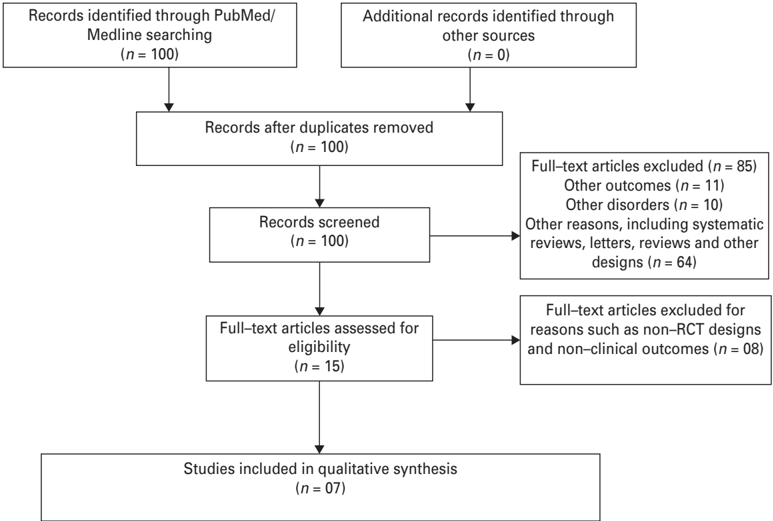
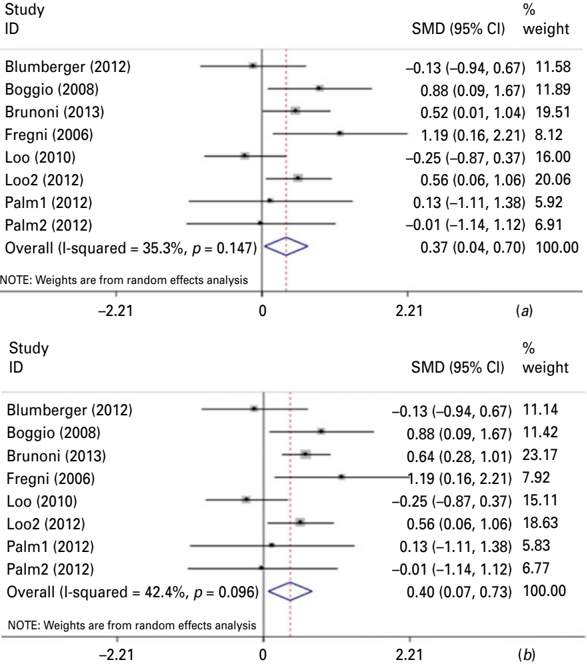
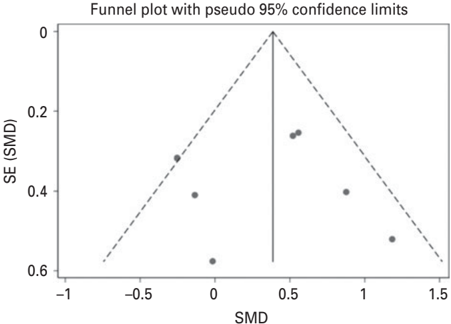
Transcranial direct cranial stimulation (tDCS) is a promising non-pharmacological intervention for treating major depressive disorder (MDD). However, results from randomized controlled trials (RCTs) and meta-analyses are mixed. Our aim was to assess the efficacy of tDCS as a treatment for MDD. We performed a systematic review in Medline and other databases from the first RCT available until January 2014. The main outcome was the Hedges' g for continuous scores; secondary outcomes were the odds ratio (ORs) to achieve response and remission. We used a random-effects model. Seven RCTs (n = 259) were included, most with small sample sizes that assessed tDCS as either a monotherapy or as an add-on therapy. Active vs. sham tDCS was significantly superior for all outcomes (g = 0.37; 95% CI 0.04-0.7; ORs for response and remission were, respectively, 1.63; 95% CI = 1.26-2.12 and 2.50; 95% CI = 1.26-2.49). Risk of publication bias was low. No predictors of response were identified, possibly owing to low statistical power. In summary, active tDCS was statistically superior to sham tDCS for the acute depression treatment, although its role as a clinical intervention is still unclear owing to the mixed findings and heterogeneity of the reviewed studies. Further RCTs with larger sample sizes and assessing tDCS efficacy beyond the acute depressive episode are warranted.
Overview
The claims and statistics of this paper haven’t been checked yet.
Free: it reads the open-access text and checks the first 5 claims that cite a source we can check. Create a free account to check every claim.
Integrity signals
Registry
Cites
Statistics
Figures
Verification
Claims the paper makes
The claims and statistics of this paper haven’t been checked yet.
Free: it reads the open-access text and checks the first 5 claims that cite a source we can check. Create a free account to check every claim.
Claims other papers make about this one
Each is checked against this paper’s own text: does it say what the citing paper says it does?
The source backs part of the claim, not all of it — or backs it for a different population, condition or comparison.
In the citing paper
“Novel therapeutic approaches that exert a neuromodulatory effect on the brain through the application of a magnetic or electric current via the scalp (Shiozawa et al. 2014) —respectively, transcranial magnetic stimulation (TMS) and transcranial direct current stimulation (tDCS)—have been shown to affect emotional processing.”
From Cognitive neuropsychological theory of antidepressant action: a modern-day approach to depression and its treatment (2021) · cites this paper as Shiozawa et al. 2014
Experimental — accuracy not yet measured
Self-check
Percentages, sums and reported differences re-computed from the paper’s own numbers.
The self-check needs the paper’s full text.
Citations
Cites
Liberati, A., Altman, D. G., Tetzlaff, J., Mulrow, C., Gøtzsche, P. C., Ioannidis, J. P. A., Clarke, M., Devereaux, P. J., Kleijnen, J., & Moher, D. (2009) · PLoS Medicine · doi:10.1371/journal.pmed.1000100 · Cited by 28,164 · cited 1×
“A systematic review and meta-analysis according to the recommendations of the Cochrane group was conducted, and the present report follows PRISMA guidelines (Liberati et al., 2009).”
MethodCochrane Handbook for Systematic Reviews of Interventions Version 5.0.1. The Cochrane Collaboration
Higgins, J. P. T., Green, S. R., & Higgins, J. P. T. (2008) · Cited by 7,261
Transcranial direct current stimulation: State of the art 2008
Nitsche, M. A., Cohen, L. G., Wassermann, E. M., Priori, A., Lang, N., Antal, A., Paulus, W., Hummel, F., Boggio, P. S., Fregni, F., et al. (2008) · Brain Stimulation · doi:10.1016/j.brs.2008.06.004 · Cited by 3,057 · cited 1×
“…stimulation (tDCS) is a novel technique based on the application of a weak electrical current over the scalp through two electrodes – the anode, which facilitates neuronal depolarization, and the cathode, which leads to neuronal hyper-polarization (Nitsche et al., 2008; Brunoni et al., 2012b).”
MethodSelf-citationImproved tests for a random effects meta‐regression with a single covariate
Knapp, G., & Hartung, J. (2003) · Statistics in Medicine · doi:10.1002/sim.1482 · Cited by 2,075 · cited 1×
“Meta-regression was performed using the random-effects model modified by Knapp and Hartung (2003) method, using only one variable at a time.”
MethodPhysiological basis of transcranial direct current stimulation
Stagg, C. J., & Nitsche, M. A. (2011) · The Neuroscientist · doi:10.1177/1073858410386614 · Cited by 1,719 · cited 1×
“…we should take into account the several studies assessing the impact of pharmacotherapy in tDCS-elicited cortical excitability (for a review see Stagg and Nitsche (2011)) – for instance, anodal tDCS effects are enhanced with the acute administration of citalopram (Nitsche et al., 2009), and…”
BackgroundBrunoni, A. R., Nitsche, M. A., Bolognini, N., Bikson, M., Wagner, T., Merabet, L., Edwards, D. J., Valero-Cabre, A., Rotenberg, A., Pascual-Leone, A., et al. (2012) · Brain stimulation · doi:10.1016/j.brs.2011.03.002 · Cited by 1,445 · cited 2×
“…stimulation (tDCS) is a novel technique based on the application of a weak electrical current over the scalp through two electrodes – the anode, which facilitates neuronal depolarization, and the cathode, which leads to neuronal hyper-polarization (Nitsche et al., 2008; Brunoni et al., 2012b).”
BackgroundMethodSelf-citationBrunoni, A. R., Amadera, J., Berbel, B., Volz, M. S., Rizzerio, B. G., & Fregni, F. (2011) · International Journal of Neuropsychopharmacology · doi:10.1017/s1461145710001690 · Cited by 1,234 · cited 2×
“This metaanalysis is relevant considering the burden and importance of MDD, which is one of the most disabling conditions worldwide (Eaton et al., 1997) and the potential benefits of tDCS as a non-invasive, affordable, simple intervention with a low rate of adverse effects (Brunoni et al., 2011).”
BackgroundSelf-citationMedication Augmentation after the Failure of SSRIs for Depression
Trivedi, M. H., Fava, M., Wisniewski, S. R., Thase, M. E., Quitkin, F., Warden, D., Ritz, L., Nierenberg, A. A., Lebowitz, B. D., Biggs, M. M., et al. (2006) · New England Journal of Medicine · doi:10.1056/nejmoa052964 · Cited by 1,002 · cited 2×
“…depression was not identified as a predictor of response, in contrast with studies showing that interventions, such as pharmacotherapy (Trivedi et al., 2006), rTMS (Fregni et al., 2006d; Lisanby et al., 2009) and ECT (Sackeim et al., 2000) performed poorer in treatment-resistant…”
ResultSackeim, H. A., Prudic, J., Devanand, D. P., Nobler, M. S., Lisanby, S. H., Peyser, S., Fitzsimons, L., Moody, B. J., & Clark, J. (2000) · Archives of General Psychiatry · doi:10.1001/archpsyc.57.5.425 · Cited by 804 · cited 2×
“Treatment-resistant depression was not identified as a predictor of response, in contrast with studies showing that interventions, such as pharmacotherapy (Trivedi et al., 2006), rTMS (Fregni et al., 2006d; Lisanby et al., 2009) and ECT (Sackeim et al., 2000) performed poorer in treatment-resistant samples.”
ResultBrunoni, A. R., Valiengo, L., Baccaro, A., Zanão, T. A., de Oliveira, J. F., Goulart, A., Boggio, P. S., Lotufo, P. A., Benseñor, I. M., & Fregni, F. (2013) · JAMA Psychiatry · doi:10.1001/2013.jamapsychiatry.32 · Cited by 601 · cited 17×
“(Brunoni et al., 2013) and to the best of our knowledge, these results have not been included in tDCS metaanalyses yet.”
BackgroundMethodResultSelf-citation
Cited by
Evidence-based guidelines on the therapeutic use of transcranial direct current stimulation (tDCS)
Lefaucheur, J.-P., Antal, A., Ayache, S. S., Benninger, D. H., Brunelin, J., Cogiamanian, F., Cotelli, M., De Ridder, D., Ferrucci, R., Langguth, B., et al. (2017) · Clinical Neurophysiology · doi:10.1016/j.clinph.2016.10.087 · Cited by 1,826
“More recent meta-analyses (Shiozawa et al., 2014; Meron et al., 2015) and an analysis of individual patient data (Brunoni et al.”
MethodMalhi, G. S., Bassett, D., Boyce, P., Bryant, R., Fitzgerald, P. B., Fritz, K., Hopwood, M., Lyndon, B., Mulder, R., Murray, G., et al. (2015) · Australian & New Zealand Journal of Psychiatry · doi:10.1177/0004867415617657 · Cited by 842
“Antidepressant effects of tDCS have been supported in recent larger studies (Brunoni et al., 2013; Loo et al., 2012) and a meta-analysis (Shiozawa et al., 2014), but another recent meta-analysis found no difference between active and sham tDCS on clinically relevant endpoints, such as response and…”
ResultFregni, F., El-Hagrassy, M. M., Pacheco-Barrios, K., Carvalho, S., Leite, J., Simis, M., Brunelin, J., Nakamura-Palacios, E. M., Marangolo, P., Venkatasubramanian, G., et al. (2021) · International Journal of Neuropsychopharmacology · doi:10.1093/ijnp/pyaa051 · Cited by 605
Self-citationMilev, R. V., Giacobbe, P., Kennedy, S. H., Blumberger, D. M., Daskalakis, Z. J., Downar, J., Modirrousta, M., Patry, S., Vila-Rodriguez, F., Lam, R. W., et al. (2016) · The Canadian Journal of Psychiatry · doi:10.1177/0706743716660033 · Cited by 586
“The exact frequency and duration of stimulation have not been established, but it seems that a minimum stimulation with 2 milliamperes (mA) for at least 30 minutes per day for 2 weeks is necessary to observe an antidepressant effect.(6) The largest randomized-controlled trial (RCT) to date (N 1⁄4 120 in 4 conditions)…”
BackgroundInfluentialParikh, S. V., Quilty, L. C., Ravitz, P., Rosenbluth, M., Pavlova, B., Grigoriadis, S., Velyvis, V., Kennedy, S. H., Lam, R. W., MacQueen, G. M., et al. (2016) · The Canadian Journal of Psychiatry · doi:10.1177/0706743716659418 · Cited by 562
Transcranial Direct Current Stimulation (tDCS): A Beginner's Guide for Design and Implementation
Thair, H., Holloway, A. L., Newport, R., & Smith, A. D. (2017) · Frontiers in Neuroscience · doi:10.3389/fnins.2017.00641 · Cited by 513
“Published tDCS research is largely underpowered due to small sample sizes (for discussions see: Brunoni et al., 2011; Berryhill et al., 2014; Horvath et al., 2014; Shiozawa et al., 2014).”
MethodBrunoni, A. R., Moffa, A. H., Fregni, F., Palm, U., Padberg, F., Blumberger, D. M., Daskalakis, Z. J., Bennabi, D., Haffen, E., Alonzo, A., et al. (2016) · British Journal of Psychiatry · doi:10.1192/bjp.bp.115.164715 · Cited by 414
Self-citationMutz, J., Vipulananthan, V., Carter, B., Hurlemann, R., Fu, C. H. Y., & Young, A. H. (2019) · BMJ · doi:10.1136/bmj.l1079 · Cited by 427
Effects of tDCS on motor learning and memory formation: A consensus and critical position paper
Buch, E. R., Santarnecchi, E., Antal, A., Born, J., Celnik, P. A., Classen, J., Gerloff, C., Hallett, M., Hummel, F. C., Nitsche, M. A., et al. (2017) · Clinical Neurophysiology · doi:10.1016/j.clinph.2017.01.004 · Cited by 367
Fregni, F., Nitsche, M. A., Loo, C. K., Brunoni, A. R., Marangolo, P., Leite, J., Carvalho, S., Bolognini, N., Caumo, W., Paik, N. J., et al. (2015) · Clinical Research and Regulatory Affairs · doi:10.3109/10601333.2015.980944 · Cited by 291
“The most recent meta-analysis, incorporating all RCTs to date, found that active tDCS was more effective than a sham stimulation comparator (65).”
MethodSelf-citationChase, H. W., Boudewyn, M. A., Carter, C. S., & Phillips, M. L. (2020) · Molecular Psychiatry · doi:10.1038/s41380-019-0499-9 · Cited by 286
McAllister-Williams, R. H., Arango, C., Blier, P., Demyttenaere, K., Falkai, P., Gorwood, P., Hopwood, M., Javed, A., Kasper, S., Malhi, G. S., et al. (2020) · Journal of Affective Disorders · doi:10.1016/j.jad.2020.02.023 · Cited by 278
Chew, T., Ho, K.-A., & Loo, C. K. (2015) · Brain Stimulation · doi:10.1016/j.brs.2015.07.031 · Cited by 272
“The lack of reproducibility of tDCS outcomes presents another barrier to clinical use, and this can be appreciated, for example, in meta-analyses on the use of tDCS for major depression [9,10,12].”
BackgroundRazza, L. B., Palumbo, P., Moffa, A. H., Carvalho, A. F., Solmi, M., Loo, C. K., & Brunoni, A. R. (2020) · Depression and Anxiety · doi:10.1002/da.23004 · Cited by 236
“We used a random effects model (restricted maximum‐likelihood method) based on previous meta‐analyses (Mutz et al., 2018; Shiozawa et al., 2014), considering that study heterogeneity a priori would be high.”
MethodResultInfluentialSelf-citationThe Dynamic Duo: Combining noninvasive brain stimulation with cognitive interventions
Sathappan, A. V., Luber, B. M., & Lisanby, S. H. (2019) · Progress in Neuro-Psychopharmacology and Biological Psychiatry · doi:10.1016/j.pnpbp.2018.10.006 · Cited by 225
Meron, D., Hedger, N., Garner, M., & Baldwin, D. S. (2015) · Neuroscience & Biobehavioral Reviews · doi:10.1016/j.neubiorev.2015.07.012 · Cited by 220
“…bias Berlim et al., 2013 01/07/ 1998- 20/08/2012 6 Active tDCS: 103 Sham tDCS: 97 0.55 Categorical- reponse and remission rates Publication bias Shiozawa et al., 2014 2006- 31/01/2014 7 Active tDCS: 167 Sham tDCS: 152 0.76 0.66 Both categorical and continuous outcome measures Publication…”
BackgroundMethodInfluentialBasic and functional effects of transcranial Electrical Stimulation (tES)—An introduction
Yavari, F., Jamil, A., Mosayebi Samani, M., Vidor, L. P., & Nitsche, M. A. (2018) · Neuroscience & Biobehavioral Reviews · doi:10.1016/j.neubiorev.2017.06.015 · Cited by 218
“30 Taken together, the available evidence suggests a clinically relevant potential of tDCS as an intervention to treat major depression, which has been demonstrated by meta-analyses and systematic reviews (Berlim et al., 2013; Brunoni et al., 2016; Shiozawa et al., 2014).”
BackgroundBikson, M., Brunoni, A. R., Charvet, L. E., Clark, V. P., Cohen, L. G., Deng, Z.-D., Dmochowski, J., Edwards, D. J., Frohlich, F., Kappenman, E. S., et al. (2018) · Brain Stimulation · doi:10.1016/j.brs.2017.12.008 · Cited by 213
“There is an underreporting of negative effect studies [161] due to publication bias [153,184].”
BackgroundResultSelf-citationCharvet, L. E., Kasschau, M., Datta, A., Knotkova, H., Stevens, M. C., Alonzo, A., Loo, C., Krull, K. R., & Bikson, M. (2015) · Frontiers in Systems Neuroscience · doi:10.3389/fnsys.2015.00026 · Cited by 195
“…burden to patients and their caregivers, at the same time associated with significant provider time and cost, especially as the sample size increases (Brunoni et al., 2012a; Holland and Crinion, 2012; Ferrucci et al., 2014; Meesen et al., 2014; Shiozawa et al., 2014; Vaseghi et al., 2014).”
BackgroundKekic, M., Boysen, E., Campbell, I. C., & Schmidt, U. (2016) · Journal of Psychiatric Research · doi:10.1016/j.jpsychires.2015.12.018 · Cited by 184
“Shiozawa et al. (2014a) 1 MDD Open-label, uncontrolled (i) tDCS Left DLPFC Right deltoid 2 e 30 min, 10 sessions (1 per weekday for 2 consecutive weeks) HRSD Improvement in depressive symptoms post-tDCS, maintained for at least 3 weeks.”
BackgroundMethodInfluentialMoffa, A. H., Martin, D., Alonzo, A., Bennabi, D., Blumberger, D. M., Benseñor, I. M., Daskalakis, Z., Fregni, F., Haffen, E., Lisanby, S. H., et al. (2020) · Progress in Neuro-Psychopharmacology and Biological Psychiatry · doi:10.1016/j.pnpbp.2019.109836 · Cited by 171
Self-citationYamada, Y., & Sumiyoshi, T. (2021) · Frontiers in Human Neuroscience · doi:10.3389/fnhum.2021.631838 · Cited by 168
Ho, K.-A., Taylor, J. L., Chew, T., Gálvez, V., Alonzo, A., Bai, S., Dokos, S., & Loo, C. K. (2016) · Brain Stimulation · doi:10.1016/j.brs.2015.08.003 · Cited by 168
“These findings are consistent with the principle of applying repeated sessions to produce cumulative changes in therapeutic applications [15].”
ResultDepression in Multiple Sclerosis: Epidemiology, Aetiology, Diagnosis and Treatment
Solaro, C. M., Gamberini, G., & Masuccio, F. G. (2018) · CNS Drugs · doi:10.1007/s40263-018-0489-5 · Cited by 203
Salehinejad, M. A., Ghanavai, E., Rostami, R., & Nejati, V. (2017) · Journal of Affective Disorders · doi:10.1016/j.jad.2016.12.036 · Cited by 176
Transcranial direct current stimulation in psychiatric disorders
Tortella, G. (2015) · World Journal of Psychiatry · doi:10.5498/wjp.v5.i1.88 · Cited by 154
Imburgio, M. J., & Orr, J. M. (2018) · Neuropsychologia · doi:10.1016/j.neuropsychologia.2018.04.022 · Cited by 150
Enhancing Working Memory Training with Transcranial Direct Current Stimulation
Au, J., Katz, B., Buschkuehl, M., Bunarjo, K., Senger, T., Zabel, C., Jaeggi, S. M., & Jonides, J. (2016) · Journal of Cognitive Neuroscience · doi:10.1162/jocn_a_00979 · Cited by 147
“DLPFC stimulation has been reported to modulate affective symptoms and emotional regulation (Feeser, Prehn, Kazzer, Mungee, & Bajbouj, 2014; Shiozawa et al., 2014), which in turn can interact with WM function.”
BackgroundBrain Neuromodulation Techniques: A Review
Lewis, P. M., Thomson, R. H., Rosenfeld, J. V., & Fitzgerald, P. B. (2016) · The Neuroscientist · doi:10.1177/1073858416646707 · Cited by 142
Non-pharmacological treatment of depression: a systematic review and evidence map
Farah, W. H., Alsawas, M., Mainou, M., Alahdab, F., Farah, M. H., Ahmed, A. T., Mohamed, E. A., Almasri, J., Gionfriddo, M. R., Castaneda-Guarderas, A., et al. (2016) · Evidence Based Medicine · doi:10.1136/ebmed-2016-110522 · Cited by 141
Low-Intensity Transcranial Current Stimulation in Psychiatry
Philip, N. S., Nelson, B. G., Frӧhlich, F., Lim, K. O., Widge, A. S., & Carpenter, L. L. (2017) · American Journal of Psychiatry · doi:10.1176/appi.ajp.2017.16090996 · Cited by 159
Charvet, L. E., Dobbs, B., Shaw, M., Bikson, M., Datta, A., & Krupp, L. (2017) · Multiple Sclerosis Journal · doi:10.1177/1352458517732842 · Cited by 145
Safety of repeated sessions of transcranial direct current stimulation: A systematic review
Nikolin, S., Huggins, C., Martin, D. M., Alonzo, A., & Loo, C. K. A. (2017) · Brain stimulation · doi:10.1016/j.brs.2017.10.020 · Cited by 162
Transcranial direct current brain stimulation decreases impulsivity in ADHD
Allenby, C., Falcone, M., Bernardo, L., Wileyto, E. P., Rostain, A., Ramsay, J. R., Lerman, C., & Loughead, J. (2018) · Brain Stimulation · doi:10.1016/j.brs.2018.04.016 · Cited by 128
Salehinejad, M. A., Wischnewski, M., Nejati, V., Vicario, C. M., & Nitsche, M. A. (2019) · PLOS ONE · doi:10.1371/journal.pone.0215095 · Cited by 126
Transcranial Direct Current Stimulation (tDCS): A Promising Treatment for Major Depressive Disorder?
Bennabi, D., & Haffen, É. (2018) · Brain Sciences · doi:10.3390/brainsci8050081 · Cited by 157
“[40] included seven controlled trials in their meta-analysis and showed a superiority of active tDCS over placebo in terms of clinical response and remission, which was confirmed by Meron et al.”
Godlewska, B. R., & Harmer, C. J. (2021) · Psychopharmacology · doi:10.1007/s00213-019-05448-0 · Cited by 123
Transcranial direct current stimulation (tDCS) – Application in neuropsychology
Shin, Y., Foerster, Á., & Nitsche, M. A. (2015) · Neuropsychologia · doi:10.1016/j.neuropsychologia.2015.02.002 · Cited by 131
“…systematic meta-analysis conducted for these studies showed that active tDCS was significantly superior for all outcomes in the patients with MDD (g¼0.37; 95% CI 0.04–0.7; ORs for response and remission were, respectively, 1.63; 95% CI¼1.26–2.12 and 2.50; 95% CI¼1.26–2.49) (Shiozawa et al., 2014).”
MethodInfluentialRosson, S., de Filippis, R., Croatto, G., Collantoni, E., Pallottino, S., Guinart, D., Brunoni, A. R., Dell’Osso, B. M., Pigato, G., Hyde, J., et al. (2022) · Neuroscience & Biobehavioral Reviews · doi:10.1016/j.neubiorev.2022.104743 · Cited by 135
Self-citationCharvet, L. E., Shaw, M., Dobbs, B., Frontario, A., Sherman, K., Bikson, M., Datta, A., Krupp, L., Zeinapour, E., & Kasschau, M. (2017) · Neuromodulation Technology at the Neural Interface · doi:10.1111/ner.12583 · Cited by 110
“Trials in depression have shown that tDCS tends to show a dose-dependent trend (77).”
BackgroundValiengo, L. D. C. L., Goulart, A. C., de Oliveira, J. F., Benseñor, I. M., Lotufo, P. A., & Brunoni, A. R. (2016) · Journal of Neurology Neurosurgery & Psychiatry · doi:10.1136/jnnp-2016-314075 · Cited by 115
Self-citationAlonzo, A., Fong, J. S., Ball, N., Martin, D. M., Chand, N., & Loo, C. K. A. (2019) · Journal of Affective Disorders · doi:10.1016/j.jad.2019.04.041 · Cited by 106
Noninvasive Brain Stimulation: Challenges and Opportunities for a New Clinical Specialty
Boes, A. D., Kelly, M. S., Trapp, N. T., Stern, A. P., Press, D. Z., & Pascual‐Leone, Á. (2018) · Journal of Neuropsychiatry · doi:10.1176/appi.neuropsych.17110262 · Cited by 108
Reznik, S. J., Sanguinetti, J. L., Tyler, W. J., Daft, C. M. W., & Allen, J. J. B. (2020) · Neurology Psychiatry and Brain Research · doi:10.1016/j.npbr.2020.06.004 · Cited by 102
Wallace, D. R., Cooper, N. R., Paulmann, S., Fitzgerald, P. B., & Russo, R. (2016) · PLoS ONE · doi:10.1371/journal.pone.0149703 · Cited by 105
“In addition, tDCS has been used to facilitate stroke rehabilitation [9], attenuate addiction [10] and pain [11], treat depression [12] and several other neurological and psychiatric disorders (e.”
Backgroundvan‘t Wout, M., Longo, S. M., Reddy, M. K., Philip, N. S., Bowker, M. T., & Greenberg, B. D. (2017) · Brain and Behavior · doi:10.1002/brb3.681 · Cited by 86
“For instance, recent studies have demonstrated tDCS to reduce severity of depression (Brunoni et al., 2013, 2016; Shiozawa et al., 2014) as well as promising results to reduce severity of symptoms associated with schizophrenia (Brunelin et al., 2012; Hoy, Arnold, Emonson, Daskalakis, & Fitzgerald,…”
BackgroundSahakian, B. J., Bruhl, A. B., Cook, J., Killikelly, C., Savulich, G., Piercy, T., Hafizi, S., Perez, J., Fernandez-Egea, E., Suckling, J., et al. (2015) · Philosophical Transactions of the Royal Society B: Biological Sciences · doi:10.1098/rstb.2014.0214 · Cited by 85
Zhang, R., Lam, C. L. M., Peng, X., Zhang, D., Zhang, C., Huang, R., & Lee, T. M. C. (2021) · Neuroscience & Biobehavioral Reviews · doi:10.1016/j.neubiorev.2021.03.026 · Cited by 101
“We also screened the reference lists of published metaanalyses and systematic reviews of tDCS in depression (Berlim et al., 2013; Brunoni et al., 2016; Kalu et al., 2012; Meron et al., 2015; Razza et al., 2020; Shiozawa et al., 2014).”
BackgroundMethodJavitt, D. C., Siegel, S. J., Spencer, K., Mathalon, D. H., Hong, L. E., Martínez, A., Ehlers, C. L., Abbas, A. I., Teichert, T., Lakatos, P., et al. (2020) · Neuropsychopharmacology · doi:10.1038/s41386-020-0697-9 · Cited by 88
Nord, C. L., Halahakoon, D. C., Limbachya, T., Charpentier, C. J., Lally, N., Walsh, V., Leibowitz, J., Pilling, S., & Roiser, J. P. (2019) · Neuropsychopharmacology · doi:10.1038/s41386-019-0401-0 · Cited by 90
Kasschau, M., Reisner, J., Sherman, K., Bikson, M., Datta, A., & Charvet, L. E. (2016) · Neuromodulation Technology at the Neural Interface · doi:10.1111/ner.12430 · Cited by 82
Belkacem, A. N., Jamil, N., Khalid, S., & Alnajjar, F. (2023) · Frontiers in Human Neuroscience · doi:10.3389/fnhum.2023.1085173 · Cited by 80
“It can mitigate depression by stimulating nerves of the left dorsolateral prefrontal cortex (Shiozawa et al., 2014).”
BackgroundtDCS peripheral nerve stimulation: a neglected mode of action?
van Boekholdt, L., Kerstens, S., Khatoun, A., Asamoah, B., & Laughlin, M. M. (2020) · Molecular Psychiatry · doi:10.1038/s41380-020-00962-6 · Cited by 88
Non-invasive Brain Stimulation Therapy in Multiple Sclerosis: A Review of tDCS, rTMS and ECT Results
Palm, U., Ayache, S. S., Padberg, F., & Lefaucheur, J. (2014) · Brain stimulation · doi:10.1016/j.brs.2014.09.014 · Cited by 85
“In psychiatric domain, tDCS has proven to ameliorate depressive disorders; however, results are still inconsistent [22,27].”
ResultSauvaget, A., Trojak, B., Bulteau, S., Jiménez-Murcia, S., Fernández-Aranda, F., Wolz, I., Menchón, J. M., Achab, S., Vanelle, J.-M., & Grall-Bronnec, M. (2015) · Frontiers in Neuroscience · doi:10.3389/fnins.2015.00349 · Cited by 76
“…symptoms and obsessive-compulsive symptoms on the one hand, and of binge-eating and purging conducts on the other hand, could simply be due to a common physiopathological process rather than to a specific effect of tDCS on the addictive symptoms only (Khedr et al., 2014; Shiozawa et al., 2014).”
BackgroundNew Treatment Strategies of Depression: Based on Mechanisms Related to Neuroplasticity
Huang, Y.-J., Lane, H.-Y., & Lin, C.-H. (2017) · Neural Plasticity · doi:10.1155/2017/4605971 · Cited by 74
“Meta-analysis also revealed that tDCS was significantly superior to sham group for all outcome measures in depression treatment [113].”
BackgroundWang, J., Luo, H., Schülke, R., Geng, X., Sahakian, B. J., & Wang, S. (2021) · BMC Medicine · doi:10.1186/s12916-021-02181-4 · Cited by 81
“Meanwhile, many studies [31, 51, 55] and reviews [28, 33, 53] have shown a particular increase in antidepressant efficacy when tDCS co-initiated with or added to SSRIs.”
BackgroundResultAstrocytes as a target of transcranial direct current stimulation (tDCS) to treat depression
Monai, H., & Hirase, H. (2017) · Neuroscience Research · doi:10.1016/j.neures.2017.08.012 · Cited by 83
A neurocognitive model for understanding treatment action in depression
Warren, M. B., Pringle, A., & Harmer, C. J. (2015) · Philosophical Transactions of the Royal Society B: Biological Sciences · doi:10.1098/rstb.2014.0213 · Cited by 66
Recent Advances in Non-invasive Brain Stimulation for Major Depressive Disorder
Liu, S., Sheng, J., Li, B., & Zhang, X. (2017) · Frontiers in Human Neuroscience · doi:10.3389/fnhum.2017.00526 · Cited by 74
“Reddening of the skin, heat, burning, itching, and tingling sensations at the stimulation site are the most common side effects of the treatment, and are reported by more than half of patients receiving tDCS (Brunoni et al., 2011; Shiozawa et al., 2014; Meron et al., 2015).”
BackgroundNoninvasive Stimulation of the Ventromedial Prefrontal Cortex Enhances Pleasant Scene Processing
Junghöfer, M., Winker, C., Rehbein, M. A., & Sabatinelli, D. (2017) · Cerebral Cortex · doi:10.1093/cercor/bhx073 · Cited by 71
“However, recent summary reviews of published attempts to use tDCS to stimulate dlPFC in depression report effect sizes that are either moderate (Kalu et al. 2012), small (Shiozawa et al. 2014), or non-significant (Berlim et al. 2014).”
BackgroundReprint of: Transcranial direct current stimulation (tDCS) – Application in neuropsychology
Shin, Y., Foerster, Á., & Nitsche, M. A. (2015) · Neuropsychologia · doi:10.1016/j.neuropsychologia.2015.06.021 · Cited by 72
Mondino, M., Thiffault, F., & Fecteau, S. (2015) · Frontiers in Cellular Neuroscience · doi:10.3389/fncel.2015.00399 · Cited by 61
“A meta-analysis analyzing the effects of tDCS in MDD reported a trend for greater mood improvement when more than 10 sessions were delivered as compared to a lesser number (Shiozawa et al., 2014).”
MethodNeuromodulation Therapies for Geriatric Depression
Gálvez, V., Ho, K.-A., Alonzo, A., Martin, D. M., George, D., & Loo, C. K. A. (2015) · Current Psychiatry Reports · doi:10.1007/s11920-015-0592-y · Cited by 77
Increasing propensity to mind‐wander by transcranial direct current stimulation? A registered report
Boayue, N. M., Csifcsák, G., Aslaksen, P. M., Turi, Z., Antal, A., Groot, J. M., Hawkins, G. E., Forstmann, B. U., Opitz, A., Thielscher, A., et al. (2019) · European Journal of Neuroscience · doi:10.1111/ejn.14347 · Cited by 65
“Intriguingly, Axelrod et al. (2015) could show an increase in the propensity to mind wander (as measured by self- reports) during a sustained attention task when anodal tDCS was applied above the DLPFC relative to two control conditions, a sham (inactive) stimulation and stimulation of the occipital support against a…”
ResultInfluentialApplication of Transcranial Direct Current Stimulation in Psychiatry
Herrera-Meléndez, A. L., Bajbouj, M., & Aust, S. (2019) · Neuropsychobiology · doi:10.1159/000501227 · Cited by 67
Brunoni, A. R., Sampaio-Junior, B., Moffa, A. H., Borrione, L., Nogueira, B. S., Aparício, L. V. M., Veronezi, B., Moreno, M., Fernandes, R. A., Tavares, D., et al. (2015) · Sao Paulo Medical Journal · doi:10.1590/1516-3180.2014.00351712 · Cited by 57
Self-citationD’Urso, G., Dell’Osso, B. M., Rossi, R., Brunoni, A. R., Bortolomasi, M., Ferrucci, R., Priori, A., de Bartolomeis, A., & Altamura, A. C. (2017) · Journal of Affective Disorders · doi:10.1016/j.jad.2017.05.019 · Cited by 103
Self-citationShekhawat, G. S., & Vanneste, S. (2018) · Scientific Reports · doi:10.1038/s41598-018-26665-1 · Cited by 63
Zheng, E. Z., Wong, N. M. L., Yang, A. S. Y., & Lee, T. M. C. (2024) · Translational Psychiatry · doi:10.1038/s41398-024-03003-w · Cited by 73
Brunoni, A. R., Baeken, C., Machado-Vieira, R., Gattaz, W. F., & Vanderhasselt, M.-A. (2015) · The World Journal of Biological Psychiatry · doi:10.3109/15622975.2014.958101 · Cited by 52
“When applied daily for several days, these techniques are effective antidepressant strategies according to recent meta-analyses of sham-controlled studies (Berlim et al. 2014; Shiozawa et al. 2014).”
BackgroundMethodSelf-citationVacas, S. M., Stella, F., Loureiro, J. C., do Couto, F. S., Oliveira-Maia, A. J., & Forlenza, O. V. (2018) · International Journal of Geriatric Psychiatry · doi:10.1002/gps.5003 · Cited by 61
“tDCS has also been shown to be safe and effective for some neuropsychiatric conditions, particularly major depressive disorder.(21) It has been speculated that tDCS modulates spontaneous neuronal activity in a polarity‐specific manner.”
BackgroundTime-course of the tDCS antidepressant effect: An individual participant data meta-analysis
Nikolin, S., Moffa, A. H., Razza, L. B., Martin, D. M., Brunoni, A. R., Palm, U., Padberg, F., Bennabi, D., Haffen, É., Blumberger, D. M., et al. (2023) · Progress in Neuro-Psychopharmacology and Biological Psychiatry · doi:10.1016/j.pnpbp.2023.110752 · Cited by 58
Self-citationBrunoni, A. R., Moffa, A. H., Sampaio-Júnior, B., Gálvez, V., & Loo, C. K. (2017) · Brain Stimulation · doi:10.1016/j.brs.2016.11.005 · Cited by 51
Self-citationDoes non-invasive brain stimulation modulate emotional stress reactivity?
Smits, F., Schutter, D. J. L. G., van Honk, J., & Geuze, E. (2020) · Social Cognitive and Affective Neuroscience · doi:10.1093/scan/nsaa011 · Cited by 58
McClintock, S. M., Martin, D. M., Lisanby, S. H., Alonzo, A., McDonald, W. M., Aaronson, S. T., Husain, M. M., O’Reardon, J. P., Weickert, C. S., Mohan, A., et al. (2020) · Depression and Anxiety · doi:10.1002/da.22988 · Cited by 54
“…with unipolar and bipolar depression when anodal stimulation is administered over the left dorsolateral prefrontal cortex (Brunoni et al., 2013; Brunoni et al., 2014; Brunoni et al., 2017; Brunoni et al., 2016a; Kekic, Boysen, Campbell, & Schmidt, 2016; Loo et al., 2012; Shiozawa et al., 2014).”
BackgroundKasschau, M., Sherman, K., Haider, L., Frontario, A., Shaw, M., Datta, A., Bikson, M., & Charvet, L. E. (2015) · Journal of Visualized Experiments · doi:10.3791/53542 · Cited by 57
Transcranial Direct Current Stimulation in Child and Adolescent Psychiatry
Muszkat, D., Polanczyk, G. V., Dias, T. G. C., & Brunoni, A. R. (2016) · Journal of Child and Adolescent Psychopharmacology · doi:10.1089/cap.2015.0172 · Cited by 54
“Although data from several clinical trials in adults showed significant clinical improvement with active tDCS compared with sham in adults with major depression (Shiozawa et al. 2014), to date no study of tDCS for child and adolescent depression has been conducted.”
Self-citationSurface EEG-Transcranial Direct Current Stimulation (tDCS) Closed-Loop System
Leite, J., Morales-Quezada, L., Carvalho, S., Thibaut, A., Doruk, D., Chen, C.-F., Schachter, S. C., Rotenberg, A., & Fregni, F. (2017) · International Journal of Neural Systems · doi:10.1142/s0129065717500265 · Cited by 55
Self-citationPadberg, F., Kumpf, U., Mansmann, U., Palm, U., Plewnia, C., Langguth, B., Zwanzger, P., Fallgatter, A. J., Nolden, J., Burger, M., et al. (2017) · European Archives of Psychiatry and Clinical Neuroscience · doi:10.1007/s00406-017-0769-y · Cited by 57
Tortella, G., Selingardi, P., Moreno, M., Veronezi, B., & Brunoni, A. (2015) · CNS & Neurological Disorders - Drug Targets · doi:10.2174/1871527313666141130224431 · Cited by 47
Self-citationBorducchi, D. M. M., Gomes, J. S., Akiba, H. T., Cordeiro, Q., Borducchi, J. H. M., Valentin, L. S. S., Borducchi, G., & Dias, Á. M. (2016) · Frontiers in Psychiatry · doi:10.3389/fpsyt.2016.00183 · Cited by 51
“In other words, our results are in line with reports that have shown that tDCS is an effective non-pharmacological treatment for major depressive disorders (25, 26) and should be taken as an important finding, even considering that our sample did not reach baseline levels for being diagnosed with depressive disorder,…”
ResultSelf-citationClinical Usefulness of Therapeutic Neuromodulation for Major Depression
McGirr, A., & Berlim, M. T. (2018) · Psychiatric Clinics of North America · doi:10.1016/j.psc.2018.04.009 · Cited by 45
Self-citationCheng, Y.-C., Kuo, P.-H., Su, M.-I., & Huang, W.-L. (2022) · Psychological Medicine · doi:10.1017/s0033291721005560 · Cited by 51
“The results are compatible with previous meta-analyses exploring the effect of tDCS on depression (Berlim, Van den Eynde, & Daskalakis, 2013; Kalu, Sexton, Loo, & Ebmeier, 2012; Shiozawa et al., 2014; Zhang et al., 2021).”
Challenging Treatment-Resistant Major Depressive Disorder: A Roadmap for Improved Therapeutics
de Sousa, R. T., V. Zanetti, M., R. Brunoni, A., & Machado-Vieira, R. (2015) · Current Neuropharmacology · doi:10.2174/1570159x13666150630173522 · Cited by 43
“sham tDCS was effective for depression, considering change in scores and response and remission rates [153].”
Self-citationConsequences of prefrontal tDCS on inhibitory control and reactive aggression
Weidler, C., Habel, U., Wallheinke, P., Wagels, L., Hofhansel, L., Ling, S., Blendy, J. A., & Clemens, B. (2020) · Social Cognitive and Affective Neuroscience · doi:10.1093/scan/nsaa158 · Cited by 52
“For instance, tDCS has already been successfully applied to increase cognitive functions in depression (Shiozawa et al., 2014) and schizophrenia (Brunelin et al., 2012).”
BackgroundRen, C., Pagali, S. R., Wang, Z., Kung, S., Boyapati, R. B., Islam, K., Li, J. W., Shelton, K. M., Waniger, A., Rydberg, A., et al. (2025) · JAMA Network Open · doi:10.1001/jamanetworkopen.2025.16459 · Cited by 51
The influence of endogenous estrogen on transcranial direct current stimulation: A preliminary study
Lee, S., Chung, S. W., Rogasch, N. C., Thomson, C. J., Worsley, R., Kulkarni, J., Thomson, R. H., Fitzgerald, P. B., & Segrave, R. A. (2018) · European Journal of Neuroscience · doi:10.1111/ejn.14085 · Cited by 47
“However, both experimental behavior modulation and clinical therapeutic outcomes have proved highly variable (Hill, Rogasch, Fitzgerald, & Hoy, 2016) and induced changes have frequently been modest in magnitude (Berlim, van den Eynde, & Daskalakis, 2013; Kalu, Sexton, Loo, & Ebmeier, 2012; Shiozawa et al., 2014).”
BackgroundBrunyé, T. T., Moran, J. M., Holmes, A., Mahoney, C. R., & Taylor, H. A. (2017) · Brain and Cognition · doi:10.1016/j.bandc.2017.01.006 · Cited by 51
Jog, M., Wang, D. J. J., & Narr, K. L. (2019) · Personalized Medicine in Psychiatry · doi:10.1016/j.pmip.2019.03.001 · Cited by 56
Li, M.-S., Du, X., Chu, H.-C., Liao, Y.-Y., Pan, W. H., Li, Z., & Hung, G. C. (2019) · BMC Psychiatry · doi:10.1186/s12888-019-2119-2 · Cited by 46
Mattioli, F., Maglianella, V., D'Antonio, S., Trimarco, E., & Caligiore, D. (2023) · Journal of the Neurological Sciences · doi:10.1016/j.jns.2023.122825 · Cited by 49
“In this respect, indeed, there are meta-analyses of randomized clinical trials that have shown substantial differences between groups that received active stimulation and groups that received sham stimulation [214,360], and improvements in depressive symptoms are reported.”
To, W. T., Hart, J., Ridder, D. D., & Vanneste, S. (2016) · Expert Review of Medical Devices · doi:10.1586/17434440.2016.1153968 · Cited by 40
The Efficacy and Safety of Neuromodulation Treatments in Late-Life Depression
van Rooij, S. J. H., Riva-Posse, P., & McDonald, W. M. (2020) · Current Treatment Options in Psychiatry · doi:10.1007/s40501-020-00216-w · Cited by 38
A systematic review of noninvasive brain stimulation for post-stroke depression
Bucur, M., & Papagno, C. (2018) · Journal of Affective Disorders · doi:10.1016/j.jad.2018.05.026 · Cited by 45
Godlewska, B. R. (2018) · Pharmacology & Therapeutics · doi:10.1016/j.pharmthera.2018.12.010 · Cited by 42
Sandran, N. G., Hillier, S., & Hordacre, B. G. (2019) · Journal of NeuroEngineering and Rehabilitation · doi:10.1186/s12984-019-0529-5 · Cited by 35
Júnior, B. D. S. P., Tortella, G., Lafer, B., Nunes, P. V., Benseñor, I. M., Lotufo, P. A., Machado‐Vieira, R., & Brunoni, A. R. (2015) · Neural Plasticity · doi:10.1155/2015/684025 · Cited by 40
Self-citationWoodham, R. D., Rimmer, R. M., Young, A. H., & Fu, C. H. Y. (2022) · Journal of Psychiatric Research · doi:10.1016/j.jpsychires.2022.07.026 · Cited by 36
Dinn, W. M., Ayçiçeği-Dinn, A., Göral, F., Karamürsel, S., Yıldırım, E. A., Yıldırım, M. H., Gansler, D. A., Doruk, D., & Fregni, F. (2016) · Neurology Psychiatry and Brain Research · doi:10.1016/j.npbr.2016.08.003 · Cited by 37
Self-citation
Metadata
- Authors
- Shiozawa, P., Fregni, F., Benseñor, I. M., Lotufo, P. A., Berlim, M. T., Daskalakis, J. Z., Cordeiro, Q., & Brunoni, A. R.
- Affiliations
- Universidade de São Paulo (BR)
- Harvard University (US)
- McGill University (CA)
- Centre for Addiction and Mental Health (CA)
- Faculdade de Ciências Médicas da Santa Casa de São Paulo (BR)
- ORCID
- Venue
- The International Journal of Neuropsychopharmacology
- Publisher
- Oxford University Press (OUP)
- Published
- 2014-04-08
- Volume
- 17
- Issue
- 09
- Pages
- 1443-1452
- ISSN
- 1461-1457 (ISSN-L)
- 1469-5111
- OpenAlex
- W2109355532
- Semantic Scholar
- a3b01b64fcdd6a4c087120bb4d891358fe217006
- Cited by
- 282
- References
- 31
- Citations by year
- 2026: 7 · 2025: 9 · 2024: 10 · 2023: 12 · 2022: 11 · 2021: 20 · 2020: 28 · 2019: 39 · 2018: 34 · 2017: 33 · 2016: 33 · 2015: 37 · 2014: 7
- FWCI
- 2.98
- Type
- journal article
- Language
- en
- Open access
- hybrid
- doi.org
- Licence
- cc-by
- Locations
- The International Journal of Neuropsychopharmacology (publishedVersion, cc-by)
- PubMed (publishedVersion)
- Funders
- National Alliance for Research on Schizophrenia and Depression
- Fundação de Amparo à Pesquisa do Estado de São Paulo (20911-5, 20493, 470904)
- Conselho Nacional de Desenvolvimento Científico e Tecnológico (20493, 20911-5, 470904)
- Topics
- Life Sciences › Neuroscience › Neurology › Transcranial Magnetic Stimulation Studies
- Health Sciences › Medicine › Pharmacology (medical) › Treatment of Major Depression
- Health Sciences › Medicine › Psychiatry and Mental health › Electroconvulsive Therapy Studies
- Keywords
- transcranial direct current stimulation, major depressive disorder, non-pharmacological treatment, treatment response and remission, acute depression, adjunctive therapy
- MeSH terms
- Major Depressive Disorder, Humans, Randomized Controlled Trials as Topic, Transcranial Direct Current Stimulation
About these checks
Registry, retraction, Cites and statistics results are computed, not judged, with one exception: a printed reference that no index lists is read once by a model before it counts as a citation error. Claims are extracted by a model and kept only when their quote appears verbatim in the text; each cited source is then checked, with a model’s help, for whether it says what the claim relies on. Those verdicts can be wrong — read the claim’s quote and the cited source before relying on one.
Statistics and arithmetic are recomputed, not judged.
Confidence bands are shown only for fields calibrated on our annotated test set. None is calibrated yet, so no band is shown.
What counts as a claim ›How we measure confidence ›How we check this ›
Are you an author, or do you see a problem with this page? Request a review
Data sources
Bibliographic data: Semantic Scholar, OpenAlex, Crossref.
Contains information from the Semantic Scholar Academic Graph Datasets, made available under the ODC Attribution License (ODC-BY 1.0).
Semantic Scholar’s data is described in: Kinney, R., et al. (2023). The Semantic Scholar Open Data Platform. arXiv:2301.10140.
