

The intricate relationships between monitoring and control in metacognition: Lessons for the cause-and-effect relation between subjective experience and behavior.
The DOI matches its Crossref record; 168 of the 171 references it cites were found in a registry or an index.
Abstract
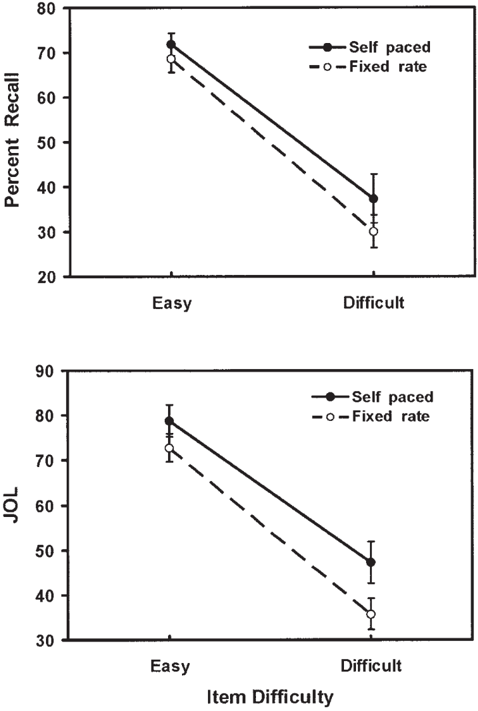
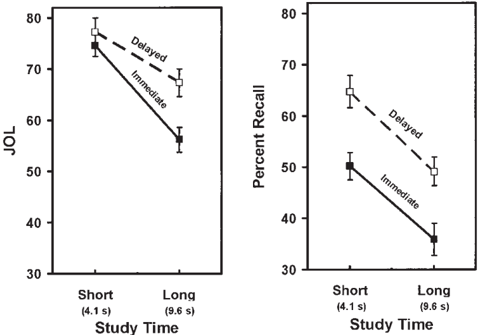
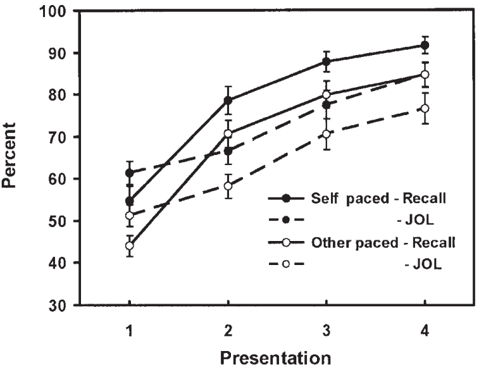
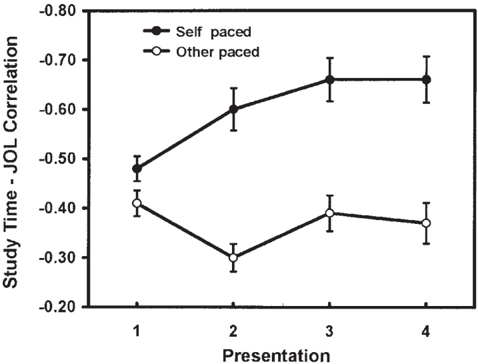
Do we run away because we are frightened, or are we frightened because we run away? The authors address this issue with respect to the relation between metacognitive monitoring and metacognitive control. When self-regulation is goal driven, monitoring effects control processes so that increased processing effort should enhance feelings of competence and feelings of knowing. In contrast, when self-regulation is data driven, such feelings may be based themselves on the feedback from control processes, in which case they should decrease with increasing effort. Evidence for both monitoring-based control and control-based monitoring occurring even in the same situation is presented. The results are discussed with regard to the issue of the cause-and-effect relation between subjective experience and behavior.
Overview
The claims and statistics of this paper haven’t been checked yet.
Free: it reads the open-access text and checks the first 5 claims that cite a source we can check. Create a free account to check every claim.
Integrity signals
Registry
Cites
Statistics
Figures
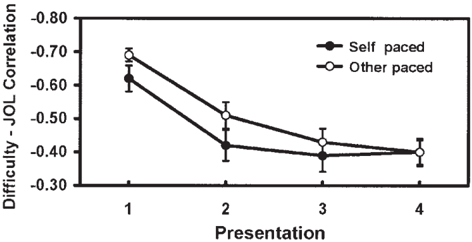
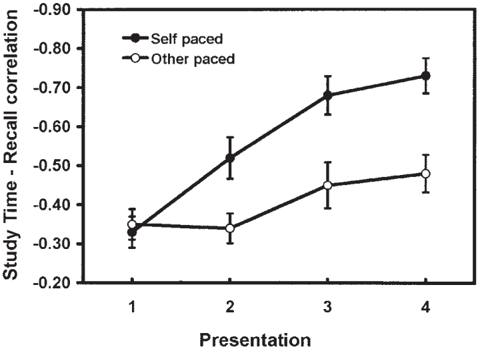
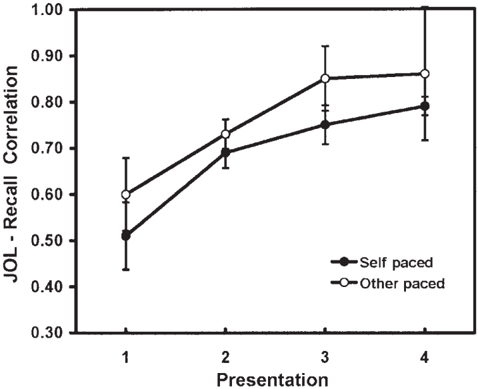
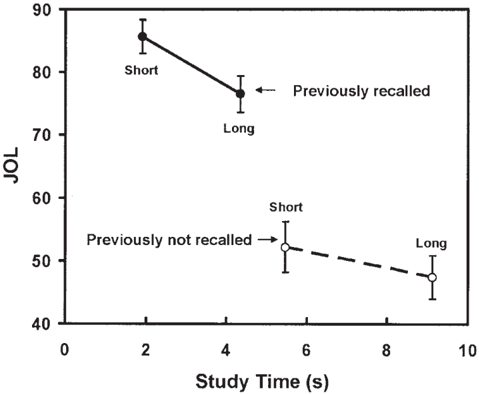
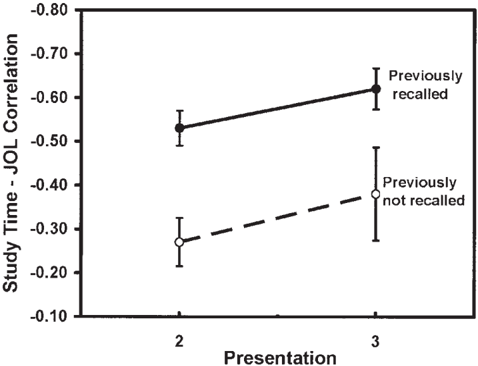
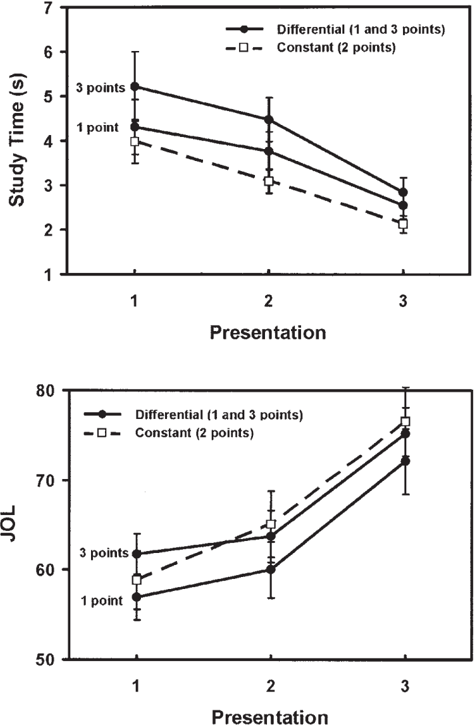
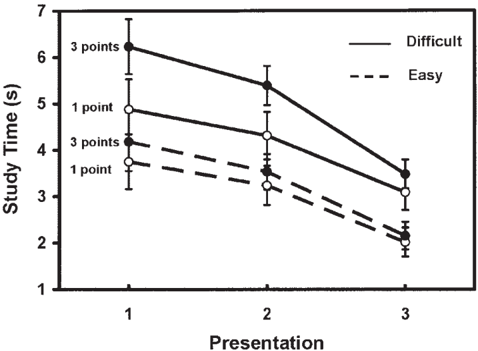
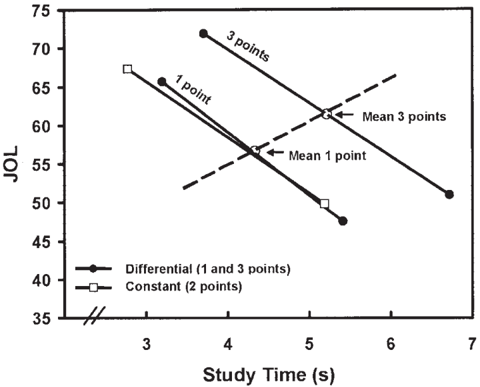
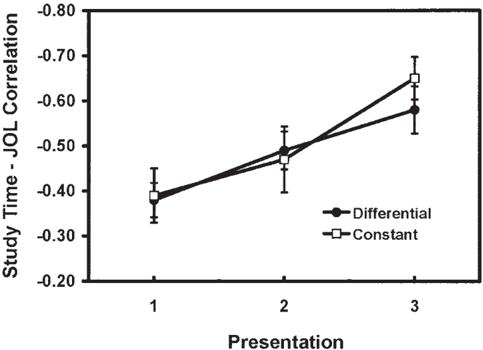
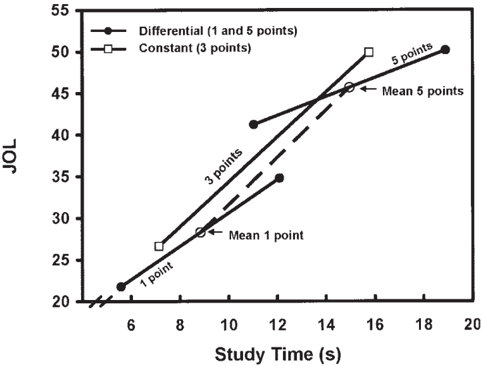
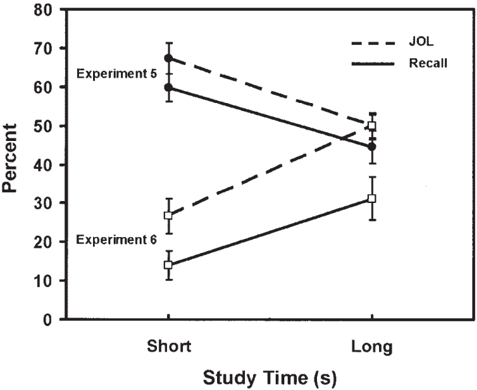
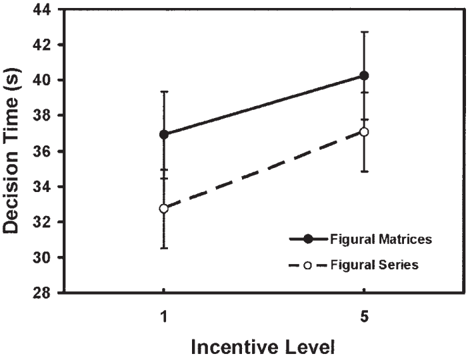
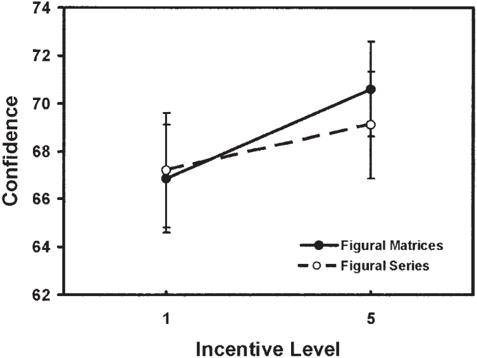
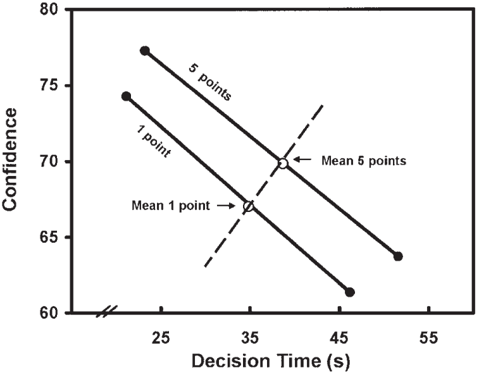
Verification
Claims the paper makes
The claims and statistics of this paper haven’t been checked yet.
Free: it reads the open-access text and checks the first 5 claims that cite a source we can check. Create a free account to check every claim.
Claims other papers make about this one
Each is checked against this paper’s own text: does it say what the citing paper says it does?
The cited source says what the claim attributes to it.
In the citing paper
“If learners prioritize, i.e., attach a particular value to learning an item or completing a learning task, the correlation between effort and monitoring judgments becomes positive.”
From The Relation Between Students’ Effort and Monitoring Judgments During Learning: A Meta-analysis (2020) · cites this paper as Koriat et al. 2006
In the citing paper
“Indeed, it has been observed that answers that come to mind faster are more likely to be correct than answers that are associated with longer latencies (cue validity; see Koriat, Ma'ayan, & Nussinson, 2006;Robinson, Johnson, & Herndon, 1997).”
From Easy comes, easy goes? The link between learning and remembering and its exploitation in metacognition (2008) · cites this paper as Koriat, Ma'ayan, & Nussinson, 2006
In the citing paper
“Kor iat, Ma'ayan, and Nussinson (2006) reported results suggesting the occurrence of data-driven and goal-driven effects within the same experimental task.”
From Easy comes, easy goes? The link between learning and remembering and its exploitation in metacognition (2008) · cites this paper as Koriat, Ma'ayan, and Nussinson (2006)
In the citing paper
“In contrast, Kor iat, Ma'ayan, and Nussinson (2006) obtained results consistent with the ELER principle, even when four months elapsed between study and test.”
From Easy comes, easy goes? The link between learning and remembering and its exploitation in metacognition (2008) · cites this paper as Koriat, Ma'ayan, and Nussinson (2006)
In the citing paper
“In that case, JOL and recall should correlate positively with study effort (see Kor iat, Ma'ayan, & Nussinson, 2006).”
From Easy comes, easy goes? The link between learning and remembering and its exploitation in metacognition (2008) · cites this paper as Koriat, Ma'ayan, & Nussinson, 2006
1 more claim about this paper
Create a free account to see every claim other papers make about this one.
Self-check
Percentages, sums and reported differences re-computed from the paper’s own numbers.
The self-check needs the paper’s full text.
Citations
Cites
(1985) · Medical Entomology and Zoology · Cited by 19,180
Telling more than we can know: Verbal reports on mental processes.
Nisbett, R. E., & Wilson, T. D. (1977) · Psychological Review · doi:10.1037/0033-295x.84.3.231 · Cited by 11,317
Confirmation Bias: A Ubiquitous Phenomenon in Many Guises
Nickerson, R. S. (1998) · Review of General Psychology · doi:10.1037/1089-2680.2.2.175 · Cited by 7,267
Psychological stress and the coping process
Lazarus, R. S. (1966) · Medical Entomology and Zoology · Cited by 7,164
Egeth, H., & Kahneman, D. (1975) · The American Journal of Psychology · doi:10.2307/1421603 · Cited by 6,972
Cognitive, social, and physiological determinants of emotional state.
Schachter, S., & Singer, J. (1962) · Psychological Review · doi:10.1037/h0046234 · Cited by 6,223
(1999) · Cited by 6,104
The Psychology of Learning and Motivation: Advances in Research and Theory
(2010) · Psychology of Learning and Motivation · doi:10.1016/c2009-0-62209-1 · Cited by 5,994
Social psychology: handbook of basic principles
(2008) · Choice Reviews Online · doi:10.5860/choice.45-3496 · Cited by 5,473
The Psychology of Learning and Motivation
(2021) · Psychology of Learning and Motivation · doi:10.1016/s0079-7421(21)x0002-3 · Cited by 5,027
Research works printed but not linked: 4
- Jacoby, L. L., Jennings, J. M., & Hay, J. F. (1996). Dissociating automatic and consciously controlled processes: Implications for diagnosis and rehabilitation of memory deficits. In D. J. Herrmann, C. McEvoy, C. Hertzog, P. Hertel, & M. K. Johnson (Eds.), Basic and applied memory research theory in context (Vol. 1, pp. 161-193). Mahwah, NJ: Erlbaum.
- Laird, J. D., & Bresler, C. (1992). The process of emotional feeling: A self-perception theory. In M. Clark (Ed.), Emotion: Review of personality and social psychology (Vol. 13, pp. 223-234). Newbury Park, CA: Sage.
- Sheffer, L. (2003). The reliability and structure of metacognitive skills and their relationship to cognitive performance. Unpublished doctoral thesis, University of Haifa, Haifa, Israel.
- Winkielman, 2003, The hedonic marking of processing fluency: Implications for evaluative judgment., 189
Cited by
Items 301–400 of 514
Curiosity can influence metacognitive processes
Kim, S., Harris, P. L., & Néher, B. (2025) · Metacognition and Learning · doi:10.1007/s11409-025-09444-y · Cited by 7
Metacognition as an Epistemic Virtue
Green, J., & Southwestern Philosophical Society (2019) · Southwest Philosophy Review · doi:10.5840/swphilreview201935112 · Cited by 7
From Uncertainty to Performance Optimization: Longitudinal Insights Into Metacognitive Development
Wan, Q., Savic, O., Gao, M., Ralston, R., O'Leary, A., & Sloutsky, V. M. (2025) · Child Development · doi:10.1111/cdev.70029 · Cited by 7
Begabungsförderung, Leistungsentwicklung, Bildungsgerechtigkeit – für alle!
(Westf), M. B. 2. M., Fischer, C., Fischer-Ontrup, C., Käpnick, F., Neuber, N., Solzbacher, C., Zwitserlood, P., & Verlag, W. (2020) · Waxmann Verlag GmbH eBooks · doi:10.31244/9783830990666 · Cited by 7
Instructional Strategies for Improving Self-Monitoring of Learning to Solve Problems
Baars, M. (2009) · RePub (Erasmus University Rotterdam) · Cited by 6
Martínez, C. D. G., & Corredor, J. (2024) · Memory & Cognition · doi:10.3758/s13421-024-01616-6 · Cited by 6
Vu, T., Meeter, M., Hofman, A. D., Jansen, B. R. J., Magis‐Weinberg, L., van Triest, E., & van Atteveldt, N. (2025) · British Journal of Educational Psychology · doi:10.1111/bjep.12731 · Cited by 6
Effects on memory of early testing and accuracy assessment for central and contextual content
Wasserman, J. S., Polack, C. W., Casado, C., Brunel, M., Haj, M. E., & Miller, R. R. (2020) · Journal of Cognitive Psychology · doi:10.1080/20445911.2020.1809433 · Cited by 6
Bruza, B., Welsh, M. B., & Navarro, D. (2008) · Adelaide Research & Scholarship (AR&S) (University of Adelaide) · Cited by 6
Memory-Related Metacognition in Patients with Schizophrenia
Bacon, É., & Izaute, M. (2014) · Elsevier eBooks · doi:10.1016/b978-0-12-405172-0.00005-3 · Cited by 6
Rott, D., Zeuch, N., Fischer, C., Souvignier, E., Terhart, E., & Verlag, W. (2018) · URN:NBN Resolver for Germany & Switzerland (German National Library) · doi:10.17879/20069653196 · Cited by 6
Embodiment und Sense of Agency
Rieger, M., & Wenke, D. (2016) · Springer eBooks · doi:10.1007/978-3-642-53898-8_21 · Cited by 5
Can metacognitive monitoring be trained procedurally in the classroom?
Proust, J., Guilleray, F., Serveau, V., & Goupil, L. (2025) · Metacognition and Learning · doi:10.1007/s11409-025-09418-0 · Cited by 5
Dong, X., Wang, J., Xing, Q., & Sun, J. (2025) · Psychological Research · doi:10.1007/s00426-025-02100-9 · Cited by 5
Stelz, S., & Altgassen, M. (2024) · Journal of Cognition and Development · doi:10.1080/15248372.2024.2441689 · Cited by 5
Disfluency as a Desirable Difficulty—The Effects of Letter Deletion on Monitoring and Performance
Pieger, E., Mengelkamp, C., & Bannert, M. (2018) · Frontiers in Education · doi:10.3389/feduc.2018.00101 · Cited by 5
Analysis of Students' Metacognition Skills in Solving Static Fluid Problems
Malawau, S. (2023) · Jurnal Penelitian Pendidikan IPA · doi:10.29303/jppipa.v9i9.5148 · Cited by 5
Hartin, T. L., Stevenson, C. M., & Merriman, W. E. (2016) · Language Learning and Development · doi:10.1080/15475441.2015.1077123 · Cited by 5
Shih, H.-C. J. (2025) · Interactive Technology and Smart Education · doi:10.1108/itse-09-2024-0236 · Cited by 4
Tarefa experimental de metamemória para avaliar monitoramento e controle de memória
Zortéa, M., de Jou, G. I., & de Salles, J. F. (2014) · Psico-USF · doi:10.1590/1413-82712014019002012 · Cited by 4
Speech Disfluencies and Hand Gestures as Metacognitive Cues
Yılmaz, B., Furman, R., Göksun, T., & Eskenazi, T. (2025) · Cognitive Science · doi:10.1111/cogs.70093 · Cited by 4
Ingendahl, M., Ingendahl, F., Woitzel, J., Alves, H., & Undorf, M. (2024) · Collabra Psychology · doi:10.1525/collabra.117689 · Cited by 4
Janiszewski, C. A., Lichtenstein, D. R., & Bayuk, J. B. (2008) · Journal of Experimental Psychology Applied · doi:10.1037/1076-898x.14.2.151 · Cited by 4
Flickering presentations do affect the judgment of learning but not the learning outcome
Ebersbach, M., Guschlbauer, J. A., & Rummer, R. (2023) · Applied Cognitive Psychology · doi:10.1002/acp.4086 · Cited by 4
Daha, E. S. (2023) · International Journal of Instruction · doi:10.29333/iji.2023.16443a · Cited by 4
Readers accurately monitor their incidental word learning success during silent reading
Upadhyay, S. S. N., Brusnighan, S. M., & Folk, J. R. (2022) · Acta Psychologica · doi:10.1016/j.actpsy.2022.103653 · Cited by 4
Gardier, M., & Geurten, M. (2025) · Child Development · doi:10.1111/cdev.14237 · Cited by 4
Saraiva, T., & Gonçalves, T. C. (2022) · Risks · doi:10.3390/risks11010002 · Cited by 4
Reporting confidence decreases response and change-of-mind accuracy in a perceptual decision task.
Litwin, P., Paulewicz, B., & Siedlecka, M. (2025) · Journal of Experimental Psychology Human Perception & Performance · doi:10.1037/xhp0001297 · Cited by 4
Li, S. (2008) · Summit (Simon Fraser University) · Cited by 4
Hayashi, K. I. (2013) · e_Buah · Cited by 4
Kessel, K. V., Ashburner, M., & Risko, E. F. (2023) · Quarterly Journal of Experimental Psychology · doi:10.1177/17470218231186609 · Cited by 3
Updating metacognitive control in response to expected retention intervals
Fiechter, J. L., & Benjamin, A. S. (2016) · Memory & Cognition · doi:10.3758/s13421-016-0664-1 · Cited by 3
A metacognitive regulation approach for judgment of satiation
Güzel, M. A. (2015) · Journal of Cognitive Psychology · doi:10.1080/20445911.2015.1057148 · Cited by 3
Wilkinson, A. M., Hall, A. C. G., & Hogan, E. E. (2019) · Memory · doi:10.1080/09658211.2019.1632349 · Cited by 3
Reactive Effects of Memory Performance Predictions
Mitchum, A. L. (2011) · Cited by 3
La sociologie peut-elle ignorer la phylogenèse de l'esprit ?
Proust, J. (2021) · SociologieS · doi:10.4000/sociologies.3826 · Cited by 3
Kaya, S., Besken, M., Bal, C., & İke, S. B. (2023) · Memory · doi:10.1080/09658211.2023.2178660 · Cited by 3
Distinguishing between high-confidence true and false memories: evidence from eye movements
Dang, X., Li, L., Chen, Y., & Yang, X. (2021) · Australian Journal of Psychology · doi:10.1080/00049530.2020.1865779 · Cited by 3
The Role of College Students' Perceptions of Effort Source on Self-Evaluations of Academic Ability
Muenks, K. M. (2016) · University Libraries (University of Maryland) · doi:10.13016/m2hz1b · Cited by 3
Pournaghdali, A., Schwartz, B. L., & Soto, F. (2025) · PsyArXiv (OSF Preprints) · doi:10.31234/osf.io/6bxza_v1 · Cited by 3
L'apport de théories métacognitives à l'étude de l'autorégulation chez les conducteurs agés
Moták, L. (2011) · theses.fr (ABES) · doi:10.70675/1cedd8afza570z4bb6zab8bz243299c0031e · Cited by 3
Pino, A. A. D. (2019) · LA Referencia (Red Federada de Repositorios Institucionales de Publicaciones Científicas) · Cited by 3
Motoric fluency in actions: effects on metamemory and memory
Susser, J. A. (2014) · Carolina Digital Repository (University of North Carolina at Chapel Hill) · doi:10.17615/b7fy-hv95 · Cited by 2
The Influence of Divided Attention on Learners' Metacognition
Peng, Y. (2019) · UA Campus Repository (The University of Arizona) · Cited by 2
Imundo, M. N., Sanchez, R. L. R., Gonzalez, B. L., Adler, R. M., & Bjork, E. L. (2025) · Applied Cognitive Psychology · doi:10.1002/acp.70068 · Cited by 2
Gardier, M., & Geurten, M. (2025) · European Journal of Developmental Psychology · doi:10.1080/17405629.2025.2474417 · Cited by 2
Modeling meta-reasoning processes using diffusion and quantum random walk models
Malaiya, R. K., & Golden, R. M. (2025) · Journal of Mathematical Psychology · doi:10.1016/j.jmp.2025.102952 · Cited by 2
Thorstad, D. (2024) · Oxford University Press eBooks · doi:10.1093/oso/9780198886143.003.0003 · Cited by 2
Shea, N. J. (2024) · Oxford University Press eBooks · doi:10.1093/9780191997167.003.0001 · Cited by 2
Effects of Bold Key Terms on Judgments of Learning and Reading Comprehension
Roberts, A. (2016) · Cited by 2
Well-Being as an Indicator of Quality or Quality-of-Life
Barofsky, I. (2011) · Springer eBooks · doi:10.1007/978-1-4419-9819-4_11 · Cited by 2
Navigating Metacognitive Disorientation: Medical Students' Experiences of Complex Tasks
Zepf, J., Koltz, E., Chinai, A., Varpio, L., Hoffman, M., & Merkebu, J. (2026) · The Clinical Teacher · doi:10.1111/tct.70339 · Cited by 2
Patel, T. N., Steyvers, M., & Benjamin, A. S. (2019) · Memory & Cognition · doi:10.3758/s13421-019-00899-4 · Cited by 2
Meidani, Z., & Sharifi, M. (2015) · Procedia - Social and Behavioral Sciences · doi:10.1016/j.sbspro.2015.03.419 · Cited by 2
Limited cue integration in metacognitive control decisions
Schulz, L., Bröder, A., Leitgeb, H., & Undorf, M. (2026) · Memory & Cognition · doi:10.3758/s13421-026-01889-z · Cited by 2
The Recall Dynamics of Importance in Delayed Free Recall
Stefanidi, A. (2015) · Arizona State University Library Digital Repository (Arizona State University) · Cited by 2
Schiffer, A., Boldt, A., Waszak, F., & Yeung, N. (2017) · OSF Preprints (OSF Preprints) · doi:10.31219/osf.io/mtus8 · Cited by 2
The Role of Non-Representational Hand Gestures in Creative Thinking
Hyusein, G., & Göksun, T. (2025) · Languages · doi:10.3390/languages10090206 · Cited by 2
Cardinaels, E., Chi, Q., Li, W., & Yin, H. (2022) · European Accounting Review · doi:10.1080/09638180.2024.2440430 · Cited by 2
Laursen, S. J., Sluka, D., & Fiacconi, C. M. (2024) · Metacognition and Learning · doi:10.1007/s11409-024-09373-2 · Cited by 2
Gooderham, G. K. (2024) · cIRcle (University of British Columbia) · doi:10.14288/1.0445076 · Cited by 2
The role of peripheral cues in judgments of difficulty
Vangsness, L. (2019) · K-State Research Exchange (Kansas State University) · Cited by 2
Mestre, J. P., & Morphew, J. (2017) · The Psychology of learning and motivation/The psychology of learning and motivation · doi:10.1016/bs.plm.2017.03.001 · Cited by 2
Rott, D., Zeuch, N., Fischer, C., Souvignier, E., & Terhart, E. (2018) · Directory of Open access Books (OAPEN Foundation) · Cited by 2
Bai, Y., Xie, Y., Luo, W., & Yang, M. (2022) · Lecture notes in computer science · doi:10.1007/978-3-031-08939-8_10 · Cited by 2
Wu, J. C. (2026) · Discover Education · doi:10.1007/s44217-026-01818-x · Cited by 1
Torres, A. P., & Toplak, M. E. (2026) · Journal of Attention Disorders · doi:10.1177/10870547261428879 · Cited by 1
Functional-structural co-dependent brain mapping of metamemory in amnestic mild cognitive impairment
Lu, J., Ma, J., Zheng, M., Wu, J., Xiang, Y., Jin, J., Guo, Q., Hua, X., & Xu, J.-G. (2025) · Alzheimer s Research & Therapy · doi:10.1186/s13195-025-01816-5 · Cited by 1
The influence of cognitive conflict on metacognitive judgments
Guzda, P. J., Siedlecka, M., & Gruszka, A. (2026) · Acta Psychologica · doi:10.1016/j.actpsy.2026.107676 · Cited by 1
Reconceptualizing metacomprehension calibration accuracy
Egan, R. G. (2012) · Summit (Simon Fraser University) · Cited by 1
Green, E. A. (2021) · ThinkTech (Texas Tech University) · Cited by 1
The Role of Metamemory in Eyewitness TestimonyPreprint
Saraiva, R. B. (2020) · Thesis Commons (OSF Preprints) · doi:10.31237/osf.io/jgn43 · Cited by 1
Syal, S., & Nietfeld, J. L. (2022) · Contemporary Educational Psychology · doi:10.1016/j.cedpsych.2022.102109 · Cited by 1
Metacognition for Listening in Noise: The Role of Age and Hearing Loss
Valzolgher, C., Giovanelli, E., Gessa, E., Rosi, T., Pasin, G., Ferrari, R., Pegoraro, M., Pontoni, F., Spinella, D., Tromballi, G., et al. (2026) · Ear and Hearing · doi:10.1097/aud.0000000000001798 · Cited by 1
Schnaubert, L. (2019) · DuEPublico (University of Duisburg-Essen) · doi:10.17185/duepublico/70041 · Cited by 1
Metacognitive Aspects of Face Identification
Watier, N. N. (2012) · uO Research (University of Ottawa) · doi:10.20381/ruor-5146 · Cited by 1
Price, J. (2008) · SMARTech Repository (Georgia Institute of Technology) · Cited by 1
Eye-tracking as a lens into meta-reasoning
Dhengre, S., Ackerman, R., & Rothrock, L. (2025) · Thinking & Reasoning · doi:10.1080/13546783.2025.2558592 · Cited by 1
Informational communication and metacognition
Proust, J. (2023) · Evolutionary Linguistic Theory · doi:10.1075/elt.00046.pro · Cited by 1
Effort Regulation in Meta-reasoning: Monitoring and Control
Qian, Z. (2024) · Applied & Educational Psychology · doi:10.23977/appep.2024.050310 · Cited by 1
Debatin, T., Stoeger, H., & Ziegler, A. (2026) · Learning and Instruction · doi:10.1016/j.learninstruc.2026.102471 · Cited by 1
A Metacognitive Stopping Rule for Problem Solving
Ackerman, R. (2013) · eScholarship (California Digital Library) · Cited by 1
Clerc, J., Allix, P., Pennequin, V., Prado, J., Ramus, F., Rossi, S., & Translations, C. A. (2023) · Bulletin de psychologie · doi:10.3917/bupsy.579.0065 · Cited by 1
David, L. (2026) · Research Publications (Maastricht University) · doi:10.26481/dis.20260518ld · Cited by 1
The surprising role of stimulus modality in the dual-task introspective blind spot: a memory account
Bryce, D., & Bratzke, D. (2021) · Psychological Research · doi:10.1007/s00426-021-01545-y · Cited by 1
Beyond Confidence: Rethinking Self-Assessments for Performance Prediction in LLMsPreprint
Bhattacharyya, S., Khanna, S., Chen, L., Craig, L., Dilliraj, T., & Wang, J. Z. (2026) · arXiv (Cornell University) · doi:10.48550/arxiv.2605.07806 · Cited by 1
Metacognitive processes in bilingual second language learners
Reyes Sánchez, M. (2024) · Institutional Repository of the University of Granada (University of Granada) · Cited by 1
The Relationship of Metacognition and Metaphor with Self-regulation
Hosein, S. M., & Ali, M. M. (2011) · Advances in Cognitive Science · Cited by 1
Maximizing Memory: Improving Learning and Memory for Important Information
Murphy, D. (2023) · eScholarship (California Digital Library) · Cited by 1
Strategic encoding and episodic discrimination (SEED) model of error correction
Hausman, H., Rhodes, M. G., Cleary, A., Graham, D., & Folkestad, J. (2020) · Digital Collections of Colorado (Colorado State University) · doi:10.25675/3.02667 · Cited by 1
Children's understanding of uncertainty
Darnell, C. A. (2016) · University of Birmingham Institutional Research Archive (University of Birmingham) · Cited by 1
Metamemória em adultos e em pacientes pós-acidente vascular cerebral
Zortéa, M. (2014) · LA Referencia (Red Federada de Repositorios Institucionales de Publicaciones Científicas) · Cited by 1
Metapoznanie w samoregulacji procesów uczenia
Świeży, M. (2008) · Jagiellonian University Repository (Jagiellonian University) · Cited by 1
The Effects of Structure and Metacognitive Prompts on Training Outcomes
Young, C. K. (2015) · Rice Research Repository (Rice University) · Cited by 1
Digital Metacognitive Scaffolding in the Context of Academic Writing in Higher Education
Markel, J., & Umutlu, D. (2026) · TechTrends · doi:10.1007/s11528-026-01225-x
Metadata
- Authors
- Koriat, A., Ma'ayan, H., & Nussinson, R.
- Venue
- Journal of Experimental Psychology: General
- Published
- 2006-02
- Volume
- 135
- Issue
- 1
- Pages
- 36-69
- ISSN
- 0096-3445 (ISSN-L)
- 1939-2222
- OpenAlex
- W2064996814
- Cited by
- 422
- References
- 171
- FWCI
- 27.45
- Type
- journal article
- Language
- en
- Open access
- closed
About these checks
Registry, retraction, Cites and statistics results are computed, not judged, with one exception: a printed reference that no index lists is read once by a model before it counts as a citation error. Claims are extracted by a model and kept only when their quote appears verbatim in the text; each cited source is then checked, with a model’s help, for whether it says what the claim relies on. Those verdicts can be wrong — read the claim’s quote and the cited source before relying on one.
Statistics and arithmetic are recomputed, not judged.
Confidence bands are shown only for fields calibrated on our annotated test set. None is calibrated yet, so no band is shown.
What counts as a claim ›How we measure confidence ›How we check this ›
Are you an author, or do you see a problem with this page? Request a review
Data sources
Bibliographic data: Semantic Scholar, OpenAlex, Crossref.
Contains information from the Semantic Scholar Academic Graph Datasets, made available under the ODC Attribution License (ODC-BY 1.0).
Semantic Scholar’s data is described in: Kinney, R., et al. (2023). The Semantic Scholar Open Data Platform. arXiv:2301.10140.
