

The intricate relationships between monitoring and control in metacognition: Lessons for the cause-and-effect relation between subjective experience and behavior.
The DOI matches its Crossref record; 168 of the 171 references it cites were found in a registry or an index.
Abstract
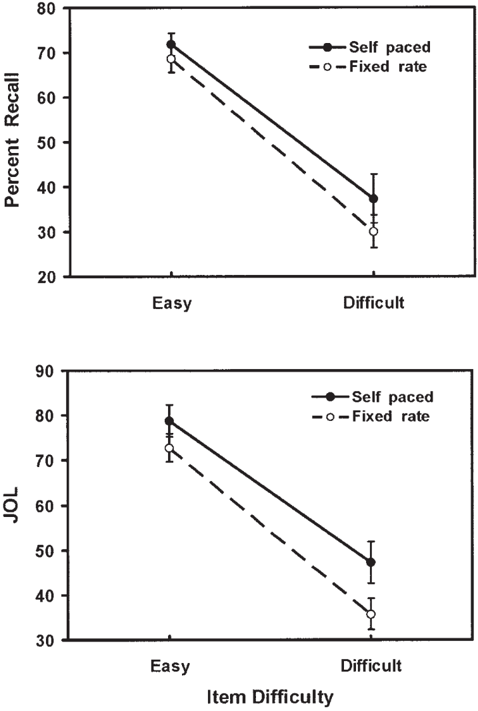
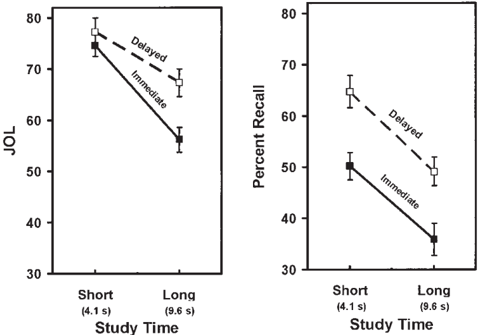
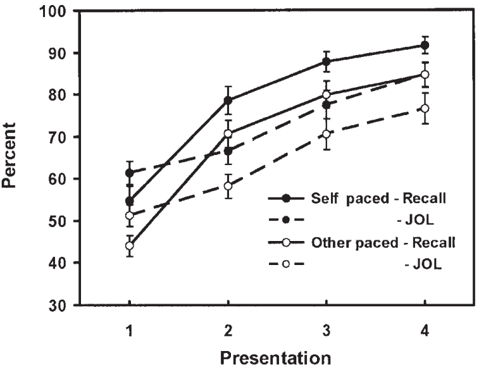
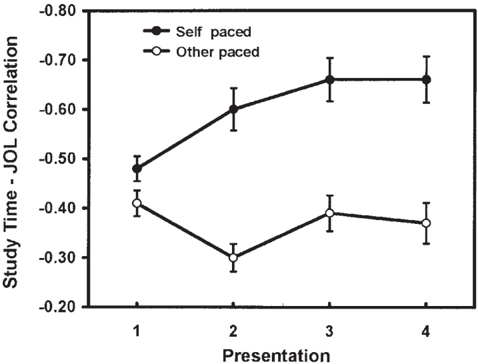
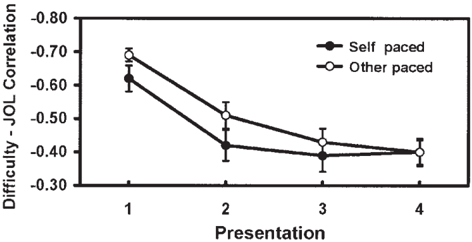
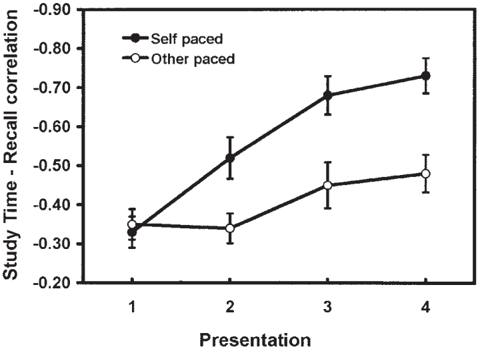
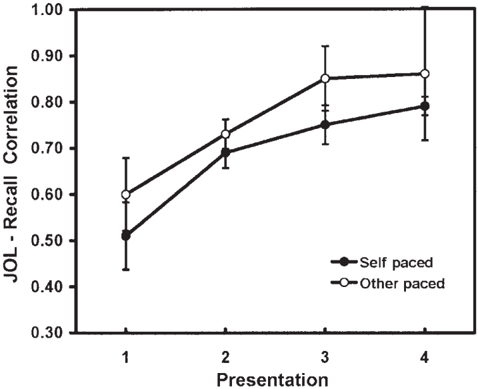
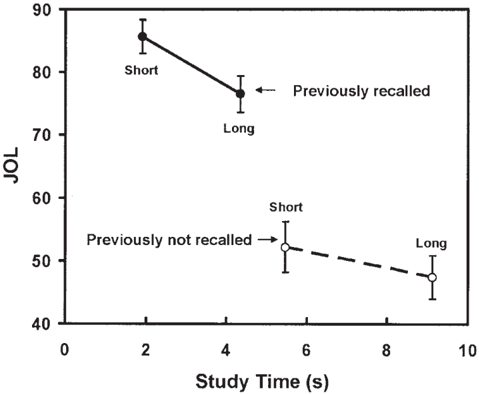
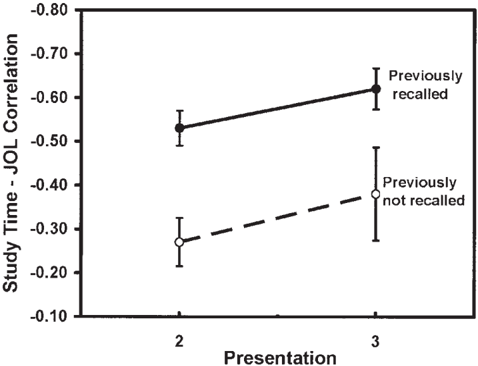
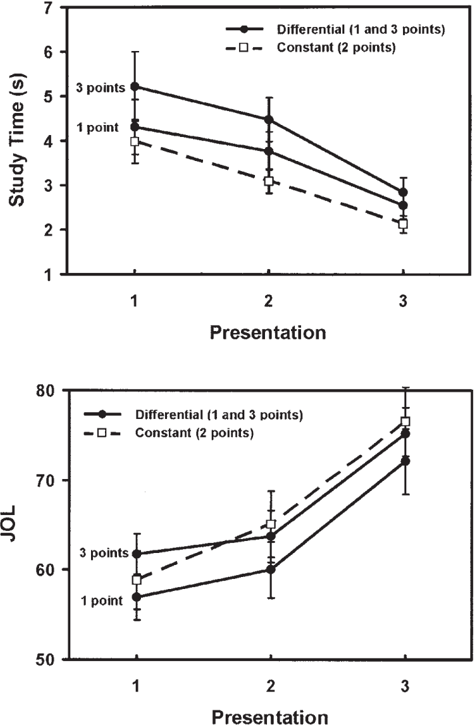
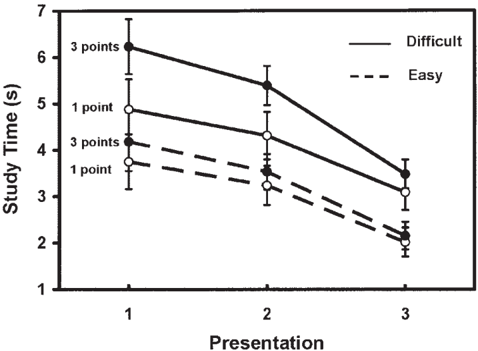
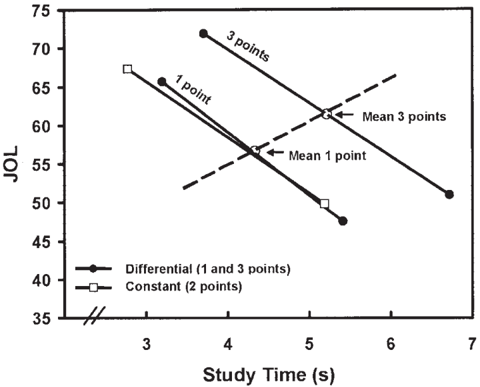
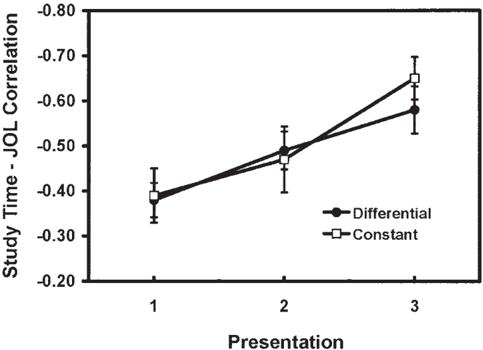
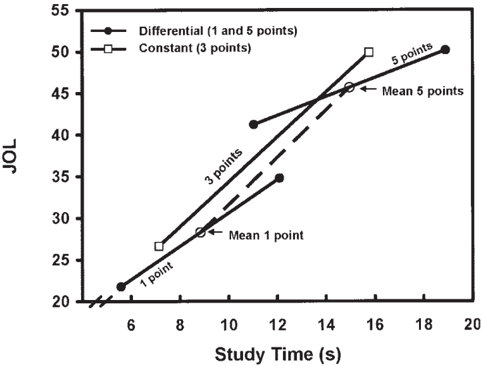
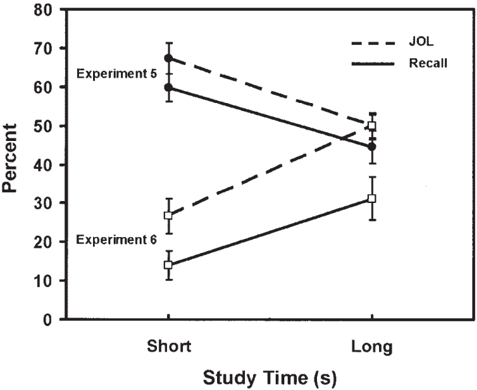
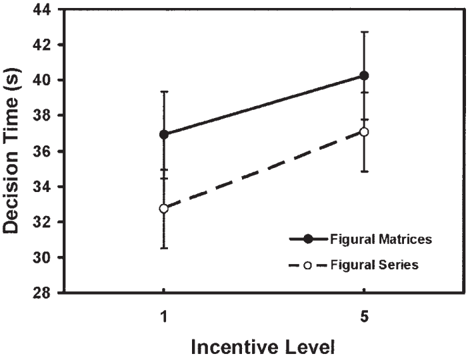
Do we run away because we are frightened, or are we frightened because we run away? The authors address this issue with respect to the relation between metacognitive monitoring and metacognitive control. When self-regulation is goal driven, monitoring effects control processes so that increased processing effort should enhance feelings of competence and feelings of knowing. In contrast, when self-regulation is data driven, such feelings may be based themselves on the feedback from control processes, in which case they should decrease with increasing effort. Evidence for both monitoring-based control and control-based monitoring occurring even in the same situation is presented. The results are discussed with regard to the issue of the cause-and-effect relation between subjective experience and behavior.
Overview
The claims and statistics of this paper haven’t been checked yet.
Free: it reads the open-access text and checks the first 5 claims that cite a source we can check. Create a free account to check every claim.
Integrity signals
Registry
Cites
Statistics
Figures
Verification
Claims the paper makes
The claims and statistics of this paper haven’t been checked yet.
Free: it reads the open-access text and checks the first 5 claims that cite a source we can check. Create a free account to check every claim.
Claims other papers make about this one
Each is checked against this paper’s own text: does it say what the citing paper says it does?
The cited source says what the claim attributes to it.
In the citing paper
“If learners prioritize, i.e., attach a particular value to learning an item or completing a learning task, the correlation between effort and monitoring judgments becomes positive.”
From The Relation Between Students’ Effort and Monitoring Judgments During Learning: A Meta-analysis (2020) · cites this paper as Koriat et al. 2006
In the citing paper
“Indeed, it has been observed that answers that come to mind faster are more likely to be correct than answers that are associated with longer latencies (cue validity; see Koriat, Ma'ayan, & Nussinson, 2006;Robinson, Johnson, & Herndon, 1997).”
From Easy comes, easy goes? The link between learning and remembering and its exploitation in metacognition (2008) · cites this paper as Koriat, Ma'ayan, & Nussinson, 2006
In the citing paper
“Kor iat, Ma'ayan, and Nussinson (2006) reported results suggesting the occurrence of data-driven and goal-driven effects within the same experimental task.”
From Easy comes, easy goes? The link between learning and remembering and its exploitation in metacognition (2008) · cites this paper as Koriat, Ma'ayan, and Nussinson (2006)
In the citing paper
“In contrast, Kor iat, Ma'ayan, and Nussinson (2006) obtained results consistent with the ELER principle, even when four months elapsed between study and test.”
From Easy comes, easy goes? The link between learning and remembering and its exploitation in metacognition (2008) · cites this paper as Koriat, Ma'ayan, and Nussinson (2006)
In the citing paper
“In that case, JOL and recall should correlate positively with study effort (see Kor iat, Ma'ayan, & Nussinson, 2006).”
From Easy comes, easy goes? The link between learning and remembering and its exploitation in metacognition (2008) · cites this paper as Koriat, Ma'ayan, & Nussinson, 2006
1 more claim about this paper
Create a free account to see every claim other papers make about this one.
Self-check
Percentages, sums and reported differences re-computed from the paper’s own numbers.
The self-check needs the paper’s full text.
Citations
Cites
(1985) · Medical Entomology and Zoology · Cited by 19,180
Telling more than we can know: Verbal reports on mental processes.
Nisbett, R. E., & Wilson, T. D. (1977) · Psychological Review · doi:10.1037/0033-295x.84.3.231 · Cited by 11,317
Confirmation Bias: A Ubiquitous Phenomenon in Many Guises
Nickerson, R. S. (1998) · Review of General Psychology · doi:10.1037/1089-2680.2.2.175 · Cited by 7,267
Psychological stress and the coping process
Lazarus, R. S. (1966) · Medical Entomology and Zoology · Cited by 7,164
Egeth, H., & Kahneman, D. (1975) · The American Journal of Psychology · doi:10.2307/1421603 · Cited by 6,972
Cognitive, social, and physiological determinants of emotional state.
Schachter, S., & Singer, J. (1962) · Psychological Review · doi:10.1037/h0046234 · Cited by 6,223
(1999) · Cited by 6,104
The Psychology of Learning and Motivation: Advances in Research and Theory
(2010) · Psychology of Learning and Motivation · doi:10.1016/c2009-0-62209-1 · Cited by 5,994
Social psychology: handbook of basic principles
(2008) · Choice Reviews Online · doi:10.5860/choice.45-3496 · Cited by 5,473
The Psychology of Learning and Motivation
(2021) · Psychology of Learning and Motivation · doi:10.1016/s0079-7421(21)x0002-3 · Cited by 5,027
Research works printed but not linked: 4
- Jacoby, L. L., Jennings, J. M., & Hay, J. F. (1996). Dissociating automatic and consciously controlled processes: Implications for diagnosis and rehabilitation of memory deficits. In D. J. Herrmann, C. McEvoy, C. Hertzog, P. Hertel, & M. K. Johnson (Eds.), Basic and applied memory research theory in context (Vol. 1, pp. 161-193). Mahwah, NJ: Erlbaum.
- Laird, J. D., & Bresler, C. (1992). The process of emotional feeling: A self-perception theory. In M. Clark (Ed.), Emotion: Review of personality and social psychology (Vol. 13, pp. 223-234). Newbury Park, CA: Sage.
- Sheffer, L. (2003). The reliability and structure of metacognitive skills and their relationship to cognitive performance. Unpublished doctoral thesis, University of Haifa, Haifa, Israel.
- Winkielman, 2003, The hedonic marking of processing fluency: Implications for evaluative judgment., 189
Cited by
Items 501–514 of 514
Musiikkikasvatus vsk. 15 nro. 2 (2012)
(2012) · Taju (University of the Arts Helsinki)
Assas, F. M. (2011) · Journal of Educational & Psychological Sciences · doi:10.12785/jeps/120201
Fritzsche, E. S., Kröner, S., Dresel, M., Kopp, B., & Martschinke, S. (2018) · OPUS (Augsburg University)
Zhang, J. (2026) · Frontiers in Psychology · doi:10.3389/fpsyg.2026.2003031
Zhang, Z., Zeyu, H. E., Luo, W., & Wu, H. (2020) · Advances in Psychological Science · doi:10.3724/sp.j.1042.2020.00604
The development of procedural metacognition across the life-span
Löffler, E. (2016) · Online Publication Service of Würzburg University (Würzburg University)
:null (2020) · Pedocs (German Institute for International Educational Research) · doi:10.25656/01:21037
Krogulska, A. (2026) · Warwick Research Archive Portal (University of Warwick) · doi:10.82444/warw.33874324
Framing metamemory judgments: judgments of retention intervals (JORIs)
Tauber, S. K., Rhodes, M., McCabe, D., Kraiger, K., & Rickey, D. (2010) · Digital Collections of Colorado (Colorado State University) · doi:10.25675/3.020611
自律的学習を支える心理過程 : 手続き的メタ記憶の発達の観点から
橋本, 憲. (2010) · Institutional Repositories DataBase (IRDB) · doi:10.50927/ko00210l073
The Role of Monitoring and Control in Similar Nontarget/Target Discrimination
Miles, S., & Macken, W. J. (2010) · Proceedings of the Human Factors and Ergonomics Society Annual Meeting · doi:10.1177/154193121005401114
الله, أ. ع. ا. ع. (2014) · مجلة الإرشاد النفسی · doi:10.21608/cpc.2014.49054
Steele, L. M. (2017) · SHAREOK (University of Oklahoma; Oklahoma State University; Central Oklahoma University)
Өөрийгөө хөгжүүлэхийг сурахуй: сэтгэлээ жолоодож, өөрийгөө ялан дийлэх үйл явцыг загварчилсан нь
Даваа, Б., Энхтөр, З., & Хайдав, Б. (2026) · Educational Research · doi:10.65168/bs.226-7
Metadata
- Authors
- Koriat, A., Ma'ayan, H., & Nussinson, R.
- Venue
- Journal of Experimental Psychology: General
- Published
- 2006-02
- Volume
- 135
- Issue
- 1
- Pages
- 36-69
- ISSN
- 0096-3445 (ISSN-L)
- 1939-2222
- OpenAlex
- W2064996814
- Cited by
- 422
- References
- 171
- FWCI
- 27.45
- Type
- journal article
- Language
- en
- Open access
- closed
About these checks
Registry, retraction, Cites and statistics results are computed, not judged, with one exception: a printed reference that no index lists is read once by a model before it counts as a citation error. Claims are extracted by a model and kept only when their quote appears verbatim in the text; each cited source is then checked, with a model’s help, for whether it says what the claim relies on. Those verdicts can be wrong — read the claim’s quote and the cited source before relying on one.
Statistics and arithmetic are recomputed, not judged.
Confidence bands are shown only for fields calibrated on our annotated test set. None is calibrated yet, so no band is shown.
What counts as a claim ›How we measure confidence ›How we check this ›
Are you an author, or do you see a problem with this page? Request a review
Data sources
Bibliographic data: Semantic Scholar, OpenAlex, Crossref.
Contains information from the Semantic Scholar Academic Graph Datasets, made available under the ODC Attribution License (ODC-BY 1.0).
Semantic Scholar’s data is described in: Kinney, R., et al. (2023). The Semantic Scholar Open Data Platform. arXiv:2301.10140.
