

The intricate relationships between monitoring and control in metacognition: Lessons for the cause-and-effect relation between subjective experience and behavior.
The DOI matches its Crossref record; 168 of the 171 references it cites were found in a registry or an index.
Abstract
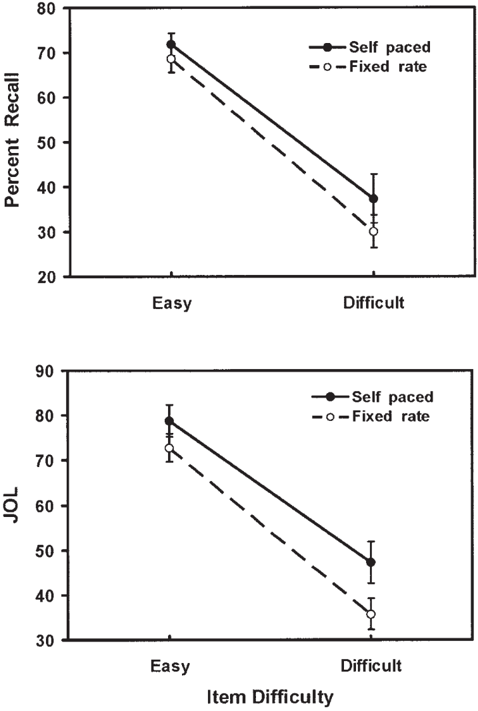
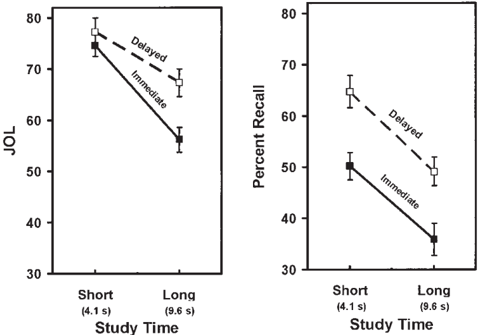
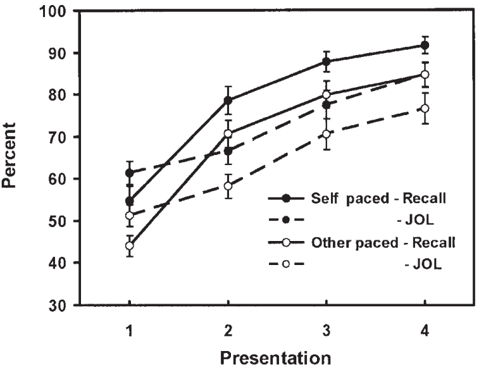
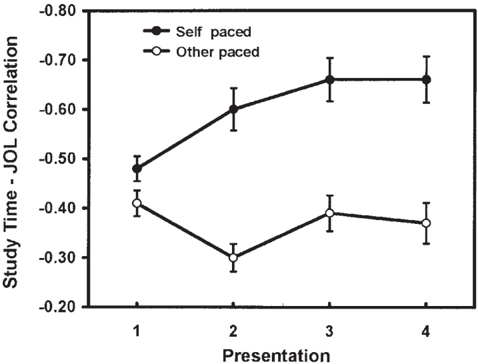
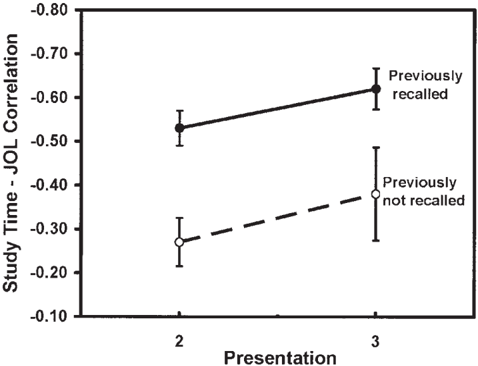
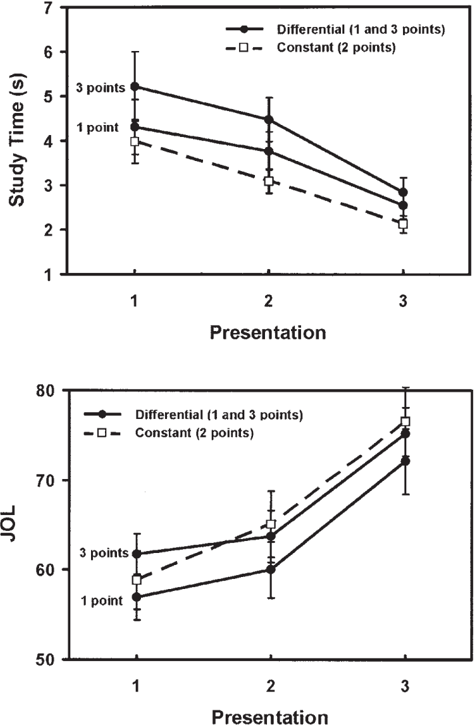
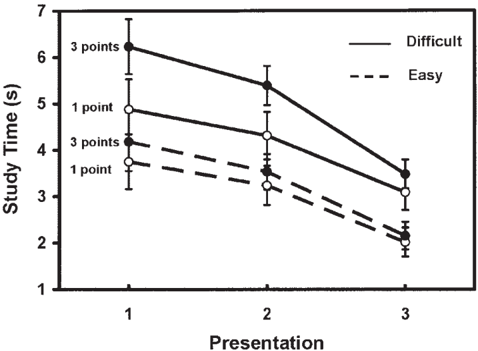
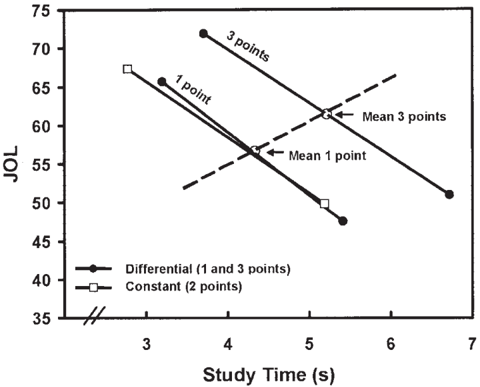
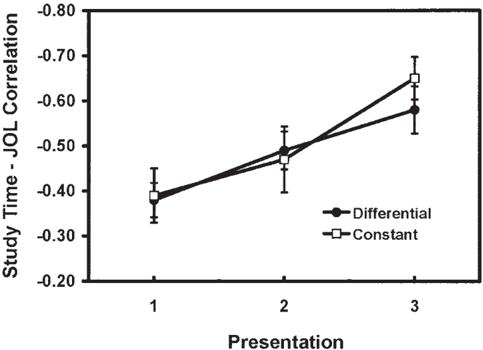
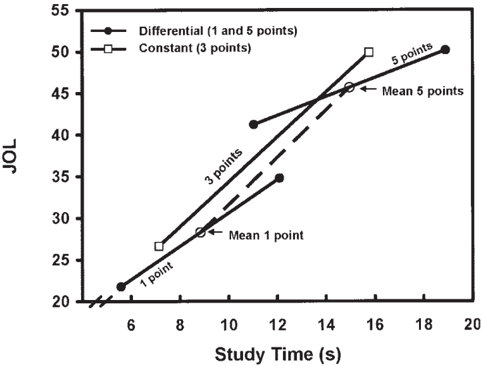
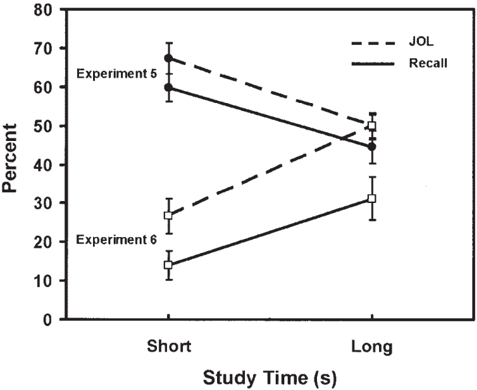
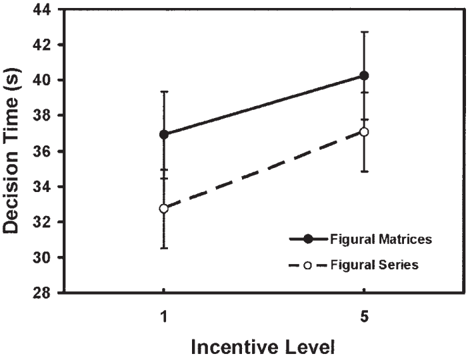
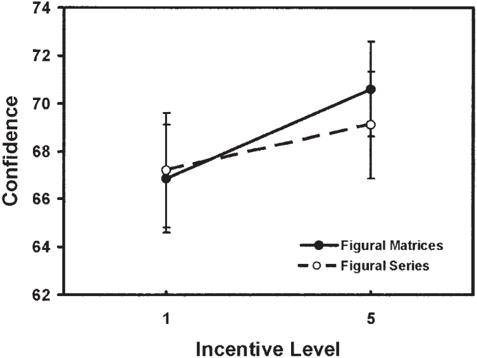
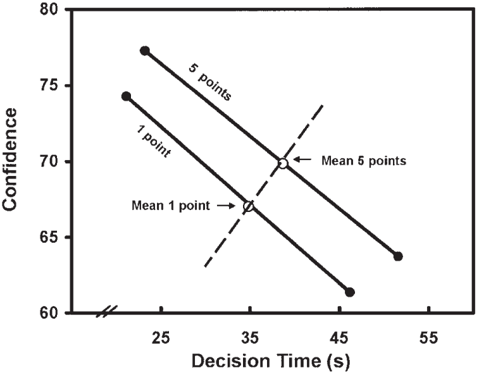
Do we run away because we are frightened, or are we frightened because we run away? The authors address this issue with respect to the relation between metacognitive monitoring and metacognitive control. When self-regulation is goal driven, monitoring effects control processes so that increased processing effort should enhance feelings of competence and feelings of knowing. In contrast, when self-regulation is data driven, such feelings may be based themselves on the feedback from control processes, in which case they should decrease with increasing effort. Evidence for both monitoring-based control and control-based monitoring occurring even in the same situation is presented. The results are discussed with regard to the issue of the cause-and-effect relation between subjective experience and behavior.
Overview
The claims and statistics of this paper haven’t been checked yet.
Free: it reads the open-access text and checks the first 5 claims that cite a source we can check. Create a free account to check every claim.
Integrity signals
Registry
Cites
Statistics
Figures
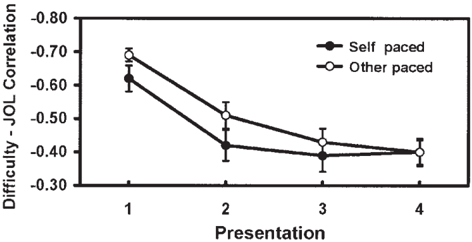
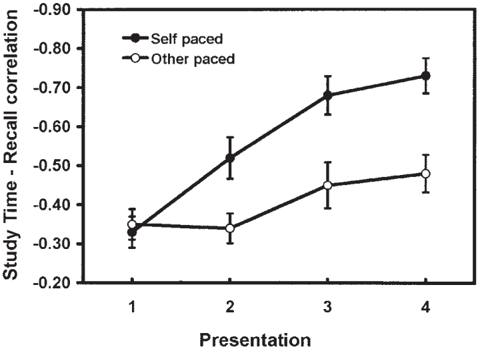
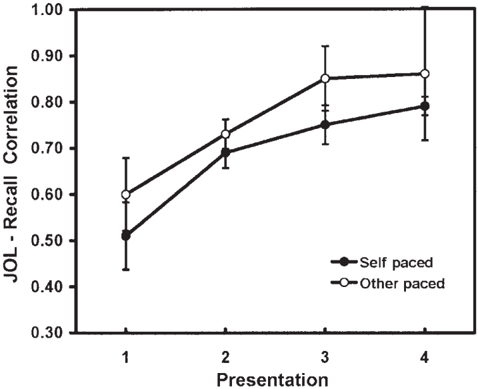
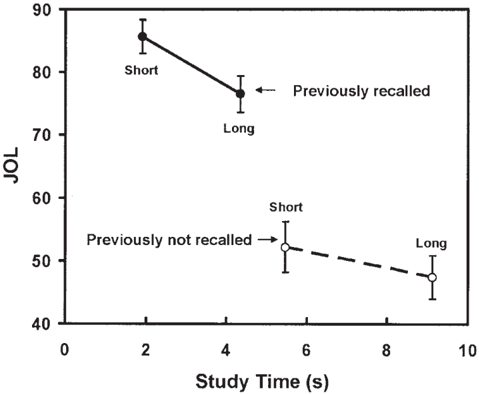
Verification
Claims the paper makes
The claims and statistics of this paper haven’t been checked yet.
Free: it reads the open-access text and checks the first 5 claims that cite a source we can check. Create a free account to check every claim.
Claims other papers make about this one
Each is checked against this paper’s own text: does it say what the citing paper says it does?
The cited source says what the claim attributes to it.
In the citing paper
“If learners prioritize, i.e., attach a particular value to learning an item or completing a learning task, the correlation between effort and monitoring judgments becomes positive.”
From The Relation Between Students’ Effort and Monitoring Judgments During Learning: A Meta-analysis (2020) · cites this paper as Koriat et al. 2006
In the citing paper
“Indeed, it has been observed that answers that come to mind faster are more likely to be correct than answers that are associated with longer latencies (cue validity; see Koriat, Ma'ayan, & Nussinson, 2006;Robinson, Johnson, & Herndon, 1997).”
From Easy comes, easy goes? The link between learning and remembering and its exploitation in metacognition (2008) · cites this paper as Koriat, Ma'ayan, & Nussinson, 2006
In the citing paper
“Kor iat, Ma'ayan, and Nussinson (2006) reported results suggesting the occurrence of data-driven and goal-driven effects within the same experimental task.”
From Easy comes, easy goes? The link between learning and remembering and its exploitation in metacognition (2008) · cites this paper as Koriat, Ma'ayan, and Nussinson (2006)
In the citing paper
“In contrast, Kor iat, Ma'ayan, and Nussinson (2006) obtained results consistent with the ELER principle, even when four months elapsed between study and test.”
From Easy comes, easy goes? The link between learning and remembering and its exploitation in metacognition (2008) · cites this paper as Koriat, Ma'ayan, and Nussinson (2006)
In the citing paper
“In that case, JOL and recall should correlate positively with study effort (see Kor iat, Ma'ayan, & Nussinson, 2006).”
From Easy comes, easy goes? The link between learning and remembering and its exploitation in metacognition (2008) · cites this paper as Koriat, Ma'ayan, & Nussinson, 2006
1 more claim about this paper
Create a free account to see every claim other papers make about this one.
Self-check
Percentages, sums and reported differences re-computed from the paper’s own numbers.
The self-check needs the paper’s full text.
Citations
Cites
(1985) · Medical Entomology and Zoology · Cited by 19,180
Telling more than we can know: Verbal reports on mental processes.
Nisbett, R. E., & Wilson, T. D. (1977) · Psychological Review · doi:10.1037/0033-295x.84.3.231 · Cited by 11,317
Confirmation Bias: A Ubiquitous Phenomenon in Many Guises
Nickerson, R. S. (1998) · Review of General Psychology · doi:10.1037/1089-2680.2.2.175 · Cited by 7,267
Psychological stress and the coping process
Lazarus, R. S. (1966) · Medical Entomology and Zoology · Cited by 7,164
Egeth, H., & Kahneman, D. (1975) · The American Journal of Psychology · doi:10.2307/1421603 · Cited by 6,972
Cognitive, social, and physiological determinants of emotional state.
Schachter, S., & Singer, J. (1962) · Psychological Review · doi:10.1037/h0046234 · Cited by 6,223
(1999) · Cited by 6,104
The Psychology of Learning and Motivation: Advances in Research and Theory
(2010) · Psychology of Learning and Motivation · doi:10.1016/c2009-0-62209-1 · Cited by 5,994
Social psychology: handbook of basic principles
(2008) · Choice Reviews Online · doi:10.5860/choice.45-3496 · Cited by 5,473
The Psychology of Learning and Motivation
(2021) · Psychology of Learning and Motivation · doi:10.1016/s0079-7421(21)x0002-3 · Cited by 5,027
Research works printed but not linked: 4
- Jacoby, L. L., Jennings, J. M., & Hay, J. F. (1996). Dissociating automatic and consciously controlled processes: Implications for diagnosis and rehabilitation of memory deficits. In D. J. Herrmann, C. McEvoy, C. Hertzog, P. Hertel, & M. K. Johnson (Eds.), Basic and applied memory research theory in context (Vol. 1, pp. 161-193). Mahwah, NJ: Erlbaum.
- Laird, J. D., & Bresler, C. (1992). The process of emotional feeling: A self-perception theory. In M. Clark (Ed.), Emotion: Review of personality and social psychology (Vol. 13, pp. 223-234). Newbury Park, CA: Sage.
- Sheffer, L. (2003). The reliability and structure of metacognitive skills and their relationship to cognitive performance. Unpublished doctoral thesis, University of Haifa, Haifa, Israel.
- Winkielman, 2003, The hedonic marking of processing fluency: Implications for evaluative judgment., 189
Cited by
Items 401–500 of 514
Tuo, B., Miller, T., & Demartini, G. (2026) · ACM Conference on Human-AI Complementarity and Alignment · doi:10.1145/3834580.3838739
Dunn, T. L. (2017) · UWSpace (University of Waterloo)
Development and validation of the college students’ time management competence scale
Liu, F., & Li, M. (2026) · Frontiers in Psychology · doi:10.3389/fpsyg.2026.1885044
Learning Natural Categories: Effects of Interleaving Practice in Children and Young Adults
Dong, X., He, X., Fang, L., Xing, Q., & Ren, R. (2025) · Journal of Intelligence · doi:10.3390/jintelligence13090107
Tuğtekin, E. B., Tuğtekin, U., & İLİÇ, U. (2026) · Education and Information Technologies · doi:10.1007/s10639-026-13915-3
Hao, Y., Malmberg, L., & Stylianides, G. J. (2026) · Educational Psychology · doi:10.1080/01443410.2026.2742893
Carruthers' marvelous magical mindreading machine
Lewis, C. N., & Carpendale, J. I. M. (2009) · Behavioral and Brain Sciences · doi:10.1017/s0140525x09000703
Sawyer, R. K. (2022) · Cambridge University Press eBooks · doi:10.1017/9781108888295.003
Martin-Gomez, F. J. (2023) · theses.fr (ABES) · doi:10.70675/8827e91ezc1e6z41b9zb5cezaad6817446ed
Self-Regulated Learning Theory and Its Teaching Practice
黎, 泳. (2024) · Advances in Psychology · doi:10.12677/ap.2024.148611
Maximizing learning efficiency: The role of interleaved study in different natural categories
Dong, X., Wang, J., Xing, Q., & He, X. (2026) · Metacognition and Learning · doi:10.1007/s11409-026-09483-z
Mental Action, Metacognition and Epistemic Feelings: The Case of Directed Memory
Arango‐Muñoz, S. (2009)
Thorstad, D. (2024) · Oxford University Press eBooks · doi:10.1093/oso/9780198886143.003.0001
There are no epistemic norms of inquiry
Thorstad, D. (2024) · Oxford University Press eBooks · doi:10.1093/oso/9780198886143.003.0005
The Standard Picture revisited
Thorstad, D. (2024) · Oxford University Press eBooks · doi:10.1093/oso/9780198886143.003.0010
The argument from minimal criteria
Thorstad, D. (2024) · Oxford University Press eBooks · doi:10.1093/oso/9780198886143.003.0006
Thorstad, D. (2024) · Oxford University Press eBooks · doi:10.1093/oso/9780198886143.003.0008
(2024) · Oxford University Press eBooks · doi:10.1093/oso/9780198886143.002.0003
Thorstad, D. (2024) · Oxford University Press eBooks · doi:10.1093/oso/9780198886143.003.0009
Thorstad, D. (2024) · Oxford University Press eBooks · doi:10.1093/oso/9780198886143.003.0007
(2024) · Oxford University Press eBooks · doi:10.1093/oso/9780198886143.002.0004
Thorstad, D. (2024) · Oxford University Press eBooks · doi:10.1093/oso/9780198886143.003.0011
Thorstad, D. (2024) · Oxford University Press eBooks · doi:10.1093/oso/9780198886143.003.0002
An account of rational inquiry
Thorstad, D. (2024) · Oxford University Press eBooks · doi:10.1093/oso/9780198886143.003.0004
Shea, N. J. (2024) · Oxford University Press eBooks · doi:10.1093/9780191997167.003.0005
Shea, N. J. (2024) · Oxford University Press eBooks · doi:10.1093/9780191997167.003.0009
Shea, N. J. (2024) · Oxford University Press eBooks · doi:10.1093/9780191997167.003.0010
The Frame Problem and the If-Then Problem
Shea, N. J. (2024) · Oxford University Press eBooks · doi:10.1093/9780191997167.003.0006
Shea, N. J. (2024) · Oxford University Press eBooks · doi:10.1093/9780191997167.003.0004
Shea, N. J. (2024) · Oxford University Press eBooks · doi:10.1093/9780191997167.003.0007
Shea, N. J. (2024) · Oxford University Press eBooks · doi:10.1093/9780191997167.002.0005
Shea, N. J. (2024) · Oxford University Press eBooks · doi:10.1093/9780191997167.003.0002
Shea, N. J. (2024) · Oxford University Press eBooks · doi:10.1093/9780191997167.003.0008
Shea, N. J. (2024) · Oxford University Press eBooks · doi:10.1093/9780191997167.003.0003
A Test of the Efficiency of Study and a Study on the Efficacy of Tests
de Jonge, M. (2014) · RePub (Erasmus University Rotterdam)
Failure to update metacognitive control in response to expected retention intervals
Fiechter, J. L. (2015) · Illinois Digital Environment for Access to Learning and Scholarship (University of Illinois at Urbana-Champaign)
Li, A., Wang, Y., Zhao, W., Fiechter, J. L., Kornell, N., Shanks, D. R., Luo, L., & Yang, C. (2026) · Metacognition and Learning · doi:10.1007/s11409-026-09462-4
Li, Y., Chen, X., Shi, J., Jian-yuan, W., Yang, C., Luo, L., & Hu, X. (2026) · Acta Psychologica · doi:10.1016/j.actpsy.2026.107715
Metacognição : aprendizagem autorregulada e calibração no julgamento metacognitivo
da Silva, S. F. (2013)
Rhodes, M. G. (2019) · Oxford University Press eBooks · doi:10.1093/obo/9780199828340-0238
Pruteanu, A., & Chiracu, A. (2023) · Anuarul Universitatii Petre Andrei din Iasi Fascicula Asistenta sociala sociologie psihologie · doi:10.18662/upasw/29/79
The benefits of choice for self-regulated learning: learner control enhances recognition memory
Kazatchkova, A., Elkins, S. J., Al-Aidroos, N., & Fiacconi, C. M. (2026) · Journal of Memory and Language · doi:10.1016/j.jml.2026.104800
Xiao, J., Xiong, X., Cui, B., Zhang, L., Yang, L., & Zhang, J. (2026) · Journal of Computer Assisted Learning · doi:10.1002/jcal.70328
The role of schematic support in strategy choice during cognitive skill learning
Kuhns, J. M. (2018) · NC Digital Online Collection of Knowledge and Scholarship (The University of North Carolina at Greensboro)
(2021) · Odile Jacob eBooks · doi:10.3917/oj.prous.2021.01.0293
An Examination of the Effects of Post-Identification Feedback on Jurors
Cash, D. K. (2019) · Louisiana State University · doi:10.31390/gradschool_dissertations.4986
Andreani, E. (2015) · Portuguese National Funding Agency for Science, Research and Technology (RCAAP Project by FCT)
أبوزید, ش. (2018) · دراسات في الارشاد النفسي والتربوي · doi:10.21608/dapt.2018.109268
Jemstedt, A. (2018) · DiVA (Stockholm University)
Cue learning in metamemory: understanding how people learn to judge memory
Navarro-Báez, S. (2024) · MADOC (University of Mannheim)
Dessel, P. V. (2018) · OSF Preprints (OSF Preprints) · doi:10.31219/osf.io/gbzy3
The Influence of Motor Conflict on Metacognitive JudgmentsPreprint
Guzda, P. J., Siedlecka, M., & Gruszka, A. (2024) · SSRN Electronic Journal · doi:10.2139/ssrn.4870563
Metacognitive awareness of associative learning: What underlies delayed judgments-of-learning?
Jersakova, R. (2016) · White Rose eTheses Online (University of Leeds, The University of Sheffield, University of York)
The Metamemory Expectancy Illusion in Source Monitoring Affects Metamemory Control and MemoryPreprint
Bayen, U. J., & Schaper, M. L. (2020) · OSF Preprints (OSF Preprints)
Metacognitive judgments and performance
Townsend, C. (2011) · eScholarship (California Digital Library)
Odjel za psihologiju, S. U. Z., Rapan, K., Valerjev, P., & Odjel za psihologiju, S. U. Z. (2018) · Suvremena psihologija · doi:10.21465/2018-sp-211-02
ABR and Habitual Responding in the Self-Regulated Learning: Process Exclusively or Parallelly
春林, 付. (2013) · Advances in Psychology · doi:10.12677/ap.2013.35033
Munichor, N., Gat, S., & Ackerman, R. (2026) · Thinking & Reasoning · doi:10.1080/13546783.2026.2743518
Thinking About Your Foolishness: Foolishness in Terms of Metacognition
Marković, J. (2008)
Theoretical Frameworks and Empirical Evidence on Bridging Cognitive Load and Self-Regulated Learning
Wang, T. (2024) · eScholarship@McGill (McGill) · doi:10.82308/29715
Kaya, S., & Besken, M. (2026) · Cognition · doi:10.1016/j.cognition.2026.106730
Effects of delayed testing on decisions to stop learning
Krogulska, A., Allen, S., Bailey, R., Liu, Y., Saraf, S. L., & Maylor, E. A. (2023) · Journal of Memory and Language · doi:10.1016/j.jml.2023.104473
Ingendahl, F., & Undorf, M. (2026) · Psychonomic Bulletin & Review · doi:10.3758/s13423-026-03030-2
Lin, M. P.-C., & Chang, D. (2026) · SSRN Electronic Journal · doi:10.2139/ssrn.7544941
Amaefule, C. O., Undorf, M., & Kamp, S. (2020) · OSF Preprints (OSF Preprints)
Frisch, J. (2020) · OPen Access Repositorium der Universität Ulm (OPARU) (Ulm University) · doi:10.18725/oparu-32682
Naus, A. J. A. M. (2014) · Massey Research Online (Massey University)
Léonard, C. (2023) · ORBi (University of Liège)
Is thinking inherently unpleasant? A cautionary note on David, Vassena, and Bijleveld (2024).
Grund, A., Roelle, J., & al., S. S. E. (2026) · Psychological Bulletin · doi:10.1037/bul0000484
Approche métacognitive des comportements alimentaires
Leger, M. (2024) · theses.fr (ABES) · doi:10.70675/1ccbfbcbz8f41z4907za7a1zf47869117404
Gardier, M. (2026) · ORBi (University of Liège)
An investigation of the basis of judgments of remembering and knowing (JORKs)
Soderstrom, N. C., Rhodes, M. G., Cleary, A. M., Davalos, D. B., & Rickey, D. (2007) · Digital Collections of Colorado (Colorado State University) · doi:10.25675/3.020306
Sources of Individual Differences in Self-regulated Category Learning
Morehead, K. (2019) · OhioLink ETD Center (Ohio Library and Information Network)
Metakognitives Kurzzeittraining im Mathematikunterricht
Klostermeyer, B. (2025) · doi:10.5282/edoc.34975
Metacognition in ADHD: Examination of the Diminishing Criterion Model
Tacchino, A. P. T. (2026) · York University Digital Library (York University)
Pupil size influences learners' judgments of learning
Kelley, T. D. (2021) · ThinkTech (Texas Tech University)
Fam, J. P. (2016) · UNSWorks (University of New South Wales, Sydney, Australia) · doi:10.26190/unsworks/18888
Schöll, E. (2022) · URN:NBN Resolver for Germany & Switzerland (German National Library) · doi:10.17879/58988412103
McKenzie-Kerr, A. (2007) · ORCA Online Research @Cardiff (Cardiff University)
Dunlosky, J. T., & Thiede, K. W. (2013) · ScholarWorks (Boise State University)
Girard, C. (2018) · Archipel (Université du Québec à Montréal) · doi:10.13140/rg.2.2.17320.83200
Pieger, E. (2017) · Online Publication Service of Würzburg University (Würzburg University)
Assessing Metacognitive Illusions: Fluency, Timing, and Judgments-of-Learning
Yeager, L. T. (2019) · ScholarWorks@BGSU (Bowling Green State University)
A Review of Metamemory in Prospective Memory
高, 天. (2021) · Advances in Psychology · doi:10.12677/ap.2021.1112327
A binding deficit: value-directed remembering for item-specific vs. associative information
Delozier, S., Rhodes, M. G., Davalos, D., Folkestad, J., & Cleary, A. (2018) · Digital Collections of Colorado (Colorado State University) · doi:10.25675/3.023706
Bayesian analysis of the role of metacognition in cognitive control
Pálfi, B. (2019) · Sussex Research Online (University of Sussex)
Wood, M. A. V. (2008) · TigerPrints (Clemson University)
The sense of agency in hypnosis and meditation
Lush, P. (2018) · Sussex Research Online (University of Sussex)
METACOGNITIVE MECHANISMS OF SELF-REGULATED LEARNING AND THEIR ROLE IN ACADEMIC SUCCESS
Voloshyna-Narozhna, V. (2025) · Scientific Notes of Ostroh Academy National University Psychology Series · doi:10.25264/2415-7384-2025-18-109-115
Наукові записки Національного університету "Острозька академія". Серія "Психологія". Вип.18
(2025) · Digital Repository of Ostroh Academy (Ostroh Academy)
Доступность помощи при решении задач на отдаленные ассоциации повышает требования к ответу
Деева, Т., & Vladimirov, I. (2026) · Психология Журнал Высшей школы экономики · doi:10.17323/1813-8918-2026-2-297-316
Puente‐Díaz, R., & Cavazos‐Arroyo, J. (2025) · Creativity Theories – Research – Applications · doi:10.2478/ctra-2025-0005
فهمی, ن. ع. أ., الجزار, ع. ا. ا., & صابر, س. م. (2020) · مجلة البحث العلمى فى التربية · doi:10.21608/jsre.2020.114569
Empatia e libero arbitrio: un colloquio aperto fra neuroscienze, etica e psicologia
Madonna, F. (2020) · Archivio Istituzionale della Ricerca - Università degli Studi di Cassino
Entrenamiento metacognitivo para la toma de decisiones: Fundamentos y aplicaciones
Paramio, A. (2025) · RODIN (Universidad de Cádiz)
Metadata
- Authors
- Koriat, A., Ma'ayan, H., & Nussinson, R.
- Venue
- Journal of Experimental Psychology: General
- Published
- 2006-02
- Volume
- 135
- Issue
- 1
- Pages
- 36-69
- ISSN
- 0096-3445 (ISSN-L)
- 1939-2222
- OpenAlex
- W2064996814
- Cited by
- 422
- References
- 171
- FWCI
- 27.45
- Type
- journal article
- Language
- en
- Open access
- closed
About these checks
Registry, retraction, Cites and statistics results are computed, not judged, with one exception: a printed reference that no index lists is read once by a model before it counts as a citation error. Claims are extracted by a model and kept only when their quote appears verbatim in the text; each cited source is then checked, with a model’s help, for whether it says what the claim relies on. Those verdicts can be wrong — read the claim’s quote and the cited source before relying on one.
Statistics and arithmetic are recomputed, not judged.
Confidence bands are shown only for fields calibrated on our annotated test set. None is calibrated yet, so no band is shown.
What counts as a claim ›How we measure confidence ›How we check this ›
Are you an author, or do you see a problem with this page? Request a review
Data sources
Bibliographic data: Semantic Scholar, OpenAlex, Crossref.
Contains information from the Semantic Scholar Academic Graph Datasets, made available under the ODC Attribution License (ODC-BY 1.0).
Semantic Scholar’s data is described in: Kinney, R., et al. (2023). The Semantic Scholar Open Data Platform. arXiv:2301.10140.
