

The intricate relationships between monitoring and control in metacognition: Lessons for the cause-and-effect relation between subjective experience and behavior.
The DOI matches its Crossref record; 168 of the 171 references it cites were found in a registry or an index.
Abstract
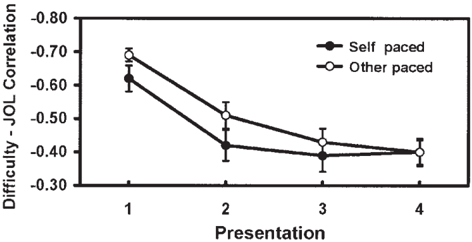
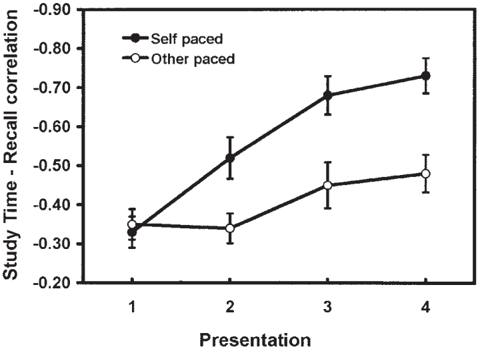
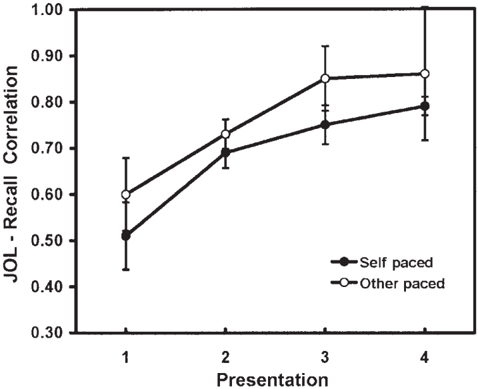
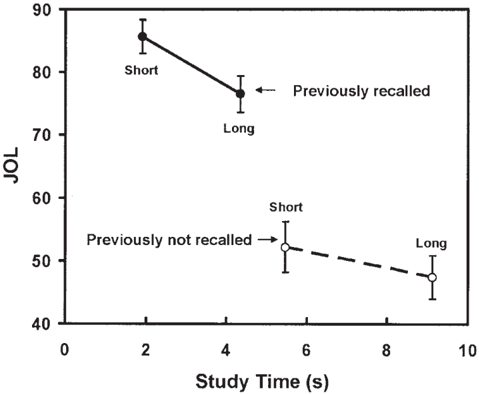
Do we run away because we are frightened, or are we frightened because we run away? The authors address this issue with respect to the relation between metacognitive monitoring and metacognitive control. When self-regulation is goal driven, monitoring effects control processes so that increased processing effort should enhance feelings of competence and feelings of knowing. In contrast, when self-regulation is data driven, such feelings may be based themselves on the feedback from control processes, in which case they should decrease with increasing effort. Evidence for both monitoring-based control and control-based monitoring occurring even in the same situation is presented. The results are discussed with regard to the issue of the cause-and-effect relation between subjective experience and behavior.
Overview
The claims and statistics of this paper haven’t been checked yet.
Free: it reads the open-access text and checks the first 5 claims that cite a source we can check. Create a free account to check every claim.
Integrity signals
Registry
Cites
Statistics
Figures
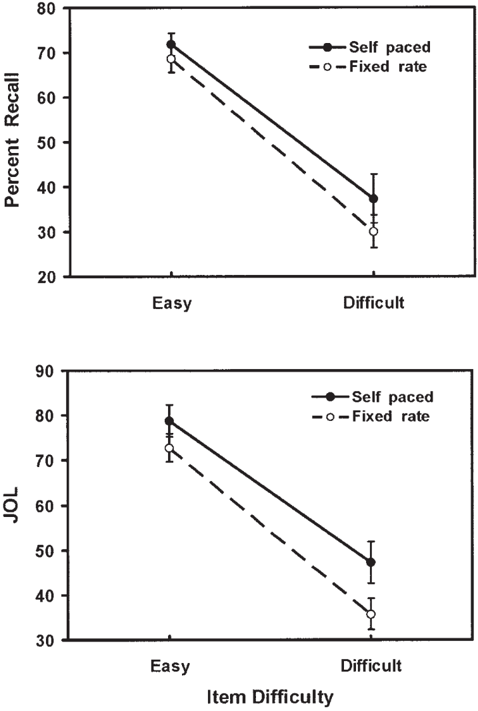
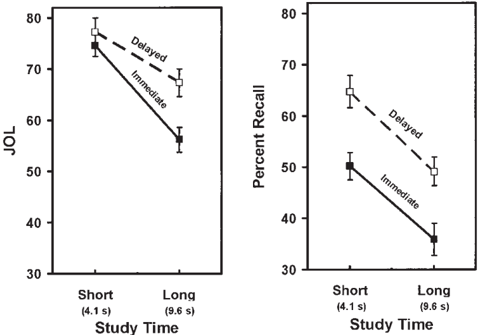
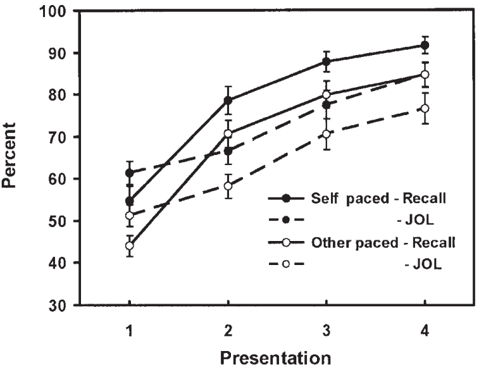
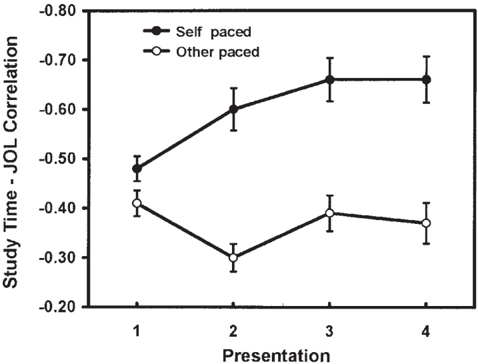
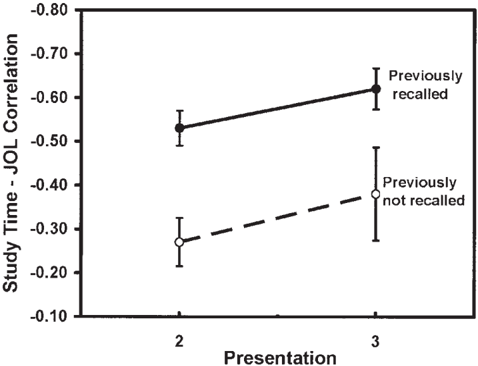
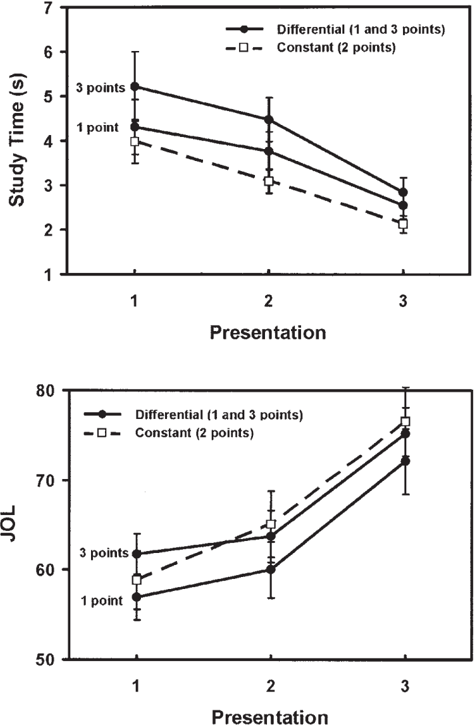
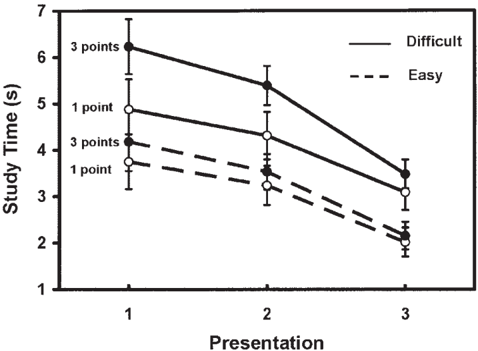
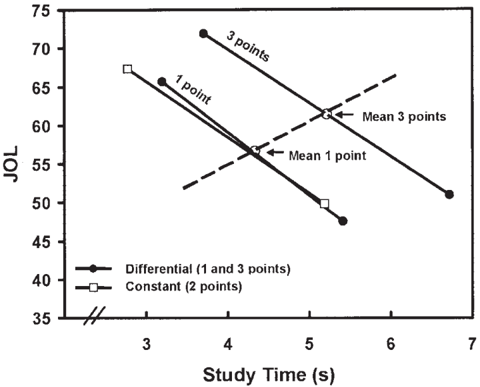
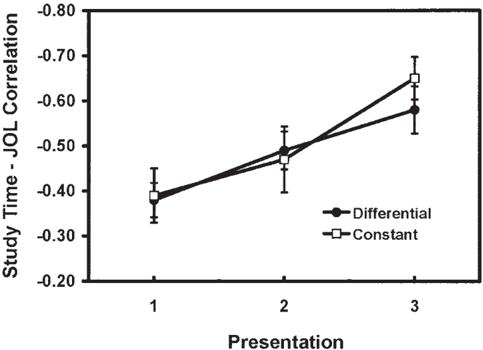
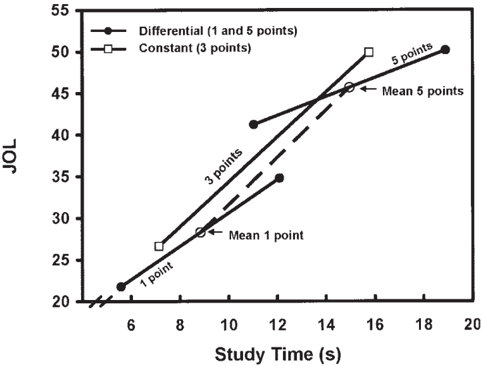
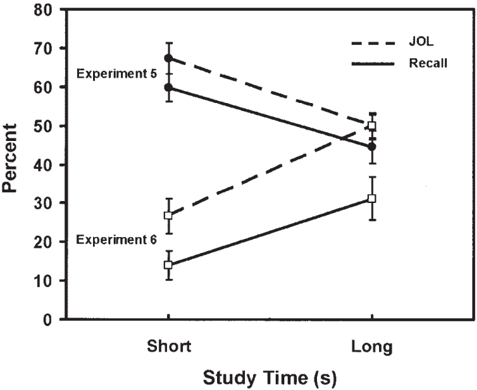
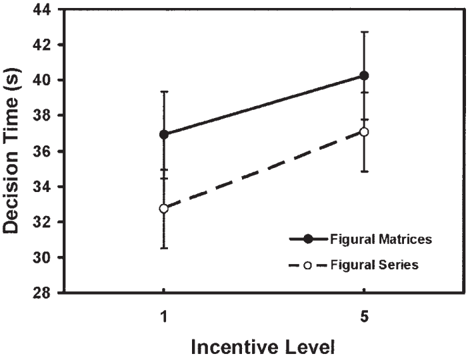
Verification
Claims the paper makes
The claims and statistics of this paper haven’t been checked yet.
Free: it reads the open-access text and checks the first 5 claims that cite a source we can check. Create a free account to check every claim.
Claims other papers make about this one
Each is checked against this paper’s own text: does it say what the citing paper says it does?
The cited source says what the claim attributes to it.
In the citing paper
“If learners prioritize, i.e., attach a particular value to learning an item or completing a learning task, the correlation between effort and monitoring judgments becomes positive.”
From The Relation Between Students’ Effort and Monitoring Judgments During Learning: A Meta-analysis (2020) · cites this paper as Koriat et al. 2006
In the citing paper
“Indeed, it has been observed that answers that come to mind faster are more likely to be correct than answers that are associated with longer latencies (cue validity; see Koriat, Ma'ayan, & Nussinson, 2006;Robinson, Johnson, & Herndon, 1997).”
From Easy comes, easy goes? The link between learning and remembering and its exploitation in metacognition (2008) · cites this paper as Koriat, Ma'ayan, & Nussinson, 2006
In the citing paper
“Kor iat, Ma'ayan, and Nussinson (2006) reported results suggesting the occurrence of data-driven and goal-driven effects within the same experimental task.”
From Easy comes, easy goes? The link between learning and remembering and its exploitation in metacognition (2008) · cites this paper as Koriat, Ma'ayan, and Nussinson (2006)
In the citing paper
“In contrast, Kor iat, Ma'ayan, and Nussinson (2006) obtained results consistent with the ELER principle, even when four months elapsed between study and test.”
From Easy comes, easy goes? The link between learning and remembering and its exploitation in metacognition (2008) · cites this paper as Koriat, Ma'ayan, and Nussinson (2006)
In the citing paper
“In that case, JOL and recall should correlate positively with study effort (see Kor iat, Ma'ayan, & Nussinson, 2006).”
From Easy comes, easy goes? The link between learning and remembering and its exploitation in metacognition (2008) · cites this paper as Koriat, Ma'ayan, & Nussinson, 2006
1 more claim about this paper
Create a free account to see every claim other papers make about this one.
Self-check
Percentages, sums and reported differences re-computed from the paper’s own numbers.
The self-check needs the paper’s full text.
Citations
Cites
(1985) · Medical Entomology and Zoology · Cited by 19,180
Telling more than we can know: Verbal reports on mental processes.
Nisbett, R. E., & Wilson, T. D. (1977) · Psychological Review · doi:10.1037/0033-295x.84.3.231 · Cited by 11,317
Confirmation Bias: A Ubiquitous Phenomenon in Many Guises
Nickerson, R. S. (1998) · Review of General Psychology · doi:10.1037/1089-2680.2.2.175 · Cited by 7,267
Psychological stress and the coping process
Lazarus, R. S. (1966) · Medical Entomology and Zoology · Cited by 7,164
Egeth, H., & Kahneman, D. (1975) · The American Journal of Psychology · doi:10.2307/1421603 · Cited by 6,972
Cognitive, social, and physiological determinants of emotional state.
Schachter, S., & Singer, J. (1962) · Psychological Review · doi:10.1037/h0046234 · Cited by 6,223
(1999) · Cited by 6,104
The Psychology of Learning and Motivation: Advances in Research and Theory
(2010) · Psychology of Learning and Motivation · doi:10.1016/c2009-0-62209-1 · Cited by 5,994
Social psychology: handbook of basic principles
(2008) · Choice Reviews Online · doi:10.5860/choice.45-3496 · Cited by 5,473
The Psychology of Learning and Motivation
(2021) · Psychology of Learning and Motivation · doi:10.1016/s0079-7421(21)x0002-3 · Cited by 5,027
Research works printed but not linked: 4
- Jacoby, L. L., Jennings, J. M., & Hay, J. F. (1996). Dissociating automatic and consciously controlled processes: Implications for diagnosis and rehabilitation of memory deficits. In D. J. Herrmann, C. McEvoy, C. Hertzog, P. Hertel, & M. K. Johnson (Eds.), Basic and applied memory research theory in context (Vol. 1, pp. 161-193). Mahwah, NJ: Erlbaum.
- Laird, J. D., & Bresler, C. (1992). The process of emotional feeling: A self-perception theory. In M. Clark (Ed.), Emotion: Review of personality and social psychology (Vol. 13, pp. 223-234). Newbury Park, CA: Sage.
- Sheffer, L. (2003). The reliability and structure of metacognitive skills and their relationship to cognitive performance. Unpublished doctoral thesis, University of Haifa, Haifa, Israel.
- Winkielman, 2003, The hedonic marking of processing fluency: Implications for evaluative judgment., 189
Cited by
Items 101–200 of 514
The effect of animacy on metamemory
Li, P., Jia, X., Li, X., & Li, W. (2016) · Memory & Cognition · doi:10.3758/s13421-016-0598-7 · Cited by 64
Looking at Mental Effort Appraisals through a Metacognitive Lens: Are they Biased?
Scheiter, K., Ackerman, R., & Hoogerheide, V. (2020) · Educational Psychology Review · doi:10.1007/s10648-020-09555-9 · Cited by 63
“These cues are sometimes valid, in that they predict changes in performance (high cue diagnosticity, e.g., Koriat et al. 2006; Thompson et al. 2013), but also often not tightly associated with performance fluctuations (low cue diagnosticity, e.g., Metcalfe and Finn 2008; Rabinowitz et al. 1982;…”
BackgroundMethodInfluentialChanges in metacognitive monitoring accuracy in an introductory physics course
Morphew, J. (2020) · Metacognition and Learning · doi:10.1007/s11409-020-09239-3 · Cited by 62
Profiling reading in print and digital mediums
Singer, L. M., Alexander, P. A., & Silverman, A. B. (2018) · Learning and Instruction · doi:10.1016/j.learninstruc.2018.04.001 · Cited by 62
Extending the testing effect to self-regulated learning
Fernandez, J., & Jamet, É. (2016) · Metacognition and Learning · doi:10.1007/s11409-016-9163-9 · Cited by 61
Colbert, C. Y., Graham, L., West, C., White, B. A., Arroliga, A. C., Myers, J. D., Ogden, P. E., Archer, J., Mohammad, Z. T. A., & Clark, J. (2015) · The American Journal of Medicine · doi:10.1016/j.amjmed.2014.11.001 · Cited by 59
Components of metacognition can function independently across development.
O'Leary, A., & Sloutsky, V. M. (2019) · Developmental Psychology · doi:10.1037/dev0000645 · Cited by 58
Dignath, D., Kiesel, A., & Eder, A. B. (2015) · Journal of Experimental Psychology Learning Memory and Cognition · doi:10.1037/xlm0000089 · Cited by 57
Metacognition of Inferential Transitions
Shea, N. J. (2024) · The Journal of Philosophy · doi:10.5840/jphil20246202 · Cited by 57
Heuristic Cues for Meta-Reasoning Judgments: Review and Methodology
Ackerman, R. (2019) · Psihologijske teme · doi:10.31820/pt.28.1.1 · Cited by 56
“Method A can be illustrated with findings that feeling of rightness, feeling of error, and confidence judgments are typically negatively correlated with response time (Fernandez-Cruz et al., 2016; Koriat et al., 2006; Thompson, Prowse Turner et al., 2013).”
BackgroundInfluentialThe Moral Metacognition Scale: Development and Validation
McMahon, J. M., & Good, D. J. (2015) · Ethics & Behavior · doi:10.1080/10508422.2015.1028548 · Cited by 56
Positive transfer and negative transfer/antilearning of problem-solving skills.
Osman, M. (2008) · Journal of Experimental Psychology General · doi:10.1037/0096-3445.137.1.97 · Cited by 55
Judgments of physics problem difficulty among experts and novices
Fakcharoenphol, W., Morphew, J., & Mestre, J. P. (2015) · Physical Review Special Topics - Physics Education Research · doi:10.1103/physrevstper.11.020128 · Cited by 54
Individual Differences in Decision Making Depend on Cognitive Abilities, Monitoring and Control
Jackson, S., Kleitman, S., Stankov, L., & Howie, P. M. (2016) · Journal of Behavioral Decision Making · doi:10.1002/bdm.1939 · Cited by 54
Partially Overlapping Neural Correlates of Metacognitive Monitoring and Metacognitive Control
Boldt, A., & Gilbert, S. J. (2022) · Journal of Neuroscience · doi:10.1523/jneurosci.1326-21.2022 · Cited by 53
Effects of Team-Based Learning on Self-Regulated Online Learning
Whittaker, A. A. (2015) · International Journal of Nursing Education Scholarship · doi:10.1515/ijnes-2014-0046 · Cited by 52
Exploring a mnemonic debiasing account of the underconfidence-with-practice effect.
Koriat, A., Ma'ayan, H., Sheffer, L., & Bjork, R. A. (2006) · Journal of Experimental Psychology: Learning, Memory, and Cognition · doi:10.1037/0278-7393.32.3.595 · Cited by 51
Self-citationSeparation of Encoding Fluency and Item Difficulty Effects on Judgements of Learning
Undorf, M., & Erdfelder, E. (2013) · Quarterly Journal of Experimental Psychology · doi:10.1080/17470218.2013.777751 · Cited by 51
Time perception and the experience of agency in meditation and hypnosis
Lush, P., & Dienes, Z. P. (2019) · PsyCh Journal · doi:10.1002/pchj.276 · Cited by 51
Introduction: The Present and the Future in Metacognition
Efklides, A., & Misailidi, P. (2010) · Springer eBooks · doi:10.1007/978-1-4419-6546-2_1 · Cited by 51
Mechanisms underlying effects of approach-avoidance training on stimulus evaluation.
Dessel, P. V., Eder, A. B., & Hughes, S. (2018) · Journal of Experimental Psychology Learning Memory and Cognition · doi:10.1037/xlm0000514 · Cited by 51
Hoch, E., Sidi, Y., Ackerman, R., Hoogerheide, V., & Scheiter, K. (2023) · Educational Psychology Review · doi:10.1007/s10648-023-09779-5 · Cited by 50
Wei, X. (2020) · Assessing Writing · doi:10.1016/j.asw.2020.100452 · Cited by 50
Jacoby, L. L., Wahlheim, C. N., Rhodes, M. G., Daniels, K. A., & Rogers, C. S. (2010) · Memory & Cognition · doi:10.3758/mc.38.6.820 · Cited by 49
Jia, X., Li, P., Li, X., Zhang, Y., Cao, W., Cao, L., & Li, W. (2016) · Frontiers in Psychology · doi:10.3389/fpsyg.2015.01995 · Cited by 49
Xie, H., Zhou, Z., & Liu, Q. (2018) · Educational Psychology Review · doi:10.1007/s10648-018-9442-x · Cited by 46
Sidi, Y., Ophir, Y., & Ackerman, R. (2016) · Metacognition and Learning · doi:10.1007/s11409-015-9150-6 · Cited by 46
Strain, A. C., Azevedo, R., & D’Mello, S. K. (2012) · Contemporary Educational Psychology · doi:10.1016/j.cedpsych.2012.08.001 · Cited by 46
Ackerman, R., & Leiser, D. (2013) · British Journal of Educational Psychology · doi:10.1111/bjep.12021 · Cited by 46
Response latency as a predictor of the accuracy of children's reports.
Ackerman, R., & Koriat, A. (2011) · Journal of Experimental Psychology: Applied · doi:10.1037/a0025129 · Cited by 46
Self-citationUndorf, M., & Erdfelder, E. (2011) · Journal of Experimental Psychology: Learning, Memory, and Cognition · doi:10.1037/a0023719 · Cited by 45
Antonietti, A., Colombo, B., & Di Nuzzo, C. (2015) · Learning, Media and Technology · doi:10.1080/17439884.2014.933112 · Cited by 45
Contrasting case instruction can improve self-assessment of writing
Lin‐Siegler, X., Shaenfield, D. E., & Elder, A. D. (2015) · Educational Technology Research and Development · doi:10.1007/s11423-015-9390-9 · Cited by 45
Baars, M., Visser, S., Gog, T. V., Bruin, A. D., & Paas, F. (2013) · Contemporary Educational Psychology · doi:10.1016/j.cedpsych.2013.09.001 · Cited by 45
How to bet on a memory: Developmental linkages between subjective recollection and decision making
Hembacher, E., & Ghetti, S. (2013) · Journal of Experimental Child Psychology · doi:10.1016/j.jecp.2013.03.010 · Cited by 45
Retrieval effort improves memory and metamemory in the face of misinformation
Bulevich, J. B., & Thomas, A. K. (2012) · Journal of Memory and Language · doi:10.1016/j.jml.2011.12.012 · Cited by 45
Judgments of learning are influenced by multiple cues in addition to memory for past test accuracy.
Hertzog, C. K., Hines, J. C., & Touron, D. R. (2013) · Archives of Scientific Psychology · doi:10.1037/arc0000003 · Cited by 45
The effect of perceptual processing fluency and value on metacognition and remembering
Murphy, D. H., Huckins, S., Rhodes, M. G., & Castel, A. D. (2021) · Psychonomic Bulletin & Review · doi:10.3758/s13423-021-02030-8 · Cited by 43
Cue familiarity and ‘don’t know’ responding in episodic memory tasks
Hanczakowski, M., Pasek, T., Zawadzka, K., & Mazzoni, G. A. L. (2013) · Journal of Memory and Language · doi:10.1016/j.jml.2013.04.005 · Cited by 43
Ackerman, R., Parush, A., Nassar, F., & Shtub, A. (2015) · Computers in Human Behavior · doi:10.1016/j.chb.2015.07.041 · Cited by 42
Metacognition and mindreading: one or two functions?
Proust, J. (2012) · Foundations of Metacognition · doi:10.1093/acprof:oso/9780199646739.003.0015 · Cited by 42
The Integrated Nature of Metamemory and Memory
Dunlosky, J. T., & Bjork, R. A. (2015) · Routledge eBooks · doi:10.4324/9780203805503.ch2 · Cited by 42
Wang, T., Zheng, J., Tan, C., & Lajoie, S. P. (2023) · Journal of Computer Assisted Learning · doi:10.1111/jcal.12824 · Cited by 42
Fraundorf, S. H., Caddick, Z. A., Nokes‐Malach, T. J., & Rottman, B. M. (2023) · Cognitive Research Principles and Implications · doi:10.1186/s41235-023-00511-z · Cited by 42
Bui, Y. C., Pyc, M. A., & Bailey, H. R. (2017) · Memory · doi:10.1080/09658211.2017.1406523 · Cited by 42
Li, W., Liu, C., & Tseng, J. C. R. (2023) · British Journal of Educational Technology · doi:10.1111/bjet.13358 · Cited by 42
Koriat, A. (2015) · Wiley eBooks · doi:10.1002/9781118468333.ch12 · Cited by 42
Self-citationROUSSEAU, R. J., Tremblay, S., Banbury, S. P., Breton, R., & Guitouni, A. (2009) · Theoretical Issues in Ergonomics Science · doi:10.1080/14639220903010076 · Cited by 42
Michaelian, K. (2012) · Mind & Language · doi:10.1111/j.1468-0017.2012.01445.x · Cited by 41
From comparative studies to interdisciplinary research on metacognition
Proust, J. (2019) · Animal Behavior and Cognition · doi:10.26451/abc.06.04.10.2019 · Cited by 41
İLİÇ, U., & Akbulut, Y. (2019) · Computers in Human Behavior · doi:10.1016/j.chb.2019.06.001 · Cited by 40
Thorstad, D. (2024) · doi:10.1093/oso/9780198886143.001.0001 · Cited by 40
Feedback reduces the metacognitive benefit of tests.
Kornell, N., & Rhodes, M. G. (2013) · Journal of Experimental Psychology Applied · doi:10.1037/a0032147 · Cited by 40
The puzzle of study time allocation for the most challenging items
Undorf, M., & Ackerman, R. (2017) · Psychonomic Bulletin & Review · doi:10.3758/s13423-017-1261-4 · Cited by 39
Shared and distinct cue utilization for metacognitive judgements during reasoning and memorisation
Ackerman, R., & Beller, Y. (2017) · Thinking & Reasoning · doi:10.1080/13546783.2017.1328373 · Cited by 39
Komori, M. (2016) · Frontiers in Psychology · doi:10.3389/fpsyg.2016.00285 · Cited by 38
Koriat, A. (2018) · Journal of Experimental Psychology General · doi:10.1037/xge0000397 · Cited by 38
Self-citationThe Relationship Between Interoception and Metacognition: A Pilot Study
Meessen, J., Mainz, V., Gauggel, S., Volz-Sidiropoulou, E., Sütterlin, S., & Forkmann, T. (2016) · Journal of Psychophysiology · doi:10.1027/0269-8803/a000157 · Cited by 37
David, L., Biwer, F., Baars, M., Wijnia, L., PAAS, F. G. W. C., & de Bruin, A. B. H. (2024) · Educational Psychology Review · doi:10.1007/s10648-024-09903-z · Cited by 37
XIII-Epistemic Agency and Metacognition: An Externalist View
Proust, J. (2008) · Proceedings of the Aristotelian Society (Hardback) · doi:10.1111/j.1467-9264.2008.00245.x · Cited by 37
Metacognitive Effort Regulation across Cultures
Ackerman, R., Binah-Pollak, A., & Lauterman, T. (2023) · Journal of Intelligence · doi:10.3390/jintelligence11090171 · Cited by 36
Shea, N. J. (2024) · doi:10.1093/9780191997167.001.0001 · Cited by 36
Inspiration and decision-making: A case study of a composer’s intuitive and reflective thought
Pohjannoro, U. (2014) · Musicae Scientiae · doi:10.1177/1029864914520848 · Cited by 36
Metamemory viewed through the judgment lens
Bröder, A., & Undorf, M. (2019) · Acta Psychologica · doi:10.1016/j.actpsy.2019.04.011 · Cited by 36
Finn, B., & Tauber, S. K. (2015) · Educational Psychology Review · doi:10.1007/s10648-015-9331-5 · Cited by 35
Koriat, A., Adiv, S., & Schwarz, N. (2015) · Personality and Social Psychology Review · doi:10.1177/1088868315585269 · Cited by 35
Self-citationPrice, J., & Harrison, A. J. (2017) · Journal of Memory and Language · doi:10.1016/j.jml.2016.12.003 · Cited by 35
Self‐paced study time as a cue for recall predictions across school age
Hoffmann‐Biencourt, A., Lockl, K., Schneider, W., Ackerman, R., & Koriat, A. (2010) · British Journal of Developmental Psychology · doi:10.1348/026151009x479042 · Cited by 34
Self-citationPrinz, A., Golke, S., & Wittwer, J. (2018) · Instructional Science · doi:10.1007/s11251-018-9452-6 · Cited by 34
Liu, M., Vu, T., van Atteveldt, N., & Meeter, M. (2023) · Journal of Intelligence · doi:10.3390/jintelligence11070133 · Cited by 34
The Construction of Attitudinal Judgments: Evidence from Attitude Certainty and Response Latency
Koriat, A., & Adiv, S. (2011) · Social Cognition · doi:10.1521/soco.2011.29.5.577 · Cited by 33
Self-citationMotivación y estrategias de aprendizaje en estudiantes de la Universidad de Caldas
Londoño, D. M. M., Lubert, C. D., Chaurra, J. T., & Osorio, L. S. N. (2018) · Tesis Psicológica · doi:10.37511/tesis.v13n1a6 · Cited by 33
Neural correlates of judgments of learning – An ERP study on metacognition
Müller, B. C. N., Tsalas, N. R. H., van Schie, H. T., Meinhardt, J., Proust, J., Sodian, B., & Paulus, M. (2016) · Brain Research · doi:10.1016/j.brainres.2016.10.005 · Cited by 33
Ariel, R. (2013) · Journal of Experimental Psychology Learning Memory and Cognition · doi:10.1037/a0033091 · Cited by 33
Mindset effects on the regulation of thinking time in problem-solving
Ackerman, R., & Levontin, L. (2023) · Thinking & Reasoning · doi:10.1080/13546783.2023.2259550 · Cited by 32
The “curse of knowledge” when predicting others’ knowledge
Tullis, J. G., & Feder, B. (2022) · Memory & Cognition · doi:10.3758/s13421-022-01382-3 · Cited by 32
Nussinson, R., & Koriat, A. (2008) · Metacognition and Learning · doi:10.1007/s11409-008-9024-2 · Cited by 31
Self-citationWirth, J., Weber-Reuter, X.-L., Schuster, C., Fleischer, J., Leutner, D., & Stebner, F. (2025) · Educational Psychology Review · doi:10.1007/s10648-024-09983-x · Cited by 30
Motivation to seek help and help efficiency in students who failed in an initial task
Huet, N., Moták, L., & Sakdavong, J.-C. (2016) · Computers in Human Behavior · doi:10.1016/j.chb.2016.05.059 · Cited by 30
Tullis, J. G., & Benjamin, A. S. (2014) · Memory & Cognition · doi:10.3758/s13421-014-0478-y · Cited by 30
Fyfe, E. R., & Brown, S. A. (2020) · Instructional Science · doi:10.1007/s11251-019-09501-5 · Cited by 30
Yang, C., Yu, R., Hu, X., Luo, L., Huang, T. S.-T., & Shanks, D. R. (2021) · Metacognition and Learning · doi:10.1007/s11409-020-09254-4 · Cited by 29
Knowing about not remembering: developmental dissociations in lack‐of‐memory monitoring
Ghetti, S., Castelli, P., & Lyons, K. E. (2010) · Developmental Science · doi:10.1111/j.1467-7687.2009.00908.x · Cited by 29
Confidence in Personal Preferences
Koriat, A. (2012) · Journal of Behavioral Decision Making · doi:10.1002/bdm.1758 · Cited by 29
Self-citationAckerman, R. (2023) · Educational Psychology Review · doi:10.1007/s10648-023-09771-z · Cited by 29
de Bruin, A. B. H., Rikers, R. M. J. P., & Schmidt, H. G. (2007) · The European Journal of Cognitive Psychology · doi:10.1080/09541440701326204 · Cited by 29
Koriat, A., & Nussinson, R. (2009) · Journal of Experimental Psychology: Learning, Memory, and Cognition · doi:10.1037/a0016374 · Cited by 28
Self-citationMetacognitive expectancy effects in source monitoring: Beliefs, in-the-moment experiences, or both?
Schaper, M. L., Kuhlmann, B. G., & Bayen, U. J. (2019) · Journal of Memory and Language · doi:10.1016/j.jml.2019.03.009 · Cited by 28
The role of metacognition and schematic support in younger and older adults' episodic memory
Whatley, M. C., & Castel, A. D. (2021) · Memory & Cognition · doi:10.3758/s13421-021-01169-y · Cited by 28
Are We Frightened Because We Run Away? Some Evidence from Metacognitive Feelings
Koriat, A. (2006) · Wiley eBooks · doi:10.1002/9780470756232.ch5 · Cited by 27
Self-citationConfidence in one’s social beliefs: Implications for belief justification
Koriat, A., & Adiv, S. (2012) · Consciousness and Cognition · doi:10.1016/j.concog.2012.08.008 · Cited by 27
Self-citationA novel framework for understanding reduced awareness of dyskinesias in Parkinson's Disease
Palermo, S., Lopiano, L., Zibetti, M., Rosato, R., Leotta, D., & Amanzio, M. (2017) · Parkinsonism & Related Disorders · doi:10.1016/j.parkreldis.2017.03.009 · Cited by 26
Connais-toi toi-même : une perspective globale de la métacognition
Allix, P., Lubin, A., Lanoë, C., & Rossi, S. (2023) · Psychologie Française · doi:10.1016/j.psfr.2022.08.002 · Cited by 26
Darwin, Tinbergen, and the Evolution of Comparative Cognition
Shettleworth, S. J. (2012) · Oxford University Press eBooks · doi:10.1093/oxfordhb/9780199738182.013.0028 · Cited by 26
Motivated comprehension regulation: Vigilant versus eager metacognitive control
Miele, D. B., Molden, D. C., & Gardner, W. L. (2009) · Memory & Cognition · doi:10.3758/mc.37.6.779 · Cited by 26
Gagnière, L. (2010) · Archive ouverte UNIGE (University of Geneva) · doi:10.13097/archive-ouverte/unige:12583 · Cited by 26
Agency attributions of mental effort during self-regulated learning
Koriat, A. (2017) · Memory & Cognition · doi:10.3758/s13421-017-0771-7 · Cited by 25
Self-citationThe Metacognitive Foundations of Effective Remembering
Fiechter, J. L., Benjamin, A. S., & Unsworth, N. (2015) · Oxford University Press eBooks · doi:10.1093/oxfordhb/9780199336746.013.24 · Cited by 25
The effect of external store reliance on actual and predicted value-directed remembering
Park, J. S., Kelly, M. O., Hargis, M. B., & Risko, E. F. (2022) · Psychonomic Bulletin & Review · doi:10.3758/s13423-022-02064-6 · Cited by 24
Gardier, M., & Geurten, M. (2024) · Developmental Psychology · doi:10.1037/dev0001752 · Cited by 24
Metadata
- Authors
- Koriat, A., Ma'ayan, H., & Nussinson, R.
- Venue
- Journal of Experimental Psychology: General
- Published
- 2006-02
- Volume
- 135
- Issue
- 1
- Pages
- 36-69
- ISSN
- 0096-3445 (ISSN-L)
- 1939-2222
- OpenAlex
- W2064996814
- Cited by
- 422
- References
- 171
- FWCI
- 27.45
- Type
- journal article
- Language
- en
- Open access
- closed
About these checks
Registry, retraction, Cites and statistics results are computed, not judged, with one exception: a printed reference that no index lists is read once by a model before it counts as a citation error. Claims are extracted by a model and kept only when their quote appears verbatim in the text; each cited source is then checked, with a model’s help, for whether it says what the claim relies on. Those verdicts can be wrong — read the claim’s quote and the cited source before relying on one.
Statistics and arithmetic are recomputed, not judged.
Confidence bands are shown only for fields calibrated on our annotated test set. None is calibrated yet, so no band is shown.
What counts as a claim ›How we measure confidence ›How we check this ›
Are you an author, or do you see a problem with this page? Request a review
Data sources
Bibliographic data: Semantic Scholar, OpenAlex, Crossref.
Contains information from the Semantic Scholar Academic Graph Datasets, made available under the ODC Attribution License (ODC-BY 1.0).
Semantic Scholar’s data is described in: Kinney, R., et al. (2023). The Semantic Scholar Open Data Platform. arXiv:2301.10140.
