

The DOI matches its Crossref record; 39 of the 41 references it cites were found in a registry or an index, and 2 are not checked yet.
Is there a G factor for metacognition? Correlations in retrospective metacognitive sensitivity across tasks.
Open accessAbstract
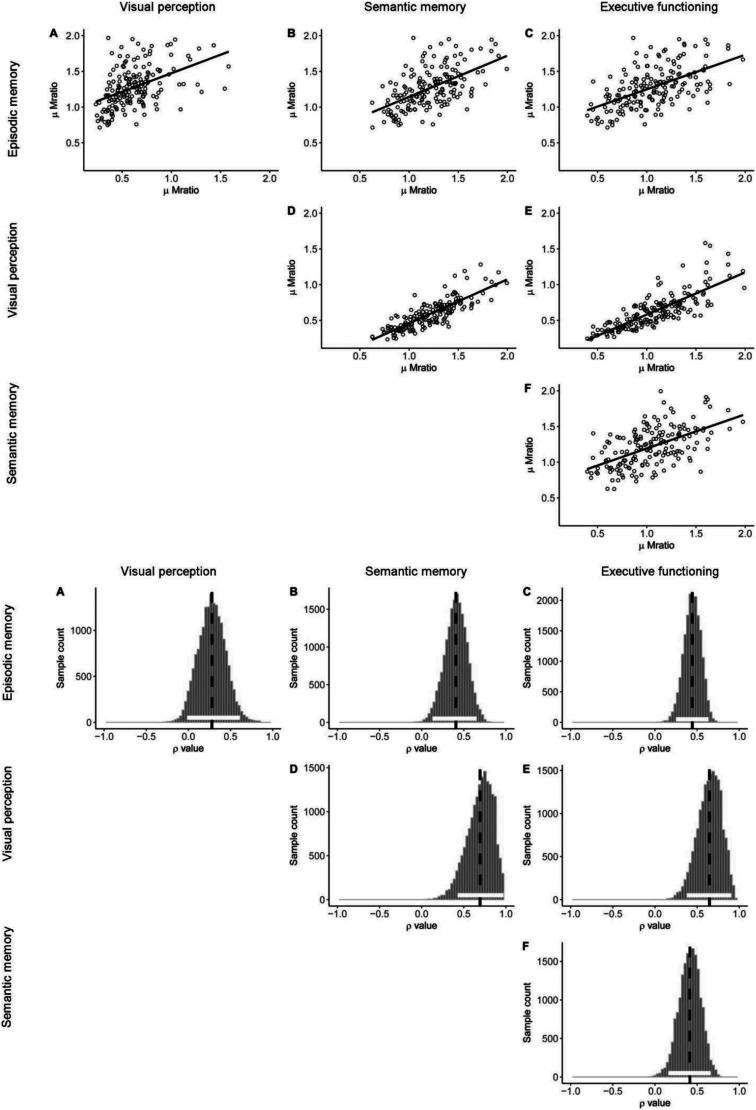
) were significant, even for pairs of tasks in which first-order performance was not correlated. This suggests that at least some components of metacognitive efficiency in retrospective confidence are domain general. (PsycInfo Database Record (c) 2020 APA, all rights reserved).
Overview
The claims and statistics of this paper haven’t been checked yet.
Run the check — free, no account needed. It reads the open-access text and checks the sources it cites.
Integrity signals
Registry
Cites
Statistics
Figures
Verification
Claims the paper makes
The claims and statistics of this paper haven’t been checked yet.
Run the check — free, no account needed. It reads the open-access text and checks the sources it cites.
Claims other papers make about this one
Each is checked against this paper’s own text: does it say what the citing paper says it does?
The source backs part of the claim, not all of it — or backs it for a different population, condition or comparison.
In the citing paper
“The accuracy of such reflective judgments shares variance with other forms of metacognitive sensitivity rather than variance in IQ (Mazancieux et al. 2020, Rouault et al. 2018a).”
From Metacognition and Confidence: A Review and Synthesis (2024) · cites this paper as Mazancieux et al. 2020
Experimental — accuracy not yet measuredThe cited source says what the claim attributes to it.
In the citing paper
“There is also emerging evidence that metacognitive capacity (measured as the noise in metacognitive judgments relative to performance) covaries across perceptual and cognitive tasks, suggesting the existence of a global resource that is leveraged to monitor self-performance (Boundy-Singer et al. 2023, Mazancieux et al. 2020, Rouault et al. 2018b).”
From Metacognition and Confidence: A Review and Synthesis (2024) · cites this paper as Mazancieux et al. 2020
The cited source says what the claim attributes to it.
In the citing paper
“Behaviorally, individual differences in metacognitive efficiency have been shown to be correlated across distinct task domains, after controlling for correlations in performance (Ais et al. 2016, Faivre et al. 2018, Mazancieux et al. 2020, Rouault et al. 2018b).”
From Metacognition and Confidence: A Review and Synthesis (2024) · cites this paper as Mazancieux et al. 2020
Self-check
Percentages, sums and reported differences re-computed from the paper’s own numbers.
The self-check needs the paper’s full text.
Citations
Cites
Metacognition and cognitive monitoring: A new area of cognitive–developmental inquiry
Flavell, J. H. (1979) · American Psychologist · doi:10.1037/0003-066x.34.10.906 · Cited by 11,282 · cited 2×
“Keywords: metacognition, metamemory, monitoring, confidence judgments, domain-general processes Supplemental materials: http://dx.doi.org/10.1037/xge0000746.supp Metacognition refers to the ability to monitor and control cognitive processes (Flavell, 1979).”
BackgroundInfluentialJAGS: A program for analysis of Bayesian graphical models using Gibbs sampling
Plummer, M. (2003) · Cited by 4,720
The Nature of Recollection and Familiarity: A Review of 30 Years of Research
Yonelinas, A. P. (2002) · Journal of Memory and Language · doi:10.1006/jmla.2002.2864 · Cited by 3,840
At what sample size do correlations stabilize?
Schönbrodt, F. D., & Perugini, M. (2013) · Journal of Research in Personality · doi:10.1016/j.jrp.2013.05.009 · Cited by 2,232
Koriat, A., Lichtenstein, S., & Fischhoff, B. (1980) · Journal of Experimental Psychology: Human Learning and Memory · doi:10.1037/0278-7393.6.2.107 · Cited by 1,477
Fleming, S. M., & Lau, H. C. (2014) · Frontiers in Human Neuroscience · doi:10.3389/fnhum.2014.00443 · Cited by 1,408 · cited 1×
“Metacognitive sensitivity refers to the ability of a person to discriminate between different levels of performance, such as correct or incorrect trials (Fleming & Lau, 2014).”
BackgroundSelf-citationMonitoring one’s own knowledge during study: A cue-utilization approach to judgments of learning
Koriat, A. (1997) · Journal of Experimental Psychology: General · doi:10.1037/0096-3445.126.4.349 · Cited by 1,363
Receiver-operating characteristics in recognition memory: evidence for a dual-process model.
Yonelinas, A. (1994) · Journal of Experimental Psychology. Learning, Memory and Cognition · doi:10.1037/0278-7393.20.6.1341 · Cited by 1,193
Receiver-operating characteristics in recognition memory: Evidence for a dual-process model.
Yonelinas, A. P. (1994) · Journal of Experimental Psychology Learning Memory and Cognition · doi:10.1037//0278-7393.20.6.1341 · Cited by 1,152
Raincloud plots: a multi-platform tool for robust data visualization
Allen, M., Poggiali, D., Whitaker, K. J., Marshall, T. R., & Kievit, R. (2019) · Wellcome Open Research · doi:10.12688/wellcomeopenres.15191.1 · Cited by 1,125
Research works printed but not linked: 2
- Kruschke J. (2014). Doing Bayesian data analysis: A tutorial with R, JAGS, and Stan. New York, NY: Academic Press.
- Nelson T. O., & Narens L. (1990). Metamemory: A theoretical frame- work and new findings In Bower G. (Ed.), The psychology of learning and motivation (pp. 125– 173). New York, NY: Academic Press.
Cited by
Sorted by citations
A three-dimensional taxonomy of achievement emotions.
Pekrun, R. H., Marsh, H. W., Elliot, A. J., Stockinger, K., Perry, R. P., Vogl, E., Goetz, T., van Tilburg, W. A. P., Lüdtke, O., & Vispoel, W. P. (2022) · Journal of Personality and Social Psychology · doi:10.1037/pspp0000448 · Cited by 390
Metacognition and Confidence: A Review and Synthesis
Fleming, S. M. (2024) · Annual Review of Psychology · doi:10.1146/annurev-psych-022423-032425 · Cited by 256
Self-citationLegrand, N., Nikolova, N. E., Corrêa, C. M. C., Brændholt, M., Stuckert, A., Mathiasen, N. K., Vejlø, M., Fardo, F., & Allen, M. (2021) · Biological Psychology · doi:10.1016/j.biopsycho.2021.108239 · Cited by 162
Sources of Metacognitive Inefficiency
Shekhar, M., & Rahnev, D. (2020) · Trends in Cognitive Sciences · doi:10.1016/j.tics.2020.10.007 · Cited by 129
The future of metacognition research: Balancing construct breadth with measurement rigor
Katyal, S., & Fleming, S. M. (2024) · Cortex · doi:10.1016/j.cortex.2023.11.002 · Cited by 63
Self-citationVisual metacognition: Measures, models, and neural correlates.
Rahnev, D. (2021) · American Psychologist · doi:10.1037/amp0000937 · Cited by 63
Dynamic influences on static measures of metacognition
Desender, K., Vermeylen, L., & Verguts, T. (2022) · Nature Communications · doi:10.1038/s41467-022-31727-0 · Cited by 62
Metacognition in functional cognitive disorder
Bhome, R., McWilliams, A., Price, G. W., Poole, N. A., Howard, R. J., Fleming, S. M., & Huntley, J. D. (2022) · Brain Communications · doi:10.1093/braincomms/fcac041 · Cited by 67
Self-citationMcWilliams, A., Bibby, H., Steinbeis, N., David, A. S., & Fleming, S. M. (2023) · Cognition · doi:10.1016/j.cognition.2023.105389 · Cited by 64
Self-citationWhy metacognition matters in politically contested domains
Fischer, H., & Fleming, S. M. (2024) · Trends in Cognitive Sciences · doi:10.1016/j.tics.2024.06.005 · Cited by 45
Self-citationA shared brain system forming confidence judgment across cognitive domains
Rouault, M., Lebreton, M. P., & Pessiglione, M. (2022) · Cerebral Cortex · doi:10.1093/cercor/bhac146 · Cited by 49
Assessing Metacognitive Regulation during Problem Solving: A Comparison of Three Measures
Zepeda, C. D., & Nokes‐Malach, T. J. (2023) · Journal of Intelligence · doi:10.3390/jintelligence11010016 · Cited by 54
A comprehensive assessment of current methods for measuring metacognition
Rahnev, D. (2025) · Nature Communications · doi:10.1038/s41467-025-56117-0 · Cited by 97
I know better! Emerging metacognition allows adolescents to ignore false advice
Moses-Payne, M. E., Habicht, J., Bowler, A., Steinbeis, N., & Hauser, T. U. (2021) · Developmental Science · doi:10.1111/desc.13101 · Cited by 40
Towards a common conceptual space for metacognition in perception and memory
Mazancieux, A., Pereira, M., Faivre, N., Mamassian, P., Moulin, C. J. A., & Souchay, C. (2023) · Nature Reviews Psychology · doi:10.1038/s44159-023-00245-1 · Cited by 44
Self-citationNeuro-cognitive processes as mediators of psychological treatment effects
Reiter, A. M. F., Atiya, N. A. A., Berwian, I. M., & Huys, Q. J. M. (2021) · Current Opinion in Behavioral Sciences · doi:10.1016/j.cobeha.2021.02.007 · Cited by 36
Separable neural signatures of confidence during perceptual decisions
Balsdon, T., Mamassian, P., & Wyart, V. (2021) · eLife · doi:10.7554/elife.68491 · Cited by 44
Learning with Certainty in ChildhoodPreprint
Baer, C., & Kidd, C. (2022) · PsyArXiv (OSF Preprints) · doi:10.1016/j.tics.2022.07.010 · Cited by 40
The phenomenology of autobiographical retrieval
Moulin, C. J. A., Carreras, F., & Barzykowski, K. (2022) · Wiley Interdisciplinary Reviews Cognitive Science · doi:10.1002/wcs.1638 · Cited by 39
Self-citationEmotional metacognition: stimulus valence modulates cardiac arousal and metamemory
Legrand, N., Engen, S. S., Corrêa, C. M. C., Mathiasen, N. K., Nikolova, N. E., Fardo, F., & Allen, M. (2020) · Cognition & Emotion · doi:10.1080/02699931.2020.1859993 · Cited by 30
Measuring metacognition of direct and indirect parameters of voluntary movement.
Arbuzova, P., Peters, C., Röd, L., Koß, C., Maurer, H., Maurer, L. K., Müller, H., Verrel, J., & Filevich, E. (2021) · Journal of Experimental Psychology General · doi:10.1037/xge0000892 · Cited by 28
A Bayesian inference model for metamemory.
Hu, X., Zheng, J., Su, N., Fan, T., Yang, C., Yin, Y., Fleming, S. M., & Luo, L. (2021) · Psychological Review · doi:10.1037/rev0000270 · Cited by 24
Self-citationFunctional Cognitive Disorders (FCD): How Is Metacognition Involved?
Larner, A. J. (2021) · Brain Sciences · doi:10.3390/brainsci11081082 · Cited by 27
“, whether there is a g factor for metacognition) continues to be a subject of investigation [38].”
BackgroundShea, N. J. (2024) · doi:10.1093/9780191997167.001.0001 · Cited by 29
Metacognition and confidence: A review and synthesisPreprint
Fleming, S. M. (2023) · doi:10.31234/osf.io/ge7tz · Cited by 27
Self-citationMeasuring metacognition: A comprehensive assessment of current methodsPreprint
Rahnev, D. (2023) · doi:10.31234/osf.io/waz9h · Cited by 25
Metric error monitoring: Another generalized mechanism for magnitude representations?
Yallak, E., & Balcı, F. (2021) · Cognition · doi:10.1016/j.cognition.2020.104532 · Cited by 25
Metacognition and Self-Control: An Integrative FrameworkPreprint
Hennecke, M., & Bürgler, S. (2022) · doi:10.31234/osf.io/9dqb7 · Cited by 22
Metacognitive sensitivity: The key to calibrating trust and optimal decision making with AI
Lee, D., Pruitt, J., Zhou, T., Du, J., & Odegaard, B. (2025) · PNAS Nexus · doi:10.1093/pnasnexus/pgaf133 · Cited by 33
van Loon, M., & Roebers, C. M. (2024) · Metacognition and Learning · doi:10.1007/s11409-024-09400-2 · Cited by 19
“Studies using multiple tasks to obtain insights into the generalizability of metacognitive skills show that, for adults, monitoring for memory tasks has generalizable elements (Lehm - ann et al., 2022; Mazancieux et al., 2020 ).”
Evidence for Age-Equivalent and Task-Dissociative Metacognition in the Memory Domain
Zakrzewski, A. C., Sanders, E. C., & Berry, J. M. (2021) · Frontiers in Psychology · doi:10.3389/fpsyg.2021.630143 · Cited by 19
Child witness expressions of certainty are informative.
Winsor, A., Flowe, H. D., Seale-Carlisle, T. M., Killeen, I., Hett, D., Jores, T., Ingham, M. P., Lee, B. P., Stevens, L., & Colloff, M. F. (2021) · Journal of Experimental Psychology General · doi:10.1037/xge0001049 · Cited by 18
Common computations for metacognition and meta-metacognition
Zheng, Y., Recht, S., & Rahnev, D. (2023) · Neuroscience of Consciousness · doi:10.1093/nc/niad023 · Cited by 15
Gardier, M., & Geurten, M. (2024) · Developmental Psychology · doi:10.1037/dev0001752 · Cited by 16
Multitasking costs on metacognition in a triple-task paradigm
Konishi, M., Berberian, B., de Gardelle, V., & Sackur, J. (2021) · Psychonomic Bulletin & Review · doi:10.3758/s13423-021-01967-0 · Cited by 16
The Metacognition in Self-Control Scale (MISCS)
Bürgler, S., Kleinke, K., & Hennecke, M. (2022) · Personality and Individual Differences · doi:10.1016/j.paid.2022.111841 · Cited by 22
van Loon, M. V., Orth, U., & Roebers, C. (2024) · Journal of Experimental Child Psychology · doi:10.1016/j.jecp.2023.105857 · Cited by 13
Klever, L., Mamassian, P., & Billino, J. (2022) · Scientific Reports · doi:10.1038/s41598-022-09939-7 · Cited by 16
Dunn, T. L., Gaspar, C., McLean, D., Koehler, D. J., & Risko, E. F. (2021) · Technology Mind and Behavior · doi:10.1037/tmb0000039 · Cited by 16
Grabman, J. H., & Dodson, C. S. (2023) · Cognition · doi:10.1016/j.cognition.2023.105659 · Cited by 13
Survey measures of metacognitive monitoring are often false
Double, K. S. (2025) · Behavior Research Methods · doi:10.3758/s13428-025-02621-6 · Cited by 12
Agnoli, S., Zuberer, A., Nanni‐Zepeda, M., McGlinchey, R. E., Milberg, W., Esterman, M. S., & Degutis, J. M. (2023) · Depression and Anxiety · doi:10.1155/2023/2925551 · Cited by 12
The dissociations of confidence from accuracy in forced-choice recognition judgments
Hanczakowski, M., Butowska, E., Beaman, C. P., Jones, D. M., & Zawadzka, K. (2020) · Journal of Memory and Language · doi:10.1016/j.jml.2020.104189 · Cited by 14
West, R. K., Harrison, W. J., Matthews, N. L., Mattingley, J. B., & Sewell, D. K. (2023) · PLoS Computational Biology · doi:10.1371/journal.pcbi.1011245 · Cited by 12
Said, N., Frauhammer, L. T., & Huff, M. (2023) · Journal of Environmental Psychology · doi:10.1016/j.jenvp.2023.102128 · Cited by 15
Does age affect metacognition? A cross-domain investigation using a hierarchical Bayesian framework
Meunier-Duperray, L., Mazancieux, A., Souchay, C., Fleming, S. M., Bastin, C., Moulin, C. J. A., & Angel, L. (2025) · Cognition · doi:10.1016/j.cognition.2025.106089 · Cited by 12
Self-citationHu, X., Yang, C., & Luo, L. (2022) · Journal of Experimental Psychology General · doi:10.1037/xge0001257 · Cited by 10
Lund, A. E., Corrêa, C. M. C., Fardo, F., Fleming, S. M., & Allen, M. (2023) · doi:10.31234/osf.io/p97s5 · Cited by 11
Self-citationMetacognitive biases in anxiety-depression and compulsivity extend across perception and memory
Seow, T. X. F., Fleming, S. M., & Hauser, T. U. (2025) · PLOS mental health. · doi:10.1371/journal.pmen.0000259 · Cited by 17
Self-citationTypological differences influence the bilingual advantage in metacognitive processing.
Polyanskaya, L., Manrique, H. M., Marín, A., García‐Palacios, A., & Ordin, M. (2022) · Journal of Experimental Psychology General · doi:10.1037/xge0001225 · Cited by 11
Automatic multisensory integration follows subjective confidence rather than objective performance
Gao, Y., Xue, K., Odegaard, B., & Rahnev, D. (2025) · Communications Psychology · doi:10.1038/s44271-025-00221-w · Cited by 15
Exploring quantitative measures in metacognition of emotion
Lee, H.-H., Liu, G. K.-M., Chen, Y., & Yeh, S. (2024) · Scientific Reports · doi:10.1038/s41598-023-49709-7 · Cited by 12
Domain-specific updating of metacognitive self-beliefs
Hoogervorst, K., Banellis, L., & Allen, M. (2024) · Cognition · doi:10.1016/j.cognition.2024.105965 · Cited by 9
Episodic and semantic feeling-of-knowing in aging: a systematic review and meta-analysis
Devaluez, M., Mazancieux, A., & Souchay, C. (2023) · Scientific Reports · doi:10.1038/s41598-023-36251-9 · Cited by 9
Self-citationDynamics of task-based confidence in schizophrenia using seasonal decomposition approach
Badal, V. D., Depp, C. A., Pinkham, A. E., & Harvey, P. D. (2023) · Schizophrenia Research Cognition · doi:10.1016/j.scog.2023.100278 · Cited by 9
Cross-modal metacognition: Visual and tactile confidence share a common scale
Klever, L., Beyvers, M. C., Fiehler, K., Mamassian, P., & Billino, J. (2023) · Journal of Vision · doi:10.1167/jov.23.5.3 · Cited by 11
Fleming, S. M. (2023) · Journal of Consciousness Studies · doi:10.53765/20512201.30.9.113 · Cited by 9
Self-citationIs there more to metamemory? An argument for two specialized monitoring abilities
McDonough, I. M., Enam, T., Kraemer, K. R., Eakin, D. K., & Kim, M. (2021) · Psychonomic Bulletin & Review · doi:10.3758/s13423-021-01930-z · Cited by 8
Metacognitive Domains Are Not Aligned along a Dimension of Internal-External Information Source
Arbuzova, P., Maurer, L. K., & Filevich, E. (2022) · Psychonomic Bulletin & Review · doi:10.3758/s13423-022-02201-1 · Cited by 8
Decety, J., Cohen, M. S., & Cao, Q. (2025) · Annals of the New York Academy of Sciences · doi:10.1111/nyas.70109 · Cited by 9
Intelligent Decision Making in Autonomous Vehicles using Cognition Aided Reinforcement Learning
Rathore, H., & Bhadauria, V. S. (2022) · IEEE Wireless Communications and Networking Conference · doi:10.1109/wcnc51071.2022.9771728 · Cited by 7
Hoogervorst, K., Banellis, L., Fardo, F., Xue, K., Tyrer, A., Rahnev, D., & Allen, M. (2024) · PsyArXiv (OSF Preprints) · doi:10.31234/osf.io/2gwky · Cited by 10
The confidence‐accuracy relation – A comparison of metacognition measures in lie detection
Volz, S., Reinhard, M., & Müller, P. A. (2022) · Applied Cognitive Psychology · doi:10.1002/acp.3953 · Cited by 8
What is the relationship between collective memory and metacognition?
Lund, A. E., & Russell, C. (2022) · Progress in brain research · doi:10.1016/bs.pbr.2022.07.006 · Cited by 6
Bourke, N., Trender, W. R., Hampshire, A., Lai, H., Demarchi, C., David, M., Hellyer, P. J., Sharp, D. J., & Friedland, D. (2022) · Neuropsychological Rehabilitation · doi:10.1080/09602011.2022.2034650 · Cited by 5
Mathews, N. K., Faiz, U. B., & Brosowsky, N. P. (2024) · Open Mind · doi:10.1162/opmi_a_00142 · Cited by 5
Common computations for metacognition and meta-metacognitionPreprint
Zheng, Y., Recht, S., & Rahnev, D. (2023) · doi:10.31234/osf.io/g4h65 · Cited by 5
Kopčanová, M., Ince, R. A. A., & Benwell, C. (2023) · bioRxiv (Cold Spring Harbor Laboratory) · doi:10.1101/2023.04.21.537831 · Cited by 6
Retrospective judgments of confidence in a complex span task
Lau, G., Moulin, C. J. A., & Portrat, S. (2023) · Scientific Reports · doi:10.1038/s41598-023-45552-y · Cited by 5
Self-citationIntention offloading: Domain-general versus task-specific confidence signals
Sachdeva, C., & Gilbert, S. J. (2024) · Memory & Cognition · doi:10.3758/s13421-024-01529-4 · Cited by 5
Evidence for a metacognitive awareness of autobiographical memory organisation
Carreras, F., & Moulin, C. J. A. (2023) · Scientific Reports · doi:10.1038/s41598-023-34389-0 · Cited by 4
Self-citationLehmann, M., Neumann, C., Wasserthal, S., Delis, A., Schultz, J., Hurlemann, R., & Ettinger, U. (2022) · Behavioural Brain Research · doi:10.1016/j.bbr.2022.113925 · Cited by 5
Metacognition in Decision-Making Across Domains and Modalities: Evidence From Three Studies
Mazancieux, A., Hat, K., Rutiku, R., Wierzchoń, M., & Sandberg, K. (2026) · Psychological Science · doi:10.1177/09567976251415354 · Cited by 4
Self-citationBanellis, L., Nikolova, N., Ehmsen, J. F., Courtin, A. S., Vejlø, M., Tyrer, A., Böhme, R. A., Fardo, F., & Allen, M. (2026) · Communications Psychology · doi:10.1038/s44271-026-00404-z · Cited by 9
Jak měřit metakognici (nejen) u nadaných dětí
Straka, O. (2021) · doi:10.5817/cz.muni.m210-9905-2021 · Cited by 3
Metacognitive evaluation of postdecisional perceptual representations
Balsdon, T., Wyart, V., & Mamassian, P. (2024) · Journal of Vision · doi:10.1167/jov.24.4.2 · Cited by 5
Cao, Q., Cohen, M. S., Bakkour, A., Leong, Y. C., & Decety, J. (2024) · Cognitive Affective & Behavioral Neuroscience · doi:10.3758/s13415-024-01243-3 · Cited by 5
Berretta, S. A., Abaya, N. M., Parrish, E. M., McBride, L. E., Moore, R. C., Ackerman, R. A., Harvey, P. D., Pinkham, A. E., & Depp, C. A. (2025) · NPP—Digital Psychiatry and Neuroscience · doi:10.1038/s44277-024-00024-7 · Cited by 3
Londoño, D. M. M., Cardozo, M. O., Ferreras, A. P., & Álzate, Ó. E. T. (2021) · Latinoamericana de Estudios Educativos · doi:10.17151/rlee.2021.17.1.10 · Cited by 11
Metacognitive Ability and the Precision of Confidence
Somatori, K., & Kunisato, Y. (2022) · Frontiers in Human Neuroscience · doi:10.3389/fnhum.2022.706538 · Cited by 5
Neuro-cognitive processes as mediators of psychological treatment effectsPreprint
Reiter, A. M. F., Atiya, N. A. A., Berwian, I. M., & Huys, Q. J. M. (2020) · PsyArXiv (OSF Preprints) · doi:10.31234/osf.io/wz5rd · Cited by 4
Domain-specific updating of metacognitive self-beliefsPreprint
Hoogervorst, K., Banellis, L., & Allen, M. (2023) · doi:10.31234/osf.io/knsb4 · Cited by 3
The order of task decisions and confidence ratings has little effect on metacognition
Matthews, J., Sugihara, N., Nagisa, S., Ohashi, H., & Shibata, K. (2025) · Communications Psychology · doi:10.1038/s44271-025-00321-7 · Cited by 2
A systematic review investigating the link between social cognition and self-awareness in adults
Despres, M., Bertrand, E., Dijoux, C., Piolino, P., & Narme, P. (2025) · Consciousness and Cognition · doi:10.1016/j.concog.2025.103945 · Cited by 3
Cardiac interoception in action: Modulation after a stress induction with a speech task
Desdentado, L., Allen, M., Schultze, J., Banellis, L., Navarro‐Siurana, J., Nikolova, N. E., Baños, R., & Pollatos, O. (2026) · Biological Psychology · doi:10.1016/j.biopsycho.2026.109228 · Cited by 2
Are subjective language complaints in memory clinic patients informative?
Александровна, М. С., Zabolotskaia, A., Savilov, V., Syunyakov, T., Kurmyshev, M., Kurmysheva, E., Lobanova, I., Osipova, N. V., Karpenko, O., & Andryushchenko, A. V. (2023) · Aging Neuropsychology and Cognition · doi:10.1080/13825585.2023.2270209 · Cited by 2
A Special Issue Introduction: The Intersection of Metacognition and Intelligence
Son, L. K., & Hausman, H. (2024) · Journal of Intelligence · doi:10.3390/jintelligence12090084 · Cited by 2
Cognition about cognition: Do scales from different fields assess metacognition alike?
Bürgler, S., & Frey, R. (2024) · Personality and Individual Differences · doi:10.1016/j.paid.2024.113013 · Cited by 2
Computational characterization of metacognitive ability in subjective decision-makingPreprint
Plate, C. R., Govil, D., Zheng, C. Y., Boundy-Singer, Z. M., Ziemba, C. M., & López-Guzmán, S. (2025) · bioRxiv (Cold Spring Harbor Laboratory) · doi:10.1101/2025.05.23.655775 · Cited by 3
Time is Confidence: Monetary Incentives Metacognitive Profile on Duration Judgment
Sarabi, M. T., & Zimmermann, E. (2025) · Journal of Cognition · doi:10.5334/joc.414 · Cited by 1
Meunier-Duperray, L., Mazancieux, A., Souchay, C., Bastin, C., Angel, L., & Moulin, C. J. A. (2025) · Neuroscience of Consciousness · doi:10.1093/nc/niaf003 · Cited by 1
Self-citationDavidson, M., Aiyer, S., & Yeung, N. (2025) · eNeuro · doi:10.1523/eneuro.0124-25.2025 · Cited by 1
Neuenschwander, R., Bryce, D., & Eberhart, J. (2026) · Mindfulness · doi:10.1007/s12671-026-02938-z · Cited by 1
Neural oscillations of metacognition: evidence for domain-specificity and age-related compensation
Pace, T., Darrant, M., Hermens, D. F., & Andrews, S. C. (2025) · Cerebral Cortex · doi:10.1093/cercor/bhaf285 · Cited by 1
Metacognitive sensitivity predicts the quality of information search in value-based decision making
Hu, X., Li, Y., Chen, X., Jian-yuan, W., Shi, J., Guo, Q., Liu, Y., Yang, C., & Luo, L. (2025) · Cognition · doi:10.1016/j.cognition.2025.106410 · Cited by 1
Yu, C., & Moore, K. N. (2026) · Memory · doi:10.1080/09658211.2026.2691574 · Cited by 1
Dunn, T. L., Gaspar, C., McLean, D., Koehler, D. J., & Risko, E. F. (2020) · Technology Mind and Behavior · doi:10.1037/tmb0000039.supp · Cited by 1
Do people know when they are good at spotting liars? – Metacognitive efficiency in Lie DetectionPreprint
Said, N., Volz, S., Reinhard, M., Müller, P. A., & Huff, M. (2022) · PsyArXiv (OSF Preprints) · doi:10.31234/osf.io/v6nbd · Cited by 1
Episodic and semantic feeling-of-knowing in aging: a systematic review and meta-analysisPreprint
Devaluez, M., Mazancieux, A., & Souchay, C. (2022) · doi:10.31234/osf.io/x5wc7 · Cited by 1
Self-citationThe Metacognition in Self-Control Scale (MISCS)Preprint
Bürgler, S., Hennecke, M., & Kleinke, K. (2022) · doi:10.31234/osf.io/8pwsz · Cited by 1
Metadata
- Authors
- Mazancieux, A., Fleming, S. M., Souchay, C., & Moulin, C. J. A.
- Affiliations
- Laboratoire de Psychologie et NeuroCognition (FR)
- Wellcome Centre for Human Neuroimaging (GB)
- Corresponding author
- Mazancieux, Audrey
- Venue
- Journal of Experimental Psychology: General
- Published
- 2020-09
- Volume
- 149
- Issue
- 9
- Pages
- 1788-1799
- ISSN
- 0096-3445 (ISSN-L)
- 1939-2222
- PMC
- PMC7397761
- OpenAlex
- W3011402148
- Cited by
- 131
- References
- 39
- Citations by year
- 2026: 11 · 2025: 19 · 2024: 30 · 2023: 26 · 2022: 22 · 2021: 16 · 2020: 6
- FWCI
- 9.41
- Type
- journal article
- Language
- en
- Open access
- hybrid
- doi.org
- Licence
- Locations
- Journal of Experimental Psychology General (publishedVersion, cc-by)
- PubMed Central (publishedVersion, cc-by)
- PubMed (publishedVersion)
- HAL (submittedVersion)
- UCL Discovery (University College London) (submittedVersion)
- MPG.PuRe (Max Planck Society) (submittedVersion)
- Funders
- University Grenoble Alpes
- Institut Universitaire de France
- Topics
- Life Sciences › Neuroscience › Cognitive Neuroscience › Memory Processes and Influences
- Social Sciences › Psychology › Experimental and Cognitive Psychology › Cognitive Abilities and Testing
- Social Sciences › Psychology › Developmental and Educational Psychology › Innovative Teaching and Learning Methods
- Keywords
- metacognition, metacognitive sensitivity, metacognitive efficiency, domain generality, general intelligence
- MeSH terms
- Metacognition, Adolescent, Bayes Theorem, Female, Humans, Judgment, Male, Memory, Neuropsychological Tests, Retrospective Studies, Visual Perception, Young Adult, Executive Function
About these checks
Registry, retraction, Cites and statistics results are computed, not judged, with one exception: a printed reference that no index lists is read once by a model before it counts as a citation error. Claims are extracted by a model and kept only when their quote appears verbatim in the text; each cited source is then checked, with a model’s help, for whether it says what the claim relies on. Those verdicts can be wrong — read the claim’s quote and the cited source before relying on one.
Statistics and arithmetic are recomputed, not judged.
Confidence bands are shown only for fields calibrated on our annotated test set. None is calibrated yet, so no band is shown.
What counts as a claim ›How we measure confidence ›How we check this ›
Are you an author, or do you see a problem with this page? Request a review
