

The DOI matches its Crossref record; 39 of the 41 references it cites were found in a registry or an index, and 2 are not checked yet.
Is there a G factor for metacognition? Correlations in retrospective metacognitive sensitivity across tasks.
Open accessAbstract
) were significant, even for pairs of tasks in which first-order performance was not correlated. This suggests that at least some components of metacognitive efficiency in retrospective confidence are domain general. (PsycInfo Database Record (c) 2020 APA, all rights reserved).
Overview
The claims and statistics of this paper haven’t been checked yet.
Run the check — free, no account needed. It reads the open-access text and checks the sources it cites.
Integrity signals
Registry
Cites
Statistics
Figures
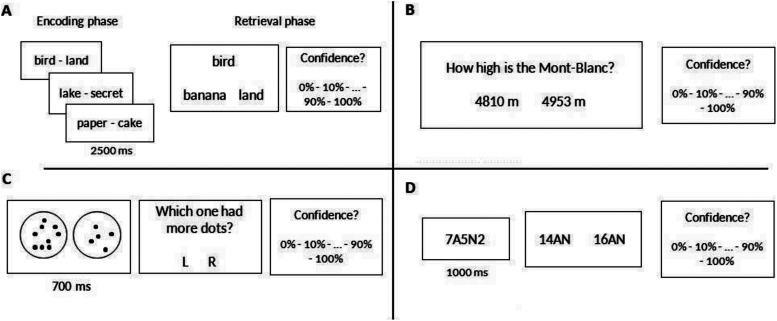
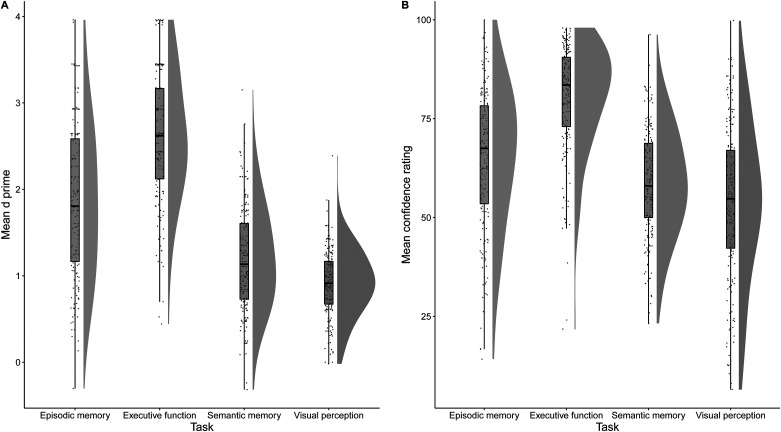
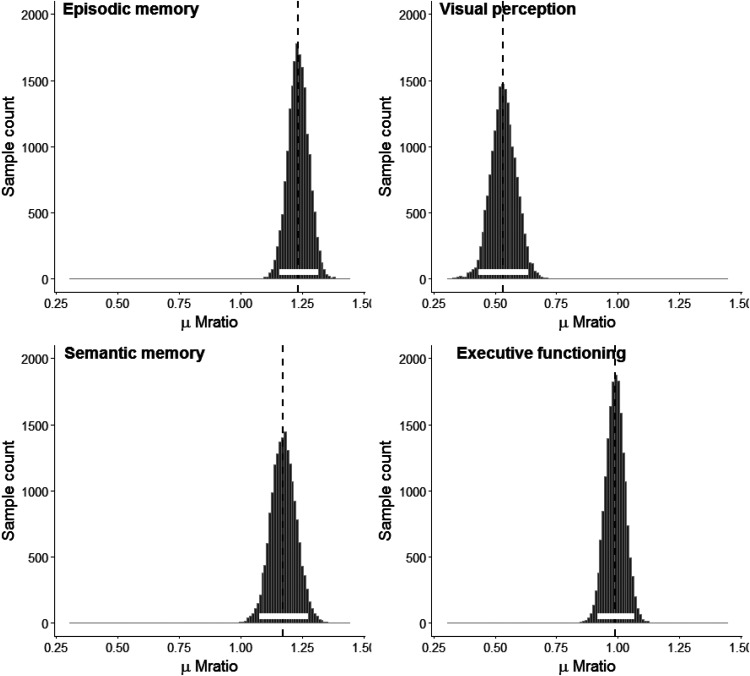
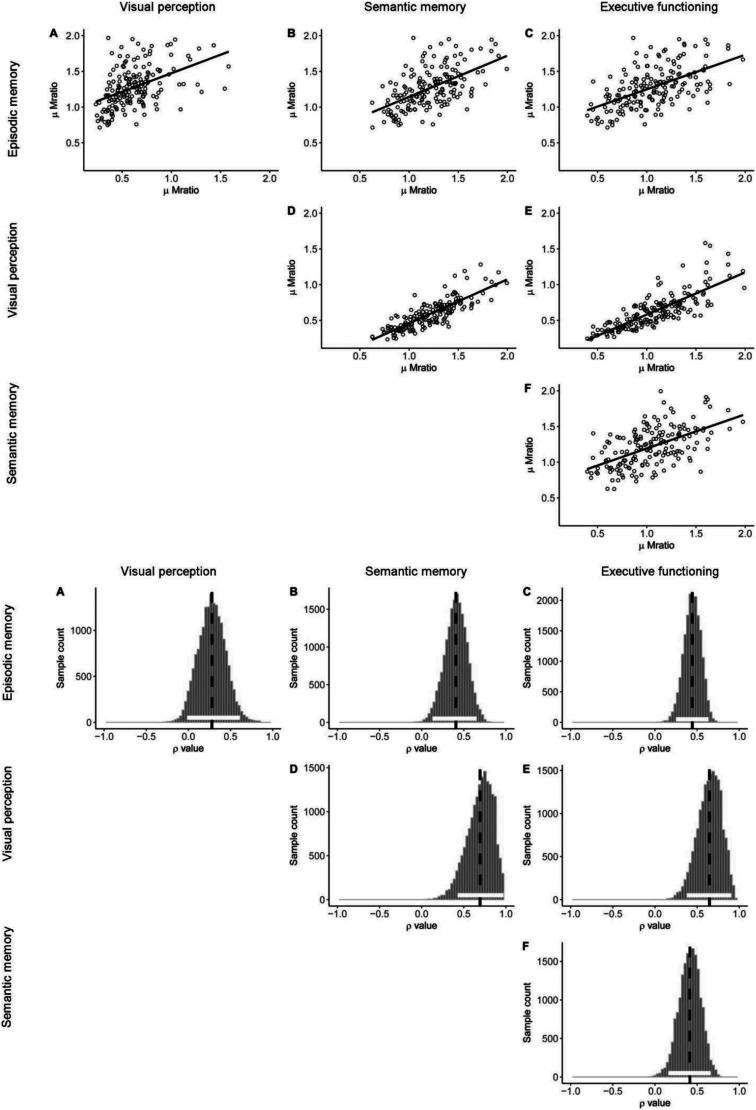
Verification
Claims the paper makes
The claims and statistics of this paper haven’t been checked yet.
Run the check — free, no account needed. It reads the open-access text and checks the sources it cites.
Claims other papers make about this one
Each is checked against this paper’s own text: does it say what the citing paper says it does?
The source backs part of the claim, not all of it — or backs it for a different population, condition or comparison.
In the citing paper
“The accuracy of such reflective judgments shares variance with other forms of metacognitive sensitivity rather than variance in IQ (Mazancieux et al. 2020, Rouault et al. 2018a).”
From Metacognition and Confidence: A Review and Synthesis (2024) · cites this paper as Mazancieux et al. 2020
Experimental — accuracy not yet measuredThe cited source says what the claim attributes to it.
In the citing paper
“There is also emerging evidence that metacognitive capacity (measured as the noise in metacognitive judgments relative to performance) covaries across perceptual and cognitive tasks, suggesting the existence of a global resource that is leveraged to monitor self-performance (Boundy-Singer et al. 2023, Mazancieux et al. 2020, Rouault et al. 2018b).”
From Metacognition and Confidence: A Review and Synthesis (2024) · cites this paper as Mazancieux et al. 2020
The cited source says what the claim attributes to it.
In the citing paper
“Behaviorally, individual differences in metacognitive efficiency have been shown to be correlated across distinct task domains, after controlling for correlations in performance (Ais et al. 2016, Faivre et al. 2018, Mazancieux et al. 2020, Rouault et al. 2018b).”
From Metacognition and Confidence: A Review and Synthesis (2024) · cites this paper as Mazancieux et al. 2020
Self-check
Percentages, sums and reported differences re-computed from the paper’s own numbers.
The self-check needs the paper’s full text.
Citations
Cites
Metacognition and cognitive monitoring: A new area of cognitive–developmental inquiry
Flavell, J. H. (1979) · American Psychologist · doi:10.1037/0003-066x.34.10.906 · Cited by 11,282 · cited 2×
“Keywords: metacognition, metamemory, monitoring, confidence judgments, domain-general processes Supplemental materials: http://dx.doi.org/10.1037/xge0000746.supp Metacognition refers to the ability to monitor and control cognitive processes (Flavell, 1979).”
BackgroundInfluentialJAGS: A program for analysis of Bayesian graphical models using Gibbs sampling
Plummer, M. (2003) · Cited by 4,720
The Nature of Recollection and Familiarity: A Review of 30 Years of Research
Yonelinas, A. P. (2002) · Journal of Memory and Language · doi:10.1006/jmla.2002.2864 · Cited by 3,840
At what sample size do correlations stabilize?
Schönbrodt, F. D., & Perugini, M. (2013) · Journal of Research in Personality · doi:10.1016/j.jrp.2013.05.009 · Cited by 2,232
Koriat, A., Lichtenstein, S., & Fischhoff, B. (1980) · Journal of Experimental Psychology: Human Learning and Memory · doi:10.1037/0278-7393.6.2.107 · Cited by 1,477
Fleming, S. M., & Lau, H. C. (2014) · Frontiers in Human Neuroscience · doi:10.3389/fnhum.2014.00443 · Cited by 1,408 · cited 1×
“Metacognitive sensitivity refers to the ability of a person to discriminate between different levels of performance, such as correct or incorrect trials (Fleming & Lau, 2014).”
BackgroundSelf-citationMonitoring one’s own knowledge during study: A cue-utilization approach to judgments of learning
Koriat, A. (1997) · Journal of Experimental Psychology: General · doi:10.1037/0096-3445.126.4.349 · Cited by 1,363
Receiver-operating characteristics in recognition memory: evidence for a dual-process model.
Yonelinas, A. (1994) · Journal of Experimental Psychology. Learning, Memory and Cognition · doi:10.1037/0278-7393.20.6.1341 · Cited by 1,193
Receiver-operating characteristics in recognition memory: Evidence for a dual-process model.
Yonelinas, A. P. (1994) · Journal of Experimental Psychology Learning Memory and Cognition · doi:10.1037//0278-7393.20.6.1341 · Cited by 1,152
Raincloud plots: a multi-platform tool for robust data visualization
Allen, M., Poggiali, D., Whitaker, K. J., Marshall, T. R., & Kievit, R. (2019) · Wellcome Open Research · doi:10.12688/wellcomeopenres.15191.1 · Cited by 1,125
Research works printed but not linked: 2
- Kruschke J. (2014). Doing Bayesian data analysis: A tutorial with R, JAGS, and Stan. New York, NY: Academic Press.
- Nelson T. O., & Narens L. (1990). Metamemory: A theoretical frame- work and new findings In Bower G. (Ed.), The psychology of learning and motivation (pp. 125– 173). New York, NY: Academic Press.
Cited by
Sorted by citations
A three-dimensional taxonomy of achievement emotions.
Pekrun, R. H., Marsh, H. W., Elliot, A. J., Stockinger, K., Perry, R. P., Vogl, E., Goetz, T., van Tilburg, W. A. P., Lüdtke, O., & Vispoel, W. P. (2022) · Journal of Personality and Social Psychology · doi:10.1037/pspp0000448 · Cited by 390
Metacognition and Confidence: A Review and Synthesis
Fleming, S. M. (2024) · Annual Review of Psychology · doi:10.1146/annurev-psych-022423-032425 · Cited by 256
Self-citationLegrand, N., Nikolova, N. E., Corrêa, C. M. C., Brændholt, M., Stuckert, A., Mathiasen, N. K., Vejlø, M., Fardo, F., & Allen, M. (2021) · Biological Psychology · doi:10.1016/j.biopsycho.2021.108239 · Cited by 162
Sources of Metacognitive Inefficiency
Shekhar, M., & Rahnev, D. (2020) · Trends in Cognitive Sciences · doi:10.1016/j.tics.2020.10.007 · Cited by 129
The future of metacognition research: Balancing construct breadth with measurement rigor
Katyal, S., & Fleming, S. M. (2024) · Cortex · doi:10.1016/j.cortex.2023.11.002 · Cited by 63
Self-citation
Metadata
- Authors
- Mazancieux, A., Fleming, S. M., Souchay, C., & Moulin, C. J. A.
- Affiliations
- Laboratoire de Psychologie et NeuroCognition (FR)
- Wellcome Centre for Human Neuroimaging (GB)
- Corresponding author
- Mazancieux, Audrey
- Venue
- Journal of Experimental Psychology: General
- Published
- 2020-09
- Volume
- 149
- Issue
- 9
- Pages
- 1788-1799
- ISSN
- 0096-3445 (ISSN-L)
- 1939-2222
- PMC
- PMC7397761
- OpenAlex
- W3011402148
- Cited by
- 131
- References
- 39
- Citations by year
- 2026: 11 · 2025: 19 · 2024: 30 · 2023: 26 · 2022: 22 · 2021: 16 · 2020: 6
- FWCI
- 9.41
- Type
- journal article
- Language
- en
- Open access
- hybrid
- doi.org
- Licence
- Locations
- Journal of Experimental Psychology General (publishedVersion, cc-by)
- PubMed Central (publishedVersion, cc-by)
- PubMed (publishedVersion)
- HAL (submittedVersion)
- UCL Discovery (University College London) (submittedVersion)
- MPG.PuRe (Max Planck Society) (submittedVersion)
- Funders
- University Grenoble Alpes
- Institut Universitaire de France
- Topics
- Life Sciences › Neuroscience › Cognitive Neuroscience › Memory Processes and Influences
- Social Sciences › Psychology › Experimental and Cognitive Psychology › Cognitive Abilities and Testing
- Social Sciences › Psychology › Developmental and Educational Psychology › Innovative Teaching and Learning Methods
- Keywords
- metacognition, metacognitive sensitivity, metacognitive efficiency, domain generality, general intelligence
- MeSH terms
- Metacognition, Adolescent, Bayes Theorem, Female, Humans, Judgment, Male, Memory, Neuropsychological Tests, Retrospective Studies, Visual Perception, Young Adult, Executive Function
About these checks
Registry, retraction, Cites and statistics results are computed, not judged, with one exception: a printed reference that no index lists is read once by a model before it counts as a citation error. Claims are extracted by a model and kept only when their quote appears verbatim in the text; each cited source is then checked, with a model’s help, for whether it says what the claim relies on. Those verdicts can be wrong — read the claim’s quote and the cited source before relying on one.
Statistics and arithmetic are recomputed, not judged.
Confidence bands are shown only for fields calibrated on our annotated test set. None is calibrated yet, so no band is shown.
What counts as a claim ›How we measure confidence ›How we check this ›
Are you an author, or do you see a problem with this page? Request a review
