

The DOI matches its Crossref record; 211 of the 211 references it cites were found in a registry or an index.
Does low-energy sweetener consumption affect energy intake and body weight? A systematic review, including meta-analyses, of the evidence from human and animal studies
Open accessAbstract
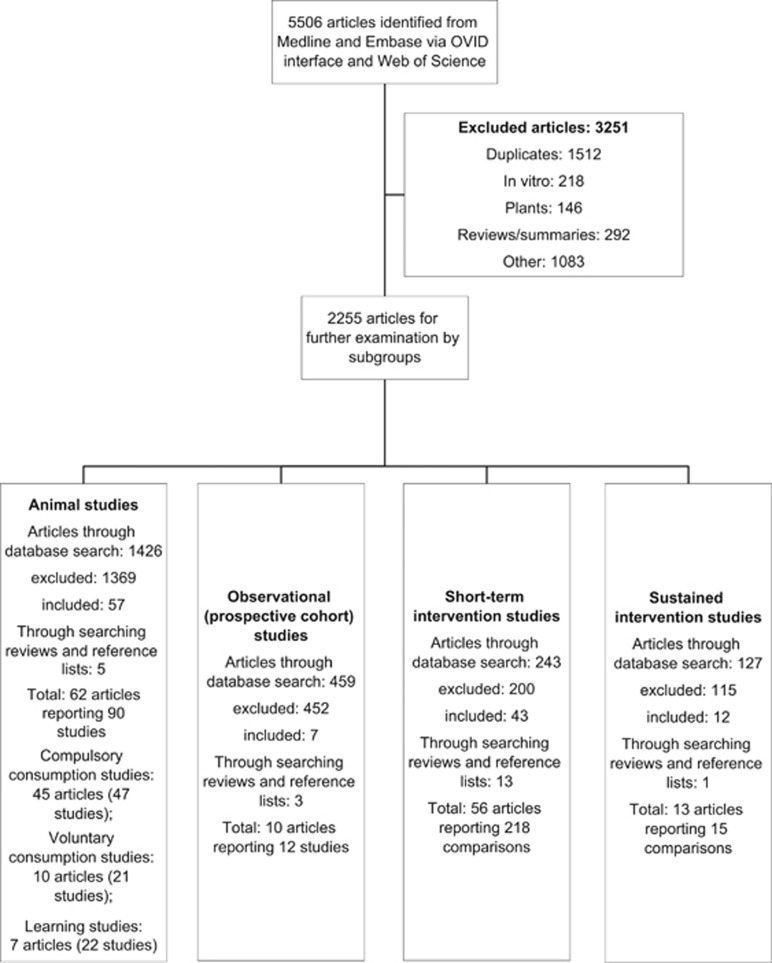
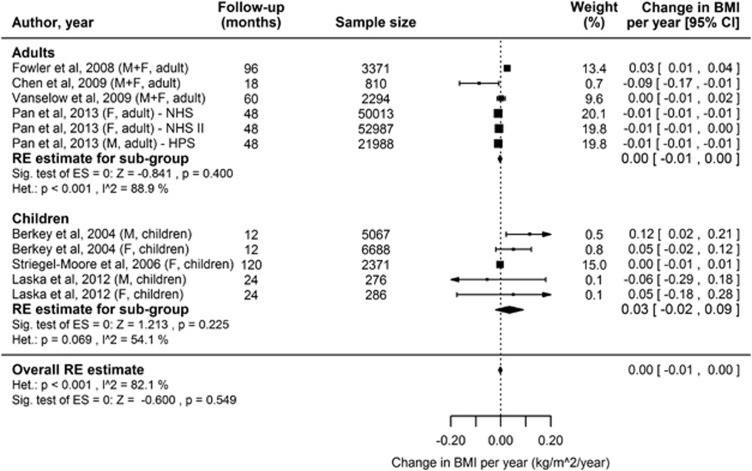
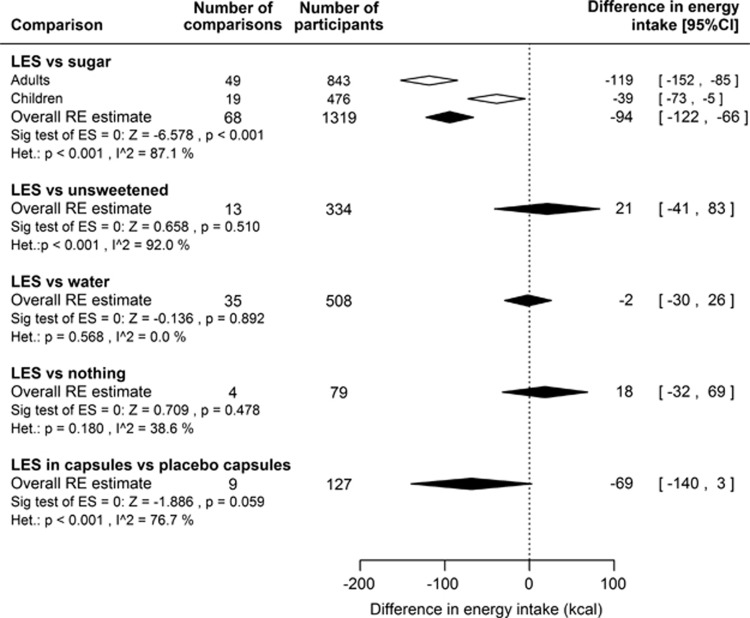
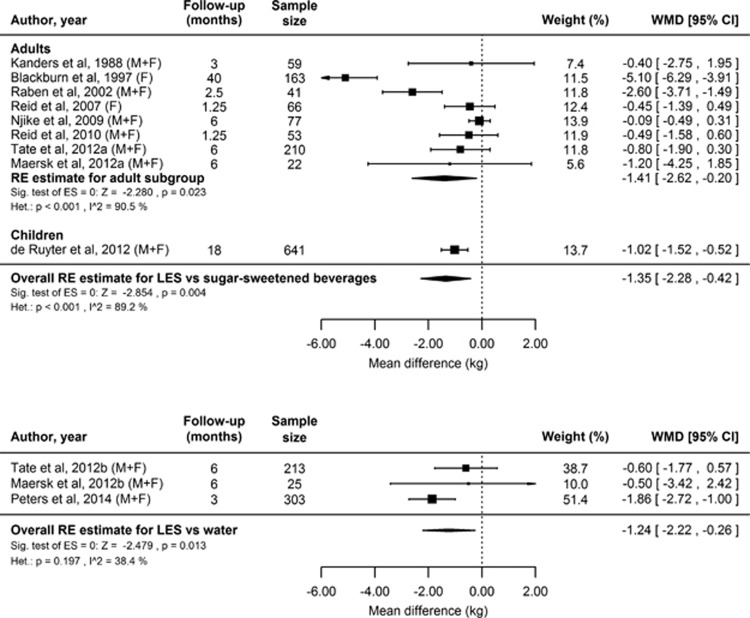
By reducing energy density, low-energy sweeteners (LES) might be expected to reduce energy intake (EI) and body weight (BW). To assess the totality of the evidence testing the null hypothesis that LES exposure (versus sugars or unsweetened alternatives) has no effect on EI or BW, we conducted a systematic review of relevant studies in animals and humans consuming LES with ad libitum access to food energy. In 62 of 90 animal studies exposure to LES did not affect or decreased BW. Of 28 reporting increased BW, 19 compared LES with glucose exposure using a specific 'learning' paradigm. Twelve prospective cohort studies in humans reported inconsistent associations between LES use and body mass index (-0.002 kg m(-)(2) per year, 95% confidence interval (CI) -0.009 to 0.005). Meta-analysis of short-term randomized controlled trials (129 comparisons) showed reduced total EI for LES versus sugar-sweetened food or beverage consumption before an ad libitum meal (-94 kcal, 95% CI -122 to -66), with no difference versus water (-2 kcal, 95% CI -30 to 26). This was consistent with EI results from sustained intervention randomized controlled trials (10 comparisons). Meta-analysis of sustained intervention randomized controlled trials (4 weeks to 40 months) showed that consumption of LES versus sugar led to relatively reduced BW (nine comparisons; -1.35 kg, 95% CI -2.28 to -0.42), and a similar relative reduction in BW versus water (three comparisons; -1.24 kg, 95% CI -2.22 to -0.26). Most animal studies did not mimic LES consumption by humans, and reverse causation may influence the results of prospective cohort studies. The preponderance of evidence from all human randomized controlled trials indicates that LES do not increase EI or BW, whether compared with caloric or non-caloric (for example, water) control conditions. Overall, the balance of evidence indicates that use of LES in place of sugar, in children and adults, leads to reduced EI and BW, and possibly also when compared with water.
Overview
The claims and statistics of this paper haven’t been checked yet.
Run the check — free, no account needed. It reads the open-access text and checks the sources it cites.
Integrity signals
Registry
Cites
Statistics
Figures
Verification
Claims the paper makes
The claims and statistics of this paper haven’t been checked yet.
Run the check — free, no account needed. It reads the open-access text and checks the sources it cites.
Claims other papers make about this one
Each is checked against this paper’s own text: does it say what the citing paper says it does?
In the citing paper
“There is mixed evidence from systematic reviews and meta-analyses for nonnutritive sweetener use with regard to weight management, with some finding benefit in weight loss (233-235) while other research suggests an association with weight gain (236,237).”
From 5. Facilitating Positive Health Behaviors and Well-being to Improve Health Outcomes:Standards of Care in Diabetes—2023 (2023) · cites this paper as [234]
Self-check
Percentages, sums and reported differences re-computed from the paper’s own numbers.
The self-check needs the paper’s full text.
Citations
Cites
Ludwig, D. S., Peterson, K. E., & Gortmaker, S. L. (2001) · The Lancet · doi:10.1016/s0140-6736(00)04041-1 · Cited by 2,414
Intake of sugar-sweetened beverages and weight gain: a systematic review
Malik, V. S., Schulze, M. B., & Hu, F. B. (2006) · The American Journal of Clinical Nutrition · doi:10.1093/ajcn/84.2.274 · Cited by 2,100
Consumption of high-fructose corn syrup in beverages may play a role in the epidemic of obesity
Bray, G. A., Nielsen, S. J., & Popkin, B. M. (2004) · The American Journal of Clinical Nutrition · doi:10.1093/ajcn/79.4.537 · Cited by 1,990
Glasgow, R. E., Lichtenstein, E., & Marcus, A. C. (2003) · American Journal of Public Health · doi:10.2105/ajph.93.8.1261 · Cited by 1,836
Te Morenga, L., Mallard, S., & Mann, J. (2012) · BMJ · doi:10.1136/bmj.e7492 · Cited by 1,629
Appetite control: methodological aspects of the evaluation of foods
Blundell, J. E., de Graaf, C., Hulshof, T. G., Jebb, S. A., Livingstone, B., Lluch, A., Mela, D. J., Salah, S., Schuring, E. A. H., van der Knaap, H. C. M., et al. (2010) · Obesity Reviews · doi:10.1111/j.1467-789x.2010.00714.x · Cited by 1,069
A Trial of Sugar-free or Sugar-Sweetened Beverages and Body Weight in Children
de Ruyter, J. C., Olthof, M. R., Seidell, J. C., & Katan, M. B. (2012) · New England Journal of Medicine · doi:10.1056/nejmoa1203034 · Cited by 814
A Randomized Trial of Sugar-Sweetened Beverages and Adolescent Body Weight
Ebbeling, C. B., Feldman, H. A., Chomitz, V. R., Antonelli, T. A., Gortmaker, S. L., Osganian, S. K., & Ludwig, D. S. (2012) · New England Journal of Medicine · doi:10.1056/nejmoa1203388 · Cited by 699
Raben, A., Vasilaras, T. H., Møller, A. C., & Astrup, A. (2002) · The American Journal of Clinical Nutrition · doi:10.1093/ajcn/76.4.721 · Cited by 667
Maersk, M., Belza, A., Stødkilde-Jørgensen, H., Ringgaard, S., Chabanova, E., Thomsen, H., Pedersen, S. B., Astrup, A., & Richelsen, B. (2012) · The American Journal of Clinical Nutrition · doi:10.3945/ajcn.111.022533 · Cited by 603
Sugar‐Added Beverages and Adolescent Weight Change
Berkey, C. S., Rockett, H. R. H., Field, A. E., Gillman, M. W., & Colditz, G. A. (2004) · Obesity Research · doi:10.1038/oby.2004.94 · Cited by 593 · cited 4×
“7,94,96,99 The higher risk was present in boys but not girls in one of these studies, 94 and was substantially attenuated after adjustment for dieting and parental weight concern in another study.”
BackgroundMethodInfluentialEbbeling, C. B., Feldman, H. A., Osganian, S. K., Chomitz, V. R., Ellenbogen, S. J., & Ludwig, D. S. (2006) · PEDIATRICS · doi:10.1542/peds.2005-0983 · Cited by 562
Antibiotics protect against fructose-induced hepatic lipid accumulation in mice: Role of endotoxin
Bergheim, I., Weber, S., Vos, M. B., Krämer, S., Volynets, V., Kaserouni, S., McClain, C. J., & Bischoff, S. C. (2008) · Journal of Hepatology · doi:10.1016/j.jhep.2008.01.035 · Cited by 523
Mattes, R. D., & Popkin, B. M. (2009) · The American Journal of Clinical Nutrition · doi:10.3945/ajcn.2008.26792 · Cited by 521
Fueling the obesity epidemic? Artificially sweetened beverage use and long-term weight gain.
Fowler, S. P., Williams, K., Resendez, R. G., Hunt, K. J., Hazuda, H. P., & Stern, M. P. (2008) · Obesity · doi:10.1038/oby.2008.284 · Cited by 464
Anton, S. D., Martin, C. K., Han, H., Coulon, S. M., Cefalu, W. T., Geiselman, P. J., & Williamson, D. A. (2010) · Appetite · doi:10.1016/j.appet.2010.03.009 · Cited by 456
Tordoff, M. G., & Alleva, A. (1990) · American Journal of Clinical Nutrition · doi:10.1093/ajcn/51.6.963 · Cited by 444
Artificial sweeteners produce the counterintuitive effect of inducing metabolic derangements
Swithers, S. E. (2013) · Trends in Endocrinology and Metabolism · doi:10.1016/j.tem.2013.05.005 · Cited by 434
A new proposed guidance system for beverage consumption in the United States
Popkin, B. M., Armstrong, L. E., Bray, G. M., Caballero, B., Frei, B., & Willett, W. C. (2006) · The American Journal of Clinical Nutrition · doi:10.1093/ajcn.83.3.529 · Cited by 431
Nettleton, J. A., Lutsey, P. L., Wang, Y., Lima, J. A. C., Michos, E. D., & Jacobs, D. R. (2009) · Diabetes Care · doi:10.2337/dc08-1799 · Cited by 420
Innate and learned preferences for sweet taste during childhood
Ventura, A. K., & Mennella, J. A. (2011) · Current Opinion in Clinical Nutrition & Metabolic Care · doi:10.1097/mco.0b013e328346df65 · Cited by 348
Palmnäs, M. S. A., Cowan, T., Bomhof, M. R., Su, J., Reimer, R. A., Vogel, H. J., Hittel, D. S., & Shearer, J. (2014) · PLoS ONE · doi:10.1371/journal.pone.0109841 · Cited by 348
Tate, D. F., Turner-McGrievy, G., Lyons, E., Stevens, J., Erickson, K., Polzien, K., Diamond, M., Wang, X., & Popkin, B. (2012) · The American Journal of Clinical Nutrition · doi:10.3945/ajcn.111.026278 · Cited by 345
Consuming Fructose‐sweetened Beverages Increases Body Adiposity in Mice
Jürgens, H. S., Haaß, W., Castañeda, T. R., Schürmann, A., Koebnick, C., Dombrowski, F., Otto, B., Nawrocki, A. R., Scherer, P. E., Spranger, J., et al. (2005) · Obesity Research · doi:10.1038/oby.2005.136 · Cited by 340
Striegel‐Moore, R. H., Thompson, D., Affenito, S. G., Franko, D. L., Obarzanek, E., BARTON, B. A., Schreiber, G. B., Daniels, S. R., Schmidt, M., & Crawford, P. B. (2006) · The Journal of Pediatrics · doi:10.1016/j.jpeds.2005.11.025 · Cited by 325
Miller, P. E., & Perez, V. (2014) · The American Journal of Clinical Nutrition · doi:10.3945/ajcn.113.082826 · Cited by 313
Anderson, G. H., Catherine, N. L. A., Woodend, D., & Wolever, T. M. S. (2002) · American Journal of Clinical Nutrition · doi:10.1093/ajcn/76.5.1023 · Cited by 310
A role for sweet taste: Calorie predictive relations in energy regulation by rats.
Swithers, S. E., & Davidson, T. L. (2008) · Behavioral Neuroscience · doi:10.1037/0735-7044.122.1.161 · Cited by 294
PARADOXICAL EFFECTS OF AN INTENSE SWEETENER (ASPARTAME) ON APPETITE
Blundell, J. E. (1986) · The Lancet · doi:10.1016/s0140-6736(86)91352-8 · Cited by 279
Steinert, R. E., Frey, F., Töpfer, A., Drewe, J., & Beglinger, C. (2011) · British Journal Of Nutrition · doi:10.1017/s000711451000512x · Cited by 260
Position of the American Dietetic Association
Duffy, V. B., & Anderson, G. H. (1998) · Journal of the American Dietetic Association · doi:10.1016/s0002-8223(98)00131-x · Cited by 255
Chen, L., Appel, L. J., Loria, C., Lin, P.-H., Champagne, C. M., Elmer, P. J., Ard, J. D., Mitchell, D., Batch, B. C., Svetkey, L. P., et al. (2009) · The American Journal of Clinical Nutrition · doi:10.3945/ajcn.2008.27240 · Cited by 250
Palatability and the Micro-structure of Feeding in Humans: the Appetizer Effect
Yeomans, M. R. (1996) · Appetite · doi:10.1006/appe.1996.0040 · Cited by 241
Effects of Diets High in Sucrose or Aspartame on The Behavior and Cognitive Performance of Children
Wolraich, M. L., Lindgren, S. D., Stumbo, P. J., Stegink, L. D., Appelbaum, M. I., & Kiritsy, M. C. (1994) · New England Journal of Medicine · doi:10.1056/nejm199402033300501 · Cited by 237
Jeppesen, P. B., Gregersen, S., Rolfsen, S. E. D., Jepsen, M. H., Colombo, M., Agger, A., Xiao, J., Kruhøffer, M., Orntoft, T. F., & Hermansen, K. (2003) · Metabolism · doi:10.1053/meta.2003.50058 · Cited by 236
Does the consumption of caloric and non-caloric beverages with a meal affect energy intake?
DellaValle, D. M., Roe, L. S., & Rolls, B. J. (2005) · Appetite · doi:10.1016/j.appet.2004.11.003 · Cited by 234
Artificial sweeteners: a systematic review of metabolic effects in youth.
Brown, R. J., de Banate, M. A., & Rother, K. I. (2010) · International Journal of Pediatric Obesity · doi:10.3109/17477160903497027 · Cited by 229
Impact of water intake on energy intake and weight status: a systematic review
Daniels, M. C., & Popkin, B. M. (2010) · Nutrition Reviews · doi:10.1111/j.1753-4887.2010.00311.x · Cited by 216
Pan, A., Malik, V., Hao, T., Willett, W. C., Mozaffarian, D., & Hu, F. B. (2013) · International Journal of Obesity · doi:10.1038/ijo.2012.225 · Cited by 213
Rogers, P. J., Carlyle, J. B. W., Hill, A. J., & Blundell, J. E. (1988) · Physiology & Behavior · doi:10.1016/0031-9384(88)90207-7 · Cited by 210
High-intensity sweeteners and energy balance.
Swithers, S. E., Martin, A. A., & Davidson, T. L. (2010) · Physiology & Behavior · doi:10.1016/j.physbeh.2009.12.021 · Cited by 206 · cited 1×
“194 The mechanism proposed for this is that LES consumption disrupts learning about the association between sweet taste and energy content.”
BackgroundFactors that determine energy compensation: a systematic review of preload studies
Almiron‐Roig, E., Palla, L., Guest, K., Ricchiuti, C., Vint, N., Jebb, S. A., & Drewnowski, A. (2013) · Nutrition Reviews · doi:10.1111/nure.12048 · Cited by 204
Blackburn, G. L., Kanders, B. S., Lavin, P. T., Keller, S. M., & Whatley, J. (1997) · American Journal of Clinical Nutrition · doi:10.1093/ajcn/65.2.409 · Cited by 202
Intense sweeteners, energy intake and the control of body weight.
Bellisle, F., & Drewnowski, A. (2007) · European Journal of Clinical Nutrition · doi:10.1038/sj.ejcn.1602649 · Cited by 200
Effects of drinks sweetened with sucrose or aspartame on hunger, thirst and food intake in men
Rolls, B. J., Kim, S., & Fedoroff, I. C. (1990) · Physiology & Behavior · doi:10.1016/0031-9384(90)90254-2 · Cited by 196
Ford, H. E., Peters, V., Martin, N. M., Sleeth, M., Ghatei, M. A., Frost, G. S., & Bloom, S. R. (2011) · European Journal of Clinical Nutrition · doi:10.1038/ejcn.2010.291 · Cited by 196
Children's food intake following drinks sweetened with sucrose or aspartame: Time course effects
Birch, L. L., McPhee, L., & Sullivan, S. A. (1989) · Physiology & Behavior · doi:10.1016/0031-9384(89)90145-5 · Cited by 195
Energy intakes of children after preloads: adjustment, not compensation
Cecil, J. E., Palmer, C. N., Wrieden, W. L., Murrie, I., Bolton-Smith, C., Watt, P., Wallis, D. J., & Hetherington, M. M. (2005) · American Journal of Clinical Nutrition · doi:10.1093/ajcn.82.2.302 · Cited by 181
Rogers, P. J., & Blundell, J. E. (1989) · Physiology & Behavior · doi:10.1016/0031-9384(89)90093-0 · Cited by 172
Palatability Affects Satiation But Not Satiety
de Graaf, C., Jong, L. S. D., & Lambers, A. C. (1999) · Physiology & Behavior · doi:10.1016/s0031-9384(98)00335-7 · Cited by 164
The non-regulation of food intake in humans: Hope for reversing the epidemic of obesity
Levitsky, D. A. (2005) · Physiology & Behavior · doi:10.1016/j.physbeh.2005.08.053 · Cited by 163
Rodin, J. (1990) · American Journal of Clinical Nutrition · doi:10.1093/ajcn/51.3.428 · Cited by 163
Effect of Television Viewing at Mealtime on Food Intake After a Glucose Preload in Boys
Bellissimo, N., Pencharz, P. B., Thomas, S. G., & Anderson, G. H. (2007) · Pediatric Research · doi:10.1203/pdr.0b013e3180536591 · Cited by 162
Energy intakes of children after preloads: adjustment, not compensation
Cecil, J. E., Palmer, C. N., Wrieden, W. L., et al. (2005) · American Journal of Clinical Nutrition · doi:10.1093/ajcn/82.2.302 · Cited by 159
Duffey, K. J., Steffen, L. M., Horn, L. V., Jacobs, D. R., & Popkin, B. M. (2012) · American Journal of Clinical Nutrition · doi:10.3945/ajcn.111.026682 · Cited by 148
A review of the effectiveness of aspartame in helping with weight control
de la Hunty, A., Gibson, S., & Ashwell, M. (2006) · Nutrition Bulletin · doi:10.1111/j.1467-3010.2006.00564.x · Cited by 139
Replacing Sweetened Caloric Beverages with Drinking Water Is Associated with Lower Energy Intake
Stookey, J. D., Constant, F., Gardner, C. D., & Popkin, B. M. (2007) · Obesity · doi:10.1038/oby.2007.359 · Cited by 133
No differences in satiety or energy intake after high-fructose corn syrup, sucrose, or milk preloads
Soenen, S., & Westerterp‐Plantenga, M. S. (2007) · American Journal of Clinical Nutrition · doi:10.1093/ajcn/86.5.1586 · Cited by 131
Maersk, M., Belza, A., Holst, J. J., Fenger‐Grøn, M., Pedersen, S. B., Astrup, A. V., & Richelsen, B. (2012) · European Journal of Clinical Nutrition · doi:10.1038/ejcn.2011.223 · Cited by 131
Beverage consumption and adult weight management: a review
Dennis, E. A., Flack, K. D., & Davy, B. M. (2009) · Eating Behaviors · doi:10.1016/j.eatbeh.2009.07.006 · Cited by 128
Reid, M., Hammersley, R., Hill, A. J., & Skidmore, P. (2007) · British Journal of Nutrition · doi:10.1017/s0007114507252705 · Cited by 128
Peters, J. C., Wyatt, H. R., Foster, G. D., Pan, Z., Wojtanowski, A. C., Vander Veur, S. S., Herring, S. J., Brill, C., & Hill, J. O. (2014) · Obesity · doi:10.1002/oby.20737 · Cited by 127
Measuring food reward and the transfer effect of sensory specific satiety
Griffioen-Roose, S., Finlayson, G., Mars, M., Blundell, J. E., & de Graaf, C. (2010) · Appetite · doi:10.1016/j.appet.2010.09.018 · Cited by 124
Flavour–nutrient learning in humans: An elusive phenomenon?
Yeomans, M. R. (2012) · Physiology & Behavior · doi:10.1016/j.physbeh.2012.03.013 · Cited by 119
Laska, M. N., Murray, D. M., Lytle, L. A., & Harnack, L. (2011) · Obesity · doi:10.1038/oby.2011.179 · Cited by 119
Akhavan, T., & Anderson, G. H. (2007) · American Journal of Clinical Nutrition · doi:10.1093/ajcn/86.5.1354 · Cited by 118
Wiebe, N., Padwal, R., Field, C., Marks, S., Jacobs, R., & Tonelli, M. (2011) · BMC Medicine · doi:10.1186/1741-7015-9-123 · Cited by 118
Feijó, F. D. M., Ballard, C. R., Foletto, K. C., Batista, B. A. M., Neves, A. M., Ribeiro, M. F. M., & Bertoluci, M. C. (2012) · Appetite · doi:10.1016/j.appet.2012.10.009 · Cited by 115
Wymelbeke-Delannoy, V. V., BERIDOT-THEROND, M. E., de la Guéronnière, V., & Fantino, M. (2003) · European Journal of Clinical Nutrition · doi:10.1038/sj.ejcn.1601762 · Cited by 113
Effects of sugar-sweetened and sugar-free cocoa on endothelial function in overweight adults
Njike, V. Y., Faridi, Z., Shuval, K., Dutta, S., Kay, C. D., West, S. G., Kris‐Etherton, P. M., & Katz, D. L. (2009) · International Journal of Cardiology · doi:10.1016/j.ijcard.2009.12.010 · Cited by 113
Swithers, S. E., Laboy, A. F., Clark, K., Cooper, S., & Davidson, T. L. (2012) · Behavioural Brain Research · doi:10.1016/j.bbr.2012.04.024 · Cited by 112
Lavin, J., French, S., & Read, N. W. (1997) · International Journal of Obesity · doi:10.1038/sj.ijo.0800360 · Cited by 112
Non-Nutritive Sweeteners and their Role in the Gastrointestinal Tract
Brown, R. J., & Rother, K. I. (2012) · The Journal of Clinical Endocrinology & Metabolism · doi:10.1210/jc.2012-1475 · Cited by 110
Information About the Fat Content of Preloads Influences Energy Intake in Healthy Women
Shide, D. J., & Rolls, B. J. (1995) · Journal of the American Dietetic Association · doi:10.1016/s0002-8223(95)00273-1 · Cited by 110
Correlates of beverage intake in adolescent girls
Weissman, R. S. (2006) · Wesleyan University Digital Collections (Wesleyan University) · Cited by 110
Adolescent beverage habits and changes in weight over time: findings from Project EAT
Vanselow, M. S., Pereira, M. A., Neumark‐Sztainer, D., & Raatz, S. K. (2009) · American Journal of Clinical Nutrition · doi:10.3945/ajcn.2009.27573 · Cited by 107
Swithers, S. E., Baker, C. R., & Davidson, T. L. (2009) · Behavioral Neuroscience · doi:10.1037/a0016139 · Cited by 105
Evaluation of the dose response and in utero exposure to saccharin in the rat
Schoenig, G. P., Goldenthal, E. I., Geil, R. G., Frith, C. H., Richter, W. R., & Carlborg, F. W. (1985) · Food and Chemical Toxicology · doi:10.1016/0278-6915(85)90142-5 · Cited by 103
Davidson, T. L., Martin, A., Clark, K., & Swithers, S. E. (2011) · Quarterly Journal of Experimental Psychology · doi:10.1080/17470218.2011.552729 · Cited by 101
The intake of intense sweeteners – an update review
RENWICK, A. G. (2006) · Food Additives & Contaminants · doi:10.1080/02652030500442532 · Cited by 101
Effect of fat-free potato chips with and without nutrition labels on fat and energy intakes
Miller, D. L., CASTELLANOS, V. H., Shide, D. J., Peters, J. C., & Rolls, B. J. (1998) · American Journal of Clinical Nutrition · doi:10.1093/ajcn/68.2.282 · Cited by 101
Melanson, K. J., Westerterp‐Plantenga, M. S., Campfield, L. A., & Saris, W. H. M. (1999) · British Journal Of Nutrition · doi:10.1017/s0007114599001695 · Cited by 101
Canty, D., & Chan, M. (1991) · American Journal of Clinical Nutrition · doi:10.1093/ajcn/53.5.1159 · Cited by 100
An evaluation of the effect of aspartame on weight loss
Kanders, B. S., Lavin, P. T., Kowalchuk, M. B., Greenberg, I., & Blackburn, G. L. (1988) · Appetite · doi:10.1016/s0195-6663(88)80050-3 · Cited by 100
Associative learning and the control of human dietary behavior
Brunstrom, J. M. (2007) · Appetite · doi:10.1016/j.appet.2006.11.007 · Cited by 100
Hunger and food intake following consumption of low-calorie foods
Rolls, B. J., Laster, L. J., & Summerfelt, A. T. (1989) · Appetite · doi:10.1016/0195-6663(89)90109-8 · Cited by 98
A carcinogenicity study of commercial saccharin in the rat
Munro, I. C., Moodie, C. A., Krewski, D. R., & Grice, H. C. (1975) · Toxicology and Applied Pharmacology · doi:10.1016/0041-008x(75)90116-7 · Cited by 95
Sweet-taste receptors, low-energy sweeteners, glucose absorption and insulin release
RENWICK, A. G., & Molinary, S. V. (2010) · British Journal Of Nutrition · doi:10.1017/s0007114510002540 · Cited by 95
Aspartame: Effect on lunch-time food intake, appetite and hedonic response in children
Anderson, G. H., Saravis, S., Schacher, R., Zlotkin, S. H., & Leiter, L. A. (1989) · Appetite · doi:10.1016/0195-6663(89)90107-4 · Cited by 95
Sylvetsky, A. C., Rother, K. I., & Brown, R. J. (2011) · Pediatric Clinics of North America · doi:10.1016/j.pcl.2011.09.007 · Cited by 94
Kral, T. V. E., Roe, L. S., & Rolls, B. J. (2002) · Appetite · doi:10.1006/appe.2002.0498 · Cited by 88
Geeraert, B., Crombé, F., Hulsmans, M., Benhabilès, N., Geuns, J. M. C., & Holvoet, P. (2009) · International Journal of Obesity · doi:10.1038/ijo.2009.261 · Cited by 85
Chronic oral toxicity and carcinogenicity study of stevioside in rats
Xili, L., Chengjiany, B., Eryi, X., Reiming, S., Yuengming, W., Haodong, S., & Zhiyian, H. (1992) · Food and Chemical Toxicology · doi:10.1016/0278-6915(92)90181-j · Cited by 85
Subchronic toxicity of rebaudioside A
Curry, L. L., & Roberts, A. S. (2008) · Food and Chemical Toxicology · doi:10.1016/j.fct.2008.04.042 · Cited by 84
Faulkner, G. P., Pourshahidi, L. K., Wallace, J. M. W., Kerr, M. A., McCaffrey, T. A., & Livingstone, M. B. E. (2013) · International Journal of Obesity · doi:10.1038/ijo.2013.69 · Cited by 84
Abu-Taweel, G. M., Zyadah, M. A., Ajarem, J. S., & Ahmad, M. (2014) · Neurotoxicology and Teratology · doi:10.1016/j.ntt.2014.02.001 · Cited by 82
Piernas, C., Tate, D. F., Wang, T., & Popkin, B. M. (2013) · American Journal of Clinical Nutrition · doi:10.3945/ajcn.112.048405 · Cited by 81
Black, R. M., Leiter, L. A., & Anderson, G. H. (1993) · Physiology & Behavior · doi:10.1016/0031-9384(93)90139-7 · Cited by 77
Effect of sucrose and safflower oil preloads on short term appetite and food intake of young men
Woodend, D., & Anderson, G. H. (2001) · Appetite · doi:10.1006/appe.2001.0425 · Cited by 76
Mitsutomi, K., Masaki, T., Shimasaki, T., Gotoh, K., Chiba, S., Kakuma, T., & Shibata, H. (2013) · Metabolism · doi:10.1016/j.metabol.2013.09.002 · Cited by 76
Sensory-specific satiety in obese and normal-weight women
Snoek, H. M., Huntjens, L., van Gemert, L. J., de Graaf, C., & Weenen, H. (2004) · American Journal of Clinical Nutrition · doi:10.1093/ajcn/80.4.823 · Cited by 76
Reid, M., Hammersley, R., & Duffy, M. E. (2010) · Appetite · doi:10.1016/j.appet.2010.05.001 · Cited by 75
Can artificial sweeteners help control body weight and prevent obesity?
Benton, D. (2005) · Nutrition Research Reviews · doi:10.1079/nrr200494 · Cited by 74
Dyrskog, S., Jeppesen, P. B., Colombo, M., Abudula, R., & Hermansen, K. (2005) · Metabolism · doi:10.1016/j.metabol.2005.03.026 · Cited by 74
Swithers, S. E., Sample, C. H., & Davidson, T. L. (2013) · Behavioral Neuroscience · doi:10.1037/a0031717 · Cited by 73
Sweet taste signaling in the gut.
Sclafani, A. (2007) · Proceedings of the National Academy of Sciences · doi:10.1073/pnas.0707410104 · Cited by 73
Black, R. M., Tanaka, P., Leiter, L. A., & Anderson, G. H. (1991) · Physiology & Behavior · doi:10.1016/0031-9384(91)90321-e · Cited by 72
Effects of sweetness perception and caloric value of a preload on short term intake
Brala, P. M., & Hagen, R. L. (1983) · Physiology & Behavior · doi:10.1016/0031-9384(83)90030-6 · Cited by 72
Artificially Sweetened Beverages
Ludwig, D. S. (2009) · JAMA · doi:10.1001/jama.2009.1822 · Cited by 71
Drewnowski, A., Massien, C., LOUIS-SYLVESTRE, J., Fricker, J., Chapelot, D., & Apfelbaum, M. (1994) · American Journal of Clinical Nutrition · doi:10.1093/ajcn/59.2.338 · Cited by 69
The Use of Low-Calorie Sweeteners by Adults: Impact on Weight Management
Anderson, G. H., Foreyt, J. P., Sigman‐Grant, M., & Allison, D. B. (2012) · Journal of Nutrition · doi:10.3945/jn.111.149617 · Cited by 69
Temporal Bounds of Post-ingestive Glucose induced Satiety in Man
Booth, D., Campbell, A., & Chase, A. (1970) · Nature · doi:10.1038/2281104a0 · Cited by 66
Acute and subchronic toxicity of sucralose
Goldsmith, L. (2000) · Food and Chemical Toxicology · doi:10.1016/s0278-6915(00)00028-4 · Cited by 66
Why a palatability construct is needed
Rogers, P. J. (1990) · Appetite · doi:10.1016/0195-6663(90)90083-k · Cited by 65
Effects of Sweetness and Energy in Drinks on Food Intake Following Exercise
King, N. A., Appleton, K. M., Rogers, P. J., & Blundell, J. E. (1999) · Physiology & Behavior · doi:10.1016/s0031-9384(98)00280-7 · Cited by 65
Intense sweeteners and energy density of foods: implications for weight control
Drewnowski, A. (1999) · European Journal of Clinical Nutrition · doi:10.1038/sj.ejcn.1600879 · Cited by 65
Dietary influences on morphine-induced analgesia in rats
Kanarek, R. B., White, E. S., Biegen, M. T., & Marks-Kaufman, R. (1991) · Pharmacology Biochemistry and Behavior · doi:10.1016/0091-3057(91)90034-y · Cited by 64
Short-term Effects of the Flavour of Drinks on Ingestive Behaviours in Man
BERIDOT-THEROND, M. E., Arts, I. C. W., Fantino, M., & de la Guéronnière, V. (1998) · Appetite · doi:10.1006/appe.1997.0153 · Cited by 64
Weight control among obese adolescents: a pilot study
Williams, C. L., Strobino, B. A., & Brotanek, J. (2007) · International Journal of Food Sciences and Nutrition · doi:10.1080/09637480701198083 · Cited by 62
Effect of moderate intake of sweeteners on metabolic health in the rat
Figlewicz, D. P., Ioannou, G. N., Jay, J. B., Kittleson, S., Savard, C. E., & Roth, C. L. (2009) · Physiology & Behavior · doi:10.1016/j.physbeh.2009.09.016 · Cited by 62
Aspartame ingested without tasting inhibits hunger and food intake
Rogers, P. J., Pleming, H. C., & Blundell, J. E. (1990) · Physiology & Behavior · doi:10.1016/0031-9384(90)90377-g · Cited by 61
The Study on Long-Term Toxicity of D-Psicose in Rats
Yagi, K., & Matsuo, T. (2009) · Journal of Clinical Biochemistry and Nutrition · doi:10.3164/jcbn.08-191 · Cited by 60
Uncoupling sweetness and calories: Methodological aspects of laboratory studies on appetite control
Blundell, J. E., Rogers, P. J., & Hill, A. J. (1988) · Appetite · doi:10.1016/s0195-6663(88)80047-3 · Cited by 58
Mattes, R., Pierce, C., & Friedman, M. I. (1988) · American Journal of Clinical Nutrition · doi:10.1093/ajcn/48.2.214 · Cited by 57
Appleton, K. M., & Blundell, J. E. (2007) · Physiology & Behavior · doi:10.1016/j.physbeh.2007.04.027 · Cited by 57
The effects of sugar-free vs sugar-rich beverages on feelings of fullness and subsequent food intake
S.H.A. Holt, N. S. (2000) · International Journal of Food Sciences and Nutrition · doi:10.1080/096374800100912 · Cited by 57
Ishii, H., Koshimizu, T., Usami, S., & Fujimoto, T. (1981) · Toxicology · doi:10.1016/0300-483x(81)90119-0 · Cited by 56
Human dietary responses to perceived manipulation of fat content in a midday meal.
Fa, C., & Rd, M. (1993) · PubMed · Cited by 55
Levitsky, D. A., Obarzanek, E., Mrdjenovic, G., & Strupp, B. J. (2005) · Physiology & Behavior · doi:10.1016/j.physbeh.2005.01.004 · Cited by 54
Akhavan, T., Luhovyy, B. L., & Anderson, G. H. (2010) · International Journal of Obesity · doi:10.1038/ijo.2010.163 · Cited by 53
Sugars and satiety: does the type of sweetener make a difference?
Monsivais, P., Perrigue, M. M., & Drewnowski, A. (2007) · American Journal of Clinical Nutrition · doi:10.1093/ajcn/86.1.116 · Cited by 53
Effects of aspartame in young persons during weight reduction
Knopp, R. H., Brandt, K., & Arky, R. A. (1976) · Journal of Toxicology and Environmental Health · doi:10.1080/15287397609529443 · Cited by 51
Ranawana, D. V., & Henry, C. J. (2010) · Appetite · doi:10.1016/j.appet.2010.05.046 · Cited by 50
Raben, A., & Richelsen, B. (2012) · Current Opinion in Clinical Nutrition and Metabolic Care · doi:10.1097/mco.0b013e328359678a · Cited by 50
Caloric beverages consumed freely at meal-time add calories to an ad libitum meal
Panahi, S., Khoury, D. T. D. E., Luhovyy, B. L., Goff, H. D., & Anderson, G. H. (2013) · Appetite · doi:10.1016/j.appet.2013.01.023 · Cited by 50
Effects of carbohydrate intake on subsequent food intake and mood state
Reid, M., & Hammersley, R. (1995) · Physiology & Behavior · doi:10.1016/0031-9384(95)00075-t · Cited by 50
Bellissimo, N., Thomas, S. G., Goode, R. C., & Anderson, G. H. (2007) · Appetite · doi:10.1016/j.appet.2007.04.004 · Cited by 49
D’Anci, K. E., Kanarek, R. B., & Marks-Kaufman, R. (1997) · Pharmacology Biochemistry and Behavior · doi:10.1016/s0091-3057(96)00227-4 · Cited by 49
Chronic toxicity study of cyclamate: Saccharin (10 : 1) in rats
Oser, B. L., Carson, S., Cox, G. E., Vogin, E. E., & Sternberg, S. S. (1975) · Toxicology · doi:10.1016/0300-483x(75)90054-2 · Cited by 48
Prior Exposure to Palatable Solutions Enhances the Effects of Naltrexone on Food Intake in Rats
Kanarek, R. B., Mathes, W. F., Heisler, L. K., Lima, R. P., & Monfared, L. S. (1997) · Pharmacology Biochemistry and Behavior · doi:10.1016/s0091-3057(96)00337-1 · Cited by 47
Rolls, B. J., Kim, S., & Fedoroff, I. C. (1990) · Cited by 47
Tamam, S., Bellissimo, N., Patel, B. P., Thomas, S. G., & Anderson, G. H. (2012) · Applied Physiology Nutrition and Metabolism · doi:10.1139/h2012-038 · Cited by 45
A 90-Day Oral (Dietary) Toxicity Study of Rebaudioside A in Sprague-Dawley Rats
Nikiforov, A. I., & Eapen, A. K. (2008) · International Journal of Toxicology · doi:10.1080/10915810701876752 · Cited by 45
Administration of aspartame in non‐insulin‐dependent diabetics
Stern, S. B., Bleicher, S. J., Flores, A., Gombos, G., Recitas, D., & Shu, J. (1976) · Journal of Toxicology and Environmental Health · doi:10.1080/15287397609529444 · Cited by 44
Dietary Modulation Of Mu And Kappa Opioid Receptor-mediated Analgesia
Kanarek, R. B., Przypek, J., D’Anci, K. E., & Marks-Kaufman, R. (1997) · Pharmacology Biochemistry and Behavior · doi:10.1016/s0091-3057(96)00470-4 · Cited by 44
Effects of glucose and fructose solutions on food intake and gastric emptying in nonobese women
Guss, J. L., Kissileff, H. R., & Pi-Sunyer, X. (1994) · American Journal of Physiology-Regulatory, Integrative and Comparative Physiology · doi:10.1152/ajpregu.1994.267.6.r1537 · Cited by 43
Effects of artificial sweeteners on body weight, food and drink intake
Polyák, É., Gombos, K., Hajnal, B., Bonyár-Müller, K., Szabó, S., Kisbenedek, A. G., Marton, K., & Ember, I. (2010) · Acta Physiologica Hungarica · doi:10.1556/aphysiol.97.2010.4.9 · Cited by 43
Body weight gain in rats consuming sweetened liquids. Effects of caffeine and diet composition
Swithers, S. E., Martin, A., Clark, K., Laboy, A. F., & Davidson, T. L. (2010) · Appetite · doi:10.1016/j.appet.2010.08.021 · Cited by 43
Lunch eating behavior of preschool children
Wilson, J. F. (2000) · Physiology & Behavior · doi:10.1016/s0031-9384(00)00230-4 · Cited by 42
Patel, B. P., Bellissimo, N., Thomas, S. G., Hamilton, J. K., & Anderson, G. H. (2011) · Pediatric Research · doi:10.1203/pdr.0b013e31822d783e · Cited by 42
The Use of Low-Calorie Sweeteners by Children: Implications for Weight Management
Foreyt, J. P., Kleinman, R. E., Brown, R. J., & Lindstrom, R. C. (2012) · Journal of Nutrition · doi:10.3945/jn.111.149609 · Cited by 42
Safety evaluation of thaumatin (talin protein)
Higginbotham, J. D., Snodin, D. J., Eaton, K. K., & Daniel, J. W. (1983) · Food and Chemical Toxicology · doi:10.1016/0278-6915(83)90218-1 · Cited by 41
Gardner, C. D. (2013) · Current Opinion in Lipidology · doi:10.1097/mol.0000000000000034 · Cited by 41
Beck, B., Burlet, A. J., Max, J., & Stricker‐Krongrad, A. (2002) · Physiology & Behavior · doi:10.1016/s0031-9384(01)00654-0 · Cited by 40
Rogers, P. J., Keedwell, P. A., & Blundell, J. E. (1991) · Physiology & Behavior · doi:10.1016/0031-9384(91)90312-c · Cited by 40
Metabolism and Toxicity Studies Supporting the Safety of Rebaudioside D
Nikiforov, A. I., Rihner, M. O., Eapen, A. K., & Thomas, J. A. (2013) · International Journal of Toxicology · doi:10.1177/1091581813492828 · Cited by 40
How do non-nutritive sweeteners increase food intake?
Tordoff, M. G. (1988) · Appetite · doi:10.1016/s0195-6663(88)80039-4 · Cited by 40
Adjustment in energy intake following the covert removal of sugar from the diet
Naismith, D. J., & Rhodes, C. C. (1995) · Journal of Human Nutrition and Dietetics · doi:10.1111/j.1365-277x.1995.tb00309.x · Cited by 40
Response to Energy Dilution in the Short Term: Evidence of Nutritional Wisdom in Young Children?
Hetherington, M. M., Wood, C., & Lyburn, S. C. (2000) · Nutritional Neuroscience · doi:10.1080/1028415x.2000.11747329 · Cited by 39
Drewnowski, A., Massien, C., LOUIS-SYLVESTRE, J., Fricker, J., Chapelot, D., & Apfelbaum, M. (1994) · PubMed · Cited by 37
Park, J.-E., & Cha, Y. (2010) · Journal of the Science of Food and Agriculture · doi:10.1002/jsfa.3906 · Cited by 37
Response of male rats to sodium saccharin ingestion: Urine composition and mineral balance
Anderson, R. L. (1979) · Food and Cosmetics Toxicology · doi:10.1016/0015-6264(79)90281-5 · Cited by 36
Fisher, M. J., Sakata, T., Tibbels, T. S., Smith, R. A., Patil, K. D., Khachab, M., Johansson, S. L., & Cohen, S. M. (1989) · Food and Chemical Toxicology · doi:10.1016/0278-6915(89)90085-9 · Cited by 35
Modulation of Morphine-Induced Antinociception by Palatable Solutions in Male and Female Rats
Kanarek, R. B., & Homoleski, B. (2000) · Pharmacology Biochemistry and Behavior · doi:10.1016/s0091-3057(00)00251-3 · Cited by 34
Chronic Toxicity and Carcinogenicity Study of Erythritol in Rats
Lina, B. A. R., Bos-Kuijpers, M. H. M., Til, H. P., & Bär, A. (1996) · Regulatory Toxicology and Pharmacology · doi:10.1006/rtph.1996.0108 · Cited by 33
Dynamic aspects of liking: post-prandial persistence of sensory specific satiety
Weenen, H., Stafleu, A., & de Graaf, C. (2005) · Food Quality and Preference · doi:10.1016/j.foodqual.2004.11.002 · Cited by 32
Antihyperglycaemic effect of saccharin in diabetic ob/ob mice
Bailey, C. J., Day, C., Knapper, J. M. E., Turner, S. L., & Flatt, P. R. (1997) · British Journal of Pharmacology · doi:10.1038/sj.bjp.0700871 · Cited by 28
Pre-meal video game playing and a glucose preload suppress food intake in normal weight boys
Branton, A. D., Akhavan, T., Gladanac, B., Pollard, D., Welch, J. M., Rossiter, M. D., & Bellissimo, N. (2014) · Appetite · doi:10.1016/j.appet.2014.08.024 · Cited by 27
The effects of sucrose and maize oil on subsequent food intake and mood
Reid, M., & Hammersley, R. (1999) · British Journal Of Nutrition · doi:10.1017/s0007114599001701 · Cited by 27
Embryotoxicity and teratogenicity study with neohesperidin dihydrochalcone in rats
Waalkens‐Berendsen, D. H., Kuilman-Wahls, M. E. M., & Bär, A. (2004) · Regulatory Toxicology and Pharmacology · doi:10.1016/j.yrtph.2004.05.007 · Cited by 26
Subchronic (13-week) oral toxicity of neohesperidin dihydrochalcone in rats
Lina, B. A. R., der Meulen, H. C. D.-V., & Leegwater, D. C. (1990) · Food and Chemical Toxicology · doi:10.1016/0278-6915(90)90121-3 · Cited by 25
Willett, W. C., & Ludwig, D. S. (2013) · BMJ · doi:10.1136/bmj.e8077 · Cited by 25
Engelen, M. V., Khodabandeh, S., Akhavan, T., Agarwal, J., Gladanac, B., & Bellissimo, N. (2014) · European Journal of Clinical Nutrition · doi:10.1038/ejcn.2014.33 · Cited by 24
Long-term toxicity of sodium cyclamate in mice
Brantom, P., GAUNT, I. F., & GRASSO, P. (1973) · Food and Cosmetics Toxicology · doi:10.1016/s0015-6264(73)80357-8 · Cited by 24
Tolerance to Morphine-Induced Antinociception Is Decreased by Chronic Sucrose or Polycose Intake
D’Anci, K. E. (1999) · Pharmacology Biochemistry and Behavior · doi:10.1016/s0091-3057(98)00254-8 · Cited by 23
The Effect of Social Setting on Response to a Preloading Manipulation in Non-obese Women and Men
KIM, J. Y., & Kissileff, H. R. (1996) · Appetite · doi:10.1006/appe.1996.0031 · Cited by 23
The effect of non-nutritive sweeteners on body weight in rats
Porikos, K. P., & Koopmans, H. S. (1988) · Appetite · doi:10.1016/s0195-6663(88)80040-0 · Cited by 23
Stimulation of Energy Intake and Growth by Saccharin in Rats
Ramírez, I. (1990) · Journal of Nutrition · doi:10.1093/jn/120.1.123 · Cited by 22
Rogers, P. J., Burley, V. J., Alikhanizadeh, L. A., & Blundell, J. E. (1995) · Physiology & Behavior · doi:10.1016/0031-9384(94)00289-h · Cited by 22
Reanalysis of the effects of phenylalanine, alanine, and aspartame on food intake in human subjects
Rogers, P. J., & Blundell, J. E. (1994) · Physiology & Behavior · doi:10.1016/0031-9384(94)90191-0 · Cited by 22
Subchronic Oral Toxicity Studies with Erythritol in Mice and Rats
Til, H. P., Kuper, C. F., Falke, H. E., & Bär, A. (1996) · Regulatory Toxicology and Pharmacology · doi:10.1006/rtph.1996.0102 · Cited by 20
A two-generation reproductive toxicity study of the high-intensity sweetener advantame in CD rats
Otabe, A., Fujieda, T., & Masuyama, T. (2011) · Food and Chemical Toxicology · doi:10.1016/j.fct.2011.07.002 · Cited by 19
Learning about the energy density of liquid and semi-solid foods
Hogenkamp, P. S., Stafleu, A., Mars, M., & de Graaf, C. (2011) · International Journal of Obesity · doi:10.1038/ijo.2011.231 · Cited by 18
Effects of Sodium Cyclamate on the Growth of Rats compared with other Variations in the Diet
Dalderup, L. M., & VISSER, W. (1969) · Nature · doi:10.1038/221091b0 · Cited by 16
Exposure to Sweetened Solutions Enhances the Anorectic Effect of Naloxone But Not d-Fenfluramine
Yeomans, M. R., & Clifton, P. G. (1997) · Physiology & Behavior · doi:10.1016/s0031-9384(97)00112-1 · Cited by 16
A 90-day oral (dietary) toxicity study of the 2R,4R-isomer of monatin salt in Sprague–Dawley rats
Hlywka, J. J., Brathwaite, W. A., Rihner, M. O., Nikiforov, A. I., & Eapen, A. K. (2011) · Food and Chemical Toxicology · doi:10.1016/j.fct.2011.09.004 · Cited by 14
Sucrose Solution vs. No-Calorie Sweetener vs. Water in Weight Gain1
FRIEDHOFF, R., SIMON, J. A., & Friedhoff, A. J. (1971) · Journal of the American Dietetic Association · doi:10.1016/s0002-8223(21)14118-5 · Cited by 14
Swithers, S. E., Sample, C. H., & Katz, D. (2012) · Hormones and Behavior · doi:10.1016/j.yhbeh.2012.11.003 · Cited by 13
Dalderup, L. M., & Visser, W. (1971) · Cellular and Molecular Life Sciences · doi:10.1007/bf02147574 · Cited by 12
A ninety-day feeding, subchronic toxicity study of oligo-N-acetylglucosamine in Fischer 344 rats
Tago, K., Naito, Y., Nagata, T., Morimura, T., Furuya, M., Seki, T., Kato, H., & Ohara, N. (2007) · Food and Chemical Toxicology · doi:10.1016/j.fct.2006.12.027 · Cited by 12
Four-Week Oral Toxicity Study with Erythritol in Rats
Til, H. P., & Modderman, J. (1996) · Regulatory Toxicology and Pharmacology · doi:10.1006/rtph.1996.0101 · Cited by 10
Ho, E. E., Liszt, A., & Pudel, V. (1990) · Journal of the American Dietetic Association · doi:10.1016/s0002-8223(21)01736-3 · Cited by 9
Brathwaite, W. A., Casterton, P. L., Nikiforov, A. I., Rihner, M. O., Sloter, E. D., & Hlywka, J. J. (2013) · Food and Chemical Toxicology · doi:10.1016/j.fct.2013.08.027 · Cited by 9
Munsters, M. J. M., & Saris, W. H. M. (2010) · Annals of Nutrition and Metabolism · doi:10.1159/000320417 · Cited by 9
Otabe, A., Fujieda, T., & Masuyama, T. (2011) · Food and Chemical Toxicology · doi:10.1016/j.fct.2011.06.040 · Cited by 9
Rogers, P. J., Lambert, T., Alikhanizadeh, L., & Blundell, J. E. (1990) · Bristol Research (University of Bristol) · Cited by 8
Effects of Saccharin Intake on Hippocampal and Cortical Plasticity in Juvenile and Adolescent Rats
Park, J.-S., Yoo, S. B., Kim, J. Y., Lee, S. J., Oh, S. B., Kim, J.-S., Lee, S.-H., Park, K., Jahng, J. W., & Choi, S. (2010) · Korean Journal of Physiology and Pharmacology · doi:10.4196/kjpp.2010.14.2.113 · Cited by 7
Long-term toxicity of sodium cyclamate in mice
Brantom, P., GAUNT, I. F., & GRASSO, P. (1973) · Food and Cosmetics Toxicology · doi:10.1016/0015-6264(73)90132-6 · Cited by 7
Parâmetros metabólicos de ratos wistar submetidos à dieta suplementada com estévia e açúcar
Reis, T. A., Goulart, P. D. F. P., Oliveira, R. M. E., de Oliveira, L., de Abreu, P. S., & Azevedo, A. D. O. (2011) · Semina Ciências Agrárias · doi:10.5433/1679-0359.2011v32n4p1477 · Cited by 6
Fibroblast growth factor (FGF) and cytokines as feeding suppressants.
Oomura, Y. (1990) · PubMed · Cited by 6
Research works printed but not linked: 3
- Reis TA, Goulart P, de Oliveira RME, Oliveira Ld, de Abreu PS, Azevedo Ad . Metabolic parameters of wistar rats subjected to diet supplemented with stevia and sugar. Semina: Ciéncias Agrarias (Londrina) 2011; 32: 1477–1488.
- EFSA. EFSA Panel on Food Additives and Nutrient Sources added to food. Scientific opinion on the safety of steviol glycosides for the proposed uses as a food additive. EFSA J 2010; 8: 1–84.
- Carvalho P, Sousa M, Barros R, Padrao P, Moreira P, Teixeira V . Impact of morning ingestion of sugary and sweetened beverages on energy and fluid intake throughout day. Ann Nutr Metab 2013; 63: 1448–1449.
Cited by
Sorted by citations
5. Lifestyle Management:Standards of Medical Care in Diabetes—2019
American Diabetes Association (2019) · Diabetes Care · doi:10.2337/dc19-s005 · Cited by 700
“Most systematic reviews and metaanalyses show benefits for nonnutritive sweetener use in weight loss (128,129); however, some research suggests an association with weight gain (130).”
Background4. Lifestyle Management: Standards of Medical Care in Diabetes—2018
American Diabetes Association (2018) · Diabetes Care · doi:10.2337/dc18-s004 · Cited by 563
“Most systematic reviews and metaanalyses show benefits for nonnutritive sweetener use in weight loss (119,120); however, some research suggests an association with weight gain (121).”
BackgroundMalik, V. S., Li, Y., Pan, A., De Koning, L., Schernhammer, E., Willett, W. C., & Hu, F. B. (2019) · Circulation · doi:10.1161/circulationaha.118.037401 · Cited by 421
Sensory influences on food intake control: moving beyond palatability
McCrickerd, K., & Forde, C. G. (2015) · Obesity Reviews · doi:10.1111/obr.12340 · Cited by 465
Azad, M. B., Abou-Setta, A. M., Chauhan, B. F., Rabbani, R., Lys, J., Copstein, L., Mann, A. S., Jeyaraman, M. M., Reid, A. E., Fiander, M., et al. (2017) · Canadian Medical Association Journal · doi:10.1503/cmaj.161390 · Cited by 410
Metadata
- Authors
- Rogers, P. J., Hogenkamp, P. S., de Graaf, C., Higgs, S., Lluch, A., Ness, A. R., Penfold, C., Perry, R., Putz, P., Yeomans, M. R., & Mela, D. J.
- Affiliations
- University of Bristol (GB)
- Uppsala University (SE)
- University of Birmingham (GB)
- Danone (France) (FR)
- University Hospitals Bristol NHS Foundation Trust (GB)
- University of Sussex (GB)
- Unilever Research and Development Vlaardingen (NL)
- Venue
- International Journal of Obesity
- Published
- 2015-09-14
- Volume
- 40
- Issue
- 3
- Pages
- 381-394
- ISSN
- 0307-0565 (ISSN-L)
- 1476-5497
- PMC
- PMC4786736
- OpenAlex
- W2171131656
- Cited by
- 358
- References
- 210
- Citations by year
- 2026: 16 · 2025: 19 · 2024: 24 · 2023: 29 · 2022: 33 · 2021: 26 · 2020: 53 · 2019: 34 · 2018: 46 · 2017: 44 · 2016: 31 · 2015: 2
- FWCI
- 5.26
- Type
- journal article
- Language
- en
- Open access
- hybrid
- doi.org
- Locations
- International Journal of Obesity (publishedVersion, cc-by)
- Europe PMC (PubMed Central) (publishedVersion, cc-by)
- PubMed Central (publishedVersion, cc-by)
- PubMed (publishedVersion)
- Explore Bristol Research (publishedVersion, cc-by)
- Socio-Environmental Systems Modeling (acceptedVersion, cc-by)
- Figshare (submittedVersion, cc-by)
- Bristol Research (University of Bristol) (submittedVersion, cc-by)
- Sussex Research Online (University of Sussex) (submittedVersion, cc-by)
- KTH Publication Database DiVA (KTH Royal Institute of Technology) (submittedVersion, other-oa)
- University of Birmingham Research Portal (University of Birmingham) (submittedVersion, cc-by)
- Data Archiving and Networked Services (DANS) (submittedVersion, cc-by)
- Funders
- University Hospitals Bristol NHS Foundation Trust
- National Institute for Health and Care Research (NF-SI-0513-10083)
- European Commission (607310)
- University of Bristol
- Wageningen University and Research
- Topics
- Health Sciences › Nursing › Nutrition and Dietetics › Biochemical Analysis and Sensing Techniques
- Health Sciences › Medicine › Endocrinology, Diabetes and Metabolism › Diet, Metabolism, and Disease
- Life Sciences › Neuroscience › Endocrine and Autonomic Systems › Regulation of Appetite and Obesity
- Keywords
- energy intake, body weight, body mass index, sugar-sweetened beverages, ad libitum feeding, energy density, weight gain, reverse causality, animal studies, prospective cohort, randomized controlled trials
- MeSH terms
- Animals, Body Weight, Energy Intake, Humans, Obesity, Sweetening Agents, Reproducibility of Results, Weight Gain, Body Mass Index, Randomized Controlled Trials as Topic, Evidence-Based Medicine, Models, Animal, Non-Nutritive Sweeteners, Observational Studies as Topic
About these checks
Registry, retraction, Cites and statistics results are computed, not judged, with one exception: a printed reference that no index lists is read once by a model before it counts as a citation error. Claims are extracted by a model and kept only when their quote appears verbatim in the text; each cited source is then checked, with a model’s help, for whether it says what the claim relies on. Those verdicts can be wrong — read the claim’s quote and the cited source before relying on one.
Statistics and arithmetic are recomputed, not judged.
Confidence bands are shown only for fields calibrated on our annotated test set. None is calibrated yet, so no band is shown.
What counts as a claim ›How we measure confidence ›How we check this ›
Are you an author, or do you see a problem with this page? Request a review
