

The DOI matches its Crossref record; 211 of the 211 references it cites were found in a registry or an index.
Does low-energy sweetener consumption affect energy intake and body weight? A systematic review, including meta-analyses, of the evidence from human and animal studies
Open accessAbstract
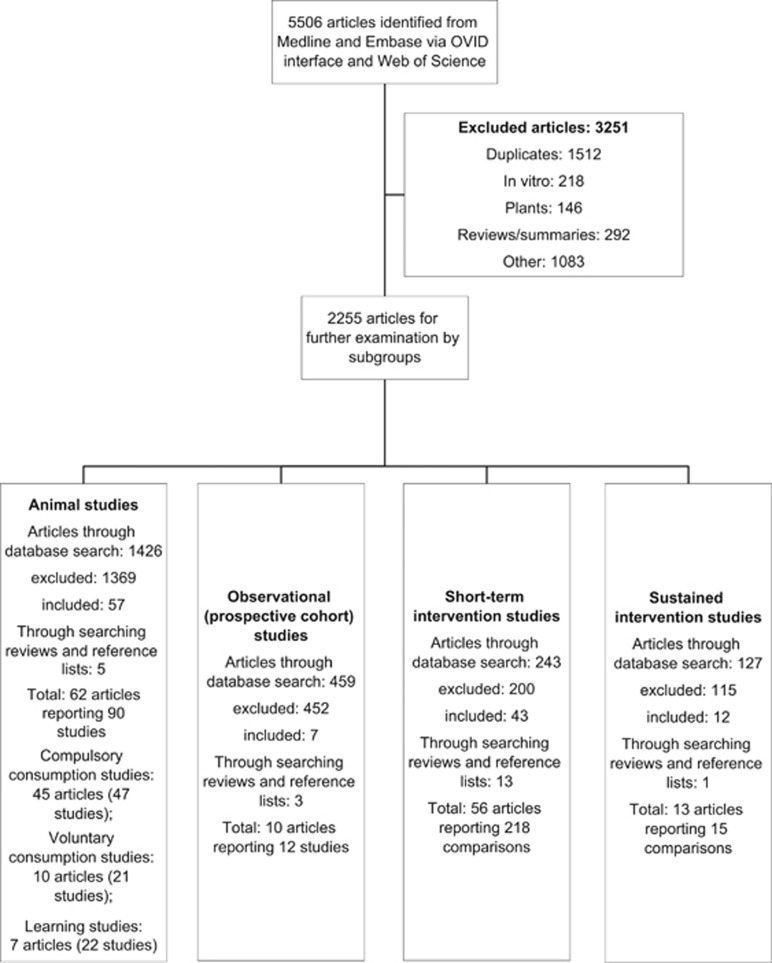
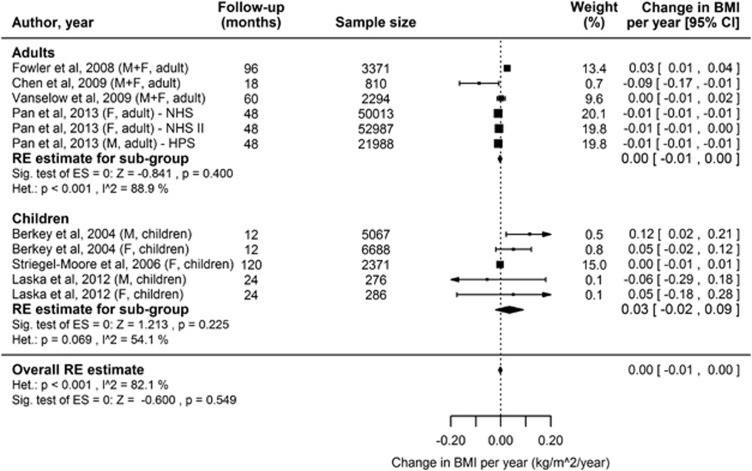
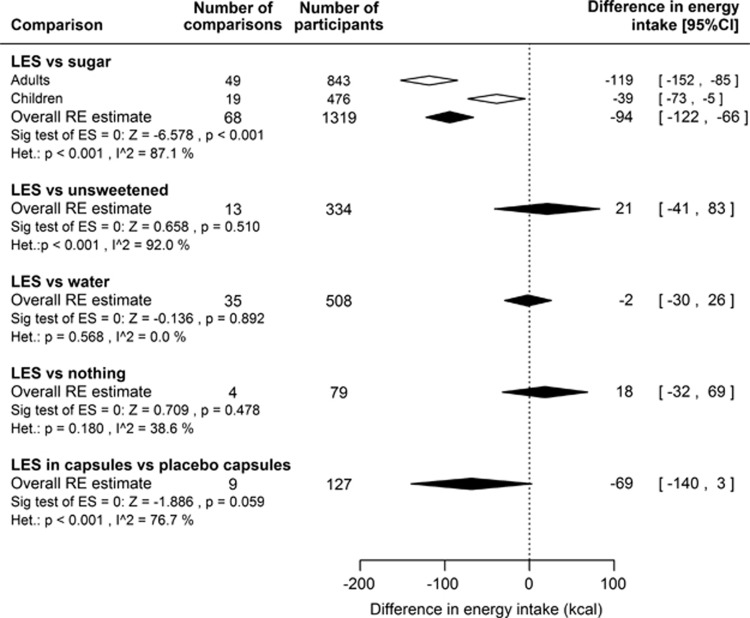
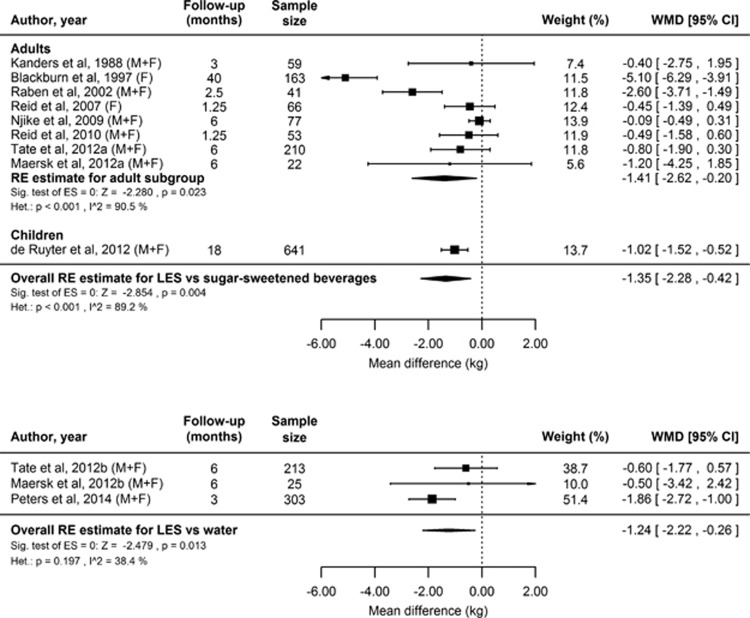
By reducing energy density, low-energy sweeteners (LES) might be expected to reduce energy intake (EI) and body weight (BW). To assess the totality of the evidence testing the null hypothesis that LES exposure (versus sugars or unsweetened alternatives) has no effect on EI or BW, we conducted a systematic review of relevant studies in animals and humans consuming LES with ad libitum access to food energy. In 62 of 90 animal studies exposure to LES did not affect or decreased BW. Of 28 reporting increased BW, 19 compared LES with glucose exposure using a specific 'learning' paradigm. Twelve prospective cohort studies in humans reported inconsistent associations between LES use and body mass index (-0.002 kg m(-)(2) per year, 95% confidence interval (CI) -0.009 to 0.005). Meta-analysis of short-term randomized controlled trials (129 comparisons) showed reduced total EI for LES versus sugar-sweetened food or beverage consumption before an ad libitum meal (-94 kcal, 95% CI -122 to -66), with no difference versus water (-2 kcal, 95% CI -30 to 26). This was consistent with EI results from sustained intervention randomized controlled trials (10 comparisons). Meta-analysis of sustained intervention randomized controlled trials (4 weeks to 40 months) showed that consumption of LES versus sugar led to relatively reduced BW (nine comparisons; -1.35 kg, 95% CI -2.28 to -0.42), and a similar relative reduction in BW versus water (three comparisons; -1.24 kg, 95% CI -2.22 to -0.26). Most animal studies did not mimic LES consumption by humans, and reverse causation may influence the results of prospective cohort studies. The preponderance of evidence from all human randomized controlled trials indicates that LES do not increase EI or BW, whether compared with caloric or non-caloric (for example, water) control conditions. Overall, the balance of evidence indicates that use of LES in place of sugar, in children and adults, leads to reduced EI and BW, and possibly also when compared with water.
Overview
The claims and statistics of this paper haven’t been checked yet.
Run the check — free, no account needed. It reads the open-access text and checks the sources it cites.
Integrity signals
Registry
Cites
Statistics
Figures
Verification
Claims the paper makes
The claims and statistics of this paper haven’t been checked yet.
Run the check — free, no account needed. It reads the open-access text and checks the sources it cites.
Claims other papers make about this one
Each is checked against this paper’s own text: does it say what the citing paper says it does?
In the citing paper
“There is mixed evidence from systematic reviews and meta-analyses for nonnutritive sweetener use with regard to weight management, with some finding benefit in weight loss (233-235) while other research suggests an association with weight gain (236,237).”
From 5. Facilitating Positive Health Behaviors and Well-being to Improve Health Outcomes:Standards of Care in Diabetes—2023 (2023) · cites this paper as [234]
Self-check
Percentages, sums and reported differences re-computed from the paper’s own numbers.
The self-check needs the paper’s full text.
Citations
Cites
Ludwig, D. S., Peterson, K. E., & Gortmaker, S. L. (2001) · The Lancet · doi:10.1016/s0140-6736(00)04041-1 · Cited by 2,414
Intake of sugar-sweetened beverages and weight gain: a systematic review
Malik, V. S., Schulze, M. B., & Hu, F. B. (2006) · The American Journal of Clinical Nutrition · doi:10.1093/ajcn/84.2.274 · Cited by 2,100
Consumption of high-fructose corn syrup in beverages may play a role in the epidemic of obesity
Bray, G. A., Nielsen, S. J., & Popkin, B. M. (2004) · The American Journal of Clinical Nutrition · doi:10.1093/ajcn/79.4.537 · Cited by 1,990
Glasgow, R. E., Lichtenstein, E., & Marcus, A. C. (2003) · American Journal of Public Health · doi:10.2105/ajph.93.8.1261 · Cited by 1,836
Te Morenga, L., Mallard, S., & Mann, J. (2012) · BMJ · doi:10.1136/bmj.e7492 · Cited by 1,629
Appetite control: methodological aspects of the evaluation of foods
Blundell, J. E., de Graaf, C., Hulshof, T. G., Jebb, S. A., Livingstone, B., Lluch, A., Mela, D. J., Salah, S., Schuring, E. A. H., van der Knaap, H. C. M., et al. (2010) · Obesity Reviews · doi:10.1111/j.1467-789x.2010.00714.x · Cited by 1,069
A Trial of Sugar-free or Sugar-Sweetened Beverages and Body Weight in Children
de Ruyter, J. C., Olthof, M. R., Seidell, J. C., & Katan, M. B. (2012) · New England Journal of Medicine · doi:10.1056/nejmoa1203034 · Cited by 814
A Randomized Trial of Sugar-Sweetened Beverages and Adolescent Body Weight
Ebbeling, C. B., Feldman, H. A., Chomitz, V. R., Antonelli, T. A., Gortmaker, S. L., Osganian, S. K., & Ludwig, D. S. (2012) · New England Journal of Medicine · doi:10.1056/nejmoa1203388 · Cited by 699
Raben, A., Vasilaras, T. H., Møller, A. C., & Astrup, A. (2002) · The American Journal of Clinical Nutrition · doi:10.1093/ajcn/76.4.721 · Cited by 667
Maersk, M., Belza, A., Stødkilde-Jørgensen, H., Ringgaard, S., Chabanova, E., Thomsen, H., Pedersen, S. B., Astrup, A., & Richelsen, B. (2012) · The American Journal of Clinical Nutrition · doi:10.3945/ajcn.111.022533 · Cited by 603
Research works printed but not linked: 3
- Reis TA, Goulart P, de Oliveira RME, Oliveira Ld, de Abreu PS, Azevedo Ad . Metabolic parameters of wistar rats subjected to diet supplemented with stevia and sugar. Semina: Ciéncias Agrarias (Londrina) 2011; 32: 1477–1488.
- EFSA. EFSA Panel on Food Additives and Nutrient Sources added to food. Scientific opinion on the safety of steviol glycosides for the proposed uses as a food additive. EFSA J 2010; 8: 1–84.
- Carvalho P, Sousa M, Barros R, Padrao P, Moreira P, Teixeira V . Impact of morning ingestion of sugary and sweetened beverages on energy and fluid intake throughout day. Ann Nutr Metab 2013; 63: 1448–1449.
Cited by
Sorted by citations
5. Lifestyle Management:Standards of Medical Care in Diabetes—2019
American Diabetes Association (2019) · Diabetes Care · doi:10.2337/dc19-s005 · Cited by 700
“Most systematic reviews and metaanalyses show benefits for nonnutritive sweetener use in weight loss (128,129); however, some research suggests an association with weight gain (130).”
Background4. Lifestyle Management: Standards of Medical Care in Diabetes—2018
American Diabetes Association (2018) · Diabetes Care · doi:10.2337/dc18-s004 · Cited by 563
“Most systematic reviews and metaanalyses show benefits for nonnutritive sweetener use in weight loss (119,120); however, some research suggests an association with weight gain (121).”
BackgroundMalik, V. S., Li, Y., Pan, A., De Koning, L., Schernhammer, E., Willett, W. C., & Hu, F. B. (2019) · Circulation · doi:10.1161/circulationaha.118.037401 · Cited by 421
Sensory influences on food intake control: moving beyond palatability
McCrickerd, K., & Forde, C. G. (2015) · Obesity Reviews · doi:10.1111/obr.12340 · Cited by 465
Azad, M. B., Abou-Setta, A. M., Chauhan, B. F., Rabbani, R., Lys, J., Copstein, L., Mann, A. S., Jeyaraman, M. M., Reid, A. E., Fiander, M., et al. (2017) · Canadian Medical Association Journal · doi:10.1503/cmaj.161390 · Cited by 410
ElSayed, N. A., Aleppo, G., Aroda, V. R., Bannuru, R. R., Brown, F. M., Bruemmer, D., Collins, B. S., Hilliard, M. E., Isaacs, D., Johnson, E. L., et al. (2023) · Diabetes Care · doi:10.2337/dc23-s005 · Cited by 362
(2019) · Diabetes Care · doi:10.2337/dc20-s005 · Cited by 365
“Most systematic reviews and meta-analyses show benefits for nonnutritive sweetener use in weight loss (142,143); however, some research suggests an association with weight gain (144).”
BackgroundAmerican Diabetes Association Professional Practice Committee (2022) · Diabetes Care · doi:10.2337/dc22-s005 · Cited by 445
American Diabetes Association Professional Practice Committee, ElSayed, N. A., McCoy, R. G., Aleppo, G., Balapattabi, K., Beverly, E. A., Briggs Early, K., Bruemmer, D., Echouffo-Tcheugui, J. B., Eichorst, B., et al. (2025) · Diabetes Care · doi:10.2337/dc25-s005 · Cited by 305
The Differential Role of Smell and Taste For Eating Behavior
Boesveldt, S., & de Graaf, K. C. (2017) · Perception · doi:10.1177/0301006616685576 · Cited by 331
“Nutritional epidemiological studies have shown convincing evidence that sugar-sweetened beverages lead to a higher body weight and prevalence of obesity and diabetes (Hruby et al., 2016; Malik et al., 2010; Rogers et al., 2016).”
BackgroundAmerican Diabetes Association (2021) · Diabetes Care · doi:10.2337/dc21-s005 · Cited by 299
“There ismixed evidence from systematic reviews and meta-analyses for nonnutritive sweetener use with regard to weight management, with some finding benefit in weight loss (161,162),”
BackgroundElSayed, N. A., Aleppo, G., Bannuru, R. R., Beverly, E. A., Bruemmer, D., Collins, B. S., Darville, A. K., Ekhlaspour, L., Hassanein, M. M., Hilliard, M. E., et al. (2023) · Diabetes Care · doi:10.2337/dc24-s005 · Cited by 366
Ultra-processed foods in human health: a critical appraisal
Gibney, M. J., Forde, C. G., Mullally, D., & Gibney, E. R. (2017) · American Journal of Clinical Nutrition · doi:10.3945/ajcn.117.160440 · Cited by 310
“Comprehensive meta-analyses have concluded that when used to replace sugar-sweetened beverages, nonnutritive sweeteners can significantly contribute to a reduction in energy intake and body weight (37).”
BackgroundConsumption of Low-Calorie Sweeteners among Children and Adults in the United States
Sylvetsky, A. C., Jin, Y., Clark, E. J., Welsh, J. A., Rother, K. I., & Talegawkar, S. A. (2017) · Journal of the Academy of Nutrition and Dietetics · doi:10.1016/j.jand.2016.11.004 · Cited by 283
Sievenpiper, J. L., Chan, C. B., Dworatzek, P. D., Freeze, C., & Williams, S. L. (2018) · Canadian Journal of Diabetes · doi:10.1016/j.jcjd.2017.10.009 · Cited by 200
Stevia Leaf to Stevia Sweetener: Exploring Its Science, Benefits, and Future Potential
Samuel, P., Ayoob, K. T., Magnuson, B. A., Wölwer‐Rieck, U., Jeppesen, P. B., Rogers, P. J., Rowland, I. R., & Mathews, R. (2018) · Journal of Nutrition · doi:10.1093/jn/nxy102 · Cited by 202
Health outcomes of non-nutritive sweeteners: analysis of the research landscape
Lohner, S., Toews, I., & Meerpohl, J. J. (2017) · Nutrition Journal · doi:10.1186/s12937-017-0278-x · Cited by 196
“[182] concluded, based on results of relevant RCTs, that low-energy sweetener consumption does not increase body weight.”
BackgroundForde, C. G., Mars, M., & de Graaf, K. (2020) · Current Developments in Nutrition · doi:10.1093/cdn/nzaa019 · Cited by 178
“One example of a UPF that has significantly reduced the contribution of added sugars to discretionary energy intake is the effective reformulation of sugar-sweetened beverages through the use of low and noncaloric sweeteners, which has been shown to reduce energy intake and body weight across a wide range of short- an…”
BackgroundThe macronutrients, appetite, and energy intake
Carreiro, A. L., Dhillon, J., Gordon, S., Higgins, K. A., Jacobs, A. G., McArthur, B. M., Redan, B. W., Rivera, R. L., Schmidt, L. R., & Mattes, R. D. (2016) · Annual Review of Nutrition · doi:10.1146/annurev-nutr-121415-112624 · Cited by 159
“For example, sex and BMI may affect the gut peptide response to unsaturated lipids.”
The Impact of Artificial Sweeteners on Body Weight Control and Glucose Homeostasis
Pang, M. D., Goossens, G. H., & Blaak, E. E. (2021) · Frontiers in Nutrition · doi:10.3389/fnut.2020.598340 · Cited by 180
“Furthermore, meta-analysis of acute RCTs (≤1 day) showed that artificial sweeteners decrease energy intake in comparison to caloric sweeteners in overweight and lean individuals, whereas no difference was found in comparison with water (84).”
BackgroundInfluentialJohnson, R. K., Lichtenstein, A. H., Anderson, C. A. M., Carson, J. A., Després, J.-P., Hu, F. B., Kris-Etherton, P. M., Otten, J. J., Towfighi, A., Wylie-Rosett, J., et al. (2018) · Circulation · doi:10.1161/cir.0000000000000569 · Cited by 176
Dalenberg, J. R., Patel, B. P., Denis, R., Veldhuizen, M. G., Nakamura, Y., Vinke, P. C., Luquet, S. H., & Small, D. M. (2020) · Cell Metabolism · doi:10.1016/j.cmet.2020.01.014 · Cited by 163
“A similar inconsistency exists in the animal literature, with three recent reviews reaching three different and mutually exclusive conclusions (Fowler, 2016; Glendinning, 2016; Rogers et al., 2016).”
BackgroundHiggins, K., & Mattes, R. D. (2018) · American Journal of Clinical Nutrition · doi:10.1093/ajcn/nqy381 · Cited by 172
McGlynn, N. D., Khan, T. A., Wang, L., Zhang, R., Chiavaroli, L., Au‐Yeung, F., Lee, J. J., Noronha, J. C., Comelli, E. M., Mejía, S. B., et al. (2022) · JAMA Network Open · doi:10.1001/jamanetworkopen.2022.2092 · Cited by 169
“Most participants were younger (median [range] age, 34 [23-48] years) and had overweight or obesity (median [range] BMI, 31 [22-36]), with 9 trials31-36,38-42,44-46 that included only participants with overweight and/or obesity and 1 trial40 that included participants with type 2 diabetes.”
BackgroundUltraprocessed Foods and Obesity Risk: A Critical Review of Reported Mechanisms
Valicente, V. M., Peng, C.-H., Pacheco, K., Lin, L., Kielb, E., Dawoodani, E., Abdollahi, A., & Mattes, R. D. (2023) · Advances in Nutrition · doi:10.1016/j.advnut.2023.04.006 · Cited by 166
Non-nutritive sweeteners possess a bacteriostatic effect and alter gut microbiota in mice
Wang, Q., Browman, D., Herzog, H., & Neely, G. G. (2018) · PLoS ONE · doi:10.1371/journal.pone.0199080 · Cited by 146
Tey, S. L., Salleh, N. B., Henry, C. J., & Forde, C. G. (2016) · International Journal of Obesity · doi:10.1038/ijo.2016.225 · Cited by 145
Nonnutritive sweeteners in weight management and chronic disease: a review
Sylvetsky, A. C., & Rother, K. I. (2018) · Obesity · doi:10.1002/oby.22139 · Cited by 143
“In contrast to the epidemiologic literature, the majority of human intervention studies suggest neutral or beneficial effects of low-calorie sweetener use for weight management (35,82-86).”
BackgroundResultInfluence of Sensory Properties in Moderating Eating Behaviors and Food Intake
Forde, C. G., & de Graaf, K. C. (2022) · Frontiers in Nutrition · doi:10.3389/fnut.2022.841444 · Cited by 142
Rogers, P. J., & Brunstrom, J. M. (2016) · Physiology & Behavior · doi:10.1016/j.physbeh.2016.03.038 · Cited by 151
Drouin‐Chartier, J., Zheng, Y., Li, Y., Malik, V., Pan, A., Bhupathiraju, S. N., Tobias, D. K., Manson, J. E., Willett, W. C., & Hu, F. B. (2019) · Diabetes Care · doi:10.2337/dc19-0734 · Cited by 140
“While this observation is consistent with previous studies suggesting that replacing SSBs with ASBs may be beneficial for weight management (22,29,30), it indicates a discrepancy between potential intermediate biological mechanisms linking ASB consumption to insulin resistance and diabetes onset (31).”
ResultThe sensory properties and metabolic impact of natural and synthetic sweeteners
Mora, M. R., & Dando, R. (2021) · Comprehensive Reviews in Food Science and Food Safety · doi:10.1111/1541-4337.12703 · Cited by 131
Bajaj, M. S., McCoy, R. G., Balapattabi, K., Bannuru, R. R., Bellini, N. J., Bennett, A. K., Beverly, E. A., Early, K. B., ChallaSivaKanaka, S., Echouffo-Tcheugui, J. B., et al. (2025) · Diabetes Care · doi:10.2337/dc26-s005 · Cited by 210
Low-/No-Calorie Sweeteners: A Review of Global Intakes
Martyn, D. M., Darch, M., Roberts, A. S., Lee, H. Y., Tian, T. Y., Kaburagi, N., & Belmar, P. C. (2018) · Nutrients · doi:10.3390/nu10030357 · Cited by 124
Is there an optimal diet for weight management and metabolic health?
Thom, G., & Lean, M. (2017) · Gastroenterology · doi:10.1053/j.gastro.2017.01.056 · Cited by 119
“In a recent meta-analysis, Rogers et al (2016) concluded that, although there was uncertainty in the evidence, on balance ASBs, taken in place of sugar, had small beneficial effects on energy intake and body weight (81).”
Rogers, P. J., & Appleton, K. M. (2021) · International Journal of Obesity · doi:10.1038/s41366-020-00704-2 · Cited by 116
Self-citationAppleton, K. M., Tuorila, H., Bertenshaw, E. J., de Graaf, C., & Mela, D. J. (2018) · American Journal of Clinical Nutrition · doi:10.1093/ajcn/nqx031 · Cited by 115
Laviada‐Molina, H., Molina‐Segui, F., Pérez‐Gaxiola, G., Cuello‐García, C., Arjona‐Villicaña, R., Espinosa‐Marrón, A., & Martinez‐Portilla, R. J. (2020) · Obesity Reviews · doi:10.1111/obr.13020 · Cited by 115
“It has been at least 4 years from the last comprehensive metaanalysis that included the totality of clinical trials lasting more than 1 month assessing the impact of the NNS on body weight.(7) Therefore, an update was needed to incorporate the latest studies adding”
BackgroundThe changing role of the senses in food choice and food intake across the lifespan
Boesveldt, S., Bobowski, N. K., McCrickerd, K., Maître, I., Sulmont‐Rossé, C., & Forde, C. G. (2018) · Food Quality and Preference · doi:10.1016/j.foodqual.2018.02.004 · Cited by 120
The Effect of Artificial Sweeteners Use on Sweet Taste Perception and Weight Loss Efficacy: A Review
Wilk, K., Korytek, W., Pelczyńska, M., Moszak, M., & Bogdański, P. (2022) · Nutrients · doi:10.3390/nu14061261 · Cited by 114
“It has been observed in both normal-weight and overweight individuals [49].”
BackgroundThe Use of Nonnutritive Sweeteners in Children
Baker-Smith, C. M., de Ferranti, S. D., Cochran, W., Abrams, S. A., Fuchs, G. J., Kim, J. H., Lindsey, C. W., Magge, S. N., Rome, E. S., Schwarzenberg, S. J., et al. (2019) · PEDIATRICS · doi:10.1542/peds.2019-2765 · Cited by 99
“3 kg).(115) Finally, a Cochrane Review reported that NNS use was associated with a significantly reduced body weight (21.”
BackgroundHormonal responses to non-nutritive sweeteners in water and diet soda
Sylvetsky, A. C., Brown, R. J., Blau, J. E., Walter, M. F., & Rother, K. I. (2016) · Nutrition & Metabolism · doi:10.1186/s12986-016-0129-3 · Cited by 100
“This may be especially true when sugar is replaced with NNS [10].”
BackgroundExpert consensus on low-calorie sweeteners: facts, research gaps and suggested actions
Ashwell, M., Gibson, S. A., Bellisle, F., Buttriss, J. L., Drewnowski, A., Fantino, M., Gallagher, A. M., de Graaf, K. C., Goscinny, S., Hardman, C. A., et al. (2020) · Nutrition Research Reviews · doi:10.1017/s0954422419000283 · Cited by 96
Forde, C. G. (2018) · Food Quality and Preference · doi:10.1016/j.foodqual.2018.01.010 · Cited by 88
How non-nutritive sweeteners influence hormones and health
Rother, K. I., Conway, E. M., & Sylvetsky, A. C. (2018) · Trends in Endocrinology & Metabolism · doi:10.1016/j.tem.2018.04.010 · Cited by 85
Stanhope, K. L., Goran, M. I., Bosy‐Westphal, A., King, J. C., Schmidt, L. A., Schwarz, J., Stice, E. M., Sylvetsky, A. C., Turnbaugh, P. J., Bray, G. A., et al. (2018) · Obesity Reviews · doi:10.1111/obr.12699 · Cited by 90
“Indeed, there are no clinical intervention studies involving chronic NNS exposure in which NNS induced a weight increase relative to sugar, water or habitual diet (253).”
BackgroundResultInfluentialA Comparison of Psychophysical Dose-Response Behaviour across 16 Sweeteners
Wee, M. S. M., Tan, V. W. K., & Forde, C. G. (2018) · Nutrients · doi:10.3390/nu10111632 · Cited by 88
“This may be an effective strategy to improve public health, and a recent meta-analysis has shown that transition to lower-energy sweeteners in place of sucrose leads to reduced energy intake and body weight in both children and adults, as energy reductions associated with the intake of these sweeteners is often not fu…”
BackgroundLow Calorie Sweeteners Differ in Their Physiological Effects in Humans
Hunter, S., Reister, E. J., Cheon, E., & Mattes, R. D. (2019) · Nutrients · doi:10.3390/nu11112717 · Cited by 85
“Meta-analyses of randomized controlled trials (RCT) indicate LCS use results in a lower [14,15] or no [16,17] association with BMI or BW (See Table 1).”
BackgroundMethodResultInfluentialHirahatake, K. M., Jacobs, D. R., Shikany, J. M., Jiang, L., Wong, N. D., Steffen, L. M., & Odegaard, A. (2019) · American Journal of Clinical Nutrition · doi:10.1093/ajcn/nqz154 · Cited by 87
“Several factors may contribute to these discrepancies, including the specific types of artificial sweeteners, study duration, and baseline cardiometabolic risks of the populations under study (32, 33).”
BackgroundLee, J. J., Khan, T. A., McGlynn, N., Malik, V. S., Hill, J. O., Leiter, L. A., Jeppesen, P. B., Rahelić, D., Kahleová, H., Salas-Salvadó, J., et al. (2022) · Diabetes Care · doi:10.2337/dc21-2130 · Cited by 73
The Importance of Food Processing and Eating Behavior in Promoting Healthy and Sustainable Diets
Forde, C. G., & Decker, E. A. (2022) · Annual Review of Nutrition · doi:10.1146/annurev-nutr-062220-030123 · Cited by 79
Serra‐Majem, L., Raposo, A., Bartrina, J. A., Varela‐Moreiras, G., Logue, C., Laviada‐Molina, H., Socolovsky, S., Pérez‐Rodrigo, C., Aldrete-Velasco, J. A., Sierra, E. M., et al. (2018) · Nutrients · doi:10.3390/nu10070818 · Cited by 71
“As discussed below systematic reviews of RCTs indicate that the use of LNCS may help in the reduction of energy intake and thus in weight loss in adults [83,84].”
BackgroundResultInfluentialNeuroendocrine and Metabolic Effects of Low-Calorie and Non-Calorie Sweeteners
Moriconi, E., Feraco, A., Marzolla, V., Infante, M., Lombardo, M., Fabbri, A., & Caprio, M. (2020) · Frontiers in Endocrinology · doi:10.3389/fendo.2020.00444 · Cited by 77
“Studies conducted on rodents (166) and humans reported a positive association of low-calorie sweetener consumption with weight gain and/or diabetes (167– 169), other studies a positive association with lower BMI and weight loss (170, 171), in other cases their use was not related to metabolic parameters (42, 43).”
BackgroundBeyond ultra-processed: considering the future role of food processing in human health
Forde, C. G. (2023) · Proceedings of The Nutrition Society · doi:10.1017/s0029665123003014 · Cited by 73
Dhillon, J., Lee, J. Y., & Mattes, R. D. (2017) · Physiology & Behavior · doi:10.1016/j.physbeh.2017.09.009 · Cited by 62
Characteristics of funding of clinical trials: cross-sectional survey and proposed guidance
Hakoum, M. B., Jouni, N., Abou-Jaoude, E. A., Hasbani, D. J., Abou-Jaoude, E. A., Lopes, L. C., Khaldieh, M., Hammoud, M. Z., Al‐Gibbawi, M., Anouti, S., et al. (2017) · BMJ Open · doi:10.1136/bmjopen-2017-015997 · Cited by 64
Farag, M. A., Rezk, M. M., Elashal, M. H., El‐Araby, M. E., Khalifa, S. A. M., & El-Seedi, H. R. (2022) · Food Research International · doi:10.1016/j.foodres.2022.111853 · Cited by 65
Warshaw, H. S., & Edelman, S. V. (2021) · Clinical Diabetes · doi:10.2337/cd20-0034 · Cited by 63
Seferidi, P., Millett, C. J., & Laverty, A. A. (2017) · Pediatric Obesity · doi:10.1111/ijpo.12194 · Cited by 60
Eating dependence and weight gain; no human evidence for a ‘sugar-addiction’ model of overweight
Markus, C. R., Rogers, P. J., Brouns, F. J. P. H., & Schepers, R. (2017) · Appetite · doi:10.1016/j.appet.2017.03.024 · Cited by 58
O'Connor, D., Pang, M. D., Castelnuovo, G., Finlayson, G., Blaak, E. E., Gibbons, C., Navas‐Carretero, S., Almiron‐Roig, E., Harrold, J. A., Raben, A., et al. (2020) · Food & Function · doi:10.1039/d0fo02424d · Cited by 62
Higgins, K., Considine, R. V., & Mattes, R. D. (2018) · Journal of Nutrition · doi:10.1093/jn/nxy021 · Cited by 57
Farhat, G., Berset, V., & Moore, L. (2019) · Nutrients · doi:10.3390/nu11123036 · Cited by 57
“NNS have been increasingly consumed as a means to lower energy intake [2] and therefore tackle the obesity and Type 2 diabetes epidemic; the latter currently accounts for 451 million cases worldwide.”
Backgroundvan Opstal, A. M., Kaal, I., van den Berg‐Huysmans, A. A., Hoeksma, M. R., Blonk, C., Pijl, H., Rombouts, S. A. R. B., & van der Grond, J. (2018) · Nutrition · doi:10.1016/j.nut.2018.09.004 · Cited by 57
Fantino, M., Fantino, A., Matray, M., & Mistretta, F. (2018) · Appetite · doi:10.1016/j.appet.2018.03.007 · Cited by 55
van Opstal, A. M., Hafkemeijer, A., van den Berg‐Huysmans, A. A., Hoeksma, M. R., MULDER, T. P. J., Pijl, H., Rombouts, S. A. R. B., & van der Grond, J. (2019) · Nutritional Neuroscience · doi:10.1080/1028415x.2019.1639306 · Cited by 62
“between sweeteners and increases in energy intake [26,28], indicating that the effects of the substances are not clear-cut.”
BackgroundDiabetes mellitus type 2 in adults
Dedov, I. I., Shestakova, M. V., Mayorov, A. Y., Шамхалова, М. Ш., Sukhareva, O. Y., Galstyan, G. R., Tokmakova, A. Y., Nikonova, T. V., Surkova, E. V., Кононенко, И. В., et al. (2020) · Diabetes Mellitus · doi:10.14341/dm12507 · Cited by 60
Stamataki, N. S., Crooks, B. J., Ahmed, A., & McLaughlin, J. T. (2020) · Nutrients · doi:10.3390/nu12103049 · Cited by 57
“However, meta-analyses of randomised controlled trials (RCTs) indicate that body weight is slightly but significantly reduced with NNS use [6,7].”
BackgroundA Critical Examination of the Practical Implications Derived from the Food Addiction Concept
Meule, A. (2019) · Current Obesity Reports · doi:10.1007/s13679-019-0326-2 · Cited by 53
Schiano, C., Grimaldi, V., Scognamiglio, M., Costa, D., Soricelli, A., Nicoletti, G. F., & Claudio Napoli, A. (2021) · Food Research International · doi:10.1016/j.foodres.2021.110220 · Cited by 60
Gibson, S., Horgan, G., Francis, L., Gibson, A., & Stephen, A. (2016) · Nutrients · doi:10.3390/nu8010009 · Cited by 52
“One adult weight loss trial found greater weight loss with LCB compared to water [17] and a recent systematic review and meta-analysis of ad libitum studies also concluded that use of low energy sweeteners (LCS) in place of sugar leads to reduced energy intake (EI) and bodyweight, possibly also when compared with wate…”
BackgroundPublic health rationale for reducing sugar: Strategies and challenges
Stanner, S. A., & Spiro, A. (2020) · Nutrition Bulletin · doi:10.1111/nbu.12460 · Cited by 56
Malek, A. M., Hunt, K. J., DellaValle, D. M., Greenberg, D., Peter, J. V. S., & Marriott, B. P. (2018) · Current Developments in Nutrition · doi:10.1093/cdn/nzy054 · Cited by 51
Low Calorie Sweetener (LCS) use and energy balance
Peters, J. C., & Courtney, J. B. (2016) · Physiology & Behavior · doi:10.1016/j.physbeh.2016.03.024 · Cited by 50
Chronic Use of Artificial Sweeteners: Pros and Cons
Kossiva, L., Kakleas, K., Christodouli, F., Soldatou, A., Karanasios, S., & Karavanaki, K. (2024) · Nutrients · doi:10.3390/nu16183162 · Cited by 58
“In addition, the attainment of long-term weight control with the use of ASs remains controversial [47,48].”
BackgroundWHO guideline on the use of non-sugar sweeteners: a need for reconsideration
Khan, T. A., Lee, J. J., Ayoub‐Charette, S., Noronha, J. C., McGlynn, N. D., Chiavaroli, L., & Sievenpiper, J. L. (2023) · European Journal of Clinical Nutrition · doi:10.1038/s41430-023-01314-7 · Cited by 47
Yunker, A. G., Alves, J. M., LUO, S. H., ANGELO, B. C., DEFENDIS, A. W., Pickering, T. A., Monterosso, J. R., & Page, K. A. (2021) · JAMA Network Open · doi:10.1001/jamanetworkopen.2021.26313 · Cited by 46
Food pleasure orientation diminishes the “healthy = less tasty” intuition
Huang, Y., & Wu, J. (2016) · Food Quality and Preference · doi:10.1016/j.foodqual.2016.07.007 · Cited by 45
Saccharide Characteristics and Their Potential Health Effects in Perspective
Brouns, F. J. P. H. (2020) · Frontiers in Nutrition · doi:10.3389/fnut.2020.00075 · Cited by 47
Assessment of dietary intake of 10 intense sweeteners by the Italian population
Donne, C. L., Mistura, L., Goscinny, S., Janvier, S., Cuypers, K. F., D’Addezio, L., Sette, S., Catasta, G., Ferrari, M., Piccinelli, R., et al. (2017) · Food and Chemical Toxicology · doi:10.1016/j.fct.2017.02.014 · Cited by 44
Non-nutritive Sweeteners and Their Associations with Obesity and Type 2 Diabetes
Walbolt, J., & Koh, Y. (2020) · Journal of Obesity & Metabolic Syndrome · doi:10.7570/jomes19079 · Cited by 48
Santos, N. C., de Araújo, L. M., Canto, G. D. L., Guerra, E. N. S., Coêlho, M. S., & Borin, M. D. F. (2017) · Critical Reviews in Food Science and Nutrition · doi:10.1080/10408398.2017.1304358 · Cited by 46
“When different kinds of LES are considered together, there is a positive association between its consumption and reduced values of EI and BW (Rogers et al., 2016).”
BackgroundMethodResultInfluentialMurray, S. M., Tulloch, A. J., Criscitelli, K., & Avena, N. M. (2016) · Physiology & Behavior · doi:10.1016/j.physbeh.2016.04.004 · Cited by 41
“and BMI, randomized control trials suggest slight but significant benefits of low-caloric sweeteners substitution for weight loss [75,76].”
Logue, C., Dowey, L. R. C., Strain, J. J., Verhagen, H., McClean, S., & Gallagher, A. M. (2017) · Journal of Agricultural and Food Chemistry · doi:10.1021/acs.jafc.7b00404 · Cited by 42
“Intuitively, LCSs 45 should be expected to offer health benefits when used in place of free sugars; indeed, a recent 46 meta-analysis of RCTs (sustained over 4 weeks to 40 months) indicated that LCS consumption 47 versus sugar led to reductions in body weight.(8) Despite such health benefits, debate around their 48 lo…”
BackgroundRogers, P. J. (2017) · Proceedings of The Nutrition Society · doi:10.1017/s0029665117004049 · Cited by 40
“Systematic reviews, including metaanalyses, of these studies show that LCS compared with sugar reliably reduces energy intake and body weight((18,19)).”
BackgroundMethodResultInfluentialSigala, D. M., Widaman, A. M., Hieronimus, B., Nuñez, M. V., Lee, V., Benyam, Y., Bremer, A. A., Medici, V., Havel, P. J., Stanhope, K. L., et al. (2020) · Nutrients · doi:10.3390/nu12123893 · Cited by 40
“However, the results from the current study and numerous other clinical dietary intervention studies [44] demonstrate without exception that providing aspartame-SB with ad libitum meals does not promote increased energy intake and / or body weight gain [45].”
Drewnowski, A., & Rehm, C. D. (2016) · Nutrition and Diabetes · doi:10.1038/nutd.2016.9 · Cited by 38
Relation between sweet food consumption and liking for sweet taste in French children
Divert, C., Chabanet, C., Schoumacker, R., Martin, C., Langé, C., Issanchou, S., & Nicklaus, S. (2016) · Food Quality and Preference · doi:10.1016/j.foodqual.2016.09.009 · Cited by 38
Sylvetsky, A. C., Blau, J. E., & Rother, K. I. (2016) · Reviews in Endocrine and Metabolic Disorders · doi:10.1007/s11154-016-9344-5 · Cited by 39
Boakes, R. A., Kendig, M. D., Martire, S. I., & Rooney, K. B. (2016) · Appetite · doi:10.1016/j.appet.2016.05.011 · Cited by 37
Widespread sucralose exposure in a randomized clinical trial in healthy young adults
Sylvetsky, A. C., Walter, P. J., Garraffo, H. M., Robien, K., & Rother, K. I. (2017) · American Journal of Clinical Nutrition · doi:10.3945/ajcn.116.144402 · Cited by 37
Risdon, S., Battault, S., Romo-Romo, A., Roustit, M., Briand, L. V., Meyer, G., Almeda‐Valdés, P., & Walther, G. (2021) · Advances in Nutrition · doi:10.1093/advances/nmaa185 · Cited by 39
The influence of calorie and physical activity labelling on snack and beverage choices
Masic, U., Christiansen, P., & Boyland, E. J. (2017) · Appetite · doi:10.1016/j.appet.2017.01.007 · Cited by 38
Engel, S., Tholstrup, T., Bruun, J. M., Astrup, A. V., Richelsen, B., & Raben, A. (2017) · European Journal of Clinical Nutrition · doi:10.1038/s41430-017-0006-9 · Cited by 37
Basto-Abreu, A. C., Braverman‐Bronstein, A., Camacho‐García‐Formentí, D., Zepeda‐Tello, R., Popkin, B. M., Rivera, J. Á., Hernández‐Ávila, M., & Barrientos‐Gutiérrez, T. (2018) · PLoS Medicine · doi:10.1371/journal.pmed.1002664 · Cited by 38
Trends in Low-Calorie Sweetener Consumption Among Pregnant Women in the United States
Sylvetsky, A. C., Figueroa, J., Rother, K. I., Goran, M. I., & Welsh, J. A. (2019) · Current Developments in Nutrition · doi:10.1093/cdn/nzz004 · Cited by 35
“In contrast with the observational literature, randomized controlled trials in nonpregnant individuals demonstrate neutral (3) or beneficial (5, 30) effects of LCS use on weight management.”
BackgroundResultFigueiredo, L. D. S., Scapin, T., Fernandes, A. C., & Proença, R. P. D. C. (2017) · Public Health Nutrition · doi:10.1017/s136898001700283x · Cited by 34
“Some evidence has pointed to harmful health effects related to the consumption of LCS((8,12,13)).”
BackgroundMadjd, A., Taylor, M. A., Delavari, A., Malekzadeh, R., Macdonald, I. A., & Farshchi, H. R. (2017) · International Journal of Obesity · doi:10.1038/ijo.2017.306 · Cited by 39
Grech, A. L., Kam, C., Gemming, L., & Rangan, A. (2018) · Nutrients · doi:10.3390/nu10070833 · Cited by 32
“This is consistent with experimental evidence that suggests that NNS consumers may consume more energy in subsequent meals to compensate for the reduced energy intake [8,27].”
BackgroundPerspective: Standards for Research and Reporting on Low-Energy (“Artificial”) Sweeteners
Mela, D. J., McLaughlin, J. T., & Rogers, P. J. (2019) · Advances in Nutrition · doi:10.1093/advances/nmz137 · Cited by 32
“Moreover, in the case of LES, the likelihood that epidemiological associations are specious is reinforced where the corresponding RCT data for related outcomes consistently indicate neutral or beneficial effects (8, 41).”
Influential
Metadata
- Authors
- Rogers, P. J., Hogenkamp, P. S., de Graaf, C., Higgs, S., Lluch, A., Ness, A. R., Penfold, C., Perry, R., Putz, P., Yeomans, M. R., & Mela, D. J.
- Affiliations
- University of Bristol (GB)
- Uppsala University (SE)
- University of Birmingham (GB)
- Danone (France) (FR)
- University Hospitals Bristol NHS Foundation Trust (GB)
- University of Sussex (GB)
- Unilever Research and Development Vlaardingen (NL)
- Venue
- International Journal of Obesity
- Published
- 2015-09-14
- Volume
- 40
- Issue
- 3
- Pages
- 381-394
- ISSN
- 0307-0565 (ISSN-L)
- 1476-5497
- PMC
- PMC4786736
- OpenAlex
- W2171131656
- Cited by
- 358
- References
- 210
- Citations by year
- 2026: 16 · 2025: 19 · 2024: 24 · 2023: 29 · 2022: 33 · 2021: 26 · 2020: 53 · 2019: 34 · 2018: 46 · 2017: 44 · 2016: 31 · 2015: 2
- FWCI
- 5.26
- Type
- journal article
- Language
- en
- Open access
- hybrid
- doi.org
- Locations
- International Journal of Obesity (publishedVersion, cc-by)
- Europe PMC (PubMed Central) (publishedVersion, cc-by)
- PubMed Central (publishedVersion, cc-by)
- PubMed (publishedVersion)
- Explore Bristol Research (publishedVersion, cc-by)
- Socio-Environmental Systems Modeling (acceptedVersion, cc-by)
- Figshare (submittedVersion, cc-by)
- Bristol Research (University of Bristol) (submittedVersion, cc-by)
- Sussex Research Online (University of Sussex) (submittedVersion, cc-by)
- KTH Publication Database DiVA (KTH Royal Institute of Technology) (submittedVersion, other-oa)
- University of Birmingham Research Portal (University of Birmingham) (submittedVersion, cc-by)
- Data Archiving and Networked Services (DANS) (submittedVersion, cc-by)
- Funders
- University Hospitals Bristol NHS Foundation Trust
- National Institute for Health and Care Research (NF-SI-0513-10083)
- European Commission (607310)
- University of Bristol
- Wageningen University and Research
- Topics
- Health Sciences › Nursing › Nutrition and Dietetics › Biochemical Analysis and Sensing Techniques
- Health Sciences › Medicine › Endocrinology, Diabetes and Metabolism › Diet, Metabolism, and Disease
- Life Sciences › Neuroscience › Endocrine and Autonomic Systems › Regulation of Appetite and Obesity
- Keywords
- energy intake, body weight, body mass index, sugar-sweetened beverages, ad libitum feeding, energy density, weight gain, reverse causality, animal studies, prospective cohort, randomized controlled trials
- MeSH terms
- Animals, Body Weight, Energy Intake, Humans, Obesity, Sweetening Agents, Reproducibility of Results, Weight Gain, Body Mass Index, Randomized Controlled Trials as Topic, Evidence-Based Medicine, Models, Animal, Non-Nutritive Sweeteners, Observational Studies as Topic
About these checks
Registry, retraction, Cites and statistics results are computed, not judged, with one exception: a printed reference that no index lists is read once by a model before it counts as a citation error. Claims are extracted by a model and kept only when their quote appears verbatim in the text; each cited source is then checked, with a model’s help, for whether it says what the claim relies on. Those verdicts can be wrong — read the claim’s quote and the cited source before relying on one.
Statistics and arithmetic are recomputed, not judged.
Confidence bands are shown only for fields calibrated on our annotated test set. None is calibrated yet, so no band is shown.
What counts as a claim ›How we measure confidence ›How we check this ›
Are you an author, or do you see a problem with this page? Request a review
