

Functional interaction between autophagy and ciliogenesis
Open accessThe DOI matches its Crossref record; 31 of the 31 references it cites were found in a registry or an index.
Abstract
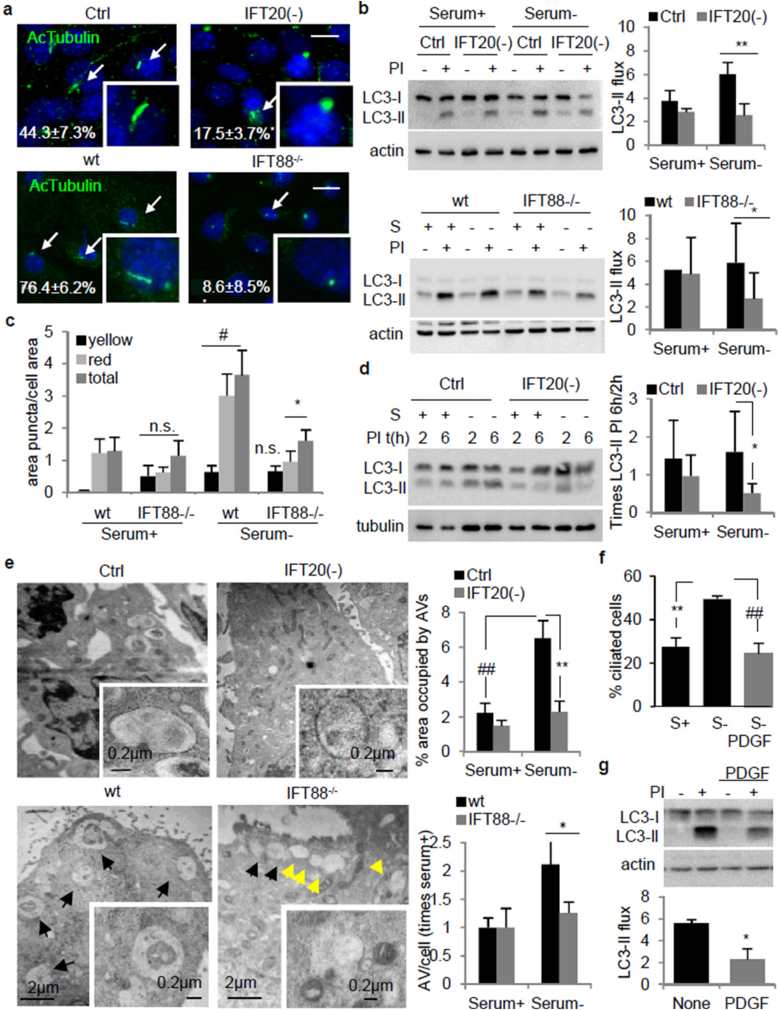
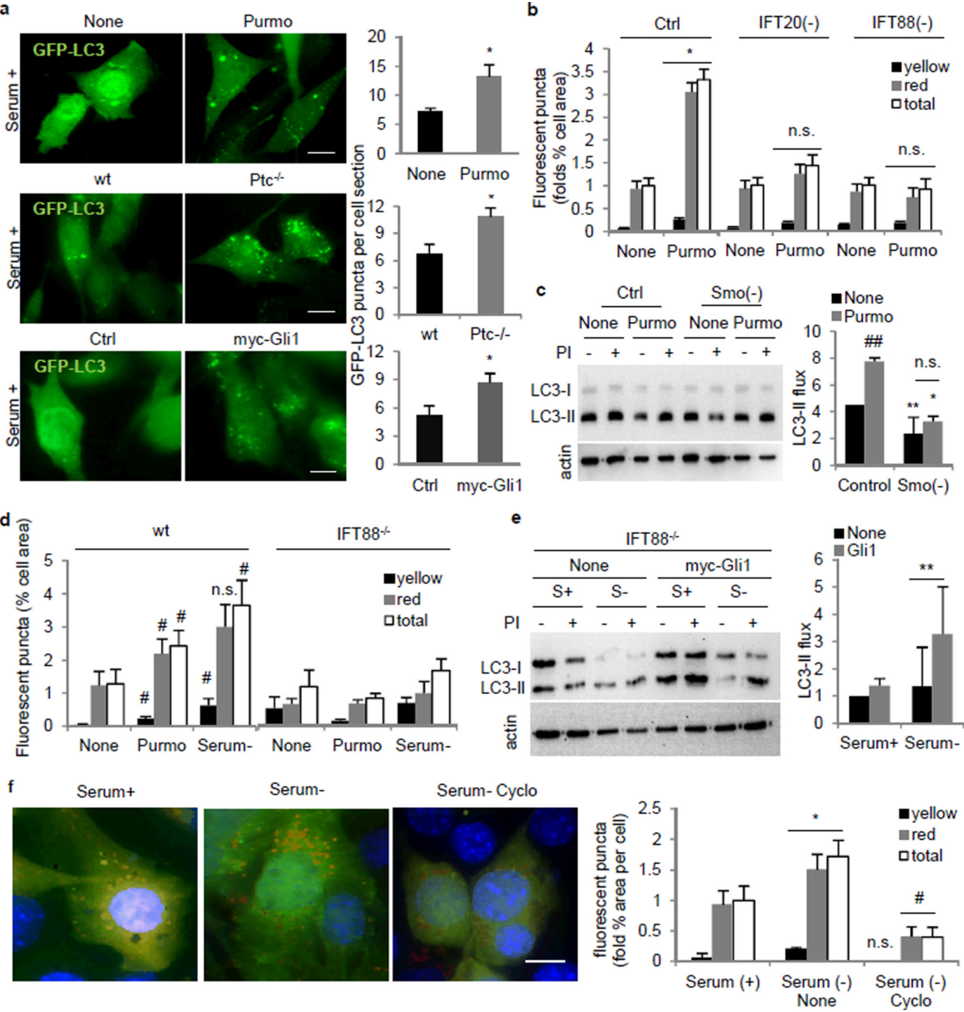
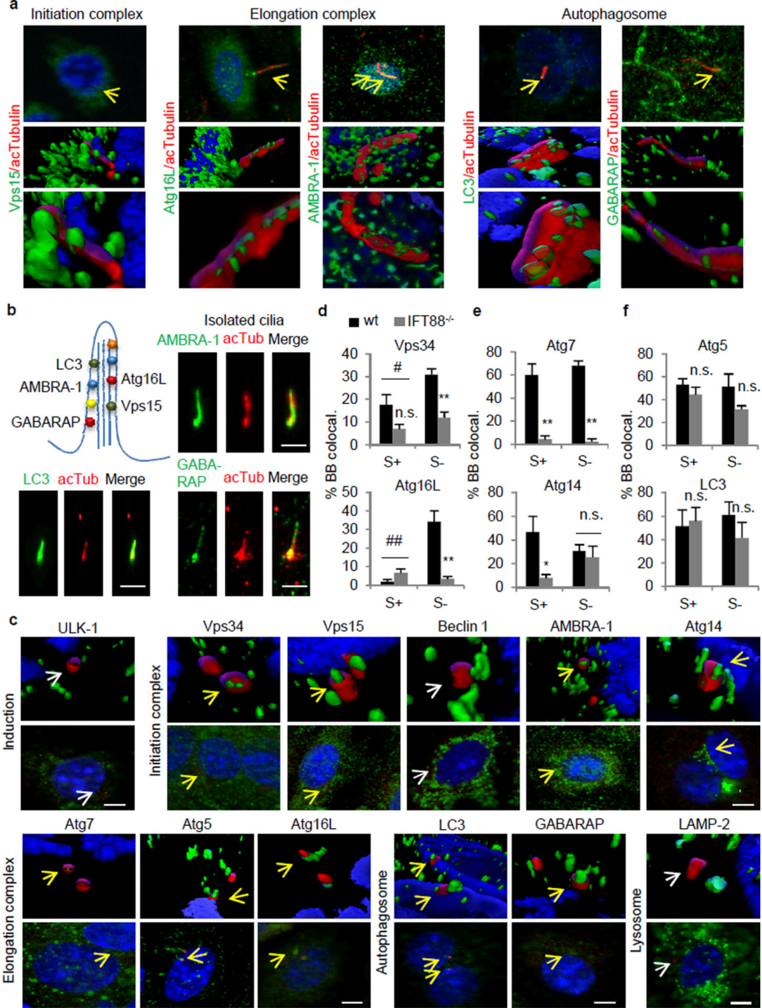
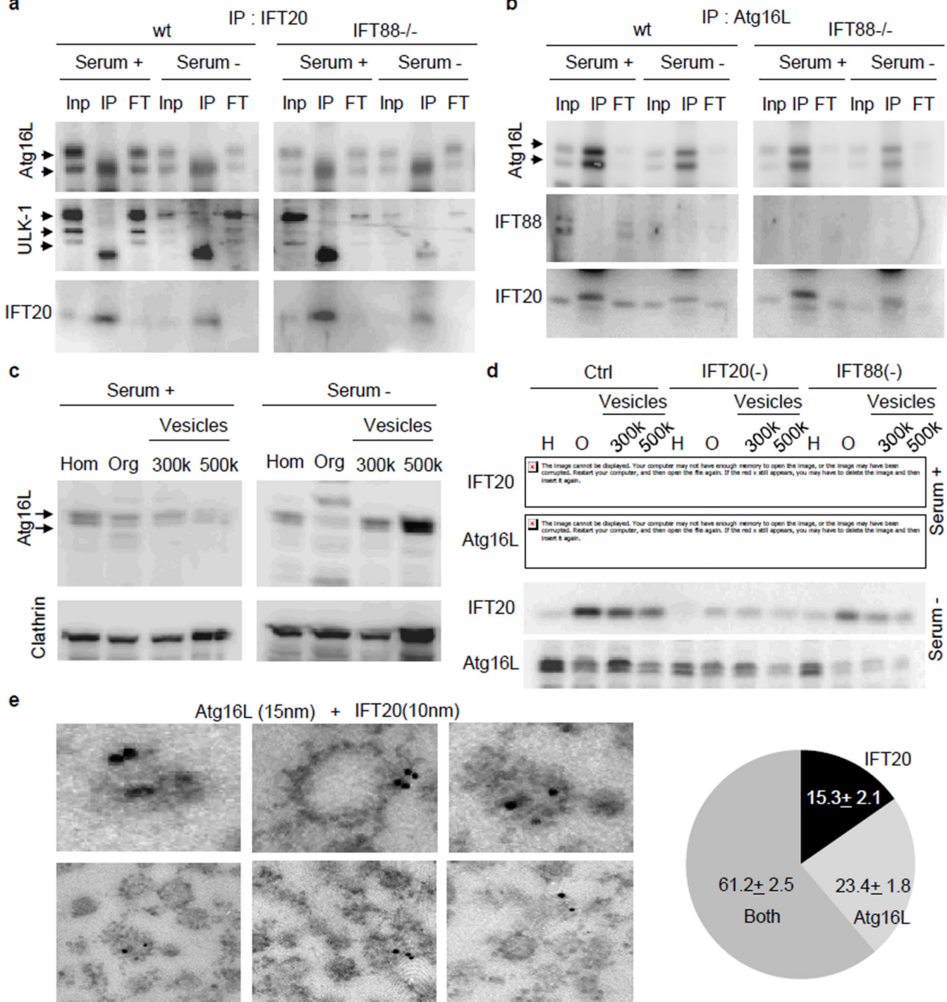
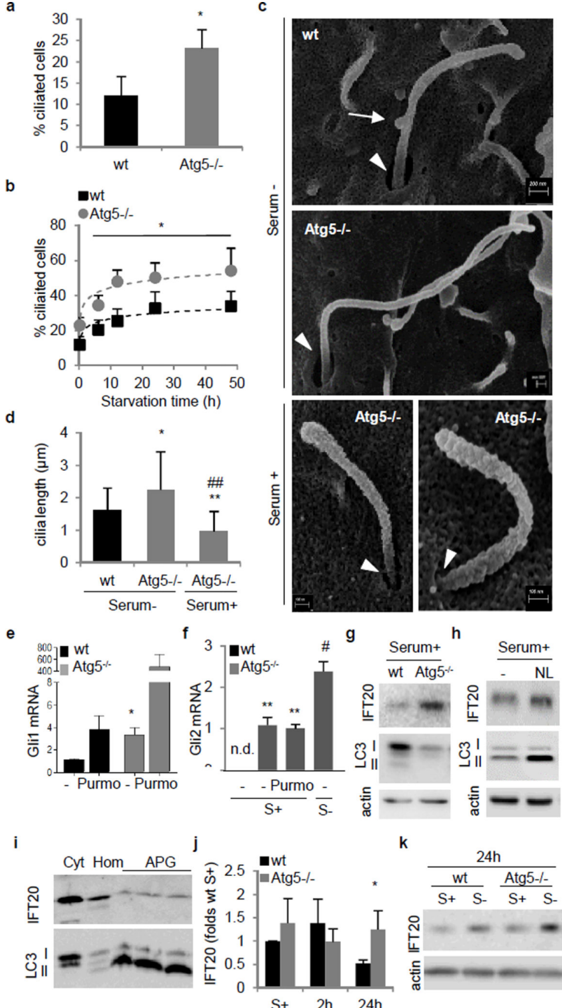
Nutrient deprivation is a stimulus shared by both autophagy and the formation of primary cilia. The recently discovered role of primary cilia in nutrient sensing and signalling motivated us to explore the possible functional interactions between this signalling hub and autophagy. Here we show that part of the molecular machinery involved in ciliogenesis also participates in the early steps of the autophagic process. Signalling from the cilia, such as that from the Hedgehog pathway, induces autophagy by acting directly on essential autophagy-related proteins strategically located in the base of the cilium by ciliary trafficking proteins. Whereas abrogation of ciliogenesis partially inhibits autophagy, blockage of autophagy enhances primary cilia growth and cilia-associated signalling during normal nutritional conditions. We propose that basal autophagy regulates ciliary growth through the degradation of proteins required for intraflagellar transport. Compromised ability to activate the autophagic response may underlie some common ciliopathies.
Overview
The claims and statistics of this paper haven’t been checked yet.
Free: it reads the open-access text and checks the first 5 claims that cite a source we can check. Create a free account to check every claim.
Integrity signals
Registry
Cites
Statistics
Figures
Verification
Claims the paper makes
The claims and statistics of this paper haven’t been checked yet.
Free: it reads the open-access text and checks the first 5 claims that cite a source we can check. Create a free account to check every claim.
Claims other papers make about this one
Each is checked against this paper’s own text: does it say what the citing paper says it does?
The source backs part of the claim, not all of it — or backs it for a different population, condition or comparison.
In the citing paper
“Furthermore, PC are key regulators of autophagy-endolysosomal pathways, and when ciliary-autophagic trafficking is disturbed, ciliary cargo can be redirected toward EV secretion [102,103,104].”
From The Impact of Neurotoxin Proteins Trafficked by Primary Cilia and Extracellular Vesicles in Neurodegenerative Diseases (2025) · cites this paper as [102]
Experimental — accuracy not yet measuredThe source backs part of the claim, not all of it — or backs it for a different population, condition or comparison.
In the citing paper
“In addition, neuronal primary cilia are at the intersection of extracellular and intracellular signaling pathways that control the function of subcellular organelles like the proteasome, autophagosome, and microtubule-rich basal body [6, 57].”
From Abnormal accumulation of extracellular vesicles in hippocampal dystrophic axons and regulation by the primary cilia in Alzheimer's disease (2023) · cites this paper as [57]
Experimental — accuracy not yet measuredThe check wasn’t confident either way, so it gives no verdict — never disputed.
In the citing paper
“Because TNT formation relies on actin-dependent machinery (e.g., M-Sec/RalA/exocyst) and ciliary Shh signaling regulates neuronal actin dynamics, ciliary dysfunction may promote TNT formation, while impaired autophagy increases EV loading, collectively enhancing α-syn dissemination (Figure 3B) [102,149,150,153,154,155].”
From The Impact of Neurotoxin Proteins Trafficked by Primary Cilia and Extracellular Vesicles in Neurodegenerative Diseases (2025) · cites this paper as [102]
Experimental — accuracy not yet measuredThe check wasn’t confident either way, so it gives no verdict — never disputed.
In the citing paper
“Primary cilia, which make use of mitotic spindle-like molecular machinery, may influence the regulation of the cell cycle machinery in neurons [6, 57].”
From Abnormal accumulation of extracellular vesicles in hippocampal dystrophic axons and regulation by the primary cilia in Alzheimer's disease (2023) · cites this paper as [57]
Experimental — accuracy not yet measured
Self-check
Percentages, sums and reported differences re-computed from the paper’s own numbers.
The self-check needs the paper’s full text.
Citations
Cites
Repertoires of Autophagy in the Pathogenesis of Ocular Diseases
Li, Y.-J., Jiang, Q., Cao, G.-F., Yao, J., & Yan, B. (2015) · Cellular Physiology and Biochemistry · doi:10.1159/000373980 · Cited by 16,304
Autophagy fights disease through cellular self-digestion
Mizushima, N., Levine, B., Cuervo, A. M., & Klionsky, D. J. (2008) · Nature · doi:10.1038/nature06639 · Cited by 6,452
Self-citationGuidelines for the use and interpretation of assays for monitoring autophagy
Klionsky, D. J., Abdalla, F. C., Abeliovich, H., Abraham, R. T., Acevedo-Arozena, A., Adeli, K., Agholme, L., Agnello, M., Agostinis, P., Aguirre-Ghiso, J. A., et al. (2012) · Autophagy · doi:10.4161/auto.19496 · Cited by 4,330
Self-citationAutophagy regulates lipid metabolism
Singh, R., Kaushik, S., Wang, Y., Xiang, Y., Novak, I., Komatsu, M., Tanaka, K., Cuervo, A. M., & Czaja, M. J. (2009) · Nature · doi:10.1038/nature07976 · Cited by 3,975
Self-citationMammalian autophagy: core molecular machinery and signaling regulation
Yang, Z., & Klionsky, D. J. (2010) · Current Opinion in Cell Biology · doi:10.1016/j.ceb.2009.11.014 · Cited by 1,956
Patched1 Regulates Hedgehog Signaling at the Primary Cilium
Rohatgi, R., Milenkovic, L., & Scott, M. P. (2007) · Science · doi:10.1126/science.1139740 · Cited by 1,426
Lysosomal turnover, but not a cellular level, of endogenous LC3 is a marker for autophagy
Tanida, I., Minematsu-Ikeguchi, N., Ueno, T., & Kominami, E. (2005) · Autophagy · doi:10.4161/auto.1.2.1697 · Cited by 1,254
Plasma membrane contributes to the formation of pre-autophagosomal structures
Ravikumar, B., Moreau, K., Jahreiss, L., Puri, C., & Rubinsztein, D. C. (2010) · Nature Cell Biology · doi:10.1038/ncb2078 · Cited by 902
PDGFRαα Signaling Is Regulated through the Primary Cilium in Fibroblasts
Schneider, L., Clement, C. A., Teilmann, S. C., Pazour, G. J., Hoffmann, E. K., Satir, P., & Christensen, S. T. (2005) · Current Biology · doi:10.1016/j.cub.2005.09.012 · Cited by 592
Self-citationPazour, G. J., San Agustin, J. T., Follit, J. A., Rosenbaum, J. L., & Witman, G. B. (2002) · Current Biology · doi:10.1016/s0960-9822(02)00877-1 · Cited by 531
Cited by
Guidelines for the use and interpretation of assays for monitoring autophagy (4th edition) 1
Klionsky, D. J., Abdel-Aziz, A. K., Abdelfatah, S., Abdellatif, M., Abdoli, A., Abel, S., Abeliovich, H., Abildgaard, M. H., Abudu, Y. P., Acevedo-Arozena, A., et al. (2021) · Autophagy · doi:10.1080/15548627.2020.1797280 · Cited by 2,897
Cellular signalling by primary cilia in development, organ function and disease
Anvarian, Z., Mykytyn, K., Mukhopadhyay, S., Pedersen, L. B., & Christensen, S. T. (2019) · Nature Reviews Nephrology · doi:10.1038/s41581-019-0116-9 · Cited by 845
Ponpuak, M., Mandell, M. A., Kimura, T., Chauhan, S., Cleyrat, C., & Deretic, V. (2015) · Current Opinion in Cell Biology · doi:10.1016/j.ceb.2015.04.016 · Cited by 506
Cilia Dysfunction in Lung Disease
Tilley, A. E., Walters, M. S., Shaykhiev, R., & Crystal, R. G. (2015) · Annual Review of Physiology · doi:10.1146/annurev-physiol-021014-071931 · Cited by 436
Huntingtin functions as a scaffold for selective macroautophagy
Rui, Y.-N., Xu, Z., Patel, B., Chen, Z., Chen, D., Tito, A., David, G., Sun, Y., Stimming, E. F., Bellen, H. J., et al. (2015) · Nature Cell Biology · doi:10.1038/ncb3101 · Cited by 423
Self-citationClark, C. A., Gupta, H. B., Sareddy, G., Pandeswara, S., Lao, S., Yuan, B., Drerup, J. M., Padron, A., Conejo-Garcia, J., Murthy, K., et al. (2016) · Cancer Research · doi:10.1158/0008-5472.can-16-0258 · Cited by 391
“Autophagic flux was significantly higher in basal PD-L1lo versus control ID8agg cells as assessed by LC3-II/LC3-I ratio (25) but serum starvation did not increase LC3-II further in PD-L1lo cells (Fig.”
BackgroundThe Cilium: Cellular Antenna and Central Processing Unit
Malicki, J. J., & Johnson, C. A. (2017) · Trends in Cell Biology · doi:10.1016/j.tcb.2016.08.002 · Cited by 351
“A further level of complexity is added by observations that mutations in Ift20 and Ift88 inhibit serum starvation-induced autophagy, suggesting that at least some IFT proteins are positive regulators of autophagy [68].”
BackgroundInfluentialAccelerated ageing of the lung in COPD: new concepts
Mercado, N., Ito, K., & Barnes, P. J. (2015) · Thorax · doi:10.1136/thoraxjnl-2014-206084 · Cited by 334
“47 In other studies, Kuwano et al found that cigarette smoke transiently activated autophagy in isolated human bronchial epithelial cells from patients with COPD resulting in increased cell senescence and accumulation of autophagic adaptor protein p62 along with ubiquitinated proteins.”
BackgroundRegulation of Liver Metabolism by Autophagy
Madrigal-Matute, J., & Cuervo, A. M. (2016) · Gastroenterology · doi:10.1053/j.gastro.2015.09.042 · Cited by 311
Self-citationAutophagy and human disease: emerging themes
Schneider, J. L., & Cuervo, A. M. (2014) · Current Opinion in Genetics & Development · doi:10.1016/j.gde.2014.04.003 · Cited by 303
“Among the novel signaling transducers, the recently described regulation of nutrient-induced autophagy by primary cilia [27] raises the possibility that autophagy could be altered in ciliopathies.”
Self-citationPrimary Cilia in the Developing and Mature Brain
Guemez-Gamboa, A., Coufal, N. G., & Gleeson, J. G. (2014) · Neuron · doi:10.1016/j.neuron.2014.04.024 · Cited by 296
“evidence links these processes together (Pampliega et al., 2013; Tang et al., 2013).”
Emerging Roles of Extracellular Vesicles in the Nervous System
Rajendran, L., Bali, J., Barr, M. M., Court, F. A., Krämer-Albers, E.-M., Picou, F., Raposo, G., van der Vos, K. E., van Niel, G., Wang, J., et al. (2014) · The Journal of Neuroscience · doi:10.1523/jneurosci.3258-14.2014 · Cited by 292
“DOI:10.1523/JNEUROSCI.3258-14.2014 Copyright © 2014 the authors 0270-6474/14/3415482-08$15.00/0 munication as both senders and receivers (Tanaka et al., 2005; Hogan et al., 2009; Masyuk et al., 2010; Bakeberg et al., 2011; Pampliega et al., 2013; Wood et al., 2013; Wang et al., 2014).”
InfluentialAutophagy and the hallmarks of aging
Kaushik, S., Tasset, I., Arias, E., Pampliega, O., Wong, E., Martinez-Vicente, M., & Cuervo, A. M. (2021) · Ageing Research Reviews · doi:10.1016/j.arr.2021.101468 · Cited by 285
Self-citationPrimary cilia in neurodevelopmental disorders
Valente, E. M., Rosti, R. O., Gibbs, E., & Gleeson, J. G. (2014) · Nature Reviews Neurology · doi:10.1038/nrneurol.2013.247 · Cited by 254
The intricate regulation and complex functions of the Class III phosphoinositide 3-kinase Vps34
Backer, J. M. (2016) · Biochemical Journal · doi:10.1042/bcj20160170 · Cited by 238
Autophagy in bone homeostasis and the onset of osteoporosis
Yin, X., Zhou, C., Li, J., Liu, R., Shi, B., Yuan, Q., & Zou, S. (2019) · Bone Research · doi:10.1038/s41413-019-0058-7 · Cited by 235
Wang, J., Silva, M., Haas, L. A., Morsci, N. S., Nguyen, K. C. Q., Hall, D. H., & Barr, M. M. (2014) · Current Biology · doi:10.1016/j.cub.2014.01.002 · Cited by 227
Ho, P. W.-L., Leung, C.-T., Liu, H., Pang, S. Y.-Y., Lam, C. S.-C., Xian, J., Li, L., Kung, M. H.-W., Ramsden, D. B., & Ho, S.-L. (2020) · Autophagy · doi:10.1080/15548627.2019.1603545 · Cited by 207
“This macro has been validated for analyzing autophagic flux [84].”
MethodPrimary cilium-dependent signaling mechanisms
Pala, R., Alomari, N., & Nauli, S. (2017) · International Journal of Molecular Sciences · doi:10.3390/ijms18112272 · Cited by 205
“Another study explores the effect of ciliogenesis on autophagy [113].”
Proximity Interactions among Centrosome Components Identify Regulators of Centriole Duplication
Firat-Karalar, E. N., Rauniyar, N., Yates, J. R., & Stearns, T. (2014) · Current Biology · doi:10.1016/j.cub.2014.01.067 · Cited by 195
“Centriolar satellites are known to have activities relevant to determining protein level and activity [33, 35], but we have not established whether the relevant effects are occurring at satellites or elsewhere.”
Liu, H., Kiseleva, A. A., & Golemis, E. A. (2018) · Nature Reviews Cancer · doi:10.1038/s41568-018-0023-6 · Cited by 172
Wirth, M., Zhang, W., Razi, M., Nyoni, L., Joshi, D., O’Reilly, N., Johansen, T., Tooze, S. A., & Mouilleron, S. (2019) · Nature Communications · doi:10.1038/s41467-019-10059-6 · Cited by 164
Primary-cilium-dependent autophagy controls epithelial cell volume in response to fluid flow
Orhon, I., Dupont, N., Zaidan, M., Boitez, V., Burtin, M., Schmitt, A., Capiod, T., Viau, A., Beau, I., Kuehn, E. W., et al. (2016) · Nature Cell Biology · doi:10.1038/ncb3360 · Cited by 173
Self-citationMaus, M., Cuk, M., Patel, B., Lian, J., Ouimet, M., Kaufmann, U., Yang, J., Horvath, R., Hornig-Do, H.-T., Chrzanowska-Lightowlers, Z. M., et al. (2017) · Cell Metabolism · doi:10.1016/j.cmet.2016.12.021 · Cited by 163
“Plasmids and Reagents Human dsRed-LC3 plasmid (Boland et al., 2008), mtKeima plasmid (Katayama et al., 2011), GFP-dgn/GFP-degFS (Greussing et al., 2012) and ORAI1-E106Q (Prakriya et al., 2006) plasmids, and other chemicals (Pampliega et al., 2013; Singh et al., 2009) were used as described.”
MethodInfluentialSelf-citationAutophagy in kidney disease and aging: lessons from rodent models
Lenoir, O., Tharaux, P.-L., & Huber, T. B. (2016) · Kidney International · doi:10.1016/j.kint.2016.04.014 · Cited by 148
Small organelle, big responsibility: the role of centrosomes in development and disease
Chavali, P. L., Pütz, M., & Gergely, F. V. (2014) · Philosophical Transactions of the Royal Society B Biological Sciences · doi:10.1098/rstb.2013.0468 · Cited by 161
Autophagy: a multifaceted player in the fate of sperm
Wang, M., Zeng, L., Su, P., Ma, L., Zhang, M., & Zhang, Y. (2021) · Human Reproduction Update · doi:10.1093/humupd/dmab043 · Cited by 161
“Remarkably, IFT20 contributes to autophagosome formation by delivering ATG16L (Pampliega et al., 2013) and to lysosome biogenesis by regulating the post-Golgi transport of acid hydrolases (Finetti et al., 2020).”
Acetyltransferase GCN5 regulates autophagy and lysosome biogenesis by targeting TFEB
Wang, Y., Huang, Y., Liu, J., Zhang, J., Xu, M., You, Z., Peng, C., Gong, Z., & Liu, W. (2020) · The EMBO Reports · doi:10.15252/embr.201948335 · Cited by 131
“To further confirm this, we examined the expression of IFT20 and PDLIM1 proteins, which are also particularly dependent on autophagy for degradation in cells [33,34].”
Reciprocal regulation of cilia and autophagy via the MTOR and proteasome pathways
Wang, S., Livingston, M. J., Su, Y., & Dong, Z. (2015) · Autophagy · doi:10.1080/15548627.2015.1023983 · Cited by 140
“Pampliega et al further suggest a reciprocal interaction between autophagy and ciliogenesis, where ciliary signaling, such as the hedgehog pathway, induces autophagy.(22) Our present study has further confirmed the reciprocal interaction between autophagy and cilia.”
BackgroundThe hallmarks of cancer: relevance to the pathogenesis of polycystic kidney disease
Seeger‐Nukpezah, T., Geynisman, D. M., Nikonova, A. S., Benzing, T. R., & Golemis, E. A. (2015) · Nature Reviews Nephrology · doi:10.1038/nrneph.2015.46 · Cited by 148
Autophagosome–lysosome fusion in neurons requires INPP5E, a protein associated with Joubert syndrome
Hasegawa, J., Iwamoto, R., Otomo, T., Nezu, A., Hamasaki, M., & Yoshimori, T. (2016) · The EMBO Journal · doi:10.15252/embj.201593148 · Cited by 144
“Moreover, a recent study showed that disruption of IFT20, which is essential for ciliogenesis, decreased autophagic activity (Pampliega et al , 2013).”
Gkirtzimanaki, K., Kabrani, E., Nikoleri, D., Polyzos, A., Blanas, A., Sidiropoulos, P., Makrigiannakis, A., Bertsias, G., Boumpas, D. T., & Verginis, P. (2018) · Cell Reports · doi:10.1016/j.celrep.2018.09.001 · Cited by 133
Fibroblast Primary Cilia Are Required for Cardiac Fibrosis
Villalobos, E., Criollo, A., Schiattarella, G. G., Altamirano, F., French, K. M., May, H. I., Jiang, N., Nguyen, N. U. N., Romero, D., Roa, J. C., et al. (2019) · Circulation · doi:10.1161/circulationaha.117.028752 · Cited by 131
“10, 12, 25 Although a pioneering study in the 1970’s reported that human cardiac samples harbored ciliary structures, specific cell location and function of cilia in the heart has never been clarified.”
Akizu, N., Cantagrel, V., Zaki, M. S., Al-Gazali, L., Wang, X., Rosti, R. O., Dikoglu, E., Gelot, A. B., Rosti, B., Vaux, K. K., et al. (2015) · Nature Genetics · doi:10.1038/ng.3256 · Cited by 134
Roles of Primary Cilia in the Developing Brain
Park, S. M., Jang, H. J., & Lee, J. H. (2019) · Frontiers in Cellular Neuroscience · doi:10.3389/fncel.2019.00218 · Cited by 128
“Upon serumwithdrawal, the centriolar satellite pool of OFD1 is degraded by inducible autophagy, while IFT20 initiates ciliary trafficking, leading to ciliogenesis (Pampliega et al., 2013; Tang et al., 2013).”
BackgroundNowosad, A., Creff, J., Jeannot, P., Culerrier, R., Codogno, P., Manenti, S., Nguyen, L., & Besson, A. (2021) · Cell Death & Disease · doi:10.1038/s41419-021-03759-9 · Cited by 124
Self-citationRegulation of centriolar satellite integrity and its physiology
Hori, A., & Toda, T. (2017) · Cellular and Molecular Life Sciences · doi:10.1007/s00018-016-2315-x · Cited by 105
“An unexpected functional link was recently uncovered between autophagy and centriolar satellite integrity [42, 43, 139].”
BackgroundThe Centrosome, a Multitalented Renaissance Organelle
Vertii, A., Hehnly, H., & Doxsey, S. (2016) · Cold Spring Harbor Perspectives in Biology · doi:10.1101/cshperspect.a025049 · Cited by 122
“It has also been shown that there is a mutual interdependence between ciliogenesis and autophagy, favoring a model in which autophagy influences ciliogenesis (Pampliega et al. 2013).”
BackgroundSanjurjo, L., Amézaga, N., Aran, G., Naranjo-Gómez, M., Arias, L., Armengol, C., Borràs, F. E., & Sarrias, M.-R. (2015) · Autophagy · doi:10.1080/15548627.2015.1017183 · Cited by 110
Choi, H., Merceron, C., Mangiavini, L., Seifert, E. L., Schipani, E., Shapiro, I. M., & Risbud, M. V. (2016) · Autophagy · doi:10.1080/15548627.2016.1192753 · Cited by 115
Centriolar satellites: key mediators of centrosome functions
Tollenaere, M. A. X., Mailand, N., & Bekker‐Jensen, S. (2014) · Cellular and Molecular Life Sciences · doi:10.1007/s00018-014-1711-3 · Cited by 120
“Interestingly, a different link between autophagy and ciliogenesis was reported by Cuervo and colleagues [75].”
BackgroundAsparaginase induces apoptosis and cytoprotective autophagy in chronic myeloid leukemia cells
Song, P., Ye, L., Fan, J., Li, Y., Zeng, X. L., Wang, Z., Wang, S., Zhang, G., Yang, P., Cao, Z., et al. (2015) · Oncotarget · doi:10.18632/oncotarget.2869 · Cited by 115
“Autophagy is a cellular catabolic process that contributes to quality control and maintenance of the cellular energetic balance through the turnover of proteins and organelles in lysosomes, and takes place at basal levels in most of the cell types but is also regulated by environmental stimuli [22].”
BackgroundToops, K. A., Tan, L. X., Jiang, Z., Radu, R. A., & Lakkaraju, A. (2015) · Molecular Biology of the Cell · doi:10.1091/mbc.e14-05-1028 · Cited by 105
“Lipofuscin bisretinoids are also implicated in AMD, the most common cause of vision loss in older adults (Ambati et al., 2013).”
BackgroundMechanisms and biological functions of autophagy in diseased and ageing kidneys
Fougeray, S., & Pallet, N. (2014) · Nature Reviews Nephrology · doi:10.1038/nrneph.2014.201 · Cited by 115
Jang, J., Wang, Y., Lalli, M. A., Guzman, E., Godshalk, S. E., Zhou, H., & Kosik, K. S. (2016) · Cell · doi:10.1016/j.cell.2016.02.014 · Cited by 110
“Recently, it was reported that the primary cilium is essential for the activation of starvation-induced autophagy in mouse fibroblasts, kidney epithelial cells, and retinal ganglion cells (Pampliega et al., 2013).”
The physiological roles of autophagy in the mammalian life cycle
Wang, L., Ye, X., & Zhao, T. (2018) · Biological reviews/Biological reviews of the Cambridge Philosophical Society · doi:10.1111/brv.12464 · Cited by 115
“Other studies have shown that autophagy participates in ciliogenesis by regulating the proteins associated with intraflagellar transport (Pampliega et al., 2013).”
BackgroundImmune synapse targeting of specific recycling receptors by the intraflagellar transport system
Finetti, F., Patrussi, L., Masi, G., Onnis, A., Galgano, D., Lucherini, O. M., Pazour, G. J., & Baldari, C. T. (2014) · Journal of Cell Science · doi:10.1242/jcs.139337 · Cited by 100
“…the ciliary targeting of membrane proteins (Finetti and Baldari, 2013) and, moreover, the IFT system has been recently shown to participate in the first steps of autophagosome formation by assisting the localization of autophagy-related proteins at the base of the cilium (Pampliega et al., 2013).”
BackgroundCentriolar Satellites Control GABARAP Ubiquitination and GABARAP-Mediated Autophagy
Joachim, J., Razi, M., Judith, D., Wirth, M., Calamita, E., Encheva, V., Dynlacht, B. D., Snijders, A. P., O’Reilly, N., Jefferies, H. B. J., et al. (2017) · Current Biology · doi:10.1016/j.cub.2017.06.021 · Cited by 101
“2132 Current Biology 27, 2123–2136, July 24, 2017 IFT88) [41, 43].”
Role of Autophagy in the Maintenance of Intestinal Homeostasis
Baxt, L. A., & Xavier, R. J. (2015) · Gastroenterology · doi:10.1053/j.gastro.2015.06.046 · Cited by 100
Autophagosome biogenesis and human health
Kawabata, T., & Yoshimori, T. (2020) · Cell Discovery · doi:10.1038/s41421-020-0166-y · Cited by 107
The Role of Autophagy in Osteoclast Differentiation and Bone Resorption Function
Montaseri, A., Giampietri, C., Rossi, M., Riccioli, A., Fattore, A. D., & Filippini, A. (2020) · Biomolecules · doi:10.3390/biom10101398 · Cited by 103
Emerging role of selective autophagy in human diseases
Mizumura, K., Choi, A. M. K., & Ryter, S. W. (2014) · Frontiers in Pharmacology · doi:10.3389/fphar.2014.00244 · Cited by 94
“Pampliega et al. (2013) also reported that autophagy negatively regulate ciliogenesis by degrading intraflagellar transport protein 20 homolog (IFT20).”
BackgroundIntraflagellar transport protein IFT20 is essential for male fertility and spermiogenesis in mice
Zhang, Z., Li, W., Zhang, Y., Zhang, L., Teves, M. E., Liu, H., Strauss, J. F., Pazour, G. J., Foster, J. A., Hess, R. A., et al. (2016) · Molecular Biology of the Cell · doi:10.1091/mbc.e16-05-0318 · Cited by 102
“IFT20 associates with autophagy core protein ATG16L and is believed to play a role in autophagy (Pampliega et al., 2013).”
InfluentialLévêque, M. F., Berry, L., Cipriano, M. J., Nguyen, H. M., Striepen, B., & Besteiro, S. (2015) · mBio · doi:10.1128/mbio.01446-15 · Cited by 97
“Interestingly, components of the autophagic machinery, including LC3, have also been located around the basal body of mammalian cells’ primary cilia (44).”
BackgroundThe pathobiology of polycystic kidney disease from a metabolic viewpoint
Menezes, L. F., & Germino, G. G. (2019) · Nature Reviews Nephrology · doi:10.1038/s41581-019-0183-y · Cited by 105
Wang, J., Kaletsky, R., Silva, M., Williams, A., Haas, L. A., Androwski, R. J., Landis, J. N., Patrick, C., Rashid, A., Santiago-Martinez, D., et al. (2015) · Current Biology · doi:10.1016/j.cub.2015.10.057 · Cited by 96
Primary Cilium in Cancer Hallmarks
Fabbri, L., Bost, F., & Mazure, N. M. (2019) · International Journal of Molecular Sciences · doi:10.3390/ijms20061336 · Cited by 102
“found that Atg5−/− MEFs were able to more quickly grow primary cilia that were longer and completely functional in serum-rich medium [131].”
BackgroundCiliogenesis membrane dynamics and organization
Zhao, H., Khan, Z., & Westlake, C. J. (2022) · Seminars in Cell and Developmental Biology · doi:10.1016/j.semcdb.2022.03.021 · Cited by 95
Autophagy and regulation of cilia function and assembly
Orhon, I., Dupont, N., Pampliega, O., Cuervo, A. M., & Codogno, P. (2014) · Cell Death and Differentiation · doi:10.1038/cdd.2014.171 · Cited by 98
“Pampliega et al.7 demonstrated that induction of autophagosome formation during starvation depends on functional cilia and the Hh pathway, and observed that components of the autophagic machinery are located at the axoneme and basal body of the cilium (see Figure 1 for localization of different autophagic machinery co…”
BackgroundResultInfluentialSelf-citationBae, J.-E., Kang, G. M., Min, S. H., Jo, D. S., Jung, Y.-K., Kim, K., Kim, M.-S., & Cho, D.-H. (2019) · Cell Death & Disease · doi:10.1038/s41419-019-2184-y · Cited by 88
Jin, G., Lee, S.-W., Zhang, X., Cai, Z., Gao, Y., Chou, P.-C., Rezaeian, A. H., Han, F., Wang, C.-Y., Yao, J.-C., et al. (2015) · Molecular Cell · doi:10.1016/j.molcel.2015.05.010 · Cited by 87
“Recently, two studies suggest there is a potential crosstalk between cilia and autophagy (Pampliega et al., 2013; Tang et al., 2013).”
The transition zone protein Rpgrip1l regulates proteasomal activity at the primary cilium
Gerhardt, C., Lier, J. M., Burmühl, S., Struchtrup, A., Deutschmann, K., Vetter, M., Leu, T., Reeg, S., Grune, T., & Rüther, U. (2015) · Journal of Cell Biology · doi:10.1083/jcb.201408060 · Cited by 88
Centriolar satellites are required for efficient ciliogenesis and ciliary content regulation
Odabasi, E., Ohlsen, S. K., Gül, Ş., Kavaklı, İ. H., Andersen, J., & Firat‐Karalar, E. N. (2019) · EMBO Reports · doi:10.15252/embr.201947723 · Cited by 90
Miceli, C., Roccio, F., Penalva-Mousset, L., Burtin, M., Leroy, C., Nemazanyy, I., Kuperwasser, N., Pontoglio, M., Friedlander, G., Morel, É., et al. (2020) · Nature Cell Biology · doi:10.1038/s41556-020-0566-0 · Cited by 92
Self-citationAutophagy and primary cilia: dual interplay
Pampliega, O., & Cuervo, A. M. (2016) · Current Opinion in Cell Biology · doi:10.1016/j.ceb.2016.01.008 · Cited by 86
Self-citationSatir, P. (2017) · Cilia · doi:10.1186/s13630-017-0046-8 · Cited by 94
“There is a clear reciprocal relationship between ciliogenesis and autophagy [102, 103].”
BackgroundSelf-citationHoldgaard, S. G., Cianfanelli, V., Pupo, E., Lambrughi, M., Lubas, M., Nielsen, J. C., Eibes, S., Maiani, E., Harder, L. M., Wesch, N., et al. (2019) · Nature Communications · doi:10.1038/s41467-019-12094-9 · Cited by 84
Human satellite-III non-coding RNAs modulate heat-shock-induced transcriptional repression
Goenka, A., Sengupta, S., Pandey, R., Parihar, R., Mohanta, G. C., Mukerji, M., & Ganesh, S. (2016) · Journal of Cell Science · doi:10.1242/jcs.189803 · Cited by 84
“Quantification for the colocalization analysis was performed for about 30 cells for each set by the Green and Red Puncta Co-localization macro of ImageJ (created by D. J. Swiwarski, modified by R. K. Dagda and co-approved by Charleen T. Chu) (Pampliega et al., 2013).”
MethodBoukhalfa, A., Nascimbeni, A. C., Ramel, D., Dupont, N., Hirsch, E., Gayral, S., Laffargue, M., Codogno, P., & Morel, E. (2020) · Nature Communications · doi:10.1038/s41467-019-14086-1 · Cited by 81
Self-citationFLCN, a novel autophagy component, interacts with GABARAP and is regulated by ULK1 phosphorylation
Dunlop, E. A., Seifan, S., Claessens, T., Behrends, C., Kamps, M. A., Rozycka, E., Kemp, A. J., Nookala, R. K., Blenis, J., Coull, B. J., et al. (2014) · Autophagy · doi:10.4161/auto.29640 · Cited by 80
Metabolism of asparagine in the physiological state and cancer
Yuan, Q., Yin, L., He, J., Zeng, Q., Liang, Y., Shen, Y., & Zu, X. (2024) · Cell Communication and Signaling · doi:10.1186/s12964-024-01540-x · Cited by 90
“Autophagy enables cells to adapt to nutrient deficiency by regulating the turnover of protein and organelles [44].”
BackgroundCentriolar satellite biogenesis and function in vertebrate cells
Prosser, S. L., & Pelletier, L. (2020) · Journal of Cell Science · doi:10.1242/jcs.239566 · Cited by 86
“Their exact function in these processes, however, remains poorly understood, whereas the cellular function of satellites has broadened to roles in autophagy and actin filament nucleation and organization, and potentially other pathways (Farina et al., 2016; Obino et al., 2016; Pampliega et al., 2013; Tang et al., 2013…”
BackgroundMetabolic Regulation and Energy Homeostasis through the Primary Cilium
Oh, E. C., Vasanth, S., & Katsanis, N. (2015) · Cell Metabolism · doi:10.1016/j.cmet.2014.11.019 · Cited by 76
“However, the discovery of a hypomorphic mutation in Ift88 in the orpk cystic renal mouse model (Pazour et al., 2000) highlighted the critical importance of primary cilia in the kidney; the subsequent identification of mutations in Cell Metabolism 21, January 6, 2015 ª2015 Elsevier Inc.…”
Rechter, S. D., Decuypere, J.-P., Ivanova, E., van den Heuvel, L. P., SMEDT, H. D., Levtchenko, E. N., & Mekahli, D. (2015) · Pediatric Nephrology · doi:10.1007/s00467-015-3134-2 · Cited by 81
“Moreover, it was observed that components of the autophagic machinery are located at the primary cilium axoneme and basal body [42].”
BackgroundInfluentialPolycystic liver disease: ductal plate malformation and the primary cilium
Wills, E. S., Roepman, R., & Drenth, J. P. H. (2014) · Trends in Molecular Medicine · doi:10.1016/j.molmed.2014.01.003 · Cited by 85
Ciliary Extracellular Vesicles: Txt Msg Organelles
Wang, J., & Barr, M. M. (2016) · Cellular and Molecular Neurobiology · doi:10.1007/s10571-016-0345-4 · Cited by 72
“EVs bind to primary cilia of mouse embryonic fibroblasts (Pampliega et al. 2013).”
BackgroundRoutes and machinery of primary cilium biogenesis
Bernabé‐Rubio, M., & Alonso, M. A. (2017) · Cellular and Molecular Life Sciences · doi:10.1007/s00018-017-2570-5 · Cited by 86
“Activation of autophagy and initiation of ciliogenesis are simultaneous events in which some proteins participate direct or indirectly in both processes [217, 218].”
BackgroundBaron, O., Boudi, A., Dias, C., Schilling, M. R., Nölle, A., Vizcay‐Barrena, G., Rattray, I., Jungbluth, H., Scheper, W., Fleck, R. A., et al. (2017) · Current Biology · doi:10.1016/j.cub.2017.10.054 · Cited by 84
“Colocalization analysis performed using images from the ‘Green and Red Puncta Colocalization’ macro [47].”
MethodInfluentialAtypical centrioles during sexual reproduction
Avidor‐Reiss, T., Khire, A., Fishman, E. L., & Jo, K. H. (2015) · Frontiers in Cell and Developmental Biology · doi:10.3389/fcell.2015.00021 · Cited by 77
“…when most of the sperm cell’s cytoplasm is remodeled and discarded in the waste bag (O’Donnell et al., 2011); (4) autophagy of centriole components (Pampliega et al., 2013; Tang et al., 2013); (5) post-translational modification that destabilizes the ability of centrosomal proteins to bind to…”
BackgroundActivated MLKL attenuates autophagy following its translocation to intracellular membranes
Frank, D., Vaux, D. L., Murphy, J. M., Vince, J. E., & Lindqvist, L. M. (2019) · Journal of Cell Science · doi:10.1242/jcs.220996 · Cited by 71
“Shiwarski), as performed previously (Pampliega et al., 2013).”
Centrin2 regulates CP110 removal in primary cilium formation
Prosser, S. L., & Morrison, C. G. (2015) · Journal of Cell Biology · doi:10.1083/jcb.201411070 · Cited by 69
Hsu, Y., Garrison, J. E., Kim, G., Schmitz, A. R., Searby, C. C., Zhang, Q., Datta, P., Nishimura, D. Y., Seo, S., & Sheffield, V. C. (2017) · PLOS Genetics · doi:10.1371/journal.pgen.1007057 · Cited by 68
The GID ubiquitin ligase complex is a regulator of AMPK activity and organismal lifespan
Liu, H., Ding, J., Köhnlein, K., Urban, N., Ori, A., Villavicencio-Lorini, P., Walentek, P., Klotz, L.-O., Hollemann, T., & Pfirrmann, T. (2020) · Autophagy · doi:10.1080/15548627.2019.1695399 · Cited by 68
Autophagy and post-ischemic conditioning in retinal ischemia
Mathew, B., Chennakesavalu, M., Sharma, M., Torres, L. A., Stelman, C. R., Tran, S., Patel, R., Burg, N., Salkovski, M., Kadzielawa, K., et al. (2020) · Autophagy · doi:10.1080/15548627.2020.1767371 · Cited by 70
“Chu) was used to determine flux, as validated and described previously [67].”
MethodYamamoto, Y., Chino, H., Tsukamoto, S., Ode, K. L., Ueda, H. R., & Mizushima, N. (2021) · Nature Communications · doi:10.1038/s41467-021-23599-7 · Cited by 71
Myristoylated CIL-7 regulates ciliary extracellular vesicle biogenesis
Maguire, J. E., Silva, M., Nguyen, K. C. Q., Hellen, E., Kern, A. D., Hall, D. H., & Barr, M. M. (2015) · Molecular Biology of the Cell · doi:10.1091/mbc.e15-01-0009 · Cited by 65
“elegans, and mammals, EVs are closely associated with cilia (Tanaka et al., 2005; Hogan et al., 2009; Pampliega et al., 2013; Wood et al., 2013; Wang et al., 2014), suggesting that the cilium is essential in EV-mediated communication or that EVs are important for the health of the cilium.”
BackgroundBrosnan‐Cashman, J. A., Yuan, M., Graham, M. K., Rizzo, A. J., Myers, K. M., Davis, C., Zhang, R., Esopi, D., Raabe, E. H., Eberhart, C. G., et al. (2018) · PLoS ONE · doi:10.1371/journal.pone.0204159 · Cited by 70
Crosstalk of Hedgehog and mTORC1 Pathways
Larsen, L. J., & Møller, L. B. (2020) · Cells · doi:10.3390/cells9102316 · Cited by 70
Kumar, A., Singh, P. K., Parihar, R., Dwivedi, V., Lakhotia, S. C., & Ganesh, S. (2014) · Journal of Biological Chemistry · doi:10.1074/jbc.m114.553321 · Cited by 71
“The green, red, and yellow puncta in the captured images were quantified using the co-localization macro in ImageJ software, as described (27).”
BackgroundMethodThe Journey of the Autophagosome through Mammalian Cell Organelles and Membranes
Molino, D., Zemirli, N., Codogno, P., & Morel, É. (2016) · Journal of Molecular Biology · doi:10.1016/j.jmb.2016.12.013 · Cited by 72
Self-citationPandey, P., Leary, A. Y., Tümtaş, Y., Savage, Z., Dagvadorj, B., Duggan, C., Yuen, E. L. H., Sanguankiattichai, N., Tan, E., Khandare, V. S., et al. (2021) · eLife · doi:10.7554/elife.65285 · Cited by 69
Intraflagellar Transport Proteins as Regulators of Primary Cilia Length
Wang, W., Hufft‐Martinez, B. M., Wang, H. H., Kavanaugh, M. A., Maser, R. L., & Tran, P. V. (2021) · Frontiers in Cell and Developmental Biology · doi:10.3389/fcell.2021.661350 · Cited by 78
Polycystin and calcium signaling in cell death and survival
Lemos, F. O., & Ehrlich, B. E. (2017) · Cell Calcium · doi:10.1016/j.ceca.2017.05.011 · Cited by 72
Ha, S., Jeong, S.-H., Yi, K., Chung, K. M., Hong, C. J., Kim, S. W., Kim, E.-K., & Yu, S.-W. (2017) · Journal of Biological Chemistry · doi:10.1074/jbc.m117.780874 · Cited by 61
“0 m), the images were analyzed using the Green and Red Puncta Colocalization ImageJ plug-in (67).”
Mammalian autophagy and the plasma membrane
Tanasa, M. P., & Rubinsztein, D. C. (2016) · FEBS Journal · doi:10.1111/febs.13931 · Cited by 64
“Ciliogenesis also upregulates autophagy, potentially enabling a self-sustaining feedforward mechanism: ciliogenesis-autophagy-ciliogenesis [48].”
BackgroundLau, H. Y., Ramanujulu, P. M., Guo, D., Yang, T., Wirawan, M., Casey, P. J., Go, M.-L., & Wang, M. (2014) · Cancer Biology & Therapy · doi:10.4161/cbt.29692 · Cited by 62
Shortened primary cilium length and dysregulated Sonic hedgehog signaling in Niemann-Pick C1 disease
Canterini, S., Dragotto, J., Dardis, A., Zampieri, S., Stefano, M. E. D., Mangia, F., Erickson, R. P., & Fiorenza, M. T. (2017) · Human Molecular Genetics · doi:10.1093/hmg/ddx118 · Cited by 67
“Such a defect could be caused by the altered ciliogenesis we detected; alternatively, the shortened cilia could be influenced by the altered autophagy, due to primary cilium formation and autophagy being two mutually regulated processes during serum starvation (72).”
BackgroundCell–cell communication via ciliary extracellular vesicles: clues from model systems
Wang, J., & Barr, M. M. (2018) · Essays in Biochemistry · doi:10.1042/ebc20170085 · Cited by 68
“Scanning electron microscopy of mammalian primary cilia reveals cilia-associated vesicles (28, 29).”
BackgroundAnnexin A2 promotes phagophore assembly by enhancing Atg16L+ vesicle biogenesis and homotypic fusion
Morozova, K. S., Sidhar, S., Zolla, V., Clement, C. C., Scharf, B., Verzani, Z., Díaz, A., Larocca, J. N., Hajjar, K. A., Cuervo, A. M., et al. (2015) · Nature Communications · doi:10.1038/ncomms6856 · Cited by 64
“Autophagic flux was also measured upon transfection of the cells with the tandem reporter mCherry-GFP-LC3 (Addgene 38 ).”
Self-citationVertii, A., Hung, H.-F., Hehnly, H., & Doxsey, S. (2016) · Cilia · doi:10.1186/s13630-016-0030-8 · Cited by 68
“In addition, recent studies demonstrate that autophagy, a process that turns over cellular debris, can promote ciliogenesis by degrading select centriolar satellite proteins such as OFD1 [60, 61].”
Background
Metadata
- Authors
- Pampliega, O., Orhon, I., Patel, B., Sridhar, S., Díaz-Carretero, A., Beau, I., Codogno, P., Satir, B. H., Satir, P., & Cuervo, A. M.
- Affiliations
- Albert Einstein College of Medicine (US)
- Université Paris-Sud (FR)
- Corresponding author
- Satir, Peter
- ORCID
- Venue
- Nature
- Published
- 2013-10
- Volume
- 502
- Issue
- 7470
- Pages
- 194-200
- ISSN
- 0028-0836 (ISSN-L)
- 1476-4687
- PMC
- PMC3896125
- OpenAlex
- W2030430693
- Cited by
- 424
- References
- 31
- Citations by year
- 2026: 17 · 2025: 25 · 2024: 25 · 2023: 22 · 2022: 37 · 2021: 50 · 2020: 45 · 2019: 41 · 2018: 23 · 2017: 24 · 2016: 40 · 2015: 38 · 2014: 32 · 2013: 5
- FWCI
- 25.41
- Type
- journal article
- Language
- en
- Open access
- green
- www.ncbi.nlm.nih.gov
- Licence
- www.springer.com/tdm (tdm)
- Locations
- Nature (publishedVersion)
- PubMed (publishedVersion)
- Europe PMC (PubMed Central) (acceptedVersion)
- PubMed Central (acceptedVersion)
- RePEc: Research Papers in Economics (submittedVersion)
- Funders
- Eusko Jaurlaritza
- Institut National Du Cancer
- National Institutes of Health
- National Institute on Aging (R37AG021904, P01AG031782, AG031782, P30AG038072, AG038072)
- National Institute of Diabetes and Digestive and Kidney Diseases (DK-098408, R01DK098408)
- Institute of Cancer Research
- Topics
- Life Sciences › Biochemistry, Genetics and Molecular Biology › Genetics › Genetic and Kidney Cyst Diseases
- Life Sciences › Biochemistry, Genetics and Molecular Biology › Cell Biology › Autophagy in Disease and Therapy
- Health Sciences › Medicine › Pulmonary and Respiratory Medicine › Cystic Fibrosis Research Advances
- Keywords
- autophagy, ciliogenesis, primary cilia, nutrient sensing, Hedgehog signaling, intraflagellar transport, OFD1, centriolar satellites, starvation-induced autophagy, ciliopathies
- MeSH terms
- Animals, Autophagy, Carrier Proteins, Cell Line, Cilia, Signal Transduction, Protein Transport, Mice, Hedgehog Proteins
About these checks
Registry, retraction, Cites and statistics results are computed, not judged, with one exception: a printed reference that no index lists is read once by a model before it counts as a citation error. Claims are extracted by a model and kept only when their quote appears verbatim in the text; each cited source is then checked, with a model’s help, for whether it says what the claim relies on. Those verdicts can be wrong — read the claim’s quote and the cited source before relying on one.
Statistics and arithmetic are recomputed, not judged.
Confidence bands are shown only for fields calibrated on our annotated test set. None is calibrated yet, so no band is shown.
What counts as a claim ›How we measure confidence ›How we check this ›
Are you an author, or do you see a problem with this page? Request a review
Data sources
Bibliographic data: Semantic Scholar, OpenAlex, Crossref.
Contains information from the Semantic Scholar Academic Graph Datasets, made available under the ODC Attribution License (ODC-BY 1.0).
Semantic Scholar’s data is described in: Kinney, R., et al. (2023). The Semantic Scholar Open Data Platform. arXiv:2301.10140.
