

Role of the hippocampus in systems consolidation of remote fear memory
Open accessThe DOI matches its Crossref record; 94 of the 94 references it cites were found in a registry or an index; 2 of the 117 sources its claims cite were checked for support.
Abstract
For decades, the processing and retrieval of memories over weeks or even years have been crucial and fundamental subjects in neuroscience. The hippocampus is essential for episodic memory, including associative fear memory. During remote fear memory formation, the hippocampus serves as an original source of fear memory and distributes memory contents to various brain regions, including the neocortex. Remote memory has a unique feature in terms of the cooperation between distributed regions to restore the original memory trace. Although the hippocampus has traditionally been considered crucial for recent memory processing, several studies have demonstrated that it is also directly involved in remote memory processing. This raises the crucial question: how does the hippocampus transfer the memory trace and at the same time retain recent memory properties? In this Review, we summarize various systems consolidation theories and compare the time-dependent changes in the hippocampus and neocortex. Subsequently, we address the role of the hippocampus and the molecular factors involved in remote memory processing, emphasizing the long-term engagement of the hippocampus. Finally, we aim to investigate memory transfer from the hippocampus to the cortical areas during systems consolidation and examine how this process contributes to fear memory generalization.
Overview
CoChat Summary
## TL;DR
This review argues that the hippocampus remains actively involved in remote fear memory, rather than serving only as a temporary store before memories move to cortex. It synthesizes lesion, optogenetic, imaging, and molecular studies to show that hippocampal subregions, engram cells, and hippocampus–cortex circuits contribute to remote memory formation, retrieval, reconsolidation, and fear generalization.
## Key findings
- Hippocampal involvement persists beyond recent memory: the paper states that hippocampal engram cells can be reactivated during remote recall, and that the hippocampus can engage in memory retrieval for up to 14 days after learning.
- Subregional manipulations affect remote fear memory: CA3 disruption during acquisition blocks consolidation and intrinsic oscillation within the hippocampus, impairing remote memory, while CA1 inhibition impairs very remote memory persisting more than 6 months.
- Remote memory is linked to hippocampus–cortex coordination: hippocampus interacts with the mPFC, ACC, and RSC; for example, hippocampal lesions attenuate ACC spinogenesis after remote consolidation, and hippocampus-to-RSC circuit inhibition during acquisition impairs remote memory formation.
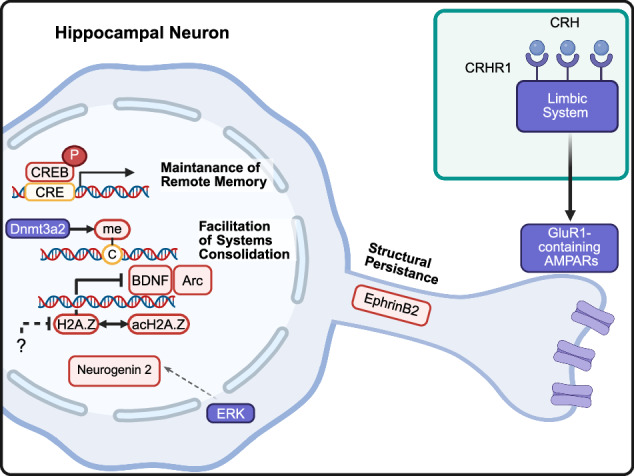
- Molecular correlates of remote memory include pCREB increases after 50 days, GluR1 changes after 28 days, ERK5 effects on remote but not short-term/recent memory, and epigenetic changes such as H2A.Z and Dnmt3a2-related regulation.
## Methods
- This is a review article, not an original experimental study; it synthesizes prior work on systems consolidation and remote fear memory.
- The paper draws on rodent studies (rats and mice) using lesions, optogenetics, chemogenetics, functional imaging/connectome analyses, electrophysiology, and molecular manipulations.
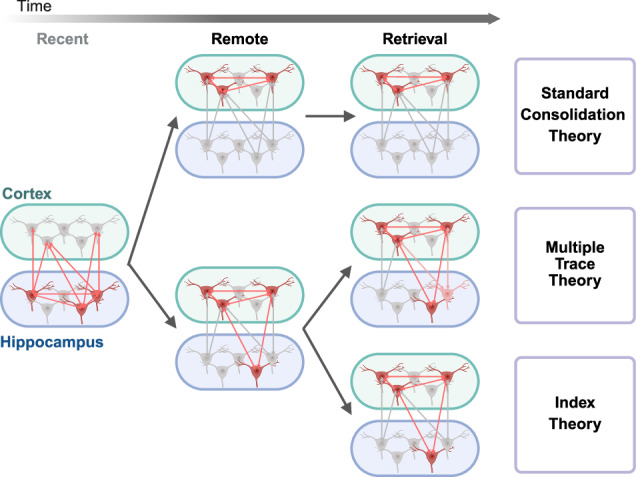
- The main analysis is conceptual and narrative, organizing evidence by theory (SCT, MTT, trace transformation theory, indexing theory), hippocampal subregion, molecular mechanism, and hippocampus-to-cortex circuitry.
## Limitations
- The paper states that extended involvement of the hippocampus in remote memory retrieval remains controversial and notes that earlier and more recent studies differ on whether hippocampal activity is higher during remote retrieval.
- It explicitly says there are relatively few mechanistic studies showing how hippocampal activity modulates interactions with other brain regions during systems consolidation.
- It also states that the meaning of “remote” varies substantially across studies; additionally, the text makes evident that the review is not a primary data study and therefore cannot provide new estimates or causal tests itself.
Model-written summary. Check it against the paper before relying on it.
Integrity signals
Registry
Cites
Statistics
Figures
Verification
Claims the paper makes
2 Valid · 0 Not valid · 78 Not checked · 38 Own results and interpretations
The cited sources support only part of this claim — read each source’s verdict below.
In the paper
“In addition, an increase in the hippocampus-to-RSC interaction during phasic rapid eye movement sleep is associated with memory retention 79 .”
What the sources say
- Partly supportedcites [79] de Almeida-Filho, D. G. et al. Hippocampus–retrosplenial cortex interaction is increased during phasic REM and contributes to memory consolidation. Sci. Rep. 11, 13078 (2021). sourceExperimental — accuracy not yet measured
The Abstract and Discussion of our copy support the core of the paraphrase: a training-induced modulation of Granger causality between HPC and RSC during REM sleep correlated with memory retrieval 24 h after contextual fear conditioning in rats, with causality peaking during theta acceleration in synchrony with phasic REM (Abstract; Discussion, 'phREM events are intrinsically linked to GC modulation'). However, the direction specified in the citing sentence ('hippocampus-to-RSC') is not what the paper ties to memory: the Abstract states 'Retrieval was proportional to the change in the relative influence RSC exerted upon HPC theta oscillation,' and the Results ('Phasic REM events are related to transient modulation of Granger causality') conclude 'the increased influence of the RSC over the HPC during phREM plays a role in memory consolidation,' while the HPC→RSC direction is the pre-training baseline that tends to supersede the converse. Also, the paper's evidence is a correlation with retrieval 24 h post-training in rats (fear conditioning), not memory retention generally. (LLM, conf=0.72)
plainstates an association- Asserted: passes — The authors put it forward as true.
- Checkable: passes — It can be checked against evidence.
- Load-bearing: passes — The paper’s conclusions depend on it.
- Based: passes — The paper gives a reason why it holds.
- Partly supported
In the paper
“For instance, hippocampal lesion after learning impairs remote memory formation 8 ,”
What the sources say
- Not checked yetcites [8] Nakashiba, T., Buhl, D. L., McHugh, T. J. & Tonegawa, S. Hippocampal CA3 output is crucial for ripple-associated reactivation and consolidation of memory. Neuron 62, 781–787 (2009). source
plainstates a cause- Asserted: passes — The authors put it forward as true.
- Checkable: passes — It can be checked against evidence.
- Load-bearing: passes — The paper’s conclusions depend on it.
- Based: passes — The paper gives a reason why it holds.
In the paper
“At the subregional level, optogenetic engram reactivation in the dentate gyrus (DG) induces freezing behavior in infant mice 27 ,”
What the sources say
- Not checked yetcites [27] Guskjolen, A. et al. Recovery of “lost” infant memories in mice. Curr. Biol. 28, 2283–2290 (2018). source
plainstates a cause- Asserted: passes — The authors put it forward as true.
- Checkable: passes — It can be checked against evidence.
- Load-bearing: unclear — It is unclear whether the paper’s conclusions depend on it.
- Based: passes — The paper gives a reason why it holds.
None of the sources cited for this claim have been checked yet.
In the paper
“Multiple studies have suggested that the hippocampus contributes to memory formation and subsequent reorganization in a temporally limited manner.”
What the sources say
- Not checked yetcites [23] Kim, J. J. & Fanselow, M. S. Modality-specific retrograde amnesia of fear. Science 256, 675–677 (1992). source
- Not checked yetcites [24] Quinn, J. J., Ma, Q. D., Tinsley, M. R., Koch, C. & Fanselow, M. S. Inverse temporal contributions of the dorsal hippocampus and medial prefrontal cortex to the expression of long-term fear memories. Learn. Mem. 15, 368–372 (2008). source
hedgedstates a possible cause- Asserted: passes — The authors put it forward as true.
- Checkable: passes — It can be checked against evidence.
- Load-bearing: unclear — It is unclear whether the paper’s conclusions depend on it.
- Based: passes — The paper gives a reason why it holds.
In the paper
“During systems reconsolidation, the reactivated hippocampal trace is thought to provide a scaffold for integrating new information 37 .”
What the sources say
- Not checked yetcites [37] Myers, K. M. & Davis, M. Systems-level reconsolidation: reengagement of the hippocampus with memory reactivation. Neuron 36, 340–343 (2002). source
hedgedstates a possible cause- Asserted: passes — The authors put it forward as true.
- Checkable: passes — It can be checked against evidence.
- Load-bearing: unclear — It is unclear whether the paper’s conclusions depend on it.
- Based: passes — The paper gives a reason why it holds.
50 more claims
Create a free account to see all 118 claims and to verify the 115 references still open.
- It may state two separate claims as one. 54
- Probably not a substantial claim. 24
Citations
Cites
McClelland, J. L., McNaughton, B. L., & O'Reilly, R. C. (1995) · Psychological Review · doi:10.1037/0033-295x.102.3.419 · Cited by 5,256 · cited 1×
“The standard consolidation theory (SCT) represents a classical view of systems consolidation, in which memories are initially stored in the hippocampus and then transferred to the neocortex, forming a solid state of memory 7,13,14 .”
Modality-Specific Retrograde Amnesia of Fear
Kim, J. J., & Fanselow, M. S. (1992) · Science · doi:10.1126/science.1585183 · Cited by 2,483
The organization of recent and remote memories
Frankland, P. W., & Bontempi, B. (2005) · Nature Reviews Neuroscience · doi:10.1038/nrn1607 · Cited by 2,138 · cited 2×
“The standard consolidation theory (SCT) represents a classical view of systems consolidation, in which memories are initially stored in the hippocampus and then transferred to the neocortex, forming a solid state of memory 7,13,14 .”
Memory consolidation, retrograde amnesia and the hippocampal complex
Nadel, L., & Moscovitch, M. (1997) · Current Opinion in Neurobiology · doi:10.1016/s0959-4388(97)80010-4 · Cited by 1,924 · cited 6×
“According to the MTT, the hippocampus remains involved in detailed information, whereas the neocortex supports generalized remote memories, highlighting that continued interaction between these regions plays a crucial role in remote memory retrieval 18 .”
InfluentialRetrograde amnesia and memory consolidation: a neurobiological perspective
Squire, L. R., & Alvarez, P. (1995) · Current Opinion in Neurobiology · doi:10.1016/0959-4388(95)80023-9 · Cited by 1,416 · cited 1×
“The standard consolidation theory (SCT) represents a classical view of systems consolidation, in which memories are initially stored in the hippocampus and then transferred to the neocortex, forming a solid state of memory 7,13,14 .”
Engrams and circuits crucial for systems consolidation of a memory
Kitamura, T., Ogawa, S. K., Roy, D. S., Okuyama, T., Morrissey, M. D., Smith, L. M., Redondo, R. L., & Tonegawa, S. (2017) · Science · doi:10.1126/science.aam6808 · Cited by 1,104 · cited 3×
“Rodent studies have shown that hippocampal engram cells are reactivated during recent memory recall, whereas neocortical engram cells are reactivated during remote memory recall 3,5,6 .”
Memory engrams: Recalling the past and imagining the future
Josselyn, S. A., & Tonegawa, S. (2020) · Science · doi:10.1126/science.aaw4325 · Cited by 1,087 · cited 2×
“Rodent studies have shown that hippocampal engram cells are reactivated during recent memory recall, whereas neocortical engram cells are reactivated during remote memory recall 3,5,6 .”
The Involvement of the Anterior Cingulate Cortex in Remote Contextual Fear Memory
Frankland, P. W., Bontempi, B., Talton, L. E., Kaczmarek, L., & Silva, A. J. (2004) · Science · doi:10.1126/science.1094804 · Cited by 945 · cited 3×
“Rodent studies have shown that hippocampal engram cells are reactivated during recent memory recall, whereas neocortical engram cells are reactivated during remote memory recall 3,5,6 .”
Rempel-Clower, N. L., Zola, S. M., Squire, L. R., & Amaral, D. G. (1996) · The Journal of Neuroscience · doi:10.1523/jneurosci.16-16-05233.1996 · Cited by 818 · cited 1×
“For instance, Rempel-Clower et al. reported that patients with bilateral hippocampal damage exhibited temporally graded retrograde and pronounced anterograde types of amnesia 16 .”
Cellular and Systems Reconsolidation in the Hippocampus
Debiec, J., LeDoux, J. E., & Nader, K. (2002) · Neuron · doi:10.1016/s0896-6273(02)01001-2 · Cited by 763 · cited 1×
“During systems reconsolidation, inhibition of protein synthesis in the hippocampus using anisomycin disrupts the reconsolidation of memory older than 4 weeks 35,36 .”
Squire, L. R., Genzel, L., Wixted, J. T., & Morris, R. G. (2015) · Cold Spring Harbor Perspectives in Biology · doi:10.1101/cshperspect.a021766 · Cited by 700 · cited 1×
“Hippocampus for remote fear memory During systems consolidation, memory is gradually processed in distributed brain regions and becomes less dependent on the hippocampus 12,22 .”
Toward a molecular definition of long-term memory storage
Bailey, C. H., Bartsch, D., & Kandel, E. R. (1996) · Proceedings of the National Academy of Sciences · doi:10.1073/pnas.93.24.13445 · Cited by 691
Time-dependent reorganization of brain circuitry underlying long-term memory storage
Bontempi, B., Laurent-Demir, C., Destrade, C., & Jaffard, R. (1999) · Nature · doi:10.1038/23270 · Cited by 673 · cited 1×
“The neocortex is essential for remote memory storage 4 .”
Hippocampal Memory Traces Are Differentially Modulated by Experience, Time, and Adult Neurogenesis
Denny, C. A., Kheirbek, M. A., Alba, E. L., Tanaka, K. F., Brachman, R. A., Laughman, K. B., Tomm, N. K., Turi, G. F., Losonczy, A., & Hen, R. (2014) · Neuron · doi:10.1016/j.neuron.2014.05.018 · Cited by 558 · cited 2×
“Impairment of this pattern separation increases fear generalization within 10 days, highlighting that distinct engram patterns in the hippocampus are key modulators of precise fear memory 28,83,84 .”
Dynamics of Retrieval Strategies for Remote Memories
Goshen, I., Brodsky, M., Prakash, R., Wallace, J., Gradinaru, V., Ramakrishnan, C., & Deisseroth, K. (2011) · Cell · doi:10.1016/j.cell.2011.09.033 · Cited by 548 · cited 1×
“In particular, IEG expression levels in the hippocampus are reduced in the generalized context, suggesting that decreased discrimination is associated with reduced hippocampal activity 86 .”
Cortical Representations Are Reinstated by the Hippocampus during Memory Retrieval
Tanaka, K. Z., Pevzner, A., Hamidi, A. B., Nakazawa, Y., Graham, J., & Wiltgen, B. J. (2014) · Neuron · doi:10.1016/j.neuron.2014.09.037 · Cited by 404 · cited 2×
“Supporting this hypothesis, the inhibition of the hippocampus-to-RSC circuit during memory acquisition impaired remote memory formation 70,76 .”
Interregional synaptic maps among engram cells underlie memory formation
Choi, J.-H., Sim, S.-E., Kim, J.-I., Choi, D. I., Oh, J., Ye, S., Lee, J., Kim, T., Ko, H.-G., Lim, C.-S., et al. (2018) · Science · doi:10.1126/science.aas9204 · Cited by 382 · cited 1×
“Synaptic consolidation involves molecular and structural changes at individual synapses and neurons 10,11 , whereas systems consolidation is a process of memory storage reorganization throughout the distributed regions for long-term retention 12 .”
Self-citationThe hippocampal indexing theory and episodic memory: Updating the index
Teyler, T. J., & Rudy, J. W. (2007) · Hippocampus · doi:10.1002/hipo.20350 · Cited by 373 · cited 1×
“Although remote memories are consolidated within cortical networks, a small population of hippocampal neurons retains an index that enables the retrieval of these distributed neocortical patterns 20 .”
The hippocampus and related neocortical structures in memory transformation
Sekeres, M. J., Winocur, G., & Moscovitch, M. (2018) · Neuroscience Letters · doi:10.1016/j.neulet.2018.05.006 · Cited by 370 · cited 1×
“According to trace transformation theory, the hippocampus and distributed cortical regions encode distinct aspects of memory and engage in dynamic, bidirectional interactions throughout memory formation and retrieval 19 .”
Direct Reactivation of a Coherent Neocortical Memory of Context
Cowansage, K. K., Shuman, T., Dillingham, B. C., Chang, A., Golshani, P., & Mayford, M. (2014) · Neuron · doi:10.1016/j.neuron.2014.09.022 · Cited by 366 · cited 1×
“Although the inactivation of CA1 attenuated the fear memory, the reactivation of RSC alone was suf fi cient to retrieve fear memory which is independent of hippocampal representation 69 .”
Restivo, L., Vetere, G., Bontempi, B., & Ammassari-Teule, M. (2009) · Journal of Neuroscience · doi:10.1523/jneurosci.0966-09.2009 · Cited by 326 · cited 1×
“P, phosphorylation; me, methylation. attenuate ACC spinogenesis following remote memory consolidation, supporting an interdependent role of the hippocampus and ACC during systems consolidation 44,64 .”
Identification of a Functional Connectome for Long-Term Fear Memory in Mice
Wheeler, A. L., Teixeira, C. M., Wang, A. H., Xiong, X., Kovacevic, N., Lerch, J. P., McIntosh, A. R., Parkinson, J., & Frankland, P. W. (2013) · PLoS Computational Biology · doi:10.1371/journal.pcbi.1002853 · Cited by 315
Reactivation of Neural Ensembles during the Retrieval of Recent and Remote Memory
Tayler, K. K., Tanaka, K. Z., Reijmers, L. G., & Wiltgen, B. J. (2013) · Current Biology · doi:10.1016/j.cub.2012.11.019 · Cited by 297 · cited 2×
“Several studies have demonstrated that the hippocampus is reactivated during remote retrieval, indicating that it can store information and engage in memory retrieval for up to 14 days after learning 29,30 .”
Hippocampal CA3 Output Is Crucial for Ripple-Associated Reactivation and Consolidation of Memory
Nakashiba, T., Buhl, D. L., McHugh, T. J., & Tonegawa, S. (2009) · Neuron · doi:10.1016/j.neuron.2009.05.013 · Cited by 286 · cited 2×
“For instance, hippocampal lesion after learning impairs remote memory formation 8 , and inhibition of hippocampal subregions disrupts remote memory recall 9 .”
Kol, A., Adamsky, A., Groysman, M., Kreisel, T., London, M., & Goshen, I. (2020) · Nature Neuroscience · doi:10.1038/s41593-020-0679-6 · Cited by 285 · cited 1×
“In addition, astrocytes within CA1 contribute to remote memory formation 62 and facilitate axonal recruitment toward the ACC 63 , suggesting the possibility that hippocampal astrocytes might facilitate the recruitment of ACC-projecting CA1 neurons, thereby contributing to remote memory formation.”
Neural Substrates of Overgeneralized Conditioned Fear in PTSD
Kaczkurkin, A. N., Burton, P. C., Chazin, S. M., Manbeck, A. B., Espensen-Sturges, T., Cooper, S. E., Sponheim, S. R., & Lissek, S. (2017) · American Journal of Psychiatry · doi:10.1176/appi.ajp.2016.15121549 · Cited by 252
Conjunctive representations, the hippocampus, and contextual fear conditioning
RUDY, J. W., & O'REILLY, R. C. (2001) · Cognitive, Affective, & Behavioral Neuroscience · doi:10.3758/cabn.1.1.66 · Cited by 247 · cited 1×
“The fi ndings support the IT in that the hippocampus plays a pivotal role in the retrieval of remote fear memory through its dynamic interaction with cortical regions encoding consolidated memory traces 21 .”
Epigenetic regulation and chromatin remodeling in learning and memory
Kim, S., & Kaang, B.-K. (2017) · Experimental & Molecular Medicine · doi:10.1038/emm.2016.140 · Cited by 213 · cited 1×
“In addition to signaling and structural mechanisms, epigenetic modi fi cations have emerged as essential regulators of remote memory in the hippocampus 47 .”
Self-citationXia, F., Richards, B. A., Tran, M. M., Josselyn, S. A., Takehara-Nishiuchi, K., & Frankland, P. W. (2017) · eLife · doi:10.7554/elife.27868 · Cited by 206 · cited 1×
“Ripple – spindle coupling during sleep is enhanced after learning, and the disruption of this coupling hinders both recent and remote fear memory 66 .”
The Neurobiology of Fear Generalization
Asok, A., Kandel, E. R., & Rayman, J. B. (2019) · Frontiers in Behavioral Neuroscience · doi:10.3389/fnbeh.2018.00329 · Cited by 186 · cited 1×
“Fear generalization refers to the phenomenon in which conditioned fear responses are expressed not only in the original conditioned context but also in novel or similar contexts 80 .”
The Neuroanatomy of Remote Memory
Bayley, P. J., Gold, J. J., Hopkins, R. O., & Squire, L. R. (2005) · Neuron · doi:10.1016/j.neuron.2005.04.034 · Cited by 182 · cited 1×
“According to the MTT, the hippocampus remains involved in detailed information, whereas the neocortex supports generalized remote memories, highlighting that continued interaction between these regions plays a crucial role in remote memory retrieval 18 .”
Corcoran, K. A., Donnan, M. D., Tronson, N. C., Guzmán, Y. F., Gao, C., Jovasevic, V., Guedea, A. L., & Radulovic, J. (2011) · The Journal of Neuroscience · doi:10.1523/jneurosci.2107-11.2011 · Cited by 181 · cited 1×
“The RSC is involved not only in recent 72,73 but also in remote fear memory 74 .”
Histone H2A.Z subunit exchange controls consolidation of recent and remote memory
Zovkic, I. B., Paulukaitis, B. S., Day, J. J., Etikala, D. M., & Sweatt, J. D. (2014) · Nature · doi:10.1038/nature13707 · Cited by 179 · cited 1×
“Z in the CA1 region enhanced both 1-day and 2-week fear memory, which was accompanied by changes in IEG expression patterns 48 .”
Guo, N., Soden, M. E., Herber, C., Kim, M. T., Besnard, A., Lin, P., Ma, X., Cepko, C. L., Zweifel, L. S., & Sahay, A. (2018) · Nature Medicine · doi:10.1038/nm.4491 · Cited by 174 · cited 1×
“Notably, the DG engram neurons, which regulate CA3 pattern separation, enhance the reactivation of ACC engram neurons during 2-week memory retrieval 67 .”
Zhu, H., Pleil, K. E., Urban, D. J., Moy, S. S., Kash, T. L., & Roth, B. L. (2014) · Neuropsychopharmacology · doi:10.1038/npp.2014.35 · Cited by 162 · cited 1×
“Impairment of this pattern separation increases fear generalization within 10 days, highlighting that distinct engram patterns in the hippocampus are key modulators of precise fear memory 28,83,84 .”
Recovery of “Lost” Infant Memories in Mice
Guskjolen, A., Kenney, J. W., de la Parra, J., Yeung, B.-R. A., Josselyn, S. A., & Frankland, P. W. (2018) · Current Biology · doi:10.1016/j.cub.2018.05.059 · Cited by 156 · cited 1×
“At the subregional level, optogenetic engram reactivation in the dentate gyrus (DG) induces freezing behavior in infant mice 27 , and optogenetic manipulation of DG engram neurons affects 2-week memory retrieval 5,28 .”
Quinn, J. J., Ma, Q. D., Tinsley, M. R., Koch, C., & Fanselow, M. S. (2008) · Learning & Memory · doi:10.1101/lm.813608 · Cited by 154 · cited 2×
“Lesions in the mPFC impair remote fear retrieval in rats 24 and activity within this region increases during remote, but not extinguished, fear memory retrieval 6,54 .”
Sutherland, R. J., O'Brien, J., & Lehmann, H. (2008) · Hippocampus · doi:10.1002/hipo.20431 · Cited by 140 · cited 1×
“Lesion studies have shown that damage in the hippocampus impairs both short-term and long-term memories in rats 25,26 .”
de Sousa, A. F., Cowansage, K. K., Zutshi, I., Cardozo, L. M., Yoo, E. J., Leutgeb, S., & Mayford, M. (2019) · Proceedings of the National Academy of Sciences · doi:10.1073/pnas.1818432116 · Cited by 138
Cullen, P. K., Gilman, T. L., Winiecki, P., Riccio, D. C., & Jasnow, A. M. (2015) · Neurobiology of Learning and Memory · doi:10.1016/j.nlm.2015.07.001 · Cited by 133 · cited 3×
“For instance, 30 min after memory acquisition, histone variant H2A.”
Neocortical synaptic engrams for remote contextual memories
Lee, J., Kim, W. B., Park, E. H., & Cho, J.-H. (2022) · Nature Neuroscience · doi:10.1038/s41593-022-01223-1 · Cited by 133 · cited 1×
“Ablation of engram neurons in either CA1 or RSC disrupts remote memory formation and impairs mPFC engram maturation, suggesting that the CA1 – RSC pathway conveys critical memory content required for systems consolidation 77 .”
Kim, W. B., & Cho, J.-H. (2017) · The Journal of Neuroscience · doi:10.1523/jneurosci.3579-16.2017 · Cited by 131 · cited 2×
“Anatomically, the hippocampus directly projects axons to the mPFC 56 , and this circuit is crucial for remote memory expression 57 .”
Kwapis, J. L., Jarome, T. J., Lee, J. L., & Helmstetter, F. J. (2015) · Neurobiology of Learning and Memory · doi:10.1016/j.nlm.2015.06.007 · Cited by 130 · cited 1×
“RSC is increasingly regarded as a crucial region for fear memory formation and retrieval 2,68 .”
Biedenkapp, J. C., & Rudy, J. W. (2007) · Learning & Memory · doi:10.1101/lm.499407 · Cited by 130 · cited 1×
“The generalization of fear memories is considered to be the result of the distribution of memory traces from the hippocampus to cortical regions during systems consolidation, rather than restriction to the intrahippocampal circuits 82 .”
Lehmann, H., Lacanilao, S., & Sutherland, R. J. (2007) · European Journal of Neuroscience · doi:10.1111/j.1460-9568.2007.05374.x · Cited by 129 · cited 1×
“Lesion studies have shown that damage in the hippocampus impairs both short-term and long-term memories in rats 25,26 .”
Winocur, G., Frankland, P. W., Sekeres, M., Fogel, S., & Moscovitch, M. (2009) · Learning & Memory · doi:10.1101/lm.1447209 · Cited by 120
A cFos activation map of remote fear memory attenuation
Silva, B. A., Burns, A. M., & Gräff, J. (2019) · Psychopharmacology · doi:10.1007/s00213-018-5000-y · Cited by 118 · cited 2×
“Lesions in the mPFC impair remote fear retrieval in rats 24 and activity within this region increases during remote, but not extinguished, fear memory retrieval 6,54 .”
Zheng, C., & Zhang, T. (2015) · Neuroscience · doi:10.1016/j.neuroscience.2015.01.071 · Cited by 117 · cited 1×
“Within the ventral CA1 – mPFC circuit, hippocampal neurons projecting to the mPFC are preferentially activated during context exposure and are thought to modulate the transfer of the fear memory trace 57,59 .”
Synaptic correlates of associative fear memory in the lateral amygdala
Choi, D. I., Kim, J., Lee, H., Kim, J., Sung, Y., Choi, J. E., Venkat, S. J., Park, P., Jung, H., & Kaang, B. (2021) · Neuron · doi:10.1016/j.neuron.2021.07.003 · Cited by 116 · cited 1×
“In terms of synaptic plasticity, connectivity among engram neurons is essential for memory formation and maintenance in the hippocampus and amygdala, which re fl ects memory states 90,91 .”
Self-citationIshikawa, R., Fukushima, H., Frankland, P. W., & Kida, S. (2016) · eLife · doi:10.7554/elife.17464 · Cited by 114 · cited 1×
“During systems reconsolidation, inhibition of protein synthesis in the hippocampus using anisomycin disrupts the reconsolidation of memory older than 4 weeks 35,36 .”
Liu, X., & Carter, A. G. (2018) · The Journal of Neuroscience · doi:10.1523/jneurosci.0378-18.2018 · Cited by 112 · cited 1×
“Anatomically, the hippocampus directly projects axons to the mPFC 56 , and this circuit is crucial for remote memory expression 57 .”
Ortiz, S., Latsko, M. S., Fouty, J. L., Dutta, S., Adkins, J. M., & Jasnow, A. M. (2019) · Journal of Neuroscience · doi:10.1523/jneurosci.0810-19.2019 · Cited by 111 · cited 1×
“The chemogenetic inhibition of the ventral hippocampus reduces freezing in a novel context, in cooperation with the ACC, which assumes a more prominent role in memory retrieval in the consolidated state 30,87 .”
Ruggiero, R. N., Rossignoli, M. T., Marques, D. B., de Sousa, B. M., Romcy-Pereira, R. N., Lopes-Aguiar, C., & Leite, J. P. (2021) · Frontiers in Cellular Neuroscience · doi:10.3389/fncel.2021.732360 · Cited by 111
Coordinated Interaction between Hippocampal Sharp-Wave Ripples and Anterior Cingulate Unit Activity
Wang, D. V., & Ikemoto, S. (2016) · The Journal of Neuroscience · doi:10.1523/jneurosci.1042-16.2016 · Cited by 103 · cited 1×
“ACC activity is mediated by CA1 activity, which may represent an underlying mechanism of memory transfer 65 .”
Perspectives on fear generalization and its implications for emotional disorders
Jasnow, A. M., Lynch, J. F., Gilman, T. L., & Riccio, D. C. (2017) · Journal of Neuroscience Research · doi:10.1002/jnr.23837 · Cited by 92 · cited 1×
“As memory undergoes systems consolidation, memory dependence on the hippocampus is reduced, whereas the cortical regions become progressively actively involved in fear memory retrieval 61,85 .”
Systems consolidation and the content of memory
Wiltgen, B. J., & Tanaka, K. Z. (2013) · Neurobiology of Learning and Memory · doi:10.1016/j.nlm.2013.06.001 · Cited by 85 · cited 2×
“Hippocampus for remote fear memory During systems consolidation, memory is gradually processed in distributed brain regions and becomes less dependent on the hippocampus 12,22 .”
Yamawaki, N., Corcoran, K. A., Guedea, A. L., Shepherd, G. M. G., & Radulovic, J. (2019) · Cerebral Cortex · doi:10.1093/cercor/bhy142 · Cited by 81
Myers, K. M., & Davis, M. (2002) · Neuron · doi:10.1016/s0896-6273(02)01017-6 · Cited by 68 · cited 1×
“During systems reconsolidation, the reactivated hippocampal trace is thought to provide a scaffold for integrating new information 37 .”
Corcoran, K. A., Frick, B. J., Radulović, J., & Kay, L. M. (2015) · Neurobiology of Learning and Memory · doi:10.1016/j.nlm.2015.11.019 · Cited by 67 · cited 2×
“The RSC is involved not only in recent 72,73 but also in remote fear memory 74 .”
Thoeringer, C. K., Henes, K., Eder, M., Dahlhoff, M., Wurst, W., Holsboer, F., Deussing, J. M., Moosmang, S., & Wotjak, C. T. (2011) · Neuropsychopharmacology · doi:10.1038/npp.2011.256 · Cited by 64 · cited 2×
“…consolidation by promoting the expression and stabilization of the GluR1-containing AMPA receptors in the DG. Twenty-eight days after learning, treatment of CRHR1 antagonist induced the decreased GluR1 expression in the DG, which is closely correlated with changes in remote freezing behavior 1 .”
Hippocampal Ripple Coordinates Retrosplenial Inhibitory Neurons during Slow-Wave Sleep
Opalka, A. N., Huang, W.-Q., Liu, J., Liang, H., & Wang, D. V. (2020) · Cell Reports · doi:10.1016/j.celrep.2019.12.038 · Cited by 63 · cited 1×
“Furthermore, the theta band in the RSC showed increased coherence with CA1 local fi eld potentials during context exposure and fear retrieval 72 , and this oscillatory coordination might support systems consolidation 78 .”
Lee, S.-H., Lim, C.-S., Park, H., Lee, J.-A., Han, J.-H., Kim, H., Cheang, Y.-H., Lee, S.-H., Lee, Y.-S., Ko, H.-G., et al. (2007) · Cell · doi:10.1016/j.cell.2007.03.041 · Cited by 58 · cited 1×
“Moreover, synaptonuclear signaling, which refers to retrograde signaling from activated synapse to the nucleus, plays a critical role in synaptic potentiation 92,93 and induction of gene expression in the nucleus 94,95 .”
Self-citationde Almeida-Filho, D. G., Koike, B. D. V., Billwiller, F., Farias, K. S., de Sales, I. R. P., Luppi, P.-H., Ribeiro, S., & Queiroz, C. M. (2021) · Scientific Reports · doi:10.1038/s41598-021-91659-5 · Cited by 56 · cited 1×
“In addition, an increase in the hippocampus-to-RSC interaction during phasic rapid eye movement sleep is associated with memory retention 79 .”
The Medial Prefrontal Cortex and Fear Memory: Dynamics, Connectivity, and Engrams
Dixsaut, L., & Gräff, J. (2021) · International Journal of Molecular Sciences · doi:10.3390/ijms222212113 · Cited by 56 · cited 1×
“The medial prefrontal cortex (mPFC) plays a central role in encoding and retrieval of remote memory 51 – 53 .”
Katche, C., Dorman, G., Slipczuk, L., Cammarota, M., & Medina, J. H. (2013) · Learning & Memory · doi:10.1101/lm.030080.112 · Cited by 55 · cited 1×
“RSC is increasingly regarded as a crucial region for fear memory formation and retrieval 2,68 .”
Lee, C., Lee, B. H., Jung, H., Lee, C., Sung, Y., Kim, H., Kim, J., Shim, J. Y., Kim, J.-I., Choi, D. I., et al. (2023) · Current Biology · doi:10.1016/j.cub.2022.12.038 · Cited by 54
Self-citationAutobiographical memory, future imagining, and the medial temporal lobe
Dede, A. J. O., Wixted, J. T., Hopkins, R. O., & Squire, L. R. (2016) · Proceedings of the National Academy of Sciences · doi:10.1073/pnas.1615864113 · Cited by 49 · cited 1×
“Likewise, patients with damage to the medial temporal lobe showed intact distant past and future memories, emphasizing the discrete roles of the hippocampus and cortex in memory storage based on temporal dynamics 17 .”
Narkaj, K., Stefanelli, G., Wahdan, M., Azam, A. B., Ramzan, F., Steininger, C. F. D., Walters, B. J., & Zovkic, I. B. (2018) · eNeuro · doi:10.1523/eneuro.0378-18.2018 · Cited by 48 · cited 1×
“Z through Tip60 inhibition improves 7-day fear memory 49 .”
Beeman, C. L., Bauer, P. S., Pierson, J. L., & Quinn, J. J. (2013) · Learning & Memory · doi:10.1101/lm.031161.113 · Cited by 46 · cited 1×
“For instance, lesions in the mPFC and hippocampus induced impaired fear memory in rats 58 .”
Regulated transport of signaling proteins from synapse to nucleus
Herbst, W. A., & Martin, K. C. (2017) · Current Opinion in Neurobiology · doi:10.1016/j.conb.2017.04.006 · Cited by 46 · cited 1×
“Moreover, synaptonuclear signaling, which refers to retrograde signaling from activated synapse to the nucleus, plays a critical role in synaptic potentiation 92,93 and induction of gene expression in the nucleus 94,95 .”
Engram stability and maturation during systems consolidation
Refaeli, R., Kreisel, T., Groysman, M., Adamsky, A., & Goshen, I. (2023) · Current Biology · doi:10.1016/j.cub.2023.07.042 · Cited by 46
Abate, G., Colazingari, S., Accoto, A., Conversi, D., & Bevilacqua, A. (2018) · Behavioural Brain Research · doi:10.1016/j.bbr.2018.02.011 · Cited by 45 · cited 2×
“EphrinB2 is increased in CA1 shortly after learning, and this might affect the cortical engram formation, impairing the ACC synaptogenesis for remote memory formation 44 .”
ACC Theta Improves Hippocampal Contextual Processing during Remote Recall
Wirt, R. A., & Hyman, J. M. (2019) · Cell Reports · doi:10.1016/j.celrep.2019.04.080 · Cited by 44 · cited 1×
“For memories older than 7 days, anterior cingulate cortex (ACC) theta oscillation modulates the CA1 gamma activity, exhibiting phase-locked activity that is related to context information 32,33 .”
Physiological Signature of Memory Age in the Prefrontal-Hippocampal Circuit
Makino, Y., Polygalov, D., Bolaños, F., Benucci, A., & McHugh, T. J. (2019) · Cell Reports · doi:10.1016/j.celrep.2019.11.075 · Cited by 42 · cited 1×
“For memories older than 7 days, anterior cingulate cortex (ACC) theta oscillation modulates the CA1 gamma activity, exhibiting phase-locked activity that is related to context information 32,33 .”
Pan, Y.-W., Zou, J., Wang, W., Sakagami, H., Garelick, M. G., Abel, G., Kuo, C. T., Storm, D. R., & Xia, Z. (2012) · Journal of Biological Chemistry · doi:10.1074/jbc.m112.344762 · Cited by 41 · cited 1×
“Similarly, extra-cellular signal-regulated kinase 5 (ERK5), essential for adult neurogenesis, is involved in both hippocampal neurogenesis and memory formation 45 .”
Reconstructing a new hippocampal engram for systems reconsolidation and remote memory updating
Lei, B., Kang, B., Hao, Y., Yang, H., Zhong, Z., Zhai, Z., & Zhong, Y. (2024) · Neuron · doi:10.1016/j.neuron.2024.11.010 · Cited by 41
Kubík, Š., Miyashita, T., Kubik‐Zahorodna, A., & Guzowski, J. F. (2011) · Neurobiology of Learning and Memory · doi:10.1016/j.nlm.2011.10.004 · Cited by 39 · cited 1×
“Nevertheless, RSC activity can be reinforced by the hippocampal engram cells, thereby contributing to remote memory consolidation 70,71 .”
Tomé, D. F., Sadeh, S., & Clopath, C. (2022) · Nature Communications · doi:10.1038/s41467-022-28339-z · Cited by 31 · cited 1×
“Several studies have suggested that many brain regions, such as the amygdala and thalamus, are involved in systems consolidation 88,89 .”
Atucha, E., Ku, S.-P., Lippert, M., & Sauvage, M. M. (2023) · Cell Reports · doi:10.1016/j.celrep.2023.113317 · Cited by 31 · cited 2×
“For instance, hippocampal lesion after learning impairs remote memory formation 8 , and inhibition of hippocampal subregions disrupts remote memory recall 9 .”
Pan, Y.-W., Storm, D. R., & Xia, Z. (2012) · PLoS ONE · doi:10.1371/journal.pone.0050455 · Cited by 30 · cited 1×
“Furthermore, ERK5 knockout before memory acquisition, as well as 1 and even 5 weeks after acquisition, impaired remote fear memory, indicating that ERK5 is critically involved in both memory formation and long-term maintenance of memory 46 .”
Terranova, J. I., Yokose, J., Osanai, H., Ogawa, S. K., & 北村, 貴. (2023) · Nature Communications · doi:10.1038/s41467-023-39718-5 · Cited by 30
Novel learning accelerates systems consolidation of a contextual fear memory
Haubrich, J., Cassini, L. F., Diehl, F., Santana, F., de Oliveira, L. F., Alvares, L. D. O., & Quillfeldt, J. A. (2016) · Hippocampus · doi:10.1002/hipo.22575 · Cited by 29 · cited 1×
“During remote memory retrieval, the ACC plays a dominant role but remains on the hippocampal input for at least 21 days 60,61 .”
Refaeli, R., Kreisel, T., Yaish, T. R., Groysman, M., & Goshen, I. (2024) · Cell Reports · doi:10.1016/j.celrep.2024.113943 · Cited by 29
Yokoyama, M., & Matsuo, N. (2016) · Frontiers in Behavioral Neuroscience · doi:10.3389/fnbeh.2016.00218 · Cited by 28 · cited 1×
“Impairment of this pattern separation increases fear generalization within 10 days, highlighting that distinct engram patterns in the hippocampus are key modulators of precise fear memory 28,83,84 .”
Zent, K. H., & Dell’Acqua, M. L. (2024) · Journal of Neuroscience · doi:10.1523/jneurosci.1216-24.2024 · Cited by 23
Sung, Y., & Kaang, B. (2022) · Experimental Neurobiology · doi:10.5607/en22012 · Cited by 20
Self-citationGrohs, G., Smausz, R., Gigg, J., Boeckers, T. M., & Hengerer, B. (2022) · Behavioural Brain Research · doi:10.1016/j.bbr.2022.113862 · Cited by 19
Pedraza, L. K., Sierra, R. O., Crestani, A. P., Quillfeldt, J. A., & Alvares, L. D. O. (2017) · Hippocampus · doi:10.1002/hipo.22708 · Cited by 16 · cited 2×
“As memory undergoes systems consolidation, memory dependence on the hippocampus is reduced, whereas the cortical regions become progressively actively involved in fear memory retrieval 61,85 .”
Retrosplenial Cortex Effects Contextual Fear Formation Relying on Dysgranular Constituent in Rats
Pan, T., Liu, C., Li, D., Zhang, T., Zhang, W., Zhao, S., Zhou, Q., Nie, B., Zhu, G., Xu, L., et al. (2022) · Frontiers in Neuroscience · doi:10.3389/fnins.2022.886858 · Cited by 13 · cited 1×
“The RSC is involved not only in recent 72,73 but also in remote fear memory 74 .”
Multi-regional control of amygdalar dynamics reliably reflects fear memory age
Makino, Y., Wang, Y., & McHugh, T. J. (2024) · Nature Communications · doi:10.1038/s41467-024-54273-3 · Cited by 9
Kupke, J., Loizou, S., Bengtson, C. P., Sticht, C., & Oliveira, A. M. M. (2025) · Biological Psychiatry · doi:10.1016/j.biopsych.2025.01.016 · Cited by 9 · cited 1×
“…overexpression of the DNA methyltransferase Dnmt3a2 in the hippocampus enhanced the activation of the ACC neurons, and inhibition of these neurons impaired 2-week memory, suggesting that DNA methylation within the hippocampus in fl uences cortical activity involved in remote memory maintanance 50 .”
Memory allocation at the neuronal and synaptic levels
Park, H.-J., & Kaang, B. (2024) · BMB Reports · doi:10.5483/bmbrep.2023-0176 · Cited by 4 · cited 1×
“Although the molecular mechanisms underlying recent memory encoding in the hippocampus, such as the calcium-calmodulin-dependent kinase II pathway 41 , are well established, relatively few Fig.”
Self-citationNunes, F., Denucci, B. L., Lages, Y., Maisonnette, S. S., Krahe, T. E., Cruz, A. P. D. M., & Landeira-Fernández, J. (2023) · Neurobiology of Learning and Memory · doi:10.1016/j.nlm.2023.107828 · Cited by 3 · cited 1×
“Following fear retrieval after 50 days in rats, phosphorylated CREB (pCREB) levels increase in the hippocampus, correlating with the freezing ratio, suggesting that the CREB pathway contributes not only to the formation of recent memory but also to the maintenance of remote memory 42 .”
Guo, D., Wang, Z., Liu, F., Chen, W., Gao, X., Huang, S., Tabarak, S., Yao, Y., Zhang, S., Shi, J., et al. (2025) · Journal of Advanced Research · doi:10.1016/j.jare.2025.10.015 · Cited by 3 · cited 1×
“In addition to the dorsal hippocampus, ventral hippocampal CA1 also interacts with basolateral amygdala and plays a crucial role in remote reconsolidation 40 .”
Research works printed but not linked: 1
- Thompson, K. R. et al. Synapse to nucleus signaling during long-term synaptic plasticity: a role for the classical active nuclear import pathway. Neuron 44, 997–1009 (2004).
Cited by
Farias, C. P., Leite, A. K. O., Schmidt, B. E., Júnior, O. V. R., Prauchner, G. R. K., Rieder, A. S., Teixeira, L., & Wyse, Â. T. D. S. (2026) · SSRN Electronic Journal · doi:10.2139/ssrn.6985000
Metadata
- Authors
- Park, H., & Kaang, B.-K.
- Affiliations
- Seoul National University (KR)
- Corresponding author
- Kaang, Bong-Kiun
- Venue
- Experimental & Molecular Medicine
- Published
- 2026-04-13
- Volume
- 58
- Issue
- 4
- Pages
- 1010-1016
- ISSN
- 1226-3613 (ISSN-L)
- 2092-6413
- PMC
- PMC13144532
- OpenAlex
- W7154119747
- Cited by
- 1
- References
- 94
- Citations by year
- 2026: 1
- FWCI
- 1.51
- Type
- journal article
- Language
- en
- Open access
- gold
- doi.org
- Licence
- cc-by
- creativecommons.org/licenses/by/4.0 (tdm)
- creativecommons.org/licenses/by/4.0 (vor)
- Locations
- Experimental & Molecular Medicine (publishedVersion, cc-by)
- PubMed (publishedVersion)
- PubMed Central (publishedVersion, cc-by)
- DOAJ (DOAJ: Directory of Open Access Journals) (submittedVersion, cc-by-sa)
- Funders
- Institute for basic sciecne in South Korea
- Topics
- Life Sciences › Neuroscience › Cognitive Neuroscience › Memory and Neural Mechanisms
- Life Sciences › Neuroscience › Cognitive Neuroscience › Memory Processes and Influences
- Life Sciences › Neuroscience › Cellular and Molecular Neuroscience › Neuroscience and Neuropharmacology Research
- Keywords
- hippocampus, systems consolidation, episodic memory, neocortex, memory traces, memory transfer, memory generalization
- MeSH terms
- Memory Consolidation, Animals, Fear, Hippocampus, Humans, Memory, Neocortex, Memory, Long-Term
About these checks
Registry, retraction, Cites and statistics results are computed, not judged, with one exception: a printed reference that no index lists is read once by a model before it counts as a citation error. Claims are extracted by a model and kept only when their quote appears verbatim in the text; each cited source is then checked, with a model’s help, for whether it says what the claim relies on. Those verdicts can be wrong — read the claim’s quote and the cited source before relying on one.
The claim verdicts this report counts are experimental: their accuracy is not yet measured.
A language model drew the claims from the paper on 2026-10-11, under version 3 of the claim definition (model deepseek-v4.1-flash, prompt extract-v3).
A second model labelled each claim on 2026-10-11 (model jev-1.13-20260917, definition revision gold-guideline-v0.2).
Cited sources are checked with a language model’s help (qwen3.8-omni-flash).
Statistics and arithmetic are recomputed, not judged.
Confidence bands are shown only for fields calibrated on our annotated test set. None is calibrated yet, so no band is shown.
What counts as a claim ›How we measure confidence ›How we check this ›
Are you an author, or do you see a problem with this page? Request a review
Data sources
Bibliographic data: Semantic Scholar, OpenAlex, Crossref.
Contains information from the Semantic Scholar Academic Graph Datasets, made available under the ODC Attribution License (ODC-BY 1.0).
Semantic Scholar’s data is described in: Kinney, R., et al. (2023). The Semantic Scholar Open Data Platform. arXiv:2301.10140.
