

Prospective biomarkers of major depressive disorder: a systematic review and meta-analysis
Open accessThe DOI matches its Crossref record; 123 of the 123 references it cites were found in a registry or an index; 5 of the 77 sources its claims cite were checked for support.
Abstract
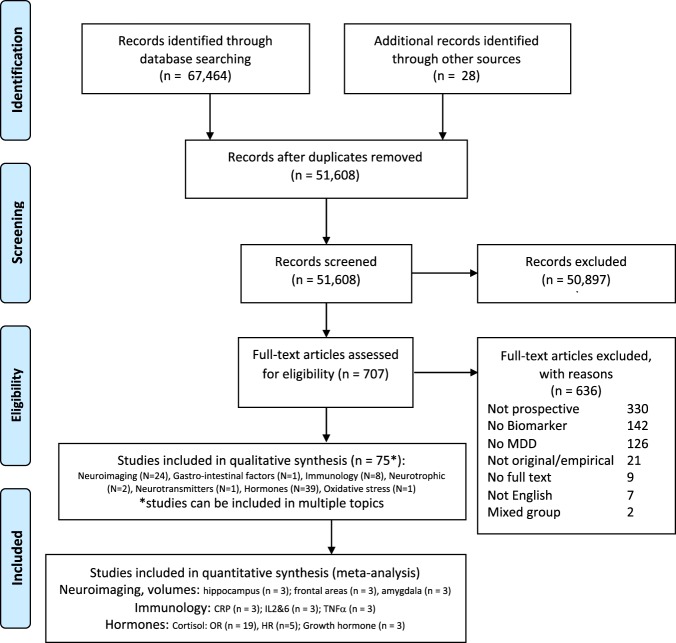
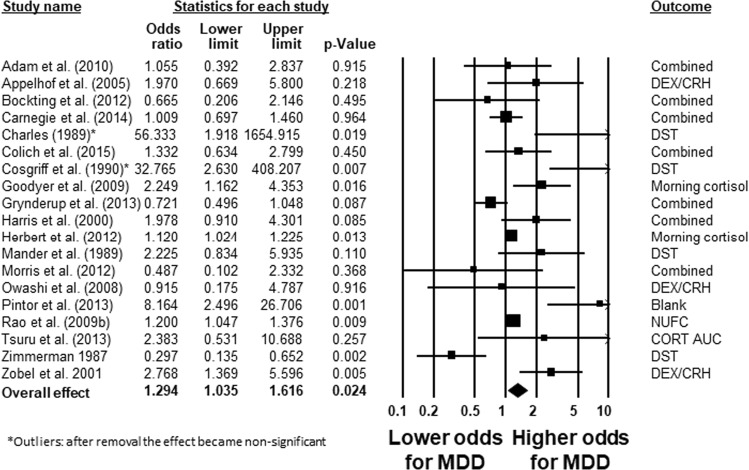
Leading biological hypotheses propose that biological changes may underlie major depressive disorder onset and relapse/recurrence. Here, we investigate if there is prospective evidence for biomarkers derived from leading theories. We focus on neuroimaging, gastrointestinal factors, immunology, neurotrophic factors, neurotransmitters, hormones, and oxidative stress. Searches were performed in Pubmed, Embase and PsychInfo for articles published up to 06/2019. References and citations of included articles were screened to identify additional articles. Inclusion criteria were having an MDD diagnosis as outcome, a biomarker as predictor, and prospective design search terms were formulated accordingly. PRISMA guidelines were applied. Meta-analyses were performed using a random effect model when three or more comparable studies were identified, using a random effect model. Our search resulted in 67,464 articles, of which 75 prospective articles were identified on: Neuroimaging (N = 24), Gastrointestinal factors (N = 1), Immunology (N = 8), Neurotrophic (N = 2), Neurotransmitters (N = 1), Hormones (N = 39), Oxidative stress (N = 1). Meta-analyses on brain volumes and immunology markers were not significant. Only cortisol (N = 19, OR = 1.294,p = 0.024) showed a predictive effect on onset/relapse/recurrence of MDD, but not on time until MDD onset/relapse/recurrence. However, this effect disappeared when studies including participants with a baseline clinical diagnosis were removed from the analyses. Other studies were too heterogeneous to compare. Thus, there is a lack of evidence for leading biological theories for onset and maintenance of depression. Only cortisol was identified as potential predictor for MDD, but results are influenced by the disease state. High-quality (prospective) studies on MDD are needed to disentangle the etiology and maintenance of MDD.
Overview
CoChat Summary
TL;DR
This systematic review and meta-analysis found scarce prospective evidence that leading biological biomarkers predict major depressive disorder onset, relapse, or recurrence. Only cortisol showed a small predictive effect, but it was confounded by baseline clinical depression, study quality, and possible publication bias.
Key findings
- From 67,464 screened articles, 75 prospective studies were identified: neuroimaging (N = 24), gastrointestinal factors (N = 1), immunology (N = 8), neurotrophic factors (N = 2), neurotransmitters (N = 1), hormones (N = 39), and oxidative stress (N = 1).
- Meta-analyses on brain volumes and immunology markers were not significant. Cortisol was the only significant predictor across comparable studies (N = 19, OR = 1.294, 95% CI [1.035–1.616], p = 0.024), but not for time until MDD onset/relapse/recurrence (HR = 1.011, 95% CI [0.963–1.040], p = 0.447).
- The cortisol effect disappeared when studies including participants with a baseline clinical MDD diagnosis were removed; it also became nonsignificant after removing outliers or low-quality studies, and publication-bias correction led to a nonsignificant effect.
- Only 38 studies excluded participants with baseline clinical MDD diagnosis, and most other biomarker findings were too heterogeneous or incidental to meta-analyze.
Methods
- Systematic review and meta-analysis following PRISMA, with searches in PubMed, Embase, and PsychInfo up to June 2019; inclusion required a prospective design, MDD diagnosis as outcome, and a biomarker from leading biological models as predictor.
- Random-effects meta-analyses were performed when three or more comparable studies were available, using odds ratio or risk ratio as summary effects; heterogeneity was assessed with Q-test and I², with sensitivity analyses, moderator analyses, and publication-bias assessment.
- The review included 75 prospective studies; 3,267 participants developed MDD over follow-up (median 3 years), and mean study quality score was 6.3 (median 6, range 3–9).
Limitations
- The paper states that included studies were often of poor quality, had small numbers of MDD cases at follow-up, and that neuroimaging studies used smaller samples than immunology and hormone studies.
- The authors did not correct for multiple testing; they note that such a correction would eliminate the cortisol effect, suggesting it may be a false positive.
- The paper states that heterogeneity was marked, many nonsignificant studies did not report sufficient data for meta-analysis, and this may have inflated odds ratios; results should be interpreted with caution.
- Evident from the text: many biomarker domains had fewer than three comparable studies or highly heterogeneous methods, precluding meta-analysis and limiting conclusions about most proposed biomarkers.
Model-written summary. Check it against the paper before relying on it.
Integrity signals
Registry
Cites
Statistics
Figures
Verification
Claims the paper makes
3 Valid · 4 Not valid · 41 Not checked · 86 Own results and interpretations
The cited sources support only part of this claim — read each source’s verdict below.
In the paper
“Incidental structural MRI studies reported that both smaller and larger insula volume was significantly related to MDD development in two studies [51,91].”
§ Prospective biomarkers of major depressive disorder: a systematic review and meta-analysis > Neuroimaging
What the sources say
- Partly supportedcites [51] 51. Foland-Ross LC, Sacchet MD, Prasad G, Gilbert B, Thompson PM, Gotlib IH. Cortical thickness predicts the first onset of major depression in adolescence. Int J Dev Neurosci. 2015;46:125-31.* sourceExperimental — accuracy not yet measured
Our copy supports the 'larger insula' side of the claim: Results > Neuroanatomic Classification reports that gray matter of the left insula was significantly thicker in girls who converted to depression (3.09 vs 2.94 mm, uncorrected p = 0.015), and the Discussion states that 'increased insula thickness predicted the onset of depression'. The Discussion also notes the opposing direction from other work (Belden et al., 2015, smaller insula volumes associated with subsequent depression in preschool children; Koolschijn et al., 2009, MDD-associated reductions in insula volume), so the two-directional framing is present. However, this study's own measure is cortical gray matter thickness, not insula volume — the Methods state thickness was chosen precisely because it is less influenced by surface area than volume and list volume as an alternative measure not used here — and its finding is an exploratory, uncorrected post-hoc test in a small sample of at-risk adolescent girls, so attributing 'insula volume' to this source overstates it. (LLM, conf=0.72)
- Could not verifycites [91] 91. Rao U, Chen L-A, Bidesi AS, Shad MU, Thomas MA, Hammen CL. Hippocampal changes associated with early-life adversity and vulnerability to depression. Biol Psychiatry. 2010;67:357-64.* sourceExperimental — accuracy not yet measured
Our copy of Rao et al. (2010) is entirely about hippocampal volume (and total brain volume) measured by manual tracing on 1.5T structural MRI in at-risk and depressed adolescents; the Methods (MRI section) state only left hippocampus, right hippocampus and TBV were traced, and the Results/Discussion report only hippocampal findings. No passage in the prompt or returned by searches for 'insula volume major depressive disorder' and 'insula insular cortex gray matter brain region volume' mentions the insula or insular volume at all, so this paper neither supports nor contradicts the attributed claim about smaller and larger insula volume relating to MDD development. (LLM, conf=0.70)
plainstates an association- Asserted: passes — The authors put it forward as true.
- Checkable: passes — It can be checked against evidence.
- Load-bearing: unclear — It is unclear whether the paper’s conclusions depend on it.
- Based: passes — The paper gives a reason why it holds.
- Partly supported
The sources with a verdict support this claim; the rest weren’t checked yet, have no full text we could read, or their verdicts aren’t rated yet.
In the paper
“No significant predictive value of the amygdala volume was found in three studies investigating two unique samples [53,54,74].”
§ Prospective biomarkers of major depressive disorder: a systematic review and meta-analysis > Neuroimaging
What the sources say
- Not checked yetcites [53] 53. Frodl T, Meisenzahl EM, Zetzsche T, Höhne T, Banac S, Schorr C, et al. Hippocampal and amygdala changes in patients with major depressive disorder and healthy controls during a 1-year follow-up. J Clin Psychiatry. 2004;65:492-9.* source
- Supportedcites [54] 54. Frodl T, Jäger M, Smajstrlova I, Born C, Bottlender R, Palladino T, et al. Effect of hippocampal and amygdala volumes on clinical outcomes in major depression: a 3-year prospective magnetic resonance imaging study. J Psychiatry Neurosci. 2008;33:423-30.* source
Our copy of Frodl et al. (2008) reports exactly the null predictive finding attributed to it: in the Results section (p. 426) 'Amygdala volume was not affected by remission status (F1–26 = 0.16, p = 0.69)' and patients with larger baseline amygdala volumes 'did not have significantly lower HDRS scores at 1, 2 and 3 years (F1–25 = 0.74, p = 0.40)', with no significant correlation between HDRS scores and amygdala volumes at baseline, discharge or 3-year follow-up. The aggregation into 'three studies investigating two unique samples' is the citing authors' synthesis across references 53, 54 and 74 and is not something this single source is asked to carry; the part attributed to this paper — a study showing no significant predictive value of amygdala volume for clinical outcome in major depression — is stated here. (LLM, conf=0.88)
- Supportedcites [74] 74. Little K, Olsson CA, Whittle S, Youssef GJ, Byrne ML, Sim- mons JG, et al. Association between serotonin transporter genotype, brain structure and adolescent-onset major depressive disorder: a longitudinal prospective study. Transl Psychiatry. 2014;4:e445.* source
Our copy of Little et al. (2014) reports exactly this null finding: the Results state that '5-HTTLPR did not predict left or right amygdala volume ... nor were these volumes related to risk for MDD onset' (Results, mediation/ROI section), and the Discussion opens by noting 'the lack of evidence supporting amygdala volume as an intermediate phenotype between serotonin transporter gene and depression onset' (Discussion). The 'three studies investigating two unique samples' aggregation spans the other two citations in the sentence and is the citing authors' framing, not something this source must state; the part attributed to this paper — a prospective adolescent study finding no significant predictive value of amygdala volume for depression onset — is fully supported. (LLM, conf=0.85)
plainn = 2- Asserted: passes — The authors put it forward as true.
- Checkable: passes — It can be checked against evidence.
- Load-bearing: unclear — It is unclear whether the paper’s conclusions depend on it.
- Based: passes — The paper gives a reason why it holds.
The cited sources support only part of this claim — read each source’s verdict below.
In the paper
“These studies showed that MDD development was predicted by: lower activity in the frontal lobe in various contexts ( [39] reward task lossgain contrast [83]; rest [71,82]; go/nogo task, errors; [31] pre-vs posttryptophan depletion), higher activity in the insula ( [99] sentence completion increasing in difficulty), higher subgenual anterior cingulate cortex (ACC) temporal and striatal connectivity”
§ Prospective biomarkers of major depressive disorder: a systematic review and meta-analysis > Neuroimaging
What the sources say
- Not checked yetcites [39] 39. Bress JN, Foti D, Kotov R, Klein DN, Hajcak G. Blunted neural response to rewards prospectively predicts depression in ado- lescent girls. Psychophysiology. 2013;50:74-81.* source
- Not checked yetcites [83] 83. Nusslock R, Shackman AJ, Harmon-Jones E, Alloy LB, Coan JA, Abramson LY. Cognitive vulnerability and frontal brain asymmetry: common predictors of first prospective depressive episode. J Abnorm Psychol. 2011;120:497-503.* source
- Partly supportedcites [71] 71. Langenecker SA, Jenkins LM, Stange JP, Chang Y-S, DelDonno SR, Bessette KL, et al. Cognitive control neuroimaging measures differentiate between those with and without future recurrence of depression. Neuroimage Clin. 2018;20:1001-9.* sourceExperimental — accuracy not yet measured
Our copy is a Parametric Go/No-Go fMRI study and it does support the frontal-activation part of the attributed point: in Results > Failed regulation (commission errors of No-Go lures), 'hMDD-Recurrence had lower activation of bilateral MFG for Commissions compared to the Healthy Comparison group and the hMDD-Resilience group,' echoed in the Abstract (Results) as 'less bilateral middle frontal gyrus activation during commission errors' in the recurrence group. What it does not support is the claim's framing of 'MDD development was predicted': the sample is remitted young adults (18-23) with existing history of MDD followed for future recurrence, not first-onset/development of MDD (Introduction; Methods > Participants), and the paper reports cross-sectional group differentiation rather than a tested predictor — the Discussion states the CCN metrics 'could be tested in models in the future, even if these models are now at the initial development stage,' and the Conclusion only says markers 'could identify those with early course MD who are at risk for depression recurrence,' with future validation needed. So the go/nogo-errors frontal finding is in the source; the developmental-onset prediction framing is not. (LLM, conf=0.78)
plainstates an association- Asserted: passes — The authors put it forward as true.
- Checkable: passes — It can be checked against evidence.
- Load-bearing: passes — The paper’s conclusions depend on it.
- Based: passes — The paper gives a reason why it holds.
A result the paper states — it cites no source for it, so there is none to check. The quote shows it is in the paper.
In the paper
“However, due to overlap in study samples and heterogeneity in methods applied (e.g.tasks, regions of interest), meta-analysis could only be performed on some hippocampus, amygdala and frontal brain area volumes (see Table 1 and Supplementary Fig. 2).”
§ Prospective biomarkers of major depressive disorder: a systematic review and meta-analysis > Neuroimaging
hedgedstates a cause- Asserted: passes — The authors put it forward as true.
- Checkable: passes — It can be checked against evidence.
- Load-bearing: passes — The paper’s conclusions depend on it.
- Based: passes — The paper gives a reason why it holds.
A result the paper reports from its own data — it cites no other source for it, so there is none to check. The quote shows it is in the paper.
In the paper
“Overall, 75 prospective articles were identified on: Neuroimaging (N = 24), Gastrointestinal factors (N = 1), Immunology/inflammation (N = 8), Neurotrophic (N = 2), Neurotransmitters (N = 1), Hormones (N = 39), and Oxidative stress (N = 1).”
§ Prospective biomarkers of major depressive disorder: a systematic review and meta-analysis > Search results and quality assessment
plain- Asserted: passes — The authors put it forward as true.
- Checkable: passes — It can be checked against evidence.
- Load-bearing: unclear — It is unclear whether the paper’s conclusions depend on it.
- Based: passes — The paper gives a reason why it holds.
62 more claims
Create a free account to see all 134 claims and to verify the 72 references still open.
- It may state two separate claims as one. 42
- Probably not a substantial claim. 31
- The quote only partly states this claim. 2
Claims other papers make about this one
Each is checked against this paper’s own text: does it say what the citing paper says it does?
The source backs part of the claim, not all of it — or backs it for a different population, condition or comparison.
In the citing paper
“Recent research has shown a link between decreased hippocampal neurogenesis and low levels of BDNF and glial-derived neurotrophic factor (GDNF) in the brains of depressed individuals. 145”
From Major depressive disorder: hypothesis, mechanism, prevention and treatment (2024) · cites this paper as [145]
Experimental — accuracy not yet measuredThe source backs part of the claim, not all of it — or backs it for a different population, condition or comparison.
In the citing paper
“These concerns include overreliance on cross-sectional methodologies, a lack of consensus on what constitutes recurrence, and grouping all individuals with MDD together instead of differentiating subgroups using key characteristics of the disorder (e.g., single verse recurrent episodes) [3, 6–8].”
From Fear of depression recurrence among individuals with remitted depression: a qualitative interview study (2024) · cites this paper as [6]
Experimental — accuracy not yet measuredThe cited source says what the claim attributes to it.
In the citing paper
“The dataset used in this study comes from a systematic review-based meta-analysis focusing on the evidence for leading psychological and biological theories on the onset, maintenance, and relapse of depressive disorders (Brouwer et al., 2019; Kennis et al., 2020; Fu et al., 2021).”
From Active learning-based systematic reviewing using switching classification models: the case of the onset, maintenance, and relapse of depressive disorders (2023) · cites this paper as Kennis et al., 2020
The cited source says what the claim attributes to it.
In the citing paper
“A review exploring prospective biomarkers (e.g., hormones, oxidative stress) in MDD recurrence found that cortisol significantly increased odds for MDD onset and relapse [6].”
From Fear of depression recurrence among individuals with remitted depression: a qualitative interview study (2024) · cites this paper as [6]
The cited source says what the claim attributes to it.
In the citing paper
“It is crucial to highlight the results in a recent meta-analysis, which found that cortisol was the only biological marker that increased the odds for both the onset and relapse/recurrence of MDD [35].”
From Stress and serum cortisol levels in major depressive disorder: a cross-sectional study (2020) · cites this paper as [35]
6 more claims about this paper
Create a free account to see every claim other papers make about this one.
Self-check
Percentages, sums and reported differences re-computed from the paper’s own numbers.
Each contradiction between two passages listed here was confirmed by an independent check.
Rated major: it would touch a result — a value a result rests on, reported and recomputed p-values on opposite sides of the significance level, two passages that conflict with no sign which is right, or a cited work retracted before this paper was published.
In the paper
§ Prospective biomarkers of major depressive disorder: a systematic review and meta-analysis > Immunology
“↑ heat-shock protein 70, 3nitrotyrosine, protein carbonyl, and lipid peroxidation ↓BDNF”
§ Prospective biomarkers of major depressive disorder: a systematic review and meta-analysis > Oxidative stress
“No significant differences between these groups were found for protein carbon and thiol content.”
Rated major: it would touch a result — a value a result rests on, reported and recomputed p-values on opposite sides of the significance level, two passages that conflict with no sign which is right, or a cited work retracted before this paper was published.
In the paper
§ Prospective biomarkers of major depressive disorder: a systematic review and meta-analysis > HPA axis
“OR = 1.919”
§ Prospective biomarkers of major depressive disorder: a systematic review and meta-analysis > HPA axis
“95% CI [1.072 1.231]”
Rated minor: it would not touch a result — a value no result rests on, a p-value that stays on the same side of the significance level, or a conflict that is clerical, resolved elsewhere in the paper, or outside its own findings.
In the paper
“19 studies had a very low risk of bias (>6 quality score), 26 studies had some risk of bias (5-6 quality score), and 8 studies had high risk of bias (4 or lower quality score).”
§ Prospective biomarkers of major depressive disorder: a systematic review and meta-analysis > Search results and quality assessment
Reported 75 · recomputed 53
Citations
Cites
Preferred Reporting Items for Systematic Reviews and Meta-Analyses: the PRISMA statement
Moher, D., Liberati, A., Tetzlaff, J., Altman, D. G., & for the PRISMA Group (2009) · BMJ · doi:10.1136/bmj.b2535 · Cited by 83,823
Preferred Reporting Items for Systematic Reviews and Meta-Analyses: The PRISMA Statement
Moher, D., Liberati, A., Tetzlaff, J., Altman, D. G., & The PRISMA Group (2009) · PLoS Medicine · doi:10.1371/journal.pmed.1000097 · Cited by 64,042 · cited 2×
“Methods Search process and study selection The study was performed according to Preferred Reporting Items for Systematic Reviews and Meta-Analyses statement (PRISMA [24]; see Appendices A and B for search terms and flow charts and Appendix C for PRISMA checklist).”
Bias in meta-analysis detected by a simple, graphical test
Egger, M., Smith, G. D., Schneider, M., & Minder, C. (1997) · BMJ · doi:10.1136/bmj.315.7109.629 · Cited by 56,722 · cited 1×
“Publication bias was also assessed using Egger’s test for asymmetry [28] of the funnel plot and Duval and Tweedie’s trim and fill procedure [29].”
MethodPreferred reporting items for systematic reviews and meta-analyses: the PRISMA Statement.
(2009) · PubMed Central · Cited by 44,859
Preferred reporting items for systematic reviews and meta-analyses: The PRISMA statement
Moher, D., Liberati, A., Tetzlaff, J., Altman, D. G., & the PRISMA Group* (2009) · Annals of Internal Medicine · doi:10.7326/0003-4819-151-4-200908180-00135 · Cited by 37,554
Quantifying heterogeneity in a meta‐analysis
Higgins, J. P. T., & Thompson, S. G. (2002) · Statistics in Medicine · doi:10.1002/sim.1186 · Cited by 36,763 · cited 1×
“Heterogeneity was assessed with the Qtest and I(2) statistic [27].”
MethodDuval, S., & Tweedie, R. (2000) · Biometrics · doi:10.1111/j.0006-341x.2000.00455.x · Cited by 14,099 · cited 1×
“Publication bias was also assessed using Egger’s test for asymmetry [28] of the funnel plot and Duval and Tweedie’s trim and fill procedure [29].”
MethodKessler, R. C., Chiu, W. T., Demler, O., & Walters, E. E. (2005) · Archives of General Psychiatry · doi:10.1001/archpsyc.62.6.617 · Cited by 12,052 · cited 1×
“Introduction Major depressive disorder (MDD) is a disabling disorder that is amongst the most prevalent mental health disorders worldwide [1, 2] and is highly recurrent [3–5].”
BackgroundGRADE guidelines: 1. Introduction—GRADE evidence profiles and summary of findings tables
Guyatt, G., Oxman, A. D., Akl, E. A., Kunz, R., Vist, G., Brozek, J., Norris, S., Falck-Ytter, Y., Glasziou, P., & deBeer, H. (2011) · Journal of Clinical Epidemiology · doi:10.1016/j.jclinepi.2010.04.026 · Cited by 10,681 · cited 1×
“The quality of included studies was assessed by two team members according to a minimally adjusted version of the GRADE guidelines on study level [25].”
MethodDepression, chronic diseases, and decrements in health: results from the World Health Surveys
Moussavi, S., Chatterji, S., Verdes, E., Tandon, A., Patel, V., & Ustun, B. (2007) · The Lancet · doi:10.1016/s0140-6736(07)61415-9 · Cited by 4,070 · cited 1×
“Introduction Major depressive disorder (MDD) is a disabling disorder that is amongst the most prevalent mental health disorders worldwide [1, 2] and is highly recurrent [3–5].”
Background
Cited by
Items 401–500 of 518
Jeberg, P. H., Nielsen, A. M. C. O., Osler, M., Wium‐Andersen, M. K., Jacobsen, R., Almarsdóttir, A. B., Jensen, K. J., & Petersen, J. (2022) · F1000Research · doi:10.12688/f1000research.75010.1
Geraets, A. F. J. (2021) · Research Publications (Maastricht University) · doi:10.26481/dis.20210702ag
Tracy, D. K., Joyce, D. W., Albertson, D. N., & Shergill, S. S. (2020) · The British Journal of Psychiatry · doi:10.1192/bjp.2019.274
Modulating microcircuits in depression
Roet, M. (2021) · Research Publications (Maastricht University) · doi:10.26481/dis.20210416mr
Duševné zdravie ako komplexný dynamický systém: sieťový prístup k psychopatológiiPreprint
Ropovik, I., Adamkovic, M., & Baník, G. (2020) · PsyArXiv (OSF Preprints) · doi:10.31234/osf.io/cdrey
Knudsen, J. K. (2021) · VBN Forskningsportal (Aalborg Universitet) · doi:10.54337/aau455013245
Die Rolle des Oxytocinsystems für die Entstehung der Depression
Sanwald, S., Kammer, T., Montag, C., & Kiefer, M. (2023) · Nervenheilkunde · doi:10.1055/a-1986-5990
“[83] Kennis M, Gerritsen L, van Dalen M, et al.”
BackgroundXu, T., Hu, X., Zhu, C.-F., & He, C. (2022) · ICME International Conference on Complex Medical Engineering (CME) · doi:10.1109/cme55444.2022.10063296
“Major depressive disorder (MDD) is a syndrome of emotional, energy, metabolic, motivational and cognitive dysfunction, which is characterized by obvious and persistent MDD [1], accompanied by poor sleep quality, loss of appetite, slow thinking, lack of concentration, loss of interest, and even suicidal tendencies, in…”
BackgroundDSM-5 and Clinical Child Psychology
Dupré, A. S., & Spano, P. (2023) · Autism and child psychopathology series · doi:10.1007/978-3-031-24926-6_5
Plasma Phosphoethanolamine Levels as a Biomarker for Monitoring Major Depressive DisorderPreprint
Kawamura, N., Nakata, A., Harada, T., Ohashi, Y., Sato, H., Sasaki, K., & Higuchi, T. (2023) · Research Square · doi:10.21203/rs.3.rs-3337109/v1
Clinical Application of Psychiatric Assessment and Treatment in Psychosomatic Diseases
(2023) · Frontiers research topics · doi:10.3389/978-2-8325-3243-0
Research in social psychology, prevention activities and mental health promotion
(2024) · Frontiers research topics · doi:10.3389/978-2-8325-4552-2
Biomarqueurs périphériques du métabolisme mitochondrial, dépression et réponse aux antidépresseurs
Tayeb, A. E. K. A. (2023) · theses.fr (ABES) · doi:10.70675/cb03b4f1z6999z45bcz8e3ez8dbb79c32692
Intervenções comportamentais para Depressão Pós-Parto: revisão sistemática da literatura
Gomes, L. C. (2023) · Digital Library of Theses and Dissertations (Universidade de São Paulo) · doi:10.11606/d.47.2023.tde-11042024-170404
Editorial: Machine learning and big data analytics in mood disorders
Yang, L., & Chen, J. (2024) · Frontiers in Psychiatry · doi:10.3389/fpsyt.2024.1406826
Sun, J., Gao, R., Hu, J., Zhuang, Z., & Lin, Z. (2024) · Research Square · doi:10.21203/rs.3.rs-4236295/v1
Wade-Bohleber, L., & Richter, A. (2024) · PDP – Psychodynamische Psychotherapie · doi:10.21706/pdp-23-3-195
Perspectivas integradas em Saúde, bem-estar e qualidade de vida
Mourão, A. R., CABRAL, A. L. L. F., Braum, A. G., Braum, A. G., Leoni, A. C. D. M., Jardim, A. C. D. S. D. A., Oliveira, A. C. L., de Medeiros, A. Y. B. B. V., de Medeiros, A. Y. B. B. V., Limeira, B. D. S., et al. (2024) · doi:10.22533/at.ed.0461242609
Depressive and Anxiety Disorders and Urinary Biomarkers
Fujita, A., & Kato, K. (2024) · Springer eBooks · doi:10.1007/978-3-031-32035-4_18-1
Antidepressant Medication and Psychotherapy: Why It Matters
Chiesa, M. (2024) · British Journal of Psychotherapy · doi:10.1111/bjp.12938
The nature of the relation between mental illbeing and wellbeingPreprint
Tamnes, C. K., Bekkhus, M., Eilertsen, M., Nes, R. B., Prydz, M. B., Ystrøm, E., Aksnes, E. R., Andersen, S. N., Ask, H., Ayorech, Z., et al. (2024) · PsyArXiv (OSF Preprints) · doi:10.31234/osf.io/9jk2x
Advances in the Study of Brain Development in Psychiatric Disorders
Zhang, W. (2024) · MedScien · doi:10.61173/g20xer58
Electroencephalographic Biomarkers for Major Depressive Disorder and Alcohol Use Disorder
Maidin, M. N. A. H., Yahya, N., Saad, M. N. M., Khan, D. M., & Kamel, N. (2024) · International Conference on Electrical, Electronics and System Engineering (ICEESE) · doi:10.1109/iceese62315.2024.10828542
“Major Depressive Disorder (MDD) is a serious mental health condition that is characterized as a psychological condition which causes sleep issues, lack of interest, changes in cognition and vegetative symptoms for approximately 2 weeks [5], [6].”
Oxidative alterations in exfoliated oral mucosa cells of patients with major depressive disorder
de Abreu, L. M., da Silva, C. R., Bortoleto, A. L. F., Nunes, G. B., Gracia, M. M., Murayama, R. A. T., Bernabé, D. G., & Mingoti, G. Z. (2025) · Journal of Oral Biology and Craniofacial Research · doi:10.1016/j.jobcr.2025.01.026
“5,6 9 Oxidative stress refers to an imbalance between the oxidant and antioxidant systems in favor of the oxidants.”
The nature of the relation between mental illbeing and wellbeingPreprint
Tamnes, C. K., Bekkhus, M., Eilertsen, M., Nes, R. B., Prydz, M. B., Ystrøm, E., Aksnes, E. R., Andersen, S. N., Ask, H., Ayorech, Z., et al. (2025) · PsyArXiv (OSF Preprints) · doi:10.31234/osf.io/9jk2x_v2
Agorastos, A., Stiedl, O., Heinig, A., Sommer, A., Hager, T., Wiedemann, K., & Demiralay, C. (2025) · Journal of Psychiatric Research · doi:10.1016/j.jpsychires.2025.05.020
The nature of the relation between mental wellbeing and illbeingPreprint
Tamnes, C. K., Bekkhus, M., Eilertsen, M., Nes, R. B., Prydz, M. B., Ystrøm, E., Aksnes, E. R., Andersen, S. N., Ask, H., Ayorech, Z., et al. (2025) · PsyArXiv (OSF Preprints) · doi:10.31234/osf.io/9jk2x_v3
Targum, S. D., Günay, A., Leow, A., Ajilore, O., Rapaport, M. H., & Rasenick, M. M. (2025) · Frontiers in Psychiatry · doi:10.3389/fpsyt.2025.1619243
“Currently, there is no clinical tool that can determine which ADT will be most effective for a speci fi c individual (8 – 10).”
InfluentialFluorescent Probes for the Detection of Volatile Disease Biomarkers
Yi, L., & Jiao, Z. (2025) · Springer eBooks · doi:10.1007/978-981-97-1574-9_129-1
The nature of the relation between mental wellbeing and illbeingPreprint
Tamnes, C. K., Bekkhus, M., Eilertsen, M., Nes, R. B., Prydz, M. B., Ystrøm, E., Aksnes, E. R., Andersen, S. N., Ask, H., Ayorech, Z., et al. (2025) · PsyArXiv (OSF Preprints) · doi:10.31234/osf.io/9jk2x_v4
Depressive and Anxiety Disorders and Urinary Biomarkers
Fujita, A., & Kato, K. (2025) · Springer eBooks · doi:10.1007/978-3-031-73368-0_18
MicroRNA-mediated regulation of BDNF in depressive disorder: a pathway to diagnosis and therapy
Nguyen, T. M. T., Nguyen, S. B., & Do, H. (2025) · Neuroscience Research Notes · doi:10.31117/neuroscirn.v8i3.409
“Depressive disorder, also known as depression, is one of the most prevalent and recurrent mental health disorders worldwide (Kennis et al., 2020).”
Uzzan, S., Rostevanov, I. S., Prager, O., Nujedat, H., KAPLANSKI, J., Picton, P., Friedman, A., & Azab, A. N. (2025) · Biomedicine & Pharmacotherapy · doi:10.1016/j.biopha.2025.118599
Shehab, A. A. E., Moafa, A. A. M., Kamili, M. O. I., Shehab, A. A. I., Moafa, M. A. M., Muallim, I. M. A., Sahli, K. M. A., Aljafery, N. M. N., Hakami, A. A., Al-Juhani, A. A., et al. (2025) · Saudi Journal of Medicine and Public Health · doi:10.64483/20252224
Telles, J. P. M., Camargo, L., Gianlorenço, A. C., & Fregni, F. (2025) · Biomedicines · doi:10.3390/biomedicines13102478
“Therefore, there is intense research seeking to identify adequate biomarkers for depression and anxiety, as this could lead to a greater insight into symptoms onset, relapse, and recurrence, even possibly enabling the development of pathogenesis-driven treatments [62].”
Psychiatry, Psychotherapy and Psychology – Links and Boundaries
Решетников, М. (2025) · International Journal of Psychiatry Research · doi:10.33425/2641-4317.1228
Ramos, J. K. N. (2024) · Digital Library of Theses and Dissertations (Universidade de São Paulo) · doi:10.11606/t.42.2024.tde-05112025-121639
Tokareva, A., Dineley, J., Firth, Z., Conde, P., Matcham, F., Siddi, S., Lamers, F., Carr, E., Oetzmann, C., Leightley, D., et al. (2026) · Journal of Affective Disorders · doi:10.1016/j.jad.2026.122488
Правикова, П. Д., & Naumenko, V. S. (2025) · Neurochemical Journal · doi:10.1134/s1819712425700357
Kalinina, T. S., Sukhareva, E. V., Lanshakov, D. A., Bulygina, V. V., & Дыгало, Н. Н. (2025) · Neurochemical Journal · doi:10.1134/s1819712425700436
Velez, X. A., Li, Q., Nasiri, S., Kiarashi, Y., & Clifford, G. D. (2025) · medRxiv · doi:10.1101/2025.11.15.25340316
Manook, A., Hiergeist, A., Liebisch, G., Dischinger, U., Petrera, A., Schwarzbach, J. V., Gessner, A., Gruber, O., & Baghai, T. C. (2025) · medRxiv · doi:10.64898/2025.12.01.25341376
White Matter Stratification in Depression Predicts Multidimensional Antidepressant ResponsesPreprint
Qin, J., Wang, X., Ni, H., Wu, Y., Liu, H., Hua, L., Yan, R., Tang, H., Zhao, P., Yao, Z., et al. (2025) · medRxiv · doi:10.64898/2025.12.08.25341854
Childhood abuse moderates the impact of serum BDNF on short- and long-term antidepressant response
Kim, J., Kang, H., Kim, J.-W., Jhon, M., Lee, J.-Y., Kim, S., & Shin, I. (2025) · European Child & Adolescent Psychiatry · doi:10.1007/s00787-025-02944-x
“Currently, few reliable predictors identify which individuals will respond optimally to antidepressants [ 1 ].”
Statins in depression: a meta-analytic, epidemiological, and experimental medicine approach
Giorgi, R. D. (2022) · Oxford University Research Archive (ORA) (University of Oxford) · doi:10.5287/bodleian:2rnbmx4nd
Neyer, S. (2022) · Gutenberg Open Science · doi:10.25358/openscience-8120
Gumuchian, S. T., Boyle, A., Hazel, L., & Ellenbogen, M. A. (2024) · Figshare · doi:10.6084/m9.figshare.25264468
Böttcher, L., Breedvelt, J., Warren, F. C., Segal, Z. V., Kuyken, W., & Bockting, C. (2023) · Figshare · doi:10.6084/m9.figshare.24558116
Self-citationHo, C. S. H., Chua, J., & Tay, G. W. N. (2022) · Figshare · doi:10.6084/m9.figshare.19681783
Roumans, S., Sundquist, K., Memon, A. A., Hedelius, A., Sundquist, J., & Wang, X. (2021) · Figshare · doi:10.6084/m9.figshare.17156898
Kühn, L. (2024) · Refubium (Universitätsbibliothek der Freien Universität Berlin) · doi:10.17169/refubium-41135
Gumuchian, S. T., Boyle, A., Hazel, L., & Ellenbogen, M. A. (2024) · Figshare · doi:10.6084/m9.figshare.25264376
Living with a visible difference: Putting together the pieces of a puzzle
van Dalen, M. (2022) · EUR Research Repository (Erasmus University Rotterdam)
Sciabica, M. J. (2023) · Kölner Universitäts PublikationsServer (Universität zu Köln)
Körperliche Aktivität als therapeutische Intervention bei Depression im Kindes- und Jugendalter
Medele, M. (2024) · Kölner Universitäts PublikationsServer (Universität zu Köln)
Ljunggren, S. (2025) · Publications (Mid Sweden University)
Transcriptomic Profiling of Depression : Mitochondrial, Metabolic, and Immune Pathway Dysregulation
Tronde, S. (2025) · Publications (Mid Sweden University)
Mauksch, E. S., & Mauksch, E. S. (2024) · UA Campus Repository (The University of Arizona)
ADHD and Chronic Anhedonia: Antecedents of Treatment-Resistant Depression and Suicidality in Adults
Sternat, T. (2024) · ScholarWorks (Walden University)
Ozkaya, S. (2025) · Queen Mary Research Online (Queen Mary University of London)
O papel da conectividade funcional no tratamento da depressão: explorando novas abordagens
Reis, J. V. (2023) · Portuguese National Funding Agency for Science, Research and Technology (RCAAP Project by FCT)
Potenciální genetické příčiny deprese
Chepeleva, E. (2024) · Digitální knihovna Univerzity Pardubice (Univerzity Pardubice)
Breaking the cycle of depression: Towards targeting multiple underlying mechanisms
Legemaat, A. M. (2022) · Pure Amsterdam UMC
SHIBATA, M., HIRABAYASHI, N., Hosoi, M., Nakamura, Y., Yokota, A., Tanabe, K., Hata, J., Sudo, N., & Ninomiya, T. (2026) · Journal of Affective Disorders · doi:10.1016/j.jad.2026.121158
Borges, L. T. N. (2023) · LA Referencia (Red Federada de Repositorios Institucionales de Publicaciones Científicas)
Behavioral Interventions for Postpartum Depression: systematic literature review
Gomes, L. C. (2023) · LA Referencia (Red Federada de Repositorios Institucionales de Publicaciones Científicas)
Vulnerabilitätsfaktoren depressiver Rezidive und Rückfälle
Teutenberg, L., & Kircher, T. T. J. (2026) · Der Nervenarzt · doi:10.1007/s00115-026-01945-8
Multimodal EEG study of emotional face processing in major depressive disorder
Zhang, Y., Wang, D., Zhu, L., Cao, Z., Zheng, Y., Wang, L., & An, C. (2026) · Behavioural Brain Research · doi:10.1016/j.bbr.2026.116107
Research progresses on molecular mechanisms and analytical technologies of depression
TongTong, Y. A. N. G., Sui, H., Zhu, T., Chen, Z., Peng, K., Wang, G., & Chen, H. (2026) · Scientia Sinica Vitae · doi:10.1360/ssv-2025-0290
Fan, H., Han, J., Sun, P., Ma, S., Dai, X., & Bu, Y. (2026) · ACS Applied Nano Materials · doi:10.1021/acsanm.5c05520
Corbett, B. A., McGonigle, T., Ijeli, N., Vandekar, S., Muscatello, R. A., & Sparks, S. (2026) · Psychoneuroendocrinology · doi:10.1016/j.psyneuen.2026.107811
Chakraborty, I., Shaw, R., & Pal, K. (2026) · Neuroinformatics · doi:10.1007/s12021-025-09765-y
Marawi, T. (2023) · TSpace (University of Toronto)
MicroRNAs mediationg the link between risk of cardiovasular diseases and depression
Aalto, M. (2025) · Tampere University Institutional Repository (Tampere University)
Optimizing Repetitive Transcranial Magnetic Stimulation for Major Depressive Disorder
Miron, J. (2023) · TSpace (University of Toronto)
White Matter Stratification in Depression Predicts Multidimensional Antidepressant ResponsesPreprint
Qin, J., Wang, X., Ni, H., Wu, Y., Liu, H., Hua, L., Yan, R., Tang, H., Zhao, P., Yao, Z., et al. (2026) · eLife · doi:10.7554/elife.110078
White Matter Stratification in Depression Predicts Multidimensional Antidepressant ResponsesPreprint
Qin, J., Wang, X., Ni, H., Wu, Y., Liu, H., Hua, L., Yan, R., Tang, H., Zhao, P., Yao, Z., et al. (2026) · eLife · doi:10.7554/elife.110078.1
Punita, M., Kaur, A., & x, S. (2026) · International Journal of Science and Research (IJSR) · doi:10.21275/sr26313143431
Durantel, T. (2023) · theses.fr (ABES) · doi:10.70675/f102fcd1z3881z4045zb4daz37cb40cb4292
Oehlke, S., Lozar, A., Goreis, A., Klinger, D., Nater, U. M., Skoluda, N., Binder, H., Plener, P. L., & Kothgassner, O. D. (2026) · Comprehensive Psychoneuroendocrinology · doi:10.1016/j.cpnec.2026.100381
“Previous research has predominantly demonstrated this through short-term indices, reporting higher salivary cortisol in depressed individuals [44] and their predictive value for disorder onset [45].”
Guo, M., Cui, C., Zheng, Z.-J., Li, N., Yuan, H.-S., Chen, Y.-H., Ding, H., Zhang, Y., Cheng, Y., & Piao, X. (2026) · Phytomedicine · doi:10.1016/j.phymed.2026.158189
AOI-Attention: Interpretable Region Weighting for Eye-Tracking Depression Assessment
Ma, T.-F., Liu, X.-H., & Lu, B. (2026) · IEEE International Conference on Acoustics Speech and Signal Processing · doi:10.1109/icassp55912.2026.11464809
Personalized DBS for treatment-resistant depression: a paradigm shift
Khosravi, M. (2026) · Psychiatry Research Neuroimaging · doi:10.1016/j.pscychresns.2026.112246
Behle, N. (2026) · Electronic Theses of LMU Munich (Ludwig-Maximilians-Universität München) · doi:10.5282/edoc.36932
BDNF and ALOX12 during antidepressant treatment in major depression: a longitudinal study
Iacob, V. T. (2026) · The Medical-Surgical Journal · doi:10.22551/msj.2026.02.07
Tejasvi, S., Kumar, S., Bhatt, D., Bhatt, S., Kulkarni, V. D., & Saxena, K. (2026) · International Journal of Drug Delivery Technology · doi:10.25258/ijddt.16.52s.5
“The interplay between predisposition and the environment is justified by the increasing body of evidence in biomarker research, which indicates that biological indicators may be used to predict the vulnerability to depressive disorders (Kennis et al., 2020).”
Divergent effects of interleukin-6 and ghrelin on remission and relapse in depression treatment
Kim, J., Kang, H., Kim, J., Jhon, M., Lee, J.-Y., Kim, S., & Shin, I. (2026) · The International Journal of Neuropsychopharmacology · doi:10.1093/ijnp/pyag032
“39 Additionally, ghrelin’s regulatory influence on the hypothalamic– pituitary–adrenal (HPA) axis plays a vital role in stress response and mood regulation.”
Lan, X., Pan, P., Luo, L., Li, Y., He, R., & Chen, H. (2026) · Frontiers in Psychiatry · doi:10.3389/fpsyt.2026.1850207
Identification of AICD-associated transcriptomic markers in major depressive disorder
Xiong, S., Liao, L., Chen, M., Peng, R., Luo, Q., Gan, Q., & Yang, W. (2026) · Frontiers in Psychiatry · doi:10.3389/fpsyt.2026.1782515
“Speci fi cally, depressive behaviors are closely related to purine signaling, where the activation of P2X7 purine receptors (P2X7R) in glial cells can exacerbate depressive-like symptoms (7).”
Zhao, L., Yang, Y., Cai, B., Wu, K., Gong, Y., Chen, Q., Li, X., & Luo, J. (2026) · ALPHA PSYCHIATRY · doi:10.31083/ap49803
“This multidimensional approach is designed to provide both efficacy evidence and possible mechanistic clues [53,54,55,56].”
Jang, S., Park, J., Shin, H. K., Lee, M.-W., Ryu, V., Bang, M., Seo, J. H., Kim, T. H., Jung, Y., Kwon, M., et al. (2026) · Psychiatry Investigation · doi:10.30773/pi.2025.0472
“13 The pathogenesis of depression has been associated with hypothalamic-pituitary-adrenal (HPA) axis dysregulation, which leads to cortisol release as the end-product of a stress response.”
Metadata
- Authors
- Kennis, M., Gerritsen, L., van Dalen, M., Williams, A., Cuijpers, P., & Bockting, C.
- Affiliations
- Utrecht University (NL)
- Amsterdam Public Health (NL)
- Amsterdam UMC Location University of Amsterdam (NL)
- Corresponding author
- Bockting, Claudi
- Venue
- Molecular Psychiatry
- Published
- 2019-11-19
- Volume
- 25
- Issue
- 2
- Pages
- 321-338
- ISSN
- 1359-4184 (ISSN-L)
- 1476-5578
- PMC
- PMC6974432
- OpenAlex
- W2990461417
- Semantic Scholar
- d1f9cb4cbfa3b5f569fe2d5103c60226685b23b2
- Cited by
- 435
- References
- 122
- Citations by year
- 2026: 50 · 2025: 75 · 2024: 74 · 2023: 76 · 2022: 69 · 2021: 66 · 2020: 24 · 2019: 1
- FWCI
- 5.13
- Type
- journal article
- Language
- en
- Open access
- hybrid
- doi.org
- Licence
- cc-by
- creativecommons.org/licenses/by/4.0 (tdm)
- creativecommons.org/licenses/by/4.0 (vor)
- Locations
- Molecular Psychiatry (publishedVersion, cc-by)
- Europe PMC (PubMed Central) (publishedVersion, cc-by)
- PubMed Central (publishedVersion, cc-by)
- PubMed (publishedVersion)
- Pure Amsterdam UMC (submittedVersion, cc-by)
- Data Archiving and Networked Services (DANS) (submittedVersion, other-oa)
- Utrecht University Repository (Utrecht University) (submittedVersion, other-oa)
- Funders
- Netherlands Institute for Advanced Study in the Humanities and Social Sciences
- Topics
- Health Sciences › Medicine › Pharmacology (medical) › Treatment of Major Depression
- Life Sciences › Neuroscience › Biological Psychiatry › Tryptophan and brain disorders
- Life Sciences › Neuroscience › Behavioral Neuroscience › Stress Responses and Cortisol
- Keywords
- major depressive disorder, biomarkers, depression onset, relapse and recurrence, cortisol, neuroimaging, neurotrophic factors, neurotransmitters, hormones, oxidative stress, brain volume, etiology of depression
- MeSH terms
- Major Depressive Disorder, Humans, Hydrocortisone, Prospective Studies, Biomarkers
About these checks
Registry, retraction, Cites and statistics results are computed, not judged, with one exception: a printed reference that no index lists is read once by a model before it counts as a citation error. Claims are extracted by a model and kept only when their quote appears verbatim in the text; each cited source is then checked, with a model’s help, for whether it says what the claim relies on. Those verdicts can be wrong — read the claim’s quote and the cited source before relying on one.
The claim verdicts this report counts are experimental: their accuracy is not yet measured.
A language model drew the claims from the paper on 2026-11-19, under version 3 of the claim definition (model deepseek-v4.1-flash, prompt extract-v3).
A second model labelled each claim on 2026-11-19 (model jev-1.13-20260917, definition revision gold-guideline-v0.2).
Cited sources are checked with a language model’s help (qwen3.8-omni-flash).
Statistics and arithmetic are recomputed, not judged.
Confidence bands are shown only for fields calibrated on our annotated test set. None is calibrated yet, so no band is shown.
What counts as a claim ›How we measure confidence ›How we check this ›
Are you an author, or do you see a problem with this page? Request a review
Data sources
Bibliographic data: Semantic Scholar, OpenAlex, Crossref.
Contains information from the Semantic Scholar Academic Graph Datasets, made available under the ODC Attribution License (ODC-BY 1.0).
Semantic Scholar’s data is described in: Kinney, R., et al. (2023). The Semantic Scholar Open Data Platform. arXiv:2301.10140.
