

Prospective biomarkers of major depressive disorder: a systematic review and meta-analysis
Open accessThe DOI matches its Crossref record; 123 of the 123 references it cites were found in a registry or an index; 5 of the 77 sources its claims cite were checked for support.
Abstract
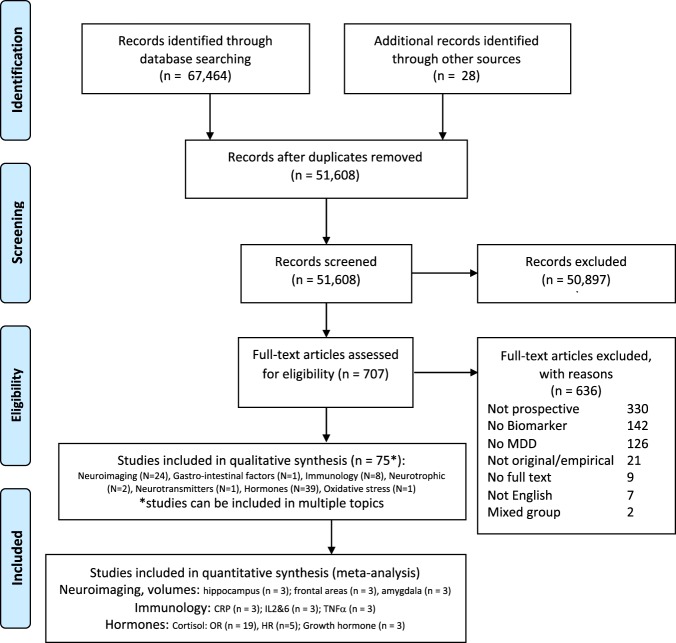
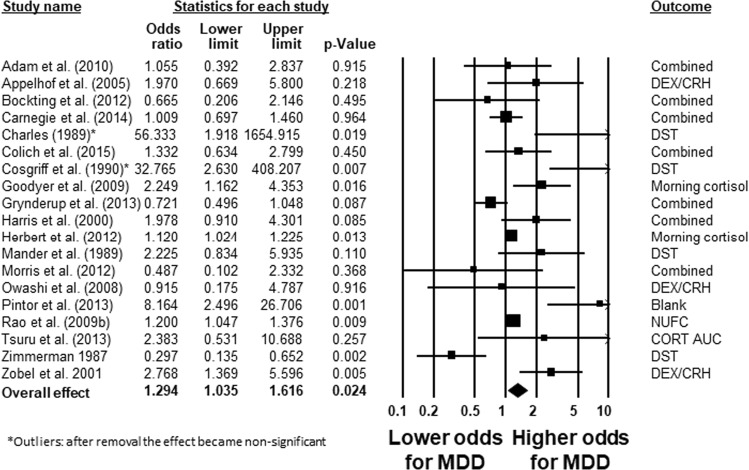
Leading biological hypotheses propose that biological changes may underlie major depressive disorder onset and relapse/recurrence. Here, we investigate if there is prospective evidence for biomarkers derived from leading theories. We focus on neuroimaging, gastrointestinal factors, immunology, neurotrophic factors, neurotransmitters, hormones, and oxidative stress. Searches were performed in Pubmed, Embase and PsychInfo for articles published up to 06/2019. References and citations of included articles were screened to identify additional articles. Inclusion criteria were having an MDD diagnosis as outcome, a biomarker as predictor, and prospective design search terms were formulated accordingly. PRISMA guidelines were applied. Meta-analyses were performed using a random effect model when three or more comparable studies were identified, using a random effect model. Our search resulted in 67,464 articles, of which 75 prospective articles were identified on: Neuroimaging (N = 24), Gastrointestinal factors (N = 1), Immunology (N = 8), Neurotrophic (N = 2), Neurotransmitters (N = 1), Hormones (N = 39), Oxidative stress (N = 1). Meta-analyses on brain volumes and immunology markers were not significant. Only cortisol (N = 19, OR = 1.294,p = 0.024) showed a predictive effect on onset/relapse/recurrence of MDD, but not on time until MDD onset/relapse/recurrence. However, this effect disappeared when studies including participants with a baseline clinical diagnosis were removed from the analyses. Other studies were too heterogeneous to compare. Thus, there is a lack of evidence for leading biological theories for onset and maintenance of depression. Only cortisol was identified as potential predictor for MDD, but results are influenced by the disease state. High-quality (prospective) studies on MDD are needed to disentangle the etiology and maintenance of MDD.
Overview
CoChat Summary
TL;DR
This systematic review and meta-analysis found scarce prospective evidence that leading biological biomarkers predict major depressive disorder onset, relapse, or recurrence. Only cortisol showed a small predictive effect, but it was confounded by baseline clinical depression, study quality, and possible publication bias.
Key findings
- From 67,464 screened articles, 75 prospective studies were identified: neuroimaging (N = 24), gastrointestinal factors (N = 1), immunology (N = 8), neurotrophic factors (N = 2), neurotransmitters (N = 1), hormones (N = 39), and oxidative stress (N = 1).
- Meta-analyses on brain volumes and immunology markers were not significant. Cortisol was the only significant predictor across comparable studies (N = 19, OR = 1.294, 95% CI [1.035–1.616], p = 0.024), but not for time until MDD onset/relapse/recurrence (HR = 1.011, 95% CI [0.963–1.040], p = 0.447).
- The cortisol effect disappeared when studies including participants with a baseline clinical MDD diagnosis were removed; it also became nonsignificant after removing outliers or low-quality studies, and publication-bias correction led to a nonsignificant effect.
- Only 38 studies excluded participants with baseline clinical MDD diagnosis, and most other biomarker findings were too heterogeneous or incidental to meta-analyze.
Methods
- Systematic review and meta-analysis following PRISMA, with searches in PubMed, Embase, and PsychInfo up to June 2019; inclusion required a prospective design, MDD diagnosis as outcome, and a biomarker from leading biological models as predictor.
- Random-effects meta-analyses were performed when three or more comparable studies were available, using odds ratio or risk ratio as summary effects; heterogeneity was assessed with Q-test and I², with sensitivity analyses, moderator analyses, and publication-bias assessment.
- The review included 75 prospective studies; 3,267 participants developed MDD over follow-up (median 3 years), and mean study quality score was 6.3 (median 6, range 3–9).
Limitations
- The paper states that included studies were often of poor quality, had small numbers of MDD cases at follow-up, and that neuroimaging studies used smaller samples than immunology and hormone studies.
- The authors did not correct for multiple testing; they note that such a correction would eliminate the cortisol effect, suggesting it may be a false positive.
- The paper states that heterogeneity was marked, many nonsignificant studies did not report sufficient data for meta-analysis, and this may have inflated odds ratios; results should be interpreted with caution.
- Evident from the text: many biomarker domains had fewer than three comparable studies or highly heterogeneous methods, precluding meta-analysis and limiting conclusions about most proposed biomarkers.
Model-written summary. Check it against the paper before relying on it.
Integrity signals
Registry
Cites
Statistics
Figures
Verification
Claims the paper makes
3 Valid · 4 Not valid · 41 Not checked · 86 Own results and interpretations
The cited sources support only part of this claim — read each source’s verdict below.
In the paper
“Incidental structural MRI studies reported that both smaller and larger insula volume was significantly related to MDD development in two studies [51,91].”
§ Prospective biomarkers of major depressive disorder: a systematic review and meta-analysis > Neuroimaging
What the sources say
- Partly supportedcites [51] 51. Foland-Ross LC, Sacchet MD, Prasad G, Gilbert B, Thompson PM, Gotlib IH. Cortical thickness predicts the first onset of major depression in adolescence. Int J Dev Neurosci. 2015;46:125-31.* sourceExperimental — accuracy not yet measured
Our copy supports the 'larger insula' side of the claim: Results > Neuroanatomic Classification reports that gray matter of the left insula was significantly thicker in girls who converted to depression (3.09 vs 2.94 mm, uncorrected p = 0.015), and the Discussion states that 'increased insula thickness predicted the onset of depression'. The Discussion also notes the opposing direction from other work (Belden et al., 2015, smaller insula volumes associated with subsequent depression in preschool children; Koolschijn et al., 2009, MDD-associated reductions in insula volume), so the two-directional framing is present. However, this study's own measure is cortical gray matter thickness, not insula volume — the Methods state thickness was chosen precisely because it is less influenced by surface area than volume and list volume as an alternative measure not used here — and its finding is an exploratory, uncorrected post-hoc test in a small sample of at-risk adolescent girls, so attributing 'insula volume' to this source overstates it. (LLM, conf=0.72)
- Could not verifycites [91] 91. Rao U, Chen L-A, Bidesi AS, Shad MU, Thomas MA, Hammen CL. Hippocampal changes associated with early-life adversity and vulnerability to depression. Biol Psychiatry. 2010;67:357-64.* sourceExperimental — accuracy not yet measured
Our copy of Rao et al. (2010) is entirely about hippocampal volume (and total brain volume) measured by manual tracing on 1.5T structural MRI in at-risk and depressed adolescents; the Methods (MRI section) state only left hippocampus, right hippocampus and TBV were traced, and the Results/Discussion report only hippocampal findings. No passage in the prompt or returned by searches for 'insula volume major depressive disorder' and 'insula insular cortex gray matter brain region volume' mentions the insula or insular volume at all, so this paper neither supports nor contradicts the attributed claim about smaller and larger insula volume relating to MDD development. (LLM, conf=0.70)
plainstates an association- Asserted: passes — The authors put it forward as true.
- Checkable: passes — It can be checked against evidence.
- Load-bearing: unclear — It is unclear whether the paper’s conclusions depend on it.
- Based: passes — The paper gives a reason why it holds.
- Partly supported
The sources with a verdict support this claim; the rest weren’t checked yet, have no full text we could read, or their verdicts aren’t rated yet.
In the paper
“No significant predictive value of the amygdala volume was found in three studies investigating two unique samples [53,54,74].”
§ Prospective biomarkers of major depressive disorder: a systematic review and meta-analysis > Neuroimaging
What the sources say
- Not checked yetcites [53] 53. Frodl T, Meisenzahl EM, Zetzsche T, Höhne T, Banac S, Schorr C, et al. Hippocampal and amygdala changes in patients with major depressive disorder and healthy controls during a 1-year follow-up. J Clin Psychiatry. 2004;65:492-9.* source
- Supportedcites [54] 54. Frodl T, Jäger M, Smajstrlova I, Born C, Bottlender R, Palladino T, et al. Effect of hippocampal and amygdala volumes on clinical outcomes in major depression: a 3-year prospective magnetic resonance imaging study. J Psychiatry Neurosci. 2008;33:423-30.* source
Our copy of Frodl et al. (2008) reports exactly the null predictive finding attributed to it: in the Results section (p. 426) 'Amygdala volume was not affected by remission status (F1–26 = 0.16, p = 0.69)' and patients with larger baseline amygdala volumes 'did not have significantly lower HDRS scores at 1, 2 and 3 years (F1–25 = 0.74, p = 0.40)', with no significant correlation between HDRS scores and amygdala volumes at baseline, discharge or 3-year follow-up. The aggregation into 'three studies investigating two unique samples' is the citing authors' synthesis across references 53, 54 and 74 and is not something this single source is asked to carry; the part attributed to this paper — a study showing no significant predictive value of amygdala volume for clinical outcome in major depression — is stated here. (LLM, conf=0.88)
- Supportedcites [74] 74. Little K, Olsson CA, Whittle S, Youssef GJ, Byrne ML, Sim- mons JG, et al. Association between serotonin transporter genotype, brain structure and adolescent-onset major depressive disorder: a longitudinal prospective study. Transl Psychiatry. 2014;4:e445.* source
Our copy of Little et al. (2014) reports exactly this null finding: the Results state that '5-HTTLPR did not predict left or right amygdala volume ... nor were these volumes related to risk for MDD onset' (Results, mediation/ROI section), and the Discussion opens by noting 'the lack of evidence supporting amygdala volume as an intermediate phenotype between serotonin transporter gene and depression onset' (Discussion). The 'three studies investigating two unique samples' aggregation spans the other two citations in the sentence and is the citing authors' framing, not something this source must state; the part attributed to this paper — a prospective adolescent study finding no significant predictive value of amygdala volume for depression onset — is fully supported. (LLM, conf=0.85)
plainn = 2- Asserted: passes — The authors put it forward as true.
- Checkable: passes — It can be checked against evidence.
- Load-bearing: unclear — It is unclear whether the paper’s conclusions depend on it.
- Based: passes — The paper gives a reason why it holds.
The cited sources support only part of this claim — read each source’s verdict below.
In the paper
“These studies showed that MDD development was predicted by: lower activity in the frontal lobe in various contexts ( [39] reward task lossgain contrast [83]; rest [71,82]; go/nogo task, errors; [31] pre-vs posttryptophan depletion), higher activity in the insula ( [99] sentence completion increasing in difficulty), higher subgenual anterior cingulate cortex (ACC) temporal and striatal connectivity”
§ Prospective biomarkers of major depressive disorder: a systematic review and meta-analysis > Neuroimaging
What the sources say
- Not checked yetcites [39] 39. Bress JN, Foti D, Kotov R, Klein DN, Hajcak G. Blunted neural response to rewards prospectively predicts depression in ado- lescent girls. Psychophysiology. 2013;50:74-81.* source
- Not checked yetcites [83] 83. Nusslock R, Shackman AJ, Harmon-Jones E, Alloy LB, Coan JA, Abramson LY. Cognitive vulnerability and frontal brain asymmetry: common predictors of first prospective depressive episode. J Abnorm Psychol. 2011;120:497-503.* source
- Partly supportedcites [71] 71. Langenecker SA, Jenkins LM, Stange JP, Chang Y-S, DelDonno SR, Bessette KL, et al. Cognitive control neuroimaging measures differentiate between those with and without future recurrence of depression. Neuroimage Clin. 2018;20:1001-9.* sourceExperimental — accuracy not yet measured
Our copy is a Parametric Go/No-Go fMRI study and it does support the frontal-activation part of the attributed point: in Results > Failed regulation (commission errors of No-Go lures), 'hMDD-Recurrence had lower activation of bilateral MFG for Commissions compared to the Healthy Comparison group and the hMDD-Resilience group,' echoed in the Abstract (Results) as 'less bilateral middle frontal gyrus activation during commission errors' in the recurrence group. What it does not support is the claim's framing of 'MDD development was predicted': the sample is remitted young adults (18-23) with existing history of MDD followed for future recurrence, not first-onset/development of MDD (Introduction; Methods > Participants), and the paper reports cross-sectional group differentiation rather than a tested predictor — the Discussion states the CCN metrics 'could be tested in models in the future, even if these models are now at the initial development stage,' and the Conclusion only says markers 'could identify those with early course MD who are at risk for depression recurrence,' with future validation needed. So the go/nogo-errors frontal finding is in the source; the developmental-onset prediction framing is not. (LLM, conf=0.78)
plainstates an association- Asserted: passes — The authors put it forward as true.
- Checkable: passes — It can be checked against evidence.
- Load-bearing: passes — The paper’s conclusions depend on it.
- Based: passes — The paper gives a reason why it holds.
A result the paper states — it cites no source for it, so there is none to check. The quote shows it is in the paper.
In the paper
“However, due to overlap in study samples and heterogeneity in methods applied (e.g.tasks, regions of interest), meta-analysis could only be performed on some hippocampus, amygdala and frontal brain area volumes (see Table 1 and Supplementary Fig. 2).”
§ Prospective biomarkers of major depressive disorder: a systematic review and meta-analysis > Neuroimaging
hedgedstates a cause- Asserted: passes — The authors put it forward as true.
- Checkable: passes — It can be checked against evidence.
- Load-bearing: passes — The paper’s conclusions depend on it.
- Based: passes — The paper gives a reason why it holds.
A result the paper reports from its own data — it cites no other source for it, so there is none to check. The quote shows it is in the paper.
In the paper
“Overall, 75 prospective articles were identified on: Neuroimaging (N = 24), Gastrointestinal factors (N = 1), Immunology/inflammation (N = 8), Neurotrophic (N = 2), Neurotransmitters (N = 1), Hormones (N = 39), and Oxidative stress (N = 1).”
§ Prospective biomarkers of major depressive disorder: a systematic review and meta-analysis > Search results and quality assessment
plain- Asserted: passes — The authors put it forward as true.
- Checkable: passes — It can be checked against evidence.
- Load-bearing: unclear — It is unclear whether the paper’s conclusions depend on it.
- Based: passes — The paper gives a reason why it holds.
62 more claims
Create a free account to see all 134 claims and to verify the 72 references still open.
- It may state two separate claims as one. 42
- Probably not a substantial claim. 31
- The quote only partly states this claim. 2
Claims other papers make about this one
Each is checked against this paper’s own text: does it say what the citing paper says it does?
The source backs part of the claim, not all of it — or backs it for a different population, condition or comparison.
In the citing paper
“Recent research has shown a link between decreased hippocampal neurogenesis and low levels of BDNF and glial-derived neurotrophic factor (GDNF) in the brains of depressed individuals. 145”
From Major depressive disorder: hypothesis, mechanism, prevention and treatment (2024) · cites this paper as [145]
Experimental — accuracy not yet measuredThe source backs part of the claim, not all of it — or backs it for a different population, condition or comparison.
In the citing paper
“These concerns include overreliance on cross-sectional methodologies, a lack of consensus on what constitutes recurrence, and grouping all individuals with MDD together instead of differentiating subgroups using key characteristics of the disorder (e.g., single verse recurrent episodes) [3, 6–8].”
From Fear of depression recurrence among individuals with remitted depression: a qualitative interview study (2024) · cites this paper as [6]
Experimental — accuracy not yet measuredThe cited source says what the claim attributes to it.
In the citing paper
“The dataset used in this study comes from a systematic review-based meta-analysis focusing on the evidence for leading psychological and biological theories on the onset, maintenance, and relapse of depressive disorders (Brouwer et al., 2019; Kennis et al., 2020; Fu et al., 2021).”
From Active learning-based systematic reviewing using switching classification models: the case of the onset, maintenance, and relapse of depressive disorders (2023) · cites this paper as Kennis et al., 2020
The cited source says what the claim attributes to it.
In the citing paper
“A review exploring prospective biomarkers (e.g., hormones, oxidative stress) in MDD recurrence found that cortisol significantly increased odds for MDD onset and relapse [6].”
From Fear of depression recurrence among individuals with remitted depression: a qualitative interview study (2024) · cites this paper as [6]
The cited source says what the claim attributes to it.
In the citing paper
“It is crucial to highlight the results in a recent meta-analysis, which found that cortisol was the only biological marker that increased the odds for both the onset and relapse/recurrence of MDD [35].”
From Stress and serum cortisol levels in major depressive disorder: a cross-sectional study (2020) · cites this paper as [35]
6 more claims about this paper
Create a free account to see every claim other papers make about this one.
Self-check
Percentages, sums and reported differences re-computed from the paper’s own numbers.
Each contradiction between two passages listed here was confirmed by an independent check.
Rated major: it would touch a result — a value a result rests on, reported and recomputed p-values on opposite sides of the significance level, two passages that conflict with no sign which is right, or a cited work retracted before this paper was published.
In the paper
§ Prospective biomarkers of major depressive disorder: a systematic review and meta-analysis > Immunology
“↑ heat-shock protein 70, 3nitrotyrosine, protein carbonyl, and lipid peroxidation ↓BDNF”
§ Prospective biomarkers of major depressive disorder: a systematic review and meta-analysis > Oxidative stress
“No significant differences between these groups were found for protein carbon and thiol content.”
Rated major: it would touch a result — a value a result rests on, reported and recomputed p-values on opposite sides of the significance level, two passages that conflict with no sign which is right, or a cited work retracted before this paper was published.
In the paper
§ Prospective biomarkers of major depressive disorder: a systematic review and meta-analysis > HPA axis
“OR = 1.919”
§ Prospective biomarkers of major depressive disorder: a systematic review and meta-analysis > HPA axis
“95% CI [1.072 1.231]”
Rated minor: it would not touch a result — a value no result rests on, a p-value that stays on the same side of the significance level, or a conflict that is clerical, resolved elsewhere in the paper, or outside its own findings.
In the paper
“19 studies had a very low risk of bias (>6 quality score), 26 studies had some risk of bias (5-6 quality score), and 8 studies had high risk of bias (4 or lower quality score).”
§ Prospective biomarkers of major depressive disorder: a systematic review and meta-analysis > Search results and quality assessment
Reported 75 · recomputed 53
Citations
Cites
Preferred Reporting Items for Systematic Reviews and Meta-Analyses: the PRISMA statement
Moher, D., Liberati, A., Tetzlaff, J., Altman, D. G., & for the PRISMA Group (2009) · BMJ · doi:10.1136/bmj.b2535 · Cited by 83,823
Preferred Reporting Items for Systematic Reviews and Meta-Analyses: The PRISMA Statement
Moher, D., Liberati, A., Tetzlaff, J., Altman, D. G., & The PRISMA Group (2009) · PLoS Medicine · doi:10.1371/journal.pmed.1000097 · Cited by 64,042 · cited 2×
“Methods Search process and study selection The study was performed according to Preferred Reporting Items for Systematic Reviews and Meta-Analyses statement (PRISMA [24]; see Appendices A and B for search terms and flow charts and Appendix C for PRISMA checklist).”
Bias in meta-analysis detected by a simple, graphical test
Egger, M., Smith, G. D., Schneider, M., & Minder, C. (1997) · BMJ · doi:10.1136/bmj.315.7109.629 · Cited by 56,722 · cited 1×
“Publication bias was also assessed using Egger’s test for asymmetry [28] of the funnel plot and Duval and Tweedie’s trim and fill procedure [29].”
MethodPreferred reporting items for systematic reviews and meta-analyses: the PRISMA Statement.
(2009) · PubMed Central · Cited by 44,859
Preferred reporting items for systematic reviews and meta-analyses: The PRISMA statement
Moher, D., Liberati, A., Tetzlaff, J., Altman, D. G., & the PRISMA Group* (2009) · Annals of Internal Medicine · doi:10.7326/0003-4819-151-4-200908180-00135 · Cited by 37,554
Quantifying heterogeneity in a meta‐analysis
Higgins, J. P. T., & Thompson, S. G. (2002) · Statistics in Medicine · doi:10.1002/sim.1186 · Cited by 36,763 · cited 1×
“Heterogeneity was assessed with the Qtest and I(2) statistic [27].”
MethodDuval, S., & Tweedie, R. (2000) · Biometrics · doi:10.1111/j.0006-341x.2000.00455.x · Cited by 14,099 · cited 1×
“Publication bias was also assessed using Egger’s test for asymmetry [28] of the funnel plot and Duval and Tweedie’s trim and fill procedure [29].”
MethodKessler, R. C., Chiu, W. T., Demler, O., & Walters, E. E. (2005) · Archives of General Psychiatry · doi:10.1001/archpsyc.62.6.617 · Cited by 12,052 · cited 1×
“Introduction Major depressive disorder (MDD) is a disabling disorder that is amongst the most prevalent mental health disorders worldwide [1, 2] and is highly recurrent [3–5].”
BackgroundGRADE guidelines: 1. Introduction—GRADE evidence profiles and summary of findings tables
Guyatt, G., Oxman, A. D., Akl, E. A., Kunz, R., Vist, G., Brozek, J., Norris, S., Falck-Ytter, Y., Glasziou, P., & deBeer, H. (2011) · Journal of Clinical Epidemiology · doi:10.1016/j.jclinepi.2010.04.026 · Cited by 10,681 · cited 1×
“The quality of included studies was assessed by two team members according to a minimally adjusted version of the GRADE guidelines on study level [25].”
MethodDepression, chronic diseases, and decrements in health: results from the World Health Surveys
Moussavi, S., Chatterji, S., Verdes, E., Tandon, A., Patel, V., & Ustun, B. (2007) · The Lancet · doi:10.1016/s0140-6736(07)61415-9 · Cited by 4,070 · cited 1×
“Introduction Major depressive disorder (MDD) is a disabling disorder that is amongst the most prevalent mental health disorders worldwide [1, 2] and is highly recurrent [3–5].”
BackgroundThe role of inflammation in depression: from evolutionary imperative to modern treatment target
Miller, A. H., & Raison, C. L. (2016) · Nature Reviews Immunology · doi:10.1038/nri.2015.5 · Cited by 3,942 · cited 1×
“[14]), endocrinology (including neurotransmitters, e.”
Cipriani, A., Furukawa, T. A., Salanti, G., Chaimani, A., Atkinson, L. Z., Ogawa, Y., Leucht, S., Ruhe, H. G., Turner, E. H., Higgins, J. P. T., et al. (2018) · The Lancet · doi:10.1016/s0140-6736(17)32802-7 · Cited by 3,541
Genetic Epidemiology of Major Depression: Review and Meta-Analysis
Sullivan, P. F., Neale, M. C., & Kendler, K. S. (2000) · American Journal of Psychiatry · doi:10.1176/appi.ajp.157.10.1552 · Cited by 3,431
Nestler, E. J., Barrot, M., DiLeone, R. J., Eisch, A. J., Gold, S. J., & Monteggia, L. M. (2002) · Neuron · doi:10.1016/s0896-6273(02)00653-0 · Cited by 3,217 · cited 1×
“Numerous studies suggest that MDD is related to alterations in various biological systems [8, 9].”
BackgroundeQTLGen, Wray, N. R., 23andMe, the Major Depressive Disorder Working Group of the Psychiatric Genomics Consortium, Ripke, S., Mattheisen, M., Trzaskowski, M., Byrne, E. M., Abdellaoui, A., Adams, M. J., et al. (2018) · Nature Genetics · doi:10.1038/s41588-018-0090-3 · Cited by 3,005
Miller, G. E., Chen, E., & Zhou, E. S. (2007) · Psychological Bulletin · doi:10.1037/0033-2909.133.1.25 · Cited by 2,467
The Corticosteroid Receptor Hypothesis of Depression
Holsboer, F. (2000) · Neuropsychopharmacology · doi:10.1016/s0893-133x(00)00159-7 · Cited by 2,181
Belmaker, R. H., & Agam, G. (2008) · New England Journal of Medicine · doi:10.1056/nejmra073096 · Cited by 2,166 · cited 1×
“Further, there are indications that first onset versus relapse/recurrence of MDD is based on different mechanisms [22, 23].”
BackgroundStetler, C., & Miller, G. E. (2011) · Psychosomatic Medicine · doi:10.1097/psy.0b013e31820ad12b · Cited by 1,123
Deep Brain Stimulation to Reward Circuitry Alleviates Anhedonia in Refractory Major Depression
Schlaepfer, T. E., Cohen, M. X., Frick, C., Kosel, M., Brodesser, D., Axmacher, N., Joe, A. Y., Kreft, M., Lenartz, D., & Sturm, V. (2008) · Neuropsychopharmacology · doi:10.1038/sj.npp.1301408 · Cited by 1,027
Brunoni, A. R., Lopes, M., & Fregni, F. (2008) · International Journal of Neuropsychopharmacology · doi:10.1017/s1461145708009309 · Cited by 972
Moffitt, T. E., Caspi, A., Taylor, A., Kokaua, J., Milne, B. J., Polanczyk, G., & Poulton, R. (2010) · Psychological Medicine · doi:10.1017/s0033291709991036 · Cited by 938
Biomarkers: Potential uses and limitations
Mayeux, R. (2004) · NeuroRX · doi:10.1602/neurorx.1.2.182 · Cited by 916 · cited 1×
“However, cross-sectional studies cannot provide evidence for causality, and thus cannot distinguish causes from consequences secondarily to the illness [21].”
BackgroundRecurrence after recovery from major depressive disorder during 15 years of observational follow-up
Mueller, T. I., Leon, A. C., Keller, M. B., Solomon, D. A., Endicott, J., Coryell, W., Warshaw, M., & Maser, J. D. (1999) · American Journal of Psychiatry · doi:10.1176/ajp.156.7.1000 · Cited by 897
Ruhé, H. G., Mason, N. S., & Schene, A. H. (2007) · Molecular Psychiatry · doi:10.1038/sj.mp.4001949 · Cited by 861
Khandaker, G. M., Pearson, R. M., Zammit, S., Lewis, G., & Jones, P. B. (2014) · JAMA Psychiatry · doi:10.1001/jamapsychiatry.2014.1332 · Cited by 846 · cited 2×
“These studies investigated several markers for immunology: C-Reactive Protein, Interleukin-6 (IL-6), IL-1ß, Tumor Necrosis Factorα (TNFα), Soluble Urokinase Plasminogen Activator Receptor (suPAR), 3-nitrotyrosine, and heat-shock protein 70 (HSP70) in blood or serum CRP was the investigated in five studies with compati…”
BackgroundTen simple rules for neuroimaging meta-analysis
Müller, V. I., Cieslik, E. C., Laird, A. R., Fox, P. T., Radua, J., Mataix-Cols, D., Tench, C. R., Yarkoni, T., Nichols, T. E., Turkeltaub, P. E., et al. (2018) · Neuroscience & Biobehavioral Reviews · doi:10.1016/j.neubiorev.2017.11.012 · Cited by 805
Neural circuits underlying the pathophysiology of mood disorders
Price, J. L., & Drevets, W. C. (2012) · Trends in Cognitive Sciences · doi:10.1016/j.tics.2011.12.011 · Cited by 788
Linking Molecules to Mood: New Insight Into the Biology of Depression
Krishnan, V., & Nestler, E. J. (2010) · American Journal of Psychiatry · doi:10.1176/appi.ajp.2009.10030434 · Cited by 643 · cited 1×
“Numerous studies suggest that MDD is related to alterations in various biological systems [8, 9].”
BackgroundGut Microbiota’s Effect on Mental Health: The Gut-Brain Axis
Clapp, M., Aurora, N., Herrera, L., Bhatia, M., Wilen, E., & Wakefield, S. (2017) · Clinics and Practice · doi:10.4081/cp.2017.987 · Cited by 608
Glutamate and GABA systems as targets for novel antidepressant and mood-stabilizing treatments
Krystal, J. H., Sanacora, G., Blumberg, H., Anand, A., Charney, D. S., Marek, G., Epperson, C. N., Goddard, A., & Mason, G. F. (2002) · Molecular Psychiatry · doi:10.1038/sj.mp.4001021 · Cited by 553
A meta-analytic review of polyunsaturated fatty acid compositions in patients with depression
Lin, P.-Y., Huang, S.-Y., & Su, K.-P. (2010) · Biological Psychiatry · doi:10.1016/j.biopsych.2010.03.018 · Cited by 530
Beck, A. T., & Bredemeier, K. (2016) · Clinical Psychological Science · doi:10.1177/2167702616628523 · Cited by 510
Goodyer, I. M., Herbert, J., Tamplin, A., & Altham, P. M. E. (2000) · British Journal of Psychiatry · doi:10.1192/bjp.177.6.499 · Cited by 499 · cited 1×
“Both significant predictive effects [56, 57] as well as no significant predictive effects [63] were reported.”
BackgroundThe effects of probiotics on depressive symptoms in humans: a systematic review
Wallace, C. J. K., & Milev, R. (2017) · Annals of General Psychiatry · doi:10.1186/s12991-017-0138-2 · Cited by 471
Hippocampal changes associated with early-life adversity and vulnerability to depression
Rao, U., Chen, L.-A., Bidesi, A. S., Shad, M. U., Thomas, M. A., & Hammen, C. L. (2010) · Biological Psychiatry · doi:10.1016/j.biopsych.2009.10.017 · Cited by 383 · cited 2×
“063 [54, 73, 91]), frontal brain regions (N= 3, OR= 0.”
BackgroundDuman, R. S., & Li, N. (2012) · Philosophical Transactions of the Royal Society B: Biological Sciences · doi:10.1098/rstb.2011.0357 · Cited by 362
Zobel, A. W., Nickel, T., Sonntag, A., Uhr, M., Holsboer, F., & Ising, M. (2001) · Journal of Psychiatric Research · doi:10.1016/s0022-3956(01)00013-9 · Cited by 354 · cited 4×
“The studies investigated the following hormonal axes: 35 hypothalamic-pituitary axis (HPA axis; the feedback loop regulation stress responses, including ACTH, CRH, CRF, cortisol), 5 hypothalamic-pituitary-gonadal-axis (HPGaxis: regulating the reproductive system e.g. DHEAS), 4 hypothalamic-pituitary-somatic axis (HPS…”
BackgroundInfluentialCipriani, A., Furukawa, T. A., Salanti, G., Chaimani, A., Atkinson, L. Z., Ogawa, Y., Leucht, S., Ruhe, H. G., Turner, E. H., Higgins, J. P. T., et al. (2018) · Focus · doi:10.1176/appi.focus.16407 · Cited by 328
Association of high-sensitivity C-reactive protein with de novo major depression
Pasco, J. A., Nicholson, G. C., Williams, L. J., Jacka, F. N., Henry, M. J., Kotowicz, M. A., Schneider, H. G., Leonard, B. E., & Berk, M. (2010) · British Journal of Psychiatry · doi:10.1192/bjp.bp.109.076430 · Cited by 321 · cited 2×
“One study investigated hazard ratio and showed that CRP significantly predicted earlier time to onset or relapse/recurrence of depression [87].”
BackgroundBlunted neural response to rewards prospectively predicts depression in adolescent girls
Bress, J. N., Foti, D., Kotov, R., Klein, D. N., & Hajcak, G. (2013) · Psychophysiology · doi:10.1111/j.1469-8986.2012.01485.x · Cited by 317 · cited 3×
“Ten studies investigated if baseline brain activation predicted MDD onset, of which seven used fMRI [49, 50, 76, 82, 99–101] and three used EEG [31, 39, 83].”
BackgroundProspective prediction of major depressive disorder from cortisol awakening responses in adolescence
Adam, E. K., Doane, L. D., Zinbarg, R. E., Mineka, S., Craske, M. G., & Griffith, J. W. (2010) · Psychoneuroendocrinology · doi:10.1016/j.psyneuen.2009.12.007 · Cited by 315
Köhler, C. A., Evangelou, E., Stubbs, B., Solmi, M., Veronese, N., Belbasis, L., Bortolato, B., Melo, M. C. A., Coelho, C. A., Fernandes, B. S., et al. (2018) · Journal of Psychiatric Research · doi:10.1016/j.jpsychires.2018.05.020 · Cited by 302
Andrews, P. W., Bharwani, A., Lee, K. R., Fox, M., & Thomson, J. A. (2015) · Neuroscience & Biobehavioral Reviews · doi:10.1016/j.neubiorev.2015.01.018 · Cited by 281
Frodl, T., Jäger, M., Smajstrlova, I., Born, C., Bottlender, R., Palladino, T., Reiser, M., Möller, H.-J., & Meisenzahl, E. M. (2008) · Journal of Psychiatry and Neuroscience · doi:10.1139/jpn.0840 · Cited by 279 · cited 2×
“063 [54, 73, 91]), frontal brain regions (N= 3, OR= 0.”
BackgroundUndurraga, J., & Baldessarini, R. J. (2012) · Neuropsychopharmacology · doi:10.1038/npp.2011.306 · Cited by 269
Cumulative Depression Episodes Predict Later C-Reactive Protein Levels: A Prospective Analysis
Copeland, W. E., Shanahan, L., Worthman, C., Angold, A., & Costello, E. J. (2012) · Biological Psychiatry · doi:10.1016/j.biopsych.2011.09.023 · Cited by 265 · cited 2×
“These studies investigated several markers for immunology: C-Reactive Protein, Interleukin-6 (IL-6), IL-1ß, Tumor Necrosis Factorα (TNFα), Soluble Urokinase Plasminogen Activator Receptor (suPAR), 3-nitrotyrosine, and heat-shock protein 70 (HSP70) in blood or serum CRP was the investigated in five studies with compati…”
BackgroundVrshek-Schallhorn, S., Doane, L. D., Mineka, S., Zinbarg, R. E., Craske, M. G., & Adam, E. K. (2013) · Psychological Medicine · doi:10.1017/s0033291712001213 · Cited by 230
Zobel, A. W., Yassouridis, A., Frieboes, R.-M., & Holsboer, F. (1999) · American Journal of Psychiatry · doi:10.1176/ajp.156.6.949 · Cited by 229
Frodl, T., Meisenzahl, E. M., Zetzsche, T., Höhne, T., Banac, S., Schorr, C., Jäger, M., Leinsinger, G., Bottlender, R., Reiser, M., et al. (2004) · The Journal of Clinical Psychiatry · doi:10.4088/jcp.v65n0407 · Cited by 227 · cited 1×
“No significant predictive value of the amygdala volume was found in three studies investigating two unique samples [53, 54, 74].”
BackgroundMorning cortisol as a risk factor for subsequent major depressive disorder in adult women
Harris, T. O., Borsanyi, S., Messari, S., Stanford, K., Cleary, S. E., Shiers, H. M., Brown, G. W., & Herbert, J. (2000) · British Journal of Psychiatry · doi:10.1192/bjp.177.6.505 · Cited by 220 · cited 2×
“Both significant predictive effects [56, 57] as well as no significant predictive effects [63] were reported.”
BackgroundGoodyer, I. M., Herbert, J., Tamplin, A., & Altham, P. M. E. (2000) · British Journal of Psychiatry · doi:10.1192/bjp.176.2.142 · Cited by 172 · cited 2×
“Both significant predictive effects [56, 57] as well as no significant predictive effects [63] were reported.”
BackgroundAppelhof, B. C., Huyser, J., Verweij, M., Brouwer, J. P., van Dyck, R., Fliers, E., Hoogendijk, W. J. G., Tijssen, J. G. P., Wiersinga, W. M., & Schene, A. H. (2006) · Biological Psychiatry · doi:10.1016/j.biopsych.2005.09.008 · Cited by 154 · cited 4×
“The studies investigated the following hormonal axes: 35 hypothalamic-pituitary axis (HPA axis; the feedback loop regulation stress responses, including ACTH, CRH, CRF, cortisol), 5 hypothalamic-pituitary-gonadal-axis (HPGaxis: regulating the reproductive system e.g. DHEAS), 4 hypothalamic-pituitary-somatic axis (HPS…”
BackgroundInfluentialBanki, C. M., Karmacsi, L., Bissette, G., & Nemeroff, C. B. (1992) · European Neuropsychopharmacology · doi:10.1016/0924-977x(92)90019-5 · Cited by 149 · cited 2×
“No differences were found in somatostatin (GH releasing factor) in CSF between relapsing and not relapsing participants [35].”
BackgroundFarb, N. A. S., Anderson, A. K., Bloch, R. T., & Segal, Z. V. (2011) · Biological Psychiatry · doi:10.1016/j.biopsych.2011.03.009 · Cited by 141 · cited 1×
“These studies showed that MDD development was predicted by: lower activity in the frontal lobe in various contexts ([39] reward task lossgain contrast [83]; rest [71, 82]; go/nogo task, errors; [31] pre- vs posttryptophan depletion), higher activity in the insula ([99] sentence completion increasing in difficulty), hi…”
BackgroundPapmeyer, M., Giles, S., Sussmann, J. E., Kielty, S., Stewart, T., Lawrie, S. M., Whalley, H. C., & McIntosh, A. M. (2015) · Biological Psychiatry · doi:10.1016/j.biopsych.2014.10.018 · Cited by 112 · cited 1×
“MDD was predicted by a thinner right para-hippocampus and right fusiform gyrus but not by subcortical thickness [85, 86].”
BackgroundCortical thickness predicts the first onset of major depression in adolescence
Foland‐Ross, L. C., Sacchet, M. D., Prasad, G., Gilbert, B., Thompson, P. M., & Gotlib, I. H. (2015) · International Journal of Developmental Neuroscience · doi:10.1016/j.ijdevneu.2015.07.007 · Cited by 109 · cited 2×
“730 [51, 74, 95]), nor the amygdala (N= 3, OR= 6.”
BackgroundHippocampal volume and 2-year outcome in depression
Kronmüller, K.-T., Pantel, J., Köhler, S., Victor, D., Giesel, F., Magnotta, V. A., Mundt, C., Essig, M., & Schröder, J. (2008) · British Journal of Psychiatry · doi:10.1192/bjp.bp.107.040378 · Cited by 107
Morris, M. C., Rao, U., & Garber, J. (2012) · Journal of Affective Disorders · doi:10.1016/j.jad.2012.05.059 · Cited by 102
Serotonin transporter genotype, morning cortisol and subsequent depression in adolescents
Goodyer, I. M., Bacon, A., Ban, M., Croudace, T., & Herbert, J. (2009) · British Journal of Psychiatry · doi:10.1192/bjp.bp.108.054775 · Cited by 102
The combined DEX-CRH test in treatment course and long-term outcome of major depression
Hatzinger, M., Hemmeter, U., Baumann, K., Brand, S., & Holsboer‐Trachsler, E. (2002) · Journal of Psychiatric Research · doi:10.1016/s0022-3956(02)00021-3 · Cited by 102
Longitudinal hypothalamic-pituitary-adrenal axis trait and state effects in recurrent depression
Lok, A., Mocking, R. J. T., Ruhé, H. G., Visser, I., Koeter, M. W. J., Assies, J., Bockting, C. L. H., Olff, M., & Schene, A. H. (2012) · Psychoneuroendocrinology · doi:10.1016/j.psyneuen.2011.10.005 · Cited by 99
Self-citationRisk Markers for Depression in Adolescents: Sleep and HPA Measures
Rao, U., Hammen, C. L., & Poland, R. E. (2009) · Neuropsychopharmacology · doi:10.1038/npp.2009.27 · Cited by 97
Hardeveld, F., Spijker, J., De Graaf, R., Hendriks, S. M., Licht, C. M. M., Nolen, W. A., Penninx, B. W. J. H., & Beekman, A. T. F. (2013) · Journal of Affective Disorders · doi:10.1016/j.jad.2012.11.008 · Cited by 95
Nusslock, R., Shackman, A. J., Harmon-Jones, E., Alloy, L. B., Coan, J. A., & Abramson, L. Y. (2011) · Journal of Abnormal Psychology · doi:10.1037/a0022940 · Cited by 93 · cited 3×
“Ten studies investigated if baseline brain activation predicted MDD onset, of which seven used fMRI [49, 50, 76, 82, 99–101] and three used EEG [31, 39, 83].”
BackgroundHPA-axis reactivity interacts with stage of pubertal development to predict the onset of depression
Colich, N. L., Kircanski, K., Foland-Ross, L. C., & Gotlib, I. H. (2015) · Psychoneuroendocrinology · doi:10.1016/j.psyneuen.2015.02.004 · Cited by 92
Lythe, K. E., Moll, J., Gethin, J. A., Workman, C. I., Green, S., Lambon Ralph, M. A., Deakin, J. F. W., & Zahn, R. (2015) · JAMA Psychiatry · doi:10.1001/jamapsychiatry.2015.1813 · Cited by 91 · cited 1×
“These studies showed that MDD development was predicted by: lower activity in the frontal lobe in various contexts ([39] reward task lossgain contrast [83]; rest [71, 82]; go/nogo task, errors; [31] pre- vs posttryptophan depletion), higher activity in the insula ([99] sentence completion increasing in difficulty), hi…”
BackgroundBlack, C. N., Bot, M., Scheffer, P. G., & Penninx, B. W. J. H. (2017) · Psychological Medicine · doi:10.1017/s0033291716002828 · Cited by 80
Biological vulnerability to depression: linked structural and functional brain network findings
Nixon, N. L., Liddle, P. F., Nixon, E., Worwood, G., Liotti, M., & Palaniyappan, L. (2014) · British Journal of Psychiatry · doi:10.1192/bjp.bp.113.129965 · Cited by 78 · cited 1×
“These studies showed that MDD development was predicted by: lower activity in the frontal lobe in various contexts ([39] reward task lossgain contrast [83]; rest [71, 82]; go/nogo task, errors; [31] pre- vs posttryptophan depletion), higher activity in the insula ([99] sentence completion increasing in difficulty), hi…”
BackgroundMocking, R. J. T., Ruhé, H. G., Assies, J., Lok, A., Koeter, M. W. J., Visser, I., Bockting, C., & Schene, A. H. (2013) · Psychoneuroendocrinology · doi:10.1016/j.psyneuen.2013.01.013 · Cited by 75
Self-citationCortisol awakening response and subsequent depression: prospective longitudinal study
Carnegie, R., Araya, R., Ben-Shlomo, Y., Glover, V., O'Connor, T. G., O'Donnell, K. J., Pearson, R., & Lewis, G. (2014) · British Journal of Psychiatry · doi:10.1192/bjp.bp.113.126250 · Cited by 73
LeMoult, J., Ordaz, S. J., Kircanski, K., Singh, M. K., & Gotlib, I. H. (2015) · Journal of Abnormal Psychology · doi:10.1037/abn0000087 · Cited by 72
Longitudinal Course of Adolescent Depression: Neuroendocrine and Psychosocial Predictors
Rao, U., Hammen, C. L., & Poland, R. E. (2010) · Journal of the American Academy of Child & Adolescent Psychiatry · doi:10.1016/j.jaac.2009.09.008 · Cited by 67
Goodyer, I. M., Croudace, T., Dudbridge, F., Ban, M., & Herbert, J. (2010) · British Journal of Psychiatry · doi:10.1192/bjp.bp.110.077750 · Cited by 67
Davey, C. G., Whittle, S., Harrison, B. J., Simmons, J. G., Byrne, M. L., Schwartz, O. S., & Allen, N. B. (2015) · Psychological Medicine · doi:10.1017/s0033291714002001 · Cited by 66 · cited 1×
“One study reported no group differences during rest [49].”
BackgroundAddressing the Causality Gap in Human Psychiatric Neuroscience
Etkin, A. (2017) · JAMA Psychiatry · doi:10.1001/jamapsychiatry.2017.3610 · Cited by 65
Aubry, J.-M., Gervasoni, N., Osiek, C., Perret, G., Rossier, M. F., Bertschy, G., & Bondolfi, G. (2007) · Journal of Psychiatric Research · doi:10.1016/j.jpsychires.2006.07.007 · Cited by 58
Hardeveld, F., Spijker, J., Vreeburg, S. A., Graaf, R. D., Hendriks, S. M., Licht, C. M. M., Nolen, W. A., Penninx, B. W. J. H., & Beekman, A. T. F. (2014) · Psychoneuroendocrinology · doi:10.1016/j.psyneuen.2014.07.027 · Cited by 58
Bockting, C. L. H., Lok, A., Visser, I., Assies, J., Koeter, M. W., & Schene, A. H. (2012) · Psychiatry Research · doi:10.1016/j.psychres.2012.03.044 · Cited by 57
Self-citationMocking, R. J. T., Pellikaan, C. M., Lok, A., Assies, J., Ruhé, H. G., Koeter, M. W., Visser, I., Bockting, C. L., Olff, M., & Schene, A. H. (2015) · Psychoneuroendocrinology · doi:10.1016/j.psyneuen.2015.05.006 · Cited by 55 · cited 2×
“Four studies investigated dehydroepiandrosterone (DHEA) or DHEAsulfate, (DHEAS) in saliva [56, 63, 79], but studies included the same sample and included OR and HR measures, which are not comparable.”
BackgroundSelf-citationGlaus, J., von Känel, R., Lasserre, A. M., Strippoli, M.-P. F., Vandeleur, C. L., Castelao, E., Gholam-Rezaee, M., Marangoni, C., Wagner, E.-Y. N., Marques-Vidal, P., et al. (2018) · Psychological Medicine · doi:10.1017/s0033291717002744 · Cited by 54 · cited 2×
“In three studies (of which two investigated the same sample) TNFα was not found to predict nonsignificant were also reported [43, 55, 94].”
BackgroundChocano-Bedoya, P. O., Mirzaei, F., O’Reilly, E. J., Lucas, M., Okereke, O. I., Hu, F. B., Rimm, E. B., & Ascherio, A. (2014) · Journal of Affective Disorders · doi:10.1016/j.jad.2014.03.023 · Cited by 53 · cited 3×
“In three studies (of which two investigated the same sample) TNFα was not found to predict nonsignificant were also reported [43, 55, 94].”
BackgroundA two-year follow-up study of salivary cortisol concentration and the risk of depression
Grynderup, M. B., Kolstad, H. A., Mikkelsen, S., Andersen, J. H., Bonde, J. P., Buttenschøn, H. N., Kærgaard, A., Kærlev, L., Rugulies, R., Thomsen, J. F., et al. (2013) · Psychoneuroendocrinology · doi:10.1016/j.psyneuen.2013.03.013 · Cited by 52
Soluble Urokinase Plasminogen Activator Receptor as a Marker for Use of Antidepressants
Haastrup, E., Grau, K., Eugen-Olsen, J., Thorball, C., Kessing, L. V., & Ullum, H. (2014) · PLoS ONE · doi:10.1371/journal.pone.0110555 · Cited by 47 · cited 2×
“A protein marker for inflammation SuPAR was found to predict reduced time to MDD [61].”
BackgroundLangenecker, S. A., Jenkins, L. M., Stange, J. P., Chang, Y.-S., DelDonno, S. R., Bessette, K. L., Passarotti, A. M., Bhaumik, R., Ajilore, O., & Jacobs, R. H. (2018) · NeuroImage: Clinical · doi:10.1016/j.nicl.2018.10.004 · Cited by 47 · cited 2×
“Differences in subgenual ACC and MFG connectivity were also found in various regions of these networks during rest [71, 101].”
BackgroundMoffitt, T., Caspi, A., Taylor, A., Kokaua, J., Milne, B., Polanczyk, G., & Poulton, R. (2010) · DukeSpace (Duke University) · Cited by 46
Multiple risk factors predict recurrence of major depressive disorder in women
van Loo, H. M., Aggen, S. H., Gardner, C. O., & Kendler, K. S. (2015) · Journal of Affective Disorders · doi:10.1016/j.jad.2015.03.045 · Cited by 45 · cited 1×
“Further, there are indications that first onset versus relapse/recurrence of MDD is based on different mechanisms [22, 23].”
BackgroundBelden, A. C., Barch, D. M., Oakberg, T. J., April, L. M., Harms, M. P., Botteron, K. N., & Luby, J. L. (2015) · JAMA Psychiatry · doi:10.1001/jamapsychiatry.2014.1604 · Cited by 44
Whalley, H. C., Sussmann, J. E., Romaniuk, L., Stewart, T., Papmeyer, M., Sprooten, E., Hackett, S., Hall, J., Lawrie, S. M., & McIntosh, A. M. (2013) · PLoS ONE · doi:10.1371/journal.pone.0057357 · Cited by 43 · cited 1×
“These studies showed that MDD development was predicted by: lower activity in the frontal lobe in various contexts ([39] reward task lossgain contrast [83]; rest [71, 82]; go/nogo task, errors; [31] pre- vs posttryptophan depletion), higher activity in the insula ([99] sentence completion increasing in difficulty), hi…”
BackgroundPrefrontal cortex function in remitted major depressive disorder
Nixon, N. L., Liddle, P. F., Worwood, G., Liotti, M., & Nixon, E. (2013) · Psychological Medicine · doi:10.1017/s0033291712002164 · Cited by 39
Pasquali, M. A., Harlow, B. L., Soares, C. N., Otto, M. W., Cohen, L. S., Minuzzi, L., Gelain, D. P., Moreira, J. C. F., & Frey, B. N. (2018) · European Archives of Psychiatry and Clinical Neuroscience · doi:10.1007/s00406-017-0812-z · Cited by 39 · cited 5×
“Oxidative stress Out of the 1336 articles screened, 1 article met inclusion criteria [88].”
BackgroundInfluentialBrouwer, M. E., Williams, A. D., Kennis, M., Fu, Z., Klein, N. S., Cuijpers, P., & Bockting, C. L. H. (2019) · Clinical Psychology Review · doi:10.1016/j.cpr.2019.101773 · Cited by 39
Self-citationThyroid Hormone Levels and Recurrence of Major Depression
Joffe, R. T., & Marriott, M. (2000) · American Journal of Psychiatry · doi:10.1176/appi.ajp.157.10.1689 · Cited by 37 · cited 1×
“One study investigated T4, T3, and TSH using cox regression survival analyses, and reported that lower T3 was related to shorter time until relapse/recurrence [67].”
MethodKhandaker, G., Pearson, R., Zammit, S., Lewis, G., & Jones, P. B. (2014) · UCL Discovery (University College London) · Cited by 36
Nickson, T., Chan, S. W. Y., Papmeyer, M., Romaniuk, L., Macdonald, A., Stewart, T. M., Kielty, S., Lawrie, S. M., Hall, J., Sussmann, J. E., et al. (2016) · Psychological Medicine · doi:10.1017/s0033291716000519 · Cited by 35
Whalley, H. C., Sussmann, J. E., Romaniuk, L., Stewart, T. M., Kielty, S., Lawrie, S. M., Hall, J., & McIntosh, A. M. (2014) · Psychological Medicine · doi:10.1017/s0033291714002256 · Cited by 34
Coplan, J. D., Wolk, S. I., Goetz, R. R., Ryan, N. D., Dahl, R. E., Mann, J. J., & Weissman, M. M. (2000) · Biological Psychiatry · doi:10.1016/s0006-3223(00)00226-2 · Cited by 33 · cited 3×
“Three studies investigated GH secretion over night and a steeper increase in GH secretion was found in participants that had later onset [47] and recurrence [52] of MDD, but another study (on the same sample) found no significant predictive value for recurrence [66], and lower GH is also reported in individuals that r…”
BackgroundLittle, K., Olsson, C. A., Youssef, G. J., Whittle, S., Simmons, J. G., Yücel, M., Sheeber, L. B., Foley, D. L., & Allen, N. B. (2015) · Journal of Abnormal Psychology · doi:10.1037/abn0000101 · Cited by 30 · cited 1×
“063 [54, 73, 91]), frontal brain regions (N= 3, OR= 0.”
Little, K., Olsson, C. A., Whittle, S., Youssef, G. J., Byrne, M. L., Simmons, J. G., Yücel, M., Foley, D. L., & Allen, N. B. (2014) · Translational Psychiatry · doi:10.1038/tp.2014.85 · Cited by 29
Rudaz, D. A., Vandeleur, C. L., Gebreab, S. Z., Gholam-Rezaee, M., Strippoli, M.-P. F., Lasserre, A. M., Glaus, J., Castelao, E., Pistis, G., von Känel, R., et al. (2017) · Journal of Affective Disorders · doi:10.1016/j.jad.2017.07.016 · Cited by 29 · cited 3×
“In three studies (of which two investigated the same sample) TNFα was not found to predict nonsignificant were also reported [43, 55, 94].”
BackgroundAsselmann, E., Kische, H., Haring, R., Hertel, J., Schmidt, C.-O., Nauck, M., Beesdo-Baum, K., Grabe, H.-J., & Pané-Farré, C. A. (2019) · Journal of Affective Disorders · doi:10.1016/j.jad.2018.11.052 · Cited by 28 · cited 1×
“One study investigated serum concentratioins of testosterone, androstenedione, and sex hormone-binding globuline (SHBG) and found no predictive effect on first onset nor the combination of onset/recurrence over 17 years [33].”
BackgroundPapmeyer, M., Sussmann, J. E., Stewart, T., Giles, S., Centola, J. G., Zannias, V., Lawrie, S. M., Whalley, H. C., & McIntosh, A. M. (2016) · Psychiatry Research: Neuroimaging · doi:10.1016/j.pscychresns.2015.12.009 · Cited by 27 · cited 1×
“MDD was predicted by a thinner right para-hippocampus and right fusiform gyrus but not by subcortical thickness [85, 86].”
BackgroundWorkman, C. I., Lythe, K. E., McKie, S., Moll, J., Gethin, J. A., Deakin, J. F. W., Elliott, R., & Zahn, R. (2017) · Psychological Medicine · doi:10.1017/s0033291716002567 · Cited by 26 · cited 1×
“Differences in subgenual ACC and MFG connectivity were also found in various regions of these networks during rest [71, 101].”
BackgroundPlasma norepinephrine and prediction of outcome in major depressive disorder
Johnston, T., Kelly, C. B., Stevenson, M. R., & Cooper, S. J. (1999) · Biological Psychiatry · doi:10.1016/s0006-3223(99)00134-1 · Cited by 25
Cosgriff, J. P., Abbott, R. M., Oakley-Browne, M. A., & Joyce, P. R. (1990) · Biological Psychiatry · doi:10.1016/0006-3223(90)90067-c · Cited by 24
Herbert, J., Ban, M., Brown, G. W., Harris, T. O., Ogilvie, A., Uher, R., & Craig, T. K. J. (2012) · British Journal of Psychiatry · doi:10.1192/bjp.bp.111.107037 · Cited by 24
Chopra, K. K., Segal, Z. V., Buis, T., Kennedy, S. H., & Levitan, R. D. (2008) · Asian Journal of Psychiatry · doi:10.1016/j.ajp.2008.09.006 · Cited by 23
Charles, G. A., Schittecatte, M., Rush, A. J., Panzer, M. J., & Wilmotte, J. (1989) · Journal of Affective Disorders · doi:10.1016/0165-0327(89)90010-4 · Cited by 22
Bouhuys, A. L., Bos, E. H., Geerts, E., van Os, T. W. D. P., & Ormel, J. (2006) · Journal of Nervous & Mental Disease · doi:10.1097/01.nmd.0000228502.52864.ce · Cited by 22
Pintor, L., Torres, X., Navarro, V., de Osaba, M. J. M., Matrai, S., & Gastó, C. (2009) · Progress in Neuro-Psychopharmacology and Biological Psychiatry · doi:10.1016/j.pnpbp.2009.01.008 · Cited by 21 · cited 4×
“The studies investigated the following hormonal axes: 35 hypothalamic-pituitary axis (HPA axis; the feedback loop regulation stress responses, including ACTH, CRH, CRF, cortisol), 5 hypothalamic-pituitary-gonadal-axis (HPGaxis: regulating the reproductive system e.g. DHEAS), 4 hypothalamic-pituitary-somatic axis (HPS…”
BackgroundInfluentialSerra-Blasco, M., de Diego-Adeliño, J., Vives-Gilabert, Y., Trujols, J., Puigdemont, D., Carceller-Sindreu, M., Pérez, V., Álvarez, E., & Portella, M. J. (2016) · Depression and Anxiety · doi:10.1002/da.22522 · Cited by 21 · cited 1×
“730 [51, 74, 95]), nor the amygdala (N= 3, OR= 6.”
Jarrett, D. B., Kupfer, D. J., Miewald, J. M., Grochocinski, V. J., & Franz, B. (1994) · Journal of Psychiatric Research · doi:10.1016/0022-3956(94)90007-8 · Cited by 19 · cited 2×
“Three studies investigated GH secretion over night and a steeper increase in GH secretion was found in participants that had later onset [47] and recurrence [52] of MDD, but another study (on the same sample) found no significant predictive value for recurrence [66], and lower GH is also reported in individuals that r…”
BackgroundMacoveanu, J., Baaré, W., Madsen, K. H., Kessing, L. V., Siebner, H. R., & Vinberg, M. (2018) · NeuroImage: Clinical · doi:10.1016/j.nicl.2017.12.011 · Cited by 18 · cited 1×
“One study reported that higher ACC gray matter volume predicting MDD onset but did not report enough data for analysis [77].”
BackgroundAlteration of frontal EEG asymmetry during tryptophan depletion predicts future depression
Allen, J. J. B., McKnight, K. M., Moreno, F. A., Demaree, H. A., & Delgado, P. L. (2009) · Journal of Affective Disorders · doi:10.1016/j.jad.2008.08.003 · Cited by 17 · cited 3×
“Ten studies investigated if baseline brain activation predicted MDD onset, of which seven used fMRI [49, 50, 76, 82, 99–101] and three used EEG [31, 39, 83].”
BackgroundGastrointestinal Distress to Serotonergic Challenge: A Risk Marker for Emotional Disorder?
Campo, J. V., Dahl, R. E., Williamson, D. E., Birmaher, B. B., Perel, J. M., & Ryan, N. D. (2003) · Journal of the American Academy of Child & Adolescent Psychiatry · doi:10.1097/00004583-200310000-00013 · Cited by 15 · cited 1×
“Gastrointestinal biomarkers Out of the 760 articles screened for the gut-related biomarkers, only one study met our inclusion criteria [40].”
BackgroundGrowth hormone secretion timing in depression: Clinical outcome comparisons
Franz, B., Kupfer, D. J., Miewald, J. M., Jarrett, D. B., & Grochocinski, V. J. (1995) · Biological Psychiatry · doi:10.1016/0006-3223(95)00068-2 · Cited by 10 · cited 2×
“Three studies investigated GH secretion over night and a steeper increase in GH secretion was found in participants that had later onset [47] and recurrence [52] of MDD, but another study (on the same sample) found no significant predictive value for recurrence [66], and lower GH is also reported in individuals that r…”
BackgroundVinberg, M., Miskowiak, K. W., & Kessing, L. V. (2013) · Psychoneuroendocrinology · doi:10.1016/j.psyneuen.2013.09.007 · Cited by 10
Owashi, T., Otsubo, T., Oshima, A., Nakagome, K., Higuchi, T., & Kamijima, K. (2008) · Journal of Psychiatric Research · doi:10.1016/j.jpsychires.2007.01.006 · Cited by 9 · cited 6×
“Three studies investigated GH secretion over night and a steeper increase in GH secretion was found in participants that had later onset [47] and recurrence [52] of MDD, but another study (on the same sample) found no significant predictive value for recurrence [66], and lower GH is also reported in individuals that r…”
BackgroundInfluentialZimmerman, M., Coryell, W. H., & PFOHL, B. M. (1987) · American Journal of Psychiatry · doi:10.1176/ajp.144.2.212 · Cited by 9
Mander, A. J., Rubín, R. T., Copolov, D., & Poland, R. E. (1989) · Journal of Psychiatric Research · doi:10.1016/0022-3956(89)90005-8 · Cited by 4
Pintor, L., Torres, X., Bailles, E., Navarro, V., de Osaba, M. J. M., Belmonte, A., & Gastó, C. (2013) · Nordic Journal of Psychiatry · doi:10.3109/08039488.2012.700733 · Cited by 2 · cited 1×
“One study reported lower ACTH in reaction to a DEX/CHR predicts relapse [90].”
BackgroundGeerlings, M. I., & Gerritsen, L. (2018) · Biological Psychiatry · doi:10.1016/j.biopsych.2017.07.002 · Cited by 1
Self-citation(2013) · PubMed
Cited by
Major depressive disorder: hypothesis, mechanism, prevention and treatment
Cui, L., Li, S., Wang, S., Wu, X., Liu, Y., Yu, W., Wang, Y., Tang, Y., Xia, M., & Li, B. (2024) · Signal Transduction and Targeted Therapy · doi:10.1038/s41392-024-01738-y · Cited by 1,244
“145 Under normal conditions, astrocytes release various nutrients and cytokines.”
BackgroundThe serotonin theory of depression: a systematic umbrella review of the evidence
Moncrieff, J., Cooper, R. E., Stockmann, T., Amendola, S., Hengartner, M. P., & Horowitz, M. A. (2023) · Molecular Psychiatry · doi:10.1038/s41380-022-01661-0 · Cited by 960
“[21], we devised six criteria relevant to the included studies: whether a unified analysis was conducted on original data; whether confounding by antidepressant use was adequately addressed; whether outcomes were pre-specified; whether results were consistent or heterogeneity was adequately addressed if present; wheth…”
InfluentialMarx, W., Penninx, B. W. J. H., Solmi, M., Furukawa, T. A., Firth, J., Carvalho, A. F., & Berk, M. (2023) · Nature Reviews Disease Primers · doi:10.1038/s41572-023-00454-1 · Cited by 768
“High salivary cortisol levels in mornings can prospectively predict risk for MDD onset, suggesting cortisol could also act as a potential biomarker for MDD 96,97 .”
Comorbid depression in medical diseases
Gold, S. M., Köhler-Forsberg, O., Moss-Morris, R., Mehnert, A., Miranda, J. J., Bullinger, M., Steptoe, A., Whooley, M. A., & Otte, C. (2020) · Nature Reviews Disease Primers · doi:10.1038/s41572-020-0200-2 · Cited by 534
Zajkowska, Z., Gullett, N., Walsh, A., Zonca, V., Pedersen, G. A., Souza, L., Kieling, C., Fisher, H. L., Kohrt, B. A., & Mondelli, V. (2022) · Psychoneuroendocrinology · doi:10.1016/j.psyneuen.2021.105625 · Cited by 228
“A compelling body of evidence implicates dysregulation of the hypothalamic-pituitary-adrenal (HPA) axis in the pathophysiology of MDD in adulthood (Kennis et al., 2020; Stetler and Miller, 2011).”
BackgroundResultInfluential
Metadata
- Authors
- Kennis, M., Gerritsen, L., van Dalen, M., Williams, A., Cuijpers, P., & Bockting, C.
- Affiliations
- Utrecht University (NL)
- Amsterdam Public Health (NL)
- Amsterdam UMC Location University of Amsterdam (NL)
- Corresponding author
- Bockting, Claudi
- Venue
- Molecular Psychiatry
- Published
- 2019-11-19
- Volume
- 25
- Issue
- 2
- Pages
- 321-338
- ISSN
- 1359-4184 (ISSN-L)
- 1476-5578
- PMC
- PMC6974432
- OpenAlex
- W2990461417
- Semantic Scholar
- d1f9cb4cbfa3b5f569fe2d5103c60226685b23b2
- Cited by
- 435
- References
- 122
- Citations by year
- 2026: 50 · 2025: 75 · 2024: 74 · 2023: 76 · 2022: 69 · 2021: 66 · 2020: 24 · 2019: 1
- FWCI
- 5.13
- Type
- journal article
- Language
- en
- Open access
- hybrid
- doi.org
- Licence
- cc-by
- creativecommons.org/licenses/by/4.0 (tdm)
- creativecommons.org/licenses/by/4.0 (vor)
- Locations
- Molecular Psychiatry (publishedVersion, cc-by)
- Europe PMC (PubMed Central) (publishedVersion, cc-by)
- PubMed Central (publishedVersion, cc-by)
- PubMed (publishedVersion)
- Pure Amsterdam UMC (submittedVersion, cc-by)
- Data Archiving and Networked Services (DANS) (submittedVersion, other-oa)
- Utrecht University Repository (Utrecht University) (submittedVersion, other-oa)
- Funders
- Netherlands Institute for Advanced Study in the Humanities and Social Sciences
- Topics
- Health Sciences › Medicine › Pharmacology (medical) › Treatment of Major Depression
- Life Sciences › Neuroscience › Biological Psychiatry › Tryptophan and brain disorders
- Life Sciences › Neuroscience › Behavioral Neuroscience › Stress Responses and Cortisol
- Keywords
- major depressive disorder, biomarkers, depression onset, relapse and recurrence, cortisol, neuroimaging, neurotrophic factors, neurotransmitters, hormones, oxidative stress, brain volume, etiology of depression
- MeSH terms
- Major Depressive Disorder, Humans, Hydrocortisone, Prospective Studies, Biomarkers
About these checks
Registry, retraction, Cites and statistics results are computed, not judged, with one exception: a printed reference that no index lists is read once by a model before it counts as a citation error. Claims are extracted by a model and kept only when their quote appears verbatim in the text; each cited source is then checked, with a model’s help, for whether it says what the claim relies on. Those verdicts can be wrong — read the claim’s quote and the cited source before relying on one.
The claim verdicts this report counts are experimental: their accuracy is not yet measured.
A language model drew the claims from the paper on 2026-11-19, under version 3 of the claim definition (model deepseek-v4.1-flash, prompt extract-v3).
A second model labelled each claim on 2026-11-19 (model jev-1.13-20260917, definition revision gold-guideline-v0.2).
Cited sources are checked with a language model’s help (qwen3.8-omni-flash).
Statistics and arithmetic are recomputed, not judged.
Confidence bands are shown only for fields calibrated on our annotated test set. None is calibrated yet, so no band is shown.
What counts as a claim ›How we measure confidence ›How we check this ›
Are you an author, or do you see a problem with this page? Request a review
Data sources
Bibliographic data: Semantic Scholar, OpenAlex, Crossref.
Contains information from the Semantic Scholar Academic Graph Datasets, made available under the ODC Attribution License (ODC-BY 1.0).
Semantic Scholar’s data is described in: Kinney, R., et al. (2023). The Semantic Scholar Open Data Platform. arXiv:2301.10140.
