

Prospective biomarkers of major depressive disorder: a systematic review and meta-analysis
Open accessThe DOI matches its Crossref record; 123 of the 123 references it cites were found in a registry or an index; 5 of the 77 sources its claims cite were checked for support.
Abstract
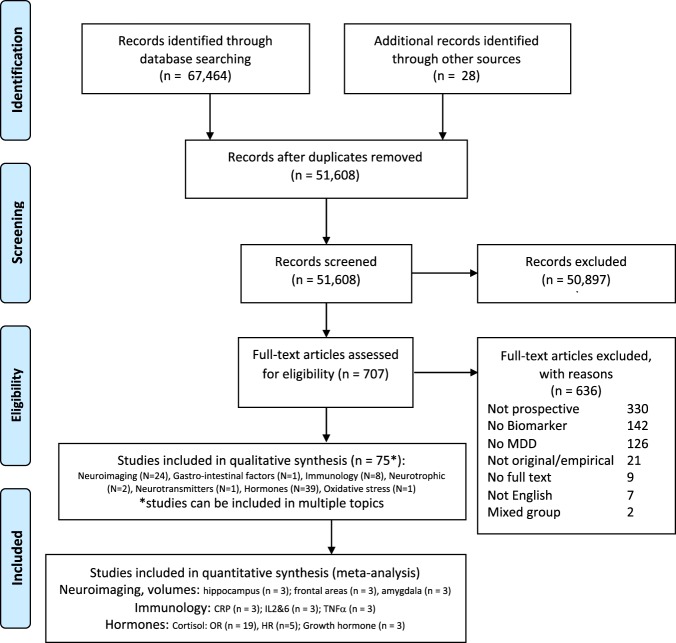
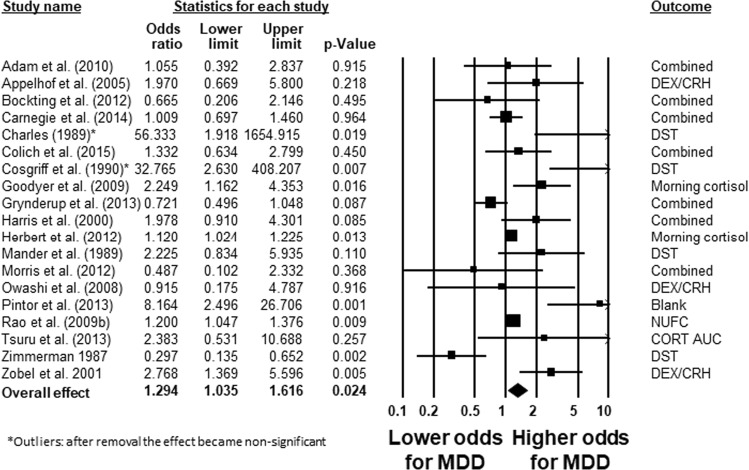
Leading biological hypotheses propose that biological changes may underlie major depressive disorder onset and relapse/recurrence. Here, we investigate if there is prospective evidence for biomarkers derived from leading theories. We focus on neuroimaging, gastrointestinal factors, immunology, neurotrophic factors, neurotransmitters, hormones, and oxidative stress. Searches were performed in Pubmed, Embase and PsychInfo for articles published up to 06/2019. References and citations of included articles were screened to identify additional articles. Inclusion criteria were having an MDD diagnosis as outcome, a biomarker as predictor, and prospective design search terms were formulated accordingly. PRISMA guidelines were applied. Meta-analyses were performed using a random effect model when three or more comparable studies were identified, using a random effect model. Our search resulted in 67,464 articles, of which 75 prospective articles were identified on: Neuroimaging (N = 24), Gastrointestinal factors (N = 1), Immunology (N = 8), Neurotrophic (N = 2), Neurotransmitters (N = 1), Hormones (N = 39), Oxidative stress (N = 1). Meta-analyses on brain volumes and immunology markers were not significant. Only cortisol (N = 19, OR = 1.294,p = 0.024) showed a predictive effect on onset/relapse/recurrence of MDD, but not on time until MDD onset/relapse/recurrence. However, this effect disappeared when studies including participants with a baseline clinical diagnosis were removed from the analyses. Other studies were too heterogeneous to compare. Thus, there is a lack of evidence for leading biological theories for onset and maintenance of depression. Only cortisol was identified as potential predictor for MDD, but results are influenced by the disease state. High-quality (prospective) studies on MDD are needed to disentangle the etiology and maintenance of MDD.
Overview
CoChat Summary
TL;DR
This systematic review and meta-analysis found scarce prospective evidence that leading biological biomarkers predict major depressive disorder onset, relapse, or recurrence. Only cortisol showed a small predictive effect, but it was confounded by baseline clinical depression, study quality, and possible publication bias.
Key findings
- From 67,464 screened articles, 75 prospective studies were identified: neuroimaging (N = 24), gastrointestinal factors (N = 1), immunology (N = 8), neurotrophic factors (N = 2), neurotransmitters (N = 1), hormones (N = 39), and oxidative stress (N = 1).
- Meta-analyses on brain volumes and immunology markers were not significant. Cortisol was the only significant predictor across comparable studies (N = 19, OR = 1.294, 95% CI [1.035–1.616], p = 0.024), but not for time until MDD onset/relapse/recurrence (HR = 1.011, 95% CI [0.963–1.040], p = 0.447).
- The cortisol effect disappeared when studies including participants with a baseline clinical MDD diagnosis were removed; it also became nonsignificant after removing outliers or low-quality studies, and publication-bias correction led to a nonsignificant effect.
- Only 38 studies excluded participants with baseline clinical MDD diagnosis, and most other biomarker findings were too heterogeneous or incidental to meta-analyze.
Methods
- Systematic review and meta-analysis following PRISMA, with searches in PubMed, Embase, and PsychInfo up to June 2019; inclusion required a prospective design, MDD diagnosis as outcome, and a biomarker from leading biological models as predictor.
- Random-effects meta-analyses were performed when three or more comparable studies were available, using odds ratio or risk ratio as summary effects; heterogeneity was assessed with Q-test and I², with sensitivity analyses, moderator analyses, and publication-bias assessment.
- The review included 75 prospective studies; 3,267 participants developed MDD over follow-up (median 3 years), and mean study quality score was 6.3 (median 6, range 3–9).
Limitations
- The paper states that included studies were often of poor quality, had small numbers of MDD cases at follow-up, and that neuroimaging studies used smaller samples than immunology and hormone studies.
- The authors did not correct for multiple testing; they note that such a correction would eliminate the cortisol effect, suggesting it may be a false positive.
- The paper states that heterogeneity was marked, many nonsignificant studies did not report sufficient data for meta-analysis, and this may have inflated odds ratios; results should be interpreted with caution.
- Evident from the text: many biomarker domains had fewer than three comparable studies or highly heterogeneous methods, precluding meta-analysis and limiting conclusions about most proposed biomarkers.
Model-written summary. Check it against the paper before relying on it.
Integrity signals
Registry
Cites
Statistics
Figures
Verification
Claims the paper makes
3 Valid · 4 Not valid · 41 Not checked · 86 Own results and interpretations
The cited sources support only part of this claim — read each source’s verdict below.
In the paper
“Incidental structural MRI studies reported that both smaller and larger insula volume was significantly related to MDD development in two studies [51,91].”
§ Prospective biomarkers of major depressive disorder: a systematic review and meta-analysis > Neuroimaging
What the sources say
- Partly supportedcites [51] 51. Foland-Ross LC, Sacchet MD, Prasad G, Gilbert B, Thompson PM, Gotlib IH. Cortical thickness predicts the first onset of major depression in adolescence. Int J Dev Neurosci. 2015;46:125-31.* sourceExperimental — accuracy not yet measured
Our copy supports the 'larger insula' side of the claim: Results > Neuroanatomic Classification reports that gray matter of the left insula was significantly thicker in girls who converted to depression (3.09 vs 2.94 mm, uncorrected p = 0.015), and the Discussion states that 'increased insula thickness predicted the onset of depression'. The Discussion also notes the opposing direction from other work (Belden et al., 2015, smaller insula volumes associated with subsequent depression in preschool children; Koolschijn et al., 2009, MDD-associated reductions in insula volume), so the two-directional framing is present. However, this study's own measure is cortical gray matter thickness, not insula volume — the Methods state thickness was chosen precisely because it is less influenced by surface area than volume and list volume as an alternative measure not used here — and its finding is an exploratory, uncorrected post-hoc test in a small sample of at-risk adolescent girls, so attributing 'insula volume' to this source overstates it. (LLM, conf=0.72)
- Could not verifycites [91] 91. Rao U, Chen L-A, Bidesi AS, Shad MU, Thomas MA, Hammen CL. Hippocampal changes associated with early-life adversity and vulnerability to depression. Biol Psychiatry. 2010;67:357-64.* sourceExperimental — accuracy not yet measured
Our copy of Rao et al. (2010) is entirely about hippocampal volume (and total brain volume) measured by manual tracing on 1.5T structural MRI in at-risk and depressed adolescents; the Methods (MRI section) state only left hippocampus, right hippocampus and TBV were traced, and the Results/Discussion report only hippocampal findings. No passage in the prompt or returned by searches for 'insula volume major depressive disorder' and 'insula insular cortex gray matter brain region volume' mentions the insula or insular volume at all, so this paper neither supports nor contradicts the attributed claim about smaller and larger insula volume relating to MDD development. (LLM, conf=0.70)
plainstates an association- Asserted: passes — The authors put it forward as true.
- Checkable: passes — It can be checked against evidence.
- Load-bearing: unclear — It is unclear whether the paper’s conclusions depend on it.
- Based: passes — The paper gives a reason why it holds.
- Partly supported
The sources with a verdict support this claim; the rest weren’t checked yet, have no full text we could read, or their verdicts aren’t rated yet.
In the paper
“No significant predictive value of the amygdala volume was found in three studies investigating two unique samples [53,54,74].”
§ Prospective biomarkers of major depressive disorder: a systematic review and meta-analysis > Neuroimaging
What the sources say
- Not checked yetcites [53] 53. Frodl T, Meisenzahl EM, Zetzsche T, Höhne T, Banac S, Schorr C, et al. Hippocampal and amygdala changes in patients with major depressive disorder and healthy controls during a 1-year follow-up. J Clin Psychiatry. 2004;65:492-9.* source
- Supportedcites [54] 54. Frodl T, Jäger M, Smajstrlova I, Born C, Bottlender R, Palladino T, et al. Effect of hippocampal and amygdala volumes on clinical outcomes in major depression: a 3-year prospective magnetic resonance imaging study. J Psychiatry Neurosci. 2008;33:423-30.* source
Our copy of Frodl et al. (2008) reports exactly the null predictive finding attributed to it: in the Results section (p. 426) 'Amygdala volume was not affected by remission status (F1–26 = 0.16, p = 0.69)' and patients with larger baseline amygdala volumes 'did not have significantly lower HDRS scores at 1, 2 and 3 years (F1–25 = 0.74, p = 0.40)', with no significant correlation between HDRS scores and amygdala volumes at baseline, discharge or 3-year follow-up. The aggregation into 'three studies investigating two unique samples' is the citing authors' synthesis across references 53, 54 and 74 and is not something this single source is asked to carry; the part attributed to this paper — a study showing no significant predictive value of amygdala volume for clinical outcome in major depression — is stated here. (LLM, conf=0.88)
- Supportedcites [74] 74. Little K, Olsson CA, Whittle S, Youssef GJ, Byrne ML, Sim- mons JG, et al. Association between serotonin transporter genotype, brain structure and adolescent-onset major depressive disorder: a longitudinal prospective study. Transl Psychiatry. 2014;4:e445.* source
Our copy of Little et al. (2014) reports exactly this null finding: the Results state that '5-HTTLPR did not predict left or right amygdala volume ... nor were these volumes related to risk for MDD onset' (Results, mediation/ROI section), and the Discussion opens by noting 'the lack of evidence supporting amygdala volume as an intermediate phenotype between serotonin transporter gene and depression onset' (Discussion). The 'three studies investigating two unique samples' aggregation spans the other two citations in the sentence and is the citing authors' framing, not something this source must state; the part attributed to this paper — a prospective adolescent study finding no significant predictive value of amygdala volume for depression onset — is fully supported. (LLM, conf=0.85)
plainn = 2- Asserted: passes — The authors put it forward as true.
- Checkable: passes — It can be checked against evidence.
- Load-bearing: unclear — It is unclear whether the paper’s conclusions depend on it.
- Based: passes — The paper gives a reason why it holds.
The cited sources support only part of this claim — read each source’s verdict below.
In the paper
“These studies showed that MDD development was predicted by: lower activity in the frontal lobe in various contexts ( [39] reward task lossgain contrast [83]; rest [71,82]; go/nogo task, errors; [31] pre-vs posttryptophan depletion), higher activity in the insula ( [99] sentence completion increasing in difficulty), higher subgenual anterior cingulate cortex (ACC) temporal and striatal connectivity”
§ Prospective biomarkers of major depressive disorder: a systematic review and meta-analysis > Neuroimaging
What the sources say
- Not checked yetcites [39] 39. Bress JN, Foti D, Kotov R, Klein DN, Hajcak G. Blunted neural response to rewards prospectively predicts depression in ado- lescent girls. Psychophysiology. 2013;50:74-81.* source
- Not checked yetcites [83] 83. Nusslock R, Shackman AJ, Harmon-Jones E, Alloy LB, Coan JA, Abramson LY. Cognitive vulnerability and frontal brain asymmetry: common predictors of first prospective depressive episode. J Abnorm Psychol. 2011;120:497-503.* source
- Partly supportedcites [71] 71. Langenecker SA, Jenkins LM, Stange JP, Chang Y-S, DelDonno SR, Bessette KL, et al. Cognitive control neuroimaging measures differentiate between those with and without future recurrence of depression. Neuroimage Clin. 2018;20:1001-9.* sourceExperimental — accuracy not yet measured
Our copy is a Parametric Go/No-Go fMRI study and it does support the frontal-activation part of the attributed point: in Results > Failed regulation (commission errors of No-Go lures), 'hMDD-Recurrence had lower activation of bilateral MFG for Commissions compared to the Healthy Comparison group and the hMDD-Resilience group,' echoed in the Abstract (Results) as 'less bilateral middle frontal gyrus activation during commission errors' in the recurrence group. What it does not support is the claim's framing of 'MDD development was predicted': the sample is remitted young adults (18-23) with existing history of MDD followed for future recurrence, not first-onset/development of MDD (Introduction; Methods > Participants), and the paper reports cross-sectional group differentiation rather than a tested predictor — the Discussion states the CCN metrics 'could be tested in models in the future, even if these models are now at the initial development stage,' and the Conclusion only says markers 'could identify those with early course MD who are at risk for depression recurrence,' with future validation needed. So the go/nogo-errors frontal finding is in the source; the developmental-onset prediction framing is not. (LLM, conf=0.78)
plainstates an association- Asserted: passes — The authors put it forward as true.
- Checkable: passes — It can be checked against evidence.
- Load-bearing: passes — The paper’s conclusions depend on it.
- Based: passes — The paper gives a reason why it holds.
A result the paper states — it cites no source for it, so there is none to check. The quote shows it is in the paper.
In the paper
“However, due to overlap in study samples and heterogeneity in methods applied (e.g.tasks, regions of interest), meta-analysis could only be performed on some hippocampus, amygdala and frontal brain area volumes (see Table 1 and Supplementary Fig. 2).”
§ Prospective biomarkers of major depressive disorder: a systematic review and meta-analysis > Neuroimaging
hedgedstates a cause- Asserted: passes — The authors put it forward as true.
- Checkable: passes — It can be checked against evidence.
- Load-bearing: passes — The paper’s conclusions depend on it.
- Based: passes — The paper gives a reason why it holds.
A result the paper reports from its own data — it cites no other source for it, so there is none to check. The quote shows it is in the paper.
In the paper
“Overall, 75 prospective articles were identified on: Neuroimaging (N = 24), Gastrointestinal factors (N = 1), Immunology/inflammation (N = 8), Neurotrophic (N = 2), Neurotransmitters (N = 1), Hormones (N = 39), and Oxidative stress (N = 1).”
§ Prospective biomarkers of major depressive disorder: a systematic review and meta-analysis > Search results and quality assessment
plain- Asserted: passes — The authors put it forward as true.
- Checkable: passes — It can be checked against evidence.
- Load-bearing: unclear — It is unclear whether the paper’s conclusions depend on it.
- Based: passes — The paper gives a reason why it holds.
62 more claims
Create a free account to see all 134 claims and to verify the 72 references still open.
- It may state two separate claims as one. 42
- Probably not a substantial claim. 31
- The quote only partly states this claim. 2
Claims other papers make about this one
Each is checked against this paper’s own text: does it say what the citing paper says it does?
The source backs part of the claim, not all of it — or backs it for a different population, condition or comparison.
In the citing paper
“Recent research has shown a link between decreased hippocampal neurogenesis and low levels of BDNF and glial-derived neurotrophic factor (GDNF) in the brains of depressed individuals. 145”
From Major depressive disorder: hypothesis, mechanism, prevention and treatment (2024) · cites this paper as [145]
Experimental — accuracy not yet measuredThe source backs part of the claim, not all of it — or backs it for a different population, condition or comparison.
In the citing paper
“These concerns include overreliance on cross-sectional methodologies, a lack of consensus on what constitutes recurrence, and grouping all individuals with MDD together instead of differentiating subgroups using key characteristics of the disorder (e.g., single verse recurrent episodes) [3, 6–8].”
From Fear of depression recurrence among individuals with remitted depression: a qualitative interview study (2024) · cites this paper as [6]
Experimental — accuracy not yet measuredThe cited source says what the claim attributes to it.
In the citing paper
“The dataset used in this study comes from a systematic review-based meta-analysis focusing on the evidence for leading psychological and biological theories on the onset, maintenance, and relapse of depressive disorders (Brouwer et al., 2019; Kennis et al., 2020; Fu et al., 2021).”
From Active learning-based systematic reviewing using switching classification models: the case of the onset, maintenance, and relapse of depressive disorders (2023) · cites this paper as Kennis et al., 2020
The cited source says what the claim attributes to it.
In the citing paper
“A review exploring prospective biomarkers (e.g., hormones, oxidative stress) in MDD recurrence found that cortisol significantly increased odds for MDD onset and relapse [6].”
From Fear of depression recurrence among individuals with remitted depression: a qualitative interview study (2024) · cites this paper as [6]
The cited source says what the claim attributes to it.
In the citing paper
“It is crucial to highlight the results in a recent meta-analysis, which found that cortisol was the only biological marker that increased the odds for both the onset and relapse/recurrence of MDD [35].”
From Stress and serum cortisol levels in major depressive disorder: a cross-sectional study (2020) · cites this paper as [35]
6 more claims about this paper
Create a free account to see every claim other papers make about this one.
Self-check
Percentages, sums and reported differences re-computed from the paper’s own numbers.
Each contradiction between two passages listed here was confirmed by an independent check.
Rated major: it would touch a result — a value a result rests on, reported and recomputed p-values on opposite sides of the significance level, two passages that conflict with no sign which is right, or a cited work retracted before this paper was published.
In the paper
§ Prospective biomarkers of major depressive disorder: a systematic review and meta-analysis > Immunology
“↑ heat-shock protein 70, 3nitrotyrosine, protein carbonyl, and lipid peroxidation ↓BDNF”
§ Prospective biomarkers of major depressive disorder: a systematic review and meta-analysis > Oxidative stress
“No significant differences between these groups were found for protein carbon and thiol content.”
Rated major: it would touch a result — a value a result rests on, reported and recomputed p-values on opposite sides of the significance level, two passages that conflict with no sign which is right, or a cited work retracted before this paper was published.
In the paper
§ Prospective biomarkers of major depressive disorder: a systematic review and meta-analysis > HPA axis
“OR = 1.919”
§ Prospective biomarkers of major depressive disorder: a systematic review and meta-analysis > HPA axis
“95% CI [1.072 1.231]”
Rated minor: it would not touch a result — a value no result rests on, a p-value that stays on the same side of the significance level, or a conflict that is clerical, resolved elsewhere in the paper, or outside its own findings.
In the paper
“19 studies had a very low risk of bias (>6 quality score), 26 studies had some risk of bias (5-6 quality score), and 8 studies had high risk of bias (4 or lower quality score).”
§ Prospective biomarkers of major depressive disorder: a systematic review and meta-analysis > Search results and quality assessment
Reported 75 · recomputed 53
Citations
Cites
Preferred Reporting Items for Systematic Reviews and Meta-Analyses: the PRISMA statement
Moher, D., Liberati, A., Tetzlaff, J., Altman, D. G., & for the PRISMA Group (2009) · BMJ · doi:10.1136/bmj.b2535 · Cited by 83,823
Preferred Reporting Items for Systematic Reviews and Meta-Analyses: The PRISMA Statement
Moher, D., Liberati, A., Tetzlaff, J., Altman, D. G., & The PRISMA Group (2009) · PLoS Medicine · doi:10.1371/journal.pmed.1000097 · Cited by 64,042 · cited 2×
“Methods Search process and study selection The study was performed according to Preferred Reporting Items for Systematic Reviews and Meta-Analyses statement (PRISMA [24]; see Appendices A and B for search terms and flow charts and Appendix C for PRISMA checklist).”
Bias in meta-analysis detected by a simple, graphical test
Egger, M., Smith, G. D., Schneider, M., & Minder, C. (1997) · BMJ · doi:10.1136/bmj.315.7109.629 · Cited by 56,722 · cited 1×
“Publication bias was also assessed using Egger’s test for asymmetry [28] of the funnel plot and Duval and Tweedie’s trim and fill procedure [29].”
MethodPreferred reporting items for systematic reviews and meta-analyses: the PRISMA Statement.
(2009) · PubMed Central · Cited by 44,859
Preferred reporting items for systematic reviews and meta-analyses: The PRISMA statement
Moher, D., Liberati, A., Tetzlaff, J., Altman, D. G., & the PRISMA Group* (2009) · Annals of Internal Medicine · doi:10.7326/0003-4819-151-4-200908180-00135 · Cited by 37,554
Quantifying heterogeneity in a meta‐analysis
Higgins, J. P. T., & Thompson, S. G. (2002) · Statistics in Medicine · doi:10.1002/sim.1186 · Cited by 36,763 · cited 1×
“Heterogeneity was assessed with the Qtest and I(2) statistic [27].”
MethodDuval, S., & Tweedie, R. (2000) · Biometrics · doi:10.1111/j.0006-341x.2000.00455.x · Cited by 14,099 · cited 1×
“Publication bias was also assessed using Egger’s test for asymmetry [28] of the funnel plot and Duval and Tweedie’s trim and fill procedure [29].”
MethodKessler, R. C., Chiu, W. T., Demler, O., & Walters, E. E. (2005) · Archives of General Psychiatry · doi:10.1001/archpsyc.62.6.617 · Cited by 12,052 · cited 1×
“Introduction Major depressive disorder (MDD) is a disabling disorder that is amongst the most prevalent mental health disorders worldwide [1, 2] and is highly recurrent [3–5].”
BackgroundGRADE guidelines: 1. Introduction—GRADE evidence profiles and summary of findings tables
Guyatt, G., Oxman, A. D., Akl, E. A., Kunz, R., Vist, G., Brozek, J., Norris, S., Falck-Ytter, Y., Glasziou, P., & deBeer, H. (2011) · Journal of Clinical Epidemiology · doi:10.1016/j.jclinepi.2010.04.026 · Cited by 10,681 · cited 1×
“The quality of included studies was assessed by two team members according to a minimally adjusted version of the GRADE guidelines on study level [25].”
MethodDepression, chronic diseases, and decrements in health: results from the World Health Surveys
Moussavi, S., Chatterji, S., Verdes, E., Tandon, A., Patel, V., & Ustun, B. (2007) · The Lancet · doi:10.1016/s0140-6736(07)61415-9 · Cited by 4,070 · cited 1×
“Introduction Major depressive disorder (MDD) is a disabling disorder that is amongst the most prevalent mental health disorders worldwide [1, 2] and is highly recurrent [3–5].”
Background
Cited by
Major depressive disorder: hypothesis, mechanism, prevention and treatment
Cui, L., Li, S., Wang, S., Wu, X., Liu, Y., Yu, W., Wang, Y., Tang, Y., Xia, M., & Li, B. (2024) · Signal Transduction and Targeted Therapy · doi:10.1038/s41392-024-01738-y · Cited by 1,244
“145 Under normal conditions, astrocytes release various nutrients and cytokines.”
BackgroundThe serotonin theory of depression: a systematic umbrella review of the evidence
Moncrieff, J., Cooper, R. E., Stockmann, T., Amendola, S., Hengartner, M. P., & Horowitz, M. A. (2023) · Molecular Psychiatry · doi:10.1038/s41380-022-01661-0 · Cited by 960
“[21], we devised six criteria relevant to the included studies: whether a unified analysis was conducted on original data; whether confounding by antidepressant use was adequately addressed; whether outcomes were pre-specified; whether results were consistent or heterogeneity was adequately addressed if present; wheth…”
InfluentialMarx, W., Penninx, B. W. J. H., Solmi, M., Furukawa, T. A., Firth, J., Carvalho, A. F., & Berk, M. (2023) · Nature Reviews Disease Primers · doi:10.1038/s41572-023-00454-1 · Cited by 768
“High salivary cortisol levels in mornings can prospectively predict risk for MDD onset, suggesting cortisol could also act as a potential biomarker for MDD 96,97 .”
Comorbid depression in medical diseases
Gold, S. M., Köhler-Forsberg, O., Moss-Morris, R., Mehnert, A., Miranda, J. J., Bullinger, M., Steptoe, A., Whooley, M. A., & Otte, C. (2020) · Nature Reviews Disease Primers · doi:10.1038/s41572-020-0200-2 · Cited by 534
Zajkowska, Z., Gullett, N., Walsh, A., Zonca, V., Pedersen, G. A., Souza, L., Kieling, C., Fisher, H. L., Kohrt, B. A., & Mondelli, V. (2022) · Psychoneuroendocrinology · doi:10.1016/j.psyneuen.2021.105625 · Cited by 228
“A compelling body of evidence implicates dysregulation of the hypothalamic-pituitary-adrenal (HPA) axis in the pathophysiology of MDD in adulthood (Kennis et al., 2020; Stetler and Miller, 2011).”
BackgroundResultInfluentialKouba, B. R., de Araujo Borba, L., Borges de Souza, P., Gil-Mohapel, J., & Rodrigues, A. L. S. (2024) · Cells · doi:10.3390/cells13050423 · Cited by 209
“Furthermore, a meta-analysis showed a predictive effect of cortisol levels on the onset of MDD [27], while Cattaneo et al. [28] demonstrated that treatment-resistant and non-treated MDD patients had glucocorticoid resistance along with increased levels of pro-inflammatory cytokines, as demonstrated…”
BackgroundObesity and psychological distress
Steptoe, A., & Frank, P. (2023) · Philosophical Transactions of the Royal Society B Biological Sciences · doi:10.1098/rstb.2022.0225 · Cited by 194
Animal Models of Depression: What Can They Teach Us about the Human Disease?
Becker, M., Pinhasov, A., & Ornoy, A. (2021) · Diagnostics · doi:10.3390/diagnostics11010123 · Cited by 180
Neurobiology and systems biology of stress resilience
Kalisch, R., Russo, S. J., & Müller, M. B. (2024) · Physiological Reviews · doi:10.1152/physrev.00042.2023 · Cited by 166
Markov, D. D. (2022) · Brain Sciences · doi:10.3390/brainsci12101287 · Cited by 143
“However, there is currently a lack of evidence for the leading biological theories for the onset and maintenance of depression [19].”
BackgroundThe Role of HPA Axis and Allopregnanolone on the Neurobiology of Major Depressive Disorders and PTSD
Almeida, F. B., Pinna, G., & Barros, H. M. T. (2021) · International Journal of Molecular Sciences · doi:10.3390/ijms22115495 · Cited by 130
“A recent meta analysis conducted to determine cortisol level change as a biomarker for depression confirmed that cortisol measured in saliva is a predictor, but with small predictive effect on onset or relapse, and recurrence of subsequent MDD [13].”
MethodGoetzl, E. J., Wolkowitz, O. M., Srihari, V. H., Reus, V. I., Goetzl, L., Kapogiannis, D., Heninger, G. R., & Mellon, S. H. (2021) · Molecular Psychiatry · doi:10.1038/s41380-021-01268-x · Cited by 105
The gut microbiota and depressive symptoms across ethnic groups
Bosch, J. A., Nieuwdorp, M., Zwinderman, A. H., Deschasaux, M., Radjabzadeh, D., Kraaij, R., Davids, M., de Rooij, S. R., & Lok, A. (2022) · Nature Communications · doi:10.1038/s41467-022-34504-1 · Cited by 120
Functional MRI in major depressive disorder: A review of findings, limitations, and future prospects
Pilmeyer, J., Huijbers, W., Lamerichs, R. M. J. N., Jansen, J. F. A., Breeuwer, M. M., & Zinger, S. (2022) · Journal of Neuroimaging · doi:10.1111/jon.13011 · Cited by 112
Rafiei, A., Zahedifar, R., Sitaula, C., & Marzbanrad, F. (2022) · IEEE Access · doi:10.1109/access.2022.3190502 · Cited by 103
Zajkowska, Z., Walsh, A. E. L., Zonca, V., Gullett, N., Pedersen, G. A., Kieling, C., Swartz, J. R., Karmacharya, R., Fisher, H. L., Kohrt, B. A., et al. (2021) · Journal of Psychiatric Research · doi:10.1016/j.jpsychires.2021.04.003 · Cited by 97
Song, J. (2023) · Biomedicine & Pharmacotherapy · doi:10.1016/j.biopha.2023.114647 · Cited by 97
Li, N., Zhou, T. G., & Fei, E. (2022) · International Journal of Molecular Sciences · doi:10.3390/ijms23158281 · Cited by 94
“MDD is a heterogeneous disorder whose pathophysiology is not fully understood, and effective biomarkers are lacking [71].”
BackgroundCohen, S. E., Zantvoord, J. B., Wezenberg, B. N., Bockting, C., & van Wingen, G. A. (2021) · Translational Psychiatry · doi:10.1038/s41398-021-01286-x · Cited by 93
Self-citationJauhar, S., Arnone, D., Baldwin, D. S., Bloomfield, M., Browning, M. D., Cleare, A. J., Corlett, P. R., Deakin, J. F. W., Erritzøe, D., Fu, C. H. Y., et al. (2023) · Molecular Psychiatry · doi:10.1038/s41380-023-02095-y · Cited by 93
“The authors cite an original meta-analysis [5] to justify their choice, but there is little similarity between the two studies.”
BackgroundBalakin, E. I., Yurku, K. A., Ivanov, M., Izotov, A., Игоревна, Н. В., & Pustovoit, V. I. (2025) · Biology · doi:10.3390/biology14010076 · Cited by 85
Lifetime and current depression in the German National Cohort (NAKO)
Streit, F., Zillich, L., Frank, J., Kleineidam, L., Wagner, M., Baune, B. T., Klinger-König, J., Grabe, H. J., Pabst, A., Riedel-Heller, S. G., et al. (2022) · The World Journal of Biological Psychiatry · doi:10.1080/15622975.2021.2014152 · Cited by 83
“The aetiology of depression is still poorly understood and, so far, no established object-ive biological marker is available to assist the diagnosis of depression (Kennis et al. 2020).”
BackgroundMicroglia and HPA axis in depression: An overview of participation and relationship
Pereira, G. C., Piton, E., dos Santos, B. M., Ramanzini, L. G., Camargo, L. F. M., da Silva, R. M., & Bochi, G. V. (2021) · The World Journal of Biological Psychiatry · doi:10.1080/15622975.2021.1939154 · Cited by 74
“Curiously, both GCs increase (Kennis et al. 2020) and neuroinflammation (Osimo et al.”
BackgroundLongitudinal relationships of cytokines, depression and anhedonia in depressed adolescents
Rengasamy, M. L., Marsland, A. L., McClain, L. L., Kovats, T., Walko, T. D., Pan, L. A., & Price, R. B. (2020) · Brain Behavior and Immunity · doi:10.1016/j.bbi.2020.09.004 · Cited by 72
Fried, E. I., Rieble, C., & Proppert, R. K. K. (2023) · Clinical Psychology in Europe · doi:10.32872/cpe.10075 · Cited by 72
“This precludes repeated lab visits and costly, time-intensive measurement such as brain scans and other biomarkers, which also do not appear to robustly predict depression onset (Border et al., 2019; Kennis et al., 2020; Winter et al., 2022).”
BackgroundRoberts, C., Sahakian, B. J., & Robbins, T. W. (2020) · Neuroscience & Biobehavioral Reviews · doi:10.1016/j.neubiorev.2020.09.001 · Cited by 67
Zhao, T., Tesch, F., Markevych, I., Baumbach, C., Janßen, C., Schmitt, J. M., Romanos, M., Nowak, D., & Heinrich, J. (2020) · International Journal of Hygiene and Environmental Health · doi:10.1016/j.ijheh.2020.113562 · Cited by 63
Higher Baseline Interleukin-1β and TNF-α Hamper Antidepressant Response in Major Depressive Disorder
Benedetti, F., Poletti, S., Vai, B., Mazza, M. G., Lorenzi, C., Brioschi, S., Aggio, V., Branchi, I., Colombo, C., Furlan, R., et al. (2021) · European Neuropsychopharmacology · doi:10.1016/j.euroneuro.2020.11.009 · Cited by 62
Stolfi, F., Abreu, H., Sinella, R., Nembrini, S., Centonze, S., Landra, V., Brasso, C., Cappellano, G., Rocca, P., & Chiocchetti, A. (2024) · Frontiers in Psychiatry · doi:10.3389/fpsyt.2024.1422939 · Cited by 64
“Unfortunately, due to the heterogeneity of the disease, no speci fi c biomarker has been found for MDD yet (84).”
BackgroundShin, H., Kang, Y., Choi, K. W., Kim, S., Ham, B., & Choi, Y. (2023) · Analytical Chemistry · doi:10.1021/acs.analchem.3c00215 · Cited by 62
Roet, M., Boonstra, J. T., Şahin, E., Mulders, A. E. P., Leentjens, A. F. G., & Jahanshahi, A. (2020) · Journal of Clinical Medicine · doi:10.3390/jcm9092729 · Cited by 62
“However, a recent meta-analysis showed that only cortisol has a predictive effect on onset/relapse and recurrence of MDD making the integration of biomarkers for personalizing TRD treatment a futuristic milestone yet to be discovered [89].”
BackgroundVelusamy, P., Su, C., Ramasamy, P., Arun, V., Narayanan, R., Pachaiappan, R., Vaseeharan, B., Kumar, S. M. S., & Gopinath, S. C. B. (2022) · Critical Reviews in Analytical Chemistry · doi:10.1080/10408347.2022.2043145 · Cited by 60
“[37] Key VOC biomarkers in humans include ammonia, isoprene, nitric oxide, acetone, ethane, methane, and pentane.”
BackgroundKretzer, S., Lawrence, A. J., Pollard, R., Ma, X., Chen, P. J., Amasi-Hartoonian, N., Pariante, C. M., Vallée, C., Meaney, M., & Dazzan, P. (2024) · Biological Psychiatry · doi:10.1016/j.biopsych.2024.06.012 · Cited by 58
Stress and serum cortisol levels in major depressive disorder: a cross-sectional study
G Bertollo, A., 1 Laboratory of Physiology Pharmacology and Psychopathology, G. P. I. B. S., E Grolli, R., E Plissari, M., A Gasparin, V., Quevedo, J., Z Réus, G., D Bagatini, M., M Ignácio, Z., 2 Santa Catarina State University, W. H. E. C., et al. (2020) · AIMS Neuroscience · doi:10.3934/neuroscience.2020028 · Cited by 56
“It is crucial to highlight the results in a recent meta-analysis, which found that cortisol was the only biological marker that increased the odds for both the onset and relapse/recurrence of MDD [35].”
BackgroundEpigenetic Targeting of Histone Deacetylases in Diagnostics and Treatment of Depression
Park, H., Kim, J., Ahn, S. H., & Ryu, H. (2021) · International Journal of Molecular Sciences · doi:10.3390/ijms22105398 · Cited by 58
“For example, a positron emission tomography (PET) imaging study in human using [11C] Martinostat, the only selective tracer for class I/IIb HDAC in the central nervous system [131,132], demonstrated that [11C] Martinostat uptake in the dorsolateral PFC of patients with schizophrenia/schizoaffective disorder was lower…”
BackgroundInfluentialThe Political Economy of the Mental Health System: A Marxist Analysis
Moncrieff, J. (2022) · Frontiers in Sociology · doi:10.3389/fsoc.2021.771875 · Cited by 59
Phenolic Acids as Antidepressant Agents
Cordeiro, M. L. D. S., Aquino-Martins, V. G. D. Q., da Silva, A. P., Rocha, H. A. O., Soares-Rachetti, V. D. P., & Scortecci, K. C. (2022) · Nutrients · doi:10.3390/nu14204309 · Cited by 56
Statins in the treatment of depression: Hype or hope?
Köhler-Forsberg, O., Otte, C., Gold, S. M., & Østergaard, S. D. (2020) · Pharmacology & Therapeutics · doi:10.1016/j.pharmthera.2020.107625 · Cited by 51
Brain volumetric changes in the general population following the COVID-19 outbreak and lockdown
Salomon, T., Cohen, A., Barazany, D., Ben-Zvi, G., Botvinik‐Nezer, R., Gera, R., Oren, S., Roll, D., Rozic, G., Saliy, A., et al. (2021) · NeuroImage · doi:10.1016/j.neuroimage.2021.118311 · Cited by 52
Hakamata, Y., Mizukami, S., Izawa, S., Okamura, H., Mihara, K., Marusak, H. A., Moriguchi, Y., Hori, H., Hanakawa, T., Inoue, Y., et al. (2021) · Psychoneuroendocrinology · doi:10.1016/j.psyneuen.2021.105598 · Cited by 52
Hu, S., Li, X., & Yang, L. (2023) · Frontiers in Neuroscience · doi:10.3389/fnins.2023.1234409 · Cited by 49
“The neuroendocrine biomarkers include the HPA axis (Koss and Gunnar, 2018; Zhang et al., 2018; Kennis et al., 2020), inflammation (O’Brien et al.”
BackgroundHo, C. S. H., Chua, J., & Tay, G. W. N. (2022) · BMC Psychiatry · doi:10.1186/s12888-022-03942-y · Cited by 49
“Furthermore, only 50% of patients with MDD respond adequately to treatment, and an even lower percentage of 33% attain remission, despite being treated with optimal medication based on measurementbased care and consensus guidelines [17, 18].”
BackgroundSpatial–Temporal EEG Fusion Based on Neural Network for Major Depressive Disorder Detection
Zhang, B., Wei, D., Yan, G., Li, X., Su, Y., & Cai, H. (2023) · Interdisciplinary Sciences Computational Life Sciences · doi:10.1007/s12539-023-00567-x · Cited by 45
“Its clinical symptoms in mental aspect are manifested as inner sadness, emptiness, loss of interest in life, loss of self-esteem; while in physical aspect are manifested as sleep interruption, bradykinesia, fatigue, and significant loss of appetite, self-harm, etc. [2].”
BackgroundUher, R., Pavlová, B., Najafi, S., Adepalli, N., Ross, B., Vallis, E. H., Freeman, K., Parker, R. M. N., Propper, L., & Palaniyappan, L. K. (2024) · Neuroscience & Biobehavioral Reviews · doi:10.1016/j.neubiorev.2024.105625 · Cited by 45
Depression alters the circadian pattern of online activity
ten Thij, M., Bathina, K. C., Rutter, L. A., Lorenzo‐Luaces, L., van de Leemput, I. A., Scheffer, M., & Bollen, J. (2020) · Scientific Reports · doi:10.1038/s41598-020-74314-3 · Cited by 45
Psychological factors for the onset of depression: a meta-analysis of prospective studies
Fu, Z., Brouwer, M. E., Kennis, M., Williams, A. D., Cuijpers, P. J., & Bockting, C. (2021) · BMJ Open · doi:10.1136/bmjopen-2021-050129 · Cited by 45
Self-citationDiagnostic biomarkers for obsessive-compulsive disorder: A reasonable quest or ignis fatuus?
Fullana, M. A., Abramovitch, A., Via, E., López-Sola, C., Goldberg, X., Reina, N., Fortea, L., Solanes, A., Buckley, M. J., Ramella-Cravaro, V., et al. (2020) · Neuroscience & Biobehavioral Reviews · doi:10.1016/j.neubiorev.2020.08.008 · Cited by 44
Zhao, T., Liu, T., Wang, L., Xie, K., Tang, H., & Tang, M. (2024) · Journal of Affective Disorders · doi:10.1016/j.jad.2024.01.023 · Cited by 44
Mocking, R. J. T., Naviaux, J. C., Li, K., Wang, L., Monk, J. M., Bright, A. T., Figueroa, C. A., Schene, A. H., Ruhé, H. G., Assies, J., et al. (2021) · Translational Psychiatry · doi:10.1038/s41398-020-01182-w · Cited by 44
Kim, J., Stewart, R. J., Kang, H., Kim, J., Lee, H., Jhon, M., Lee, J., Kim, S., & Shin, I. (2020) · Journal of Affective Disorders · doi:10.1016/j.jad.2020.05.002 · Cited by 42
Wainberg, M., Kloiber, S. M., Diniz, B. S., McIntyre, R. S., Felsky, D., & Tripathy, S. J. (2021) · Translational Psychiatry · doi:10.1038/s41398-021-01505-5 · Cited by 43
“Publication bias [4, 18], confounding [6], small sample size, and methodological heterogeneity across studies [4, 5], all complicate the interpretation of prior studies on this topic.”
BackgroundInfluentialDruzhkova, T. A., Yakovlev, A. A., Rider, F. K., Zinchuk, M., Guekht, A. B., & Gulyaeva, N. V. (2022) · International Journal of Molecular Sciences · doi:10.3390/ijms231810414 · Cited by 42
“Cortisol is regarded as a biological marker that can help assessing the risk of mental illness, its future onset, and the severity of symptoms [21,22].”
BackgroundSutarman, A., Williams, J., Wilson, D., & Ismail, F. B. (2024) · International Transactions on Education Technology (ITEE) · doi:10.33050/itee.v3i1.663 · Cited by 41
Brouwer, M. E., Williams, A. D., Kennis, M., Fu, Z., Klein, N. S., Cuijpers, P., & Bockting, C. L. H. (2019) · Clinical Psychology Review · doi:10.1016/j.cpr.2019.101773 · Cited by 39
“There were several search strategies for each main theory, since the current study was part of a larger project investigating psychological and biological risk factors of MDD onset and relapse (see Fu et al., in preparation; Kennis et al., 2019).”
MethodSelf-citationEEG p-adic quantum potential accurately identifies depression, schizophrenia and cognitive decline
Shor, O., Glik, A., Yaniv-Rosenfeld, A., Valevski, A., Weizman, A., Khrennikov, A., & Benninger, F. (2021) · PLOS ONE · doi:10.1371/journal.pone.0255529 · Cited by 38
Jadhav, K. K., Daouk, J., Kurkinen, K., Kraav, S., Eriksson, P., Tolmunen, T., & Kanninen, K. M. (2024) · Journal of Affective Disorders · doi:10.1016/j.jad.2024.11.071 · Cited by 38
Chang, H., Zong, Y., Zheng, W., Xiao, Y., Wang, X., Zhu, J., Shi, M., Cheng, L., & Yang, H. J. (2023) · Journal of Neural Engineering · doi:10.1088/1741-2552/acbe20 · Cited by 38
“In addition, no matter which algorithm is used, the accuracy of Subject ID 1, 2, 9, 12, 20, 32, 33, 34, 41, and 42 are all high, which may be related to the quality of the collected EEG signals.”
The importance of epigenetics in diagnostics and treatment of major depressive disorder
Czarny, P., Białek, K., Ziółkowska, S., Strycharz, J., Barszczewska, G., & Sliwinski, T. (2021) · Journal of Personalized Medicine · doi:10.3390/jpm11030167 · Cited by 37
Teijema, J. J., Hofstee, L., Brouwer, M., de Bruin, J., Ferdinands, G., de Boer, J., Vizan, P., van den Brand, S., Bockting, C., van de Schoot, R., et al. (2023) · Frontiers in Research Metrics and Analytics · doi:10.3389/frma.2023.1178181 · Cited by 36
Self-citationKim, J., Kim, J., & Chang, K. (2021) · Biomedicines · doi:10.3390/biomedicines9070708 · Cited by 36
“stress, and the hypothalamic–pituitary–adrenal axis [5,33,34].”
Nolde, M., Holtfreter, B., Kocher, T., Alayash, Z., Reckelkamm, S. L., Ehmke, B., Baurecht, H., & Baumeister, S. (2022) · Frontiers in Immunology · doi:10.3389/fimmu.2022.918404 · Cited by 38
Liu, X., Li, P., Ma, X., Zhang, J., Sun, X., Luo, X., & Zhang, Y. (2022) · Journal of Affective Disorders · doi:10.1016/j.jad.2022.07.041 · Cited by 34
PM2.5 exposure associated with prenatal anxiety and depression in pregnant women
Zhao, W., Zhao, Y., Wang, P., Zhou, Y., Meng, X., Ma, W., Li, J., & Zhang, Y. (2022) · Ecotoxicology and Environmental Safety · doi:10.1016/j.ecoenv.2022.114284 · Cited by 34
Dini, H., Sendi, M. S. E., Sui, J., Fu, Z., Espinoza, R. T., Narr, K. L., Qi, S., Abbott, C., van Rooij, S. J. H., Riva‐Posse, P., et al. (2021) · Frontiers in Human Neuroscience · doi:10.3389/fnhum.2021.689488 · Cited by 35
“On the one hand, many studies have correlated baseline clinical characteristics with an MDD status outcome (Perlman et al., 2019; Kennis et al., 2020).”
BackgroundLiu, S., & Gui, R. (2023) · Biomedical Signal Processing and Control · doi:10.1016/j.bspc.2023.105837 · Cited by 33
Alexander, M. L., Rubinow, D. R., Riddle, J., Schiller, C. E., & Frӧhlich, F. (2021) · Cerebral Cortex · doi:10.1093/cercor/bhab336 · Cited by 34
Zhang, G., Li, L., Kong, Y., Xu, D., Bao, Y., Zhang, Z., Liao, Z., Jiao, J., Fan, D., Long, X., et al. (2023) · Genes & Diseases · doi:10.1016/j.gendis.2023.02.049 · Cited by 33
“However, so far, its diagnosis still depends on clinical manifestations, since reliable biomarkers for clinical diagnosis are still under investigation.(4,5) The screening of candidate molecules based on multi-source biological samples from clinical patients and model animals has recently been in full swing thanks to…”
BackgroundThe serotonin hypothesis of depression: both long discarded and still supported?
Moncrieff, J., Cooper, R. E., Stockmann, T., Amendola, S., Hengartner, M. P., Plöderl, M., & Horowitz, M. A. (2023) · Molecular Psychiatry · doi:10.1038/s41380-023-02094-z · Cited by 33
“We followed the approach of Kennis et al. [11] who used an approach appropriate to assessing observational studies examining the certainty of association between depression and various biological characteristics, with clear relevance to our review.”
Zhou, J., Fan, Q., Cai, X., Zhang, Y., Hou, Y., Shuqi, C. A. O., Li, Z., Mengzhen, F. E. N. G., Qingqing, W. A. N. G., ZHANG, J., et al. (2023) · Chinese Journal of Natural Medicines · doi:10.1016/s1875-5364(23)60496-0 · Cited by 32
NeuroPharm study: EEG wakefulness regulation as a biomarker in MDD
Ip, C.-T., Ganz, M., Dam, V. H., Ozenne, B., Rüesch, A., Köhler‐Forsberg, K., Jørgensen, M. B., Frøkjær, V. G., Søgaard, B., Christensen, S. R., et al. (2021) · Journal of Psychiatric Research · doi:10.1016/j.jpsychires.2021.06.021 · Cited by 32
Perivascular spaces as a marker of psychological trauma in depression: A 7‐Tesla MRI study
Ranti, D. L., Warburton, A. J., Rutland, J. W., Dullea, J. T., Markowitz, M., Smith, D., Kligler, S. K., Rutter, S., Langan, M. T., Arrighi‐Allisan, A. E., et al. (2022) · Brain and Behavior · doi:10.1002/brb3.2598 · Cited by 32
Kanes, S., Dennie, L., & Perera, P. (2023) · Neuropsychiatric Disease and Treatment · doi:10.2147/ndt.s402831 · Cited by 31
Lu, S., Wu, C., Jia, L., Fang, Z., Lü, J., Mou, T., Hu, S., He, H., Huang, M., & Xu, Y. (2022) · Frontiers in Psychiatry · doi:10.3389/fpsyt.2022.1016735 · Cited by 31
“, epilepsy, brain trauma and stroke); (2) current use of any medication that might affect the central nervous system, (3) drug or alcohol dependence or abuse; (4) female with pregnancy; (5) with histories of psychotherapy and physical therapy, (6) contraindications to MRI scan, including retractors or braces, metallic…”
BackgroundThe pharmacological bases for repurposing statins in depression: a review of mechanistic studies
Giorgi, R. D., Pesci, N. R., Rosso, G., Maina, G., Cowen, P. J., & Harmer, C. J. (2023) · Translational Psychiatry · doi:10.1038/s41398-023-02533-z · Cited by 35
“Distur-bances of glucocorticoids and the HPA or ’ stress ’ axis, closely related to abnormal in fl ammatory response, are known to play a major role in the pathophysiology of depression [166], with elevated plasmatic cortisol potentially predicting the development of depressive disorders [167].”
BackgroundEEG-based spatio-temporal relation signatures for the diagnosis of depression and schizophrenia
Shor, O., Yaniv-Rosenfeld, A., Valevski, A., Weizman, A., Khrennikov, A., & Benninger, F. (2023) · Scientific Reports · doi:10.1038/s41598-023-28009-0 · Cited by 30
Lutfy, R. H., Ashour, A. M., Khames, A., Elhemiely, A. A., Alam-ElDein, K. M., Faraag, A. H. I., Hamed, M. O. A., Daim, Z. J. A., Attia, N. I., & Gadelmawla, M. H. A. (2025) · International Journal of Molecular Sciences · doi:10.3390/ijms262211173 · Cited by 30
“Increased corticosterone levels in rodents, analogous to cortisol in humans, serve as a biochemical hallmark of sleep loss-induced stress [18].”
Sessa, M., & Andersen, M. T. (2021) · BioDrugs · doi:10.1007/s40259-021-00469-8 · Cited by 30
Ren, Q., Luo, F., Ge, S., & Chen, P. (2022) · Cancer Medicine · doi:10.1002/cam4.5043 · Cited by 30
Benefits of animal models to understand the pathophysiology of depressive disorders
Czéh, B., & Simon, M. (2020) · Progress in Neuro-Psychopharmacology and Biological Psychiatry · doi:10.1016/j.pnpbp.2020.110049 · Cited by 30
“Most of the identified targets are markers of neuroendocrine, inflammatory and metabolic processes, or epigenetic agents (Gruzdev et al., 2019; Gururajan et al., 2016; Kennis et al., 2020; Nasca et al., 2018; Strawbridge et al., 2017; Young et al., 2016).”
BackgroundDepression as a Disorder of Consciousness
Whiteley, C. M. K. (2021) · The British Journal for the Philosophy of Science · doi:10.1086/716838 · Cited by 29
Depressive symptom complexes of community-dwelling older adults: a latent network model
Murri, M. B., Grassi, L. G., Caruso, R., Nanni, M. G., Zerbinati, L., Andreas, S., Ausín, B., Canuto, A., Härter, M. C., López, M. M., et al. (2021) · Molecular Psychiatry · doi:10.1038/s41380-021-01310-y · Cited by 29
Electrochemical biosensors for depression: Diagnosis and therapeutic monitoring
Asadi, A., Ferdosi, F., Anoosheh, S., Kaveh, M., Dadgostar, E., Ehtiati, S., Movahedpour, A., Khanifar, H., Haghighi, M. M., & Khatami, S. H. (2024) · Clinica Chimica Acta · doi:10.1016/j.cca.2024.120091 · Cited by 28
Potential biomarkers of major depression diagnosis and chronicity
Galvão, A. C. D. M., de Almeida, R. N., de Sousa, G. M., Leocádio-Miguel, M. A., Palhano-Fontes, F., de Araújo, D. B., Soares, B. L., Maia‐de‐Oliveira, J. P., Nunes, E. A., Hallak, J. E. C., et al. (2021) · PLoS ONE · doi:10.1371/journal.pone.0257251 · Cited by 28
Tanifuji, T., Okazaki, S., Otsuka, I., Mouri, K., Horai, T., Shindo, R., Shirai, T., & Hishimoto, A. (2023) · Psychiatry Research · doi:10.1016/j.psychres.2023.115103 · Cited by 28
Preez, A. D., Lefèvre‐Arbogast, S., González‐Domínguez, R., Houghton, V., de Lucia, C., Low, D. Y., Helmer, C., Féart, C., Delcourt, C., Proust‐Lima, C., et al. (2022) · Molecular Psychiatry · doi:10.1038/s41380-022-01644-1 · Cited by 27
“Meaningfully, we did find a negative relationship between cortisol levels (a biomarker for depression [75]) and a single episode of depressive symptomology, although this does contradict the literature predominately supporting a positive association [76].”
ResultBai, Y., Chang, D., Ren, H., Ju, M., Wang, Y., Chen, B., Li, H., Liu, X., Li, D., Huo, X., et al. (2024) · Acta Pharmaceutica Sinica B · doi:10.1016/j.apsb.2024.01.011 · Cited by 27
Advances in biosensors for major depressive disorder diagnostic biomarkers
Dong, T., Yu, C., Mao, Q., Han, F., Yang, Z., Yang, Z., Pires, N. M. M., Wei, X., Jing, W., Lin, Q., et al. (2024) · Biosensors and Bioelectronics · doi:10.1016/j.bios.2024.116291 · Cited by 27
Fernandes, B. M., Scotti-Muzzi, E., & Soeiro‐de‐Souza, M. G. (2021) · European Journal of Clinical Pharmacology · doi:10.1007/s00228-021-03240-8 · Cited by 26
“Interestingly, a recent meta-analysis identified cortisol as a potential predictor of both the onset and recurrence of MDD [91].”
BackgroundDatta, S., Suryadevara, U., & Cheong, J. (2021) · CONTINUUM Lifelong Learning in Neurology · doi:10.1212/con.0000000000001051 · Cited by 27
Ju, Y., Wang, M., Liu, J., Liu, B., Yan, D., Lu, X., Sun, J., Dong, Q., Zhang, L., Guo, H., et al. (2022) · Psychological Medicine · doi:10.1017/s0033291722002628 · Cited by 26
“…sociodemographic (Chekroud et al., 2016), psychosocial, and clinical characteristics (Chekroud et al., 2016; Etkin et al., 2015), HPA-related index (Kennis et al., 2020), neuroticism personality (Trivedi et al., 2018), and childhood trauma (Trivedi et al., 2018) to maximize predictive performance.”
Ghorbani, A., Davoodi, F., & Zamanifar, K. (2022) · Artificial Intelligence in Medicine · doi:10.1016/j.artmed.2022.102452 · Cited by 26
Choi, J., Kim, J., Park, M., & Lee, H. (2022) · Nutrients · doi:10.3390/nu15010145 · Cited by 27
“Major depressive disorder (MDD) is a prevalent mental health disorder worldwide that severely restricts the patient’s psychosocial functions and reduces their quality of life [1,2].”
BackgroundWang, Q., Liu, J., Sun, H., Dong, Y., Tan, W., Tang, Z., & Jiang, Y. (2023) · Expert Opinion on Drug Safety · doi:10.1080/14740338.2023.2250720 · Cited by 26
“Alteration of hypothalamic-pituitary function has been implicated in the pathophysiological mechanisms of major depressive disorder [40].”
BackgroundMiron, J., Voetterl, H., Fox, L., Hyde, M., Mansouri, F., Dees, S., Zhou, R., Sheen, J., Jodoin, V. D., Mir-Moghtadaei, A., et al. (2021) · Psychiatry Research · doi:10.1016/j.psychres.2021.113790 · Cited by 26
Kinds and classification in consciousness science
Whiteley, C. M. K. (2022) · London School of Economics and Political Science Theses Online (London School of Economics and Political Science) · doi:10.21953/lse.00004444 · Cited by 26
Sato, S., Hiratsuka, T., Hasegawa, K., Watanabe, K., Obara, Y., Kariya, N., Shinba, T., & Matsui, T. (2023) · Sensors · doi:10.3390/s23083867 · Cited by 25
“Although quantitative diagnostic methods for MDD are needed, there is a lack of evidence supporting the diagnosis of MDD on the basis of physiological biomarkers [7,8].”
MethodLiu, Y., Zhang, B., Zhou, Y., Li, M., Gao, Y. H., Qin, W., Xie, Y., Liu, W., Jing, Y., & Li, J. (2024) · Psychiatry Research · doi:10.1016/j.psychres.2024.115742 · Cited by 25
Heart rate variability predicts outcome of short‐term psychotherapy at the workplace
Balint, E. M., Daniele, V., Langgartner, D., Reber, S. O., Rothermund, E., Gündel, H., von Wietersheim, J., Buckley, T. A., & Jarczok, M. N. (2022) · Psychophysiology · doi:10.1111/psyp.14150 · Cited by 24
Henning, D., Lüno, M., Jiang, C., Meyer-Lotz, G., Hoeschen, C., & Frodl, T. (2023) · Journal of Psychiatry and Neuroscience · doi:10.1503/jpn.220139 · Cited by 24
Dunlop, B. W., Cha, J., Choi, K. S., Nemeroff, C. B., Craighead, W. E., & Mayberg, H. S. (2023) · Neuropsychopharmacology · doi:10.1038/s41386-023-01653-w · Cited by 24
“Study approval was granted by the Emory Institutional Review Board and the Grady Hospital Research Oversight Committee, and all patients provided written informed consent prior to beginning study procedures.”
Method
Metadata
- Authors
- Kennis, M., Gerritsen, L., van Dalen, M., Williams, A., Cuijpers, P., & Bockting, C.
- Affiliations
- Utrecht University (NL)
- Amsterdam Public Health (NL)
- Amsterdam UMC Location University of Amsterdam (NL)
- Corresponding author
- Bockting, Claudi
- Venue
- Molecular Psychiatry
- Published
- 2019-11-19
- Volume
- 25
- Issue
- 2
- Pages
- 321-338
- ISSN
- 1359-4184 (ISSN-L)
- 1476-5578
- PMC
- PMC6974432
- OpenAlex
- W2990461417
- Semantic Scholar
- d1f9cb4cbfa3b5f569fe2d5103c60226685b23b2
- Cited by
- 435
- References
- 122
- Citations by year
- 2026: 50 · 2025: 75 · 2024: 74 · 2023: 76 · 2022: 69 · 2021: 66 · 2020: 24 · 2019: 1
- FWCI
- 5.13
- Type
- journal article
- Language
- en
- Open access
- hybrid
- doi.org
- Licence
- cc-by
- creativecommons.org/licenses/by/4.0 (tdm)
- creativecommons.org/licenses/by/4.0 (vor)
- Locations
- Molecular Psychiatry (publishedVersion, cc-by)
- Europe PMC (PubMed Central) (publishedVersion, cc-by)
- PubMed Central (publishedVersion, cc-by)
- PubMed (publishedVersion)
- Pure Amsterdam UMC (submittedVersion, cc-by)
- Data Archiving and Networked Services (DANS) (submittedVersion, other-oa)
- Utrecht University Repository (Utrecht University) (submittedVersion, other-oa)
- Funders
- Netherlands Institute for Advanced Study in the Humanities and Social Sciences
- Topics
- Health Sciences › Medicine › Pharmacology (medical) › Treatment of Major Depression
- Life Sciences › Neuroscience › Biological Psychiatry › Tryptophan and brain disorders
- Life Sciences › Neuroscience › Behavioral Neuroscience › Stress Responses and Cortisol
- Keywords
- major depressive disorder, biomarkers, depression onset, relapse and recurrence, cortisol, neuroimaging, neurotrophic factors, neurotransmitters, hormones, oxidative stress, brain volume, etiology of depression
- MeSH terms
- Major Depressive Disorder, Humans, Hydrocortisone, Prospective Studies, Biomarkers
About these checks
Registry, retraction, Cites and statistics results are computed, not judged, with one exception: a printed reference that no index lists is read once by a model before it counts as a citation error. Claims are extracted by a model and kept only when their quote appears verbatim in the text; each cited source is then checked, with a model’s help, for whether it says what the claim relies on. Those verdicts can be wrong — read the claim’s quote and the cited source before relying on one.
The claim verdicts this report counts are experimental: their accuracy is not yet measured.
A language model drew the claims from the paper on 2026-11-19, under version 3 of the claim definition (model deepseek-v4.1-flash, prompt extract-v3).
A second model labelled each claim on 2026-11-19 (model jev-1.13-20260917, definition revision gold-guideline-v0.2).
Cited sources are checked with a language model’s help (qwen3.8-omni-flash).
Statistics and arithmetic are recomputed, not judged.
Confidence bands are shown only for fields calibrated on our annotated test set. None is calibrated yet, so no band is shown.
What counts as a claim ›How we measure confidence ›How we check this ›
Are you an author, or do you see a problem with this page? Request a review
Data sources
Bibliographic data: Semantic Scholar, OpenAlex, Crossref.
Contains information from the Semantic Scholar Academic Graph Datasets, made available under the ODC Attribution License (ODC-BY 1.0).
Semantic Scholar’s data is described in: Kinney, R., et al. (2023). The Semantic Scholar Open Data Platform. arXiv:2301.10140.
