

Chondroitin 6-sulphate is required for neuroplasticity and memory in ageing
Open accessThe DOI matches its Crossref record; 68 of the 68 references it cites were found in a registry or an index.
Abstract
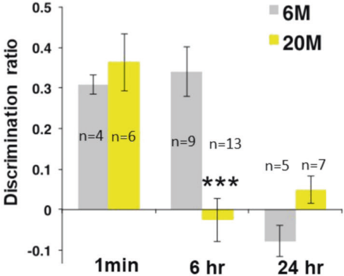
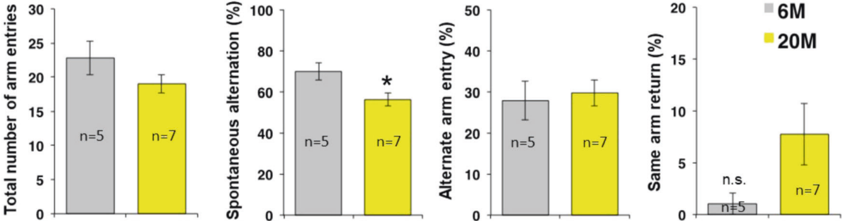
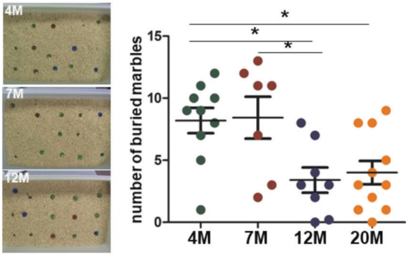
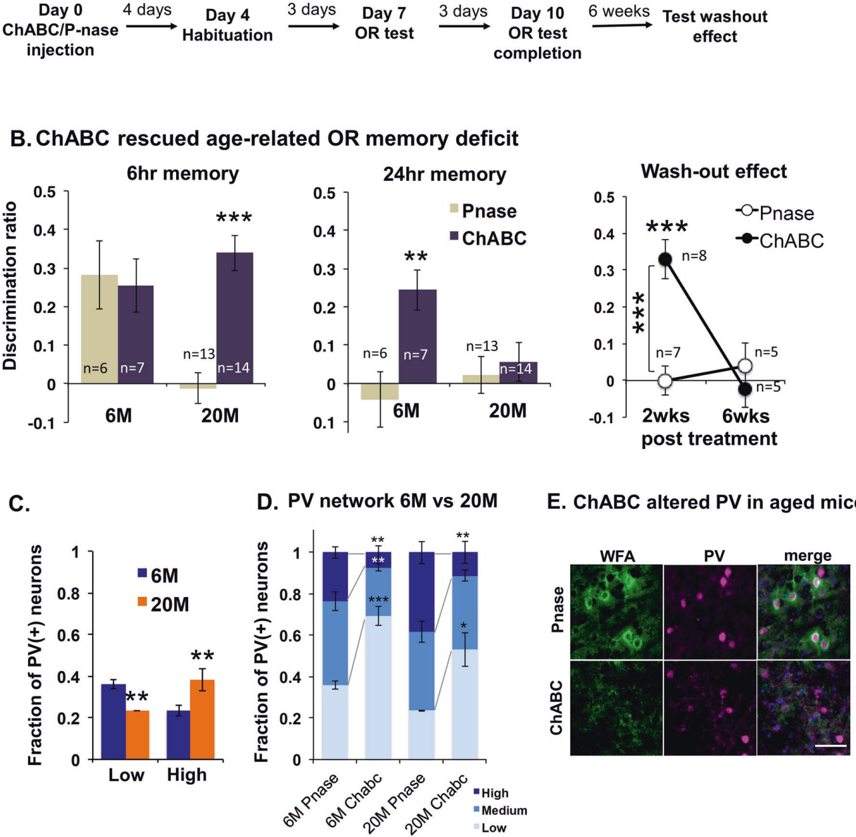
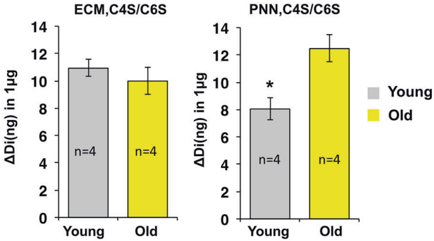
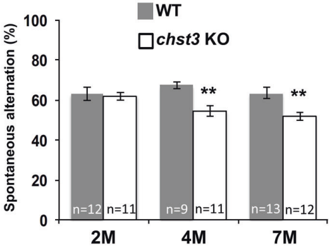
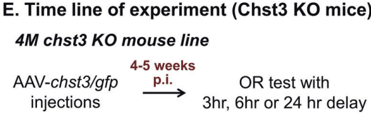
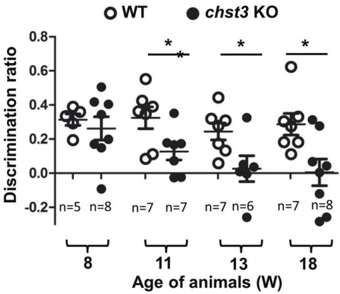
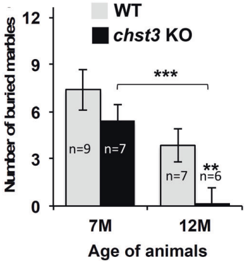
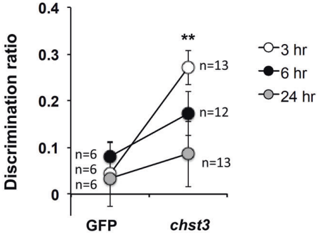
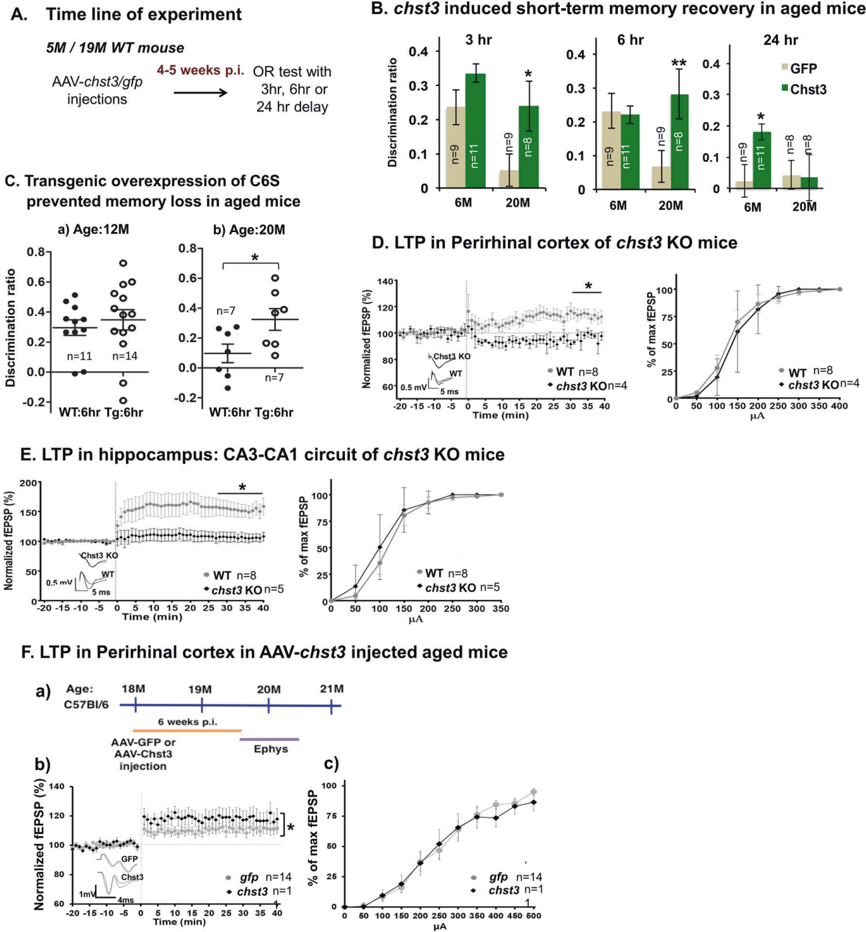
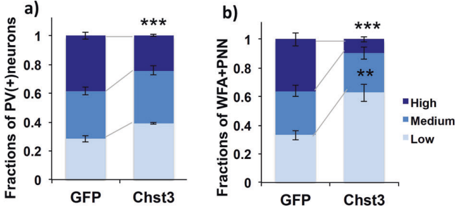
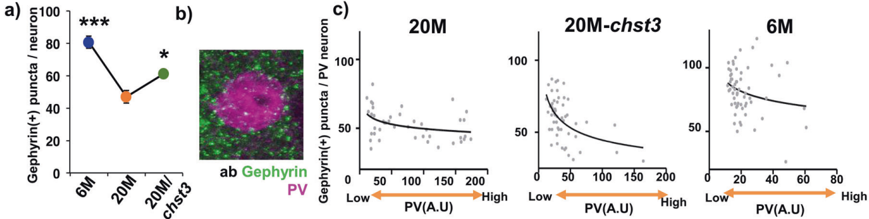
Perineuronal nets (PNNs) are chondroitin sulphate proteoglycan-containing structures on the neuronal surface that have been implicated in the control of neuroplasticity and memory. Age-related reduction of chondroitin 6-sulphates (C6S) leads to PNNs becoming more inhibitory. Here, we investigated whether manipulation of the chondroitin sulphate (CS) composition of the PNNs could restore neuroplasticity and alleviate memory deficits in aged mice. We first confirmed that aged mice (20-months) showed memory and plasticity deficits. They were able to retain or regain their cognitive ability when CSs were digested or PNNs were attenuated. We then explored the role of C6S in memory and neuroplasticity. Transgenic deletion of chondroitin 6-sulfotransferase (chst3) led to a reduction of permissive C6S, simulating aged brains. These animals showed very early memory loss at 11 weeks old. Importantly, restoring C6S levels in aged animals rescued the memory deficits and restored cortical long-term potentiation, suggesting a strategy to improve age-related memory impairment.
Overview
The claims and statistics of this paper haven’t been checked yet.
Free: it reads the open-access text and checks the first 5 claims that cite a source we can check. Create a free account to check every claim.
Integrity signals
Registry
Cites
Statistics
Figures
Verification
Claims the paper makes
The claims and statistics of this paper haven’t been checked yet.
Free: it reads the open-access text and checks the first 5 claims that cite a source we can check. Create a free account to check every claim.
Claims other papers make about this one
Each is checked against this paper’s own text: does it say what the citing paper says it does?
The source backs part of the claim, not all of it — or backs it for a different population, condition or comparison.
In the citing paper
“In the perirhinal cortex and hippocampus, ChABC digestion increases inhibitory inputs to PV interneurons [43–45]”
From The extracellular matrix and perineuronal nets in memory (2022) · cites this paper as [45]
Experimental — accuracy not yet measuredThe source backs part of the claim, not all of it — or backs it for a different population, condition or comparison.
In the citing paper
“These animals showed a very early deficit in object recognition memory and spontaneous alternation memory as young as 3-months old, similar to the performance of 20-month-old aged mice [45].”
From The extracellular matrix and perineuronal nets in memory (2022) · cites this paper as [45]
Experimental — accuracy not yet measuredThe source backs part of the claim, not all of it — or backs it for a different population, condition or comparison.
In the citing paper
“Analysis of the PNN CSPGs in the aged rat and mouse brain showed that C6S almost disappears after 20 months while the level of C4S remains stable [45, 175] (Fig. 3C).”
From The extracellular matrix and perineuronal nets in memory (2022) · cites this paper as [45]
Experimental — accuracy not yet measuredThe source backs part of the claim, not all of it — or backs it for a different population, condition or comparison.
In the citing paper
“In mice, deletion of chondroitin 6-sulfotransferase results in an abnormal extracellular matrix in the brain, early memory loss and accelerated brain aging, while overexpression of this enzyme improved memory in old mice 255 .”
From Hallmarks of aging: An expanding universe (2023) · cites this paper as [255]
Experimental — accuracy not yet measuredThe cited source says what the claim attributes to it.
In the citing paper
“Similarly, LTP is also affected by CSPG sulphation, with loss of 6-sulphation causing loss of LTP in the perirhinal cortex and CA1 [45].”
From The extracellular matrix and perineuronal nets in memory (2022) · cites this paper as [45]
2 more claims about this paper
Create a free account to see every claim other papers make about this one.
Self-check
Percentages, sums and reported differences re-computed from the paper’s own numbers.
The self-check needs the paper’s full text.
Citations
Cites
Reactivation of Ocular Dominance Plasticity in the Adult Visual Cortex
Pizzorusso, T., Medini, P., Berardi, N., Chierzi, S., Fawcett, J. W., & Maffei, L. (2002) · Science · doi:10.1126/science.1072699 · Cited by 1,679
Self-citationAltered Histone Acetylation Is Associated with Age-Dependent Memory Impairment in Mice
Peleg, S., Sananbenesi, F., Zovoilis, A., Burkhardt, S., Bahari-Javan, S., Agis-Balboa, R. C., Cota, P., Wittnam, J. L., Gogol-Doering, A., Opitz, L., et al. (2010) · Science · doi:10.1126/science.1186088 · Cited by 951
Perineuronal Nets Protect Fear Memories from Erasure
Gogolla, N., Caroni, P., Lüthi, A., & Herry, C. (2009) · Science · doi:10.1126/science.1174146 · Cited by 760
Parvalbumin-expressing basket-cell network plasticity induced by experience regulates adult learning
Donato, F., Rompani, S. B., & Caroni, P. (2013) · Nature · doi:10.1038/nature12866 · Cited by 703
The roles of perineuronal nets and the perinodal extracellular matrix in neuronal function
Fawcett, J. W., Oohashi, T., & Pizzorusso, T. (2019) · Nature Reviews Neuroscience · doi:10.1038/s41583-019-0196-3 · Cited by 589
Self-citationObject recognition memory: Neurobiological mechanisms of encoding, consolidation and retrieval
Winters, B. D., Saksida, L. M., & Bussey, T. J. (2008) · Neuroscience & Biobehavioral Reviews · doi:10.1016/j.neubiorev.2008.04.004 · Cited by 572
Self-citationAnimals lacking link protein have attenuated perineuronal nets and persistent plasticity
Carulli, D., Pizzorusso, T., Kwok, J. C. F., Putignano, E., Poli, A., Forostyak, S., Andrews, M. R., Deepa, S. S., Glant, T. T., & Fawcett, J. W. (2010) · Brain · doi:10.1093/brain/awq145 · Cited by 495
Self-citationCasting a Wide Net: Role of Perineuronal Nets in Neural Plasticity
Sorg, B. A., Berretta, S., Blacktop, J. M., Fawcett, J. W., Kitagawa, H., Kwok, J. C. F., & Miquel, M. (2016) · The Journal of Neuroscience · doi:10.1523/jneurosci.2351-16.2016 · Cited by 454
Self-citationDisinhibition, a Circuit Mechanism for Associative Learning and Memory
Letzkus, J. J., Wolff, S. B. E., & Lüthi, A. (2015) · Neuron · doi:10.1016/j.neuron.2015.09.024 · Cited by 411
Otx2 Binding to Perineuronal Nets Persistently Regulates Plasticity in the Mature Visual Cortex
Beurdeley, M., Spatazza, J., Lee, H. H. C., Sugiyama, S., Bernard, C., Di Nardo, A. A., Hensch, T. K., & Prochiantz, A. (2012) · Journal of Neuroscience · doi:10.1523/jneurosci.0394-12.2012 · Cited by 398
Cited by
Hallmarks of aging: An expanding universe
López-Otín, C., Blasco, M. A., Partridge, L., Serrano, M., & Kroemer, G. (2023) · Cell · doi:10.1016/j.cell.2022.11.001 · Cited by 6,549
The extracellular matrix and perineuronal nets in memory
Fawcett, J. W., Fyhn, M., Jendelova, P., Kwok, J. C. F., Ruzicka, J., & Sorg, B. A. (2022) · Molecular Psychiatry · doi:10.1038/s41380-022-01634-3 · Cited by 169
“Increased activity occurs in several regions during task performance, including the CA1 and CA3, perirhinal cortex, insular cortex, and medial PFC [98, 100].”
BackgroundResultInfluentialSelf-citationOxidative stress and regeneration
Jaganjac, M., Milković, L., Žarković, N., & Žarković, K. (2022) · Free Radical Biology and Medicine · doi:10.1016/j.freeradbiomed.2022.02.004 · Cited by 175
Single-nucleus RNA-sequencing of autosomal dominant Alzheimer disease and risk variant carriers
Brase, L., You, S.-F., D’Oliveira Albanus, R., Del-Aguila, J. L., Dai, Y., Novotny, B. C., Soriano-Tarraga, C., Dykstra, T., Fernandez, M. V., Budde, J. P., et al. (2023) · Nature Communications · doi:10.1038/s41467-023-37437-5 · Cited by 98
Molecular profiling of the hippocampus of children with autism spectrum disorder
Rexrode, L., Hartley, J., Showmaker, K. C., Challagundla, L., Vandewege, M. W., Martin, B. E., Blair, E., Bollavarapu, R., Antonyraj, R. B., Hilton, K., et al. (2024) · Molecular Psychiatry · doi:10.1038/s41380-024-02441-8 · Cited by 77
“…(black lines). association studies (GWAS) implicate several ECM genes in ASD, including genes encoding for endogenous proteases such as ADAMTS3, ADAMTS5, ADAMTS14 [32 – 35], that genetic factors in ECMs may contribute to the broad ECM gene expression changes we observed in children with ASD.”
The “Loss” of Perineuronal Nets in Alzheimer's Disease: Missing or Hiding in Plain Sight?
Scarlett, J. M., Hu, S. J., & Alonge, K. M. (2022) · Frontiers in Integrative Neuroscience · doi:10.3389/fnint.2022.896400 · Cited by 61
Proteoglycan Sulphation in the Function of the Mature Central Nervous System
Fawcett, J. W., & Kwok, J. C. F. (2022) · Frontiers in Integrative Neuroscience · doi:10.3389/fnint.2022.895493 · Cited by 53
Self-citationExtracellular matrix and synapse formation
Yang, L., Wei, M., Xing, B., & Zhang, C. (2022) · Bioscience Reports · doi:10.1042/bsr20212411 · Cited by 28
From molecules to behavior: implications for perineuronal net remodeling in learning and memory
Sánchez, B., Kraszewski, P., Lee, S., & Cope, E. C. (2023) · Journal of Neurochemistry · doi:10.1111/jnc.16036 · Cited by 33
“On the other hand, increases in C6S levels improve cognitive decline in aged mice, while transgenic loss of C6S causes early cognitive decline in young mice (Yang et al., 2021).”
InfluentialShi, Y., Wu, X., Zhou, J., Cui, W., Wang, J., Hu, Q., Zhang, S., Han, L., Zhou, M., Luo, J., et al. (2022) · Advanced Science · doi:10.1002/advs.202104112 · Cited by 44
The mechanisms of perineuronal net abnormalities in contributing aging and neurological diseases
Dong, Y., Zhao, K., Qin, X., Du, G., & Gao, L. (2023) · Ageing Research Reviews · doi:10.1016/j.arr.2023.102092 · Cited by 41
Evans, A. D., Pournoori, N., Saksala, E., & Oommen, O. P. (2024) · Biomaterials · doi:10.1016/j.biomaterials.2024.122629 · Cited by 33
Perineuronal nets affect memory and learning after synapse withdrawal
Růžička, J., Dalecká, M., Safrankova, K., Peretti, D., Mallucci, G. R., Jendelová, P., Kwok, J. C. F., & Fawcett, J. W. (2022) · Translational Psychiatry · doi:10.1038/s41398-022-02226-z · Cited by 32
Self-citationLi, X., Wu, X., Lu, T., Kuang, C., Si, Y., Zheng, W., Li, Z., & Xue, Y.-X. (2024) · International Journal of Molecular Sciences · doi:10.3390/ijms25063412 · Cited by 30
“A decline in C6S is linked to premature memory loss, while an increase in C6S not only prevents age-related memory deficits but can also restore existing memory impairments [159].”
BackgroundPerineuronal nets affect memory and learning after synapse withdrawal
Ruzicka, J., Dalecka, M., Safrankova, K., Peretti, D., Mallucci, G., Jendelova, P., Kwok, J. C., & Fawcett, J. W. (2021) · doi:10.1101/2021.04.13.439599 · Cited by 27
Self-citationDrug Screening Implicates Chondroitin Sulfate as a Potential Longevity Pill
Ewald, C. Y. (2021) · Frontiers in Aging · doi:10.3389/fragi.2021.741843 · Cited by 27
“Overexpression of CHST3 improved memory in old mice, suggesting the importance of maintaining proper chondroitin sulfate levels to promote neuroplasticity during aging (Yang et al., 2021).”
BackgroundTian, W., You, Y., Sun, X., Wang, L., Wang, L., Wang, S., Ai, C., & Song, S. (2022) · Carbohydrate Polymers · doi:10.1016/j.carbpol.2022.120295 · Cited by 26
Liu, K., Gao, Y.-Z., Wu, X.-M., Hu, X.-Y., Shi, C., He, Q., Wu, H.-P., Yao, H., Ma, D., Yang, J., et al. (2024) · Neuropharmacology · doi:10.1016/j.neuropharm.2024.110205 · Cited by 26
Melrose, J. (2023) · Journal of Neurochemistry · doi:10.1111/jnc.15915 · Cited by 23
Chelini, G., Mirzapourdelavar, H., Durning, P. T., Baidoe‐Ansah, D., Sethi, M. K., O'Donovan, S. M., Klengel, T., Balasco, L., Berciu, C., Boyer‐Boiteau, A., et al. (2024) · Cell Reports · doi:10.1016/j.celrep.2024.114112 · Cited by 22
“10 21–23 This makes it an ideally suitable molecular player to participate in the dynamic and acute phase of local synaptic remodeling.”
Licinio, J., & Wong, M. (2023) · Molecular Psychiatry · doi:10.1038/s41380-023-01968-6 · Cited by 20
Estrogenic regulation of perineuronal nets in the mouse insular cortex and hippocampus
Nguyen, R., Rahyab, R., Deshpande, A., Legge, E., Almeida, J. F., Herz, S. M., Zylko, A. L., Damaj, M. I., & Lasek, A. W. (2025) · Neuropharmacology · doi:10.1016/j.neuropharm.2025.110641 · Cited by 19
“…tenascin R, phosphacan), activity of MMPs and ADAMTSs and proteolytic cleavage of chondroitin sulfate proteoglycans, or levels of chondroitin sulfate isoforms with different sulfation patterns that are more restrictive or permissive for synapse formation (Miyata et al., 2012; Yang et al., 2021).”
Chemistry and Function of Glycosaminoglycans in the Nervous System
Schwartz, N. B., & Domowicz, M. S. (2022) · Advances in neurobiology · doi:10.1007/978-3-031-12390-0_5 · Cited by 17
Woo, A. M., & Sontheimer, H. W. (2023) · Frontiers in Molecular Medicine · doi:10.3389/fmmed.2023.1198021 · Cited by 21
“In addition to therapeutically targeting PNNs and the ECM to treat disorders such as epilepsy and AD, some suggest that manipulating these structures may be a potential anti-aging technique (Yang et al., 2021).”
BackgroundPerineuronal net deglycosylation associates with tauopathy‐induced gliosis and neurodegeneration
Logsdon, A. F., Foresi, B., Hu, S. J., Quah, E., Meuret, C. J., Le, J. P., Hendrickson, A. S., Redford, I. K., Kumar, A., Phan, B. A., et al. (2024) · Journal of Neurochemistry · doi:10.1111/jnc.16067 · Cited by 20
Baidoe‐Ansah, D., Sakib, M. S., Jia, S., Mirzapourdelavar, H., Strackeljan, L., Fischer, A., Aleshin, S. E., Kaushik, R., & Dityatev, A. E. (2022) · Cells · doi:10.3390/cells11132033 · Cited by 16
“for the novel object recognition in aged mice [60].”
BackgroundInfluentialGray, D. T., Khattab, S., Meltzer, J., McDermott, K., Schwyhart, R., Sinakevitch, I. G., Härtig, W., & Barnes, C. A. (2022) · Cerebral Cortex · doi:10.1093/cercor/bhac366 · Cited by 17
Resilience to Alzheimer's disease associates with alterations in perineuronal nets
de Vries, L. E., Bahnerth, A., Swaab, D. F., Verhaagen, J., & Carulli, D. (2024) · Alzheimer s & Dementia · doi:10.1002/alz.14504 · Cited by 19
“Indeed,changesinCS sulfation pattern with age play a strong role in the control of plasticity, with CS-C more abundant during critical periods and associated with increased plasticity 71–73 and CS-A predominantly expressed in adult-hood and involved in plasticity inhibition.”
Self-citationAlonge, K. M., Herbert, M. J., Yagi, M., Cook, D. G., Banks, W. A., & Logsdon, A. F. (2021) · Frontiers in Behavioral Neuroscience · doi:10.3389/fnbeh.2021.745288 · Cited by 14
“Since 6S-CS sulfation is required for neuroplasticity and associated behavioral deficits in mice (Yang et al., 2021), we sought to determine whether the significant differences in thalamic 6S-CS abundance (Table 2) were associated with motor coordination defects in mice with CCI.”
BackgroundStrackeljan, L., Baidoe‐Ansah, D., Mirzapourdelavar, H., Jia, S., Kaushik, R., Cangalaya, C., & Dityatev, A. E. (2025) · Experimental Neurology · doi:10.1016/j.expneurol.2025.115186 · Cited by 14
Activational and Organizational Effects of Sex Hormones on Hippocampal Inhibitory Neurons
Hernández‐Vivanco, A., de la Vega‐Ruiz, R., Montes‐Mellado, A., Azcoitia, Í., & Méndez, P. (2025) · Journal of Neuroscience · doi:10.1523/jneurosci.1764-24.2025 · Cited by 14
Matrix disequilibrium in Alzheimer’s disease and conditions that increase Alzheimer’s disease risk
Amontree, M., Deasy, S., Turner, R. S., & Conant, K. E. (2023) · Frontiers in Neuroscience · doi:10.3389/fnins.2023.1188065 · Cited by 13
Singh, A. K., Peng, B., Chien, S.-T., Chan, C.-H., Deng, Y.-H., Pai, H., Wei, H.-J., Wang, M.-F., Wang, S., Wu, C.-Y., et al. (2023) · Biomaterials Science · doi:10.1039/d2bm01997c · Cited by 13
Perineuronal nets in the developing brain: implications for neurodevelopmental disorders
Ackerman, J. M., Ford, T. J. L., Kattewar, S. S., & Kim, W.-Y. (2025) · Molecular Brain · doi:10.1186/s13041-025-01261-3 · Cited by 12
“The sulphation pattern in the brain changes with age, with nearly all C6S dissipating after 20 months in rodent models [38, 148].”
Dynamic Organization of Neuronal Extracellular Matrix Revealed by HaloTag-HAPLN1
Sterin, I., Niazi, A., Kim, J. S., Park, J., & Park, S. (2024) · Journal of Neuroscience · doi:10.1523/jneurosci.0666-24.2024 · Cited by 10
The 90 plus: longevity and COVID-19 survival
Zatz, M., Silva, M. V. R., de Castro, M. V., & Naslavsky, M. S. (2022) · Molecular Psychiatry · doi:10.1038/s41380-022-01461-6 · Cited by 12
“Restoring C6S levels in aged animals rescued the memory deficits and restored cortical long-term potentiation, suggesting a strategy to improve age-related memory impairment [99].”
BackgroundChi, W., Liu, R., Zhou, W., Li, W., & Yu, Y. (2024) · Chinese Chemical Letters · doi:10.1016/j.cclet.2024.110587 · Cited by 11
Kaplelach, A. K., Murchison, C., Kojima, K., Mobley, J. A., & Arrant, A. E. (2024) · Aging Cell · doi:10.1111/acel.14359 · Cited by 9
Sakata, J. T., Alonge, K. M., Diethorn, E. J., Krishnan, K., Milman, N., Ramsaran, A. I., Wan, X., & Sorg, B. A. (2025) · Journal of Neuroscience · doi:10.1523/jneurosci.1367-25.2025 · Cited by 9
Perineuronal Net Microscopy: From Brain Pathology to Artificial Intelligence
Paveliev, M., Egorchev, A. A., Musin, F., Lipachev, N., Melnikova, A., Gimadutdinov, R. M., Kashipov, A., Molotkov, D., Chickrin, D. E., & Aganov, A. V. (2024) · International Journal of Molecular Sciences · doi:10.3390/ijms25084227 · Cited by 10
Wang, Y., Ahmadi, S., Yu, C., Zhang, L., Hu, X., Ye, X., & Chen, S. (2022) · Food Quality and Safety · doi:10.1093/fqsafe/fyac057 · Cited by 10
Hendrickson, A. S., Francis, K. L., Kumar, A., Le, J. P., Scarlett, J. M., Keene, C. D., Tovar, D. A., & Alonge, K. M. (2024) · Frontiers in Neuroscience · doi:10.3389/fnins.2024.1396101 · Cited by 8
Targeting CA2 Perineuronal Nets Restores Recognition Memory and Theta Oscillations in Aged Mice
Mehak, S. F., Shivakumar, A. B., Jijimon, F., Gupta, A., Pillai, V. G., & Gangadharan, G. (2025) · Aging Cell · doi:10.1111/acel.70139 · Cited by 7
“Similarly, restoration of the more permissive C6-sulfation in aged mice has been shown to rescue object recognition memory (Yang et al. 2021).”
Endogenous chondroitin extends the lifespan and healthspan in C. elegans
Shibata, Y., Tanaka, Y., Sasakura, H., Morioka, Y., Sassa, T., Fujii, S., Mitsuzumi, K., Ikeno, M., Kubota, Y., Kimura, K., et al. (2024) · Scientific Reports · doi:10.1038/s41598-024-55417-7 · Cited by 7
“For instance, in the nervous system of mice, reduced chondroitin synthesis is associated with accelerated MIG-17 age-related memory decline 29 .”
BackgroundYao, J., Zhao, T.-S., Guo, Z., Li, M.-Q., Lu, X.-Y., Zou, G.-J., Zhaorong, C., Liu, Y., Cui, Y.-H., Li, F., et al. (2024) · Behavioural Brain Research · doi:10.1016/j.bbr.2024.115152 · Cited by 6
The diverse roles of complex glycans in synapse development and function
Lu, H. P., Bao, L., & Zhang, P. (2025) · Current Opinion in Neurobiology · doi:10.1016/j.conb.2025.103038 · Cited by 7
Perineuronal nets’ role in metabolism
Zhang, N., Song, B., Bai, P., Du, L. Q., Chen, L., Xu, Y., & Zeng, T. (2024) · American Journal of Physiology-Endocrinology and Metabolism · doi:10.1152/ajpendo.00154.2024 · Cited by 6
Molecular Psychiatry special issue: advances in Alzheimer’s disease
Licinio, J., & Wong, M. (2021) · Molecular Psychiatry · doi:10.1038/s41380-021-01434-1 · Cited by 5
“In a mouse model, Yang et al demonstrated that chondroitin 6-sulphate is required for neuroplasticity and memory in ageing [17].”
Batista, A. F., Presumey, J., Singh, B. B., Yalçın, E., Schroeder, M. K., Khan, K., Spooner, E., Li, S. A., Carroll, M. C., & Lemere, C. A. (2025) · Molecular Neurodegeneration Advances · doi:10.1186/s44477-025-00010-z · Cited by 4
Huang, Y.-F., Liu, C., Liu, Z., Zhuang, X., Chen, J.-H., Zhang, Z.-N., Shen, C., & Hu, Y. (2026) · Brain · doi:10.1093/brain/awag058 · Cited by 3
Terstege, D. J., & Epp, J. R. (2026) · Journal of Neuroscience · doi:10.1523/jneurosci.0455-25.2026 · Cited by 4
Chen, B., Hu, R., Wu, X., Shi, M., Chen, Y., Zhang, J., Huang, Y., Ying, X., Han, D., & Ma, R. (2026) · Journal of Integrative Neuroscience · doi:10.31083/jin46448 · Cited by 2
Semisynthesis of rare chondroitin sulfate B and T oligosaccharides
Zhou, K., Sun, A., Wang, Y., Dong, H., Bai, C., Mo, Y., Ding, X., Meng, X., Li, Z., & Li, Z. (2024) · Chinese Chemical Letters · doi:10.1016/j.cclet.2024.110783 · Cited by 2
Advances in fear memory erasure and its neural mechanisms
Guo, W., Wang, X., Zhou, Z., Li, Y., Hou, Y., Wang, K., Wei, R., Ma, X., & Zhang, H. (2025) · Frontiers in Neurology · doi:10.3389/fneur.2024.1481450 · Cited by 3
“These specialized structures, consisting mainly of chondroitin sulfate proteoglycans (CSPGs) within the extracellular matrix, are primarily found around interneurons, with some presence around pyramidal neurons (85).”
Quantitative LC-MS/MS profiling reveals aberrant chondroitin sulfate in Alzheimer’s disease
Xu, Y., Wang, H., Wang, Z., Zhang, J., Stancanelli, E., Xu, Q., Hou, Y., Wang, C., Zhang, P., Gearing, M., et al. (2026) · Communications Biology · doi:10.1038/s42003-026-10358-x · Cited by 1
“O -sulfation during brain maturation in young mice 5,23 .”
Proteoglycan Clusters as a Site of Coordinated, Multi-Dendritic PlasticityPreprint
Chelini, G., Durning, P., O'Donovan, S. M., Klengel, T., Balasco, L., Berciu, C., Boyer‐Boiteau, A., Bozzi, Y., McCullumsmith, R. E., Ressler, K. J., et al. (2021) · bioRxiv (Cold Spring Harbor Laboratory) · doi:10.1101/2021.10.04.462691 · Cited by 1
Editorial: Brain extracellular matrix: Involvement in adult neural functions and disease volume II
Pantazopoulos, H., & Berretta, S. (2022) · Frontiers in Integrative Neuroscience · doi:10.3389/fnint.2022.1009456 · Cited by 1
Deasy, S., Amontree, M., Colon, Z. A., Thorland, E., Modi, K., Hummel, K., Blanco, I., Greco, G. A., Maguire‐Zeiss, K. A., & Conant, K. E. (2025) · bioRxiv (Cold Spring Harbor Laboratory) · doi:10.1101/2025.11.09.687435 · Cited by 2
Rivera-Vargas, J., Superti‐Furga, A., Bonafé, L., Peña‐Padilla, C., Cortés‐Pastrana, R. C., Bobadilla‐Morales, L., Corona‐Rivera, A., & Corona‐Rivera, J. R. (2022) · Clinical Dysmorphology · doi:10.1097/mcd.0000000000000432
Hidalgo-Cortés, J., Mañas-Ojeda, A., Olucha-Bordonau, F. E., García-Mompó, C., & Castillo-Gómez, E. (2023) · bioRxiv (Cold Spring Harbor Laboratory) · doi:10.1101/2023.08.04.551957
Chen, B., Hu, R. H., Wu, X., Shi, M., Chen, Y., Zhang, J., Ying, X., Huang, Y., Han, D., & Ma, R. (2023) · Research Square · doi:10.21203/rs.3.rs-3404696/v1
Preface to the Special Issue “Matrix Metalloproteinases in Health and Disease”
Amontree, M., & Conant, K. E. (2025) · Journal of Neurochemistry · doi:10.1111/jnc.70032
“…those that demonstrated a role for PNNs in critical period modulation, cognition, engram stabilization, and neuronal population dynamics (Murase et al. 2017; Ramsaran et al. 2023; Lee et al. 2017; Sun et al. 2018; Lensjo et al. 2017; Pizzorusso et al. 2002; Dubisova et al. 2022; Yang et al. 2021).”
Elango, K. (2025) · Preprints.org · doi:10.20944/preprints202506.0039.v1
The role of perineuronal nets in post-stroke neuroplasticity and functional reorganization
Aderinto, N., Abraham, I. C., Kwape, J. M., Gaur, A., Akanbi, C. A., Oyeniyi, D. T., Babalola, A. E., Babalola, D. O., Adeyeye, J., Bukky, S. O., et al. (2025) · Next research. · doi:10.1016/j.nexres.2025.101060
Doody, N. E., Stevens, B., Smith, N. J., Lall, V. K., Boxall, S., Hughes, R., Akam, E. C., Askew, G. N., Kwok, J. C. F., & Ichiyama, R. M. (2025) · bioRxiv (Cold Spring Harbor Laboratory) · doi:10.1101/2025.11.14.688432
Self-citationA non-human primate model of dorsolateral prefrontal cortex dysfunction in schizophrenia
Hodgson, A. R. (2024) · Apollo (University of Cambridge) · doi:10.17863/cam.114452
Using Drosophila as a Model to Identify Novel Geroprotectors
Moorse, J. E. (2023) · Aston Publications Explorer (Aston University) · doi:10.48780/publications.aston.ac.uk.00047549
Ng, J. M. S. (2023) · White Rose eTheses Online (University of Leeds, The University of Sheffield, University of York)
Broader functional role of Meprin β in the murine brain and in the APP/V717I mouse model
Keller, M. (2025) · Gutenberg Open Science · doi:10.25358/openscience-13850
Chondroitin 4-sulphate depletion enhances synaptic plasticity and memory in agingPreprint
Burianova, J. S., Svoboda, J., Růžička, J., Štěpánková, K., Klausová, T., Gmiterková, L., Spundova, T., Martínez-Varea, N., Králíková, M., Tureček, R., et al. (2026) · bioRxiv (Cold Spring Harbor Laboratory) · doi:10.64898/2026.01.28.702127
“Over-expression of C6S is able to reactivate plasticity and enhances memory (Yang et al, 2021).”
InfluentialSelf-citationCimpean, A., Dubišová, J., Martínez-Varea, N., Mareková, D., Urdzíková, L. M., Fawcett, J. W., Jendelová, P., & Kwok, J. C. F. (2026) · Glia · doi:10.1002/glia.70233
“Moreover, aging alters the molecular composition of PNNs, including changes in CS sulfation and aggrecan/HA organization (Foscarin et al. 2017; Yang et al. 2021).”
Self-citationBonnefous, H. (2025) · theses.fr (ABES) · doi:10.70675/67742b4az1242z4d30z964ezd8bf9300d4ac · Cited by 1
Expression of sulfate pathway genes in human neurodevelopment
Vijayakumar, P., SUMMERS, K. M., & Dawson, P. A. (2026) · Journal of Neurogenetics · doi:10.1080/01677063.2026.2649162
“…were impaired in Chst14 null mice (Q. Li et al ., 2019); CHST3 , involved in regulation of memory and neuroplasticity in transgenic Chst3 mice (S. Yang et al ., 2021); and SUMF1 , where loss leads to activated microglia in cortex and cerebellum, increased apoptosis and loss of neurons in mice…”
4-methylumbelliferone attenuates amyloid pathology and learning deficits in the APP/PS1 mouse model
Amontree, M., O’Leary, J., Wonnenberg, P. M., Nelson, M., & Conant, K. E. (2026) · Scientific Reports · doi:10.64898/2026.05.21.726929
“C6S generally favors neuroplasticity and overexpression of C6S increases PNN proteolytic degradation 63 and improves object recognition memory in aged mice 64 .”
The Hallmarks of Aging: From Molecular Mechanisms to Clinical Translation
Chmielewski, P. P., & Strzelec, B. (2026) · International Journal of Molecular Sciences · doi:10.3390/ijms27188080
Extracellular matrix and perineuronal nets in neural plasticity, memory, and epileptogenesis
Zhu, H., Li, Q., Li, Y., & Wang, W. (2026) · Frontiers in Molecular Neuroscience · doi:10.3389/fnmol.2026.1945520
Márquez-Díaz, J. E. (2022) · Tecnología Investigación y Academia
Metadata
- Authors
- Yang, S., Gigout, S., Molinaro, A., Naito-Matsui, Y., Hilton, S., Foscarin, S., Nieuwenhuis, B., Tan, C. L., Verhaagen, J., Pizzorusso, T., Saksida, L. M., Bussey, T. M., Kitagawa, H., Kwok, J. C. F., & Fawcett, J. W.
- Affiliations
- University of Cambridge (GB)
- University of Leeds (GB)
- Neuroscience Institute (IT)
- Netherlands Institute for Neuroscience (NL)
- National University Hospital (SG)
- Western University (CA)
- Kobe Pharmaceutical University (JP)
- Czech Academy of Sciences (CZ)
- Corresponding author
- Yang, Sujeong
- Kwok, Jessica C. F.
- Fawcett, James W.
- ORCID
- Venue
- Molecular Psychiatry
- Published
- 2021-07-16
- Volume
- 26
- Issue
- 10
- Pages
- 5658-5668
- ISSN
- 1359-4184 (ISSN-L)
- 1476-5578
- PMC
- PMC8758471
- OpenAlex
- W3181340735
- Cited by
- 70
- References
- 67
- Citations by year
- 2026: 7 · 2025: 15 · 2024: 17 · 2023: 12 · 2022: 15 · 2021: 4
- FWCI
- 6.26
- Type
- journal article
- Language
- en
- Open access
- hybrid
- doi.org
- Licence
- cc-by
- creativecommons.org/licenses/by/4.0 (tdm)
- creativecommons.org/licenses/by/4.0 (vor)
- Locations
- Molecular Psychiatry (publishedVersion, cc-by)
- PubMed Central (publishedVersion, cc-by)
- PubMed (publishedVersion)
- KNAW Research Portal (The Royal Netherlands Academy of Arts and Sciences) (publishedVersion, other-oa)
- White Rose Research Online (University of Leeds, The University of Sheffield, University of York) (acceptedVersion)
- Data Archiving and Networked Services (DANS) (submittedVersion, other-oa)
- Cambridge University Engineering Department Publications Database (submittedVersion)
- Scholarship@Western (Western University) (submittedVersion)
- Scuola Normale Superiore di Pisa (submittedVersion, cc-by)
- Apollo (University of Cambridge) (submittedVersion)
- Apollo (University of Cambridge) (submittedVersion, cc-by)
- Apollo
- Apollo (cc-by)
- Funders
- Grantová Agentura České Republiky (CZ.02.1.01/0.0, CZ.02.1.01)
- Medical Research Council (MC_PC_16050, G1000864, MR/S011110/1, MR/R004463/1, MR/V002694/1)
- Japan Society for the Promotion of Science (20H03386, 19K06572)
- FP7 Ideas: European Research Council (294502)
- Topics
- Life Sciences › Biochemistry, Genetics and Molecular Biology › Cell Biology › Proteoglycans and glycosaminoglycans research
- Life Sciences › Neuroscience › Cellular and Molecular Neuroscience › Neuroscience and Neuropharmacology Research
- Life Sciences › Neuroscience › Developmental Neuroscience › Neurogenesis and neuroplasticity mechanisms
- Keywords
- chondroitin-6-sulfate, perineuronal nets, neuroplasticity, memory, aging, CHST3, age-related memory impairment, long-term potentiation, proteoglycans, cognitive decline
- MeSH terms
- Aging, Animals, Brain, Chondroitin Sulfates, Extracellular Matrix, Neuronal Plasticity, Mice
About these checks
Registry, retraction, Cites and statistics results are computed, not judged, with one exception: a printed reference that no index lists is read once by a model before it counts as a citation error. Claims are extracted by a model and kept only when their quote appears verbatim in the text; each cited source is then checked, with a model’s help, for whether it says what the claim relies on. Those verdicts can be wrong — read the claim’s quote and the cited source before relying on one.
Statistics and arithmetic are recomputed, not judged.
Confidence bands are shown only for fields calibrated on our annotated test set. None is calibrated yet, so no band is shown.
What counts as a claim ›How we measure confidence ›How we check this ›
Are you an author, or do you see a problem with this page? Request a review
Data sources
Bibliographic data: Semantic Scholar, OpenAlex, Crossref.
Contains information from the Semantic Scholar Academic Graph Datasets, made available under the ODC Attribution License (ODC-BY 1.0).
Semantic Scholar’s data is described in: Kinney, R., et al. (2023). The Semantic Scholar Open Data Platform. arXiv:2301.10140.
