

The Amyloid-β Pathway in Alzheimer’s Disease
Open accessThe DOI matches its Crossref record; 412 of the 418 references it cites were found in a registry or an index.
Abstract
Breakthroughs in molecular medicine have positioned the amyloid-β (Aβ) pathway at the center of Alzheimer’s disease (AD) pathophysiology. While the detailed molecular mechanisms of the pathway and the spatial-temporal dynamics leading to synaptic failure, neurodegeneration, and clinical onset are still under intense investigation, the established biochemical alterations of the Aβ cycle remain the core biological hallmark of AD and are promising targets for the development of disease-modifying therapies. Here, we systematically review and update the vast state-of-the-art literature of Aβ science with evidence from basic research studies to human genetic and multi-modal biomarker investigations, which supports a crucial role of Aβ pathway dyshomeostasis in AD pathophysiological dynamics. We discuss the evidence highlighting a differentiated interaction of distinct Aβ species with other AD-related biological mechanisms, such as tau-mediated, neuroimmune and inflammatory changes, as well as a neurochemical imbalance. Through the lens of the latest development of multimodal in vivo biomarkers of AD, this cross-disciplinary review examines the compelling hypothesis- and data-driven rationale for Aβ-targeting therapeutic strategies in development for the early treatment of AD.
Overview
The claims and statistics of this paper haven’t been checked yet.
Free: it reads the open-access text and checks the first 5 claims that cite a source we can check. Create a free account to check every claim.
Integrity signals
Registry
Cites
Statistics
Figures
Verification
Claims the paper makes
The claims and statistics of this paper haven’t been checked yet.
Free: it reads the open-access text and checks the first 5 claims that cite a source we can check. Create a free account to check every claim.
Claims other papers make about this one
Each is checked against this paper’s own text: does it say what the citing paper says it does?
The source backs part of the claim, not all of it — or backs it for a different population, condition or comparison.
In the citing paper
“Biomarkers play a crucial role in patient selection, biological effect detection, dose optimization, and monitoring response progress, with recent approvals of Aβ monoclonal antibodies benefiting from new and accurate biomarkers.83,423”
From Recent advances in Alzheimer's disease: Mechanisms, clinical trials and new drug development strategies. (2024) · cites this paper as [83]
Experimental — accuracy not yet measuredThe source backs part of the claim, not all of it — or backs it for a different population, condition or comparison.
In the citing paper
“Aβ originates from the processing of the amyloid precursor protein (APP) through sequential cleavage by β-secretase and γ-secretase, resulting in various lengths of Aβ fragments, with Aβ40 and Aβ42 being predominant.”
From Recent Advances in Therapeutics for the Treatment of Alzheimer’s Disease (2024) · cites this paper as [12]
Experimental — accuracy not yet measuredThe source backs part of the claim, not all of it — or backs it for a different population, condition or comparison.
In the citing paper
“The hydrophobic C-terminus of Aβ42 facilitates its aggregation and the formation of senile plaques.”
From Recent Advances in Therapeutics for the Treatment of Alzheimer’s Disease (2024) · cites this paper as [12]
Experimental — accuracy not yet measuredThe source backs part of the claim, not all of it — or backs it for a different population, condition or comparison.
In the citing paper
“Mutations in presenilin-1 (PS1) can promote Aβ accumulation through increased production and impaired autophagy functions.”
From Recent Advances in Therapeutics for the Treatment of Alzheimer’s Disease (2024) · cites this paper as [12]
Experimental — accuracy not yet measuredThe source backs part of the claim, not all of it — or backs it for a different population, condition or comparison.
In the citing paper
“As AD progresses to its late stages, the effectiveness of nanoparticle-based therapies often diminishes due to the increased disruption of the BBB [148].”
From Targeted Nanoparticles for Drug Delivery Across the Blood–Brain Barrier in Early and Late Stages of Alzheimer's Disease: A Review (2026) · cites this paper as [149]
Experimental — accuracy not yet measured
7 more claims about this paper
Create a free account to see every claim other papers make about this one.
Self-check
Percentages, sums and reported differences re-computed from the paper’s own numbers.
The self-check needs the paper’s full text.
Citations
Cites
1 retracted
RETRACTED ARTICLE: A specific amyloid-β protein assembly in the brain impairs memory
Lesné, S., Koh, M. T., Kotilinek, L., Kayed, R., Glabe, C. G., Yang, A., Gallagher, M., & Ashe, K. H. (2006) · Nature · doi:10.1038/nature04533 · Cited by 2,769
RetractedThe Amyloid Hypothesis of Alzheimer’s Disease: Progress and Problems on the Road to Therapeutics
Hardy, J., & Selkoe, D. J. (2002) · Science · doi:10.1126/science.1072994 · Cited by 13,864
Self-citationNIA‐AA Research Framework: Toward a biological definition of Alzheimer's disease
Jack, C. R., Bennett, D. A., Blennow, K., Carrillo, M. C., Dunn, B., Haeberlein, S. B., Holtzman, D. M., Jagust, W., Jessen, F., Karlawish, J., et al. (2018) · Alzheimer's & Dementia · doi:10.1016/j.jalz.2018.02.018 · Cited by 10,537
Self-citationAmyloid oligomers exacerbate tau pathology in a mouse model of tauopathy
Selenica, M.-L. B., Brownlow, M., Jimenez, J. P., Lee, D. C., Pena, G., Dickey, C. A., Gordon, M. N., & Morgan, D. (2013) · Neurodegenerative Diseases · doi:10.1159/000337230 · Cited by 10,359
Corder, E. H., Saunders, A. M., Strittmatter, W. J., Schmechel, D. E., Gaskell, P. C., Small, G. W., Roses, A. D., Haines, J. L., & Pericak-Vance, M. A. (1993) · Science · doi:10.1126/science.8346443 · Cited by 9,429
Neurotoxic reactive astrocytes are induced by activated microglia
Liddelow, S. A., Guttenplan, K. A., Clarke, L. E., Bennett, F. C., Bohlen, C. J., Schirmer, L., Bennett, M. L., Münch, A. E., Chung, W.-S., Peterson, T. C., et al. (2017) · Nature · doi:10.1038/nature21029 · Cited by 7,971
Alzheimer's disease: the amyloid cascade hypothesis
Hardy, J. A., & Higgins, G. A. (1992) · Science · doi:10.1126/science.1566067 · Cited by 7,484
Self-citationSperling, R. A., Aisen, P. S., Beckett, L. A., Bennett, D. A., Craft, S., Fagan, A. M., Iwatsubo, T., Jack, C. R., Kaye, J., Montine, T. J., et al. (2011) · Alzheimer's & Dementia · doi:10.1016/j.jalz.2011.03.003 · Cited by 7,155
Self-citationNeuroinflammation in Alzheimer's disease
Heneka, M. T., Carson, M. J., Khoury, J. E., Landreth, G. E., Brosseron, F., Feinstein, D. L., Jacobs, A. H., Wyss-Coray, T., Vitorica, J., Ransohoff, R. M., et al. (2015) · The Lancet Neurology · doi:10.1016/s1474-4422(15)70016-5 · Cited by 6,226
The amyloid hypothesis of Alzheimer's disease at 25 years
Selkoe, D. J., & Hardy, J. (2016) · EMBO Molecular Medicine · doi:10.15252/emmm.201606210 · Cited by 6,164
Self-citation
Research works printed but not linked: 1
- Yamashita K Hasegawa T Iino T Miura M Watanabe T Watanabe S P075-prediction of amyloid pathology by the plasma Aβ(1-42)/Aβ(1-40) ratio measured with fully automated immunoassay system (HISCL™ SERIES) J Prev Alz Dis 2019 6 S89
Cited by
Items 401–500 of 1,005
Porous Materials for Early Diagnosis of Neurodegenerative Diseases
Arghavani, P., Daneshgar, H., Sojdeh, S., Edrisi, M., Moosavi‐Movahedi, A. A., & Rabiee, N. (2025) · Advanced Healthcare Materials · doi:10.1002/adhm.202404685 · Cited by 20
Network pharmacology study on the mechanism of berberine in Alzheimer’s disease model
Zhang, Y., Lv, S., Huang, P., Xiao, L., Lin, N., & Huang, E. (2025) · npj Science of Food · doi:10.1038/s41538-025-00378-y · Cited by 21
Ganglioside lipids inhibit the aggregation of the Alzheimer's amyloid-β peptide
Toprakcioglu, Z., Jayaram, A. K., & Knowles, T. P. J. (2025) · RSC Chemical Biology · doi:10.1039/d4cb00189c · Cited by 19
AdipoRon’s Impact on Alzheimer’s Disease—A Systematic Review and Meta-Analysis
Barbalho, S. M., Laurindo, L. F., de Oliveira Zanuso, B., da Silva, R. M. S., Gallerani Caglioni, L., Nunes Junqueira de Moraes, V. B. F., Fornari Laurindo, L., Dogani Rodrigues, V., da Silva Camarinha Oliveira, J., Beluce, M. E., et al. (2025) · International Journal of Molecular Sciences · doi:10.3390/ijms26020484 · Cited by 18
Fisher, R. M. A., & Torrente, M. P. (2024) · Frontiers in Molecular Neuroscience · doi:10.3389/fnmol.2024.1456052 · Cited by 20
“Amyloid-beta (A β ) is a component of the amyloid precursor protein (APP) and plays a key role in the pathogenesis of AD (Chen et al., 2017; Hampel et al., 2021).”
BackgroundZhou, Q., Wang, W., & Deng, C. (2025) · Molecular Neurobiology · doi:10.1007/s12035-025-04838-0 · Cited by 21
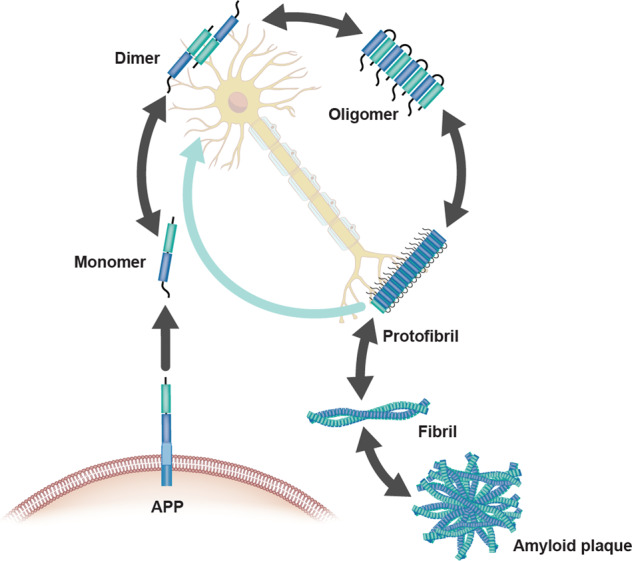
“The soluble forms consist of monomers, dimers, and oligomers/protofibrils, while the insoluble forms include fibrils and amyloid plaques [49].”
Vrancx, C., & Annaert, W. G. (2025) · Trends in Neurosciences · doi:10.1016/j.tins.2025.05.007 · Cited by 20
“Previous reviews have thoroughly explored the generation, aggregation, and toxicity of A β species (e.g., [17,18]), but the role of APP-CTFs, especially in organellar dysfunction, has remained comparatively underappreciated.”
Upadhyay, P., Kumar, S., Tyagi, A., Tyagi, A. R., Barbhuyan, T., & Gupta, S. (2025) · BMC Neuroscience · doi:10.1186/s12868-025-00953-9 · Cited by 19
“This inflammatory response involves the activation of immune cells and the release of pro-inflammatory molecules, contributing to the process of neurodegeneration [18].”
A novel therapeutic prospect: a dual-acting tirzepatide for Alzheimer's disease
Alshehri, G. H., Al-Kuraishy, H. M., Al-Gareeb, A. I., Fawzy, M. N., Waheed, H. J., Papadakis, M., Alexiou, A. T., & Batiha, G. E. (2025) · European Journal of Pharmacology · doi:10.1016/j.ejphar.2025.177979 · Cited by 20
Tangles and Plaques: A deep dive into the pathological hallmarks of Alzheimer’s disease
Vanya, Kumari, S., Bagri, K., & Deshmukh, R. R. (2025) · Neuroscience · doi:10.1016/j.neuroscience.2025.10.050 · Cited by 19
The Role of Amyloid- and Tau PET in the New Era of Alzheimer Disease Therapies
Chiotis, K., Wang, Y., Joie, R. L., & Rabinovici, G. D. (2025) · Journal of Nuclear Medicine · doi:10.2967/jnumed.124.268339 · Cited by 26
Dhamodharan, J., Sekhar, G., & Muthuraman, A. (2022) · Molecules · doi:10.3390/molecules27165182 · Cited by 18
“Furthermore, the accumulation of amyloid precursor proteins (APPs), tau (τ) proteins, and amyloid-β (Aβ) peptides are primary markers of the early stage of AD progression [10].”
BackgroundPostu, P. A., Mihăşan, M., Gorgan, L., Sadiki, F. Z., Idrissi, M. E., & Hriţcu, L. (2022) · Biomedicines · doi:10.3390/biomedicines10092300 · Cited by 21
“Ranked as the fifth-leading cause of death worldwide [1], Alzheimer’s disease (AD) currently affects approximately 50 million individuals.”
BackgroundSomatic Mutations and Alzheimer’s Disease
Downey, J. S., Lam, J. C. K., Li, V. O. K., & Gozes, I. (2022) · Journal of Alzheimer s Disease · doi:10.3233/jad-220643 · Cited by 20
Oxidative Damages on the Alzheimer’s Related-Aβ Peptide Alters Its Ability to Assemble
Cheignon, C., Collin, F., Sabater, L., & Hureau, C. (2023) · Antioxidants · doi:10.3390/antiox12020472 · Cited by 19
Lannes-Vieira, J., Vilar-Pereira, G., Barrios, L. C., & Silva, A. A. (2023) · Memórias do Instituto Oswaldo Cruz · doi:10.1590/0074-02760220287 · Cited by 19
Mahmoudian, Z. G., Ghanbari, A., Rashidi, I., Amiri, I., & Komaki, A. (2023) · European Journal of Pharmacology · doi:10.1016/j.ejphar.2023.175784 · Cited by 21
MiR-431 attenuates synaptic plasticity and memory deficits in APPswe/PS1dE9 mice
Ge, J., Xue, Z., Shu, S., Yu, L., Qin, R., Tao, W., Liu, P., Dong, X., Lan, Z., Bao, X., et al. (2023) · JCI Insight · doi:10.1172/jci.insight.166270 · Cited by 19
“Given that Aβ is one of the key pathological features of AD and Aβ clearance has promising therapeutic effects on AD (15), we determined whether miR-431 decreased the Aβ levels in the brains of APP/PS1 mice.”
Ciccone, L., Nencetti, S., Rossello, A., & Orlandini, E. (2023) · Pharmaceuticals · doi:10.3390/ph16071036 · Cited by 21
Image Translation for Estimating Two‐Dimensional Axial Amyloid‐Beta PET From Structural MRI
Vega, F., Addeh, A., Ganesh, A., Smith, E. E., & MacDonald, M. E. (2023) · Journal of Magnetic Resonance Imaging · doi:10.1002/jmri.29070 · Cited by 20
“6,7 The amyloid-beta aggregates can be observed as “ plaques ” identi-fi ed in post-mortem AD patients more than a hundred years ago, fi rst reported in seminal work by Alois Alzheimer between 1906 and 1911.”
BackgroundZhang, X. L., Yao, W., Zhou, H., Wang, H., Kong, B., & Bai, F. (2024) · Materials & Design · doi:10.1016/j.matdes.2024.112735 · Cited by 19
Morgado, J., Diniz, L. P., Araújo, A. P. B., Antônio, L. M. D. S., Mota-Araujo, H. P., Pinheiro, P. D. S. M., Sagrillo, F. S., Vargas, G., Ferreira, S. T., Figueiredo, C. P., et al. (2024) · British Journal of Pharmacology · doi:10.1111/bph.16439 · Cited by 18
“AD is a multifactorial disease that includes a series of cellular and tissue alterations, such as oxidative stress, synaptic dysfunction, glial reactivity, and neuroinflammation, which can result in neuronal death and memory loss (Hampel et al., 2021).”
BACE1 inhibitors: A promising therapeutic approach for the management of Alzheimer’s disease
Arya, R., Jain, S., Paliwal, S., Madan, K., Sharma, S. K., Mishra, A., Tiwari, P. K., & Kadiri, S. K. (2024) · Asian Pacific Journal of Tropical Biomedicine · doi:10.4103/apjtb.apjtb_192_24 · Cited by 20
Zhou, J., Kim, Y. K., Li, C., & Park, S. (2024) · Computers in Biology and Medicine · doi:10.1016/j.compbiomed.2024.109523 · Cited by 18
Transient interactions between the fuzzy coat and the cross-β core of brain-derived Aβ42 filaments
Milanesi, M., Brotzakis, Z. F., & Vendruscolo, M. (2025) · Science Advances · doi:10.1126/sciadv.adr7008 · Cited by 18
Self-citationMulti‐Targeting Phytochemicals for Alzheimer's Disease
Bhattacharya, R. S., Singh, R., Panghal, A., Thakur, A., Singh, L., Verma, R. K., Singh, C., Goyal, M., & Kumar, J. (2025) · Phytotherapy Research · doi:10.1002/ptr.8435 · Cited by 20
Schreiner, T. G., Menéndez‐González, M., & Popescu, B. O. (2022) · Biomedicines · doi:10.3390/biomedicines10071509 · Cited by 20
“Of great importance remains the amyloidogenic hypothesis [15], as pathological amyloid-beta (Aβ) aggregation in early soluble oligomers and subsequent insoluble amyloid plaques represent the central hallmark for AD [16].”
BackgroundHippocampal functional connectivity across age in an App knock-in mouse model of Alzheimer's disease
Morrissey, Z. D., Gao, J., Zhan, L., Li, W., Fortel, I., Saido, T. C., Saito, T., Bakker, A., Mackin, S. R., Ajilore, O., et al. (2023) · Frontiers in Aging Neuroscience · doi:10.3389/fnagi.2022.1085989 · Cited by 19
“However, most cases of AD are sporadic of unknown cause (Hampel et al., 2021).”
BackgroundLicinio, J., & Wong, M. (2023) · Molecular Psychiatry · doi:10.1038/s41380-023-01968-6 · Cited by 20
Gut Microbiota and Dietary Strategies for Age‐Related Diseases
Upadhyay, P., Kumar, S., Chellammal, H. S. J., Sahu, N., Srivastava, S., Kumar, R., & Gasmi, A. (2025) · Molecular Nutrition & Food Research · doi:10.1002/mnfr.70308 · Cited by 19
“Neuroinflammation and oxidative stress further exacerbate neuronal damage [74].”
Zdanovskis, N., Platkājis, A., Kostiks, A., Šneidere, K., Stepens, A., Naglis, R., & Karelis, G. (2022) · Medicina · doi:10.3390/medicina58070887 · Cited by 19
The role of ADAM10 in astrocytes: Implications for Alzheimer’s disease
Elsworthy, R. J., Hill, E. J., Dunleavy, C., & Aldred, S. (2022) · Frontiers in Aging Neuroscience · doi:10.3389/fnagi.2022.1056507 · Cited by 17
“The hallmark pathological features of the AD brain are described as the accumulation of Amyloid-β (Aβ) plaques and intracellular hyperphosphorylated Tau tangles, in addition to synapse loss and neuronal degeneration (Hampel et al., 2021).”
BackgroundA Kinetic Map of the Influence of Biomimetic Lipid Model Membranes on Aβ 42 Aggregation
Baumann, K. N., Šneiderienė, G., Sanguanini, M., Schneider, M. M., Rimon, O., Díaz, A. G., Greer, H. F., Thacker, D., Linse, S. S., Knowles, T. P. J., et al. (2022) · ACS Chemical Neuroscience · doi:10.1021/acschemneuro.2c00765 · Cited by 19
Self-citationEvaluation of Mollugo oppositifolia Linn. as cholinesterase and β-secretase enzymes inhibitor
Das, B., Bhardwaj, P. K., Sharma, N., Sarkar, A., Haldar, P. K., & Mukherjee, P. K. (2023) · Frontiers in Pharmacology · doi:10.3389/fphar.2022.990926 · Cited by 18
“Inhibition of Aβ neurotoxic function also has a modifying effect on AD (Hampel et al., 2021).”
BackgroundGeroprotective interventions in the 3xTg mouse model of Alzheimer’s disease
Sonsalla, M. M., & Lamming, D. W. (2023) · GeroScience · doi:10.1007/s11357-023-00782-w · Cited by 19
Liu, Z., Bai, Y.-D., Yu, Z., Li, H., Liu, J., Tan, C., Zeng, G., Tu, Y., Sun, P., Jia, Y., et al. (2023) · Neuroscience Bulletin · doi:10.1007/s12264-023-01077-y · Cited by 18
Recent Trends in Active and Passive Immunotherapies of Alzheimer’s Disease
Alshamrani, M. (2023) · Antibodies · doi:10.3390/antib12020041 · Cited by 22
“The amyloid hypothesis suggests that the progressive buildup of beta-amyloid triggers a complex cascade of events that ultimately culminate in neuronal cell death, synapse loss, and neurotransmitter deficits, contributing to the clinical symptoms of dementia [20,21].”
BackgroundLeitao, A. D. G., Ahammad, R. U., Spencer, B. J., Wu, C., Masliah, E., & Rissman, R. A. (2023) · Neurobiology of Disease · doi:10.1016/j.nbd.2023.106285 · Cited by 17
Amin, E., Elgammal, Y. M., Zahran, M. A., & Abdelsalam, M. M. (2023) · Scientific Reports · doi:10.1038/s41598-023-45972-w · Cited by 20
“Early diagnosis of AD, therefore, is needed to provide adequate treatment and avoid deterioration stages 5 .”
Murata, T., Tago, K., Miyata, K., Moriwaki, Y., Misawa, H., Kobata, K., Nakazawa, Y., Tamura, H., & Funakoshi‐Tago, M. (2023) · International Journal of Molecular Sciences · doi:10.3390/ijms25010316 · Cited by 20
“However, it is considered that actual neural inflammations related to neurodegenerative diseases including AD and PD are triggered by the accumulation of aggregated A β or α -synuclein [42,43].”
BackgroundSaha, P., & Ahmad, F. (2024) · ACS Omega · doi:10.1021/acsomega.3c07178 · Cited by 24
Singh, G., Shankar, G., Panda, S. R., Kumar, S., Rai, S., Verma, H., Kumar, P., Nayak, P. K., Naidu, V. G. M., Srikrishna, S., et al. (2024) · ACS Chemical Neuroscience · doi:10.1021/acschemneuro.3c00679 · Cited by 18
Xu, Z., Zhang, W., Sun, N., & Deng, C. (2024) · TrAC Trends in Analytical Chemistry · doi:10.1016/j.trac.2024.117725 · Cited by 17
Basir, H. S., Mirazi, N., Komaki, A., & Hosseini, A. (2024) · Frontiers in Pharmacology · doi:10.3389/fphar.2024.1379264 · Cited by 18
“In addition, A β induces loss of cell-surface AMPA receptors using long-term depression (LTD) signaling pathways (Hampel et al., 2021).”
BackgroundAβ Oligomer Dissociation Is Catalyzed by Fibril Surfaces
Dear, A. J., Thacker, D., Wennmalm, S., Ortigosa-Pascual, L., Andrzejewska, E. A., Meisl, G., Linse, S. S., & Knowles, T. P. J. (2024) · ACS Chemical Neuroscience · doi:10.1021/acschemneuro.4c00127 · Cited by 19
Guptarak, J., Scaduto, P., Tumurbaatar, B., Zhang, W. R., Jupiter, D. C., Taglialatela, G., & Fracassi, A. (2024) · Alzheimer s & Dementia · doi:10.1002/alz.13900 · Cited by 17
“36,37,55,56 Thisdifferencecouldcontributetoanaugmentedcapacityforsynaptic connection plasticity in NDAN individuals, potentially preserving their cognitive function.”
Classification of Mild Cognitive Impairment and Alzheimer’s Disease Using Manual Motor Measures
Koppelmans, V., Ruitenberg, M. F. L., Schaefer, S. Y., King, J. B., Jacobo, J. M., Silvester, B., Mejia, A. F., van der Geest, J. N., Hoffman, J. M., Taşdizen, T., et al. (2024) · Neurodegenerative Diseases · doi:10.1159/000539800 · Cited by 17
“…affected in AD and less in amnestic MCI supports the notion that amyloid β deposition is involved in the pathway of manual motor de fi cits in AD because the regional distribution of amyloid β deposition only later on in the disease process affects the primary motor cortex and the cerebellum [99].”
Bacterial Membrane Vesicles: The Missing Link Between Bacterial Infection and Alzheimer Disease
Butler, C. A., Ciccotosto, G. D., Rygh, N., Bijlsma, E., Dashper, S. G., & Brown, A. C. (2024) · The Journal of Infectious Diseases · doi:10.1093/infdis/jiae228 · Cited by 17
Puranik, N., & Song, M. (2024) · International Journal of Molecular Sciences · doi:10.3390/ijms25189936 · Cited by 17
“Alzheimer’s disease (AD), which is closely linked to aging, is the most prevalent NDD, representing the fifth leading cause of death and the primary cause of dementia globally [3,4].”
BackgroundCritical aggregation concentration and reversibility of amyloid-β (1–40) oligomers
Illodo, S., Al‐Soufi, W., & Novo, M. (2024) · Archives of Biochemistry and Biophysics · doi:10.1016/j.abb.2024.110179 · Cited by 18
Emerging biophysical techniques for probing synaptic transmission in neurodegenerative disorders
Kale, M. B., Wankhede, N. L., Bishoyi, A. K., Ballal, S., Kalia, R., Arya, R., Kumar, S., Khalid, M., Gulati, M., Umare, M. D., et al. (2024) · Neuroscience · doi:10.1016/j.neuroscience.2024.11.055 · Cited by 18
Baldensperger, T., Preissler, M., & Becker, C. F. W. (2025) · RSC Chemical Biology · doi:10.1039/d4cb00221k · Cited by 22
Protective Effects of Bifidobacterium Breve MCC1274 as a Novel Therapy for Alzheimer’s Disease
Abdelhamid, M., Counts, S., Zhou, C., Hida, H., Kim, J., Michikawa, M., & Jung, C. (2025) · Nutrients · doi:10.3390/nu17030558 · Cited by 18
“A β is produced from the cleavage of amyloid precursor protein (APP) by specific enzymes, β –secretase which first cleaves APP, followed by γ –secretase which then cleaves the remaining fragment to generate A β , this process is considered a key step in the development of AD [7].”
Kopalli, S. R., Behl, T., Kyada, A., Rekha, M. M., Kundlas, M., Rani, P., Nathiya, D., Naidu, K. S., Gulati, M., Bhise, M. R., et al. (2025) · Neuroscience · doi:10.1016/j.neuroscience.2025.02.007 · Cited by 19
Khan, B., Iqbal, M. K., Khan, M. A., Khan, H. R., Kiyani, M. M., Bashir, S., & Li, S. (2025) · Journal of Molecular Neuroscience · doi:10.1007/s12031-025-02337-4 · Cited by 17
“The process I refer to is the buildup of amyloid-beta (Aβ) plaques and tau protein tangles, which interfere with synaptic function, resulting in eventual synaptic loss (Hampel et al. 2021; John and Reddy 2021).”
Catalpol rescues cognitive deficits by attenuating amyloid β plaques and neuroinflammation
Li, S., Tian, Z., Xian, X., Yan, C., Li, Q., Li, N., Xu, X., Hou, X., Zhang, X., Yang, Y., et al. (2023) · Biomedicine & Pharmacotherapy · doi:10.1016/j.biopha.2023.115026 · Cited by 25
Targeting the molecular web of Alzheimer’s disease: unveiling pathways for effective pharmacotherapy
Jadhav, D., Saraswat, N., Vyawahare, N. S., & Shirode, D. S. (2024) · The Egyptian Journal of Neurology Psychiatry and Neurosurgery · doi:10.1186/s41983-023-00775-8 · Cited by 20
Serum amyloid P secreted by bone marrow adipocytes drives skeletal amyloidosis
Kumar, S., Song, K., Wang, J., Baghel, M. S., Zeng, Y., Shen, K., Zheng, J., Crane, J., Demehri, S., Gao, P., et al. (2025) · Nature Aging · doi:10.1038/s43587-025-00924-z · Cited by 16
“AD, the most prevalent form of dementia, is characterized by the progressive accumulation of insoluble Aβ plaques in the brain parenchyma and vasculature, along with neurofibrillary tangles of hyperphosphorylated tau, resulting in brain degeneration and cognitive decline 1–3 .”
Copeland, E. N., LeBlanc, P. J., Duarte‐Guterman, P., Fajardo, V. A., & MacPherson, R. E. K. (2025) · The Journal of Physiology · doi:10.1113/jp288032 · Cited by 18
“The amyloidogenic pathway leads to the production of an A β fragment varying between 38 and 40 amino acids in length that can accumulate and aggregate, forming insoluble A β plaques (Hampel et al., 2021).”
G-protein coupled receptors in neuroinflammation, neuropharmacology, and therapeutics
Singh, A. P., Shadangi, S., & Rana, S. (2025) · Biochemical Pharmacology · doi:10.1016/j.bcp.2025.117301 · Cited by 18
Lin, Y., Yoo, J. M., Li, D., Heo, Y., Okumura, M., Won, H., Vendruscolo, M., Lim, M. H., & Lee, Y. (2025) · Translational Neurodegeneration · doi:10.1186/s40035-025-00507-3 · Cited by 17
Self-citationTau in Alzheimer's disease: Shaping the future patient journey
Mummery, C. J., Li-Hsian, C. C., Lasagna‐Reeves, C. A., Ossenkoppele, R., Rowe, C. C., Scharre, D. W., Wang, H., Kyaga, S., & Cummings, J. L. (2026) · The Journal of Prevention of Alzheimer s Disease · doi:10.1016/j.tjpad.2025.100447 · Cited by 19
“The pathophysiology of AD is complex and multifactorial, with two types of protein aggregates, amyloid-beta (A β ) plaques and tau neurofibrillary tangles (NFTs), as the key pathological hallmarks [2].”
Self-citationIban‐Arias, R., Trageser, K. J., Yang, E., Griggs, E., Radu, A., Naughton, S. X., Rahim, M. A., Oguchi, T., Raval, U., Palmieri, J., et al. (2022) · Journal of Alzheimer s Disease · doi:10.3233/jad-221046 · Cited by 16
Lipoprotein Metabolism, Protein Aggregation, and Alzheimer’s Disease: A Literature Review
Grao‐Cruces, E., Claro, C., la Paz, S. M., & Nóbrega, C. (2023) · International Journal of Molecular Sciences · doi:10.3390/ijms24032944 · Cited by 17
“Aβ40 is the most abundant peptide, Aβ42 is less abundant but is the product peptide that has the greater tendency to aggregate [33].”
BackgroundChukwuma, I. F., Ezeorba, T. P. C., Nworah, F. N., Apeh, V. O., Khalid, M., & Sweilam, S. H. (2023) · Arabian Journal of Chemistry · doi:10.1016/j.arabjc.2023.105089 · Cited by 16
Development of submicromolar 17β-HSD10 inhibitors and their in vitro and in vivo evaluation
Benek, O., Hanzlova, M., Miskerikova, M. S., Schmidt, M., Andrýs, R., Rotterova, A., Skarka, A., Hatlapatková, J., Karasová, J. Ž., Medvecký, M., et al. (2023) · European Journal of Medicinal Chemistry · doi:10.1016/j.ejmech.2023.115593 · Cited by 16
Microbiome Alterations and Alzheimer’s Disease: Modeling Strategies with Transgenic Mice
López-Villodres, J. A., Escamilla, A., Mercado-Sáenz, S., Alba-Tercedor, C., Rodríguez‐Pérez, L., Arranz‐Salas, I., Sanchez-Varo, R. M., & Bermúdez, D. (2023) · Biomedicines · doi:10.3390/biomedicines11071846 · Cited by 20
“sequence of pathological events leading to synaptic loss/dysfunction, neuroinflammation, and neuronal degeneration [3,4].”
BackgroundJain, U., Johari, S., & Srivastava, P. (2023) · Molecular Neurobiology · doi:10.1007/s12035-023-03671-7 · Cited by 17
“…oligomeric protein causes neurofibrillary tangles in positive AD, which are caused by abnormally hyperphosphorylated tau within the perikaryal cytoplasm of specific neurons, whereas senile plaques are caused by an abnormally configured neuronal 4-KD peptide, i.e., beta-amyloid (Abeta) [28, 29].”
Emerging Trends in Cryo-EM-based Structural Studies of Neuropathological Amyloids
Mishra, S. (2023) · Journal of Molecular Biology · doi:10.1016/j.jmb.2023.168361 · Cited by 16
Funahashi, R., Matsuura, F., Ninomiya, M., Okabe, S., Takashima, S., Tanaka, K. Y., Nishina, A., & Koketsu, M. (2024) · Bioorganic Chemistry · doi:10.1016/j.bioorg.2024.107229 · Cited by 16
McDiarmid, A., Gospodinova, K., Elliott, R. J. R., Dawson, J. C., Graham, R. E., El‐Daher, M., Anderson, S. M., Glen, S., Glerup, S., Carragher, N. O., et al. (2024) · Brain Communications · doi:10.1093/braincomms/fcae101 · Cited by 16
Li, Q., Li, B., Liu, L., Wang, K.-J., Liu, M., Deng, Y., Li, Z., Zhao, W., Wu, L., Chen, Y., et al. (2024) · Journal of Neuroinflammation · doi:10.1186/s12974-024-03119-2 · Cited by 17
“Familial AD (early-onset AD), which is caused by the overproduction of Aβ due to mutations in the amyloid precursor protein (APP) and PSEN1 (PS1) genes, accounts for only 1% of all AD cases [5, 6].”
BackgroundMicroneedle-mediated drug delivery for neurological diseases
Tan, S., Wang, Y., Wei, X., Xiao, X., & Gao, L. (2024) · International Journal of Pharmaceutics · doi:10.1016/j.ijpharm.2024.124400 · Cited by 17
Angelopoulou, E., Bougea, A. M., Hatzimanolis, A., Scarmeas, N., & Papageorgiou, S. G. (2024) · Cells · doi:10.3390/cells13131164 · Cited by 17
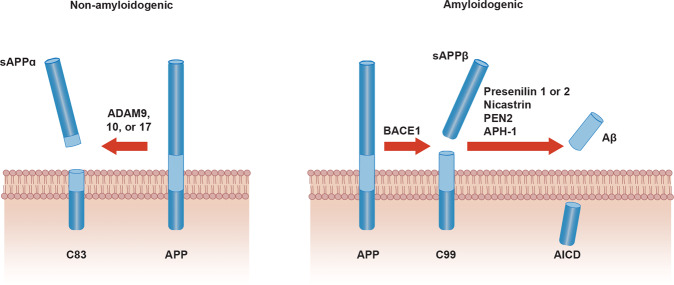
“Alternatively, APP is cleaved by beta-secretase (also known as β -APP-cleaving enzyme-1 or BACE1) to produce the C-terminal membrane-tethered C99 fragment, and the extracellularly released, longer, N-terminal soluble APP beta (sAPP β ) fragment (amyloidogenic pathway) [33].”
BackgroundInfluentialYu, X., Shi, R., Zhou, X., Zhang, M., Cai, Y., Jiang, J., & Han, Y. (2024) · Alzheimer s & Dementia · doi:10.1002/alz.14084 · Cited by 16
“54,56 The finding of a close relationship between A β -PET status and plasma p-tau levels was also consistent with a previous study.”
ResultRathee, S., Sen, D., Pandey, V., & Jain, S. (2024) · Current Drug Targets · doi:10.2174/0113894501320096240627071400 · Cited by 16
Emerging microglial biology highlights potential therapeutic targets for Alzheimer's disease
Fan, X., Chen, H., He, W., & Zhang, J. (2024) · Ageing Research Reviews · doi:10.1016/j.arr.2024.102471 · Cited by 16
Naskar, R., Ghosh, A., Bhattacharya, R., & Chakraborty, S. (2024) · Neurochemistry International · doi:10.1016/j.neuint.2024.105859 · Cited by 17
Arumugam, D., Jamuna, N. A., Kamalakshan, A., & Mandal, S. (2024) · ACS Applied Bio Materials · doi:10.1021/acsabm.4c00820 · Cited by 17
Chowdhury, M. R., Karamveer, K., Tiwary, B. K., Nampoothiri, N. K., Erva, R. R., & Vijaykumar, S. D. (2024) · Metabolic Brain Disease · doi:10.1007/s11011-024-01460-2 · Cited by 19
“The compounds passing inactive underscored connections between amyloidogenesis and downstream signaling pathways (Hampel et al. 2021 ).”
Hanumanthappa, R., Parthasarathy, A., Heggannavar, G. B., Kiran, P. C., Nanjaiah, H., Kumbhar, R., & Devaraju, K. S. (2024) · Neuroprotection/Neuroprotection (Chichester, England. Print) · doi:10.1002/nep3.60 · Cited by 17
Advances in Stem Cell Therapy for Huntington’s Disease: A Comprehensive Literature Review
Shah, S., Mansour, H. M., & Lucke-Wold, B. P. (2025) · Cells · doi:10.3390/cells14010042 · Cited by 19
“…processes have been proposed as being involved in this process, such as reduced beta-amyloid plaques, a sharp decline in β -secretase 1 (BACE-1) levels, decreased tau hyperphosphorylation, the microglia’s reversal of the inflammatory process, and an increase in anti-inflammatory cytokines [83–85].”
Wu, C., Zou, P., Zhu, L., Feng, S., Deng, Q., Liu, T. C., Duan, R., & YANG, L. (2025) · Medicine & Science in Sports & Exercise · doi:10.1249/mss.0000000000003650 · Cited by 18
Li, C., Wang, Y., Wu, Y., Yu, Y. H., Liu, Y., & Liu, Q. (2025) · TrAC Trends in Analytical Chemistry · doi:10.1016/j.trac.2025.118173 · Cited by 17
Blood biomarkers for clinical applications in Alzheimer's disease: A narrative review
Li, H., & Wang, Z. (2025) · NeuroMarkers. · doi:10.1016/j.neumar.2025.100078 · Cited by 17
Synergistic reduction in interfacial flexibility of TREM2 R47H and ApoE4 may underlie AD pathology
Lietzke, E. E., Saeb, D., Aldrich, E. C., Bruce, K. D., & Sprenger, K. G. (2025) · Alzheimer s & Dementia · doi:10.1002/alz.70120 · Cited by 16
Yan, Z.-J., Ye, M., Li, J., Zhang, D., & Yao, Y. (2025) · Molecular Neurodegeneration · doi:10.1186/s13024-025-00853-w · Cited by 17
“As AD is a progressive neuro-degenerative disease characterized by neuropathological abnormalities in biomarkers, particularly Aβ accumulation [46, 47], which can be detected up to two decades before clinical diagnosis, it is plausible that early Aβ exposure may impair ChP function [28, 29],…”
Boosting of tau protein aggregation by CD40 and CD48 gene expression in Alzheimer's disease
Kim, S., Lim, K., Yang, S., & Joo, J. (2022) · The FASEB Journal · doi:10.1096/fj.202201197r · Cited by 19
Self-citationAmyloidosis-history and development, emphasis on insulin and prion amyloids
Metkar, S. K., Udayakumar, S., Girigoswami, A., & Girigoswami, K. (2023) · Brain Disorders · doi:10.1016/j.dscb.2023.100106 · Cited by 18
The role of L-DOPA in neurological and neurodegenerative complications: a review
Kulkarni, S. R., Thokchom, B., Abbigeri, M. B., Bhavi, S. M., Singh, S. R., Metri, N., & Yarajarla, R. B. (2025) · Molecular and Cellular Biochemistry · doi:10.1007/s11010-025-05324-w · Cited by 19
“The pathological pathway of AD begins with the dysregulated processing of amyloid precursor protein (APP), which is cleaved by β-secretase and γ-secretase to produce Aβ peptides [144].”
Njoku, G. C., & Kanmogne, G. D. (2025) · International Journal of Molecular Sciences · doi:10.3390/ijms26189069 · Cited by 15
“Under normal conditions, A β is primarily produced by neurons through enzymatic cleavage of APP, while its clearance is largely mediated by microglia via mechanisms such as phagocytosis, enzymatic degradation, and transport across the BBB [77,81–83].”
Gunning, J. A., Converse, M., Gudarzi, B., Lotfallah, W., & Racette, S. B. (2025) · Nutrients · doi:10.3390/nu17243910 · Cited by 18
“Pathologically, AD is defined by the presence of amyloid beta plaques and hyperphosphorylated tau tangles in the brain [101]; however, neuroinflammation and loss of brain volume are broader indicators of neurodegeneration.”
Maria Jose Perez, J., Lam, A., Weissleder, C., Bertoli, F., Raji, H., Bosch, M., Nemazanyy, I., Kalb, S., Kehili, M., Hirschberg, I., et al. (2026) · Nature Neuroscience · doi:10.1038/s41593-026-02320-1 · Cited by 20
Therapeutic Potential of P110 Peptide: New Insights into Treatment of Alzheimer’s Disease
Srivastava, A., Johnson, M., Renna, H. A., Sheehan, K. M., Ahmed, S., Palaia, T. A., Pinkhasov, A., Gomolin, I. H., Leon, J. D., & Reiss, A. B. (2023) · Life · doi:10.3390/life13112156 · Cited by 18
Miteva, D., Vasilev, G., & Velikova, T. V. (2023) · Antibodies · doi:10.3390/antib12040081 · Cited by 18
“An overproduction of beta-amyloid precursor protein (APP) and accumulation of beta-amyloid protein ( β -AP) in the brain are known to be characteristic of AD and related brain alternations [29].”
BackgroundLimitations of Alzheimer’s Disease Medications
Pathan, A. R. (2023) · NeuroPharmac Journal · doi:10.37881/1.832 · Cited by 18
Numerical and Analytical Simulation of the Growth of Amyloid-β Plaques
Kuznetsov, A. V. (2024) · Journal of Biomechanical Engineering · doi:10.1115/1.4064969 · Cited by 15
Fluca, A. L., Pani, B., Janjusevic, M., Zwas, D. R., Abraham, Y., Calligaris, M., Beltrami, A. P., Corgosinho, F. C., Marketou, M. E., D’Errico, S., et al. (2024) · Life Sciences · doi:10.1016/j.lfs.2024.122911 · Cited by 16
Abosharaf, H. A., Elsonbaty, Y., Tousson, E., & Mohamed, T. M. (2024) · Metabolic Brain Disease · doi:10.1007/s11011-024-01422-8 · Cited by 15
“…to AD onset through Aβ-mediated mechanisms, inducing mitochondrial dysfunction, glucose metabolism disruption, synaptic plasticity diminishing, distorted signal transduc - tion, neuronal injury, and progressive neurodegeneration (Butterfield and Boyd-Kimball 2019 ; Hampel et al. 2021 ).”
Blömeke, L., Rehn, F., Pils, M., Kraemer‐Schulien, V., Cousin, A., Kutzsche, J., Bujnicki, T., Freiesleben, S. D., Schneider, L., Preis, L., et al. (2024) · Communications Medicine · doi:10.1038/s43856-024-00690-w · Cited by 15
Metadata
- Authors
- Hampel, H., Hardy, J., Blennow, K., Chen, C., Perry, G., Kim, S. H., Villemagne, V. L., Aisen, P., Vendruscolo, M., Iwatsubo, T., Masters, C. L., Cho, M., Lannfelt, L., Cummings, J. L., & Vergallo, A.
- Affiliations
- Eisai (United States) (US)
- UK Dementia Research Institute (GB)
- Sahlgrenska University Hospital (SE)
- National University of Singapore (SG)
- The University of Texas at San Antonio (US)
- Hanyang University Seoul Hospital (KR)
- The University of Melbourne (AU)
- University of Southern California (US)
- University of Cambridge (GB)
- The University of Tokyo (JP)
- Uppsala University (SE)
- University of Nevada, Las Vegas (US)
- Corresponding author
- Hampel, Harald
- Vergallo, Andrea
- ORCID
- Venue
- Molecular Psychiatry
- Published
- 2021-08-30
- Volume
- 26
- Issue
- 10
- Pages
- 5481-5503
- ISSN
- 1359-4184 (ISSN-L)
- 1476-5578
- PMC
- PMC8758495
- OpenAlex
- W3198052269
- Cited by
- 1,952
- References
- 418
- Citations by year
- 2026: 451 · 2025: 608 · 2024: 468 · 2023: 297 · 2022: 113 · 2021: 15
- FWCI
- 30.00
- Type
- journal article
- Language
- en
- Open access
- hybrid
- doi.org
- Licence
- cc-by
- creativecommons.org/licenses/by/4.0 (tdm)
- creativecommons.org/licenses/by/4.0 (vor)
- Locations
- Molecular Psychiatry (publishedVersion, cc-by)
- PubMed Central (publishedVersion, cc-by)
- PubMed (publishedVersion)
- Digital Scholarship - UNLV (University of Nevada Reno) (submittedVersion, cc-by)
- Minerva Access (University of Melbourne) (submittedVersion, cc-by)
- National University of Singapore (submittedVersion)
- Uppsala University Publications (Uppsala University) (submittedVersion, other-oa)
- HAL (submittedVersion, other-oa)
- UCL Discovery (University College London) (submittedVersion)
- Apollo (University of Cambridge) (submittedVersion, cc-by)
- Molecular Psychiatry
- Apollo
- Funders
- Alzheimer’s Drug Discovery Foundation (RDAPB-201809-2016615)
- Topics
- Life Sciences › Neuroscience › Cellular and Molecular Neuroscience › Alzheimer's disease research and treatments
- Health Sciences › Medicine › Psychiatry and Mental health › Dementia and Cognitive Impairment Research
- Life Sciences › Neuroscience › Neurology › Neuroinflammation and Neurodegeneration Mechanisms
- Keywords
- amyloid-beta, Alzheimer's disease, tau protein, neuroinflammation, neurodegeneration, synaptic failure, multimodal biomarkers, in vivo biomarkers, disease-modifying therapy, early treatment
- MeSH terms
- Alzheimer Disease, Humans, Biomarkers, Amyloid beta-Peptides, tau Proteins
About these checks
Registry, retraction, Cites and statistics results are computed, not judged, with one exception: a printed reference that no index lists is read once by a model before it counts as a citation error. Claims are extracted by a model and kept only when their quote appears verbatim in the text; each cited source is then checked, with a model’s help, for whether it says what the claim relies on. Those verdicts can be wrong — read the claim’s quote and the cited source before relying on one.
Statistics and arithmetic are recomputed, not judged.
Confidence bands are shown only for fields calibrated on our annotated test set. None is calibrated yet, so no band is shown.
What counts as a claim ›How we measure confidence ›How we check this ›
Are you an author, or do you see a problem with this page? Request a review
Data sources
Bibliographic data: Semantic Scholar, OpenAlex, Crossref.
Contains information from the Semantic Scholar Academic Graph Datasets, made available under the ODC Attribution License (ODC-BY 1.0).
Semantic Scholar’s data is described in: Kinney, R., et al. (2023). The Semantic Scholar Open Data Platform. arXiv:2301.10140.
