

The Amyloid-β Pathway in Alzheimer’s Disease
Open accessThe DOI matches its Crossref record; 412 of the 418 references it cites were found in a registry or an index.
Abstract
Breakthroughs in molecular medicine have positioned the amyloid-β (Aβ) pathway at the center of Alzheimer’s disease (AD) pathophysiology. While the detailed molecular mechanisms of the pathway and the spatial-temporal dynamics leading to synaptic failure, neurodegeneration, and clinical onset are still under intense investigation, the established biochemical alterations of the Aβ cycle remain the core biological hallmark of AD and are promising targets for the development of disease-modifying therapies. Here, we systematically review and update the vast state-of-the-art literature of Aβ science with evidence from basic research studies to human genetic and multi-modal biomarker investigations, which supports a crucial role of Aβ pathway dyshomeostasis in AD pathophysiological dynamics. We discuss the evidence highlighting a differentiated interaction of distinct Aβ species with other AD-related biological mechanisms, such as tau-mediated, neuroimmune and inflammatory changes, as well as a neurochemical imbalance. Through the lens of the latest development of multimodal in vivo biomarkers of AD, this cross-disciplinary review examines the compelling hypothesis- and data-driven rationale for Aβ-targeting therapeutic strategies in development for the early treatment of AD.
Overview
The claims and statistics of this paper haven’t been checked yet.
Free: it reads the open-access text and checks the first 5 claims that cite a source we can check. Create a free account to check every claim.
Integrity signals
Registry
Cites
Statistics
Figures
Verification
Claims the paper makes
The claims and statistics of this paper haven’t been checked yet.
Free: it reads the open-access text and checks the first 5 claims that cite a source we can check. Create a free account to check every claim.
Claims other papers make about this one
Each is checked against this paper’s own text: does it say what the citing paper says it does?
The source backs part of the claim, not all of it — or backs it for a different population, condition or comparison.
In the citing paper
“Biomarkers play a crucial role in patient selection, biological effect detection, dose optimization, and monitoring response progress, with recent approvals of Aβ monoclonal antibodies benefiting from new and accurate biomarkers.83,423”
From Recent advances in Alzheimer's disease: Mechanisms, clinical trials and new drug development strategies. (2024) · cites this paper as [83]
Experimental — accuracy not yet measuredThe source backs part of the claim, not all of it — or backs it for a different population, condition or comparison.
In the citing paper
“Aβ originates from the processing of the amyloid precursor protein (APP) through sequential cleavage by β-secretase and γ-secretase, resulting in various lengths of Aβ fragments, with Aβ40 and Aβ42 being predominant.”
From Recent Advances in Therapeutics for the Treatment of Alzheimer’s Disease (2024) · cites this paper as [12]
Experimental — accuracy not yet measuredThe source backs part of the claim, not all of it — or backs it for a different population, condition or comparison.
In the citing paper
“The hydrophobic C-terminus of Aβ42 facilitates its aggregation and the formation of senile plaques.”
From Recent Advances in Therapeutics for the Treatment of Alzheimer’s Disease (2024) · cites this paper as [12]
Experimental — accuracy not yet measuredThe source backs part of the claim, not all of it — or backs it for a different population, condition or comparison.
In the citing paper
“Mutations in presenilin-1 (PS1) can promote Aβ accumulation through increased production and impaired autophagy functions.”
From Recent Advances in Therapeutics for the Treatment of Alzheimer’s Disease (2024) · cites this paper as [12]
Experimental — accuracy not yet measuredThe source backs part of the claim, not all of it — or backs it for a different population, condition or comparison.
In the citing paper
“As AD progresses to its late stages, the effectiveness of nanoparticle-based therapies often diminishes due to the increased disruption of the BBB [148].”
From Targeted Nanoparticles for Drug Delivery Across the Blood–Brain Barrier in Early and Late Stages of Alzheimer's Disease: A Review (2026) · cites this paper as [149]
Experimental — accuracy not yet measured
7 more claims about this paper
Create a free account to see every claim other papers make about this one.
Self-check
Percentages, sums and reported differences re-computed from the paper’s own numbers.
The self-check needs the paper’s full text.
Citations
Cites
1 retracted
RETRACTED ARTICLE: A specific amyloid-β protein assembly in the brain impairs memory
Lesné, S., Koh, M. T., Kotilinek, L., Kayed, R., Glabe, C. G., Yang, A., Gallagher, M., & Ashe, K. H. (2006) · Nature · doi:10.1038/nature04533 · Cited by 2,769
RetractedThe Amyloid Hypothesis of Alzheimer’s Disease: Progress and Problems on the Road to Therapeutics
Hardy, J., & Selkoe, D. J. (2002) · Science · doi:10.1126/science.1072994 · Cited by 13,864
Self-citationNIA‐AA Research Framework: Toward a biological definition of Alzheimer's disease
Jack, C. R., Bennett, D. A., Blennow, K., Carrillo, M. C., Dunn, B., Haeberlein, S. B., Holtzman, D. M., Jagust, W., Jessen, F., Karlawish, J., et al. (2018) · Alzheimer's & Dementia · doi:10.1016/j.jalz.2018.02.018 · Cited by 10,537
Self-citationAmyloid oligomers exacerbate tau pathology in a mouse model of tauopathy
Selenica, M.-L. B., Brownlow, M., Jimenez, J. P., Lee, D. C., Pena, G., Dickey, C. A., Gordon, M. N., & Morgan, D. (2013) · Neurodegenerative Diseases · doi:10.1159/000337230 · Cited by 10,359
Corder, E. H., Saunders, A. M., Strittmatter, W. J., Schmechel, D. E., Gaskell, P. C., Small, G. W., Roses, A. D., Haines, J. L., & Pericak-Vance, M. A. (1993) · Science · doi:10.1126/science.8346443 · Cited by 9,429
Neurotoxic reactive astrocytes are induced by activated microglia
Liddelow, S. A., Guttenplan, K. A., Clarke, L. E., Bennett, F. C., Bohlen, C. J., Schirmer, L., Bennett, M. L., Münch, A. E., Chung, W.-S., Peterson, T. C., et al. (2017) · Nature · doi:10.1038/nature21029 · Cited by 7,971
Alzheimer's disease: the amyloid cascade hypothesis
Hardy, J. A., & Higgins, G. A. (1992) · Science · doi:10.1126/science.1566067 · Cited by 7,484
Self-citationSperling, R. A., Aisen, P. S., Beckett, L. A., Bennett, D. A., Craft, S., Fagan, A. M., Iwatsubo, T., Jack, C. R., Kaye, J., Montine, T. J., et al. (2011) · Alzheimer's & Dementia · doi:10.1016/j.jalz.2011.03.003 · Cited by 7,155
Self-citationNeuroinflammation in Alzheimer's disease
Heneka, M. T., Carson, M. J., Khoury, J. E., Landreth, G. E., Brosseron, F., Feinstein, D. L., Jacobs, A. H., Wyss-Coray, T., Vitorica, J., Ransohoff, R. M., et al. (2015) · The Lancet Neurology · doi:10.1016/s1474-4422(15)70016-5 · Cited by 6,226
The amyloid hypothesis of Alzheimer's disease at 25 years
Selkoe, D. J., & Hardy, J. (2016) · EMBO Molecular Medicine · doi:10.15252/emmm.201606210 · Cited by 6,164
Self-citation
Research works printed but not linked: 1
- Yamashita K Hasegawa T Iino T Miura M Watanabe T Watanabe S P075-prediction of amyloid pathology by the plasma Aβ(1-42)/Aβ(1-40) ratio measured with fully automated immunoassay system (HISCL™ SERIES) J Prev Alz Dis 2019 6 S89
Cited by
Lecanemab in early Alzheimer's disease
van Dyck, C. H., Swanson, C. J., Aisen, P., Bateman, R. J., Chen, C., Gee, M., Kanekiyo, M., Li, D., Reyderman, L., Cohen, S., et al. (2023) · New England Journal of Medicine · doi:10.1056/nejmoa2212948 · Cited by 5,678
Self-citationZhang, J., Zhang, Y., Wang, J., Xia, Y., Zhang, J., & Chen, L. (2024) · Signal Transduction and Targeted Therapy · doi:10.1038/s41392-024-01911-3 · Cited by 1,138
“83,423 The disparity in drug performance between preclinical and human trials has driven the evolution of animal models.”
BackgroundAmyloid β-based therapy for Alzheimer’s disease: Challenges, successes and future
Zhang, Y., Chen, H., Li, R., Sterling, K., & Song, W. (2023) · Signal Transduction and Targeted Therapy · doi:10.1038/s41392-023-01484-7 · Cited by 988
Diagnostic Accuracy of a Plasma Phosphorylated Tau 217 Immunoassay for Alzheimer Disease Pathology
Ashton, N. J., Brum, W. S., Di Molfetta, G., Benedet, A. L., Arslan, B., Jonaitis, E., Langhough, R. E., Cody, K., Wilson, R., Carlsson, C. M., et al. (2024) · JAMA Neurology · doi:10.1001/jamaneurol.2023.5319 · Cited by 884
Self-citationClinical applications of stem cell-derived exosomes
Tan, F., Li, X., Wang, Z., Li, J., Shahzad, K., & Zheng, J. (2024) · Signal Transduction and Targeted Therapy · doi:10.1038/s41392-023-01704-0 · Cited by 708
Neuropathology of Alzheimer's Disease
Trejo-Lopez, J. A., Yachnis, A. T., & Prokop, S. (2022) · Neurotherapeutics · doi:10.1007/s13311-021-01146-y · Cited by 378
Amyloid-related imaging abnormalities (ARIA): radiological, biological and clinical characteristics
Hampel, H., Elhage, A., Cho, M., Apostolova, L. G., Nicoll, J. A. R., & Atri, A. (2023) · Brain · doi:10.1093/brain/awad188 · Cited by 412
Self-citationAmyloid Beta in Aging and Alzheimer’s Disease
Sehar, U., Rawat, P., Reddy, A. P., Kopel, J., & Reddy, P. H. (2022) · International Journal of Molecular Sciences · doi:10.3390/ijms232112924 · Cited by 361
“In the last two decades, advances in research have reshaped the conceptual framework of AD, and now the therapeutic aims include clinical biological constructs along with prodromal, preclinical, and dementia stages [58].”
BackgroundKamagata, K., Andica, C., Takabayashi, K., Saito, Y., Taoka, T., Nozaki, H., Kikuta, J., Fujita, S., Hagiwara, A., Kamiya, K., et al. (2022) · Neurology · doi:10.1212/wnl.0000000000201300 · Cited by 379
Jeremic, D., Jiménez-Díaz, L., & Navarro-López, J. D. (2021) · Ageing Research Reviews · doi:10.1016/j.arr.2021.101496 · Cited by 306
“In fact, several lines of evidence support a crucial role of Aβ dyshomeostasis in AD onset (Hampel et al., 2021).”
Cummings, J. (2023) · Drugs · doi:10.1007/s40265-023-01858-9 · Cited by 241
Self-citationMitophagy in Alzheimer’s disease: Molecular defects and therapeutic approaches
Mary, A., Eysert, F., Checler, F., & Chami, M. (2023) · Molecular Psychiatry · doi:10.1038/s41380-022-01631-6 · Cited by 244
“Familial AD (FAD) form is linked to monogenic mutations in the Amyloid Precursor Protein (APP) gene and in Presenilin 1 (PSEN1) and Presenilin 2 (PSEN2) genes, with the latter two encoding the catalytic core of the γ-secretase complex [3].”
Updates in Alzheimer's disease: from basic research to diagnosis and therapies
Liu, E., Zhang, Y., & Wang, J.-Z. (2024) · Translational Neurodegeneration · doi:10.1186/s40035-024-00432-x · Cited by 199
“Regarding the molecular mechanisms underlying AD pathologies and behavioral changes, the amyloid cascade hypothesis still dominates the field [12].”
BackgroundThe duality of amyloid-β: its role in normal and Alzheimer’s disease states
Azargoonjahromi, A. (2024) · Molecular Brain · doi:10.1186/s13041-024-01118-1 · Cited by 190
“Notably, the amyloidogenic pathway yields Aβ peptides, including Aβ40 and Aβ42, and the accumulation and aggregation of Aβ is closely linked to AD, provoking neurodegeneration and engendering toxic effects [24–27].”
BackgroundKale, M., Wankhede, N., Pawar, R., Ballal, S., Kumawat, R., Goswami, M., Khalid, M., Taksande, B., Upaganlawar, A., Umekar, M., et al. (2024) · Ageing Research Reviews · doi:10.1016/j.arr.2024.102497 · Cited by 183
Designing the next-generation clinical care pathway for Alzheimer’s disease
Hampel, H., Au, R., Mattke, S., van der Flier, W. M., Aisen, P., Apostolova, L., Chen, C., Cho, M., De Santi, S., Gao, P., et al. (2022) · Nature Aging · doi:10.1038/s43587-022-00269-x · Cited by 191
Self-citationThe Role of Glymphatic System in Alzheimer’s and Parkinson’s Disease Pathogenesis
Buccellato, F. R., D’Anca, M., Serpente, M., Arighi, A., & Galimberti, D. (2022) · Biomedicines · doi:10.3390/biomedicines10092261 · Cited by 169
Pais, M. V., Forlenza, O. V., & Diniz, B. S. (2023) · Journal of Alzheimer's Disease Reports · doi:10.3233/adr-230029 · Cited by 156
Periodontal microorganisms and Alzheimer disease – A causative relationship?
Jungbauer, G., Stähli, A., Zhu, X., Auber Alberi, L., Sculean, A., & Eick, S. (2022) · Periodontology 2000 · doi:10.1111/prd.12429 · Cited by 174
Amyloid formation as a protein phase transition
Michaels, T. C. T., Qian, D., Šarić, A., Vendruscolo, M., Linse, S., & Knowles, T. P. J. (2023) · Nature Reviews Physics · doi:10.1038/s42254-023-00598-9 · Cited by 167
Self-citationAlzheimer’s Disease: Exploring the Landscape of Cognitive Decline
Tenchov, R., Sasso, J. M., & Zhou, Q. A. (2024) · ACS Chemical Neuroscience · doi:10.1021/acschemneuro.4c00339 · Cited by 170
Implications of Gut Microbiota in Neurodegenerative Diseases
Zhang, H., Chen, Y., Wang, Z., Xie, G., Liu, M., Yuan, B., Chai, H., Wang, W., & Cheng, P. (2022) · Frontiers in Immunology · doi:10.3389/fimmu.2022.785644 · Cited by 177
Dissecting the clinical heterogeneity of early-onset Alzheimer’s disease
Sirkis, D. W., Bonham, L. W., Johnson, T. P., La Joie, R., & Yokoyama, J. S. (2022) · Molecular Psychiatry · doi:10.1038/s41380-022-01531-9 · Cited by 151
“Indeed, genetic and molecular analyses of mEOAD families led to the discovery of APP and the early formulations of the ‘amyloid cascade’ hypothesis that has driven decades of research and drug development in LOAD [129].”
Biomarkers used in Alzheimer’s disease diagnosis, treatment, and prevention
Mahaman, Y. A. R., Embaye, K. S., Huang, F., Li, L., Zhu, F., Wang, J.-Z., Liu, R., Feng, J., & Wang, X. (2022) · Ageing Research Reviews · doi:10.1016/j.arr.2021.101544 · Cited by 149
Rinauro, D. J., Chiti, F., Vendruscolo, M., & Limbocker, R. (2024) · Molecular Neurodegeneration · doi:10.1186/s13024-023-00651-2 · Cited by 150
“However, increasing evidence has shown that smaller, intermediate and metastable soluble aggregates, known as misfolded protein oligomers, are in many cases more toxic than their mature fibrillar counterparts [18, 19, 77, 99–104].”
BackgroundSelf-citationA comprehensive review of multi-target directed ligands in the treatment of Alzheimer’s disease
Pathak, C., & Kabra, U. D. (2024) · Bioorganic Chemistry · doi:10.1016/j.bioorg.2024.107152 · Cited by 140
Ginsenoside Rg1 in neurological diseases: From bench to bedside
Yang, S., Wang, J.-J., Cheng, P., Chen, L.-X., Hu, J., & Zhu, G. (2022) · Acta Pharmacologica Sinica · doi:10.1038/s41401-022-01022-1 · Cited by 132
Wang, Z., Wang, C., Yuan, B., Liu, L., Zhang, H., Zhu, M., Chai, H., Peng, J., Huang, Y. H., Zhou, S., et al. (2025) · Microbiome · doi:10.1186/s40168-024-02001-w · Cited by 132
Nelson, M. R., Liu, P., Agrawal, A., Yip, O., Blumenfeld, J., Traglia, M., Kim, M. J., Koutsodendris, N., Rao, A., Grone, B., et al. (2023) · Nature Neuroscience · doi:10.1038/s41593-023-01480-8 · Cited by 120
Blázquez, E., Hurtado-Carneiro, V., Ayuso, Y. L. B., Velázquez, E., García‐García, L., Gómez-Oliver, F., Ruiz‐Albusac, J. M., Ávila, J., & Pozo, M. A. (2022) · Frontiers in Endocrinology · doi:10.3389/fendo.2022.873301 · Cited by 125
Fišar, Z. (2022) · Biomolecules · doi:10.3390/biom12111676 · Cited by 120
“There is an association between ApoE4 and Aβ pathology [185].”
BackgroundToader, C., Tătaru, C. P., Munteanu, O., Șerban, M., Covache-Busuioc, R.-A., Ciurea, A. V., & Enyedi, M. (2024) · International Journal of Molecular Sciences · doi:10.3390/ijms252312613 · Cited by 124
Phytochemical-mediated modulation of signaling pathways: A promising avenue for drug discovery
Paul, J. K., Azmal, M., Haque, A. S. N. B., Talukder, O. F., Meem, M., & Ghosh, A. (2024) · Advances in Redox Research · doi:10.1016/j.arres.2024.100113 · Cited by 119
Alzheimer's disease pathophysiology in the Retina
Gaire, B. P., Koronyo, Y., Fuchs, D.-T. S., Shi, H., Rentsendorj, A., Danziger, R., Vit, J., Mirzaei, N., Doustar, J., Sheyn, J., et al. (2024) · Progress in Retinal and Eye Research · doi:10.1016/j.preteyeres.2024.101273 · Cited by 111
Self-citationHossain, M. S., & Hussain, M. H. (2025) · Pharmacology Research & Perspectives · doi:10.1002/prp2.70131 · Cited by 121
“The primary molecular targets of this pathway are APP, BACE-1, γ-secretase, proteins related to Aβ aggregation, and clearance [54, 55].”
Alzheimer's disease: Molecular aspects and treatment opportunities using herbal drugs
Thakral, S., Yadav, A., Singh, V., Kumar, M., Kumar, P., Narang, R., Sudhakar, K., Verma, A., Khalilullah, H., Jaremko, M., et al. (2023) · Ageing Research Reviews · doi:10.1016/j.arr.2023.101960 · Cited by 113
Proteostasis and neurodegeneration: a closer look at autophagy in Alzheimer's disease
Barmaki, H., Nourazarian, A., & Khaki-Khatibi, F. (2023) · Frontiers in Aging Neuroscience · doi:10.3389/fnagi.2023.1281338 · Cited by 87
A Statement of the MDS on Biological Definition, Staging, and Classification of Parkinson's Disease
Cardoso, F., Goetz, C. G., Mestre, T., Sampaio, C., Adler, C. H., Berg, D., Bloem, B. R., Burn, D. J., Fitts, M. S., Gasser, T., et al. (2023) · Movement Disorders · doi:10.1002/mds.29683 · Cited by 110
Alzheimer’s disease as type 3 diabetes: understanding the link and implications
Kciuk, M., Kruczkowska, W., Gałęziewska, J., Wanke, K., Kałuzińska-Kołat, Ż., Aleksandrowicz, M., & Kontek, R. (2024) · International Journal of Molecular Sciences · doi:10.3390/ijms252211955 · Cited by 98
Neuroinflammation: Mechanisms, Dual Roles, and Therapeutic Strategies in Neurological Disorders
García‐Domínguez, M. (2025) · Current Issues in Molecular Biology · doi:10.3390/cimb47060417 · Cited by 105
“The accumulation of A β plaques triggers the activation of glial cells, leading to the release of many pro-inflammatory cytokines and the exacerbation of neuronal injury [239]. mAbs, such as aducanumab, have been developed to specifically target and promote the clearance of A β plaques [240].”
Treatment of Alzheimer’s Disease: Beyond Symptomatic Therapies
Buccellato, F. R., D’Anca, M., Tartaglia, G. M., Del Fabbro, M., Scarpini, E., & Galimberti, D. (2023) · International Journal of Molecular Sciences · doi:10.3390/ijms241813900 · Cited by 94
“In this regard, experimental data supports a pathogenic mechanism in which AD neuropathology and Tau, a microtubule-associated protein, is highly expressed in neurons and has been implicated in the pathogenesis of AD and other neurodegenerative diseases called “tauopathies” [19,20,22–25].”
BackgroundFanlo-Ucar, H., Picón-Pagès, P., Herrera-Fernández, V., ILL‐Raga, G., & Muñoz, F. J. (2024) · Antioxidants · doi:10.3390/antiox13101208 · Cited by 104
Moussa, N., & Dayoub, N. (2023) · Saudi Pharmaceutical Journal · doi:10.1016/j.jsps.2023.101729 · Cited by 102
Ratan, Y., Rajput, A., Maleysm, S., Pareek, A., Jain, V., Pareek, A., Kaur, R., & Singh, G. (2023) · Biomedicines · doi:10.3390/biomedicines11051398 · Cited by 82
“According to their theory, the accumulation of oligomeric A β (oA β )-peptides are responsible for the pathophysiology causing downstream events such as neuroin fl ammation, the formation of neuro fi brillary tangles (NFT), and vascular injury, encouraging dementia and cognitive de fi cits [51].”
BackgroundCholesterol imbalance and neurotransmission defects in neurodegeneration
Shin, K. C., Moussa, H. Y. A., & Park, Y. (2024) · Experimental & Molecular Medicine · doi:10.1038/s12276-024-01273-4 · Cited by 96
Cummings, J. L. (2025) · Neurotherapeutics · doi:10.1016/j.neurot.2025.e00570 · Cited by 94
“The success of anti-amyloid MABs builds on an extensive foundation of studies devoted to understanding the biology of amyloid in AD [4].”
Self-citationAlzheimer’s Disease: A Brief History of Immunotherapies Targeting Amyloid β
Vogt, A.-C. S., Jennings, G. T., Mohsen, M. O., Vogel, M., & Bachmann, M. F. (2023) · International Journal of Molecular Sciences · doi:10.3390/ijms24043895 · Cited by 84
“The catalytic units of the γ-secretase complex are presenilins 1 βand 2 (PSEN1/PSEN2) [26].”
BackgroundInfluentialAmyloid-β and Phosphorylated Tau are the Key Biomarkers and Predictors of Alzheimer’s Disease
Pradeepkiran, J. A., Baig, J., Islam, M. A., Kshirsagar, S., & Reddy, P. H. (2024) · Aging and Disease · doi:10.14336/ad.2024.0286 · Cited by 102
“The length isoforms Aβ1–42/Aβ1–40 ratio (Aβ1–42/1–40) play an important role in diagnosis of AD, as emphasized by the neurodegeneration and AD biomarker development process [23,24].”
Alzheimer’s disease as a viral disease: Revisiting the infectious hypothesis
Bruno, F., Abondio, P., Bruno, R., Ceraudo, L., Paparazzo, E., Citrigno, L., Luiselli, D., Bruni, A. C., Passarino, G., Colao, R., et al. (2023) · Ageing Research Reviews · doi:10.1016/j.arr.2023.102068 · Cited by 88
Exploring cerebral amyloid angiopathy: Insights into pathogenesis, diagnosis, and treatment
Cozza, M., Amadori, L., & Boccardi, V. (2023) · Journal of the Neurological Sciences · doi:10.1016/j.jns.2023.120866 · Cited by 94
“…the processing of amyloid precursor protein (APP) and the production of Aβ, and abnormalities in this gene can contribute to the accumulation of Aβ in cerebral blood vessels [22]. na α1-antichymotrypsin is an acute-phase protein that is involved in inflammation and the regulation of proteases [23].”
P-tau217 as a Reliable Blood-Based Marker of Alzheimer’s Disease
Lai, R., Li, B., & Bishnoi, R. J. (2024) · Biomedicines · doi:10.3390/biomedicines12081836 · Cited by 89
“AD is characterized by the presence of extracellular A β plaques and intracellular neurofibrillary tangles, composed of proteins formed by the aberrant cleavage of trans-membrane amyloid precursor protein (APP) and microtubule-associated tau protein, respectively [1,8] (Figure 2).”
BackgroundCurrent views on meningeal lymphatics and immunity in aging and Alzheimer’s disease
Rego, S., Sánchez, G., & Mesquita, S. D. (2023) · Molecular Neurodegeneration · doi:10.1186/s13024-023-00645-0 · Cited by 82
Role of glucagon-like peptide-1 receptor agonists in Alzheimer’s disease and Parkinson’s disease
Hong, C.-T., Chen, J.-H., & Hu, C.-J. (2024) · Journal of Biomedical Science · doi:10.1186/s12929-024-01090-x · Cited by 78
“The hallmark pathologies in AD are the accumulation of amyloid-beta (Aβ) plaques and tau tangles in the brain, leading to neuronal loss and brain atrophy [3, 4].”
BackgroundYoo, J., Lee, J., Ahn, B., Han, J., & Lim, M. H. (2025) · Chemical Science · doi:10.1039/d4sc06762b · Cited by 80
Rash, B. G., Ramdas, K. N., Agafonova, N., Naioti, E., McClain‐Moss, L., Zainul, Z., Varnado, B., Peterson, K., Brown, M. T., Leal, T., et al. (2025) · Nature Medicine · doi:10.1038/s41591-025-03559-0 · Cited by 84
“Attempts to modify the disease have focused largely on the amyloid and neurofibrillary tangle hypotheses of disease pathogenesis 7 .”
Melatonin: A potential nighttime guardian against Alzheimer’s
Zhang, Z., Xue, P., Bendlin, B. B., Zetterberg, H., Felice, F. G. D., Tan, X. W., & Benedict, C. (2024) · Molecular Psychiatry · doi:10.1038/s41380-024-02691-6 · Cited by 82
Biomarker-guided decision making in clinical drug development for neurodegenerative disorders
Cummings, J. L., Teunissen, C. E., Fiske, B. K., Ber, I. L., Wildsmith, K. R., Schöll, M., Dunn, B., & Scheltens, P. (2025) · Nature Reviews Drug Discovery · doi:10.1038/s41573-025-01165-w · Cited by 89
Self-citationHistidine modulates amyloid-like assembly of peptide nanomaterials and confers enzyme-like activity
Yuan, Y., Chen, L., Kong, L., Qiu, L., Fu, Z., Sun, M., Liu, Y., Cheng, M., Ma, S., Wang, X., et al. (2023) · Nature Communications · doi:10.1038/s41467-023-41591-1 · Cited by 77
“For example, positions 6, 13, and 14 of His can chelate copper ions, thereby generating ROS and causing neurotoxicity 32 .”
BackgroundAl‐kuraishy, H. M., Jabir, M. S., Albuhadily, A. K., Al-Gareeb, A. I., & Rafeeq, M. F. (2023) · Ageing Research Reviews · doi:10.1016/j.arr.2023.102084 · Cited by 80
Nag, S., Mitra, O., Sankarganesh, P., Bhattacharjee, A., Mohanto, S., Gowda, B. H. J., Kar, S., Ramaiah, S., Anbarasu, A., & Ahmed, M. G. (2024) · Materials Today Chemistry · doi:10.1016/j.mtchem.2023.101894 · Cited by 85
Natural products in neurodegenerative diseases: recent advances and future outlook
Nahar, L., Charoensup, R., Kalieva, K., Habibi, E., Guo, M., Wang, D., Kvasnica, M., Onder, A., & Sarker, S. D. (2025) · Frontiers in Pharmacology · doi:10.3389/fphar.2025.1529194 · Cited by 83
“The key pathological features include amyloid-beta (A β ) plaques and tau tangles in the brain (Hampel et al., 2021).”
InfluentialNatural product-based pharmacological studies for neurological disorders
Puri, V., Kanojia, N., Sharma, A., Huanbutta, K., Dheer, D., & Sangnim, T. (2022) · Frontiers in Pharmacology · doi:10.3389/fphar.2022.1011740 · Cited by 87
“The concept of medications interacting with many targets has long been seen as undesirable, as it is inevitably related to negative side effects but theoretically can be safer compared to a single-hit target molecule (Hampel et al., 2021).”
BackgroundApolipoprotein E in Alzheimer’s disease trajectories and the next-generation clinical care pathway
Narasimhan, S., Holtzman, D. M., Apostolova, L. G., Cruchaga, C., Masters, C. L., Hardy, J., Villemagne, V. L., Bell, J., Cho, M., & Hampel, H. (2024) · Nature Neuroscience · doi:10.1038/s41593-024-01669-5 · Cited by 66
Self-citationChoroid plexus volume as a novel candidate neuroimaging marker of the Alzheimer’s continuum
Jiang, J., Zhuo, Z., Wang, A., Li, W., Jiang, S., Duan, Y., Ren, Q., Zhao, M., Wang, L., Yang, S., et al. (2024) · Alzheimer s Research & Therapy · doi:10.1186/s13195-024-01520-w · Cited by 78
“Given that Aβ accumulation is a key pathological hallmark of the AD continuum, which is positively correlated with clinical progression and severity [40], we conducted mediation analyses and discovered that ChP volume mediated a robust association between CSF Aβ levels and cognitive impairment, and…”
BackgroundJayaswamy, P. K., Vijaykrishnaraj, M., Patil, P., Alexander, L. M., Kellarai, A., & Shetty, P. K. (2022) · Ageing Research Reviews · doi:10.1016/j.arr.2022.101791 · Cited by 72
Lim, D. W., Lee, J., Lee, C.-H., & Kim, Y. T. (2024) · International Journal of Molecular Sciences · doi:10.3390/ijms252011223 · Cited by 75
“Alzheimer’s disease (AD) is characterized by the excessive deposition of amyloid-β (A β ) and tau proteins in the brain [24].”
BackgroundThe Amyloid-Beta Clearance: From Molecular Targets to Glial and Neural Cells
Cai, W., Wu, T., & Chen, N. (2023) · Biomolecules · doi:10.3390/biom13020313 · Cited by 61
“Fibrillar Aβ is the major component of cerebral cortical plaques [11].”
BackgroundThe Pleiotropic Face of CREB Family Transcription Factors
Chowdhury, M. A. R., An, J., & Jeong, S. (2023) · Molecules and Cells · doi:10.14348/molcells.2023.2193 · Cited by 73
“In experimental studies, increasing BDNF levels can reduce the risk of memory deficits and cognitive dysfunction in AD patients, as well as reduce the amount of amyloid beta peptide (Aβ) aggregation in the brain (Hampel et al., 2021).”
Monfared, A. A. T., Phan, N. T. N., Pearson, I. V., Mauskopf, J., Cho, M., Zhang, Q., & Hampel, H. J. (2023) · Neurology and Therapy · doi:10.1007/s40120-023-00504-6 · Cited by 77
Self-citationLiu, Y., Guttman, L. C., Dawson, V. L., & Dawson, T. M. (2024) · Biochemical Pharmacology · doi:10.1016/j.bcp.2024.116174 · Cited by 73
Essayan-Perez, S., & Südhof, T. C. (2023) · Neuron · doi:10.1016/j.neuron.2023.07.005 · Cited by 71
Kim, Y., Lim, J., & Oh, J. (2024) · Biomedicine & Pharmacotherapy · doi:10.1016/j.biopha.2024.117277 · Cited by 71
Alkhalifa, A. E., Alkhalifa, O., Durdanovic, I., Ibrahim, D. R., & Maragkou, S. (2025) · Journal of Dementia and Alzheimer's Disease · doi:10.3390/jdad2020017 · Cited by 66
Limantoro, J., de Liyis, B. G., & Sutedja, J. C. (2023) · The Egyptian Journal of Neurology Psychiatry and Neurosurgery · doi:10.1186/s41983-023-00751-2 · Cited by 244
“Several of these compounds have entered later stages of development, showing promising advancements [28].”
BackgroundProtection of Alzheimer’s disease progression by a human-origin probiotics cocktail
Prajapati, S. K., Wang, S., Mishra, S. P., Jain, S., & Yadav, H. (2025) · Scientific Reports · doi:10.1038/s41598-024-84780-8 · Cited by 69
Recent Advances in Drug Development for Alzheimer’s Disease: A Comprehensive Review
Xing, H., Yue, S., Qin, R., Du, X., Wu, Y., Zhangsun, D., & Luo, S. (2025) · International Journal of Molecular Sciences · doi:10.3390/ijms26083905 · Cited by 72
“Despite recent advances in cerebrospinal fluid detection and imaging techniques for A β and tau proteins, biomarkers that can fully reflect the pathological process and disease progression of AD are still lacking [186].”
A synergetic turn in cognitive neuroscience of brain diseases
Ibanez, A., Kringelbach, M. L., & Deco, G. (2024) · Trends in Cognitive Sciences · doi:10.1016/j.tics.2023.12.006 · Cited by 65
Physiology of Glymphatic Solute Transport and Waste Clearance from the Brain
Zhao, L., Tannenbaum, A., Bakker, E. N. T. P., & Benveniste, H. (2022) · Physiology · doi:10.1152/physiol.00015.2022 · Cited by 76
The Role of the Vascular System in Degenerative Diseases: Mechanisms and Implications
Sheikh, A. M., Yano, S., Tabassum, S., & Nagai, A. (2024) · International Journal of Molecular Sciences · doi:10.3390/ijms25042169 · Cited by 74
“Furthermore, chronic hypertension could cause sclerosis and damage the blood vessels, increasing the likelihood of vessel rupture and hemorrhagic strokes [41].”
Backgroundvan Dyck, C. H., Sperling, R. A., Johnson, K. A., Dhadda, S., Kanekiyo, M., Li, D., Gee, M., Hersch, S. M., Irizarry, M. C., & Kramer, L. D. (2025) · Alzheimer s & Dementia · doi:10.1002/alz.70905 · Cited by 85
Menopause hormone therapy significantly alters pathophysiological biomarkers of Alzheimer's disease
Depypere, H. T., Vergallo, A., Lemercier, P., Lista, S., Benedet, A. L., Ashton, N. J., Cavedo, E., Zetterberg, H., Blennow, K., Vanmechelen, E., et al. (2022) · Alzheimer s & Dementia · doi:10.1002/alz.12759 · Cited by 69
“The A β pathway, currently known as the earliest biochemical and pathophysiologicalcycleoccurringintheADbiologicalcontinuumby 26 analyzing A β peptide 42 over A β peptide 40 (A β -42/A β -40 ratio) 27 and proteinconcentrationsofthe β -siteamyloidprecursorproteincleaving enzyme 1 (also known as β…”
MethodSelf-citationYamada, K., & Iwatsubo, T. (2024) · Cellular and Molecular Life Sciences · doi:10.1007/s00018-024-05225-z · Cited by 70
Self-citationHealthy Lifestyle and Cognition in Older Adults With Common Neuropathologies of Dementia
Dhana, K., Agarwal, P., James, B. D., Leurgans, S. E., Rajan, K. B., Aggarwal, N. T., Barnes, L. L., Bennett, D. A., & Schneider, J. A. (2024) · JAMA Neurology · doi:10.1001/jamaneurol.2023.5491 · Cited by 64
Novelties on Neuroinflammation in Alzheimer’s Disease–Focus on Gut and Oral Microbiota Involvement
Popescu, C., Munteanu, C., Anghelescu, A., Ciobanu, V., Spînu, A., Andone, I., Mandu, M., Bistriceanu, R., Băilă, M., Postoiu, R.-L., et al. (2024) · International Journal of Molecular Sciences · doi:10.3390/ijms252011272 · Cited by 63
“One of the hallmark features of AD at the molecular level is the accumulation of amyloid-beta (A β ) peptides in the brain, which form extracellular plaques [37].”
BackgroundKochman, U., Sitka, H., Kuźniar, J., Czaja, M., Kozubek, P., Beszłej, J. A., & Leszek, J. (2026) · Molecular Neurobiology · doi:10.1007/s12035-025-05417-z · Cited by 60
Metal–Organic Frameworks as Sensors for Human Amyloid Diseases
Leite, J. P., Figueira, F., Mendes, R. F., Paz, F. A. A., & Gales, L. (2023) · ACS Sensors · doi:10.1021/acssensors.2c02741 · Cited by 59
Almgren, H., Camacho, M., Hanganu, A., Kibreab, M., Camicioli, R. M., Ismail, Z., Forkert, N. D., & Monchi, O. (2023) · Scientific Reports · doi:10.1038/s41598-023-37644-6 · Cited by 63
“In summary, many of the predictive features of cognitive decline in PD identified in this work, such as CSF amyloid-beta, and tau pathology, have previously been associated with Alzheimer’s disease 39–41 .”
BackgroundSpeech Prosody in Mental Disorders
Ding, H., & Zhang, Y. (2022) · Annual Review of Linguistics · doi:10.1146/annurev-linguistics-030421-065139 · Cited by 69
Ehtiati, S., Alizadeh, M., Farhadi, F., Khalatbari, K., Ajiboye, B. O., Rahimi, V. B., & Askari, V. R. (2023) · Journal of Functional Foods · doi:10.1016/j.jff.2023.105637 · Cited by 60
CoQ10 and Mitochondrial Dysfunction in Alzheimer’s Disease
Fišar, Z., & Hroudová, J. (2024) · Antioxidants · doi:10.3390/antiox13020191 · Cited by 68
“Oxidative stress modulates proteostasis, which is strongly impaired in AD [129].”
BackgroundHajjo, R., Sabbah, D. A., Abusara, O. H., & Bawab, A. Q. A. (2022) · Diagnostics · doi:10.3390/diagnostics12122975 · Cited by 63
Zu, L., Wang, X., Liu, P., Xie, J., Zhang, X., Liu, W., Li, Z., Zhang, S., Li, K., Giannetti, A. E., et al. (2024) · Advanced Science · doi:10.1002/advs.202308783 · Cited by 81
Recent Advances in Therapeutics for the Treatment of Alzheimer’s Disease
Thawabteh, A. M., Ghanem, A. W., AbuMadi, S., Thaher, D., Jaghama, W., Karaman, D., & Karaman, R. (2024) · Molecules · doi:10.3390/molecules29215131 · Cited by 56
“However, the relationship between FAD mutations and A β levels is complex, and the plaque formation in sporadic AD is influenced by a dynamic imbalance between A β production and clearance mechanisms [11,12].”
BackgroundCadmium neurotoxicity: Insights into behavioral effect and neurodegenerative diseases
Rezaei, K., Mastali, G., Abbasgholinejad, E., Bafrani, M. A., Shahmohammadi, A., Sadri, Z., & Zahed, M. A. (2024) · Chemosphere · doi:10.1016/j.chemosphere.2024.143180 · Cited by 59
Lipid nanoparticle (LNP) mediated mRNA delivery in neurodegenerative diseases
Moosavi, S. G., Rahiman, N., Jaafari, M. R., & Arabi, L. (2025) · Journal of Controlled Release · doi:10.1016/j.jconrel.2025.113641 · Cited by 61
Astillero‐Lopez, V., González-Rodríguez, M., Villar‐Conde, S., Flores‐Cuadrado, A., Martínez-Marcos, A., Úbeda‐Bañón, I., & Saiz‐Sánchez, D. (2022) · Alzheimer s & Dementia · doi:10.1002/alz.12580 · Cited by 57
Park, S., & Wu, X. (2022) · International Journal of Molecular Sciences · doi:10.3390/ijms232113574 · Cited by 56
“Current data suggest that neuronal cell death with the accumulation of amyloid-β (1–42) results in neurodegenerative changes in the brain [4].”
BackgroundA Small Molecule Stabilizes the Disordered Native State of the Alzheimer’s Aβ Peptide
Löhr, T., Kohlhoff, K., Heller, G. T., Camilloni, C., & Vendruscolo, M. (2022) · ACS Chemical Neuroscience · doi:10.1021/acschemneuro.2c00116 · Cited by 54
Self-citationMorató, X., Pytel, V., Jofresa, S., Ruiz, A., & Boada, M. (2022) · International Journal of Molecular Sciences · doi:10.3390/ijms23169305 · Cited by 53
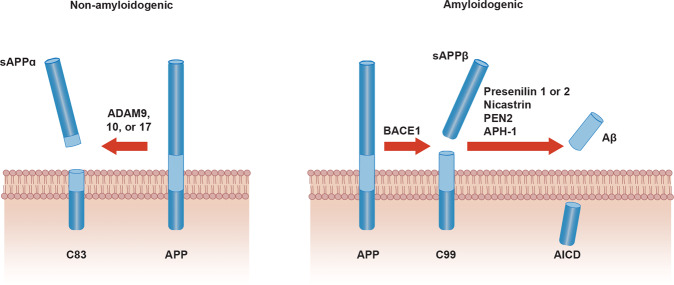
“In the amyloidogenic pathway [38], Aβ is generated from the APP by the sequential proteolysis at the N-terminus of the protein by the β-secretase activity (β-site APP-cleaving enzyme (BACE)) and then processed by γ-secretase complex and secreted from cells of neuronal origin via major regulation as well as a minor con…”
BackgroundAlkhalifa, A. E., Al-Ghraiybah, N. F., & Kaddoumi, A. (2024) · International Journal of Molecular Sciences · doi:10.3390/ijms25031914 · Cited by 56
“These plaques, predominantly located in memory-critical areas such as the cerebral cortex and hippocampus, disrupt neuronal communication, induce oxidative stress, and trigger inflammatory responses [5,38,39].”
Background
Metadata
- Authors
- Hampel, H., Hardy, J., Blennow, K., Chen, C., Perry, G., Kim, S. H., Villemagne, V. L., Aisen, P., Vendruscolo, M., Iwatsubo, T., Masters, C. L., Cho, M., Lannfelt, L., Cummings, J. L., & Vergallo, A.
- Affiliations
- Eisai (United States) (US)
- UK Dementia Research Institute (GB)
- Sahlgrenska University Hospital (SE)
- National University of Singapore (SG)
- The University of Texas at San Antonio (US)
- Hanyang University Seoul Hospital (KR)
- The University of Melbourne (AU)
- University of Southern California (US)
- University of Cambridge (GB)
- The University of Tokyo (JP)
- Uppsala University (SE)
- University of Nevada, Las Vegas (US)
- Corresponding author
- Hampel, Harald
- Vergallo, Andrea
- ORCID
- Venue
- Molecular Psychiatry
- Published
- 2021-08-30
- Volume
- 26
- Issue
- 10
- Pages
- 5481-5503
- ISSN
- 1359-4184 (ISSN-L)
- 1476-5578
- PMC
- PMC8758495
- OpenAlex
- W3198052269
- Cited by
- 1,952
- References
- 418
- Citations by year
- 2026: 451 · 2025: 608 · 2024: 468 · 2023: 297 · 2022: 113 · 2021: 15
- FWCI
- 30.00
- Type
- journal article
- Language
- en
- Open access
- hybrid
- doi.org
- Licence
- cc-by
- creativecommons.org/licenses/by/4.0 (tdm)
- creativecommons.org/licenses/by/4.0 (vor)
- Locations
- Molecular Psychiatry (publishedVersion, cc-by)
- PubMed Central (publishedVersion, cc-by)
- PubMed (publishedVersion)
- Digital Scholarship - UNLV (University of Nevada Reno) (submittedVersion, cc-by)
- Minerva Access (University of Melbourne) (submittedVersion, cc-by)
- National University of Singapore (submittedVersion)
- Uppsala University Publications (Uppsala University) (submittedVersion, other-oa)
- HAL (submittedVersion, other-oa)
- UCL Discovery (University College London) (submittedVersion)
- Apollo (University of Cambridge) (submittedVersion, cc-by)
- Molecular Psychiatry
- Apollo
- Funders
- Alzheimer’s Drug Discovery Foundation (RDAPB-201809-2016615)
- Topics
- Life Sciences › Neuroscience › Cellular and Molecular Neuroscience › Alzheimer's disease research and treatments
- Health Sciences › Medicine › Psychiatry and Mental health › Dementia and Cognitive Impairment Research
- Life Sciences › Neuroscience › Neurology › Neuroinflammation and Neurodegeneration Mechanisms
- Keywords
- amyloid-beta, Alzheimer's disease, tau protein, neuroinflammation, neurodegeneration, synaptic failure, multimodal biomarkers, in vivo biomarkers, disease-modifying therapy, early treatment
- MeSH terms
- Alzheimer Disease, Humans, Biomarkers, Amyloid beta-Peptides, tau Proteins
About these checks
Registry, retraction, Cites and statistics results are computed, not judged, with one exception: a printed reference that no index lists is read once by a model before it counts as a citation error. Claims are extracted by a model and kept only when their quote appears verbatim in the text; each cited source is then checked, with a model’s help, for whether it says what the claim relies on. Those verdicts can be wrong — read the claim’s quote and the cited source before relying on one.
Statistics and arithmetic are recomputed, not judged.
Confidence bands are shown only for fields calibrated on our annotated test set. None is calibrated yet, so no band is shown.
What counts as a claim ›How we measure confidence ›How we check this ›
Are you an author, or do you see a problem with this page? Request a review
Data sources
Bibliographic data: Semantic Scholar, OpenAlex, Crossref.
Contains information from the Semantic Scholar Academic Graph Datasets, made available under the ODC Attribution License (ODC-BY 1.0).
Semantic Scholar’s data is described in: Kinney, R., et al. (2023). The Semantic Scholar Open Data Platform. arXiv:2301.10140.
