

Towards a youth mental health paradigm: a perspective and roadmap
Open accessThe DOI matches its Crossref record; 167 of the 174 references it cites were found in a registry or an index; 57 of the 141 sources its claims cite were checked for support.
Abstract
Most mental disorders have a typical onset between 12 and 25 years of age, highlighting the importance of this period for the pathogenesis, diagnosis, and treatment of mental ill-health. This perspective addresses interactions between risk and protective factors and brain development as key pillars accounting for the emergence of psychopathology in youth. Moreover, we propose that novel approaches towards early diagnosis and interventions are required that reflect the evolution of emerging psychopathology, the importance of novel service models, and knowledge exchange between science and practitioners. Taken together, we propose a transformative early intervention paradigm for research and clinical care that could significantly enhance mental health in young people and initiate a shift towards the prevention of severe mental disorders.
Overview
CoChat Summary
TL;DR
This perspective argues that because most mental disorders emerge between ages 12 and 25, mental health research and care should shift toward a youth mental health paradigm focused on early intervention and prevention. It proposes sensitive periods, developmental cascades, novel diagnostic frameworks, youth service models, digital tools, and bidirectional knowledge exchange as core pillars.
Key findings
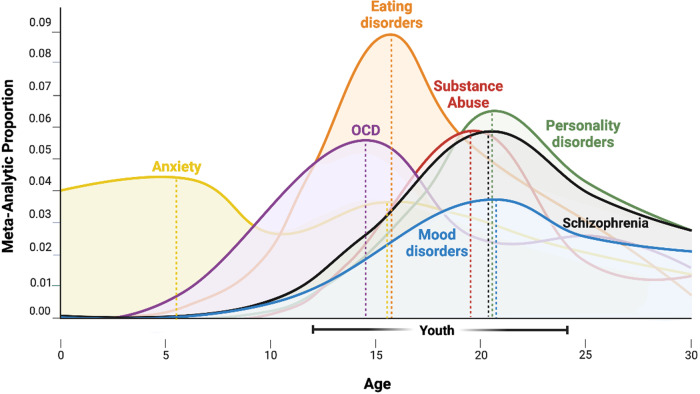
- Approximately 75% of mental disorders begin before age 25, with peak onset ages reported as anxiety 15.5 years, substance use 19.5 years, schizophrenia/psychotic disorders 20.5 years, eating disorders 15.5 years, personality disorders 20.5 years, OCD 14.5 years, and mood disorders 20.5 years.
- CHR-P criteria are associated with approximately 20% transition to first-episode psychosis in the initial 2 years; CHR-BP criteria show a conversion rate to bipolar disorder of 14.3% within 12 months. Treatment delays for psychosis, bipolar disorders, and eating disorders range from 2–5 years.
- In an exposome/genomic study, additive and interactive genome and exposome influences explained over 30% of variance in internalizing symptoms and over 60% in externalizing symptoms, while a single environmental risk factor accounted for only 1% of variance.
- In an evaluation of 58,000 headspace clients, approximately 70% significantly improved on at least one outcome measure, but functional improvements were observed in only 1/3 of cases.
Methods
- Perspective/roadmap based on an Ernst Strüngmann Forum on Youth Mental Health held July 29–August 3, 2018, in Frankfurt am Main, Germany; it synthesizes epidemiology, developmental neuroscience, clinical staging, service-model, and digital mental health literature rather than presenting new primary data.
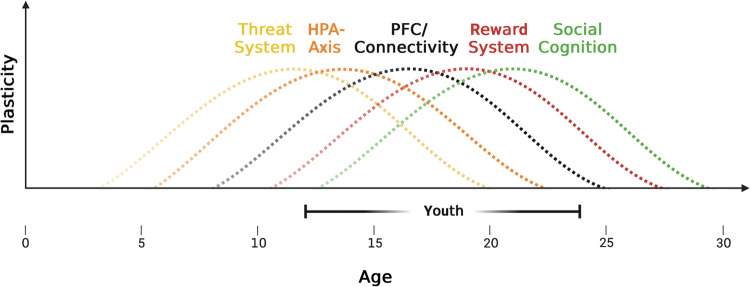
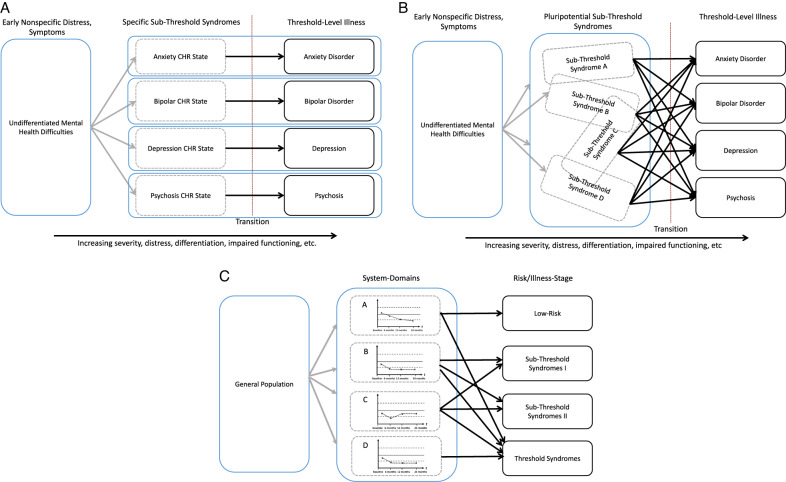
- Proposes a youth mental health paradigm organized around sensitive periods, developmental cascades, diagnostic frameworks such as clinical staging and growth charts, novel service models, digital technologies, and knowledge exchange among researchers, clinicians, and youth with lived experience.
- Includes Table 1 summarizing early intervention evidence across schizophrenia/psychotic disorders, mood disorders, personality disorders, anxiety disorders, substance abuse, OCD, and eating disorders, plus conceptual figures on onset, sensitive periods, and diagnostic models.
Limitations
- The paper does not include a formal limitations section. As a perspective/roadmap, it does not empirically test the proposed paradigm; the authors state that the utility of sensitive-period knowledge to guide interventions “remains to be demonstrated” and can be tested in large-scale studies.
- The cited evidence is heterogeneous and sometimes mixed: for example, CBT can reduce transition rates in CHR-P participants, but a more recent study suggested clinical gains in first-episode psychosis may not be sustained beyond the first two years of treatment, and headspace functional improvements were observed in only 1/3 of cases.
- The authors note limitations of digital approaches: few digital youth mental health studies have been replicated or assessed in real-world clinical settings, many are challenging to interpret due to high bias and few causal methods, and currently available commercial apps lack scientific evidence.
Model-written summary. Check it against the paper before relying on it.
Integrity signals
Registry
Cites
Statistics
Figures
Verification
Claims the paper makes
45 Valid · 4 Not valid · 54 Not checked · 5 Own results and interpretations
At least one cited source doesn’t support this claim or points to a different paper, and none confirmed it — see the verdicts below.
In the paper
“all major syndromes constituting approximately 75% of mental disorders begin before the age of 25 years [9, 10]”
§ Towards a youth mental health paradigm: a perspective and roadmap > Rethinking Mental Health as “Youth Mental Health”
What the sources say
- Disputedcites [9] 9. Solmi M, Radua J, Olivola M, Croce E, Soardo L, Salazar de Pablo G, et al. Age at onset of mental disorders worldwide: large-scale meta-analysis of 192 epidemiological studies. Mol Psychiatry. 2022;27:281–95. doi: 10.1038/s41380-021-01161-7. sourceExperimental — accuracy not yet measured
Our copy of Solmi et al. (2022) reports the opposite magnitude for the very quantity claimed: the Abstract (p. 1) and Discussion state that the proportion of individuals with onset of any mental disorder before age 25 is 62.5% ('before age 25 in half'), not approximately 75%. The only figures near 75% in the paper are disorder-block-specific (anxiety/fear-related 73.3%, feeding/eating 82.4%, neurodevelopmental 95.8%; Results, 'Global age at the onset across diagnostic spectra'), and the Sensitivity-analyses section likewise gives per-disorder proportions (nine out of ten for ASD/ADHD down to two out of ten for ATPD), none of which is the pooled 'all mental disorders' estimate. So the pooled ~75% figure the citing sentence attributes to this meta-analysis is contradicted by its headline 62.5% result. (LLM, conf=0.85)
Checked by a reasoning model — may be wrong.
- Not checked yetcites [10] 10. Kessler RC, Berglund P, Demler O, Jin R, Merikangas KR, Walters EE. Lifetime prevalence and age-of-onset distributions of DSM-IV disorders in the National Comorbidity Survey Replication. Arch Gen Psychiatry. 2005;62:593–602. doi: 10.1001/archpsyc.62.6.593. source
plain- Asserted: passes — The authors put it forward as true.
- Checkable: passes — It can be checked against evidence.
- Load-bearing: passes — The paper’s conclusions depend on it.
- Based: passes — The paper gives a reason why it holds.
- Disputed
Some cited sources support this claim and some don’t — read each source’s verdict below.
In the paper
“Data from animal models of schizophrenia, for example, have shown that different behavioral and neurobiological interventions during the adolescent period but not during earlier or later developmental windows can completely rescue cognitive deficits and associated neural circuit dysfunctions [104–106].”
§ Towards a youth mental health paradigm: a perspective and roadmap > Developing and implementing tools for prevention and early intervention > Sensitive periods and interventions for youth mental health
What the sources say
- Partly supportedcites [104] 104. Lee H, Dvorak D, Kao HY, Duffy ÁM, Scharfman HE, Fenton AA. Early cognitive experience prevents adult deficits in a neurodevelopmental schizophrenia model. Neuron. 2012;75:714–24. doi: 10.1016/j.neuron.2012.06.016. sourceExperimental — accuracy not yet measured
Lee et al. (2012) support only part of what the citing sentence attributes to them: in the NVHL rat model, a single behavioral intervention — two-frame cognitive training given in adolescence (P35) — prevented adult cognitive-control deficits and normalized interhippocampal phase synchrony ('Early Cognitive Training Prevented Adult Deficits'; 'Early Cognitive Training Changed Adult Neural Function'). Our copy contains no neurobiological/pharmacological intervention arm (saline-treated animals appear only as training-exposure controls), so the 'different behavioral and neurobiological interventions' plurality is not this paper's finding. Nor does it test or show that earlier or later windows fail: the discussion ('A Procognitive Treatment Opportunity?') says 'further work in animal models will be needed to define and possibly expand... the boundaries,' speculates about intervening even earlier, and cites Subramaniam et al. (2012) as precedent for benefit in adult, post-onset patients. Finally, the paper describes prevention of deficit onset despite persistent lesion rather than rescue of established deficits, though 'improved cognitive control to normal' and 'normalized interhippocampal synchrony' are consistent with the 'completely' magnitude for this one model. (LLM, conf=0.78)
- Disputedcites [105] 105. Cabungcal JH, Counotte DS, Lewis E, Tejeda HA, Piantadosi P, Pollock C, et al. Juvenile antioxidant treatment prevents adult deficits in a developmental model of schizophrenia. Neuron. 2014;83:1073–84. doi: 10.1016/j.neuron.2014.07.028. sourceExperimental — accuracy not yet measured
Our copy directly contradicts the claim's window-exclusivity: the SUMMARY (p. 2) and RESULTS (pp. 4, 6) report that NAC given in the juvenile period — starting at P5, i.e. before the neonatal lesion — prevented the loss of parvalbumin interneuron maturation, rescued D2 modulation of PFC synapses, and prevented adult PPI and MMN deficits ('Juvenile antioxidant treatment prevents adult deficits' is the paper's title). Only part of the claim is supported: adolescent-onset NAC (P35) and adolescent ebselen did reverse PPI deficits (RESULTS, p. 6; DISCUSSION, p. 8), a neurobiological — not behavioural — intervention (the behavioural/cognitive-training example is credited to Lee et al., 2012 in the DISCUSSION, p. 9). The paper also tests no adult ('later') treatment window, so ineffectiveness later is not shown, and its endpoints are sensorimotor gating (PPI), MMN and circuit physiology with hedged conclusions ('These findings suggest'), not a demonstration of complete rescue of cognitive deficits. (LLM, conf=0.72)
Checked by a reasoning model — may be wrong.
- Not checked yetcites [106] 106. Mukherjee A, Carvalho F, Eliez S, Caroni P. Long-lasting rescue of network and cognitive dysfunction in a genetic schizophrenia model. Cell. 2019;178:1387–1402.e14. doi: 10.1016/j.cell.2019.07.023. source
plainstates a cause- Asserted: passes — The authors put it forward as true.
- Checkable: passes — It can be checked against evidence.
- Load-bearing: passes — The paper’s conclusions depend on it.
- Based: passes — The paper gives a reason why it holds.
- Partly supported
At least one cited source doesn’t support this claim or points to a different paper, and none confirmed it — see the verdicts below.
In the paper
“clinical [81], cognitive [82], and neuroimaging measures [83] constitute possible biomarkers that significantly increase accuracy for predicting clinical outcomes in CHR-P participants”
§ Towards a youth mental health paradigm: a perspective and roadmap > Emerging psychopathology and diagnostic framework(s)
What the sources say
- Disputedcites [83] 83. Group, E.C.H.R.F.P.W. Jalbrzikowski M, Hayes RA, Wood SJ, Nordholm D, Zhou JH, et al. Association of structural magnetic resonance imaging measures with psychosis onset in individuals at clinical high risk for developing psychosis: an ENIGMA working group mega-analysis. JAMA Psychiatry. 2021;78:753–66. doi: 10.1001/jamapsychiatry.2021.0638. sourceExperimental — accuracy not yet measured
The Introduction (p. 6) states that in this CHR sample 'it is currently unknown whether group differences are robust enough to predict outcomes,' and the study ran no prediction analysis at all — only between-group GLMs on cortical thickness, surface area and subcortical volume. The Discussion (p. 13) directly contradicts the attributed claim: the conversion-related CT differences accounted for ~1% of the variance in CHR-PS+ vs. CHR-PS- comparisons, the authors 'anticipate that baseline, univariate sMRI metrics will have a similar impact' to polygenic risk scores, which 'only improved differentiation of CHR-PS+ and HC (not CHR-PS+ from CHR-PS-),' and that 'the use of MRI metrics in isolation may not be feasible or useful for psychosis risk prediction.' The paper does support sMRI CT measures as candidate markers of psychosis risk (Abstract, p. 5; Discussion, p. 12), but it does not support, and in fact argues against, the assertion that neuroimaging measures significantly increase accuracy for predicting clinical outcomes in CHR-P participants. (LLM, conf=0.80)
Checked by a reasoning model — may be wrong.
hedgedstates a cause- Asserted: passes — The authors put it forward as true.
- Checkable: passes — It can be checked against evidence.
- Load-bearing: unclear — It is unclear whether the paper’s conclusions depend on it.
- Based: passes — The paper gives a reason why it holds.
- Disputed
Every source the paper cites for this claim was checked and supports it.
In the paper
“young people face many barriers to accessing mental health care [16]”
§ Towards a youth mental health paradigm: a perspective and roadmap > Rethinking Mental Health as “Youth Mental Health”
What the sources say
- Supportedcites [16] 16. Radez J, Reardon T, Creswell C, Lawrence PJ, Evdoka-Burton G, Waite P. Why do children and adolescents (not) seek and access professional help for their mental health problems? A systematic review of quantitative and qualitative studies. Eur Child Adolesc Psychiatry. 2021;30:183–211. doi: 10.1007/s00787-019-01469-4. source
The cited source is a systematic review of why children and adolescents (do not) seek and access professional help, and our copy reports numerous barrier themes: logistical factors (time, transport, costs), limited availability and long waiting times, difficulties reaching support (Results > Barrier/facilitator themes, p. ~6-7), knowledge-related barriers in 53% of studies and attitudes/expectations in 39% (same section), plus stigma, embarrassment and self-reliance highlighted in the Discussion. The Introduction (p. ~2) likewise frames 'key barriers to accessing child and adolescent mental health services' and the need to address barriers pertinent to young people. This directly supports the broad claim that young people face many barriers to accessing mental health care. (LLM, conf=0.95)
plain- Asserted: passes — The authors put it forward as true.
- Checkable: passes — It can be checked against evidence.
- Load-bearing: passes — The paper’s conclusions depend on it.
- Based: passes — The paper gives a reason why it holds.
- Supported
The cited sources support only part of this claim — read each source’s verdict below.
In the paper
“the search for biomarkers to improve diagnosis and stratification has largely been unsuccessful [4]”
§ Towards a youth mental health paradigm: a perspective and roadmap > Rethinking Mental Health as “Youth Mental Health”
What the sources say
- Partly supportedcites [4] 4. Carvalho AF, Solmi M, Sanches M, Machado MO, Stubbs B, Ajnakina O, et al. Evidence-based umbrella review of 162 peripheral biomarkers for major mental disorders. Transl Psychiatry. 2020;10:152. doi: 10.1038/s41398-020-0835-5. sourceExperimental — accuracy not yet measured
The Introduction (p. n/a) states the 'contrast between the overall volume of this literature and the limited applicability of peripheral biomarkers in current psychiatric practice' and that psychiatric diagnosis 'is still entirely based on psychopathological knowledge', and the Abstract/Conclusion report that 'overall the vast literature of peripheral biomarkers for major mental disorders is affected by bias and is underpowered', with only two convincing and 42 highly suggestive associations — this supports the 'largely unsuccessful ... for diagnosis' half of the claim. The 'stratification' half is not what this review assessed: its Methods (Eligibility criteria) explicitly excluded 'studies that investigated biomarkers for other purposes (for example, biomarkers of risk, stage or prognosis)', and subtyping into 'more biologically valid phenotypes' appears only as a future direction in the Conclusion, not as an evaluated failure. So the source backs the diagnostic-failure framing but not a verdict on stratification biomarkers. (LLM, conf=0.72)
plain- Asserted: passes — The authors put it forward as true.
- Checkable: passes — It can be checked against evidence.
- Load-bearing: passes — The paper’s conclusions depend on it.
- Based: passes — The paper gives a reason why it holds.
- Partly supported
80 more claims · 39 with their cited sources checked
Create a free account to see all 108 claims and to verify the 84 references still open.
- It may state two separate claims as one. 16
- Probably not a substantial claim. 8
Claims other papers make about this one
Each is checked against this paper’s own text: does it say what the citing paper says it does?
The source backs part of the claim, not all of it — or backs it for a different population, condition or comparison.
In the citing paper
“Onset of depression is estimated to peak in the early 20s.63”
From Next generation brain health: transforming global research and public health to promote prevention of dementia and reduce its risk in young adult populations (2024) · cites this paper as [63]
Experimental — accuracy not yet measured
Self-check
Percentages, sums and reported differences re-computed from the paper’s own numbers.
Each contradiction between two passages listed here was confirmed by an independent check.
Rated minor: it would not touch a result — a value no result rests on, a p-value that stays on the same side of the significance level, or a conflict that is clerical, resolved elsewhere in the paper, or outside its own findings.
In the paper
§ Towards a youth mental health paradigm: a perspective and roadmap > Developing and implementing tools for prevention and early intervention > Sensitive periods and interventions for youth mental health
“Currently, however, substantial treatment delays for the majority of syndromes with an onset during youth, such as psychosis, bipolar disorders, and eating disorders, are pervasive [74, 94, 95] (Table 1), ranging from 2-5 years.”
§ Towards a youth mental health paradigm: a perspective and roadmap > Emerging psychopathology and diagnostic framework(s)
“BED: 67 [95]**”
Citations
Cites
Kessler, R. C., Berglund, P., Demler, O., Jin, R., Merikangas, K. R., & Walters, E. E. (2005) · Archives of General Psychiatry · doi:10.1001/archpsyc.62.6.593 · Cited by 20,391 · cited 2×
“However, there is now consistent epidemiological evidence that has highlighted that all major syndromes constituting approximately 75% of mental disorders begin before the age of 25 years [9, 10] (Fig.”
BackgroundInsel, T., Cuthbert, B., Garvey, M., Heinssen, R., Pine, D. S., Quinn, K., Sanislow, C., & Wang, P. (2010) · American Journal of Psychiatry · doi:10.1176/appi.ajp.2010.09091379 · Cited by 7,067
(2022) · The Lancet Psychiatry · doi:10.1016/s2215-0366(21)00395-3 · Cited by 6,481 · cited 2×
“Syndromes such as schizophrenia, depression, anxiety, and personality disorders comprise some of the largest disease burdens worldwide [2].”
BackgroundAge at onset of mental disorders worldwide: Large-scale meta-analysis of 192 epidemiological studies
Solmi, M., Radua, J., Olivola, M., Croce, E., Soardo, L., Salazar de Pablo, G., Il Shin, J., Kirkbride, J. B., Jones, P., Kim, J. H., et al. (2022) · Molecular Psychiatry · doi:10.1038/s41380-021-01161-7 · Cited by 3,835
Self-citationKotov, R., Krueger, R. F., Watson, D., Achenbach, T. M., Althoff, R. R., Bagby, R. M., Brown, T. A., Carpenter, W. T., Caspi, A., Clark, L. A., et al. (2017) · Journal of Abnormal Psychology · doi:10.1037/abn0000258 · Cited by 3,335 · cited 1×
“While several alternatives have been suggested, such as the Research Domain Criteria [69] and the Hierarchical Taxonomy of Psychopathology (HiTOP) [70], a developmental perspective on emerging psycho-pathology is rarely explicitly addressed (but see [71, 72]).”
Is Adolescence a Sensitive Period for Sociocultural Processing?
Blakemore, S.-J., & Mills, K. L. (2014) · Annual Review of Psychology · doi:10.1146/annurev-psych-010213-115202 · Cited by 2,264 · cited 1×
“Social cognition includes several domains, including theory of mind, emotion processing, and social cue identi fi cation, that have been linked to speci fi c brain regions, such as the medial prefrontal cortex (mPFC) and tempo-parietal junction (TPJ) [53].”
BackgroundMapping the Onset of Psychosis: The Comprehensive Assessment of At-Risk Mental States
Yung, A. R., Yung, A. R., Pan Yuen, H., Mcgorry, P. D., Phillips, L. J., Kelly, D., Dell'olio, M., Francey, S. M., Cosgrave, E. M., Killackey, E., et al. (2005) · Australian & New Zealand Journal of Psychiatry · doi:10.1080/j.1440-1614.2005.01714.x · Cited by 2,196
Self-citationSensitive periods in the development of the brain and behavior
Knudsen, E. I. (2004) · Journal of Cognitive Neuroscience · doi:10.1162/0898929042304796 · Cited by 1,842 · cited 1×
“An important principle in brain development is the notion of “ sensitive periods ” [20, 21].”
BackgroundMasten, A. S., & Cicchetti, D. (2010) · Development and Psychopathology · doi:10.1017/s0954579410000222 · Cited by 1,800 · cited 1×
“These developmental cascades refer to the cumulative consequences of the many interactions and transactions occurring during development that result in spreading after-effects across levels, among domains at the same level, and across different systems [61].”
BackgroundBrain charts for the human lifespan
Bethlehem, R. A. I., Seidlitz, J., White, S. R., Vogel, J. W., Anderson, K. M., Adamson, C., Adler, S., Alexopoulos, G. S., Anagnostou, E., Areces-Gonzalez, A., et al. (2022) · Nature · doi:10.1038/s41586-022-04554-y · Cited by 1,794
Self-citation
Cited by
Mechanisms linking social media use to adolescent mental health vulnerability
Orben, A., Meier, A., Dalgleish, T., & Blakemore, S.-J. (2024) · Nature Reviews Psychology · doi:10.1038/s44159-024-00307-y · Cited by 220
Halkiopoulos, C., Gkintoni, E., Aroutzidis, A., & Antonopoulou, H. (2025) · Diagnostics · doi:10.3390/diagnostics15040456 · Cited by 122
Mental Health Among Elite Youth Athletes: A Narrative Overview to Advance Research and Practice
Walton, C. C., Purcell, R., Henderson, J. L., Kim, J., Kerr, G., Frost, J., Gwyther, K., Pilkington, V., Rice, S., & Tamminen, K. A. (2024) · Sports Health: A Multidisciplinary Approach · doi:10.1177/19417381231219230 · Cited by 74
“39,121 In parallel, young people experience shifts in executive functioning over time, including around risk taking, planning, and capacity to anticipate consequences.”
BackgroundFarina, F. R., Bridgeman, K., Gregory, S., Crivelli, L., Foote, I. F., Jutila, O.-E. I., Kucikova, L., Mariano, L. I., Nguyen, K.-H., Thayanandan, T., et al. (2024) · The Lancet Healthy Longevity · doi:10.1016/j.lanhl.2024.100665 · Cited by 45
Smith, K., Hardy, A., Vinnikova, A., Blease, C., Milligan, L., Hidalgo‐Mazzei, D., Lambe, S., Marzano, L., Uhlhaas, P. J., Ostinelli, E. G., et al. (2024) · JMIR Mental Health · doi:10.2196/57155 · Cited by 51
“Most mental disorders begin during adolescence [43] and are frequently preceded by subthreshold symptoms, suggesting that this period is critical for early intervention and diagnosis [44].”
BackgroundSelf-citationUsing Electronic Health Records to Facilitate Precision Psychiatry
Oliver, D., Arribas, M., Perry, B. I., Whiting, D., Blackman, G., Krakowski, K., Seyedsalehi, A., Osimo, E. F., Griffiths, S. L., Stahl, D. R., et al. (2024) · Biological Psychiatry · doi:10.1016/j.biopsych.2024.02.1006 · Cited by 43
“Identifying people when they are at high risk of developing psychosis provides a unique opportunity for illness prevention (12 – 15), and over the past 25 years, this approach has been implemented through the assessment of adolescents and young adults at clinical high risk for psychosis (CHR-P)…”
Uher, R., Pavlová, B., Najafi, S., Adepalli, N., Ross, B., Vallis, E. H., Freeman, K., Parker, R. M. N., Propper, L., & Palaniyappan, L. K. (2024) · Neuroscience & Biobehavioral Reviews · doi:10.1016/j.neubiorev.2024.105625 · Cited by 45
Luo, S., Hu, J., Zhang, J., Mei, Z., Tang, Z., & Luo, S. (2025) · Frontiers in Psychiatry · doi:10.3389/fpsyt.2025.1536553 · Cited by 56
Exploring causal mechanisms of psychosis risk
Oliver, D., Chesney, E., Cullen, A. E., Davies, C., Englund, A., Gifford, G., Kerins, S., Lalousis, P. A., Logeswaran, Y., Merritt, K., et al. (2024) · Neuroscience & Biobehavioral Reviews · doi:10.1016/j.neubiorev.2024.105699 · Cited by 36
Wang, X.-Y., Wang, Z.-W., Jiang, D.-L., Liu, C., Xing, W., Yuan, Z.-T., Cui, L., Wu, S., & Ren, L. (2025) · BMC Psychiatry · doi:10.1186/s12888-025-06675-w · Cited by 42
“The early onset of common mental disorders in adolescents often indicates less desirable clinical outcomes and heavier disease burden [11, 12] and calls for early identification and intervention [13].”
Self-citationQuality over quantity: powering neuroimaging samples in psychiatry
Makowski, C., Nichols, T. E., & Dale, A. M. (2024) · Neuropsychopharmacology · doi:10.1038/s41386-024-01893-4 · Cited by 25
Emotion regulation: From neural circuits to a transdiagnostic perspective
Morawetz, C., Hemetsberger, F. J., Laird, A. R., & Kohn, N. (2024) · Neuroscience & Biobehavioral Reviews · doi:10.1016/j.neubiorev.2024.105960 · Cited by 32
A transdiagnostic prodrome for severe mental disorders: an electronic health record study
Arribas, M., Oliver, D., Patel, R., Kornblum, D., Shetty, H., Damiani, S., Krakowski, K., Provenzani, U., Stahl, D. R., Koutsouleris, N., et al. (2024) · Molecular Psychiatry · doi:10.1038/s41380-024-02533-5 · Cited by 27
“These fi ndings support proposals to develop transdiagnostic preventive services for SMD in secondary mental healthcare.”
BackgroundEyre, H. A., Stirland, L., Jeste, D. V., Reynolds, C. F., Berk, M., Ibáñez, A. M., Dawson, W. D., LAWLOR, B. A., Leroi, I., Yaffe, K. S., et al. (2023) · American Journal of Geriatric Psychiatry · doi:10.1016/j.jagp.2023.09.013 · Cited by 27
Hickie, I. B., Rosenberg, S. P., Carpenter, J. S., Crouse, J. J., Hamilton, B. A., Hermens, D. F., Guastella, A. J., Leweke, F. M., Capon, W., Scott, E. M., et al. (2025) · Australian & New Zealand Journal of Psychiatry · doi:10.1177/00048674241297542 · Cited by 23
Self-citationExcitatory and inhibitory neurochemical markers of anxiety in young females
Johnstone, N., & Kadosh, K. C. (2024) · Developmental Cognitive Neuroscience · doi:10.1016/j.dcn.2024.101363 · Cited by 20
“Anxiety aetiology is complex, but certainly founded in neurobiological processes within which GABA and glutamate have critical roles (Millan, 2003).”
BackgroundHiller, S., Götzl, C., Rauschenberg, C., Fechtelpeter, J., Koppe, G., Wierzba, E., Sauter, J., Dietrich, S., Durstewitz, D., Reininghaus, U., et al. (2025) · JMIR mhealth and uhealth · doi:10.2196/65106 · Cited by 19
“The onset of most mental health conditions has been found to occur in youth or early adulthood, and there is an evident link between occurrence in early life and persistence or exacerbation in adulthood, highlighting the importance of early interventions [2-5].”
Self-citationKambeitz, J. P., & Meyer‐Lindenberg, A. (2025) · npj Digital Medicine · doi:10.1038/s41746-024-01422-z · Cited by 26
“Forinstance,thepersonalitytraitofneuroticismis consistentlyassociatedwithahigherriskofaffectivedisorders 65 , and individuals in speci fi c developmental periods (e.g. adolescence) are particularly vulnerable to adverse events that can have lasting effects on mental health 52,66 .”
Self-citationFeng, A., Zhi, D., Feng, Y., Jiang, R., Fu, Z., Ming, X., Zhao, M., Yu, S. P., Stevens, M. C. G., Sun, L., et al. (2024) · EClinicalMedicine · doi:10.1016/j.eclinm.2024.102876 · Cited by 23
COVID-19 Pandemic Quarantines and Mental Health Among Adolescents in Norway
Pettersen, J. H., Hannigan, L. J., Gustavson, K., Lund, I. O., Pearson, R. M., Jensen, P., Nesvåg, R., Brandlistuen, R. E., & Ask, H. (2024) · JAMA Network Open · doi:10.1001/jamanetworkopen.2024.22189 · Cited by 22
From developmental neuroscience to policy: A novel framework based on participatory research
Toenders, Y. J., Green, K. H., Brinke, L. T., van der Cruijsen, R., van de Groep, S., & Crone, E. A. (2024) · Developmental Cognitive Neuroscience · doi:10.1016/j.dcn.2024.101398 · Cited by 28
“Because adolescence is an important developmental window for brain development, stress-related alterations in brain development can have adverse effects on their mental health (Uhlhaas et al., 2023).”
Anthony, R., Moore, G. F., Page, N., Ollerhead, C., Parker, J., Murphy, S., Rice, F. J., Armitage, J. M., & Collishaw, S. (2023) · Journal of Child Psychology and Psychiatry · doi:10.1111/jcpp.13924 · Cited by 26
Kaess, M., & Cavelti, M. (2025) · Journal of Child Psychology and Psychiatry · doi:10.1111/jcpp.70011 · Cited by 26
“This includes developing and scientifically evaluating novel service models that stratify treatment according to the current illness stage and needs of patients, and incorporate digital technologies (Uhlhaas et al., 2023).”
Development of Prefrontal Circuits and Cognitive Abilities
Pöpplau, J. A., & Hanganu‐Opatz, I. L. (2024) · Cold Spring Harbor Perspectives in Biology · doi:10.1101/cshperspect.a041502 · Cited by 16
Suicidal Thoughts and Trajectories of Psychopathological and Behavioral Symptoms in Adolescence
Uno, A., Nagaoka, D., Usami, S., Yamaguchi, S., Minami, R., Tanaka, R., Sawai, Y., Okuma, A., Yamasaki, S., Miyashita, M., et al. (2024) · JAMA Network Open · doi:10.1001/jamanetworkopen.2023.53166 · Cited by 23
Walder, N., Frey, A., Berger, T., & Schmidt, S. J. (2025) · Journal of Medical Internet Research · doi:10.2196/67067 · Cited by 37
“The age range of 0 to 25 years was selected to reflect current theories in child and adolescent psychiatry [75,76] and epidemiological evidence indicating that the onset of SAD often occurs within this age range [6].”
Qiao, D., Qi, Y., Zhang, X., Wen, Y., Huang, Y., Li, Y., Liu, P., Li, G., & Liu, Z. (2025) · European Child & Adolescent Psychiatry · doi:10.1007/s00787-025-02709-6 · Cited by 19
Jain, E., & Rathour, A. (2024) · International Conference on Data Intelligence and Cognitive Informatics (ICDICI) · doi:10.1109/icdici62993.2024.10810855 · Cited by 14
Allen, S. J., & Morishita, H. (2024) · Science Advances · doi:10.1126/sciadv.adh3920 · Cited by 15
Nkire, N., Kinsella, A., Russell, V., & Waddington, J. L. (2023) · European Neuropsychopharmacology · doi:10.1016/j.euroneuro.2023.12.005 · Cited by 15
“…modeling was performed for a composite of the most populous functional diagnoses, to reflect the diversity of real-world FEP (Guloksuz and van Os, 2018; Nkire et al., 2021a, 2022; Shah et al., 2022; Uhlhaas et al., 2023), with exploratory analyses performed for individual diagnostic groups.”
BackgroundMethodPerlmutter, E., Dwyer, B., & Torous, J. (2024) · Current Treatment Options in Psychiatry · doi:10.1007/s40501-024-00312-1 · Cited by 14
Self-citationSymptom Shifting From Nonsuicidal Self-Injury to Substance Use and Borderline Personality Pathology
Steinhoff, A., Cavelti, M., Koenig, J., Reichl, C., & Kaess, M. (2024) · JAMA Network Open · doi:10.1001/jamanetworkopen.2024.44192 · Cited by 20
A dual-continuum framework to evaluate climate change impacts on mental health
Vergunst, F., Smith, R. W., Massazza, A., Berry, H. L., & Olff, M. (2024) · Nature Mental Health · doi:10.1038/s44220-024-00326-x · Cited by 19
Coming of age in war: Early life adversity, age at menarche, and mental health
Glass, D. J., Reiches, M. W., & Clarkin, P. F. (2024) · Psychoneuroendocrinology · doi:10.1016/j.psyneuen.2024.107153 · Cited by 17
Characteristics of symptoms and development of psychological status in late Chinese adolescence
Zhang, W.-X., Yang, M.-B., Zhang, K., Xi, M., & Si, S. (2024) · Journal of Affective Disorders · doi:10.1016/j.jad.2024.05.147 · Cited by 15
The future of preventive psychiatry is precise and transdiagnostic
Oliver, D. (2024) · Neuroscience & Biobehavioral Reviews · doi:10.1016/j.neubiorev.2024.105626 · Cited by 13
Krause, K., Zhang, X. C., & Schneider, S. (2024) · Psychotherapy and Psychosomatics · doi:10.1159/000537932 · Cited by 17
“Since we know from the relevant epidemiological research that an increase in psychopathology is highly probable with increasing age in the age group studied here [49], our results are all the more remarkable.”
BackgroundMore Than Just a Phase: Adolescence as a Window Into How the Brain Generates Behavior
Insel, C., & Cohen, A. O. (2025) · Current Directions in Psychological Science · doi:10.1177/09637214251313733 · Cited by 16
“Multiple cognitive processes that develop during adolescence, such as motivated learning, memory, and cognitive control, are differentially impacted in different psychopathologies, which typically emerge during adolescence and often persist into adulthood (Uhlhaas et al., 2023).”
Analyzing the Impact of Social Media Usage on Mental Health: A Machine Learning Approach
Purohit, S., Mudgal, R., Vats, S., Rana, P., Shah, O. A., & Verma, A. (2024) · International Conference on Computing, Communication and Networking Technologies (ICCCNT) · doi:10.1109/icccnt61001.2024.10724267 · Cited by 12
“Recent scholarly work suggests that data-driven approaches can revolutionize mental health diagnostics and intervention strategies [15].”
BackgroundMartin, F., Dahmash, D. T., Wicker, S., Glover, S.-L., Duncan, C., Anastassiou, A., Docherty, L., & Halligan, S. L. (2024) · BMJ Mental Health · doi:10.1136/bmjment-2023-300971 · Cited by 19
Epiphenomena in psychosis: how perinatal stressful events shape long-term outcomes
García‐Rizo, C., & Bitanihirwe, B. K. Y. (2025) · Molecular Psychiatry · doi:10.1038/s41380-025-03096-9 · Cited by 15
“It follows that attaining clearer pathophysiological information on potential adverse perinatal factors will prove integral to re fi ning prevention efforts as well as constituting an area of utmost importance during the early stages of research development [98].”
Arribas, M., Barnby, J. M., Patel, R., McCutcheon, R. A., Kornblum, D., Shetty, H., Krakowski, K., Stahl, D. R., Koutsouleris, N., McGuire, P. K., et al. (2025) · Molecular Psychiatry · doi:10.1038/s41380-025-02896-3 · Cited by 13
“23– 28 The minimal edge weight differences among UMD, BMD and PSY sub-networks in the permutation analysis suggest that there are only few relationships specific to diagnostic groups.”
Ródenas‐Perea, G., Pérez‐Esteban, A., Pérez‐Albéniz, A., Al‐Halabí, S., & Fonseca‐Pedrero, E. (2024) · Early Intervention in Psychiatry · doi:10.1111/eip.13636 · Cited by 11
Evans-Lacko, S. E., Gilabert, P. F., & Knapp, M. R. J. (2024) · Social Science & Medicine · doi:10.1016/j.socscimed.2024.117385 · Cited by 17
Buglio, G. L., Boldrini, T., Polari, A. R., Fiorentino, F., Nelson, B., Solmi, M., Lingiardi, V., & Tanzilli, A. (2024) · Frontiers in Psychology · doi:10.3389/fpsyg.2024.1381864 · Cited by 11
Vidal, C., Simon, K. M., Brooks, C., White, J., & Hinckley, J. D. (2024) · Drug and Alcohol Dependence Reports · doi:10.1016/j.dadr.2023.100216 · Cited by 12
Martínez-Vega, R., Maduforo, A. N., Renzaho, A. M. N., Alaazi, D. A., Dordunoo, D., Tunde‐Byass, M., Unachukwu, O., Fajenyo, V., Boatswain‐Kyte, A., Maina, G., et al. (2024) · Child and Adolescent Psychiatry and Mental Health · doi:10.1186/s13034-024-00800-5 · Cited by 13
“…of growing concern in research, practice, and policy because the peak incidence of major mental disorders occurs in the population aged 12 to 15 years, such as anxiety, bipolar disorder, depression, eating disorders, obsessive–compulsive and psychotic disorders, schizophrenia, among others [1].”
BackgroundDepressive and Anxious Symptoms in Spanish Adolescents: Normative Data for the PHQ-9 and GAD-7
García, M. D. L. A. C., Díez-Gómez, A., Pérez‐Albéniz, A., Lucas‐Molina, B., & Fonseca‐Pedrero, E. (2024) · Clínica y Salud · doi:10.5093/clysa2024a13 · Cited by 15
“Anxiety and depression problems have a typical onset between the ages of 12 and 25 years (Uhlhaas et al., 2023), with the peak age of onset of mental disorders being 14.5 years (Solmi et al., 2022).”
InfluentialBoonstra, A., van Amelsvoort, T., Klaassen, R. M. C., Popma, A., Mil, N. H. G., Veling, W., de Winter, R. F. P., Boonstra, N., & Leijdesdorff, S. M. J. (2024) · BJPsych Open · doi:10.1192/bjo.2024.58 · Cited by 12
Fusar‐Poli, P., Pillinger, T., McCutcheon, R. A., Rangaswamy, T., Asmal, L., Singh, S. P., Oliver, D., Stefanelli, R., Crossley, N. A., Gadelha, A., et al. (2026) · World Psychiatry · doi:10.1002/wps.70066 · Cited by 20
“Given the large number of young people and the increasing prioritization of youth mental health in these settings 102,119 , embedding CHR-P approaches within comprehensive youth services 120 could enhance early intervention without significantly straining mental health systems.”
Self-citationBaumann, H., Singh, B., Staiano, A. E., Gough, C., Ahmed, M., Fiedler, J., Timm, I., Wunsch, K., Button, A., Yin, Z., et al. (2025) · Frontiers in Digital Health · doi:10.3389/fdgth.2025.1593677 · Cited by 18
High-speed internet and socioemotional wellbeing in adolescence and youth
Colombo, K., Failache, E., & Querejeta, M. (2025) · Journal of Population Economics · doi:10.1007/s00148-025-01082-7 · Cited by 16
“This, together with higher plasticity in many neural systems makes individuals more exposed to contextual factors (Uhlhaas et al. 2023).”
Aspeqvist, E., Münger, A.-C., Andersson, H., Korhonen, L., Baetens, I., Dahlström, Ö., & Zetterqvist, M. (2024) · BMC Public Health · doi:10.1186/s12889-024-20832-y · Cited by 11
“An early intervention paradigm for youth mental health promotion has been proposed as a way of tackling the increased mental ill-health [4].”
Zhou, Y., Chen, X., Gu, R., Xiang, Y., Hajcak, G., & Wang, G. (2024) · Science Bulletin · doi:10.1016/j.scib.2024.01.024 · Cited by 8
Adam‐Troian, J., & Bélanger, J. J. (2023) · Aggressive Behavior · doi:10.1002/ab.22124 · Cited by 12
Černis, E., Loe, B. S., Lofthouse, K., Waite, P., Molodynski, A., Ehlers, A., & Freeman, D. H. (2023) · Behavioural and Cognitive Psychotherapy · doi:10.1017/s1352465823000498 · Cited by 14
“This is important, given that the high-risk period for the first incidence of severe mental illness spans this divide (Kessler et al ., 2007; Uhlhaas et al ., 2023), and is commonly cited as occurring between mid-teens and mid-to-late twenties (e.g. 14 – 29 years in ultra high risk for psychosis…”
BackgroundTolstrup, J. S., Larsen, S. R., Kelleher, I., Cannon, M. D., Larsen, C. V. L., & Nordentoft, M. (2025) · The Lancet Regional Health - Europe · doi:10.1016/j.lanepe.2025.101435 · Cited by 11
“12,13 In this study, we used data from a large cohort of 15– 19-year-olds from the general population of upper-secondary school students.”
Self-citationAdolescents' Reflections on Mental Health: Key Findings From a 13-Country Qualitative Study
Fine, S. L., Lai, J., Martinez-Baack, M., Oliveira, J. D. D., & Blum, R. W. (2025) · Journal of Adolescent Health · doi:10.1016/j.jadohealth.2024.09.005 · Cited by 12
Stefana, A., Oliver, D., Estradé, A., Azis, M., Damiani, S., Fusar‐Poli, L., Brondino, N., Provenzani, U., Bonoldi, I., Uhlhaas, P. J., et al. (2025) · Schizophrenia Bulletin · doi:10.1093/schbul/sbaf146 · Cited by 8
“11 , 24 , 25 Preventive psychiatry for psychotic disorder is essentially grounded on 3 core components: our ability to detect most individuals at risk, to prognosticate their outcomes, and to offer them effective preventive interventions.”
Self-citationNeuroimaging insights into adolescent depression risk and development
MacSweeney, N., Toenders, Y. J., & Tamnes, C. K. (2025) · Nature Mental Health · doi:10.1038/s44220-025-00453-z · Cited by 14
Bartnick, C., Christiansen, H., & Schneider, S. (2024) · JCPP Advances · doi:10.1002/jcv2.12293 · Cited by 7
Prenatal Adversities and Risk of Persistent Youth Psychopathology and Altered Cortical Thinning
Zhi, D., Perdomo, S. Á., Arteaga, L. R., Hughes, D., Dunn, E. C., Lee, P. H., Evins, A. E., Reeder, H. T., Hadland, S. E., Doyle, A. E., et al. (2026) · JAMA Psychiatry · doi:10.1001/jamapsychiatry.2025.4080 · Cited by 10
McArthur, B. A., Pesigan, K. L., Berg, L., Sin, G., Singh, S., & McClurg, C. (2025) · Archives of Pediatrics and Adolescent Medicine · doi:10.1001/jamapediatrics.2025.5274 · Cited by 15
Wu, L. Y., Wang, S., Yang, L., & Wu, X. (2025) · Humanities and Social Sciences Communications · doi:10.1057/s41599-025-05943-0 · Cited by 11
“Within this context, the fi eld of mental health education is experiencing signi fi cant theoretical and technological advances (Uhlhaas et al., 2023).”
Self-citationAdolescent Sleep Disruption: Implications for Psychiatric Morbidity
Tarokh, L., & Herrera, C. G. (2025) · Biological Psychiatry · doi:10.1016/j.biopsych.2025.08.010 · Cited by 8
Bähr, C., Phan, D., Murawska, N., Gerber, J., Jordan, A., Hoffmann, K., & Calvano, C. (2025) · Clinical Psychology Review · doi:10.1016/j.cpr.2025.102642 · Cited by 10
The Mental Health of Refugee and Migrant Youth after Settlement: Outcomes of a Multinational Study
Lerias, D., Ziaian, T., Arthur, N. M., Augoustinos, M., Pir, T., & Miller, E. (2025) · Community Mental Health Journal · doi:10.1007/s10597-025-01474-9 · Cited by 10
“Sensitive periods of biological, psychological and social change associated with youth especially, are critical in the development of a healthy adult (Uhlhaas et al., 2023; Wood et al., 2018).”
InfluentialShi, X., Duck, S. A., Jansen, E., Borsarini, B., Blackwell, C. K., Li, Y., & Carnell, S. (2024) · Obesity · doi:10.1002/oby.24199 · Cited by 10
“…that neural circuits under-girding reward responsivity and cognitive control undergo significant development from early through later adolescence [34], making early adolescence a vulnerable period for developing and maintaining dysfunctional behaviors to rewarding stimuli such as food or social…”
Elton, A., Lewis, B., & Nixon, S. J. (2024) · Molecular Psychiatry · doi:10.1038/s41380-024-02850-9 · Cited by 10
“For example, the developmental window for this analysis (9 – 12 years) is a key time period when threat-regulation responses involving cortical-hippocampal-amygdala circuits are developing [51].”
Demartini, B., Ingrosso, G., Serio, F., Nisticò, V., Broglia, G., Bertani, A., Faggioli, R., Gambini, O., Massimetti, G., Dell’Osso, L., et al. (2024) · European Psychiatry · doi:10.1192/j.eurpsy.2024.1791 · Cited by 10
Examining the relationship between mindfulness, religious coping strategies and emotion regulation
Myers, M. J. (2012) · Digital Commons (Liberty University) · Cited by 14
Transdiagnostic emotional profiles in at-risk Spanish adolescents: A latent profile analysis
Pérez‐Esteban, A., Díez-Gómez, A., Lucas‐Molina, B., Pérez‐Albéniz, A., & Fonseca‐Pedrero, E. (2026) · Journal of Affective Disorders · doi:10.1016/j.jad.2026.121315 · Cited by 5
Cooper, Z., Roberts, B., Landery, G., Woodland, S., Collins, K. R. L., Majda, B. T., Stanley, S. H., Akkari, P. A., Hood, S. D., & Rodger, J. (2025) · BMC Health Services Research · doi:10.1186/s12913-025-13580-1 · Cited by 9
“Mood disorders, including depression and anxiety, are the most common mental health conditions in young people, often emerging in adolescence and early adulthood and frequently persisting into later life if untreated [1, 2].”
Residential greenness and adolescent mental health trajectories: A longitudinal pre-registered study
Larsen, S. R., Rakesh, D., Whittle, S., Allen, N. B., Enticott, P. G., & Mygind, L. (2025) · Environmental Research · doi:10.1016/j.envres.2025.122150 · Cited by 6
Self-citationMunsch, S., In‐Albon, T., & Messerli‐Bürgy, N. (2025) · Clinical Psychology in Europe · doi:10.32872/cpe.16951 · Cited by 7
“Research shows that in addition to data on the importance of youth for the devel opment of mental disorders (Solmi et al., 2022), we also have data on the sensitivity of the underlying biological systems up to the age of 25 years (Uhlhaas et al., 2023).”
Principales tendencias sobre salud mental en el campo de la Psicología: una revisión mixta en Scopus
González‐Argote, J., Sánchez, A. A. L., & Gamboa, A. J. P. (2024) · PSIQUEMAG/ Revista Científica Digital de Psicología · doi:10.18050/psiquemag.v13i2.3135 · Cited by 11
Mumbauer, A. E., Stein, D. J., & Wolvaardt, G. G. (2024) · International Review of Psychiatry · doi:10.1080/09540261.2024.2429648 · Cited by 7
“…youth, defined as being aged 12–25 years, in alignment with the target age range emerging for the field of youth mental health (McGorry et al., 2024; Uhlhaas et al., 2023); evaluate mental health services, programmes, interventions or models of care in the community or primary care setting; and be…”
Editorial Perspective: A systems approach to addressing young people's mental health
Hobbs, T., Berry, V., & Fonagy, P. (2024) · Journal of Child Psychology and Psychiatry · doi:10.1111/jcpp.14077 · Cited by 10
“There is considerable potential for impact by initiating changes at this level (Bolton, 2022; Meadows, 1999) and redirecting resources and system structures towards prevention (Colizzi et al., 2020; Uhlhaas et al., 2023).”
Eating Problems Among Adolescent Boys and Girls Before and During the Covid‐19 Pandemic
Pettersen, J., Hegemann, L., Gustavson, K., Lund, I., Jensen, P., Bulik, C., Andreassen, O., Havdahl, A., Brandlistuen, R., Hannigan, L., et al. (2024) · International Journal of Eating Disorders · doi:10.1002/eat.24314 · Cited by 5
Developmental changes of bodily self-consciousness in adolescent girls
Raoul, L., Goulon, C., Sarlegna, F. R., & Grosbras, M. (2024) · Scientific Reports · doi:10.1038/s41598-024-61253-6 · Cited by 10
“This question is particularly relevant considering that many psychiatric disorders emerge during adolescence 67 and considering the proposed role of sensory mechanisms 68 and bodily self-consciousness 69 in psychiatric disorders’ onset.”
BackgroundGlass, D. J., Al-Tameemi, Z., & Farquhar, S. A. (2023) · SSM - Mental Health · doi:10.1016/j.ssmmh.2023.100281 · Cited by 5
Child and adolescent psychiatry: challenges, solutions, opportunities, and future directions
Cortese, S., Arango, C., Aymerich, C., Catalan, A., Chetouani, M., Cohen, D., Coghill, D., Gabellone, A., Iniesta, R., Kadan, A., et al. (2026) · World Psychiatry · doi:10.1002/wps.70044 · Cited by 4
“Early identification of at-risk individuals through genetic screening and comprehensive assessments may further support preventive measures, including psychoeducation and lifestyle interventions tailored to individual needs 370 .”
Self-citationBarkley, C. M., Mnculwane, S., Merrill, K. G., & Kafaar, Z. (2026) · PLOS mental health. · doi:10.1371/journal.pmen.0000365 · Cited by 7
“Adolescence and young adulthood are particularly critical life stages for mental health promotion and for the prevention of mental health disorders, given that 35% of mental health disorders onset by the age of 14 and 75% before the age of 25 years [3,4].”
Demirlek, C., Keshavan, M., Murray, R. M., & Bora, E. (2025) · Schizophrenia Bulletin · doi:10.1093/schbul/sbaf237 · Cited by 6
Self-citationInns, M., Gill, M., Arribas, M., Logeswaran, Y., Minichino, A., Reilly, T. J., Micheli, A. D., Shah, J. L., McGuire, P. K., Fusar‐Poli, P., et al. (2025) · Schizophrenia Bulletin · doi:10.1093/schbul/sbaf201 · Cited by 7
“Acknowledging the overlapping prodromal features across mental disorders, 12,13,71 transdiagnostic early detection services 3,72–76 could be an alternate route forward to effective preventive psychiatry.”
Self-citationWaddington, J. L., Nkire, N., Kinsella, A., Russell, V., & Clarke, M. (2025) · Psychiatry Research Communications · doi:10.1016/j.psycom.2025.100232 · Cited by 5
Nkire, N., Kingston, T., Kinsella, A., Russell, V., & Waddington, J. L. (2025) · Schizophrenia Research · doi:10.1016/j.schres.2025.08.016 · Cited by 5
Applications of schema therapy in young people: a systematic review
Joshua, P. R., Lewis, V., Kelty, S. F., & Boer, D. P. (2025) · Cognitive Behaviour Therapy · doi:10.1080/16506073.2025.2522375 · Cited by 11
“One Australian study found that almost 70% of young people continue to experience psychological and functional symptoms after receiving treatment, which is more common in those with chronic and ego-syntonic disorders (Iorfino et al., 2018; Uhlhaas et al., 2023).”
Arseneault, L., Bryan, B. T., Canning, T., Okundi, M., Stephens, A., Triantafillopoulou, E., Yu, D., Bolivar, M., Mansoori, P., Milligan, L., et al. (2025) · International Journal of Epidemiology · doi:10.1093/ije/dyaf128 · Cited by 8
Brieant, A. E., & Simmons, C. (2025) · Journal of Research on Adolescence · doi:10.1111/jora.70030 · Cited by 5
Reisner, S. L., Liu, Y., Tham, R. L., Kane, K., Cole, S. W., Boskey, E. R., Katz‐Wise, S. L., Keuroghlian, A. S., & Xu, R. (2025) · Interactive Journal of Medical Research · doi:10.2196/66630 · Cited by 4
“Consistent with a transformative paradigm in mental health that emphasizes early prevention and intervention of emerging mental health disparities in individuals aged 12 ‐ 25 years [20], patterns of adolescent help-seeking may persist into young adulthood.”
Adolescent Patient Perspectives on Family‐Based Treatment: A Pilot Study
Gao, C., Drury, C. R., Singh, S., Grange, D. L., & Gorrell, S. (2025) · International Journal of Eating Disorders · doi:10.1002/eat.24403 · Cited by 6
Knapp, A. A., Cohen, K. A., Kruzan, K. P., Kornfield, R., Herrera, M. A., Pederson, A. B., Lee, S., Macapagal, K. R., Roulston, C. A., Clarke, K., et al. (2024) · JMIR Formative Research · doi:10.2196/67454 · Cited by 6
“Prevention and treatment efforts for teens have the potential to reduce the likelihood that internalizing disorders will persist or worsen in adulthood [8], but demand far exceeds the available supply of teen mental health programs [9,10].”
Ballerini, M., Rossi, E., Cassioli, E., Tarchi, L., Marchesi, C., Tonna, M., Stanghellini, G., Ricca, V., & Castellini, G. (2024) · Early Intervention in Psychiatry · doi:10.1111/eip.13527 · Cited by 4
“…with previous evidence, the present study hints towards the hypothesis of a common, underlying psychopathological and transdiagnostic nucleus — characterized by anomalies of BSC and embodiment (Bokma et al., 2020; Lin et al., 2013; McGorry et al., 2014; Uhlhaas et al., 2023; Verduijn et al., 2015).”
Adolescent Mental Health in the Twenty-First Century
Maerlender, A., & Bray, P. G. (2024) · Springer eBooks · doi:10.1007/978-3-031-68294-0_2 · Cited by 5
Liu, C.-H., Chen, Y.-L., Ai, W., Ni, H., & Lai, M. (2026) · Child and Adolescent Psychiatry and Mental Health · doi:10.1186/s13034-026-01044-1 · Cited by 4
“Adolescence is a key developmental window to examine given that mental health challenges tend to arise in this period and extend into adulthood [2, 11].”
Self-citationValkenborghs, S. R., Hillman, C. H., Smith, J. J., Leahy, A. A., Steedman, S., Ramadan, S. A., & Lubans, D. R. (2026) · Psychophysiology · doi:10.1111/psyp.70215 · Cited by 4
“…of physical activity had been conducted in adolescent populations (Valkenborghs et al. 2019)—a sensitive period of development known to contribute to a person's lifelong mental health trajectory (McCormick et al. 2010; Sisk and Gee 2022; Uhlhaas et al. 2023; Paus et al. 2008; Kessler et al. 2005).”
Tao, Y., Duan, X., Liu, P., Wang, M., Li, S.-X., Luo, T.-T., Xing, H., & Huang, Y. C. (2025) · World Journal of Pediatrics · doi:10.1007/s12519-025-00983-7 · Cited by 6
“This expansion is consistent with both a biological and sociological phenomenon known as the prolongation of adolescence [39, 40], and has also been proposed as an age range for “youth psychiatry” [41].”
Zhao, S., Li, X., Gao, X., Lv, Y., Cao, Y., Mi, G., Wang, H., Niu, L., & Li, Y. (2025) · Child and Adolescent Psychiatry and Mental Health · doi:10.1186/s13034-025-00969-3 · Cited by 5
“For adolescents, a sensitive period for mental health risks but also “windows of opportunity” for early intervention [66], these findings collectively highlight the potential value of psychological characteristics, especially those that are malleable, in directing screening practices and guiding…”
Adanijo, A., & Bird, J. C. (2025) · Journal of Child and Adolescent Mental Health · doi:10.2989/17280583.2025.2533162 · Cited by 5
“This period aligns with crucial brain development and psychosocial transitions (Uhlhaas et al., 2023).”
Metadata
- Authors
- Uhlhaas, P. J., Davey, C. G., Mehta, U. M., Shah, J., Torous, J., Allen, N. B., Avenevoli, S., Bella-Awusah, T., Chanen, A., Chen, E. Y. H., Correll, C. U., Do, K. Q., Fisher, H. L., Frangou, S., Hickie, I. B., Keshavan, M. S., Konrad, K., Lee, F. S., Liu, C. H., Luna, B., McGorry, P. D., Meyer-Lindenberg, A., Nordentoft, M., Öngür, D., Patton, G. C., Paus, T., Reininghaus, U., Sawa, A., Schoenbaum, M., Schumann, G., Srihari, V. H., Susser, E., Verma, S. K., Woo, T. W., Yang, L. H., Yung, A. R., & Wood, S. J.
- Affiliations
- Humboldt-Universität zu Berlin (DE)
- The University of Melbourne (AU)
- National Institute of Mental Health and Neurosciences (IN)
- McGill University (CA)
- Beth Israel Deaconess Medical Center (US)
- University of Oregon (US)
- Office of the Director (US)
- University of Ibadan (NG)
- University of Hong Kong (HK)
- Northwell Health (US)
- King's College London (GB)
- University of British Columbia (CA)
- The University of Sydney (AU)
- Forschungszentrum Jülich (DE)
- Weill Cornell Medicine (US)
- Brigham and Women's Hospital (US)
- University of Copenhagen (DK)
- University of Toronto (CA)
- Johns Hopkins University (US)
- National Institute of Mental Health (US)
- Yale University (US)
- New York State Psychiatric Institute (US)
- Duke-NUS Medical School (SG)
- New York University (US)
- Deakin University (AU)
- Corresponding author
- Uhlhaas, Peter J.
- ORCID
- Uhlhaas, Peter J.
- Davey, Christopher G.
- Mehta, Urvakhsh Meherwan
- Shah, Jai
- Torous, John
- Allen, Nicholas B.
- Bella-Awusah, Tolulope
- Chanen, Andrew
- Chen, Eric Y. H.
- Correll, Christoph U.
- Do, Kim Q.
- Fisher, Helen L.
- Frangou, Sophia
- Hickie, Ian B.
- Keshavan, Matcheri S.
- Konrad, Kerstin
- Lee, Francis S.
- Liu, Cindy H.
- McGorry, Patrick D.
- Meyer-Lindenberg, Andreas
- Nordentoft, Merete
- Patton, George C.
- Paus, Tomáš
- Reininghaus, Ulrich
- Sawa, Akira
- Schoenbaum, Michael
- Schumann, Gunter
- Srihari, Vinod H.
- Susser, Ezra
- Verma, Swapna K.
- Yang, Lawrence H.
- Yung, Alison R.
- Wood, Stephen J.
- Venue
- Molecular Psychiatry
- Published
- 2023-08
- Volume
- 28
- Issue
- 8
- Pages
- 3171-3181
- ISSN
- 1359-4184 (ISSN-L)
- 1476-5578
- PMC
- PMC10618105
- OpenAlex
- W4385807044
- Semantic Scholar
- 6b51fface757d7cd6c559cbdb40b459ded04a799
- Cited by
- 318
- References
- 174
- Citations by year
- 2026: 101 · 2025: 120 · 2024: 89 · 2023: 7
- FWCI
- 16.01
- Type
- journal article
- Language
- en
- Open access
- hybrid
- doi.org
- Licence
- cc-by
- creativecommons.org/licenses/by/4.0 (tdm)
- creativecommons.org/licenses/by/4.0 (vor, 13 d)
- Locations
- Molecular Psychiatry (publishedVersion, cc-by)
- PubMed Central (publishedVersion, cc-by)
- PubMed (publishedVersion)
- RWTH Publications (RWTH Aachen) (publishedVersion, other-oa)
- Research at the University of Copenhagen (University of Copenhagen) (publishedVersion, cc-by)
- SERVAL (Université de Lausanne) (submittedVersion, cc-by)
- Figshare (submittedVersion, cc-by)
- IRIS (submittedVersion, cc-by)
- Research Portal (King's College London) (submittedVersion, cc-by)
- Universitätsbibliothek der FU Berlin Hochschulschriftenstelle u. Dokumentenserver (cc-by)
- RWTH Publications (RWTH Aachen)
- Funders
- National Institutes of Health (UL1TR001863)
- Economic and Social Research Council (ES/S012567/1)
- National Center for Advancing Translational Sciences
- Topics
- Social Sciences › Psychology › Clinical Psychology › Child and Adolescent Psychosocial and Emotional Development
- Social Sciences › Psychology › Clinical Psychology › Psychology and Mental Health
- Health Sciences › Medicine › Psychiatry and Mental health › Mental Health Treatment and Access
- Keywords
- youth mental health, adolescent psychopathology, risk and protective factors, brain development, early diagnosis, early intervention, mental disorder prevention, service model
- MeSH terms
- Adolescent, Mental Disorders, Humans, Mental Health, Psychopathology
About these checks
Registry, retraction, Cites and statistics results are computed, not judged, with one exception: a printed reference that no index lists is read once by a model before it counts as a citation error. Claims are extracted by a model and kept only when their quote appears verbatim in the text; each cited source is then checked, with a model’s help, for whether it says what the claim relies on. Those verdicts can be wrong — read the claim’s quote and the cited source before relying on one.
The claim verdicts this report counts are experimental: their accuracy is not yet measured.
A language model drew the claims from the paper on 2026-10-04, under version 3 of the claim definition (model deepseek-v4.1-flash, prompt extract-v3).
A second model labelled each claim on 2026-10-04 (model jev-1.13-20260917, definition revision gold-guideline-v0.2).
Cited sources are checked with a language model’s help (qwen3.8-omni-flash).
Statistics and arithmetic are recomputed, not judged.
Confidence bands are shown only for fields calibrated on our annotated test set. None is calibrated yet, so no band is shown.
What counts as a claim ›How we measure confidence ›How we check this ›
Are you an author, or do you see a problem with this page? Request a review
Data sources
Bibliographic data: Semantic Scholar, OpenAlex, Crossref.
Contains information from the Semantic Scholar Academic Graph Datasets, made available under the ODC Attribution License (ODC-BY 1.0).
Semantic Scholar’s data is described in: Kinney, R., et al. (2023). The Semantic Scholar Open Data Platform. arXiv:2301.10140.
