

Towards a youth mental health paradigm: a perspective and roadmap
Open accessThe DOI matches its Crossref record; 167 of the 174 references it cites were found in a registry or an index; 57 of the 141 sources its claims cite were checked for support.
Abstract
Most mental disorders have a typical onset between 12 and 25 years of age, highlighting the importance of this period for the pathogenesis, diagnosis, and treatment of mental ill-health. This perspective addresses interactions between risk and protective factors and brain development as key pillars accounting for the emergence of psychopathology in youth. Moreover, we propose that novel approaches towards early diagnosis and interventions are required that reflect the evolution of emerging psychopathology, the importance of novel service models, and knowledge exchange between science and practitioners. Taken together, we propose a transformative early intervention paradigm for research and clinical care that could significantly enhance mental health in young people and initiate a shift towards the prevention of severe mental disorders.
Overview
CoChat Summary
TL;DR
This perspective argues that because most mental disorders emerge between ages 12 and 25, mental health research and care should shift toward a youth mental health paradigm focused on early intervention and prevention. It proposes sensitive periods, developmental cascades, novel diagnostic frameworks, youth service models, digital tools, and bidirectional knowledge exchange as core pillars.
Key findings
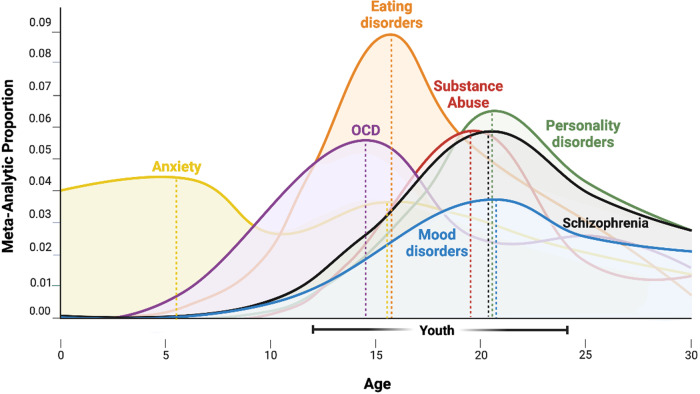
- Approximately 75% of mental disorders begin before age 25, with peak onset ages reported as anxiety 15.5 years, substance use 19.5 years, schizophrenia/psychotic disorders 20.5 years, eating disorders 15.5 years, personality disorders 20.5 years, OCD 14.5 years, and mood disorders 20.5 years.
- CHR-P criteria are associated with approximately 20% transition to first-episode psychosis in the initial 2 years; CHR-BP criteria show a conversion rate to bipolar disorder of 14.3% within 12 months. Treatment delays for psychosis, bipolar disorders, and eating disorders range from 2–5 years.
- In an exposome/genomic study, additive and interactive genome and exposome influences explained over 30% of variance in internalizing symptoms and over 60% in externalizing symptoms, while a single environmental risk factor accounted for only 1% of variance.
- In an evaluation of 58,000 headspace clients, approximately 70% significantly improved on at least one outcome measure, but functional improvements were observed in only 1/3 of cases.
Methods
- Perspective/roadmap based on an Ernst Strüngmann Forum on Youth Mental Health held July 29–August 3, 2018, in Frankfurt am Main, Germany; it synthesizes epidemiology, developmental neuroscience, clinical staging, service-model, and digital mental health literature rather than presenting new primary data.
- Proposes a youth mental health paradigm organized around sensitive periods, developmental cascades, diagnostic frameworks such as clinical staging and growth charts, novel service models, digital technologies, and knowledge exchange among researchers, clinicians, and youth with lived experience.
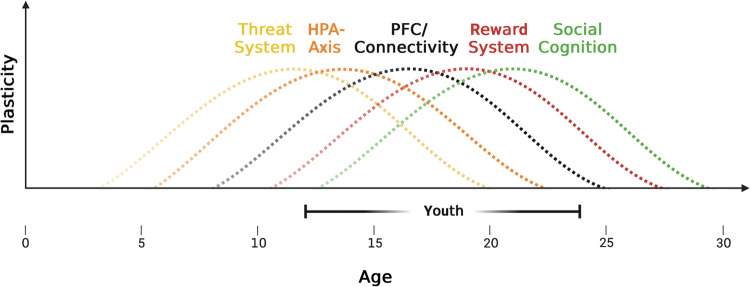
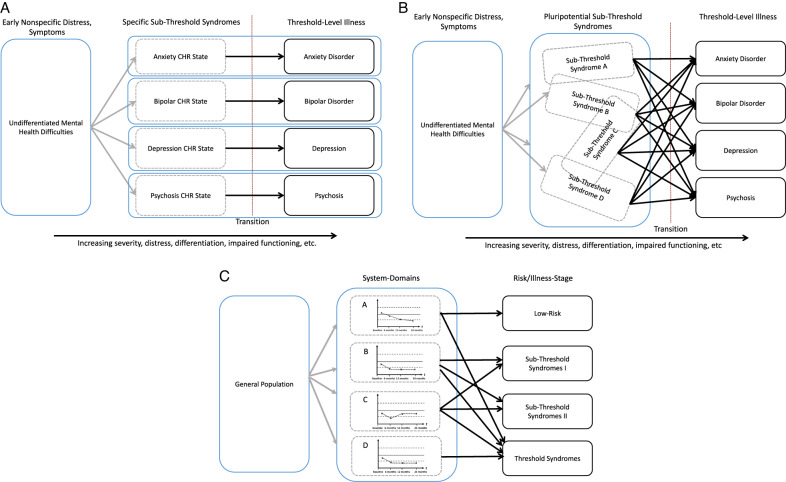
- Includes Table 1 summarizing early intervention evidence across schizophrenia/psychotic disorders, mood disorders, personality disorders, anxiety disorders, substance abuse, OCD, and eating disorders, plus conceptual figures on onset, sensitive periods, and diagnostic models.
Limitations
- The paper does not include a formal limitations section. As a perspective/roadmap, it does not empirically test the proposed paradigm; the authors state that the utility of sensitive-period knowledge to guide interventions “remains to be demonstrated” and can be tested in large-scale studies.
- The cited evidence is heterogeneous and sometimes mixed: for example, CBT can reduce transition rates in CHR-P participants, but a more recent study suggested clinical gains in first-episode psychosis may not be sustained beyond the first two years of treatment, and headspace functional improvements were observed in only 1/3 of cases.
- The authors note limitations of digital approaches: few digital youth mental health studies have been replicated or assessed in real-world clinical settings, many are challenging to interpret due to high bias and few causal methods, and currently available commercial apps lack scientific evidence.
Model-written summary. Check it against the paper before relying on it.
Integrity signals
Registry
Cites
Statistics
Figures
Verification
Claims the paper makes
45 Valid · 4 Not valid · 54 Not checked · 5 Own results and interpretations
At least one cited source doesn’t support this claim or points to a different paper, and none confirmed it — see the verdicts below.
In the paper
“all major syndromes constituting approximately 75% of mental disorders begin before the age of 25 years [9, 10]”
§ Towards a youth mental health paradigm: a perspective and roadmap > Rethinking Mental Health as “Youth Mental Health”
What the sources say
- Disputedcites [9] 9. Solmi M, Radua J, Olivola M, Croce E, Soardo L, Salazar de Pablo G, et al. Age at onset of mental disorders worldwide: large-scale meta-analysis of 192 epidemiological studies. Mol Psychiatry. 2022;27:281–95. doi: 10.1038/s41380-021-01161-7. sourceExperimental — accuracy not yet measured
Our copy of Solmi et al. (2022) reports the opposite magnitude for the very quantity claimed: the Abstract (p. 1) and Discussion state that the proportion of individuals with onset of any mental disorder before age 25 is 62.5% ('before age 25 in half'), not approximately 75%. The only figures near 75% in the paper are disorder-block-specific (anxiety/fear-related 73.3%, feeding/eating 82.4%, neurodevelopmental 95.8%; Results, 'Global age at the onset across diagnostic spectra'), and the Sensitivity-analyses section likewise gives per-disorder proportions (nine out of ten for ASD/ADHD down to two out of ten for ATPD), none of which is the pooled 'all mental disorders' estimate. So the pooled ~75% figure the citing sentence attributes to this meta-analysis is contradicted by its headline 62.5% result. (LLM, conf=0.85)
Checked by a reasoning model — may be wrong.
- Not checked yetcites [10] 10. Kessler RC, Berglund P, Demler O, Jin R, Merikangas KR, Walters EE. Lifetime prevalence and age-of-onset distributions of DSM-IV disorders in the National Comorbidity Survey Replication. Arch Gen Psychiatry. 2005;62:593–602. doi: 10.1001/archpsyc.62.6.593. source
plain- Asserted: passes — The authors put it forward as true.
- Checkable: passes — It can be checked against evidence.
- Load-bearing: passes — The paper’s conclusions depend on it.
- Based: passes — The paper gives a reason why it holds.
- Disputed
Some cited sources support this claim and some don’t — read each source’s verdict below.
In the paper
“Data from animal models of schizophrenia, for example, have shown that different behavioral and neurobiological interventions during the adolescent period but not during earlier or later developmental windows can completely rescue cognitive deficits and associated neural circuit dysfunctions [104–106].”
§ Towards a youth mental health paradigm: a perspective and roadmap > Developing and implementing tools for prevention and early intervention > Sensitive periods and interventions for youth mental health
What the sources say
- Partly supportedcites [104] 104. Lee H, Dvorak D, Kao HY, Duffy ÁM, Scharfman HE, Fenton AA. Early cognitive experience prevents adult deficits in a neurodevelopmental schizophrenia model. Neuron. 2012;75:714–24. doi: 10.1016/j.neuron.2012.06.016. sourceExperimental — accuracy not yet measured
Lee et al. (2012) support only part of what the citing sentence attributes to them: in the NVHL rat model, a single behavioral intervention — two-frame cognitive training given in adolescence (P35) — prevented adult cognitive-control deficits and normalized interhippocampal phase synchrony ('Early Cognitive Training Prevented Adult Deficits'; 'Early Cognitive Training Changed Adult Neural Function'). Our copy contains no neurobiological/pharmacological intervention arm (saline-treated animals appear only as training-exposure controls), so the 'different behavioral and neurobiological interventions' plurality is not this paper's finding. Nor does it test or show that earlier or later windows fail: the discussion ('A Procognitive Treatment Opportunity?') says 'further work in animal models will be needed to define and possibly expand... the boundaries,' speculates about intervening even earlier, and cites Subramaniam et al. (2012) as precedent for benefit in adult, post-onset patients. Finally, the paper describes prevention of deficit onset despite persistent lesion rather than rescue of established deficits, though 'improved cognitive control to normal' and 'normalized interhippocampal synchrony' are consistent with the 'completely' magnitude for this one model. (LLM, conf=0.78)
- Disputedcites [105] 105. Cabungcal JH, Counotte DS, Lewis E, Tejeda HA, Piantadosi P, Pollock C, et al. Juvenile antioxidant treatment prevents adult deficits in a developmental model of schizophrenia. Neuron. 2014;83:1073–84. doi: 10.1016/j.neuron.2014.07.028. sourceExperimental — accuracy not yet measured
Our copy directly contradicts the claim's window-exclusivity: the SUMMARY (p. 2) and RESULTS (pp. 4, 6) report that NAC given in the juvenile period — starting at P5, i.e. before the neonatal lesion — prevented the loss of parvalbumin interneuron maturation, rescued D2 modulation of PFC synapses, and prevented adult PPI and MMN deficits ('Juvenile antioxidant treatment prevents adult deficits' is the paper's title). Only part of the claim is supported: adolescent-onset NAC (P35) and adolescent ebselen did reverse PPI deficits (RESULTS, p. 6; DISCUSSION, p. 8), a neurobiological — not behavioural — intervention (the behavioural/cognitive-training example is credited to Lee et al., 2012 in the DISCUSSION, p. 9). The paper also tests no adult ('later') treatment window, so ineffectiveness later is not shown, and its endpoints are sensorimotor gating (PPI), MMN and circuit physiology with hedged conclusions ('These findings suggest'), not a demonstration of complete rescue of cognitive deficits. (LLM, conf=0.72)
Checked by a reasoning model — may be wrong.
- Not checked yetcites [106] 106. Mukherjee A, Carvalho F, Eliez S, Caroni P. Long-lasting rescue of network and cognitive dysfunction in a genetic schizophrenia model. Cell. 2019;178:1387–1402.e14. doi: 10.1016/j.cell.2019.07.023. source
plainstates a cause- Asserted: passes — The authors put it forward as true.
- Checkable: passes — It can be checked against evidence.
- Load-bearing: passes — The paper’s conclusions depend on it.
- Based: passes — The paper gives a reason why it holds.
- Partly supported
At least one cited source doesn’t support this claim or points to a different paper, and none confirmed it — see the verdicts below.
In the paper
“clinical [81], cognitive [82], and neuroimaging measures [83] constitute possible biomarkers that significantly increase accuracy for predicting clinical outcomes in CHR-P participants”
§ Towards a youth mental health paradigm: a perspective and roadmap > Emerging psychopathology and diagnostic framework(s)
What the sources say
- Disputedcites [83] 83. Group, E.C.H.R.F.P.W. Jalbrzikowski M, Hayes RA, Wood SJ, Nordholm D, Zhou JH, et al. Association of structural magnetic resonance imaging measures with psychosis onset in individuals at clinical high risk for developing psychosis: an ENIGMA working group mega-analysis. JAMA Psychiatry. 2021;78:753–66. doi: 10.1001/jamapsychiatry.2021.0638. sourceExperimental — accuracy not yet measured
The Introduction (p. 6) states that in this CHR sample 'it is currently unknown whether group differences are robust enough to predict outcomes,' and the study ran no prediction analysis at all — only between-group GLMs on cortical thickness, surface area and subcortical volume. The Discussion (p. 13) directly contradicts the attributed claim: the conversion-related CT differences accounted for ~1% of the variance in CHR-PS+ vs. CHR-PS- comparisons, the authors 'anticipate that baseline, univariate sMRI metrics will have a similar impact' to polygenic risk scores, which 'only improved differentiation of CHR-PS+ and HC (not CHR-PS+ from CHR-PS-),' and that 'the use of MRI metrics in isolation may not be feasible or useful for psychosis risk prediction.' The paper does support sMRI CT measures as candidate markers of psychosis risk (Abstract, p. 5; Discussion, p. 12), but it does not support, and in fact argues against, the assertion that neuroimaging measures significantly increase accuracy for predicting clinical outcomes in CHR-P participants. (LLM, conf=0.80)
Checked by a reasoning model — may be wrong.
hedgedstates a cause- Asserted: passes — The authors put it forward as true.
- Checkable: passes — It can be checked against evidence.
- Load-bearing: unclear — It is unclear whether the paper’s conclusions depend on it.
- Based: passes — The paper gives a reason why it holds.
- Disputed
Every source the paper cites for this claim was checked and supports it.
In the paper
“young people face many barriers to accessing mental health care [16]”
§ Towards a youth mental health paradigm: a perspective and roadmap > Rethinking Mental Health as “Youth Mental Health”
What the sources say
- Supportedcites [16] 16. Radez J, Reardon T, Creswell C, Lawrence PJ, Evdoka-Burton G, Waite P. Why do children and adolescents (not) seek and access professional help for their mental health problems? A systematic review of quantitative and qualitative studies. Eur Child Adolesc Psychiatry. 2021;30:183–211. doi: 10.1007/s00787-019-01469-4. source
The cited source is a systematic review of why children and adolescents (do not) seek and access professional help, and our copy reports numerous barrier themes: logistical factors (time, transport, costs), limited availability and long waiting times, difficulties reaching support (Results > Barrier/facilitator themes, p. ~6-7), knowledge-related barriers in 53% of studies and attitudes/expectations in 39% (same section), plus stigma, embarrassment and self-reliance highlighted in the Discussion. The Introduction (p. ~2) likewise frames 'key barriers to accessing child and adolescent mental health services' and the need to address barriers pertinent to young people. This directly supports the broad claim that young people face many barriers to accessing mental health care. (LLM, conf=0.95)
plain- Asserted: passes — The authors put it forward as true.
- Checkable: passes — It can be checked against evidence.
- Load-bearing: passes — The paper’s conclusions depend on it.
- Based: passes — The paper gives a reason why it holds.
- Supported
The cited sources support only part of this claim — read each source’s verdict below.
In the paper
“the search for biomarkers to improve diagnosis and stratification has largely been unsuccessful [4]”
§ Towards a youth mental health paradigm: a perspective and roadmap > Rethinking Mental Health as “Youth Mental Health”
What the sources say
- Partly supportedcites [4] 4. Carvalho AF, Solmi M, Sanches M, Machado MO, Stubbs B, Ajnakina O, et al. Evidence-based umbrella review of 162 peripheral biomarkers for major mental disorders. Transl Psychiatry. 2020;10:152. doi: 10.1038/s41398-020-0835-5. sourceExperimental — accuracy not yet measured
The Introduction (p. n/a) states the 'contrast between the overall volume of this literature and the limited applicability of peripheral biomarkers in current psychiatric practice' and that psychiatric diagnosis 'is still entirely based on psychopathological knowledge', and the Abstract/Conclusion report that 'overall the vast literature of peripheral biomarkers for major mental disorders is affected by bias and is underpowered', with only two convincing and 42 highly suggestive associations — this supports the 'largely unsuccessful ... for diagnosis' half of the claim. The 'stratification' half is not what this review assessed: its Methods (Eligibility criteria) explicitly excluded 'studies that investigated biomarkers for other purposes (for example, biomarkers of risk, stage or prognosis)', and subtyping into 'more biologically valid phenotypes' appears only as a future direction in the Conclusion, not as an evaluated failure. So the source backs the diagnostic-failure framing but not a verdict on stratification biomarkers. (LLM, conf=0.72)
plain- Asserted: passes — The authors put it forward as true.
- Checkable: passes — It can be checked against evidence.
- Load-bearing: passes — The paper’s conclusions depend on it.
- Based: passes — The paper gives a reason why it holds.
- Partly supported
80 more claims · 39 with their cited sources checked
Create a free account to see all 108 claims and to verify the 84 references still open.
- It may state two separate claims as one. 16
- Probably not a substantial claim. 8
Claims other papers make about this one
Each is checked against this paper’s own text: does it say what the citing paper says it does?
The source backs part of the claim, not all of it — or backs it for a different population, condition or comparison.
In the citing paper
“Onset of depression is estimated to peak in the early 20s.63”
From Next generation brain health: transforming global research and public health to promote prevention of dementia and reduce its risk in young adult populations (2024) · cites this paper as [63]
Experimental — accuracy not yet measured
Self-check
Percentages, sums and reported differences re-computed from the paper’s own numbers.
Each contradiction between two passages listed here was confirmed by an independent check.
Rated minor: it would not touch a result — a value no result rests on, a p-value that stays on the same side of the significance level, or a conflict that is clerical, resolved elsewhere in the paper, or outside its own findings.
In the paper
§ Towards a youth mental health paradigm: a perspective and roadmap > Developing and implementing tools for prevention and early intervention > Sensitive periods and interventions for youth mental health
“Currently, however, substantial treatment delays for the majority of syndromes with an onset during youth, such as psychosis, bipolar disorders, and eating disorders, are pervasive [74, 94, 95] (Table 1), ranging from 2-5 years.”
§ Towards a youth mental health paradigm: a perspective and roadmap > Emerging psychopathology and diagnostic framework(s)
“BED: 67 [95]**”
Citations
Cites
Kessler, R. C., Berglund, P., Demler, O., Jin, R., Merikangas, K. R., & Walters, E. E. (2005) · Archives of General Psychiatry · doi:10.1001/archpsyc.62.6.593 · Cited by 20,391 · cited 2×
“However, there is now consistent epidemiological evidence that has highlighted that all major syndromes constituting approximately 75% of mental disorders begin before the age of 25 years [9, 10] (Fig.”
BackgroundInsel, T., Cuthbert, B., Garvey, M., Heinssen, R., Pine, D. S., Quinn, K., Sanislow, C., & Wang, P. (2010) · American Journal of Psychiatry · doi:10.1176/appi.ajp.2010.09091379 · Cited by 7,067
(2022) · The Lancet Psychiatry · doi:10.1016/s2215-0366(21)00395-3 · Cited by 6,481 · cited 2×
“Syndromes such as schizophrenia, depression, anxiety, and personality disorders comprise some of the largest disease burdens worldwide [2].”
BackgroundAge at onset of mental disorders worldwide: Large-scale meta-analysis of 192 epidemiological studies
Solmi, M., Radua, J., Olivola, M., Croce, E., Soardo, L., Salazar de Pablo, G., Il Shin, J., Kirkbride, J. B., Jones, P., Kim, J. H., et al. (2022) · Molecular Psychiatry · doi:10.1038/s41380-021-01161-7 · Cited by 3,835
Self-citationKotov, R., Krueger, R. F., Watson, D., Achenbach, T. M., Althoff, R. R., Bagby, R. M., Brown, T. A., Carpenter, W. T., Caspi, A., Clark, L. A., et al. (2017) · Journal of Abnormal Psychology · doi:10.1037/abn0000258 · Cited by 3,335 · cited 1×
“While several alternatives have been suggested, such as the Research Domain Criteria [69] and the Hierarchical Taxonomy of Psychopathology (HiTOP) [70], a developmental perspective on emerging psycho-pathology is rarely explicitly addressed (but see [71, 72]).”
Is Adolescence a Sensitive Period for Sociocultural Processing?
Blakemore, S.-J., & Mills, K. L. (2014) · Annual Review of Psychology · doi:10.1146/annurev-psych-010213-115202 · Cited by 2,264 · cited 1×
“Social cognition includes several domains, including theory of mind, emotion processing, and social cue identi fi cation, that have been linked to speci fi c brain regions, such as the medial prefrontal cortex (mPFC) and tempo-parietal junction (TPJ) [53].”
BackgroundMapping the Onset of Psychosis: The Comprehensive Assessment of At-Risk Mental States
Yung, A. R., Yung, A. R., Pan Yuen, H., Mcgorry, P. D., Phillips, L. J., Kelly, D., Dell'olio, M., Francey, S. M., Cosgrave, E. M., Killackey, E., et al. (2005) · Australian & New Zealand Journal of Psychiatry · doi:10.1080/j.1440-1614.2005.01714.x · Cited by 2,196
Self-citationSensitive periods in the development of the brain and behavior
Knudsen, E. I. (2004) · Journal of Cognitive Neuroscience · doi:10.1162/0898929042304796 · Cited by 1,842 · cited 1×
“An important principle in brain development is the notion of “ sensitive periods ” [20, 21].”
BackgroundMasten, A. S., & Cicchetti, D. (2010) · Development and Psychopathology · doi:10.1017/s0954579410000222 · Cited by 1,800 · cited 1×
“These developmental cascades refer to the cumulative consequences of the many interactions and transactions occurring during development that result in spreading after-effects across levels, among domains at the same level, and across different systems [61].”
BackgroundBrain charts for the human lifespan
Bethlehem, R. A. I., Seidlitz, J., White, S. R., Vogel, J. W., Anderson, K. M., Adamson, C., Adler, S., Alexopoulos, G. S., Anagnostou, E., Areces-Gonzalez, A., et al. (2022) · Nature · doi:10.1038/s41586-022-04554-y · Cited by 1,794
Self-citationThe SCOFF questionnaire: Assessment of a new screening tool for eating disorders
Morgan, J. F., Reid, F., & Lacey, J. H. (1999) · BMJ · doi:10.1136/bmj.319.7223.1467 · Cited by 1,416
Wang, P. S., Berglund, P., Olfson, M., Pincus, H. A., Wells, K. B., & Kessler, R. C. (2005) · Archives of General Psychiatry · doi:10.1001/archpsyc.62.6.603 · Cited by 1,325
Emotion Regulation and Psychopathology
Sheppes, G., Suri, G., & Gross, J. J. (2015) · Annual Review of Clinical Psychology · doi:10.1146/annurev-clinpsy-032814-112739 · Cited by 1,214 · cited 1×
“The change to predominance of executive prefrontal regions in adulthood re fl ect a potential neurobiological basis for improvements in emotion regulation which is critically impaired in affective disorders [45] but also in borderline personality disorders [46].”
BackgroundTorous, J., Bucci, S., Bell, I. H., Kessing, L. V., Faurholt‐Jepsen, M., Whelan, P., Carvalho, A. F., Keshavan, M., Linardon, J., & Firth, J. (2021) · World Psychiatry · doi:10.1002/wps.20883 · Cited by 1,199
Self-citationAdolescence as a sensitive period of brain development
Fuhrmann, D., Knoll, L. J., & Blakemore, S.-J. (2015) · Trends in Cognitive Sciences · doi:10.1016/j.tics.2015.07.008 · Cited by 1,158 · cited 2×
“The data on sensitive periods [23, 25, 33, 48, 49] as well as the peak incidence of mental disorders during youth [9, 10] have implications for service provision and treatments.”
BackgroundRadez, J., Reardon, T., Creswell, C., Lawrence, P. J., Evdoka-Burton, G., & Waite, P. (2021) · European Child & Adolescent Psychiatry · doi:10.1007/s00787-019-01469-4 · Cited by 1,119 · cited 2×
“The early intervention paradigm is furthermore motivated by the fi nding that young people face many barriers to accessing mental health care [16] during a developmental period, which is critical for social and occupational adjustment [17].”
BackgroundMcGorry, P. D., Hickie, I. B., Yung, A. R., Pantelis, C., & Jackson, H. J. (2006) · Australian & New Zealand Journal of Psychiatry · doi:10.1080/j.1440-1614.2006.01860.x · Cited by 919 · cited 1×
“Similar to clinical staging models in other areas of healthcare, staging frameworks hold the promise of guiding treatment selection, with less intensive interventions preferred at earlier stages and interventions with a higher risk/bene fi t ratio reserved for later stages [89].”
MethodSelf-citationAdolescence as a neurobiological critical period for the development of higher-order cognition
Larsen, B., & Luna, B. (2018) · Neuroscience & Biobehavioral Reviews · doi:10.1016/j.neubiorev.2018.09.005 · Cited by 853 · cited 3×
“In addition, ongoing modi fi cations in higher-order cognitive functions, such as working memory (WM), response inhibition, and performance monitoring, as well as cognitive control are a central aspect of late brain development [34].”
BackgroundInfluentialSelf-citationCorrell, C. U., Galling, B., Pawar, A., Krivko, A., Bonetto, C., Ruggeri, M., Craig, T. J., Nordentoft, M., Srihari, V. H., Guloksuz, S., et al. (2018) · JAMA Psychiatry · doi:10.1001/jamapsychiatry.2018.0623 · Cited by 826
Self-citationWerner-Seidler, A., Perry, Y., Calear, A. L., Newby, J. M., & Christensen, H. (2017) · Clinical Psychology Review · doi:10.1016/j.cpr.2016.10.005 · Cited by 773
Caspi, A., Houts, R. M., Ambler, A., Danese, A., Elliott, M. L., Hariri, A., Harrington, H., Hogan, S., Poulton, R., Ramrakha, S., et al. (2020) · JAMA Network Open · doi:10.1001/jamanetworkopen.2020.3221 · Cited by 633 · cited 4×
“The onset of the majority of mental disorders during youth [9] as well as the cascading and dynamic nature of psychopathology during development [19] have important implications for diagnostic frameworks.”
BackgroundInfluentialEarly intervention in psychosis: concepts, evidence and future directions
MCGORRY, P. D., KILLACKEY, E., & YUNG, A. (2008) · World Psychiatry · doi:10.1002/j.2051-5545.2008.tb00182.x · Cited by 581 · cited 1×
“Our approach is critically informed by the early intervention paradigm in psychosis [11].”
MethodSelf-citationAn Individualized Risk Calculator for Research in Prodromal Psychosis
Cannon, T. D., Yu, C., Addington, J., Bearden, C. E., Cadenhead, K. S., Cornblatt, B. A., Heinssen, R., Jeffries, C. D., Mathalon, D. H., McGlashan, T. H., et al. (2016) · American Journal of Psychiatry · doi:10.1176/appi.ajp.2016.15070890 · Cited by 574 · cited 1×
“There is evidence that clinical [81], cognitive [82], and neuroimaging measures [83] constitute possible biomarkers that signi fi cantly increase accuracy for predicting clinical outcomes in CHR-P participants.”
BackgroundDesigning and scaling up integrated youth mental health care
McGorry, P. D., Mei, C., Chanen, A., Hodges, C., Alvarez‐Jimenez, M., & Killackey, E. (2022) · World Psychiatry · doi:10.1002/wps.20938 · Cited by 546 · cited 3×
“…and service models, however, remain primarily organized around established diagnostic categories of mental disorders in adulthood [88] that impose further barriers for early intervention by the arti fi cial distinction between child and adolescent as well as adult mental health services [93].”
BackgroundMethodSelf-citationPreventive psychiatry: a blueprint for improving the mental health of young people
Fusar‐Poli, P., Correll, C. U., Arango, C., Berk, M., Patel, V., & Ioannidis, J. P. A. (2021) · World Psychiatry · doi:10.1002/wps.20869 · Cited by 497 · cited 3×
“The available evidence that early intervention is effective in psychosis [97, 134] as well as in other syndromes [8] together with the large unmet need in young people that has recently dramatically accelerated [9] provides additional impetus for such an endeavor.”
BackgroundSelf-citationCritical period regulation across multiple timescales
Reh, R. K., Dias, B. G., Nelson, C. A., Kaufer, D., Werker, J. F., Kolb, B., Levine, J. D., & Hensch, T. K. (2020) · Proceedings of the National Academy of Sciences · doi:10.1073/pnas.1820836117 · Cited by 492 · cited 2×
“An important principle in brain development is the notion of “ sensitive periods ” [20, 21].”
BackgroundDevelopment of the emotional brain
Casey, B. J., Heller, A. S., Gee, D. G., & Cohen, A. O. (2019) · Neuroscience Letters · doi:10.1016/j.neulet.2017.11.055 · Cited by 485 · cited 1×
“A core hypothesis underlying brain development is the view that ongoing changes in brain maturation lead to a period when limbic structures, such as the amygdala and striatum, predominate over prefrontal areas during youth [43, 44].”
BackgroundLeichsenring, F., Steinert, C., Rabung, S., & Ioannidis, J. P. A. (2022) · World Psychiatry · doi:10.1002/wps.20941 · Cited by 485
Prevention of Psychosis: Advances in Detection, Prognosis, and Intervention
Fusar-Poli, P., Salazar de Pablo, G., Correll, C. U., Meyer-Lindenberg, A., Millan, M. J., Borgwardt, S., Galderisi, S., Bechdolf, A., Pfennig, A., Kessing, L. V., et al. (2020) · JAMA Psychiatry · doi:10.1001/jamapsychiatry.2019.4779 · Cited by 476
Self-citationBrain disorders? Not really: Why network structures block reductionism in psychopathology research
Borsboom, D., Cramer, A. O. J., & Kalis, A. (2019) · Behavioral and Brain Sciences · doi:10.1017/s0140525x17002266 · Cited by 468
Sensitive periods of substance abuse: Early risk for the transition to dependence
Jordan, C. J., & Andersen, S. L. (2017) · Developmental Cognitive Neuroscience · doi:10.1016/j.dcn.2016.10.004 · Cited by 455 · cited 3×
“Evidence suggests that the likelihood of developing substance dependence is highest if substance abuse is initiated before age 14 [48], suggesting a sensitive period that is closely related to ongoing changes in incentive salience as well as changes in dopaminergic neuro-transmission in the…”
BackgroundAn overview of and recommendations for more accessible digital mental health services
Lattie, E. G., Stiles-Shields, C., & Graham, A. K. (2022) · Nature Reviews Psychology · doi:10.1038/s44159-021-00003-1 · Cited by 446 · cited 1×
“However, Lettie et al. [121] highlighted that few studies using digital approaches and technologies targeting youth mental health have been replicated or assessed in real-world clinical settings.”
BackgroundConceptualizing mental disorders as deviations from normative functioning
Marquand, A. F., Kia, S. M., Zabihi, M., Wolfers, T., Buitelaar, J. K., & Beckmann, C. F. (2019) · Molecular Psychiatry · doi:10.1038/s41380-019-0441-1 · Cited by 433
Prevention, early intervention, harm reduction, and treatment of substance use in young people
Stockings, E., Hall, W. D., Lynskey, M., Morley, K. I., Reavley, N., Strang, J., Patton, G., & Degenhardt, L. (2016) · The Lancet Psychiatry · doi:10.1016/s2215-0366(16)00002-x · Cited by 433 · cited 1×
“Recent studies have extended the early intervention approach to personality disorders [100], substance abuse [101], and eating disorders [102].”
BackgroundSelf-citationErickson, M. A., Ruffle, A., & Gold, J. M. (2016) · Biological Psychiatry · doi:10.1016/j.biopsych.2015.08.025 · Cited by 426
Treatment resistance in psychiatry: state of the art and new directions
Howes, O. D., Thase, M. E., & Pillinger, T. (2022) · Molecular Psychiatry · doi:10.1038/s41380-021-01200-3 · Cited by 413 · cited 1×
“Moreover, effect sizes for current pharmacological and psychological treatments are overall modest [5] and a signi fi cant number of patients will not respond to treatments [6].”
BackgroundAltered fear learning across development in both mouse and human
Pattwell, S. S., Duhoux, S., Hartley, C. A., Johnson, D. C., Jing, D., Elliott, M. D., Ruberry, E. J., Powers, A., Mehta, N., Yang, R. R., et al. (2012) · Proceedings of the National Academy of Sciences · doi:10.1073/pnas.1206834109 · Cited by 404 · cited 1×
“Speci fi cally, fear extinction during adolescence is reduced in both humans and mice [26] and probing neural circuitry in mice has revealed altered synaptic plasticity and connectivity in prefrontal cortical-hippocampal-amygdala [26].”
BackgroundSelf-citationWindows of developmental sensitivity to social media
Orben, A., Przybylski, A. K., Blakemore, S.-J., & Kievit, R. A. (2022) · Nature Communications · doi:10.1038/s41467-022-29296-3 · Cited by 387 · cited 1×
“Thus, social media use has differential effects depending on the developmental timing [65], suggesting that sensitive periods during youth may be particularly malleable by environmental exposures [66].”
BackgroundAnxiety disorders in adolescents and psychosocial outcomes at age 30
Essau, C. A., Lewinsohn, P. M., Olaya, B., & Seeley, J. R. (2014) · Journal of Affective Disorders · doi:10.1016/j.jad.2013.12.033 · Cited by 384 · cited 1×
“Importantly, anxiety disorders emerge during the fi rst decade, peak around 15 years of age [9], and often persist into adulthood with signi fi cant effects on functioning and quality of life [24].”
BackgroundAdolescence as a pivotal period for emotion regulation development
Silvers, J. A. (2022) · Current Opinion in Psychology · doi:10.1016/j.copsyc.2021.09.023 · Cited by 381 · cited 1×
“A core hypothesis underlying brain development is the view that ongoing changes in brain maturation lead to a period when limbic structures, such as the amygdala and striatum, predominate over prefrontal areas during youth [43, 44].”
BackgroundSalazar de Pablo, G., Radua, J., Pereira, J., Bonoldi, I., Arienti, V., Besana, F., Soardo, L., Cabras, A., Fortea, L., Catalan, A., et al. (2021) · JAMA Psychiatry · doi:10.1001/jamapsychiatry.2021.0830 · Cited by 375
Age Patterns in Risk Taking Across the World
Duell, N., Steinberg, L., Icenogle, G., Chein, J., Chaudhary, N., Di Giunta, L., Dodge, K. A., Fanti, K. A., Lansford, J. E., Oburu, P., et al. (2018) · Journal of Youth and Adolescence · doi:10.1007/s10964-017-0752-y · Cited by 374 · cited 1×
“One important manifestation of the predominance of limbic processing over executive function is risk-taking behavior during youth [47], such as substance abuse.”
BackgroundStress and adolescence: vulnerability and opportunity during a sensitive window of development
Sisk, L. M., & Gee, D. G. (2022) · Current Opinion in Psychology · doi:10.1016/j.copsyc.2021.10.005 · Cited by 374 · cited 2×
“Together, these fi ndings suggest that both risk and protective factors interact with HPA-functioning during youth [33].”
BackgroundA Neurodevelopmental Perspective on the Research Domain Criteria (RDoC) Framework
Casey, B. J., Oliveri, M. E., & Insel, T. (2014) · Biological Psychiatry · doi:10.1016/j.biopsych.2014.01.006 · Cited by 369 · cited 1×
“While several alternatives have been suggested, such as the Research Domain Criteria [69] and the Hierarchical Taxonomy of Psychopathology (HiTOP) [70], a developmental perspective on emerging psycho-pathology is rarely explicitly addressed (but see [71, 72]).”
Jensen, C. D., Cushing, C. C., Aylward, B. S., Craig, J. T., Sorell, D. M., & Steele, R. G. (2011) · Journal of Consulting and Clinical Psychology · doi:10.1037/a0023992 · Cited by 362
Early Intervention in Bipolar Disorder
Vieta, E., Salagre, E., Grande, I., Carvalho, A. F., Fernandes, B. S., Berk, M., Birmaher, B., Tohen, M., & Suppes, T. (2018) · American Journal of Psychiatry · doi:10.1176/appi.ajp.2017.17090972 · Cited by 354 · cited 1×
“…given that young people with clinical high-risk criteria for psychosis (CHR-P) rarely present solely with signs of psychosis [12] and evidence that early identi fi cation and intervention is also potentially effective in personality disorders [13], eating disorders [14], and bipolar disorder [15].”
BackgroundStockings, E. A., Degenhardt, L., Dobbins, T., Lee, Y. Y., Erskine, H. E., Whiteford, H. A., & Patton, G. (2016) · Psychological Medicine · doi:10.1017/s0033291715001725 · Cited by 345
Self-citationNavigating the Social Environment in Adolescence: The Role of Social Brain Development
Andrews, J. L., Ahmed, S. P., & Blakemore, S.-J. (2021) · Biological Psychiatry · doi:10.1016/j.biopsych.2020.09.012 · Cited by 337 · cited 1×
“Finally, converging fi ndings have highlighted the possibility of a sensitive period for the development of the social-cognitive processes [51, 52].”
BackgroundAustin, A., Flynn, M., Richards, K., Hodsoll, J., Duarte, T. A., Robinson, P., Kelly, J., & Schmidt, U. (2021) · European Eating Disorders Review · doi:10.1002/erv.2745 · Cited by 317 · cited 2×
“Currently, however, substantial treatment delays for the majority of syndromes with an onset during youth, such as psychosis, bipolar disorders, and eating disorders, are pervasive [74, 94, 95] (Table 1), ranging from 2-5 years.”
BackgroundDuration of untreated bipolar disorder: missed opportunities on the long road to optimal treatment
Drancourt, N., Etain, B., Lajnef, M., Henry, C., Raust, A., Cochet, B., Mathieu, F., Gard, S., MBailara, K., Zanouy, L., et al. (2013) · Acta Psychiatrica Scandinavica · doi:10.1111/j.1600-0447.2012.01917.x · Cited by 292 · cited 1×
“Similar data are available for BP [96], obsessive-compulsive [77] as well as eating disorders [95].”
Transdiagnostic clinical staging in youth mental health: a first international consensus statement
Shah, J. L., Scott, J., McGorry, P. D., Cross, S. P. M., Keshavan, M. S., Nelson, B., Wood, S. J., Marwaha, S., Yung, A. R., Scott, E. M., et al. (2020) · World Psychiatry · doi:10.1002/wps.20745 · Cited by 291
Self-citationOutcomes of Nontransitioned Cases in a Sample at Ultra-High Risk for Psychosis
Lin, A., Wood, S. J., Nelson, B., Beavan, A., McGorry, P., & Yung, A. R. (2015) · American Journal of Psychiatry · doi:10.1176/appi.ajp.2014.13030418 · Cited by 277
Self-citationKoutsouleris, N., Dwyer, D. B., Degenhardt, F., Maj, C., Urquijo-Castro, M. F., Sanfelici, R., Popovic, D., Oeztuerk, O., Haas, S. S., Weiske, J., et al. (2021) · JAMA Psychiatry · doi:10.1001/jamapsychiatry.2020.3604 · Cited by 275
Self-citationheadspace: Australia's National Youth Mental Health Foundation — where young minds come first
McGorry, P. D., Tanti, C., Stokes, R., Hickie, I. B., Carnell, K., Littlefield, L. K., & Moran, J. (2007) · Medical Journal of Australia · doi:10.5694/j.1326-5377.2007.tb01342.x · Cited by 272
Self-citationCritical Periods in the Visual System: Changing Views for a Model of Experience-Dependent Plasticity
Hooks, B. M., & Chen, C. (2007) · Neuron · doi:10.1016/j.neuron.2007.10.003 · Cited by 255 · cited 1×
“Originally fi rst described in the visual system [22], there is mounting data that several neural and cognitive systems that are relevant for emerging psychopathology, such as fear and stress regulation, higher cognitive processes, social cognition, and reward-processing, undergo time-limited modi fi…”
BackgroundPrefrontal Cortex Development in Health and Disease: Lessons from Rodents and Humans
Chini, M., & Hanganu-Opatz, I. L. (2021) · Trends in Neurosciences · doi:10.1016/j.tins.2020.10.017 · Cited by 253 · cited 1×
“Anatomically, these functions are closely related to the integrity of prefrontal cortical (PFC) circuits, a region that is impaired in a range of mental disorders, including schizophrenia, depression, and bipolar disorder [35].”
BackgroundBorderline personality disorder and emotion dysregulation
Chapman, A. L. (2019) · Development and Psychopathology · doi:10.1017/s0954579419000658 · Cited by 250
Ghio, L., Gotelli, S., Marcenaro, M., Amore, M., & Natta, W. (2014) · Journal of Affective Disorders · doi:10.1016/j.jad.2013.10.002 · Cited by 249
Jalbrzikowski, M., Larsen, B., Hallquist, M. N., Foran, W., Calabro, F., & Luna, B. (2017) · Biological Psychiatry · doi:10.1016/j.biopsych.2017.01.008 · Cited by 243
Self-citationHowes, O. D., Whitehurst, T., Shatalina, E., Townsend, L., Onwordi, E. C., Mak, T. L. A., Arumuham, A., O’Brien, O., Lobo, M., Vano, L., et al. (2021) · World Psychiatry · doi:10.1002/wps.20822 · Cited by 243
Self and Others in Adolescence
Crone, E. A., & Fuligni, A. J. (2020) · Annual Review of Psychology · doi:10.1146/annurev-psych-010419-050937 · Cited by 239 · cited 2×
“Recent evidence suggests that self-oriented thinking overlaps with regions required for understanding others, suggesting that the development of identity, a core task for youths, is an overlapping and intertwined process [52].”
BackgroundFusar‐Poli, P., Cappucciati, M., Rutigliano, G., Schultze‐Lutter, F., Bonoldi, I., Borgwardt, S., Riecher‐Rössler, A., Addington, J., Perkins, D., Woods, S. W., et al. (2015) · World Psychiatry · doi:10.1002/wps.20250 · Cited by 234 · cited 1×
“CHR-P criteria are associated with high prognostic accuracy that is comparable to other paradigms of preventative medicine [79].”
Self-citationApplying clinical staging to young people who present for mental health care
Hickie, I. B., Scott, E. M., Hermens, D. F., Naismith, S. L., Guastella, A. J., Kaur, M., Sidis, A., Whitwell, B., Glozier, N., Davenport, T., et al. (2013) · Early Intervention in Psychiatry · doi:10.1111/j.1751-7893.2012.00366.x · Cited by 229
Self-citationCultures for mental health care of young people: an Australian blueprint for reform
McGorry, P. D., Goldstone, S. D., Parker, A. G., Rickwood, D. J., & Hickie, I. B. (2014) · The Lancet Psychiatry · doi:10.1016/s2215-0366(14)00082-0 · Cited by 221 · cited 1×
“The fi rst, and now most extensive example is the Australian headspace model , a national youth mental health service stream designed to provide highly accessible, youth-friendly centers that promote and support early intervention for mental and substance use disorders in young people [112, 113].”
BackgroundSelf-citationScreening for Borderline Personality Disorder in Outpatient Youth
Chanen, A. M., Jovev, M., Djaja, D., McDougall, E., Yuen, H. P., Rawlings, D., & Jackson, H. J. (2008) · Journal of Personality Disorders · doi:10.1521/pedi.2008.22.4.353 · Cited by 217
Self-citationCatalan, A., Salazar de Pablo, G., Aymerich, C., Damiani, S., Sordi, V., Radua, J., Oliver, D., McGuire, P., Giuliano, A. J., Stone, W. S., et al. (2021) · JAMA Psychiatry · doi:10.1001/jamapsychiatry.2021.1290 · Cited by 217
Charting brain growth and aging at high spatial precision
Rutherford, S., Fraza, C., Dinga, R., Kia, S. M., Wolfers, T., Zabihi, M., Berthet, P., Worker, A., Verdi, S., Andrews, D., et al. (2022) · eLife · doi:10.7554/elife.72904 · Cited by 214
Gunnar, M. R., DePasquale, C. E., Reid, B. M., Donzella, B., & Miller, B. S. (2019) · Proceedings of the National Academy of Sciences · doi:10.1073/pnas.1909699116 · Cited by 207 · cited 1×
“Conversely, environmental enrichment in juvenile animals can reverse the effects of prenatal stress and maternal separation [31, 32].”
BackgroundEvidence-based umbrella review of 162 peripheral biomarkers for major mental disorders
Carvalho, A. F., Solmi, M., Sanches, M., Machado, M. O., Stubbs, B., Ajnakina, O., Sherman, C., Sun, Y. R., Liu, C. S., Brunoni, A. R., et al. (2020) · Translational Psychiatry · doi:10.1038/s41398-020-0835-5 · Cited by 204 · cited 1×
“Despite the promises of genetics and translational neuroscience, insights into the causal mechanisms of major syndromes remain rudimentary [3], and the search for biomarkers to improve diagnosis and strati fi cation has largely been unsuccessful [4].”
BackgroundSelf-citationJuvenile Antioxidant Treatment Prevents Adult Deficits in a Developmental Model of Schizophrenia
Cabungcal, J.-H., Counotte, D. S., Lewis, E. M., Tejeda, H. A., Piantadosi, P., Pollock, C., Calhoon, G. G., Sullivan, E. M., Presgraves, E., Kil, J., et al. (2014) · Neuron · doi:10.1016/j.neuron.2014.07.028 · Cited by 204
Psychiatric Epidemiology: It’s Not Just About Counting Anymore
Insel, T. R., & Fenton, W. S. (2005) · Archives of General Psychiatry · doi:10.1001/archpsyc.62.6.590 · Cited by 198
Ginsburg, G. S., Becker-Haimes, E. M., Keeton, C., Kendall, P. C., Iyengar, S., Sakolsky, D., Albano, A. M., Peris, T., Compton, S. N., & Piacentini, J. (2018) · Journal of the American Academy of Child & Adolescent Psychiatry · doi:10.1016/j.jaac.2018.03.017 · Cited by 187
Screening for anxiety and depression in early adolescence
DIERKER, L. C., ALBANO, A. M., CLARKE, G. N., HEIMBERG, R. G., KENDALL, P. C., MERIKANGAS, K. R., LEWINSOHN, P. M., OFFORD, D. R., KESSLER, R., & KUPFER, D. J. (2001) · Journal of the American Academy of Child & Adolescent Psychiatry · doi:10.1097/00004583-200108000-00015 · Cited by 180
Caballero, A., Flores-Barrera, E., Cass, D. K., & Tseng, K. Y. (2014) · Brain Structure and Function · doi:10.1007/s00429-013-0508-8 · Cited by 178
Pattwell, S. S., Liston, C., Jing, D., Ninan, I., Yang, R. R., Witztum, J., Murdock, M. H., Dincheva, I., Bath, K. G., Casey, B. J., et al. (2016) · Nature Communications · doi:10.1038/ncomms11475 · Cited by 175 · cited 1×
“Interestingly in adolescent mice, if extinction training takes place in the threat-conditioning context that engages hippocampal-based circuits, extinction retention is signi fi cantly greater than that in the same-age counterparts that underwent extinction training in a novel context [27].”
BackgroundSelf-citationVan Meter, A. R., Burke, C., Youngstrom, E. A., Faedda, G. L., & Correll, C. U. (2016) · Journal of the American Academy of Child & Adolescent Psychiatry · doi:10.1016/j.jaac.2016.04.017 · Cited by 174
Self-citationLong-Lasting Rescue of Network and Cognitive Dysfunction in a Genetic Schizophrenia Model
Mukherjee, A., Carvalho, F., Eliez, S., & Caroni, P. (2019) · Cell · doi:10.1016/j.cell.2019.07.023 · Cited by 169 · cited 1×
“…animal models of schizophrenia, for example, have shown that different behavioral and neurobiological interventions during the adolescent period but not during earlier or later developmental windows can completely rescue cognitive de fi cits and associated neural circuit dysfunctions [104 – 106].”
BackgroundWaszczuk, M. A., Zavos, H. M. S., Gregory, A. M., & Eley, T. C. (2014) · JAMA Psychiatry · doi:10.1001/jamapsychiatry.2014.655 · Cited by 161 · cited 1×
“Building on the high-risk paradigm that is oriented along established diagnostic categories, alternative approaches have been advocated that re fl ect psychopathological dimensions [19, 86].”
BackgroundEarly intervention for obsessive compulsive disorder: An expert consensus statement
Fineberg, N. A., Dell'Osso, B., Albert, U., Maina, G., Geller, D., Carmi, L., Sireau, N., Walitza, S., Grassi, G., Pallanti, S., et al. (2019) · European Neuropsychopharmacology · doi:10.1016/j.euroneuro.2019.02.002 · Cited by 158 · cited 2×
“…to be made if symptom expression is below a certain cut-off value, even though there is established evidence for prodromal periods for psychosis [73] and bipolar disorder [74] as well as possibly for eating disorders [75], depression [76], and obsessive-compulsive disorders [77] (Table 1).”
BackgroundPopulation neuroscience: Why and how
Paus, T. (2010) · Human Brain Mapping · doi:10.1002/hbm.21069 · Cited by 157
Self-citationBicks, L. K., Yamamuro, K., Flanigan, M. E., Kim, J. M., Kato, D., Lucas, E. K., Koike, H., Peng, M. S., Brady, D. M., Chandrasekaran, S., et al. (2020) · Nature Communications · doi:10.1038/s41467-020-14740-z · Cited by 150 · cited 1×
“Social interactions are also a necessary environmental exposure for establishing adult social behavior [56], a particularly pertinent issue given the widespread reduction of social interactions during the COVID-pandemic [57].”
BackgroundAge differences in the impact of peers on adolescents’ and adults’ neural response to reward
Smith, A. R., Steinberg, L., Strang, N., & Chein, J. (2015) · Developmental Cognitive Neuroscience · doi:10.1016/j.dcn.2014.08.010 · Cited by 147 · cited 1×
“Reward circuits are particularly sensitive to peer in fl uence during this age group, which can be related to higher levels of risk-taking behavior in social settings [54], and peer evaluations affect the self-image more than during other developmental periods [55].”
BackgroundMei, C., van der Gaag, M., Nelson, B., Smit, F., Yuen, H. P., Berger, M., Krcmar, M., French, P., Amminger, G. P., Bechdolf, A., et al. (2021) · Clinical Psychology Review · doi:10.1016/j.cpr.2021.102005 · Cited by 143 · cited 1×
“In addition, there is evidence that CBT can reduce transition rates in CHR-P participants [98].”
BackgroundSelf-citationMerritt, K., McGuire, P. K., Egerton, A., 1H-MRS in Schizophrenia Investigators, Aleman, A., Block, W., Bloemen, O. J. N., Borgan, F., Bustillo, J. R., Capizzano, A. A., et al. (2021) · JAMA Psychiatry · doi:10.1001/jamapsychiatry.2021.0380 · Cited by 141
Self-citationCarney, T., & Myers, B. (2012) · Substance Abuse Treatment, Prevention, and Policy · doi:10.1186/1747-597x-7-25 · Cited by 137
ENIGMA Clinical High Risk for Psychosis Working Group, Jalbrzikowski, M., Hayes, R. A., Wood, S. J., Nordholm, D., Zhou, J. H., Fusar-Poli, P., Uhlhaas, P. J., Takahashi, T., Sugranyes, G., et al. (2021) · JAMA Psychiatry · doi:10.1001/jamapsychiatry.2021.0638 · Cited by 137
Self-citationBechdolf, A., Ratheesh, A., Cotton, S. M., Nelson, B., Chanen, A. M., Betts, J., Bingmann, T., Yung, A. R., Berk, M., & McGorry, P. D. (2014) · Bipolar Disorders · doi:10.1111/bdi.12205 · Cited by 132 · cited 1×
“First evidence suggests that CHR-BP criteria are associated with a conversion rate to bipolar disorder of 14.3% within 12 months [85].”
BackgroundInfluentialSelf-citationAlvarez‐Jimenez, M., Koval, P., Schmaal, L., Bendall, S., O'Sullivan, S., Cagliarini, D., D'Alfonso, S., Rice, S., Valentine, L., Penn, D. L., et al. (2021) · World Psychiatry · doi:10.1002/wps.20858 · Cited by 130
Self-citationDevelopment of Hippocampal–Prefrontal Cortex Interactions through Adolescence
Calabro, F. J., Murty, V. P., Jalbrzikowski, M., Tervo-Clemmens, B., & Luna, B. (2020) · Cerebral Cortex · doi:10.1093/cercor/bhz186 · Cited by 124
Self-citationBaumann, P. S., Crespi, S., Marion‐Veyron, R., Solida, A., Thonney, J., Favrod, J., Bonsack, C., Do, K. Q., & Conus, P. (2013) · Early Intervention in Psychiatry · doi:10.1111/eip.12037 · Cited by 123
Self-citationEarly Cognitive Experience Prevents Adult Deficits in a Neurodevelopmental Schizophrenia Model
Lee, H., Dvorak, D., Kao, H.-Y., Duffy, Á. M., Scharfman, H. E., & Fenton, A. A. (2012) · Neuron · doi:10.1016/j.neuron.2012.06.016 · Cited by 122
Pilowsky, D. J., & Wu, L.-T. (2013) · Addictive Behaviors · doi:10.1016/j.addbeh.2013.01.015 · Cited by 120
Arslan, İ. B., Lucassen, N., van Lier, P. A. C., de Haan, A. D., & Prinzie, P. (2021) · Social Psychiatry and Psychiatric Epidemiology · doi:10.1007/s00127-020-01959-w · Cited by 117
Moreno-Peral, P., Conejo-Cerón, S., Rubio-Valera, M., Fernández, A., Navas-Campaña, D., Rodríguez-Morejón, A., Motrico, E., Rigabert, A., Luna, J. D. D., Martín-Pérez, C., et al. (2017) · JAMA Psychiatry · doi:10.1001/jamapsychiatry.2017.2509 · Cited by 115
Democratizing clinical research
Lloyd, K., & White, J. (2011) · Nature · doi:10.1038/474277a · Cited by 112 · cited 1×
“…is reframed as a three-way interaction of democratizing research across researchers, clinicians, and youth with lived experience, including patients and carers [132], targeting the discovery of risk factors, mechanisms, and clinical responses to existing interventions in youth mental health [133].”
BackgroundShah, J. L., Jones, N., van Os, J., McGorry, P. D., & Gülöksüz, S. (2022) · The Lancet Psychiatry · doi:10.1016/s2215-0366(21)00467-3 · Cited by 109 · cited 1×
“Developmental cascades are potentially a useful approach to conceptualizing emerging psychopathology as many mental disorders in adulthood frequently have precursors in non-speci fi c symptomatic manifestations during youth [62] but also in childhood [63, 64].”
BackgroundSelf-citationThe Exposome Paradigm and the Complexities of Environmental Research in Psychiatry
Guloksuz, S., van Os, J., & Rutten, B. P. F. (2018) · JAMA Psychiatry · doi:10.1001/jamapsychiatry.2018.1211 · Cited by 109 · cited 1×
“The exposome represents the totality of environmental exposures that an individual experiences from conception throughout the lifespan as well as the interaction among these exposures [67].”
BackgroundCorrell, C. U., Olvet, D. M., Auther, A. M., Hauser, M., Kishimoto, T., Carrión, R. E., Snyder, S., & Cornblatt, B. A. (2014) · Bipolar Disorders · doi:10.1111/bdi.12209 · Cited by 106 · cited 1×
“Following the CHR-P paradigm, high-risk criteria were developed for bipolar disorders (CHR-BP) that comprise subthreshold mania and depressive symptoms [84].”
MethodSelf-citationTreating the Developing versus Developed Brain: Translating Preclinical Mouse and Human Studies
Casey, B. J., Glatt, C. E., & Lee, F. S. (2015) · Neuron · doi:10.1016/j.neuron.2015.05.020 · Cited by 104 · cited 1×
“In order to maximize the bene fi ts of the early intervention, we furthermore propose that behavioral and pharmacological interventions may bene fi t from incorporating data on sensitive periods [103].”
BackgroundSelf-citationAnderson, K. K., Norman, R., MacDougall, A., Edwards, J., Palaniyappan, L., Lau, C., & Kurdyak, P. (2018) · American Journal of Psychiatry · doi:10.1176/appi.ajp.2017.17050480 · Cited by 103 · cited 1×
“The available evidence that early intervention is effective in psychosis [97, 134] as well as in other syndromes [8] together with the large unmet need in young people that has recently dramatically accelerated [9] provides additional impetus for such an endeavor.”
BackgroundThe First Episode Rapid Early Intervention for Eating Disorders ‐ Upscaled study: Clinical outcomes
Austin, A., Flynn, M., Shearer, J., Long, M., Allen, K., Mountford, V. A., Glennon, D., Grant, N., Brown, A., Franklin‐Smith, M., et al. (2022) · Early Intervention in Psychiatry · doi:10.1111/eip.13139 · Cited by 101
Long-term outcome and psychiatric comorbidity of adolescent-onset anorexia nervosa
Andrés-Pepiñá, S., Plana, M. T., Flamarique, I., Romero, S., Borràs, R., Julià, L., Gárriz, M., & Castro-Fornieles, J. (2020) · Clinical Child Psychology and Psychiatry · doi:10.1177/1359104519827629 · Cited by 99
Gruenenfelder-Steiger, A. E., Harris, M. A., & Fend, H. A. (2016) · Developmental Psychology · doi:10.1037/dev0000147 · Cited by 92 · cited 1×
“Reward circuits are particularly sensitive to peer in fl uence during this age group, which can be related to higher levels of risk-taking behavior in social settings [54], and peer evaluations affect the self-image more than during other developmental periods [55].”
BackgroundFusar-Poli, P., Sullivan, S. A., Shah, J. L., & Uhlhaas, P. J. (2019) · Frontiers in Psychiatry · doi:10.3389/fpsyt.2019.00774 · Cited by 92 · cited 1×
“In a recent study, a web-based screening platform allowed the identi fi cation of youth with CHR-P status as well as individuals with fully manifested psychosis with good sensitivity and speci fi city [129].”
BackgroundSelf-citationGomes, F. V., Zhu, X., & Grace, A. A. (2020) · Molecular Psychiatry · doi:10.1038/s41380-019-0514-1 · Cited by 91 · cited 1×
“Evidence from animal studies suggests that a variety of stressors are associated with elevated and prolonged HPA responses in youth compared with adulthood [29] and that differences in the psychopathological phenotypes observed may depend on the timing of the stress exposure during youth [30].”
BackgroundCohen, A., Naslund, J. A., Chang, S., Nagendra, S., Bhan, A., Rozatkar, A., Thirthalli, J., Bondre, A., Tugnawat, D., Reddy, P. V., et al. (2023) · Schizophrenia · doi:10.1038/s41537-023-00332-5 · Cited by 90 · cited 1×
“Digital phenotyping methods can also aid in relapse prediction by detecting changes in symptoms and behavioral patterns unique to each youth that may be associated with clinical deterioration [130].”
MethodSelf-citationThe Potential of N-Acetyl-L-Cysteine (NAC) in the Treatment of Psychiatric Disorders
Bradlow, R. C. J., Berk, M., Kalivas, P. W., Back, S. E., & Kanaan, R. A. (2022) · CNS Drugs · doi:10.1007/s40263-022-00907-3 · Cited by 87
Birmaher, B., Merranko, J. A., Goldstein, T. R., Gill, M. K., Goldstein, B. I., Hower, H., Yen, S., Hafeman, D., Strober, M., Diler, R. S., et al. (2018) · Journal of the American Academy of Child & Adolescent Psychiatry · doi:10.1016/j.jaac.2018.05.023 · Cited by 81
Stice, E., Desjardins, C. D., Rohde, P., & Shaw, H. (2021) · Journal of Abnormal Psychology · doi:10.1037/abn0000666 · Cited by 81 · cited 1×
“…to be made if symptom expression is below a certain cut-off value, even though there is established evidence for prodromal periods for psychosis [73] and bipolar disorder [74] as well as possibly for eating disorders [75], depression [76], and obsessive-compulsive disorders [77] (Table 1).”
BackgroundLarsen, B., Cui, Z., Adebimpe, A., Pines, A., Alexander-Bloch, A., Bertolero, M., Calkins, M. E., Gur, R. E., Gur, R. C., Mahadevan, A. S., et al. (2022) · Science Advances · doi:10.1126/sciadv.abj8750 · Cited by 80 · cited 1×
“…and closing of sensitive periods [21] and recent evidence suggests that PV + interneuron expression continues to increase during youth while time-limited downregulation leads to permanent changes in E/I-balance during adulthood [36], a process which may be involved in emerging psychopathology [37].”
BackgroundScreening tools for clinical high risk for psychosis
Addington, J., Stowkowy, J., & Weiser, M. (2015) · Early Intervention in Psychiatry · doi:10.1111/eip.12193 · Cited by 79
Lahey, B. B., Lee, S. S., Sibley, M. H., Applegate, B., Molina, B. S. G., & Pelham, W. E. (2016) · Journal of Abnormal Psychology · doi:10.1037/abn0000086 · Cited by 78
Prodromal Symptoms in Depression: A Systematic Review
Benasi, G., Fava, G. A., & Guidi, J. (2021) · Psychotherapy and Psychosomatics · doi:10.1159/000517953 · Cited by 73 · cited 1×
“…to be made if symptom expression is below a certain cut-off value, even though there is established evidence for prodromal periods for psychosis [73] and bipolar disorder [74] as well as possibly for eating disorders [75], depression [76], and obsessive-compulsive disorders [77] (Table 1).”
BackgroundRickwood, D., McEachran, J., Saw, A., Telford, N., Trethowan, J., & McGorry, P. (2023) · PLOS ONE · doi:10.1371/journal.pone.0282040 · Cited by 73
Self-citationRickwood, D., McEachran, J., Saw, A., Telford, N., Trethowan, J., & McGorry, P. (2022) · doi:10.1101/2022.08.24.22279102 · Cited by 73 · cited 1×
“The results showed that approximately 70% of young people who attended headspace centers in Australia signi fi cantly improved on at least one outcome measure [114].”
BackgroundSelf-citationPrimary Prevention of Cannabis Use: A Systematic Review of Randomized Controlled Trials
Norberg, M. M., Kezelman, S., & Lim-Howe, N. (2013) · PLoS ONE · doi:10.1371/journal.pone.0053187 · Cited by 68
Hugh-Jones, S., Beckett, S., Tumelty, E., & Mallikarjun, P. (2021) · European Child & Adolescent Psychiatry · doi:10.1007/s00787-020-01564-x · Cited by 66
Sekhar, D. L., Schaefer, E. W., Waxmonsky, J. G., Walker-Harding, L. R., Pattison, K. L., Molinari, A., Rosen, P., & Kraschnewski, J. L. (2021) · JAMA Network Open · doi:10.1001/jamanetworkopen.2021.31836 · Cited by 66
Scott, J., Graham, A., Yung, A., Morgan, C., Bellivier, F., & Etain, B. (2022) · Acta Psychiatrica Scandinavica · doi:10.1111/acps.13490 · Cited by 65
Self-citationAdolescent thalamic inhibition leads to long-lasting impairments in prefrontal cortex function
Benoit, L. J., Holt, E. S., Posani, L., Fusi, S., Harris, A. Z., Canetta, S., & Kellendonk, C. (2022) · Nature Neuroscience · doi:10.1038/s41593-022-01072-y · Cited by 63 · cited 1×
“Modi fi cations of local PFC changes are accompanied by an extensive integration with cortical and subcortical areas through the maturation of long-range connections [38 – 42].”
BackgroundThe metamorphosis of adolescent hormonal stress reactivity: A focus on animal models
Romeo, R. D. (2018) · Frontiers in Neuroendocrinology · doi:10.1016/j.yfrne.2017.12.003 · Cited by 63 · cited 1×
“Evidence from animal studies suggests that a variety of stressors are associated with elevated and prolonged HPA responses in youth compared with adulthood [29] and that differences in the psychopathological phenotypes observed may depend on the timing of the stress exposure during youth [30].”
BackgroundSaraf, G., Zadeh, E. M., Pinto, J. V., Ziafat, K., Torres, I. J., Kesavan, M., & Yatham, L. N. (2020) · The Lancet Psychiatry · doi:10.1016/s2215-0366(20)30188-7 · Cited by 63
Odriozola, P., & Gee, D. G. (2021) · American Journal of Psychiatry · doi:10.1176/appi.ajp.2020.20020232 · Cited by 62 · cited 1×
“For example, a high proportion of youths with anxiety disorders do not respond to cognitive-behavioral therapy (CBT) [107] which may be due to inherent differences in fronto-amygdala circuitry [108].”
BackgroundLawrence, P. J., Rooke, S. M., & Creswell, C. (2017) · Child and Adolescent Mental Health · doi:10.1111/camh.12226 · Cited by 62
Hansen, H. G., Starzer, M., Nilsson, S. F., Hjorthøj, C., Albert, N., & Nordentoft, M. (2023) · JAMA Psychiatry · doi:10.1001/jamapsychiatry.2022.5164 · Cited by 61
Self-citationEarly intervention for personality disorder
Chanen, A. M., & Thompson, K. N. (2018) · Current Opinion in Psychology · doi:10.1016/j.copsyc.2018.02.012 · Cited by 60 · cited 1×
“Recent studies have extended the early intervention approach to personality disorders [100], substance abuse [101], and eating disorders [102].”
BackgroundSelf-citationFoulkes, L., & Blakemore, S.-J. (2021) · Neuron · doi:10.1016/j.neuron.2021.07.027 · Cited by 59 · cited 1×
“Social interactions are also a necessary environmental exposure for establishing adult social behavior [56], a particularly pertinent issue given the widespread reduction of social interactions during the COVID-pandemic [57].”
BackgroundThompson, E. J., Richards, M., Ploubidis, G. B., Fonagy, P., & Patalay, P. (2021) · Psychological Medicine · doi:10.1017/s0033291721002506 · Cited by 59 · cited 2×
“The early intervention paradigm is furthermore motivated by the fi nding that young people face many barriers to accessing mental health care [16] during a developmental period, which is critical for social and occupational adjustment [17].”
BackgroundSemistructured Interview for Bipolar At Risk States (SIBARS)
Fusar-Poli, P., De Micheli, A., Rocchetti, M., Cappucciati, M., Ramella-Cravaro, V., Rutigliano, G., Bonoldi, I., McGuire, P., & Falkenberg, I. (2018) · Psychiatry Research · doi:10.1016/j.psychres.2018.03.074 · Cited by 58
Verrico, C. D., Gu, H., Peterson, M. L., Sampson, A. R., & Lewis, D. A. (2014) · American Journal of Psychiatry · doi:10.1176/appi.ajp.2013.13030335 · Cited by 56
Paus, T. (2013) · Springer Berlin Heidelberg · doi:10.1007/978-3-642-36450-1 · Cited by 55 · cited 1×
“The population neuroscience approach is well suited to applying a life-course epidemiology paradigm to mental disorders that acknowledges the complexity in time and space of environmental and genomic factors [58, 59].”
BackgroundSelf-citationPark, B.-Y., Paquola, C., Bethlehem, R. A. I., Benkarim, O., Neuroscience in Psychiatry Network (NSPN) Consortium, Mišić, B., Smallwood, J., Bullmore, E. T., Bernhardt, B. C., Bullmore, E., et al. (2022) · Proceedings of the National Academy of Sciences · doi:10.1073/pnas.2116673119 · Cited by 54 · cited 1×
“Modi fi cations of local PFC changes are accompanied by an extensive integration with cortical and subcortical areas through the maturation of long-range connections [38 – 42].”
BackgroundAn Adolescent Sensitive Period for Threat Responding: Impacts of Stress and Sex
Gerhard, D. M., Meyer, H. C., & Lee, F. S. (2021) · Biological Psychiatry · doi:10.1016/j.biopsych.2020.10.003 · Cited by 54 · cited 2×
“The data on sensitive periods [23, 25, 33, 48, 49] as well as the peak incidence of mental disorders during youth [9, 10] have implications for service provision and treatments.”
BackgroundSelf-citationA lost generation? COVID-19 and adolescent mental health
Hafstad, G. S., & Augusti, E.-M. (2021) · The Lancet Psychiatry · doi:10.1016/s2215-0366(21)00179-6 · Cited by 53 · cited 1×
“Importantly, the COVID pandemic has accelerated this trend with youth reporting a disproportionate increase in mental ill-health [18].”
BackgroundEarly detection of eating disorders: a scoping review
Kalindjian, N., Hirot, F., Stona, A.-C., Huas, C., & Godart, N. (2022) · Eating and Weight Disorders - Studies on Anorexia, Bulimia and Obesity · doi:10.1007/s40519-021-01164-x · Cited by 53 · cited 2×
“…given that young people with clinical high-risk criteria for psychosis (CHR-P) rarely present solely with signs of psychosis [12] and evidence that early identi fi cation and intervention is also potentially effective in personality disorders [13], eating disorders [14], and bipolar disorder [15].”
BackgroundGleeson, J., Lederman, R., Koval, P., Wadley, G., Bendall, S., Cotton, S., Herrman, H., Crisp, K., & Alvarez-Jimenez, M. (2017) · Frontiers in Psychology · doi:10.3389/fpsyg.2017.00485 · Cited by 50 · cited 1×
“For example, the Moderated Online Social Therapy (MOST) offers intervention for youth diagnosed with early-stage psychosis, depression, help-seeking young people, and carers in a coherent platform [124 – 126].”
BackgroundOliver, D., Arribas, M., Radua, J., Salazar de Pablo, G., De Micheli, A., Spada, G., Mensi, M. M., Kotlicka-Antczak, M., Borgatti, R., Solmi, M., et al. (2022) · Molecular Psychiatry · doi:10.1038/s41380-022-01611-w · Cited by 49
Bryant, E., Miskovic‐Wheatley, J., Touyz, S. W., Crosby, R. D., Koreshe, E., & Maguire, S. (2021) · Journal of Eating Disorders · doi:10.1186/s40337-021-00464-y · Cited by 48
Integrative analysis of genomic and exposomic influences on youth mental health
Choi, K. W., Wilson, M., Ge, T., Kandola, A., Patel, C. J., Lee, S. H., & Smoller, J. W. (2022) · Journal of Child Psychology and Psychiatry · doi:10.1111/jcpp.13664 · Cited by 47
Thompson, E. J., Richards, M., Ploubidis, G. B., Fonagy, P., & Patalay, P. (2020) · doi:10.1101/2020.07.17.20156042 · Cited by 47
Iyer, S. N., Shah, J., Boksa, P., Lal, S., Joober, R., Andersson, N., Fuhrer, R., Abdel-Baki, A., Beaton, A. M., Reaume-Zimmer, P., et al. (2019) · BMC Psychiatry · doi:10.1186/s12888-019-2232-2 · Cited by 44 · cited 1×
“Headspace is a prominent example but not the only available model; further evaluations of youth mental health services are currently being conducted globally [116 – 119].”
BackgroundSelf-citationThe pubertal stress recalibration hypothesis: Potential neural and behavioral consequences
DePasquale, C. E., Herzberg, M. P., & Gunnar, M. R. (2021) · Child Development Perspectives · doi:10.1111/cdep.12429 · Cited by 44 · cited 1×
“Conversely, environmental enrichment in juvenile animals can reverse the effects of prenatal stress and maternal separation [31, 32].”
BackgroundDomhardt, M., Messner, E.-M., Eder, A.-S., Engler, S., Sander, L. B., Baumeister, H., & Terhorst, Y. (2021) · Child and Adolescent Psychiatry and Mental Health · doi:10.1186/s13034-021-00401-6 · Cited by 43 · cited 1×
“Furthermore, currently available commercial apps for youth mental health lack scienti fi c evidence [123].”
BackgroundReininghaus, U., Paetzold, I., Rauschenberg, C., Hirjak, D., Banaschewski, T., Meyer-Lindenberg, A., Boehnke, J. R., Boecking, B., & Schick, A. (2023) · Schizophrenia Bulletin · doi:10.1093/schbul/sbac212 · Cited by 42
Self-citationDomhardt, M., Engler, S., Nowak, H., Lutsch, A., Baumel, A., & Baumeister, H. (2021) · Journal of Medical Internet Research · doi:10.2196/29742 · Cited by 41 · cited 1×
“Many studies remain challenging to interpret given high rates of bias and few using causal methods to assess impact [122].”
BackgroundNabel, E. M., Garkun, Y., Koike, H., Sadahiro, M., Liang, A., Norman, K. J., Taccheri, G., Demars, M. P., Im, S., Caro, K., et al. (2020) · Nature Communications · doi:10.1038/s41467-020-17787-0 · Cited by 41
Cannabidiol (CBD) as a novel treatment in the early phases of psychosis
Chesney, E., Oliver, D., & McGuire, P. (2022) · Psychopharmacology · doi:10.1007/s00213-021-05905-9 · Cited by 40 · cited 1×
“…encouraged investigations into more benign pharmacological treatments including “ neutraceuticals ” , that is, food or food products with health and medical bene fi ts, such as fi sh oil [109], N-acetylcysteine [110], and cannabidiol [111], that may be suitable for targeting emerging psychopathology.”
BackgroundDigital tools for youth mental health
Uhlhaas, P., & Torous, J. (2019) · npj Digital Medicine · doi:10.1038/s41746-019-0181-2 · Cited by 35 · cited 1×
“Early intervention approaches may also critically bene fi t from incorporating digital mental health technologies with unique opportunities and challenges [120].”
BackgroundSelf-citationBreedvelt, J. J. F., Kandola, A., Kousoulis, A. A., Brouwer, M. E., Karyotaki, E., Bockting, C. L. H., & Cuijpers, P. (2018) · Journal of Affective Disorders · doi:10.1016/j.jad.2018.05.010 · Cited by 35
Engel, L., Alvarez-Jimenez, M., Cagliarini, D., D’Alfonso, S., Faller, J., Valentine, L., Koval, P., Bendall, S., O’Sullivan, S., Rice, S., et al. (2024) · Schizophrenia Bulletin · doi:10.1093/schbul/sbad071 · Cited by 34 · cited 1×
“For example, the Moderated Online Social Therapy (MOST) offers intervention for youth diagnosed with early-stage psychosis, depression, help-seeking young people, and carers in a coherent platform [124 – 126].”
BackgroundSelf-citationDuration of the psychosis prodrome
Powers, A. R., Addington, J., Perkins, D. O., Bearden, C. E., Cadenhead, K. S., Cannon, T. D., Cornblatt, B. A., Mathalon, D. H., Seidman, L. J., Tsuang, M. T., et al. (2019) · Schizophrenia Research · doi:10.1016/j.schres.2019.10.051 · Cited by 34
Nederhof, E., van Oort, F. V. A., Bouma, E. M. C., Laceulle, O. M., Oldehinkel, A. J., & Ormel, J. (2015) · Psychological Medicine · doi:10.1017/s0033291715000392 · Cited by 31 · cited 1×
“The hypothalamic-pituitary-adrenal (HPA)-axis is the primary site for regulating the body ’ s stress response through releasing glucocorticoid hormones and HPA-axis dysregulation is involved in several mental disorders and contributes to emerging psycho-pathology [28].”
BackgroundChanen, A. M., Betts, J. K., Jackson, H., Cotton, S. M., Gleeson, J., Davey, C. G., Thompson, K., Perera, S., Rayner, V., Chong, S. Y., et al. (2022) · The Canadian Journal of Psychiatry · doi:10.1177/0706743721992677 · Cited by 30
Self-citationShah, J. L. (2019) · JAMA Psychiatry · doi:10.1001/jamapsychiatry.2019.2003 · Cited by 29
Self-citationBipolar Prodrome Symptom Scale - Abbreviated Screen for Patients: Description and validation
Meter, A. V., Guinart, D., Bashir, A., Sareen, A., Cornblatt, B. A., Auther, A. M., Carrión, R. E., Carbon, M., Jiménez‐Fernández, S., Vernal, D. L., et al. (2019) · Journal of Affective Disorders · doi:10.1016/j.jad.2019.02.040 · Cited by 29
Self-citationSmartphone app engagement and clinical outcomes in a hybrid clinic
Chang, S., Gray, L., & Torous, J. (2023) · Psychiatry Research · doi:10.1016/j.psychres.2022.115015 · Cited by 21 · cited 1×
“New clinical models offering telehealth visits combined with a smartphone app, mindLAMP, involving both digital phenotyping for persona-lizing care and digital interventions for practicing skills, also show promise for rapidly reducing anxiety and depression-related symptoms [127].”
BackgroundSelf-citationTransforming youth mental health services in a large urban centre: ACCESS Open Minds Edmonton
Abba‐Aji, A., Hay, K., Kelland, J., Mummery, C., Urichuk, L., Gerdes, C., Snaterse, M., Chue, P., Lal, S., Joober, R., et al. (2019) · Early Intervention in Psychiatry · doi:10.1111/eip.12813 · Cited by 21
Self-citationValidation of the Short Obsessive–Compulsive Disorder Screener (SOCS) in children and adolescents
Piqueras, J. A., Rodríguez-Jiménez, T., Ortiz, A. G., Moreno, E., Lázaro, L., & Godoy, A. (2015) · BJPsych Open · doi:10.1192/bjpo.bp.115.000695 · Cited by 20
Paus, T. (2016) · Handbook of clinical neurology · doi:10.1016/b978-0-12-802973-2.00002-1 · Cited by 20
Self-citationOmega‐3 fatty acid in ultra‐high‐risk psychosis: A systematic review based on functional outcome
Susai, S. R., Sabherwal, S., Mongan, D., Föcking, M., & Cotter, D. R. (2022) · Early Intervention in Psychiatry · doi:10.1111/eip.13133 · Cited by 19 · cited 1×
“…encouraged investigations into more benign pharmacological treatments including “ neutraceuticals ” , that is, food or food products with health and medical bene fi ts, such as fi sh oil [109], N-acetylcysteine [110], and cannabidiol [111], that may be suitable for targeting emerging psychopathology.”
BackgroundBoonstra, A., van Mastrigt, G. A. P. G., Evers, S. M. A. A., van Amelsvoort, T. A. M. J., Leijdesdorff, S. M. J., & @ease consortium (2023) · Early Intervention in Psychiatry · doi:10.1111/eip.13443 · Cited by 18
When do sensitive periods emerge later in development?
Gee, D. G. (2022) · Trends in Cognitive Sciences · doi:10.1016/j.tics.2021.12.001 · Cited by 12
Durbin, C. E., Wilson, S., & MacDonald, A. W. (2022) · Journal of Psychopathology and Clinical Science · doi:10.1037/abn0000767 · Cited by 9 · cited 1×
“While several alternatives have been suggested, such as the Research Domain Criteria [69] and the Hierarchical Taxonomy of Psychopathology (HiTOP) [70], a developmental perspective on emerging psycho-pathology is rarely explicitly addressed (but see [71, 72]).”
Shah, J. L., Moinfar, Z., Anderson, K. K., Gould, H., Hutt-Macleod, D., Jacobs, P., Mitchell, S., Nguyen, T., Rodrigues, R., Reaume-Zimmer, P., et al. (2023) · Frontiers in Psychiatry · doi:10.3389/fpsyt.2023.1030407 · Cited by 9 · cited 1×
“Headspace is a prominent example but not the only available model; further evaluations of youth mental health services are currently being conducted globally [116 – 119].”
BackgroundSelf-citationIs Adolescence a Sensitive Period for the Development of Incentive-Reward Motivation?
Luciana, M., & Collins, P. F. (2021) · Current Topics in Behavioral Neurosciences · doi:10.1007/7854_2021_275 · Cited by 7 · cited 2×
“The data on sensitive periods [23, 25, 33, 48, 49] as well as the peak incidence of mental disorders during youth [9, 10] have implications for service provision and treatments.”
BackgroundIorfino, F., Scott, E. M., & Hickie, I. B. (2022) · Medical Journal of Australia · doi:10.5694/mja2.51653 · Cited by 4
Self-citation
Cited by
Mechanisms linking social media use to adolescent mental health vulnerability
Orben, A., Meier, A., Dalgleish, T., & Blakemore, S.-J. (2024) · Nature Reviews Psychology · doi:10.1038/s44159-024-00307-y · Cited by 220
Halkiopoulos, C., Gkintoni, E., Aroutzidis, A., & Antonopoulou, H. (2025) · Diagnostics · doi:10.3390/diagnostics15040456 · Cited by 122
Mental Health Among Elite Youth Athletes: A Narrative Overview to Advance Research and Practice
Walton, C. C., Purcell, R., Henderson, J. L., Kim, J., Kerr, G., Frost, J., Gwyther, K., Pilkington, V., Rice, S., & Tamminen, K. A. (2024) · Sports Health: A Multidisciplinary Approach · doi:10.1177/19417381231219230 · Cited by 74
“39,121 In parallel, young people experience shifts in executive functioning over time, including around risk taking, planning, and capacity to anticipate consequences.”
BackgroundFarina, F. R., Bridgeman, K., Gregory, S., Crivelli, L., Foote, I. F., Jutila, O.-E. I., Kucikova, L., Mariano, L. I., Nguyen, K.-H., Thayanandan, T., et al. (2024) · The Lancet Healthy Longevity · doi:10.1016/j.lanhl.2024.100665 · Cited by 45
Smith, K., Hardy, A., Vinnikova, A., Blease, C., Milligan, L., Hidalgo‐Mazzei, D., Lambe, S., Marzano, L., Uhlhaas, P. J., Ostinelli, E. G., et al. (2024) · JMIR Mental Health · doi:10.2196/57155 · Cited by 51
“Most mental disorders begin during adolescence [43] and are frequently preceded by subthreshold symptoms, suggesting that this period is critical for early intervention and diagnosis [44].”
BackgroundSelf-citation
Metadata
- Authors
- Uhlhaas, P. J., Davey, C. G., Mehta, U. M., Shah, J., Torous, J., Allen, N. B., Avenevoli, S., Bella-Awusah, T., Chanen, A., Chen, E. Y. H., Correll, C. U., Do, K. Q., Fisher, H. L., Frangou, S., Hickie, I. B., Keshavan, M. S., Konrad, K., Lee, F. S., Liu, C. H., Luna, B., McGorry, P. D., Meyer-Lindenberg, A., Nordentoft, M., Öngür, D., Patton, G. C., Paus, T., Reininghaus, U., Sawa, A., Schoenbaum, M., Schumann, G., Srihari, V. H., Susser, E., Verma, S. K., Woo, T. W., Yang, L. H., Yung, A. R., & Wood, S. J.
- Affiliations
- Humboldt-Universität zu Berlin (DE)
- The University of Melbourne (AU)
- National Institute of Mental Health and Neurosciences (IN)
- McGill University (CA)
- Beth Israel Deaconess Medical Center (US)
- University of Oregon (US)
- Office of the Director (US)
- University of Ibadan (NG)
- University of Hong Kong (HK)
- Northwell Health (US)
- King's College London (GB)
- University of British Columbia (CA)
- The University of Sydney (AU)
- Forschungszentrum Jülich (DE)
- Weill Cornell Medicine (US)
- Brigham and Women's Hospital (US)
- University of Copenhagen (DK)
- University of Toronto (CA)
- Johns Hopkins University (US)
- National Institute of Mental Health (US)
- Yale University (US)
- New York State Psychiatric Institute (US)
- Duke-NUS Medical School (SG)
- New York University (US)
- Deakin University (AU)
- Corresponding author
- Uhlhaas, Peter J.
- ORCID
- Uhlhaas, Peter J.
- Davey, Christopher G.
- Mehta, Urvakhsh Meherwan
- Shah, Jai
- Torous, John
- Allen, Nicholas B.
- Bella-Awusah, Tolulope
- Chanen, Andrew
- Chen, Eric Y. H.
- Correll, Christoph U.
- Do, Kim Q.
- Fisher, Helen L.
- Frangou, Sophia
- Hickie, Ian B.
- Keshavan, Matcheri S.
- Konrad, Kerstin
- Lee, Francis S.
- Liu, Cindy H.
- McGorry, Patrick D.
- Meyer-Lindenberg, Andreas
- Nordentoft, Merete
- Patton, George C.
- Paus, Tomáš
- Reininghaus, Ulrich
- Sawa, Akira
- Schoenbaum, Michael
- Schumann, Gunter
- Srihari, Vinod H.
- Susser, Ezra
- Verma, Swapna K.
- Yang, Lawrence H.
- Yung, Alison R.
- Wood, Stephen J.
- Venue
- Molecular Psychiatry
- Published
- 2023-08
- Volume
- 28
- Issue
- 8
- Pages
- 3171-3181
- ISSN
- 1359-4184 (ISSN-L)
- 1476-5578
- PMC
- PMC10618105
- OpenAlex
- W4385807044
- Semantic Scholar
- 6b51fface757d7cd6c559cbdb40b459ded04a799
- Cited by
- 318
- References
- 174
- Citations by year
- 2026: 101 · 2025: 120 · 2024: 89 · 2023: 7
- FWCI
- 16.01
- Type
- journal article
- Language
- en
- Open access
- hybrid
- doi.org
- Licence
- cc-by
- creativecommons.org/licenses/by/4.0 (tdm)
- creativecommons.org/licenses/by/4.0 (vor, 13 d)
- Locations
- Molecular Psychiatry (publishedVersion, cc-by)
- PubMed Central (publishedVersion, cc-by)
- PubMed (publishedVersion)
- RWTH Publications (RWTH Aachen) (publishedVersion, other-oa)
- Research at the University of Copenhagen (University of Copenhagen) (publishedVersion, cc-by)
- SERVAL (Université de Lausanne) (submittedVersion, cc-by)
- Figshare (submittedVersion, cc-by)
- IRIS (submittedVersion, cc-by)
- Research Portal (King's College London) (submittedVersion, cc-by)
- Universitätsbibliothek der FU Berlin Hochschulschriftenstelle u. Dokumentenserver (cc-by)
- RWTH Publications (RWTH Aachen)
- Funders
- National Institutes of Health (UL1TR001863)
- Economic and Social Research Council (ES/S012567/1)
- National Center for Advancing Translational Sciences
- Topics
- Social Sciences › Psychology › Clinical Psychology › Child and Adolescent Psychosocial and Emotional Development
- Social Sciences › Psychology › Clinical Psychology › Psychology and Mental Health
- Health Sciences › Medicine › Psychiatry and Mental health › Mental Health Treatment and Access
- Keywords
- youth mental health, adolescent psychopathology, risk and protective factors, brain development, early diagnosis, early intervention, mental disorder prevention, service model
- MeSH terms
- Adolescent, Mental Disorders, Humans, Mental Health, Psychopathology
About these checks
Registry, retraction, Cites and statistics results are computed, not judged, with one exception: a printed reference that no index lists is read once by a model before it counts as a citation error. Claims are extracted by a model and kept only when their quote appears verbatim in the text; each cited source is then checked, with a model’s help, for whether it says what the claim relies on. Those verdicts can be wrong — read the claim’s quote and the cited source before relying on one.
The claim verdicts this report counts are experimental: their accuracy is not yet measured.
A language model drew the claims from the paper on 2026-10-04, under version 3 of the claim definition (model deepseek-v4.1-flash, prompt extract-v3).
A second model labelled each claim on 2026-10-04 (model jev-1.13-20260917, definition revision gold-guideline-v0.2).
Cited sources are checked with a language model’s help (qwen3.8-omni-flash).
Statistics and arithmetic are recomputed, not judged.
Confidence bands are shown only for fields calibrated on our annotated test set. None is calibrated yet, so no band is shown.
What counts as a claim ›How we measure confidence ›How we check this ›
Are you an author, or do you see a problem with this page? Request a review
Data sources
Bibliographic data: Semantic Scholar, OpenAlex, Crossref.
Contains information from the Semantic Scholar Academic Graph Datasets, made available under the ODC Attribution License (ODC-BY 1.0).
Semantic Scholar’s data is described in: Kinney, R., et al. (2023). The Semantic Scholar Open Data Platform. arXiv:2301.10140.
