

Impaired reward prediction error encoding and striatal-midbrain connectivity in depression
Open accessThe DOI matches its Crossref record; 55 of the 56 references it cites were found in a registry or an index.
Abstract
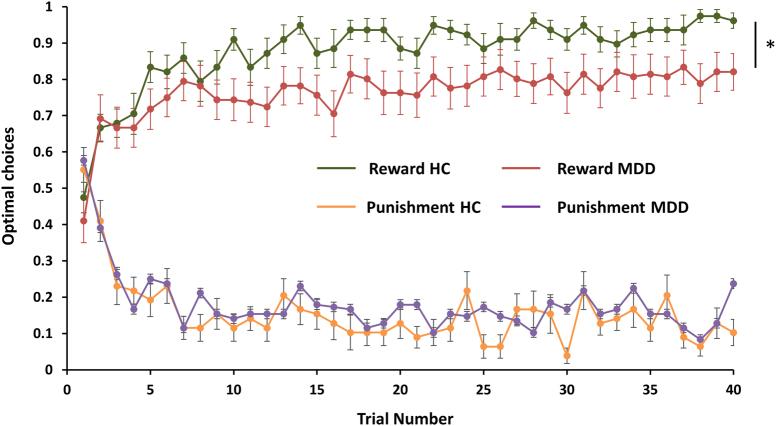
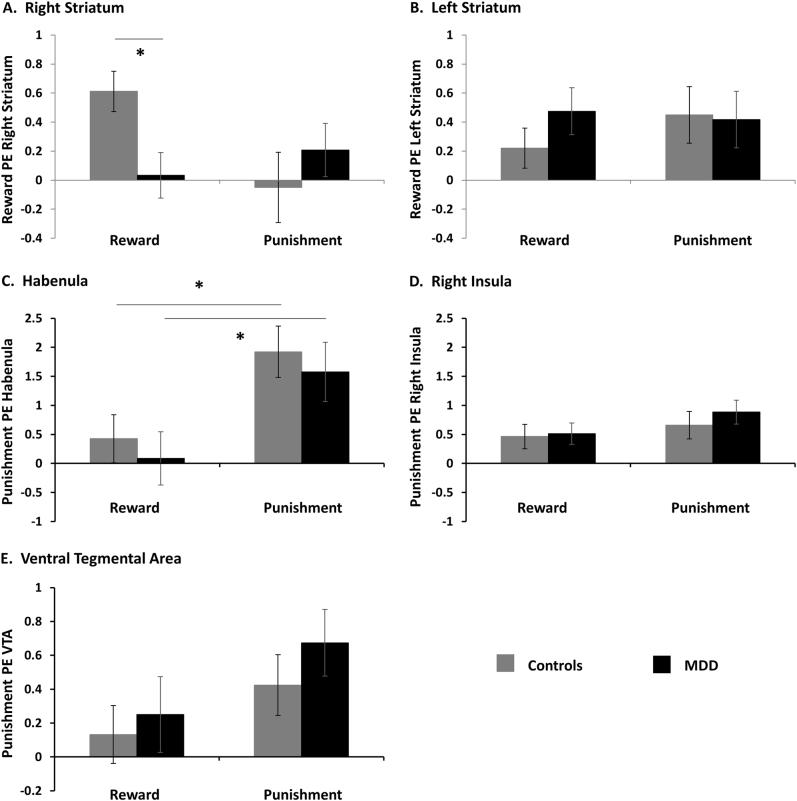
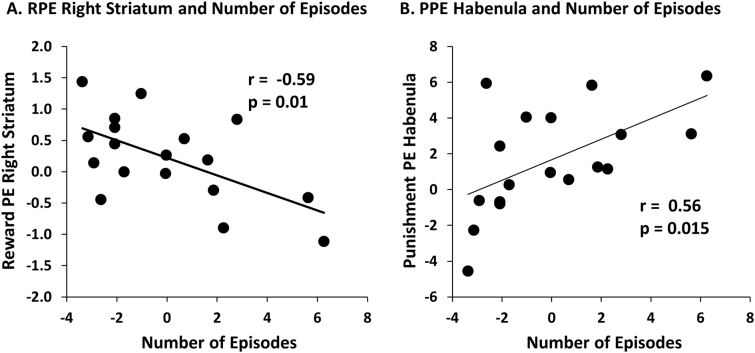
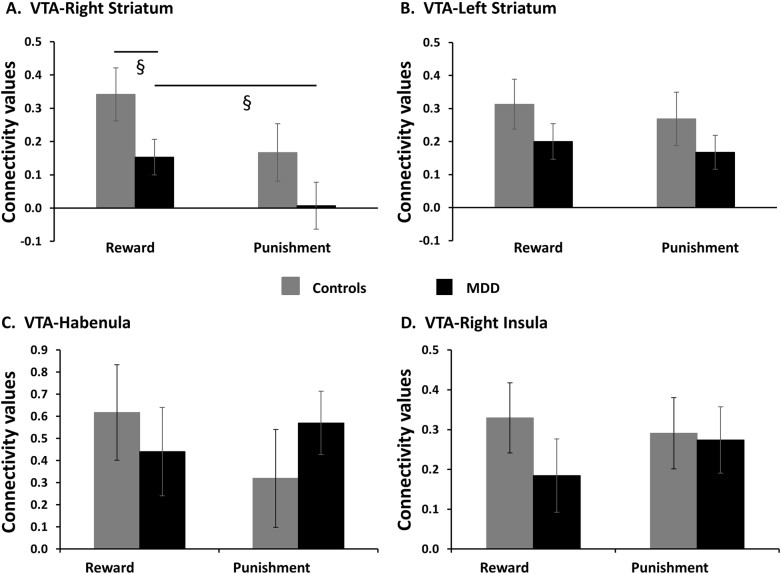
Anhedonia (hyposensitivity to rewards) and negative bias (hypersensitivity to punishments) are core features of major depressive disorder (MDD), which could stem from abnormal reinforcement learning. Emerging evidence highlights blunted reward learning and reward prediction error (RPE) signaling in the striatum in MDD, although inconsistencies exist. Preclinical studies have clarified that ventral tegmental area (VTA) neurons encode RPE and habenular neurons encode punishment prediction error (PPE), which are then transmitted to the striatum and cortex to guide goal-directed behavior. However, few studies have probed striatal activation, and functional connectivity between VTA-striatum and VTA-habenula during reward and punishment learning respectively, in unmedicated MDD. To fill this gap, we acquired fMRI data from 25 unmedicated MDD and 26 healthy individuals during a monetary instrumental learning task and utilized a computational modeling approach to characterize underlying neural correlates of RPE and PPE. Relative to controls, MDD individuals showed impaired reward learning, blunted RPE signal in the striatum and overall reduced VTA-striatal connectivity to feedback. Critically, striatal RPE signal was increasingly blunted with more major depressive episodes (MDEs). No group differences emerged in PPE signals in the habenula and VTA or in connectivity between these regions. However, PPE signals in the habenula correlated positively with number of MDEs. These results highlight impaired reward learning, disrupted RPE signaling in the striatum (particularly among individuals with more lifetime MDEs) as well as reduced VTA-striatal connectivity in MDD. Collectively, these findings highlight reward-related learning deficits in MDD and their underlying pathophysiology.
Overview
The claims and statistics of this paper haven’t been checked yet.
Free: it reads the open-access text and checks the first 5 claims that cite a source we can check. Create a free account to check every claim.
Integrity signals
Registry
Cites
Statistics
Figures
Verification
Claims the paper makes
The claims and statistics of this paper haven’t been checked yet.
Free: it reads the open-access text and checks the first 5 claims that cite a source we can check. Create a free account to check every claim.
Claims other papers make about this one
Each is checked against this paper’s own text: does it say what the citing paper says it does?
The source backs part of the claim, not all of it — or backs it for a different population, condition or comparison.
In the citing paper
“For example, dopaminergic projections from the VTA to the nucleus accumbens (NAc), prefrontal cortex (PFC), amygdala and hippocampus that regulate responses to rewarding or aversive stimuli are reportedly dysregulated in people with MDD as well as in rodent models of chronic stress39–42.”
From Central regulation of stress-evoked peripheral immune responses (2023) · cites this paper as [41]
Experimental — accuracy not yet measuredThe source backs part of the claim, not all of it — or backs it for a different population, condition or comparison.
In the citing paper
“Notably, several of these bone marrow-innervating brain regions have been implicated in stress responses, reward processing and the pathogenesis of depression and anxiety disorders.”
From Central regulation of stress-evoked peripheral immune responses (2023) · cites this paper as [41]
Experimental — accuracy not yet measuredThe source backs part of the claim, not all of it — or backs it for a different population, condition or comparison.
In the citing paper
“Unmedicated MDD patients show deficits in reward learning, reduced responses in the ventral striatum for positive prediction errors in a reward task, and reduced NAc-VTA connectivity [247,248].”
From Plasticity of synapses and reward circuit function in the genesis and treatment of depression (2023) · cites this paper as [247]
Experimental — accuracy not yet measuredThe source backs part of the claim, not all of it — or backs it for a different population, condition or comparison.
In the citing paper
“Individuals with depression often display emotionally biased prediction-error processing, characterized by attenuated reward prediction-error signals and heightened sensitivity to punishment- or risk-related prediction errors (Kumar et al., 2018; Rouhani and Niv, 2019).”
From Listen to your inner body: embodied emotions in predictive neuroscience and traditional East Asian medicine (2026) · cites this paper as Kumar et al., 2018
Experimental — accuracy not yet measuredThe source backs part of the claim, not all of it — or backs it for a different population, condition or comparison.
In the citing paper
“These studies have generally linked MDD to blunted RPE in the ventral and dorsal striatum [122-124] (but see [125,126] for important lack of replication), pgACC [127] and medial OFC [126], and greater RPE in the ventral striatum predicted reductions in anhedonia 6 months later [128].”
From Prefrontal cortex and depression (2022) · cites this paper as [123]
Experimental — accuracy not yet measured
1 more claim about this paper
Create a free account to see every claim other papers make about this one.
Self-check
Percentages, sums and reported differences re-computed from the paper’s own numbers.
The self-check needs the paper’s full text.
Citations
Cites
Reinforcement Learning: An Introduction
Sutton, R. S., & Barto, A. G. (1998) · IEEE Transactions on Neural Networks · doi:10.1109/tnn.1998.712192 · Cited by 27,225 · cited 1×
“A standard Q-learning algorithm calculated the expected value of choices and PE based on individual’s choice and feedback history [38].”
MethodReinforcement Learning: An Introduction
(2005) · IEEE Transactions on Neural Networks · doi:10.1109/tnn.2004.842673 · Cited by 24,496
A neural substrate of prediction and reward
Schultz, W., Dayan, P., & Montague, P. R. (1997) · Science · doi:10.1126/science.275.5306.1593 · Cited by 9,388 · cited 1×
“These midbrain DA RPE signals are then transmitted to the striatum and cortex and used to update stimulus-action values and guide goaldirected behavior [4, 5].”
MethodBeck, A. T., Steer, R. A., & Brown, G. (2011) · PsycTESTS Dataset · doi:10.1037/t00742-000 · Cited by 7,535
Ferrari, A. J., Charlson, F. J., Norman, R. E., Patten, S. B., Freedman, G., Murray, C. J. L., Vos, T., & Whiteford, H. A. (2013) · PLoS Medicine · doi:10.1371/journal.pmed.1001547 · Cited by 3,115
A scale for the assessment of hedonic tone the Snaith-Hamilton pleasure scale
Snaith, R. P., Hamilton, M., Morley, S., Humayan, A., Hargreaves, D., & Trigwell, P. (1995) · British Journal of Psychiatry · doi:10.1192/bjp.167.1.99 · Cited by 1,778 · cited 2×
“In a separate session, participants completed an instrumental RL task whilst in the fMRI scanner, as well as the Beck Depression Inventory-II (BDIII; [36]) and the Snaith Hamilton Pleasure Scale (SHPS; [37]) to assess depressive and anhedonic symptoms.”
MethodDopamine-dependent prediction errors underpin reward-seeking behaviour in humans
Pessiglione, M., Seymour, B., Flandin, G., Dolan, R. J., & Frith, C. D. (2006) · Nature · doi:10.1038/nature05051 · Cited by 1,584 · cited 2×
“As prior studies have reported PPE signals in the right insula [9] and habenula [17–19], a right insula mask was created by drawing a sphere with 10 mm diameter around the peak voxel (40, 28, −6) reported in a prior study using a similar task [9].”
MethodA century of trends in adult human height
NCD Risk Factor Collaboration (NCD-RisC) (2016) · eLife · doi:10.7554/elife.13410 · Cited by 1,558
McLaren, D. G., Ries, M. L., Xu, G., & Johnson, S. C. (2012) · NeuroImage · doi:10.1016/j.neuroimage.2012.03.068 · Cited by 1,445 · cited 5×
“Since animal studies have highlighted VTAstriatum and VTA-habenula pathways during reward and punishment learning, respectively, generalized PPI [41] was conducted using the VTA as the seed region.”
MethodInfluentialTwo types of dopamine neuron distinctly convey positive and negative motivational signals
Matsumoto, M., & Hikosaka, O. (2009) · Nature · doi:10.1038/nature08028 · Cited by 1,378 · cited 2×
“In addition, owing to preclinical evidence and initial human data highlighting the role of VTA-striatal and VTA-habenula connectivity during reward [30–33] and punishment learning [12, 14], respectively, psychophysiological interaction (PPI) analyses were implemented to probe functional connectivity among these region…”
BackgroundInput-specific control of reward and aversion in the ventral tegmental area
Lammel, S., Lim, B. K., Ran, C., Huang, K. W., Betley, M. J., Tye, K. M., Deisseroth, K., & Malenka, R. C. (2012) · Nature · doi:10.1038/nature11527 · Cited by 1,300 · cited 1×
“This signal excites GABAergic cells in the tail of the VTA known as the rostromedial tegmental nucleus (RMTg; [13]), which then inhibits DA neurons in the VTA [12, 14] and thereby reduces DA levels in the striatum, eventually promoting active avoidance [15].”
BackgroundLateral habenula as a source of negative reward signals in dopamine neurons
Matsumoto, M., & Hikosaka, O. (2007) · Nature · doi:10.1038/nature05860 · Cited by 1,292 · cited 4×
“In addition, owing to preclinical evidence and initial human data highlighting the role of VTA-striatal and VTA-habenula connectivity during reward [30–33] and punishment learning [12, 14], respectively, psychophysiological interaction (PPI) analyses were implemented to probe functional connectivity among these region…”
BackgroundInfluentialDepression, Stress, and Anhedonia: Toward a Synthesis and Integrated Model
Pizzagalli, D. A. (2014) · Annual Review of Clinical Psychology · doi:10.1146/annurev-clinpsy-050212-185606 · Cited by 1,155 · cited 1×
“Emerging evidence suggests that anhedonia (hyposensitivity to rewards) and negative bias (hypersensitivity to punishments), which are cardinal features of MDD [2, 3], might stem from disrupted learning about rewards and punishments, respectively, and adapt behavior accordingly.”
BackgroundSelf-citationPiepers, D. W., & Robbins, R. A. (2012) · Frontiers in Psychology · doi:10.3389/fpsyg.2012.00559 · Cited by 927
BOLD responses reflecting dopaminergic signals in the human ventral tegmental area
D'Ardenne, K., McClure, S. M., Nystrom, L. E., & Cohen, J. D. (2008) · Science · doi:10.1126/science.1150605 · Cited by 661 · cited 1×
“Few studies have investigated the VTA-striatal pathway during learning in humans [30, 32, 33].”
BackgroundSynaptic potentiation onto habenula neurons in the learned helplessness model of depression
Li, B., Piriz, J., Mirrione, M., Chung, C., Proulx, C. D., Schulz, D., Henn, F., & Malinow, R. (2011) · Nature · doi:10.1038/nature09742 · Cited by 634 · cited 1×
“For instance, prior animal studies have reported elevated habenula metabolism [43] and enhanced excitatory inputs to VTA-projecting habenula neurons during learned helplessness [44], with the former reversed following antidepressant treatment [45].”
BackgroundReward and Punishment Processing in Depression
Eshel, N., & Roiser, J. P. (2010) · Biological Psychiatry · doi:10.1016/j.biopsych.2010.01.027 · Cited by 575 · cited 2×
“Moreover, several non-learning studies (especially in the emotional processing literature) have reported that MDD is associated with increased responsivity to punishment or negative stimuli [2, 24, 25].”
BackgroundHamilton, M. (1980) · PubMed · Cited by 555
Expected value and prediction error abnormalities in depression and schizophrenia
Gradin, V. B., Kumar, P., Waiter, G., Ahearn, T., Stickle, C., Milders, M., Reid, I., Hall, J., & Steele, J. D. (2011) · Brain · doi:10.1093/brain/awr059 · Cited by 485 · cited 1×
“Correlation with clinical variables Unlike prior studies [21, 22, 26], RPE signal in the right striatum did not correlate with anhedonia scores within the MDD group.”
ResultSelf-citationOpponency revisited: competition and cooperation between dopamine and serotonin
Boureau, Y.-L., & Dayan, P. (2011) · Neuropsychopharmacology · doi:10.1038/npp.2010.151 · Cited by 456 · cited 1×
“Although DA’s involvement in reward learning is strongly supported, there is conflicting evidence for its association with punishment learning [11].”
BackgroundTrial-by-trial data analysis using computational models
Daw, N. D. (2011) · Decision Making, Affect, and Learning · doi:10.1093/acprof:oso/9780199600434.003.0001 · Cited by 456 · cited 1×
“For the fMRI analyses, a fixed alpha was chosen, and a learning model was fitted with a single set of parameters [42].”
MethodPrediction error in reinforcement learning: A meta-analysis of neuroimaging studies
Garrison, J., Erdeniz, B., & Done, J. (2013) · Neuroscience & Biobehavioral Reviews · doi:10.1016/j.neubiorev.2013.03.023 · Cited by 438 · cited 5×
“during both reward [6, 7] and punishment [17] learning in human fMRI studies.”
BackgroundResultInfluentialHaruno, M., & Kawato, M. (2006) · Journal of Neurophysiology · doi:10.1152/jn.00382.2005 · Cited by 433 · cited 1×
“, shock, monetary loss, social rejection), it also emerges during encoding of RPE [49, 50], suggesting that the insula might encode a salience PE [51, 52].”
BackgroundβCaMKII in Lateral Habenula Mediates Core Symptoms of Depression
Li, K., Zhou, T., Liao, L., Yang, Z., Wong, C., Henn, F., Malinow, R., Yates, J. R., & Hu, H. (2013) · Science · doi:10.1126/science.1240729 · Cited by 411 · cited 1×
“For instance, prior animal studies have reported elevated habenula metabolism [43] and enhanced excitatory inputs to VTA-projecting habenula neurons during learned helplessness [44], with the former reversed following antidepressant treatment [45].”
BackgroundAbnormal temporal difference reward-learning signals in major depression
Kumar, P., Waiter, G., Ahearn, T., Milders, M., Reid, I., & Steele, J. D. (2008) · Brain · doi:10.1093/brain/awn136 · Cited by 374 · cited 2×
“Correlation with clinical variables Unlike prior studies [21, 22, 26], RPE signal in the right striatum did not correlate with anhedonia scores within the MDD group.”
BackgroundResultSelf-citationMcCabe, C., Mishor, Z., Cowen, P. J., & Harmer, C. J. (2010) · Biological Psychiatry · doi:10.1016/j.biopsych.2009.11.001 · Cited by 365 · cited 1×
“An important limitation of prior studies is that most MDD participants showing altered RPE signals were on antidepressant medication (except [28]), which is known to affect the neural responses to reinforcers [22, 29].”
Stamatakis, A. M., Jennings, J. H., Ung, R. L., Blair, G. A., Weinberg, R. J., Neve, R. L., Boyce, F., Mattis, J., Ramakrishnan, C., Deisseroth, K., et al. (2013) · Neuron · doi:10.1016/j.neuron.2013.08.023 · Cited by 364 · cited 3×
“The extensive influence of habenula neurons on the dopaminergic pathway highlights this region’s critical role in processing motivationally salient stimuli [15].”
BackgroundDownar, J., Geraci, J., Salomons, T. V., Dunlop, K., Wheeler, S., McAndrews, M. P., Bakker, N., Blumberger, D. M., Daskalakis, Z. J., Kennedy, S. H., et al. (2014) · Biological Psychiatry · doi:10.1016/j.biopsych.2013.10.026 · Cited by 337 · cited 1×
“Supporting this interpretation, a recent study reported reduced functional connectivity between the VTA, striatum and prefrontal cortex in MDD individuals unresponsive to repetitive transcranial magnetic stimulation of the dorsal medial prefrontal cortex; these individuals also exhibited higher baseline anhedonia when…”
Reward Signals, Attempted Suicide, and Impulsivity in Late-Life Depression
Dombrovski, A. Y., Szanto, K., Clark, L., Reynolds, C. F., & Siegle, G. J. (2013) · JAMA Psychiatry · doi:10.1001/jamapsychiatry.2013.75 · Cited by 289 · cited 1×
“One study [26] found that MDD individuals displayed reduced reward and punishment learning rates, particularly with increasing anhedonia, whereas other studies [20, 27] reported an association between depression and oversensitivity to punishment in geriatric MDD.”
ResultCovariation of activity in habenula and dorsal raphe nuclei following tryptophan depletion
Morris, J. S., Smith, K. A., Cowen, P. J., Friston, K. J., & Dolan, R. J. (1999) · NeuroImage · doi:10.1006/nimg.1999.0455 · Cited by 288 · cited 1×
“However, PPE signals in the habenula correlated positively with number of depressive episodes, suggesting that punishment-related habenula activation increases with disease burden, in partial support of habenula hyperactivity during punishment processing reported in prior literature in MDD individuals [46, 47].”
BackgroundJocham, G., Klein, T. A., & Ullsperger, M. (2011) · The Journal of Neuroscience · doi:10.1523/jneurosci.3904-10.2011 · Cited by 278
Human Midbrain Sensitivity to Cognitive Feedback and Uncertainty During Classification Learning
Aron, A. R., Shohamy, D., Clark, J., Myers, C., Gluck, M. A., & Poldrack, R. A. (2004) · Journal of Neurophysiology · doi:10.1152/jn.01209.2003 · Cited by 269 · cited 1×
“Few studies have investigated the VTA-striatal pathway during learning in humans [30, 32, 33].”
BackgroundCritical Roles for Anterior Insula and Dorsal Striatum in Punishment-Based Avoidance Learning
Palminteri, S., Justo, D., Jauffret, C., Pavlicek, B., Dauta, A., Delmaire, C., Czernecki, V., Karachi, C., Capelle, L., Durr, A., et al. (2012) · Neuron · doi:10.1016/j.neuron.2012.10.017 · Cited by 242 · cited 1×
“thalamus across both groups, consistent with other studies [6, 48].”
ResultChase, H. W., Kumar, P., Eickhoff, S. B., & Dombrovski, A. Y. (2015) · Cognitive, Affective, & Behavioral Neuroscience · doi:10.3758/s13415-015-0338-7 · Cited by 231 · cited 5×
“during both reward [6, 7] and punishment [17] learning in human fMRI studies.”
BackgroundMethodInfluentialSelf-citationResting state networks distinguish human ventral tegmental area from substantia nigra
Murty, V. P., Shermohammed, M., Smith, D. V., Carter, R. M., Huettel, S. A., & Adcock, R. A. (2014) · NeuroImage · doi:10.1016/j.neuroimage.2014.06.047 · Cited by 219 · cited 1×
“As the VTA is involved in both reward and punishment learning, we included a probabilistic mask created by manual tracing for a prior study [40].”
MethodDisrupted habenula function in major depression
Lawson, R. P., Nord, C. L., Seymour, B., Thomas, D. L., Dayan, P., Pilling, S., & Roiser, J. P. (2017) · Molecular Psychiatry · doi:10.1038/mp.2016.81 · Cited by 210 · cited 3×
“In contrast, Lawson and colleagues [28] reported that unmedicated MDD subjects exhibited reduced negative task-related (phasic) habenula responses only during primary aversive conditioning, but not during monetary loss.”
BackgroundAssociation of neural and emotional impacts of reward prediction errors with major depression
Rutledge, R. B., Moutoussis, M., Smittenaar, P., Zeidman, P., Taylor, T., Hrynkiewicz, L., Lam, J., Skandali, N., Siegel, J. Z., Ousdal, O. T., et al. (2017) · JAMA Psychiatry · doi:10.1001/jamapsychiatry.2017.1713 · Cited by 209 · cited 3×
“However, the weakened VTA-striatal connectivity in the MDD group points to a downstream DA signaling deficit, that then leads to impaired reward learning [23].”
BackgroundInfluentialTalking Nets: An Oral History Of Neural Networks
Anderson, J. A., & Rosenfield, E. (1998) · IEEE Transactions on Neural Networks · doi:10.1109/tnn.1998.712193 · Cited by 200
Foland-Ross, L. C., & Gotlib, I. H. (2012) · Frontiers in Psychology · doi:10.3389/fpsyg.2012.00489 · Cited by 197 · cited 1×
“Moreover, several non-learning studies (especially in the emotional processing literature) have reported that MDD is associated with increased responsivity to punishment or negative stimuli [2, 24, 25].”
BackgroundCaldecott-Hazard, S., Mazziotta, J., & Phelps, M. (1988) · The Journal of Neuroscience · doi:10.1523/jneurosci.08-06-01951.1988 · Cited by 194 · cited 1×
“For instance, prior animal studies have reported elevated habenula metabolism [43] and enhanced excitatory inputs to VTA-projecting habenula neurons during learned helplessness [44], with the former reversed following antidepressant treatment [45].”
BackgroundBehavioral and Neural Properties of Social Reinforcement Learning
Jones, R. M., Somerville, L. H., Li, J., Ruberry, E. J., Libby, V., Glover, G., Voss, H. U., Ballon, D. J., & Casey, B. J. (2011) · The Journal of Neuroscience · doi:10.1523/jneurosci.2972-11.2011 · Cited by 191 · cited 1×
“, shock, monetary loss, social rejection), it also emerges during encoding of RPE [49, 50], suggesting that the insula might encode a salience PE [51, 52].”
BackgroundChase, H. W., Frank, M. J., Michael, A., Bullmore, E. T., Sahakian, B. J., & Robbins, T. W. (2010) · Psychological Medicine · doi:10.1017/s0033291709990468 · Cited by 174 · cited 2×
“Correlation with clinical variables Unlike prior studies [21, 22, 26], RPE signal in the right striatum did not correlate with anhedonia scores within the MDD group.”
ResultThe habenula encodes negative motivational value associated with primary punishment in humans
Lawson, R. P., Seymour, B., Loh, E., Lutti, A., Dolan, R. J., Dayan, P., Weiskopf, N., & Roiser, J. P. (2014) · Proceedings of the National Academy of Sciences · doi:10.1073/pnas.1323586111 · Cited by 155
BOLD responses to negative reward prediction errors in human habenula
Salas (2010) · Frontiers in Human Neuroscience · doi:10.3389/fnhum.2010.00036 · Cited by 136
Lecourtier, L., DeFrancesco, A., & Moghaddam, B. (2008) · European Journal of Neuroscience · doi:10.1111/j.1460-9568.2008.06130.x · Cited by 125 · cited 1×
“Similarly, habenular neurons are inhibited by an unexpected reward or non-punishing outcome [12], which disinhibits the VTA DA neurons [15] and increases DA concentration in the striatum [16], reinforcing the rewarding action.”
BackgroundDefining the habenula in human neuroimaging studies
Lawson, R. P., Drevets, W. C., & Roiser, J. P. (2013) · NeuroImage · doi:10.1016/j.neuroimage.2012.08.076 · Cited by 124 · cited 1×
“The habenula ROI was created for each subject by manually identifying the left and right habenula based on the anatomical landmarks described by [19, 39].”
MethodDistinct Midbrain and Habenula Pathways Are Involved in Processing Aversive Events in Humans
Hennigan, K., D'Ardenne, K., & McClure, S. M. (2015) · The Journal of Neuroscience · doi:10.1523/jneurosci.0927-14.2015 · Cited by 123 · cited 1×
“during both reward [6, 7] and punishment [17] learning in human fMRI studies.”
BackgroundCerebral Correlates of Salient Prediction Error for Different Rewards and Punishments
Metereau, E., & Dreher, J.-C. (2013) · Cerebral Cortex · doi:10.1093/cercor/bhs037 · Cited by 114 · cited 1×
“, shock, monetary loss, social rejection), it also emerges during encoding of RPE [49, 50], suggesting that the insula might encode a salience PE [51, 52].”
BackgroundDopamine Modulates Adaptive Prediction Error Coding in the Human Midbrain and Striatum
Diederen, K. M. J., Ziauddeen, H., Vestergaard, M. D., Spencer, T., Schultz, W., & Fletcher, P. C. (2017) · The Journal of Neuroscience · doi:10.1523/jneurosci.1979-16.2016 · Cited by 110
Kahnt, T., Park, S. Q., Cohen, M. X., Beck, A., Heinz, A., & Wrase, J. (2009) · Journal of Cognitive Neuroscience · doi:10.1162/jocn.2009.21092 · Cited by 102 · cited 1×
“Few studies have investigated the VTA-striatal pathway during learning in humans [30, 32, 33].”
BackgroundDopamine neurons learn relative chosen value from probabilistic rewards
Lak, A., Stauffer, W. R., & Schultz, W. (2016) · eLife · doi:10.7554/elife.18044 · Cited by 91
Liu, W.-H., Valton, V., Wang, L.-Z., Zhu, Y.-H., & Roiser, J. P. (2017) · Social Cognitive and Affective Neuroscience · doi:10.1093/scan/nsx074 · Cited by 80 · cited 1×
“However, PPE signals in the habenula correlated positively with number of depressive episodes, suggesting that punishment-related habenula activation increases with disease burden, in partial support of habenula hyperactivity during punishment processing reported in prior literature in MDD individuals [46, 47].”
BackgroundA neurocognitive model for understanding treatment action in depression
Warren, M. B., Pringle, A., & Harmer, C. J. (2015) · Philosophical Transactions of the Royal Society B: Biological Sciences · doi:10.1098/rstb.2014.0213 · Cited by 66 · cited 1×
“Moreover, several non-learning studies (especially in the emotional processing literature) have reported that MDD is associated with increased responsivity to punishment or negative stimuli [2, 24, 25].”
BackgroundCorticostriatothalamic reward prediction error signals and executive control in late-life depression
Dombrovski, A. Y., Szanto, K., Clark, L., Aizenstein, H. J., Chase, H. W., Reynolds, C. F., & Siegle, G. J. (2015) · Psychological Medicine · doi:10.1017/s0033291714002517 · Cited by 41 · cited 1×
“One study [26] found that MDD individuals displayed reduced reward and punishment learning rates, particularly with increasing anhedonia, whereas other studies [20, 27] reported an association between depression and oversensitivity to punishment in geriatric MDD.”
ResultGu, Y., Hu, X., Pan, W., Yang, C., Wang, L., Li, Y., & Chen, A. (2016) · Scientific Reports · doi:10.1038/srep34032 · Cited by 12 · cited 1×
“, shock, monetary loss, social rejection), it also emerges during encoding of RPE [49, 50], suggesting that the insula might encode a salience PE [51, 52].”
Background
Research works printed but not linked: 1
- First MB, Spitzer RL, Miriam G, Williams JB. Structured Clinical Interview for DSM-IV-TR Axis I Disorders, Research Version, Non-patient Edition. (SCID-I/NP). New York: Biometrics Research, New York State Psychiatric Institute; 2002.
Cited by
Prefrontal cortex and depression
Pizzagalli, D. A., & Roberts, A. C. (2022) · Neuropsychopharmacology · doi:10.1038/s41386-021-01101-7 · Cited by 667
Self-citationDistorted Cognitive Processes in Major Depression: A Predictive Processing Perspective
Kube, T., Schwarting, R., Rozenkrantz, L., Glombiewski, J. A., & Rief, W. (2020) · Biological Psychiatry · doi:10.1016/j.biopsych.2019.07.017 · Cited by 234
The molecular and cellular mechanisms of depression: a focus on reward circuitry
Fox, M. E., & Lobo, M. K. (2019) · Molecular Psychiatry · doi:10.1038/s41380-019-0415-3 · Cited by 232
Halahakoon, D. C., Kieslich, K., O’Driscoll, C., Nair, A., Lewis, G., & Roiser, J. P. (2020) · JAMA Psychiatry · doi:10.1001/jamapsychiatry.2020.2139 · Cited by 222
Borsini, A., Wallis, A. S. J., Zunszain, P., Pariante, C. M., & Kempton, M. J. (2020) · Cognitive, Affective, & Behavioral Neuroscience · doi:10.3758/s13415-020-00804-6 · Cited by 207
Metadata
- Authors
- Kumar, P., Goer, F., Murray, L., Dillon, D. G., Beltzer, M. L., Cohen, A. L., Brooks, N. H., & Pizzagalli, D. A.
- Affiliations
- Harvard University (US)
- McLean Hospital (US)
- Corresponding author
- Kumar, Poornima
- Pizzagalli, Diego A.
- ORCID
- Venue
- Neuropsychopharmacology
- Published
- 2018-02-26
- Volume
- 43
- Issue
- 7
- Pages
- 1581-1588
- ISSN
- 0893-133X (ISSN-L)
- 1740-634X
- PMC
- PMC5983542
- OpenAlex
- W2792163321
- Cited by
- 219
- References
- 56
- Citations by year
- 2026: 20 · 2025: 29 · 2024: 17 · 2023: 31 · 2022: 24 · 2021: 53 · 2020: 18 · 2019: 20 · 2018: 7
- FWCI
- 14.59
- Type
- journal article
- Language
- en
- Open access
- hybrid
- doi.org
- Licence
- cc-by
- creativecommons.org/licenses/by/4.0 (tdm)
- Locations
- Neuropsychopharmacology (publishedVersion, cc-by)
- Europe PMC (PubMed Central) (publishedVersion, other-oa)
- PubMed Central (publishedVersion, cc-by)
- PubMed (publishedVersion)
- Digital Access to Scholarship at Harvard (DASH) (Harvard University) (submittedVersion, cc-by)
- Funders
- Pfizer
- McLean Hospital
- National Alliance for Research on Schizophrenia and Depression
- National Institutes of Health
- National Institute of Mental Health (R00MH094438, K99MH094438, R01MH068376, MH068376, R37MH068376)
- Topics
- Life Sciences › Neuroscience › Cognitive Neuroscience › Neural and Behavioral Psychology Studies
- Life Sciences › Neuroscience › Cellular and Molecular Neuroscience › Neurotransmitter Receptor Influence on Behavior
- Health Sciences › Medicine › Pharmacology (medical) › Treatment of Major Depression
- Keywords
- major depressive disorder, reward prediction error, anhedonia, negative bias, reward learning, striatum, ventral tegmental area, habenula, reinforcement learning, computational modeling, number of depressive episodes
- MeSH terms
- Adult, Computer Simulation, Conditioning, Operant, Corpus Striatum, Depressive Disorder, Major, Major Depressive Disorder, Female, Humans, Magnetic Resonance Imaging, Male, Neural Pathways, Predictive Value of Tests, Punishment, Reward, Case-Control Studies, Ventral Tegmental Area, Habenula, Young Adult
About these checks
Registry, retraction, Cites and statistics results are computed, not judged, with one exception: a printed reference that no index lists is read once by a model before it counts as a citation error. Claims are extracted by a model and kept only when their quote appears verbatim in the text; each cited source is then checked, with a model’s help, for whether it says what the claim relies on. Those verdicts can be wrong — read the claim’s quote and the cited source before relying on one.
Statistics and arithmetic are recomputed, not judged.
Confidence bands are shown only for fields calibrated on our annotated test set. None is calibrated yet, so no band is shown.
What counts as a claim ›How we measure confidence ›How we check this ›
Are you an author, or do you see a problem with this page? Request a review
Data sources
Bibliographic data: Semantic Scholar, OpenAlex, Crossref.
Contains information from the Semantic Scholar Academic Graph Datasets, made available under the ODC Attribution License (ODC-BY 1.0).
Semantic Scholar’s data is described in: Kinney, R., et al. (2023). The Semantic Scholar Open Data Platform. arXiv:2301.10140.
