

Protective effects of Akkermansia muciniphila on cognitive deficits and amyloid pathology in a mouse model of Alzheimer's disease
Open accessThe DOI matches its Crossref record; 47 of the 47 references it cites were found in a registry or an index.
Abstract
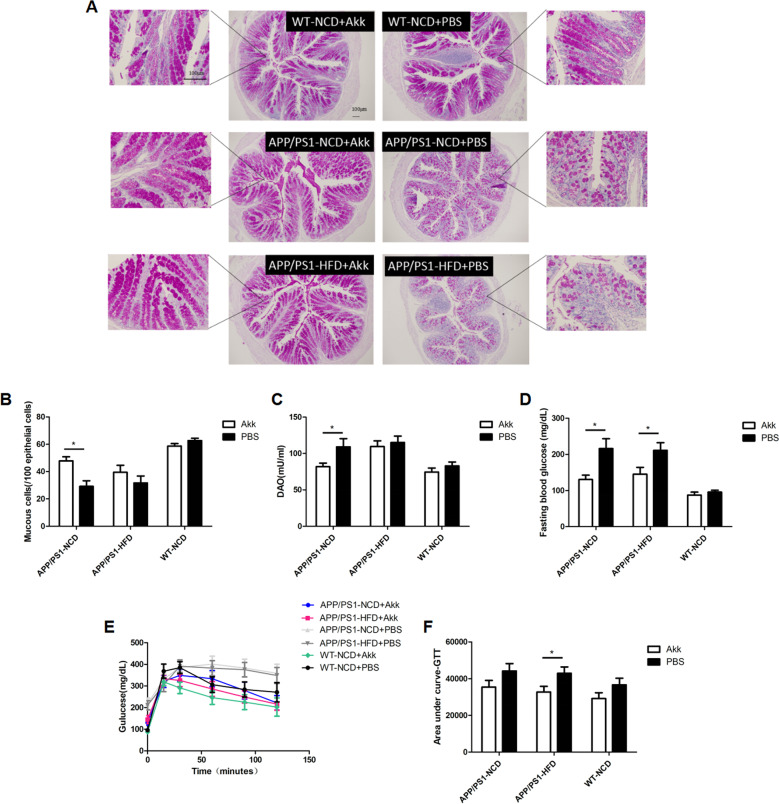
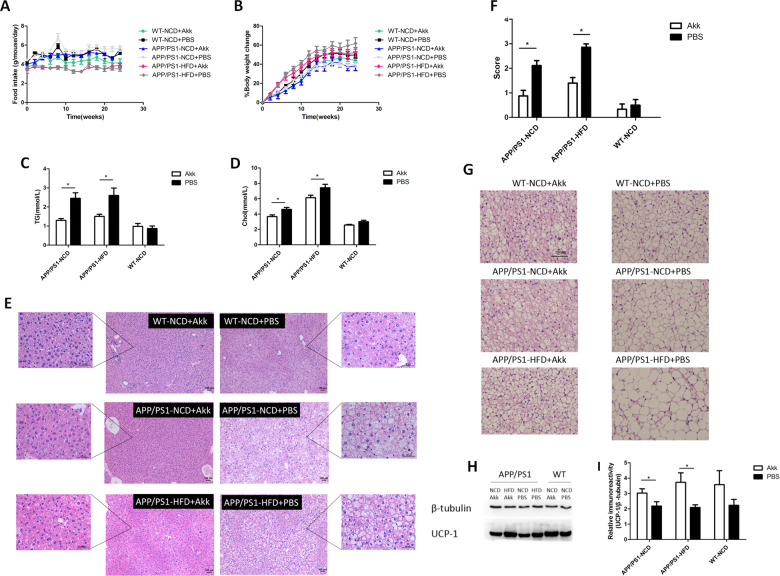
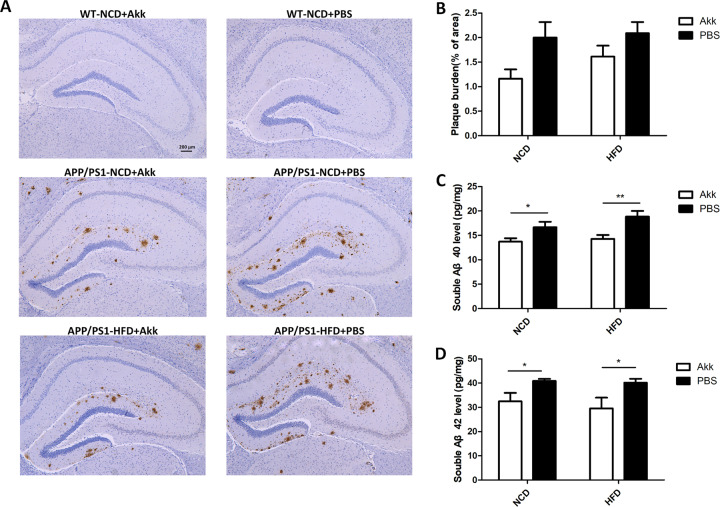
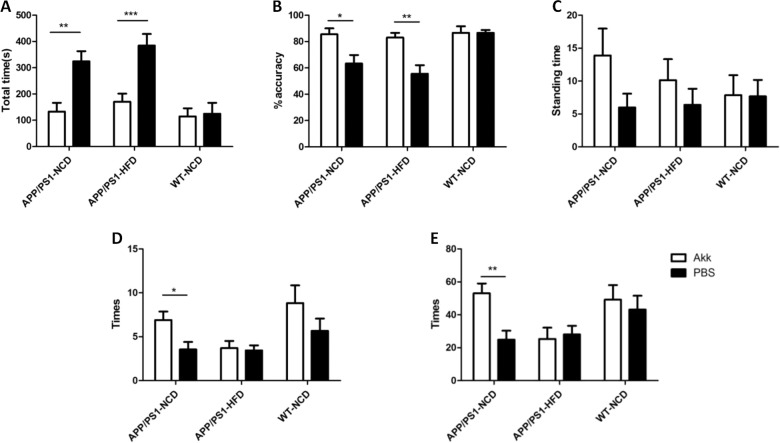
Objective: Alzheimer’s disease (AD) is a global health problem without effective methods to alleviate the disease progression. Amyloid β-protein (Aβ) is widely accepted as a key biomarker for AD. Metabolic syndromes, including obesity and insulin resistance, are key high risk factors for AD. Akkermansia muciniphila (Akk), the only representative human gut microbe in the genus Verrucomicrobia, can prevent the weight gain caused by a high-fat diet, repair the damaged integrity of the intestinal epithelium barrier, reduce endotoxin levels in blood and improve insulin resistance. The aim of this study is to explore the impact of Akk administration in AD model mice in different diets. Methods: APP/PS1 mice were fed either a normal chow diet or a high-fat diet and were treated with Akk by gavage each day for 6 months. The impacts of Akk on glucose metabolism, intestinal barrier and lipid metabolism in the mouse model of AD were determined. Changes in brain pathology and neuroethology were also analyzed. Results: Akk effectively reduced the fasting blood glucose and serum diamine oxidase levels, and alleviated the reduction of colonic mucus cells in APP/PS1 mice. After treatment with Akk, the APP/PS1 mice showed obviously reduced blood lipid levels, improved hepatic steatosis and scapular brown fat whitening. Moreover, Akk promoted the reduction of Aβ 40–42 levels in the cerebral cortex of APP/PS1 mice, shortened the study time and improved the completion rate in Y-maze tests. Conclusion: Akk effectively improved glucose tolerance, intestine barrier dysfunction and dyslipidemia in AD model mice. Our study results suggested that Akk could delay the pathological changes in the brain and relieve impairment of spatial learning and memory in AD model mice, which provides a new strategy for prevention and treatment of AD.
Overview
The claims and statistics of this paper haven’t been checked yet.
Free: it reads the open-access text and checks the first 5 claims that cite a source we can check. Create a free account to check every claim.
Integrity signals
Registry
Cites
Statistics
Figures
Verification
Claims the paper makes
The claims and statistics of this paper haven’t been checked yet.
Free: it reads the open-access text and checks the first 5 claims that cite a source we can check. Create a free account to check every claim.
Claims other papers make about this one
Each is checked against this paper’s own text: does it say what the citing paper says it does?
The cited source says what the claim attributes to it.
In the citing paper
“Recently, Ou et al. 47 suggested that A. muciniphila may improve the insulin resistance of Alzheimer's disease mice, reduce the decrease in colonic mucous cells, improve intestinal barrier dysfunction and dyslipidaemia, and delay pathological changes in the brain”
From The role of gut dysbiosis in Parkinson’s disease: mechanistic insights and therapeutic options (2021) · cites this paper as [47]
The cited source says what the claim attributes to it.
In the citing paper
“therefore, microbial intervention could provide a novel strategy for the prevention and treatment of Alzheimer's disease.47”
From The role of gut dysbiosis in Parkinson’s disease: mechanistic insights and therapeutic options (2021) · cites this paper as [47]
The cited source says what the claim attributes to it.
In the citing paper
“indicating that there is a close connection between gut microbiota and neurological disorders; therefore, microbial intervention could provide a novel strategy for the prevention and treatment of Alzheimer's disease.47”
From The role of gut dysbiosis in Parkinson’s disease: mechanistic insights and therapeutic options (2021) · cites this paper as [47]
Self-check
Percentages, sums and reported differences re-computed from the paper’s own numbers.
The self-check needs the paper’s full text.
Citations
Cites
Cross-talk between Akkermansia muciniphila and intestinal epithelium controls diet-induced obesity
Everard, A., Belzer, C., Geurts, L., Ouwerkerk, J. P., Druart, C., Bindels, L. B., Guiot, Y., Derrien, M., Muccioli, G. G., Delzenne, N. M., et al. (2013) · Proceedings of the National Academy of Sciences · doi:10.1073/pnas.1219451110 · Cited by 4,511
Forecasting the global burden of Alzheimer's disease
Brookmeyer, R., Johnson, E., Ziegler‐Graham, K., & Arrighi, H. M. (2007) · Alzheimer's & Dementia · doi:10.1016/j.jalz.2007.04.381 · Cited by 3,370
Plovier, H., Everard, A., Druart, C., Depommier, C., Van Hul, M., Geurts, L., Chilloux, J., Ottman, N., Duparc, T., Lichtenstein, L., et al. (2017) · Nature Medicine · doi:10.1038/nm.4236 · Cited by 2,204
Dao, M. C., Everard, A., Aron-Wisnewsky, J., Sokolovska, N., Prifti, E., Verger, E. O., Kayser, B. D., Levenez, F., Chilloux, J., Hoyles, L., et al. (2016) · Gut · doi:10.1136/gutjnl-2014-308778 · Cited by 1,931
Talbot, K., Wang, H.-Y., Kazi, H., Han, L.-Y., Bakshi, K. P., Stucky, A., Fuino, R. L., Kawaguchi, K. R., Samoyedny, A. J., Wilson, R. S., et al. (2012) · Journal of Clinical Investigation · doi:10.1172/jci59903 · Cited by 1,871
Shin, N.-R., Lee, J.-C., Lee, H.-Y., Kim, M.-S., Whon, T. W., Lee, M.-S., & Bae, J.-W. (2014) · Gut · doi:10.1136/gutjnl-2012-303839 · Cited by 1,550
Cattaneo, A., Cattane, N., Galluzzi, S., Provasi, S., Lopizzo, N., Festari, C., Ferrari, C., Guerra, U. P., Paghera, B., Muscio, C., et al. (2017) · Neurobiology of Aging · doi:10.1016/j.neurobiolaging.2016.08.019 · Cited by 1,382
The first 1000 cultured species of the human gastrointestinal microbiota
Rajilić-Stojanović, M., & de Vos, W. M. (2014) · FEMS Microbiology Reviews · doi:10.1111/1574-6976.12075 · Cited by 1,182
Reduction of Abeta amyloid pathology in APPPS1 transgenic mice in the absence of gut microbiota
Harach, T., Marungruang, N., Duthilleul, N., Cheatham, V., Mc Coy, K. D., Frisoni, G., Neher, J. J., Fåk, F., Jucker, M., Lasser, T., et al. (2017) · Scientific Reports · doi:10.1038/srep41802 · Cited by 901
Moloney, A. M., Griffin, R. J., Timmons, S., O’Connor, R., Ravid, R., & O’Neill, C. (2010) · Neurobiology of Aging · doi:10.1016/j.neurobiolaging.2008.04.002 · Cited by 764
Cited by
Items 101–200 of 329
Probiotics as potential therapeutic options for Alzheimer’s disease
Ji, H., & Shen, L. (2021) · Applied Microbiology and Biotechnology · doi:10.1007/s00253-021-11607-1 · Cited by 35
Role of Akkermansia muciniphila in insulin resistance
Zeng, Z., Chen, M., Liu, Y., Zhou, Y., Liu, H., Wang, S., & Ji, Y. (2024) · Journal of Gastroenterology and Hepatology · doi:10.1111/jgh.16747 · Cited by 38
Barrea, L., Caprio, M., Camajani, E., Verde, L., Elce, A., Frías-Toral, E., Ceriani, F., Cucalón, G., Garcia-Velasquez, E., Ghoch, M. E., et al. (2022) · Critical Reviews in Food Science and Nutrition · doi:10.1080/10408398.2022.2083070 · Cited by 32
“Akkermansia muciniphila is the only representative Verrucomicrobia of the human gut microbes that can be cultured (Ou et al. 2020).”
BackgroundMicroglial cells: Sensors for neuronal activity and microbiota-derived molecules
D’Alessandro, G., Marrocco, F., & Limatola, C. (2022) · Frontiers in Immunology · doi:10.3389/fimmu.2022.1011129 · Cited by 34
Probiotics therapy show significant improvement in obesity and neurobehavioral disorders symptoms
Cai, Y., Liu, P., Zhou, X., Yuan, J., & Chen, Q. (2023) · Frontiers in Cellular and Infection Microbiology · doi:10.3389/fcimb.2023.1178399 · Cited by 39
“AKK supplementation improves cognitive function by lowering serum DAO levels, protecting colonic mucus cells, reducing intestinal permeability, and inhibiting LPS entry into circulation (Ou et al., 2020).”
BackgroundMethodInfluentialXu, K., Wang, G., Gong, J., Yang, X.-X., Cheng, Y., Li, D., Sheng, S., & Zhang, F. (2025) · International Immunopharmacology · doi:10.1016/j.intimp.2025.114374 · Cited by 41
Meng, H. Y. H., Mak, C. C. H., Mak, J. W. Y., Zuo, T., Ko, H., & Chan, F. K. L. (2022) · European Journal of Nutrition · doi:10.1007/s00394-021-02760-4 · Cited by 44
Roles of traditional chinese medicine regulating neuroendocrinology on AD treatment
Deng, C., Chen, H., Meng, Z., & Meng, S. (2022) · Frontiers in Endocrinology · doi:10.3389/fendo.2022.955618 · Cited by 30
“disorders, showing a bright prospect for treating AD (80).”
BackgroundFibre-rich diet attenuates chemotherapy-related neuroinflammation in mice
Cross, C., Davies, M. R., Bateman, E. H., Crame, E. E., Joyce, P. M., Wignall, A. D., Ariaee, A., Gladman, M. A., Wardill, H. R., & Bowen, J. M. (2023) · Brain Behavior and Immunity · doi:10.1016/j.bbi.2023.09.018 · Cited by 33
“The neuroprotective role of the gut microbiota is gaining significant momentum and while comprehensive understanding is yet to be established, previous studies implicate the Bacteroidaceae and Akkermansia-ceae families as key players (Komanduri et al., 2021; Ou et al., 2020).”
BackgroundMinich, D. J., Madden, C. C., Evans, M. V., Ballash, G. A., Barr, D. J., Poulsen, K. P., Dennis, P. M., & Hale, V. L. (2021) · Scientific Reports · doi:10.1038/s41598-021-89896-9 · Cited by 28
Modifying the Microbiome as a Potential Mechanism of Photobiomodulation: A Case Report
Bicknell, B. T., Laakso, E., Liebert, A. D., & Kiat, H. (2021) · Photobiomodulation Photomedicine and Laser Surgery · doi:10.1089/photob.2021.0057 · Cited by 30
Squizani, S., Jantsch, J., Rodrigues, F. D. S., Braga, M. F., Eller, S. C. W. D. S., de Oliveira, T. F., Silveira, A. K., Moreira, J. C. F., Giovenardi, M., Porawski, M., et al. (2022) · Nutrients · doi:10.3390/nu14193921 · Cited by 28
Huang, D., Gao, J., Li, C., Nong, C., Huang, W., Zheng, X., Li, S., & Peng, Y. (2021) · Psychopharmacology · doi:10.1007/s00213-021-05878-9 · Cited by 29
“muciniphilasub (Akk I subtype, GP01 strain) was administered as previously described (Ou et al. 2020).”
BackgroundMethodSelf-citationGut Microbiome and Serum Metabolome Profiles of Capsaicin with Cognitive Benefits in APP/PS1 Mice
Li, J., Liao, X., Yin, X., Deng, Z., Hu, G., Zhang, W., Jiang, F., & Zhao, L. (2022) · Nutrients · doi:10.3390/nu15010118 · Cited by 28
“muciniphila [44,45], intervention experiments clearly reported beneficial effects of this bacterium in the pathology of AD [26].”
BackgroundHan, S., Bian, R., Chen, Y., Liang, J., Zhao, P., Gu, Y., & Zhang, D. (2024) · Molecular Neurobiology · doi:10.1007/s12035-024-04229-x · Cited by 30
“There is evidence that the abundance of Akkermansia was significantly decreased in the intestines of model mice with AD and that Akker-mansia treatment could improve cognition in animal models of AD [35, 36].”
Wu, Y., Huang, X., Li, Q., Yang, C., Huang, X., Du, H., Situ, B., Zheng, L., & Ou, Z. (2025) · Journal of Nanobiotechnology · doi:10.1186/s12951-025-03280-7 · Cited by 33
“Moreover, probiotic-derived BEVs have been identified to possess anti-inflammatory, antioxidant, and immunomodulatory properties, marking them as promising candidates in the realm of nanoparticle drug for disease treatment [17–19].”
Self-citationRaber, H. F., Kubiczek, D. H., Bodenberger, N. E., Kissmann, A., D’souza, D., Hu, X., Mayer, D., Xu, P., Knippschild, U., Spellerberg, B., et al. (2021) · International Journal of Molecular Sciences · doi:10.3390/ijms221910425 · Cited by 25
“Sci. 2021, 22, 10425 2 of 16 in the context of different diseases including metabolic disorders such as obesity [2], diabetes mellitus [3], and neurodegenerative diseases such as multiple sclerosis [4,5], Alzheimer′s [6,7], and Parkinson′s disease [8].”
BackgroundInfluentialJo, J.-K., Lee, G., Nguyen, C. D., Park, S.-E., Kim, E.-J., Kim, H., Seo, S.-H., Cho, K., Kwon, S. J., Kim, J., et al. (2022) · Molecules · doi:10.3390/molecules27196591 · Cited by 27
“[30] reported that Akkermansia muciniphila, a representative strain of Verrucomicrobia, promoted the reduction of Figure 6.”
BackgroundChen, Y., Chen, J., Wei, H., Gong, K., Meng, J., Long, T., JianFeng, G., Hong, J. K., Yang, L., Qiu, J., et al. (2023) · Frontiers in Immunology · doi:10.3389/fimmu.2023.1172710 · Cited by 30
“The cognitive disorder in Alzheimer’s disease (AD) is related to Akkermansia abundance, and supplementing the diet with the Akkermansia protects against the cognition impairment (55).”
BackgroundWu, X., Yu, D., Ma, Y., Fang, X., & Sun, P. (2025) · International Journal of Biological Macromolecules · doi:10.1016/j.ijbiomac.2025.142442 · Cited by 32
Hao, W., Chen, Z., Wang, L., Yuan, Q., Gao, C., Ma, M., Liu, C., Wang, Y., & Wang, S. (2022) · Phytomedicine · doi:10.1016/j.phymed.2022.154468 · Cited by 24
Iyaswamy, A., Lu, K., Guan, X.-J., Kan, Y., Su, C.-F., Liu, J., Jaganathan, R., Vasudevan, K., Paul, J., Thakur, A., et al. (2023) · Biomedicines · doi:10.3390/biomedicines11072056 · Cited by 28
Scavizzi, F., Bassi, C., Lupini, L., Guerriero, P., Raspa, M., & Sabbioni, S. (2021) · Animal Microbiome · doi:10.1186/s42523-021-00113-4 · Cited by 22
Gao, Y., Xu, Y., & Yin, J. (2022) · Antioxidants · doi:10.3390/antiox11010111 · Cited by 27
“It promoted the reduction of Aβ 40–42 levels in the cerebral cortex and relieved impairment of spatial learning and memory in APP/PS1 Alzheimer’s disease model mice [63].”
BackgroundGut Microbiota as a Hidden Player in the Pathogenesis of Alzheimer’s Disease
Choi, H., Lee, D., & Mook‐Jung, I. (2022) · Journal of Alzheimer s Disease · doi:10.3233/jad-215235 · Cited by 24
Huwart, S. J. P., d’Oplinter, A. D. W., Rastelli, M., Hul, M. V., de Vos, W. M., Luquet, S. H., Cani, P. D., & Everard, A. (2022) · Cells · doi:10.3390/cells11162534 · Cited by 28
“muciniphila has already been shown to be a beneficial bacterium in the gut–brain axis influencing behavior in other contexts such as in depression-like behavior induced by chronic stress [60], in cognitive impairments associated with obesity [61] as well as in spatial learning and memory in an animal model of Alzheime…”
BackgroundImmunomodulatory Effects of Microcin C7 in Cyclophosphamide-Induced Immunosuppressed Mice
Dai, Z.-Q., Shang, L., Wei, Y.-S., Li, Z.-Q., Zeng, X.-F., Chen, M., Wang, X.-Y., Li, S., Qiao, S., & Yu, H. (2023) · Journal of Agricultural and Food Chemistry · doi:10.1021/acs.jafc.3c01033 · Cited by 26
Impact of Gut Microbiota on Radiation-Associated Cognitive Dysfunction and Neuroinflammation in Mice
Luo, N., Zhu, W., Li, X., Fu, M., Peng, X., Yang, F., Zhang, Y., Yin, H., Yang, C., Zhao, J., et al. (2021) · Radiation Research · doi:10.1667/rade-21-00006.1 · Cited by 25
“Moreover, cognitive impairment in Alzheimer’s disease and early-life high-fat-diet-induced obesity are both associated with Akkermansia, and supplementing the diet with the Akkermansia group may protect against and improve associated cognitive deficits (69, 70).”
BackgroundZhang, Y., Wang, Y., Zhou, Z., Yang, Y., Zhao, J., Kang, X., Li, Z., Shen, X. P., He, F., & Cheng, R. (2024) · Nutrients · doi:10.3390/nu16060844 · Cited by 25
“Several studies showed that certain probiotic strains could improve cognitive functions in AD model animals or patients; such strains include Bifidobacterium shortum A1, Clostridium butyricum , and Akkermansia muciniphila [10,21,22].”
BackgroundDeSana, A. J., Estus, S., Barrett, T. A., & Saatman, K. E. (2024) · Scientific Reports · doi:10.1038/s41598-024-53430-4 · Cited by 26
“From a potential treatment perspective, others have shown beneficial effects of direct administration of A. muciniphila as a means of treatment for neurological conditions in rodent models of depression 96 , Alzheimer’s disease 97 , and amyotrophic lateral sclerosis 98 .”
BackgroundMo, L., Li, J., Lu, H., Lu, S., Fu, H., Huang, B., & Zhao, C. (2024) · Food & Function · doi:10.1039/d4fo01844c · Cited by 28
Patricio-Martínez, A., Patricio, F., Macuil-Chapuli, E., Martínez-Juárez, E. Á., Flores-Díaz, S., Cedillo-Ramirez, M. L., & Limón, I. D. (2025) · Frontiers in Neuroscience · doi:10.3389/fnins.2025.1598011 · Cited by 28
Song, Z., Zhang, X., Hong, M., Wu, Z., Luo, S., & Cheng, K. (2023) · Journal of Functional Foods · doi:10.1016/j.jff.2023.105584 · Cited by 23
Zhang, F., & Wang, D. (2023) · Frontiers in Microbiology · doi:10.3389/fmicb.2023.1191445 · Cited by 29
“muciniphila for 6 months alleviated cognitive deficits (such as spatial learning impairments and memory deficits) as indicated by improved Y-maze test completion rates and shortened test completion time, with a significant reduction in amyloid-beta (Aβ) 40–42 levels in the cerebral cortex and in fasting blood glucose…”
BackgroundKim, J. H., Choi, Y., Lee, S.-M., & Oh, M. S. (2024) · Biomolecules & Therapeutics · doi:10.4062/biomolther.2024.215 · Cited by 29
Zhang, F., Xu, Y., Shen, L., Huang, J., Xu, S., Li, J., Sun, Z., He, J., Chen, M., & Pan, Y. (2021) · Evidence-based Complementary and Alternative Medicine · doi:10.1155/2021/9253281 · Cited by 24
Nutrition in Alzheimer’s disease: a review of an underappreciated pathophysiological mechanism
Jiang, J., Shi, H., Jiang, S., Wang, A., Zou, X., Wang, Y., Li, W., Zhang, Y., Sun, M., Ren, Q., et al. (2023) · Science China Life Sciences · doi:10.1007/s11427-022-2276-6 · Cited by 22
“In an AD mouse model, Akk effectively improved glucose tolerance by improving insulin resistance, intestinal barrier dysfunction, and dyslipidemia, thereby delaying the pathological changes in the brain and reducing impairments in spatial learning and memory (Ou et al., 2020).”
ALZHEIMER’S DISEASE AND ITS RELATIONSHIP WITH THE MICROBIOTA-GUT-BRAIN AXIS
Faulin, T. D. E. S., & Estadella, D. (2023) · Arquivos de Gastroenterologia · doi:10.1590/s0004-2803.202301000-17 · Cited by 30
“The bacterium Akkermansia muciniphila is associated with intestinal health as it increases the thickness of the colonic mucus layer (79) and improves intestinal barrier function (80) .”
BackgroundAssociation between Mild Cognitive Impairment and Gut Microbiota in Elderly Korean Patients
Kim, E., Kim, J.-S., Park, S.-E., Seo, S.-H., Cho, K., Kwon, S. J., Lee, M., Kim, J., & Son, H.-S. (2023) · Journal of Microbiology and Biotechnology · doi:10.4014/jmb.2305.05009 · Cited by 23
“In addition, Akkermansia can produce large amounts of propionate [42].”
BackgroundXing, C., Zhang, X., Wang, D., Chen, H., Gao, X., Sun, C., Guo, W., Roshan, S., Li, Y., Hang, Z., et al. (2024) · Brain Behavior and Immunity · doi:10.1016/j.bbi.2024.08.047 · Cited by 21
Gut microbiota metabolites: potential therapeutic targets for Alzheimer’s disease?
Zhang, S., Lu, J., Jin, Z., Xu, H., Zhang, D., Chen, J., & Wang, J. (2024) · Frontiers in Pharmacology · doi:10.3389/fphar.2024.1459655 · Cited by 30
Feng, J., Hu, X., Liu, J., Wang, W., Chen, L., Pang, R., & Zhang, A. (2025) · Frontiers in Neuroscience · doi:10.3389/fnins.2025.1650807 · Cited by 26
Chang, C., Liu, C., Su, I.-C., Lee, Y., Yeh, H., Chen, W.-C., Yu, C.-J., Kao, W., Liu, Y., & Huang, C. (2022) · International Journal of Molecular Sciences · doi:10.3390/ijms231911422 · Cited by 20
Key Stratification of Microbiota Taxa and Metabolites in the Host Metabolic Health–Disease Balance
Torres-Sánchez, A., Ruiz-Rodriguez, A., Ortíz, P., & Aguilera, J. (2023) · International Journal of Molecular Sciences · doi:10.3390/ijms24054519 · Cited by 19
“In this context, murine models show Akkermansia muciniphila, Faecalibacterium prausnitzii, Bacteroides uniformis, Bacteroides acidifaciens, Clostridium butyricum, and Prevotella copri as interesting microorganisms with potential applications in obesity [48–53], liver diseases [52,54–59], diabetes [48–53,58,60,61], col…”
BackgroundSteckler, R., Magzal, F., Kokot, M., Walkowiak, J., & Tamir, S. (2024) · Brain Behavior & Immunity - Health · doi:10.1016/j.bbih.2024.100829 · Cited by 30
“…from the Verrucomi-crobia phylum has been linked to inhibiting pathological brain changes and improving spatial learning and memory in Alzheimer ’ s disease (AD) models, as well as reversing impaired spatial working memory with specific probiotic treatments (Higarza et al., 2021; Ou et al., 2020).”
BackgroundMaftoon, H., Siadat, S. D., Tarashi, S., Soroush, E., Asefi, M. B., Foroushani, A. R., & Dallal, M. M. S. (2024) · Brain Research · doi:10.1016/j.brainres.2024.149280 · Cited by 24
Liu, S., Wang, M., Meng, X., Pan, J., Fang, J., Cheng, W., Zhang, X., & Cheng, K. (2025) · Journal of Agricultural and Food Chemistry · doi:10.1021/acs.jafc.5c00835 · Cited by 19
Alemohammad, S. M. A., Noori, S. M. R., Samarbafzadeh, E., & Noori, S. M. A. (2022) · Molecular Biology Reports · doi:10.1007/s11033-021-07078-2 · Cited by 20
“Ou, Deng [62] studied the effects of A.”
BackgroundInfluentialCutuli, D., Giacovazzo, G., Decandia, D., & Coccurello, R. (2022) · Frontiers in Psychiatry · doi:10.3389/fpsyt.2022.1010169 · Cited by 19
“muciniphila dietary intervention has been described (124), although a presymptomatic overexpression of A.”
BackgroundDiviccaro, S., Falvo, E., Piazza, R., Cioffi, L., Herian, M., Brivio, P., Calabrese, F., Giatti, S., Caruso, D., & Melcangi, R. C. (2022) · Neuropharmacology · doi:10.1016/j.neuropharm.2022.109405 · Cited by 22
Jin, Y., Kim, T., & Kang, H. (2023) · Physiology & Behavior · doi:10.1016/j.physbeh.2023.114145 · Cited by 19
Dong, W., Peng, Y., Chen, G., Xie, Z., Xu, W., Zhou, W., Mi, J., Lu, L., Sun, Y., Zeng, X., et al. (2023) · Food Science and Human Wellness · doi:10.26599/fshw.2022.9250020 · Cited by 18
Self-citationRole of mucin glycosylation in the gut microbiota-brain axis of core 3 O-glycan deficient mice
Coletto, E., Savva, G. M., Latousakis, D., Pontifex, M. G., Crost, E. H., Vaux, L., Telatin, A., Bergstrom, K., Vauzour, D., & Juge, N. (2023) · Scientific Reports · doi:10.1038/s41598-023-40497-8 · Cited by 21
“…symbiont Akkermansia muciniphila in mouse model of early AD, resulted in a repair of the intestinal barrier dysfunction and ameliorations in cognition and anxiety-related behaviours, supporting a role for an impaired mucus barrier in the alteration occurring in the hippocampus of these mice 60 .”
BackgroundEffect of Human Milk Oligosaccharides on Learning and Memory in Mice with Alzheimer’s Disease
Gao, H., Fang, B., Sun, Z., Du, X., Guo, H., Zhao, L., & Zhang, M. (2023) · Journal of Agricultural and Food Chemistry · doi:10.1021/acs.jafc.3c05949 · Cited by 20
Du, Y., An, Y., Song, Y., Li, N., Zheng, J., & Lu, Y. (2024) · Experimental Neurology · doi:10.1016/j.expneurol.2024.114823 · Cited by 20
Yang, X., Zhang, X., Ma, Y., Li, S., Wang, Q., Hong, J., Yu, G., Qi, B., Wang, J., Liu, C., et al. (2024) · International Journal of Biological Macromolecules · doi:10.1016/j.ijbiomac.2024.137373 · Cited by 32
Homolak, J., Busscher, J. D., Zambrano-Lucio, M., Joja, M., Virag, D., Perhoč, A. B., Knezović, A., Barilar, J. O., & Šalković‐Petrišić, M. (2023) · ACS Chemical Neuroscience · doi:10.1021/acschemneuro.3c00223 · Cited by 20
Qiu, X., Mu, C., Hu, J., Yu, J., Tang, W., Liu, Y., Huang, Y., Lu, Y., Tang, P., Wu, J., et al. (2025) · iMeta · doi:10.1002/imt2.70025 · Cited by 21
Pai, C.-S., Wang, C., Hung, W., Hung, W., Tsai, H.-J., Chang, C.-C., Hwang, S., Dai, C., Ho, W.-Y., & Tsai, Y. (2022) · Journal of Personalized Medicine · doi:10.3390/jpm12040617 · Cited by 18
“muciniphila could improve glucose homeostasis and reduce fasting sugar in a mouse model of Alzheimer’s disease and a high-fat diet [26,29].”
BackgroundDietary aluminium intake disrupts the overall structure of gut microbiota in Wistar rats
Wang, B., Wu, C., Cui, L., Wang, H., Liu, Y., & Cui, W. (2022) · Food Science & Nutrition · doi:10.1002/fsn3.2955 · Cited by 20
“Additionally, Plovier et al. demonstrated the effectiveness of Akkermansia at lowering blood lipid levels, insulin resistance, adipose tissue inflammation, and weight loss in mice (Ou et al., 2020; Plovier et al., 2017).”
BackgroundTorres-Sánchez, A., Ruiz-Rodriguez, A., Ortíz, P., Moreno, M. A., Ampatzoglou, A., Gruszecka‐Kosowska, A., Monteoliva‐Sánchez, M., & Aguilera, J. (2022) · International Journal of Molecular Sciences · doi:10.3390/ijms232112917 · Cited by 23
“muciniphila have been reported in multiple studies in murine models, including increased glucose tolerance and blood glucose control and reduced insulin resistance [38,47,50,53].”
BackgroundQu, Y., Wu, Y., Cheng, W., Wang, D., Zeng, L., Wang, Y., Li, T., Zhang, L., Yang, J., Sun, L., et al. (2023) · Frontiers in Pharmacology · doi:10.3389/fphar.2022.1079313 · Cited by 18
“It has been demonstrated that Akkermansia muciniphila therapy protects against cognitive impairment and amyloid pathology caused by an HFD in the APP/PS1 mouse model (Ou et al., 2020).”
BackgroundZhu, B., Gu, Z., Hu, H., Huang, J., Zeng, Z., Liang, H., Yuan, Z., Huang, S., Qiu, Y., Sun, X., et al. (2025) · Research · doi:10.34133/research.0636 · Cited by 24
Kunevičius, A., Vijaya, A. K., Atzeni, A., Mingaila, J., Šimoliūnė, I., Jamontas, R., Kezeviciute, E., Gueimonde, M., Meškys, R., Baltriukienė, D., et al. (2025) · Frontiers in Aging Neuroscience · doi:10.3389/fnagi.2025.1617980 · Cited by 20
“The results of this study are consistent with those of a similar study by Ou et al. (2020), in which APP/PS1 animals were fed a high-fat diet and gavaged with A. muciniphila daily for six months.”
Yin, D., Zhao, L. X., Deng, S., Xie, Y., Ro, K.-S., Yang, Z., Du, L., Xie, J., & Wei, D. (2024) · Probiotics and Antimicrobial Proteins · doi:10.1007/s12602-023-10208-w · Cited by 19
“The supplementation of Akkermansia strains could alleviate the impairment of spatial learning and memory ability, reduce pro-inflammatory substance levels, repair the intestinal barrier, and mitigate pathological brain damages of APP/PS1 mice [54].”
Microbiome-targeted Alzheimer’s interventions via gut-brain axis
Qin, R., Li, C., Yuan, X., & Chen, Y. (2025) · Frontiers in Microbiology · doi:10.3389/fmicb.2025.1729708 · Cited by 18
Li, W., Wang, Y., Sun, M., Liang, Y., Cai, X., Qi, D., Zhang, Y., & Han, C. (2020) · Evidence-based Complementary and Alternative Medicine · doi:10.1155/2020/2027570 · Cited by 16
“representative gut microbe in the Verrucomicrobia, could prevent the weight gain caused by a high-fat diet, repair the damaged integrity of the intestinal epithelium barrier, reduce endotoxin levels in the blood, and improve insulin resistance [27, 28].”
BackgroundResearch trends of next generation probiotics
Hasnain, M. A., Kang, D., & Moon, G. (2024) · Food Science and Biotechnology · doi:10.1007/s10068-024-01626-9 · Cited by 17
“…is yet to be uncovered, its preventive and/or ame-liorative role in obesity (Xu et al., 2020), aging (Bárcena et al., 2019; van der Lugt et al., 2019), diabetes (Hansen et al., 2012), metabolic syndrome (Zhou and Zhang, 2019) and neurodegenerative diseases (Ou et al., 2020) have been confirmed.”
Research progress on the next‐generation probiotic Akkermansia muciniphila in the intestine
Han, W., & Zhuang, X. (2021) · Food Frontiers · doi:10.1002/fft2.87 · Cited by 19
A Multi-Organ Murine Metabolomics Atlas Reveals Molecular Dysregulations in Alzheimer’s DiseasePreprint
Zuffa, S., Allaband, C., Charron‐Lamoureux, V., Caraballo‐Rodríguez, A. M., Patan, A., Mohanty, I., Agongo, J., Bostick, J. W., Connerly, T. J., Thron, T., et al. (2025) · bioRxiv (Cold Spring Harbor Laboratory) · doi:10.1101/2025.04.28.651123 · Cited by 15
“A. muciniphila , usually depleted in AD 76 , is known to potentially enhance cognitive function 77–79 and to reduce inflammation by modulating intestinal macrophages 80 .”
Akkermansia muciniphila extracellular vesicles: Function and theranostic potential in disease
Wang, Y.-D., Lin, W., Wu, S., He, X., Ou, Z., & Zheng, L. (2025) · LabMed discovery. · doi:10.1016/j.lmd.2025.100060 · Cited by 16
Self-citationGut microbiota composition in early pregnancy as a diagnostic tool for gestational diabetes mellitus
Yao, W., Wen, R., Huang, Z., Huang, X., Chen, K., Hu, Y., Li, Q., Zhu, W., Ou, D., & Bai, H. (2025) · Microbiology Spectrum · doi:10.1128/spectrum.03390-24 · Cited by 17
“The absence of significant β-diversity differences aligns with recent findings in early-stage metabolic disorders (40).”
Mehboodi, M., Namdari, M. P., Abdollahi, Z., Mobarezi, Z., Kiani, M., Chamani, F., Khanbabaie, H., Rabiei, S., Maleki, M. H., Sanati, H., et al. (2025) · Microbial Pathogenesis · doi:10.1016/j.micpath.2025.107905 · Cited by 17
Wang, C., Qin, S., Shi, J., Zhu, J., Ju, X., Wang, W., & Yang, L. (2025) · Carbohydrate Polymers · doi:10.1016/j.carbpol.2025.124097 · Cited by 16
Wang, B., Pan, M., Yang, L., Xu, J., Ye, C., Li, Y., Gong, Q., Liu, C., Li, L., Qin, J., et al. (2026) · Alzheimer s Research & Therapy · doi:10.1186/s13195-025-01880-x · Cited by 22
Wu, Y., Shao, Y., Shao, X., Yu, H., Wang, M., Wang, J., She, Y., Liu, J., Zhang, T., Li, Z., et al. (2025) · International Journal of Biological Macromolecules · doi:10.1016/j.ijbiomac.2025.145427 · Cited by 19
Azmi, N. H., Ismail, N., Imam, M. U., Ooi, D. J., & Oslan, S. N. H. (2022) · Molecules · doi:10.3390/molecules27154907 · Cited by 16
“Oral cholesterol intake was selected on the basis of previous experiments by other researchers [26,33,34].”
BackgroundMethodGut microbial taxa elevated by dietary sugar disrupt memory functionPreprint
Noble, E. E., Olson, C. A., Davis, E., Tsan, L., Chen, Y.-W., Schade, R., Liu, C., Suarez, A., Jones, R. B., Serre, C. D. L., et al. (2020) · bioRxiv (Cold Spring Harbor Laboratory) · doi:10.1101/2020.06.16.153809 · Cited by 15
Xu, W., Zhang, S., Yang, Y., Zhan, J., Zang, C., Yu, H., & Wu, C. (2024) · Food Frontiers · doi:10.1002/fft2.341 · Cited by 14
Prajjwal, P., Inban, P., Sai, V. P., Karnati, S. S., Lam, J. R., John, J., Sulaimanov, M., Tekuru, Y., Haq, M. W. U., Marsool, M. D. M., et al. (2024) · Health Science Reports · doi:10.1002/hsr2.1808 · Cited by 14
Gut microbiota and inflammation in Parkinson’s disease: Pathogenetic and therapeutic insights
Guo, T., & Chen, L. (2022) · European Journal of Inflammation · doi:10.1177/1721727x221083763 · Cited by 14
Intestinal Barrier Function and Neurodegenerative Disease
Wu, S., Yang, L., Fu, Y., Liao, Z., Cai, D., & Liu, Z. (2023) · CNS & Neurological Disorders - Drug Targets · doi:10.2174/0118715273264097231116103948 · Cited by 15
Mucin-degrading gut bacteria: context-dependent roles in intestinal homeostasis and disease
Tiffany, E., Kim, K. S., Sittipo, P., Lee, D.-W., & Lee, Y. K. (2026) · Gut Microbes · doi:10.1080/19490976.2026.2614054 · Cited by 17
“126,179,180 Bacteroides spp. and B. fragilis metabolites often promote AD pathology by activating microglia and enhancing tau protein accumulation, 181,182 although B. ovatus has protective effects via lysophosphatidylcholine production and ferroptosis inhibition.”
Wang, Z., Gao, C., Zhang, L., & Sui, R. (2023) · International Journal of Biological Macromolecules · doi:10.1016/j.ijbiomac.2023.123169 · Cited by 13
RetractedXu, D., Ren, L., Zhang, W., Wu, S., Yu, M., He, X., & Wei, Z. (2024) · Heliyon · doi:10.1016/j.heliyon.2024.e33214 · Cited by 14
“A. muciniphila was shown to ameliorate cognitive deficits in an Alzheimer ’ s disease mouse model and showed protective effects against brain amyloid[27].”
BackgroundIntestinal Akkermansia muciniphila is Beneficial to Functional Recovery Following Ischemic Stroke
Li, K., Ding, W., Li, X., Gao, H., Wang, S., Li, T., Zhao, H., & Zhang, S. (2024) · Journal of Neuroimmune Pharmacology · doi:10.1007/s11481-024-10146-6 · Cited by 20
“The abundance of AKK was demonstrated to reduce sig - nificantly in most neuropsychiatric diseases, such as depres - sion and anxiety, AD and cognitive deficits, epilepsy and amyotrophic lateral sclerosis (Dooling and Costa-Mattioli 2018; Gotkine et al. 2020; Ou et al. 2020; Zou et al. 2023).”
Altered cognitive function in obese patients: relationship to gut flora
Deng, M., Tang, F., & Zhu, Z. (2025) · Molecular and Cellular Biochemistry · doi:10.1007/s11010-024-05201-y · Cited by 16
Ye, S., Xinjie, L., Xiaotong, Z., Chen, J., Jia-hai, L., Xiaodong, C., Lou, Y., & Li, X. (2025) · Microbiology Spectrum · doi:10.1128/spectrum.00178-25 · Cited by 16
“For example, the administra tion of Akkermansia muciniphila to APP/PS1 mice has been shown to improve abnor mal intestinal flora, intestinal barrier dysfunction, and dyslipidemia in AD model mice (29).”
Bu, L., Wang, C., Bai, J., Song, J., Zhang, Y., Chen, H., & Suo, H. (2024) · Food & Function · doi:10.1039/d3fo02307a · Cited by 13
Banerjee, A., Pradhan, L. K., Sahoo, P. K., Jena, K. K., Chauhan, N. R., Chauhan, S., & Das, S. K. (2021) · Archives of Microbiology · doi:10.1007/s00203-021-02276-9 · Cited by 14
Fecal microbiota transplantation ameliorates high‐fat diet‐induced memory impairment in mice
Pereira, L. T. G., Vilela, W. R., Bellozi, P. M. Q., Engel, D. F., de Paula, G. C., de Andrade, R. R., Mortari, M. R., Teixeira, M. D. M., Coleine, C., Figueiredo, C. P., et al. (2024) · Journal of Neurochemistry · doi:10.1111/jnc.16156 · Cited by 11
“…shown to improve cognitive dysfunction in several rodent models, including age-related cognitive decline (Zhu et al., 2023 ), Alzheimer's disease (Ou et al., 2020 ), high-fat and high-cholesterol diet-induced cognitive impairment (Higarza et al., 2021 ), and sleep deprivation-associated…”
Identification of enterotype for patients with Alzheimer’s disease
Liu, G.-S., Song, Y., Yan, J.-S., Chai, Y.-J., Zhao, Y.-F., & Ma, H. (2025) · Journal of Translational Medicine · doi:10.1186/s12967-025-06343-3 · Cited by 13
“There is evidence suggesting that Akkermansia may exert beneficial effects on AD [17].”
Li, Y., Wu, M., Kong, M., Sui, S., Wang, Q., He, Y., & Gu, J. (2023) · Microorganisms · doi:10.3390/microorganisms11092306 · Cited by 12
Khalili, L., Park, G., Nagpal, R., Bhide, P. G., & Salazar, G. (2025) · Current Neuropharmacology · doi:10.2174/011570159x360149250225041829 · Cited by 14
“Regarding treatment with A. muciniphila , eight of the included studies utilized A. muciniphila ATCC ® BAA-835™ strain, one used the DMS 22959 strain [32], one used a Chinese strain [41], and five did not report the strain of A. mu-ciniphila used [29, 32, 34, 36, 39].”
InfluentialWang, H., Lim, J. J., Gu, H., Xia, Z., & Cui, J. Y. (2025) · Toxicology · doi:10.1016/j.tox.2025.154265 · Cited by 14
Chen, Y., Li, J., Le, D., Zhang, Y., & Liao, Z. (2024) · Lipids in Health and Disease · doi:10.1186/s12944-024-02056-6 · Cited by 13
“Ou [62] found that in AD model mice transplanted with Akker-mansia , FFAs levels decreased and cognitive function improved accordingly.”
BackgroundSarti, G., Traini, C., Magni, G., Attorre, S., Tognozzi, G., Calussi, E., Giovannini, M. G., Vannucchi, M. G., & Lana, D. (2025) · Frontiers in Pharmacology · doi:10.3389/fphar.2025.1596469 · Cited by 11
Widjaja, F., & Rietjens, I. M. C. M. (2023) · Biomedicines · doi:10.3390/biomedicines11102658 · Cited by 13
Blivet, G., Roman, F. J., Lelouvier, B., Ribière, C., & Touchon, J. (2024) · Journal of Integrative Neuroscience · doi:10.31083/j.jin2305092 · Cited by 11
“In APP/PS1 mice, a restoration of the microbiome composition was observed after mid-infrared light was directed to the entire body, producing an increase in Akkermansia [56], which is known for its protective effects on amyloid pathology [ 57].”
BackgroundLiang, X., Zheng, S., Zhou, Y., Li, J., & Zhang, Z. (2024) · Journal of Animal Science · doi:10.1093/jas/skae214 · Cited by 10
Metadata
- Authors
- Ou, Z., Deng, L., Lu, Z., Wu, F., Liu, W., Huang, D., & Peng, Y.
- Affiliations
- Zhujiang Hospital (CN)
- Sun Yat-sen University (CN)
- Corresponding author
- Peng, Yongzheng
- Venue
- Nutrition & Diabetes
- Published
- 2020-04-22
- Volume
- 10
- Issue
- 1
- Pages
- 12-12
- ISSN
- 2044-4052 (ISSN-L)
- PMC
- PMC7176648
- OpenAlex
- W3019588555
- Semantic Scholar
- 912ef0e93ba13afcb00cdfbe9bc3cac5e89f82d9
- Cited by
- 328
- References
- 47
- Citations by year
- 2026: 38 · 2025: 65 · 2024: 71 · 2023: 55 · 2022: 64 · 2021: 29 · 2020: 6
- FWCI
- 23.16
- Type
- journal article
- Language
- en
- Open access
- gold
- doi.org
- Licence
- cc-by
- creativecommons.org/licenses/by/4.0 (tdm)
- creativecommons.org/licenses/by/4.0 (vor)
- Locations
- Nutrition and Diabetes (publishedVersion, cc-by)
- PubMed Central (publishedVersion, cc-by)
- PubMed (publishedVersion)
- Funders
- Medical Science and Technology Foundation of Guangdong Province (2015A020213002)
- Topics
- Life Sciences › Neuroscience › Cellular and Molecular Neuroscience › Alzheimer's disease research and treatments
- Life Sciences › Biochemistry, Genetics and Molecular Biology › Molecular Biology › Gut microbiota and health
- Life Sciences › Neuroscience › Neurology › Neuroinflammation and Neurodegeneration Mechanisms
- Keywords
- Akkermansia muciniphila, Alzheimer's disease, amyloid-beta, APP/PS1 mice, high-fat diet, gut microbiota, intestinal barrier, glucose tolerance, dyslipidemia, hepatic steatosis, brown adipose tissue, spatial learning and memory, cognitive impairment, obesity, insulin resistance, endotoxin
- MeSH terms
- Gastrointestinal Microbiome, Akkermansia, Alzheimer Disease, Animals, Blood Glucose, Disease Models, Animal, Glucose, Amine Oxidase (Copper-Containing), Humans, Insulin Resistance, Mice, Transgenic, Peptide Fragments, Amyloid beta-Peptides, Maze Learning, Probiotics, Lipid Metabolism, Mice, Cognitive Dysfunction
About these checks
Registry, retraction, Cites and statistics results are computed, not judged, with one exception: a printed reference that no index lists is read once by a model before it counts as a citation error. Claims are extracted by a model and kept only when their quote appears verbatim in the text; each cited source is then checked, with a model’s help, for whether it says what the claim relies on. Those verdicts can be wrong — read the claim’s quote and the cited source before relying on one.
Statistics and arithmetic are recomputed, not judged.
Confidence bands are shown only for fields calibrated on our annotated test set. None is calibrated yet, so no band is shown.
What counts as a claim ›How we measure confidence ›How we check this ›
Are you an author, or do you see a problem with this page? Request a review
Data sources
Bibliographic data: Semantic Scholar, OpenAlex, Crossref.
Contains information from the Semantic Scholar Academic Graph Datasets, made available under the ODC Attribution License (ODC-BY 1.0).
Semantic Scholar’s data is described in: Kinney, R., et al. (2023). The Semantic Scholar Open Data Platform. arXiv:2301.10140.
